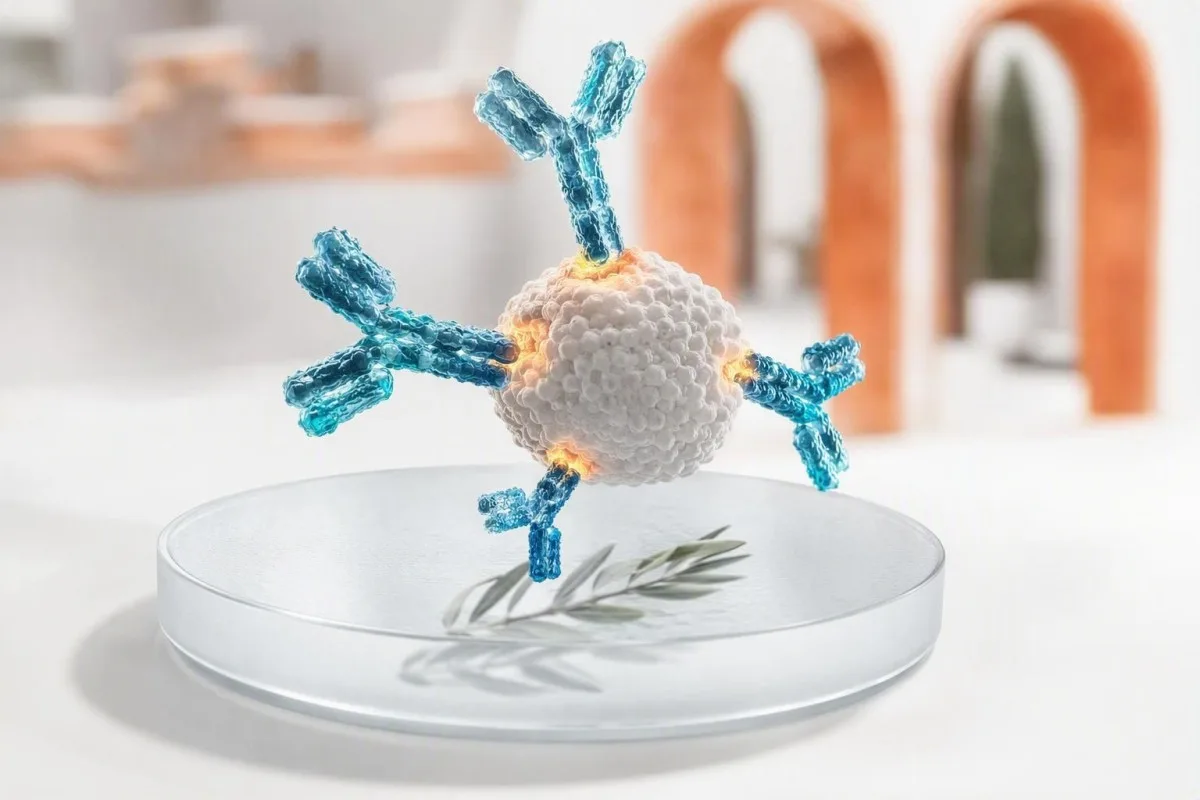
একটি ইতিবাচক অ্যান্টিবডি ফলাফল মানে আপনার প্রতিরোধ ব্যবস্থা একটি নির্দিষ্ট লক্ষ্যকে চিনতে পেরেছে; এটি নিজে থেকে সক্রিয় সংক্রমণ বা রোগের প্রমাণ দেয় না। অ্যান্টিবডির শ্রেণী, পরীক্ষার পদ্ধতি, সময়, উপসর্গ এবং সহযোগী পরীক্ষাগুলি নির্ধারণ করে যে আপনার নিশ্চয়তা, পুনরায় পরীক্ষা, নিশ্চিতকরণ বা দ্রুত ক্লিনিকাল কেয়ারের প্রয়োজন আছে কিনা।.


- ইতিবাচক অ্যান্টিবডি ফলাফল সাধারণত রোগ প্রতিরোধ ক্ষমতাকে নির্দেশ করে, সর্বদা বর্তমান অসুস্থতা বা সংক্রামকতা বোঝায় না।.
- IgM বনাম IgG একটি সময়ের ইঙ্গিত, ঘড়ি নয়: IgM কয়েক মাস ধরে থাকতে পারে এবং IgG তাড়াতাড়ি দেখা দিতে পারে।.
- টিকা অ্যান্টিবডি প্রাকৃতিক সংক্রমণ নির্দেশ না করেই ইমিউনিটি পরীক্ষা পজিটিভ করতে পারে।.
- অ্যালার্জেন-স্পেসিফিক IgE 0.35 kUA/L এর উপরে সংবেদনশীলতা নির্দেশ করে, কিন্তু এক্সপোজারের পরে উপসর্গগুলি ক্লিনিকাল অ্যালার্জি প্রতিষ্ঠা করে।.
- এএনএ পজিটিভিটি কম টাইটারে স্বাস্থ্যকর প্রাপ্তবয়স্কদের মধ্যে 20% পর্যন্ত দেখা যায়, বিশেষ করে বয়সের সাথে সাথে; উপসর্গ এবং নির্দিষ্ট অ্যান্টিবডি বেশি গুরুত্বপূর্ণ।.
- এইচআইভি স্ক্রীনিং প্রতিক্রিয়াশীলতা কোনও রোগ নির্ণয়ের আগে সর্বদা পরীক্ষাগার নিশ্চিতকরণ অ্যালগরিদম প্রয়োজন।.
- অ্যান্টি-টিটিজি আইজিএ শুধুমাত্র কোয়েলিক অ্যাসেসমেন্টের জন্য নির্ভরযোগ্য যদি ব্যক্তি গ্লুটেন খাচ্ছে এবং পর্যাপ্ত মোট আইজিএ থাকে।.
- জরুরি লক্ষণ যেমন শ্বাসকষ্ট, বিভ্রান্তি, জন্ডিস, বুকে ব্যথা বা বিস্তৃত ফোস্কাযুক্ত ফুসকুড়ি রুটিন অ্যান্টিবডি ফলাফলের চেয়ে বেশি গুরুত্বপূর্ণ।.
একটি ইতিবাচক অ্যান্টিবডি ফলাফল আসলে আপনাকে কী বলে
A ইতিবাচক অ্যান্টিবডি পরীক্ষা মানে হল যে অ্যাসে শনাক্ত করেছে ইমিউন প্রোটিন যা একটি নির্দিষ্ট লক্ষ্যকে আবদ্ধ করে; এটি না স্বয়ংক্রিয়ভাবে বোঝায় না যে আপনার একটি সক্রিয় সংক্রমণ, একটি অটোইমিউন রোগ, বা কোনও অ্যালার্জি রয়েছে যার চিকিৎসার প্রয়োজন। পরবর্তী পদক্ষেপ অ্যান্টিবডির ধরন, ফলাফলের শক্তি, উপসর্গ, সংস্পর্শের সময় এবং কোনও যুক্ত অ্যান্টিজেন, পিসিআর বা অঙ্গ-কার্যকারিতা পরীক্ষার উপর নির্ভর করে।.
অ্যান্টিবডিগুলি বি-সেল প্রোটিন যা টিকা, সংক্রমণ, অ্যালার্জি এক্সপোজার, অটোইমিউনিটি বা মাঝে মাঝে কোনও ক্লিনিক্যালি ক্ষতিকারক কারণ ছাড়াই তৈরি হয়। একটি ইতিবাচক ফলাফল একটি সংকীর্ণ বিশ্লেষণাত্মক প্রশ্নের উত্তর দেয়—“এই পরীক্ষাগার কাটঅফের উপরে বাইন্ডিং শনাক্ত করা হয়েছে কি?”—আজ আপনার শরীরে কী ঘটছে তার বৃহত্তর ক্লিনিকাল প্রশ্নের পরিবর্তে।.
আমার 15 বছরের ক্লিনিকাল অনুশীলনে, সবচেয়ে সাধারণ ভুল ছিল “পজিটিভ” কে একটি রোগ নির্ণয় হিসাবে পড়া। ডঃ থমাস ক্লেইনের ব্যবহারিক নিয়ম হল প্রথমে লক্ষ্য—একটি ভাইরাস, টিকা অ্যান্টিজেন, খাদ্য প্রোটিন, থাইরয়েড এনজাইম, নিউক্লিয়ার অ্যান্টিজেন বা ড্রাগ—শনাক্ত করা, তারপর জিজ্ঞাসা করা যে পরীক্ষাটি অতীতের এক্সপোজার, বর্তমান জীব, সংবেদনশীলতা বা ইমিউন মিসডিরেকশন শনাক্ত করে কিনা।.
Kantesti AI হলো একটি এআই রক্ত পরীক্ষা বিশ্লেষক যা তারিখ, ইমিউনোগ্লোবুলিন ক্লাস এবং সংশ্লিষ্ট ফলাফলের পাশে অ্যান্টিবডি ফ্ল্যাগ পড়ে, একক ইতিবাচক লাইনকে একটি রায় হিসাবে গণ্য না করে। এই প্রেক্ষাপট বিশেষত দরকারী যখন রোগীরা বিভিন্ন পরীক্ষাগারের প্রতিবেদন তুলনা করে; গুণগত এবং পরিমাণগত ফলাফল বিনিময়যোগ্য নয় এমনকি যখন উভয়ই পজিটিভ বলে।.
IgG বনাম IgM পজিটিভ: কেন সময়কাল যতটা সহজ মনে হয় ততটা সহজ নয়
আইজিএম পজিটিভ একটি সাম্প্রতিক ইমিউন প্রতিক্রিয়া নির্দেশ করতে পারে, যখন IgG পজিটিভ হিসেবে প্রায়শই অতীতের এক্সপোজার বা টিকা প্রতিক্রিয়া নির্দেশ করে; কোনটিই কেবল একটি অসুস্থতার তারিখ নির্ভরযোগ্যভাবে নির্ধারণ করতে পারে না। কিছু সংক্রমণ 7-14 দিনের মধ্যে IgG তৈরি করে, এবং IgM 3-12 মাস বা তার বেশি সময় ধরে সনাক্তযোগ্য থাকতে পারে।.
IgM হল একটি বড় পাঁচ-ইউনিট অ্যান্টিবডি যা প্রায়শই তাড়াতাড়ি সনাক্তযোগ্য, কিন্তু এর আকার এবং বিস্তৃত বন্ধন এটিকে ক্রস-প্রতিক্রিয়াগুলির প্রতি বেশি প্রবণ করে তোলে। এপস্টাইন-বার ভাইরাস, পারভোভাইরাস B19, রিউমাটয়েড ফ্যাক্টর এবং কিছু অটোইমিউন অ্যান্টিবডি বিভ্রান্তিকর IgM প্রতিক্রিয়া সৃষ্টি করতে পারে; একটি বিচ্ছিন্ন নিম্ন-স্তরের IgM ফলাফলে আতঙ্কিত হওয়ার চেয়ে বেশি সন্দেহ পোষণ করা উচিত।.
ইমিউন মেমরি তৈরি হওয়ার পরে IgG সাধারণত থেকে যায়, কখনও কখনও কয়েক দশক ধরে। একটি ইতিবাচক IgG ফলাফল শৈশবের সংক্রমণ, একটি সাম্প্রতিক টিকা, ইন্ট্রাভেনাস ইমিউনোগ্লোবুলিন থেকে প্যাসিভ অ্যান্টিবডি, বা শিশুর কাছে মাতৃ স্থানান্তর প্রতিফলিত করতে পারে; যতক্ষণ না সেই নির্দিষ্ট অ্যাসের একটি বৈধ প্রতিরক্ষামূলক থ্রেশহোল্ড থাকে ততক্ষণ এটি সুরক্ষা প্রমাণ করতে পারে না।.
পেয়ার্ড নমুনাগুলি একটি একক ড্রয়ের চেয়ে বেশি উপযোগী হতে পারে: প্রায় 2-4 সপ্তাহ ব্যবধানে নেওয়া নমুনাগুলির মধ্যে অ্যান্টিবডি টাইটারের চারগুণ বৃদ্ধি নির্বাচিত রোগগুলিতে সাম্প্রতিক সংক্রমণের সমর্থন করে। যদি রিপোর্টে মোট IgG, IgA এবং IgM তালিকাভুক্ত থাকে, তবে আমাদের একটি সংখ্যার পরিবর্তে প্যাটার্নটি পর্যালোচনা করুন। ইমিউনোগ্লোবুলিন ব্যাখ্যা নির্দেশিকা.
কখন সংক্রমণের অ্যান্টিবডি সক্রিয় রোগের অর্থ বোঝায় এবং কখন বোঝায় না
সংক্রমণের অ্যান্টিবডি সাধারণত সংস্পর্শ দেখায়, অন্যদিকে PCR, অ্যান্টিজেন টেস্টিং, কালচার, বা একটি ক্রমবর্ধমান টাইটার সক্রিয় সংক্রমণ সনাক্তকরণের জন্য আরও ভাল সরঞ্জাম। উপসর্গবিহীন অ্যান্টিবডি পজিটিভ ফলাফল প্রায়শই ঐতিহাসিক, তবে ব্যতিক্রমটি জীব এবং আপনার প্রতিরোধ ব্যবস্থা উপর নির্ভর করে।.
হেপাটাইটিস C এর জন্য, একটি প্রতিক্রিয়াশীল অ্যান্টিবডি মানে কোনো এক সময়ে সংস্পর্শ, তবে শুধুমাত্র সনাক্তযোগ্য HCV RNA বর্তমান ভিরেমিয়া প্রতিষ্ঠা করে। হেপাটাইটিস B এর জন্য, সংমিশ্রণ গুরুত্বপূর্ণ: সারফেস অ্যান্টিজেন, সারফেস অ্যান্টিবডি এবং কোর অ্যান্টিবডি সক্রিয় সংক্রমণ, সমাধান করা সংক্রমণ এবং টিকা প্রতিরোধ ক্ষমতা একটি ইতিবাচক মার্কারের চেয়ে অনেক ভাল পৃথক করে।.
HIV এমন একটি ক্ষেত্র যেখানে শব্দচয়ন অত্যন্ত গুরুত্বপূর্ণ। একটি প্রতিক্রিয়াশীল চতুর্থ প্রজন্মের স্ক্রিন একটি রোগ নির্ণয় নয়; পরীক্ষাগার HIV-1/HIV-2 ডিফারেন্সিয়েশন ইমিউনোঅ্যাসে এবং প্রয়োজনে নিউক্লিক-এসিড টেস্টিং অনুসরণ করে। পোস্ট-এক্সপোজার প্রোফিল্যাক্সিস গ্রহণকারী ব্যক্তির সময়-নির্দিষ্ট পরীক্ষার প্রয়োজন, যেমনটি আমাদের PEP গাইড পরে HIV টেস্টিং.
আমি ১৮ বছর আগে চিকিৎসার পর একটি ইতিবাচক ট্রেপোনমাল সিফিলিস অ্যান্টিবডি দ্বারা ভীত একটি সুস্থ রোগী দেখেছি। ট্রেপোনমাল পরীক্ষাগুলি সাধারণত জীবনব্যাপী পজিটিভ থাকে, যখন RPR বা VDRL টাইটার বর্তমান কার্যকলাপ এবং প্রতিক্রিয়া বিচার করতে সাহায্য করে; সিফিলিস পরীক্ষার ধরণ এই পার্থক্যটি আরও স্পষ্ট করে তোলে।.
সংক্রমণের পরে অ্যান্টিবডির চেয়ে টিকার অ্যান্টিবডি কীভাবে ভিন্ন
ভ্যাকসিন-সম্পর্কিত অ্যান্টিবডিগুলি দেখায় যে প্রতিরোধ ব্যবস্থা একটি ভ্যাকসিনের অ্যান্টিজেনের প্রতি সাড়া দিয়েছে; তাদের মানে এই নয় যে ভ্যাকসিনটি একটি সক্রিয় সংক্রমণ ঘটিয়েছে। একটি পজিটিভ ফলাফল এখনও পরিচিত প্রতিরক্ষামূলক সহগ এর নীচে পড়তে পারে, কারণ বাইন্ডিং অ্যান্টিবডি এবং কার্যকরী নিরপেক্ষ অ্যান্টিবডি অভিন্ন নয়।.
হেপাটাইটিস B সারফেস অ্যান্টিবডি ঘনত্ব 10 mIU/mL বা তার বেশি একটি নথিভুক্ত ভ্যাকসিন সিরিজ এর ১-২ মাস পরে ইমিউনোকম্পেটেন্ট লোকেদের মধ্যে সাধারণত প্রতিরক্ষামূলক বলে বিবেচিত হয়। অ্যান্টি-HBc, হেপাটাইটিস B কোর অ্যান্টিবডি, স্ট্যান্ডার্ড হেপাটাইটিস B টিকা দ্বারা উত্পাদিত হয় না; এর উপস্থিতি প্রাকৃতিক সংস্পর্শের দিকে নির্দেশ করে এবং সম্পূর্ণ প্যানেল ব্যাখ্যার ইঙ্গিত দেওয়া উচিত।.
রুবেলা IgG গর্ভাবস্থার আগে প্রায়শই পরীক্ষা করা হয় কারণ এটি পূর্ববর্তী প্রতিরোধ ক্ষমতা নির্দেশ করে, সক্রিয় রুবেলা অসুস্থতা নয়। পরীক্ষাগারগুলি পরীক্ষার-নির্দিষ্ট সীমা নির্ধারণ করে, এবং সীমানার ফলাফলগুলি প্রায়শই সাম্প্রতিক সংক্রমণের ব্যাখ্যা করার পরিবর্তে পূর্ব-পরিকল্পনার জন্য নন-ইমিউন হিসাবে পরিচালিত হয়; সময় আমাদের রুবেলা টেস্টিং গাইড.
Kantesti AI হলো একটি AI রক্ত পরীক্ষার ফলাফল বোঝার প্ল্যাটফর্ম তে বিস্তারিত রয়েছে যা রিপোর্টটি প্রাসঙ্গিক সহযোগী মার্কারগুলি অন্তর্ভুক্ত করলে ভ্যাকসিন-প্যাটার্ন অ্যান্টিবডিগুলিকে সংক্রমণ-প্যাটার্ন অ্যান্টিবডিগুলি থেকে পৃথক করে। ব্যবহারিক প্রশ্ন প্রায়শই “আমি কি পজিটিভ?” নয়, বরং “কোন অ্যান্টিজেন পরিমাপ করা হয়েছিল, আমি কখন টিকা নিয়েছিলাম, এবং এই ফলাফল কি আজকের সুরক্ষা পরিকল্পনা পরিবর্তন করে?”
কেন একটি ইতিবাচক অ্যালার্জি অ্যান্টিবডি পরীক্ষা অ্যালার্জির অর্থ নাও হতে পারে
একটি পজিটিভ অ্যালার্জেন-স্পেসিফিক IgE পরীক্ষা সংবেদনশীলতা নির্দেশ করে, যার অর্থ IgE একটি অ্যালার্জেনকে চিনতে পারে; এটি একটি সামঞ্জস্যপূর্ণ প্রতিক্রিয়া ইতিহাস ছাড়াই ক্লিনিকাল অ্যালার্জি নির্ণয় করে না। একটি মান উপরে , অন্যরা কেবল একটি সাধারণ বিশ্লেষণাত্মক পজিটিভিটির সীমা, খাদ্য বা ওষুধ এড়ানোর জন্য একটি সার্বজনীন সীমা নয়।.
প্রি-টেস্টের গল্প অনেক মানুষের উপলব্ধির চেয়ে বেশি গুরুত্বপূর্ণ। যদি একজন ব্যক্তি কোনো আমবাত, শ্বাসকষ্ট, বমি বা অজ্ঞান ছাড়াই সপ্তাহে চিনাবাদাম খান, তবে একটি নিম্ন পজিটিভ চিনাবাদাম IgE একা এড়িয়ে চলার দিকে পরিচালিত করা উচিত নয়; অপ্রয়োজনীয় খাদ্য নিষেধাজ্ঞা পুষ্টিগত এবং সামাজিক ক্ষতি করতে পারে।.
NIAID-স্পনসর খাদ্য অ্যালার্জি নির্দেশিকা বলে যে ত্বক-প্রিক এবং স্পেসিফিক-IgE পরীক্ষাগুলি সম্ভাব্য ট্রিগার খাদ্য সনাক্ত করে তবে স্বাধীনভাবে খাদ্য অ্যালার্জি নির্ণয় করতে পারে না (Sampson et al., 2010)। নির্বাচিত ক্ষেত্রে, একজন অ্যালার্জিস্ট কম্পোনেন্ট-রেজোলভড টেস্টিং বা চিকিৎসাগতভাবে তত্ত্বাবধানে মৌখিক খাদ্য চ্যালেঞ্জ ব্যবহার করেন, যা অনিশ্চয়তা সমাধানের জন্য রেফারেন্স মান হিসেবে রয়ে গেছে।.
টোটাল IgE IU/mL এ পরিমাপ করা হয় এবং এটি একজিমা, পরজীবী সংস্পর্শ, ধূমপান এবং বিভিন্ন প্রতিরোধ ব্যবস্থার পরিস্থিতিতে বেশি হতে পারে; এটি কোনো অপরাধী অ্যালার্জেন সনাক্ত করতে পারে না। কম্পোনেন্ট টেস্টিং একটি স্থিতিশীল স্টোরেজ প্রোটিনকে একটি ক্রস-রিয়্যাক্টিভ পরাগ-সম্পর্কিত প্রোটিন থেকে পৃথক করতে পারে, যা আমাদের একটি পার্থক্য অন্বেষণ করে মলিকিউলার অ্যালার্জি টেস্টিং আর্টিকেল.
কেন অটোইমিউন অ্যান্টিবডির জন্য উপসর্গ এবং অঙ্গ-প্রত্যঙ্গের সূত্র প্রয়োজন
অটোইমিউন অ্যান্টিবডি রোগ হওয়ার আগে, রোগের সাথে বা সুস্থ মানুষের মধ্যে দেখা দিতে পারে; একটি ইতিবাচক ফলাফল একা খুব কমই একটি অটোইমিউন রোগ নির্ণয় করে। অ্যান্টিবডি প্যাটার্ন উপসর্গ, শারীরিক পরীক্ষার ফলাফল, প্রদাহের মার্কার বা অঙ্গ-প্রত্যঙ্গের বস্তুনিরপেক্ষ পরিবর্তনের সাথে মেলে তখন চিকিৎসকরা পদক্ষেপ নেন।.
একটি অ্যান্টি-নিউক্লিয়ার অ্যান্টিবডি, বা এএনএ, জনসংখ্যার গবেষণায় প্রায় ১৩১TP54T মানুষের মধ্যে ১:৮০ হারে এবং ১TP44T মানুষের মধ্যে ১:৪০ হারে ইতিবাচক পাওয়া যায়, মহিলাদের এবং বয়স্ক প্রাপ্তবয়স্কদের মধ্যে এর হার বেশি। একটি সমজাতীয় বা দাগযুক্ত প্যাটার্ন লুপাস নির্ণয় করে না; অ্যানা (ANA) হল একটি গেটওয়ে পরীক্ষা যখন ক্লিনিকাল চিত্রটি কানেক্টিভ-টিস্যু রোগকে সম্ভাব্য করে তোলে।.
২০১৯ সালের EULAR/ACR লুপাস ক্লাসিফিকেশন ফ্রেমওয়ার্ক ১:৮০ বা তার বেশি টাইটারে ANA-কে একটি এন্ট্রি মানদণ্ড হিসাবে ব্যবহার করে, তারপর অতিরিক্ত ওজনযুক্ত ক্লিনিকাল এবং ইমিউনোলজিক্যাল বৈশিষ্ট্যগুলির প্রয়োজন হয় (Aringer et al., 2019)। প্রস্রাবে নতুন প্রোটিন, কম C3/C4, সাইটোপেনিয়াস, প্রদাহযুক্ত জয়েন্টের ফোলা বা একটি বিশ্বাসযোগ্য ফটোসেনসিটিভ ফুসকুড়ি একটি দুর্বল ANA-এর চেয়ে অনেক বেশি জরুরি অবস্থা পরিবর্তন করে।.
অ্যান্টি-ডিএসডিএনএ (Anti-dsDNA) কম কমপ্লিমেন্ট এবং কিডনির ফলাফলের সাথে যুক্ত হলে আরও অর্থবহ হয়ে ওঠে, যদিও পরীক্ষা পদ্ধতিগুলি উল্লেখযোগ্যভাবে ভিন্ন। আমাদের অ্যান্টি-ডিএসডিএনএ (Anti-dsDNA) ফলো-আপ গাইড এবং কমপ্লিমেন্ট টেস্টিং ওভারভিউ ব্যাখ্যা করে কেন একজন বিশেষজ্ঞ ভিন্ন প্ল্যাটফর্মে টেস্টিং পুনরাবৃত্তি করতে পারেন।.
অঙ্গ-নির্দিষ্ট অ্যান্টিবডি: থাইরয়েড, কোয়েলিয়াক এবং পাকস্থলীর উদাহরণ
অঙ্গ-নির্দিষ্ট অ্যান্টিবডি একটি টিস্যুর ইমিউন টার্গেটিং সনাক্ত করে, কিন্তু তারা সবসময় দেখায় না যে অঙ্গটি বর্তমানে ক্ষতিগ্রস্ত কিনা বা চিকিৎসার প্রয়োজন কিনা। থাইরয়েড পারঅক্সিডেজ অ্যান্টিবডি, টিস্যু ট্রান্সগ্লুটামিনেজ অ্যান্টিবডি এবং ইন্ট্রিনসিক-ফ্যাক্টর অ্যান্টিবডি প্রত্যেকটির জন্য ভিন্ন ভিন্ন সহগামী পরীক্ষার প্রয়োজন।.
TPO অ্যান্টিবডিগুলি হাশিমোটোস থাইরয়েডাইটিসে (Hashimoto thyroiditis) সাধারণ এবং TSH এবং ফ্রি T4 স্বাভাবিক থাকা অবস্থায় বছরের পর বছর ধরে উপস্থিত থাকতে পারে। স্বাভাবিক থাইরয়েড ফাংশন সহ একজন গর্ভবতী নন এমন প্রাপ্তবয়স্কদের ক্ষেত্রে, ফলাফলটি সাধারণত থাইরয়েড হরমোন চিকিৎসার পরিবর্তে পর্যায়ক্রমিক TSH নিরীক্ষণের জন্য সহায়ক হয়; গর্ভাবস্থা, উর্বরতার পরিকল্পনা এবং উপসর্গগুলি সেই পদ্ধতি পরিবর্তন করতে পারে।.
একটি ইতিবাচক tTG-IgA শুধুমাত্র যদি ব্যক্তি গ্লুটেন গ্রহণ করে এবং মোট IgA পর্যাপ্ত থাকে তবেই কোয়েলিক ডিজিজ (coeliac disease) নির্দেশ করে। সিলেক্টিভ IgA ডেফিসিয়েন্সি (Selective IgA deficiency) tTG-IgA কে ভুলভাবে নেতিবাচক করে তুলতে পারে, তাই যখন মোট IgA কম থাকে তখন রোগীরা IgG-ভিত্তিক ডিঅ্যামিডেটেড গ্লিয়াডিন পেপটাইড বা tTG পরীক্ষা ব্যবহার করে; আমাদের ব্যাখ্যা দেখুন লো IgA পিফলস (low IgA pitfalls).
ইন্ট্রিনসিক-ফ্যাক্টর অ্যান্টিবডি (Intrinsic-factor antibody) পারনিসিয়াস অ্যানিমিয়ার (pernicious anaemia) জন্য তুলনামূলকভাবে নির্দিষ্ট কিন্তু অত্যন্ত সংবেদনশীল নয়। যখন এটি কম B12, উচ্চ মিথাইলম্যালোনিক অ্যাসিড এবং ম্যাক্রোসাইটোসিসের (macrocytosis) সাথে ইতিবাচক হয়, তখন প্যাটার্নটি অত্যন্ত বিশ্বাসযোগ্য; সেই প্যাটার্ন ছাড়া, আমি রোগীর পরিবর্তে একটি ল্যাবরেটরি লেবেল ব্যবহার করে চিকিৎসা করা এড়িয়ে চলি।. পারনিসিয়াস অ্যানিমিয়া টেস্টিং সাধারণ নিশ্চিতকরণ ক্রম দেখায়।.
একটি মিথ্যা-ইতিবাচক অ্যান্টিবডি ফলাফলের কারণ কী
অ্যান্টিবডি ফলাফলের ভুলের কারণ হল যখন অ্যাসে (assay) অনাকাঙ্ক্ষিত বাইন্ডিং শনাক্ত করে, যখন ল্যাবরেটরি কেবল “ভুল করে” তখন নয়। ক্রস-রিঅ্যাক্টিভ অ্যান্টিবডি, রিউমাটয়েড ফ্যাক্টর, সাম্প্রতিক ইমিউন উদ্দীপনা, প্যাসিভ ইমিউনোগ্লোবুলিন এবং কম প্রি-টেস্ট সম্ভাবনা সাধারণ কারণ।.
নির্দিষ্টতা সম্পূর্ণতা নয়। ৯৯১TP54T নির্দিষ্টতার একটি পরীক্ষা ১,০০০ জন প্রকৃত নেতিবাচক পরীক্ষিত ব্যক্তির জন্য প্রায় ১০টি মিথ্যা-ইতিবাচক ফলাফল তৈরি করে; যখন অবস্থাটি বিরল হয়, তখন সেই ফলাফলগুলি সত্য ইতিবাচকগুলির চেয়ে বেশি হতে পারে। এই কারণে কোনও উপসর্গবিহীন ব্যক্তির মধ্যে বিস্তৃত স্ক্রিনিং প্রায়শই আশ্বাস দেওয়ার চেয়ে বিভ্রান্তি তৈরি করে।.
বায়োটিন (Biotin) কিছু হরমোন এবং কার্ডিয়াক অ্যাসে (cardiac assays) হস্তক্ষেপ করার জন্য বিখ্যাত, যখন হেটেরোফাইল অ্যান্টিবডি (heterophile antibodies) এবং রিউমাটয়েড ফ্যাক্টর (rheumatoid factor) নির্দিষ্ট ইমিউনোঅ্যাসে (immunoassays) হস্তক্ষেপ করতে পারে। ল্যাবরেটরিটি কখনও কখনও নমুনা পাতলা করতে পারে, ব্লকিং রিজেন্ট (blocking reagents) ব্যবহার করতে পারে, অন্য অ্যাসে (assay) আর্কিটেকচারে ফলাফল পুনরাবৃত্তি করতে পারে, বা আরও নির্দিষ্ট নিশ্চিতকরণ পদ্ধতি সম্পাদন করতে পারে।.
একটি সম্পূর্ণ unremarkable ক্লিনিকাল ছবির সাথে বিরোধপূর্ণ একটি ইতিবাচক ফলাফল উপেক্ষা করার মতো কিছু নয়; এটি যাচাই করার একটি কারণ। ১TP6T AI অসমঞ্জস্যপূর্ণ মার্কার এবং পরীক্ষার তারিখগুলির তুলনা করে, এবং আমাদের ল্যাব-ফলাফল নির্ভুলতা চেকলিস্ট সাপ্লিমেন্ট, সাম্প্রতিক ইনফিউশন এবং অসুস্থতাগুলি অর্ডারকারী চিকিৎসকের সাথে কথা বলার আগে রেকর্ড করতে সাহায্য করতে পারে।.
অ্যান্টিবডি পরীক্ষা পজিটিভ কিন্তু কোনো উপসর্গ নেই: একটি ব্যবহারিক ট্রায়াজ পরিকল্পনা
যখন একটি অ্যান্টিবডি পরীক্ষা ইতিবাচক হয় কিন্তু আপনি সুস্থ বোধ করেন, তখন বেশিরভাগ লোকের জরুরি যত্নের চেয়ে স্পষ্টীকরণের প্রয়োজন হয়। সবচেয়ে নিরাপদ প্রথম পদক্ষেপ হল সঠিক অ্যাসে (assay) যাচাই করা, এক্সপোজার এবং টিকা দেওয়ার তারিখগুলি পরীক্ষা করা এবং বর্তমান রোগ বা অঙ্গের সম্পৃক্ততা নিশ্চিত করে এমন পেয়ারড (paired) পরীক্ষাটি খোঁজা।.
রিপোর্টটি দিয়ে শুরু করুন: অ্যানালাইট নাম, অ্যান্টিবডি ক্লাস, সংখ্যাসূচক সূচক বা টাইটার, রেফারেন্স ব্যবধান, পরীক্ষাগার পদ্ধতি এবং সংগ্রহের তারিখ রেকর্ড করুন। “রিঅ্যাক্টিভ” মানে 1.0 এর সামান্য উপরে একটি সংকেত-থেকে-কাটঅফ অনুপাত বা অনেক শক্তিশালী ফলাফল; পরীক্ষাগারগুলি অভিন্ন সীমা ব্যবহার করে না, এবং ফলাফলটি কেবল কখনও কখনও ক্লিনিকাল সম্ভাবনার ট্র্যাক রাখে।.
পরবর্তী, জিজ্ঞাসা করুন একটি সক্রিয়-রোগ পরীক্ষা বিদ্যমান কিনা। উদাহরণস্বরূপ হেপাটাইটিস সি-এর জন্য পিসিআর, সিফিলিসের জন্য সিরিয়াল আরপিআর, সক্রিয় হেলিকোব্যাক্টর পাইলোরীর জন্য মল বা শ্বাস পরীক্ষা, থাইরয়েড অ্যান্টিবডিগুলির জন্য TSH/ফ্রি T4, এবং লুপাস-সম্পর্কিত কিডনি উদ্বেগের জন্য প্রস্রাব পরীক্ষা এবং ক্রিয়েটিনিন।.
৮ সেপ্টেম্বর, ২০২৬ পর্যন্ত, আমি কেবলমাত্র একটি বিচ্ছিন্ন অ্যান্টিবডি ফলাফলের ভিত্তিতে অ্যান্টিবায়োটিক, অ্যান্টিভাইরাল, গ্লুটেন-মুক্ত ডায়েট, থাইরয়েড ওষুধ বা খাদ্য পরিহার শুরু করার পরামর্শ দেব না। মূল পিডিএফ সংরক্ষণ করুন, আপনার বেসলাইন নোট করুন দীর্ঘমেয়াদি ল্যাব পর্যবেক্ষণে, এবং রুটিন পর্যালোচনা ব্যবস্থা করুন যদি না রেড-ফ্ল্যাগ উপসর্গ উপস্থিত থাকে।.
নিশ্চিতকরণ পরীক্ষা যা পরবর্তী পদক্ষেপ পরিবর্তন করে
সেরা নিশ্চিতকরণ পরীক্ষা নির্ভর করে অ্যান্টিবডি কী লক্ষ্য করছে তার উপর: মলিকুলার সনাক্তকরণ অনেক সংক্রমণ নিশ্চিত করে, কার্যকরী পরীক্ষা অ্যালার্জি স্পষ্ট করে, এবং অঙ্গ-কার্যকারিতা পরীক্ষা অটোইমিউন প্রভাব মূল্যায়ন করে। শুধুমাত্র যখন সময়ের সাথে প্রত্যাশিত পরিবর্তন ক্লিনিকাল অর্থ বহন করে তখনই একই অ্যান্টিবডি পরীক্ষা পুনরাবৃত্তি করা দরকার।.
রিঅ্যাক্টিভ এইচআইভি স্ক্রীনের জন্য, রিফ্লেক্স কনফার্মেশন পথ হল একটি ডিফারেন্সিয়েশন অ্যাস এবং যদি ফলাফলগুলি অনির্দিষ্ট হয় তবে এইচআইভি নিউক্লিক-অ্যাসিড টেস্টিং। হেপাটাইটিস সি অ্যান্টিবডির জন্য, HCV RNA হল চূড়ান্ত ফলো-আপ; একটি পজিটিভ হেপাটাইটিস বি কোর অ্যান্টিবডির জন্য, সারফেস অ্যান্টিজেন, সারফেস অ্যান্টিবডি এবং কখনও কখনও HBV DNA প্যাটার্নকে স্পষ্ট করে।.
সন্দেহজনক সিলিয়াক রোগের জন্য, গ্লুটেন এক্সপোজার পরীক্ষার জন্য পর্যাপ্ত থাকাকালীন বায়োপসি সিদ্ধান্ত নেওয়া উচিত। সম্ভাব্য খাদ্য অ্যালার্জির জন্য, একজন অ্যালার্জিস্ট এক্সপোজার ইতিহাস, নির্দিষ্ট-IgE স্তর, কম্পোনেন্ট প্রোফাইল এবং চ্যালেঞ্জ ঝুঁকি বিবেচনা করেন—একটি ক্লিনিকাল প্রশ্ন ছাড়াই অর্ডার করা অযৌক্তিক নিম্ন পজিটিভগুলির একটি প্যানেল নয়।.
Kantesti AI হলো একটি AI-চালিত রক্ত পরীক্ষা বিশ্লেষণ টুল যা এই সংযুক্ত মার্কারগুলিকে একজন চিকিৎসকের-প্রস্তুত প্রশ্ন তালিকায় সংগঠিত করতে পারে, তবে এটি নিশ্চিতকরণ পরীক্ষা বা রোগ নির্ণয়ের বিকল্প নয়। আপনি যদি কোনও বহিরাগত ফলাফলের উপর কতটা বিশ্বাস করবেন তা নিয়ে অনিশ্চিত হন, তবে আমাদের মেডিক্যাল ভ্যালিডেশন স্ট্যান্ডার্ডস ব্যাখ্যা করে কেন যাচাইকরণ এবং ক্লিনিকাল তত্ত্বাবধান গুরুত্বপূর্ণ।.
উপসর্গ যা একটি ইতিবাচক অ্যান্টিবডি ফলাফলকে আরও জরুরি করে তোলে
একটি পজিটিভ অ্যান্টিবডি ফলাফল জরুরি মূল্যায়নের যোগ্য যখন এটি শ্বাসকষ্ট, মুখ বা গলা ফোলা, অজ্ঞান হয়ে যাওয়া, বিভ্রান্তি, বুকে ব্যথা, জন্ডিস, দ্রুত ছড়িয়ে পড়া ফুসকুড়ি, গুরুতর ডিহাইড্রেশন বা নতুন স্নায়ুবিক দুর্বলতার সাথে থাকে। উপসর্গ—কেবলমাত্র অ্যান্টিবডি সংখ্যা নয়—জরুরি অবস্থা নির্ধারণ করে।.
সম্ভাব্য অ্যানাফাইল্যাক্সিস একটি জরুরি অবস্থা: দ্রুত বিস্তৃত আমবাত, শ্বাসকষ্ট, গলার টান, ক্রমাগত বমি, অজ্ঞান হয়ে যাওয়া বা নিম্ন রক্তচাপের পরে জরুরি পরিষেবা এবং উপলব্ধ থাকলে নির্ধারিত অ্যাড্রেনালিন প্রয়োজন। কয়েক মাস আগের একটি পজিটিভ খাদ্য বা বিষাক্ত আইজিই এই তাৎক্ষণিক ঝুঁকি পূর্বাভাস বা বাতিল করে না।.
গাঢ় প্রস্রাব সহ নতুন জন্ডিস, স্পষ্ট পেটে ব্যথা, জ্বর বা বিভ্রান্তির ক্ষেত্রে ভাইরাল হেপাটাইটিস অ্যান্টিবডিগুলি পজিটিভ হোক বা না হোক, একই দিনে মূল্যায়ন করা উচিত। লিভার এনজাইম, বিলিরুবিন, INR এবং ডাইরেক্ট প্যাথোজেন টেস্টিং ইমিউন ইতিহাস এবং সক্রিয় হেপাটোবিলিয়ারি অসুস্থতাকে আলাদা করতে সাহায্য করে; উপাদানগুলোর সহায়ক প্রসঙ্গ।.
অটোইমিউন উদ্বেগ সময়-সংবেদনশীল হয়ে ওঠে যখন রক্ত কাশি, শ্বাসকষ্ট, দ্রুত বর্ধনশীল ক্রিয়েটিনিন, রক্ত যুক্ত ডায়রিয়া, দৃষ্টি পরিবর্তন, খিঁচুনি বা নতুন একতরফা দুর্বলতা দেখা দেয়। আমি কোনও ব্যক্তির উপর একটি বর্ডারলাইন অ্যান্টিবডি টাইটারের ভিত্তিতে আশ্বস্ত না হওয়ার শিক্ষা পেয়েছি যখন তাদের উপসর্গের গতি স্পষ্টতই খারাপ হচ্ছে।.
উচ্চতর অ্যান্টিবডির সংখ্যা কি গুরুতর রোগের অর্থ?
একটি উচ্চতর অ্যান্টিবডি সূচক বা টাইটার কখনও কখনও একটি ফলাফলের সত্যতা বাড়ায়, কিন্তু এটি সাধারণত রোগের তীব্রতা পরিমাপ করে না। অ্যাসাই ভ্যালুগুলি পদ্ধতি-নির্দিষ্ট, এবং 80 AU/mL এর ফলাফল অন্য পরীক্ষাগারের 80 U/mL এর সাথে সরাসরি তুলনা করা যায় না।.
অটোইমিউন রোগে, অ্যান্টি-ডিএসডিএনএ প্রবণতা কখনও কখনও লুপাস কার্যকলাপ অনুসরণ করতে পারে, বিশেষ করে যখন একই পদ্ধতি দ্বারা ধারাবাহিকভাবে পরিমাপ করা হয় এবং কমপ্লিমেন্ট এবং প্রস্রাব প্রোটিন দিয়ে ব্যাখ্যা করা হয়। ANA টাইটার, তবে, লুপাসের তীব্রতার একটি দুর্বল পরিমাপ এবং একটি স্থিতিশীল ব্যক্তির মধ্যে বারবার তাড়া করা উচিত নয়।.
সংক্রমণের জন্য, একটি শক্তিশালী অ্যান্টিবডি সংকেত পূর্ববর্তী এক্সপোজারকে সমর্থন করতে পারে তবে এটি খুব কমই সংক্রামক নির্দেশ করে। নিউট্রালাইজিং অ্যান্টিবডি পরীক্ষাগুলি বিশেষায়িত এবং তাদের প্রতিরক্ষামূলক কাটঅফগুলি প্যাথোজেন, বয়স, ভ্যাকসিন পণ্য এবং ইমিউন দমন দ্বারা পরিবর্তিত হতে পারে; একটি সাধারণ বাণিজ্যিক IgG অ্যাস একটি ব্যক্তিগত ইমিউনিটি পাসপোর্ট নয়।.
প্রতিবেদনগুলির তুলনা করার সময়, পরীক্ষাগার, অ্যাস এবং ইউনিট দৃশ্যমান রাখুন। একটি প্রকৃত জৈবিক পরিবর্তন সাধারণ বিশ্লেষণাত্মক এবং দিন-থেকে-দিন পার্থক্যকে অতিক্রম করা উচিত, যে কারণেই আমাদের রক্ত-পরীক্ষার তুলনা নির্দেশিকা কেবল রঙ-কোডেড ফ্ল্যাগগুলির পরিবর্তে তারিখ এবং পদ্ধতিগুলির উপর দৃষ্টি নিবদ্ধ করে।.
গর্ভাবস্থা, শিশু এবং ইমিউন সাপ্রেশন ব্যাখ্যা পরিবর্তন করে
গর্ভাবস্থা, শৈশব এবং ইমিউনো-সাপ্রেসিভ চিকিৎসা উভয় অ্যান্টিবডি উৎপাদন এবং নিশ্চিতকরণের জন্য অপেক্ষা করার নিরাপত্তা পরিবর্তন করতে পারে। এই গোষ্ঠীগুলিতে, একটি পজিটিভ ফলাফল মাতৃ অ্যান্টিবডি, হ্রাসপ্রাপ্ত ভ্যাকসিন প্রতিক্রিয়া, পুনরায় সক্রিয়করণের ঝুঁকি বা প্রাথমিক বিশেষজ্ঞ পরামর্শের প্রয়োজনীয়তা প্রতিফলিত করতে পারে।.
মায়ের IgG প্ল্যাসেন্টা অতিক্রম করে এবং কয়েক মাস ধরে শিশুর মধ্যে সনাক্ত করা যায়, যেখানে মায়ের IgM সাধারণত অতিক্রম করে না। অতএব, একটি শিশুর বিচ্ছিন্ন IgG পজিটিভিটি প্রায়শই মায়ের প্রতিরোধ ক্ষমতাকে প্রতিফলিত করে, যখন জীব-নির্দিষ্ট IgM বা সরাসরি সনাক্তকরণ সংক্রমণ এবং বয়সের উপর নির্ভর করে আরও নিবিড় মূল্যায়নের যোগ্য হতে পারে।.
গর্ভাবস্থায়, রুবেলা বা পারভোভাইরাস অ্যান্টিবডি ফলাফলগুলি এক্সপোজারের তারিখ, অ্যাভিডিটি টেস্টিং এবং বারবার নমুনাগুলির সাথে ব্যাখ্যা করা হয়, কেবল একটি IgM এর পরিবর্তে। ফলস-পজিটিভ IgM একটি স্বীকৃত সমস্যা, এবং এড়ানো যায় এমন অ্যালার্ম অপ্রয়োজনীয় আক্রমণাত্মক তদন্তের দিকে নিয়ে যেতে পারে; এক্সপোজার বিশ্বাসযোগ্য হলে প্রসূতি বা সংক্রামক রোগের ইনপুট বুদ্ধিমান।.
যারা Rituximab, উচ্চ-মাত্রার কর্টিকোস্টেরয়েড, কেমোথেরাপি বা প্রতিস্থাপন ওষুধ গ্রহণ করছেন তারা সংক্রমণ বা টিকা সত্ত্বেও দুর্বল বা অনুপস্থিত অ্যান্টিবডি প্রতিক্রিয়া দেখাতে পারে। পারিবারিক সিদ্ধান্তের জন্য, শিশুদের AI ব্যাখ্যা সীমা এবং Kantesti মেডিকেল অ্যাডভাইজরি বোর্ড চিকিৎসকের নেতৃত্বে পর্যালোচনার প্রয়োজনীয়তা জোরদার করে।.
একটি ইতিবাচক ফলাফলের একটি দরকারী ক্লিনিকাল পর্যালোচনার জন্য কীভাবে প্রস্তুতি নেবেন
সম্পূর্ণ ল্যাবরেটরি রিপোর্ট, পরীক্ষাটি কেন করা হয়েছিল, উপসর্গ বা এক্সপোজারের তারিখ, টিকার ইতিহাস, ওষুধ এবং পূর্ববর্তী ফলাফলগুলি নিয়ে আসুন। এই তথ্য একটি আপাতদৃষ্টিতে অস্পষ্ট ইতিবাচক অ্যান্টিবডি ফলাফলকে একটি অ্যাপয়েন্টমেন্টের মধ্যে একটি স্পষ্ট পরবর্তী পদক্ষেপে পরিণত করতে পারে।.
পরিদর্শনের আগে পাঁচটি তথ্য লিখে রাখুন: উপসর্গের প্রথম দিন, শেষ সম্ভাব্য এক্সপোজার, টিকা দেওয়ার তারিখ, ইমিউনোসাপ্রেসিভ ওষুধ বা ইমিউনোগ্লোবুলিন ইনফিউশন, এবং উপসর্গগুলি উন্নত হচ্ছে নাকি খারাপ হচ্ছে। নমুনা সংগ্রহের ৩ দিন আগে শুরু হওয়া জ্বর ৬ মাস আগে শুরু হওয়া ক্লান্তি থেকে খুব ভিন্নভাবে ব্যাখ্যা করা হয়।.
তিনটি ফোকাসড প্রশ্ন জিজ্ঞাসা করুন: “এই পরীক্ষা কী সনাক্ত করে?”, “কোন পরীক্ষা সক্রিয় রোগ বা অঙ্গের প্রভাব প্রতিষ্ঠা করে?”, এবং “কোন ফলাফল চিকিৎসা পরিবর্তন করবে?” ডঃ থমাস ক্লেইন এই প্রশ্নগুলি অপ্রয়োজনীয় পুনরাবৃত্তি প্যানেল কমাতে সাহায্য করে এবং রোগীদের একটি নির্দিষ্ট সময়সীমা—আজ, ১-২ সপ্তাহ, বা রুটিন পর্যবেক্ষণ—নিয়ে চলে যেতে সাহায্য করে।.
Kantesti AI ৭৫টিরও বেশি ভাষায় সুরক্ষিত রিপোর্ট পর্যালোচনা সমর্থন করে এবং প্রায় ৬০ সেকেন্ডে একটি ছবি তোলা বা আপলোড করা PDF থেকে অনুপস্থিত সহযোগী পরীক্ষাগুলি পৃষ্ঠে আনতে পারে। আমাদের এআই প্রযুক্তি গাইড প্রেক্ষাপট-মিলিং পদ্ধতির ব্যাখ্যা করে, যখন আমাদের ক্লিনিক্যাল টিম রোগীর-মুখী ব্যাখ্যার পিছনে চিকিৎসা তত্ত্বাবধান প্রদান করে।.
সচরাচর জিজ্ঞাস্য
উপসর্গ না থাকলে পজিটিভ অ্যান্টিবডি পরীক্ষার ফলাফল মানে কী?
উপসর্গবিহীন পজিটিভ অ্যান্টিবডি ফলাফল প্রায়শই সক্রিয় অসুস্থতার পরিবর্তে পূর্ববর্তী এক্সপোজার, টিকাকরণ, সংবেদনশীলতা বা নিশ্চিতকরণের প্রয়োজন এমন ফলাফল নির্দেশ করে। পরবর্তী পদক্ষেপ লক্ষ্যের উপর নির্ভর করে: হেপাটাইটিস সি অ্যান্টিবডির জন্য HCV RNA প্রয়োজন, একটি প্রতিক্রিয়াশীল HIV স্ক্রীনের জন্য ল্যাবরেটরি কনফার্মেশন অ্যালগরিদম প্রয়োজন এবং থাইরয়েড অ্যান্টিবডির জন্য TSH এবং ফ্রি T4 প্রয়োজন। সামঞ্জস্যপূর্ণ এক্সপোজার বা উপসর্গের ইতিহাস না থাকলে একটি বিচ্ছিন্ন কম-পজিটিভ ফলাফল কম বিশ্বাসযোগ্য। যদি নতুন জন্ডিস, শ্বাসকষ্ট, বিভ্রান্তি, বুকে ব্যথা বা দ্রুত অবনতিশীল ফুসকুড়ি দেখা দেয় তবে অবিলম্বে যত্ন নিন।.
IgM পজিটিভ এবং IgG নেগেটিভ মানে কি সবসময় নতুন সংক্রমণ?
IgM পজিটিভ এবং IgG নেগেটিভ সংক্রমণের প্রাথমিক পর্যায়ে দেখা দিতে পারে, কিন্তু এটি সবসময় নতুন সংক্রমণের প্রমাণ দেয় না। IgM অন্যান্য ইমিউন প্রোটিনের সাথে প্রতিক্রিয়া দেখাতে পারে এবং কিছু পরীক্ষার ক্ষেত্রে IgG ফলাফলের তুলনায় IgM ফলাফল ভুলভাবে পজিটিভ হওয়ার সম্ভাবনা বেশি থাকে। চিকিৎসকগণ ১-২ সপ্তাহ পরে পুনরায় সেরোলজি পরীক্ষা করার, PCR বা অ্যান্টিজেন পরীক্ষার অনুরোধ করার, অথবা আরও নির্দিষ্ট নিশ্চিতকরণ পরীক্ষা ব্যবহার করার পরামর্শ দিতে পারেন। সঠিক ব্যাখ্যা রোগের সময়কাল এবং নির্দিষ্ট জীবের উপরও নির্ভর করে।.
একটি টিকা কি অ্যান্টিবডি পরীক্ষায় পজিটিভ আসতে পারে?
হ্যাঁ, ভ্যাকসিন সাধারণত ভ্যাকসিনে থাকা অ্যান্টিজেনের জন্য অ্যান্টিবডি পরীক্ষা পজিটিভ করে। হেপাটাইটিস বি-এর জন্য, সম্পূর্ণ সিরিজ শেষ হওয়ার ১-২ মাস পরে পরিমাপ করা অন্তত ১০ mIU/mL অ্যান্টি-HBs ঘনত্ব সাধারণত ইমিউমোকম্পিটেন্ট ব্যক্তিদের মধ্যে প্রতিরক্ষামূলক ভ্যাকসিন প্রতিক্রিয়া নির্দেশ করে। স্ট্যান্ডার্ড হেপাটাইটিস বি টিকাকরণ অ্যান্টি-HBc তৈরি করে না, তাই কোর-অ্যান্টিবডি পজিটিভিটি শুধুমাত্র টিকাকরণের পরিবর্তে প্রাকৃতিক সংস্পর্শের ইঙ্গিত দেয়। ভ্যাকসিন-সম্পর্কিত পজিটিভিটির মানে এই নয় যে আপনার সক্রিয় সংক্রমণ হয়েছে।.
একটি পজিটিভ অটোইমিউন অ্যান্টিবডি টেস্ট থাকা এবং সুস্থ থাকা কি সম্ভব?
হ্যাঁ, সুস্থ মানুষের শরীরেও অটোইমিউন অ্যান্টিবডি থাকতে পারে, বিশেষ করে কম টাইটারের ANA ফলাফল। ANA প্রায় 13% মানুষের মধ্যে 1:80 টাইটারে এবং 20% মানুষের মধ্যে 1:40 টাইটারে শনাক্ত করা যায়, তাই এটি লুপাসের একমাত্র পরীক্ষা নয়। প্রদাহজনিত জয়েন্টের ফোলা, মুখের ঘা, সূর্যালোক সংবেদনশীল ফুসকুড়ি, কম কমপ্লিমেন্ট, প্রস্রাবে প্রোটিন বা অস্বাভাবিক রক্ত গণনার মতো লক্ষণগুলি নির্ধারণ করে যে বিশেষজ্ঞ মূল্যায়নের প্রয়োজন আছে কিনা। পরীক্ষার আদেশের কারণের প্রেক্ষাপটে একটি ইতিবাচক ফলাফল ব্যাখ্যা করা উচিত।.
একটি পজিটিভ IgE রক্ত পরীক্ষা কি মানে আমাকে সেই খাবার এড়িয়ে চলতে হবে?
না, একটি খাদ্য-নির্দিষ্ট IgE পজিটিভ ফলাফল মানে সংবেদনশীলতা এবং এটি প্রমাণ করে না যে খাবার খেলে অ্যালার্জির প্রতিক্রিয়া হয়। অনেক পরীক্ষাগার 0.35 kUA/L এর উপরের ফলাফলগুলিকে পজিটিভ বলে, তবে সেই কাটঅফটি সনাক্তকরণের জন্য তৈরি করা হয়েছে, সার্বজনীনভাবে এড়িয়ে চলার সিদ্ধান্তের জন্য নয়। একজন ব্যক্তি যিনি আমবাত, শ্বাসকষ্ট, বারবার বমি বা অজ্ঞান হয়ে যাওয়া ছাড়াই নিয়মিত খাবার খান, তার খাদ্য তালিকা থেকে স্বয়ংক্রিয়ভাবে খাবারটি সরিয়ে ফেলা উচিত নয়। একজন অ্যালার্জিস্ট ঝুঁকির বিষয়টি স্পষ্ট করার জন্য প্রতিক্রিয়ার ইতিহাস, উপাদান পরীক্ষা এবং কখনও কখনও তত্ত্বাবধানে মৌখিক খাদ্য চ্যালেঞ্জ ব্যবহার করতে পারেন।.
সংক্রমণের কতদিন পর অ্যান্টিবডি পজিটিভ থাকে?
অ্যান্টিবডির মেয়াদ সংক্রমণ এবং অ্যান্টিবডি ক্লাসের উপর নির্ভর করে পরিবর্তিত হয়। IgM কয়েক সপ্তাহের মধ্যে অদৃশ্য হয়ে যেতে পারে তবে ৩-১২ মাস বা তার বেশি সময় ধরে থাকতে পারে, যেখানে IgG বছর বা জীবনব্যাপী পরিমাপযোগ্য থাকতে পারে। সফল চিকিৎসার পর সিফিলিসের ট্রেপোনেমাল অ্যান্টিবডি প্রায়শই সারাজীবন ইতিবাচক থাকে, অন্যদিকে RPR বা VDRL টাইটার কার্যকলাপ অনুসরণ করতে ব্যবহৃত হয়। সুতরাং, অন্য কোনো ক্লিনিকাল এবং ল্যাবরেটরি তথ্য ছাড়া একটি ইতিবাচক অ্যান্টিবডি ফলাফল সংক্রমণের সময় নির্ভরযোগ্যভাবে বলতে পারে না।.
আজই এআই-চালিত রক্ত পরীক্ষার বিশ্লেষণ পান
বিশ্বজুড়ে 2 মিলিয়নেরও বেশি ব্যবহারকারীকে সাথে নিন যারা তাত্ক্ষণিক ও নির্ভুল ল্যাব টেস্ট বিশ্লেষণের জন্য Kantesti-কে বিশ্বাস করেন। আপনার রক্ত পরীক্ষার রিপোর্ট আপলোড করুন এবং কয়েক সেকেন্ডের মধ্যে 15,000+ বায়োমার্কারগুলোর ব্যাপক ব্যাখ্যা পান।.
📚 উদ্ধৃত গবেষণা প্রকাশনা
Klein, T., Mitchell, S., & Weber, H. (2026)।. মাল্টিলিঙ্গুয়াল AI অ্যাসিস্টেড ক্লিনিকাল ডিসিশন সাপোর্ট ফর আর্লি হান্টাভাইরাস ট্রায়াজ: ডিজাইন, ইঞ্জিনিয়ারিং ভ্যালিডেশন, এবং রিয়েল-ওয়ার্ল্ড ডিপ্লয়মেন্ট অ্যাক্রস ৫০,০০০ ইন্টারপ্রেটেড ব্লাড টেস্ট রিপোর্ট। Figshare. https://www.researchgate.net/.। Kantesti এআই মেডিক্যাল রিসার্চ।.
Klein, T., Mitchell, S., & Weber, H. (2026)।. 100,000 সিন্থেটিক টেস্ট কেসের উপর Kantesti ব্লাড-টেস্ট ইন্টারপ্রিটেশন ইঞ্জিনের একটি প্রি-রেজিস্টার্ড, রুব্রিক-ভিত্তিক স্বয়ংক্রিয় প্রযুক্তিগত বেঞ্চমার্ক। Figshare. https://www.academia.edu/.। Kantesti এআই মেডিক্যাল রিসার্চ।.
📖 বাহ্যিক চিকিৎসা সংক্রান্ত রেফারেন্স
⚕️ মেডিকেল ডিসক্লেমার
এই প্রবন্ধটি কেবল শিক্ষামূলক উদ্দেশ্যে এবং এটি চিকিৎসা পরামর্শ হিসেবে গণ্য হয় না। রোগ নির্ণয় ও চিকিৎসা সিদ্ধান্তের জন্য সর্বদা একজন যোগ্য স্বাস্থ্যসেবা প্রদানকারীর সাথে পরামর্শ করুন।.
E-E-A-T বিশ্বাসযোগ্যতার সংকেত
অভিজ্ঞতা
চিকিৎসক-নেতৃত্বাধীন ল্যাব ব্যাখ্যা কর্মপ্রবাহের ক্লিনিক্যাল পর্যালোচনা।.
দক্ষতা
ক্লিনিকাল প্রেক্ষাপটে বায়োমার্কারগুলো কীভাবে আচরণ করে, সেটির ওপর ল্যাবরেটরি মেডিসিনের ফোকাস।.
কর্তৃত্ব
ড. থমাস ক্লেইন লিখেছেন; পর্যালোচনা করেছেন ড. সারাহ মিচেল এবং প্রফ. ড. হান্স ওয়েবার।.
বিশ্বাসযোগ্যতা
প্রমাণভিত্তিক ব্যাখ্যা, যাতে সতর্কতা কমাতে স্পষ্ট পরবর্তী পদক্ষেপের পথ থাকে।.