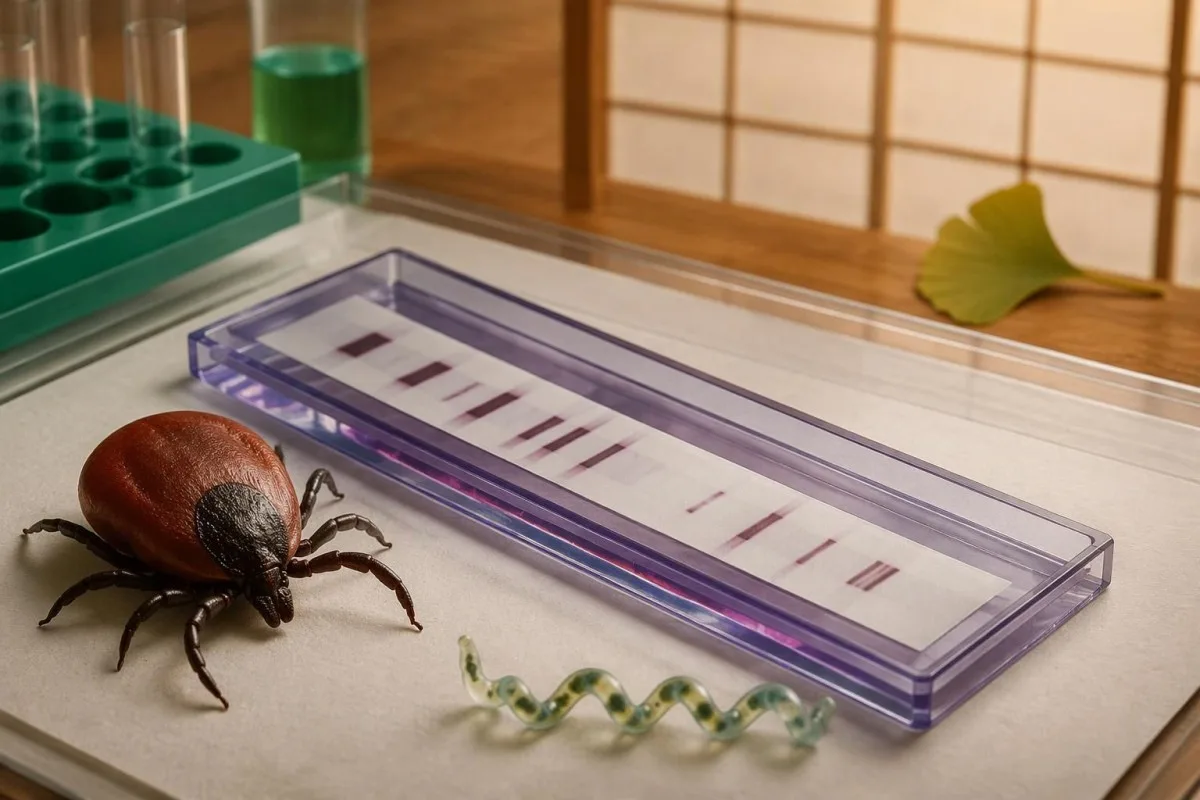
’n Reaktiewe band dui op teenliggaambinding—nie ’n diagnose nie. Die volledige toetsalgoritme, blootstellingsgeskiedenis en simptoomtydlyn bepaal of daardie bevinding Lyme-siekte ondersteun.

Belangrike punte
- Individuele bande bevestig nie Lyme-siekte nie; selfs ’n relatief spesifieke band moet binne ’n gevalideerde toetsalgoritme in twee stappe geïnterpreteer word.
- Tradisionele IgM-kriteria vereis minstens 2 van 3 aangeduide bande: ongeveer 23–25, 39 en 41 kDa.
- Tradisionele IgG-kriteria vereis minstens 5 van 10 aangeduide bande: 18, 23, 28, 30, 39, 41, 45, 58, 66 en 93 kDa.
- Die 30-dae-reël beteken dat geïsoleerde IgM nie ’n Lyme-diagnose behoort te ondersteun wanneer simptome langer as 30 dae geduur het nie.
- ’n Negatiewe algehele uitslag kan saam met reaktiewe bande voorkom omdat die laboratorium ’n gevalideerde patroon beoordeel, nie of enige band verskyn nie.
- Gewysigde tweevlaktoetsing gebruik 2 opeenvolgende ensiem-immunotoetse in plaas van ’n immunoblot; dit bevat dalk geen bandelys nie.
- Vroeë toetsing kan negatief wees voordat teenliggaampies ontwikkel; ’n tipiese erythema migrans-uitslag in ’n toepaslike blootstellingsituasie word klinies gediagnoseer.
- Aanhoudende teenliggaampies kan jare ná behandeling steeds waarneembaar wees en kan nie ’n voortgesette infeksie bevestig of genesing meet nie.
Wat beteken ’n positiewe Lyme-Western-blot-band eintlik?
A positiewe Lyme-Western-blot-band beteken dat teenliggaampies aan ’n toetsantigeen gebind het; dit bevestig nie op sigself Lyme-siekte nie. In tradisionele Amerikaanse tweevlaktoetsing vereis IgM 2 van 3 aangewese bande gedurende die eerste 30 dae van simptome, terwyl IgG 5 van 10 vereis; gewysigde toetsing gebruik eerder 2 immunotoetse.
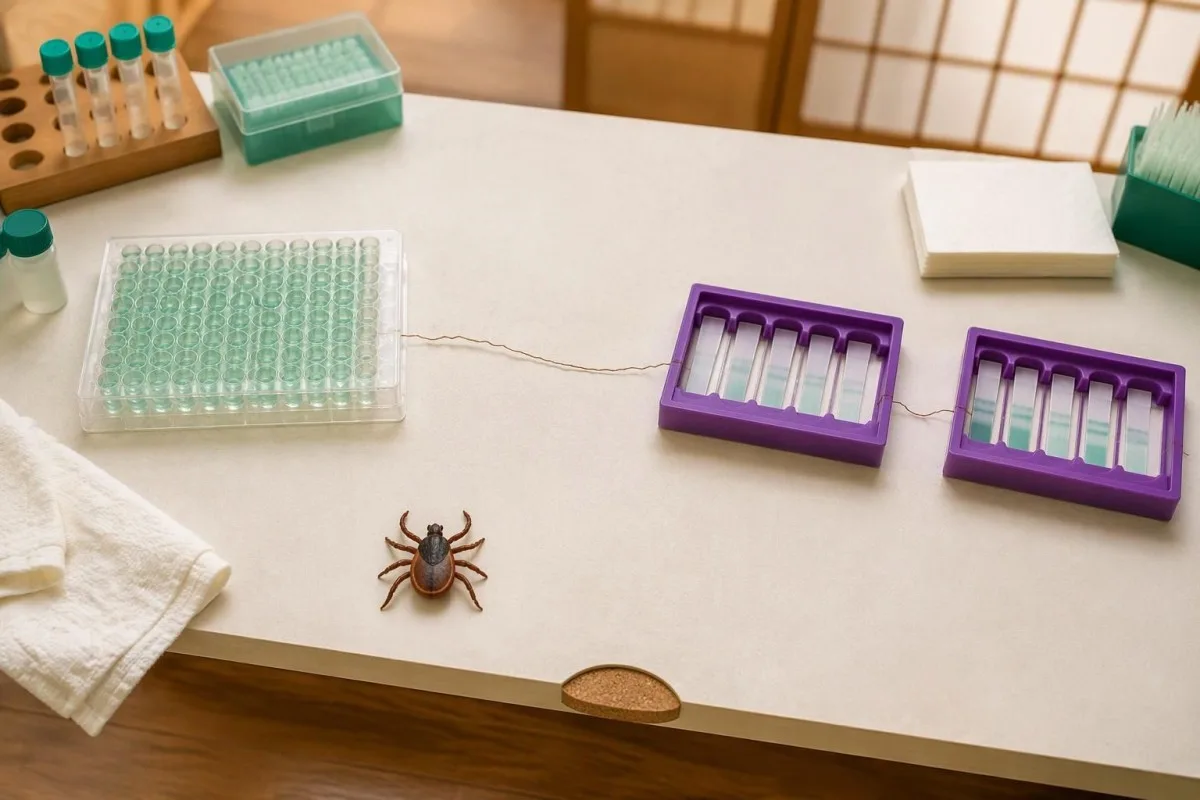
Die algehele resultaat kombineer die eerstefase-siftingstoets met die toepaslike tweedefase-resultaat, eerder as om elke sigbare streep as ’n afsonderlike diagnose te behandel. ’n Verslag wat 1 reaktiewe band toon, kan dus tereg negatief sê, en selfs ’n positiewe volledige teenliggaamresultaat moet opgeweeg word teen blootstelling, ooreenstemmende bevindings en vorige Lyme-siekte.
Die band se identiteit beantwoord ’n beperkte vraag: watter antigeen het onder hierdie toets se toestande teenliggaambinding aangetrek? Dit beantwoord nie die 3 vrae waaroor pasiënte gewoonlik besorg is nie—of infeksie tans teenwoordig is, of dit hul simptome verklaar, of antibiotika nodig is nie; ons gids oor positiewe antiliggaam resultate onderskei hierdie kwessies.
Kantesti is 'n KI-bloedtoetsontleder wat kan help verduidelik waarom ’n Lyme-verslag reaktiewe bande maar ’n negatiewe 2-vlak-interpretasie bevat. Ons beskou die laboratorium se finale interpretasie, toetsmetode en simptoomduur as noodsaaklike konteks—nie besonderhede wat oorskryf kan word deur gemerkte lyne in ’n opgelaaide verslag te tel nie.
Hoe tradisionele Lyme-toetsing in twee stappe die uitslag bepaal
Standaard tweevlaktoetsing begin met ’n ensiem-immunotoets, of soms ’n immunofluoressensietoets, en gaan oor na ’n immunoblot wanneer die eerste toets positief of dubbelsinnig is. Die 2 stadia werk saam; ’n positiewe siftingsresultaat alleen is nie ’n bevestigde positiewe Lyme-serologieresultaat nie.
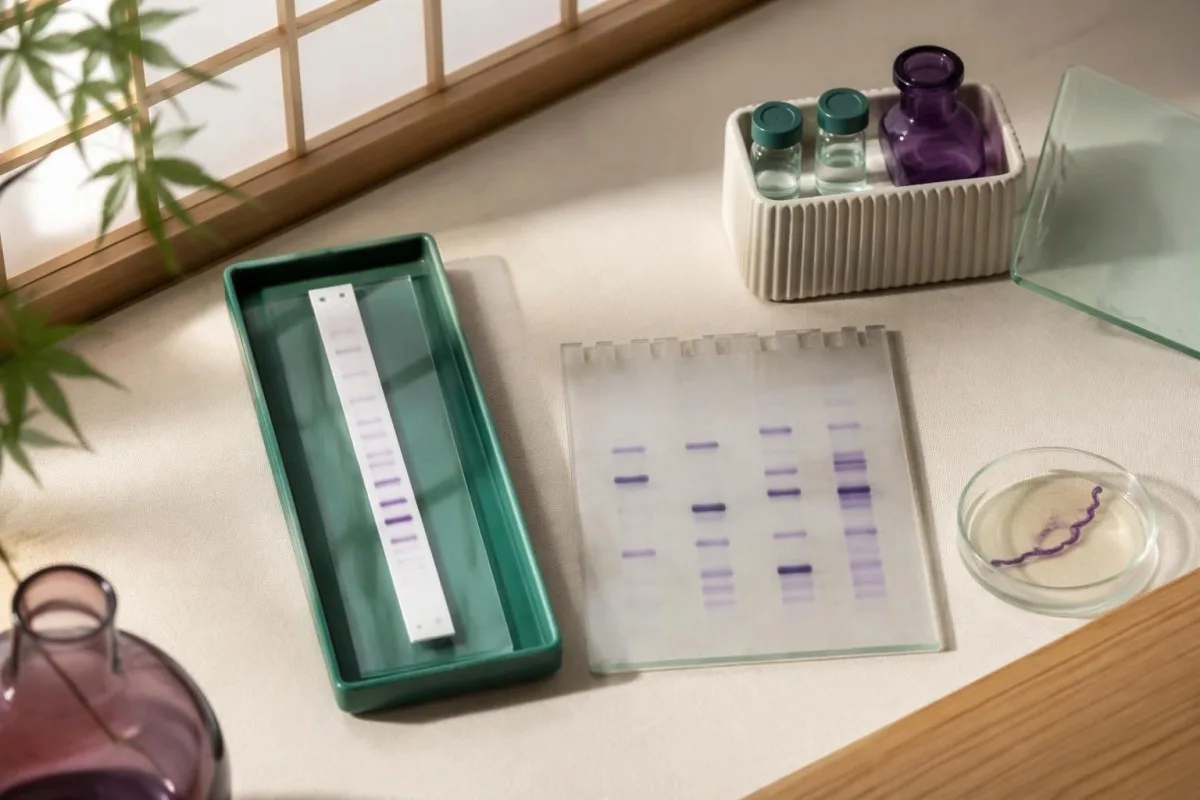
A positiewe of dubbelsinnige eerstefasetoets gevolg deur negatiewe toepaslike immunoblots word deur die standaardalgoritme as negatief geïnterpreteer. Die aanvanklike siftingstoets vang doelbewus meer moontlike reaksies op, terwyl die tweedefase-toets nie-spesifieke reaktiwiteit uitsif; Moore et al. het hierdie balans en die algemene interpretasiefoute daarvan in Emerging Infectious Diseases in 2016 beskryf.
’n Indeks van 1.4 op een siftingstoets is nie uitruilbaar met 1.4 op ’n ander nie, omdat antigeensamestelling en vervaardiger se afsnypunte verskil. Net so is ’n dubbelsinnige siftingsresultaat ’n instruksie om die algoritme te voltooi—nie ’n diagnose halfpad tussen infeksie en geen infeksie nie; kwalitatiewe teenoor kwantitatiewe resultate verduidelik waarom verslagformate saak maak.
Om ’n immunoblot aan te vra ná ’n negatiewe siftingstoets, sonder ’n kliniese rede om die tydsberekening of geskiktheid van die toets te heroorweeg, omseil die volgorde waarvan die prestasie geëvalueer is. Vra vir 3 stukke inligting: die siftingsresultaat, die tweedefase-interpretasie en of albei deel is van dieselfde gevalideerde toetsproses; ’n onvolledige verslag moet nie bloot op grond van bande gerekonstrueer word nie.
Lyme-Western-blot-bande verduidelik: IgM- en IgG-kriteria
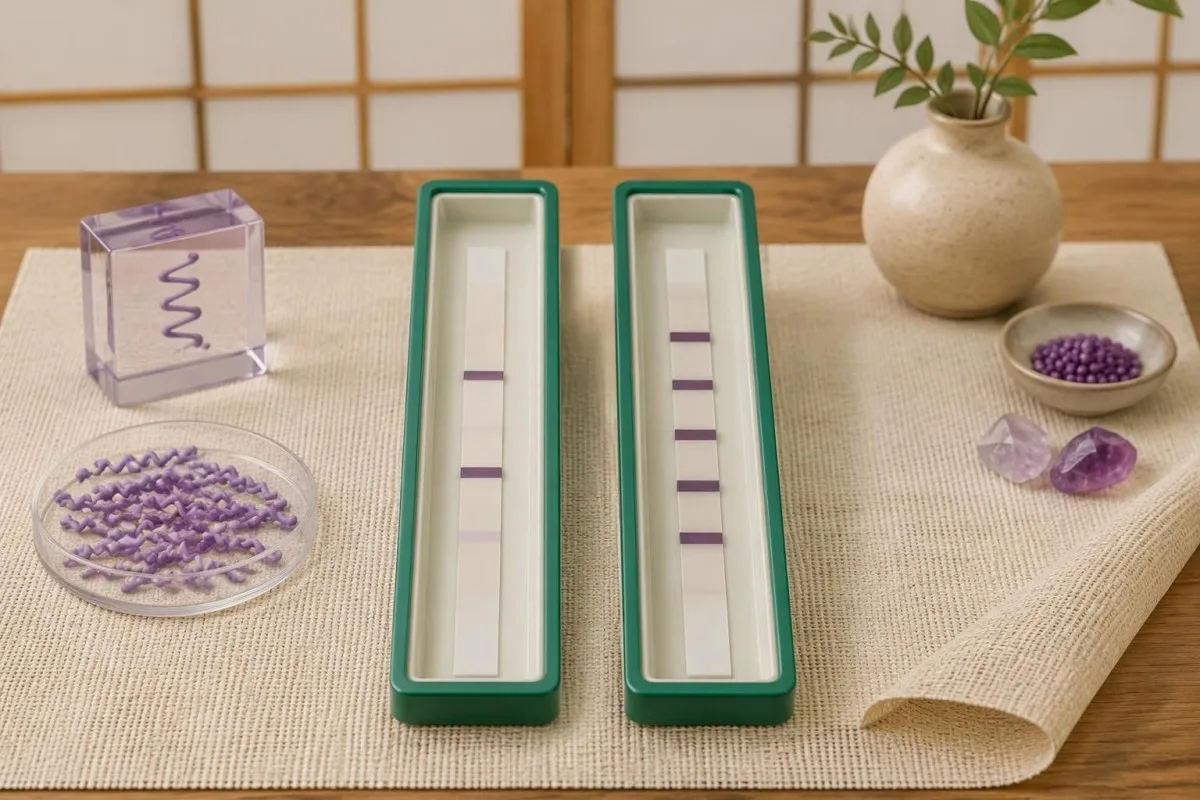
Volgens konvensionele Amerikaanse kriteria vereis ’n positiewe IgM-immunoblot minstens 2 van die bande van 23–25, 39 en 41 kDa. ’n positiewe IgG-immunoblot requires at least 5 of the 18, 23, 28, 30, 39, 41, 45, 58, 66 and 93 kDa bands.
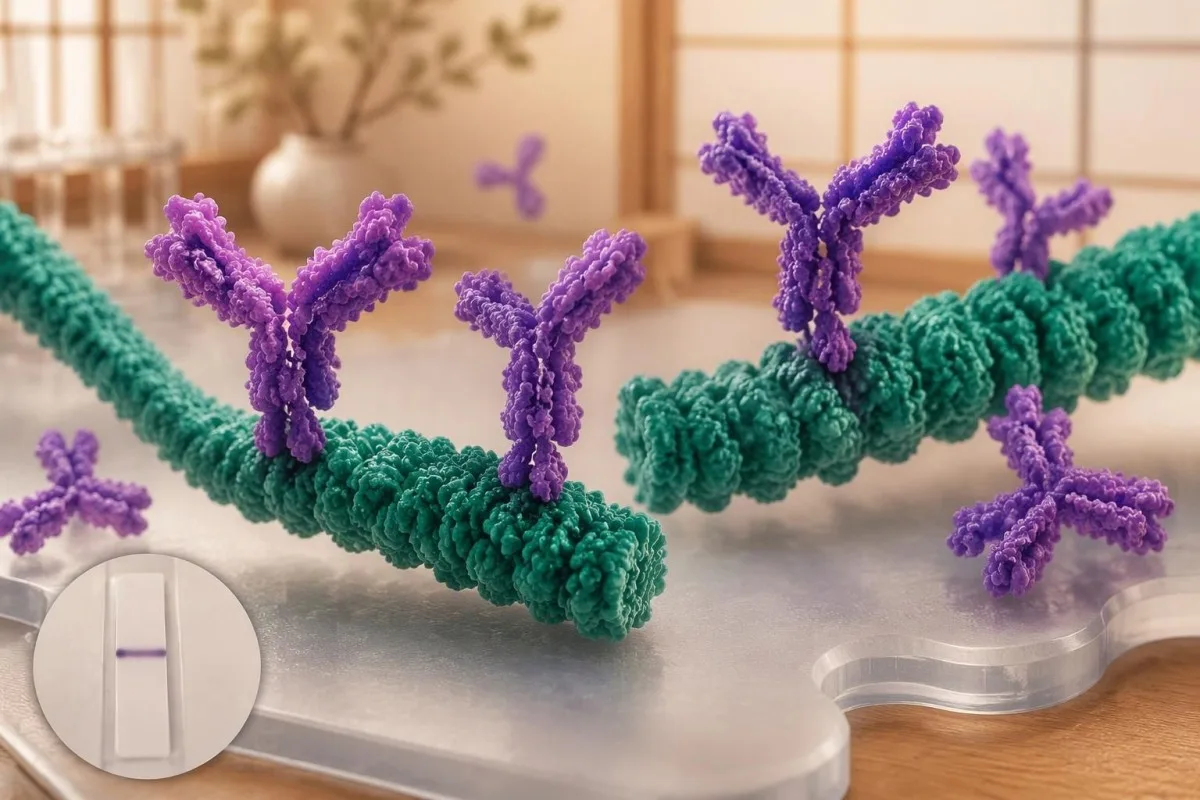
Kilodaltons, abbreviated kDa, describe approximate protein molecular mass, not antibody concentration or disease severity. The approximately 23–25 kDa band commonly represents outer surface protein C, 39 kDa represents BmpA and 41 kDa represents flagellin; the numbers identify antigen regions, so a higher-numbered band does not mean a more advanced infection.
The IgG list's 58 kDa criterion excludes GroEL, and reports may use assay-specific names or approximate mass conventions rather than identical labels. Because not every commercial strip uses the same antigen preparation, our bloedtoets merker gids should complement—not replace—the actual laboratory legend and the assay manufacturer's interpretation instructions.
Bands at 31 and 34 kDa are not part of the conventional CDC IgG counting criteria, even though they may appear on some reports. Their absence from that list does not make them meaningless biologically, but adding them to manufacture a 5-band positive result changes the validated rule; neither band darkness nor extra bands quantify bacterial burden.
Waarom band 41 en ander reaktiewe bande vals seine kan wees
Die 41 kDa band reacts with flagellin, a protein associated with bacterial movement, and can cross-react with antibodies unrelated to Lyme disease. A single reactive 41 kDa band is therefore insufficient to diagnose Lyme disease, even when a patient has fatigue, aching or a remembered tick bite.
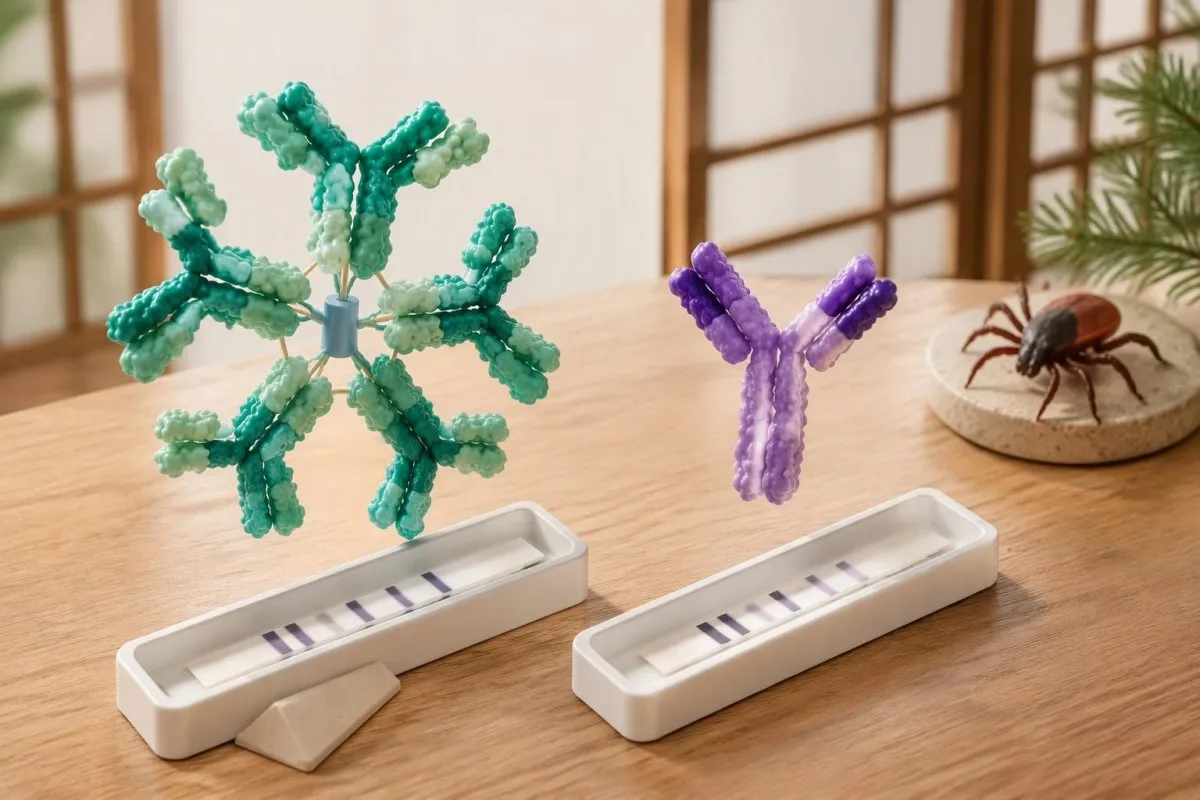
Moore et al. (2016) cited a study in which 41 kDa reactivity occurred in 43% of healthy controls, illustrating why this band cannot stand alone. That percentage is not a universal false-positive rate for every modern assay; it is evidence that recognizable antigen binding can occur in people without the clinical condition being investigated.
Epstein–Barr virus, syphilis, relapsing-fever Borrelia and some autoimmune conditions can contribute to false-positive Lyme serology, although the mechanism and affected assay vary. A recent mononucleosis-like illness should prompt attention to the complete EBV antibody pattern, not the assumption that 1 Lyme band proves a simultaneous tick-borne infection.
Cross-reactivity is not a reason to order every alternative antibody panel: 1 unexplained band usually does not justify broad autoimmune screening. When examination findings genuinely suggest an immune disorder, komplement- en ANA-interpretasie belongs to a separate clinical question; repeated low-probability testing can generate additional misleading positives rather than a clearer answer.
Lyme IgM teenoor IgG: waarom die 30-dae-simptoomreël saak maak
Lyme IgM should not be used to support a diagnosis when symptoms have lasted more than 30 days. IgM is most useful early, whereas an appropriate IgG response carries greater diagnostic weight later; the clock starts with symptoms of the suspected illness, not the testing date or remembered tick removal.
Die 30-day restriction reduces misclassification from persistent or nonspecific IgM responses when later disease should usually have an established IgG response. It is an interpretation rule, not a biological switch that flips overnight: antibody maturation varies, and early treatment may alter seroconversion, but those exceptions do not make isolated late IgM reliable evidence.
For a hypothetical patient tested on day 75 of continuous symptoms, IgM bands 23 and 41 with negative IgG should not be used as proof of Lyme disease. By contrast, the same IgM pattern on day 12, following a reactive first-tier assay and compatible exposure, can support an early diagnosis; the numerical band count is identical, but its evidential value changes.
A positive IgM result does not automatically mean a new infection, a misconception also addressed in our Mycoplasma IgM interpretation guide. If symptoms began 8 weeks ago but one symptom appeared yesterday, clinicians need to decide whether this is a genuinely new illness or another feature of the original episode—not simply restart the IgM clock.
Positiewe Lyme-bande maar negatief in die geheel: uitgewerkte voorbeelde
Positive Lyme bands but negative overall usually means the report did not meet the required pattern within the testing algorithm. For example, 3 designated IgG bands are below the conventional 5-of-10 threshold; that result is negative, not a smaller positive, and it does not measure how much infection is present.
Consider a clearly hypothetical 42-year-old with 10 weeks of fatigue, a reactive screening assay and IgG bands 18, 41 and 58. The IgG immunoblot is negative because only 3 qualifying bands are present; if the examination lacks objective Lyme findings, the next step is a symptom-focused assessment rather than antibiotics prescribed to treat the band's molecular masses.
A second hypothetical patient has a reactive screen, IgM bands 23 and 39, and compatible symptoms beginning 14 days earlier. This can meet the traditional early serologic criteria, but an atypical exposure history or a stronger alternative diagnosis still affects the clinical conclusion; Kantesti AI can explain the 2-of-3 rule without converting it into an independent diagnosis.
A third report lists 5 IgG bands but provides no first-tier result; the missing screening stage prevents straightforward confirmation of a standard 2-tier outcome. Confirmation requirements are assay-specific, as our HSV IgG confirmation guide also illustrates, so request the complete laboratory report rather than borrowing a cutoff or confirmation rule from another infection.
Hoe gewysigde toetsing in twee stappe van ’n Western-blot verskil
Modified two-tier testing, or MTTT, uses 2 sequential enzyme immunoassays instead of an enzyme immunoassay followed by an immunoblot. A report from this pathway may have no bands at all; its overall interpretation depends on the particular assay combination and its cleared instructions, not the conventional immunoblot band-count criteria.
Die 2019 CDC recommendation accepted modified algorithms using FDA-cleared assays for that purpose, following clearance of relevant test combinations (Mead et al., 2019). The change was not permission to combine any 2 tests: the evaluated pairing matters, and some combinations improve early sensitivity while preserving high specificity compared with standard two-tier testing.
Some modified algorithms measure total antibodies, while others report separate IgM and IgG components; consequently, the familiar 30-day IgM restriction cannot be mechanically applied to a total-antibody result. Kantesti is an AI bloedtoets interpretasie platform that can help distinguish a 2-immunoassay report from an immunoblot report before discussing what its positive or negative designation means.
A second immunoassay is not simply a repeat of the same screening test, and an immunoblot is not routinely needed after a completed validated MTTT result. Our bevestigingsgids vir Chagas illustrates the broader principle of complementary assays, but its 2-test rules are different; ask your laboratory which Lyme algorithm produced the final interpretation.
Kan Lyme-toetsing vroeg negatief wees ondanks infeksie?
Lyme antibody testing can be negative early because antibodies have not yet reached detectable levels. A typical erythema migrans rash with an appropriate exposure history is diagnosed clinically rather than by waiting for a positive immunoblot; a negative result during the first 1–2 weeks does not safely exclude that presentation.
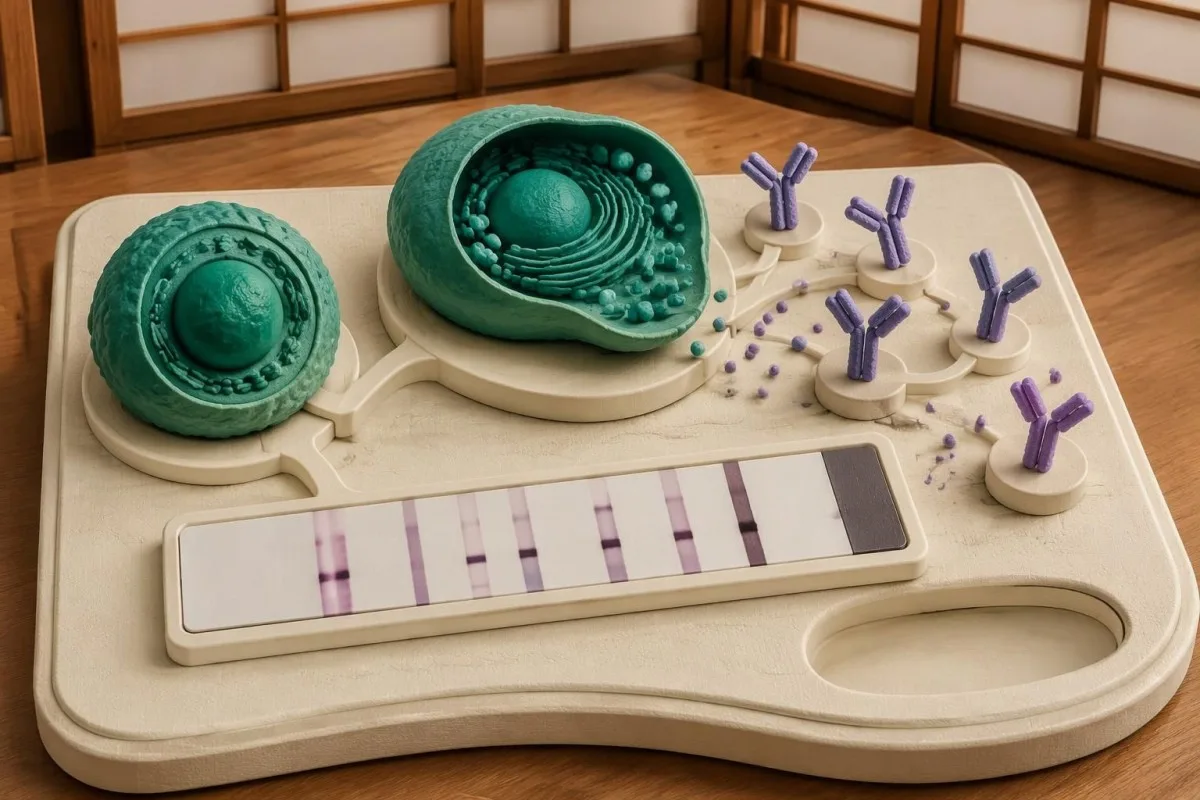
Across early-infection settings, conventional 2-tier sensitivity has been reported at approximately 30–40%, while specificity remains high when testing and interpretation are appropriate (Moore et al., 2016). These are population estimates, not a personal probability: sensitivity changes with the clinical manifestation, time since onset and whether the patient has already received antibiotics.
For a rash suggestive of but not typical for erythema migrans, the 2020 IDSA/AAN/ACR guideline supports acute serology and, if initially negative, a convalescent sample at least 2–3 weeks later (Lantos et al., 2021). The same guideline recommends clinical diagnosis for a typical lesion; a rash need not have textbook concentric rings to warrant assessment.
Repeating a test 24 hours later usually offers little advantage when the limitation is antibody development rather than a processing error. Our spotted fever testing guide explains a related timing problem, but suspected spotted fever has its own urgent treatment rules; do not delay care for an expanding rash or significant illness while waiting for more bands.
Beteken positiewe Lyme-IgG aktiewe infeksie of mislukte behandeling?
Positive Lyme IgG cannot distinguish active infection from a previous infection that has resolved. Lyme antibodies can remain detectable for years or decades, and repeat immunoblot testing is not a test of cure; neither a persistent 5-band pattern nor changes in band intensity establish that treatment failed.
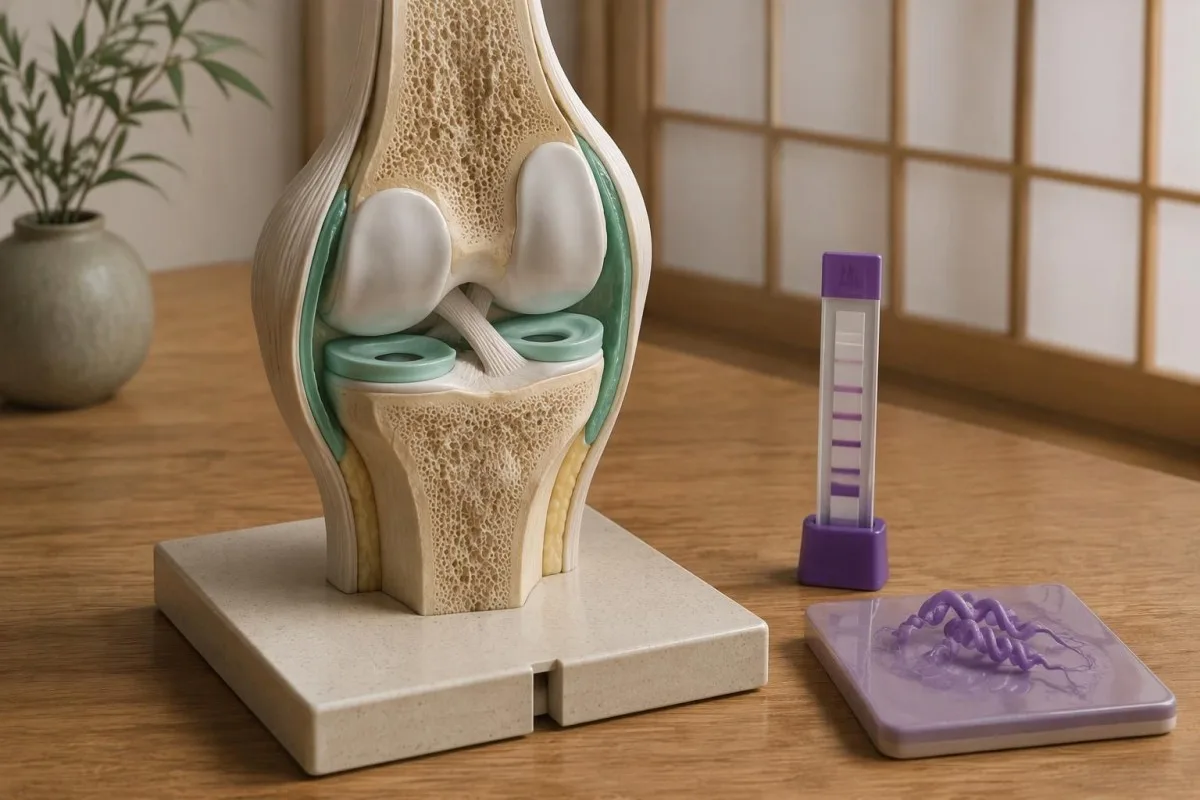
Die 2020 IDSA/AAN/ACR guideline describes persistence of both IgM and IgG responses after infection, which complicates interpretation in previously affected patients (Lantos et al., 2021). A positive result obtained 4 years after treatment must therefore be compared with the clinical history, not interpreted as a laboratory photograph of living bacteria in the body.
Reinfection can occur because previous Lyme disease does not provide reliable lifelong protection, but an old positive antibody result cannot prove a new episode. For a hypothetical person with positive IgG from 2019 and a new expanding rash after recent tick exposure, the new clinical findings matter more than whether a sixth band appears; CMV antiliggaam patrone illustrate why exposure history and current illness are separate questions.
Persistent fatigue, pain or cognitive symptoms deserve evaluation even when no new laboratory evidence appears. The guideline recommends against additional antibiotics for persistent nonspecific symptoms after recommended treatment when there is no objective evidence of reinfection or treatment failure; 1 positive antibody panel cannot identify the cause of those symptoms or justify an open-ended antibiotic course.
Wat IgG beteken by vermoedelike Lyme-artritis of neurologiese siekte
Lyme arthritis usually produces a strong IgG response, so isolated IgM is poor evidence for that diagnosis. Conventional two-tier serology has approximately 95–100% sensitivity in Lyme arthritis, according to the 2020 IDSA/AAN/ACR guideline; a negative appropriate IgG result should prompt serious consideration of other causes of joint swelling.
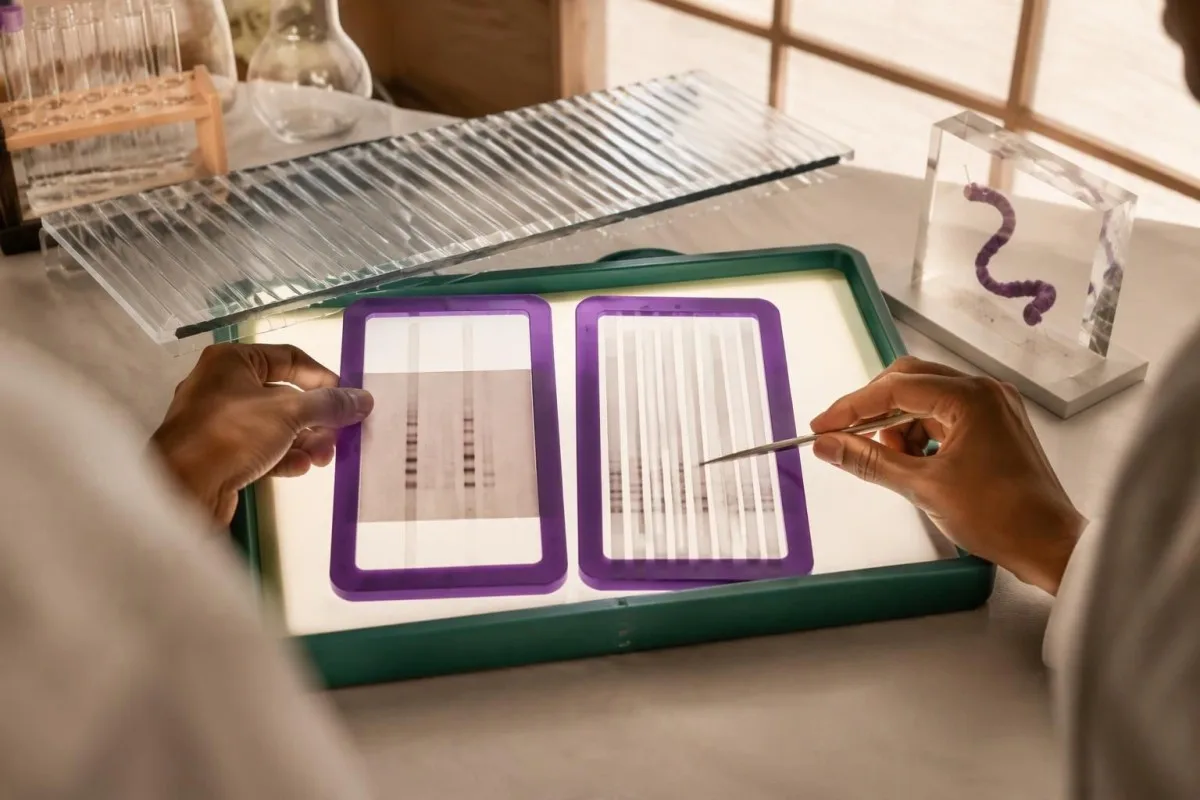
A hypothetical patient with a markedly swollen knee and only 2 IgM bands after 3 months of symptoms does not have the expected serologic pattern for Lyme arthritis. The clinician should reassess alternative causes and assay reliability rather than call this late Lyme based on IgM alone; when indicated, joint fluid examination answers additional questions that the antibody test cannot.
Suspected central nervous system Lyme disease requires clinical assessment and, when cerebrospinal fluid testing is undertaken, simultaneous CSF and serum for a validated antibody index. Testing CSF antibody alone or running a standalone CSF immunoblot is not the preferred approach; 1 elevated index may also persist after treatment, so it must be interpreted alongside the neurological findings and CSF cell response.
Numb feet or tingling do not become Lyme-specific because 41 kDa is reactive; neuropathy has metabolic, mechanical and immune causes. Our anti-MAG neuropathy guide explains one targeted alternative, while immunoglobulin panel interpretation clarifies that total serum IgG is different from the 5-of-10 Lyme-specific IgG immunoblot criterion.
Waarom laboratoriums en lande verskillende Lyme-kriteria kan gebruik
Lyme immunoblot criteria are assay- and region-dependent, so conventional US 5-of-10 IgG counting rules should not automatically be imposed on every European report. European assays may use different Borrelia antigens and recombinant line blots because the species causing human Lyme borreliosis differ across regions.
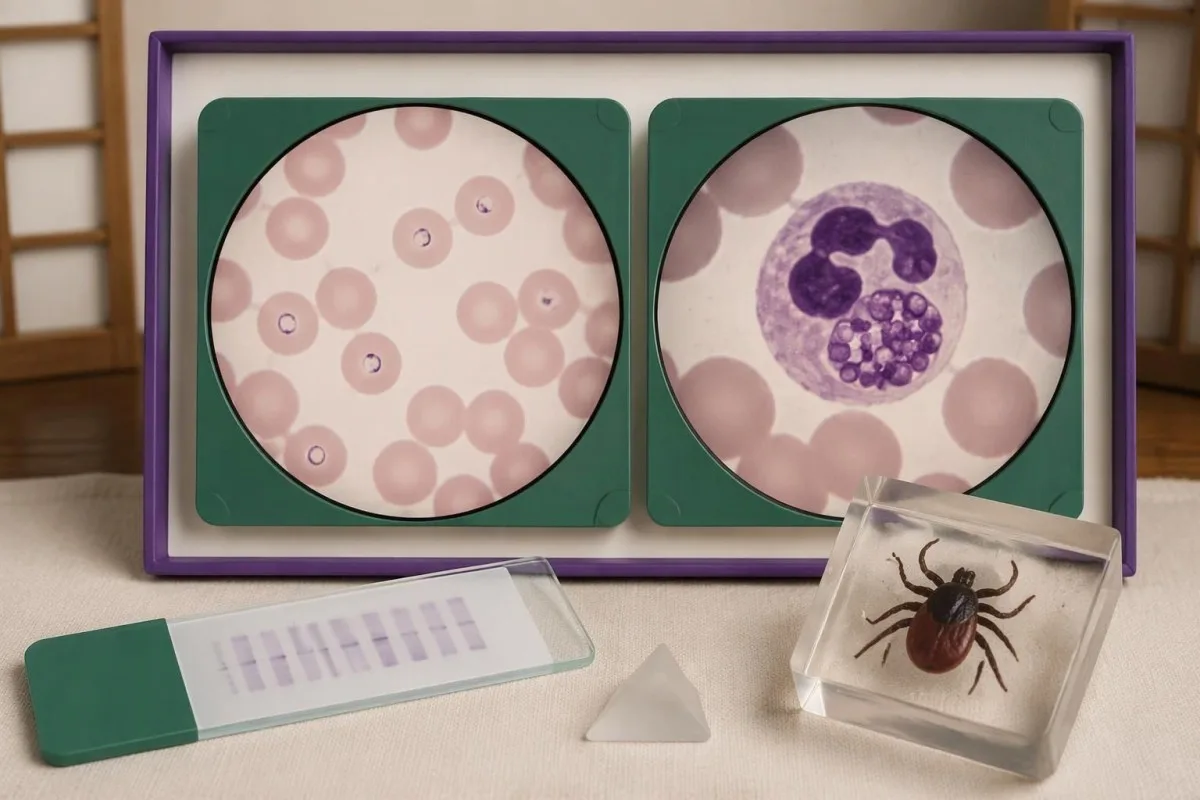
B. burgdorferi sensu stricto predominates in North America, while European disease also commonly involves B. afzelii and B. garinii. A report using VlsE, OspC or other recombinant antigen labels may therefore not resemble a 10-position conventional US blot; the clinically useful question is whether the assay was validated for the exposure setting and interpreted according to its instructions.
Different laboratory criteria are not automatically inferior, but claims that 1 or 2 bands prove disease require evidence for that assay's complete diagnostic performance. When reading a report described by Kantesti, consult the laboratory's interpretation and our mediese valideringsraamwerk separately; general AI assessment or a software benchmark is not proof that a particular Lyme assay has validated sensitivity and specificity.
Record 3 details before comparing reports from different laboratories: assay manufacturer, algorithm type and the country where exposure occurred. Our KI verslagbron-ondersoek gids explains why preserving source wording matters; apparent conversion from negative to positive may reflect a changed method or cutoff rather than a newly acquired infection or worsening illness.
Identifiseer Lyme-bande Babesia, Anaplasma of ander koinfeksies?
Lyme Western blot bands do not diagnose tick-borne coinfections. Babesia, Anaplasma and Ehrlichia require their own clinical assessment and tests; 1 positive Lyme antibody result neither confirms nor excludes these infections, even when an exposure setting allows more than one tick-borne organism to be transmitted.
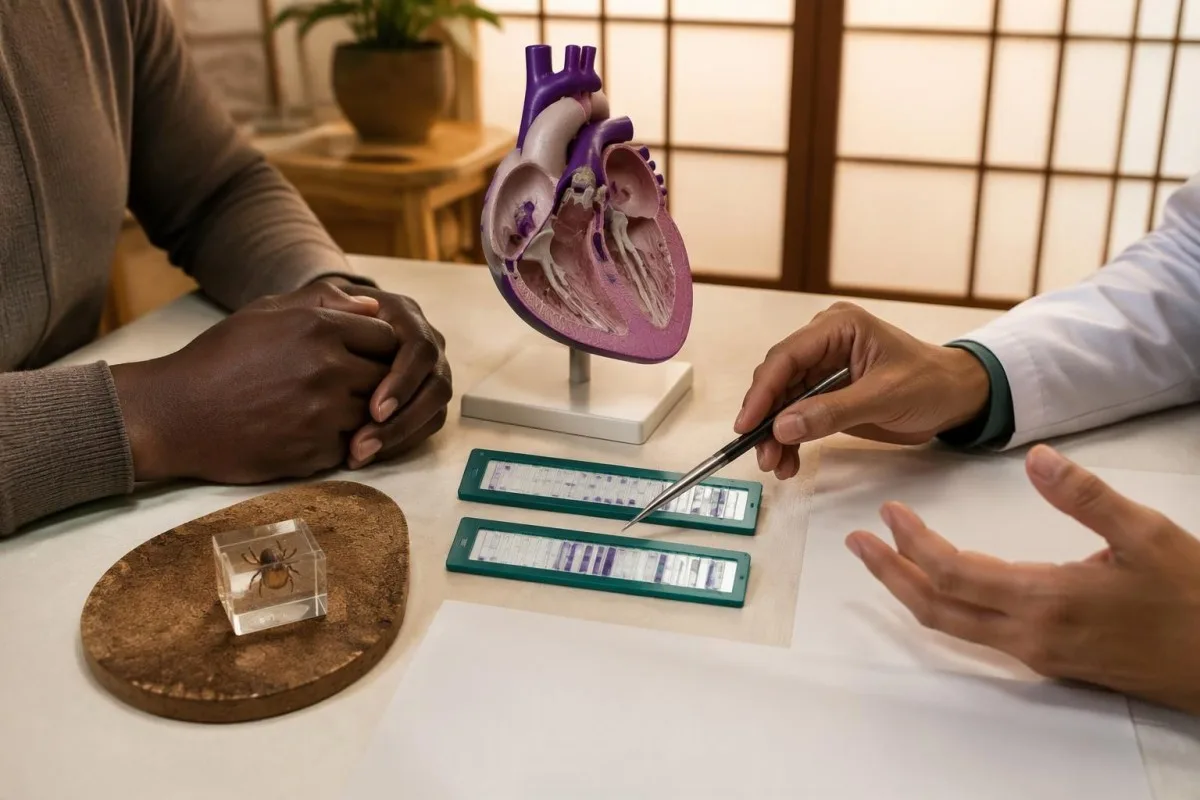
Babesiose deserves consideration when relevant exposure accompanies fever and evidence such as anemia, low platelets or hemolysis, especially if fever persists during Lyme-directed treatment. A Babesia antibody titer of 1:256 alone does not establish current infection; our Babesia test interpretation guide explains why a cellular sample examination or PCR may be needed to demonstrate active infection.
Anaplasmose can produce fever, leukopenia, thrombocytopenia and elevated liver enzymes, findings that should not be explained away as extra Lyme bands. PCR is most useful during the first week of illness and becomes less sensitive after appropriate antibiotics; our Anaplasma sample timing guide separates this early direct-detection window from later antibody interpretation.
Ehrlichiosis follows a different organism-specific testing pathway, and a negative early antibody result is not a safe reason to dismiss significant febrile illness. Our Ehrlichia PCR and titer guide explains why 2 samples collected at different times may help establish seroconversion; targeted testing should follow symptoms, geography and laboratory abnormalities rather than an indiscriminate panel ordered for isolated fatigue.
Wat moet jy doen met ’n onduidelike Lyme-toetsverslag?
For an unclear Lyme report, obtain the complete 2-tier interpretation, write down symptom onset and discuss exposure plus objective findings with a clinician. Faint or isolated bands do not determine urgency; fainting, chest pain, breathlessness, a markedly slow pulse or new neurological deficits require prompt assessment regardless of the antibody result.
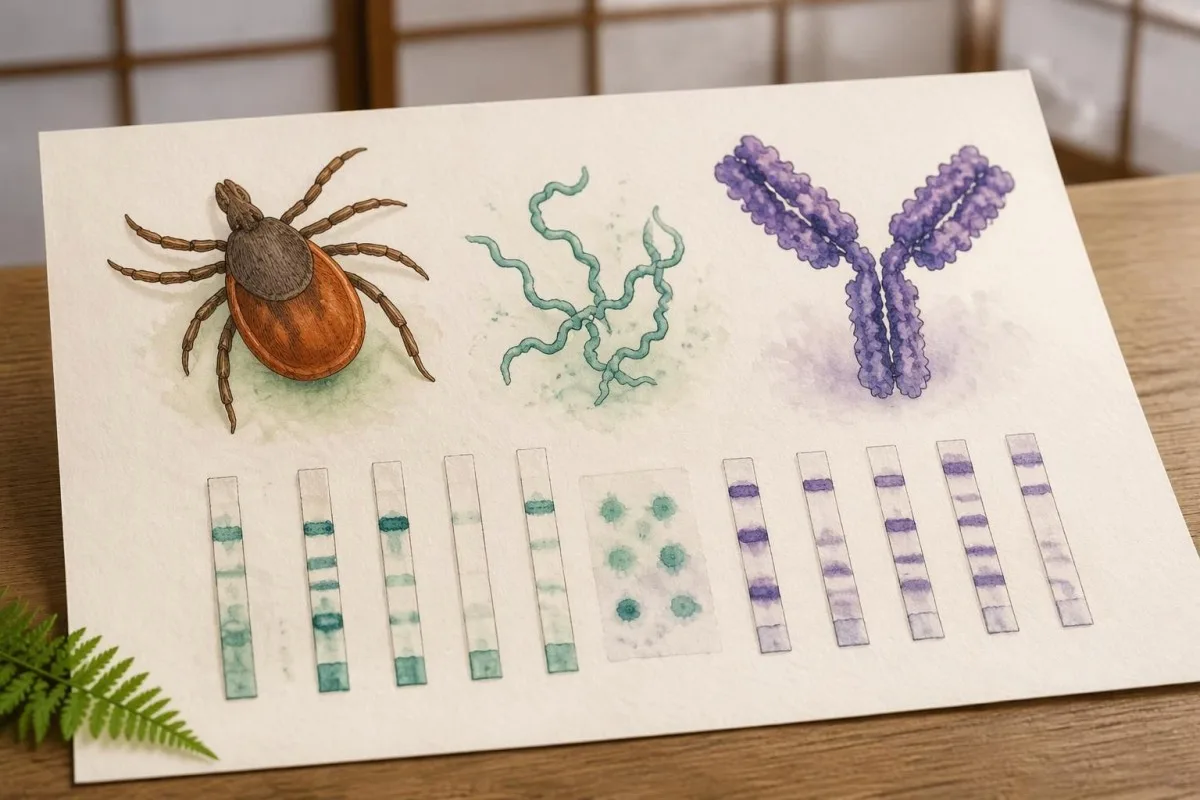
Lyme carditis can cause heart conduction block, so fainting or palpitations after compatible exposure should not wait for an immunoblot to become positive. The 2020 IDSA/AAN/ACR guideline identifies a PR interval greater than 300 milliseconds, other arrhythmias or features of myopericarditis as reasons for hospital admission with monitoring; that interval is measured on an ECG, not inferred from band intensity.
New facial weakness warrants urgent assessment, and sudden facial droop with arm weakness or speech difficulty needs emergency evaluation for stroke rather than attribution to Lyme. Our gids oor waarskuwingstekens van ’n beroerte explains that distinction; for a routine appointment, bring 4 dates—possible exposure, first symptom, sample collection and antibiotic initiation—because each changes a different part of the reasoning.
Kantesti is 'n KI-aangedrewe bloedtoets-analisehulpmiddel that can help organize the 2-tier result, reported bands and missing clinical context into questions for your appointment. Our KI-tegnologiegids describes the explanation workflow, but our AI cannot examine a rash, measure an ECG interval, confirm Lyme disease independently or decide whether you should start, stop or extend antibiotics.
Navorsingspublikasies, bewysgrense en veilige interpretasie
The clinical interpretation in this article rests on 3 directly relevant sources: a laboratory-diagnosis review, the CDC's modified two-tier recommendation and the IDSA/AAN/ACR Lyme guideline. The 2 additional Figshare publications listed below concern other health topics and must not be treated as validation of Lyme band interpretation or Lyme diagnosis.
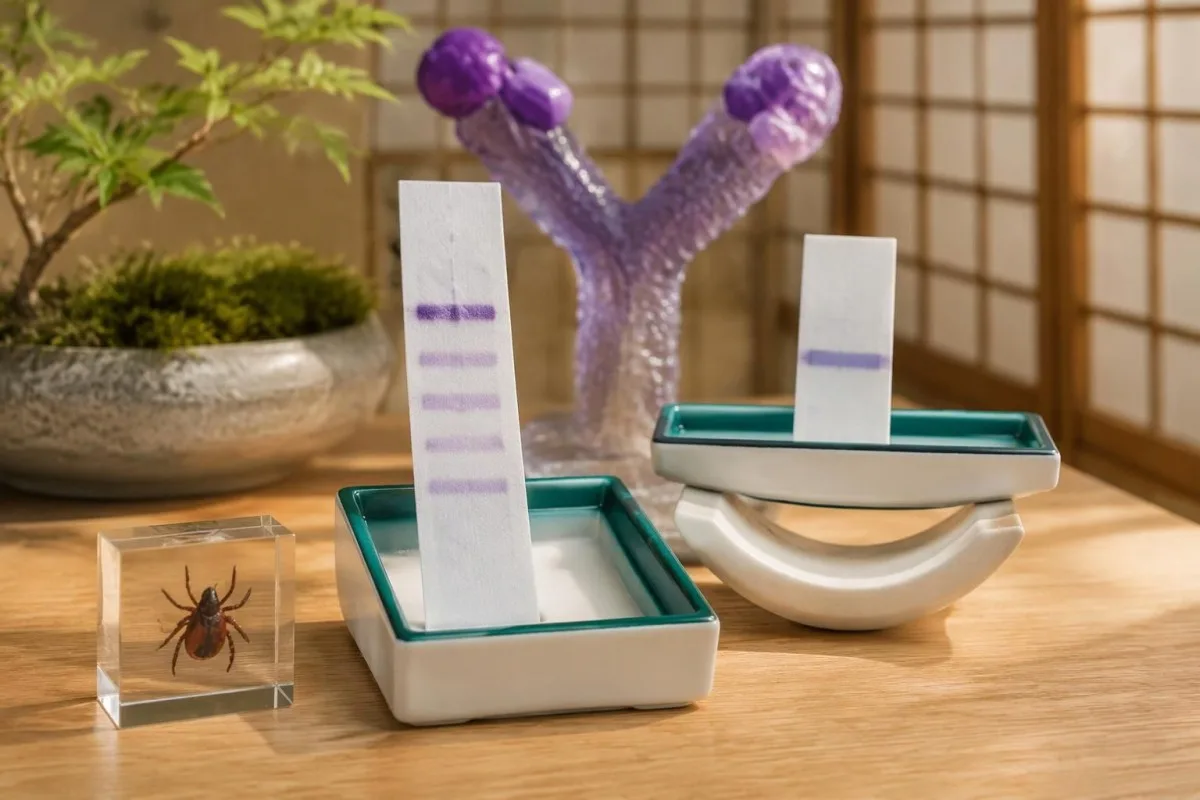
Moore et al. (2016) explains why individual bands and incomplete testing sequences create diagnostic errors; Mead et al. (2019) establishes the CDC recommendation for appropriately cleared modified algorithms. Lantos et al. (2021), publishing the 2020 guideline, connects testing to clinical manifestations, including early rash, arthritis and neurological disease; these sources support different parts of the reasoning rather than one universal band shortcut.
The 2 Figshare records address women's hormonal health and multilingual AI-assisted hantavirus triage, respectively, not Lyme immunoblot performance. A deployment involving 50,000 interpreted reports, as described in the hantavirus publication's title, cannot establish sensitivity, specificity or patient benefit for Lyme diagnosis; those claims would require Lyme-specific methods, reference standards and evaluation populations.
Kantesti se verantwoordelike KI-beginsels place report explanation alongside—not above—the laboratory and clinician, including when IgM appears after 30 days of symptoms. For symptoms linked to cycle changes or menopausal transition, our hormonal symptom guide addresses a separate assessment pathway; symptom overlap is a reason to investigate carefully, not evidence that a reactive Lyme band explains everything.
Dikwels gevraagde vrae
Kan een enkele positiewe band op ’n Lyme-Westerse klad beteken dat ek Lyme-siekte het?
Een enkele reaktiewe band op ’n Lyme-Western-kladtoets bevestig nie Lyme-siekte nie. Volgens konvensionele Amerikaanse kriteria word minstens 2 van die 3 aangewese IgM-bande gedurende die eerste 30 dae van simptome vereis, of 5 van die 10 aangewese IgG-bande, binne die toepaslike tweevlak-toetsroete. ’n Enkele band kan, afhangend van die situasie, op kruisreaktiwiteit of ’n onvolledige vroeë teenliggaamrespons dui. ’n Tipiese erythema migrans-uitslag ná toepaslike blootstelling kan steeds ’n kliniese diagnose ondersteun, selfs wanneer vroeë serologie negatief is.
Waarom is sommige Lyme-bande positief, maar is die algehele toets negatief?
’n Lyme-toets kan reaktiewe bande bevat maar negatief bly omdat die immunoblot nie aan die gevalideerde patroon voldoen het wat deur die toetsalgoritme vereis word nie. Byvoorbeeld, 3 kwalifiserende IgG-bande is minder as die konvensionele drempel van 5 uit 10 IgG-bande. ’n Positiewe of twyfelagtige eerstefase-siftingstoets wat deur toepaslike negatiewe immunoblots gevolg word, word in standaardtoetsing in twee fases as negatief geïnterpreteer. As die simptome baie onlangs begin het, kan ’n klinikus herhaling van die toets op ’n gepaste tydstip oorweeg, eerder as om die onvolledige patroon as positief te herklassifiseer.
Wat beteken ’n positiewe Lyme-band van 41 kDa?
Die 41 kDa-Lyme-band weerspieël gewoonlik teenliggaambinding aan flagellien, ’n bakteriële proteïen wat met beweging verband hou en met teenliggaampies kan kruisreageer wat nie met Lyme-siekte verband hou nie. Dit is slegs 1 van die aangewese bande wat in konvensionele immunoblot-kriteria gebruik word en kan nie op sy eie Lyme-siekte diagnoseer nie. Moore et al. (2016) het ’n studie aangehaal waarin hierdie band by 43% van gesonde kontroles gevind is, hoewel daardie persentasie nie ’n universele koers vir alle toetse is nie. Die volledige toetsvolgorde en kliniese beeld bepaal of die uitslag Lyme-siekte ondersteun.
Is Lyme-IgM-positief en IgG-negatief bewys van ’n onlangse infeksie?
Lyme-IgM-positiwiteit met negatiewe IgG kan slegs vroeë infeksie ondersteun wanneer dit by die toepaslike toetsalgoritme, kliniese beeld en tydsberekening pas. Geïsoleerde IgM moet nie gebruik word om Lyme-siekte te ondersteun wanneer simptome langer as 30 dae geduur het nie, omdat aanhoudende of niespesifieke IgM tot ’n misleidende interpretasie kan lei. Twee kwalifiserende IgM-bande op dag 14 het byvoorbeeld ’n ander betekenis as dieselfde patroon ná 3 maande van ononderbroke simptome. Die tydsreël verwys na die aanvang van simptome, nie na die dag waarop die laboratoriummonster versamel is nie.
Kan ek ’n positiewe Lyme-toets hê sonder enige Western-blotbande?
Ja: ’n gevalideerde gewysigde tweevlak-Lyme-algoritme gebruik 2 opeenvolgende ensiemimmunotoetse en voer moontlik glad nie ’n Western-klad uit nie. Die CDC het in 2019 toepaslik FDA-goedgekeurde gewysigde algoritmes aanbeveel. Sommige toetskombinasies meet totale teenliggaampies, terwyl ander afsonderlike IgM- en IgG-resultate verskaf, dus is konvensionele reëls vir die tel van bande nie op elke verslag van toepassing nie. Vra die laboratorium watter algoritme en toetskombinasie die finale interpretasie opgelewer het.
Moet Lyme-Western-blotbande ná antibiotika verdwyn?
Lyme-Westerngedstrookbande hoef nie ná suksesvolle behandeling te verdwyn nie, omdat teenliggaampies jare of selfs dekades lank kan voortduur. ’n Voortdurende IgG-patroon met 5 bande bewys nie dat die infeksie steeds aktief is nie, en herhaalde toetsing van bande is nie ’n gevalideerde genesingstoets nie. Die behandelingsreaksie word aan die hand van die kliniese verloop en relevante objektiewe bevindings beoordeel, nie deur te vereis dat ’n teenliggaampiepaneel negatief word nie. Nuwe simptome of nog ’n blootstelling aan ’n bosluis vereis ’n nuwe kliniese beoordeling, omdat ou teenliggaampies nie ’n herinfeksie kan bevestig nie.
Kry verduideliking van jou bloedtoets resultate
Laai jou laboratoriumverslag op en Kantesti se KI verduidelik elke biomerker binne sekondes in verstaanbare taal. Meer as 2 miljoen mense wêreldwyd gebruik dit.
Verwysings
- Klein, T., Mitchell, S., & Weber, H. (2026). Vrouegesondheidsgids: Ovulasie, menopouse en hormonale simptome. Kantesti KI-mediese navorsing. DOI
- Klein, T., Mitchell, S., & Weber, H. (2026). Meertalige KI-ondersteunde kliniese besluitondersteuning vir vroeë hantavirus-triage: Ontwerp, ingenieursvalidering en werklike ontplooiing oor 50 000 geïnterpreteerde bloedtoetsverslae. Kantesti KI-mediese navorsing. DOI
- Moore A et al. (2016). Current Guidelines, Common Clinical Pitfalls, and Future Directions for Laboratory Diagnosis of Lyme Disease, United States. Emerging Infectious Diseases. DOI PubMed
- Mead P et al. (2019). Updated CDC Recommendation for Serologic Diagnosis of Lyme Disease. MMWR Morbidity and Mortality Weekly Report. DOI
- Lantos PM et al. (2021). Clinical Practice Guidelines by the Infectious Diseases Society of America (IDSA), American Academy of Neurology (AAN), and American College of Rheumatology (ACR): 2020 Guidelines for the Prevention, Diagnosis and Treatment of Lyme Disease. Clinical Infectious Diseases. DOI
- 2M+Ontleedde toetse
- 127+Lande
- 100+Tale
Oor die mediese span


E-E-A-T Vertrouenseine
Ervaring
Kliniese oorsig gelei deur ’n geneesheer van laboratorium-interpretasie-werksvloei.
Kundigheid
Laboratoriumgeneeskunde fokus op hoe biomerkers in ’n kliniese konteks optree.
Gesagsvermoë
Medies beoordeel deur Dr. Thomas Klein, met bydraes van Dr. Sarah Mitchell en Prof. Dr. Hans Weber.
Betroubaarheid
Bewysgebaseerde interpretasie met duidelike opvolgpaaie om alarm te verminder.






Mediese vrywaring
Hierdie artikel is slegs vir opvoedkundige doeleindes en vorm nie mediese advies nie. Raadpleeg altyd ’n gekwalifiseerde gesondheidsorgverskaffer vir besluite oor diagnose en behandeling.
Gepubliseer · Kontak die redaksiespan
Gepubliseer deur Kantesti Ltd, geregistreer in Engeland en Wallis, maatskappynr. 17090423, Londen, Verenigde Koninkryk.
