
פס תגובתי מצביע על קשירת נוגדנים — לא על אבחנה. אלגוריתם הבדיקות המלא, היסטוריית החשיפה וציר הזמן של התסמינים קובעים אם הממצא תומך במחלת Lyme.

נקודות עיקריות
- פסים בודדים אינם מבססים אבחנה של מחלת Lyme; גם פס ספציפי יחסית מחייב פרשנות במסגרת אלגוריתם בדיקה מאומת בן שתי שכבות.
- הקריטריונים המסורתיים ל-IgM מחייבים לפחות 2 מתוך 3 פסים מוגדרים: בקירוב 23–25, 39 ו-41 kDa.
- הקריטריונים המסורתיים ל-IgG מחייבים לפחות 5 מתוך 10 פסים מוגדרים: 18, 23, 28, 30, 39, 41, 45, 58, 66 ו-93 kDa.
- כלל 30 הימים פירושו שאין להסתמך על IgM מבודד לצורך אבחנת Lyme כאשר התסמינים נמשכים יותר מ-30 יום.
- תוצאה כוללת שלילית יכול להתקיים לצד פסים תגובתיים, משום שהמעבדה מעריכה דפוס מאומת, ולא בודקת אם מופיע פס כלשהו.
- בדיקה דו־שלבית מותאמת משתמשת בשתי בדיקות אימונולוגיות אנזימטיות עוקבות במקום באימונובלוט; ייתכן שלא תספק רשימת פסים.
- בדיקה מוקדמת יכולה להיות שלילית לפני התפתחות נוגדנים; פריחה טיפוסית של אריתמה מיגרנס, כשהיא מופיעה בנסיבות של חשיפה מתאימה, מאובחנת קלינית.
- נוגדנים מתמשכים יכולים להישאר ניתנים לזיהוי במשך שנים לאחר הטיפול ואינם יכולים להוכיח זיהום פעיל או למדוד החלמה.
מה המשמעות בפועל של פס חיובי בבדיקת Western blot ל-Lyme?
A פס חיובי בבדיקת Western blot למחלת ליים פירושו שנוגדנים נקשרו לאנטיגן בבדיקה; אין בכך כדי לבסס באופן עצמאי אבחנה של מחלת ליים. בבדיקה המסורתית הדו־שלבית בארה״ב, נדרשים 2 מתוך 3 פסים מוגדרים של IgM במהלך 30 הימים הראשונים לתסמינים, ואילו עבור IgG נדרשים 5 מתוך 10; בבדיקה המותאמת משתמשים במקום זאת בשתי בדיקות אימונולוגיות.

ה תוצאה כוללת משלבת את בדיקת הסקר בשלב הראשון עם התוצאה המתאימה בשלב השני, במקום להתייחס לכל פס גלוי כאבחנה נפרדת. לכן, דוח שמראה פס תגובתי אחד יכול לציין בצדק תוצאה שלילית, ואף תוצאת נוגדנים מלאה חיובית חייבת להישקל בהתחשב בחשיפה, בממצאים תואמים ובמחלת ליים בעבר.
זהות הפס עונה על שאלה צרה: לאיזה אנטיגן נקשרו נוגדנים בתנאי הבדיקה הזו? היא אינה עונה על שלוש השאלות שמטופלים בדרך כלל רוצים עליהן תשובה — האם קיים זיהום כעת, האם הוא מסביר את התסמינים שלהם, או האם נחוצים אנטיביוטיקה; המדריך שלנו בנושא תוצאות נוגדנים חיוביות מבחין בין הסוגיות האלה.
קנטסטי הוא מנתח בדיקות דם בינה מלאכותית שיכולים לעזור להסביר מדוע דוח על מחלת ליים מציג פסים תגובתיים, אך פרשנות שלילית בבדיקה דו־שלבית. אנו רואים בפרשנות הסופית של המעבדה, בשיטת הבדיקה ובמשך התסמינים הקשר חיוני — ולא פרטים שאפשר לעקוף באמצעות ספירת שורות מודגשות בדוח שהועלה.
כיצד בדיקת Lyme מסורתית בשתי שכבות קובעת את התוצאה
בדיקה סטנדרטית דו־שלבית מתחילה בבדיקה אימונולוגית אנזימטית, או לעיתים בבדיקת אימונופלואורסנציה, וממשיכה לאימונובלוט כאשר הבדיקה הראשונה חיובית או גבולית. שני השלבים פועלים יחד; תוצאת סקר חיובית לבדה אינה תוצאה חיובית מאומתת של סרולוגיה למחלת ליים.

A בדיקה חיובית או גבולית בשלב הראשון ואחריה תוצאות שליליות באימונובלוטים המתאימים מתפרשת כשלילית לפי האלגוריתם הסטנדרטי. בדיקת הסקר הראשונית נועדה במכוון לזהות יותר תגובות אפשריות, ואילו השלב השני מסנן תגובתיות לא ספציפית; מור ועמיתיו תיארו את האיזון הזה ואת טעויות הפרשנות הנפוצות בכתב העת Emerging Infectious Diseases בשנת 2016.
ערך של 1.4 בבדיקת סקר אחת אינו שקול לערך 1.4 בבדיקה אחרת, משום שהרכב האנטיגנים וערכי הסף של היצרנים שונים. בדומה לכך, תוצאת סקר גבולית היא הנחיה להשלים את האלגוריתם — לא אבחנה שנמצאת באמצע בין זיהום להיעדר זיהום; תוצאות איכותניות לעומת כמותניות מסביר מדוע פורמטים של דוחות חשובים.
הזמנת אימונובלוט לאחר תוצאת סקר שלילית, ללא סיבה קלינית לבחון מחדש את העיתוי או את התאמת הבדיקה, עוקפת את הרצף שביצועיו הוערכו. בקשו שלושה פרטי מידע: תוצאת הסקר, הפרשנות בשלב השני, והאם שתי הבדיקות שייכות לאותו מסלול בדיקה מאומת; אין לשחזר דוח חלקי על סמך הפסים בלבד.
הסבר על פסים בבדיקת Western blot ל-Lyme: הקריטריונים ל-IgM ול-IgG
לפי הקריטריונים המקובלים בארה״ב, בדיקת אימונובלוט חיובית של IgM מחייבת לפחות 2 מבין הפסים במשקל 23–25, 39 ו־41 kDa. בדיקת אימונובלוט חיובית של IgG requires at least 5 of the 18, 23, 28, 30, 39, 41, 45, 58, 66 and 93 kDa bands.
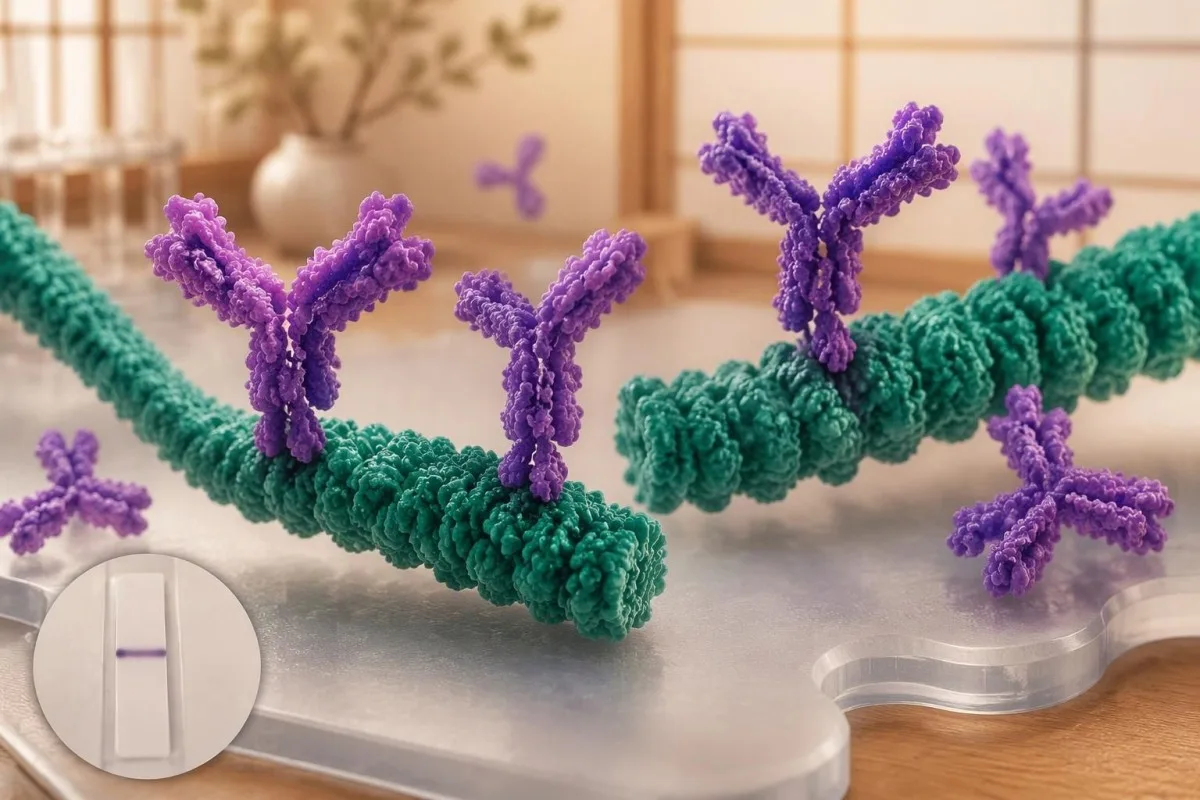
Kilodaltons, abbreviated kDa, describe approximate protein molecular mass, not antibody concentration or disease severity. The approximately 23–25 kDa band commonly represents outer surface protein C, 39 kDa represents BmpA and 41 kDa represents flagellin; the numbers identify antigen regions, so a higher-numbered band does not mean a more advanced infection.
The IgG list's 58 kDa criterion excludes GroEL, and reports may use assay-specific names or approximate mass conventions rather than identical labels. Because not every commercial strip uses the same antigen preparation, our מדריך סמני בדיקת דם שלנו should complement—not replace—the actual laboratory legend and the assay manufacturer's interpretation instructions.
Bands at 31 and 34 kDa are not part of the conventional CDC IgG counting criteria, even though they may appear on some reports. Their absence from that list does not make them meaningless biologically, but adding them to manufacture a 5-band positive result changes the validated rule; neither band darkness nor extra bands quantify bacterial burden.
מדוע פס 41 ופסים תגובתיים אחרים עלולים להיות אותות שגויים
ה 41 kDa band reacts with flagellin, a protein associated with bacterial movement, and can cross-react with antibodies unrelated to Lyme disease. A single reactive 41 kDa band is therefore insufficient to diagnose Lyme disease, even when a patient has fatigue, aching or a remembered tick bite.
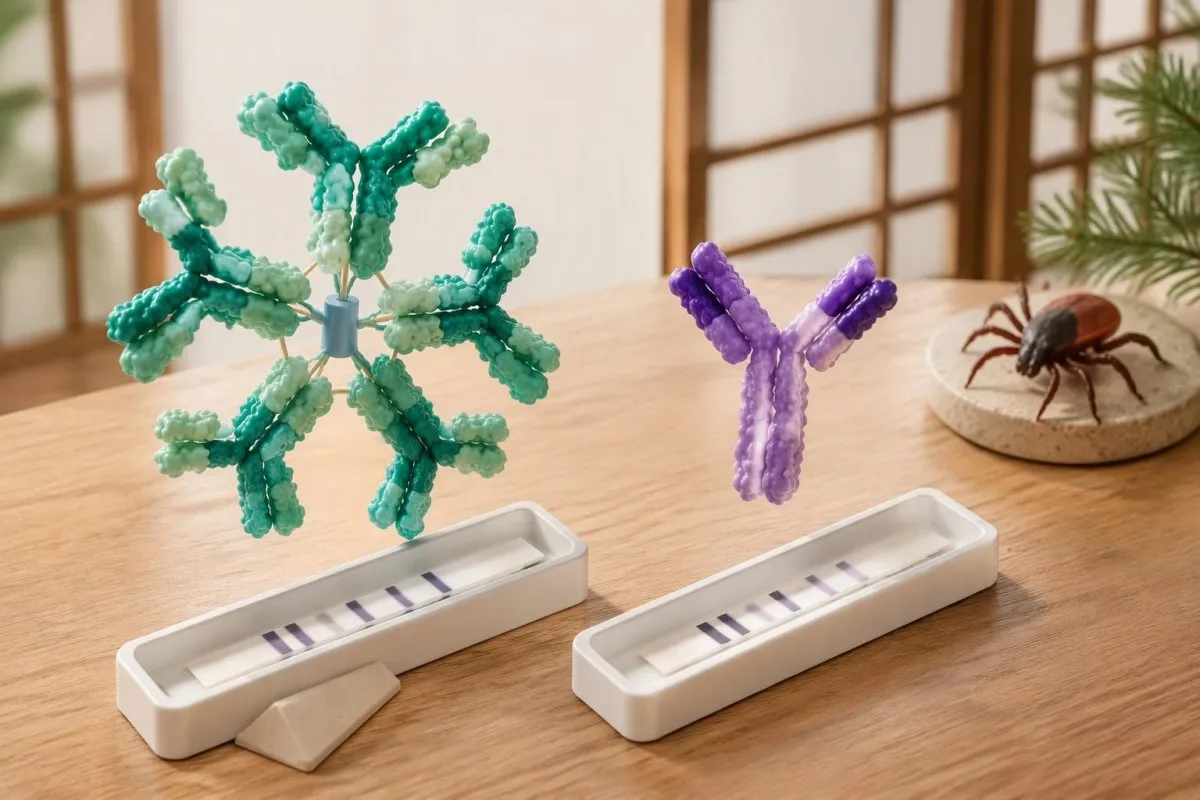
Moore et al. (2016) cited a study in which 41 kDa reactivity occurred in 43% of healthy controls, illustrating why this band cannot stand alone. That percentage is not a universal false-positive rate for every modern assay; it is evidence that recognizable antigen binding can occur in people without the clinical condition being investigated.
Epstein–Barr virus, syphilis, relapsing-fever Borrelia and some autoimmune conditions can contribute to false-positive Lyme serology, although the mechanism and affected assay vary. A recent mononucleosis-like illness should prompt attention to the complete EBV antibody pattern, not the assumption that 1 Lyme band proves a simultaneous tick-borne infection.
Cross-reactivity is not a reason to order every alternative antibody panel: 1 unexplained band usually does not justify broad autoimmune screening. When examination findings genuinely suggest an immune disorder, פרשנות של משלים ו-ANA belongs to a separate clinical question; repeated low-probability testing can generate additional misleading positives rather than a clearer answer.
IgM לעומת IgG ב-Lyme: מדוע כלל 30 הימים של התסמינים חשוב
Lyme IgM should not be used to support a diagnosis when symptoms have lasted more than 30 days. IgM is most useful early, whereas an appropriate IgG response carries greater diagnostic weight later; the clock starts with symptoms of the suspected illness, not the testing date or remembered tick removal.
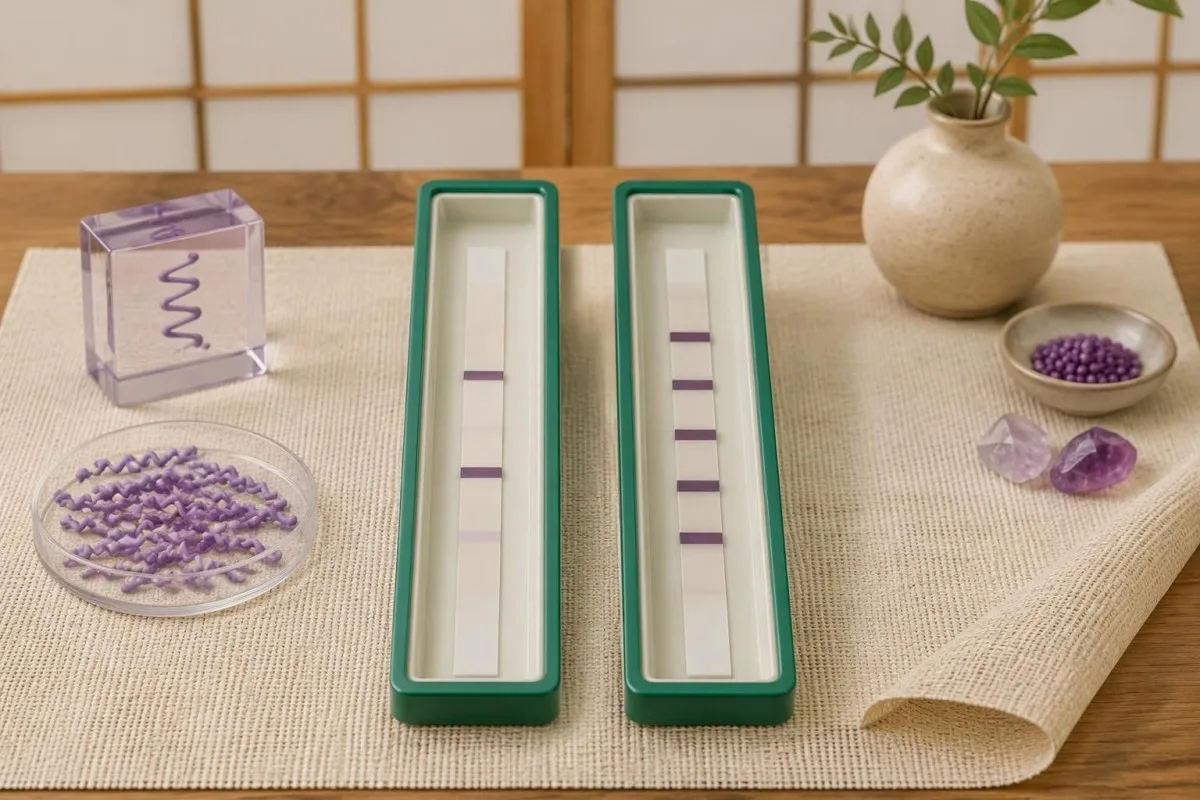
ה 30-day restriction reduces misclassification from persistent or nonspecific IgM responses when later disease should usually have an established IgG response. It is an interpretation rule, not a biological switch that flips overnight: antibody maturation varies, and early treatment may alter seroconversion, but those exceptions do not make isolated late IgM reliable evidence.
For a hypothetical patient tested on day 75 of continuous symptoms, IgM bands 23 and 41 with negative IgG should not be used as proof of Lyme disease. By contrast, the same IgM pattern on day 12, following a reactive first-tier assay and compatible exposure, can support an early diagnosis; the numerical band count is identical, but its evidential value changes.
A positive IgM result does not automatically mean a new infection, a misconception also addressed in our Mycoplasma IgM interpretation guide. If symptoms began 8 weeks ago but one symptom appeared yesterday, clinicians need to decide whether this is a genuinely new illness or another feature of the original episode—not simply restart the IgM clock.
פסים חיוביים ל-Lyme אך תוצאה כוללת שלילית: דוגמאות מפורטות
Positive Lyme bands but negative overall usually means the report did not meet the required pattern within the testing algorithm. For example, 3 designated IgG bands are below the conventional 5-of-10 threshold; that result is negative, not a smaller positive, and it does not measure how much infection is present.
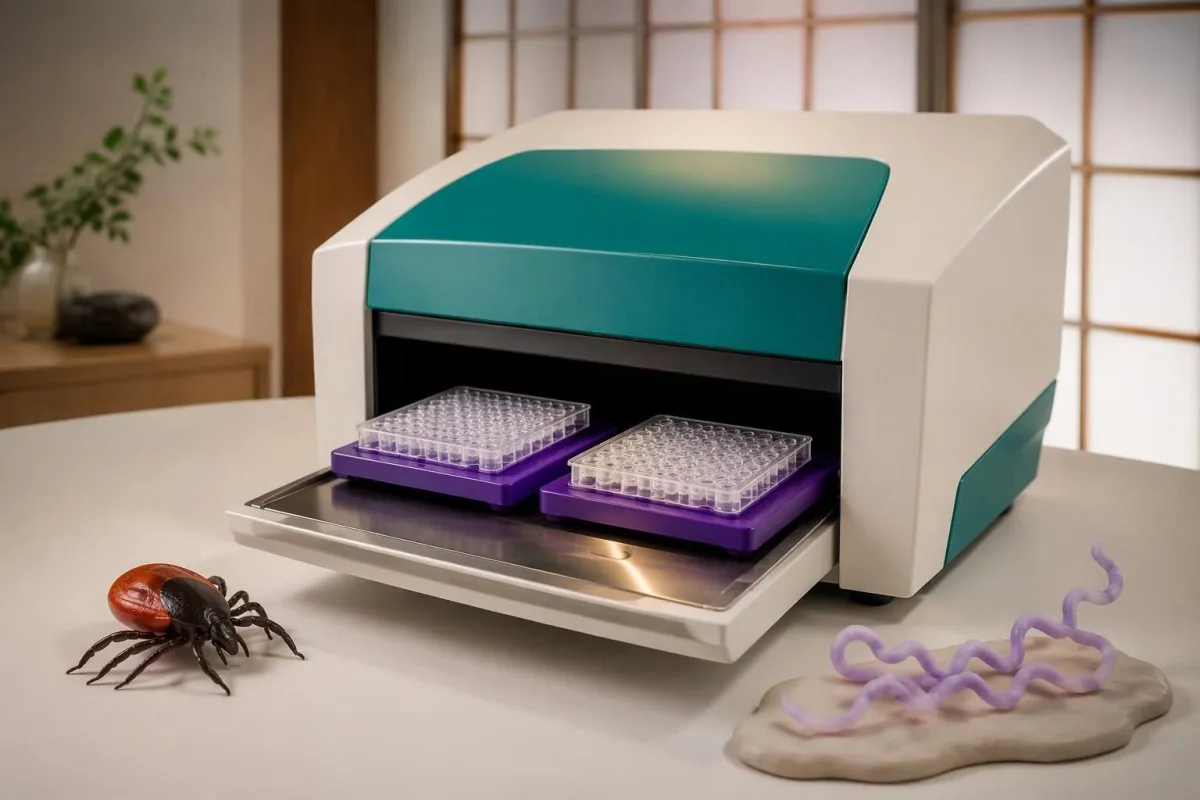
Consider a clearly hypothetical 42-year-old with 10 weeks of fatigue, a reactive screening assay and IgG bands 18, 41 and 58. The IgG immunoblot is negative because only 3 qualifying bands are present; if the examination lacks objective Lyme findings, the next step is a symptom-focused assessment rather than antibiotics prescribed to treat the band's molecular masses.
A second hypothetical patient has a reactive screen, IgM bands 23 and 39, and compatible symptoms beginning 14 days earlier. This can meet the traditional early serologic criteria, but an atypical exposure history or a stronger alternative diagnosis still affects the clinical conclusion; Kantesti AI can explain the 2-of-3 rule without converting it into an independent diagnosis.
A third report lists 5 IgG bands but provides no first-tier result; the missing screening stage prevents straightforward confirmation of a standard 2-tier outcome. Confirmation requirements are assay-specific, as our HSV IgG confirmation guide also illustrates, so request the complete laboratory report rather than borrowing a cutoff or confirmation rule from another infection.
במה שונה בדיקה מותאמת בשתי שכבות מבדיקת Western blot
Modified two-tier testing, or MTTT, uses 2 sequential enzyme immunoassays instead of an enzyme immunoassay followed by an immunoblot. A report from this pathway may have no bands at all; its overall interpretation depends on the particular assay combination and its cleared instructions, not the conventional immunoblot band-count criteria.
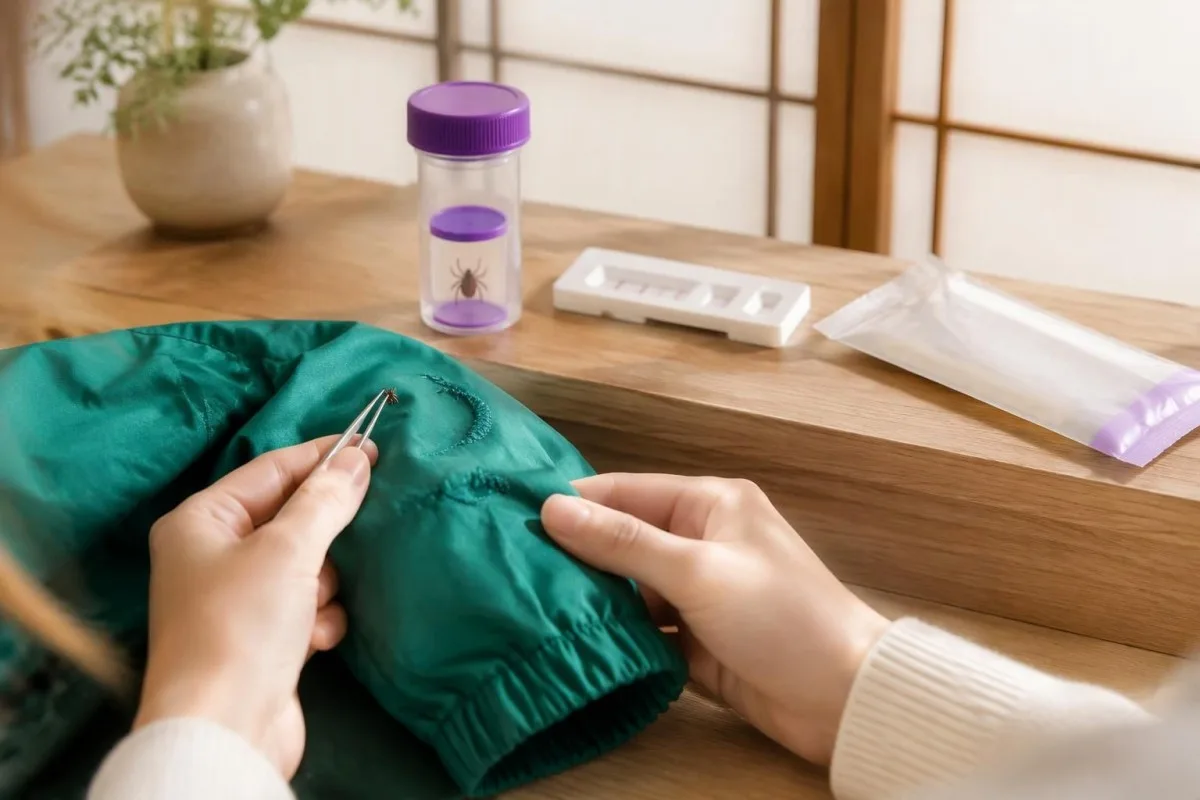
ה 2019 CDC recommendation accepted modified algorithms using FDA-cleared assays for that purpose, following clearance of relevant test combinations (Mead et al., 2019). The change was not permission to combine any 2 tests: the evaluated pairing matters, and some combinations improve early sensitivity while preserving high specificity compared with standard two-tier testing.
Some modified algorithms measure total antibodies, while others report separate IgM and IgG components; consequently, the familiar 30-day IgM restriction cannot be mechanically applied to a total-antibody result. Kantesti is an פלטפורמת פענוח בדיקות דם של AI that can help distinguish a 2-immunoassay report from an immunoblot report before discussing what its positive or negative designation means.
A second immunoassay is not simply a repeat of the same screening test, and an immunoblot is not routinely needed after a completed validated MTTT result. Our מדריך לאישור מחלת צ'אגאס illustrates the broader principle of complementary assays, but its 2-test rules are different; ask your laboratory which Lyme algorithm produced the final interpretation.
האם בדיקת Lyme יכולה להיות שלילית בשלב מוקדם למרות זיהום?
Lyme antibody testing can be negative early because antibodies have not yet reached detectable levels. A typical erythema migrans rash with an appropriate exposure history is diagnosed clinically rather than by waiting for a positive immunoblot; a negative result during the first 1–2 weeks does not safely exclude that presentation.
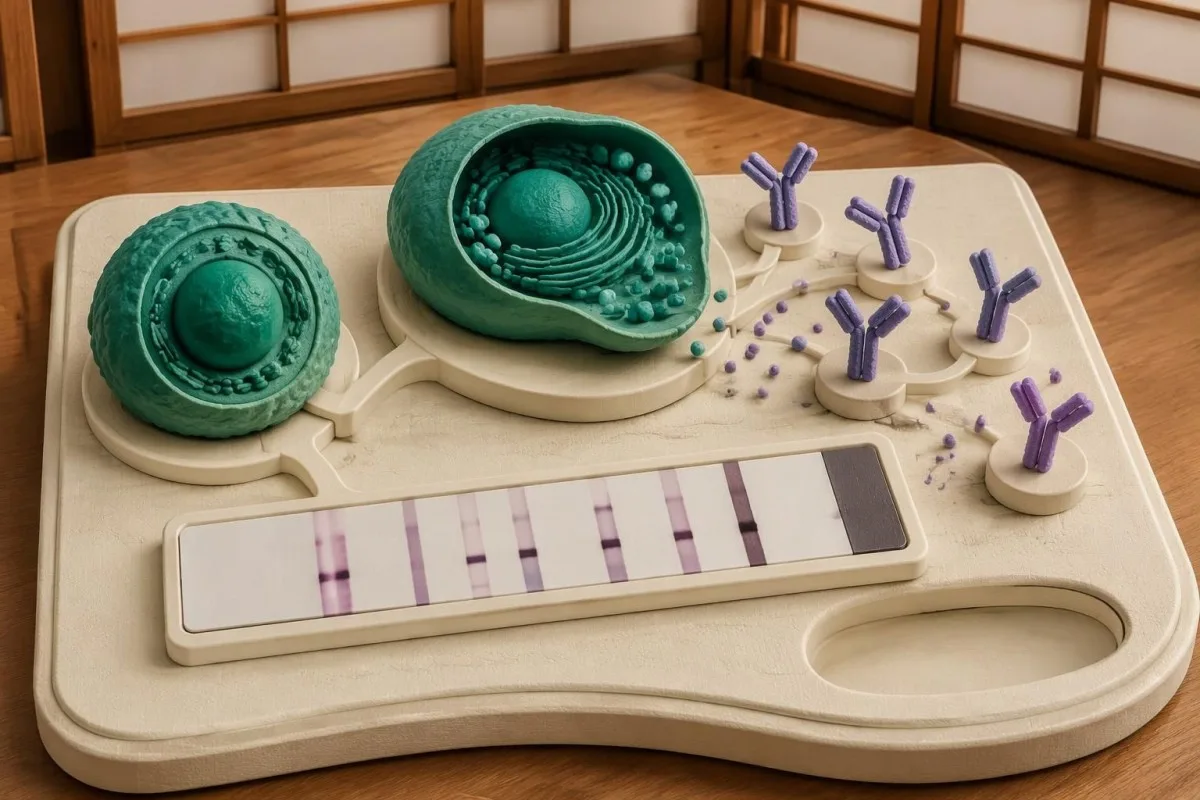
Across early-infection settings, conventional 2-tier sensitivity has been reported at approximately 30–40%, while specificity remains high when testing and interpretation are appropriate (Moore et al., 2016). These are population estimates, not a personal probability: sensitivity changes with the clinical manifestation, time since onset and whether the patient has already received antibiotics.
For a rash suggestive of but not typical for erythema migrans, the 2020 IDSA/AAN/ACR guideline supports acute serology and, if initially negative, a convalescent sample at least 2–3 weeks later (Lantos et al., 2021). The same guideline recommends clinical diagnosis for a typical lesion; a rash need not have textbook concentric rings to warrant assessment.
Repeating a test 24 hours later usually offers little advantage when the limitation is antibody development rather than a processing error. Our spotted fever testing guide explains a related timing problem, but suspected spotted fever has its own urgent treatment rules; do not delay care for an expanding rash or significant illness while waiting for more bands.
האם IgG חיובי ל-Lyme מעיד על זיהום פעיל או על כישלון הטיפול?
Positive Lyme IgG cannot distinguish active infection from a previous infection that has resolved. Lyme antibodies can remain detectable for years or decades, and repeat immunoblot testing is not a test of cure; neither a persistent 5-band pattern nor changes in band intensity establish that treatment failed.
ה 2020 IDSA/AAN/ACR guideline describes persistence of both IgM and IgG responses after infection, which complicates interpretation in previously affected patients (Lantos et al., 2021). A positive result obtained 4 years after treatment must therefore be compared with the clinical history, not interpreted as a laboratory photograph of living bacteria in the body.
Reinfection can occur because previous Lyme disease does not provide reliable lifelong protection, but an old positive antibody result cannot prove a new episode. For a hypothetical person with positive IgG from 2019 and a new expanding rash after recent tick exposure, the new clinical findings matter more than whether a sixth band appears; דפוסי נוגדנים של CMV המוכרים illustrate why exposure history and current illness are separate questions.
Persistent fatigue, pain or cognitive symptoms deserve evaluation even when no new laboratory evidence appears. The guideline recommends against additional antibiotics for persistent nonspecific symptoms after recommended treatment when there is no objective evidence of reinfection or treatment failure; 1 positive antibody panel cannot identify the cause of those symptoms or justify an open-ended antibiotic course.
מה משמעות IgG בחשד לדלקת מפרקים על רקע Lyme או למחלה נוירולוגית
Lyme arthritis usually produces a strong IgG response, so isolated IgM is poor evidence for that diagnosis. Conventional two-tier serology has approximately 95–100% sensitivity in Lyme arthritis, according to the 2020 IDSA/AAN/ACR guideline; a negative appropriate IgG result should prompt serious consideration of other causes of joint swelling.
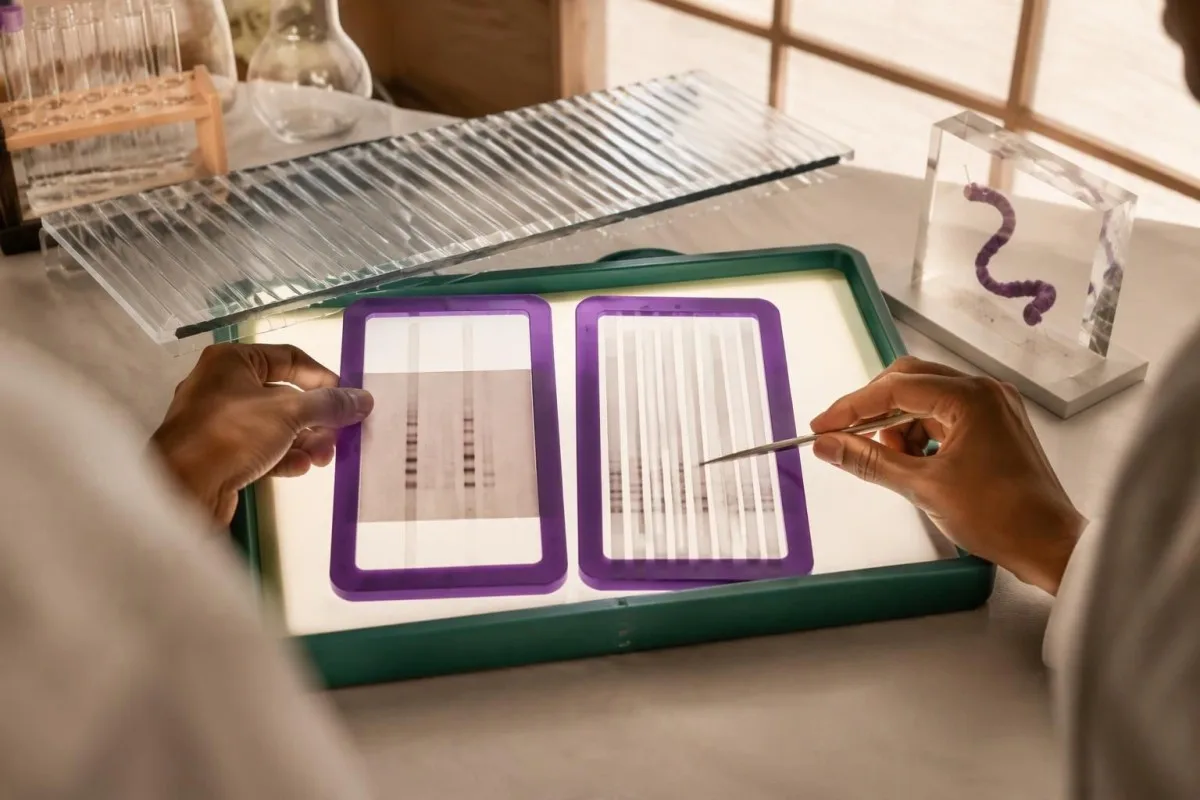
A hypothetical patient with a markedly swollen knee and only 2 IgM bands after 3 months of symptoms does not have the expected serologic pattern for Lyme arthritis. The clinician should reassess alternative causes and assay reliability rather than call this late Lyme based on IgM alone; when indicated, joint fluid examination answers additional questions that the antibody test cannot.
Suspected central nervous system Lyme disease requires clinical assessment and, when cerebrospinal fluid testing is undertaken, simultaneous CSF and serum for a validated antibody index. Testing CSF antibody alone or running a standalone CSF immunoblot is not the preferred approach; 1 elevated index may also persist after treatment, so it must be interpreted alongside the neurological findings and CSF cell response.
Numb feet or tingling do not become Lyme-specific because 41 kDa is reactive; neuropathy has metabolic, mechanical and immune causes. Our anti-MAG neuropathy guide explains one targeted alternative, while immunoglobulin panel interpretation clarifies that total serum IgG is different from the 5-of-10 Lyme-specific IgG immunoblot criterion.
מדוע מעבדות ומדינות עשויות להשתמש בקריטריונים שונים ל-Lyme
Lyme immunoblot criteria are assay- and region-dependent, so conventional US 5-of-10 IgG counting rules should not automatically be imposed on every European report. European assays may use different Borrelia antigens and recombinant line blots because the species causing human Lyme borreliosis differ across regions.
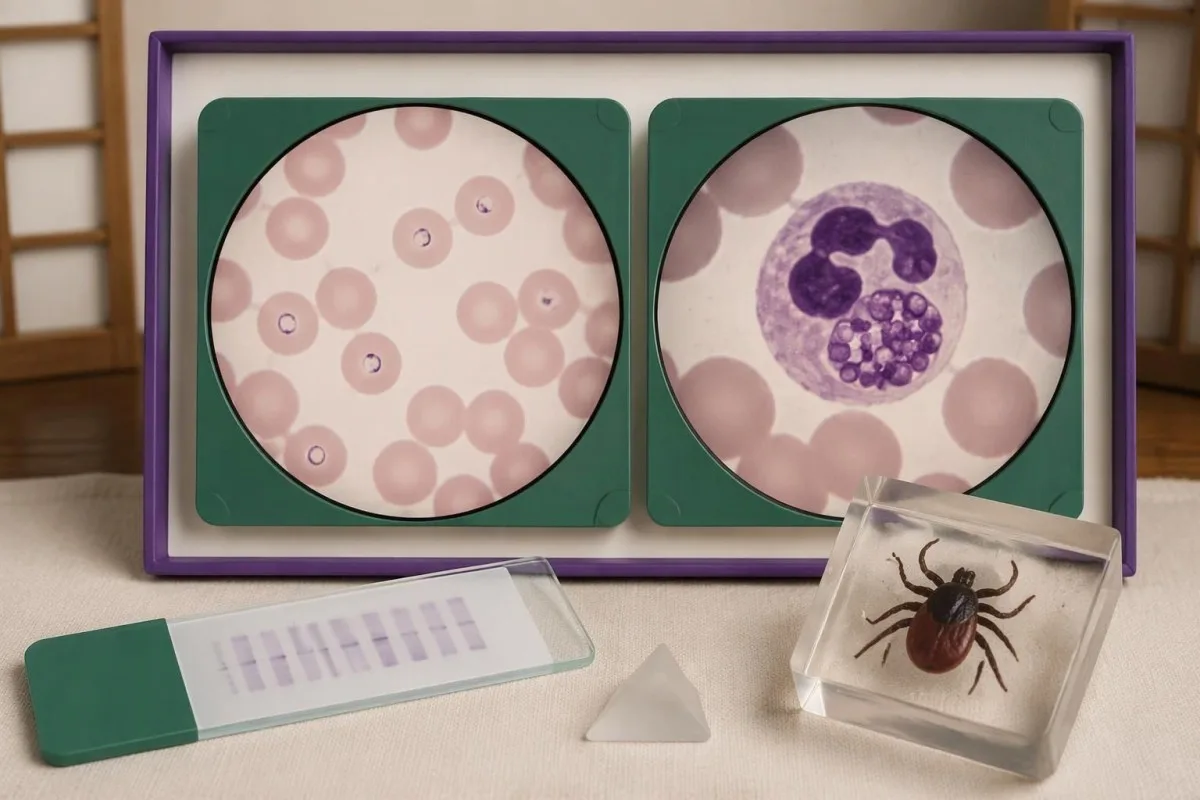
B. burgdorferi sensu stricto predominates in North America, while European disease also commonly involves B. afzelii and B. garinii. A report using VlsE, OspC or other recombinant antigen labels may therefore not resemble a 10-position conventional US blot; the clinically useful question is whether the assay was validated for the exposure setting and interpreted according to its instructions.
Different laboratory criteria are not automatically inferior, but claims that 1 or 2 bands prove disease require evidence for that assay's complete diagnostic performance. When reading a report described by Kantesti, consult the laboratory's interpretation and our מסגרת אימות רפואית separately; general AI assessment or a software benchmark is not proof that a particular Lyme assay has validated sensitivity and specificity.
Record 3 details before comparing reports from different laboratories: assay manufacturer, algorithm type and the country where exposure occurred. Our מדריך AI לבדיקת מקורות דוחות explains why preserving source wording matters; apparent conversion from negative to positive may reflect a changed method or cutoff rather than a newly acquired infection or worsening illness.
האם פסים בבדיקת Lyme מזהים Babesia, Anaplasma או זיהומים משותפים אחרים?
Lyme Western blot bands do not diagnose tick-borne coinfections. Babesia, Anaplasma and Ehrlichia require their own clinical assessment and tests; 1 positive Lyme antibody result neither confirms nor excludes these infections, even when an exposure setting allows more than one tick-borne organism to be transmitted.
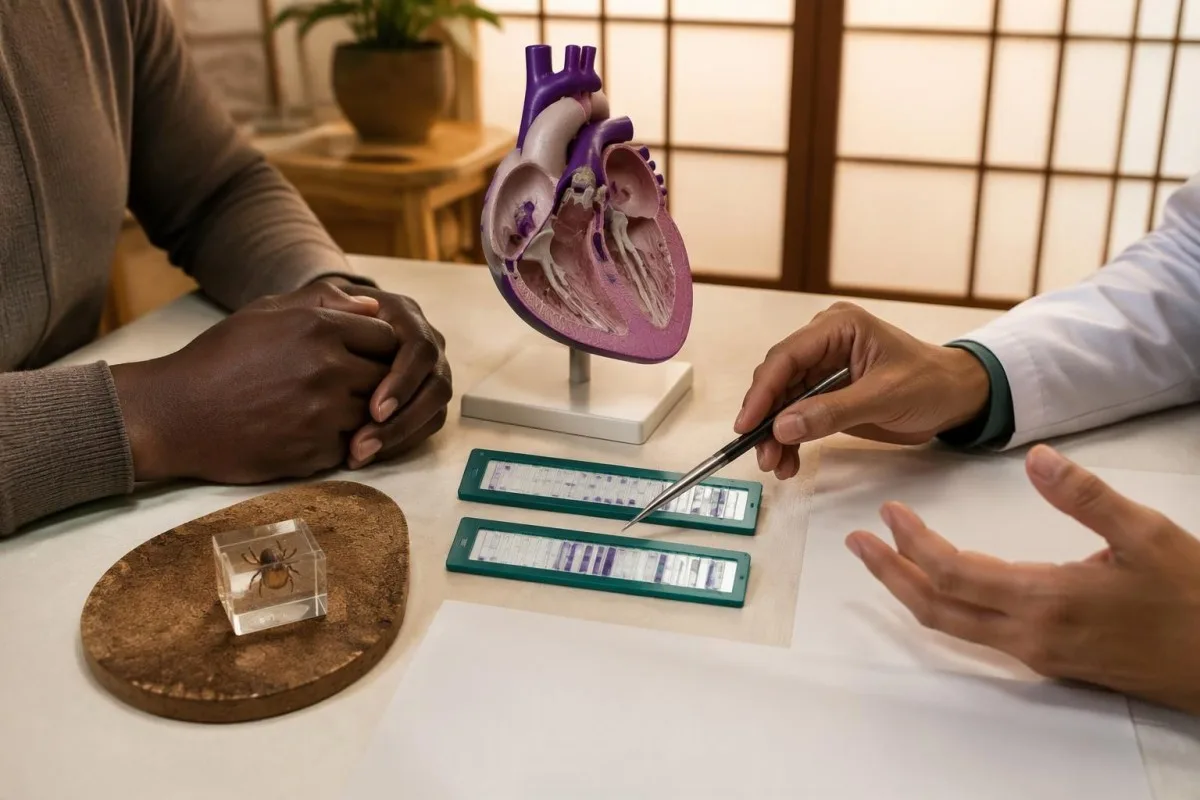
בייבזיוזיס deserves consideration when relevant exposure accompanies fever and evidence such as anemia, low platelets or hemolysis, especially if fever persists during Lyme-directed treatment. A Babesia antibody titer of 1:256 alone does not establish current infection; our Babesia test interpretation guide explains why a cellular sample examination or PCR may be needed to demonstrate active infection.
אנאפלזמוזיס can produce fever, leukopenia, thrombocytopenia and elevated liver enzymes, findings that should not be explained away as extra Lyme bands. PCR is most useful during the first week of illness and becomes less sensitive after appropriate antibiotics; our Anaplasma sample timing guide separates this early direct-detection window from later antibody interpretation.
Ehrlichiosis follows a different organism-specific testing pathway, and a negative early antibody result is not a safe reason to dismiss significant febrile illness. Our Ehrlichia PCR and titer guide explains why 2 samples collected at different times may help establish seroconversion; targeted testing should follow symptoms, geography and laboratory abnormalities rather than an indiscriminate panel ordered for isolated fatigue.
מה כדאי לעשות עם דוח בדיקת Lyme לא ברור?
For an unclear Lyme report, obtain the complete 2-tier interpretation, write down symptom onset and discuss exposure plus objective findings with a clinician. Faint or isolated bands do not determine urgency; fainting, chest pain, breathlessness, a markedly slow pulse or new neurological deficits require prompt assessment regardless of the antibody result.
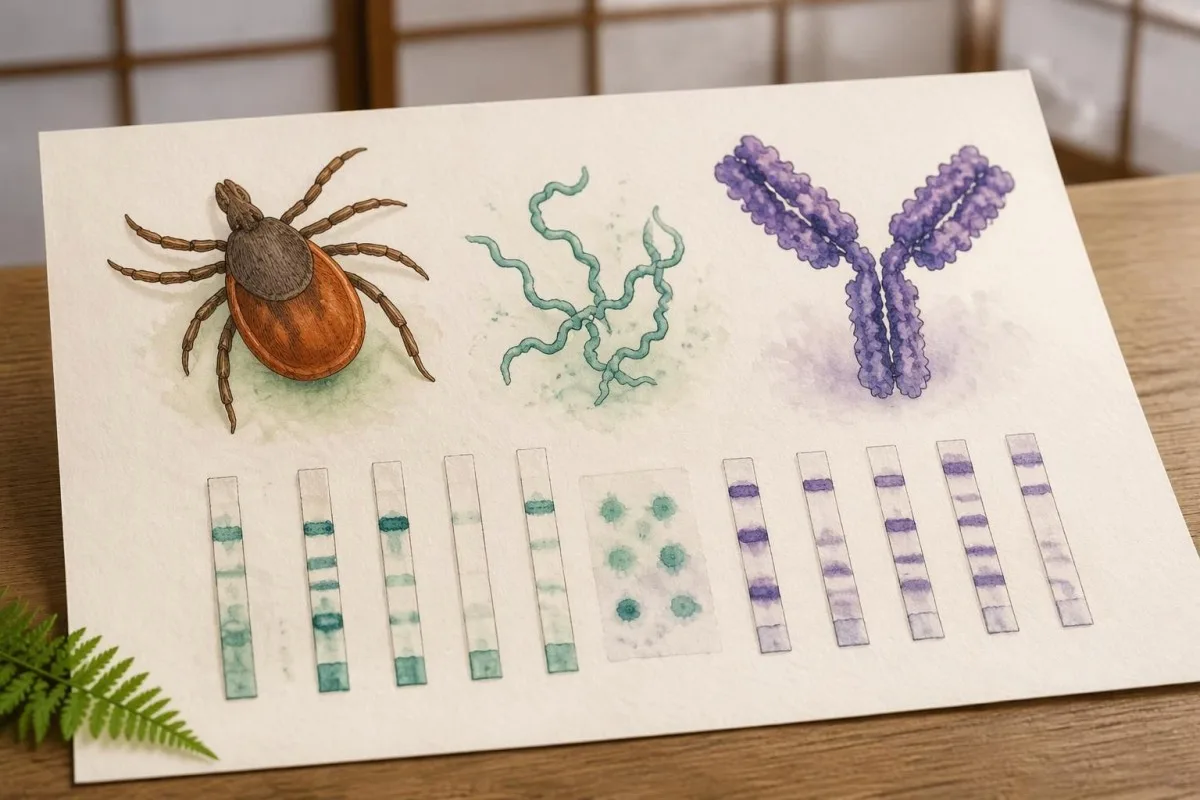
Lyme carditis can cause heart conduction block, so fainting or palpitations after compatible exposure should not wait for an immunoblot to become positive. The 2020 IDSA/AAN/ACR guideline identifies a PR interval greater than 300 milliseconds, other arrhythmias or features of myopericarditis as reasons for hospital admission with monitoring; that interval is measured on an ECG, not inferred from band intensity.
New facial weakness warrants urgent assessment, and sudden facial droop with arm weakness or speech difficulty needs emergency evaluation for stroke rather than attribution to Lyme. Our סימני אזהרה לשבץ מוחי explains that distinction; for a routine appointment, bring 4 dates—possible exposure, first symptom, sample collection and antibiotic initiation—because each changes a different part of the reasoning.
קנטסטי הוא כלי לניתוח בדיקות דם מבוסס AI that can help organize the 2-tier result, reported bands and missing clinical context into questions for your appointment. Our מדריך טכנולוגיית בינה מלאכותית describes the explanation workflow, but our AI cannot examine a rash, measure an ECG interval, confirm Lyme disease independently or decide whether you should start, stop or extend antibiotics.
פרסומים מחקריים, גבולות הראיות ופרשנות בטוחה
The clinical interpretation in this article rests on 3 directly relevant sources: a laboratory-diagnosis review, the CDC's modified two-tier recommendation and the IDSA/AAN/ACR Lyme guideline. The 2 additional Figshare publications listed below concern other health topics and must not be treated as validation of Lyme band interpretation or Lyme diagnosis.
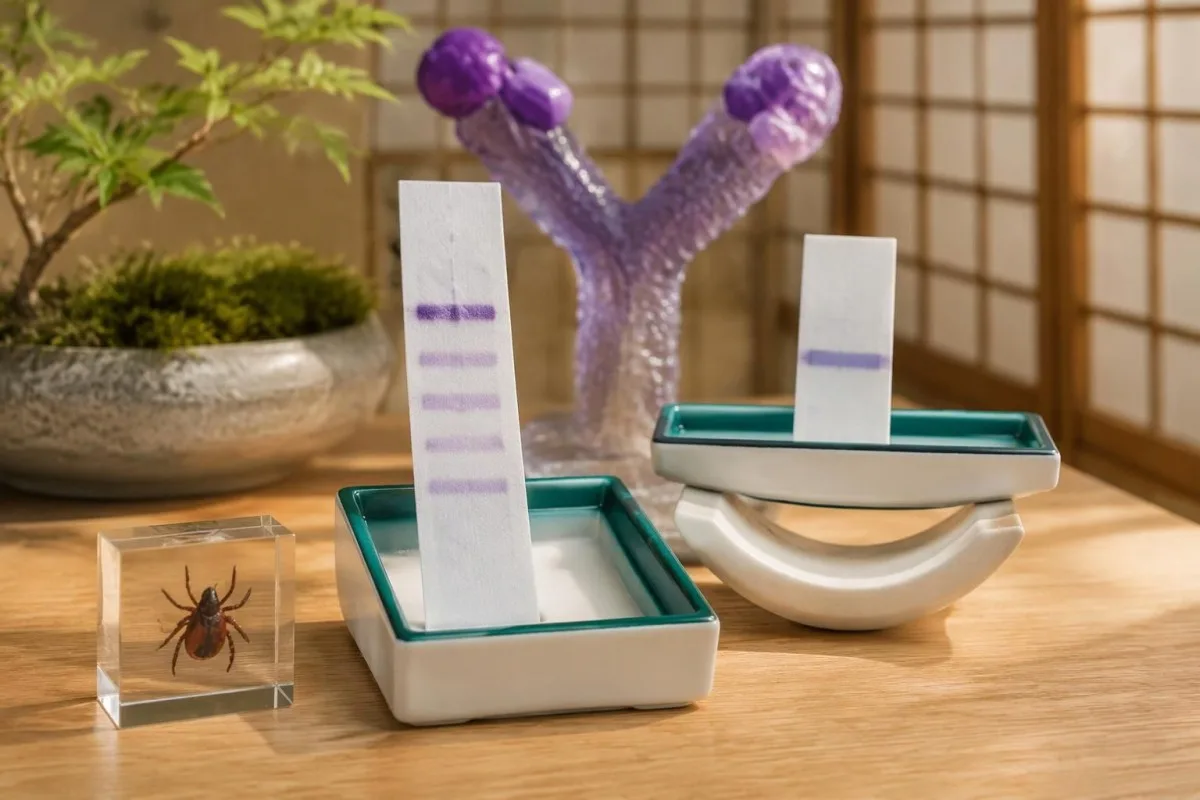
Moore et al. (2016) explains why individual bands and incomplete testing sequences create diagnostic errors; Mead et al. (2019) establishes the CDC recommendation for appropriately cleared modified algorithms. Lantos et al. (2021), publishing the 2020 guideline, connects testing to clinical manifestations, including early rash, arthritis and neurological disease; these sources support different parts of the reasoning rather than one universal band shortcut.
The 2 Figshare records address women's hormonal health and multilingual AI-assisted hantavirus triage, respectively, not Lyme immunoblot performance. A deployment involving 50,000 interpreted reports, as described in the hantavirus publication's title, cannot establish sensitivity, specificity or patient benefit for Lyme diagnosis; those claims would require Lyme-specific methods, reference standards and evaluation populations.
של Kantesti שלנו בנושא בינה מלאכותית אחראית place report explanation alongside—not above—the laboratory and clinician, including when IgM appears after 30 days of symptoms. For symptoms linked to cycle changes or menopausal transition, our hormonal symptom guide addresses a separate assessment pathway; symptom overlap is a reason to investigate carefully, not evidence that a reactive Lyme band explains everything.
שאלות נפוצות
האם פס חיובי אחד בבדיקת הווסטרן בלוט למחלת ליים פירושו שיש לי מחלת ליים?
פס אחד תגובתי בבדיקת Western blot למחלת ליים אינו מבסס אבחנה של מחלת ליים. לפי הקריטריונים המקובלים בארצות הברית, נדרשים לפחות 2 מתוך 3 פסי IgM מוגדרים במהלך 30 הימים הראשונים להופעת התסמינים, או 5 מתוך 10 פסי IgG מוגדרים, במסגרת מסלול הבדיקות המתאים הכולל שתי רמות. פס יחיד עשוי לשקף תגובתיות צולבת או תגובת נוגדנים מוקדמת שאינה מלאה, בהתאם לנסיבות. פריחה אופיינית של אריתמה מיגרנס לאחר חשיפה מתאימה עדיין עשויה לתמוך באבחנה קלינית גם כשהבדיקה הסרולוגית המוקדמת שלילית.
מדוע חלק מהפסים בבדיקת ליים חיוביים, אך תוצאת הבדיקה הכוללת שלילית?
בדיקת ליים יכולה להציג פסים תגובתיים אך להישאר שלילית, משום שהאימונובלוט לא עמד בתבנית המאומתת שנדרשת לפי אלגוריתם הבדיקה. לדוגמה, 3 פסים של IgG העומדים בקריטריונים אינם מגיעים לסף המקובל של 5 מתוך 10 פסים של IgG. תוצאת סקר חיובית או גבולית בשלב הראשון, שבעקבותיה מתקבלות תוצאות שליליות באימונובלוטים המתאימים, מתפרשת כשלילית בבדיקת שתי השיטות המקובלת. אם התסמינים הופיעו לאחרונה מאוד, רופא עשוי לשקול לחזור על הבדיקה במרווח זמן מתאים, במקום לסווג מחדש את התבנית החלקית כחיובית.
מה המשמעות של פס ליים חיובי של 41 קילודלטון?
פס Lyme במשקל 41 kDa משקף בדרך כלל קשירת נוגדנים לפלגלין, חלבון חיידקי הקשור לתנועה, שעשוי להגיב צולבת עם נוגדנים שאינם קשורים למחלת ליים. זהו רק 1 מהפסים הייעודיים המשמשים בקריטריונים המקובלים לאימונובלוט, והוא אינו יכול לאבחן מחלת ליים לבדו. Moore et al. (2016) ציטטו מחקר שבו נמצא פס זה אצל 43% מהנבדקים הבריאים בקבוצת הביקורת, אם כי שיעור זה אינו תקף באופן אוניברסלי לכל הבדיקות. רצף הבדיקות המלא והתמונה הקלינית קובעים אם התוצאה תומכת באבחנה של מחלת ליים.
האם IgM חיובי ו-IgG שלילי למחלת ליים מעידים בוודאות על זיהום שהתרחש לאחרונה?
תוצאה חיובית ל-IgM של מחלת ליים, לצד תוצאה שלילית ל-IgG, יכולה לתמוך בזיהום מוקדם רק כשהיא תואמת את אלגוריתם הבדיקות המתאים, את התמונה הקלינית ואת מועד הופעת התסמינים. אין להסתמך על IgM מבודד כדי לתמוך באבחנה של מחלת ליים כאשר התסמינים נמשכים יותר מ-30 יום, משום ש-IgM מתמשך או לא ספציפי עלול להוביל לפרשנות שגויה. לדוגמה, ל-2 פסים העומדים בקריטריונים ל-IgM ביום ה-14 יש משמעות שונה מזו של אותו דפוס לאחר 3 חודשים של תסמינים רציפים. כלל התזמון מתייחס למועד הופעת התסמינים, ולא ליום שבו נאספה דגימת המעבדה.
האם ייתכן שבדיקת ליים שלי תהיה חיובית בלי שיופיעו פסים כלשהם בבדיקת ווסטרן בלוט?
כן: אלגוריתם מאומת ומותאם לאבחון מחלת ליים בשתי רמות משתמש בשתי בדיקות אימונואנזימטיות עוקבות, וייתכן שלא יבוצע בו כלל מבחן Western blot. בשנת 2019 המליץ ה-CDC על אלגוריתמים מותאמים שקיבלו אישור מתאים מה-FDA. שילובים מסוימים של בדיקות מודדים נוגדנים כוללים, ואילו אחרים מספקים תוצאות נפרדות של IgM ו-IgG, כך שכללי הספירה המקובלים של פסים אינם חלים על כל דוח. שאלו את המעבדה באיזה אלגוריתם ובאיזה שילוב בדיקות נעשה שימוש כדי לקבוע את הפרשנות הסופית.
האם פסי הווסטרן בלוט למחלת ליים אמורים להיעלם לאחר טיפול אנטיביוטי?
פסים בבדיקת Western blot למחלת ליים אינם חייבים להיעלם לאחר טיפול מוצלח, משום שנוגדנים יכולים להישאר במשך שנים ואף עשורים. דפוס מתמשך של IgG הכולל 5 פסים אינו מוכיח שהזיהום עדיין פעיל, ובדיקות חוזרות של הפסים אינן בדיקת ריפוי שעברה תיקוף. את התגובה לטיפול מעריכים לפי המהלך הקליני והממצאים האובייקטיביים הרלוונטיים, ולא על סמך דרישה שפאנל נוגדנים יהפוך לשלילי. תסמינים חדשים או חשיפה נוספת לקרציות מחייבים הערכה קלינית עדכנית, משום שנוגדנים ישנים אינם יכולים להוכיח הדבקה חוזרת.
קבלו הסבר על תוצאות בדיקות הדם שלכם
העלו את דוח המעבדה שלכם, וה-AI של Kantesti יסביר כל סמן ביולוגי בשפה פשוטה בתוך שניות. יותר מ-2 מיליון אנשים ברחבי העולם משתמשים בו.
הפניות
- Klein, T., Mitchell, S., & Weber, H. (2026). מדריך לבריאות האישה: ביוץ, גיל המעבר ותסמינים הורמונליים. מחקר רפואי של Kantesti AI. DOI
- Klein, T., Mitchell, S., & Weber, H. (2026). תמיכה רב־לשונית בקבלת החלטות קליניות בסיוע בינה מלאכותית למיון מוקדם של נגיף ההנטה: תכנון, תיקוף הנדסי והטמעה בעולם האמיתי על פני 50,000 דוחות של פענוח בדיקות דם. מחקר רפואי של Kantesti AI. DOI
- Moore A et al. (2016). Current Guidelines, Common Clinical Pitfalls, and Future Directions for Laboratory Diagnosis of Lyme Disease, United States. Emerging Infectious Diseases. DOI PubMed
- Mead P et al. (2019). Updated CDC Recommendation for Serologic Diagnosis of Lyme Disease. דוח שבועי לתחלואה ולתמותה של MMWR. DOI
- Lantos PM et al. (2021). Clinical Practice Guidelines by the Infectious Diseases Society of America (IDSA), American Academy of Neurology (AAN), and American College of Rheumatology (ACR): 2020 Guidelines for the Prevention, Diagnosis and Treatment of Lyme Disease. מחלות זיהומיות קליניות. DOI
- 2 מיליון+בדיקות שנותחו
- 127+מדינות
- 100+שפות
על הצוות הרפואי


אותות אמון E-E-A-T
הִתנַסוּת
סקירה קלינית בהובלת רופא של תהליכי עבודה לפענוח בדיקות מעבדה.
מוּמחִיוּת
רפואה מעבדתית מתמקדת באופן שבו סמנים ביולוגיים מתנהגים בהקשר קליני.
סמכותיות
נבדק רפואית על ידי ד״ר Thomas Klein, בתרומתם של ד״ר Sarah Mitchell ופרופ׳ ד״ר Hans Weber.
אֲמִינוּת
פרשנות מבוססת-ראיות עם מסלולי המשך ברורים כדי להפחית בהלה.






הצהרה רפואית
מאמר זה מיועד למטרות חינוכיות בלבד ואינו מהווה ייעוץ רפואי. תמיד יש להתייעץ עם גורם מוסמך בתחום הבריאות לצורך החלטות אבחון וטיפול.
פורסם · צרו קשר עם צוות העריכה
פורסם על ידי Kantesti Ltd, הרשומה באנגליה ובוויילס, מספר חברה. 17090423, לונדון, בריטניה.
