
PCR عامل ناروغي تشخیصوي؛ انټي باډۍ د معافیتي غبرګون ریکارډ ساتي. د دواړو پایلو د نښو له پیل او د انټيبیوټیک د وخت له مخې ارزول ظاهري تناقضونه روښانوي.

مهم ټکي
- لومړنی PCR د ناروغۍ په لومړۍ اوونۍ کې تر ټولو ګټور وي؛ د وینې د بشپړې نمونې مثبت PCR د فعال اناپلازموسس څرګند شواهد وړاندې کوي.
- لومړنۍ انټي باډۍ د ناروغۍ په لومړۍ اوونۍ کې منفي پاتې کېدای شي، نو له منفي IgG سره مثبت PCR یوه تمه کېدونکې بڼه ده—او لازماً د لابراتوار تېروتنه نه ده.
- منفي PCR اناپلازموسس نه ردوي، په تېره بیا د انټيبیوټیکونو تر کارولو وروسته؛ د PCR حساسیت د مناسبې درملنې په 48 ساعتونو کې کمېدای شي.
- د IgG جوړه شوې نمونې د ناروغۍ په لومړیو 2 اوونیو کې او بیا 2–10 اوونۍ وروسته راټولېږي؛ څلور برابره زیاتوالی د وروستي انتان د تایید ملاتړ کوي.
- یوازې مثبت IgG نوی انتان نه شي ثابتولای. د CDC د لارښوونو له مخې، لږ تر لږه 1:128 ټایټر ملاتړې شواهد برابروي، خو په یوازې ځان د درملنې لارښوونه نه ده.
- د درملنې وخت په کلینیکي شک پورې اړه لري، نه یوازې په تایید. کله چې د انaplasmosis شک وي، ډاکټران باید د پایلو تر ترلاسه کېدو پورې ډوکسيسایکلین ونه ځنډوي.
- نورې د کنې له لارې لېږدېدونکې ناروغۍ خپلې جلا ازموینې غواړي. د Anaplasma PCR د لایم ناروغۍ، بابېزیوز، ایرلیخیوز یا د راکي ماونټین داغلرونکې تبې ازموینه نه ده.
- بیړني نښې لکه ګډوډي، په ساه اخیستلو کې ستونزه، نوې وینهبهېدنه، یا د ادرار څرګند کمښت، د بیا نمونې ته د انتظار پر ځای بیړنۍ ارزونه غواړي.
ولې د PCR او انټي باډۍ لومړنۍ پایلې سره اختلاف لرلای شي؟
د اناپلازموز ازموینې پایلې سره توپیر لرلای شي، ځکه PCR د باکتریا DNA کشفوي، خو IgG هغه معافیتي غبرګون کشفوي چې وروسته وده کوي. په لومړۍ اوونۍ کې کېدای شي PCR مثبت او انټيباډي منفي وي؛ له درملنې وروسته کېدای شي PCR منفي شي، په داسې حال کې چې IgG لوړېږي، او د شکمن انتان درملنه ښايي لا هم د لابراتواري تایید تر مخه اړینه وي.
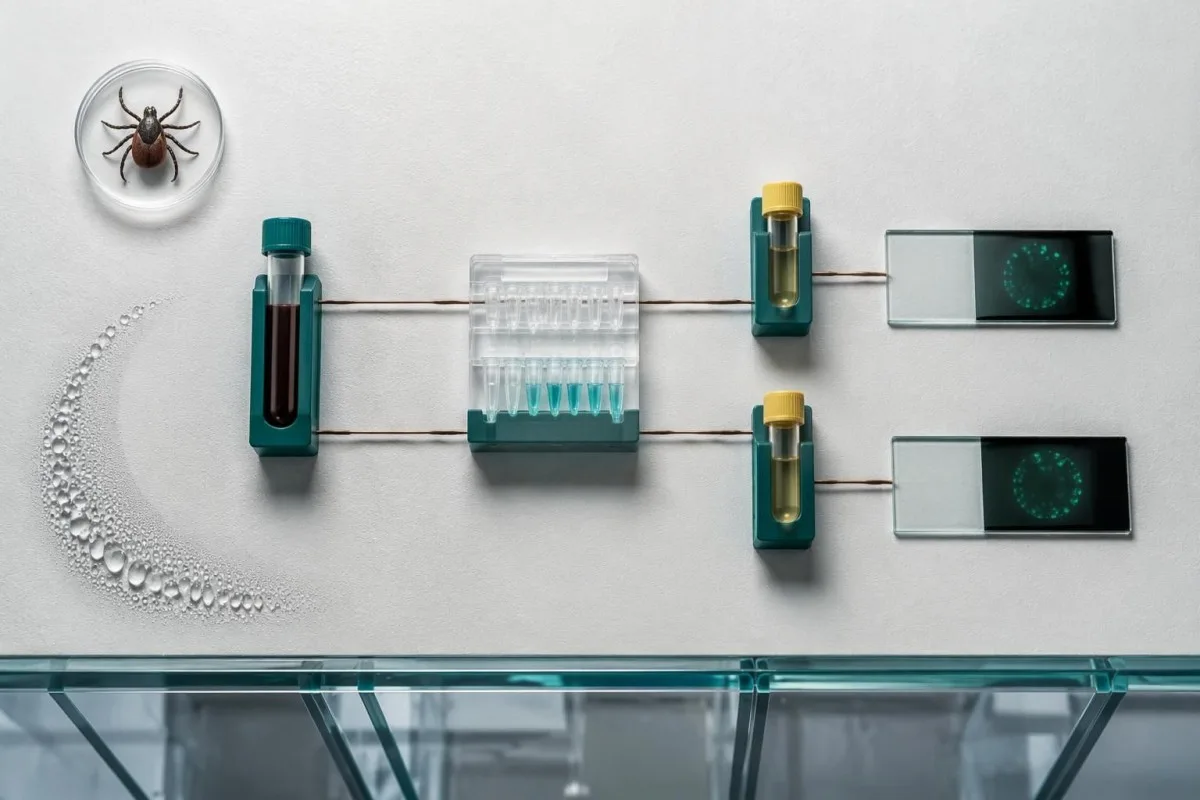
Anaplasma phagocytophilum د انسانانو ګرانولوسایټي اناپلازموز رامنځته کوي او تر ډېره پر نیوټروفیلونو اغېز کوي، چې د سپینو وینې حجرو یو ډول دی. نښې معمولاً د اخته کنې تر چیچلو 5–14 ورځې وروسته پیلېږي، خو ډېر خلک هېڅکله د کنې شتون نه احساسوي؛ د لابراتواري ارزونې ګټور وختسنج د ناروغۍ له لومړۍ ورځې پیلېږي، نه د تماس له هغې نامعلومې نېټې.
د ناروغۍ په درېیمه ورځ اخیستل شوې پایله له هغې پایلې سره توپیر لري چې په 24مه ورځ اخیستل شوې وي، که څه هم په دواړو راپورونو کې Anaplasma لیکل شوي وي. د کلینیکي مایکروبیولوژۍ په ژورنال کې خپره شوې د ریښتیني وخت PCR پرتلهیزې څېړنې وموندله چې د تشخیص حاصل د ناروغۍ پر وخت پورې تړلی و؛ دا څرګندوي چې ولې باید مستقیم کشف او سیرولوژي یوځای تعبیر شي، نه دا چې د یو بل پر ځای کارېدونکې ازموینې وګڼل شي (Schotthoefer et al., 2013).
کانټیسټي یو دی د AI د وینې معاینې شنونکی چې د Anaplasma راپور او ورسره د CBC یا ځیګر د پایلو ترمنځ د اړیکې په تشریح کې مرسته کولای شي، خو یوازې د شمېرو له مخې تشخیص نه شي ثابتولای. د ګټور تعبیر لپاره، 3 جزئیات وړاندې کړئ: د نښو پیل، د نمونې اخیستلو نېټه، او د انټيبیوټیک لومړی دوز؛ په اړه معلومات زموږ سازمان کې د خدمت رول تشریح کوي.
د Anaplasma د PCR مثبتې پایلې مانا څه ده؟
د اناپلاسما PCR مثبته پایله یعنې ازموینې په سپارل شوې نمونه کې د Anaplasma DNA کشف کړی دی. په هغه کس کې چې له حادې ناروغۍ سره یې نښې سمون ولري، د ټولې وینې مثبت، د ځانګړي نوعې PCR د فعال اناپلازموز روښانه شواهد دي؛ دا د انټيباډیو کچه نه اندازه کوي، د ناروغۍ شدت نه ثابتوي او د کنې له لارې د لېږدېدونکو ټولو احتمالي ګډانتاناتو پېژندنه نه کوي.

د EDTA ټوله وینه د Anaplasma د PCR لپاره عموماً کارول کېږي، ځکه دا ارګانېزم له په وینه کې د ګرځېدونکو حجروي اجزاوو سره تړاو لري. د سیرم د انټيباډي نمونه په اوتومات ډول د منلو وړ بدیل نه ده: د دوو ظاهراً متضادو پایلو تر تعبیر مخکې، وګورئ چې لابراتوار د هرې ازموینې اړینه نمونه ترلاسه کړې او د دواړو د راټولولو نېټې په سمه توګه ثبت شوې دي.
داسې فرضي راپور چې د ناروغۍ په څلورمه ورځ، له تبې او د پلیټلیټونو له کمېدو سره، 'A. phagocytophilum DNA detected' وښيي، د کلینیکي تشخیص قوي ملاتړ کوي. هغه راپور چې یوازې 'Anaplasma species detected' وايي، ښايي د پراخې ازموینې پایله وي؛ نو دقیق هدف مهم دی. وپوښتئ چې ایا پایله په ځانګړي ډول A. phagocytophilum پېژني، او که نور لابراتواري وضاحت ته اړتیا لري.
کیفي PCR د باکتریاوو د شمېر نمره نه ده. که څه هم په راپور کې د دورې-حد ارزښت شامل وي، د Anaplasma لپاره داسې نړیوال حد نشته چې په روغتون کې د بستر کېدو وړاندوینه وکړي یا د درملنې موده وټاکي؛ زموږ تشریح د کیفی په پرتله کمي پایلې د کشف او د معیاري شوي غلظت د اندازه کولو ترمنځ توپیر په روښانولو کې مرسته کوي.
د Anaplasma PCR کله تر ټولو ګټور وي؟
د Anaplasma PCR د ناروغۍ په لومړۍ اوونۍ کې، مخکې له دې چې مناسب انټيبیوټیکونه په وینه کې ګرځېدونکی باکتریايي DNA کم کړي، تر ټولو حساس وي. د CDC لارښوونې وايي چې د مناسب انټيبیوټیک تر کارولو وروسته په 48 ساعتونو کې حساسیت کمېږي؛ دا د تشخیص د حاصل کموالی دی، نه دا تضمین چې هره درملنه شوې نمونه به په هماغه ساعت منفي شي.

که سمدستي یې اخیستل ممکن وي، د درملنې تر پیل مخکې د PCR نمونه واخلئ، خو د نمونې اخیستلو د برابرولو لپاره هېڅکله اړینه درملنه مه ځنډوئ. For example, a sample collected on day 5 before the first doxycycline dose is generally more informative than one collected on day 7 after several doses; the MMWR guideline explicitly prioritizes prompt treatment over waiting for confirmation (Biggs et al., 2016).
The 48-hour statement does not apply equally to every antibiotic a person may have taken. A prior course of an antibiotic that does not reliably treat anaplasmosis cannot be assumed to have the same effect as doxycycline; record the drug name, dose, and dose times rather than writing only 'already on antibiotics.'
If the first PCR was collected after 3 days of doxycycline, a negative result should be interpreted with that limitation visible on the report review. Repeating PCR without changing the timing problem may add little; arranging convalescent IgG may be more informative, and a dated blood test timeline prevents treatment-related changes from being mistaken for contradictory evidence.
د Anaplasma د IgG مثبتې پایلې مانا څه ده؟
The anaplasma IgG positive meaning is evidence of an antibody response, not automatic proof of a current infection. A single IgG result may reflect recent illness, previous exposure, or cross-reactivity; CDC considers a single titer of at least 1:128 supportive laboratory evidence, while confirmation usually requires the clinical picture and direct detection or paired serology.

Anaplasma IgG can remain elevated for months, and high titers have been reported up to 4 years after illness. Persistently positive antibodies in a well person do not by themselves justify another antibiotic course; the relevant question is whether there is a new compatible illness, a new exposure, or evidence that the antibody level has changed meaningfully.
In some areas, approximately 5–10% of healthy people may have elevated Anaplasma antibodies because of previous exposure or related organisms, according to CDC testing guidance. That estimate is geographically dependent, not a universal false-positive rate; a low positive in someone with no fever or plausible tick exposure carries a different meaning from the same result during an acute illness.
Kantesti treats 1 positive antibody result as a finding to explain, not a diagnosis to announce. The distinction between immune memory and active disease is covered in د مثبت انټي باډي پایلې تفسیر; unlike some vaccine antibody tests, Anaplasma IgG does not provide an established protective-immunity threshold.
د IgG جوړه شوې نمونې وروستۍ انتان څنګه تاییدوي؟
Paired Anaplasma IgG testing compares an acute specimen from the first 2 weeks of illness with a convalescent specimen collected 2–10 weeks later. A fourfold rise in IgG titer by indirect fluorescent antibody testing is evidence of seroconversion and helps confirm recent infection when the early result was negative or PCR was unavailable.

A rise from 1:64 to 1:256 is fourfold; a rise from 1:128 to 1:256 is only twofold. In a hypothetical case, an illness-day-4 titer of 1:64 and a day-28 titer of 1:256 would meet the fourfold criterion, while the smaller increase would not independently confirm infection by that criterion.
Titers are reciprocal dilutions, not concentrations in mg/dL or arbitrary screen-index units. If the acute report gives an index of 1.4 and the later report gives a titer of 1:256, a fourfold change cannot be calculated directly; use the same laboratory and method where possible, and ask whether archived samples can be compared together.
Antibody responses may be weaker or delayed in people receiving immunosuppressive treatment. A person taking B-cell-depleting therapy, for example, may not produce the expected rise over 2 samples, so clinicians may rely more heavily on PCR, clinical findings, and exposure history; IgG, IgA, and IgM patterns can provide background context but do not replace organism-specific testing.
ولې IgM او متقاطع غبرګون ښودونکې انټي باډۍ د باور وړ نه دي؟
Anaplasma IgM is not a reliable stand-alone marker of recent anaplasmosis, and antibodies can cross-react with related Ehrlichia organisms. When both illnesses are plausible, clinicians may request 2 separate organism-specific PCR tests and side-by-side IgG testing; dual antibody positivity does not automatically establish 2 active infections.

IgM does not consistently mean 'new infection' in anaplasmosis. An isolated IgM positive result with negative IgG and negative PCR is therefore insufficient confirmation, particularly if it was obtained on day 2 of a nonspecific illness; the recommended serologic approach is paired IgG interpreted alongside symptoms and the direct-detection window.
Anaplasma phagocytophilum and Ehrlichia species are different organisms, despite overlapping fever, headache, cytopenias, and antibody cross-reactivity. A positive Ehrlichia antibody assay does not substitute for an Anaplasma PCR result; our guide to ehrlichiosis PCR and titers explains why testing for each target matters when 2 diagnoses remain plausible.
Babesia requires separate assessment because doxycycline does not treat babesiosis. In a patient with anemia, elevated LDH, low haptoglobin, or persistent fever after 48 hours of appropriate anaplasmosis treatment, clinicians may consider Babesia PCR or a manually reviewed smear; د بابېزیا انټيباډیو او انتان په اړه explains why an antibody result alone can also mislead.
ایا د منفي پایلو سره سره اناپلازموسس کېدای شي؟
An anaplasmosis test false negative is possible when antibodies are checked too early or PCR is collected after its best detection window or after treatment. Negative PCR plus negative IgG during week 1 does not reliably exclude the illness; clinicians must weigh exposure, symptoms, CBC changes, liver enzymes, and the timing of both tests.
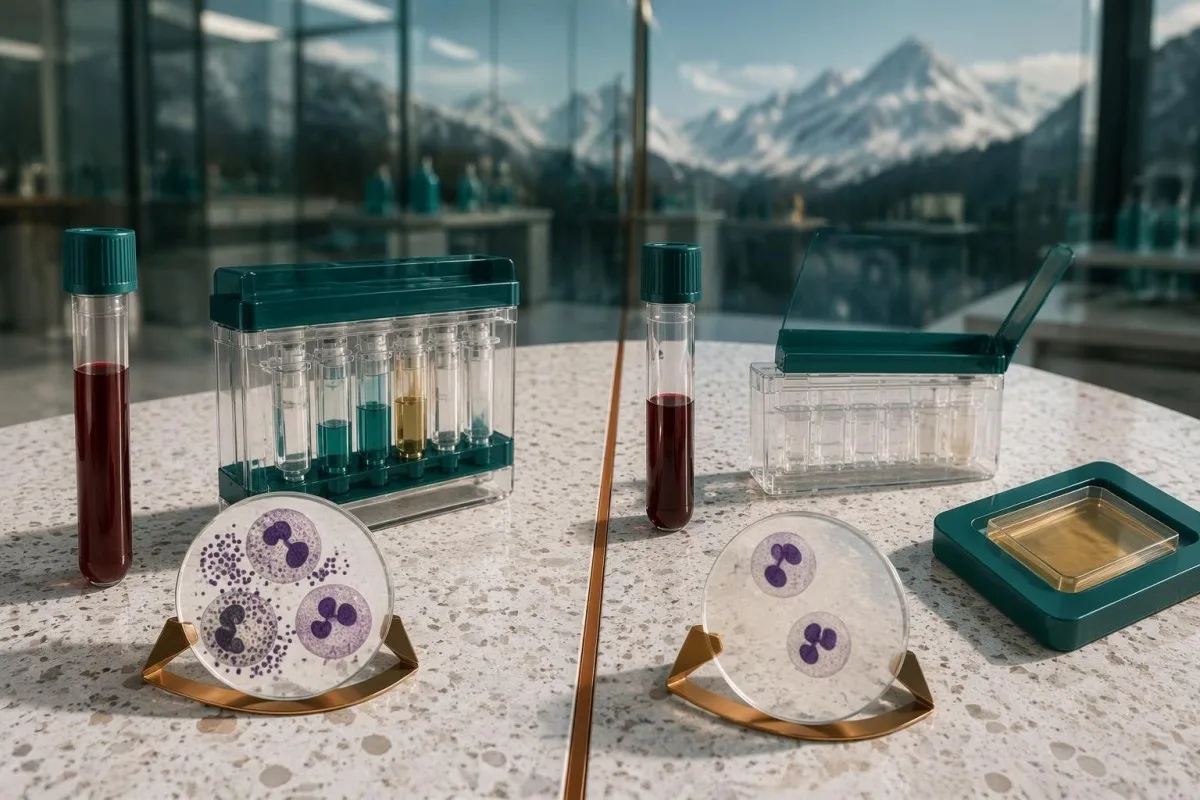
There is no single dependable false-negative percentage for every Anaplasma test. PCR assays differ, studies use different reference standards, and patients present on different illness days; a sensitivity estimate from untreated day-3 specimens cannot simply be applied to a day-9 sample obtained after 4 days of doxycycline (Schotthoefer et al., 2013).
A hypothetical person has fever, platelets of 78 × 10^9/L, a WBC of 2.9 × 10^9/L, and recent woodland exposure, but both tests are negative on illness day 4. That pattern leaves substantial clinical concern even without confirmation; by contrast, the same negative tests in a well person with normal counts and no plausible exposure answer a much lower-risk question.
کانټیسټي یو دی AI د وینې ازموینې تشریح پلیټفارم that can explain why 2 negative tests may be limited by their collection dates, but it cannot determine whether antibiotics are needed. Our د کلینیکي تایید (validation) تګلاره د تفسیر د خوندیتوب تدابیر بیانوي، په داسې حال کې چې checking report source details helps readers verify specimen type, method, and reference comments before relying on a summary.
کوم CBC او د ځیګر موندنې د تشخیص ملاتړ کوي؟
Low white blood cells, low platelets, and raised AST or ALT commonly support suspicion of anaplasmosis, but none is diagnostic alone. Many adult laboratories use WBC reference intervals around 4.0–11.0 × 10^9/L and platelet intervals around 150–450 × 10^9/L; use the ranges printed on your own report.

A falling platelet count can be more informative than one mildly low result. A hypothetical decline from 182 to 84 × 10^9/L over 3 days during fever suggests an acute process, whereas a stable count of 138 × 10^9/L for years has a different context; plateletcrit and platelet count are related measurements, but plateletcrit is not an Anaplasma diagnostic test.
AST and ALT indicate cellular injury rather than identifying the organism. An AST of 84 IU/L is approximately 2.1 times an upper limit of 40 IU/L, but muscle injury, other infections, and medication effects can also produce that result; what ALT measures helps distinguish supportive liver findings from proof of a specific cause.
Morulae are clusters of organisms that may be visible inside granulocytes during the first week. Their absence does not exclude anaplasmosis, and their presence is not reliably species-specific because some Ehrlichia organisms can also affect granulocytes; manual microscopy can provide a fast clue, but PCR is needed for clearer organism identification (Bakken and Dumler, 2015).
| کچه | حد | مانا یې څه ده |
|---|---|---|
| د لویانو د WBC عام واټن | 4.0–11.0 × 10^9/L | Laboratory-dependent reference interval; a normal WBC does not exclude early anaplasmosis. |
| WBC below the local interval | Often <4.0 × 10^9/L | Leukopenia supports suspicion during a compatible acute illness but has many other causes. |
| Common adult platelet interval | 150–450 × 10^9/L | Check the local interval and previous results before interpreting a borderline value. |
| Platelets below the local interval | Often <150 × 10^9/L | Thrombocytopenia is a supportive clue; rapid decline and symptoms determine urgency. |
د Anaplasma ازموینې له نورو د کنې له لارې لېږدېدونکو ناروغیو ازموینو سره څه توپیر لري؟
Anaplasma PCR, Lyme serology, Babesia testing, Ehrlichia PCR, and spotted-fever serology detect different targets and cannot substitute for one another. A laboratory panel tests only the organisms explicitly listed; a negative result for 1 target is not a negative result for all tick-borne illnesses.
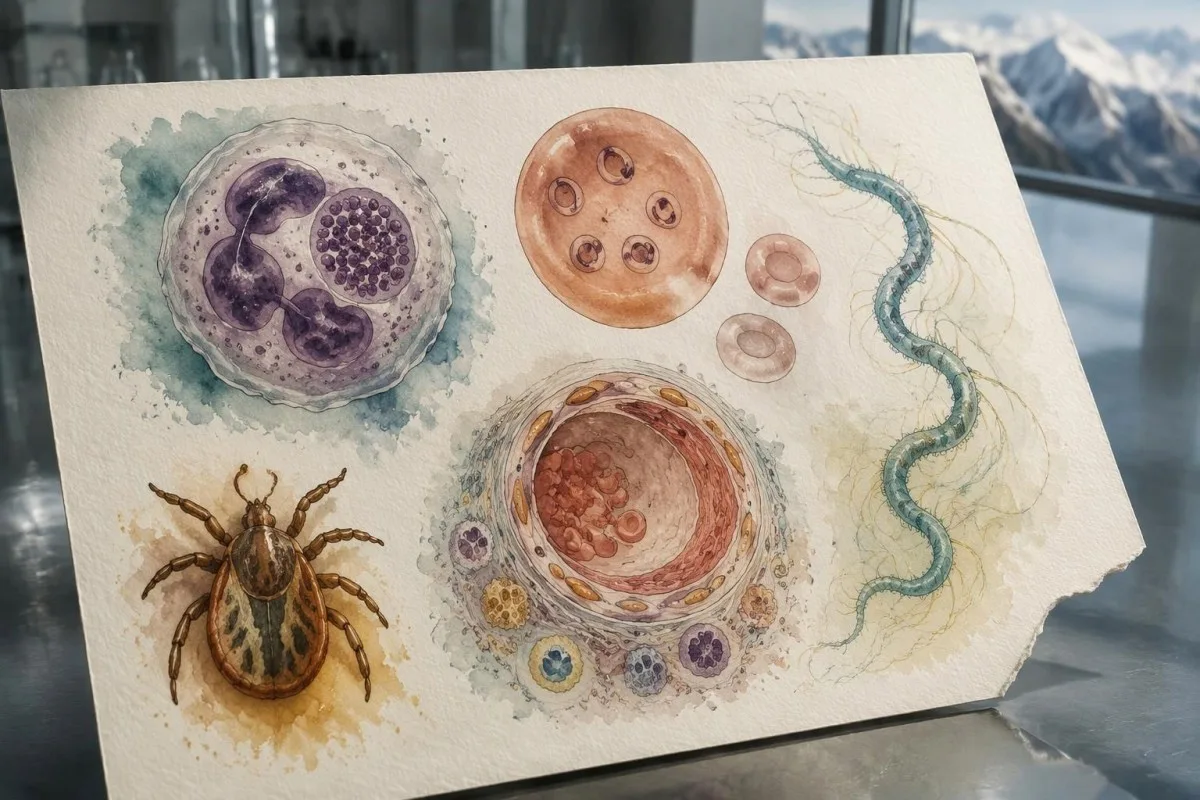
Lyme disease is usually evaluated with a validated two-tier antibody algorithm when testing is indicated. A classic expanding erythema migrans rash can be diagnosed clinically without waiting for positive antibodies, while marked leukopenia or thrombocytopenia should raise concern for an additional diagnosis; an Anaplasma PCR result does not answer either of these 2 Lyme questions.
Rocky Mountain spotted fever may have negative early serology, and whole-blood PCR is less reassuring when negative than it is for some circulating-cell infections. Rash appearance and specimen choice matter, but absence of rash does not make waiting safe; spotted-fever testing windows explains why the Anaplasma PCR window cannot simply be transferred to that illness.
Alpha-gal syndrome is a tick-associated allergy, not an Anaplasma infection. Delayed allergic symptoms roughly 2–6 hours after mammalian meat exposure require an allergy-focused history and appropriate IgE testing rather than PCR or paired Anaplasma IgG; alpha-gal IgE interpretation illustrates how one exposure category can lead to very different diagnostic pathways.
ولې درملنه ښايي تر تایید مخکې پیل شي؟
Suspected anaplasmosis should be treated promptly because early tests can be negative and delayed therapy can allow severe illness to develop. The MMWR guideline recommends that clinicians neither delay treatment while awaiting laboratory results nor withhold treatment because an early test is negative; the usual adult doxycycline dose is 100 mg every 12 hours (Biggs et al., 2016).

CDC recommends doxycycline for anaplasmosis in adults and children of all ages. For children weighing less than 45 kg, the usual dose is 2.2 mg/kg every 12 hours, with a maximum of 100 mg per dose; these are clinician-prescribed regimens, not instructions to start leftover medication or adjust a child's dose without assessment.
Treatment commonly lasts 10–14 days to provide coverage for possible concurrent Borrelia infection. Duration still depends on the suspected coinfections and clinical course, so an improving fever after 2 doses is not a reason to stop early; pregnancy, severe drug allergy, vomiting, or organ dysfunction require individualized decisions, sometimes with infectious-disease input.
Starting doxycycline is a clinical decision based on exposure, symptoms, examination, and the overall pattern—not on a single CRP or WBC cutoff. A WBC of 3.0 × 10^9/L during acute fever may strengthen concern even when CRP is only modestly raised; د انفیکشن د وینې غیر مطابقت لرونکي نښې explains why one reassuring-looking number should not overrule the complete assessment.
د درملنې کوم غبرګون تمه کېږي، او کله بیړنۍ پاملرنه اړینه ده؟
Fever from anaplasmosis usually improves within 24–48 hours of doxycycline, but severe illness may take longer. Difficulty breathing, confusion, new bleeding, fainting, or markedly reduced urination requires emergency assessment; failure to improve is a reason for reassessment, not an instruction to increase the antibiotic dose yourself.

Persistent fever beyond about 48 hours should prompt review of the diagnosis, medication delivery, and possible coinfections. The person may not be absorbing oral treatment because of vomiting, may have an additional illness such as babesiosis, or may have developed a complication; the interval is a practical reassessment point rather than an absolute recovery deadline.
Severe anaplasmosis can involve respiratory failure, kidney injury, or coagulation abnormalities. Falling platelets accompanied by rising creatinine, prolonged clotting times, or new bleeding should not be dismissed as a routine CBC fluctuation; disseminated coagulation laboratory patterns explains why 2 or more changing systems can signal a problem beyond an isolated low count.
Clotting tests assess complications rather than confirming Anaplasma itself. For example, an INR of 1.8 in someone not taking warfarin needs explanation in context, but does not establish anaplasmosis or DIC on its own; our د وینې د ټینګېدو د ازموینو د پایلو د تفسیر لارښود helps separate PT, aPTT, D-dimer, and platelet findings without treating them as interchangeable measurements.
ایا له درملنې وروسته باید PCR یا د انټي باډۍ ازموینې تکرار شي؟
Routine PCR or IgG testing is generally not needed to prove cure after clinically successful anaplasmosis treatment. A convalescent IgG sample collected 2–10 weeks after the acute sample can document the diagnosis, but persistent antibodies alone do not demonstrate treatment failure and should not trigger repeated antibiotics in a well person.

A persistently positive IgG is not a test-of-cure result. If a person is well after a completed 10–14-day course, an elevated titer may simply reflect immune memory; if symptoms recur, clinicians should reassess the new symptoms and exposure history rather than assume that the old antibody result proves persistent infection.
CBC, creatinine, and liver enzymes may be repeated when they were abnormal or the illness was severe, but there is no universal day-7 retesting schedule for everyone. Kantesti AI can help organize serial results—for example, platelets rising from 82 to 164 × 10^9/L—while د درملو د خوندیتوب رجحان بیاکتنه explains why recovery patterns still require clinical context.
Antibiotic prophylaxis after a tick bite is not recommended specifically to prevent anaplasmosis. After an asymptomatic bite, monitor for fever or other illness over the following 2 weeks and obtain medical advice if symptoms appear; a separate Lyme prophylaxis decision, when indicated, should not be mistaken for an Anaplasma prevention protocol.
څنګه کولای شئ یو مغشوش راپور په خوندي ډول تنظیم کړئ؟
The safest report review separates organism detection, antibody evidence, supportive blood findings, and clinical timing into 4 distinct questions. Record the assay target, specimen type, result format, collection date, symptom-onset date, and antibiotic start; missing context should remain explicitly unknown rather than being filled in by an AI explanation.

کانټیسټي یو دی د AI لاب ټېسټ د تفسیر خدمت that can explain uploaded laboratory reports and help readers identify questions for their clinician. In a hypothetical 2-report review, our AI should distinguish 'PCR not detected after treatment' from 'paired IgG rise consistent with recent infection,' rather than flattening both statements into a single positive-or-negative label.
An upload is not a substitute for urgent assessment. A photo showing platelets of 74 × 10^9/L cannot reveal whether the person is confused, dehydrated, pregnant, or short of breath; our تكنولوجيا تفسير الذكاء الاصطناعي (AI) الخاصة بنا describes the analytical workflow, but clinical observations and prescribing decisions remain outside what the report alone can establish.
Before sharing 2 samples, check that both belong to the same person and remove identifiers if they are not needed for your purpose. Kantesti does not perform Anaplasma PCR, validate specimen handling, or confirm that an uploaded titer used the same laboratory method; retain the original PDF and ask the laboratory to resolve unclear assay comments or mismatched result units.
کوم شواهد باید ستاسو راتلونکي ګامونه وټاکي؟
Anaplasmosis testing decisions should follow condition-specific guidance and diagnostic research, not general blood-test publications. The 2016 MMWR guideline, the 2013 PCR comparison, and the 2015 clinical review support the distinction between early direct detection, later antibody confirmation, and treatment based on clinical suspicion rather than a single laboratory result.

Bring 3 questions to the clinical review: was PCR collected early enough, is paired IgG needed, and do other tick-borne targets require separate testing? If the first specimen followed several doxycycline doses, say so; if the report is a single low-positive IgG, ask what evidence supports current illness before assuming that another antibiotic course is required.
At Kantesti, we distinguish externally published medical evidence from our own educational resources. Our د طبي محتوا معیارونه explain that distinction; the 2 Figshare publications listed below are supplementary general laboratory and digestive-health guides, not studies establishing Anaplasma assay accuracy, treatment efficacy, or diagnostic thresholds.
The general hematology guide can help explain LDH and reticulocyte results when anemia raises a separate concern such as hemolysis. Use the hematology marker background guide for that limited purpose, not to interpret Anaplasma PCR; a 4-fold IgG rise, a positive organism-specific PCR, and the patient's clinical course each provide different kinds of evidence.
پرله پسې پوښتل شوي پوښتنې
ایا د اناپلازما PCR مثبت کېدای شي، په داسې حال کې چې انټي باډي منفي وي؟
د ناروغۍ په لومړۍ اوونۍ کې د اناپلازما PCR مثبت کېدای شي، په داسې حال کې چې د IgG انټيباډۍ منفي وي، ځکه چې د باکتریا DNA ښايي د انټيباډۍ د غبرګون له رامنځته کېدو مخکې د موندلو وړ وي. دا بڼه د لابراتواري تېروتنې پر ځای د فعالې اناپلازموسېز ملاتړ کولای شي. د IgG د ناروغۍ د حاد پړاو نمونه له هغې نمونې سره پرتله کېدای شي چې د رغېدو پر مهال، ۲–۱۰ اوونۍ وروسته، اخیستل شوې وي. کله چې د ناروغۍ کلینیکي شک موجود وي، د انټيباډۍ د بدلون تر پېښېدو پورې باید درملنه ونه ځنډول شي.
ایا د اناپلازما IgG مثبتې پایلې مانا دا ده چې زه انټيبیوټیکونو ته اړتیا لرم؟
د Anaplasma IgG یوه مثبته پایله په یوازې ځان دا نه معنا کوي چې انټيبیوټیکونو ته اړتیا ده، ځکه انټيباډۍ ښايي د پخواني تماس یا متقابل غبرګون څرګندونه وکړي. CDC د لږ تر لږه 1:128 یو واحد ټایټر د ملاتړ کوونکي شواهدو په توګه ګڼي، خو د نوې عفونت د قطعي ثبوت په توګه یې نه ګڼي. د انټيباډیو کچه ښايي څو میاشتې لوړه پاتې شي، او د ناروغۍ تر تېرېدو وروسته تر 4 کلونو پورې د لوړو ټایټرونو راپورونه ورکړل شوي دي. ډاکټران درملنه د اوسنیو نښو، د تماس، د PCR موندنو او د انټيباډیو د جوړو پایلو پر بنسټ ټاکي، نه یوازې د IgG د دوامدارې شتون له مخې.
ډوکسيسایکلین په څومره وخت کې د انaplasma PCR پایله منفي کولی شي؟
Anaplasma PCR sensitivity can decrease within 48 hours of appropriate antibiotic treatment, according to CDC guidance. That does not mean every person's PCR becomes negative at exactly 48 hours, because assay performance and circulating organism levels differ. A negative PCR collected after treatment is therefore less reassuring than a well-timed pretreatment result. Record the first doxycycline dose and specimen collection time so the clinician can interpret the result correctly.
د اناپلازما د انټيباډیو څلور برابره زیاتوالی څه ته ویل کېږي؟
A rise in Anaplasma IgG titer from 1:64 to 1:256 is fourfold, while a rise from 1:128 to 1:256 is only twofold. Paired testing generally compares an acute specimen from the first 2 weeks of illness with a convalescent specimen collected 2–10 weeks later. The comparison should use compatible methods, ideally the same laboratory's IgG indirect fluorescent antibody assay. An antibody screen index cannot be directly converted into a dilution titer for this calculation.
ایا که د PCR او IgG دواړه پایلې منفي وي، بیا هم انپلازموز لرلای شم؟
اناپلاسموز بیا هم موجود کېدای شي، که PCR او IgG دواړه منفي وي؛ په ځانګړي ډول که د IgG نمونه د لومړۍ اوونۍ پر مهال اخیستل شوې وي او د PCR نمونه د مناسبو انټيبیوټیکونو له کارولو وروسته اخیستل شوې وي. تبه، د کنې د چیچلو احتمالي تماس، د پلیټلېټونو ټیټه کچه، د سپینو وینې حجرو ټیټه کچه او د ځیګر د انزایمونو لوړه کچه، د منفي ازموینو باوجود، د کلینیکي شک د دوام لامل کېدای شي. ډاکټران ښايي د ناروغۍ له حاد پړاو څخه ۲–۱۰ اوونۍ وروسته د رغېدو پړاو د IgG نمونه واخلي او نور احتمالي تشخیصونه وارزوي. یوازې د دې لپاره چې لومړنۍ ازموینې منفي دي، د شکمن اناپلاسموز درملنه باید ونه ځنډول شي.
نښې باید څومره ژر ښه شي، او ایا د رغېدو د تایید لپاره ازموینې ته اړتیا لرم؟
د اناپلاسموسس له امله تبه عموماً د ډوکسيسایکلین له پیل وروسته په ۲۴–۴۸ ساعتونو کې ښه کېږي، خو د ناروغۍ په سختو بڼو کې ښايي ډېر وخت ونیسي. د تبې دوام باید د درملو د جذب ستونزو، بل تشخیص، هممهاله انتان یا عوارضو لپاره د بیا ارزونې لامل شي. له بریالۍ درملنې وروسته د رغېدو د ثابتولو لپاره عموماً د PCR یا انټيباډي عادي معاینې ته اړتیا نشته؛ د IgG جوړهيي معاینه تر ډېره د وروستي انتان د ثبتولو لپاره کارول کېږي. ساهلنډي، ګډوډي، نوې وینهبهېدنه یا د ادرار د اندازې څرګند کمښت، د لابراتواري پایلې په پام کې نیولو پرته، بیړنۍ ارزونه غواړي.
د وینې ازموینې پایلې څنګه ولولئ
خپل لابراتواري راپور پورته کړئ، او د Kantesti AI به په څو ثانیو کې هر بایومارکر په ساده ژبه تشریح کړي. په ټوله نړۍ کې له 2 میلیونو څخه زیاتو کسانو ترې کار اخیستی.
ماخذونه
- کلاین، ټي.، میچل، ایس.، او وېبر، ایچ. (۲۰۲۶). د B منفي وینې ګروپ، د LDH وینې ازموینه او د رتیکولوسایټونو شمېرنې لارښود. د Kantesti AI طبي څېړنه. د دفاع وزارت
- کلاین، ټي.، میچل، ایس.، او وېبر، ایچ. (۲۰۲۶). له روژې وروسته نسناستی، په غایطه موادو کې تورې ذرې او د معدې او کولمو لارښود ۲۰۲۶. د Kantesti AI طبي څېړنه. د دفاع وزارت
- Biggs HM او نور (2016). د ټیک په وسیله لېږدېدونکو ریکټسیایي ناروغیو تشخیص او درملنه: د راکي غرونو سپاټډ فیور او د سپاټډ فیور د ډلې نور ریکټسیوزونه، اېرلیخیوزونه او اناپلاسموز — متحده ایالات. د MMWR سپارښتنې او راپورونه. د دفاع وزارت پب میډ
- Schotthoefer AM et al. (2013). Comparison of a real-time PCR method with serology and blood smear analysis for diagnosis of human anaplasmosis: importance of infection time course for optimal test utilization. Journal of Clinical Microbiology. د دفاع وزارت
- Bakken JS and Dumler JS (2015). Human granulocytic anaplasmosis. Infectious Disease Clinics of North America.
- ۲ میلیونه+تحلیل شوې ازموینې
- 127+هېوادونه
- 100+ژبې
د طبي ټیم په اړه


د E-E-A-T باور نښې
تجربه
د ډاکټر تر مشرۍ لاندې کلینیکي بیاکتنه د لابراتواري تفسیر د کاري بهیرونو لپاره.
تخصص
د لابراتواري طب تمرکز پر دې چې بایومارکرونه په کلینیکي شرایطو کې څنګه چلند کوي.
واک ورکول
د ډاکټر توماس کلاین له خوا طبي بیاکتنه شوې، د ډاکټر سارا میچل او پروفیسور ډاکټر هانس وېبر په مرسته.
اعتبار
د شواهدو پر بنسټ تفسیر د روښانه تعقیبي لارو چارو سره، تر څو اندیښنه کمه شي.






طبي سلبِ مسئولیت
دا مقاله یوازې د زده کړې لپاره ده او طبي مشوره نه جوړوي. د تشخیص او درملنې د پرېکړو لپاره تل د وړ روغتیايي خدمت وړاندې کوونکي سره سلا وکړئ.
خپور شوی · له تحریري ټیم سره اړیکه ونیسئ
خپروونکی یې Kantesti Ltd دی، چې په انګلستان او وېلز کې ثبت شوی، د شرکت شمېره. 17090423, ، لندن، بریتانیا.
