
كيكشف PCR على الكائن المسبّب؛ والأجسام المضادة كتعكس الاستجابة المناعية. مطابقة النتيجتين مع وقت بداية الأعراض وتوقيت المضادات الحيوية كتفسر التناقضات اللي كتبان.

أهم الخلاصات
- PCR مبكر هو الأكثر فائدة خلال الأسبوع الأول ديال المرض؛ وPCR إيجابي من الدم الكامل كيعطي دليل واضح على وجود أنابلازما نشطة.
- الأجسام المضادة المبكرة ممكن تبقى سلبية خلال الأسبوع الأول، لذلك PCR إيجابي مع IgG سلبي نمط متوقع، وماشي بالضرورة خطأ فالمختبر.
- PCR سلبي ما كينفيش وجود الأنابلازما، خصوصا من بعد المضادات الحيوية؛ الحساسية ديال PCR ممكن تنقص فظرف 48 ساعة من العلاج المناسب.
- عينات IgG المزدوجة كيتجمعو خلال أول جوج سيمانات ديال المرض، ومن بعد كيتعاود الجمع من بعد 2–10 سيمانات؛ ارتفاع بأربع مرات كيدعم تأكيد وجود عدوى حديثة.
- تحليل IgG إيجابي بوحدو ما كيقدرش يثبت بلي كاينة عدوى جديدة. عيار ديال 1:128 على الأقل كيشكل دليل داعم حسب توجيهات CDC، وماشي تعليمات علاجية بوحدو.
- توقيت العلاج كيعتمد على الاشتباه السريري، ماشي غير على التأكيد. ما خاصش للأطباء يأخرو دواء الدوكسيسيكلين حتى يخرجو النتائج إلا كان كاين اشتباه فداء الأنابلازما.
- أمراض أخرى كينقلها القراد خاصها تحاليل خاصة بها. تحليل Anaplasma PCR ما كيكشفش داء لايم، وداء البابسيات، وداء إيرليخ، ولا حمى جبال روكي المبقعة.
- أعراض عاجلة بحال التشوش، وصعوبة التنفس، ونزيف جديد، ولا نقص كبير فالتبول، كيتطلبو تقييما استعجاليا عوض انتظار عينة أخرى.
علاش ممكن نتائج PCR والأجسام المضادة المبكرة ما يتوافقوش؟
نتائج تحاليل داء الأنابلازما ممكن ما تتوافقش، حيث إن PCR كيكشف الحمض النووي البكتيري، بينما IgG كيكشف استجابة مناعية كتتطور من بعد. فالأسبوع الأول، ممكن PCR يجي إيجابي والأجسام المضادة سلبية؛ ومن بعد العلاج، ممكن PCR يولي سلبي بينما IgG كيرتافع، وقد يبقى العلاج ضروريا عند الاشتباه فالعدوى قبل التأكيد المخبري.
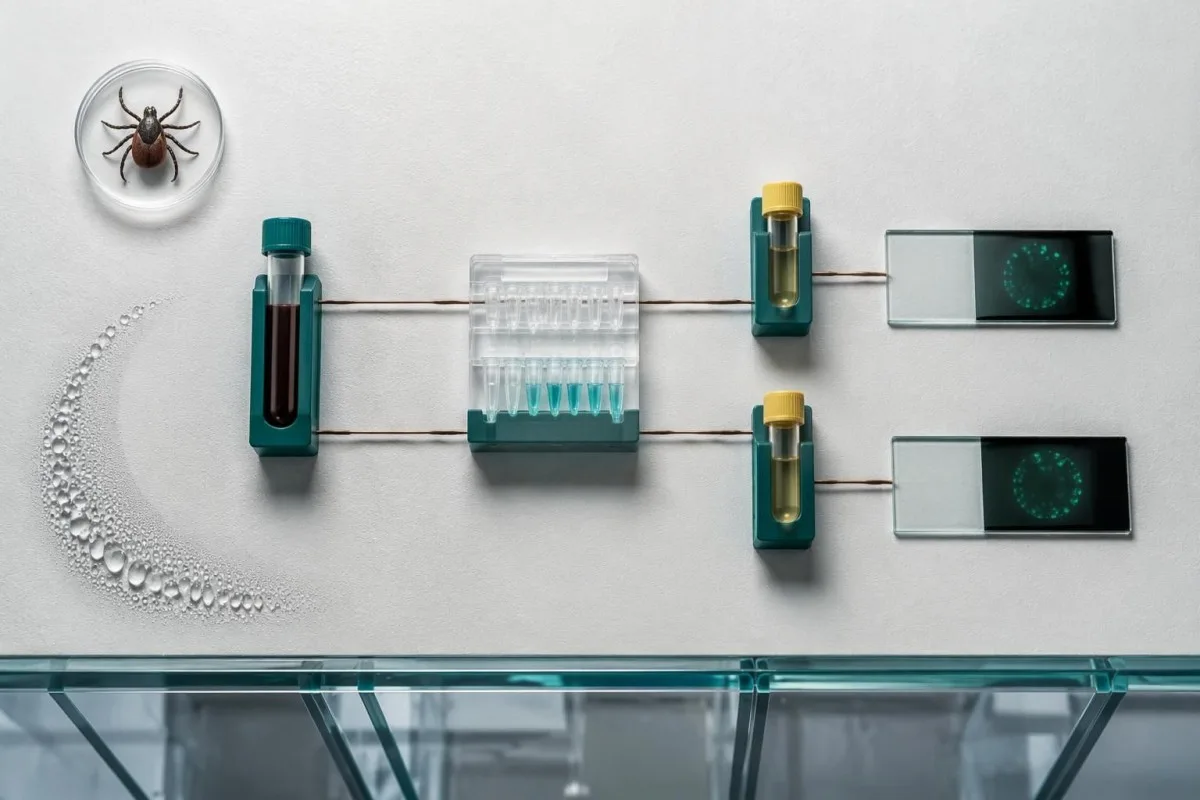
Anaplasma phagocytophilum كيسبب داء الأنابلازما المحببة البشري وكيأثر بالأساس على العدلات، وهي نوع من كريات الدم البيضاء. الأعراض كتبدا عادة من 5 حتى لـ14 يوم من بعد عضة قرادة مصابة، ولكن بزاف ديال الناس ما كينتبهوش للقرادة؛ الحساب المخبري المفيد كيبدا من أول نهار ديال المرض، ماشي من تاريخ تعرض غير مؤكد.
نتيجة تجمعات فنهار 3 من المرض كتجاوب على سؤال مختلف على نتيجة تجمعات فنهار 24، حتى إلا كان مكتوب Anaplasma فالجوج ديال التقارير. لقات المقارنة ديال PCR فالوقت الفعلي المنشورة فمجلة Journal of Clinical Microbiology أن المردودية التشخيصية كتعلق بتوقيت المرض، وهادشي كيفسر علاش خاص تفسير الكشف المباشر والتحليل المصلي بجوج، عوض اعتبارهم تحاليل متبادلة (Schotthoefer et al., 2013).
كانتيستي هو محلل اختبار الدم بالذكاء الاصطناعي اللي يقدر يعاون فشرح العلاقة بين نتيجة Anaplasma ونتائج CBC ولا الكبد المرافقة، ولكن ما يقدرش يثبت التشخيص غير بالأرقام. باش يكون التفسير مفيد، عطينا 3 تفاصيل: بداية الأعراض، وتاريخ جمع العينة، وتاريخ أول جرعة ديال المضاد الحيوي؛ معلومات على منظمتنا كيوضح الدور ديال الخدمة.
شنو كتعني نتيجة إيجابية لـPCR ديال الأنابلازما؟
النتيجة الإيجابية لتحليل anaplasma PCR كتعني أن الاختبار كشف الحمض النووي ديال Anaplasma فالعينة اللي تسلمات. عند شخص عندو مرض حاد كيتوافق مع داء الأنابلازما، نتيجة إيجابية لتحليل PCR خاص بالنوع ومن دم كامل كتشكل دليل واضح على وجود داء الأنابلازما النشيط؛ ولكنها ما كتقيسش مستويات الأجسام المضادة، وما كتحددش شدة المرض، وما كتكشفش بالضرورة على جميع أنواع العدوى المشتركة المحتملة اللي كينقلها القراد.

الدم الكامل مع EDTA كيتستعمل غالبا لتحليل Anaplasma PCR حيث الكائن كيرتبط بمكونات خلوية كدور فالدم. عينة الأجسام المضادة من المصل ما كتصلحش تلقائيا كبديل: قبل تفسير جوج نتائج اللي باين عليهم متناقضين، تأكد أن المختبر توصل بالعينة المطلوبة لكل تحليل، وأن تاريخي الجمع بجوج مسجلين بشكل صحيح.
تقرير افتراضي مكتوب فيه 'A. phagocytophilum DNA detected' فنهار 4 ديال المرض، مع الحمى ونقص الصفائح الدموية، كيدعم التشخيص السريري بقوة. تقرير مكتوب فيه غير 'Anaplasma species detected' ممكن يكون ناتج على اختبار أوسع، لذلك الهدف الدقيق مهم؛ سول واش النتيجة كتحدد A. phagocytophilum بالضبط، ولا كتحتاج توضيح مخبري إضافي.
تحليل PCR النوعي ماشي مقياس لكمية البكتيريا. حتى إلا كان التقرير فيه قيمة ديال عتبة الدورة، ما كاين حتى حد موحد خاص بـAnaplasma كيتنبأ بالحاجة للاستشفاء ولا كيحدد مدة العلاج؛ الشرح ديالنا لـ نتائج نوعية مقابل نتائج كمية كيساعد يفرق بين الكشف والقياس المعياري للتركيز.
فوقاش كيكون PCR ديال الأنابلازما هو الأكثر فائدة؟
كيكون تحليل Anaplasma PCR أكثر حساسية فالأسبوع الأول ديال المرض، قبل ما تنقص المضادات الحيوية المناسبة الحمض النووي البكتيري اللي كيدور فالدم. كتنص توجيهات CDC على أن الحساسية كتنقص فظرف 48 ساعة من إعطاء المضادات الحيوية المناسبة؛ هادشي كيعني انخفاض فالمردودية التشخيصية، ماشي ضمانة بأن كل عينة تعالجات غادي تولي سلبية فنفس الساعة.

خذ عينة PCR قبل العلاج إلا أمكن تدير هادشي فالحين، ولكن ما تأخرش أبدا العلاج الضروري باش ترتب سحب العينة. For example, a sample collected on day 5 before the first doxycycline dose is generally more informative than one collected on day 7 after several doses; the MMWR guideline explicitly prioritizes prompt treatment over waiting for confirmation (Biggs et al., 2016).
The 48-hour statement does not apply equally to every antibiotic a person may have taken. A prior course of an antibiotic that does not reliably treat anaplasmosis cannot be assumed to have the same effect as doxycycline; record the drug name, dose, and dose times rather than writing only 'already on antibiotics.'
If the first PCR was collected after 3 days of doxycycline, a negative result should be interpreted with that limitation visible on the report review. Repeating PCR without changing the timing problem may add little; arranging convalescent IgG may be more informative, and a dated blood test timeline prevents treatment-related changes from being mistaken for contradictory evidence.
شنو كتعني نتيجة إيجابية لـIgG ديال الأنابلازما؟
The anaplasma IgG positive meaning is evidence of an antibody response, not automatic proof of a current infection. A single IgG result may reflect recent illness, previous exposure, or cross-reactivity; CDC considers a single titer of at least 1:128 supportive laboratory evidence, while confirmation usually requires the clinical picture and direct detection or paired serology.

Anaplasma IgG can remain elevated for months, and high titers have been reported up to 4 years after illness. Persistently positive antibodies in a well person do not by themselves justify another antibiotic course; the relevant question is whether there is a new compatible illness, a new exposure, or evidence that the antibody level has changed meaningfully.
In some areas, approximately 5–10% of healthy people may have elevated Anaplasma antibodies because of previous exposure or related organisms, according to CDC testing guidance. That estimate is geographically dependent, not a universal false-positive rate; a low positive in someone with no fever or plausible tick exposure carries a different meaning from the same result during an acute illness.
Kantesti treats 1 positive antibody result as a finding to explain, not a diagnosis to announce. The distinction between immune memory and active disease is covered in تفسير نتيجة الجسم المضاد الإيجابية; unlike some vaccine antibody tests, Anaplasma IgG does not provide an established protective-immunity threshold.
كيفاش كأكدّو عينات IgG المزدوجة وجود عدوى حديثة؟
Paired Anaplasma IgG testing compares an acute specimen from the first 2 weeks of illness with a convalescent specimen collected 2–10 weeks later. A fourfold rise in IgG titer by indirect fluorescent antibody testing is evidence of seroconversion and helps confirm recent infection when the early result was negative or PCR was unavailable.
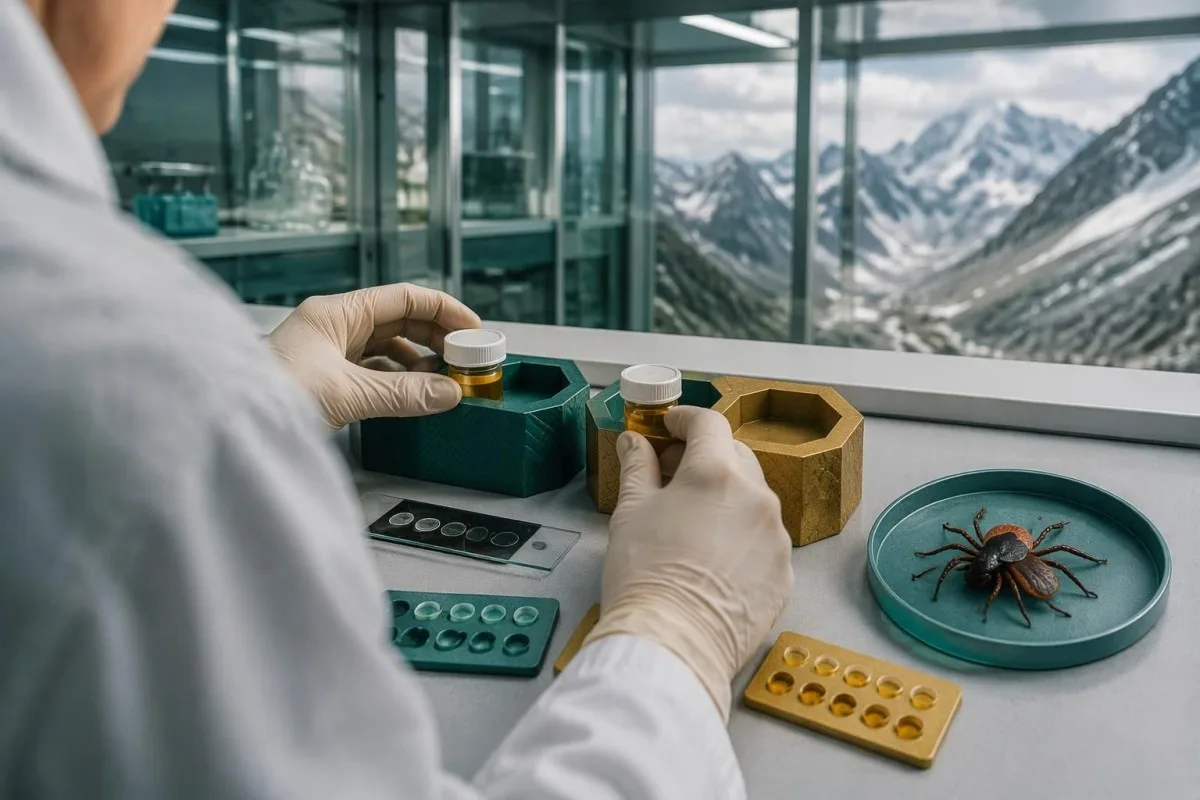
A rise from 1:64 to 1:256 is fourfold; a rise from 1:128 to 1:256 is only twofold. In a hypothetical case, an illness-day-4 titer of 1:64 and a day-28 titer of 1:256 would meet the fourfold criterion, while the smaller increase would not independently confirm infection by that criterion.
Titers are reciprocal dilutions, not concentrations in mg/dL or arbitrary screen-index units. If the acute report gives an index of 1.4 and the later report gives a titer of 1:256, a fourfold change cannot be calculated directly; use the same laboratory and method where possible, and ask whether archived samples can be compared together.
Antibody responses may be weaker or delayed in people receiving immunosuppressive treatment. A person taking B-cell-depleting therapy, for example, may not produce the expected rise over 2 samples, so clinicians may rely more heavily on PCR, clinical findings, and exposure history; IgG, IgA, and IgM patterns can provide background context but do not replace organism-specific testing.
علاش IgM والأجسام المضادة اللي كتتفاعل مع مسببات أخرى ما كيتعتامدش عليهم؟
Anaplasma IgM is not a reliable stand-alone marker of recent anaplasmosis, and antibodies can cross-react with related Ehrlichia organisms. When both illnesses are plausible, clinicians may request 2 separate organism-specific PCR tests and side-by-side IgG testing; dual antibody positivity does not automatically establish 2 active infections.

IgM does not consistently mean 'new infection' in anaplasmosis. An isolated IgM positive result with negative IgG and negative PCR is therefore insufficient confirmation, particularly if it was obtained on day 2 of a nonspecific illness; the recommended serologic approach is paired IgG interpreted alongside symptoms and the direct-detection window.
Anaplasma phagocytophilum and Ehrlichia species are different organisms, despite overlapping fever, headache, cytopenias, and antibody cross-reactivity. A positive Ehrlichia antibody assay does not substitute for an Anaplasma PCR result; our guide to ehrlichiosis PCR and titers explains why testing for each target matters when 2 diagnoses remain plausible.
Babesia requires separate assessment because doxycycline does not treat babesiosis. In a patient with anemia, elevated LDH, low haptoglobin, or persistent fever after 48 hours of appropriate anaplasmosis treatment, clinicians may consider Babesia PCR or a manually reviewed smear; الأجسام المضادة للباسبيا مقابل العدوى explains why an antibody result alone can also mislead.
واش ممكن تكون عندك الأنابلازما حتى إلا كانت النتائج سلبية؟
An anaplasmosis test false negative is possible when antibodies are checked too early or PCR is collected after its best detection window or after treatment. Negative PCR plus negative IgG during week 1 does not reliably exclude the illness; clinicians must weigh exposure, symptoms, CBC changes, liver enzymes, and the timing of both tests.
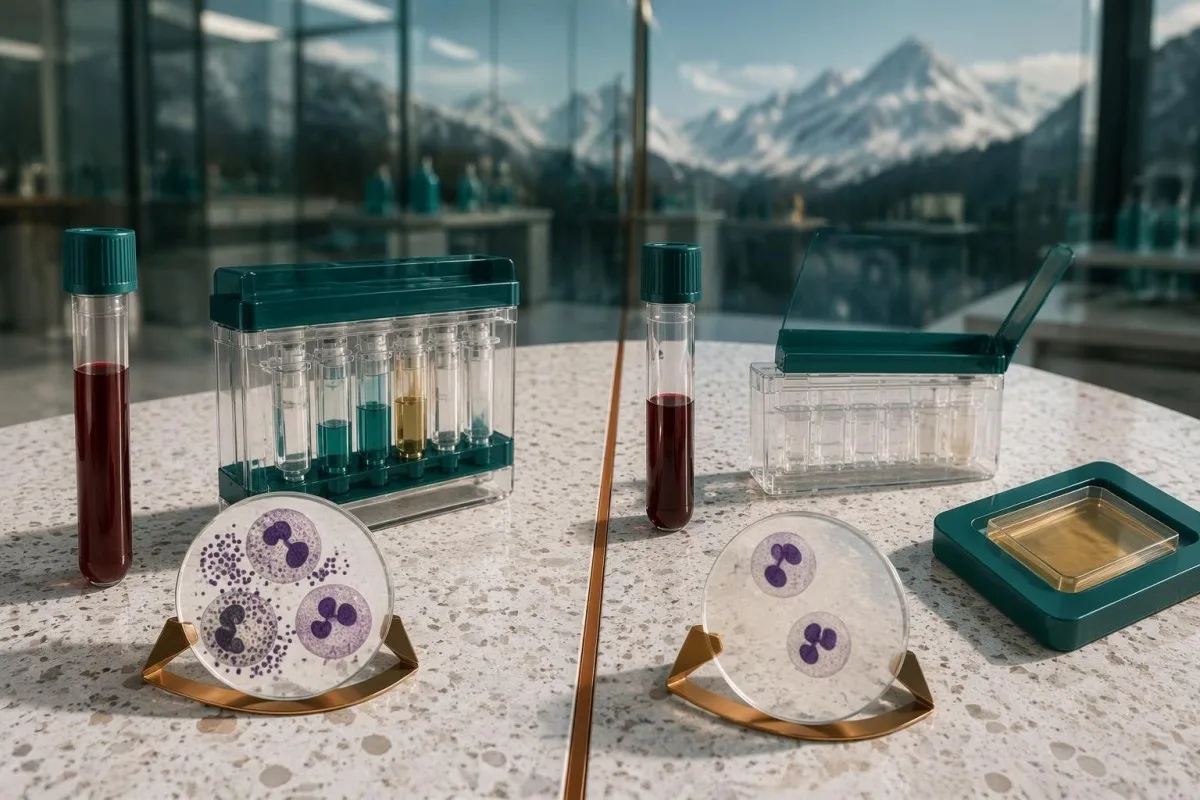
There is no single dependable false-negative percentage for every Anaplasma test. PCR assays differ, studies use different reference standards, and patients present on different illness days; a sensitivity estimate from untreated day-3 specimens cannot simply be applied to a day-9 sample obtained after 4 days of doxycycline (Schotthoefer et al., 2013).
A hypothetical person has fever, platelets of 78 × 10^9/L, a WBC of 2.9 × 10^9/L, and recent woodland exposure, but both tests are negative on illness day 4. That pattern leaves substantial clinical concern even without confirmation; by contrast, the same negative tests in a well person with normal counts and no plausible exposure answer a much lower-risk question.
كانتيستي هو منصة تفسير تحليل الدم ديال AI that can explain why 2 negative tests may be limited by their collection dates, but it cannot determine whether antibiotics are needed. Our نهج التحقق السريري كيوصف احتياطات التفسير، بينما checking report source details helps readers verify specimen type, method, and reference comments before relying on a summary.
شنو نتائج CBC والكبد اللي كتدعم التشخيص؟
Low white blood cells, low platelets, and raised AST or ALT commonly support suspicion of anaplasmosis, but none is diagnostic alone. Many adult laboratories use WBC reference intervals around 4.0–11.0 × 10^9/L and platelet intervals around 150–450 × 10^9/L; use the ranges printed on your own report.

A falling platelet count can be more informative than one mildly low result. A hypothetical decline from 182 to 84 × 10^9/L over 3 days during fever suggests an acute process, whereas a stable count of 138 × 10^9/L for years has a different context; plateletcrit and platelet count are related measurements, but plateletcrit is not an Anaplasma diagnostic test.
AST and ALT indicate cellular injury rather than identifying the organism. An AST of 84 IU/L is approximately 2.1 times an upper limit of 40 IU/L, but muscle injury, other infections, and medication effects can also produce that result; what ALT measures helps distinguish supportive liver findings from proof of a specific cause.
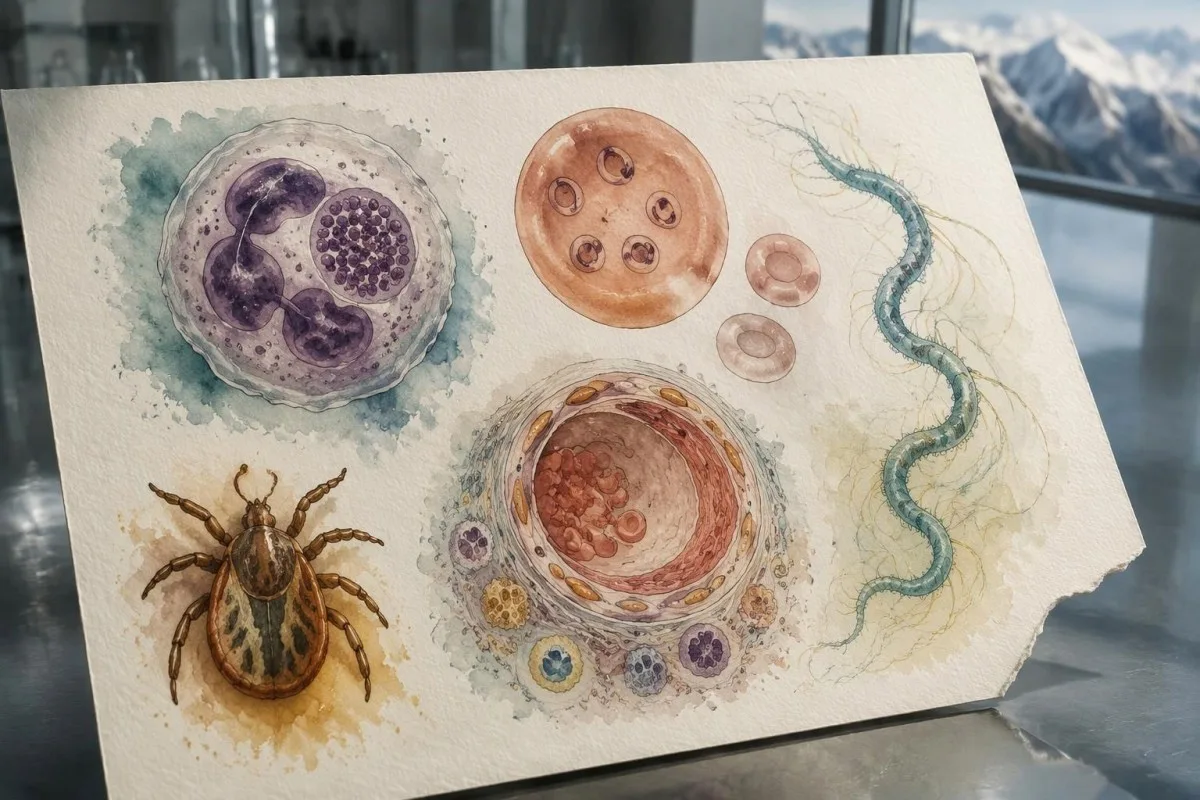
Morulae are clusters of organisms that may be visible inside granulocytes during the first week. Their absence does not exclude anaplasmosis, and their presence is not reliably species-specific because some Ehrlichia organisms can also affect granulocytes; manual microscopy can provide a fast clue, but PCR is needed for clearer organism identification (Bakken and Dumler, 2015).
| المستوى | النطاق | شنو كتعني |
|---|---|---|
| المجال الشائع لكريات الدم البيضاء عند البالغين | 4.0–11.0 × 10^9/L | Laboratory-dependent reference interval; a normal WBC does not exclude early anaplasmosis. |
| WBC below the local interval | Often <4.0 × 10^9/L | Leukopenia supports suspicion during a compatible acute illness but has many other causes. |
| Common adult platelet interval | 150–450 × 10^9/L | Check the local interval and previous results before interpreting a borderline value. |
| Platelets below the local interval | Often <150 × 10^9/L | Thrombocytopenia is a supportive clue; rapid decline and symptoms determine urgency. |
كيفاش ك تختلف اختبارات الأنابلازما على اختبارات أمراض أخرى كينقلها القراد؟
Anaplasma PCR, Lyme serology, Babesia testing, Ehrlichia PCR, and spotted-fever serology detect different targets and cannot substitute for one another. A laboratory panel tests only the organisms explicitly listed; a negative result for 1 target is not a negative result for all tick-borne illnesses.
Lyme disease is usually evaluated with a validated two-tier antibody algorithm when testing is indicated. A classic expanding erythema migrans rash can be diagnosed clinically without waiting for positive antibodies, while marked leukopenia or thrombocytopenia should raise concern for an additional diagnosis; an Anaplasma PCR result does not answer either of these 2 Lyme questions.
Rocky Mountain spotted fever may have negative early serology, and whole-blood PCR is less reassuring when negative than it is for some circulating-cell infections. Rash appearance and specimen choice matter, but absence of rash does not make waiting safe; spotted-fever testing windows explains why the Anaplasma PCR window cannot simply be transferred to that illness.
Alpha-gal syndrome is a tick-associated allergy, not an Anaplasma infection. Delayed allergic symptoms roughly 2–6 hours after mammalian meat exposure require an allergy-focused history and appropriate IgE testing rather than PCR or paired Anaplasma IgG; alpha-gal IgE interpretation illustrates how one exposure category can lead to very different diagnostic pathways.
علاش ممكن يبدا العلاج قبل التأكيد؟
Suspected anaplasmosis should be treated promptly because early tests can be negative and delayed therapy can allow severe illness to develop. The MMWR guideline recommends that clinicians neither delay treatment while awaiting laboratory results nor withhold treatment because an early test is negative; the usual adult doxycycline dose is 100 mg every 12 hours (Biggs et al., 2016).

CDC recommends doxycycline for anaplasmosis in adults and children of all ages. For children weighing less than 45 kg, the usual dose is 2.2 mg/kg every 12 hours, with a maximum of 100 mg per dose; these are clinician-prescribed regimens, not instructions to start leftover medication or adjust a child's dose without assessment.
Treatment commonly lasts 10–14 days to provide coverage for possible concurrent Borrelia infection. Duration still depends on the suspected coinfections and clinical course, so an improving fever after 2 doses is not a reason to stop early; pregnancy, severe drug allergy, vomiting, or organ dysfunction require individualized decisions, sometimes with infectious-disease input.
Starting doxycycline is a clinical decision based on exposure, symptoms, examination, and the overall pattern—not on a single CRP or WBC cutoff. A WBC of 3.0 × 10^9/L during acute fever may strengthen concern even when CRP is only modestly raised; علامات العدوى في الدم غير المتوافقة explains why one reassuring-looking number should not overrule the complete assessment.
شنو الاستجابة المتوقعة، وفوقاش كتكون الرعاية مستعجلة؟
Fever from anaplasmosis usually improves within 24–48 hours of doxycycline, but severe illness may take longer. Difficulty breathing, confusion, new bleeding, fainting, or markedly reduced urination requires emergency assessment; failure to improve is a reason for reassessment, not an instruction to increase the antibiotic dose yourself.

Persistent fever beyond about 48 hours should prompt review of the diagnosis, medication delivery, and possible coinfections. The person may not be absorbing oral treatment because of vomiting, may have an additional illness such as babesiosis, or may have developed a complication; the interval is a practical reassessment point rather than an absolute recovery deadline.
Severe anaplasmosis can involve respiratory failure, kidney injury, or coagulation abnormalities. Falling platelets accompanied by rising creatinine, prolonged clotting times, or new bleeding should not be dismissed as a routine CBC fluctuation; disseminated coagulation laboratory patterns explains why 2 or more changing systems can signal a problem beyond an isolated low count.
Clotting tests assess complications rather than confirming Anaplasma itself. For example, an INR of 1.8 in someone not taking warfarin needs explanation in context, but does not establish anaplasmosis or DIC on its own; our دليل تفسير فحوصات التخثّر helps separate PT, aPTT, D-dimer, and platelet findings without treating them as interchangeable measurements.
واش خاص يعاودو PCR ولا اختبارات الأجسام المضادة من بعد العلاج؟
Routine PCR or IgG testing is generally not needed to prove cure after clinically successful anaplasmosis treatment. A convalescent IgG sample collected 2–10 weeks after the acute sample can document the diagnosis, but persistent antibodies alone do not demonstrate treatment failure and should not trigger repeated antibiotics in a well person.

A persistently positive IgG is not a test-of-cure result. If a person is well after a completed 10–14-day course, an elevated titer may simply reflect immune memory; if symptoms recur, clinicians should reassess the new symptoms and exposure history rather than assume that the old antibody result proves persistent infection.
CBC, creatinine, and liver enzymes may be repeated when they were abnormal or the illness was severe, but there is no universal day-7 retesting schedule for everyone. Kantesti AI can help organize serial results—for example, platelets rising from 82 to 164 × 10^9/L—while مراجعة تطور سلامة الدواء explains why recovery patterns still require clinical context.
Antibiotic prophylaxis after a tick bite is not recommended specifically to prevent anaplasmosis. After an asymptomatic bite, monitor for fever or other illness over the following 2 weeks and obtain medical advice if symptoms appear; a separate Lyme prophylaxis decision, when indicated, should not be mistaken for an Anaplasma prevention protocol.
كيفاش تقدر تنظم تقرير محيّر بطريقة آمنة؟
The safest report review separates organism detection, antibody evidence, supportive blood findings, and clinical timing into 4 distinct questions. Record the assay target, specimen type, result format, collection date, symptom-onset date, and antibiotic start; missing context should remain explicitly unknown rather than being filled in by an AI explanation.

كانتيستي هو خدمة تفسير تحاليل مختبر الذكاء الاصطناعي that can explain uploaded laboratory reports and help readers identify questions for their clinician. In a hypothetical 2-report review, our AI should distinguish 'PCR not detected after treatment' from 'paired IgG rise consistent with recent infection,' rather than flattening both statements into a single positive-or-negative label.
An upload is not a substitute for urgent assessment. A photo showing platelets of 74 × 10^9/L cannot reveal whether the person is confused, dehydrated, pregnant, or short of breath; our تقنية تفسير الذكاء الاصطناعي describes the analytical workflow, but clinical observations and prescribing decisions remain outside what the report alone can establish.
Before sharing 2 samples, check that both belong to the same person and remove identifiers if they are not needed for your purpose. Kantesti does not perform Anaplasma PCR, validate specimen handling, or confirm that an uploaded titer used the same laboratory method; retain the original PDF and ask the laboratory to resolve unclear assay comments or mismatched result units.
شنو الأدلة اللي خاصها توجه الخطوات الجاية ديالك؟
Anaplasmosis testing decisions should follow condition-specific guidance and diagnostic research, not general blood-test publications. The 2016 MMWR guideline, the 2013 PCR comparison, and the 2015 clinical review support the distinction between early direct detection, later antibody confirmation, and treatment based on clinical suspicion rather than a single laboratory result.

Bring 3 questions to the clinical review: was PCR collected early enough, is paired IgG needed, and do other tick-borne targets require separate testing? If the first specimen followed several doxycycline doses, say so; if the report is a single low-positive IgG, ask what evidence supports current illness before assuming that another antibiotic course is required.
At Kantesti, we distinguish externally published medical evidence from our own educational resources. Our معايير المحتوى الطبي explain that distinction; the 2 Figshare publications listed below are supplementary general laboratory and digestive-health guides, not studies establishing Anaplasma assay accuracy, treatment efficacy, or diagnostic thresholds.
The general hematology guide can help explain LDH and reticulocyte results when anemia raises a separate concern such as hemolysis. Use the hematology marker background guide for that limited purpose, not to interpret Anaplasma PCR; a 4-fold IgG rise, a positive organism-specific PCR, and the patient's clinical course each provide different kinds of evidence.
أسئلة متكررة
واش ممكن يكون تحليل PCR ديال Anaplasma إيجابي مع أن الأجسام المضادة سلبية؟
يقدر تحليل PCR ديال Anaplasma يجي إيجابي بينما الأجسام المضادة IgG تكون سلبية فالأسبوع الأول ديال المرض، حيت الحمض النووي البكتيري يقدر يتكشف قبل ما يتطور ردّ الفعل ديال الأجسام المضادة. هاد النمط يقدر يدعم احتمال وجود داء الأنابلازما النشيط، وماشي بالضرورة يدل على خطأ فالمختبر. يمكن مقارنة عينة IgG فالفترة الحادة بعينة فمرحلة النقاهة، كتتاخذ من بعد ما بين أسبوعين و10 أسابيع. ما خاصش يتأخر العلاج فانتظار تحوّل الأجسام المضادة إلا كان الاشتباه السريري فالمرض قائم.
واش إيجابية تحليل Anaplasma IgG كتعني خاصني ناخد المضادات الحيوية؟
نتيجة إيجابية وحدة ديال الأجسام المضادة IgG لأنابلازما ما كتعنيش تلقائياً باللي خاص المضادات الحيوية، حيث الأجسام المضادة تقدر تكون بسبب تعرّض سابق أو تفاعل متصالب. كاتعتبر CDC أن عياراً واحداً قدّو 1:128 ولا أكثر كيدعم وجود دليل على الإصابة، ولكن ماشي إثبات قاطع على إصابة جديدة. الأجسام المضادة تقدر تبقى مرتفعة لشهور، وتْسجّلات عيارات مرتفعة حتى لـ4 سنين من بعد المرض. كيعتمدو الأطباء فقرار العلاج على الأعراض الحالية، والتعرّض، ونتائج PCR، ونتائج الأجسام المضادة فزوج ديال التحاليل، ماشي غير على استمرار IgG.
شحال من الوقت كيحتاج الدوكسيسيكلين باش يولي اختبار PCR ديال الأنابلازما سلبي؟
Anaplasma PCR sensitivity can decrease within 48 hours of appropriate antibiotic treatment, according to CDC guidance. That does not mean every person's PCR becomes negative at exactly 48 hours, because assay performance and circulating organism levels differ. A negative PCR collected after treatment is therefore less reassuring than a well-timed pretreatment result. Record the first doxycycline dose and specimen collection time so the clinician can interpret the result correctly.
شنو كيتحسب ارتفاع بأربع مرات فالأجسام المضادة ديال الأنابلازما؟
A rise in Anaplasma IgG titer from 1:64 to 1:256 is fourfold, while a rise from 1:128 to 1:256 is only twofold. Paired testing generally compares an acute specimen from the first 2 weeks of illness with a convalescent specimen collected 2–10 weeks later. The comparison should use compatible methods, ideally the same laboratory's IgG indirect fluorescent antibody assay. An antibody screen index cannot be directly converted into a dilution titer for this calculation.
واش ممكن يكون عندي داء الأنابلازما إلا كانو تحليل PCR وIgG بجوج سلبيين؟
يقدر يبقى داء الأنابلازما موجود حتى إلا كانت نتائج PCR وIgG بجوج سلبية، خصوصاً إلا تاخذات عينة IgG فالسيمانة اللولة، وعينة PCR من بعد استعمال المضادات الحيوية المناسبة. السخانة، والتعرّض المحتمل للقرّاد، ونقص الصفائح الدموية، ونقص الكريات البيض، وارتفاع إنزيمات الكبد يقدرو يخليو الشك السريري قائماً رغم سلبية التحاليل. يقدرو الأطباء يطلبو عينة IgG للمتابعة من بعد 2–10 أسابيع من العينة المأخوذة فالفترة الحادة، ويقيّمو تشخيصات أخرى محتملة. ما خاصش يتخلى على علاج داء الأنابلازما المشتبه به غير حيت التحاليل المبكرة سلبية.
فاشحال من الوقت خاص الأعراض تبدا تتحسن، وواش خاصني ندير تحليل باش نتأكد باللي شفيت؟
الحمّى اللي كيسبّبها داء الأنابلازما كتتحسّن غالباً فـ24 حتى لـ48 ساعة من بعد الدوكسيسيكلين، رغم أن الحالات الخطيرة تقدر تاخد وقت أكثر. استمرار الحمّى خاصّو يخلّي الطبيب يعاود يقيّم واش كاين مشكل فامتصاص الدوا، أو تشخيص آخر، أو عدوى متزامنة، أو مضاعفات. من بعد علاج ناجح، غالباً ما كايناش حاجة لتحاليل PCR ولا الأجسام المضادة بشكل روتيني باش نتأكدو من الشفاء؛ تحليل IgG المزدوج كيتستعمل بالأساس لتوثيق عدوى حديثة. صعوبة التنفس، التشوش، نزيف جديد، أو نقص كبير فالتبول كيتطلبو تقييماً مستعجلاً، كيفما كانت نتيجة التحاليل.
خذ شرح لنتائج تحليل الدم ديالك
حمّل تقرير التحاليل ديالك، وكيشرح AI ديال Kantesti كل مؤشر حيوي بلغة بسيطة فثواني. كايستعملوه أكثر من 2 مليون شخص فالعالم.
مراجع
- كلاين، ت.، ميتشل، س.، و ويبر، هـ. (2026). دليل فصيلة الدم B السالبة، وتحليل LDH فالدم، وعدّ الخلايا الشبكية. الأبحاث الطبية ديال Kantesti AI. DOI
- كلاين، ت.، ميتشل، س.، و ويبر، هـ. (2026). الإسهال من بعد الصيام، نقط كحلة فالبراز ودليل الجهاز الهضمي 2026. الأبحاث الطبية ديال Kantesti AI. DOI
- Biggs HM وآخرون (2016). تشخيص وتدبير الأمراض المنقولة بالقراد واللي كتسببها الريكتسيا: حمى الجبال الصخرية المبقعة وأمراض أخرى من مجموعة الحمى المبقعة، والإيرليخية، والأنابلازما — الولايات المتحدة. توصيات وتقارير MMWR. DOI ببميد
- Schotthoefer AM et al. (2013). Comparison of a real-time PCR method with serology and blood smear analysis for diagnosis of human anaplasmosis: importance of infection time course for optimal test utilization. Journal of Clinical Microbiology. DOI
- Bakken JS and Dumler JS (2015). Human granulocytic anaplasmosis. Infectious Disease Clinics of North America.
- 2 مليون+الاختبارات المُحلَّلة
- 127+بلدان
- 100+اللغات
نبذة عن الفريق الطبي


إشارات الثقة E-E-A-T
خبرة
مراجعة سريرية يقودها الأطباء لسير عمل تفسير التحاليل.
خبرة
تركيز طب المختبر على كيفية سلوك الـ biomarkers في السياق السريري.
السلطة
راجعها طبياً الدكتور Thomas Klein، بمساهمات من الدكتورة Sarah Mitchell والأستاذ الدكتور Hans Weber.
الجدارة بالثقة
تفسير قائم على الأدلة مع مسارات متابعة واضحة لتقليل الإنذار.






إخلاء المسؤولية الطبية
هذه المقالة لأغراض تعليمية فقط ولا تشكل نصيحة طبية. استشر دائمًا مقدم رعاية صحية مؤهلًا لاتخاذ قرارات التشخيص والعلاج.
نُشر · تواصل مع فريق التحرير
منشور من طرف Kantesti Ltd، مسجل في إنجلترا وويلز، رقم الشركة. 17090423, ، لندن، المملكة المتحدة.
