
PCR törədicini aşkarlayır; anticisimlər immun cavabı qeydə alır. Hər iki nəticəni simptomların başlanma vaxtı və antibiotik qəbulunun vaxtı ilə tutuşdurmaq zahiri ziddiyyətləri izah edir.

Əsas nəticələr
- Erkən PCR xəstəliyin ilk həftəsində ən faydalıdır; tam qan nümunəsində müsbət PCR aktiv anaplazmozun aydın sübutudur.
- Erkən anticisimlər 1-ci həftədə mənfi qala bilər, buna görə də mənfi IgG ilə müsbət PCR gözlənilən bir mənzərədir — mütləq laboratoriya səhvi deyil.
- Mənfi PCR anaplazmozu istisna etmir, xüsusilə antibiotik qəbulundan sonra; uyğun müalicəyə başladıqdan sonra 48 saat ərzində PCR həssaslığı azala bilər.
- Cüt IgG nümunələri xəstəliyin ilk 2 həftəsində və yenidən 2–10 həftə sonra götürülür; titrin dördqat artması yaxın vaxtlarda baş vermiş infeksiyanın təsdiqini dəstəkləyir.
- Tək müsbət IgG yeni infeksiyanı təsdiqləyə bilməz. CDC təlimatlarına əsasən, ən azı 1:128 titr dəstəkləyici sübutdur, müstəqil müalicə göstərişi deyil.
- Müalicənin vaxtı yalnız təsdiqdən deyil, klinik şübhədən asılıdır. Anaplazmozdan şübhələnildikdə, klinisyenlər nəticələri gözləyərkən doksisiklin müalicəsini təxirə salmamalıdırlar.
- Gənə ilə ötürülən digər xəstəliklər üçün ayrıca testlər tələb olunur. Anaplasma PCR Lyme xəstəliyini, babeziozu, erlixiozu və ya Qayalı Dağlar ləkəli qızdırmasını yoxlamır.
- Təcili simptomlar çaşqınlıq, nəfəs almaqda çətinlik, yeni qanaxma və ya sidiyə çıxmanın nəzərəçarpacaq dərəcədə azalması kimi hallar təkrar nümunəni gözləmək əvəzinə təcili müayinə tələb edir.
Erkən PCR və anticisim nəticələri niyə fərqli ola bilər?
Anaplazmoz testlərinin nəticələri fərqli ola bilər, çünki PCR bakterial DNT-ni, IgG isə daha gec yaranan immun cavabı aşkar edir. İlk həftə ərzində PCR müsbət, anticisimlər isə mənfi ola bilər; müalicədən sonra PCR mənfiləşə, IgG isə yüksələ bilər və şübhəli infeksiya laborator təsdiq alınmazdan əvvəl də müalicə tələb edə bilər.
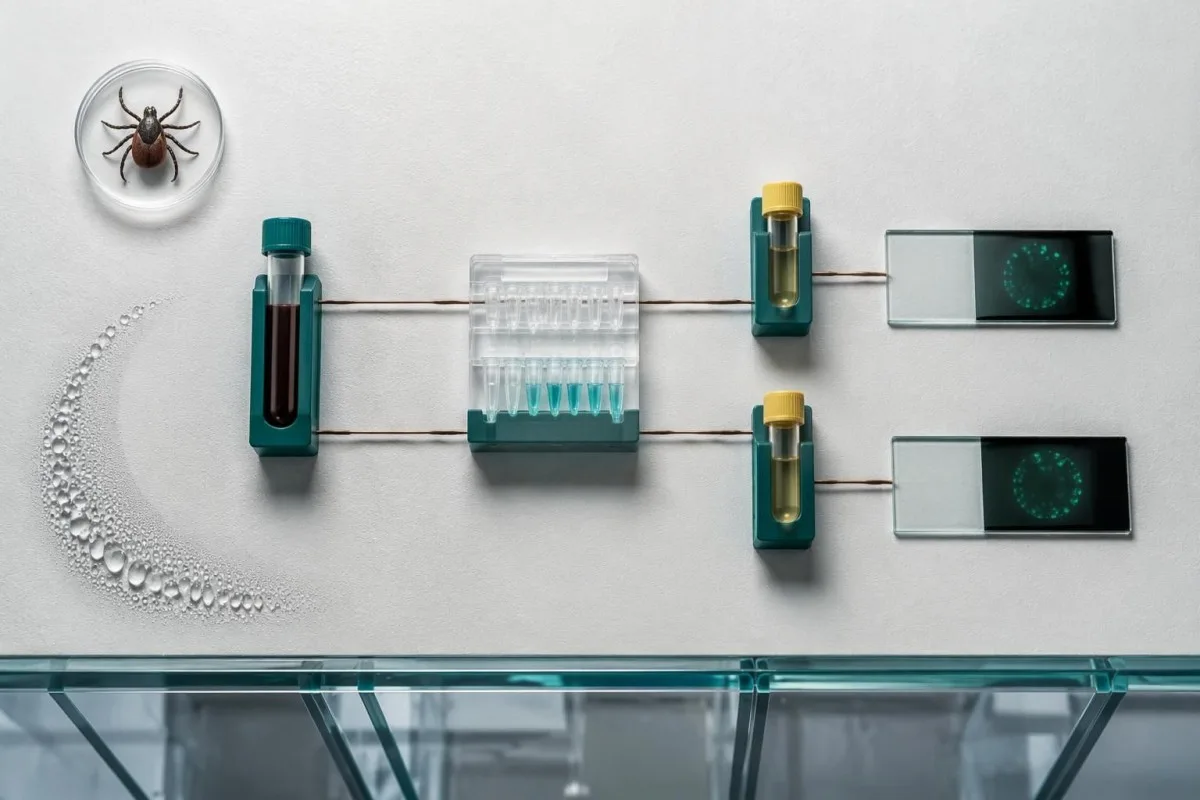
Anaplasma phagocytophilum insanlarda qranulositar anaplazmoza səbəb olur və əsasən ağ qan hüceyrələrinin bir növü olan neytrofilləri zədələyir. Simptomlar adətən yoluxmuş gənə dişləməsindən 5–14 gün sonra başlayır, lakin bir çox insan gənəni heç görmür; faydalı laborator hesablama başlanğıcı qeyri-müəyyən təmas tarixi deyil, xəstəliyin ilk günüdür.
Xəstəliyin 3-cü günündə götürülmüş nümunənin nəticəsi 24-cü gündə götürülmüş nümunənin nəticəsindən fərqli suala cavab verir, hətta hər iki hesabatda Anaplasma yazılsa belə. Journal of Clinical Microbiology jurnalında dərc olunmuş real vaxt PCR müqayisəsi diaqnostik nəticəliliyin xəstəliyin mərhələsindən asılı olduğunu göstərərək, birbaşa aşkarlama və seroloji testlərin bir-birini əvəz edən testlər kimi sıralanmaq əvəzinə birlikdə şərh edilməsinin səbəbini izah edir (Schotthoefer et al., 2013).
Kantesti bir AI qan testi analizatoru Anaplasma hesabatı ilə yanaşı CBC və ya qaraciyər nəticələri arasındakı əlaqəni izah etməyə kömək edə bilər, lakin təkcə rəqəmlərə əsasən diaqnozu müəyyən edə bilməz. Faydalı şərh üçün 3 məlumat təqdim edin: simptomların başlanma vaxtı, nümunənin götürülmə tarixi və antibiotikin ilk dozasının vaxtı; aşağıdakılar barədə məlumat təşkilatımızda xidmətin rolunu izah edir.
Anaplasma üçün müsbət PCR nəticəsi nə deməkdir?
Anaplasma PCR nəticəsinin müsbət olması analizdə təqdim edilmiş nümunədə Anaplasma DNT-sinin aşkar edildiyini bildirir. Uyğun kəskin xəstəliyi olan şəxsdə növə spesifik, tam qan nümunəsi ilə aparılan PCR nəticəsinin müsbət olması aktiv anaplazmozun aydın sübutudur; bu, anticisim səviyyələrini ölçmür, xəstəliyin ağırlığını müəyyən etmir və gənə ilə ötürülən bütün mümkün koinfeksiyaları aşkar etmir.

EDTA-lı tam qan Anaplasma PCR üçün çox vaxt istifadə olunur, çünki törədici qanda dövr edən hüceyrə elementləri ilə əlaqəlidir. Zərdabda anticisimlərin təyini üçün götürülmüş nümunə avtomatik olaraq məqbul əvəzləyici sayılmır: zahirən ziddiyyətli görünən 2 nəticəni şərh etməzdən əvvəl laboratoriyanın hər analiz üçün tələb olunan nümunəni qəbul etdiyini və hər iki nümunənin götürülmə tarixinin düzgün qeyd edildiyini yoxlayın.
Xəstəliyin 4-cü günündə, qızdırma və trombositlərin azalması ilə birlikdə, 'A. phagocytophilum DNT-si aşkar edildi' yazılan hipotetik hesabat klinik diaqnozu güclü şəkildə dəstəkləyir. Yalnız 'Anaplasma növü aşkar edildi' yazılan hesabat daha geniş əhatəli analizdən əldə oluna bilər, buna görə də konkret hədəf əhəmiyyətlidir; nəticənin A. phagocytophilum-u konkret olaraq müəyyən edib-etmədiyini və ya əlavə laborator dəqiqləşdirmə tələb olunub-olunmadığını soruşun.
Keyfiyyət PCR-i bakterial yük göstəricisi deyil. Hesabata dövr həddi dəyəri daxil edilsə belə, hospitalizasiya ehtimalını proqnozlaşdıran və ya müalicə müddətini müəyyən edən universal Anaplasma həddi yoxdur; izahımız keyfiyyət müqabilində kəmiyyət nəticələri aşkarlanmanı standartlaşdırılmış konsentrasiya ölçməsindən fərqləndirməyə kömək edir.
Anaplasma PCR testi nə vaxt ən faydalı olur?
Anaplasma PCR xəstəliyin ilk həftəsində, uyğun antibiotiklər dövr edən bakterial DNT-ni azaltmamışdan əvvəl ən həssas olur. CDC təlimatlarına əsasən, uyğun antibiotik qəbulundan sonra 48 saat ərzində həssaslıq azalır; bu, diaqnostik nəticəliliyin azalması deməkdir, müalicə almış hər nümunənin eyni saatda mənfiləşəcəyinə zəmanət deyil.

PCR nümunəsini müalicədən əvvəl götürün, əgər bunu dərhal etmək mümkündürsə, lakin nümunə götürülməsini təşkil etmək üçün zəruri müalicəni heç vaxt gecikdirməyin. For example, a sample collected on day 5 before the first doxycycline dose is generally more informative than one collected on day 7 after several doses; the MMWR guideline explicitly prioritizes prompt treatment over waiting for confirmation (Biggs et al., 2016).
The 48-hour statement does not apply equally to every antibiotic a person may have taken. A prior course of an antibiotic that does not reliably treat anaplasmosis cannot be assumed to have the same effect as doxycycline; record the drug name, dose, and dose times rather than writing only 'already on antibiotics.'
If the first PCR was collected after 3 days of doxycycline, a negative result should be interpreted with that limitation visible on the report review. Repeating PCR without changing the timing problem may add little; arranging convalescent IgG may be more informative, and a dated blood test timeline prevents treatment-related changes from being mistaken for contradictory evidence.
Anaplasma IgG üçün müsbət nəticə nə deməkdir?
The anaplasma IgG positive meaning is evidence of an antibody response, not automatic proof of a current infection. A single IgG result may reflect recent illness, previous exposure, or cross-reactivity; CDC considers a single titer of at least 1:128 supportive laboratory evidence, while confirmation usually requires the clinical picture and direct detection or paired serology.

Anaplasma IgG can remain elevated for months, and high titers have been reported up to 4 years after illness. Persistently positive antibodies in a well person do not by themselves justify another antibiotic course; the relevant question is whether there is a new compatible illness, a new exposure, or evidence that the antibody level has changed meaningfully.
In some areas, approximately 5–10% of healthy people may have elevated Anaplasma antibodies because of previous exposure or related organisms, according to CDC testing guidance. That estimate is geographically dependent, not a universal false-positive rate; a low positive in someone with no fever or plausible tick exposure carries a different meaning from the same result during an acute illness.
Kantesti treats 1 positive antibody result as a finding to explain, not a diagnosis to announce. The distinction between immune memory and active disease is covered in pozitiv antitel nəticəsinin şərhinə də aiddir.; unlike some vaccine antibody tests, Anaplasma IgG does not provide an established protective-immunity threshold.
Cüt IgG nümunələri yaxın vaxtlarda baş vermiş infeksiyanı necə təsdiqləyir?
Paired Anaplasma IgG testing compares an acute specimen from the first 2 weeks of illness with a convalescent specimen collected 2–10 weeks later. A fourfold rise in IgG titer by indirect fluorescent antibody testing is evidence of seroconversion and helps confirm recent infection when the early result was negative or PCR was unavailable.

A rise from 1:64 to 1:256 is fourfold; a rise from 1:128 to 1:256 is only twofold. In a hypothetical case, an illness-day-4 titer of 1:64 and a day-28 titer of 1:256 would meet the fourfold criterion, while the smaller increase would not independently confirm infection by that criterion.
Titers are reciprocal dilutions, not concentrations in mg/dL or arbitrary screen-index units. If the acute report gives an index of 1.4 and the later report gives a titer of 1:256, a fourfold change cannot be calculated directly; use the same laboratory and method where possible, and ask whether archived samples can be compared together.
Antibody responses may be weaker or delayed in people receiving immunosuppressive treatment. A person taking B-cell-depleting therapy, for example, may not produce the expected rise over 2 samples, so clinicians may rely more heavily on PCR, clinical findings, and exposure history; IgG, IgA, and IgM patterns can provide background context but do not replace organism-specific testing.
IgM və çarpaz reaksiya verən anticisimlər niyə etibarlı deyil?
Anaplasma IgM is not a reliable stand-alone marker of recent anaplasmosis, and antibodies can cross-react with related Ehrlichia organisms. When both illnesses are plausible, clinicians may request 2 separate organism-specific PCR tests and side-by-side IgG testing; dual antibody positivity does not automatically establish 2 active infections.

IgM does not consistently mean 'new infection' in anaplasmosis. An isolated IgM positive result with negative IgG and negative PCR is therefore insufficient confirmation, particularly if it was obtained on day 2 of a nonspecific illness; the recommended serologic approach is paired IgG interpreted alongside symptoms and the direct-detection window.
Anaplasma phagocytophilum and Ehrlichia species are different organisms, despite overlapping fever, headache, cytopenias, and antibody cross-reactivity. A positive Ehrlichia antibody assay does not substitute for an Anaplasma PCR result; our guide to ehrlichiosis PCR and titers explains why testing for each target matters when 2 diagnoses remain plausible.
Babesia requires separate assessment because doxycycline does not treat babesiosis. In a patient with anemia, elevated LDH, low haptoglobin, or persistent fever after 48 hours of appropriate anaplasmosis treatment, clinicians may consider Babesia PCR or a manually reviewed smear; Babesia anticisimləri və infeksiya explains why an antibody result alone can also mislead.
Mənfi nəticələrə baxmayaraq, anaplazmoz ola bilərmi?
An anaplasmosis test false negative is possible when antibodies are checked too early or PCR is collected after its best detection window or after treatment. Negative PCR plus negative IgG during week 1 does not reliably exclude the illness; clinicians must weigh exposure, symptoms, CBC changes, liver enzymes, and the timing of both tests.
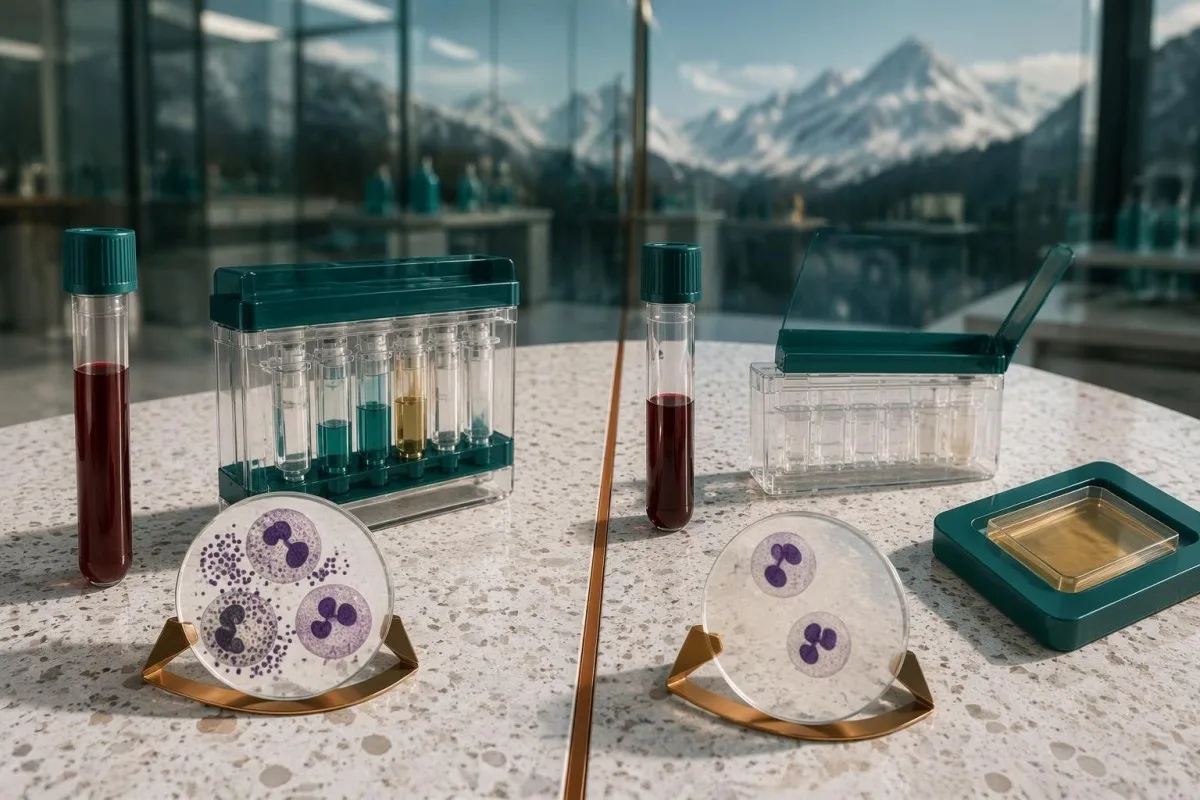
There is no single dependable false-negative percentage for every Anaplasma test. PCR assays differ, studies use different reference standards, and patients present on different illness days; a sensitivity estimate from untreated day-3 specimens cannot simply be applied to a day-9 sample obtained after 4 days of doxycycline (Schotthoefer et al., 2013).
A hypothetical person has fever, platelets of 78 × 10^9/L, a WBC of 2.9 × 10^9/L, and recent woodland exposure, but both tests are negative on illness day 4. That pattern leaves substantial clinical concern even without confirmation; by contrast, the same negative tests in a well person with normal counts and no plausible exposure answer a much lower-risk question.
Kantesti bir AI qan analizi nəticələrinin şərhi platforması that can explain why 2 negative tests may be limited by their collection dates, but it cannot determine whether antibiotics are needed. Our klinik validasiya yanaşmamız şərhə dair qoruyucu tədbirləri təsvir edir, halbuki checking report source details helps readers verify specimen type, method, and reference comments before relying on a summary.
Hansı CBC və qaraciyər göstəriciləri diaqnozu dəstəkləyir?
Low white blood cells, low platelets, and raised AST or ALT commonly support suspicion of anaplasmosis, but none is diagnostic alone. Many adult laboratories use WBC reference intervals around 4.0–11.0 × 10^9/L and platelet intervals around 150–450 × 10^9/L; use the ranges printed on your own report.
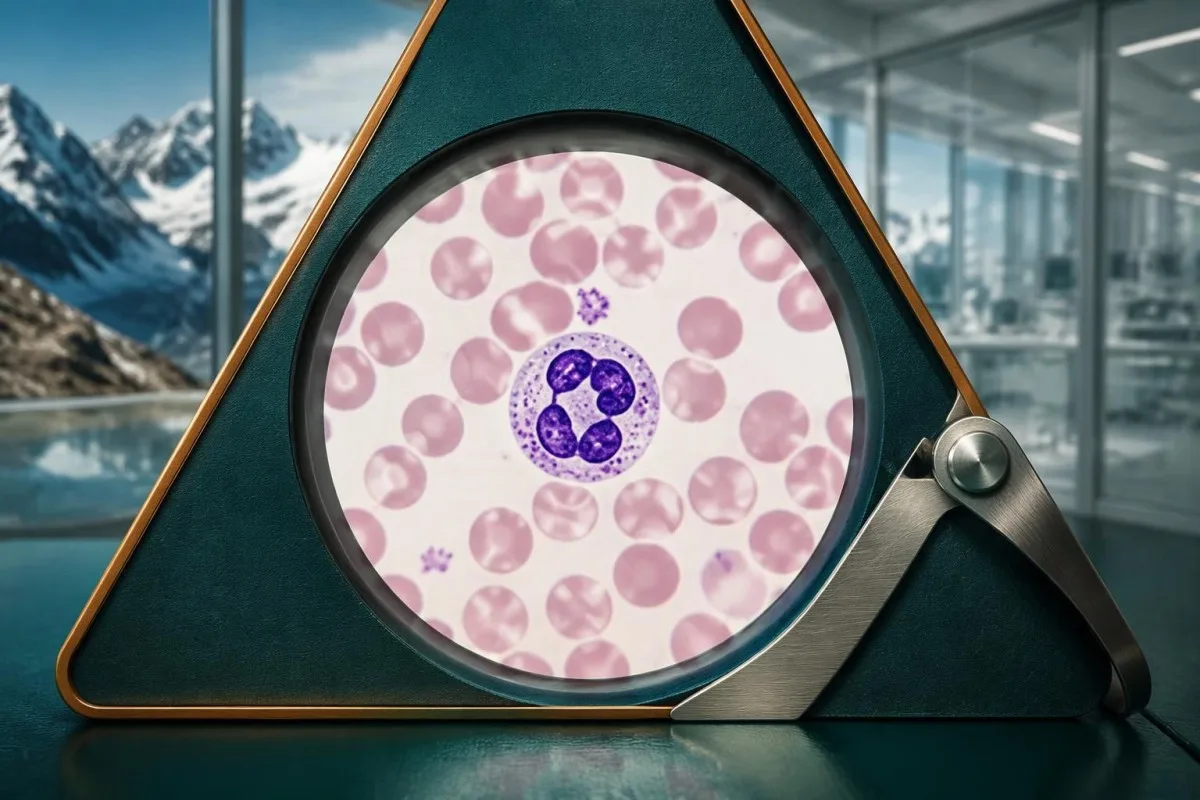
A falling platelet count can be more informative than one mildly low result. A hypothetical decline from 182 to 84 × 10^9/L over 3 days during fever suggests an acute process, whereas a stable count of 138 × 10^9/L for years has a different context; plateletcrit and platelet count are related measurements, but plateletcrit is not an Anaplasma diagnostic test.
AST and ALT indicate cellular injury rather than identifying the organism. An AST of 84 IU/L is approximately 2.1 times an upper limit of 40 IU/L, but muscle injury, other infections, and medication effects can also produce that result; what ALT measures helps distinguish supportive liver findings from proof of a specific cause.
Morulae are clusters of organisms that may be visible inside granulocytes during the first week. Their absence does not exclude anaplasmosis, and their presence is not reliably species-specific because some Ehrlichia organisms can also affect granulocytes; manual microscopy can provide a fast clue, but PCR is needed for clearer organism identification (Bakken and Dumler, 2015).
| Səviyyə | Diapazon | Nə deməkdir |
|---|---|---|
| Böyüklərdə ümumi WBC intervalı | 4,0–11,0 × 10^9/L | Laboratory-dependent reference interval; a normal WBC does not exclude early anaplasmosis. |
| WBC below the local interval | Often <4.0 × 10^9/L | Leukopenia supports suspicion during a compatible acute illness but has many other causes. |
| Common adult platelet interval | 150–450 × 10^9/L | Check the local interval and previous results before interpreting a borderline value. |
| Platelets below the local interval | Often <150 × 10^9/L | Thrombocytopenia is a supportive clue; rapid decline and symptoms determine urgency. |
Anaplasma testləri gənə ilə ötürülən digər infeksiya testlərindən nə ilə fərqlənir?
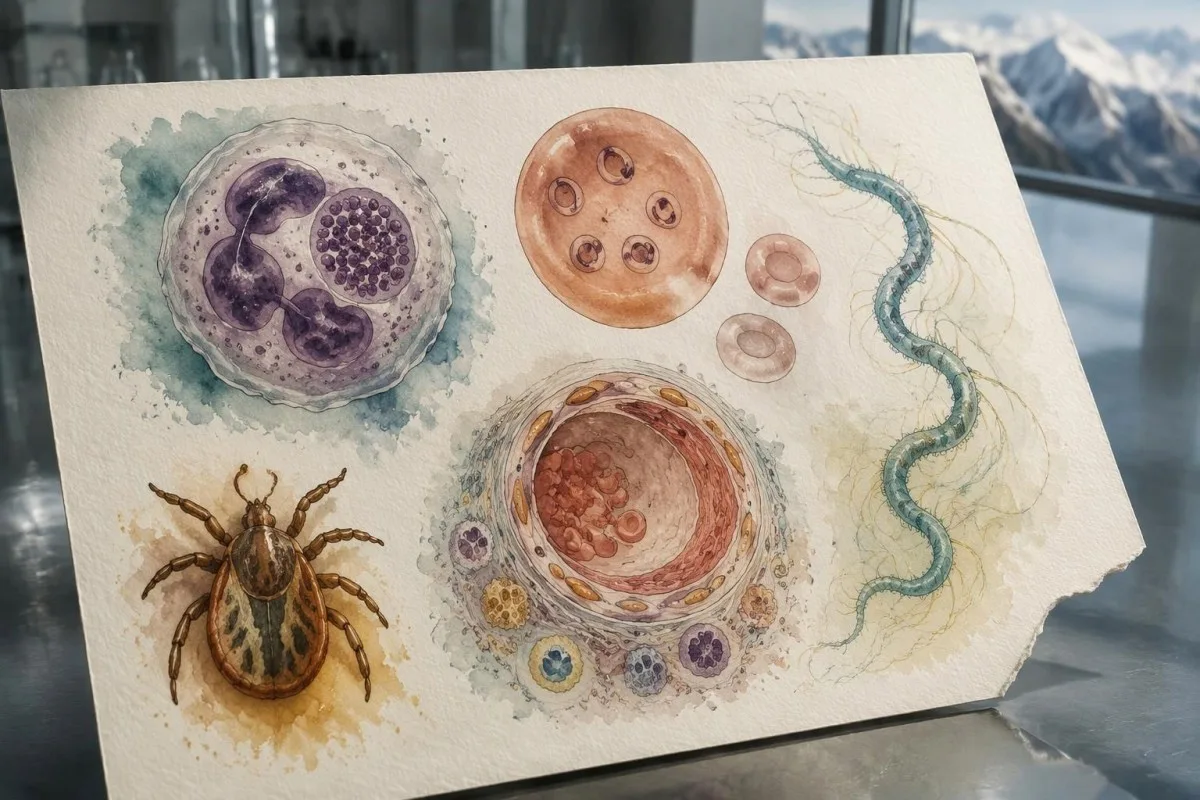
Anaplasma PCR, Lyme serology, Babesia testing, Ehrlichia PCR, and spotted-fever serology detect different targets and cannot substitute for one another. A laboratory panel tests only the organisms explicitly listed; a negative result for 1 target is not a negative result for all tick-borne illnesses.
Lyme disease is usually evaluated with a validated two-tier antibody algorithm when testing is indicated. A classic expanding erythema migrans rash can be diagnosed clinically without waiting for positive antibodies, while marked leukopenia or thrombocytopenia should raise concern for an additional diagnosis; an Anaplasma PCR result does not answer either of these 2 Lyme questions.
Rocky Mountain spotted fever may have negative early serology, and whole-blood PCR is less reassuring when negative than it is for some circulating-cell infections. Rash appearance and specimen choice matter, but absence of rash does not make waiting safe; spotted-fever testing windows explains why the Anaplasma PCR window cannot simply be transferred to that illness.
Alpha-gal syndrome is a tick-associated allergy, not an Anaplasma infection. Delayed allergic symptoms roughly 2–6 hours after mammalian meat exposure require an allergy-focused history and appropriate IgE testing rather than PCR or paired Anaplasma IgG; alpha-gal IgE interpretation illustrates how one exposure category can lead to very different diagnostic pathways.
Təsdiqdən əvvəl müalicəyə niyə başlamaq lazım gələ bilər?
Suspected anaplasmosis should be treated promptly because early tests can be negative and delayed therapy can allow severe illness to develop. The MMWR guideline recommends that clinicians neither delay treatment while awaiting laboratory results nor withhold treatment because an early test is negative; the usual adult doxycycline dose is 100 mg every 12 hours (Biggs et al., 2016).

CDC recommends doxycycline for anaplasmosis in adults and children of all ages. For children weighing less than 45 kg, the usual dose is 2.2 mg/kg every 12 hours, with a maximum of 100 mg per dose; these are clinician-prescribed regimens, not instructions to start leftover medication or adjust a child's dose without assessment.
Treatment commonly lasts 10–14 days to provide coverage for possible concurrent Borrelia infection. Duration still depends on the suspected coinfections and clinical course, so an improving fever after 2 doses is not a reason to stop early; pregnancy, severe drug allergy, vomiting, or organ dysfunction require individualized decisions, sometimes with infectious-disease input.
Starting doxycycline is a clinical decision based on exposure, symptoms, examination, and the overall pattern—not on a single CRP or WBC cutoff. A WBC of 3.0 × 10^9/L during acute fever may strengthen concern even when CRP is only modestly raised; uyğunsuz infeksiya qan markerləri explains why one reassuring-looking number should not overrule the complete assessment.
Hansı cavab gözlənilir və nə vaxt təcili tibbi yardım lazımdır?
Fever from anaplasmosis usually improves within 24–48 hours of doxycycline, but severe illness may take longer. Difficulty breathing, confusion, new bleeding, fainting, or markedly reduced urination requires emergency assessment; failure to improve is a reason for reassessment, not an instruction to increase the antibiotic dose yourself.
Persistent fever beyond about 48 hours should prompt review of the diagnosis, medication delivery, and possible coinfections. The person may not be absorbing oral treatment because of vomiting, may have an additional illness such as babesiosis, or may have developed a complication; the interval is a practical reassessment point rather than an absolute recovery deadline.
Severe anaplasmosis can involve respiratory failure, kidney injury, or coagulation abnormalities. Falling platelets accompanied by rising creatinine, prolonged clotting times, or new bleeding should not be dismissed as a routine CBC fluctuation; disseminated coagulation laboratory patterns explains why 2 or more changing systems can signal a problem beyond an isolated low count.
Clotting tests assess complications rather than confirming Anaplasma itself. For example, an INR of 1.8 in someone not taking warfarin needs explanation in context, but does not establish anaplasmosis or DIC on its own; our laxtalanma testlərinin şərhi üzrə bələdçimiz helps separate PT, aPTT, D-dimer, and platelet findings without treating them as interchangeable measurements.
Müalicədən sonra PCR və ya anticisim testləri təkrar edilməlidirmi?
Routine PCR or IgG testing is generally not needed to prove cure after clinically successful anaplasmosis treatment. A convalescent IgG sample collected 2–10 weeks after the acute sample can document the diagnosis, but persistent antibodies alone do not demonstrate treatment failure and should not trigger repeated antibiotics in a well person.

A persistently positive IgG is not a test-of-cure result. If a person is well after a completed 10–14-day course, an elevated titer may simply reflect immune memory; if symptoms recur, clinicians should reassess the new symptoms and exposure history rather than assume that the old antibody result proves persistent infection.
CBC, creatinine, and liver enzymes may be repeated when they were abnormal or the illness was severe, but there is no universal day-7 retesting schedule for everyone. Kantesti AI can help organize serial results—for example, platelets rising from 82 to 164 × 10^9/L—while dərman təhlükəsizliyi tendensiyasının icmalı explains why recovery patterns still require clinical context.
Antibiotic prophylaxis after a tick bite is not recommended specifically to prevent anaplasmosis. After an asymptomatic bite, monitor for fever or other illness over the following 2 weeks and obtain medical advice if symptoms appear; a separate Lyme prophylaxis decision, when indicated, should not be mistaken for an Anaplasma prevention protocol.
Qarışıq hesabatı təhlükəsiz şəkildə necə sistemləşdirmək olar?
The safest report review separates organism detection, antibody evidence, supportive blood findings, and clinical timing into 4 distinct questions. Record the assay target, specimen type, result format, collection date, symptom-onset date, and antibiotic start; missing context should remain explicitly unknown rather than being filled in by an AI explanation.

Kantesti bir AI laboratoriya testi şərh xidməti that can explain uploaded laboratory reports and help readers identify questions for their clinician. In a hypothetical 2-report review, our AI should distinguish 'PCR not detected after treatment' from 'paired IgG rise consistent with recent infection,' rather than flattening both statements into a single positive-or-negative label.
An upload is not a substitute for urgent assessment. A photo showing platelets of 74 × 10^9/L cannot reveal whether the person is confused, dehydrated, pregnant, or short of breath; our AI şərh texnologiyamızın describes the analytical workflow, but clinical observations and prescribing decisions remain outside what the report alone can establish.
Before sharing 2 samples, check that both belong to the same person and remove identifiers if they are not needed for your purpose. Kantesti does not perform Anaplasma PCR, validate specimen handling, or confirm that an uploaded titer used the same laboratory method; retain the original PDF and ask the laboratory to resolve unclear assay comments or mismatched result units.
Növbəti addımlara hansı sübutlar istiqamət verməlidir?
Anaplasmosis testing decisions should follow condition-specific guidance and diagnostic research, not general blood-test publications. The 2016 MMWR guideline, the 2013 PCR comparison, and the 2015 clinical review support the distinction between early direct detection, later antibody confirmation, and treatment based on clinical suspicion rather than a single laboratory result.

Bring 3 questions to the clinical review: was PCR collected early enough, is paired IgG needed, and do other tick-borne targets require separate testing? If the first specimen followed several doxycycline doses, say so; if the report is a single low-positive IgG, ask what evidence supports current illness before assuming that another antibiotic course is required.
At Kantesti, we distinguish externally published medical evidence from our own educational resources. Our tibbi məzmun standartları explain that distinction; the 2 Figshare publications listed below are supplementary general laboratory and digestive-health guides, not studies establishing Anaplasma assay accuracy, treatment efficacy, or diagnostic thresholds.
The general hematology guide can help explain LDH and reticulocyte results when anemia raises a separate concern such as hemolysis. Use the hematology marker background guide for that limited purpose, not to interpret Anaplasma PCR; a 4-fold IgG rise, a positive organism-specific PCR, and the patient's clinical course each provide different kinds of evidence.
Tez-tez verilən suallar
Anaplazma PCR testi anticisimlər mənfi olduqda müsbət ola bilərmi?
Xəstəliyin ilk həftəsində bakterial DNT anticisim cavabı yaranmazdan əvvəl aşkar edilə bildiyinə görə Anaplasma PCR testi müsbət, IgG anticisimləri isə mənfi ola bilər. Bu nəticə laboratoriya xətasına deyil, aktiv anaplazmoza dəlalət edə bilər. Kəskin dövrdə götürülmüş IgG nümunəsi 2–10 həftə sonra götürülən rekonvalessensiya nümunəsi ilə müqayisə edilə bilər. Xəstəlikdən klinik şübhə olduqda anticisimlərin yaranmasını gözləyərkən müalicə gecikdirilməməlidir.
Anaplasma IgG nəticəsinin müsbət olması antibiotik qəbul etməli olduğum deməkdir?
Tək bir müsbət Anaplasma IgG nəticəsi avtomatik olaraq antibiotiklərin lazım olduğunu göstərmir, çünki anticisimlər əvvəlki təmasla və ya çarpaz reaktivliklə bağlı ola bilər. CDC 1:128 və ya daha yüksək tək titri dəstəkləyici sübut hesab edir, lakin yeni infeksiyanın qəti təsdiqi saymır. Xəstəlikdən sonra yüksək titrlərin 4 ilədək qeydə alınması ilə yanaşı, anticisim səviyyələri aylarla yüksək qala bilər. Həkimlər müalicə qərarını təkcə davamlı IgG nəticəsinə deyil, hazırkı simptomlara, təmas məlumatlarına, PCR nəticələrinə və cüt anticisim testlərinin nəticələrinə əsasən verirlər.
Doksisiklin Anaplasma PCR testini nə qədər müddətə mənfi edə bilər?
Anaplasma PCR sensitivity can decrease within 48 hours of appropriate antibiotic treatment, according to CDC guidance. That does not mean every person's PCR becomes negative at exactly 48 hours, because assay performance and circulating organism levels differ. A negative PCR collected after treatment is therefore less reassuring than a well-timed pretreatment result. Record the first doxycycline dose and specimen collection time so the clinician can interpret the result correctly.
Anaplasma anticisimlərinin dördqat artımı nə hesab olunur?
A rise in Anaplasma IgG titer from 1:64 to 1:256 is fourfold, while a rise from 1:128 to 1:256 is only twofold. Paired testing generally compares an acute specimen from the first 2 weeks of illness with a convalescent specimen collected 2–10 weeks later. The comparison should use compatible methods, ideally the same laboratory's IgG indirect fluorescent antibody assay. An antibody screen index cannot be directly converted into a dilution titer for this calculation.
PCR və IgG testlərinin hər ikisi mənfi olduğu halda anaplazmoz ola bilərəmmi?
PCR və IgG nəticələri mənfi olsa belə, xüsusən IgG analizi 1-ci həftədə, PCR isə uyğun antibiotik müalicəsindən sonra götürülübsə, anaplazmoz hələ də mövcud ola bilər. Qızdırma, gənə təmasına məruz qalma ehtimalı, trombositlərin və leykositlərin sayının azalması, qaraciyər fermentlərinin yüksəlməsi testlərin mənfi nəticələrinə baxmayaraq klinik şübhəni əsaslandıra bilər. Həkimlər kəskin dövrdə götürülmüş nümunədən 2–10 həftə sonra rekonvalessent dövrdə IgG nümunəsi götürülməsini təşkil edə və digər mümkün diaqnozları qiymətləndirə bilərlər. Erkən testlərin mənfi nəticə verməsi şübhəli anaplazmozun müalicəsiz saxlanmasına yeganə əsas olmamalıdır.
Simptomlar nə qədər tez yaxşılaşmalıdır və sağalıb-sağalmadığımı yoxlamaq üçün test verməyim lazımdırmı?
Anaplazmoz zamanı qızdırma adətən doksisiklin qəbuluna başladıqdan 24–48 saat ərzində azalır, lakin xəstəlik ağır olduqda bu, daha uzun çəkə bilər. Qızdırma davam edərsə, dərmanın sorulması ilə bağlı problemlər, başqa diaqnoz, koinfeksiya və ya ağırlaşmalar baxımından vəziyyət yenidən qiymətləndirilməlidir. Müalicə uğurlu olduqdan sonra sağalmanı təsdiqləmək üçün adətən rutin PCR və ya anticisim testləri tələb olunmur; cütləşdirilmiş IgG testi əsasən yaxın zamanda baş vermiş infeksiyanı sənədləşdirmək üçün istifadə olunur. Nəfəs almaqda çətinlik, çaşqınlıq, yeni qanaxma və ya sidiyin kəskin azalması laboratoriya nəticəsindən asılı olmayaraq təcili tibbi qiymətləndirmə tələb edir.
Qan analizinin nəticələrini necə oxumaq
Laboratoriya hesabatınızı yükləyin, Kantesti-nin AI-si isə saniyələr ərzində hər biomarkeri sadə dildə izah etsin. Dünyada 2 milyondan çox insan istifadə edir.
İstinadlar
- Klein, T., Mitchell, S., & Weber, H. (2026). B Mənfi Qan Qrupu, LDH Qan Testi və Retikulosit Sayımı üzrə Bələdçi. Kantesti AI tibbi araşdırmaları. DOI
- Klein, T., Mitchell, S., & Weber, H. (2026). Orucdan Sonra İshal, Nəcisdə Qara Ləkələr və Mədə-bağırsaq Bələdçisi 2026. Kantesti AI tibbi araşdırmaları. DOI
- Biggs HM və başqaları (2016). Gənə ilə ötürülən rikketsial xəstəliklərin diaqnostikası və müalicəsi: Qayalı Dağlar ləkəli qızdırması və ABŞ-da rast gəlinən digər ləkəli qızdırma qrupu rikketsiozları, ehrlixiozlar və anaplazmoz. MMWR Tövsiyələr və Hesabatlar. DOI PubMed
- Schotthoefer AM et al. (2013). Comparison of a real-time PCR method with serology and blood smear analysis for diagnosis of human anaplasmosis: importance of infection time course for optimal test utilization. Journal of Clinical Microbiology. DOI
- Bakken JS and Dumler JS (2015). Human granulocytic anaplasmosis. Infectious Disease Clinics of North America.
- 2M+Təhlil edilmiş testlər
- 127+ölkələr
- 100+Dillər
Tibbi komanda haqqında


E-E-A-T Etibar Siqnalları
Təcrübə
Həkim rəhbərliyi ilə laborator şərh iş axınlarının klinik icmalı.
Ekspertiza
Biomarkerlərin klinik kontekstdə necə davrandığına dair laboratoriya təbabəti diqqəti.
Səlahiyyətlilik
Dr. Thomas Klein tərəfindən tibbi baxımdan nəzərdən keçirilib; Dr. Sarah Mitchell və Prof. Dr. Hans Weber töhfə veriblər.
Etibarlılıq
Aydın izləmə yolları ilə həyəcanı azaltmağa yönəlmiş sübuta əsaslanan şərh.






Tibbi məsuliyyətdən imtina bildirişi
Bu məqalə yalnız təhsil məqsədlidir və tibbi məsləhət təşkil etmir. Diaqnoz və müalicə qərarları üçün həmişə ixtisaslı səhiyyə işçisi ilə məsləhətləşin.
Dərc edilmişdir · Redaksiya komandası ilə əlaqə saxlayın
İngiltərə və Uelsdə qeydiyyatdan keçmiş Kantesti Ltd tərəfindən nəşr olunub, şirkət №. 17090423, London, Birləşmiş Krallıq.
