
PCR detects the organism; antibodies record the immune response. Matching both results to symptom onset and antibiotic timing explains apparent contradictions.

ප්රධාන කරුණු
- මුල් PCR is most useful during the first week of illness; positive whole-blood PCR provides clear evidence of active anaplasmosis.
- Early antibodies can remain negative during week 1, so a positive PCR with negative IgG is an expected pattern—not necessarily a laboratory mistake.
- සෘණ PCR does not exclude anaplasmosis, especially after antibiotics; PCR sensitivity can decrease within 48 hours of appropriate treatment.
- Paired IgG samples are collected during the first 2 weeks of illness and again 2–10 weeks later; a fourfold rise supports confirmation of recent infection.
- තනි ධනාත්මක IgG ප්රතිඵලයකින් නව ආසාදනයක් තහවුරු කළ නොහැක. CDC මාර්ගෝපදේශ අනුව අවම වශයෙන් 1:128 ටයිටරයක් උපකාරක සාක්ෂියක් වන නමුත්, එය තනිවම ප්රතිකාර සඳහා උපදෙසක් නොවේ.
- ප්රතිකාර කාලය රෝග විනිශ්චය තහවුරු කිරීම මත පමණක් නොව, සායනික සැකය මත රඳා පවතී. ඇනප්ලාස්මෝසිස් සැක කරන විට ප්රතිඵල ලැබෙන තෙක් ඩොක්සිසයික්ලින් ලබාදීම වෛද්යවරුන් ප්රමාද නොකළ යුතුය.
- වෙනත් කිනිතුල්ලන්ගෙන් බෝවන රෝග සඳහා ඒ ඒ රෝගවලට අදාළ පරීක්ෂණ අවශ්ය වේ. Anaplasma PCR පරීක්ෂණයෙන් ලයිම් රෝගය, බැබේසියෝසිස්, එර්ලිකියෝසිස් හෝ රොකී මවුන්ටන් පැල්ලම් සහිත උණ පරීක්ෂා නොවේ.
- හදිසි ලක්ෂණ ව්යාකූලත්වය, හුස්ම ගැනීමේ අපහසුතාව, අලුතින් ඇති වන ලේ ගැලීම හෝ මුත්රා කිරීම කැපී පෙනෙන ලෙස අඩුවීම වැනි ලක්ෂණ, නැවත සාම්පලයක් ගන්නා තෙක් බලා සිටීම වෙනුවට හදිසි වෛද්ය ඇගයීමක් අවශ්ය කරයි.
Why can early PCR and antibody results disagree?
Anaplasmosis පරීක්ෂණ ප්රතිඵල එකිනෙකට නොගැළපිය හැක්කේ PCR මගින් බැක්ටීරියා DNA හඳුනාගන්නා අතර IgG මගින් පසුව වර්ධනය වන ප්රතිශක්තිකරණ ප්රතිචාරය හඳුනාගන්නා බැවිනි. පළමු සතිය තුළ PCR ධනාත්මක විය හැකි අතර ප්රතිදේහ ඍණ විය හැකිය; ප්රතිකාරයෙන් පසු PCR ඍණ විය හැකි අතර IgG ඉහළ යා හැකිය. රසායනාගාර තහවුරු කිරීම ලැබීමට පෙරද සැක සහිත ආසාදනයකට ප්රතිකාර අවශ්ය විය හැකිය.
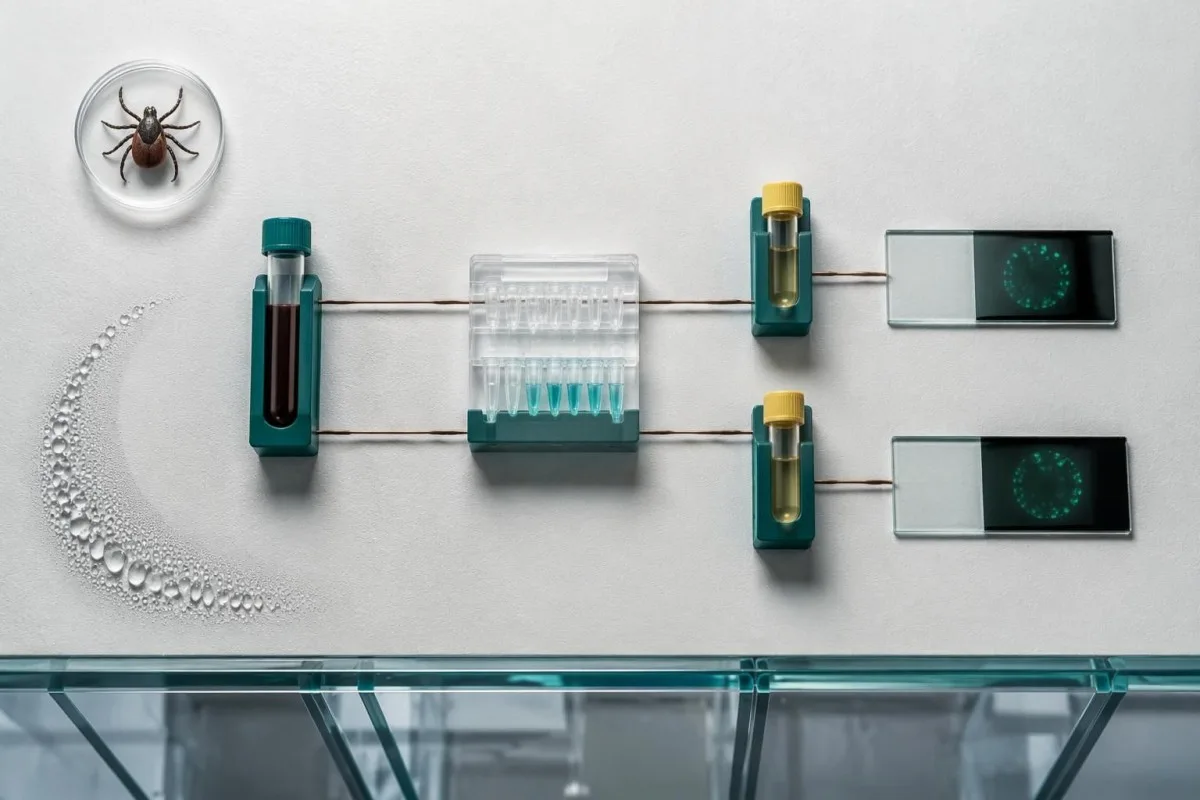
Anaplasma phagocytophilum මිනිසුන්ට ග්රැනියුලෝසයිට් ඇනප්ලාස්මෝසිස් ඇති කරන අතර ප්රධාන වශයෙන් සුදු රුධිරාණු වර්ගයක් වන නියුට්රොෆිල්වලට බලපායි. රෝග ලක්ෂණ සාමාන්යයෙන් ආසාදිත කිනිතුල්ලෙකු දෂ්ට කර දින 5–14කට පසු ආරම්භ වන නමුත්, බොහෝ දෙනෙකුට කිනිතුල්ලා සිටි බව කිසි විටෙකත් නොදැනේ; ප්රයෝජනවත් රසායනාගාර කාල ගණනය ආරම්භ වන්නේ අවිනිශ්චිත නිරාවරණ දිනයෙන් නොව, රෝගයේ පළමු දිනයෙනි.
රෝගයේ 3 වන දිනයේදී එකතු කළ ප්රතිඵලයක්, වාර්තා දෙකෙහිම Anaplasma සඳහන් වුවද, 24 වන දිනයේදී එකතු කළ ප්රතිඵලයකට වඩා වෙනස් ප්රශ්නයකට පිළිතුරු දෙයි. Journal of Clinical Microbiology හි පළ වූ තත්ය-කාලීන PCR සැසඳීමෙන් පෙනී ගියේ රෝග විනිශ්චය කිරීමේ සාර්ථකත්වය රෝගයේ කාලසීමාව මත රඳා පැවති බවයි. එමඟින් සෘජු හඳුනාගැනීම සහ සෙරොලොජි පරීක්ෂණ එකිනෙකට හුවමාරු කළ හැකි පරීක්ෂණ ලෙස ශ්රේණිගත කිරීම වෙනුවට, ඒවා එකට අර්ථකථනය කළ යුත්තේ මන්දැයි පැහැදිලි වේ (Schotthoefer et al., 2013).
කන්ටෙස්ටි යනු AI රුධිර පරීක්ෂණ විශ්ලේෂකය Anaplasma වාර්තාවක් සහ ඊට අදාළ CBC හෝ අක්මාවේ ප්රතිඵල අතර සම්බන්ධතාව පැහැදිලි කිරීමට උපකාරී විය හැකි නමුත්, සංඛ්යා පමණක් මත පදනම්ව රෝග විනිශ්චය තහවුරු කළ නොහැක. ප්රයෝජනවත් අර්ථකථනයක් සඳහා විස්තර 3ක් ලබා දෙන්න: රෝග ලක්ෂණ ආරම්භ වූ දිනය, සාම්පලය එකතු කළ දිනය සහ පළමු ප්රතිජීවක මාත්රාව; පිළිබඳ තොරතුරු අපගේ සංවිධානය තුළ සේවාවේ කාර්යභාරය පැහැදිලි කරයි.
What does an Anaplasma PCR positive result mean?
Anaplasma PCR ධනාත්මක ප්රතිඵලයක් යනු ඉදිරිපත් කළ සාම්පලයේ Anaplasma DNA පරීක්ෂණයෙන් හඳුනාගත් බවයි. ගැළපෙන උග්ර රෝගයක් ඇති පුද්ගලයෙකු තුළ, විශේෂයට නිශ්චිත වූ සම්පූර්ණ-රුධිර PCR ධනාත්මක වීම ක්රියාකාරී ඇනප්ලාස්මෝසිස් පිළිබඳ පැහැදිලි සාක්ෂියකි; එයින් ප්රතිදේහ මට්ටම් මනින්නේ නැත, රෝගයේ බරපතළකම තහවුරු කරන්නේ නැත, හෝ කිනිතුල්ලන්ගෙන් බෝවිය හැකි සියලු සම-ආසාදන හඳුනාගන්නේ නැත.

EDTA සම්පූර්ණ රුධිරය සංසරණයේ ඇති සෛලීය කොටස් සමඟ මෙම ජීවියා සම්බන්ධ බැවින් Anaplasma PCR සඳහා සාමාන්යයෙන් භාවිතා වේ. සෙරම් ප්රතිදේහ සාම්පලයක් ස්වයංක්රීයව පිළිගත හැකි ආදේශකයක් නොවේ: එකිනෙකට පටහැනි බව පෙනෙන ප්රතිඵල 2ක් අර්ථකථනය කිරීමට පෙර, එක් එක් පරීක්ෂණයට අවශ්ය සාම්පලය රසායනාගාරයට ලැබී තිබේද සහ එකතු කළ දින දෙකම නිවැරදිව සටහන් කර තිබේද යන්න පරීක්ෂා කරන්න.
උපකල්පිත වාර්තාවක, රෝගයේ 4 වන දිනයේදී උණ සහ පට්ටිකා අඩුවීම සමඟ 'A. phagocytophilum DNA detected' ලෙස සඳහන් වීම සායනික රෝග විනිශ්චයට ප්රබල සහායක් සපයයි. 'Anaplasma species detected' ලෙස පමණක් සඳහන් වාර්තාවක් වඩා පුළුල් පරීක්ෂණයකින් ලැබිය හැකි බැවින්, නිශ්චිත ඉලක්කය වැදගත් වේ; ප්රතිඵලයෙන් A. phagocytophilum විශේෂයෙන් හඳුනාගන්නේද, නැතහොත් අමතර රසායනාගාර පැහැදිලි කිරීමක් අවශ්යදැයි විමසන්න.
ගුණාත්මක PCR පරීක්ෂණයක් බැක්ටීරියා ප්රමාණය මනින ලකුණක් නොවේ. වාර්තාවක cycle-threshold අගයක් ඇතුළත් වුවද, රෝහල්ගත කිරීම පුරෝකථනය කරන හෝ ප්රතිකාර කාලය තීරණය කරන විශ්වීය Anaplasma සීමා අගයක් නොමැත; අපගේ පැහැදිලි කිරීම ගුණාත්මක එදිරිව ප්රමාණාත්මක ප්රතිඵල හඳුනාගැනීම සහ ප්රමිතිගත සාන්ද්රණ මිනුමක් අතර වෙනස පැහැදිලි කිරීමට උපකාරී වේ.
When is Anaplasma PCR most useful?
සුදුසු ප්රතිජීවක මගින් සංසරණයේ ඇති බැක්ටීරියා DNA අඩු වීමට පෙර, රෝගයේ පළමු සතිය තුළ Anaplasma PCR වඩාත් සංවේදී වේ. සුදුසු ප්රතිජීවක ලබා දීමෙන් පැය 48ක් ඇතුළත සංවේදීතාව අඩුවන බව CDC මාර්ගෝපදේශයේ සඳහන් වේ; මෙය රෝග විනිශ්චය කිරීමේ සාර්ථකත්වය අඩුවීමක් මිස, ප්රතිකාර කළ සෑම සාම්පලයක්ම එකම පැයේදී ඍණ වන බවට සහතිකයක් නොවේ.

PCR සාම්පලය ප්රතිකාරයට පෙර ලබා ගන්න, එය වහාම කළ හැකි නම්; එහෙත් සාම්පලය ලබාගැනීම සංවිධානය කිරීම සඳහා කිසි විටෙකත් අවශ්ය ප්රතිකාර ප්රමාද නොකරන්න. For example, a sample collected on day 5 before the first doxycycline dose is generally more informative than one collected on day 7 after several doses; the MMWR guideline explicitly prioritizes prompt treatment over waiting for confirmation (Biggs et al., 2016).
The 48-hour statement does not apply equally to every antibiotic a person may have taken. A prior course of an antibiotic that does not reliably treat anaplasmosis cannot be assumed to have the same effect as doxycycline; record the drug name, dose, and dose times rather than writing only 'already on antibiotics.'
If the first PCR was collected after 3 days of doxycycline, a negative result should be interpreted with that limitation visible on the report review. Repeating PCR without changing the timing problem may add little; arranging convalescent IgG may be more informative, and a dated blood test timeline prevents treatment-related changes from being mistaken for contradictory evidence.
What is the meaning of an Anaplasma IgG positive result?
The anaplasma IgG positive meaning is evidence of an antibody response, not automatic proof of a current infection. A single IgG result may reflect recent illness, previous exposure, or cross-reactivity; CDC considers a single titer of at least 1:128 supportive laboratory evidence, while confirmation usually requires the clinical picture and direct detection or paired serology.

Anaplasma IgG can remain elevated for months, and high titers have been reported up to 4 years after illness. Persistently positive antibodies in a well person do not by themselves justify another antibiotic course; the relevant question is whether there is a new compatible illness, a new exposure, or evidence that the antibody level has changed meaningfully.
In some areas, approximately 5–10% of healthy people may have elevated Anaplasma antibodies because of previous exposure or related organisms, according to CDC testing guidance. That estimate is geographically dependent, not a universal false-positive rate; a low positive in someone with no fever or plausible tick exposure carries a different meaning from the same result during an acute illness.
Kantesti treats 1 positive antibody result as a finding to explain, not a diagnosis to announce. The distinction between immune memory and active disease is covered in ධනාත්මක ප්රතිදේහ ප්රතිඵල අර්ථකථනය; unlike some vaccine antibody tests, Anaplasma IgG does not provide an established protective-immunity threshold.
How do paired IgG samples confirm recent infection?
Paired Anaplasma IgG testing compares an acute specimen from the first 2 weeks of illness with a convalescent specimen collected 2–10 weeks later. A fourfold rise in IgG titer by indirect fluorescent antibody testing is evidence of seroconversion and helps confirm recent infection when the early result was negative or PCR was unavailable.

A rise from 1:64 to 1:256 is fourfold; a rise from 1:128 to 1:256 is only twofold. In a hypothetical case, an illness-day-4 titer of 1:64 and a day-28 titer of 1:256 would meet the fourfold criterion, while the smaller increase would not independently confirm infection by that criterion.
Titers are reciprocal dilutions, not concentrations in mg/dL or arbitrary screen-index units. If the acute report gives an index of 1.4 and the later report gives a titer of 1:256, a fourfold change cannot be calculated directly; use the same laboratory and method where possible, and ask whether archived samples can be compared together.
Antibody responses may be weaker or delayed in people receiving immunosuppressive treatment. A person taking B-cell-depleting therapy, for example, may not produce the expected rise over 2 samples, so clinicians may rely more heavily on PCR, clinical findings, and exposure history; IgG, IgA, and IgM patterns can provide background context but do not replace organism-specific testing.
Why are IgM and cross-reactive antibodies unreliable?
Anaplasma IgM is not a reliable stand-alone marker of recent anaplasmosis, and antibodies can cross-react with related Ehrlichia organisms. When both illnesses are plausible, clinicians may request 2 separate organism-specific PCR tests and side-by-side IgG testing; dual antibody positivity does not automatically establish 2 active infections.

IgM does not consistently mean 'new infection' in anaplasmosis. An isolated IgM positive result with negative IgG and negative PCR is therefore insufficient confirmation, particularly if it was obtained on day 2 of a nonspecific illness; the recommended serologic approach is paired IgG interpreted alongside symptoms and the direct-detection window.
Anaplasma phagocytophilum and Ehrlichia species are different organisms, despite overlapping fever, headache, cytopenias, and antibody cross-reactivity. A positive Ehrlichia antibody assay does not substitute for an Anaplasma PCR result; our guide to ehrlichiosis PCR and titers explains why testing for each target matters when 2 diagnoses remain plausible.
Babesia requires separate assessment because doxycycline does not treat babesiosis. In a patient with anemia, elevated LDH, low haptoglobin, or persistent fever after 48 hours of appropriate anaplasmosis treatment, clinicians may consider Babesia PCR or a manually reviewed smear; ආසාදනයට සාපේක්ෂව බැබීසියා ප්රතිදේහ explains why an antibody result alone can also mislead.
Can negative results still be anaplasmosis?
An anaplasmosis test false negative is possible when antibodies are checked too early or PCR is collected after its best detection window or after treatment. Negative PCR plus negative IgG during week 1 does not reliably exclude the illness; clinicians must weigh exposure, symptoms, CBC changes, liver enzymes, and the timing of both tests.
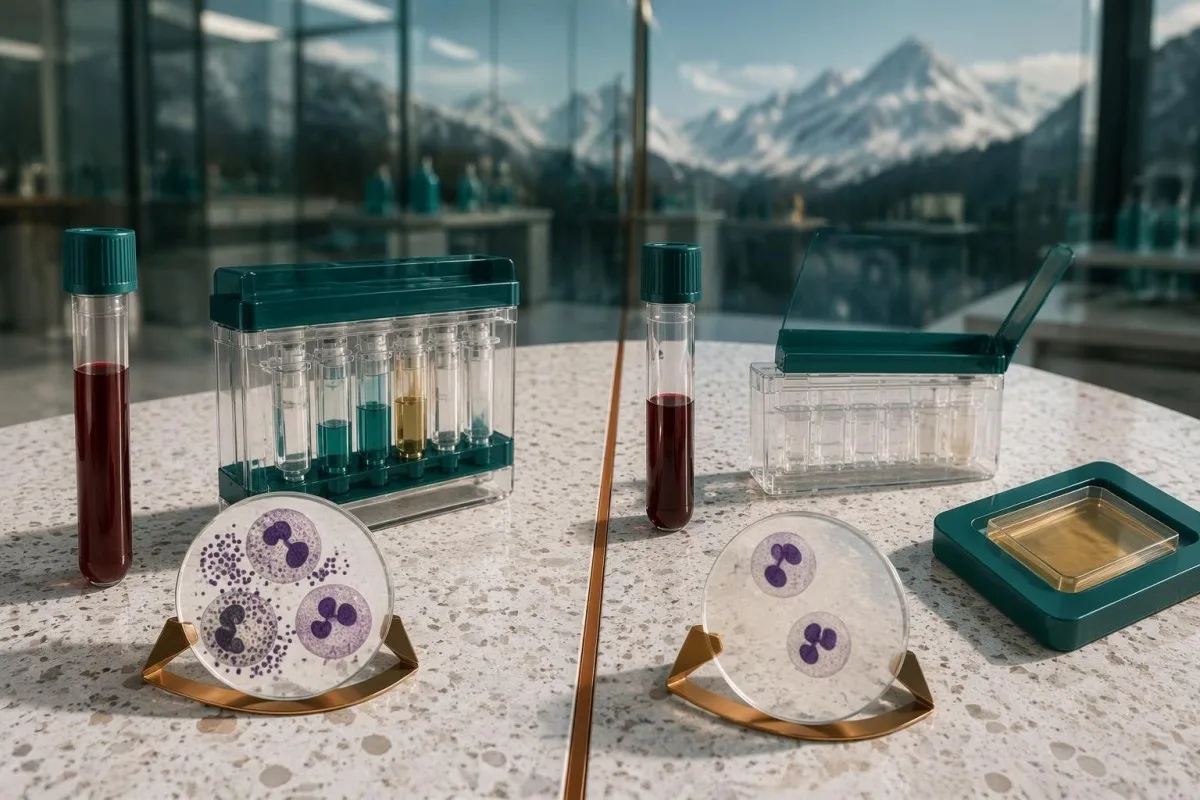
There is no single dependable false-negative percentage for every Anaplasma test. PCR assays differ, studies use different reference standards, and patients present on different illness days; a sensitivity estimate from untreated day-3 specimens cannot simply be applied to a day-9 sample obtained after 4 days of doxycycline (Schotthoefer et al., 2013).
A hypothetical person has fever, platelets of 78 × 10^9/L, a WBC of 2.9 × 10^9/L, and recent woodland exposure, but both tests are negative on illness day 4. That pattern leaves substantial clinical concern even without confirmation; by contrast, the same negative tests in a well person with normal counts and no plausible exposure answer a much lower-risk question.
කන්ටෙස්ටි යනු AI රුධිර පරීක්ෂණ ප්රතිඵල වේදිකාව that can explain why 2 negative tests may be limited by their collection dates, but it cannot determine whether antibiotics are needed. Our අපගේ සායනික වලංගුකරණ ප්රවේශය අර්ථකථනයේදී සැලකිලිමත් විය යුතු කරුණු විස්තර කරන අතර, checking report source details helps readers verify specimen type, method, and reference comments before relying on a summary.
Which CBC and liver findings support the diagnosis?
Low white blood cells, low platelets, and raised AST or ALT commonly support suspicion of anaplasmosis, but none is diagnostic alone. Many adult laboratories use WBC reference intervals around 4.0–11.0 × 10^9/L and platelet intervals around 150–450 × 10^9/L; use the ranges printed on your own report.
A falling platelet count can be more informative than one mildly low result. A hypothetical decline from 182 to 84 × 10^9/L over 3 days during fever suggests an acute process, whereas a stable count of 138 × 10^9/L for years has a different context; plateletcrit and platelet count are related measurements, but plateletcrit is not an Anaplasma diagnostic test.
AST and ALT indicate cellular injury rather than identifying the organism. An AST of 84 IU/L is approximately 2.1 times an upper limit of 40 IU/L, but muscle injury, other infections, and medication effects can also produce that result; what ALT measures helps distinguish supportive liver findings from proof of a specific cause.
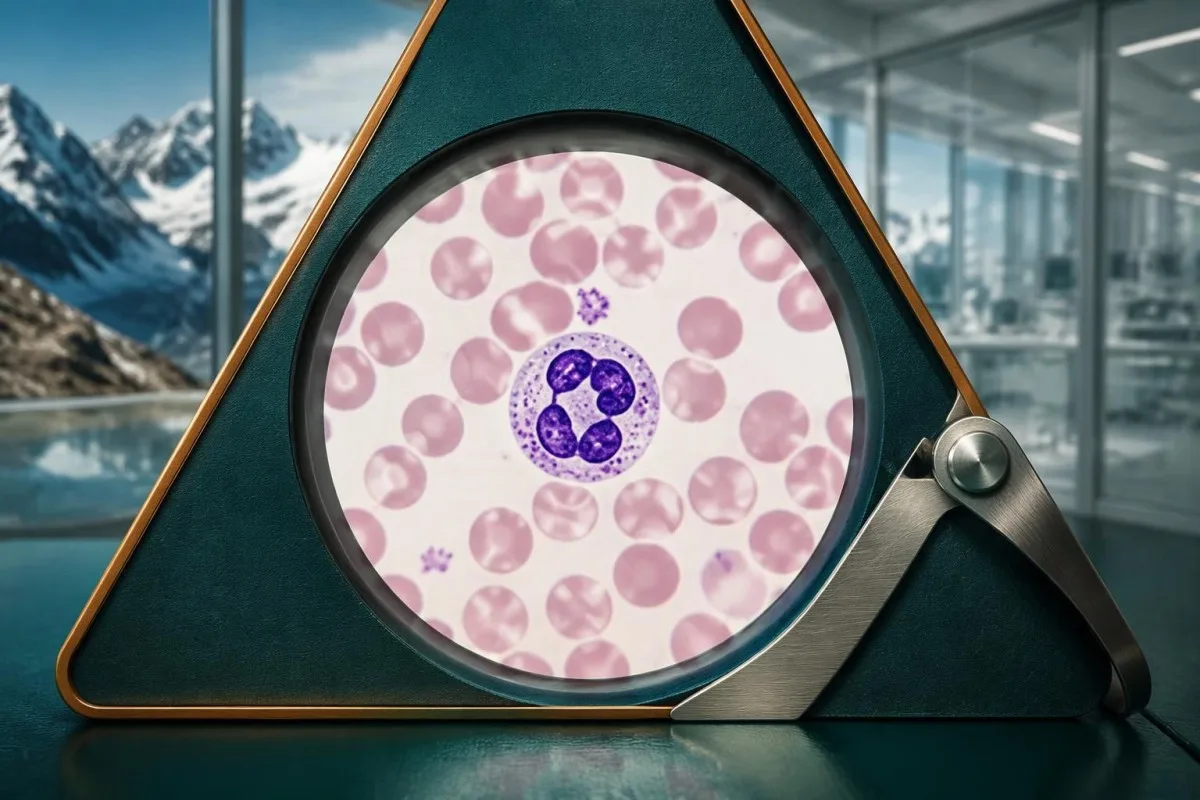
Morulae are clusters of organisms that may be visible inside granulocytes during the first week. Their absence does not exclude anaplasmosis, and their presence is not reliably species-specific because some Ehrlichia organisms can also affect granulocytes; manual microscopy can provide a fast clue, but PCR is needed for clearer organism identification (Bakken and Dumler, 2015).
| මට්ටම | පරාසය | එහි අර්ථය |
|---|---|---|
| වැඩිහිටියන් සඳහා පොදු WBC පරාසය | 4.0–11.0 × 10^9/L | Laboratory-dependent reference interval; a normal WBC does not exclude early anaplasmosis. |
| WBC below the local interval | Often <4.0 × 10^9/L | Leukopenia supports suspicion during a compatible acute illness but has many other causes. |
| Common adult platelet interval | 150–450 × 10^9/L | Check the local interval and previous results before interpreting a borderline value. |
| Platelets below the local interval | Often <150 × 10^9/L | Thrombocytopenia is a supportive clue; rapid decline and symptoms determine urgency. |
How do Anaplasma tests differ from other tick-borne tests?
Anaplasma PCR, Lyme serology, Babesia testing, Ehrlichia PCR, and spotted-fever serology detect different targets and cannot substitute for one another. A laboratory panel tests only the organisms explicitly listed; a negative result for 1 target is not a negative result for all tick-borne illnesses.
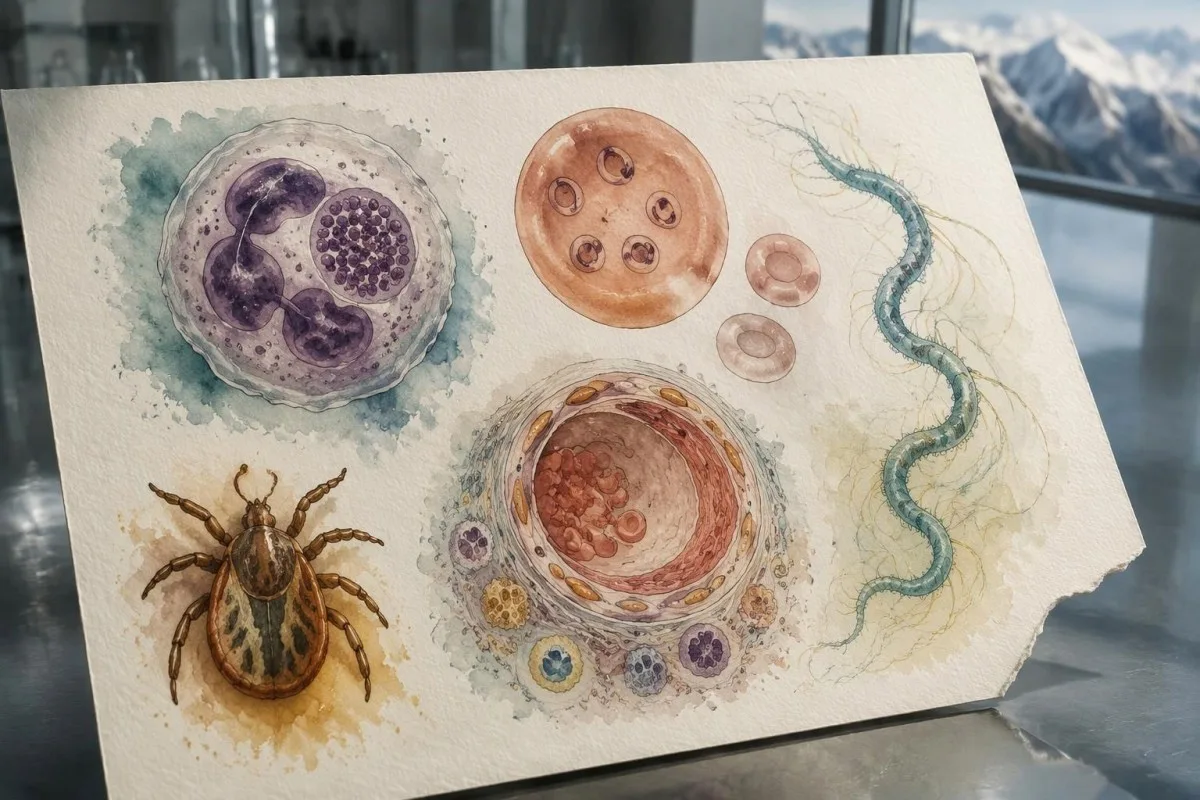
Lyme disease is usually evaluated with a validated two-tier antibody algorithm when testing is indicated. A classic expanding erythema migrans rash can be diagnosed clinically without waiting for positive antibodies, while marked leukopenia or thrombocytopenia should raise concern for an additional diagnosis; an Anaplasma PCR result does not answer either of these 2 Lyme questions.
Rocky Mountain spotted fever may have negative early serology, and whole-blood PCR is less reassuring when negative than it is for some circulating-cell infections. Rash appearance and specimen choice matter, but absence of rash does not make waiting safe; spotted-fever testing windows explains why the Anaplasma PCR window cannot simply be transferred to that illness.
Alpha-gal syndrome is a tick-associated allergy, not an Anaplasma infection. Delayed allergic symptoms roughly 2–6 hours after mammalian meat exposure require an allergy-focused history and appropriate IgE testing rather than PCR or paired Anaplasma IgG; alpha-gal IgE interpretation illustrates how one exposure category can lead to very different diagnostic pathways.
Why might treatment start before confirmation?
Suspected anaplasmosis should be treated promptly because early tests can be negative and delayed therapy can allow severe illness to develop. The MMWR guideline recommends that clinicians neither delay treatment while awaiting laboratory results nor withhold treatment because an early test is negative; the usual adult doxycycline dose is 100 mg every 12 hours (Biggs et al., 2016).

CDC recommends doxycycline for anaplasmosis in adults and children of all ages. For children weighing less than 45 kg, the usual dose is 2.2 mg/kg every 12 hours, with a maximum of 100 mg per dose; these are clinician-prescribed regimens, not instructions to start leftover medication or adjust a child's dose without assessment.
Treatment commonly lasts 10–14 days to provide coverage for possible concurrent Borrelia infection. Duration still depends on the suspected coinfections and clinical course, so an improving fever after 2 doses is not a reason to stop early; pregnancy, severe drug allergy, vomiting, or organ dysfunction require individualized decisions, sometimes with infectious-disease input.
Starting doxycycline is a clinical decision based on exposure, symptoms, examination, and the overall pattern—not on a single CRP or WBC cutoff. A WBC of 3.0 × 10^9/L during acute fever may strengthen concern even when CRP is only modestly raised; පරස්පර ආසාදන රුධිර සලකුණු explains why one reassuring-looking number should not overrule the complete assessment.
What response is expected, and when is care urgent?
Fever from anaplasmosis usually improves within 24–48 hours of doxycycline, but severe illness may take longer. Difficulty breathing, confusion, new bleeding, fainting, or markedly reduced urination requires emergency assessment; failure to improve is a reason for reassessment, not an instruction to increase the antibiotic dose yourself.
Persistent fever beyond about 48 hours should prompt review of the diagnosis, medication delivery, and possible coinfections. The person may not be absorbing oral treatment because of vomiting, may have an additional illness such as babesiosis, or may have developed a complication; the interval is a practical reassessment point rather than an absolute recovery deadline.
Severe anaplasmosis can involve respiratory failure, kidney injury, or coagulation abnormalities. Falling platelets accompanied by rising creatinine, prolonged clotting times, or new bleeding should not be dismissed as a routine CBC fluctuation; disseminated coagulation laboratory patterns explains why 2 or more changing systems can signal a problem beyond an isolated low count.
Clotting tests assess complications rather than confirming Anaplasma itself. For example, an INR of 1.8 in someone not taking warfarin needs explanation in context, but does not establish anaplasmosis or DIC on its own; our කැටිගැසීමේ පරීක්ෂණ ප්රතිඵල අර්ථකථන මාර්ගෝපදේශය helps separate PT, aPTT, D-dimer, and platelet findings without treating them as interchangeable measurements.
Should PCR or antibodies be repeated after treatment?
Routine PCR or IgG testing is generally not needed to prove cure after clinically successful anaplasmosis treatment. A convalescent IgG sample collected 2–10 weeks after the acute sample can document the diagnosis, but persistent antibodies alone do not demonstrate treatment failure and should not trigger repeated antibiotics in a well person.

A persistently positive IgG is not a test-of-cure result. If a person is well after a completed 10–14-day course, an elevated titer may simply reflect immune memory; if symptoms recur, clinicians should reassess the new symptoms and exposure history rather than assume that the old antibody result proves persistent infection.
CBC, creatinine, and liver enzymes may be repeated when they were abnormal or the illness was severe, but there is no universal day-7 retesting schedule for everyone. Kantesti AI can help organize serial results—for example, platelets rising from 82 to 164 × 10^9/L—while ඖෂධ-ආරක්ෂාව ප්රවණතා සමාලෝචනය explains why recovery patterns still require clinical context.
Antibiotic prophylaxis after a tick bite is not recommended specifically to prevent anaplasmosis. After an asymptomatic bite, monitor for fever or other illness over the following 2 weeks and obtain medical advice if symptoms appear; a separate Lyme prophylaxis decision, when indicated, should not be mistaken for an Anaplasma prevention protocol.
How can you organize a confusing report safely?
The safest report review separates organism detection, antibody evidence, supportive blood findings, and clinical timing into 4 distinct questions. Record the assay target, specimen type, result format, collection date, symptom-onset date, and antibiotic start; missing context should remain explicitly unknown rather than being filled in by an AI explanation.

කන්ටෙස්ටි යනු AI රසායනාගාර පරීක්ෂණ අර්ථකථන සේවාව that can explain uploaded laboratory reports and help readers identify questions for their clinician. In a hypothetical 2-report review, our AI should distinguish 'PCR not detected after treatment' from 'paired IgG rise consistent with recent infection,' rather than flattening both statements into a single positive-or-negative label.
An upload is not a substitute for urgent assessment. A photo showing platelets of 74 × 10^9/L cannot reveal whether the person is confused, dehydrated, pregnant, or short of breath; our tehnologija interpretacije z umetno inteligenco describes the analytical workflow, but clinical observations and prescribing decisions remain outside what the report alone can establish.
Before sharing 2 samples, check that both belong to the same person and remove identifiers if they are not needed for your purpose. Kantesti does not perform Anaplasma PCR, validate specimen handling, or confirm that an uploaded titer used the same laboratory method; retain the original PDF and ask the laboratory to resolve unclear assay comments or mismatched result units.
Which evidence should guide your next steps?
Anaplasmosis testing decisions should follow condition-specific guidance and diagnostic research, not general blood-test publications. The 2016 MMWR guideline, the 2013 PCR comparison, and the 2015 clinical review support the distinction between early direct detection, later antibody confirmation, and treatment based on clinical suspicion rather than a single laboratory result.

Bring 3 questions to the clinical review: was PCR collected early enough, is paired IgG needed, and do other tick-borne targets require separate testing? If the first specimen followed several doxycycline doses, say so; if the report is a single low-positive IgG, ask what evidence supports current illness before assuming that another antibiotic course is required.
At Kantesti, we distinguish externally published medical evidence from our own educational resources. Our වෛද්ය අන්තර්ගත ප්රමිතීන් explain that distinction; the 2 Figshare publications listed below are supplementary general laboratory and digestive-health guides, not studies establishing Anaplasma assay accuracy, treatment efficacy, or diagnostic thresholds.
The general hematology guide can help explain LDH and reticulocyte results when anemia raises a separate concern such as hemolysis. Use the hematology marker background guide for that limited purpose, not to interpret Anaplasma PCR; a 4-fold IgG rise, a positive organism-specific PCR, and the patient's clinical course each provide different kinds of evidence.
නිතර අසනු ලබන ප්රශ්න
ප්රතිදේහ ඍණාත්මක වුවද Anaplasma PCR පරීක්ෂණය ධනාත්මක විය හැකිද?
රෝගයේ පළමු සතිය තුළ බැක්ටීරියා DNA හඳුනාගත හැකි වීමට පෙර ප්රතිදේහ ප්රතිචාරය වර්ධනය වීමට කාලය ගතවන බැවින්, IgG ප්රතිදේහ ඍණාත්මක වුවද Anaplasma PCR පරීක්ෂණය ධනාත්මක විය හැකිය. මෙම රටාව රසායනාගාර දෝෂයක් පෙන්නුම් කරනවාට වඩා සක්රීය ඇනප්ලාස්මෝසිස් තත්ත්වයකට සහාය විය හැකිය. උග්ර අවධියේදී ලබාගත් IgG නියැදියක්, සති 2–10කට පසු ලබාගත් සුවය ලබන අවධියේ නියැදියක් සමඟ සැසඳිය හැකිය. රෝගය සායනිකව සැක කෙරෙන විට, ප්රතිදේහ පරිවර්තනය වන තෙක් බලා සිටීම සඳහා ප්රතිකාරය ප්රමාද නොකළ යුතුය.
Anaplasma IgG ධනාත්මක වීමෙන් මට ප්රතිජීවක අවශ්ය බව අදහස් වේද?
එක් ධනාත්මක Anaplasma IgG ප්රතිඵලයක් ලැබීමෙන් පමණක් ස්වයංක්රීයව ප්රතිජීවක අවශ්ය බව අදහස් නොවේ, මන්ද ප්රතිදේහ මඟින් පෙර නිරාවරණයක් හෝ හරස් ප්රතික්රියාවක් පිළිබිඹු විය හැකි බැවිනි. CDC අනුව, අවම වශයෙන් 1:128 වන තනි ටයිටරයක් උපකාරක සාක්ෂියක් ලෙස සැලකෙන නමුත්, එය නව ආසාදනයක් පිළිබඳ නිශ්චිත සාක්ෂියක් නොවේ. ප්රතිදේහ මාස ගණනක් ඉහළ මට්ටමක පැවතිය හැකි අතර, රෝගාතුර වීමෙන් වසර 4ක් දක්වා ඉහළ ටයිටර වාර්තා වී ඇත. වෛද්යවරු ප්රතිකාර තීරණය කරන්නේ පවතින රෝග ලක්ෂණ, නිරාවරණය, PCR සොයාගැනීම් සහ යුගල ප්රතිදේහ ප්රතිඵල පදනම් කරගෙන මිස, දිගටම පවතින IgG මත පමණක් නොවේ.
ඩොක්සිසයික්ලින් කොපමණ ඉක්මනින් Anaplasma PCR පරීක්ෂණය ඍණාත්මක කළ හැකිද?
Anaplasma PCR sensitivity can decrease within 48 hours of appropriate antibiotic treatment, according to CDC guidance. That does not mean every person's PCR becomes negative at exactly 48 hours, because assay performance and circulating organism levels differ. A negative PCR collected after treatment is therefore less reassuring than a well-timed pretreatment result. Record the first doxycycline dose and specimen collection time so the clinician can interpret the result correctly.
Anaplasma ප්රතිදේහ හතර ගුණයකින් ඉහළ යාමක් ලෙස සලකන්නේ කුමක්ද?
A rise in Anaplasma IgG titer from 1:64 to 1:256 is fourfold, while a rise from 1:128 to 1:256 is only twofold. Paired testing generally compares an acute specimen from the first 2 weeks of illness with a convalescent specimen collected 2–10 weeks later. The comparison should use compatible methods, ideally the same laboratory's IgG indirect fluorescent antibody assay. An antibody screen index cannot be directly converted into a dilution titer for this calculation.
PCR සහ IgG දෙකම ඍණාත්මක නම් මට ඇනප්ලාස්මෝසිස් තිබිය හැකිද?
PCR සහ IgG දෙකම ඍණ වූ විටත් ඇනප්ලාස්මෝසිස් තිබිය හැකිය. විශේෂයෙන්ම, IgG පරීක්ෂණය පළමු සතිය තුළදී සිදු කර තිබුණේ නම් සහ සුදුසු ප්රතිජීවක ලබා දීමෙන් පසු PCR පරීක්ෂණය සිදු කර තිබුණේ නම් මෙය විය හැකිය. උණ, කිනිතුල්ලන්ට නිරාවරණය වීමට ඉඩ තිබීම, රුධිර පට්ටිකා අඩු වීම, සුදු රුධිරාණු අඩු වීම සහ අක්මා එන්සයිම ඉහළ යාම, පරීක්ෂණ ඍණ වුවද සායනික සැකය පවත්වා ගැනීමට හේතු විය හැකිය. උග්ර අවස්ථාවේ සාම්පලය ලබා ගැනීමෙන් සති 2–10කට පසු සුවය ලබන අවධියේ IgG සාම්පලයක් ලබා ගැනීමටත්, වෙනත් විය හැකි රෝග විනිශ්චයන් ඇගයීමටත් වෛද්යවරුන් කටයුතු කළ හැකිය. මුල් අවධියේ පරීක්ෂණ ඍණ වීම පමණක් හේතුවෙන් සැක කෙරෙන ඇනප්ලාස්මෝසිස් සඳහා ප්රතිකාර නොකර සිටිය යුතු නොවේ.
රෝග ලක්ෂණ කොපමණ ඉක්මනින් යහපත් විය යුතුද, සහ සුවවීම තහවුරු කිරීමේ පරීක්ෂණයක් අවශ්යද?
ඇනප්ලාස්මෝසිස් නිසා ඇති වන උණ සාමාන්යයෙන් ඩොක්සිසයික්ලින් ලබා දීමෙන් පැය 24–48ක් ඇතුළත අඩු වේ, නමුත් බරපතළ රෝග තත්ත්වයකදී ඊට වැඩි කාලයක් ගත විය හැක. උණ දිගටම පවතී නම්, ඖෂධය අවශෝෂණය වීමේ ගැටලු, වෙනත් රෝග විනිශ්චයක්, සම-ආසාදනයක් හෝ සංකූලතා තිබේදැයි නැවත ඇගයීමට ලක් කළ යුතුය. සාර්ථක ප්රතිකාරයකින් පසු සුවය තහවුරු කිරීමට සාමාන්ය PCR හෝ ප්රතිදේහ පරීක්ෂණ සාමාන්යයෙන් අවශ්ය නොවේ; යුගල IgG පරීක්ෂණය ප්රධාන වශයෙන් මෑතකදී ඇති වූ ආසාදනයක් ලේඛනගත කිරීමට භාවිත කරයි. හුස්ම ගැනීමේ අපහසුතාව, ව්යාකූලත්වය, අලුතින් ඇති වන රුධිර වහනය හෝ මුත්රා පිටවීම කැපී පෙනෙන ලෙස අඩු වීම, රසායනාගාර ප්රතිඵලය කුමක් වුවත්, හදිසි වෛද්ය ඇගයීමක් අවශ්ය කරයි.
ඔබේ රුධිර පරීක්ෂණ ප්රතිඵල කියවා ගන්න
ඔබේ රසායනාගාර වාර්තාව උඩුගත කරන්න; Kantesti හි AI තත්පර කිහිපයකින් එක් එක් ජෛව සලකුණ සරල භාෂාවෙන් පැහැදිලි කරයි. ලොව පුරා මිලියන 2කට අධික පිරිසක් භාවිත කරති.
ආශ්රිත
- ක්ලයින්, ටී., මිචෙල්, එස්., සහ වෙබර්, එච්. (2026). B ඍණ රුධිර කාණ්ඩය, LDH රුධිර පරීක්ෂණය සහ රෙටිකුලෝසයිට් ගණන පිළිබඳ මාර්ගෝපදේශය. Kantesti AI වෛද්ය පර්යේෂණය. ඩීඕඅයි
- ක්ලයින්, ටී., මිචෙල්, එස්., සහ වෙබර්, එච්. (2026). උපවාසයෙන් පසු පාචනය, මළපහවල කළු පැහැති තිත් සහ GI මාර්ගෝපදේශය 2026. Kantesti AI වෛද්ය පර්යේෂණය. ඩීඕඅයි
- Biggs HM et al. (2016). කිනිතුල්ලන්ගෙන් බෝවන රිකෙට්සියා රෝග නිර්ණය සහ කළමනාකරණය: Rocky Mountain Spotted Fever සහ අනෙකුත් Spotted Fever Group Rickettsioses, Ehrlichioses සහ Anaplasmosis — එක්සත් ජනපදය. MMWR නිර්දේශ සහ වාර්තා. ඩීඕඅයි පබ්මෙඩ්
- Schotthoefer AM et al. (2013). Comparison of a real-time PCR method with serology and blood smear analysis for diagnosis of human anaplasmosis: importance of infection time course for optimal test utilization. Journal of Clinical Microbiology. ඩීඕඅයි
- Bakken JS and Dumler JS (2015). Human granulocytic anaplasmosis. Infectious Disease Clinics of North America.
- මි2+විශ්ලේෂණය කළ පරීක්ෂණ
- 127+රටවල්
- 100+භාෂා
වෛද්ය කණ්ඩායම පිළිබඳව


E-E-A-T විශ්වාස සංඥා
අත්දැකීම්
වෛද්යවරයා විසින් මෙහෙයවන ලද රසායනාගාර අර්ථකථන ක්රියාවලි පිළිබඳ සමාලෝචනය.
ප්රවීණතාව
සායනික සන්දර්භය තුළ ජෛව සලකුණු (biomarkers) හැසිරෙන ආකාරය පිළිබඳ රසායනාගාර වෛද්ය විද්යා අවධානය.
අධිකාරීත්වය
වෛද්ය Thomas Klein විසින් වෛද්යමය වශයෙන් සමාලෝචනය කරන ලද අතර, Dr. Sarah Mitchell සහ Prof. Dr. Hans Weber දායක වූහ.
විශ්වසනීයත්වය
අනතුරු ඇඟවීම් අඩු කිරීමට පැහැදිලි පසුකැඳවීම් මාර්ග සහිත සාක්ෂි-පාදක අර්ථකථනය.






වෛද්ය වියාචනය
මෙම ලිපිය අධ්යාපනික අරමුණු සඳහා පමණක් වන අතර වෛද්ය උපදෙස් ලෙස නොසැලකේ. රෝග නිદાન සහ ප්රතිකාර තීරණ සඳහා සෑම විටම සුදුසුකම් ලත් සෞඛ්ය සේවා සපයන්නෙකුගෙන් උපදෙස් ලබාගන්න.
ප්රකාශයට පත් කරන ලදී · කර්තෘ මණ්ඩලය අමතන්න
Kantesti Ltd විසින් ප්රකාශයට පත් කරන ලද අතර, එංගලන්තයේ සහ වේල්සයේ ලියාපදිංචි සමාගමකි, සමාගම් අංකය. 17090423, ලන්ඩන්, එක්සත් රාජධානිය.
