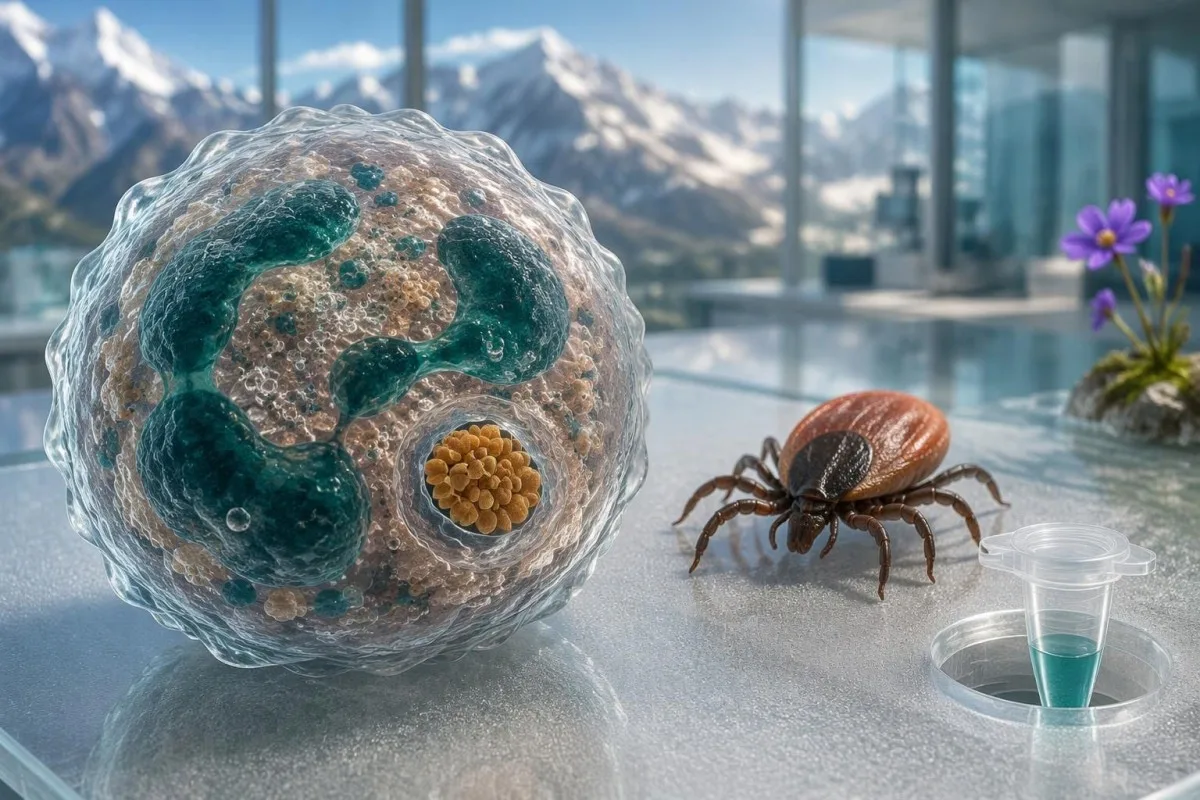
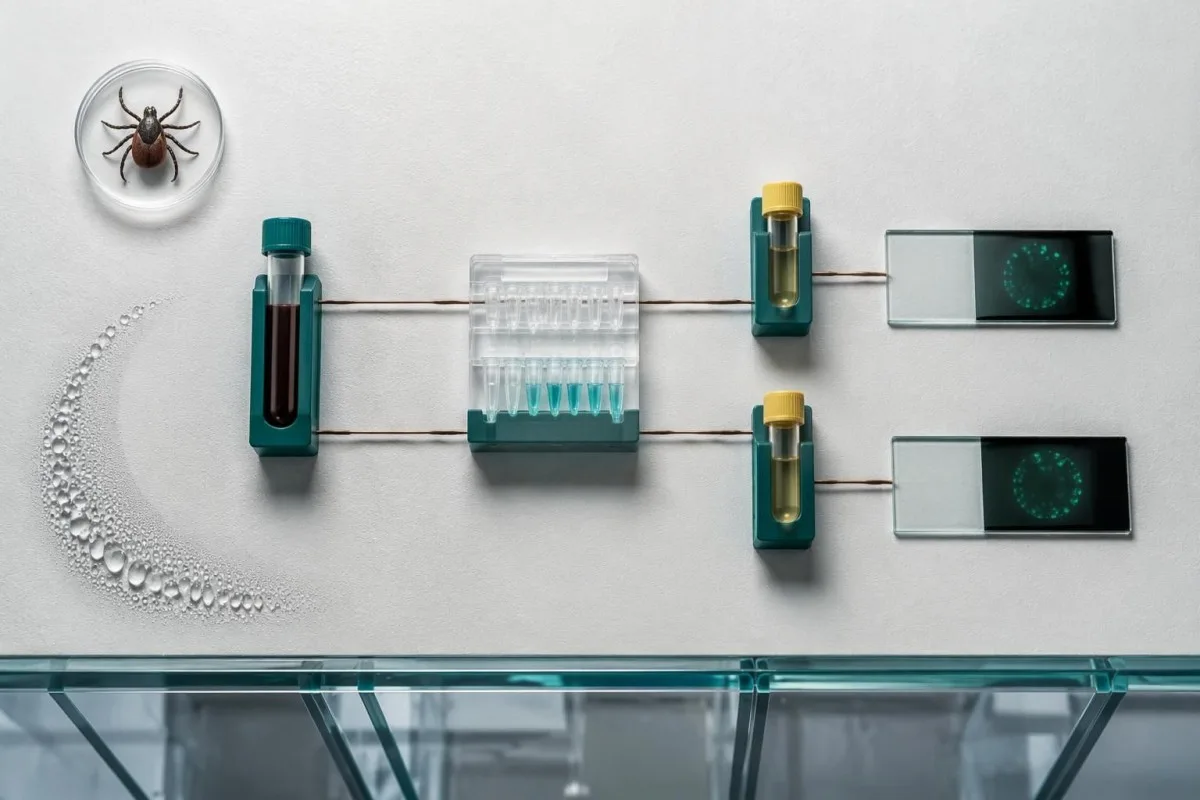
PCR ตรวจพบเชื้อ ส่วนแอนติบอดีบันทึกการตอบสนองทางภูมิคุ้มกัน การพิจารณาผลทั้งสองร่วมกับช่วงที่เริ่มมีอาการและช่วงเวลาที่ได้รับยาปฏิชีวนะช่วยอธิบายผลที่ดูขัดแย้งกัน.

ประเด็นสำคัญ
- PCR ระยะต้น มีประโยชน์มากที่สุดในช่วงสัปดาห์แรกของการเจ็บป่วย โดยผล PCR จากเลือดครบส่วนที่เป็นบวกเป็นหลักฐานชัดเจนของอะนาพลาสโมซิสที่กำลังเกิดขึ้น.
- แอนติบอดีในระยะแรก อาจยังให้ผลเป็นลบในสัปดาห์ที่ 1 ดังนั้น PCR ที่เป็นบวกแต่ IgG เป็นลบจึงเป็นรูปแบบที่พบได้ตามปกติ ไม่ได้หมายความว่าห้องปฏิบัติการทำผิดพลาดเสมอไป.
- PCR เป็นลบ ไม่สามารถตัดอะนาพลาสโมซิสออกได้ โดยเฉพาะหลังได้รับยาปฏิชีวนะ ความไวของ PCR อาจลดลงภายใน 48 ชั่วโมงหลังเริ่มการรักษาที่เหมาะสม.
- ตัวอย่างตรวจ IgG แบบจับคู่ เก็บตัวอย่างในช่วง 2 สัปดาห์แรกของการเจ็บป่วย และเก็บอีกครั้งใน 2–10 สัปดาห์ต่อมา การเพิ่มขึ้นสี่เท่าสนับสนุนการยืนยันว่ามีการติดเชื้อเมื่อเร็ว ๆ นี้.
- ผล IgG เป็นบวกเพียงครั้งเดียว ไม่สามารถยืนยันการติดเชื้อครั้งใหม่ได้ ระดับไตเตอร์อย่างน้อย 1:128 เป็นหลักฐานสนับสนุนตามแนวทางของ CDC ไม่ใช่คำสั่งให้รักษาโดยลำพัง.
- ระยะเวลาการรักษา ขึ้นอยู่กับความสงสัยทางคลินิก ไม่ใช่การยืนยันเพียงอย่างเดียว แพทย์ไม่ควรชะลอการให้ด็อกซีไซคลินระหว่างรอผลตรวจเมื่อสงสัยโรคแอนาพลาสโมซิส.
- โรคอื่น ๆ ที่ติดต่อผ่านเห็บ จำเป็นต้องตรวจเฉพาะของโรคนั้น PCR ของ Anaplasma ไม่ได้ตรวจหาโรคลายม์ โรคบาบีซิโอซิส โรคเออร์ลิชิโอซิส หรือไข้ร็อกกีเมาน์เทนสปอตเต็ด.
- อาการที่ควรรีบด่วน เช่น อาการสับสน หายใจลำบาก มีเลือดออกใหม่ หรือปัสสาวะลดลงอย่างมาก จำเป็นต้องได้รับการประเมินฉุกเฉิน แทนที่จะรอเก็บตัวอย่างซ้ำ.
เหตุใดผล PCR และแอนติบอดีในระยะแรกจึงไม่ตรงกัน?
ผลตรวจโรคแอนาพลาสโมซิสอาจไม่สอดคล้องกัน เนื่องจาก PCR ตรวจหา DNA ของแบคทีเรีย ขณะที่ IgG ตรวจหาการตอบสนองทางภูมิคุ้มกันซึ่งเกิดขึ้นภายหลัง. ในสัปดาห์แรก PCR อาจให้ผลบวกและแอนติบอดีให้ผลลบ หลังการรักษา PCR อาจให้ผลลบขณะที่ IgG เพิ่มสูงขึ้น และการติดเชื้อที่สงสัยว่าเกิดขึ้นอาจยังจำเป็นต้องรักษาก่อนยืนยันด้วยผลตรวจทางห้องปฏิบัติการ.
Anaplasma phagocytophilum ก่อให้เกิดโรคแอนาพลาสโมซิสชนิดแกรนูโลไซต์ในมนุษย์ และส่งผลต่อเซลล์นิวโทรฟิลเป็นหลัก ซึ่งเป็นเม็ดเลือดขาวชนิดหนึ่ง อาการมักเริ่มขึ้น 5–14 วันหลังถูกเห็บที่มีเชื้อกัด แต่หลายคนไม่ทันสังเกตเห็นเห็บ จุดเริ่มต้นของช่วงเวลาที่มีประโยชน์ต่อการตรวจทางห้องปฏิบัติการคือวันแรกที่เริ่มป่วย ไม่ใช่วันที่สัมผัสเชื้อซึ่งไม่แน่ชัด.
ผลตรวจที่เก็บในวันที่ 3 ของการป่วยตอบคำถามต่างจากผลตรวจที่เก็บในวันที่ 24 แม้รายงานทั้งสองฉบับจะระบุว่าเป็น Anaplasma ก็ตาม การเปรียบเทียบ real-time PCR ที่ตีพิมพ์ใน Journal of Clinical Microbiology พบว่าประสิทธิภาพในการตรวจวินิจฉัยขึ้นอยู่กับช่วงเวลาของการป่วย จึงอธิบายได้ว่าทำไมจึงควรแปลผลการตรวจหาเชื้อโดยตรงร่วมกับการตรวจทางซีรั่มวิทยา แทนที่จะจัดอันดับว่าเป็นการตรวจที่ใช้แทนกันได้ (Schotthoefer et al., 2013).
คันเตสตีเป็น เครื่องวิเคราะห์ผลเลือด AI ซึ่งช่วยอธิบายความสัมพันธ์ระหว่างรายงานผล Anaplasma กับผล CBC หรือผลการตรวจตับที่แนบมาด้วยได้ แต่ไม่สามารถยืนยันการวินิจฉัยจากตัวเลขเพียงอย่างเดียวได้ เพื่อให้แปลผลได้อย่างเป็นประโยชน์ โปรดให้ข้อมูล 3 รายการ ได้แก่ วันที่เริ่มมีอาการ วันที่เก็บตัวอย่าง และวันที่ได้รับยาปฏิชีวนะครั้งแรก ข้อมูลเกี่ยวกับ องค์กรของเรา อธิบายบทบาทของบริการนี้.
ผล Anaplasma PCR เป็นบวกหมายความว่าอย่างไร?
ผล PCR ของ Anaplasma เป็นบวก หมายความว่าการตรวจพบ DNA ของ Anaplasma ในสิ่งส่งตรวจที่ส่งมา. ในผู้ที่มีอาการป่วยเฉียบพลันสอดคล้องกับโรค ผล PCR จากเลือดครบส่วนที่จำเพาะต่อชนิดเชื้อเป็นบวกถือเป็นหลักฐานชัดเจนของโรคแอนาพลาสโมซิสที่กำลังเป็นอยู่ แต่ไม่ได้วัดระดับแอนติบอดี ระบุความรุนแรงของโรค หรือระบุการติดเชื้อร่วมที่ติดต่อผ่านเห็บซึ่งอาจมีได้ทั้งหมด.

เลือดครบส่วนที่ใส่ EDTA มักใช้ตรวจ PCR ของ Anaplasma เนื่องจากเชื้อเกี่ยวข้องกับองค์ประกอบของเซลล์ที่ไหลเวียนอยู่ในเลือด ตัวอย่างซีรัมสำหรับตรวจแอนติบอดีไม่สามารถใช้แทนกันได้โดยอัตโนมัติ ก่อนแปลผล 2 รายการที่ดูเหมือนขัดแย้งกัน ให้ตรวจสอบว่าห้องปฏิบัติการได้รับสิ่งส่งตรวจที่จำเป็นสำหรับการตรวจแต่ละวิธี และบันทึกวันที่เก็บตัวอย่างทั้งสองรายการไว้อย่างถูกต้อง.
รายงานสมมติที่ระบุว่า 'ตรวจพบ DNA ของ A. phagocytophilum' ในวันที่ 4 ของการป่วย ร่วมกับมีไข้และเกล็ดเลือดลดลง สนับสนุนการวินิจฉัยทางคลินิกอย่างมาก รายงานที่ระบุเพียงว่า 'ตรวจพบ Anaplasma species' อาจมาจากการตรวจที่ครอบคลุมกว้างกว่า ดังนั้นเป้าหมายที่ตรวจพบจึงมีความสำคัญ โปรดสอบถามว่าผลระบุ A. phagocytophilum โดยเฉพาะหรือจำเป็นต้องให้ห้องปฏิบัติการชี้แจงเพิ่มเติม.
PCR แบบเชิงคุณภาพไม่ใช่ค่าประเมินปริมาณแบคทีเรีย. แม้รายงานจะมีค่ารอบการเพิ่มสัญญาณ แต่ไม่มีค่าเกณฑ์มาตรฐานสากลของ Anaplasma ที่ใช้คาดการณ์การเข้ารับการรักษาในโรงพยาบาลหรือกำหนดระยะเวลาการรักษา คำอธิบายของเราเกี่ยวกับ ผลเชิงคุณภาพเทียบกับผลเชิงปริมาณ ช่วยแยกความแตกต่างระหว่างการตรวจพบเชื้อกับการวัดความเข้มข้นตามมาตรฐาน.
การตรวจ Anaplasma PCR มีประโยชน์มากที่สุดเมื่อใด?
PCR ของ Anaplasma มีความไวสูงสุดในช่วงสัปดาห์แรกของการป่วย ก่อนที่ยาปฏิชีวนะที่เหมาะสมจะลดปริมาณ DNA ของแบคทีเรียที่ไหลเวียนอยู่ในเลือด. แนวทางของ CDC ระบุว่าความไวลดลงภายใน 48 ชั่วโมงหลังให้ยาปฏิชีวนะที่เหมาะสม ซึ่งหมายถึงประสิทธิภาพในการตรวจวินิจฉัยที่ลดลง ไม่ได้หมายความว่าตัวอย่างทุกรายที่ได้รับการรักษาจะให้ผลเป็นลบในเวลาเดียวกัน.

เก็บตัวอย่างสำหรับตรวจ PCR ก่อนเริ่มการรักษาเมื่อสามารถทำได้ทันที แต่ห้ามเลื่อนการรักษาที่จำเป็นเพื่อจัดเตรียมการเก็บตัวอย่างเด็ดขาด. For example, a sample collected on day 5 before the first doxycycline dose is generally more informative than one collected on day 7 after several doses; the MMWR guideline explicitly prioritizes prompt treatment over waiting for confirmation (Biggs et al., 2016).
The 48-hour statement does not apply equally to every antibiotic a person may have taken. A prior course of an antibiotic that does not reliably treat anaplasmosis cannot be assumed to have the same effect as doxycycline; record the drug name, dose, and dose times rather than writing only 'already on antibiotics.'
If the first PCR was collected after 3 days of doxycycline, a negative result should be interpreted with that limitation visible on the report review. Repeating PCR without changing the timing problem may add little; arranging convalescent IgG may be more informative, and a dated blood test timeline prevents treatment-related changes from being mistaken for contradictory evidence.
ผล Anaplasma IgG เป็นบวกหมายความว่าอย่างไร?
The anaplasma IgG positive meaning is evidence of an antibody response, not automatic proof of a current infection. A single IgG result may reflect recent illness, previous exposure, or cross-reactivity; CDC considers a single titer of at least 1:128 supportive laboratory evidence, while confirmation usually requires the clinical picture and direct detection or paired serology.

Anaplasma IgG can remain elevated for months, and high titers have been reported up to 4 years after illness. Persistently positive antibodies in a well person do not by themselves justify another antibiotic course; the relevant question is whether there is a new compatible illness, a new exposure, or evidence that the antibody level has changed meaningfully.
In some areas, approximately 5–10% of healthy people may have elevated Anaplasma antibodies because of previous exposure or related organisms, according to CDC testing guidance. That estimate is geographically dependent, not a universal false-positive rate; a low positive in someone with no fever or plausible tick exposure carries a different meaning from the same result during an acute illness.
Kantesti treats 1 positive antibody result as a finding to explain, not a diagnosis to announce. The distinction between immune memory and active disease is covered in การตีความผลแอนติบอดีที่เป็นบวก; unlike some vaccine antibody tests, Anaplasma IgG does not provide an established protective-immunity threshold.
ตัวอย่างตรวจ IgG แบบจับคู่ยืนยันการติดเชื้อเมื่อเร็ว ๆ นี้ได้อย่างไร?
Paired Anaplasma IgG testing compares an acute specimen from the first 2 weeks of illness with a convalescent specimen collected 2–10 weeks later. A fourfold rise in IgG titer by indirect fluorescent antibody testing is evidence of seroconversion and helps confirm recent infection when the early result was negative or PCR was unavailable.
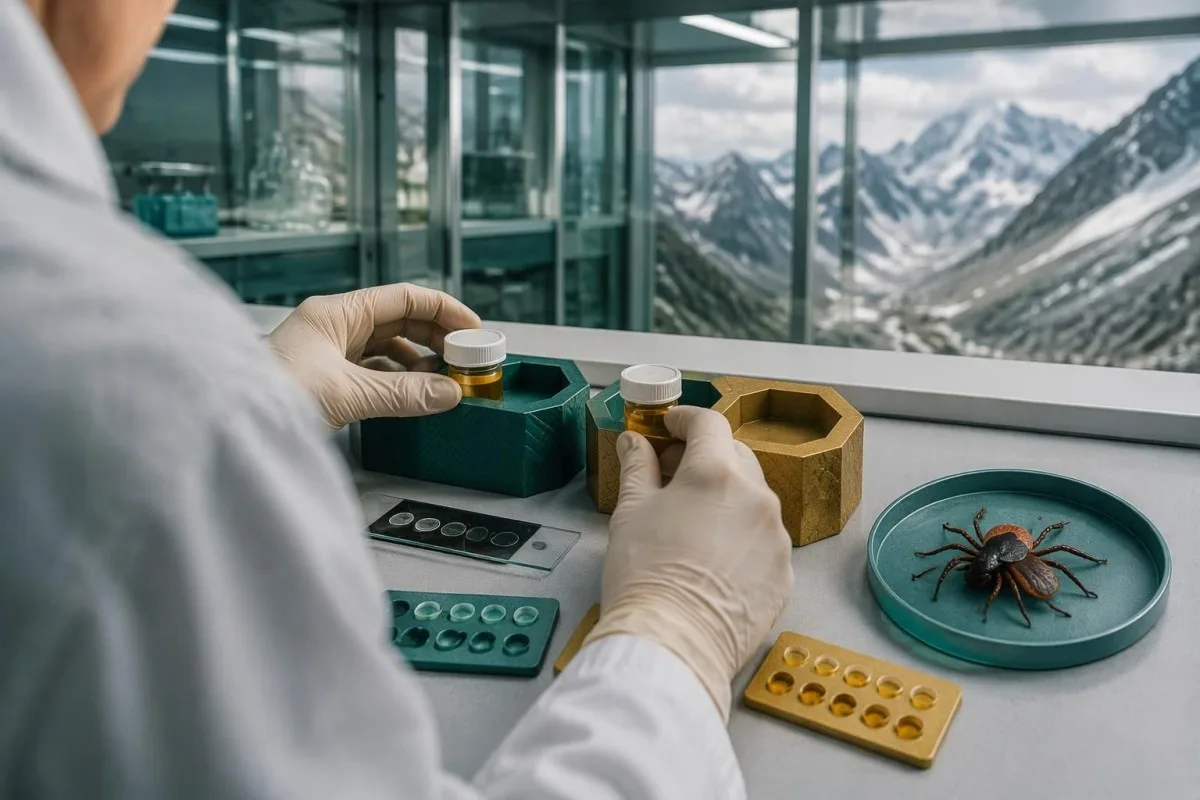
A rise from 1:64 to 1:256 is fourfold; a rise from 1:128 to 1:256 is only twofold. In a hypothetical case, an illness-day-4 titer of 1:64 and a day-28 titer of 1:256 would meet the fourfold criterion, while the smaller increase would not independently confirm infection by that criterion.
Titers are reciprocal dilutions, not concentrations in mg/dL or arbitrary screen-index units. If the acute report gives an index of 1.4 and the later report gives a titer of 1:256, a fourfold change cannot be calculated directly; use the same laboratory and method where possible, and ask whether archived samples can be compared together.
Antibody responses may be weaker or delayed in people receiving immunosuppressive treatment. A person taking B-cell-depleting therapy, for example, may not produce the expected rise over 2 samples, so clinicians may rely more heavily on PCR, clinical findings, and exposure history; IgG, IgA, and IgM patterns can provide background context but do not replace organism-specific testing.
เหตุใด IgM และแอนติบอดีที่เกิดปฏิกิริยาข้ามจึงไม่น่าเชื่อถือ?
Anaplasma IgM is not a reliable stand-alone marker of recent anaplasmosis, and antibodies can cross-react with related Ehrlichia organisms. When both illnesses are plausible, clinicians may request 2 separate organism-specific PCR tests and side-by-side IgG testing; dual antibody positivity does not automatically establish 2 active infections.

IgM does not consistently mean 'new infection' in anaplasmosis. An isolated IgM positive result with negative IgG and negative PCR is therefore insufficient confirmation, particularly if it was obtained on day 2 of a nonspecific illness; the recommended serologic approach is paired IgG interpreted alongside symptoms and the direct-detection window.
Anaplasma phagocytophilum and Ehrlichia species are different organisms, despite overlapping fever, headache, cytopenias, and antibody cross-reactivity. A positive Ehrlichia antibody assay does not substitute for an Anaplasma PCR result; our guide to ehrlichiosis PCR and titers explains why testing for each target matters when 2 diagnoses remain plausible.
Babesia requires separate assessment because doxycycline does not treat babesiosis. In a patient with anemia, elevated LDH, low haptoglobin, or persistent fever after 48 hours of appropriate anaplasmosis treatment, clinicians may consider Babesia PCR or a manually reviewed smear; แอนติบอดีต่อ Babesia เทียบกับการติดเชื้อ explains why an antibody result alone can also mislead.
ผลตรวจเป็นลบแล้วยังอาจเป็นอะนาพลาสโมซิสได้หรือไม่?
An anaplasmosis test false negative is possible when antibodies are checked too early or PCR is collected after its best detection window or after treatment. Negative PCR plus negative IgG during week 1 does not reliably exclude the illness; clinicians must weigh exposure, symptoms, CBC changes, liver enzymes, and the timing of both tests.
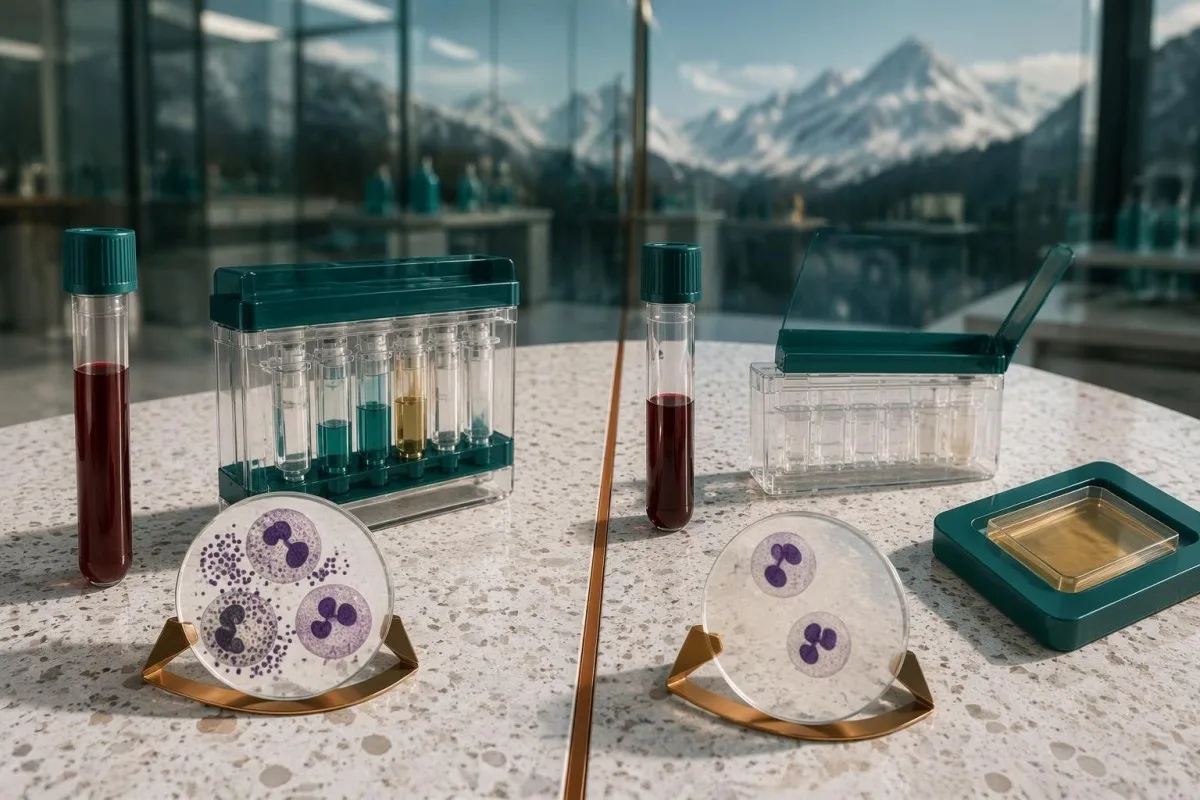
There is no single dependable false-negative percentage for every Anaplasma test. PCR assays differ, studies use different reference standards, and patients present on different illness days; a sensitivity estimate from untreated day-3 specimens cannot simply be applied to a day-9 sample obtained after 4 days of doxycycline (Schotthoefer et al., 2013).
A hypothetical person has fever, platelets of 78 × 10^9/L, a WBC of 2.9 × 10^9/L, and recent woodland exposure, but both tests are negative on illness day 4. That pattern leaves substantial clinical concern even without confirmation; by contrast, the same negative tests in a well person with normal counts and no plausible exposure answer a much lower-risk question.
คันเตสตีเป็น แพลตฟอร์มการแปลผลตรวจเลือดของ AI that can explain why 2 negative tests may be limited by their collection dates, but it cannot determine whether antibiotics are needed. Our แนวทางการยืนยันความถูกต้องทางคลินิก อธิบายข้อควรระวังในการแปลผล ขณะที่ checking report source details helps readers verify specimen type, method, and reference comments before relying on a summary.
ผล CBC และการทำงานของตับใดช่วยสนับสนุนการวินิจฉัย?
Low white blood cells, low platelets, and raised AST or ALT commonly support suspicion of anaplasmosis, but none is diagnostic alone. Many adult laboratories use WBC reference intervals around 4.0–11.0 × 10^9/L and platelet intervals around 150–450 × 10^9/L; use the ranges printed on your own report.
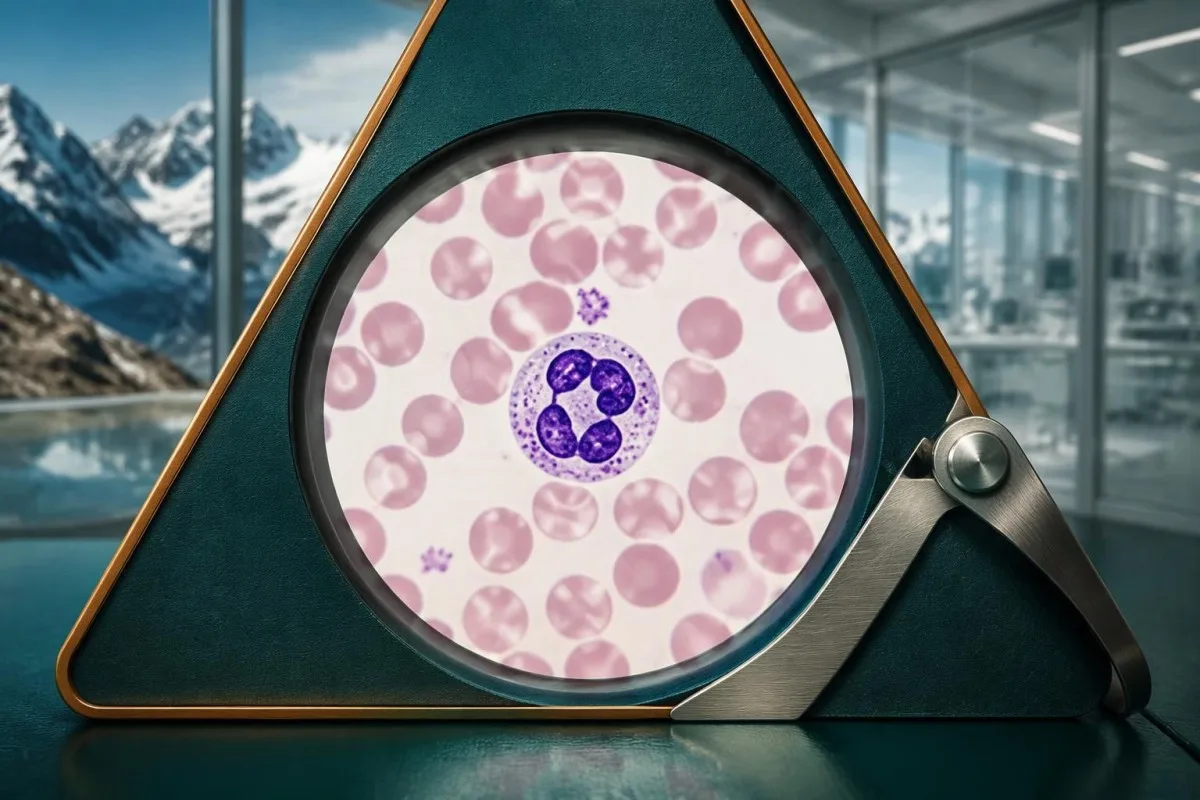
A falling platelet count can be more informative than one mildly low result. A hypothetical decline from 182 to 84 × 10^9/L over 3 days during fever suggests an acute process, whereas a stable count of 138 × 10^9/L for years has a different context; plateletcrit and platelet count are related measurements, but plateletcrit is not an Anaplasma diagnostic test.
AST and ALT indicate cellular injury rather than identifying the organism. An AST of 84 IU/L is approximately 2.1 times an upper limit of 40 IU/L, but muscle injury, other infections, and medication effects can also produce that result; what ALT measures helps distinguish supportive liver findings from proof of a specific cause.
Morulae are clusters of organisms that may be visible inside granulocytes during the first week. Their absence does not exclude anaplasmosis, and their presence is not reliably species-specific because some Ehrlichia organisms can also affect granulocytes; manual microscopy can provide a fast clue, but PCR is needed for clearer organism identification (Bakken and Dumler, 2015).
| ระดับ | ช่วง | ความหมาย |
|---|---|---|
| ช่วง WBC ทั่วไปในผู้ใหญ่ | 4.0–11.0 × 10^9/L | Laboratory-dependent reference interval; a normal WBC does not exclude early anaplasmosis. |
| WBC below the local interval | Often <4.0 × 10^9/L | Leukopenia supports suspicion during a compatible acute illness but has many other causes. |
| Common adult platelet interval | 150–450 × 10^9/L | Check the local interval and previous results before interpreting a borderline value. |
| Platelets below the local interval | Often <150 × 10^9/L | Thrombocytopenia is a supportive clue; rapid decline and symptoms determine urgency. |
การตรวจ Anaplasma แตกต่างจากการตรวจโรคอื่นที่มีเห็บเป็นพาหะอย่างไร?
Anaplasma PCR, Lyme serology, Babesia testing, Ehrlichia PCR, and spotted-fever serology detect different targets and cannot substitute for one another. A laboratory panel tests only the organisms explicitly listed; a negative result for 1 target is not a negative result for all tick-borne illnesses.
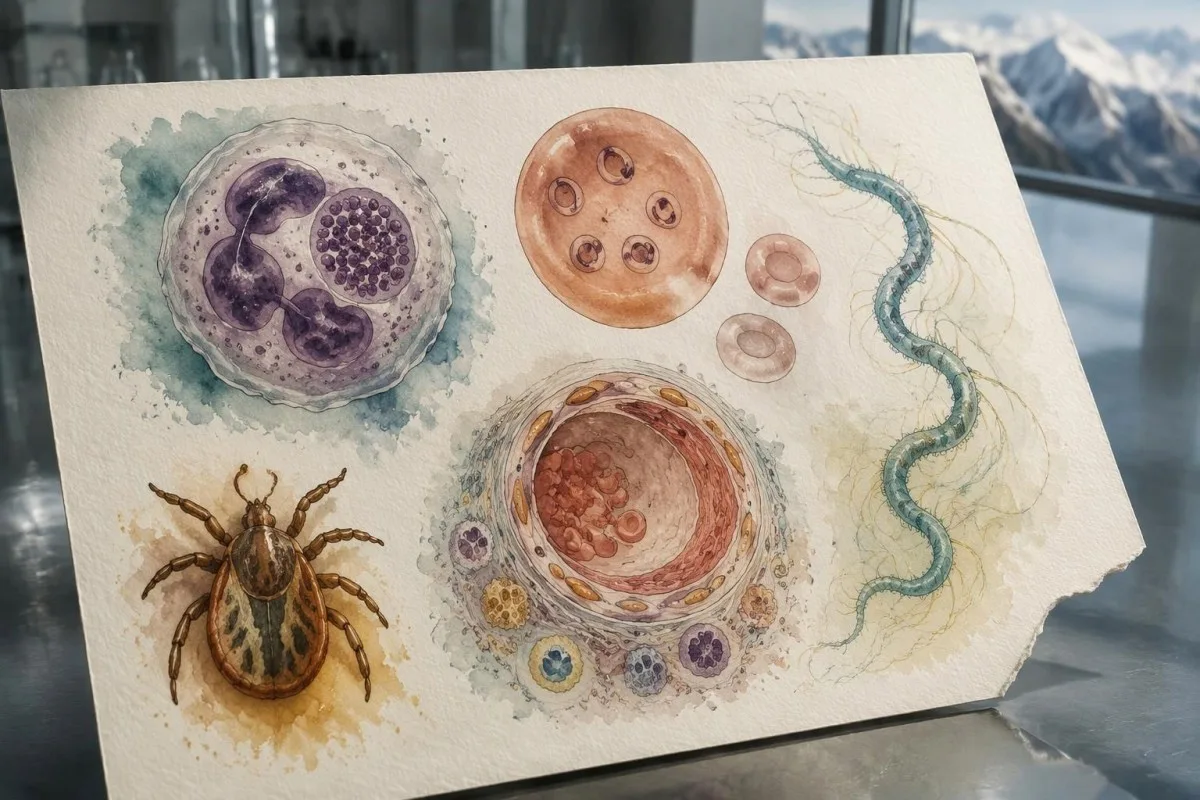
Lyme disease is usually evaluated with a validated two-tier antibody algorithm when testing is indicated. A classic expanding erythema migrans rash can be diagnosed clinically without waiting for positive antibodies, while marked leukopenia or thrombocytopenia should raise concern for an additional diagnosis; an Anaplasma PCR result does not answer either of these 2 Lyme questions.
Rocky Mountain spotted fever may have negative early serology, and whole-blood PCR is less reassuring when negative than it is for some circulating-cell infections. Rash appearance and specimen choice matter, but absence of rash does not make waiting safe; spotted-fever testing windows explains why the Anaplasma PCR window cannot simply be transferred to that illness.
Alpha-gal syndrome is a tick-associated allergy, not an Anaplasma infection. Delayed allergic symptoms roughly 2–6 hours after mammalian meat exposure require an allergy-focused history and appropriate IgE testing rather than PCR or paired Anaplasma IgG; alpha-gal IgE interpretation illustrates how one exposure category can lead to very different diagnostic pathways.
เหตุใดจึงอาจเริ่มการรักษาก่อนยืนยันผล?
Suspected anaplasmosis should be treated promptly because early tests can be negative and delayed therapy can allow severe illness to develop. The MMWR guideline recommends that clinicians neither delay treatment while awaiting laboratory results nor withhold treatment because an early test is negative; the usual adult doxycycline dose is 100 mg every 12 hours (Biggs et al., 2016).

CDC recommends doxycycline for anaplasmosis in adults and children of all ages. For children weighing less than 45 kg, the usual dose is 2.2 mg/kg every 12 hours, with a maximum of 100 mg per dose; these are clinician-prescribed regimens, not instructions to start leftover medication or adjust a child's dose without assessment.
Treatment commonly lasts 10–14 days to provide coverage for possible concurrent Borrelia infection. Duration still depends on the suspected coinfections and clinical course, so an improving fever after 2 doses is not a reason to stop early; pregnancy, severe drug allergy, vomiting, or organ dysfunction require individualized decisions, sometimes with infectious-disease input.
Starting doxycycline is a clinical decision based on exposure, symptoms, examination, and the overall pattern—not on a single CRP or WBC cutoff. A WBC of 3.0 × 10^9/L during acute fever may strengthen concern even when CRP is only modestly raised; ตัวบ่งชี้การติดเชื้อในเลือดที่ไม่สอดคล้องกัน explains why one reassuring-looking number should not overrule the complete assessment.
คาดว่าจะตอบสนองต่อการรักษาอย่างไร และเมื่อใดควรรีบรับการดูแล?
Fever from anaplasmosis usually improves within 24–48 hours of doxycycline, but severe illness may take longer. Difficulty breathing, confusion, new bleeding, fainting, or markedly reduced urination requires emergency assessment; failure to improve is a reason for reassessment, not an instruction to increase the antibiotic dose yourself.
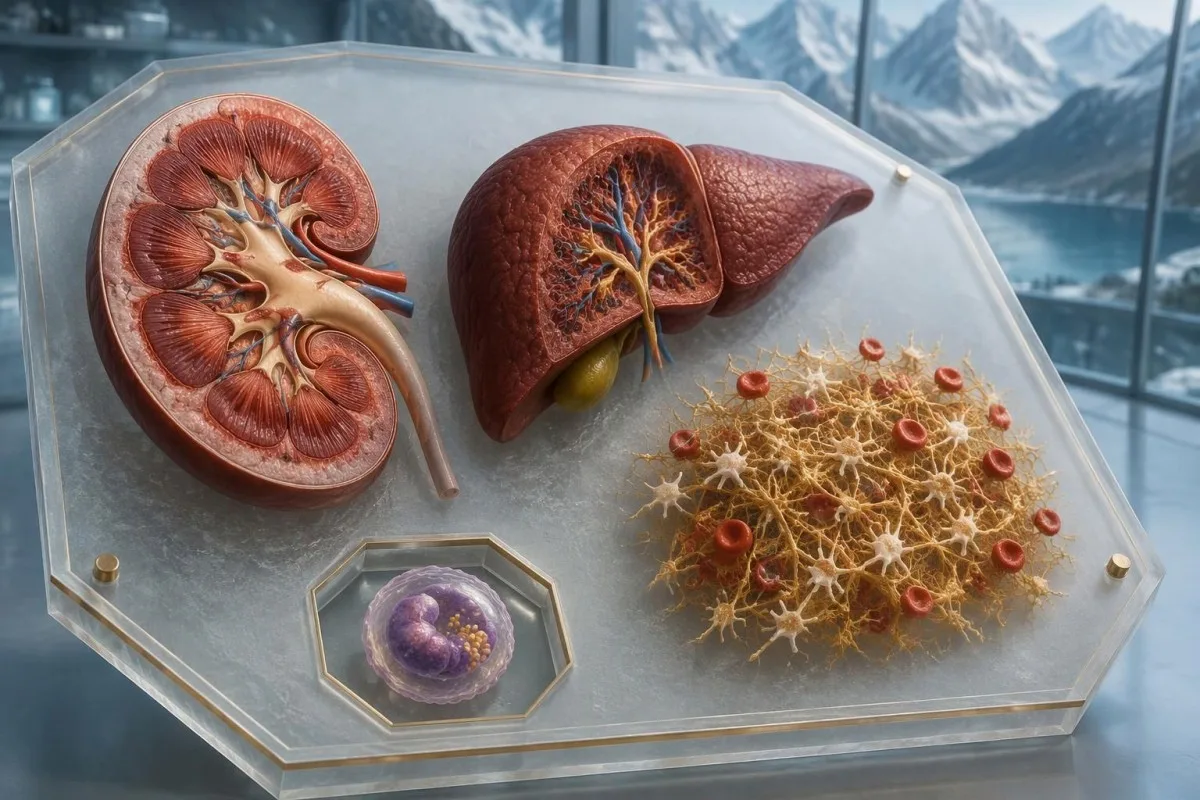
Persistent fever beyond about 48 hours should prompt review of the diagnosis, medication delivery, and possible coinfections. The person may not be absorbing oral treatment because of vomiting, may have an additional illness such as babesiosis, or may have developed a complication; the interval is a practical reassessment point rather than an absolute recovery deadline.
Severe anaplasmosis can involve respiratory failure, kidney injury, or coagulation abnormalities. Falling platelets accompanied by rising creatinine, prolonged clotting times, or new bleeding should not be dismissed as a routine CBC fluctuation; disseminated coagulation laboratory patterns explains why 2 or more changing systems can signal a problem beyond an isolated low count.
Clotting tests assess complications rather than confirming Anaplasma itself. For example, an INR of 1.8 in someone not taking warfarin needs explanation in context, but does not establish anaplasmosis or DIC on its own; our คู่มือการแปลผลการตรวจการแข็งตัวของเลือด helps separate PT, aPTT, D-dimer, and platelet findings without treating them as interchangeable measurements.
ควรตรวจ PCR หรือแอนติบอดีซ้ำหลังการรักษาหรือไม่?
Routine PCR or IgG testing is generally not needed to prove cure after clinically successful anaplasmosis treatment. A convalescent IgG sample collected 2–10 weeks after the acute sample can document the diagnosis, but persistent antibodies alone do not demonstrate treatment failure and should not trigger repeated antibiotics in a well person.

A persistently positive IgG is not a test-of-cure result. If a person is well after a completed 10–14-day course, an elevated titer may simply reflect immune memory; if symptoms recur, clinicians should reassess the new symptoms and exposure history rather than assume that the old antibody result proves persistent infection.
CBC, creatinine, and liver enzymes may be repeated when they were abnormal or the illness was severe, but there is no universal day-7 retesting schedule for everyone. Kantesti AI can help organize serial results—for example, platelets rising from 82 to 164 × 10^9/L—while การทบทวนแนวโน้มความปลอดภัยของยา explains why recovery patterns still require clinical context.
Antibiotic prophylaxis after a tick bite is not recommended specifically to prevent anaplasmosis. After an asymptomatic bite, monitor for fever or other illness over the following 2 weeks and obtain medical advice if symptoms appear; a separate Lyme prophylaxis decision, when indicated, should not be mistaken for an Anaplasma prevention protocol.
จะจัดการรายงานผลที่สับสนอย่างปลอดภัยได้อย่างไร?
The safest report review separates organism detection, antibody evidence, supportive blood findings, and clinical timing into 4 distinct questions. Record the assay target, specimen type, result format, collection date, symptom-onset date, and antibiotic start; missing context should remain explicitly unknown rather than being filled in by an AI explanation.

คันเตสตีเป็น บริการตีความผลการทดสอบของ AI that can explain uploaded laboratory reports and help readers identify questions for their clinician. In a hypothetical 2-report review, our AI should distinguish 'PCR not detected after treatment' from 'paired IgG rise consistent with recent infection,' rather than flattening both statements into a single positive-or-negative label.
An upload is not a substitute for urgent assessment. A photo showing platelets of 74 × 10^9/L cannot reveal whether the person is confused, dehydrated, pregnant, or short of breath; our เทคโนโลยีการตีความผลโดย AI ของเรา describes the analytical workflow, but clinical observations and prescribing decisions remain outside what the report alone can establish.
Before sharing 2 samples, check that both belong to the same person and remove identifiers if they are not needed for your purpose. Kantesti does not perform Anaplasma PCR, validate specimen handling, or confirm that an uploaded titer used the same laboratory method; retain the original PDF and ask the laboratory to resolve unclear assay comments or mismatched result units.
หลักฐานใดควรใช้ประกอบการตัดสินใจในขั้นต่อไป?
Anaplasmosis testing decisions should follow condition-specific guidance and diagnostic research, not general blood-test publications. The 2016 MMWR guideline, the 2013 PCR comparison, and the 2015 clinical review support the distinction between early direct detection, later antibody confirmation, and treatment based on clinical suspicion rather than a single laboratory result.

Bring 3 questions to the clinical review: was PCR collected early enough, is paired IgG needed, and do other tick-borne targets require separate testing? If the first specimen followed several doxycycline doses, say so; if the report is a single low-positive IgG, ask what evidence supports current illness before assuming that another antibiotic course is required.
At Kantesti, we distinguish externally published medical evidence from our own educational resources. Our มาตรฐานเนื้อหาทางการแพทย์ explain that distinction; the 2 Figshare publications listed below are supplementary general laboratory and digestive-health guides, not studies establishing Anaplasma assay accuracy, treatment efficacy, or diagnostic thresholds.
The general hematology guide can help explain LDH and reticulocyte results when anemia raises a separate concern such as hemolysis. Use the hematology marker background guide for that limited purpose, not to interpret Anaplasma PCR; a 4-fold IgG rise, a positive organism-specific PCR, and the patient's clinical course each provide different kinds of evidence.
คำถามที่พบบ่อย
ผลตรวจ PCR สำหรับ Anaplasma เป็นบวกได้หรือไม่ เมื่อผลตรวจแอนติบอดีเป็นลบ?
ผล PCR สำหรับ Anaplasma อาจให้ผลบวกในขณะที่แอนติบอดี IgG ยังให้ผลลบในช่วงสัปดาห์แรกของการเจ็บป่วย เนื่องจากอาจตรวจพบดีเอ็นเอของแบคทีเรียได้ก่อนที่ร่างกายจะสร้างแอนติบอดี รูปแบบผลตรวจเช่นนี้อาจสนับสนุนการวินิจฉัยโรคอะนาพลาสโมซิสที่กำลังเกิดขึ้น มากกว่าจะบ่งชี้ว่าห้องปฏิบัติการทำผิดพลาด สามารถเปรียบเทียบตัวอย่างเลือดตรวจ IgG ในระยะเฉียบพลันกับตัวอย่างระยะพักฟื้นที่เก็บหลังจากนั้น 2–10 สัปดาห์ ไม่ควรชะลอการรักษาระหว่างรอให้แอนติบอดีเปลี่ยนเป็นผลบวก เมื่อสงสัยทางคลินิกว่าเป็นโรคนี้.
ผลตรวจ Anaplasma IgG เป็นบวก หมายความว่าฉันต้องใช้ยาปฏิชีวนะหรือไม่?
ผลตรวจ Anaplasma IgG เป็นบวกเพียงครั้งเดียวไม่ได้หมายความว่าจำเป็นต้องใช้ยาปฏิชีวนะโดยอัตโนมัติ เพราะแอนติบอดีอาจบ่งชี้ถึงการสัมผัสเชื้อในอดีตหรือการเกิดปฏิกิริยาข้าม CDC ถือว่าไตเตอร์ตั้งแต่ 1:128 ขึ้นไปในการตรวจเพียงครั้งเดียวเป็นหลักฐานสนับสนุน แต่ไม่ใช่หลักฐานยืนยันการติดเชื้อครั้งใหม่อย่างแน่ชัด แอนติบอดีอาจยังคงสูงอยู่เป็นเวลาหลายเดือน โดยมีรายงานว่าพบไตเตอร์สูงได้นานถึง 4 ปีหลังจากป่วย แพทย์พิจารณาการรักษาจากอาการในปัจจุบัน ประวัติการสัมผัสเชื้อ ผล PCR และผลตรวจแอนติบอดีแบบจับคู่ มากกว่าพิจารณาจากการที่ IgG ยังคงอยู่เพียงอย่างเดียว.
ด็อกซีไซคลินใช้เวลานานแค่ไหนจึงทำให้ผล PCR ของเชื้อแอนาพลาสมาเป็นลบได้?
Anaplasma PCR sensitivity can decrease within 48 hours of appropriate antibiotic treatment, according to CDC guidance. That does not mean every person's PCR becomes negative at exactly 48 hours, because assay performance and circulating organism levels differ. A negative PCR collected after treatment is therefore less reassuring than a well-timed pretreatment result. Record the first doxycycline dose and specimen collection time so the clinician can interpret the result correctly.
การเพิ่มขึ้นของแอนติบอดีต่อ Anaplasma สี่เท่าหมายถึงอะไร?
A rise in Anaplasma IgG titer from 1:64 to 1:256 is fourfold, while a rise from 1:128 to 1:256 is only twofold. Paired testing generally compares an acute specimen from the first 2 weeks of illness with a convalescent specimen collected 2–10 weeks later. The comparison should use compatible methods, ideally the same laboratory's IgG indirect fluorescent antibody assay. An antibody screen index cannot be directly converted into a dilution titer for this calculation.
ฉันเป็นโรคแอนาพลาสโมซิสได้หรือไม่ หากผล PCR และ IgG เป็นลบทั้งคู่?
โรคอะนาพลาสโมซิสอาจยังคงเป็นไปได้แม้ผล PCR และ IgG จะเป็นลบทั้งคู่ โดยเฉพาะหากเก็บตัวอย่างตรวจ IgG ในสัปดาห์ที่ 1 และเก็บตัวอย่างตรวจ PCR หลังได้รับยาปฏิชีวนะที่เหมาะสมแล้ว อาการไข้ ประวัติสัมผัสเห็บที่เป็นไปได้ เกล็ดเลือดต่ำ เม็ดเลือดขาวต่ำ และเอนไซม์ตับสูง อาจยังทำให้มีข้อสงสัยทางคลินิกแม้ผลตรวจเป็นลบ แพทย์อาจนัดเก็บตัวอย่างเลือดระยะพักฟื้นเพื่อตรวจ IgG หลังเก็บตัวอย่างระยะเฉียบพลัน 2–10 สัปดาห์ และประเมินการวินิจฉัยอื่นที่เป็นไปได้ ไม่ควรปล่อยโรคอะนาพลาสโมซิสที่สงสัยไว้โดยไม่รักษา เพียงเพราะผลตรวจในระยะแรกเป็นลบ.
อาการควรดีขึ้นเร็วแค่ไหน และฉันจำเป็นต้องตรวจยืนยันว่าหายแล้วหรือไม่?
ไข้จากโรคแอนาพลาสโมซิสมักดีขึ้นภายใน 24–48 ชั่วโมงหลังได้รับด็อกซีไซคลิน แม้ผู้ป่วยที่มีอาการรุนแรงอาจใช้เวลานานกว่านั้น หากยังมีไข้ต่อเนื่อง ควรประเมินซ้ำว่ามีปัญหาในการดูดซึมยาหรือไม่ เป็นการวินิจฉัยอื่น มีการติดเชื้อร่วม หรือเกิดภาวะแทรกซ้อนหรือไม่ โดยทั่วไปไม่จำเป็นต้องตรวจ PCR หรือแอนติบอดีเป็นประจำเพื่อยืนยันว่าหายแล้วหลังรักษาได้ผล การตรวจ IgG แบบจับคู่ใช้เป็นหลักเพื่อยืนยันการติดเชื้อเมื่อไม่นานมานี้ หากหายใจลำบาก สับสน มีเลือดออกใหม่ หรือปัสสาวะลดลงอย่างมาก ควรเข้ารับการประเมินอย่างเร่งด่วนไม่ว่าผลตรวจทางห้องปฏิบัติการจะเป็นอย่างไร.
อ่านผลตรวจเลือดอย่างไร
อัปโหลดรายงานผลตรวจของคุณ แล้ว AI ของ Kantesti จะอธิบายตัวบ่งชี้ทางชีวภาพแต่ละรายการด้วยภาษาที่เข้าใจง่ายภายในไม่กี่วินาที มีผู้ใช้ทั่วโลกมากกว่า 2 ล้านคน.
เอกสารอ้างอิง
- ไคลน์, ที., มิตเชลล์, เอส., & เวเบอร์, เอช. (2026). คู่มือกรุ๊ปเลือด B ลบ การตรวจเลือด LDH และการนับเรติคูโลไซต์. Kantesti AI การวิจัยทางการแพทย์. โดอิ
- ไคลน์, ที., มิตเชลล์, เอส., & เวเบอร์, เอช. (2026). ท้องเสียหลังอดอาหาร จุดสีดำในอุจจาระ และคู่มือระบบทางเดินอาหาร ปี 2026. Kantesti AI การวิจัยทางการแพทย์. โดอิ
- Biggs HM และคณะ (2016). การวินิจฉัยและการรักษาโรคริกเก็ตเซียที่ติดต่อจากเห็บ: ไข้ด่างร็อกกีเมาน์เทนและโรคริกเก็ตเซียอื่น ๆ ในกลุ่มไข้ด่าง โรคเออร์ลิชิโอซิส และโรคอะนาพลาสโมซิส — สหรัฐอเมริกา. MMWR Recommendations and Reports. โดอิ พับเมด
- Schotthoefer AM et al. (2013). Comparison of a real-time PCR method with serology and blood smear analysis for diagnosis of human anaplasmosis: importance of infection time course for optimal test utilization. Journal of Clinical Microbiology. โดอิ
- Bakken JS and Dumler JS (2015). Human granulocytic anaplasmosis. Infectious Disease Clinics of North America.
- 2 ล้าน+การตรวจที่วิเคราะห์
- 127+ประเทศ
- 100+ภาษา
เกี่ยวกับทีมแพทย์


สัญญาณความน่าเชื่อถือ E-E-A-T
ประสบการณ์
การทบทวนเชิงคลินิกโดยแพทย์ที่นำโดยกระบวนการตีความผลตรวจในห้องแล็บ.
ความเชี่ยวชาญ
โฟกัสด้านเวชศาสตร์ห้องปฏิบัติการเกี่ยวกับพฤติกรรมของไบโอมาร์กเกอร์ในบริบททางคลินิก.
อำนาจ
ทบทวนทางการแพทย์โดย นพ. Thomas Klein พร้อมผลงานจาก นพ. Sarah Mitchell และศาสตราจารย์ ดร. Hans Weber.
ความน่าเชื่อถือ
การตีความที่อิงหลักฐาน พร้อมเส้นทางการติดตามที่ชัดเจนเพื่อลดความตื่นตระหนก.






ข้อจำกัดความรับผิดชอบทางการแพทย์
บทความนี้จัดทำเพื่อวัตถุประสงค์ด้านการศึกษาเท่านั้น และไม่ถือเป็นคำแนะนำทางการแพทย์ โปรดปรึกษาผู้ให้บริการด้านสุขภาพที่มีคุณสมบัติเหมาะสมเสมอสำหรับการตัดสินใจด้านการวินิจฉัยและการรักษา.
เผยแพร่แล้ว · ติดต่อทีมบรรณาธิการ
เผยแพร่โดย Kantesti Ltd จดทะเบียนในอังกฤษและเวลส์ เลขทะเบียนบริษัท. 17090423, ลอนดอน สหราชอาณาจักร.
