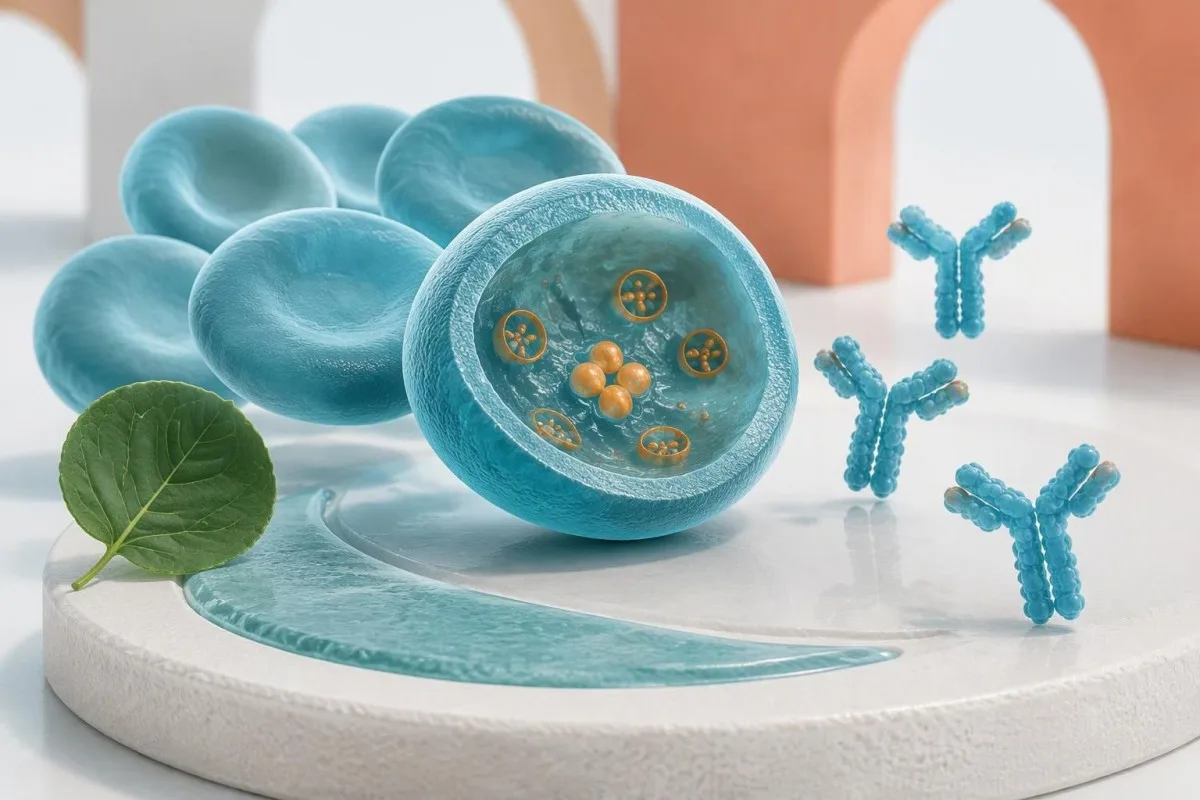
ผลตรวจแอนติบอดีเป็นบวกอาจสะท้อนการเคยสัมผัสเชื้อ Babesia มาก่อน แทนที่จะหมายถึงกำลังป่วยอยู่ในขณะนี้ โดยทั่วไปหลักฐานที่ใช้ตัดสินมาจากการตรวจหาปรสิต อาการ และความเสี่ยงเฉพาะบุคคลของคุณ.


- ผล Babesia IgG เป็นบวก ไม่ได้ยืนยันว่ามีการติดเชื้ออยู่ในขณะนี้ แอนติบอดีอาจยังตรวจพบได้เป็นเวลานานกว่า 1 ปีหลังการติดเชื้อหายแล้ว.
- การตรวจ Babesia PCR ตรวจหาสารพันธุกรรม DNA ของปรสิต และมีประโยชน์เป็นพิเศษเมื่อระดับปรสิตต่ำเกินกว่าที่การตรวจสเมียร์เลือดจะระบุได้อย่างเชื่อถือ.
- ภาวะปรสิตในเลือดจากการตรวจสเมียร์ วัดสัดส่วนของเม็ดเลือดแดงที่มีปรสิต โดย 1% หมายถึงมีเซลล์ติดเชื้อประมาณ 1 เซลล์ต่อเม็ดเลือดแดง 100 เซลล์ที่ตรวจ.
- ไตเตอร์ IgG ที่ 1:1024 หรือสูงกว่า อาจบ่งชี้การติดเชื้อ Babesia microti เมื่อไม่นานมานี้หรือที่กำลังดำเนินอยู่ แต่ใช้แทนการยืนยันด้วย PCR หรือสเมียร์ไม่ได้.
- ระดับแอนติบอดีเพิ่มขึ้น 4 เท่า ระหว่างตัวอย่างที่เก็บตามช่วงเวลาที่เหมาะสม สนับสนุนว่ามีการติดเชื้อเมื่อไม่นานมานี้ ผลบวกเพียงครั้งเดียวไม่สามารถใช้เปรียบเทียบดังกล่าวได้.
- อาการฉุกเฉิน รวมถึงสับสน หายใจไม่อิ่มขณะพัก เป็นลม เจ็บหน้าอก หรือปริมาณปัสสาวะลดลงอย่างมาก โดยไม่คำนึงถึงระดับไตเตอร์ของแอนติบอดี.
- มีไข้ตั้งแต่ 38°C ขึ้นไปโดยไม่มีม้าม ควรติดต่อแพทย์ทันทีและเข้ารับการประเมินอย่างเร่งด่วน แม้การตรวจ Babesia ยังไม่เสร็จสมบูรณ์.
- ระยะเวลาการรักษา โดยปกติใช้เวลา 7–10 วันสำหรับโรคที่มีอาการแต่ไม่มีภาวะแทรกซ้อนในผู้ป่วยที่มีภูมิคุ้มกันปกติ แต่ผู้ป่วยบางรายที่มีภาวะภูมิคุ้มกันบกพร่องอย่างมากจำเป็นต้องรักษาอย่างน้อย 6 สัปดาห์.
- การตรวจพบแอนติบอดีอย่างต่อเนื่องหลังการรักษา ไม่ใช่การตรวจเพื่อยืนยันว่าหายแล้ว และไม่ใช่เหตุผลเพียงพอในตัวเองที่จะให้ยาปฏิชีวนะซ้ำอีกชุด.
ผลตรวจ Babesia เป็นบวกหมายถึงติดเชื้ออยู่หรือไม่?
การมีแอนติบอดีต่อ Babesia เป็นบวกเพียงอย่างเดียวไม่ได้ยืนยันว่ามีการติดเชื้อที่กำลังดำเนินอยู่. IgG อาจยังให้ผลบวกได้นานกว่า 1 ปีหลังการติดเชื้อหายแล้ว การตรวจ Babesia PCR หรือการตรวจสเมียร์เลือด เมื่อตีความร่วมกับอาการ จะช่วยระบุว่าขณะนี้มีปรสิตอยู่หรือไม่ การมีแอนติบอดีอย่างต่อเนื่องเพียงอย่างเดียวไม่ได้บ่งชี้ว่าการรักษาล้มเหลว.
คำว่าเป็นบวกอธิบายผลตรวจ ไม่ได้หมายความว่าคุณกำลังมีปัญหาสุขภาพในขณะนี้เสมอไป. การตรวจแอนติบอดีตรวจพบการตอบสนองทางภูมิคุ้มกันของคุณ ขณะที่ PCR ตรวจหา DNA ของปรสิต และการตรวจด้วยกล้องจุลทรรศน์มองหาปรสิตภายในเม็ดเลือดแดง วิธีทั้ง 3 นี้ให้หลักฐานคนละประเภท ไม่ใช่การวินิจฉัยที่ใช้แทนกันได้.
Kantesti คือเครื่องวิเคราะห์ผลตรวจเลือดด้วย AI ที่ช่วยอธิบายว่าเหตุใดผลตรวจแอนติบอดีเป็นบวก 1 รายการจึงต้องพิจารณาบริบททางคลินิก. ผมชื่อ Thomas Klein เป็น Chief Medical Officer ของ Kantesti แนวทางของผมคือแยกหลักฐานการสัมผัสเชื้อออกจากหลักฐานของภาวะมีปรสิตในเลือดในปัจจุบัน ก่อนพูดคุยว่าผลตรวจอาจมีความหมายอย่างไรต่อการรักษา.
ผู้ที่ไม่มีอาการและผู้ที่มีไข้สามารถมีค่าไตเตอร์ IgG เท่ากัน แต่จำเป็นต้องดำเนินการขั้นต่อไปต่างกัน. ในการเปรียบเทียบเพื่อประกอบความเข้าใจ ผู้ที่สุขภาพแข็งแรงอายุ 45 ปีและมีผลบวกเก่ามาก่อนอาจต้องตรวจสอบให้ชัดเจน ขณะที่ผู้ป่วยที่มีไข้ ฮีโมโกลบินลดลง และเพิ่งสัมผัสเห็บ จำเป็นต้องได้รับการตรวจโดยตรงโดยเร็ว.
ขั้นตอนแรกที่ควรทำคือระบุให้แน่ชัดว่าผลใดเป็นบวก. นำรายงานฉบับเต็มมาด้วย รวมถึงชื่อสิ่งมีชีวิต วิธีตรวจ วันที่เก็บตัวอย่าง และช่วงค่าอ้างอิง คำอธิบายของเราเกี่ยวกับ ผลการตรวจแอนติบอดีเป็นบวก แยกคำถามหลัก 2 ข้อ ได้แก่ การจดจำของระบบภูมิคุ้มกันและโรคที่กำลังดำเนินอยู่ ขณะที่ ภาพรวมองค์กรของเรา อธิบายบทบาทของเรา.
ผลตรวจ Babesia IgG เป็นบวกวัดอะไรได้จริง?
IgG ที่เป็นบวกต่อ Babesia วัดการจดจำแอนติเจนของ Babesia โดยระบบภูมิคุ้มกัน ไม่ใช่จำนวนปรสิตที่ยังมีชีวิต. แอนติบอดีอาจคงอยู่ได้นานกว่า 1 ปี ดังนั้นผลบวกอาจสะท้อนถึงการติดเชื้อในอดีต การติดเชื้อเมื่อไม่นานมานี้ หรือบางครั้งอาจเป็นปฏิกิริยาที่ทำให้เข้าใจผิดและจำเป็นต้องตรวจสอบให้ชัดเจน.
การคงอยู่ของแอนติบอดีเป็นคุณสมบัติปกติของความทรงจำทางภูมิคุ้มกัน. เซลล์สร้างแอนติบอดีที่มีอายุยืนยาวสามารถสร้าง IgG ต่อไปได้หลังจากตรวจไม่พบปรสิตแล้ว แนวทางการรักษาโรคบาบีซิโอซิสของ IDSA เตือนโดยเฉพาะว่าแอนติบอดีอาจคงอยู่เป็นเวลาหนึ่งปีหรือมากกว่านั้น และแนะนำให้ยืนยันด้วยการตรวจสเมียร์หรือ PCR ก่อนรักษาผู้ป่วยที่มีผลแอนติบอดีเป็นบวก (Krause et al., 2021).
IgM is not an automatic proof of new babesiosis. Although IgM can support a recent immune response, false-positive reactions and persistence complicate interpretation; 1 isolated IgM result should not override a negative diagnostic evaluation or become the sole reason for a prolonged treatment course.
A negative antibody test does not reliably exclude very early infection. If testing occurs during the first days of illness, the antibody response may not yet be detectable; this is why clinicians may order 2 direct tests—PCR and a smear—instead of waiting for serology to become positive.
The meaning of IgG is organism-specific. A Babesia antibody result should not be interpreted as proof of protective immunity or as a vaccination-style target; our discussion of CMV IgG patterns illustrates why 2 infections can produce similar-looking antibody reports yet require different clinical decisions.
ควรแปลผลไตเตอร์แอนติบอดีต่อ Babesia อย่างไร?
Babesia antibody test interpretation depends on the assay, species, and timing—not a universal positive cutoff. For Babesia microti, an IgG titer of 1:1024 or higher can suggest recent or active infection, but even a high titer does not replace direct parasite testing.
A titer reports how far a sample can be diluted while remaining reactive. A result of 1:256 means reactivity remains detectable at that dilution under the laboratory’s method; it does not mean 256 parasites, 256 days of illness, or a particular percentage of affected red blood cells.
A 4-fold rise is more informative than a small fluctuation. For example, a change from 1:64 to 1:256 in appropriately timed paired samples supports recent infection, whereas 1:128 to 1:256 is only a 2-fold change and may reflect biological or assay variation.
Comparing different laboratories can create a false trend. If a result changes from 1:128 to 1:256 after switching methods, the apparent increase may not represent a genuine immune change; paired testing is easiest to interpret when the same laboratory, species antigen, and assay are used.
High titers are supporting evidence, not a severity scale. The IDSA guideline describes a Babesia microti IgG titer of at least 1:1024 as suggestive of recent or active infection, while still prioritizing smear or PCR confirmation (Krause et al., 2021); การตรวจแอนติบอดีต่อไข้คิว shows why infectious antibody cutoffs cannot be transferred between organisms.
การตรวจ Babesia PCR ยืนยันอะไรได้บ้าง?
A Babesia PCR test detects parasite DNA in a laboratory sample and can confirm babesiosis when symptoms and exposure fit. PCR is especially useful at low parasite levels, but 1 positive result after treatment does not necessarily prove that viable parasites are causing ongoing illness.
PCR often detects lower parasite burdens than routine microscopy. A patient can therefore have positive PCR and a negative smear without either result being an error; the 2 tests have different detection limits, and a negative smear alone cannot settle a strongly suspected low-level infection.
A negative PCR only addresses the organisms covered by that assay. A Babesia microti-specific assay may not detect Babesia duncani, Babesia divergens, or Babesia venatorum; these 3 examples matter when travel, geography, transfusion exposure, or immune status raises suspicion beyond the species named on the report.
Collection timing can change the result. Treatment before sampling, a very low parasite burden, or specimen problems can reduce detection; when symptoms remain convincing, the clinician may request a repeat sample and expert microscopy rather than treating 1 negative PCR as an absolute exclusion.
PCR positivity is not the same as a parasite viability test. DNA may remain detectable after clinical improvement, particularly with sensitive assays, so repeat testing needs a defined clinical purpose; our guide to ระยะเวลาที่เหมาะสมในการตรวจ PCR และผลลบ explains the general timing problem without implying that 2 different infections share identical detection windows.
การตรวจสเมียร์เลือดระบุปรสิต Babesia ได้อย่างไร?
A blood smear can confirm Babesia by showing parasites inside red blood cells and can quantify parasitemia. Parasitemia of 1% means approximately 1 affected red blood cell per 100 examined; that percentage helps assess burden, but symptoms and organ function still determine urgency.
Babesia often appears as ring forms within red blood cells. The characteristic 4-part Maltese cross tetrad is strongly suggestive when present, but it is uncommon enough that its absence cannot rule out babesiosis; an experienced microscopist must consider the complete pattern rather than hunt for one famous image.
Smear examination requires an explicit clinical request when suspicion is high. An automated complete blood count does not substitute for a manual parasite search, and the IDSA guideline recommends examining at least 200–300 oil-immersion fields before considering a smear negative when parasites are sparse.
A small parasitemia percentage can coexist with significant illness. Severe anemia, kidney dysfunction, respiratory compromise, or immune suppression can make a result below 10% clinically serious; conversely, the percentage alone does not describe blood pressure, oxygenation, or the speed at which hemoglobin is falling.
Malaria and Babesia can look similar on an initial smear. Travel history, parasite morphology, and molecular testing help separate them, and fever after travel should never be dismissed because a Babesia antibody test is positive; our travel-fever smear guide explains why these 2 possibilities sometimes need parallel evaluation.
หากผล IgG, PCR และสเมียร์ไม่สอดคล้องกันจะทำอย่างไร?
Disagreeing Babesia test results usually reflect differences in timing, sensitivity, or what each method measures. Positive IgG with negative PCR and smear is different from positive PCR with a negative smear; interpreting all 3 results together prevents both missed infection and unnecessary treatment.
IgG-positive, PCR-negative, smear-negative results often favor past exposure when the patient is well. They do not absolutely exclude infection under every circumstance, but 1 isolated antibody result is insufficient evidence for active babesiosis; current fever, immune suppression, assay coverage, and prior treatment determine whether more testing is reasonable.
PCR-positive, smear-negative results can indicate low-level parasitemia. In an untreated symptomatic patient, that combination can support diagnosis; after treatment in a clinically recovered immunocompetent patient, the same 2-result pattern may not warrant further medication, because molecular detection can outlast symptoms.
Smear-positive, PCR-negative results deserve laboratory clarification. Possible explanations include a species not covered by PCR, a specimen problem, or misidentified cellular material; the next step may be expert slide review and broader molecular testing rather than choosing whichever of the 2 reports seems more reassuring.
Kantesti helps organize results, but cannot independently certify parasite identification from an uploaded report. The distinction between a yes/no PCR and a percentage parasitemia is explained in our คู่มือการประเมินเชิงคุณภาพเทียบกับเชิงปริมาณ; ทีม ข้อมูลระเบียบวิธีทางคลินิก explains why 2 contradictory results require clinical and laboratory oversight.
ผลตรวจเลือดอื่นใดบ้างที่สนับสนุนข้อสงสัยว่าเป็นโรคบาบีซิโอซิส?
Babesiosis often produces anemia, low platelets, and laboratory evidence of red blood cell breakdown. No single CBC or chemistry value confirms Babesia, but a falling hemoglobin combined with rising LDH and indirect bilirubin can make a positive antibody result more clinically concerning than IgG alone.
The hemoglobin trend matters more than one unfamiliar flag. In an illustrative case, a decline from 13.5 to 9.0 g/dL over several days, accompanied by fever and new thrombocytopenia, warrants prompt evaluation for hemolysis and other serious causes; the antibody titer cannot explain that deterioration on its own.
LDH is sensitive to cellular injury but not specific to Babesia. An illustrative LDH of 600 U/L may support hemolysis if the laboratory upper limit is 250 U/L, yet liver, muscle, and specimen-handling problems can also raise it; our LDH result explanation separates these possibilities.
Low haptoglobin supports hemolysis only in context. A result of 10 mg/dL may be below a laboratory’s range, but liver function and baseline variation affect interpretation; our guide to สาเหตุของฮัปโตโกลบินต่ำ explains why 2 patients with the same number may have different underlying problems.
Kidney function, bilirubin, and oxygenation help assess severity rather than establish species. A creatinine increase from 0.8 to 1.6 mg/dL over a short interval deserves urgent attention even with modest parasitemia, and a hemolyzed laboratory specimen must not be confused with hemolysis occurring inside the patient.
อาการใดที่ต้องได้รับการประเมินอย่างเร่งด่วนหรือฉุกเฉิน?
Suspected babesiosis needs emergency assessment when there is confusion, fainting, chest pain, breathlessness at rest, or markedly reduced urine output. A person without a spleen who develops a fever of 38°C หรือสูงกว่า should seek urgent assessment rather than wait for antibody or PCR confirmation.
New jaundice or dark urine with fever needs same-day medical assessment. These findings can signal hemolysis, liver disease, or another urgent condition rather than harmless dehydration; having 1 positive Babesia IgG result does not identify the cause, so clinicians usually assess the broader pattern.
Dark urine is a clue, not a home diagnostic test. Tea-colored urine with weakness and a falling hemoglobin is more concerning than an isolated color change after reduced fluid intake; our สัญญาณเตือนปัสสาวะสีเข้ม explains why the combination of 2 or more new symptoms changes the response.
Do not use the parasite percentage as permission to stay home when you feel seriously unwell. Respiratory difficulty, confusion, or poor circulation can require hospital care even below 10% parasitemia; if you are breathless at rest or fainting, call your local emergency number rather than arranging routine repeat testing.
Urgent treatment decisions may precede the final PCR report. In severe illness, clinicians can collect diagnostic samples and begin management based on the clinical picture and smear findings; tell the team about spleen removal, immune-suppressing medicines, recent transfusion, and symptom onset during the first assessment.
เหตุใดผู้ที่ไม่มีม้ามหรือมีภูมิคุ้มกันอ่อนแอจึงมีความเสี่ยงสูงกว่า?
People without a functioning spleen and those with substantial immune suppression have greater risks of severe or persistent babesiosis. The spleen helps remove affected red blood cells, while impaired antibody responses can make 1 negative serology result less reassuring than it would be in an otherwise healthy patient.
Spleen removal changes the safety threshold for fever. After splenectomy, a temperature of 38°C or higher warrants urgent assessment for serious infection, including bacterial causes unrelated to Babesia; do not assume the fever is explained by an old antibody result, and follow any individualized emergency plan already provided.
B-cell-depleting treatment can complicate both diagnosis and recovery. Rituximab, certain blood cancers, transplantation, and other major immune-suppressing conditions can increase persistence or relapse risk; documenting the last treatment date and current medicines may be more useful than ordering a second antibody titer.
Selected highly immunocompromised patients may need at least 6 weeks of treatment. The prolonged approach includes at least the final 2 weeks with no parasites detected on smears, according to evidence discussed in the IDSA guideline and the persistent-babesiosis series by Krause et al. (2008).
Kantesti can help organize the relevant reports, but immune risk must come from your history as well as laboratory values. A total IgG measurement and a Babesia-specific IgG result answer 2 different questions; our frequent-infection testing guide explains why normal routine blood counts do not rule out clinically significant immune suppression.
การมีแอนติบอดีต่อ Babesia คงอยู่นานหมายความว่าการรักษาล้มเหลวหรือไม่?
Persistent Babesia antibodies do not, by themselves, indicate treatment failure. IgG can remain detectable for more than 1 ปี, and a stable or slowly declining titer is not a reliable test of cure; recovery is assessed through symptoms and, when indicated, direct parasite testing.
Repeated antibody testing can create anxiety without changing management. A patient may feel well after a standard 7–10-day course and still receive a positive IgG result months later; that finding alone is not a reason to restart treatment or continue medication until the antibody becomes negative.
PCR can also stay positive after symptoms resolve. The IDSA guideline notes that molecular positivity can persist for months after standard treatment in immunocompetent patients, which is why routine ongoing PCR monitoring after symptom resolution is generally discouraged in this group (Krause et al., 2021).
Persistent fatigue does not automatically equal persistent parasitemia. A hemoglobin that is recovering from 8.5 to 10.5 g/dL can still leave someone tired, and sleep disruption or another diagnosis may contribute; recurrent fever, new hemolysis, or worsening organ function deserves a fresh assessment rather than an assumption.
Hemolysis after parasite clearance may occasionally have another mechanism. Delayed autoimmune hemolytic anemia has been described after babesiosis, particularly in people without a spleen; a direct Coombs result can help investigate immune-mediated red cell destruction, but neither 1 positive Coombs test nor persistent IgG independently proves Babesia relapse.
จำเป็นต้องรักษาเมื่อใด และติดตามการฟื้นตัวอย่างไร?
Treatment is generally directed at confirmed symptomatic babesiosis, not isolated antibody positivity. Uncomplicated illness in an immunocompetent patient is usually treated for 7–10 วัน; severe disease, persistent parasitemia, and major immune suppression require individualized specialist management and a different follow-up plan.
Atovaquone plus azithromycin is the preferred regimen for many patients with babesiosis. Clindamycin plus quinine is an alternative in selected circumstances, but drug choice depends on severity, tolerability, interactions, and patient factors; the 7–10-day standard course must not be extended solely because an antibody remains positive.
An asymptomatic positive PCR or smear is different from isolated positive IgG. IDSA guidance generally does not recommend treatment for asymptomatic patients unless parasites continue to be seen on thin smears for more than 1 month; immune suppression or other high-risk circumstances still require an individualized specialist decision.
Exchange transfusion is considered for selected severe cases, not triggered by a titer. Parasitemia above 10%, severe hemolytic anemia, or major pulmonary, kidney, or liver compromise can prompt discussion with infectious-disease and transfusion specialists; the decision incorporates the whole clinical picture and is not an automatic numerical rule.
Monitoring should have a purpose and a stopping point. Smears are followed during treatment in immunocompetent patients, but usually not after symptoms resolve; highly immunocompromised patients need closer surveillance, and our คู่มือไทม์ไลน์การตรวจเลือด helps separate 2 issues: biological recovery and the slower disappearance of laboratory signals.
การสัมผัสเชื้อ ภูมิศาสตร์ และชนิดของเชื้อเปลี่ยนการแปลผลอย่างไร?
Exposure history changes how plausible a positive Babesia result is and which confirmatory assay is appropriate. Babesia can be transmitted through ticks and transfusion, and more than 1 species causes human disease; a Babesia microti-only test should not be treated as a universal Babesia screen.
No remembered tick bite does not exclude babesiosis. Small ticks can go unnoticed, and transfusion provides a separate transmission route; the review by Vannier and Krause (2012) describes both routes, so clinicians should ask about transfusion as well as outdoor exposure when evaluating 1 unexplained febrile illness.
European and North American testing needs are not identical. Babesia microti predominates in many recognized United States cases, whereas Babesia divergens and Babesia venatorum are relevant in Europe; these 3 examples explain a difference in assay coverage, not a different principle for distinguishing antibodies from active parasitemia.
Symptoms often appear weeks after exposure rather than immediately after a tick is removed. Reconstructing the previous 1–2 months of outdoor activities, travel, and transfusions can therefore be more helpful than focusing only on yesterday; transfusion-associated timing can be longer, so provide dates rather than a guessed source.
Tick-related conditions do not share the same diagnostic pathway. Tick bites can also precede Lyme disease, anaplasmosis, or alpha-gal allergy, but 1 diagnosis does not establish the others; prevention includes appropriate repellents, clothing protection, and tick checks, while unexplained symptoms still need condition-specific testing.
คุณควรนำอะไรไปประกอบการทบทวนผลตรวจ Babesia?
A useful Babesia review needs the complete report, symptom dates, exposure history, and immune-risk information. Bring all 3 test categories if available—antibody, PCR, and smear—because a cropped positive flag can hide the species, method, or timing that changes the interpretation.
Record units and result formats exactly. A titer of 1:256, parasitemia of 2%, and a PCR marked detected describe 3 different measurements; copying them into one generic positive-result field removes information the clinician needs, especially when comparing pretreatment and post-treatment samples.
An uploaded image can introduce transcription errors. A faint colon may turn 1:256 into 1256, and a decimal can change 0.2% into 2%; our เช็คลิสต์การถอดความ PDF recommends checking the extracted value against the source before interpreting a trend or acting on an apparent change.
Kantesti is an AI blood test interpretation platform that can place antibody reports beside CBC and chemistry trends. The useful output is a clearer set of questions—not a substitute for parasite microscopy, prescribing, or urgent assessment; our คู่มือเทคโนโลยี AI explains the distinction between interpreting 1 report and establishing a clinical diagnosis.
My review checklist is deliberately short. I, Thomas Klein, would ask: Which species was tested, were direct tests collected before treatment, are symptoms improving, and is there spleen or immune risk? Those 4 questions usually provide more actionable information than repeating an antibody panel without a reason.
แหล่งข้อมูลวิจัยและข้อจำกัดของคู่มือห้องปฏิบัติการที่เกี่ยวข้อง
Babesia management should rest on disease-specific evidence, not unrelated biomarker publications. ณ 15 ตุลาคม 2026, this article draws its diagnostic and follow-up recommendations from the cited IDSA guideline and peer-reviewed Babesia literature; the 2 Zenodo guides below provide background on associated laboratory questions only.
The IDSA 2020 guideline was published in Clinical Infectious Diseases in 2021. Its central distinction remains useful: confirm suspected acute babesiosis with smear or PCR rather than a single antibody result; the 2012 New England Journal of Medicine review provides additional context on transmission, diagnosis, and severe-disease risk.
Kantesti is an AI-powered blood test analysis tool, not a source of independent Babesia treatment-trial evidence. Our background คู่มือการศึกษาเกี่ยวกับธาตุเหล็ก helps explain anemia-related measurements, but iron deficiency and hemolysis are 2 different processes; a low hemoglobin should not prompt iron supplementation without evidence that iron replacement is appropriate.
Coagulation testing may become relevant in severe systemic illness. The related coagulation laboratory guide describes aPTT and other tests, but neither an abnormal aPTT nor a D-dimer result confirms babesiosis; the 2 listed Zenodo deposits are supporting educational material rather than Babesia diagnostic guidelines.
Source labels should not imply a review or indexing status that has not been verified. The publication-search links supplied with the 2 deposits are discovery links, not proof of ResearchGate or Academia.edu hosting; our มาตรฐานเนื้อหาทางการแพทย์ describe the editorial boundaries, including why persistent antibodies must not be presented as treatment failure.
คำถามที่พบบ่อย
ผลตรวจแอนติบอดี IgG ต่อเชื้อ Babesia เป็นบวก หมายความว่าฉันกำลังติดเชื้ออยู่หรือไม่?
ผล Babesia IgG เป็นบวกเพียงอย่างเดียวไม่สามารถยืนยันการติดเชื้อที่กำลังดำเนินอยู่ได้ แอนติบอดีอาจยังตรวจพบได้นานกว่า 1 ปีหลังการติดเชื้อหายแล้ว และผลตรวจเพียงครั้งเดียวไม่สามารถแยกการสัมผัสเชื้อในอดีตออกจากการมีปรสิตในเลือดในปัจจุบันได้ โดยทั่วไปแพทย์จะใช้การตรวจ Babesia PCR หรือการตรวจฟิล์มเลือด ร่วมกับอาการและประวัติการสัมผัสเชื้อ เพื่อยืนยันภาวะบาบีซิโอซิสเฉียบพลันที่สงสัย ไข้ ระดับฮีโมโกลบินที่ลดลง หรือภาวะภูมิคุ้มกันถูกกดอย่างมีนัยสำคัญ ทำให้การประเมินโดยเร็วมีความสำคัญยิ่งขึ้น.
ค่าไตเตอร์ IgG ต่อเชื้อ Babesia ที่ 1:256 หมายความว่าอย่างไร?
ค่า Babesia IgG titer ที่ 1:256 หมายความว่าตัวอย่างยังคงให้ผลตอบสนองที่ระดับการเจือจางดังกล่าวตามการทดสอบของห้องปฏิบัติการ ค่านี้ไม่ได้วัดจำนวนปรสิตหรือความรุนแรงของโรค และสถานะผลบวกขึ้นอยู่กับค่า cut-off อ้างอิงของห้องปฏิบัติการและชนิดของสปีชีส์ การเพิ่มขึ้นจาก 1:64 เป็น 1:256 คือการเพิ่มขึ้น 4 เท่า และอาจสนับสนุนการติดเชื้อเมื่อไม่นานมานี้ได้ หากเก็บตัวอย่างในช่วงเวลาที่เหมาะสมและสามารถเปรียบเทียบกันได้ ผล 1:256 เพียงครั้งเดียวยังคงต้องพิจารณาบริบททางคลินิก และเมื่อสงสัยว่ามีการติดเชื้ออยู่ ควรตรวจหาปรสิตโดยตรง.
ผล PCR สำหรับ Babesia เป็นบวกได้หรือไม่เมื่อผลตรวจสเมียร์เลือดเป็นลบ?
การตรวจ Babesia PCR อาจให้ผลเป็นบวกเมื่อผลตรวจสเมียร์เลือดเป็นลบ เนื่องจาก PCR สามารถตรวจพบ DNA ของปรสิตได้แม้มีปริมาณต่ำกว่าที่การตรวจด้วยกล้องจุลทรรศน์ตามปกติจะตรวจพบได้ ในผู้ป่วยที่มีอาการและยังไม่ได้รับการรักษา ผลตรวจ 2 รายการนี้อาจสอดคล้องกับการติดเชื้อในระดับต่ำ มากกว่าจะเป็นผลตรวจทางห้องปฏิบัติการที่ขัดแย้งกัน หลังการรักษา ผลตรวจระดับโมเลกุลอาจยังเป็นบวกได้แม้อาการทางคลินิกจะหายดีแล้ว ดังนั้นผล PCR ที่เป็นบวกจึงไม่ได้หมายความว่าต้องให้ยาเพิ่มโดยอัตโนมัติ สถานะภูมิคุ้มกัน การกลับมาของอาการ และผลตรวจสเมียร์เป็นตัวกำหนดแผนติดตามผล.
หลังการรักษา แอนติบอดีต่อเชื้อบาบีเซียจะยังคงให้ผลบวกได้นานแค่ไหน?
แอนติบอดีต่อเชื้อ Babesia อาจยังให้ผลบวกได้นานกว่า 1 ปีหลังการติดเชื้อหายแล้ว การคงอยู่ของ IgG ไม่ใช่การตรวจยืนยันการหายจากโรคที่เชื่อถือได้ และไม่ได้บ่งชี้ถึงความล้มเหลวของการรักษาด้วยตัวมันเอง สำหรับผู้ป่วยที่มีภูมิคุ้มกันปกติและอาการหายแล้วหลังได้รับการรักษาตามปกติเป็นเวลา 7–10 วัน การตรวจแอนติบอดีซ้ำเป็นประจำโดยทั่วไปไม่ได้ช่วยประเมินการฟื้นตัว การมีไข้ขึ้นใหม่ ภาวะโลหิตจางที่แย่ลง หรือภาวะภูมิคุ้มกันถูกกดอย่างมาก จำเป็นต้องได้รับการประเมินทางคลินิกแยกต่างหาก.
ฉันจำเป็นต้องรับการรักษาหรือไม่ หากผลแอนติบอดีต่อ Babesia เป็นบวก แต่ฉันรู้สึกสบายดี?
โดยทั่วไปไม่ควรรักษาโรคบาบีเซียในผู้ที่รู้สึกสบายดี เพียงเพราะผลตรวจแอนติบอดีเป็นบวก แนวทางของ IDSA แนะนำให้ยืนยันโดยตรงด้วยการตรวจสเมียร์หรือ PCR ก่อนพิจารณารักษาตามผลแอนติบอดีที่เป็นบวก สำหรับผู้ป่วยที่ไม่มีอาการแต่ยืนยันว่ามีปรสิตในเลือด โดยทั่วไปไม่แนะนำให้รักษา เว้นแต่ยังตรวจพบปรสิตจากสเมียร์ชนิดฟิล์มบางต่อเนื่องนานกว่า 1 เดือน ผู้ที่ไม่มีม้ามหรือมีภาวะภูมิคุ้มกันถูกกดอย่างมากควรได้รับคำแนะนำเฉพาะรายจากแพทย์ผู้เชี่ยวชาญ.
ผู้ที่ไม่มีม้ามควรรีบขอความช่วยเหลือเมื่อใด หากสงสัยว่าอาจติดเชื้อบาบีเซีย?
ผู้ที่ไม่มีม้ามที่ทำงานได้และมีไข้ตั้งแต่ 38°C ขึ้นไป ควรติดต่อบุคลากรทางการแพทย์ทันทีและเข้ารับการประเมินอย่างเร่งด่วน โดยไม่รอการยืนยันการติดเชื้อ Babesia อาการสับสน เป็นลม เจ็บหน้าอก หายใจไม่อิ่มขณะพัก หรือปริมาณปัสสาวะลดลงอย่างมาก ต้องได้รับการดูแลฉุกเฉิน โรคบาบีซิโอซิสรุนแรงอาจเกิดขึ้นได้แม้ภาวะปรสิตในเลือดจะต่ำกว่า 10% ดังนั้นเปอร์เซ็นต์เพียงอย่างเดียวจึงใช้ยืนยันความปลอดภัยไม่ได้ ไข้หลังการผ่าตัดตัดม้ามอาจเกิดจากการติดเชื้อแบคทีเรียอันตรายที่ไม่เกี่ยวข้องกับ Babesia ได้เช่นกัน.
รับการวิเคราะห์ผลตรวจเลือดด้วย AI วันนี้
เข้าร่วมผู้ใช้งานมากกว่า 2 ล้านคนทั่วโลกที่ไว้วางใจ Kantesti สำหรับการวิเคราะห์ผลตรวจทางห้องแล็บแบบทันทีและแม่นยำ อัปโหลดผลตรวจเลือดของคุณ แล้วรับการอ่านผลตรวจเลือดอย่างครอบคลุมของไบโอมาร์กเกอร์ 15,000+ ภายในไม่กี่วินาที.
📚 งานวิจัยที่อ้างอิง
Klein, T., Mitchell, S., & Weber, H. (2026). คู่มือการตรวจวิเคราะห์ธาตุเหล็ก: TIBC, ความอิ่มตัวของธาตุเหล็ก และความสามารถในการจับตัวของธาตุเหล็ก.
Klein, T., Mitchell, S., & Weber, H. (2026). ช่วงค่าปกติของ aPTT: D-Dimer, โปรตีน C คู่มือการแข็งตัวของเลือด.
📖 อ้างอิงทางการแพทย์ภายนอก
Krause PJ et al. (2021).
Clinical Practice Guidelines by the Infectious Diseases Society of America (IDSA): 2020 Guideline on Diagnosis and Management of Babesiosis.
Clinical Infectious Diseases.
Vannier E, Krause PJ. (2012). Human Babesiosis. New England Journal of Medicine.
Krause PJ et al. (2008).
Persistent and Relapsing Babesiosis in Immunocompromised Patients.
Clinical Infectious Diseases.
⚕️ ข้อสงวนสิทธิ์ทางการแพทย์
บทความนี้จัดทำเพื่อวัตถุประสงค์ด้านการศึกษาเท่านั้น และไม่ถือเป็นคำแนะนำทางการแพทย์ โปรดปรึกษาผู้ให้บริการด้านสุขภาพที่มีคุณสมบัติเหมาะสมเสมอสำหรับการตัดสินใจด้านการวินิจฉัยและการรักษา.
สัญญาณความน่าเชื่อถือ E-E-A-T
ประสบการณ์
การทบทวนเชิงคลินิกโดยแพทย์ที่นำโดยกระบวนการตีความผลตรวจในห้องแล็บ.
ความเชี่ยวชาญ
โฟกัสด้านเวชศาสตร์ห้องปฏิบัติการเกี่ยวกับพฤติกรรมของไบโอมาร์กเกอร์ในบริบททางคลินิก.
อำนาจ
เขียนโดย ดร. โธมัส ไคลน์ (Dr. Thomas Klein) พร้อมทบทวนโดย ดร. ซาราห์ มิตเชลล์ (Dr. Sarah Mitchell) และ ศ.ดร. ฮันส์ เวเบอร์ (Prof. Dr. Hans Weber).
ความน่าเชื่อถือ
การตีความที่อิงหลักฐาน พร้อมเส้นทางการติดตามที่ชัดเจนเพื่อลดความตื่นตระหนก.