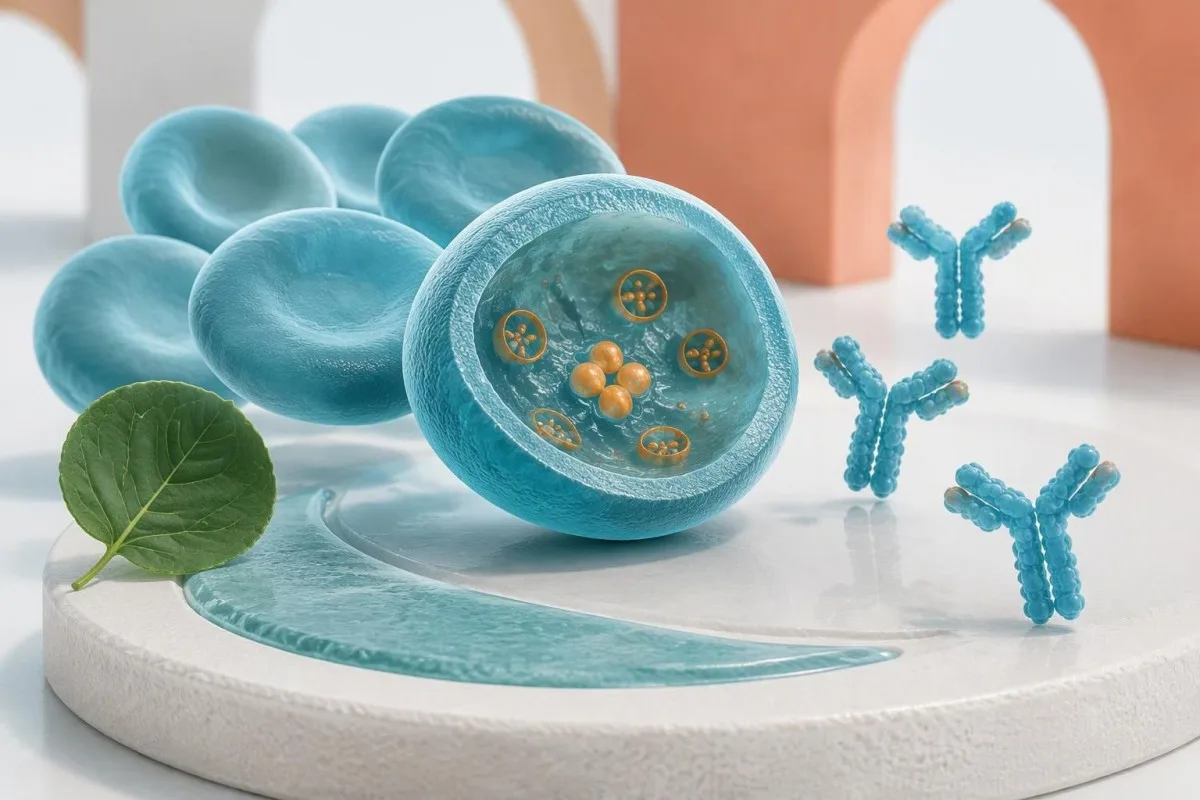
Станоўчы вынік аналізу на антыцелы можа сведчыць пра ранейшы кантакт з Babesia, а не пра захворванне цяпер. Звычайна вызначальнымі з’яўляюцца вынікі даследаванняў на паразітаў, сімптомы і вашы індывідуальныя фактары рызыкі.


- Станоўчы IgG да Babesia не пацвярджае актыўную інфекцыю; антыцелы могуць заставацца выяўнымі больш за 1 год пасля знікнення інфекцыі.
- ПЦР-тэст на Babesia выяўляе ДНК паразіта і асабліва карысны, калі ўзровень паразітаў занадта нізкі, каб надзейна выявіць іх у мазку крыві.
- Паразітэмія ў мазку крыві паказвае працэнт эрытрацытаў, якія ўтрымліваюць паразітаў; 1% азначае прыблізна 1 заражаную клетку на кожныя 100 даследаваных эрытрацытаў.
- Тытр IgG 1:1024 або вышэйшы можа сведчыць пра нядаўнюю або актыўную інфекцыю Babesia microti, але не замяняе пацвярджэнне з дапамогай ПЦР або мазка.
- Павышэнне ўзроўню антыцелаў у 4 разы у пробах, узятых з належным інтэрвалам, сведчыць на карысць нядаўняй інфекцыі; адзін станоўчы вынік не дазваляе зрабіць такое параўнанне.
- Экстраныя сімптомы уключаюць спутанасць свядомасці, дыхавіцу ў стане спакою, непрытомнасць, боль у грудзях або значнае зніжэнне вылучэння мачы незалежна ад тытру антыцелаў.
- Ліхаманка 38°C або вышэй пры адсутнасці селязёнкі патрабуе неадкладна звярнуцца да медыкаў і тэрмінова прайсці абследаванне, нават калі тэставанне на Babesia яшчэ не завершана.
- Працягласць лячэння звычайна складае 7–10 дзён пры няўскладненым сімптаматычным захворванні ў пацыентаў з нармальным імунітэтам, але асобным пацыентам з цяжкім імунадэфіцытам патрэбна лячэнне працягласцю не менш за 6 тыдняў.
- Захаванне антыцелаў пасля лячэння не з'яўляецца доказам вылечвання і само па сабе не служыць падставай для паўторнага курсу антыбіётыкаў.
Ці азначаюць станоўчыя вынікі аналізу на Babesia актыўную інфекцыю?
Адны толькі станоўчыя антыцелы да Babesia не пацвярджаюць актыўную інфекцыю. IgG можа заставацца станоўчым больш за 1 год пасля знікнення інфекцыі; ПЦР-тэст на Babesia або мазок крыві ў спалучэнні з ацэнкай сімптомаў дапамагаюць вызначыць, ці ёсць паразіты ў арганізме цяпер. Адно толькі захаванне антыцелаў не сведчыць пра няўдачу лячэння.
Слова «станоўчы» апісвае вынік тэсту, а не абавязкова ваш цяперашні стан здароўя. Аналіз на антыцелы выяўляе імунны адказ, тады як ПЦР выяўляе ДНК паразіта, а мікраскапія дазваляе ўбачыць паразітаў у эрытрацытах; гэтыя 3 метады даюць розныя віды доказаў, а не ўзаемазаменныя дыягназы.
Kantesti — гэта аналізатар крыві са штучным інтэлектам, які дапамагае растлумачыць, чаму адзін станоўчы вынік на антыцелы трэба разглядаць у клінічным кантэксце. Я Томас Кляйн, галоўны ўрач Kantesti; мой падыход — адрозніваць доказы папярэдняга кантакту з узбуджальнікам ад доказаў наяўнасці паразітаў у крыві цяпер, перш чым абмяркоўваць, што вынік можа азначаць для лячэння.
У чалавека без сімптомаў і чалавека з ліхаманкай можа быць аднолькавы тытр IgG, але ім патрэбныя розныя наступныя крокі. Для прыкладу: здароваму 45-гадоваму чалавеку са старым станоўчым вынікам можа спатрэбіцца ўдакладненне, тады як пацыенту з ліхаманкай, зніжэннем гемаглабіну і нядаўнім укусам кляшча неабходна неадкладна правесці прамое тэставанне.
Першы практычны крок — дакладна вызначыць, які менавіта вынік быў станоўчым. Вазьміце поўную справаздачу, у тым ліку назву ўзбуджальніка, метад, дату ўзяцця ўзору і рэферэнтны інтэрвал; наша тлумачэнне положительных результатов на антитела адрознівае 2 асноўныя пытанні: распазнаванне імуннай сістэмай і актыўнае захворванне, тады як наш агляд арганізацыі тлумачыць нашу ролю.
Што насамрэч вызначае аналіз на IgG да Babesia?
Станоўчы вынік на IgG да Babesia паказвае на распазнаванне імуннай сістэмай антыгенаў Babesia, а не на колькасць жывых паразітаў. Антыцелы могуць захоўвацца больш за 1 год, таму станоўчы вынік можа сведчыць пра ранейшую або нядаўнюю інфекцыю, а часам — пра памылковую рэакцыю, якая патрабуе ўдакладнення.
Захаванне антыцелаў — нармальная ўласцівасць імуннай памяці. Клеткі, якія выпрацоўваюць антыцелы і доўга жывуць, могуць працягваць вырабляць IgG пасля знікнення выяўных паразітаў; у клінічных рэкамендацыях IDSA па бабезіёзе спецыяльна папярэджваюць, што антыцелы могуць захоўвацца год ці даўжэй, і рэкамендуюць пацвердзіць інфекцыю мазком або ПЦР, перш чым лячыць пацыента са станоўчым вынікам на антыцелы (Krause et al., 2021).
IgM is not an automatic proof of new babesiosis. Although IgM can support a recent immune response, false-positive reactions and persistence complicate interpretation; 1 isolated IgM result should not override a negative diagnostic evaluation or become the sole reason for a prolonged treatment course.
A negative antibody test does not reliably exclude very early infection. If testing occurs during the first days of illness, the antibody response may not yet be detectable; this is why clinicians may order 2 direct tests—PCR and a smear—instead of waiting for serology to become positive.
The meaning of IgG is organism-specific. A Babesia antibody result should not be interpreted as proof of protective immunity or as a vaccination-style target; our discussion of CMV IgG patterns illustrates why 2 infections can produce similar-looking antibody reports yet require different clinical decisions.
Як інтэрпрэтаваць тытры антыцелаў да Babesia?
Babesia antibody test interpretation depends on the assay, species, and timing—not a universal positive cutoff. For Babesia microti, an IgG titer of 1:1024 or higher can suggest recent or active infection, but even a high titer does not replace direct parasite testing.
A titer reports how far a sample can be diluted while remaining reactive. A result of 1:256 means reactivity remains detectable at that dilution under the laboratory’s method; it does not mean 256 parasites, 256 days of illness, or a particular percentage of affected red blood cells.
A 4-fold rise is more informative than a small fluctuation. For example, a change from 1:64 to 1:256 in appropriately timed paired samples supports recent infection, whereas 1:128 to 1:256 is only a 2-fold change and may reflect biological or assay variation.
Comparing different laboratories can create a false trend. If a result changes from 1:128 to 1:256 after switching methods, the apparent increase may not represent a genuine immune change; paired testing is easiest to interpret when the same laboratory, species antigen, and assay are used.
High titers are supporting evidence, not a severity scale. The IDSA guideline describes a Babesia microti IgG titer of at least 1:1024 as suggestive of recent or active infection, while still prioritizing smear or PCR confirmation (Krause et al., 2021); інтэрпрэтацыі антыцелаў пры ліхаманцы Q shows why infectious antibody cutoffs cannot be transferred between organisms.
Што можа пацвердзіць ПЦР-тэст на Babesia?
A Babesia PCR test detects parasite DNA in a laboratory sample and can confirm babesiosis when symptoms and exposure fit. PCR is especially useful at low parasite levels, but 1 positive result after treatment does not necessarily prove that viable parasites are causing ongoing illness.
PCR often detects lower parasite burdens than routine microscopy. A patient can therefore have positive PCR and a negative smear without either result being an error; the 2 tests have different detection limits, and a negative smear alone cannot settle a strongly suspected low-level infection.
A negative PCR only addresses the organisms covered by that assay. A Babesia microti-specific assay may not detect Babesia duncani, Babesia divergens, or Babesia venatorum; these 3 examples matter when travel, geography, transfusion exposure, or immune status raises suspicion beyond the species named on the report.
Collection timing can change the result. Treatment before sampling, a very low parasite burden, or specimen problems can reduce detection; when symptoms remain convincing, the clinician may request a repeat sample and expert microscopy rather than treating 1 negative PCR as an absolute exclusion.
PCR positivity is not the same as a parasite viability test. DNA may remain detectable after clinical improvement, particularly with sensitive assays, so repeat testing needs a defined clinical purpose; our guide to тэрміны правядзення ПЦР і адмоўныя вынікі explains the general timing problem without implying that 2 different infections share identical detection windows.
Як мазкі крыві дазваляюць выявіць паразітаў Babesia?
A blood smear can confirm Babesia by showing parasites inside red blood cells and can quantify parasitemia. Parasitemia of 1% means approximately 1 affected red blood cell per 100 examined; that percentage helps assess burden, but symptoms and organ function still determine urgency.
Babesia often appears as ring forms within red blood cells. The characteristic 4-part Maltese cross tetrad is strongly suggestive when present, but it is uncommon enough that its absence cannot rule out babesiosis; an experienced microscopist must consider the complete pattern rather than hunt for one famous image.
Smear examination requires an explicit clinical request when suspicion is high. An automated complete blood count does not substitute for a manual parasite search, and the IDSA guideline recommends examining at least 200–300 oil-immersion fields before considering a smear negative when parasites are sparse.
A small parasitemia percentage can coexist with significant illness. Severe anemia, kidney dysfunction, respiratory compromise, or immune suppression can make a result below 10% clinically serious; conversely, the percentage alone does not describe blood pressure, oxygenation, or the speed at which hemoglobin is falling.
Malaria and Babesia can look similar on an initial smear. Travel history, parasite morphology, and molecular testing help separate them, and fever after travel should never be dismissed because a Babesia antibody test is positive; our travel-fever smear guide explains why these 2 possibilities sometimes need parallel evaluation.
Што рабіць, калі вынікі аналізаў на IgG, ПЦР і мазка не супадаюць?
Disagreeing Babesia test results usually reflect differences in timing, sensitivity, or what each method measures. Positive IgG with negative PCR and smear is different from positive PCR with a negative smear; interpreting all 3 results together prevents both missed infection and unnecessary treatment.
IgG-positive, PCR-negative, smear-negative results often favor past exposure when the patient is well. They do not absolutely exclude infection under every circumstance, but 1 isolated antibody result is insufficient evidence for active babesiosis; current fever, immune suppression, assay coverage, and prior treatment determine whether more testing is reasonable.
PCR-positive, smear-negative results can indicate low-level parasitemia. In an untreated symptomatic patient, that combination can support diagnosis; after treatment in a clinically recovered immunocompetent patient, the same 2-result pattern may not warrant further medication, because molecular detection can outlast symptoms.
Smear-positive, PCR-negative results deserve laboratory clarification. Possible explanations include a species not covered by PCR, a specimen problem, or misidentified cellular material; the next step may be expert slide review and broader molecular testing rather than choosing whichever of the 2 reports seems more reassuring.
Kantesti helps organize results, but cannot independently certify parasite identification from an uploaded report. The distinction between a yes/no PCR and a percentage parasitemia is explained in our якасны супраць колькаснага кіраўніцтва; наша інфармацыя пра клінічную метадалогію explains why 2 contradictory results require clinical and laboratory oversight.
Якія іншыя паказчыкі крыві пацвярджаюць падазрэнне на бабезіёз?
Babesiosis often produces anemia, low platelets, and laboratory evidence of red blood cell breakdown. No single CBC or chemistry value confirms Babesia, but a falling hemoglobin combined with rising LDH and indirect bilirubin can make a positive antibody result more clinically concerning than IgG alone.
The hemoglobin trend matters more than one unfamiliar flag. In an illustrative case, a decline from 13.5 to 9.0 g/dL over several days, accompanied by fever and new thrombocytopenia, warrants prompt evaluation for hemolysis and other serious causes; the antibody titer cannot explain that deterioration on its own.
LDH is sensitive to cellular injury but not specific to Babesia. An illustrative LDH of 600 U/L may support hemolysis if the laboratory upper limit is 250 U/L, yet liver, muscle, and specimen-handling problems can also raise it; our LDH result explanation separates these possibilities.
Low haptoglobin supports hemolysis only in context. A result of 10 mg/dL may be below a laboratory’s range, but liver function and baseline variation affect interpretation; our guide to прычыны нізкага гаптоглабіну explains why 2 patients with the same number may have different underlying problems.
Kidney function, bilirubin, and oxygenation help assess severity rather than establish species. A creatinine increase from 0.8 to 1.6 mg/dL over a short interval deserves urgent attention even with modest parasitemia, and a hemolyzed laboratory specimen must not be confused with hemolysis occurring inside the patient.
Якія сімптомы патрабуюць неадкладнага або экстранага абследавання?
Suspected babesiosis needs emergency assessment when there is confusion, fainting, chest pain, breathlessness at rest, or markedly reduced urine output. A person without a spleen who develops a fever of 38°C або вище should seek urgent assessment rather than wait for antibody or PCR confirmation.
New jaundice or dark urine with fever needs same-day medical assessment. These findings can signal hemolysis, liver disease, or another urgent condition rather than harmless dehydration; having 1 positive Babesia IgG result does not identify the cause, so clinicians usually assess the broader pattern.
Dark urine is a clue, not a home diagnostic test. Tea-colored urine with weakness and a falling hemoglobin is more concerning than an isolated color change after reduced fluid intake; our попереджувальних ознак темної сечі explains why the combination of 2 or more new symptoms changes the response.
Do not use the parasite percentage as permission to stay home when you feel seriously unwell. Respiratory difficulty, confusion, or poor circulation can require hospital care even below 10% parasitemia; if you are breathless at rest or fainting, call your local emergency number rather than arranging routine repeat testing.
Urgent treatment decisions may precede the final PCR report. In severe illness, clinicians can collect diagnostic samples and begin management based on the clinical picture and smear findings; tell the team about spleen removal, immune-suppressing medicines, recent transfusion, and symptom onset during the first assessment.
Чаму людзі без селязёнкі або з аслабленым імунітэтам маюць больш высокую рызыку?
People without a functioning spleen and those with substantial immune suppression have greater risks of severe or persistent babesiosis. The spleen helps remove affected red blood cells, while impaired antibody responses can make 1 negative serology result less reassuring than it would be in an otherwise healthy patient.
Spleen removal changes the safety threshold for fever. After splenectomy, a temperature of 38°C or higher warrants urgent assessment for serious infection, including bacterial causes unrelated to Babesia; do not assume the fever is explained by an old antibody result, and follow any individualized emergency plan already provided.
B-cell-depleting treatment can complicate both diagnosis and recovery. Rituximab, certain blood cancers, transplantation, and other major immune-suppressing conditions can increase persistence or relapse risk; documenting the last treatment date and current medicines may be more useful than ordering a second antibody titer.
Selected highly immunocompromised patients may need at least 6 weeks of treatment. The prolonged approach includes at least the final 2 weeks with no parasites detected on smears, according to evidence discussed in the IDSA guideline and the persistent-babesiosis series by Krause et al. (2008).
Kantesti can help organize the relevant reports, but immune risk must come from your history as well as laboratory values. A total IgG measurement and a Babesia-specific IgG result answer 2 different questions; our frequent-infection testing guide explains why normal routine blood counts do not rule out clinically significant immune suppression.
Ці азначаюць захаванне антыцелаў да Babesia няўдачу лячэння?
Persistent Babesia antibodies do not, by themselves, indicate treatment failure. IgG can remain detectable for more than 1 года, and a stable or slowly declining titer is not a reliable test of cure; recovery is assessed through symptoms and, when indicated, direct parasite testing.
Repeated antibody testing can create anxiety without changing management. A patient may feel well after a standard 7–10-day course and still receive a positive IgG result months later; that finding alone is not a reason to restart treatment or continue medication until the antibody becomes negative.
PCR can also stay positive after symptoms resolve. The IDSA guideline notes that molecular positivity can persist for months after standard treatment in immunocompetent patients, which is why routine ongoing PCR monitoring after symptom resolution is generally discouraged in this group (Krause et al., 2021).
Persistent fatigue does not automatically equal persistent parasitemia. A hemoglobin that is recovering from 8.5 to 10.5 g/dL can still leave someone tired, and sleep disruption or another diagnosis may contribute; recurrent fever, new hemolysis, or worsening organ function deserves a fresh assessment rather than an assumption.
Hemolysis after parasite clearance may occasionally have another mechanism. Delayed autoimmune hemolytic anemia has been described after babesiosis, particularly in people without a spleen; a direct Coombs result can help investigate immune-mediated red cell destruction, but neither 1 positive Coombs test nor persistent IgG independently proves Babesia relapse.
Калі патрэбнае лячэнне і як кантралююць выздараўленне?
Treatment is generally directed at confirmed symptomatic babesiosis, not isolated antibody positivity. Uncomplicated illness in an immunocompetent patient is usually treated for 7–10 дзён; severe disease, persistent parasitemia, and major immune suppression require individualized specialist management and a different follow-up plan.
Atovaquone plus azithromycin is the preferred regimen for many patients with babesiosis. Clindamycin plus quinine is an alternative in selected circumstances, but drug choice depends on severity, tolerability, interactions, and patient factors; the 7–10-day standard course must not be extended solely because an antibody remains positive.
An asymptomatic positive PCR or smear is different from isolated positive IgG. IDSA guidance generally does not recommend treatment for asymptomatic patients unless parasites continue to be seen on thin smears for more than 1 month; immune suppression or other high-risk circumstances still require an individualized specialist decision.
Exchange transfusion is considered for selected severe cases, not triggered by a titer. Parasitemia above 10%, severe hemolytic anemia, or major pulmonary, kidney, or liver compromise can prompt discussion with infectious-disease and transfusion specialists; the decision incorporates the whole clinical picture and is not an automatic numerical rule.
Monitoring should have a purpose and a stopping point. Smears are followed during treatment in immunocompetent patients, but usually not after symptoms resolve; highly immunocompromised patients need closer surveillance, and our кіраўніцтва па часавых рамках аналізу крыві helps separate 2 issues: biological recovery and the slower disappearance of laboratory signals.
Як кантакт з узбуджальнікам, геаграфія і від паразіта змяняюць інтэрпрэтацыю?
Exposure history changes how plausible a positive Babesia result is and which confirmatory assay is appropriate. Babesia can be transmitted through ticks and transfusion, and more than 1 species causes human disease; a Babesia microti-only test should not be treated as a universal Babesia screen.
No remembered tick bite does not exclude babesiosis. Small ticks can go unnoticed, and transfusion provides a separate transmission route; the review by Vannier and Krause (2012) describes both routes, so clinicians should ask about transfusion as well as outdoor exposure when evaluating 1 unexplained febrile illness.
European and North American testing needs are not identical. Babesia microti predominates in many recognized United States cases, whereas Babesia divergens and Babesia venatorum are relevant in Europe; these 3 examples explain a difference in assay coverage, not a different principle for distinguishing antibodies from active parasitemia.
Symptoms often appear weeks after exposure rather than immediately after a tick is removed. Reconstructing the previous 1–2 months of outdoor activities, travel, and transfusions can therefore be more helpful than focusing only on yesterday; transfusion-associated timing can be longer, so provide dates rather than a guessed source.
Tick-related conditions do not share the same diagnostic pathway. Tick bites can also precede Lyme disease, anaplasmosis, or alpha-gal allergy, but 1 diagnosis does not establish the others; prevention includes appropriate repellents, clothing protection, and tick checks, while unexplained symptoms still need condition-specific testing.
Што трэба ўзяць з сабой на кансультацыю па выніках аналізаў на Babesia?
A useful Babesia review needs the complete report, symptom dates, exposure history, and immune-risk information. Bring all 3 test categories if available—antibody, PCR, and smear—because a cropped positive flag can hide the species, method, or timing that changes the interpretation.
Record units and result formats exactly. A titer of 1:256, parasitemia of 2%, and a PCR marked detected describe 3 different measurements; copying them into one generic positive-result field removes information the clinician needs, especially when comparing pretreatment and post-treatment samples.
An uploaded image can introduce transcription errors. A faint colon may turn 1:256 into 1256, and a decimal can change 0.2% into 2%; our кантрольны спіс транскрыпцыі PDF recommends checking the extracted value against the source before interpreting a trend or acting on an apparent change.
Kantesti is an AI blood test interpretation platform that can place antibody reports beside CBC and chemistry trends. The useful output is a clearer set of questions—not a substitute for parasite microscopy, prescribing, or urgent assessment; our кіраўніцтва па тэхналогіі AI explains the distinction between interpreting 1 report and establishing a clinical diagnosis.
My review checklist is deliberately short. I, Thomas Klein, would ask: Which species was tested, were direct tests collected before treatment, are symptoms improving, and is there spleen or immune risk? Those 4 questions usually provide more actionable information than repeating an antibody panel without a reason.
Крыніцы даследаванняў і абмежаванні адпаведных лабараторных даведнікаў
Babesia management should rest on disease-specific evidence, not unrelated biomarker publications. Па стане на 15 кастрычніка 2026 г., this article draws its diagnostic and follow-up recommendations from the cited IDSA guideline and peer-reviewed Babesia literature; the 2 Zenodo guides below provide background on associated laboratory questions only.
The IDSA 2020 guideline was published in Clinical Infectious Diseases in 2021. Its central distinction remains useful: confirm suspected acute babesiosis with smear or PCR rather than a single antibody result; the 2012 New England Journal of Medicine review provides additional context on transmission, diagnosis, and severe-disease risk.
Kantesti is an AI-powered blood test analysis tool, not a source of independent Babesia treatment-trial evidence. Our background кіраўніцтва па вывучэнні жалеза helps explain anemia-related measurements, but iron deficiency and hemolysis are 2 different processes; a low hemoglobin should not prompt iron supplementation without evidence that iron replacement is appropriate.
Coagulation testing may become relevant in severe systemic illness. The related coagulation laboratory guide describes aPTT and other tests, but neither an abnormal aPTT nor a D-dimer result confirms babesiosis; the 2 listed Zenodo deposits are supporting educational material rather than Babesia diagnostic guidelines.
Source labels should not imply a review or indexing status that has not been verified. The publication-search links supplied with the 2 deposits are discovery links, not proof of ResearchGate or Academia.edu hosting; our стандарты медыцынскага кантэнту describe the editorial boundaries, including why persistent antibodies must not be presented as treatment failure.
Часта задаваныя пытанні
Ці азначае станоўчы IgG да Babesia, што ў мяне актыўная інфекцыя?
0 Станоўчы вынік аналізу на IgG да Babesia сам па сабе не пацвярджае актыўную інфекцыю. Антыцелы могуць заставацца выяўнымі больш за 1 год пасля знікнення інфекцыі, і адзін вынік не дазваляе адрозніць перанесенае заражэнне ад наяўнай паразітэміі. Каб пацвердзіць падазрэнне на востры бабезіёз, клініцыст звычайна выкарыстоўвае ПЦР-тэст на Babesia або мазок крыві, улічваючы таксама сімптомы і анамнез кантактаў. Ліхаманка, зніжэнне ўзроўню гемаглабіну або значнае прыгнечанне імунітэту робяць неадкладную ацэнку больш важнай.
Што азначае тытр IgG да бабезій 1:256?
Тытр IgG да Babesia 1:256 азначае, што ўзор заставаўся рэактыўным пры гэтым развядзенні ў рамках аналізу лабараторыі. Ён не вымярае колькасць паразітаў або цяжкасць захворвання, а яго станоўчы статус залежыць ад рэферэнтнага парога лабараторыі і даследаванага віду. Павышэнне з 1:64 да 1:256 — гэта 4-разовае павелічэнне, якое можа сведчыць пра нядаўнюю інфекцыю, калі ўзоры ўзятыя ў належны час і з’яўляюцца супастаўнымі. Адзін вынік 1:256 усё яшчэ трэба ацэньваць з улікам клінічнага кантэксту, а пры падазрэнні на актыўную інфекцыю — праводзіць прамое даследаванне на паразітаў.
Ці можа ПЦР-тэст на бабезіі даць станоўчы вынік, калі мазок крыві адмоўны?
Тэст ПЦР на Babesia можа быць станоўчым, калі мазок крыві адмоўны, бо ПЦР здольны выяўляць ДНК паразіта пры меншай яго колькасці, чым звычайная мікраскапія. У пацыента з сімптомамі, які не атрымліваў лячэння, гэтыя 2 вынікі могуць сведчыць пра інфекцыю з нізкай канцэнтрацыяй паразіта, а не пра супярэчнасць паміж лабараторнымі вынікамі. Пасля лячэння малекулярны тэст можа заставацца станоўчым, нягледзячы на клінічнае выздараўленне, таму станоўчы вынік ПЦР не азначае аўтаматычна, што трэба прымаць дадатковыя лекі. План наступнага назірання вызначаюць імунны статус, паўторнае з'яўленне сімптомаў і вынікі даследавання мазка.
Як доўга антыцелы да бабезій могуць заставацца станоўчымі пасля лячэння?
Антыцелы да Babesia могуць заставацца станоўчымі больш за 1 год пасля знікнення інфекцыі. Персістэнцыя IgG не з'яўляецца надзейным крытэрыем выздараўлення і сама па сабе не сведчыць аб няўдачы лячэння. Для пацыента з нармальнай імуннай функцыяй, у якога сімптомы зніклі пасля звычайнага 7–10-дзённага курсу лячэння, рэгулярнае паўторнае вызначэнне антыцелаў звычайна не дапамагае ацаніць выздараўленне. Новая ліхаманка, пагаршэнне анеміі або значнае прыгнечанне імунітэту патрабуюць асобнай клінічнай ацэнкі.
Ці патрэбна мне лячэнне, калі антыцелы да бабезій выяўленыя, але я добра сябе адчуваю?
Чалавек, які ў цэлым добра сябе адчувае, не павінен атрымліваць лячэнне бабезіёзу толькі таму, што аналіз на антыцелы даў станоўчы вынік. Рэкамендацыі IDSA раяць перад разглядам лячэння на падставе станоўчага выніку аналізу на антыцелы непасрэдна пацвердзіць дыягназ з дапамогай мікраскапіі мазка або ПЛР. Для пацыентаў без сімптомаў з пацверджанай паразітэміяй лячэнне звычайна не рэкамендуецца, калі толькі паразітаў не працягваюць выяўляць у тонкіх мазках больш за 1 месяц. Людзям без селязёнкі або са значным прыгнечаннем імунітэту патрэбна індывідуальная кансультацыя спецыяліста.
Калі чалавеку без селязёнкі варта неадкладна звярнуцца па дапамогу пры магчымым бабезіёзе?
Чалавеку без функцыянальнай селязёнкі, у якога з’явілася тэмпература 38 °C або вышэйшая, варта неадкладна звязацца з медыцынскім работнікам і прайсці тэрміновую ацэнку стану, не чакаючы пацвярджэння бабезіёзу. Пры спутанасці свядомасці, непрытомнасці, болі ў грудзях, дыхавіцы ў спакоі або рэзкім зніжэнні выдзялення мачы неабходна звярнуцца па экстраную дапамогу. Цяжкі бабезіёз можа ўзнікнуць нават пры паразітэміі ніжэй за 10%, таму толькі гэты паказчык не можа сведчыць пра бяспеку. Павышэнне тэмпературы пасля спленэктаміі таксама можа быць праявай небяспечных бактэрыяльных інфекцый, не звязаных з бабезіямі.
Атрымаць аналіз крыві з AI сёння
Далучайцеся больш чым да 2 мільёнаў карыстальнікаў па ўсім свеце, якія давяраюць Kantesti для імгненнага, дакладнага аналізу лабараторных тэстаў. Загрузіце вынікі аналізу крыві і атрымайце поўную інтэрпрэтацыю біямаркераў 15,000+ за лічаныя секунды.
📚 Публікацыі даследаванняў са спасылкамі
Кляйн, Т., Мітчэл, С., і Вебер, Г. (2026). Кіраўніцтва па даследаваннях жалеза: TIBC, насычэнне жалезам і звязвальная здольнасць. Kantesti AI Medical Research.
Кляйн, Т., Мітчэл, С., і Вебер, Г. (2026). Нармальны дыяпазон аЧТЧ: D-дымер, бялок С, кіраўніцтва па згусальнасці крыві. Kantesti AI Medical Research.
📖 Знешнія медыцынскія спасылкі
Krause PJ et al. (2021). Clinical Practice Guidelines by the Infectious Diseases Society of America (IDSA): 2020 Guideline on Diagnosis and Management of Babesiosis. Clinical Infectious Diseases.
Vannier E, Krause PJ. (2012). Human Babesiosis. New England Journal of Medicine.
Krause PJ et al. (2008). Persistent and Relapsing Babesiosis in Immunocompromised Patients. Clinical Infectious Diseases.
⚕️ Медыцынская адмова ад адказнасці
Гэты артыкул прызначаны толькі для адукацыйных мэт і не з’яўляецца медычнай парадай. Заўсёды кансультуйцеся з кваліфікаваным спецыялістам аховы здароўя для прыняцця рашэнняў па дыягностыцы і лячэнні.
Сігналы даверу E-E-A-T
Вопыт
Клінічны агляд, які вядзе лекар, працэсаў інтэрпрэтацыі лабараторных паказчыкаў.
Экспертыза
Фокус лабараторнай медыцыны на тым, як біямаркеры паводзяць сябе ў клінічным кантэксце.
Аўтарытэтнасць
Напісана доктарам Томасам Кляйнам, з аглядам доктара Сара Мітчэл і праф. доктара Ганса Вебера.
Надзейнасць
Інтэрпрэтацыя на аснове доказаў з выразнымі шляхамі далейшых дзеянняў, каб паменшыць трывогу.