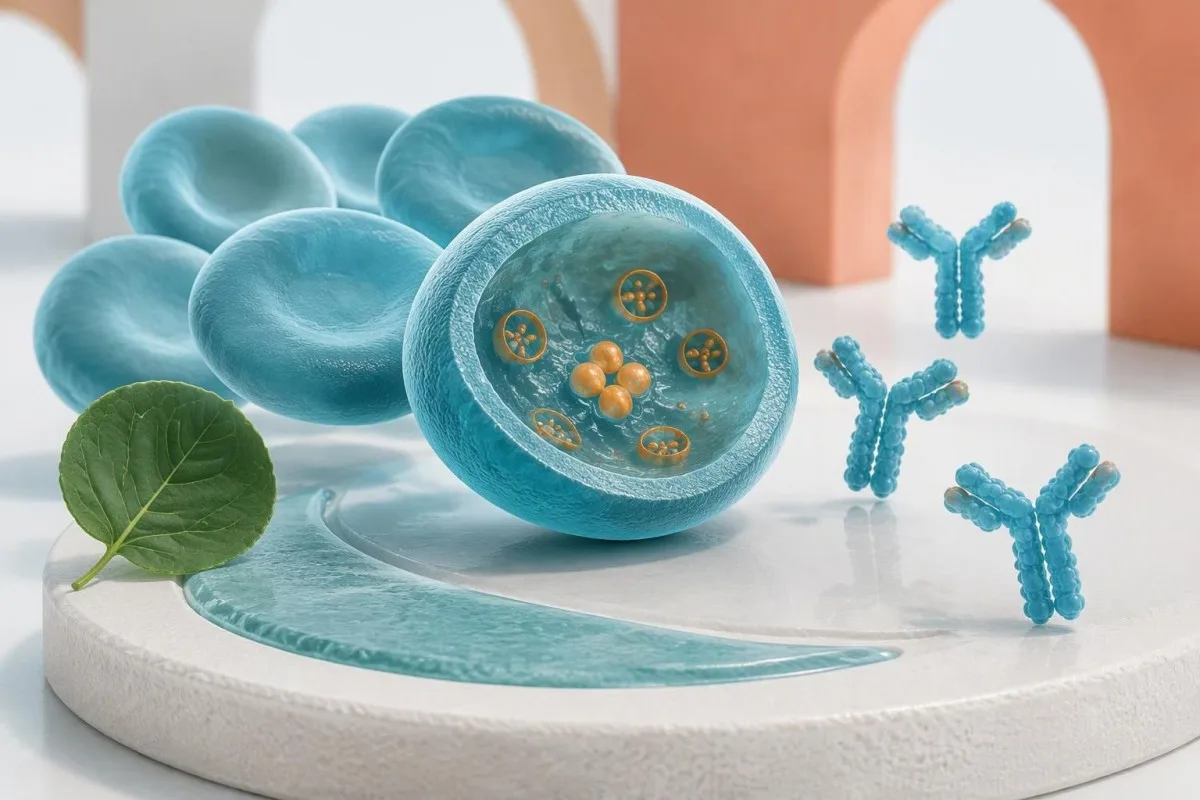
Ένα θετικό αποτέλεσμα αντισωμάτων μπορεί να αντανακλά παλαιότερη έκθεση σε Babesia και όχι σημερινή νόσηση. Τα καθοριστικά στοιχεία προκύπτουν συνήθως από τον έλεγχο για παράσιτα, τα συμπτώματα και τον ατομικό σας κίνδυνο.


- Θετικό Babesia IgG δεν τεκμηριώνει ενεργή λοίμωξη· τα αντισώματα μπορεί να παραμείνουν ανιχνεύσιμα για περισσότερο από 1 έτος μετά την υποχώρηση της λοίμωξης.
- Μια εξέταση Babesia PCR ανιχνεύει DNA του παρασίτου και είναι ιδιαίτερα χρήσιμη όταν τα επίπεδα των παρασίτων είναι πολύ χαμηλά για να εντοπιστούν αξιόπιστα σε επίχρισμα αίματος.
- Παρασιταιμία σε επίχρισμα αίματος μετρά το ποσοστό των ερυθρών αιμοσφαιρίων που περιέχουν παράσιτα· 1% σημαίνει περίπου 1 μολυσμένο κύτταρο ανά 100 ερυθρά αιμοσφαίρια που εξετάστηκαν.
- Τίτλοι IgG 1:1024 ή υψηλότεροι μπορεί να υποδηλώνουν πρόσφατη ή ενεργή λοίμωξη από Babesia microti, αλλά δεν υποκαθιστούν την επιβεβαίωση με PCR ή επίχρισμα.
- Αύξηση αντισωμάτων κατά 4 φορές μεταξύ δειγμάτων που ελήφθησαν σε κατάλληλα χρονικά διαστήματα υποστηρίζει πρόσφατη λοίμωξη· ένα μεμονωμένο θετικό αποτέλεσμα δεν επιτρέπει αυτήν τη σύγκριση.
- Επείγοντα συμπτώματα περιλαμβάνουν σύγχυση, δύσπνοια σε ηρεμία, λιποθυμία, πόνο στο στήθος ή σημαντικά μειωμένη παραγωγή ούρων, ανεξάρτητα από τον τίτλο αντισωμάτων.
- Πυρετός 38°C ή υψηλότερος χωρίς σπλήνα απαιτεί άμεση επικοινωνία με γιατρό και επείγουσα αξιολόγηση, ακόμη και πριν ολοκληρωθούν οι εξετάσεις για Babesia.
- Διάρκεια θεραπείας είναι συνήθως 7–10 ημέρες για μη επιπλεγμένη συμπτωματική νόσο σε ανοσοεπαρκείς ασθενείς, αλλά ορισμένοι ασθενείς με σοβαρή ανοσοκαταστολή χρειάζονται τουλάχιστον 6 εβδομάδες.
- Επίμονα αντισώματα μετά τη θεραπεία δεν αποτελούν εξέταση ίασης και, από μόνα τους, δεν δικαιολογούν άλλη μια σειρά αντιβιοτικής αγωγής.
Τα θετικά αποτελέσματα εξετάσεων για Babesia σημαίνουν ενεργή λοίμωξη;
Τα θετικά αντισώματα κατά της Babesia από μόνα τους δεν τεκμηριώνουν ενεργή λοίμωξη. Η IgG μπορεί να παραμείνει θετική για περισσότερο από 1 έτος μετά την υποχώρηση της λοίμωξης· η εξέταση PCR για Babesia ή το επίχρισμα αίματος, σε συνδυασμό με τα συμπτώματα, βοηθούν να διαπιστωθεί αν υπάρχουν παράσιτα τώρα. Τα επίμονα αντισώματα από μόνα τους δεν υποδηλώνουν αποτυχία της θεραπείας.
Η λέξη «θετικό» περιγράφει την εξέταση, όχι απαραίτητα την τρέχουσα κατάσταση της υγείας σας. Μια εξέταση αντισωμάτων ανιχνεύει την ανοσολογική σας απόκριση, ενώ η PCR ανιχνεύει DNA του παρασίτου και η μικροσκοπική εξέταση αναζητά παράσιτα μέσα στα ερυθρά αιμοσφαίρια· αυτές οι 3 μέθοδοι παρέχουν διαφορετικά είδη στοιχείων και όχι εναλλάξιμες διαγνώσεις.
Το Kantesti είναι ένας αναλυτής εξετάσεων αίματος με τεχνητή νοημοσύνη που βοηθά να εξηγηθεί γιατί ένα θετικό αποτέλεσμα αντισωμάτων χρειάζεται κλινικό πλαίσιο. Είμαι ο Thomas Klein, Chief Medical Officer στο Kantesti· η προσέγγισή μου είναι να διαχωρίζω τα στοιχεία έκθεσης από τα στοιχεία τρέχουσας παρασιταιμίας προτού συζητήσω τι θα μπορούσε να σημαίνει ένα αποτέλεσμα για τη θεραπεία.
Ένα άτομο χωρίς συμπτώματα και ένα άτομο με πυρετό μπορεί να έχουν τον ίδιο τίτλο IgG, αλλά να χρειάζονται διαφορετικά επόμενα βήματα. Σε μια ενδεικτική σύγκριση, ένα υγιές άτομο 45 ετών με παλαιότερο θετικό αποτέλεσμα μπορεί να χρειάζεται διευκρινίσεις, ενώ ένας ασθενής με πυρετό, πτώση της αιμοσφαιρίνης και πρόσφατη έκθεση σε τσιμπούρι χρειάζεται άμεση διερεύνηση με άμεσες εξετάσεις.
Το πρώτο πρακτικό βήμα είναι να προσδιορίσετε ακριβώς ποιο αποτέλεσμα ήταν θετικό. Φέρτε ολόκληρη την έκθεση, συμπεριλαμβανομένου του μικροοργανισμού, της μεθόδου, της ημερομηνίας συλλογής και του διαστήματος αναφοράς· η επεξήγησή μας για θετικά αποτελέσματα αντισωμάτων διακρίνει τα 2 ευρεία ερωτήματα της ανοσολογικής αναγνώρισης και της ενεργού νόσου, ενώ η επισκόπηση του οργανισμού μας εξηγεί τον ρόλο μας.
Τι μετρά στην πραγματικότητα ένα θετικό Babesia IgG;
Η θετική IgG για Babesia μετρά την ανοσολογική αναγνώριση αντιγόνων της Babesia, όχι τον αριθμό των ζωντανών παρασίτων. Τα αντισώματα μπορεί να παραμείνουν για περισσότερο από 1 έτος, επομένως ένα θετικό αποτέλεσμα μπορεί να αντανακλά παλαιότερη λοίμωξη, πρόσφατη λοίμωξη ή, περιστασιακά, παραπλανητική αντίδραση που χρειάζεται διευκρίνιση.
Η παραμονή των αντισωμάτων είναι φυσιολογικό χαρακτηριστικό της ανοσολογικής μνήμης. Τα μακρόβια κύτταρα που παράγουν αντισώματα μπορούν να συνεχίσουν να παράγουν IgG αφού εξαφανιστούν τα ανιχνεύσιμα παράσιτα· η κατευθυντήρια οδηγία της IDSA για τη βαμπεσίωση προειδοποιεί ρητά ότι τα αντισώματα μπορεί να παραμείνουν για ένα έτος ή περισσότερο και συνιστά επιβεβαίωση με επίχρισμα ή PCR πριν από τη θεραπεία ασθενούς με θετικά αντισώματα (Krause et al., 2021).
IgM is not an automatic proof of new babesiosis. Although IgM can support a recent immune response, false-positive reactions and persistence complicate interpretation; 1 isolated IgM result should not override a negative diagnostic evaluation or become the sole reason for a prolonged treatment course.
A negative antibody test does not reliably exclude very early infection. If testing occurs during the first days of illness, the antibody response may not yet be detectable; this is why clinicians may order 2 direct tests—PCR and a smear—instead of waiting for serology to become positive.
The meaning of IgG is organism-specific. A Babesia antibody result should not be interpreted as proof of protective immunity or as a vaccination-style target; our discussion of CMV IgG patterns illustrates why 2 infections can produce similar-looking antibody reports yet require different clinical decisions.
Πώς πρέπει να ερμηνεύονται οι τίτλοι αντισωμάτων Babesia;
Babesia antibody test interpretation depends on the assay, species, and timing—not a universal positive cutoff. For Babesia microti, an IgG titer of 1:1024 or higher can suggest recent or active infection, but even a high titer does not replace direct parasite testing.
A titer reports how far a sample can be diluted while remaining reactive. A result of 1:256 means reactivity remains detectable at that dilution under the laboratory’s method; it does not mean 256 parasites, 256 days of illness, or a particular percentage of affected red blood cells.
A 4-fold rise is more informative than a small fluctuation. For example, a change from 1:64 to 1:256 in appropriately timed paired samples supports recent infection, whereas 1:128 to 1:256 is only a 2-fold change and may reflect biological or assay variation.
Comparing different laboratories can create a false trend. If a result changes from 1:128 to 1:256 after switching methods, the apparent increase may not represent a genuine immune change; paired testing is easiest to interpret when the same laboratory, species antigen, and assay are used.
High titers are supporting evidence, not a severity scale. The IDSA guideline describes a Babesia microti IgG titer of at least 1:1024 as suggestive of recent or active infection, while still prioritizing smear or PCR confirmation (Krause et al., 2021); ερμηνεία των αντισωμάτων στον πυρετό Q shows why infectious antibody cutoffs cannot be transferred between organisms.
Τι μπορεί να επιβεβαιώσει μια εξέταση Babesia PCR;
A Babesia PCR test detects parasite DNA in a laboratory sample and can confirm babesiosis when symptoms and exposure fit. PCR is especially useful at low parasite levels, but 1 positive result after treatment does not necessarily prove that viable parasites are causing ongoing illness.
PCR often detects lower parasite burdens than routine microscopy. A patient can therefore have positive PCR and a negative smear without either result being an error; the 2 tests have different detection limits, and a negative smear alone cannot settle a strongly suspected low-level infection.
A negative PCR only addresses the organisms covered by that assay. A Babesia microti-specific assay may not detect Babesia duncani, Babesia divergens, or Babesia venatorum; these 3 examples matter when travel, geography, transfusion exposure, or immune status raises suspicion beyond the species named on the report.
Collection timing can change the result. Treatment before sampling, a very low parasite burden, or specimen problems can reduce detection; when symptoms remain convincing, the clinician may request a repeat sample and expert microscopy rather than treating 1 negative PCR as an absolute exclusion.
PCR positivity is not the same as a parasite viability test. DNA may remain detectable after clinical improvement, particularly with sensitive assays, so repeat testing needs a defined clinical purpose; our guide to τον χρονισμό της PCR και τα αρνητικά αποτελέσματα explains the general timing problem without implying that 2 different infections share identical detection windows.
Πώς εντοπίζουν τα επιχρίσματα αίματος τα παράσιτα Babesia;
A blood smear can confirm Babesia by showing parasites inside red blood cells and can quantify parasitemia. Parasitemia of 1% means approximately 1 affected red blood cell per 100 examined; that percentage helps assess burden, but symptoms and organ function still determine urgency.
Babesia often appears as ring forms within red blood cells. The characteristic 4-part Maltese cross tetrad is strongly suggestive when present, but it is uncommon enough that its absence cannot rule out babesiosis; an experienced microscopist must consider the complete pattern rather than hunt for one famous image.
Smear examination requires an explicit clinical request when suspicion is high. An automated complete blood count does not substitute for a manual parasite search, and the IDSA guideline recommends examining at least 200–300 oil-immersion fields before considering a smear negative when parasites are sparse.
A small parasitemia percentage can coexist with significant illness. Severe anemia, kidney dysfunction, respiratory compromise, or immune suppression can make a result below 10% clinically serious; conversely, the percentage alone does not describe blood pressure, oxygenation, or the speed at which hemoglobin is falling.
Malaria and Babesia can look similar on an initial smear. Travel history, parasite morphology, and molecular testing help separate them, and fever after travel should never be dismissed because a Babesia antibody test is positive; our travel-fever smear guide explains why these 2 possibilities sometimes need parallel evaluation.
Τι γίνεται αν τα αποτελέσματα IgG, PCR και επιχρίσματος διαφωνούν;
Disagreeing Babesia test results usually reflect differences in timing, sensitivity, or what each method measures. Positive IgG with negative PCR and smear is different from positive PCR with a negative smear; interpreting all 3 results together prevents both missed infection and unnecessary treatment.
IgG-positive, PCR-negative, smear-negative results often favor past exposure when the patient is well. They do not absolutely exclude infection under every circumstance, but 1 isolated antibody result is insufficient evidence for active babesiosis; current fever, immune suppression, assay coverage, and prior treatment determine whether more testing is reasonable.
PCR-positive, smear-negative results can indicate low-level parasitemia. In an untreated symptomatic patient, that combination can support diagnosis; after treatment in a clinically recovered immunocompetent patient, the same 2-result pattern may not warrant further medication, because molecular detection can outlast symptoms.
Smear-positive, PCR-negative results deserve laboratory clarification. Possible explanations include a species not covered by PCR, a specimen problem, or misidentified cellular material; the next step may be expert slide review and broader molecular testing rather than choosing whichever of the 2 reports seems more reassuring.
Kantesti helps organize results, but cannot independently certify parasite identification from an uploaded report. The distinction between a yes/no PCR and a percentage parasitemia is explained in our οδηγός ποιοτικής έναντι ποσοτικής; · η πληροφορίες κλινικής μεθοδολογίας explains why 2 contradictory results require clinical and laboratory oversight.
Ποια άλλα αποτελέσματα εξετάσεων αίματος υποστηρίζουν την υποψία βαμπεσίωσης;
Babesiosis often produces anemia, low platelets, and laboratory evidence of red blood cell breakdown. No single CBC or chemistry value confirms Babesia, but a falling hemoglobin combined with rising LDH and indirect bilirubin can make a positive antibody result more clinically concerning than IgG alone.
The hemoglobin trend matters more than one unfamiliar flag. In an illustrative case, a decline from 13.5 to 9.0 g/dL over several days, accompanied by fever and new thrombocytopenia, warrants prompt evaluation for hemolysis and other serious causes; the antibody titer cannot explain that deterioration on its own.
LDH is sensitive to cellular injury but not specific to Babesia. An illustrative LDH of 600 U/L may support hemolysis if the laboratory upper limit is 250 U/L, yet liver, muscle, and specimen-handling problems can also raise it; our LDH result explanation separates these possibilities.
Low haptoglobin supports hemolysis only in context. A result of 10 mg/dL may be below a laboratory’s range, but liver function and baseline variation affect interpretation; our guide to τις αιτίες χαμηλής απτοσφαιρίνης explains why 2 patients with the same number may have different underlying problems.
Kidney function, bilirubin, and oxygenation help assess severity rather than establish species. A creatinine increase from 0.8 to 1.6 mg/dL over a short interval deserves urgent attention even with modest parasitemia, and a hemolyzed laboratory specimen must not be confused with hemolysis occurring inside the patient.
Ποια συμπτώματα χρειάζονται επείγουσα αξιολόγηση;
Suspected babesiosis needs emergency assessment when there is confusion, fainting, chest pain, breathlessness at rest, or markedly reduced urine output. A person without a spleen who develops a fever of 38°C ή υψηλότερος should seek urgent assessment rather than wait for antibody or PCR confirmation.
New jaundice or dark urine with fever needs same-day medical assessment. These findings can signal hemolysis, liver disease, or another urgent condition rather than harmless dehydration; having 1 positive Babesia IgG result does not identify the cause, so clinicians usually assess the broader pattern.
Dark urine is a clue, not a home diagnostic test. Tea-colored urine with weakness and a falling hemoglobin is more concerning than an isolated color change after reduced fluid intake; our προειδοποιητικά σημάδια σκούρων ούρων explains why the combination of 2 or more new symptoms changes the response.
Do not use the parasite percentage as permission to stay home when you feel seriously unwell. Respiratory difficulty, confusion, or poor circulation can require hospital care even below 10% parasitemia; if you are breathless at rest or fainting, call your local emergency number rather than arranging routine repeat testing.
Urgent treatment decisions may precede the final PCR report. In severe illness, clinicians can collect diagnostic samples and begin management based on the clinical picture and smear findings; tell the team about spleen removal, immune-suppressing medicines, recent transfusion, and symptom onset during the first assessment.
Γιατί διατρέχουν υψηλότερο κίνδυνο τα άτομα χωρίς σπλήνα ή με εξασθενημένο ανοσοποιητικό;
People without a functioning spleen and those with substantial immune suppression have greater risks of severe or persistent babesiosis. The spleen helps remove affected red blood cells, while impaired antibody responses can make 1 negative serology result less reassuring than it would be in an otherwise healthy patient.
Spleen removal changes the safety threshold for fever. After splenectomy, a temperature of 38°C or higher warrants urgent assessment for serious infection, including bacterial causes unrelated to Babesia; do not assume the fever is explained by an old antibody result, and follow any individualized emergency plan already provided.
B-cell-depleting treatment can complicate both diagnosis and recovery. Rituximab, certain blood cancers, transplantation, and other major immune-suppressing conditions can increase persistence or relapse risk; documenting the last treatment date and current medicines may be more useful than ordering a second antibody titer.
Selected highly immunocompromised patients may need at least 6 weeks of treatment. The prolonged approach includes at least the final 2 weeks with no parasites detected on smears, according to evidence discussed in the IDSA guideline and the persistent-babesiosis series by Krause et al. (2008).
Kantesti can help organize the relevant reports, but immune risk must come from your history as well as laboratory values. A total IgG measurement and a Babesia-specific IgG result answer 2 different questions; our frequent-infection testing guide explains why normal routine blood counts do not rule out clinically significant immune suppression.
Σημαίνουν τα επίμονα αντισώματα Babesia ότι απέτυχε η θεραπεία;
Persistent Babesia antibodies do not, by themselves, indicate treatment failure. IgG can remain detectable for more than 1 έτος, and a stable or slowly declining titer is not a reliable test of cure; recovery is assessed through symptoms and, when indicated, direct parasite testing.
Repeated antibody testing can create anxiety without changing management. A patient may feel well after a standard 7–10-day course and still receive a positive IgG result months later; that finding alone is not a reason to restart treatment or continue medication until the antibody becomes negative.
PCR can also stay positive after symptoms resolve. The IDSA guideline notes that molecular positivity can persist for months after standard treatment in immunocompetent patients, which is why routine ongoing PCR monitoring after symptom resolution is generally discouraged in this group (Krause et al., 2021).
Persistent fatigue does not automatically equal persistent parasitemia. A hemoglobin that is recovering from 8.5 to 10.5 g/dL can still leave someone tired, and sleep disruption or another diagnosis may contribute; recurrent fever, new hemolysis, or worsening organ function deserves a fresh assessment rather than an assumption.
Hemolysis after parasite clearance may occasionally have another mechanism. Delayed autoimmune hemolytic anemia has been described after babesiosis, particularly in people without a spleen; a direct Coombs result can help investigate immune-mediated red cell destruction, but neither 1 positive Coombs test nor persistent IgG independently proves Babesia relapse.
Πότε χρειάζεται θεραπεία και πώς παρακολουθείται η ανάρρωση;
Treatment is generally directed at confirmed symptomatic babesiosis, not isolated antibody positivity. Uncomplicated illness in an immunocompetent patient is usually treated for 7–10 ημέρες; severe disease, persistent parasitemia, and major immune suppression require individualized specialist management and a different follow-up plan.
Atovaquone plus azithromycin is the preferred regimen for many patients with babesiosis. Clindamycin plus quinine is an alternative in selected circumstances, but drug choice depends on severity, tolerability, interactions, and patient factors; the 7–10-day standard course must not be extended solely because an antibody remains positive.
An asymptomatic positive PCR or smear is different from isolated positive IgG. IDSA guidance generally does not recommend treatment for asymptomatic patients unless parasites continue to be seen on thin smears for more than 1 month; immune suppression or other high-risk circumstances still require an individualized specialist decision.
Exchange transfusion is considered for selected severe cases, not triggered by a titer. Parasitemia above 10%, severe hemolytic anemia, or major pulmonary, kidney, or liver compromise can prompt discussion with infectious-disease and transfusion specialists; the decision incorporates the whole clinical picture and is not an automatic numerical rule.
Monitoring should have a purpose and a stopping point. Smears are followed during treatment in immunocompetent patients, but usually not after symptoms resolve; highly immunocompromised patients need closer surveillance, and our οδηγός χρονικού πλαισίου για τις εξετάσεις αίματος helps separate 2 issues: biological recovery and the slower disappearance of laboratory signals.
Πώς επηρεάζουν την ερμηνεία η έκθεση, η γεωγραφική περιοχή και το είδος;
Exposure history changes how plausible a positive Babesia result is and which confirmatory assay is appropriate. Babesia can be transmitted through ticks and transfusion, and more than 1 species causes human disease; a Babesia microti-only test should not be treated as a universal Babesia screen.
No remembered tick bite does not exclude babesiosis. Small ticks can go unnoticed, and transfusion provides a separate transmission route; the review by Vannier and Krause (2012) describes both routes, so clinicians should ask about transfusion as well as outdoor exposure when evaluating 1 unexplained febrile illness.
European and North American testing needs are not identical. Babesia microti predominates in many recognized United States cases, whereas Babesia divergens and Babesia venatorum are relevant in Europe; these 3 examples explain a difference in assay coverage, not a different principle for distinguishing antibodies from active parasitemia.
Symptoms often appear weeks after exposure rather than immediately after a tick is removed. Reconstructing the previous 1–2 months of outdoor activities, travel, and transfusions can therefore be more helpful than focusing only on yesterday; transfusion-associated timing can be longer, so provide dates rather than a guessed source.
Tick-related conditions do not share the same diagnostic pathway. Tick bites can also precede Lyme disease, anaplasmosis, or alpha-gal allergy, but 1 diagnosis does not establish the others; prevention includes appropriate repellents, clothing protection, and tick checks, while unexplained symptoms still need condition-specific testing.
Τι πρέπει να έχετε μαζί σας για την αξιολόγηση ενός αποτελέσματος Babesia;
A useful Babesia review needs the complete report, symptom dates, exposure history, and immune-risk information. Bring all 3 test categories if available—antibody, PCR, and smear—because a cropped positive flag can hide the species, method, or timing that changes the interpretation.
Record units and result formats exactly. A titer of 1:256, parasitemia of 2%, and a PCR marked detected describe 3 different measurements; copying them into one generic positive-result field removes information the clinician needs, especially when comparing pretreatment and post-treatment samples.
An uploaded image can introduce transcription errors. A faint colon may turn 1:256 into 1256, and a decimal can change 0.2% into 2%; our λίστα ελέγχου μεταγραφής PDF recommends checking the extracted value against the source before interpreting a trend or acting on an apparent change.
Kantesti is an AI blood test interpretation platform that can place antibody reports beside CBC and chemistry trends. The useful output is a clearer set of questions—not a substitute for parasite microscopy, prescribing, or urgent assessment; our οδηγός τεχνολογίας AI explains the distinction between interpreting 1 report and establishing a clinical diagnosis.
My review checklist is deliberately short. I, Thomas Klein, would ask: Which species was tested, were direct tests collected before treatment, are symptoms improving, and is there spleen or immune risk? Those 4 questions usually provide more actionable information than repeating an antibody panel without a reason.
Πηγές έρευνας και τα όρια των σχετικών εργαστηριακών οδηγών
Babesia management should rest on disease-specific evidence, not unrelated biomarker publications. Από 15 Οκτωβρίου 2026, this article draws its diagnostic and follow-up recommendations from the cited IDSA guideline and peer-reviewed Babesia literature; the 2 Zenodo guides below provide background on associated laboratory questions only.
The IDSA 2020 guideline was published in Clinical Infectious Diseases in 2021. Its central distinction remains useful: confirm suspected acute babesiosis with smear or PCR rather than a single antibody result; the 2012 New England Journal of Medicine review provides additional context on transmission, diagnosis, and severe-disease risk.
Kantesti is an AI-powered blood test analysis tool, not a source of independent Babesia treatment-trial evidence. Our background οδηγός σπουδών σιδήρου helps explain anemia-related measurements, but iron deficiency and hemolysis are 2 different processes; a low hemoglobin should not prompt iron supplementation without evidence that iron replacement is appropriate.
Coagulation testing may become relevant in severe systemic illness. The related coagulation laboratory guide describes aPTT and other tests, but neither an abnormal aPTT nor a D-dimer result confirms babesiosis; the 2 listed Zenodo deposits are supporting educational material rather than Babesia diagnostic guidelines.
Source labels should not imply a review or indexing status that has not been verified. The publication-search links supplied with the 2 deposits are discovery links, not proof of ResearchGate or Academia.edu hosting; our πρότυπα ιατρικού περιεχομένου describe the editorial boundaries, including why persistent antibodies must not be presented as treatment failure.
Συχνές Ερωτήσεις
Σημαίνει ότι έχω ενεργή λοίμωξη το θετικό αποτέλεσμα για IgG έναντι της Babesia;
Η θετική IgG για Babesia δεν αρκεί από μόνη της για να τεκμηριώσει ενεργή λοίμωξη. Τα αντισώματα μπορεί να παραμένουν ανιχνεύσιμα για περισσότερο από 1 χρόνο μετά την υποχώρηση της λοίμωξης, ενώ ένα μεμονωμένο αποτέλεσμα δεν μπορεί να διακρίνει την παλαιότερη έκθεση από την τρέχουσα παρασιταιμία. Για την επιβεβαίωση πιθανολογούμενης οξείας βαμπεσίωσης, ο κλινικός ιατρός χρησιμοποιεί συνήθως εξέταση PCR για Babesia ή επίχρισμα αίματος, σε συνδυασμό με τα συμπτώματα και το ιστορικό έκθεσης. Ο πυρετός, η πτώση της αιμοσφαιρίνης ή η σημαντική ανοσοκαταστολή καθιστούν την άμεση αξιολόγηση ακόμη πιο σημαντική.
Τι σημαίνει τίτλος IgG για Babesia 1:256;
Ένας τίτλος IgG για Babesia 1:256 σημαίνει ότι το δείγμα παρέμεινε αντιδραστικό σε αυτήν την αραίωση στη δοκιμασία του εργαστηρίου. Δεν μετρά τον αριθμό των παρασίτων ή τη σοβαρότητα της νόσου, ενώ το αν είναι θετικό εξαρτάται από το όριο αναφοράς του εργαστηρίου και το είδος που εξετάστηκε. Η αύξηση από 1:64 σε 1:256 είναι τετραπλάσια και μπορεί να υποστηρίξει πρόσφατη λοίμωξη, όταν τα δείγματα έχουν ληφθεί στον κατάλληλο χρόνο και είναι συγκρίσιμα. Ένα μεμονωμένο αποτέλεσμα 1:256 εξακολουθεί να χρειάζεται κλινική συσχέτιση και, όταν υπάρχει υποψία ενεργού λοίμωξης, άμεσο έλεγχο για παράσιτα.
Μπορεί η PCR για Babesia να είναι θετική όταν η εξέταση του επιχρίσματος αίματος είναι αρνητική;
0 Η εξέταση PCR για Babesia μπορεί να είναι θετική ενώ το επίχρισμα αίματος είναι αρνητικό, επειδή η PCR μπορεί να ανιχνεύσει DNA του παρασίτου σε χαμηλότερα επίπεδα παρασιταιμίας από τη συνήθη μικροσκοπική εξέταση. Σε έναν συμπτωματικό ασθενή που δεν έχει λάβει θεραπεία, αυτά τα 2 αποτελέσματα μπορεί να συνάδουν με λοίμωξη χαμηλού φορτίου και όχι να αποτελούν εργαστηριακή αντίφαση. Μετά τη θεραπεία, η μοριακή θετικότητα μπορεί να επιμένει παρά την κλινική ανάρρωση, επομένως ένα θετικό αποτέλεσμα PCR δεν δικαιολογεί αυτομάτως τη χορήγηση επιπλέον φαρμάκων. Η ανοσολογική κατάσταση, η υποτροπή των συμπτωμάτων και τα ευρήματα του επιχρίσματος καθορίζουν το σχέδιο παρακολούθησης.
Για πόσο καιρό μπορεί να παραμείνουν θετικά τα αντισώματα κατά της Babesia μετά τη θεραπεία;
Τα αντισώματα κατά της Babesia μπορεί να παραμείνουν θετικά για περισσότερο από 1 έτος μετά την εκρίζωση της λοίμωξης. Η εμμονή της IgG δεν αποτελεί αξιόπιστη εξέταση ίασης και δεν υποδηλώνει από μόνη της αποτυχία της θεραπείας. Για έναν ανοσοεπαρκή ασθενή του οποίου τα συμπτώματα έχουν υποχωρήσει μετά τη συνήθη αγωγή διάρκειας 7–10 ημερών, ο τακτικός επαναληπτικός έλεγχος αντισωμάτων γενικά δεν βοηθά στον προσδιορισμό της ανάρρωσης. Νέος πυρετός, επιδείνωση της αναιμίας ή σημαντική ανοσοκαταστολή απαιτούν ξεχωριστή κλινική αξιολόγηση.
Χρειάζομαι θεραπεία αν τα αντισώματα κατά της Babesia είναι θετικά, αλλά αισθάνομαι καλά;
Ένα άτομο που αισθάνεται γενικά καλά δεν θα πρέπει να λαμβάνει θεραπεία για Babesia αποκλειστικά και μόνο επειδή είναι θετική μια εξέταση αντισωμάτων. Η κατευθυντήρια οδηγία της IDSA συνιστά άμεση επιβεβαίωση με επίχρισμα ή PCR πριν εξεταστεί το ενδεχόμενο θεραπείας βάσει θετικών αντισωμάτων. Για ασυμπτωματικούς ασθενείς με επιβεβαιωμένη παρασιταιμία, η θεραπεία γενικά δεν συνιστάται, εκτός εάν εξακολουθούν να ανιχνεύονται παράσιτα σε λεπτά επιχρίσματα για διάστημα μεγαλύτερο του 1 μήνα. Τα άτομα χωρίς σπλήνα ή με σημαντική ανοσοκαταστολή χρειάζονται εξατομικευμένη συμβουλή από ειδικό.
Πότε πρέπει κάποιος χωρίς σπλήνα να ζητήσει επείγουσα βοήθεια για πιθανή λοίμωξη από Babesia;
Ένα άτομο χωρίς λειτουργικό σπλήνα που εμφανίζει πυρετό 38°C ή υψηλότερο θα πρέπει να επικοινωνήσει αμέσως με γιατρό και να υποβληθεί επειγόντως σε αξιολόγηση, χωρίς να περιμένει επιβεβαίωση για Babesia. Η σύγχυση, η λιποθυμία, ο πόνος στο στήθος, η δύσπνοια σε ηρεμία ή η σημαντικά μειωμένη παραγωγή ούρων απαιτούν επείγουσα ιατρική φροντίδα. Η σοβαρή βαμπεσίωση μπορεί να εμφανιστεί ακόμη και όταν η παρασιταιμία είναι κάτω από 10%, επομένως το ποσοστό από μόνο του δεν μπορεί να τεκμηριώσει ότι δεν υπάρχει κίνδυνος. Ο πυρετός μετά από σπληνεκτομή μπορεί επίσης να οφείλεται σε επικίνδυνες βακτηριακές λοιμώξεις που δεν σχετίζονται με την Babesia.
Λάβετε σήμερα ανάλυση εξετάσεων αίματος με AI
Εγγραφείτε σε πάνω από 2 εκατομμύρια χρήστες παγκοσμίως που εμπιστεύονται το Kantesti για άμεση, ακριβή ανάλυση εργαστηριακών εξετάσεων. Ανεβάστε τα αποτελέσματα εξετάσεων αίματος και λάβετε ολοκληρωμένη ερμηνεία βιοδεικτών του 15,000+ μέσα σε δευτερόλεπτα.
📚 Παραπομπές σε δημοσιεύσεις έρευνας
Klein, T., Mitchell, S., & Weber, H. (2026). Οδηγός Μελετών Σιδήρου: TIBC, Κορεσμός Σιδήρου & Ικανότητα Σύνδεσης. Ιατρική έρευνα του Kantesti με AI.
Klein, T., Mitchell, S., & Weber, H. (2026). Φυσιολογικό εύρος aPTT: Οδηγός πήξης αίματος D-Dimer, πρωτεΐνης C. Ιατρική έρευνα του Kantesti με AI.
📖 Εξωτερικές ιατρικές αναφορές
Krause PJ et al. (2021). Clinical Practice Guidelines by the Infectious Diseases Society of America (IDSA): 2020 Guideline on Diagnosis and Management of Babesiosis. Clinical Infectious Diseases.
Vannier E, Krause PJ. (2012). Human Babesiosis. New England Journal of Medicine.
Krause PJ et al. (2008). Persistent and Relapsing Babesiosis in Immunocompromised Patients. Clinical Infectious Diseases.
⚕️ Ιατρική αποποίηση ευθύνης
Αυτό το άρθρο προορίζεται μόνο για εκπαιδευτικούς σκοπούς και δεν αποτελεί ιατρική συμβουλή. Συμβουλεύεστε πάντα έναν κατάλληλο επαγγελματία υγείας για αποφάσεις σχετικά με τη διάγνωση και τη θεραπεία.
Σήματα εμπιστοσύνης E-E-A-T
Εμπειρία
Κλινική ανασκόπηση από ιατρό για τις ροές εργασίας ερμηνείας εργαστηριακών αποτελεσμάτων.
Πραγματογνωμοσύνη
Εστίαση στην εργαστηριακή ιατρική στο πώς συμπεριφέρονται οι βιοδείκτες στο κλινικό πλαίσιο.
Αυθεντικότητα
Γραμμένο από τον Δρ. Thomas Klein με ανασκόπηση από την Δρ. Sarah Mitchell και τον Καθ. Dr. Hans Weber.
Αξιοπιστία
Ερμηνεία βασισμένη σε τεκμηριωμένα δεδομένα με σαφείς οδούς παρακολούθησης για τη μείωση του συναγερμού.