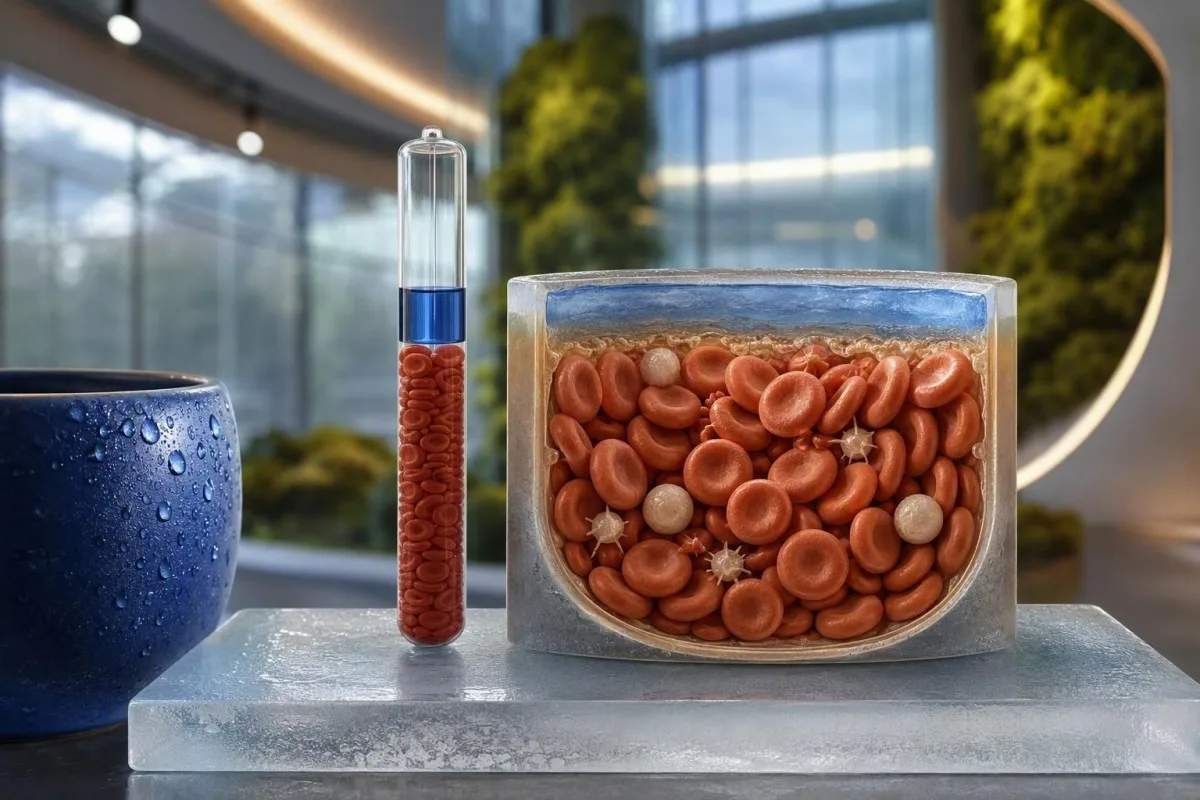
Jumlah RBC yang tinggi dapat mencerminkan darah yang terkonsentrasi, bukan kelebihan sel darah merah. Tugas pertama adalah membedakan kehilangan cairan sementara dari peningkatan persisten yang memerlukan pemeriksaan menyeluruh.


- Eritrositosis relatif berarti air plasma telah berkurang, sehingga jumlah RBC, hemoglobin, dan hematokrit terlihat tinggi tanpa menciptakan sel baru.
- Ambang WHO nilai yang mendukung kemungkinan polisitemia vera adalah hemoglobin di atas 16,5 g/dL pada pria atau 16,0 g/dL pada wanita, atau hematokrit di atas 49% dan 48% secara berturut-turut.
- Tes ulang hidrasi biasanya wajar untuk peningkatan ringan yang terisolasi setelah muntah, diare, paparan panas, puasa, atau olahraga berat—jika Anda dalam kondisi sehat.
- Diuretik dapat meningkatkan hematokrit melalui kehilangan cairan; jangan menghentikan obat yang diresepkan tanpa sepengetahuan dokter yang meresepkannya.
- pola itu penting: albumin, protein total, natrium, rasio BUN/kreatinin, dan berat jenis urine yang tinggi lebih mendukung dehidrasi daripada produksi berlebih sel darah merah yang sebenarnya.
- Waktu pengulangan biasanya 1–2 minggu setelah pemulihan, asupan cairan normal, dan 24–48 jam tanpa olahraga yang sangat berat, kecuali jika terdapat gejala yang mendesak.
- peningkatan yang menetap setelah hidrasi yang baik memerlukan penilaian terhadap paparan asap rokok, gangguan pernapasan saat tidur, ketinggian, testosteron, penyakit paru atau ginjal, eritropoietin, dan sering kali tes JAK2.
- Gejala yang mendesak termasuk nyeri dada, sesak napas baru, kelemahan satu sisi, kehilangan penglihatan, kebingungan, atau kaki bengkak yang nyeri; hal-hal ini memerlukan penanganan segera, bukan tes ulang di rumah.
Apa arti hasil RBC tinggi pada umumnya
Jumlah RBC yang tinggi dapat menjadi nilai tinggi palsu akibat dehidrasi saat kehilangan cairan memekatkan bagian seluler darah; hal ini tidak serta-merta berarti sumsum tulang Anda memproduksi terlalu banyak sel darah merah. Petunjuknya adalah apakah hemoglobin dan hematokrit kembali normal setelah pemulihan dan minum seperti biasa, alih-alih tetap tinggi pada CBC ulang yang dipersiapkan dengan baik.
Jumlah RBC melaporkan jumlah sel darah merah per liter, sementara hematokrit melaporkan fraksi darah utuh yang ditempati oleh sel-sel tersebut. Rentang referensi dewasa bervariasi menurut laboratorium, tetapi banyak yang menggunakan sekitar 4,5–5,9 × 10¹²/L untuk pria dan 4,1–5,1 × 10¹²/L untuk wanita. Nilai yang sedikit di atas rentang sering kali kurang informatif dibandingkan hemoglobin dan hematokrit di sampingnya; panduan kami untuk apa saja yang termasuk dalam CBC menjelaskan alasannya.
Dehidrasi menurunkan komponen cair darah dalam beberapa jam, sehingga massa sel darah merah yang sama menempati volume terukur yang lebih kecil. Di klinik, saya sering melihat ini setelah sakit perut: RBC 5,8 × 10¹²/L, hemoglobin 17,1 g/dL, hematokrit 51%, kemudian nilai normal setelah pemulihan. Ini adalah eritrositosis relatif, bukan kesalahan laboratorium dan belum tentu suatu penyakit.
Kantesti adalah seorang Analisa tes darah AI yang membaca RBC, hemoglobin, hematokrit, indeks sel darah merah, penanda ginjal, dan hasil sebelumnya secara bersamaan. Per 5 September 2026, alur kerja tinjauan klinis kami memperlakukan satu tanda CBC batas sebagai dorongan untuk memeriksa persiapan dan tren—bukan sebagai diagnosis.
Jumlah RBC tidak sama dengan massa sel darah merah
CBC tidak dapat mengukur massa sel darah merah total secara langsung. CBC mengukur konsentrasi, yang meningkat saat volume plasma berkontraksi; studi massa sel darah merah dengan isotop khusus kini jarang diperlukan, tetapi studi tersebut mengilustrasikan mengapa CBC yang pekat dapat terlihat mengkhawatirkan tanpa adanya peningkatan jumlah sel yang sebenarnya.
Eritrositosis relatif versus kelebihan sel darah merah yang sebenarnya
Eritrositosis relatif adalah RBC, hemoglobin, atau hematokrit tinggi yang disebabkan oleh penurunan volume plasma, sedangkan eritrositosis absolut mencerminkan massa sel darah merah yang benar-benar meningkat. Hidrasi dapat memperbaiki pola pertama tetapi tidak akan memperbaiki pola kedua.
Eritrositosis sejati bisa bersifat primer, seperti pada polisitemia vera, atau sekunder akibat peningkatan eritropoietin dari rendahnya oksigen, obat-obatan, atau jarang terjadi, proses ginjal. Kriteria WHO 2016 menggunakan hemoglobin di atas 16,5 g/dL pada pria atau 16,0 g/dL pada wanita sebagai ambang batas yang harus memunculkan pertanyaan tentang polisitemia vera, terutama jika persisten (Arber et al., 2016). Nilai tunggal tidak cukup untuk mendiagnosisnya.
Perbedaan praktisnya adalah sisa panel lainnya. Jumlah RBC tinggi akibat dehidrasi pola sering mencakup albumin tinggi, protein total, urea/BUN, natrium, dan urin pekat; eritrositosis absolut mungkin membuat penanda ini tampak normal. Tinjau artikel terfokus kami tentang hemoglobin sedikit meningkat jika hemoglobin, alih-alih hanya RBC, adalah hasil yang ditandai.
Jumlah RBC normal tidak menyingkirkan eritrositosis jika hemoglobin atau hematokrit tinggi, dan jumlah RBC yang meningkat saja dapat terjadi dengan sel darah merah kecil dari defisiensi zat besi atau sifat talasemia. Inilah sebabnya mengapa MCV dan feritin penting; RBC tinggi dengan MCV di bawah 80 fL adalah percakapan klinis yang berbeda.
Bagaimana dehidrasi mengubah CBC dan penanda ginjal
Dehidrasi biasanya meningkatkan jumlah RBC, hemoglobin, dan hematokrit secara bersamaan, dan sering kali meningkatkan albumin, protein total, urea/BUN, kreatinin, dan konsentrasi urin. Hasil yang tidak cocok—misalnya, RBC tinggi dengan hemoglobin rendah—tidak pas dengan hemokonsentrasi sederhana.
Rasio BUN/kreatinin di atas sekitar 20:1 dalam satuan AS dapat mendukung adanya penurunan perfusi ginjal akibat kehilangan cairan, meskipun perdarahan gastrointestinal, asupan protein, kortikosteroid, dan massa otot yang rendah dapat mengubah rasio tersebut. Kreatinin mungkin meningkat sedikit setelah paparan panas atau lari jarak jauh karena filtrasi dan metabolisme otot keduanya berubah. Kami panduan dehidrasi dan eGFR kami membahas kapan eGFR yang rendah harus diulang.
Berat jenis urine 1,025 atau lebih tinggi sesuai dengan urine pekat, tetapi ini bukan pengukur hidrasi langsung. Glukosa, protein, dan beberapa agen kontras pencitraan juga dapat meningkatkannya, sehingga klinisi harus menginterpretasikannya bersama gejala dan elektrolit. Sebuah referensi berat jenis urine berguna ketika CBC dan urinalisis dikumpulkan pada hari yang sama.
Saya menyarankan untuk tidak mencoba menormalkan tes secara paksa dengan meminum beberapa liter air tepat sebelum pengambilan sampel. Minum berlebihan secara cepat dapat menurunkan natrium, dan menciptakan sampel lain yang tidak representatif; makanan normal dan cairan yang dikonsumsi sesuai rasa haus selama 24–48 jam umumnya lebih aman bagi orang yang tidak memiliki restriksi cairan.
Muntah, diare, panas, puasa, dan diuretik
Muntah, diare, keringat berlebih, puasa berkepanjangan, dan obat diuretik semuanya dapat menyebabkan konsentrasi RBC yang tinggi sementara dengan mengurangi air plasma. Tingkat peningkatan lebih bergantung pada kehilangan dan penggantian cairan daripada kondisi kesehatan seseorang.
Muntah akut sering kali menghasilkan klorida rendah dan terkadang bikarbonat tinggi karena asam lambung dan cairan hilang. Diuretik loop seperti furosemid dan tiazid dapat menghasilkan profil kontraksi volume yang serupa, terutama pada orang dewasa yang lebih tua. Hasil klorida rendah termasuk dalam kerangka klinis yang sama; lihat petunjuk klorida akibat muntah dan diuretik pola tersebut.
Jangan menghentikan diuretik yang diresepkan untuk memperbaiki CBC tanpa saran medis. Orang yang mengonsumsi obat ini untuk gagal jantung, sirosis, hipertensi resisten, atau penyakit ginjal mungkin memerlukan rencana cairan yang disesuaikan, karena minum tanpa pandang bulu dapat memperburuk pembengkakan atau sesak napas. Pertanyaan yang tepat adalah apakah dosis, gejala, berat badan, tekanan darah, dan hasil ginjal saling berkaitan.
Rasa haus membantu tetapi tidak sempurna pada orang dewasa di atas 65 tahun dan pada orang dengan diabetes, penyakit ginjal, atau kondisi neurologis tertentu. Urine berwarna kuning gelap, mulut kering, pusing saat berubah posisi, penurunan buang air kecil, dan penurunan berat badan 1 kg selama 24 jam dapat mendukung adanya kehilangan cairan, tetapi gejala parah memerlukan penilaian alih-alih pengobatan mandiri.
Olahraga dapat mengonsentrasikan darah Anda untuk sementara
Olahraga ketahanan yang berat dapat meningkatkan hematokrit dan hemoglobin selama beberapa jam melalui kehilangan keringat dan pergeseran volume plasma, meskipun latihan berulang dapat menurunkan hematokrit dasar melalui peningkatan volume plasma. Oleh karena itu, pengaturan waktu menjadi sangat penting bagi atlet.
Lari selama 90 menit dalam cuaca hangat dapat menghilangkan 1–3 liter cairan, tergantung pada ukuran tubuh, iklim, dan tingkat keringat. Pengambilan sampel segera setelah perlombaan juga dapat menunjukkan kadar kreatinin, CK, albumin, dan protein total yang lebih tinggi; klaster tersebut lebih berguna daripada hasil RBC saja. Kami panduan waktu tes darah maraton membahas penanda pemulihan yang biasanya berubah.
Untuk pemantauan rutin, saya biasanya menyarankan untuk menghindari olahraga yang sangat intens selama 24–48 jam sebelum pengambilan darah, datang dalam keadaan istirahat, dan minum seperti biasa pada hari sebelumnya. Ini bukan aturan laboratorium universal, dan pemantauan atlet elit mungkin sengaja dilakukan di bawah beban—tetapi konsistensi lebih penting daripada kesempurnaan. Dr. Thomas Klein telah melihat banyak rujukan yang tidak perlu hilang begitu seorang atlet diperiksa ulang setelah minggu pemulihan normal.
Kantesti’s Panduan penelitian BUN dan kreatinin sangat membantu ketika seorang atlet ketahanan memiliki hematokrit tinggi dan tanda ginjal yang mendekati batas. Penurunan berat badan, berat jenis urine yang tinggi, dan interval pemulihan yang singkat membuat hemokonsentrasi masuk akal; nyeri otot, urine berwarna seperti kola, atau kadar CK yang sangat tinggi memerlukan tingkat kehati-hatian yang berbeda.
Rencana aman untuk mengulang CBC yang sedikit tinggi
Jumlah RBC yang sedikit meningkat biasanya dapat diperiksa ulang setelah 1–2 minggu pemulihan, hidrasi biasa, dan penggunaan obat yang stabil jika Anda tidak memiliki gejala tanda bahaya (red-flag). Lakukan pemeriksaan ulang lebih cepat hanya jika dokter Anda memintanya atau jika hasil awal meningkat secara substansial.
Sebelum pemeriksaan ulang, catat apakah Anda mengalami diare, muntah, demam, asupan alkohol, sauna, perjalanan jauh, paparan ketinggian, puasa, atau olahraga intens dalam 72 jam sebelumnya. Pertahankan diet dan jadwal pengobatan Anda seperti biasa kecuali dokter Anda memberi tahu sebaliknya. Ini panduan persiapan tes darah dasar memiliki daftar periksa praktis untuk menghindari variasi yang tidak disengaja.
Gunakan laboratorium yang sama jika memungkinkan, karena metode penganalisis dan interval referensi berbeda-beda. Mintalah CBC dengan hemoglobin, hematokrit, MCV, RDW, jumlah sel darah putih, dan trombosit; peningkatan persisten yang disertai dengan kadar trombosit atau sel darah putih yang tinggi lebih mengkhawatirkan untuk proses sumsum tulang daripada eritrositosis terisolasi. Penyakit baru-baru ini dapat memengaruhi komponen ini ke arah yang berlawanan, jadi panel lengkap sangat menentukan.
Kantesti adalah seorang layanan interpretasi tes lab AI yang membandingkan CBC baru dengan nilai sebelumnya dan menandai perubahan yang melebihi variasi biasa. Pendekatan tren kami tidak menggantikan dokter, tetapi dapat mempertahankan konteks krusial—olahraga, penyakit, pengobatan, dan hematokrit sebelumnya—yang sering hilang ketika satu hasil dilihat secara terpisah.
Kapan hasil tinggi yang berulang memerlukan tes eritrositosis
Hemoglobin tinggi yang persisten di atas 16,5 g/dL pada pria atau 16,0 g/dL pada wanita, atau hematokrit di atas 49% atau 48%, harus mendorong dokter untuk mengevaluasi eritrositosis setelah dehidrasi disingkirkan. Tes pertama yang biasa dilakukan adalah pengulangan CBC, kadar eritropoietin, penilaian oksigen, dan pengujian mutasi JAK2 jika sesuai.
Polisitemia vera adalah neoplasma mieloproliferatif di mana mutasi JAK2 ditemukan pada sekitar 1% pasien yang terkena. Rendahnya eritropoietin serum mendukung produksi berlebih sumsum tulang primer, tetapi tidak ada tes darah tunggal yang harus diinterpretasikan secara terisolasi. Pedoman British Society for Haematology merekomendasikan pendekatan terstruktur yang memisahkan eritrositosis primer dari sekunder (McMullin et al., 2019).
Gejala bisa samar: sakit kepala, penglihatan kabur, gatal setelah mandi air hangat, wajah memerah yang tidak biasa, kelelahan, atau riwayat gumpalan darah mungkin lebih penting daripada nilai RBC yang tepat. Untuk penjelasan lebih lengkap tentang hematokrit, eritropoietin, dan JAK2, baca kami panduan gejala polisitemia kami. Banyak orang dengan peningkatan laboratorium ringan tidak memiliki fitur-fitur ini sama sekali.
Saya berhati-hati untuk tidak menyiratkan bahwa setiap hitung tinggi yang persisten adalah kanker. Paparan karbon monoksida terkait merokok, sleep apnea yang tidak diobati, penyakit paru-paru, testosteron, ketinggian tinggi, dan beberapa kondisi ginjal adalah penjelasan yang lebih umum dalam banyak praktik. Namun, persistensi adalah alasan tepat mengapa CBC ulang tidak boleh menjadi siklus pemeriksaan ulang kasual yang tak berujung.
Rendahnya oksigen, merokok, dan apnea tidur sebagai penyebab RBC tinggi
Kekurangan oksigen kronis dapat menstimulasi eritropoietin dan menyebabkan jumlah sel darah merah yang benar-benar meningkat; sleep apnea, paparan karbon monoksida terkait merokok, dan penyakit paru-paru adalah penyebab yang sering. Saturasi oksigen siang hari yang normal tidak sepenuhnya menyingkirkan penurunan oksigen di malam hari.
Obstructive sleep apnea dapat menyebabkan eritrositosis ringan, terutama ketika terdapat desaturasi oksigen yang signifikan di malam hari. Mendengkur keras, jeda napas yang terlihat, sakit kepala di pagi hari, hipertensi resisten, dan kantuk di siang hari harus memicu riwayat medis yang berfokus pada tidur alih-alih asumsi bahwa dehidrasi menjelaskan segalanya. Sebuah panduan tes darah sesak napas menguraikan konteks kardiopulmoner yang lebih luas.
Merokok sigaret meningkatkan karboksihemoglobin, yang mengurangi penghantaran oksigen meskipun oksimeter nadi mungkin tampak meyakinkan. Vaping tidak menimbulkan paparan karbon monoksida yang sama seperti tembakau yang dibakar, tetapi memiliki risiko kesehatan lain dan harus tetap didiskusikan secara jujur. Tes karbon monoksida atau ko-oksimetri terkadang lebih berguna daripada saturasi oksigen rutin.
AI menafsirkan hasil RBC yang tinggi bersamaan dengan hemoglobin, hematokrit, penanda ginjal, serta faktor tidur atau merokok yang dilaporkan, alih-alih menyajikan daftar penyebab umum. Pembacaan kontekstual tersebut sangat berharga ketika hematokrit mencapai 50% setelah hidrasi dan pasien melaporkan tidur yang tidak menyegarkan.
Ketinggian, testosteron, dan obat-obatan yang meningkatkan RBC
Tinggal atau berlatih di ketinggian dan menggunakan testosteron dapat meningkatkan produksi sel darah merah, sehingga peningkatan tersebut mungkin nyata dan bukan terkait dehidrasi. Waktu paparan sering kali menjawab lebih banyak daripada angka awal.
Di ketinggian, tekanan oksigen yang lebih rendah menstimulasi eritropoietin dan meningkatkan hemoglobin selama beberapa hari hingga minggu; rentang yang diharapkan bergantung pada ketinggian, durasi, latar belakang keturunan, dan data referensi laboratorium. CBC yang diambil selama atau sesaat setelah tinggal di pegunungan harus ditafsirkan berdasarkan paparan tersebut. Panduan kami mengenai tes ulang hemoglobin di ketinggian menjelaskan mengapa waktu kembali ke permukaan laut itu penting.
Injeksi, gel, pelet testosteron, dan beberapa agen anabolik dapat menyebabkan eritrositosis. Banyak protokol peresepan mengurangi atau menghentikan terapi saat hematokrit mencapai 54%, meskipun keputusan risiko individu berbeda-beda, terutama pada penderita penyakit kardiovaskular atau apnea tidur. Jangan pernah mendonorkan darah atau mengubah dosis yang diresepkan sebagai pengganti diskusi hasil tersebut dengan penulis resep.
Lebih jarang, obat diabetes SGLT2 dapat menyebabkan sedikit kenaikan hematokrit, sebagian melalui efek volume plasma dan mungkin pensinyalan eritropoietin. Daftar pengobatan harus mencakup produk androgen yang dijual bebas, perawatan suntik, dan perubahan baru-baru ini—bukan sekadar obat yang tercetak dalam rekam medis elektronik.
Petunjuk CBC yang mengubah tingkat kekhawatiran
RBC tinggi lebih mengkhawatirkan jika hemoglobin dan hematokrit juga tinggi, terutama dengan trombosit tinggi, sel darah putih tinggi, eritropoietin rendah, atau sel abnormal pada apusan darah. RBC tinggi dengan MCV rendah sering kali mengarah pada kelainan sel kecil.
MCV di bawah 80 fL dengan jumlah RBC yang relatif tinggi dapat terjadi pada sifat talasemia (thalassemia trait), di mana sel-sel berukuran kecil tetapi berjumlah banyak. Kekurangan zat besi juga dapat menurunkan MCV, meskipun lebih sering menurunkan hemoglobin seiring waktu; feritin dan saturasi transferin memperjelas perbedaannya. Panduan kami Perbandingan MCV dan MCH menjelaskan mengapa angka RBC saja dapat menyesatkan.
Sel darah putih atau trombosit yang tinggi bersamaan dengan hematokrit tinggi tidak mendiagnosis polisitemia vera, tetapi menurunkan ambang batas untuk tinjauan hematologi. Apusan darah tepi, feritin, eritropoietin, tes JAK2, dan terkadang pemeriksaan sumsum tulang mungkin dilakukan setelahnya. Panduan kami jalur pemeriksaan kanker darah menunjukkan mengapa tes-tes ini diurutkan, bukan dipesan tanpa pandang bulu.
Aturan praktis Dr. Thomas Klein sederhana: cari kesesuaian di seluruh sinyal independen. Hematokrit 52%, trombosit 520 × 10⁹/L, dan eritropoietin rendah adalah pola yang secara mendasar berbeda dari hematokrit 50% setelah gelombang panas dengan albumin 5,3 g/dL dan urine pekat.
Gejala dan risiko pembekuan darah: kapan RBC tinggi menjadi kondisi darurat
Segera cari perawatan medis untuk hasil RBC tinggi yang disertai nyeri dada, sesak napas mendadak, batuk darah, pingsan, kelemahan baru, kesulitan berbicara, gangguan penglihatan, atau kaki bengkak yang nyeri. Gejala-gejala ini dapat mencerminkan gumpalan darah atau kondisi akut lainnya dan tidak boleh ditunda untuk menunggu CBC ulangan.
Hematokrit yang lebih tinggi dapat meningkatkan viskositas darah, tetapi gejala dan risiko vaskular secara keseluruhan menentukan urgensi secara lebih andal daripada peningkatan terisolasi yang moderat. Polisitemia vera membawa risiko trombotik yang diakui, terutama pada usia yang lebih tua, adanya trombosis sebelumnya, faktor risiko kardiovaskular, dan jumlah sel yang tidak terkontrol. Ulasan Tefferi dan Barbui tahun 2021 menjelaskan perawatan yang disesuaikan dengan risiko daripada memperlakukan setiap jumlah yang meningkat dengan cara yang sama.
Sakit kepala saja adalah hal umum dan tidak spesifik; sakit kepala dengan gejala visual baru, kelemahan, atau kebingungan bukanlah hal biasa. Begitu pula, gatal saat mandi air hangat bisa terjadi pada polisitemia vera tetapi juga bisa terjadi pada kulit kering dan alergi, jadi itu hanyalah petunjuk, bukan bukti. Tinjau kembali tanda peringatan pada tes darah untuk nyeri dada jika gejala adalah bagian dari alasan tes tersebut dipesan.
Jangan mengonsumsi aspirin hanya karena jumlah RBC tinggi kecuali disarankan oleh dokter Anda. Aspirin memiliki risiko pendarahan dan mungkin tidak tepat jika memiliki tukak lambung, menggunakan antikoagulan, memiliki jumlah trombosit rendah, atau riwayat medis tertentu. Layanan darurat adalah pilihan yang lebih aman ketika gejala neurologis atau kardiopulmoner fokal berkembang.
Mengapa CBC Anda sebelumnya mungkin menjawab pertanyaan tersebut
Jumlah RBC yang tinggi secara ringan dan stabil selama bertahun-tahun memiliki makna yang berbeda dari peningkatan cepat selama beberapa minggu, dan tren dapat membedakan kondisi dasar pribadi dari penyakit baru. Bandingkan hasil menggunakan hemoglobin, hematokrit, MCV, dan laboratorium yang sama jika memungkinkan.
Variasi biologis dan variasi alat analisis berarti perubahan kecil tidak selalu merupakan perubahan fisiologis yang nyata. Perbedaan hemoglobin 0,3 g/dL antara dua kali pengambilan darah dapat mencerminkan hidrasi, postur tubuh, waktu, atau variasi biasa; peningkatan berkelanjutan dari 15,2 menjadi 17,3 g/dL memerlukan perhatian lebih. Artikel kami tentang perubahan lab yang bermakna menjelaskan konsep nilai perubahan referensi.
Simpan catatan sederhana mengenai ketinggian, status merokok, dosis testosteron, penyakit, olahraga berat, pendarahan menstruasi, dan kehilangan cairan pada setiap pengambilan darah. Catatan tersebut lebih berguna secara klinis daripada mengejar satu jumlah RBC “ideal” yang pasti. Berdasarkan pengalaman saya, tidak adanya konteks inilah yang menyebabkan pasien menerima penjelasan yang bertentangan dari janji temu yang berbeda.
Kantesti, sebuah platform interpretasi biomarker AI, dapat menampilkan nilai CBC berseri di samping penanda ginjal dan protein untuk mengidentifikasi pola konsentrasi. Kami mendorong pengguna untuk memperlakukan analisis tren sebagai persiapan untuk percakapan dengan dokter, bukan pengganti pemeriksaan atau tes terarah.
Pertimbangan kehamilan, usia lanjut, dan penyakit kronis
Kehamilan biasanya menurunkan hemoglobin dan hematokrit melalui ekspansi volume plasma, sehingga nilai yang tinggi selama kehamilan memerlukan tinjauan dokter, bukan sekadar asumsi dehidrasi biasa. Pada orang dewasa yang lebih tua dan orang dengan penyakit jantung atau ginjal, saran mengenai cairan harus dipersonalisasi.
Selama kehamilan, volume plasma meningkat sekitar 40–50%, menciptakan pengenceran fisiologis; banyak layanan bersalin memeriksa hemoglobin di atas 16,0 g/dL karena hal itu dapat menandakan ekspansi plasma yang tidak memadai atau masalah lainnya. Muntah parah di awal kehamilan masih dapat mengonsentrasikan CBC, tetapi peningkatan yang persisten harus didiskusikan dengan tim bersalin. Lihat pemeriksaan darah saat kehamilan untuk skenario di hari yang sama.
Orang dewasa yang lebih tua mungkin tidak melaporkan rasa haus dengan andal, sementara gagal jantung dan penyakit ginjal lanjut dapat membuat kelebihan cairan menjadi berbahaya. Perubahan cepat pada pembengkakan pergelangan kaki, berat badan, sesak napas, atau jumlah urine lebih penting daripada mencoba mencapai target air minum secara umum. Penyesuaian diuretik merupakan wewenang dokter yang menangani kondisi dasar tersebut.
Anak-anak memiliki rentang hemoglobin yang spesifik untuk usia, dan nilai yang tampak tinggi pada portal dewasa mungkin sesuai pada usia atau ketinggian tertentu. Dokter spesialis anak harus menafsirkan peningkatan yang persisten, terutama jika disertai sianosis, penyakit jantung bawaan, atau pertumbuhan yang buruk.
Pertanyaan untuk diajukan kepada dokter Anda setelah mendapatkan hasil RBC yang tinggi
Tanyakan apakah hasil Anda menunjukkan hemokonsentrasi, apakah hemoglobin dan hematokrit juga tinggi, dan kondisi pengulangan apa yang tepat untuk riwayat kesehatan Anda. Pertanyaan yang baik mencegah kepanikan yang prematur sekaligus menghindari terlewatnya eritrositosis persisten.
Bawa laporan lengkap, bukan hanya nilai RBC yang ditandai, ditambah CBC sebelumnya dan daftar pengobatan saat ini. Tanyakan: “Apakah albumin, protein total, natrium, kreatinin, BUN/urea, dan konsentrasi urine konsisten dengan kehilangan cairan?” Ini panduan protein serum dapat membantu Anda memahami mengapa albumin perlu disertakan dalam diskusi tersebut.
Jika peningkatan tetap ada, tanyakan apakah penilaian oksigen, tes tidur, eritropoietin, feritin, tes JAK2, atau rujukan hematologi sesuai dengan pola Anda. Jawabannya akan berbeda bagi atlet ketahanan berusia 28 tahun dengan hematokrit 50% dan perokok berusia 67 tahun dengan hematokrit 55% dan riwayat pembekuan darah sebelumnya. Riwayat spesifik mengubah tindakan pemeriksaan.
Metodologi klinis [N] diawasi dengan standar kualitas yang dipublikasikan dan masukan dokter; pembaca dapat meninjau validasi medis kami sebelum menggunakan interpretasi otomatis apa pun. Inti dari pendapat Dr. Thomas Klein adalah bahwa hidrasi merupakan pemeriksaan awal yang masuk akal untuk hasil terisolasi yang ringan, tetapi nilai tinggi yang persisten memerlukan penjelasan yang nyata.
Kesimpulan praktis mengenai dehidrasi dan RBC tinggi
Dehidrasi dapat menyebabkan hasil RBC tampak tinggi secara keliru karena memekatkan darah, tetapi hal ini hanya boleh dianggap sebagai penjelasan sementara jika konteks klinis dan penanda laboratorium terkait mendukungnya. Hasil pengulangan yang normal setelah pemulihan merupakan hal yang meyakinkan; peningkatan yang menetap perlu diperiksa lebih lanjut.
Untuk peningkatan ringan yang terisolasi setelah terpapar panas, mengalami penyakit gastrointestinal, berpuasa, atau berolahraga berat, pulihkan kondisi tubuh seperti biasa dan ulangi CBC dalam kondisi yang konsisten sekitar 1–2 minggu kemudian. Hindari minum air secara berlebihan, dan jangan mengubah penggunaan diuretik, testosteron, atau obat resep lainnya tanpa anjuran. Jika Anda tidak yakin apakah hasil Anda hanya sedikit di atas batas, kami di luar jangkauan menjelaskan tanda-tanda laboratorium.
Untuk hematokrit berulang di atas 49% pada pria atau 48% pada wanita, atau hemoglobin di atas 16,5 g/dL atau 16,0 g/dL, mintalah penilaian terarah daripada mengulang pemeriksaan tanpa batas. Paparan rokok, apnea tidur, ketinggian tempat, efek obat, eritropoietin, dan status JAK2 umumnya dipertimbangkan pada tahap berikutnya. Gejala yang mengarah pada pembekuan darah atau stroke memerlukan pertolongan segera.
Kantesti adalah seorang Alat analisis pemeriksaan darah berbasis AI dibuat untuk mengatur hasil-hasil ini dan trennya sebagai bahan diskusi medis yang informatif. Para dokter peninjau kami dan Dewan Penasehat Medis menekankan prinsip yang sama: dahulukan konteks, ulangi pemeriksaan bila aman, dan lakukan peninjauan klinis segera jika pola tersebut menetap.
Pertanyaan yang Sering Diajukan
Apakah dehidrasi dapat menyebabkan peningkatan jumlah RBC?
Ya. Dehidrasi dapat menyebabkan jumlah RBC yang tinggi karena hilangnya air plasma mengonsentrasikan sel darah merah dalam volume darah yang lebih kecil, suatu pola yang disebut eritrositosis relatif. Hemoglobin dan hematokrit biasanya meningkat seiring dengan jumlah RBC, dan albumin, protein total, BUN/urea, atau berat jenis urine juga bisa menjadi tinggi. Peningkatan ringan yang terisolasi sering kali kembali normal setelah pemulihan dan hidrasi biasa, tetapi hematokrit persisten di atas 49% pada pria atau 48% pada wanita memerlukan evaluasi klinis.
Berapa banyak air yang harus saya minum sebelum mengulang tes RBC yang tinggi?
Sebagian besar orang dewasa sebaiknya minum dalam jumlah biasa sesuai rasa haus selama 24–48 jam sebelum pemeriksaan CBC ulang, alih-alih sengaja minum dalam jumlah berlebihan. Target yang praktis adalah urine berwarna kuning pucat dan buang air kecil yang normal, bukan urine yang benar-benar bening atau asupan air yang dipaksakan. Orang dengan gagal jantung, penyakit ginjal stadium lanjut, sirosis, atau yang memiliki batasan cairan yang diresepkan harus meminta rencana khusus kepada klinisi mereka. Minum beberapa liter dengan cepat dapat menurunkan kadar natrium dan menghasilkan hasil yang tidak representatif.
Berapa lama setelah dehidrasi saya harus mengulang CBC?
CBC ulangan umumnya dilakukan 1–2 minggu setelah muntah, diare, demam, paparan panas, atau olahraga berat mereda. Untuk perubahan yang berkaitan dengan olahraga, hindari latihan yang sangat berat selama 24–48 jam sebelum pengambilan sampel dan jaga asupan cairan normal. Waktu pemeriksaan dapat lebih cepat jika hematokrit sangat tinggi, terdapat gejala, atau penanda ginjal tidak normal. Gunakan laboratorium yang sama jika memungkinkan agar rentang referensi dan metode penganalisis dapat dibandingkan.
Berapakah jumlah RBC yang dianggap sangat tinggi dan berbahaya?
Tidak ada satu pun angka RBC yang menentukan bahaya karena risiko lebih bergantung pada hematokrit, hemoglobin, gejala, penyebab, dan riwayat pembekuan darah. Hematokrit di sekitar 56% atau lebih tinggi umumnya memerlukan penilaian klinis segera pada hari yang sama, sementara nilai persisten di atas 49% pada pria atau 48% pada wanita membenarkan pemeriksaan eritrositosis. Nyeri dada, sesak napas mendadak, kehilangan penglihatan, kelemahan, kesulitan berbicara, atau kaki bengkak yang nyeri bersifat mendesak terlepas dari angka pastinya. Gejala-gejala ini memerlukan penilaian darurat alih-alih menunggu untuk melakukan hidrasi atau tes ulang.
Bisakah diuretik menyebabkan peningkatan sel darah merah?
Diuretik dapat menyebabkan peningkatan konsentrasi sel darah merah dengan mengurangi volume plasma, terutama setelah peningkatan dosis, cuaca panas, asupan yang buruk, muntah, atau diare. Obat ini biasanya tidak membuat sumsum tulang memproduksi sel darah merah tambahan, sehingga efeknya dapat berbalik saat keseimbangan cairan diperbaiki. Jangan menghentikan penggunaan furosemide, hydrochlorothiazide, atau diuretik lain yang diresepkan atas inisiatif sendiri karena obat-obat ini mungkin sedang mengendalikan gagal jantung, tekanan darah, atau pembengkakan. Diskusikan hasil CBC bersama dengan berat badan, tekanan darah, kreatinin, natrium, kalium, dan gejala yang dirasakan.
Apakah jumlah RBC yang tinggi selalu berarti polisitemia vera?
Tidak. Sebagian besar hasil RBC yang tinggi tidak secara otomatis berarti polisitemia vera; dehidrasi, karbon monoksida akibat merokok, apnea tidur, ketinggian, penyakit paru-paru, dan testosteron adalah alternatif yang umum. Polisitemia vera menjadi lebih mungkin terjadi ketika hemoglobin tetap di atas 16,5 g/dL pada pria atau 16,0 g/dL pada wanita, hematokrit tetap di atas 49%, atau 48%, eritropoietin rendah, dan tes JAK2 positif. Polisitemia vera memiliki mutasi JAK2 pada sekitar 97% kasus. Seorang klinisi harus menginterpretasikan tes-tes ini sebagai suatu pola, bukan mendiagnosis dari satu penanda CBC.
Dapatkan Analisis Tes Darah Berbasis AI Hari Ini
Bergabunglah dengan lebih dari 2 juta pengguna di seluruh dunia yang mempercayai Kantesti untuk analisis instan dan akurat terhadap tes lab. Unggah hasil tes darah Anda dan terima interpretasi komprehensif biomarker 15,000+ dalam hitungan detik.
📚 Publikasi Riset yang Dirujuk
Klein, T., Mitchell, S., & Weber, H. (2026). Penjelasan Rasio BUN/Kreatinin: Panduan Tes Fungsi Ginjal. Kantesti Penelitian Medis AI.
Klein, T., Mitchell, S., & Weber, H. (2026). Tes Urobilinogen dalam Urine: Panduan Urinalisis Lengkap 2026. Kantesti Penelitian Medis AI.
📖 Referensi Medis Eksternal
⚕️ Penafian Medis
Artikel ini hanya untuk tujuan edukasi dan tidak merupakan nasihat medis. Selalu konsultasikan dengan penyedia layanan kesehatan yang berkualifikasi untuk keputusan diagnosis dan perawatan.
Sinyal Kepercayaan E-E-A-T
Pengalaman
Tinjauan klinis yang dipimpin dokter terhadap alur kerja interpretasi hasil lab.
Keahlian
Fokus pada kedokteran laboratorium tentang bagaimana biomarker berperilaku dalam konteks klinis.
Kewenangan
Ditulis oleh Dr. Thomas Klein dengan peninjauan oleh Dr. Sarah Mitchell dan Prof. Dr. Hans Weber.
Kepercayaan
Interpretasi berbasis bukti dengan jalur tindak lanjut yang jelas untuk mengurangi kepanikan.