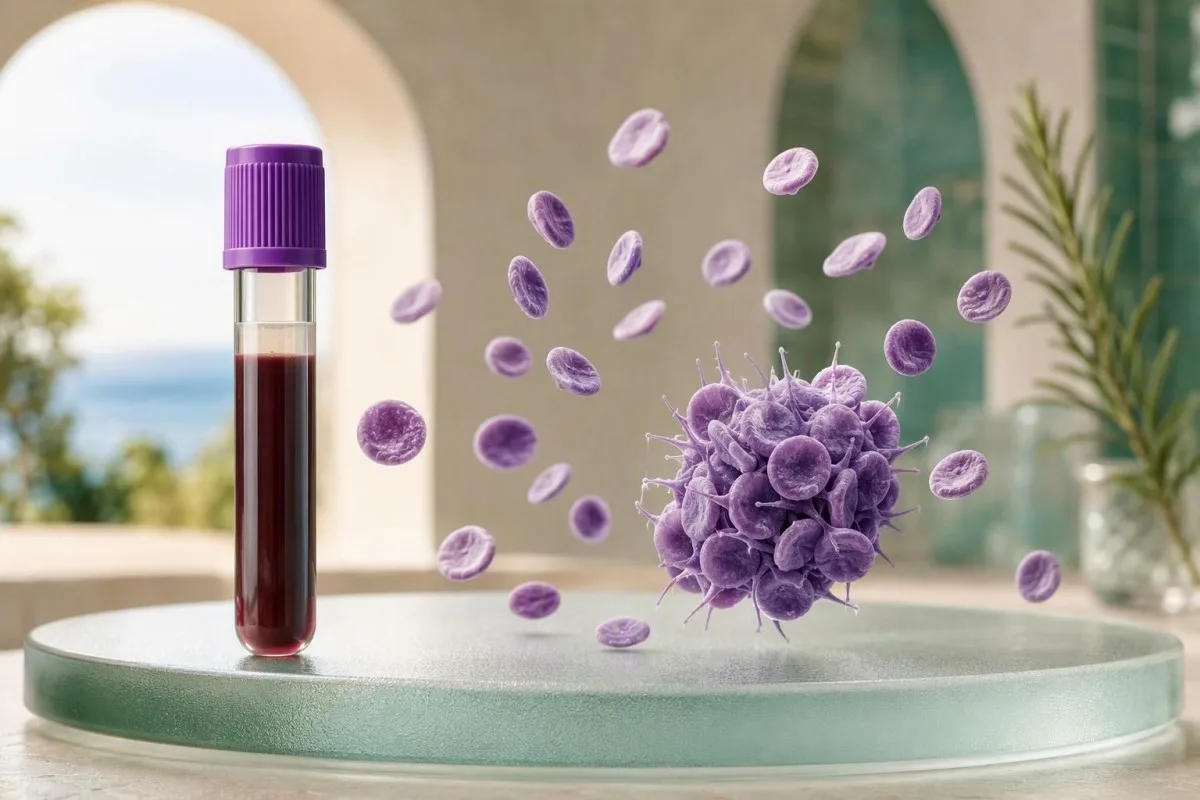
Ang ubos nga gidaghanon sa platelet mahimong usahay usa ka sayop sa pagsukod nga may kalabutan sa tubo kay sa usa ka problema sulod sa imong lawas. Ania kung unsaon pag-ila ang pseudothrombocytopenia nga may kalabutan sa EDTA sa dili pa ka nganlan og thrombocytopenia.


- Pseudothrombocytopenia usa ka sayop nga ubos nga gidaghanon sa platelet nga gipahinabo sa pagtipon sa mga platelet human sa pagkolekta, kasagaran sa usa ka EDTA tube.
- Kasagaran nga range sa platelet alang sa kadaghanan sa mga hamtong nga dili mabdos mga 150-450 × 10⁹/L, bisan pa ang mga laboratoryo nagtakda sa ilang kaugalingon nga mga interval.
- Mga tipon sa platelet sa smear mahimong hinungdan nga ang usa ka automated analyzer makapaubos sa gidaghanon sa mga platelet tungod kay ang usa ka kumpol dili masukod ingon mga bulag nga selula.
- Pag-usab sa tubo gamit ang citrate sagad makasulbad sa pagtipon sa platelet sa EDTA; ang mga laboratoryo kasagarang magamit ug 1.1 nga pagtul-id sa dilution sa gidaghanon sa platelet sa citrate.
- Walay mga simtomas sa pagdugo dugang pa sa usa ka dili tinuyo nga ubos nga gidaghanon sa platelet kinahanglan mag-aghat sa usa ka pagrepaso sa smear sa dili pa ang pagtambal o mga desisyon sa dinalian nga referral.
- Ang tinuod nga thrombocytopenia mahimong mag-uban sa paggugol sa EDTA nga mga platelet, busa ang normal nga resulta sa citrate makapahasubo apan kinahanglan nga mohaum sa klinikal nga hulagway.
- Kinahanglan ug dali nga assessment gikinahanglan pa alang sa dili makontrol nga pagdugo, bag-ong kaylap nga petechiae, grabeng sakit sa ulo, kalibog, o ihap sa platelet nga ubos sa 10 × 10⁹/L.
Unsay tinuod nga gipasabot sa pagtipon sa platelet sa EDTA
Ang paggugol sa EDTA nga mga platelet usa ka in-vitro nga sayop sa laboratoryo diin ang mga platelet magdikit sa koleksyon nga tubo, nga hinungdan sa usa ka peke nga ubos nga awtomatikong ihap sa platelet. Dili kini sa iyang kaugalingon nagpasabut nga ang mga platelet giguba sa lawas, ug kini kasagaran dili makamugna og peligro sa pagdugo.
Ang EDTA mao ang additive sa lavender-top tube nga gigamit alang sa kadaghanan sa bug-os nga ihap sa dugo tungod kay kini nagbugkos sa calcium ug nagpugong sa coagulation. Sa gamay nga subset sa mga tawo, ang pagtangtang sa calcium nagbutyag sa mga platelet surface target nga nagtugot sa natural nga mga antibody sa pagdugtong sa mga platelet. Ang analyzer mahimong mag-ihap sa usa ka platelet cluster isip usa ka dako nga particle, usa ka puti nga selula-kadako nga panghitabo, o wala gayud; tan-awa ang among kinatibuk-ang ideya sa unsay naa sa CBC.
Sa akong klinikal nga trabaho, ang klasiko nga report usa ka ihap sa platelet nga 48 × 10⁹/L sa usa ka tawo nga hingpit nga maayo ang pamati, walay pagdugo, ug adunay normal nga hemoglobin ug ihap sa puti nga selula. Kanang kalainan dili pruweba, apan kini ang higayon sa paghunong. Kantesti mao ang AI blood test analyzer nga nag-flag sa usa ka nahimulag nga ubos nga ihap sa platelet kauban ang mga komento sa laboratoryo sama sa platelet aggregates, imbes nga tratohon ang numero isip usa ka diagnosis.
Ang EDTA-dependent pseudothrombocytopenia gibanabana nga mga 0.03-0.27% sa mga regular nga outpatient sample, nga adunay mas taas nga rate sa mga sample nga na-refer na alang sa ubos nga ihap sa platelet. Si Lippi ug mga kauban naghulagway niini ingon usa ka klinikal nga dili makadaot apan potensyal nga sangputanan nga pre-analytical nga panghitabo tungod kay kini mahimong hinungdan sa dili kinahanglan nga mga pagpaospital, mga platelet transfusion, o steroid treatment (Lippi et al., 2012).
Unsaon pag-ubos sa gidaghanon sa platelet sa mga analyzer ang mga sample nga nagtipon
Ang mga awtomatikong ihap sa platelet kasaligan alang sa nagkatagak nga mga platelet, apan ang mga kumpol nahulog sa gawas sa gidak-on ug signal patterns nga gipaabot sa analyzer. Ang usa ka ihap mahimo, busa, mahulog gikan sa usa ka tinuod nga 220 × 10⁹/L ngadto sa usa ka daw 40 × 10⁹/L nga walay bisan unsang biolohikal nga pagkawala sa platelet.
Ang mga impedance analyzer nagklasipikar sa mga particle ilabi na pinaagi sa volume, samtang ang mga optical system nagdugang og impormasyon sa light-scatter. Ang platelet kasagaran mga 2-3 micrometers ang gilapdon, apan ang usa ka clump mahimong magsapaw sa fragment sa pula nga selula o rehiyon sa leukocyte. Mao kini ang hinungdan ngano nga ang usa ka platelet histogram mahimong dili normal ug ngano nga ang usa ka laboratoryo mahimong magdugang “anaa ang mga platelet clump” o “dili kasaligan ang ihap.”
Ang platelet flag sa analyzer usa ka aghat alang sa pagrepaso sa tawo, dili usa ka katapusang diagnosis. Ang manwal nga pagbanabana gikan sa usa ka maayong pagkahimo nga peripheral smear mahimong mas mapuslanon kaysa pag-usab sa parehas nga EDTA tube, labi na kung ang sample naglingkod sulod sa 2 ka oras sa wala pa ang analysis. Alang sa praktikal nga mga threshold sa palibot sa mga pamaagi, ang among giya sa ihap sa platelet sa wala pa ang pagkuha sa ngipon nagpatin-aw ngano nga ang usa ka naberipikar nga resulta importante.
Ang dagkong mga platelet nagmugna og lain, usahay nagkasapaw nga problema. Ang dagkong indibidwal nga mga platelet mahimong masipyat sa mga pamaagi sa impedance bisan walay makitang mga kumpol, kasagaran nagpataas sa mean platelet volume (MPV). Ang taas nga MPV dili mapulihan sa pseudothrombocytopenia; ang among pagrepaso sa mga hinungdan sa dagkong platelet nagbulag niining duha ka mga resulta.
Unsa ang hitsura sa mga tipon sa platelet sa usa ka smear
Ang mga platelet clump sa smear nagpakita ingon dili regular nga grape-like nga mga grupo sa gagmay nga purpura nga granular nga mga elemento, kasagaran nagpunting sa feathered edge sa slide. Ang ilang lokasyon importante tungod kay ang pag-ihap lamang sa sentro nga smear field mahimong makalimtan ang mismong bahin nga nagpatin-aw sa ubos nga resulta.
Usa ka nabansay nga morphologist ang nagsusi sa lawas ug ikog sa pelikula ubos sa taas nga gahum, dili lamang usa ka representante nga field. Ang platelet satellitism usa ka mas talagsaon nga EDTA-associated pattern diin ang mga platelet naglibot sa neutrophils sama sa usa ka rosette; kini mahimo usab nga makunhuran ang gitaho nga ihap sa platelet. Ang duha ka mga resulta mga panghitabo sa sample, bisan pa ang satellitism ug lapad nga mga aggregate mahimong usahay mag-uban.
Usa ka mapuslanon nga detalye mao nga ang EDTA clumping kasagaran molambo sa paglabay sa panahon. Ang usa ka sample nga gisukod 10 ka minuto human makolekta mahimong magpakita og 118 × 10⁹/L, dayon 42 × 10⁹/L sa 90 ka minuto samtang daghan pa ang mga aggregate nga naporma. Ang mga laboratoryo nagkalainlain sa ilang workflow, mao nga ang usa ka normal nga inisyal nga ihap dili hingpit nga makawagtang niini nga artifact kung adunay usa ka ulahi nga flag sa analyzer.
Kung ako, si Thomas Klein, MD, makakita og ubos nga ihap nga giubanan sa komento sa smear apan walay klinikal nga pagdugo, mangayo ko sa aktwal nga interpretasyon sa smear sa dili pa hisgutan ang immune thrombocytopenia. Ang susamang panghunahuna nga unang mikroskopyo makatabang kon ang report naghisgot og mga schistocyte sa smear sa dugo, bisan og ang mga schistocyte nagkinahanglan og mas dinalian nga klinikal nga konteksto.
Nganong ang EDTA makapahinabog mga tipon sa platelet sa pipila ka tawo
Ang EDTA makapahinabog pagtipon sa mga platelet pinaagi sa pagkuha og calcium ug pag-usab sa porma sa mga platelet membrane glycoproteins, nga magtugot sa mga antibody nga makakabit ug makadugtong sa silingang mga platelet. Kining reaksyona mahitabo human sa pagkolekta, dili tungod kay ang EDTA nakadaot sa naglibot nga mga platelet sulod sa lawas.
Ang labing maayong mekanismo naglakip sa mga antibody, kasagaran IgG, IgM, o IgA, nga nagila sa mga tinago nga dapit sa platelet GPIIb/IIIa complex human sa pagbag-o sa porma nga nagdepende sa calcium. Ang reaksyon nagdepende sa temperatura ug oras sa pipila ka mga pasyente, nga nagpatin-aw ngano nga ang usa ka gipainit nga sample usahay makapauswag sa pag-ihap apan dili kini usa ka unibersal nga solusyon. Kini usa ka isyu sa pagka-uyon sa laboratoryo, dili usa ka alerdyi sa EDTA.
Ang pseudothrombocytopenia mahimong mahitabo sa himsog nga mga tawo ug gitaho kauban sa mga sakit nga autoimmune, impeksyon, kanser, ug pagmabdos, apan kini nga mga kalambigitan dili makapugong sa hinungdan sa usa ka indibidwal. Ang usa ka positibo nga ANA o bag-o lang nga viral illness dili kinahanglan gamiton sa pagpatin-aw sa ihap hangtod nga ang artifact malikayan. Ang AI pagsabot sa resulta sa blood test platform usa ka laboratoryo nga nagbasa sa resulta sa platelet uban sa iyang tubo, mga flag sa analyzer, ug ang nahibilin sa CBC imbes nga mag-inusara.
Ang panghitabo mahimong magpadayon sulod sa mga tuig apan magkalahi tali sa mga pagkuha. Ang usa ka pasyente mahimong adunay ihap sa platelet nga 35 × 10⁹/L sa EDTA sa Lunes ug 230 × 10⁹/L sa citrate sa samang buntag, unya magpakita og partial clumping pag-usab paglabay sa mga bulan. Ang pagrekord sa mas gusto nga tubo sa rekord sa laboratoryo makapugong sa balik-balik nga mga alarma.
Unsaon pag-confirm sa pseudothrombocytopenia ang pag-usab sa tubo gamit ang citrate
Ang ihap sa platelet nga normal sa usa ka sodium citrate tube samtang ang EDTA tube adunay mga aggregate kusganong nagsuporta sa EDTA-dependent pseudothrombocytopenia. Ang ihap sa citrate nagkinahanglan og pag-adjust sa pagdilute tungod kay ang tubo adunay liquid anticoagulant.
Ang mga blue-top sodium citrate tube kasagarang napuno sa 9:1 ratio sa dugo-sa-anticoagulant. Daghang mga laboratoryo ang nagpadaghan sa gisukod nga ihap sa platelet sa citrate sa 1.1 aron matul-id ang pagdilute, bisan pa ang gi-validate nga pamaagi sa lokal nga laboratoryo maoy mangingibabaw. Pananglitan, ang usa ka hilaw nga resulta sa citrate nga 182 × 10⁹/L mahimong mga 200 × 10⁹/L human sa pagtul-id.
Ang redraw kinahanglan nga husto nga mapuno ug hinayhinay nga isagol. Ang kulang sa sulod nga citrate tube nag-usab sa ratio sa anticoagulant ug makahimo og lain nga makapahisalaag nga resulta, nga usa ka rason ngano nga ang usa ka laboratory scientist mahimong magdumili sa usa ka daw yano nga pag-usab. Ang among katin-awan sa mga kolor sa tubo sa pagsulay sa dugo makatabang sa mga pasyente sa pag-ila ngano nga ang pagpili sa tubo usa ka bahin sa pamaagi sa pagsulay.
Ang magnesium sulfate o acid-citrate-dextrose tubes mahimong mapuslanon kung magpadayon ang clumping sa citrate, apan kini kasagaran usa ka desisyon nga gipangulohan sa laboratoryo. Si Nagler ug kaubanan nagdokumento sa usa ka kaso diin ang pag-ila sa EDTA-dependent pseudothrombocytopenia nakalikay sa usa ka wala kinahanglana nga diagnostic work-up human ang citrate testing nagpakita og igong ihap (Nagler et al., 2014).
Kanus-a dili makasulbad sa pangutana ang gidaghanon sa platelet sa citrate
Ang usa ka citrate redraw dili makawagtang sa tinuod nga thrombocytopenia kung ang gitul-id nga ihap nagpabilin nga ubos, ang clumping mahitabo sa labaw pa sa usa ka anticoagulant, o ang mga sintomas nagpakita og pagdugo. Ang ubang mga pasyente adunay multi-anticoagulant platelet aggregation, ug ang uban adunay tinuod nga ubos nga ihap kauban sa usa ka artifact.
Kung ang gitul-id nga ihap sa platelet sa citrate mao ang 82 × 10⁹/L ug ang smear walay clumps, kini tinuod nga thrombocytopenia hangtod mapamatud-an nga sayop. Kung ang EDTA mao ang 25 × 10⁹/L ug ang citrate mao ang 86 × 10⁹/L nga adunay nahabilin nga mga aggregate, mahimong adunay artifact ug tinuod nga pagkunhod. Ang clinical team kinahanglan mogamit sa labing maayo nga gi-verify nga pagbanabana, dili lang pagpili sa labing makahupay nga numero.
Ang pag-clot sa specimen mahimo usab nga makawala sa balido sa usa ka CBC tungod kay ang mga platelet magamit sulod sa microclot. Dili sama sa EDTA pseudothrombocytopenia, ang partially clotted specimen mahimong makaapekto usab sa mga puti nga selula ug mga red-cell indices. Basaha ang among gabay sa redraw pagkahuman sa mga problema sa sample alang sa praktikal nga mga kalainan tali sa mga artifact sa koleksyon.
Ang mga tusok sa tudlo dili awtomatikong mas luwas. Ang hinay nga pagkolekta, pagpuga, o paglangan sa pagsagol makapadasig sa lokal nga pagtipon ug makompromiso ang ihap sa platelet, labi na kung ang gitaho nga kantidad ubos sa 100 × 10⁹/L. Ang pag-recollect pinaagi sa ugat nga adunay dali nga pagproseso kasagaran ang mas hinlo nga ruta sa kumpirmasyon.
Mga sakop sa gidaghanon sa platelet, risgo sa pagdugo, ug ang lit-ag sa artifact
Kadaghanan sa mga laboratoryo sa mga hamtong naggamit ug platelet count reference interval nga hapit sa 150-450 × 10⁹/L, apan ang risgo sa pagdugo nagdepende sa napamatud-an nga ihap, ang hinungdan niini, ang pag-andar sa platelet, ug mga tambal. Ang sayop nga ubos nga resulta sa EDTA kinahanglan dili gamiton sa pag-inusara aron isalikway ang usa ka pamaagi o magreseta og pagtambal.
Ang kusang dako nga pagdugo mahimong mas lagmit samtang ang tinuod nga ihap sa platelet moubos ubos sa mga 10 × 10⁹/L, samtang daghang mga tawo nga adunay lig-on nga ihap nga labaw sa 50 × 10⁹/L adunay gamay nga kusang pagdugo. Kini mga lapad nga klinikal nga mga giya, dili permiso sa pagbalewala sa mga sintomas. Ang mga anticoagulant, aspirin, sakit sa atay, pagkapakyas sa kidney, ug dili maayo nga pag-andar sa platelet mahimong makausab sa risgo sa bisan unsang numero.
Ang ihap sa platelet nga 90 × 10⁹/L nagkinahanglan og lahi nga pagdumala sa usa ka himsog nga tawo nga adunay normal nga resulta sa citrate kaysa sa usa ka tawo nga adunay bag-ong melena ug taas nga INR. Mao kana ang hinungdan nga ang interpretasyon sa ihap sa platelet nahimutang tapad sa pagsulay sa coagulation; ang among aPTT ug clotting test guide nagpatin-aw kung unsa ang normal nga clotting screen ang mahimo ug dili mahimong isalikway.
Ang mga laboratoryo mahimong mogamit ug 140 × 10⁹/L imbes nga 150 × 10⁹/L isip ubos nga reference limit, labi na sa mga lokal nga nakuha nga mga interval. Ang usa ka reference interval naghulagway sa 95% sa usa ka populasyon sa comparator; kini dili naghubit sa usa ka unibersal nga threshold sa pagtambal. Kini nga kalainan makaluwas sa usa ka katingalahang gidaghanon sa dili kinahanglan nga kabalaka.
Mga sumbanan sa CBC nga naghimo sa artifact nga mas lagmit
Ang usa ka nahilit nga dili tinuyo nga ubos nga ihap sa platelet nga adunay normal nga hemoglobin, puti nga mga selula, ug komento sa paggubat mao ang labing nagpaila nga pattern sa CBC sa pseudothrombocytopenia. Kini nga pattern nagpaila kaysa diagnostic tungod kay ang sayo nga immune o drug-related thrombocytopenia mahimo usab nga nahiliti.
Ang tinuod nga mga sakit sa utok sa bukog kanunay makaapekto labaw pa sa usa ka linya sa selula sa dugo, bisan kung adunay mga eksepsiyon. Ang ubos nga mga platelet nga gikombinar sa pagkunhod sa hemoglobin, dili normal nga mga selula sa dugo, blasts, o malungtarong mga sintomas sa konstitusyon nagtawag alang sa dali nga pagrepaso sa clinician ug kanunay usa ka pormal nga pagsusi sa pelikula. Ang among artikulo sa CBC pathway para sa mga sakit sa dugo naglatid kung ngano nga kini nga mga kumpol nagbag-o sa pagka-dinalian.
Ang ratio sa platelet-lymphocyte mahimong walay pulos kung ang denominator balido apan ang platelet numerator artipisyal nga gipaubos. Ang PLR nga 60 nga kalkulado gikan sa usa ka EDTA-clumped count kinahanglan dili ipasabut ingon usa ka signal sa panghubag o cardiovascular. Kini usa ka hilom apan komon nga ikaduha nga sayup sa mga automated nga report sa panglawas; tan-awa ang among pagpatin-aw sa taas nga PLR nga mga resulta.
Kantesti AI nag-ila sa pagkasumpaki tali sa ubos nga ihap sa platelet ug normal nga kasikbit nga mga sukod sa CBC, unya nagtudlo sa magbabasa sa pag-verify sa mga komento sa sample. Usa ka AI-powered blood test analysis tool kinahanglan dili gayud magbalhin sa usa ka single unverified platelet value ngadto sa usa ka label sa sakit. Kana nga klinikal nga pagpugong mas importante kaysa katulin.
Pagmabdos, pag-atiman sa ospital, ug uban pang mga kahimtang nga adunay taas nga stake
Ang paggubat sa platelet sa EDTA mahimong mahitabo sa panahon sa pagmabdos ug pag-atiman sa ospital, apan kini kinahanglan dili gayud ipagawas kung ang tinuod nga thrombocytopenia mahimong makapausab sa dinalian nga pagdumala. Ang mga hinungdan nga piho sa pagmabdos sama sa gestational thrombocytopenia, pre-eclampsia, HELLP syndrome, ug immune thrombocytopenia nanginahanglan og napamatud-an nga ihap.
Ang mga ihap sa platelet kasagarang moubos sa dili komplikado nga pagmabdos, ug ang pipila nga mga laboratoryo modawat sa mas ubos nga mga limitasyon sa reperensiya nga piho sa trimester. Ang ihap nga ubos sa 100 × 10⁹/L dili kasagaran alang sa dili komplikado nga gestational thrombocytopenia ug nanginahanglan og mabinantayon nga klinikal nga pagsusi, bisan kung makita ang mga EDTA aggregates. Ang among piho sa trimester nga giya sa reperensiya sa platelet sa pagmabdos naghatag og konteksto nga dili mopuli sa pagrepaso sa obstetric.
Sa ospital, ang kalit nga pagkahulog nga labaw sa 50% gikan sa baseline mahimong makapataas sa mga pangutana bahin sa sepsis, pagkaladlad sa tambal, heparin-induced thrombocytopenia, pagkasabwag, o pagkonsumo nga may kalabotan sa aparato. Ang usa ka artifact sa EDTA mahimong magpakaaron-ingnon nga usa ka dramatikong pagkunhod, labi na kung ang miaging resulta gikan sa lainlaing pamaagi sa laboratoryo. Ang pagtandi sa usa ka napamatud-an nga resulta sa citrate sa baseline sa pasyente kanunay nga mas mapuslanon kaysa pag-usab sa usa ka routine EDTA CBC.
Sa wala pa ang epidural, operasyon, siklo sa chemotherapy, o platelet transfusion, pangutan-a kung gikumpirma ba sa laboratoryo ang kantidad sa usa ka smear o alternatibong anticoagulant. Nakita nako ang mga paglangan sa pag-atiman nga nalikayan sa usa ka tawag sa telepono. Sa kasukwahi, ang aktibo nga mga sintomas o usa ka dili lig-on nga pasyente kinahanglan susihon samtang ang pagkumpirma nagpadayon.
Mga tambal ug mga pagdayagnos nga dili angay basulon dayon
Ang pag-clump sa platelet sa EDTA kinahanglan isalikway sa wala pa i-attribute ang usa ka ubos nga ihap sa platelet sa usa ka tambal, sakit nga autoimmune, o immune thrombocytopenia. Ang paghunong sa usa ka bililhon nga tambal base sa usa ka dili napamatud-an nga ihap mahimong hinungdan sa dili kinahanglan nga kadaot.
Ang Heparin, mga produkto nga adunay quinine, trimethoprim-sulfamethoxazole, valproate, linezolid, chemotherapy, ug pipila ka mga immune therapies mahimong hinungdan sa tinuod nga thrombocytopenia. Ang relasyon sa oras hinungdanon: ang usa ka tinuod nga pagkahulog nga nalangkit sa tambal kasagarang magpadayon sa usa ka husto nga nakolekta nga sample sa citrate ug dili mawala kung ang EDTA pulihan. Ang kasaysayan sa tambal kinahanglan maglakip sa mga injection, over-the-counter nga mga produkto, ug mga herbal nga pagpangandam.
Ang Immune thrombocytopenia usa ka diagnosis nga pag-exclisyon, dili usa ka bandila sa laboratoryo. Mahimo kini nga magpakita nga adunay mga platelet nga ubos sa 100 × 10⁹/L, apan ang usa ka nagkumpol nga EDTA smear naghimo sa inisyal nga ihap nga dili masabtan. Lippi et al. (2012) piho nga nagpasidaan nga ang pag-ila sa pseudothrombocytopenia makapugong sa dili angay nga mga terapiya sama sa corticosteroids ug splenectomy.
Kung ang usa ka report daw sukwahi sa imong miaging mga resulta, tipigi ang orihinal nga PDF ug timan-i ang petsa sa pagkolekta, komento sa tubo, acute illness, ug bag-ong mga tambal. Ang among giya sa makabuluhang mga kausaban tali sa mga blood test nagpatin-aw kung ngano nga ang usa ka numerikal nga delta dili awtomatiko nga usa ka biyolohikal nga pagbag-o.
Unsay sunod nga ipangutana sa imong laboratoryo o clinician
Alang sa usa ka wala damha nga ubos nga ihap sa platelet, pangutan-a kung nakita ba ang mga clump sa platelet, kung nasusi ba ang usa ka peripheral smear, ug kung mahimo ba ang usa ka alternatibong ihap sa anticoagulant. Ang tulo ka mga pangutana kasagaran maklaro ang sunod nga lakang nga mas paspas kaysa pagpangita og mga sintomas online.
Ang usa ka praktikal nga hangyo mao: “Mahimo bang repasohon sa laboratoryo ang blood film alang sa mga platelet aggregate ug, kung gikinahanglan, sublion ang ihap sa platelet sa citrate?” Dili kini paghangyo sa usa ka partikular nga diagnosis; kini paghangyo nga ang pagsukod ma-validate. Kung ang sample nakolekta sa laing dapit, ang clinician mahimong manginahanglan nga mag-order ug bag-ong draw kaysa pagdugang og testing sa usa ka daan nga tubo.
Pangayo sa corrected resulta sa citrate ug kung ang mga clump magpadayon sa kana nga tubo. Ang usa ka hilaw nga resulta nga 145 × 10⁹/L mahimong tan-awon nga borderline hangtod ang pagtul-id sa dilution maghatag ug mga 160 × 10⁹/L. Pangutan-a usab kung gigamit ba sa laboratoryo ang optical o fluorescence platelet count, tungod kay kini nga mga pamaagi usahay makapauswag sa enumeration sa mga komplikado nga sample.
Ang 2026 interpretation workflow sa Kantesti nag-awhag sa mga tiggamit sa pagtandi sa numerikal nga resulta sa mga natad sa narrative ug flag sa laboratoryo sa wala pa molihok sa usa ka alerto. Alang sa mas lapad nga safety framework, ang among AI report accuracy checklist naglangkob sa transcription, mga yunit, mga saklaw sa reperensiya, ug pagpamatuod sa resulta.
Unsay dili buhaton samtang naghulat sa kumpirmasyon
Ayaw pagsugod og mga suplemento, ayaw paghunong sa mga gireseta nga tambal, o pag-ingon nga ikaw adunay sakit sa pagdugo tungod lamang kay ang usa ka EDTA platelet count ubos. Sa samang higayon, ayaw ibaliwala ang aktibo nga pagdugo tungod lang kay gidudahan ang pag-clump.
Walay diyeta, bitamina, o tambal sa balay nga makasulbad sa EDTA-dependent pseudothrombocytopenia tungod kay ang mga platelet nag-clump sa tubo, dili napakyas sa sulod sa lawas. Ang kakulangan sa folate, bitamina B12, ug iron mahimong makaapekto sa pagporma sa dugo sa ubang mga kahimtang, apan ang mga suplemento dili makapamatuod sa usa ka kwestyonable nga ihap. Ang pagtratar sa artifact mahitungod sa pagkolekta ug analisis.
Likayan ang mga dili kinahanglanon nga aspirin, ibuprofen, naproxen, ug bug-at nga pag-inom og alkohol hangtud nga ang usa ka kliniko naklaro sa usa ka ubos kaayo nga gitaho nga ihap, labi na kung dali ka magdugo. Ayaw hunonga ang mga anticoagulant, mga tambal nga antiplatelet, mga tambal nga kontra-seizure, o mga pagtambal sa kanser nga wala’y tambag sa nagreseta; ang indikasyon alang sa mga tambal nga kana mahimo nga adunay labi ka dako nga peligro kaysa sa wala pa mapamatud-an nga resulta.
Ang pagpadayon sa usa ka mubu nga timeline sa resulta makapausab sa appointment. Ang among giya sa pagsubay sa resulta sa laboratoryo nagtambag sa pagsulat sa oras sa pagkuha, bag-o nga sakit, mga tambal, mga komento sa sample, ug kung ang resulta ba gikan sa EDTA o citrate.
Mga timailhan nga nagkinahanglan ug dinalian nga pagtimbang-timbang sa medisina
Pangayo og dinalian nga medikal nga pagsusi alang sa dili makontrol nga pagdugo, itom nga mga tinai, pagsuka og dugo, usa ka grabe nga bag-ong labad sa ulo, kalibog, pagkalipong, o kaylap nga pinpoint rash, bisan kung gidudahan ang pagtipon sa EDTA. Ang usa ka sayup sa laboratoryo ug usa ka tinuod nga emerhensya mahimong magkauban.
Ang tinuod nga ihap sa platelet ubos sa 10 × 10⁹/L kasagaran gitratar ingon usa ka dinalian nga resulta tungod kay ang peligro sa spontaneous mucosal ug internal nga pagdugo misaka pag-ayo. Ang ihap nga ubos sa 20 × 10⁹/L nga adunay bag-ong pagdugo, hilanat, grabe nga taas nga presyon sa dugo, mga komplikasyon sa pagmabdos, o bag-o nga pagkaladlad sa heparin usab angayan alang sa input sa kliniko sa parehas nga adlaw. Ang lokal nga tambag sa emerhensya kinahanglan nga unahon kaysa bisan unsang interpretasyon sa online.
Ang mga bag-ong simtomas sa neurological labi ka hinungdanon tungod kay ang pagdugo sa sulod sa bagol-bagol dili kasagaran apan seryoso. Ayaw pagdrayb sa imong kaugalingon kung ikaw adunay grabe nga labad sa ulo nga adunay kahuyang, pagbag-o sa sinultihan, pagkahulog, o kalibog. Sa mga bata, ang usa ka dili-mabasa nga rash nga adunay hilanat nanginahanglan dinalian nga pagsusi bisan unsa pa ang resulta sa platelet.
Si Thomas Klein, MD, nagtambag sa mga pasyente sa pagbulag sa pangutana nga “Tinuod ba kini nga ihap?” gikan sa “Luwas ba ang tawo karon?” Ang una kasagaran nagkinahanglan og smear ug citrate redraw; ang ulahi nagdepende sa mga sintomas, mga nakaplagan sa eksaminasyon, ug ang tibuok klinikal nga hulagway. Ang among gabay sa second-opinion para sa blood test makatabang sa pag-andam sa usa ka gipunting nga diskusyon pagkahuman sa pag-atubang sa mga dinalian nga isyu.
Unsaon pag-interpret sa Kantesti ang usa ka gi-flag nga gidaghanon sa platelet sa luwas nga paagi
Ang Kantesti AI nagtratar sa usa ka ubos nga ihap sa platelet nga adunay mga komento sa pagtipon sa EDTA ingon usa ka signal sa pag-verify, dili ingon usa ka pamatuod sa thrombocytopenia. Ang among interpretasyon nagbutang sa mga bandila sa analyzer, ang ubang mga linya sa CBC, mga nangaging kantidad, ug mga gitaho nga sintomas sa unahan sa usa ka yano nga pula-o-berde nga label.
Si Kantesti usa ka AI lab test interpretation service gilaraw aron ipatin-aw ang datos sa laboratoryo sa yano nga pinulongan samtang gipreserbar ang mga limitasyon sa orihinal nga report. Kung ang usa ka na-upload nga PDF nag-ingon nga “nagtipon ang mga platelet,” ang among sistema kinahanglan magsulti sa tiggamit nga ang numero mahimo nga sayup nga ubos ug nga ang laboratoryo o kliniko mahimo kini kumpirmahon pinaagi sa pagrepaso sa pelikula o sample nga citrate.
Ang optical character recognition mahimong sayop nga makabasa sa decimal point, usa ka yunit, o usa ka footnote sa laboratoryo. Mao kana ang hinungdan nga ang mga pasyente kinahanglan mag-inspeksyon sa preview sa imahe sa dili pa mosalig sa bisan unsang digital nga interpretasyon, labi na sa palibot sa mga kantidad sama sa 18 kumpara sa 180 × 10⁹/L. Ang among PDF upload quality checklist nagpatin-aw sa pipila ka mga pagsusi nga makapugong sa kadaghanan nga malikayan nga mga sayup.
Ang pagdumala sa klinikal nagpabilin nga trabaho sa tawo. Ang pamaagi sa Kantesti gisusi batok sa mga workflow nga nakatuon sa kaluwasan; ang mga magbabasa nga gusto nga masabtan ang among pamaagi mahimong magrepaso sa among teknikal nga validation ug klinikal nga pagdumala. Ang AI makahimo sa pag-organisar sa mga pangutana sa epektibo nga paagi, apan dili kini makasusi sa aktuwal nga smear o makatimbang-timbang sa aktibo nga pagdugo.
Usa ka praktikal nga plano sa pagsunod human sa pagtipon sa platelet sa EDTA
Ang kasagaran nga plano sa pagsunod mao ang pagdokumento sa EDTA artifact, pagkuha og gipamatud-an nga alternatibong tubo nga ihap sa platelet, ug paggamit sa resulta alang sa umaabot nga mga desisyon sa klinika. Kadaghanan sa mga tawo wala magkinahanglan og pagtambal alang sa artifact mismo sa higayon nga ang laboratoryo makatukod sa sumbanan.
Pangayo og rekord sa laboratoryo aron isulat ang “EDTA-dependent platelet clumping” o katumbas nga pulong kung klaro ang kumpirmasyon. Sa umaabot nga mga pagkuha, ang team sa phlebotomy mahimong mangolekta og citrate tube kauban ang routine EDTA CBC, nga makatipig sa ikaduhang appointment. Kini ilabi na nga mapuslanon sa wala pa ang operasyon, sa panahon sa pagmabdos, o kung ang usa ka protocol sa pagtambal adunay mga threshold sa platelet.
Ang usa ka gipamatud-an nga baseline mas bililhon kaysa balik-balik nga wala pa mapamatud-an nga ubos nga mga kantidad. Kung ang imong gitul-id nga ihap sa citrate lig-on sa 205 × 10⁹/L sulod sa 12 ka bulan, ang umaabot nga kantidad sa EDTA nga 55 × 10⁹/L nga adunay mga aggregates dili kaayo makapabalaka kaysa sa parehas nga numero sa usa ka tawo nga walay nangaging dokumentasyon. Ang mga uso mapuslanon lamang kung ang pamaagi sa pagsulay manag sama.
Ang Kantesti nakasuporta sa labaw pa sa 2 milyon nga mga tiggamit sa 127+ ka mga nasud nga adunay daghang pinulongan nga mga pagpatin-aw sa laboratoryo, apan ang mga resulta nagpabilin sa relasyon sa pag-atiman sa imong kliniko. Ang among mga medical reviewer ug Lupon sa Medikal nga Magtatambag naghatag gibug-aton sa parehas nga katapusang lagda: kumpirmahon una ang ihap sa platelet, unya pagdesisyon kung unsa—kung adunay—kinahanglan nga pagtambal.
Mga publikasyon sa panukiduki
Sugod Agosto 29, 2026, ang duha ka Kantesti research publications nga gilista sa ubos maoy mga supplementary educational resources. Dili kini makahatag ug diagnosis sa EDTA-dependent pseudothrombocytopenia; ang laboratory smear ug alternatibong-anticoagulant platelet count nagpabilin nga mga may kalabotan nga himan sa kumpirmasyon.
Kanunay nga Gipangutana nga mga Pangutana
Ang pagpundok sa platelet tungod sa EDTA makahatag ba ug ubos kaayo nga ihap sa platelet?
Oo. Ang paggumpol sa EDTA platelet makahatag ug dakong bakak nga ubos nga ihap sa platelet, usahay ubos sa 50 × 10⁹/L, kung ang tinuod nga gidaghanon sa naglibot nga platelet sa usa ka tawo normal. Ang analyzer dili makaihap sa mga platelet aggregates kay dili kini kasaligang makaila sa matag platelet sulod sa usa ka hugpong. Ang usa ka peripheral smear nga nagpakita og mga aggregates ug usa ka normal nga gitul-id nga citrate count lig-on nga nagsuporta sa pseudothrombocytopenia. Ang resulta kinahanglan gihapon nga marepaso dayon kung adunay aktibo nga pagdugo o kung ang citrate count magpabilin nga ubos.
Unsaon pagpamatuod sa pseudothrombocytopenia?
Ang pseudothrombocytopenia kasagaran gikumpirma pinaagi sa pagrepaso sa peripheral smear alang sa mga tapok sa platelet ug pag-usab sa ihap sa platelet sa usa ka sodium citrate tube. Ang mga tubo sa citrate adunay likidong anticoagulant, busa daghang mga laboratoryo ang nagpadaghan sa gisukod nga ihap sa platelet sa 1.1 aron mabayran ang pagkatunaw. Pananglitan, ang usa ka hilaw nga ihap sa citrate nga 180 × 10⁹/L kasagarang gitaho nga gibana-bana nga 198 × 10⁹/L human sa pagtul-id. Ang balido nga pagtul-id ug interpretasyon sa smear sa lokal nga laboratoryo kinahanglan maggiya sa katapusan nga resulta.
Ang pagtapok ba sa platelet sa EDTA nagpasabot nga duna koy problema sa pagdugo?
Dili. Ang paggumpol sa platelet sa EDTA lamang usa ka in-vitro sample artifact ug wala magpasabut nga ikaw adunay sakit sa pagdugo o nga ang imong mga platelet nagagumpol sa imong sirkulasyon. Kadaghanan sa mga apektadong tawo walay mga simtomas sa pagdugo ug adunay napamatud-an nga ihap sa platelet sulod sa kasagaran nga sakup sa mga hamtong nga mga 150-450 × 10⁹/L. Kinahanglan gihapon nga imbestigahan sa usa ka clinician ang mga simtomas sa pagdugo, dili normal nga mga pagsulay sa koagulasyon, o usa ka padayon nga ubos nga ihap sa citrate platelet. Ang artifact dili makapanalipod sa usa ka tawo gikan sa dili managsama nga mga risgo sa pagdugo nga gipahinabo sa mga tambal o kondisyon sa medisina.
Mahimo bang magtapok ang mga platelet sa citrate usab?
Oo, bisan tuod ang sodium citrate kasagarang makapugong sa paggugol sa EDTA, ang pagtipon sa platelet usahay magpadayon sa citrate o mahitabo sa daghang mga anticoagulant. Sa maong sitwasyon, ang laboratoryo mahimong mogamit og optical o fluorescence platelet count, dali nga pagproseso sa pagpainit, magnesium sulfate, o acid-citrate-dextrose depende sa napamatud-an nga mga protocol niini. Ang usa ka gitul-id nga citrate count ubos sa 150 × 10⁹/L nga walay mga aggregate kinahanglan itrato isip posibleng tinuod nga thrombocytopenia. Ang multi-anticoagulant clumping dili kasagaran ug nanginahanglan og kumpirmasyon nga gigiyahan sa laboratoryo.
Kinahanglan ba nako usbon ang akong platelet count kung ang report nag-ingon og platelet clumps?
Oo. Ang usa ka report nga nag-ingon nga adunay mga tapok sa platelet, mga aggregate sa platelet, o dili kasaligan nga gidaghanon sa platelet kasagaran nanginahanglan og pagpamatuod kaysa pagdawat sa numerikal nga resulta. Ang kasagaran nga balik-balik mao ang bag-ong nakolekta nga sampol nga sodium citrate nga adunay pagsusi sa smear, labing maayo nga iproseso dayon. Kung ang orihinal nga ihap ubos sa 10 × 10⁹/L o ikaw adunay dili makontrol nga pagdugo, itom nga mga bangkito, grabe nga sakit sa ulo, o kalibog, pangayo dayon og medikal nga pag-atiman samtang gihan-ay ang kumpirmasyon. Ayaw usba ang gireseta nga tambal nga walay tambag gikan sa clinician nga nahibalo nganong kini gireseta.
Makabalik-balik ba ang EDTA pseudothrombocytopenia?
Oo. Ang EDTA pseudothrombocytopenia mahimong magpadayon sa daghang tuig o makita nga nagkalahi tungod kay ang gidak-on sa pagtapok nagdepende sa oras human sa pagkolekta, temperatura sa sample, ug pamaagi sa analyzer. Ang usa ka EDTA sample mahimong magreport ug 70 × 10⁹/L samtang ang lain nga nakolekta sa laing adlaw nagreport ug 145 × 10⁹/L, bisan pa sa makanunayon nga tinuod nga ihap sa platelet. Ang usa ka dokumentado nga normal nga ihap sa citrate naghatag usa ka mapuslanon nga sukaranan alang sa umaabot nga pagtandi. Ang paghangyo sa laboratoryo sa pagrekord sa gipalabi nga anticoagulant mahimong makapugong sa balik-balik nga mga sayup nga alarma.
Karon na ang AI-Powered Blood Test Analysis
Apil sa kapin sa 2 milyon nga mga user sa tibuok kalibutan nga nagsalig sa Kantesti para sa dayon ug tukma nga pag-analisa sa lab test. I-upload ang imong resulta sa blood test ug makadawat og komprehensibong pagsabot sa 15,000+ nga mga biomarker sulod sa mga segundo.
📚 Mga Napangalan nga Research Publications
Klein, T., Mitchell, S., & Weber, H. (2026). Kantesti AI. (2026). C3 C4 Komplement sa Dugo nga Pagsulay & ANA Titer nga Giya. Zenodo. https://doi.org/10.5281/zenodo.18353989. Kantesti AI Medical Research.
Klein, T., Mitchell, S., & Weber, H. (2026). Kantesti AI. (2026). Pagsulay sa Dugo sa Nipah Virus: Giya sa Sayong Pagtuki & Pag-ila 2026. Zenodo. https://doi.org/10.5281/zenodo.18487418. Kantesti AI Medical Research.
📖 Mga Panlabas nga Sanggunian sa Medisina
⚕️ Pagpasabot sa Medikal
Kini nga artikulo para sa katuyoan sa edukasyon ra ug dili kini mosangpot sa medikal nga tambag. Kanunay mokonsulta sa usa ka kwalipikado nga healthcare provider alang sa mga desisyon sa diagnosis ug pagtambal.
Mga E-E-A-T Trust Signals
Kasinatian
Pagsusi sa klinika nga gipangulohan sa doktor sa mga workflow sa interpretasyon sa lab.
Kahanas
Pokus sa medisina sa laboratoryo kung giunsa paglihok ang mga biomarker sa konteksto sa klinika.
Pagka-awtorisado
Gisulat ni Dr. Thomas Klein ug gisusi ni Dr. Sarah Mitchell ug Prof. Dr. Hans Weber.
Kasaligan
Interpretasyon nga base sa ebidensya, nga adunay klaro nga mga agianan sa sunod nga buhat aron makunhuran ang kabalaka.