RBC 计数偏高:脱水造成的假性升高

类别
文章
血常规检查解读 Relative Erythrocytosis 2026年更新 面向患者的说明

A high red blood cell count can reflect concentrated blood rather than extra red cells. The first task is separating temporary fluid loss from a persistent elevation that needs a proper work-up.

📖 ~11分钟 📅
📝 发表: 🩺 医学审阅: ✅ 基于证据
⚡ 快速概要 v1.0 —
  1. 相对性红细胞增多症 means plasma water has fallen, making the RBC count, hemoglobin, and hematocrit look high without creating new cells.
  2. WHO阈值 values that support possible polycythemia vera are hemoglobin above 16.5 g/dL in men or 16.0 g/dL in women, or hematocrit above 49% and 48%, respectively.
  3. Hydration retest is usually reasonable for a mild, isolated elevation after vomiting, diarrhea, heat exposure, fasting, or strenuous exercise—if you are otherwise well.
  4. 利尿剂 can raise hematocrit through fluid loss; do not stop prescribed medication without the clinician who prescribed it.
  5. 需要关注模式: high albumin, total protein, sodium, BUN/creatinine ratio, and urine specific gravity support dehydration more than true red-cell overproduction.
  6. 复查时间 is commonly 1–2 weeks after recovery, normal fluid intake, and 24–48 hours without unusually hard exercise, unless urgent symptoms are present.
  7. 持续升高 after good hydration warrants assessment for smoking exposure, sleep-disordered breathing, altitude, testosterone, lung or kidney disease, erythropoietin, and often JAK2 testing.
  8. 伴随ALP升高的紧急症状包括 include chest pain, new breathlessness, one-sided weakness, visual loss, confusion, or a painful swollen leg; these need immediate care, not a home retest.

What a high RBC result usually means

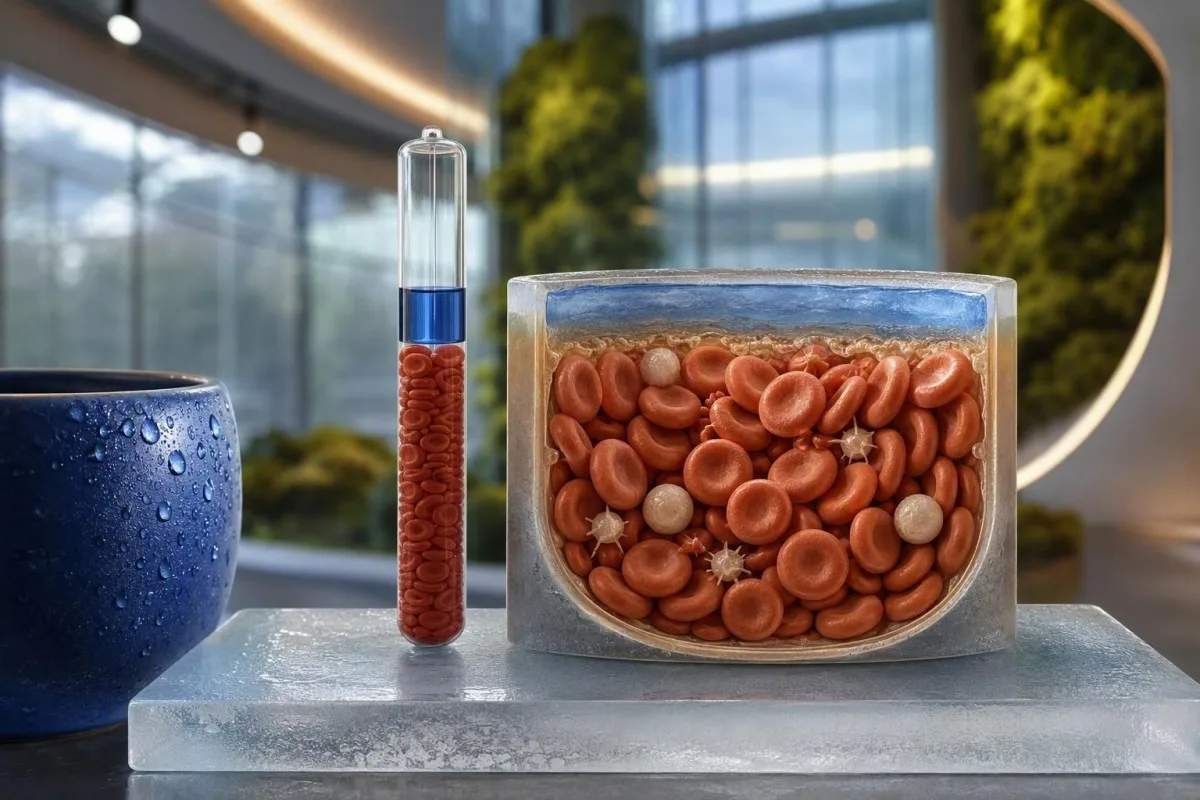
A high RBC count can be a false high from dehydration when fluid loss concentrates the cellular part of blood; it does not automatically mean your marrow is making too many red cells. The clue is whether hemoglobin and hematocrit normalize after recovery and ordinary drinking, rather than staying elevated on a well-prepared repeat CBC.

What does high RBC mean shown through concentrated cellular elements in a CBC sample
图1: Concentrated cellular elements can raise a CBC result when plasma water is low.

The RBC count reports the number of red cells per litre, while 血细胞比容 reports the fraction of whole blood occupied by those cells. Adult reference intervals vary by laboratory, but many use roughly 4.5–5.9 × 10¹²/L for men and 4.1–5.1 × 10¹²/L for women. A value just above range is often less informative than the hemoglobin and hematocrit beside it; our guide to CBC 包含哪些内容 解释了原因。.

Dehydration lowers the liquid component of blood within hours, so the same red-cell mass occupies a smaller measured volume. In clinic, I commonly see this after a stomach bug: RBC 5.8 × 10¹²/L, hemoglobin 17.1 g/dL, hematocrit 51%, then normal values after recovery. This is relative erythrocytosis, not a laboratory mistake and not necessarily a disease.

Kantesti 是一个 人工智能血液检测分析仪 that reads RBC, hemoglobin, hematocrit, red-cell indices, kidney markers, and prior results together. As of September 5, 2026, our clinical review workflow treats a single borderline CBC flag as a prompt to check preparation and trend—not as a diagnosis.

RBC count is not the same as red-cell mass

A CBC cannot directly measure total red-cell mass. It measures concentration, which rises when plasma volume contracts; specialised isotope red-cell-mass studies are now rarely needed, but they illustrate why a concentrated CBC can look alarming without an actual increase in cells.

Relative erythrocytosis versus true red-cell excess

Relative erythrocytosis is a high RBC, hemoglobin, or hematocrit caused by reduced plasma volume, whereas absolute erythrocytosis reflects genuinely increased red-cell mass. Hydration can correct the first pattern but will not correct the second.

What does high RBC mean compared in plasma concentration and true red-cell excess
图2: Plasma contraction and increased cell production can produce similar CBC flags.

True erythrocytosis may be primary, as in polycythemia vera, or secondary to increased erythropoietin from low oxygen, medicines, or rarely a kidney process. The 2016 WHO criteria use hemoglobin above 16.5 g/dL in men or 16.0 g/dL in women as thresholds that should raise the question of polycythemia vera, particularly when persistent (Arber et al., 2016). A single value is not enough to diagnose it.

The practical distinction is the rest of the panel. Dehydration high RBC count patterns often include high albumin, total protein, urea/BUN, sodium, and concentrated urine; absolute erythrocytosis may leave these markers unremarkable. Review our focused article on slightly elevated hemoglobin if hemoglobin, rather than RBC alone, is the flagged result.

A normal RBC count does not rule out erythrocytosis if hemoglobin or hematocrit is high, and an elevated RBC count alone can occur with small red cells from iron deficiency or thalassemia trait. This is why MCV and ferritin matter; a high RBC with MCV below 80 fL is a different clinical conversation.

How dehydration changes the CBC and kidney markers

Dehydration usually raises RBC count, hemoglobin, and hematocrit together, and it often raises albumin, total protein, urea/BUN, creatinine, and urine concentration. A mismatched result—for example, high RBC with low hemoglobin—does not fit simple hemoconcentration well.

What does high RBC mean alongside concentrated urine and kidney laboratory markers
图 3: Kidney and urine clues help distinguish fluid loss from persistent erythrocytosis.

A BUN/creatinine ratio above about 20:1 in US units can support reduced kidney perfusion from fluid loss, although gastrointestinal bleeding, protein intake, corticosteroids, and low muscle mass can alter the ratio. Creatinine may rise modestly after heat exposure or a long run because both filtration and muscle metabolism change. Our 脱水和 eGFR 指南 covers when a low eGFR should be repeated.

Urine specific gravity of 1.025 or higher is compatible with concentrated urine, but it is not a direct hydration meter. Glucose, protein, and some imaging contrast agents can also increase it, so a clinician should interpret it with symptoms and electrolytes. A urine specific gravity reference is useful when the CBC and urinalysis were collected on the same day.

I advise against trying to force-normalise a test by drinking several litres immediately before a draw. Rapid overdrinking can lower sodium, and it creates another unrepresentative sample; normal meals and ordinary thirst-guided fluids for 24–48 hours are generally safer for people without a fluid restriction.

典型成人红细胞比容 Men 41–50%; women 36–44% Ranges differ by laboratory, age, altitude, and pregnancy.
临界偏高 About 1–3 percentage points above local upper limit Often repeat after recovery and normal hydration if isolated.
WHO evaluation threshold Men >49%; women >48% Persistent values merit assessment for erythrocytosis.
明显升高 Around ≥60% Same-day clinical assessment is often appropriate, especially with symptoms.

Vomiting, diarrhea, heat, fasting, and diuretics

Vomiting, diarrhea, heavy sweating, prolonged fasting, and diuretic medicines can all cause a temporary high RBC concentration by reducing plasma water. The degree of elevation depends more on fluid loss and replacement than on how unwell a person feels.

What does high RBC mean after vomiting heat exposure and fluid loss
图 4: Common fluid-loss events can concentrate a CBC before red cells actually increase.

Acute vomiting often produces low chloride and sometimes high bicarbonate because gastric acid and fluid are lost. Loop diuretics such as furosemide and thiazides can produce a similar volume-contracted profile, especially in older adults. A low chloride result belongs in the same clinical frame; see vomiting and diuretic chloride clues 该模式的单独指南。.

Do not stop a prescribed diuretic to improve a CBC without medical advice. People taking these medicines for heart failure, cirrhosis, resistant hypertension, or kidney disease may need a tailored fluid plan, because indiscriminate drinking can worsen swelling or breathlessness. The right question is whether the dose, symptoms, weight, blood pressure, and renal results fit together.

Thirst is helpful but imperfect in adults over 65 and in people with diabetes, kidney disease, or certain neurological conditions. Dark yellow urine, dry mouth, postural light-headedness, reduced urination, and a weight drop of 1 kg over 24 hours can support fluid loss, but severe symptoms deserve assessment rather than self-treatment.

Exercise can temporarily concentrate your blood

Hard endurance exercise can raise hematocrit and hemoglobin for several hours through sweat loss and plasma-volume shifts, even though repeated training may lower baseline hematocrit through expanded plasma volume. Timing is therefore unusually important for athletes.

What does high RBC mean after endurance exercise and temporary plasma volume loss
图 5: Sweat loss and recovery timing can shift a post-exercise CBC concentration.

A 90-minute run in warm weather can remove 1–3 litres of fluid, depending on body size, climate, and sweat rate. Sampling immediately after a race may also show higher creatinine, CK, albumin, and total protein; that cluster is more useful than an RBC result alone. Our marathon blood-test timing guide discusses the recovery markers that commonly change.

For routine monitoring, I usually suggest avoiding unusually intense exercise for 24–48小时 before the draw, arriving rested, and drinking normally the day before. This is not a universal laboratory rule, and elite-athlete monitoring may deliberately test under load—but consistency matters more than perfection. Dr. Thomas Klein has seen many unnecessary referrals disappear once an athlete is retested after a normal recovery week.

Kantesti的 BUN与肌酐研究指南 is particularly helpful when an endurance athlete has both a high hematocrit and a borderline kidney flag. A falling weight, high urine specific gravity, and short recovery interval make hemoconcentration plausible; muscle pain, cola-coloured urine, or very high CK require a different level of caution.

A safe plan for repeating a mildly high CBC

A mildly elevated RBC count can usually be repeated after 1–2 weeks of recovery, ordinary hydration, and stable medication use when you have no red-flag symptoms. Repeat sooner only if your clinician requests it or the initial result was substantially elevated.

What does high RBC mean during a carefully prepared repeat complete blood count
图 6: A consistent, well-prepared repeat draw can reveal whether elevation persists.

Before the repeat, record whether you had diarrhea, vomiting, fever, alcohol intake, a sauna, long travel, altitude exposure, fasting, or intense exercise in the prior 72 hours. Keep your usual diet and medication schedule unless your clinician tells you otherwise. This baseline blood-test preparation guide has a practical checklist for avoiding accidental variation.

Use the same laboratory when possible, because analyser methods and reference intervals differ. Ask for a CBC with hemoglobin, hematocrit, MCV, RDW, white-cell count, and platelets; persistent elevation accompanied by high platelets or white cells is more concerning for a marrow process than isolated erythrocytosis. A recent illness can affect these lines in opposite directions, so the full panel counts.

Kantesti 是一个 AI 实验室检测解读服务 that compares a new CBC with earlier values and flags changes that exceed ordinary variation. Our trend approach does not replace a clinician, but it can preserve the crucial context—exercise, illness, medications, and prior hematocrit—that is often lost when a single result is viewed alone.

When a repeat high result needs erythrocytosis testing

Persistently high hemoglobin above 16.5 g/dL in men or 16.0 g/dL in women, or hematocrit above 49% or 48%, should prompt a clinician to evaluate erythrocytosis after dehydration is excluded. The usual first tests are repeat CBC, erythropoietin level, oxygen assessment, and JAK2 mutation testing when appropriate.

What does high RBC mean when persistent results lead to erythropoietin testing
图 7: Persistent elevation shifts the next step from hydration to directed diagnostic testing.

Polycythemia vera is a myeloproliferative neoplasm in which JAK2 mutations are found in about 98% of affected patients. Low serum erythropoietin supports primary marrow overproduction, but no single blood test should be interpreted in isolation. The British Society for Haematology guideline recommends a structured approach that separates primary from secondary erythrocytosis (McMullin et al., 2019).

Symptoms can be subtle: headaches, blurred vision, itch after a warm shower, unusual facial flushing, fatigue, or a past clot may matter more than the exact RBC value. For a fuller explanation of hematocrit, erythropoietin, and JAK2, read our 多血症症状指南. Many people with mild laboratory elevation have none of these features.

I am careful not to imply that every persistent high count is cancer. Smoking-related carbon monoxide exposure, untreated sleep apnea, lung disease, testosterone, high altitude, and some kidney conditions are more common explanations in many practices. Still, persistence is precisely why a repeat CBC should not become an endless cycle of casual retesting.

Low oxygen, smoking, and sleep apnea as high RBC causes

Chronic low oxygen can stimulate erythropoietin and cause a truly elevated red blood cell count; sleep apnea, smoking-related carbon monoxide exposure, and lung disease are frequent causes. A normal daytime oxygen saturation does not fully exclude overnight oxygen drops.

What does high RBC mean with sleep apnea oxygen monitoring and erythropoietin response
图 8: Overnight oxygen reduction can signal the kidneys to increase red-cell production.

Obstructive sleep apnea can cause modest erythrocytosis, particularly when there are substantial overnight oxygen desaturations. Loud snoring, witnessed pauses, morning headaches, resistant hypertension, and daytime sleepiness should trigger a sleep-focused history rather than an assumption that dehydration explains everything. A 呼吸困难血液检测指南 outlines the broader cardiopulmonary context.

Cigarette smoking raises carboxyhemoglobin, which reduces oxygen delivery despite a pulse oximeter that may look reassuring. Vaping does not create the same carbon monoxide exposure as combustible tobacco, but it has other health risks and should still be discussed honestly. Carbon monoxide testing or co-oximetry is sometimes more useful than a routine oxygen saturation.

Kantesti AI interprets a high RBC result alongside hemoglobin, hematocrit, kidney markers, and reported sleep or smoking factors rather than presenting a generic cause list. That contextual reading is especially valuable when the hematocrit is 50% after hydration and the patient reports unrefreshing sleep.

Altitude, testosterone, and medicines that raise RBC

Living or training at altitude and using testosterone can increase red-cell production, so the elevation may be real rather than dehydration-related. The timing of exposure often answers more than the initial number.

What does high RBC mean after altitude exposure and testosterone-related erythrocytosis
图 9: Altitude and androgen exposure can stimulate genuine red-cell production over time.

At altitude, lower oxygen pressure stimulates erythropoietin and raises hemoglobin over days to weeks; the expected range depends on elevation, duration, ancestry, and laboratory reference data. A CBC collected during or shortly after a mountain stay should be interpreted against that exposure. Our altitude hemoglobin retest guide explains why return-to-sea-level timing matters.

Testosterone injections, gels, pellets, and some anabolic agents can cause erythrocytosis. Many prescribing protocols reduce or pause therapy when hematocrit reaches 54%, although individual risk decisions differ, especially in people with cardiovascular disease or sleep apnea. Never donate blood or alter a prescribed dose as a substitute for discussing the result with the prescriber.

Less commonly, SGLT2 diabetes medicines can cause a small rise in hematocrit, partly through plasma-volume effects and possibly erythropoietin signalling. A medication list should include over-the-counter androgen products, injectable treatments, and recent changes—not merely medicines printed in the electronic record.

CBC clues that change the level of concern

High RBC is more concerning when hemoglobin and hematocrit are also high, especially with elevated platelets, white cells, low erythropoietin, or abnormal cells on a smear. A high RBC with low MCV often points instead toward small-cell disorders.

What does high RBC mean when CBC indices and cellular morphology are reviewed together
图 10: Red-cell indices and other blood-cell lines help classify an elevated RBC result.

An MCV below 80 fL with a relatively high RBC count can occur in thalassemia trait, where cells are small but numerous. Iron deficiency can also lower MCV, although it more often lowers hemoglobin over time; ferritin and transferrin saturation clarify the distinction. Our MCV 和 MCH 对比 explains why the RBC number alone misleads.

High white cells or platelets alongside a high hematocrit do not diagnose polycythemia vera, but they lower the threshold for a haematology review. A peripheral smear, ferritin, erythropoietin, JAK2 testing, and sometimes bone-marrow assessment may follow. Our 血液肿瘤检测路径 shows why these tests are sequenced rather than ordered indiscriminately.

Dr. Thomas Klein’s practical rule is simple: look for agreement across independent signals. A hematocrit of 52%, platelets of 520 × 10⁹/L, and low erythropoietin is a fundamentally different pattern from hematocrit 50% after a heatwave with albumin 5.3 g/dL and concentrated urine.

Symptoms and clot risk: when high RBC is urgent

Seek urgent care for a high RBC result with chest pain, sudden shortness of breath, coughing blood, fainting, new weakness, speech difficulty, visual loss, or a painful swollen leg. These symptoms can reflect a clot or another acute condition and should never wait for a repeat CBC.

What does high RBC mean when neurologic and clot warning symptoms require urgent evaluation
图 11: Severe symptoms override home hydration and require prompt clinical assessment.

Higher hematocrit can increase blood viscosity, but symptoms and overall vascular risk determine urgency more reliably than a modest isolated elevation. Polycythemia vera carries a recognised thrombotic risk, particularly with older age, prior thrombosis, cardiovascular risk factors, and uncontrolled counts. Tefferi and Barbui's 2021 review describes risk-adapted treatment rather than treating every raised count in the same way.

Headache alone is common and nonspecific; headache with new visual symptoms, weakness, or confusion is not. Likewise, a warm shower itch can occur in polycythemia vera but also in dry skin and allergy, so it is a clue, not proof. Review blood-test warning signs for chest pain if symptoms are part of why the test was ordered.

Do not take aspirin solely because an RBC count is high unless your clinician recommends it. Aspirin has bleeding risks and may be inappropriate with ulcers, anticoagulants, low platelets, or certain medical histories. Emergency services are the safer choice when focal neurological or cardiopulmonary symptoms develop.

Why your prior CBCs may answer the question

A stable mildly high RBC count over years has a different meaning from a rapid rise over weeks, and trends can distinguish personal baseline from new disease. Compare results using hemoglobin, hematocrit, MCV, and the same laboratory whenever possible.

What does high RBC mean when several CBC results are compared over time
图 12: Longitudinal CBC comparison reveals whether an elevation is stable, temporary, or rising.

Biological variation and analyser variation mean a small change is not always a real physiological change. A 0.3 g/dL hemoglobin difference between two draws may reflect hydration, posture, timing, or ordinary variation; a sustained climb from 15.2 to 17.3 g/dL deserves more attention. Our article on 有意义的实验室变化 explains the reference-change-value concept.

Keep a simple record of altitude, smoking status, testosterone dose, illness, heavy exercise, menstrual bleeding, and fluid losses at each draw. That record is more clinically useful than chasing one exact “ideal” RBC count. In my experience, the absence of this context is why patients receive conflicting explanations from different appointments.

Kantesti是一款 AI 生物标志物解读平台, can display serial CBC values beside renal and protein markers to identify concentration patterns. We encourage users to treat trend analysis as preparation for a clinician conversation, not a replacement for an examination or targeted testing.

Pregnancy, older age, and chronic disease considerations

Pregnancy usually lowers hemoglobin and hematocrit through plasma-volume expansion, so a high value in pregnancy deserves clinician review rather than a casual dehydration assumption. In older adults and people with heart or kidney disease, fluid advice must be individualised.

What does high RBC mean in pregnancy older age and chronic disease laboratory review
图 13: Life stage and fluid restrictions change how a high CBC result is handled.

During pregnancy, plasma volume expands by roughly 40–50%, creating physiological dilution; many maternity services investigate hemoglobin above 16.0 g/dL because it may signal inadequate plasma expansion or other concerns. Severe vomiting in early pregnancy can still concentrate the CBC, but persistent elevation should be discussed with the maternity team. See 妊娠验血“警示信号” for same-day scenarios.

Older adults may not report thirst reliably, while heart failure and advanced kidney disease can make excess fluid dangerous. A rapid change in ankle swelling, weight, breathlessness, or urine output matters more than trying to meet a generic water target. Diuretic adjustments belong with the clinician managing the underlying condition.

Children have age-specific hemoglobin ranges, and a value that looks high on an adult portal may be appropriate at a particular age or altitude. A paediatric clinician should interpret persistent elevation, particularly with cyanosis, congenital heart disease, or poor growth.

Questions to take to your clinician after a high RBC count

Ask whether your result represents hemoconcentration, whether hemoglobin and hematocrit are also high, and what repeat conditions are appropriate for your health history. Good questions prevent both premature alarm and missed persistent erythrocytosis.

What does high RBC mean during a clinician discussion of repeat CBC and follow-up
图 14: A focused clinical discussion turns a confusing CBC flag into a safe plan.

Bring the complete report, not just the flagged RBC value, plus previous CBCs and a current medication list. Ask: “Were albumin, total protein, sodium, creatinine, BUN/urea, and urine concentration consistent with fluid loss?” This 血清蛋白指南 can help you understand why albumin belongs in that discussion.

If the elevation persists, ask whether oxygen assessment, sleep testing, erythropoietin, ferritin, JAK2 testing, or haematology referral fits your pattern. The answer will differ for a 28-year-old endurance athlete with hematocrit 50% and a 67-year-old smoker with hematocrit 55% and a prior clot. Specific history changes the work-up.

Kantesti’s clinical methodology is overseen with published quality standards and physician input; readers can review our 医学验证方法 before using any automated interpretation. Dr. Thomas Klein’s bottom line is that hydration is a reasonable first check for a mild isolated result, but persistent high values deserve a real explanation.

The practical bottom line on dehydration and high RBC

Dehydration can cause a false-looking high RBC result by concentrating blood, but it should be considered a working explanation only when the clinical context and companion laboratory markers agree. A normal repeat after recovery is reassuring; a persistent elevation should be investigated.

For an isolated, mild elevation after heat, gastrointestinal illness, fasting, or strenuous exercise, recover normally and repeat the CBC under consistent conditions in roughly 1–2 weeks. Avoid extreme water loading, and do not change diuretics, testosterone, or other prescribed medicine without advice. If you are unsure whether your result is only marginal, our 超出范围结果指南 explains laboratory flags.

For repeated hematocrit above 49% in men or 48% in women, or hemoglobin above 16.5 g/dL or 16.0 g/dL, ask for directed assessment rather than repeating indefinitely. Smoking exposure, sleep apnea, altitude, medication effects, erythropoietin, and JAK2 status are commonly considered in the next phase. Symptoms suggesting clotting or stroke need urgent care.

Kantesti 是一个 基于 AI 的血液检测分析工具 built to organise these results and their trends for an informed medical discussion. Our physician reviewers and 医疗顾问委员会 emphasise the same principle: context first, repeat testing when safe, and prompt clinical review when the pattern persists.

常见问题

脱水会导致红细胞(RBC)计数升高吗?

是的。脱水可导致 RBC 计数升高,因为血浆水分减少会使红细胞集中在较小的血容量中,这种情况称为相对性红细胞增多症。血红蛋白和红细胞压积通常会随着 RBC 计数一起升高,白蛋白、总蛋白、BUN/尿素或尿比重也可能升高。轻度的单独升高通常会在恢复并正常补水后恢复正常,但男性红细胞压积持续高于 49% 或女性持续高于 48% 时,需要进行临床评估。.

在重复进行红细胞计数偏高的检测前,我应该喝多少水?

大多数成年人在复查 CBC 前的 24–48 小时内,应按照口渴程度饮用平时的水量,而不是刻意大量饮水。实用目标是尿液呈淡黄色且排尿正常,而不是追求尿液完全透明或强迫自己饮水。患有心力衰竭、晚期肾病、肝硬化,或被医嘱限制液体摄入的人,应向临床医生咨询个体化方案。短时间内快速饮用数升水可能导致低钠血症,并使检查结果缺乏代表性。.

How long after dehydration should I repeat a CBC?

A repeat CBC is commonly done 1–2 weeks after vomiting, diarrhea, fever, heat exposure, or significant exercise has resolved. For exercise-related changes, avoid unusually hard training for 24–48 hours before the sample and maintain normal fluid intake. The timing may be sooner when hematocrit is markedly high, symptoms are present, or kidney markers are abnormal. Use the same laboratory where possible so reference ranges and analyser methods are comparable.

What RBC count is considered dangerously high?

There is no single RBC count that defines danger because risk depends more on hematocrit, hemoglobin, symptoms, cause, and clot history. A hematocrit around 60% or higher generally warrants prompt same-day clinical assessment, while persistent values above 49% in men or 48% in women justify an erythrocytosis work-up. Chest pain, sudden breathlessness, visual loss, weakness, speech difficulty, or a painful swollen leg are urgent regardless of the exact number. These symptoms require emergency assessment rather than waiting to hydrate or retest.

Can diuretics cause elevated red blood cells?

Diuretics can cause an elevated red blood cell concentration by reducing plasma volume, especially after dose increases, hot weather, poor intake, vomiting, or diarrhea. They do not usually make the marrow manufacture extra red cells, so the effect may reverse when fluid balance is corrected. Do not stop furosemide, hydrochlorothiazide, or another prescribed diuretic on your own because these medicines may be controlling heart failure, blood pressure, or swelling. Discuss the CBC together with weight, blood pressure, creatinine, sodium, potassium, and symptoms.

Does a high RBC count always mean polycythemia vera?

No. Most high RBC results do not automatically mean polycythemia vera; dehydration, smoking-related carbon monoxide, sleep apnea, altitude, lung disease, and testosterone are common alternatives. Polycythemia vera becomes more likely when hemoglobin remains above 16.5 g/dL in men or 16.0 g/dL in women, hematocrit stays above 49% or 48%, erythropoietin is low, and JAK2 testing is positive. Polycythemia vera has a JAK2 mutation in about 98% of cases. A clinician should interpret these tests as a pattern, not diagnose from one CBC flag.

立即获取AI驱动的血液检测分析

加入全球超过2,000,000名用户,他们信任Kantesti进行即时、准确的检验分析。上传你的血液检查结果,并在几秒内获得对15,000+生物标志物的全面解读。.

📚 参考研究论文

1

Klein, T., Mitchell, S., & Weber, H. (2026). 尿素氮/肌酐比值详解:肾功能检查指南. Kantesti AI医学研究。.

2

Klein, T., Mitchell, S., & Weber, H. (2026). 尿液检查中的尿胆原:2026年完整尿液分析指南. Kantesti AI医学研究。.

📖 外部医学参考资料

3

Arber DA 等。(2016)。. 2016 年对世界卫生组织(WHO)髓系肿瘤与急性白血病分类的修订.。.

4

McMullin MFF 等人 (2019)。. 真性红细胞增多症的诊断和管理指南.。 英国血液学杂志(British Journal of Haematology)。.

5

Tefferi A and Barbui T (2021). Polycythemia vera: 2021 update on diagnosis, risk-stratification and management.。 《美国血液学杂志》(American Journal of Hematology)。.

200万+测试分析
127+国家
75+语言

⚕️ 医疗免责声明

E-E-A-T信任信号

经验

由医生主导的临床审阅:实验室解读工作流程。.

📋

专业知识

实验室医学重点:生物标志物在临床情境中的表现。.

👤

权威

由 Thomas Klein 博士撰写,并由 Sarah Mitchell 博士与 Hans Weber 教授审阅。.

🛡️

可信度

基于循证的解读,并提供清晰的后续路径以减少警报。.

🏢 Kantesti LTD 在英格兰和威尔士注册 · 公司编号:. 17090423 英国伦敦 · kantesti.net
blank
作者:Prof. Dr. Thomas Klein

Thomas Klein 博士是获得美国内科医学委员会认证的临床血液科医生,担任 Kantesti AI 的首席医疗官。凭借超过 15 年的实验室医学经验,并对借助 AI 进行血液检查结果解读抱有浓厚兴趣,他致力于将新技术与日常临床实践相连接。他的研究兴趣包括生物标志物分析、临床决策支持研究以及针对特定人群的参考范围优化。作为 CMO,他为平台的内部基准评估提供临床输入,并对 Kantesti 教育报告的医疗质量提供临床监督。.

发表回复

您的邮箱地址不会被公开。 必填项已用 * 标注
