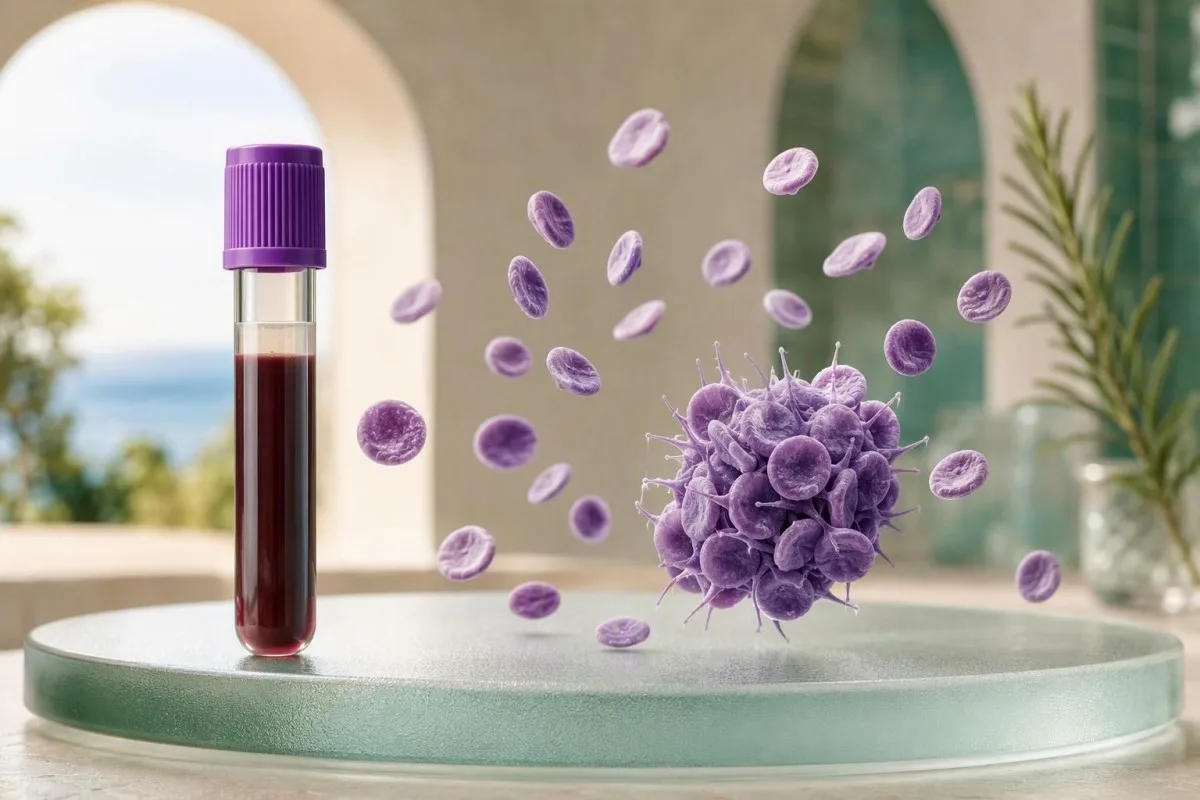
Số lượng tiểu cầu thấp đôi khi có thể là lỗi đo lường liên quan đến ống nghiệm thay vì là vấn đề bên trong cơ thể bạn. Đây là cách xác định tình trạng giả giảm tiểu cầu liên quan đến EDTA trước khi ai đó gán nhãn bạn bị giảm tiểu cầu.


- Giả giảm tiểu cầu là tình trạng số lượng tiểu cầu giảm giả tạo do tiểu cầu vón cục sau khi thu thập, thường xảy ra nhất trong ống nghiệm EDTA.
- Khoảng tiểu cầu điển hình đối với hầu hết người lớn không mang thai là khoảng 150-450 × 10⁹/L, mặc dù các phòng xét nghiệm đặt ra các khoảng riêng của họ.
- Các cụm tiểu cầu trên phết lam có thể khiến máy phân tích tự động đếm thiếu tiểu cầu vì một cụm không được đo như các tế bào riêng lẻ.
- Xét nghiệm lại bằng citrate thường giải quyết tình trạng vón cục tiểu cầu do EDTA; các phòng xét nghiệm thường áp dụng hệ số điều chỉnh pha loãng 1,1 cho số lượng tiểu cầu bằng citrate.
- Không có triệu chứng chảy máu cộng với số lượng tiểu cầu thấp bất ngờ và cô lập nên được xem xét phết lam trước khi điều trị hoặc đưa ra quyết định giới thiệu khẩn cấp.
- Giảm tiểu cầu thực sự có thể cùng tồn tại với tình trạng kết tụ tiểu cầu do EDTA, vì vậy kết quả bình thường với ống chống đông citrate là đáng tin cậy nhưng phải phù hợp với tình cảnh lâm sàng.
- Đánh giá khẩn cấp vẫn cần thiết trong trường hợp chảy máu không kiểm soát, ban xuất huyết lan tỏa mới, đau đầu dữ dội, lú lẫn hoặc số lượng tiểu cầu dưới 10 × 10⁹/L.
Ý nghĩa thực sự của sự vón cục tiểu cầu do EDTA
Kết tụ tiểu cầu do EDTA là một sai sót trong ống nghiệm, trong đó các tiểu cầu dính vào nhau trong ống thu thập mẫu, dẫn đến kết quả đếm tiểu cầu tự động thấp một cách giả tạo. Bản thân nó không có nghĩa là tiểu cầu đang bị phá hủy trong cơ thể, và nó thường không gây ra nguy cơ chảy máu.
EDTA là chất phụ gia trong ống nghiệm nút tím được sử dụng cho hầu hết các xét nghiệm công thức máu toàn bộ vì nó liên kết canxi và ngăn ngừa đông máu. Ở một nhóm nhỏ người, việc loại bỏ canxi làm lộ ra các đích trên bề mặt tiểu cầu cho phép kháng thể tự nhiên liên kết các tiểu cầu lại với nhau. Máy phân tích có thể đếm một cụm tiểu cầu như một hạt lớn, một sự kiện có kích thước bằng bạch cầu, hoặc không đếm gì cả; xem tổng quan của chúng tôi về những gì CBC bao gồm.
Trong công việc lâm sàng của tôi, báo cáo điển hình là số lượng tiểu cầu 48 × 10⁹/L ở một người hoàn toàn khỏe mạnh, không bị bầm tím, và có số lượng hemoglobin và bạch cầu bình thường. Sự khác biệt đó không phải là bằng chứng, nhưng đó là lúc cần dừng lại. là một Máy phân tích xét nghiệm máu AI cảnh báo về tình trạng giảm tiểu cầu đơn độc cùng với các nhận xét của phòng xét nghiệm như tập hợp tiểu cầu, thay vì coi con số đó là một chẩn đoán.
Giả giảm tiểu cầu do EDTA ước tính xảy ra ở khoảng 0,03-0,27% mẫu ngoại trú thông thường, với tỷ lệ cao hơn ở các mẫu đã được chuyển đến để xét nghiệm giảm tiểu cầu. Lippi và các cộng sự mô tả đây là một hiện tượng tiền phân tích vô hại về mặt lâm sàng nhưng có thể gây hậu quả vì nó có thể dẫn đến nhập viện không cần thiết, truyền tiểu cầu hoặc điều trị bằng steroid (Lippi et al., 2012).
Máy phân tích tiểu cầu có thể đếm thiếu các mẫu bị vón cục như thế nào
Số lượng tiểu cầu tự động đáng tin cậy đối với các tiểu cầu phân tán, nhưng các cụm nằm ngoài phạm vi kích thước và mẫu tín hiệu mà máy phân tích mong đợi. Do đó, số lượng có thể giảm từ 220 × 10⁹/L thực tế xuống còn 40 × 10⁹/L biểu kiến mà không có bất kỳ sự mất mát tiểu cầu sinh học nào.
Máy phân tích trở kháng phân loại các hạt chủ yếu theo thể tích, trong khi hệ thống quang học bổ sung thông tin tán xạ ánh sáng. Tiểu cầu thường có đường kính khoảng 2-3 micromet, nhưng một cụm có thể chồng lấp với mảnh hồng cầu hoặc vùng bạch cầu. Đây là lý do tại sao biểu đồ tiểu cầu có thể bất thường và tại sao phòng xét nghiệm có thể ghi chú “có các cụm tiểu cầu” hoặc “số lượng không đáng tin cậy”.”
Cảnh báo tiểu cầu của máy phân tích là lời nhắc nhở xem xét của con người, không phải là chẩn đoán cuối cùng. Ước lượng bằng phương pháp thủ công từ phết kính ngoại vi được thực hiện tốt có thể hữu ích hơn là lặp lại xét nghiệm với cùng một ống EDTA, đặc biệt nếu mẫu được giữ 2 giờ trước khi phân tích. Đối với các ngưỡng thực tế liên quan đến thủ thuật, hướng dẫn của chúng tôi về số lượng tiểu cầu trước khi nhổ răng giải thích lý do tại sao kết quả được xác minh lại quan trọng.
Tiểu cầu lớn tạo ra một vấn đề khác, đôi khi chồng lấp. Các tiểu cầu riêng lẻ rất lớn có thể bị bỏ sót bởi các phương pháp trở kháng ngay cả khi không có cụm nhìn thấy được, thường làm tăng thể tích tiểu cầu trung bình (MPV). MPV cao không thể thay thế cho giả giảm tiểu cầu; đánh giá của chúng tôi về nguyên nhân gây ra tiểu cầu lớn phân biệt hai phát hiện này.
Các cụm tiểu cầu trên phết lam trông như thế nào
Các cụm tiểu cầu trên phết kính xuất hiện dưới dạng các nhóm không đều như chùm nho của các yếu tố hạt nhỏ màu tím, thường tập trung ở rìa vát của lam kính. Vị trí của chúng rất quan trọng vì việc chỉ đếm trường trung tâm của phết kính có thể bỏ sót đặc điểm giải thích kết quả thấp.
Một nhà hình thái học có kinh nghiệm kiểm tra phần thân và đuôi của tiêu bản dưới kính hiển vi độ phóng đại cao, không chỉ một trường đại diện duy nhất. Tiểu cầu vệ tinh là một mẫu liên quan đến EDTA hiếm gặp hơn, trong đó các tiểu cầu bao quanh bạch cầu trung tính như một vòng hoa hồng; nó cũng có thể làm giảm số lượng tiểu cầu được báo cáo. Cả hai phát hiện đều là hiện tượng của mẫu, mặc dù tiểu cầu vệ tinh và các cụm tiểu cầu rộng có thể xảy ra đồng thời.
Một chi tiết hữu ích là tình trạng kết tụ do EDTA thường tiến triển theo thời gian. Một mẫu đo 10 phút sau khi lấy có thể cho kết quả 118 × 10⁹/L, sau đó là 42 × 10⁹/L ở phút thứ 90 khi nhiều tập hợp hình thành hơn. Các phòng xét nghiệm có quy trình làm việc khác nhau, vì vậy kết quả ban đầu bình thường không loại trừ hoàn toàn sai sót này nếu sau đó xuất hiện cảnh báo của máy phân tích.
Khi tôi, Thomas Klein, MD, thấy số lượng tế bào thấp kèm theo ghi chú về phết lam nhưng không có chảy máu lâm sàng, tôi sẽ yêu cầu diễn giải phết lam thực tế trước khi thảo luận về giảm tiểu cầu miễn dịch. Lý luận dựa trên kính hiển vi tương tự cũng hữu ích khi báo cáo đề cập đến các mảnh vỡ hồng cầu trên phết máu ngoại biên, mặc dù các mảnh vỡ hồng cầu đòi hỏi bối cảnh lâm sàng khẩn cấp hơn nhiều.
Tại sao EDTA gây vón cục tiểu cầu ở một số người
EDTA có thể gây vón cục tiểu cầu bằng cách tạo phức với canxi và thay đổi hình dạng của glycoprotein màng tiểu cầu, cho phép kháng thể gắn vào và kết nối các tiểu cầu lân cận. Phản ứng này xảy ra sau khi thu thập, không phải vì EDTA đã gây hại cho các tiểu cầu đang lưu thông bên trong cơ thể.
Cơ chế được hỗ trợ tốt nhất liên quan đến các kháng thể, thường là IgG, IgM hoặc IgA, nhận diện các vị trí ẩn trên phức hợp GPIIb/IIIa của tiểu cầu sau khi thay đổi cấu trúc phụ thuộc canxi. Phản ứng này phụ thuộc vào nhiệt độ và thời gian ở một số bệnh nhân, giải thích tại sao mẫu đã làm ấm đôi khi có thể cải thiện kết quả đếm nhưng không phải là giải pháp phổ quát. Đây là vấn đề tương thích trong phòng thí nghiệm, không phải dị ứng với EDTA.
Giả giảm tiểu cầu có thể xảy ra ở những người khỏe mạnh và đã được báo cáo cùng với các tình trạng tự miễn, nhiễm trùng, bệnh ác tính và mang thai, nhưng những liên kết đó không thiết lập mối quan hệ nhân quả ở một cá nhân. ANA dương tính hoặc bệnh nhiễm virus gần đây không nên được sử dụng để giải thích kết quả đếm cho đến khi loại trừ được sai lệch. Kantesti là một nền tảng giải thích kết quả xét nghiệm máu AI xem xét kết quả tiểu cầu cùng với loại ống nghiệm, cờ của máy phân tích và phần còn lại của CBC thay vì xem xét một cách riêng lẻ.
Hiện tượng này có thể kéo dài nhiều năm nhưng thay đổi giữa các lần lấy mẫu. Một bệnh nhân có thể có số lượng tiểu cầu là 35 × 10⁹/L trong ống EDTA vào thứ Hai và 230 × 10⁹/L trong ống citrate vào buổi sáng cùng ngày, sau đó cho thấy vón cục một phần vài tháng sau đó. Ghi lại loại ống nghiệm ưu tiên trong hồ sơ phòng thí nghiệm có thể ngăn ngừa cảnh báo lặp lại.
Xét nghiệm lại bằng citrate xác nhận tình trạng giả giảm tiểu cầu như thế nào
Số lượng tiểu cầu bình thường hóa trong ống citrate natri trong khi ống EDTA chứa các tập hợp tiểu cầu mạnh mẽ ủng hộ giả giảm tiểu cầu do EDTA. Kết quả đếm trong ống citrate cần điều chỉnh độ pha loãng vì ống chứa chất chống đông dạng lỏng.
Ống nghiệm màu xanh chứa citrate natri thường được đổ đầy theo tỷ lệ máu:chất chống đông là 9:1. Nhiều phòng thí nghiệm nhân kết quả tiểu cầu đo được trong ống citrate với 1,1 để điều chỉnh độ pha loãng, mặc dù phương pháp đã được xác nhận của phòng thí nghiệm địa phương sẽ được ưu tiên. Ví dụ, kết quả thô trong ống citrate là 182 × 10⁹/L sẽ trở thành khoảng 200 × 10⁹/L sau khi hiệu chỉnh.
Việc lấy lại mẫu phải được đổ đầy đúng cách và trộn nhẹ nhàng. Một ống nghiệm citrate bị đổ thiếu có thể làm thay đổi tỷ lệ chất chống đông và tạo ra kết quả sai lệch khác, đây là một lý do khiến nhà khoa học phòng thí nghiệm có thể từ chối một lần lặp lại có vẻ đơn giản. Phần giải thích của chúng tôi về màu sắc ống nghiệm xét nghiệm máu giúp bệnh nhân nhận biết tại sao việc lựa chọn ống nghiệm lại là một phần của phương pháp xét nghiệm.
Ống nghiệm magie sulfat hoặc acid-citrate-dextrose có thể hữu ích khi tình trạng vón cục vẫn tiếp diễn trong ống citrate, nhưng điều này thường là quyết định của phòng thí nghiệm. Nagler và các cộng sự đã ghi nhận một trường hợp mà việc nhận diện giả giảm tiểu cầu do EDTA đã tránh được một cuộc xét nghiệm chẩn đoán không cần thiết sau khi xét nghiệm bằng citrate cho thấy số lượng tiểu cầu đầy đủ (Nagler et al., 2014).
Khi nào xét nghiệm lại tiểu cầu bằng citrate không giải quyết được vấn đề
Việc lấy lại mẫu bằng ống citrate không loại trừ giảm tiểu cầu thực sự khi kết quả đã hiệu chỉnh vẫn thấp, tình trạng vón cục xảy ra ở nhiều hơn một chất chống đông, hoặc các triệu chứng gợi ý chảy máu. Một số bệnh nhân có hiện tượng ngưng tập tiểu cầu với nhiều chất chống đông, và một số có số lượng tiểu cầu thực sự thấp cùng với sai lệch.
Nếu số lượng tiểu cầu trong ống citrate đã hiệu chỉnh là 82 × 10⁹/L và phết lam không có cục tiểu cầu, đó là giảm tiểu cầu thực sự cho đến khi có bằng chứng ngược lại. Nếu ống EDTA là 25 × 10⁹/L và ống citrate là 86 × 10⁹/L với các tập hợp tiểu cầu còn sót lại, cả sai lệch và giảm thực sự đều có thể có mặt. Nhóm lâm sàng nên sử dụng ước tính được xác minh tốt nhất, không chỉ đơn giản là chọn con số đáng tin cậy hơn.
Sự đông máu trong mẫu cũng có thể làm mất hiệu lực kết quả CBC vì tiểu cầu bị tiêu thụ trong vi cục máu. Không giống như giả giảm tiểu cầu do EDTA, mẫu có cục máu một phần có thể ảnh hưởng đến cả tế bào bạch cầu và chỉ số hồng cầu. Đọc hướng dẫn lấy lại mẫu sau sự cố mẫu của chúng tôi để biết sự khác biệt thực tế giữa các sai lệch khi thu thập mẫu.
Các mẫu lấy từ đầu ngón tay không an toàn một cách tự động. Việc thu thập chậm, bóp hoặc trộn trễ có thể thúc đẩy sự kết tụ cục bộ và ảnh hưởng đến số lượng tiểu cầu, đặc biệt là khi giá trị báo cáo dưới 100 × 10⁹/L. Lấy máu tĩnh mạch lại với xử lý kịp thời thường là con đường xác nhận rõ ràng hơn.
Khoảng tiểu cầu, nguy cơ chảy máu và bẫy sai lệch
Hầu hết các phòng xét nghiệm người lớn sử dụng khoảng tham chiếu số lượng tiểu cầu gần 150-450 × 10⁹/L, nhưng nguy cơ chảy máu phụ thuộc vào số lượng đã được xác minh, nguyên nhân, chức năng tiểu cầu và thuốc men. Không được sử dụng một kết quả EDTA thấp giả tạo một mình để từ chối một thủ tục hoặc kê đơn điều trị.
Chảy máu nghiêm trọng tự phát trở nên có khả năng xảy ra hơn khi số lượng tiểu cầu thực tế giảm xuống dưới khoảng 10 × 10⁹/L, trong khi nhiều người có số lượng ổn định trên 50 × 10⁹/L ít bị chảy máu tự phát. Đây là những hướng dẫn lâm sàng rộng, không phải là sự cho phép bỏ qua các triệu chứng. Thuốc chống đông máu, aspirin, bệnh gan, suy thận và rối loạn chức năng tiểu cầu có thể làm thay đổi nguy cơ ở bất kỳ số lượng nào.
Số lượng tiểu cầu 90 × 10⁹/L cần được xử lý khác nhau ở một người khỏe mạnh với kết quả citrate bình thường so với người bị đi ngoài ra máu mới và INR tăng. Đó là lý do tại sao việc diễn giải số lượng tiểu cầu thuộc về việc kiểm tra đông máu; aPTT và xét nghiệm đông máu hướng dẫn giải thích những gì một bảng sàng lọc đông máu bình thường có thể và không thể loại trừ.
Các phòng xét nghiệm có thể sử dụng 140 × 10⁹/L thay vì 150 × 10⁹/L làm giới hạn tham chiếu dưới, đặc biệt là với các khoảng tham chiếu có nguồn gốc địa phương. Khoảng tham chiếu mô tả một phần quần thể so sánh; nó không xác định ngưỡng điều trị phổ quát. Sự khác biệt này giúp tiết kiệm một lượng đáng kể lo lắng không cần thiết.
Các mẫu CBC làm cho sai lệch có khả năng xảy ra cao hơn
Số lượng tiểu cầu thấp bất ngờ cô lập với hemoglobin, bạch cầu bình thường và nhận xét về sự kết tụ là kiểu CBC gợi ý nhất về giả giảm tiểu cầu. Kiểu này mang tính gợi ý hơn là chẩn đoán vì giảm tiểu cầu miễn dịch sớm hoặc liên quan đến thuốc cũng có thể bị cô lập.
Các rối loạn tủy thực sự thường ảnh hưởng đến nhiều hơn một dòng tế bào máu, mặc dù có ngoại lệ. Tiểu cầu thấp kết hợp với hemoglobin giảm, bạch cầu bất thường, blast, hoặc các triệu chứng toàn thân kéo dài đòi hỏi đánh giá kịp thời của bác sĩ lâm sàng và thường là kiểm tra phim chính thức. Bài viết của chúng tôi về con đường CBC đối với các rối loạn máu nêu rõ lý do tại sao các cụm này lại thay đổi mức độ khẩn cấp.
Tỷ lệ tiểu cầu trên bạch cầu lympho có thể trở nên vô nghĩa khi mẫu số hợp lệ nhưng số lượng tiểu cầu bị giảm nhân tạo. Tỷ lệ PLR 60 được tính từ số lượng tiểu cầu EDTA bị kết tụ không nên được diễn giải như một tín hiệu viêm hoặc tim mạch. Đây là một lỗi thứ cấp thầm lặng nhưng phổ biến trong các báo cáo sức khỏe tự động; xem giải thích của chúng tôi về kết quả PLR cao.
AI xác định sự không nhất quán giữa số lượng tiểu cầu thấp và các chỉ số CBC lân cận bình thường, sau đó hướng dẫn người đọc xác minh các nhận xét mẫu. Công cụ phân tích xét nghiệm máu dựa trên AI không bao giờ được chuyển đổi một giá trị tiểu cầu đơn lẻ chưa được xác minh thành một chẩn đoán bệnh. Sự kiềm chế lâm sàng đó quan trọng hơn tốc độ.
Mang thai, chăm sóc tại bệnh viện và các tình huống có rủi ro cao khác
Sự kết tụ tiểu cầu EDTA có thể xảy ra trong thai kỳ và chăm sóc tại bệnh viện, nhưng không bao giờ được giả định khi giảm tiểu cầu thực sự có thể thay đổi việc quản lý khẩn cấp. Các nguyên nhân đặc hiệu thai kỳ như giảm tiểu cầu thai kỳ, tiền sản giật, hội chứng HELLP và giảm tiểu cầu miễn dịch cần có số lượng được xác minh.
Số lượng tiểu cầu thường giảm dần trong thai kỳ không biến chứng, và một số phòng xét nghiệm chấp nhận giới hạn tham chiếu thấp hơn theo từng quý. Số lượng dưới 100 × 10⁹/L ít phổ biến hơn đối với giảm tiểu cầu thai kỳ không biến chứng và cần được đánh giá lâm sàng cẩn thận, ngay cả khi thấy các tập kết tiểu cầu trong EDTA. Hướng dẫn tham chiếu tiểu cầu theo quý của chúng tôi trong thai kỳ cung cấp bối cảnh mà không thay thế việc xem xét sản khoa.
Tại bệnh viện, sự sụt giảm đột ngột hơn 50% so với mức ban đầu có thể đặt ra câu hỏi về nhiễm trùng huyết, tiếp xúc với thuốc, giảm tiểu cầu do heparin, pha loãng hoặc tiêu thụ liên quan đến thiết bị. Một lỗi giả tạo của EDTA có thể bắt chước sự sụt giảm đáng kể, đặc biệt khi kết quả trước đó đến từ phương pháp phòng xét nghiệm khác. So sánh kết quả citrate đã xác minh với kết quả ban đầu của bệnh nhân thường hữu ích hơn việc lặp lại xét nghiệm CBC EDTA thông thường.
Trước khi tiêm ngoài màng cứng, phẫu thuật, chu kỳ hóa trị hoặc truyền tiểu cầu, hãy hỏi xem phòng xét nghiệm đã xác nhận giá trị trên phết lam hoặc chất chống đông thay thế hay chưa. Tôi đã thấy việc trì hoãn chăm sóc được tránh khỏi nhờ một cuộc gọi điện thoại đó. Ngược lại, các triệu chứng hoạt động hoặc bệnh nhân không ổn định nên được đánh giá trong khi chờ xác nhận.
Thuốc và chẩn đoán không nên bị đổ lỗi quá nhanh
Phải loại trừ sự vón cục tiểu cầu do EDTA trước khi quy kết số lượng tiểu cầu thấp đơn độc cho một loại thuốc, bệnh tự miễn hoặc giảm tiểu cầu miễn dịch. Việc ngừng một loại thuốc quan trọng dựa trên một số lượng chưa được xác minh có thể gây hại có thể tránh được.
Heparin, các sản phẩm chứa quinine, trimethoprim-sulfamethoxazole, valproate, linezolid, hóa trị và một số liệu pháp miễn dịch có thể gây giảm tiểu cầu thực sự. Mối quan hệ thời gian rất quan trọng: sự sụt giảm thực sự liên quan đến thuốc thường tồn tại trong mẫu citrate được thu thập đúng cách và không biến mất khi EDTA được thay thế. Lịch sử dùng thuốc nên bao gồm tiêm, sản phẩm không kê đơn và các chế phẩm thảo dược.
Giảm tiểu cầu miễn dịch là một chẩn đoán loại trừ, không phải là một cờ hiệu phòng xét nghiệm. Nó có thể biểu hiện với số lượng tiểu cầu dưới 100 × 10⁹/L, nhưng phết lam EDTA bị vón cục làm cho số lượng ban đầu không thể diễn giải được. Lippi và cộng sự. (2012) đặc biệt cảnh báo rằng việc nhận biết giả giảm tiểu cầu ngăn ngừa các liệu pháp không phù hợp như corticosteroid và cắt lách.
Nếu một báo cáo có vẻ mâu thuẫn với kết quả trước đó của bạn, hãy giữ lại tệp PDF gốc và ghi lại ngày thu thập, ghi chú ống nghiệm, bệnh cấp tính và thuốc mới. Hướng dẫn của chúng tôi về những thay đổi có ý nghĩa giữa các lần xét nghiệm máu giải thích tại sao sự thay đổi số lượng lại không tự động là một thay đổi sinh học.
Nên hỏi phòng xét nghiệm hoặc bác sĩ lâm sàng của bạn điều gì tiếp theo
Đối với số lượng tiểu cầu thấp bất thường, hãy hỏi xem có thấy tiểu cầu vón cục không, có xem xét phết lam ngoại vi không và có thể thực hiện đếm bằng chất chống đông thay thế không. Ba câu hỏi đó thường làm rõ bước tiếp theo nhanh hơn là tìm kiếm các triệu chứng trực tuyến.
Một yêu cầu thực tế là: “Phòng xét nghiệm có thể xem xét phim máu để tìm các tập kết tiểu cầu và, nếu cần, lặp lại số lượng tiểu cầu bằng citrate không?” Điều này không đòi hỏi một chẩn đoán cụ thể; đó là yêu cầu xác nhận phép đo. Nếu mẫu được thu thập ở nơi khác, bác sĩ lâm sàng có thể cần đặt hàng một lần lấy mẫu mới thay vì thêm xét nghiệm vào ống cũ.
Hãy hỏi về đã hiệu chỉnh kết quả citrate và liệu các cục có tồn tại trong ống đó không. Một kết quả thô 145 × 10⁹/L có thể trông giới hạn cho đến khi hiệu chỉnh pha loãng cho kết quả khoảng 160 × 10⁹/L. Cũng hãy hỏi xem phòng xét nghiệm có sử dụng phương pháp đếm tiểu cầu quang học hay huỳnh quang hay không, vì các phương pháp này đôi khi cải thiện việc đếm trong các mẫu phức tạp.
quy trình diễn giải của Kantesti khuyến khích người dùng so sánh kết quả số lượng với phần tường thuật và trường báo hiệu của phòng xét nghiệm trước khi hành động dựa trên cảnh báo. Đối với một khuôn khổ an toàn rộng hơn, checklist độ chính xác của báo cáo AI của chúng tôi bao gồm việc ghi chép, đơn vị, phạm vi tham chiếu và xác minh kết quả.
Không nên làm gì trong khi chờ xác nhận
Không bắt đầu bổ sung, ngừng thuốc theo toa hoặc giả định bạn bị rối loạn chảy máu chỉ vì một lần đếm tiểu cầu bằng EDTA bị thấp. Đồng thời, đừng bỏ qua chảy máu tích cực chỉ vì nghi ngờ có sự vón cục.
Không có chế độ ăn kiêng, vitamin hoặc phương pháp chữa bệnh tại nhà nào có thể khắc phục tình trạng giả giảm tiểu cầu phụ thuộc EDTA vì tiểu cầu đang vón cục trong ống nghiệm, không phải do cơ thể không hoạt động. Thiếu folate, vitamin B12 và sắt có thể ảnh hưởng đến quá trình tạo máu trong các trường hợp khác, nhưng việc bổ sung không thể xác nhận một số lượng đáng ngờ. Điều trị lỗi giả tạo liên quan đến việc thu thập và phân tích.
Tránh dùng aspirin, ibuprofen, naproxen không cần thiết và uống nhiều rượu cho đến khi bác sĩ lâm sàng làm rõ một kết quả đếm rất thấp được báo cáo, đặc biệt nếu bạn dễ bị bầm tím. Không ngừng thuốc chống đông máu, thuốc chống kết tập tiểu cầu, thuốc chống động kinh hoặc liệu pháp ung thư mà không có lời khuyên của bác sĩ kê đơn; chỉ định cho những loại thuốc đó có thể mang rủi ro tức thời lớn hơn kết quả chưa được xác minh.
Việc lưu giữ một dòng thời gian kết quả ngắn gọn có thể thay đổi lịch hẹn. hướng dẫn theo dõi kết quả xét nghiệm đề xuất ghi lại thời gian lấy máu, bệnh gần đây, thuốc, nhận xét về mẫu, và liệu kết quả có đến từ ống EDTA hay citrate hay không.
Các dấu hiệu cảnh báo cần đánh giá y tế khẩn cấp
Tìm kiếm sự đánh giá y tế khẩn cấp đối với tình trạng chảy máu không kiểm soát, phân đen, nôn ra máu, đau đầu dữ dội mới, lú lẫn, ngất xỉu, hoặc phát ban chấm li ti lan rộng, ngay cả khi nghi ngờ cục máu đông EDTA. Một hiện tượng giả của phòng xét nghiệm và một trường hợp khẩn cấp thực sự có thể cùng tồn tại.
Một số lượng tiểu cầu thực sự dưới 10 × 10⁹/L thường được coi là một kết quả khẩn cấp vì nguy cơ chảy máu niêm mạc và chảy máu nội tạng tự phát tăng lên đáng kể. Số lượng dưới 20 × 10⁹/L kèm theo chảy máu mới, sốt, tăng huyết áp nặng, biến chứng thai kỳ, hoặc tiếp xúc gần đây với heparin cũng cần được bác sĩ lâm sàng xem xét trong ngày. Lời khuyên khẩn cấp tại địa phương nên ưu tiên hơn bất kỳ cách diễn giải nào trên mạng.
Các triệu chứng thần kinh mới đặc biệt quan trọng vì chảy máu trong sọ hiếm gặp nhưng nghiêm trọng. Không tự lái xe nếu bạn bị đau đầu dữ dội kèm theo yếu, thay đổi giọng nói, ngất, hoặc lú lẫn. Ở trẻ em, phát ban không mất đi khi ấn kèm theo sốt cần được đánh giá khẩn cấp bất kể kết quả tiểu cầu.
Thomas Klein, MD, khuyên bệnh nhân tách biệt câu hỏi “Kết quả này có thật không?” khỏi “Bệnh nhân này có an toàn hôm nay không?” Câu hỏi đầu tiên thường cần xem kính hiển vi và lấy mẫu lại bằng ống citrate; câu hỏi thứ hai phụ thuộc vào các triệu chứng, kết quả khám lâm sàng và toàn bộ bức tranh lâm sàng. hướng dẫn xin ý kiến thứ hai từ xét nghiệm máu có thể giúp chuẩn bị một cuộc thảo luận tập trung sau khi các vấn đề khẩn cấp được giải quyết.
Kantesti diễn giải số lượng tiểu cầu được đánh dấu một cách an toàn như thế nào
Kantesti AI xử lý tình trạng tiểu cầu thấp kèm theo ghi chú cục máu đông EDTA như một tín hiệu xác minh, không phải bằng chứng của giảm tiểu cầu. Cách diễn giải của chúng tôi đặt các cờ cảnh báo của máy phân tích, các dòng khác của CBC, các giá trị trước đó và các triệu chứng được báo cáo lên trên một nhãn đỏ-hoặc-xanh đơn giản.
Kantesti là một dịch vụ diễn giải kết quả xét nghiệm của AI được thiết kế để giải thích dữ liệu xét nghiệm bằng ngôn ngữ đơn giản trong khi vẫn giữ nguyên giới hạn của báo cáo nguồn. Nếu một tệp PDF được tải lên ghi “cục tiểu cầu,” hệ thống của chúng tôi sẽ cho người dùng biết rằng con số này có thể bị giảm một cách sai lệch và phòng xét nghiệm hoặc bác sĩ lâm sàng có thể xác nhận điều đó bằng cách xem phim hoặc mẫu citrate.
Nhận dạng ký tự quang học có thể đọc sai dấu thập phân, đơn vị hoặc chú thích cuối trang của phòng xét nghiệm. Đó là lý do tại sao bệnh nhân nên kiểm tra bản xem trước hình ảnh trước khi dựa vào bất kỳ cách diễn giải kỹ thuật số nào, đặc biệt là xung quanh các giá trị như 18 so với 180 × 10⁹/L. checklist chất lượng tải lên PDF giải thích một vài kiểm tra giúp ngăn chặn hầu hết các lỗi có thể tránh được.
Sự giám sát lâm sàng vẫn là công việc của con người. Phương pháp luận của Kantesti được xem xét dựa trên các quy trình làm việc tập trung vào an toàn; độc giả muốn hiểu cách tiếp cận của chúng tôi có thể xem thẩm định kỹ thuật và giám sát lâm sàng. của chúng tôi. AI có thể tổ chức câu hỏi một cách hiệu quả, nhưng nó không thể kiểm tra trực tiếp phết kính hoặc đánh giá tình trạng chảy máu đang diễn ra.
Kế hoạch theo dõi thực tế sau khi tiểu cầu bị vón cục do EDTA
Kế hoạch theo dõi thông thường là ghi lại hiện tượng giả EDTA, lấy một số lượng tiểu cầu đã được xác minh bằng ống thay thế và sử dụng kết quả đó cho các quyết định lâm sàng trong tương lai. Hầu hết mọi người không cần điều trị hiện tượng giả đó sau khi phòng xét nghiệm đã thiết lập được mẫu.
Yêu cầu hồ sơ phòng xét nghiệm ghi nhận “cục tiểu cầu phụ thuộc EDTA” hoặc cách diễn đạt tương đương nếu xác nhận rõ ràng. Trong các lần lấy máu trong tương lai, đội ngũ lấy máu có thể thu thập một ống citrate cùng với ống EDTA CBC thông thường, tiết kiệm một cuộc hẹn thứ hai. Điều này đặc biệt hữu ích trước phẫu thuật, trong thai kỳ, hoặc khi một phác đồ điều trị có ngưỡng tiểu cầu.
Một đường cơ sở đã được xác minh có giá trị hơn các giá trị thấp chưa được xác minh lặp đi lặp lại. Nếu số lượng citrate đã hiệu chỉnh của bạn ổn định ở mức 205 × 10⁹/L trong 12 tháng, một giá trị EDTA trong tương lai là 55 × 10⁹/L với các tập hợp sẽ ít đáng báo động hơn nhiều so với cùng một con số ở người không có tài liệu trước đó. Xu hướng chỉ hữu ích khi phương pháp xét nghiệm tương đương nhau.
Kantesti đã hỗ trợ hơn 2 triệu người dùng trên 127+ quốc gia với các giải thích xét nghiệm đa ngôn ngữ, nhưng kết quả vẫn thuộc về mối quan hệ chăm sóc với bác sĩ lâm sàng của bạn. Các nhà phê bình y tế của chúng tôi và Hội đồng tư vấn y tế nhấn mạnh cùng một quy tắc cuối cùng: xác minh số lượng tiểu cầu trước, sau đó quyết định điều gì - nếu có - cần điều trị.
Các ấn phẩm nghiên cứu
Tính đến ngày 29 tháng 8 năm 2026, hai ấn phẩm nghiên cứu được liệt kê dưới đây là tài nguyên giáo dục bổ sung. Chúng không thiết lập chẩn đoán giảm tiểu cầu giả do EDTA; phết tế bào trong phòng xét nghiệm và đếm tiểu cầu bằng chất chống đông thay thế vẫn là các công cụ xác nhận phù hợp.
Những câu hỏi thường gặp
Việc kết tụ tiểu cầu do EDTA có thể gây ra số lượng tiểu cầu rất thấp không?
Có. Sự vón cục tiểu cầu trong ống nghiệm chứa EDTA có thể tạo ra kết quả đếm tiểu cầu thấp giả đáng kể, đôi khi dưới 50 × 10⁹/L, trong khi số lượng tiểu cầu thực sự lưu hành của người đó là bình thường. Máy phân tích đếm sai các đám tiểu cầu vì nó không thể nhận diện đáng tin cậy từng tiểu cầu trong một cụm. Phết ngoại vi cho thấy các đám tiểu cầu và số lượng tiểu cầu trong ống nghiệm citrate đã hiệu chỉnh bình thường là bằng chứng mạnh mẽ cho giả giảm tiểu cầu. Kết quả vẫn nên được xem xét khẩn cấp nếu có chảy máu tích cực hoặc số lượng tiểu cầu trong ống nghiệm citrate vẫn thấp.
Giả tiểu cầu được xác nhận như thế nào?
Giả giảm tiểu cầu thường được xác nhận bằng cách xem xét phết ngoại vi để tìm các cụm tiểu cầu và lặp lại số lượng tiểu cầu trong ống nghiệm chứa natri citrat. Các ống nghiệm citrat chứa chất chống đông dạng lỏng, vì vậy nhiều phòng xét nghiệm nhân số lượng tiểu cầu đo được với 1,1 để tính đến sự pha loãng. Ví dụ, số lượng đo được trong ống citrat là 180 × 10⁹/L thường được báo cáo là khoảng 198 × 10⁹/L sau khi hiệu chỉnh. Sự hiệu chỉnh đã được xác nhận và diễn giải phết của phòng xét nghiệm địa phương nên hướng dẫn kết quả cuối cùng.
Tụ tập tiểu cầu trong ống EDTA có nghĩa là tôi bị rối loạn chảy máu không?
Không. Sự vón cục tiểu cầu trong ống nghiệm bằng EDTA chỉ là một hiện tượng giả tạo trong mẫu thử nghiệm và không có nghĩa là bạn bị rối loạn chảy máu hoặc tiểu cầu của bạn đang vón cục trong tuần hoàn. Hầu hết những người bị ảnh hưởng không có triệu chứng chảy máu và có số lượng tiểu cầu được xác minh trong khoảng bình thường của người trưởng thành là khoảng 150-450 × 10⁹/L. Bác sĩ lâm sàng vẫn nên điều tra các triệu chứng chảy máu, xét nghiệm đông máu bất thường hoặc số lượng tiểu cầu citrat giảm dai dẳng. Hiện tượng giả tạo này không bảo vệ một người khỏi các nguy cơ chảy máu không liên quan do thuốc hoặc tình trạng y tế gây ra.
Huyết khối tiểu cầu có thể xảy ra trong citrate không?
Có, mặc dù natri citrat thường ngăn ngừa sự kết tụ liên quan đến EDTA, nhưng sự kết tập tiểu cầu thỉnh thoảng vẫn có thể tồn tại trong citrat hoặc xảy ra với nhiều chất chống đông. Trong tình huống đó, phòng xét nghiệm có thể sử dụng phương pháp đếm tiểu cầu quang học hoặc huỳnh quang, xử lý nhiệt nhanh, magie sulfat hoặc acid-citrate-dextrose tùy thuộc vào quy trình đã được xác thực của họ. Số lượng citrat đã hiệu chỉnh dưới 150 × 10⁹/L mà không có sự kết tụ nên được xem là giảm tiểu cầu thực sự có thể xảy ra. Sự kết tụ đa chất chống đông là không phổ biến và cần xác nhận dưới sự hướng dẫn của phòng xét nghiệm.
Tôi có nên lặp lại xét nghiệm số lượng tiểu cầu nếu báo cáo ghi nhận tiểu cầu vón cục không?
Có. Một báo cáo cho biết có sự vón cục tiểu cầu, kết tập tiểu cầu hoặc kết quả đếm tiểu cầu không đáng tin cậy thường cần được xác minh thay vì chấp nhận kết quả số lượng đó. Việc làm lại thường quy là lấy một mẫu mới bằng ống chống đông natri citrat và xem xét phết, lý tưởng nhất là xử lý kịp thời. Nếu kết quả đếm ban đầu dưới 10 × 10⁹/L hoặc bạn bị chảy máu không kiểm soát, đi ngoài phân đen, đau đầu dữ dội hoặc lú lẫn, hãy tìm kiếm sự chăm sóc y tế khẩn cấp trong khi chờ đợi việc xác nhận được sắp xếp. Không được thay đổi thuốc đã được kê đơn mà không có lời khuyên từ bác sĩ lâm sàng biết lý do tại sao thuốc đó được kê đơn.
Bệnh giả tăng tiểu cầu do EDTA có thể xuất hiện rồi biến mất không?
Có. Giả giảm tiểu cầu do EDTA có thể dai dẳng trong nhiều năm hoặc xuất hiện không ổn định vì mức độ ngưng kết phụ thuộc vào thời gian sau khi lấy mẫu, nhiệt độ mẫu và phương pháp phân tích. Một mẫu EDTA có thể cho kết quả 70 × 10⁹/L trong khi một mẫu khác được lấy vào ngày khác có thể cho kết quả 145 × 10⁹/L, mặc dù số lượng tiểu cầu thực tế ổn định. Số lượng tiểu cầu được ghi nhận bằng citrate bình thường cung cấp một đường cơ sở hữu ích cho việc so sánh trong tương lai. Yêu cầu phòng xét nghiệm ghi lại chất chống đông ưa thích có thể ngăn ngừa những cảnh báo sai lặp lại.
Nhận phân tích xét nghiệm máu được hỗ trợ bởi AI ngay hôm nay
Tham gia hơn 2 triệu người dùng trên toàn thế giới, những người tin tưởng Kantesti để phân tích xét nghiệm máu tức thì và chính xác. Tải lên kết quả xét nghiệm máu của bạn và nhận phần giải thích toàn diện về các chỉ dấu sinh học 15,000+ trong vài giây.
📚 Các ấn phẩm nghiên cứu được trích dẫn
Klein, T., Mitchell, S., & Weber, H. (2026). Kantesti AI. (2026). Hướng dẫn xét nghiệm C3 C4 bổ thể trong máu & định lượng ANA. Zenodo. https://doi.org/10.5281/zenodo.18353989. Nghiên cứu y khoa bằng AI của Kantesti.
Klein, T., Mitchell, S., & Weber, H. (2026). Kantesti AI. (2026). Hướng dẫn Phát hiện Sớm & Chẩn đoán Xét nghiệm Máu Vi rút Nipah 2026. Zenodo. https://doi.org/10.5281/zenodo.18487418. Nghiên cứu y khoa bằng AI của Kantesti.
📖 Tài liệu tham khảo y khoa bên ngoài
⚕️ Tuyên bố miễn trừ trách nhiệm y tế
Bài viết này chỉ nhằm mục đích giáo dục và không cấu thành lời khuyên y tế. Luôn tham khảo ý kiến của nhà cung cấp dịch vụ chăm sóc sức khỏe đủ năng lực để đưa ra quyết định chẩn đoán và điều trị.
Tín hiệu tin cậy E-E-A-T
Kinh nghiệm
Đánh giá lâm sàng do bác sĩ phụ trách đối với quy trình diễn giải kết quả xét nghiệm.
Chuyên môn
Tập trung vào y học xét nghiệm: cách các chỉ dấu sinh học (biomarker) hoạt động trong bối cảnh lâm sàng.
Tính uy quyền
Được viết bởi Tiến sĩ Thomas Klein, có rà soát bởi Tiến sĩ Sarah Mitchell và Giáo sư Tiến sĩ Hans Weber.
Độ tin cậy
Diễn giải dựa trên bằng chứng, kèm các lộ trình theo dõi rõ ràng để giảm mức độ báo động.