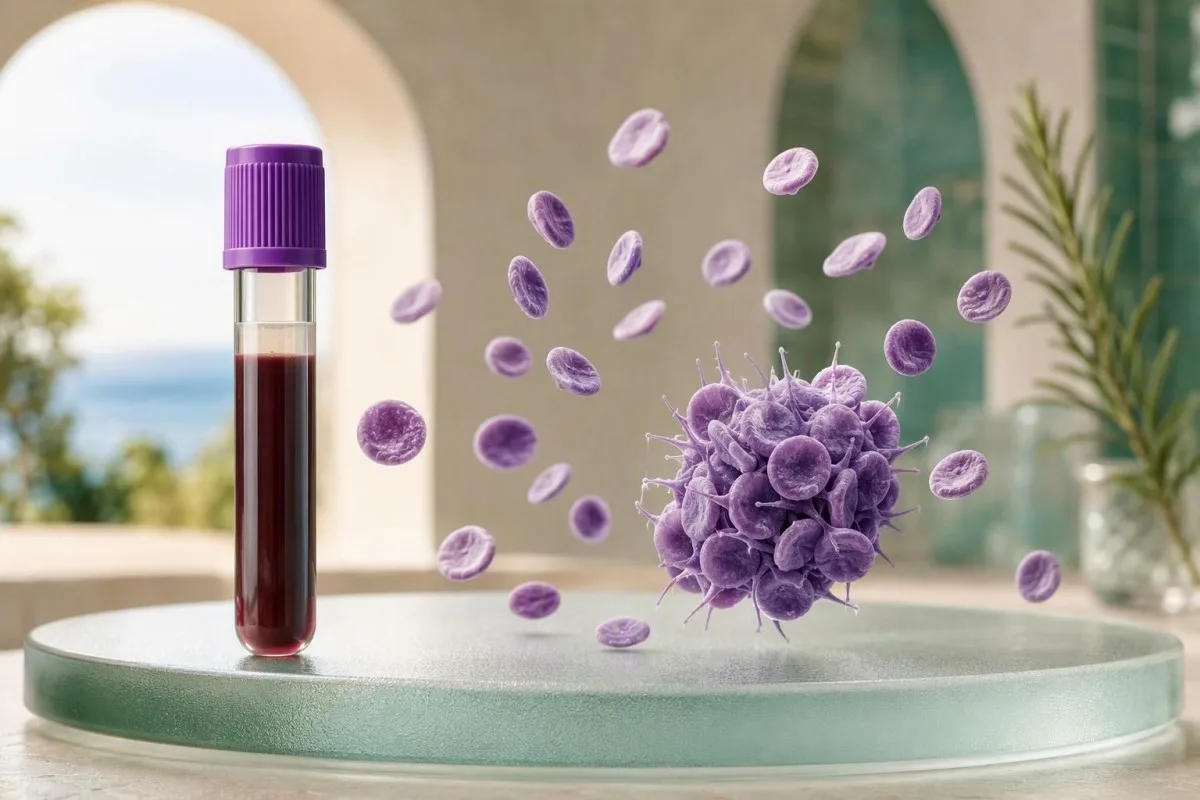
پلیٹ لیٹ کی کم تعداد کبھی کبھار آپ کے جسم کے اندر کسی مسئلے کے بجائے ٹیوب سے متعلق پیمائش کی غلطی ہو سکتی ہے۔ یہاں بتایا گیا ہے کہ EDTA سے متعلق Pseudothrombocytopenia کی شناخت کیسے کی جاتی ہے اس سے پہلے کہ کسی کو آپ کو thrombocytopenia کا لیبل دیا جائے۔.


- Pseudothrombocytopenia پلیٹ لیٹ کے جمنے کی وجہ سے جمع کرنے کے بعد، اکثر EDTA ٹیوب میں، پلیٹ لیٹ کی جھوٹی کم تعداد ہے۔.
- پلیٹلیٹس کی عام حد زیادہ تر غیر حاملہ بالغوں کے لیے تقریباً 150-450 × 10⁹/L ہے، حالانکہ لیبارٹریز اپنے اپنے وقفے مقرر کرتی ہیں۔.
- سمیر پر پلیٹ لیٹ کے جمنے ایک خودکار تجزیہ کار کو پلیٹ لیٹس کی کم گنتی کرنے کا سبب بن سکتے ہیں کیونکہ ایک گچھے کو الگ الگ خلیوں کے طور پر نہیں ناپا جاتا ہے۔.
- سیٹریٹ دوبارہ کھینچنا اکثر EDTA پلیٹ لیٹ جمناؤٹ کو حل کرتا ہے؛ لیبارٹریز عام طور پر سیٹریٹ پلیٹ لیٹ کاؤنٹ میں 1.1 کی تخفیف درستگی کا اطلاق کرتی ہیں۔.
- خون بہنے کی کوئی علامات نہیں۔ اور غیر متوقع طور پر الگ تھلگ کم پلیٹ لیٹ کاؤنٹ کا علاج یا فوری ریفرل کے فیصلے سے پہلے سمیر کا جائزہ لینے کا سبب بننا چاہئے۔.
- حقیقی تھرومبوسائٹوپینیا موجود ہو سکتی ہے EDTA پلیٹ لیٹ کلپنگ کے ساتھ، لہذا ایک نارمل سیٹریٹ کا نتیجہ تسلی بخش ہے لیکن اسے طبی تصویر سے ملنا ضروری ہے۔.
- فوری جائزہ (Urgent assessment) ابھی بھی بے قابو خون بہنے، نئے وسیع پیمانے پر پیٹیکی، شدید سر درد، الجھن، یا 10 × 10⁹/L سے کم پلیٹ لیٹ گنتی کے لیے درکار ہے۔.
EDTA پلیٹ لیٹ جمناؤٹ کا اصل مطلب کیا ہے
EDTA پلیٹ لیٹ کلپنگ ایک ان وٹرو لیبارٹری آرٹیفیکٹ ہے جس میں پلیٹ لیٹس کلیکشن ٹیوب میں ایک ساتھ چپک جاتے ہیں، جس سے سپورسلی کم خودکار پلیٹ لیٹ گنتی ہوتی ہے۔. اس کا مطلب یہ نہیں ہے کہ جسم میں پلیٹ لیٹس تباہ ہو رہے ہیں، اور یہ عام طور پر خون بہنے کا خطرہ پیدا نہیں کرتا ہے۔.
EDTA سب سے زیادہ مکمل خون کے گنتی کے لیے استعمال ہونے والا لیوینڈر-ٹاپ ٹیوب ایڈیٹیو ہے کیونکہ یہ کیلشیم کو باندھتا ہے اور جمنے سے روکتا ہے۔ لوگوں کے ایک چھوٹے سے سیٹ میں، کیلشیم ہٹانے سے پلیٹ لیٹ کی سطح کے اہداف بے نقاب ہو جاتے ہیں جو قدرتی طور پر پائے جانے والے اینٹی باڈیز کو پلیٹ لیٹس کو ایک ساتھ جوڑنے کی اجازت دیتے ہیں۔ تجزیہ کار ایک پلیٹ لیٹ کے جھرمٹ کو ایک بڑے پارٹیکل، ایک سفید خلیے کے سائز کے واقعے، یا بالکل کچھ بھی شمار کر سکتا ہے۔ ہمارے جائزہ کا حوالہ دیکھیں۔ کہ CBC میں کیا کیا شامل ہوتا ہے.
میرے کلینیکل کام میں، کلاسک رپورٹ 48 × 10⁹/L کی پلیٹ لیٹ گنتی ہے جو کسی ایسے شخص میں ہے جو بالکل ٹھیک محسوس کرتا ہے، کوئی چوٹ نہیں ہے، اور اس کا ہیموگلوبن اور سفید خلیوں کی گنتی نارمل ہے۔ وہ تضاد ثبوت نہیں ہے، لیکن یہ ٹھہرنے کا لمحہ ہے۔ Kantesti ایک ہے اے آئی بلڈ ٹیسٹ تجزیہ کار جو لیبارٹری کے تبصروں جیسے پلیٹ لیٹ ایگریگیٹس کے ساتھ ایک الگ تھلگ کم پلیٹ لیٹ گنتی کو جھنڈا کرتا ہے، بجائے اس کے کہ اس نمبر کو تشخیص کے طور پر سمجھا جائے۔.
EDTA پر مبنی سوڈوتھرومبوسائٹوپینیا کا تخمینہ تقریباً 0.03-0.27% معمول کے آؤٹ پیشنٹ نمونوں میں لگایا گیا ہے، جن کی شرح کم پلیٹ لیٹ گنتی کے لیے پہلے سے بھیجے گئے نمونوں میں زیادہ ہے۔ لیپی اور ساتھی اسے طبی لحاظ سے بے ضرر لیکن ممکنہ طور پر نتیجہ خیز پری-اینالیٹیکل مظہر کے طور پر بیان کرتے ہیں کیونکہ یہ غیر ضروری داخلوں، پلیٹ لیٹ ٹرانسفیوژن، یا سٹیرایڈ علاج کو متحرک کر سکتا ہے (لیپی وغیرہ، 2012)۔.
پلیٹ لیٹ تجزیہ کار جمے ہوئے نمونوں کو کیسے کم گن سکتے ہیں
خودکار پلیٹ لیٹ گنتی منتشر پلیٹ لیٹس کے لیے قابل اعتماد ہے، لیکن جھرمٹ تجزیہ کار کی توقعات کے سائز اور سگنل کے نمونوں سے باہر ہوتے ہیں۔. لہذا گنتی حقیقی 220 × 10⁹/L سے 40 × 10⁹/L تک گر سکتی ہے بغیر کسی حیاتیاتی پلیٹ لیٹ کے نقصان کے۔.
امپیڈنس اینالائزر بنیادی طور پر حجم کے لحاظ سے پارٹیکلز کی درجہ بندی کرتے ہیں، جبکہ آپٹیکل سسٹم لائٹ-سکیٹر کی معلومات شامل کرتے ہیں۔ ایک پلیٹ لیٹ عام طور پر تقریباً 2-3 مائیکرو میٹر کے پار ہوتا ہے، لیکن ایک گچھا سرخ خلیوں کے ٹکڑے یا لیوکوائٹ کے علاقے کے ساتھ اوورلیپ ہو سکتا ہے۔ یہی وجہ ہے کہ پلیٹ لیٹ ہسٹوگرام غیر معمولی ہو سکتا ہے اور کیوں ایک لیبارٹری “پلیٹ لیٹ کے جھرمٹ موجود” یا “گنتی غیر قابل اعتماد” لکھ سکتی ہے۔”
اینالائزر کا پلیٹ لیٹ فلیگ انسانی جائزہ کے لیے ایک اشارہ ہے، نہ کہ حتمی تشخیص۔ اچھی طرح سے تیار کردہ پیریفرل دھبہ سے ایک دستی تخمینہ اسی EDTA ٹیوب کو دہرانے سے زیادہ مفید ہو سکتا ہے، خاص طور پر اگر نمونہ تجزیہ سے 2 گھنٹے پہلے بیٹھا ہو۔ طریقہ کار کے ارد گرد عملی حدوں کے لیے، ہمارے گائیڈ کا حوالہ دیکھیں۔ دانتوں کے نکالنے سے پہلے پلیٹ لیٹ گنتی بتاتا ہے کہ کیوں ایک تصدیق شدہ نتیجہ اہم ہے۔.
بڑی پلیٹ لیٹس ایک مختلف، کبھی کبھی اوورلیپنگ مسئلہ پیدا کرتی ہیں۔ بہت بڑی انفرادی پلیٹ لیٹس کو امپیڈنس طریقوں سے نظر انداز کیا جا سکتا ہے یہاں تک کہ بغیر نظر آنے والے جھرمٹ کے، اکثر اوسط پلیٹ لیٹ والیوم (MPV) کو بڑھاوا دیتا ہے۔ ایک اعلی MPV کو سوڈوتھرومبوسائٹوپینیا کے ساتھ بدلا نہیں جا سکتا؛ ہمارے جائزہ کا حوالہ دیکھیں۔ بڑی پلیٹ لیٹ کی وجوہات ان دو نتائج کو الگ کرتا ہے۔.
سمیر پر پلیٹ لیٹ کے جمنے کس طرح نظر آتے ہیں
دھبے پر پلیٹ لیٹ کے جھرمٹ چھوٹے جامنی رنگ کے دانہ دار عناصر کے بے ترتیب انگور کی طرح کے گروہوں کے طور پر ظاہر ہوتے ہیں، جو اکثر سلائیڈ کے پنکھے والے کنارے پر مرکوز ہوتے ہیں۔. ان کا مقام اہم ہے کیونکہ صرف مرکزی دھبے کے میدان کو شمار کرنے سے وہ خصوصیت چھوٹ سکتی ہے جو کم نتیجے کی وضاحت کرتی ہے۔.
ایک تربیت یافتہ مورفولوجسٹ فلم کے جسم اور دم کو زیادہ طاقت کے تحت جانچتا ہے، نہ کہ صرف ایک نمائشی میدان۔ پلیٹ لیٹ سیٹیلائٹزم ایک نادر EDTA سے وابستہ نمونہ ہے جس میں پلیٹ لیٹس نیوٹروفیلز کو گلاب کی طرح گھیر لیتے ہیں۔ یہ رپورٹ شدہ پلیٹ لیٹ کی گنتی کو بھی کم کر سکتا ہے۔ دونوں نتائج نمونے کے مظاہر ہیں، حالانکہ سیٹیلائٹزم اور وسیع ایگریگیٹس کبھی کبھار ایک ساتھ ہو سکتے ہیں۔.
ایک مفید تفصیل یہ ہے کہ EDTA کلپنگ اکثر وقت کے ساتھ بڑھتی ہے۔ گنتی کے 10 منٹ بعد ماپا جانے والا نمونہ 118 × 10⁹/L دکھا سکتا ہے، پھر 90 منٹ بعد 42 × 10⁹/L کے طور پر زیادہ ایگریگیٹس بنتے ہیں۔ لیبارٹریز اپنے ورک فلو میں مختلف ہوتی ہیں، اس لیے اگر بعد میں اینالائزر فلیگ ظاہر ہوتا ہے تو ایک نارمل ابتدائی گنتی اس آرٹیفیکٹ کو مکمل طور پر خارج نہیں کرتی ہے۔.
جب میں، تھامس کلائن، MD، کم شمار کو دھبے کے تبصرے کے ساتھ دیکھتا ہوں لیکن کوئی کلینیکل خون بہنا نہیں، تو میں امونو تھرومبوسائٹوپینیا پر بات کرنے سے پہلے اصل دھبے کی تشریح طلب کرتا ہوں۔ اسی طرح کی مائکروسکوپی-پہلی منطق مفید ہے جب رپورٹ میں ذکر کیا گیا ہو خون کی فلم پر شسٹوسائٹس, ، حالانکہ شسٹوسائٹس کو زیادہ فوری کلینیکل سیاق و سباق کی ضرورت ہوتی ہے۔.
EDTA کچھ لوگوں میں پلیٹ لیٹ کے جمنے کا سبب کیوں بنتا ہے
EDTA کیلشیم کو چیلیٹ کر کے اور پلیٹلیٹ جھلی کے گلائکو پروٹین کی شکل کو تبدیل کر کے پلیٹلیٹ کے جمنے کو متحرک کر سکتا ہے، جس سے اینٹی باڈیز کو منسلک ہونے اور پڑوسی پلیٹلیٹس کو پل بنانے کی اجازت ملتی ہے۔. یہ ردعمل جمع کرنے کے بعد ہوتا ہے، نہ اس لیے کہ EDTA جسم کے اندر گردش کرنے والے پلیٹلیٹس کو نقصان پہنچا چکا ہے۔.
سب سے زیادہ تائید شدہ طریقہ کار میں اینٹی باڈیز شامل ہیں، اکثر IgG، IgM، یا IgA، جو کیلشیم پر منحصر ساختی تبدیلی کے بعد پلیٹلیٹ GPIIb/IIIa کمپلیکس پر خفیہ سائٹس کو پہچانتے ہیں۔ یہ ردعمل کچھ مریضوں میں درجہ حرارت اور وقت پر منحصر ہوتا ہے، جو بتاتا ہے کہ گرم نمونہ کبھی کبھار گنتی کو بہتر کیوں بنا سکتا ہے لیکن یہ کوئی عالمگیر حل نہیں ہے۔ یہ EDTA سے الرجی نہیں، ایک لیبارٹری مطابقت کا مسئلہ ہے۔.
Pseudothrombocytopenia صحت مند لوگوں میں ہو سکتا ہے اور خود کار بیماریوں، انفیکشن، میلگنانسی، اور حمل کے ساتھ ساتھ رپورٹ کیا گیا ہے، لیکن وہ انجمنیں کسی فرد میں وجہ ثابت نہیں کرتی ہیں۔ مثبت ANA یا حالیہ وائرل بیماری کا استعمال دھبے کو خارج کرنے تک شمار کی وضاحت کے لیے نہیں کیا جانا چاہیے۔ Kantesti ایک AI خون کے ٹیسٹ کی رپورٹ کی تشریح ہے جو ٹیوب کی قسم، تجزیہ کار کے پرچم، اور باقی CBC کے ساتھ پلیٹلیٹ کے نتائج کو پڑھتا ہے، نہ کہ تنہا۔.
یہ مظہر برسوں تک برقرار رہ سکتا ہے پھر بھی ڈراز کے درمیان مختلف ہوتا ہے۔ ایک مریض پیر کو EDTA میں 35 × 10⁹/L کا پلیٹلیٹ شمار اور اسی صبح سائٹریٹ میں 230 × 10⁹/L کا شمار کر سکتا ہے، پھر مہینوں بعد دوبارہ جزوی جمنا دکھا سکتا ہے۔ لیبارٹری ریکارڈ میں ترجیحی ٹیوب کو ریکارڈ کرنے سے بار بار الارم کو روکا جا سکتا ہے۔.
کس طرح سیٹریٹ دوبارہ کھینچنا Pseudothrombocytopenia کی تصدیق کرتا ہے
جب EDTA ٹیوب میں ایگریگیٹس ہوتے ہیں تو سوڈیم سائٹریٹ ٹیوب میں پلیٹلیٹ کی گنتی کا نارمل ہونا EDTA پر منحصر سوڈو تھرومبوسائٹوپینیا کو مضبوطی سے سپورٹ کرتا ہے۔. سائٹریٹ گنتی کو ترسیل کے لیے سم ربائی کی ایڈجسٹمنٹ کی ضرورت ہوتی ہے کیونکہ ٹیوب میں مائع اینٹی کوگولنٹ ہوتا ہے۔.
بلیو ٹاپ سوڈیم سائٹریٹ ٹیوب عام طور پر 9:1 خون سے اینٹی کوگولنٹ کے تناسب سے بھری جاتی ہیں۔ بہت سی لیبارٹریز 1.1 سے ناپی گئی سائٹریٹ پلیٹلیٹ گنتی کو سم ربائی کے لیے ضرب دیتی ہیں، حالانکہ مقامی لیبارٹری کا توثیق شدہ طریقہ ترجیح رکھتا ہے۔ مثال کے طور پر، 182 × 10⁹/L کا خام سائٹریٹ نتیجہ سم ربائی کے بعد تقریباً 200 × 10⁹/L ہو جاتا ہے۔.
دوبارہ ڈرا کو صحیح طریقے سے بھرنا اور آہستہ سے مکس کرنا ضروری ہے۔ ایک کم بھری ہوئی سائٹریٹ ٹیوب اینٹی کوگولنٹ تناسب کو تبدیل کرتی ہے اور ایک مختلف گمراہ کن نتیجہ پیدا کر سکتی ہے، جو ایک وجہ ہے کہ ایک لیبارٹری سائنسدان بظاہر آسان دوبارہ ڈرا کو مسترد کر سکتا ہے۔ ہمارے بیان کی خون کے ٹیسٹ ٹیوب کے رنگ مریضوں کو یہ سمجھنے میں مدد ملتی ہے کہ ٹیوب کا انتخاب ٹیسٹ کا طریقہ کیوں ہے۔.
اگر سائٹریٹ میں جمنا جاری رہے تو میگنیشیم سلفیٹ یا ایسڈ-سائٹریٹ-ڈیکسٹروز ٹیوبیں مفید ہو سکتی ہیں، لیکن یہ عام طور پر لیبارٹری کی ہدایت کردہ فیصلہ ہوتا ہے۔ ناگلر اور ساتھیوں نے ایک کیس دستاویز کیا جس میں EDTA پر منحصر سوڈو تھرومبوسائٹوپینیا کی شناخت نے سائٹریٹ ٹیسٹنگ کے بعد ایک غیر ضروری تشخیصی جانچ سے بچایا جس میں مناسب شمار دکھایا گیا (ناگلر وغیرہ، 2014)۔.
جب سیٹریٹ پلیٹ لیٹ کاؤنٹ سوال کو حل نہیں کرتا ہے
جب سم ربائی شدہ شمار کم رہتا ہے، ایک سے زیادہ اینٹی کوگولنٹ میں جمنا ہوتا ہے، یا علامات خون بہنے کا اشارہ کرتی ہیں تو سائٹریٹ دوبارہ ڈرا حقیقی تھرومبوسائٹوپینیا کو مسترد نہیں کرتا ہے۔. کچھ مریضوں میں ملٹی اینٹی کوگولنٹ پلیٹلیٹ ایگریگیشن ہوتا ہے، اور کچھ میں آرٹفیکٹ کے ساتھ حقیقی کم شمار ہوتا ہے۔.
اگر سم ربائی شدہ سائٹریٹ پلیٹلیٹ شمار 82 × 10⁹/L ہے اور دھبے جمنے سے پاک ہے، تو اسے تب تک حقیقی تھرومبوسائٹوپینیا سمجھا جائے گا جب تک کہ دوسری صورت ثابت نہ ہو۔ اگر EDTA 25 × 10⁹/L ہے اور سائٹریٹ 86 × 10⁹/L ہے جس میں بقایا ایگریگیٹس ہیں، تو ایک آرٹفیکٹ اور ایک حقیقی کمی دونوں موجود ہو سکتے ہیں۔ کلینیکل ٹیم کو سب سے اچھی تصدیق شدہ تخمینہ استعمال کرنا چاہیے، نہ کہ صرف زیادہ اطمینان بخش نمبر کا انتخاب کرنا۔.
نمونے میں جمنا بھی CBC کو باطل کر سکتا ہے کیونکہ پلیٹلیٹس مائیکرو کلاٹ کے اندر استعمال ہو جاتے ہیں۔ EDTA سوڈو تھرومبوسائٹوپینیا کے برعکس، جزوی طور پر جمے ہوئے نمونے سفید خلیات اور سرخ خلیے کے انڈیکس کو بھی متاثر کر سکتے ہیں۔ ہمارے جمع کرنے کے مسائل کے بعد دوبارہ ڈرا گائیڈ پڑھیں، جمع کرنے کے آرٹفیکٹس کے درمیان عملی اختلافات کے لیے۔.
انگلی سے چبھے ہوئے نمونے خود بخود محفوظ نہیں ہوتے۔ سست جمع، نچوڑنا، یا تاخیر سے ملانا مقامی جمع کو فروغ دے سکتا ہے اور پلیٹلیٹ گنتی کو سمجھوتہ کر سکتا ہے، خاص طور پر جب رپورٹ شدہ قدر 100 × 10⁹/L سے کم ہو۔ فوری پروسیسنگ کے ساتھ وینسی دوبارہ جمع کرنا عام طور پر صاف تصدیق کا راستہ ہے۔.
پلیٹ لیٹ کاؤنٹ کی حدیں، خون بہنے کا خطرہ، اور آرٹفیکٹ جال
زیادہ تر بالغ لیبارٹریز 150-450 × 10⁹/L کے قریب پلیٹلیٹ گنتی کا حوالہ وقفہ استعمال کرتی ہیں، لیکن خون بہنے کا خطرہ تصدیق شدہ گنتی، اس کی وجہ، پلیٹلیٹ فنکشن، اور ادویات پر منحصر ہے۔. غلط کم EDTA نتائج کو طریقہ کار سے انکار کرنے یا علاج تجویز کرنے کے لیے اکیلے استعمال نہیں کیا جانا چاہیے۔.
خود بخود شدید خون بہنا زیادہ ممکن ہو جاتا ہے جب حقیقی پلیٹلیٹ گنتی تقریباً 10 × 10⁹/L سے نیچے گر جاتی ہے، جبکہ 50 × 10⁹/L سے اوپر مستحکم گنتی والے بہت سے لوگوں کو خود بخود خون بہنے کا کم خدشہ ہوتا ہے۔ یہ وسیع کلینیکل گائیڈ پوسٹ ہیں، علامات کو نظر انداز کرنے کی اجازت نہیں ہے۔ اینٹی کوگولنٹ، اسپرین، جگر کی بیماری، گردے کی ناکامی، اور پلیٹلیٹ کی خرابی کسی بھی نمبر پر خطرے کو تبدیل کر سکتی ہے۔.
90 × 10⁹/L کی پلیٹلیٹ گنتی نارمل سائٹریٹ نتائج والے صحت مند شخص میں اس شخص کے مقابلے میں مختلف ہینڈلنگ کی مستحق ہے جس میں نئی میلینا اور بلند INR ہے۔ اسی لیے پلیٹلیٹ گنتی کی تشریح کا تعلق کوایگولیشن ٹیسٹنگ سے ہے۔ ہمارا aPTT اور کلٹنگ ٹیسٹ کا رہنما وضاحت کرتا ہے کہ ایک نارمل کلٹنگ اسکرین کیا خارج کر سکتی ہے اور کیا نہیں۔.
لیبارٹریز 150 × 10⁹/L کے بجائے 140 × 10⁹/L کو نچلی حوالہ حد کے طور پر استعمال کر سکتی ہیں، خاص طور پر مقامی طور پر حاصل کردہ وقفوں کے ساتھ۔ ایک حوالہ وقفہ موازنہ آبادی کے 90% کو بیان کرتا ہے؛ یہ عالمی علاج کی حد کو متعین نہیں کرتا ہے۔ یہ فرق غیر ضروری تشویش کی حیرت انگیز مقدار کو بچاتا ہے۔.
CBC کے پیٹرن جو آرٹفیکٹ کو زیادہ ممکنہ بناتے ہیں
نارمل ہیموگلوبن، سفید خلیات، اور جمع ہونے کی تبصرہ کے ساتھ ایک غیر معمولی طور پر کم پلیٹلیٹ گنتی سی بی سی پیٹرن ہے جو سب سے زیادہ سوڈوتھرومبوسائٹوپینیا کی نشاندہی کرتا ہے۔. یہ پیٹرن تشخیصی کے بجائے مشکوک ہے کیونکہ ابتدائی مدافعتی یا دوا سے متعلق تھرومبوسائٹوپینیا بھی الگ تھلگ ہو سکتا ہے۔.
حقیقی بون میرو کے عوارض اکثر ایک سے زیادہ خون کے خلیوں کو متاثر کرتے ہیں، حالانکہ استثناء موجود ہیں۔ گرتے ہوئے ہیموگلوبن، غیر معمولی سفید خلیات، بلاسٹس، یا مسلسل آئینی علامات کے ساتھ کم پلیٹلیٹ کے لیے فوری کلینشین جائزہ اور اکثر باقاعدہ فلم امتحان کی ضرورت ہوتی ہے۔ ہمارے مضمون میں خون کی بیماریوں کے لیے سی بی سی پاتھ وے بتاتا ہے کہ یہ کلسٹر کیسے عجلت کو تبدیل کرتے ہیں۔.
پلیٹلیٹ-سے-لمفوسائٹ کا تناسب بے معنی ہو سکتا ہے جب ڈینومینیٹر درست ہو لیکن پلیٹلیٹ کا نیومریٹر مصنوعی طور پر دبا ہوا ہو۔ EDTA-جمع شدہ گنتی سے شمار شدہ 60 کا PLR سوزش یا قلبی سگنل کے طور پر نہیں سمجھا جانا چاہیے۔ یہ خودکار صحت رپورٹس میں ایک خاموش لیکن عام ثانوی غلطی ہے۔ ہمارے وضاحتی مضمون میں دیکھیں بلند PLR نتائج.
Kantesti AI ایک کم پلیٹلیٹ گنتی اور نارمل پڑوسی CBC اقدامات کے درمیان عدم مطابقت کی شناخت کرتا ہے، پھر قاری کو نمونے کے تبصروں کی تصدیق کرنے کی ہدایت کرتا ہے۔ ایک اے آئی سے چلنے والا خون کے ٹیسٹ کا تجزیہ کا آلہ کو کبھی بھی ایک اکیلے غیر تصدیق شدہ پلیٹلیٹ ویلیو کو بیماری کا لیبل نہیں بنانا چاہیے۔ یہ کلینیکل تحمل رفتار سے زیادہ اہم ہے۔.
حمل، ہسپتال کی دیکھ بھال، اور دیگر اعلیٰ خطرے والے حالات
EDTA پلیٹلیٹ جمع حمل اور ہسپتال کی دیکھ بھال کے دوران ہو سکتا ہے، لیکن جب حقیقی تھرومبوسائٹوپینیا فوری انتظام کو بدل سکتا ہے تو اسے کبھی بھی فرض نہیں کیا جانا چاہیے۔. حمل کے مخصوص اسباب جیسے کہ حمل کی تھرومبوسائٹوپینیا، پری-ایکلمپسیا، HELLP سنڈروم، اور امیون تھرومبوسائٹوپینیا کے لیے تصدیق شدہ گنتی کی ضرورت ہوتی ہے۔.
غیر پیچیدہ حمل میں پلیٹ لیٹ کی تعداد عام طور پر کم ہو جاتی ہے، اور کچھ لیبارٹریز سہ ماہی کے لحاظ سے مخصوص حوالہ حدود کو قبول کرتی ہیں۔ 100 × 10⁹/L سے کم کی گنتی غیر پیچیدہ حمل کی تھرومبوسائٹوپینیا کے لیے کم عام ہے اور اس کے لیے احتیاط سے طبی تشخیص کی ضرورت ہوتی ہے، یہاں تک کہ اگر EDTA ایگریگیٹس نظر آئیں۔ حمل میں ہماری سہ ماہی کے لحاظ سے مخصوص پلیٹ لیٹ حوالہ گائیڈ طبیب کے جائزے کی جگہ نہیں لیتی بلکہ اس کے لیے سیاق و سباق فراہم کرتی ہے۔.
ہسپتال میں، بیس لائن سے 50% سے زیادہ اچانک کمی سیسپس، دوا کے ایکسپوژر، ہیپرین سے متاثرہ تھرومبوسائٹوپینیا، तनुک، یا آلہ سے متعلق کھپت کے بارے میں سوالات اٹھا سکتی ہے۔ EDTA آرٹفیکٹ ایک ڈرامائی کمی کی نقل کر سکتا ہے، خاص طور پر جب پچھلا نتیجہ کسی مختلف لیبارٹری طریقہ سے آیا ہو۔ کسی تصدیق شدہ سائٹریٹ کے نتائج کا مریض کی بیس لائن سے موازنہ کرنا اکثر معمول کے EDTA CBC کو دہرانے سے زیادہ مفید ہوتا ہے۔.
ایپیڈورل، سرجری، کیموتھراپی سائیکل، یا پلیٹ لیٹ ٹرانسفیوژن سے پہلے، پوچھیں کہ آیا لیبارٹری نے سمیر یا متبادل اینٹی کوگولنٹ پر قدر کی تصدیق کی ہے۔ میں نے اس ایک فون کال سے نگہداشت میں تاخیر سے بچا ہے۔ اس کے برعکس، فعال علامات یا غیر مستحکم مریض کا جائزہ اس وقت کیا جانا چاہئے جب تصدیق جاری ہو۔.
دوائیں اور تشخیص جنہیں جلد بازی میں الزام نہیں ٹھہرایا جانا چاہئے
کسی دوا، آٹو امیون بیماری، یا امیون تھرومبوسائٹوپینیا کو تنہا کم پلیٹ لیٹ گنتی کا سبب قرار دینے سے پہلے EDTA پلیٹ لیٹ کلپنگ کو مسترد کیا جانا چاہیے۔. غیر تصدیق شدہ گنتی کی بنیاد پر ایک قیمتی دوا کو روکنے سے ناقابل بچاؤ نقصان ہو سکتا ہے۔.
ہیپرین، کوائن پر مشتمل مصنوعات، ٹرائمتھوپریم-سلفا میتھوکسازول، ویلپروئیٹ، لینزولڈ، کیموتھراپی، اور کچھ امیون علاج حقیقی تھرومبوسائٹوپینیا کا سبب بن سکتے ہیں۔ وقت کا تعلق اہم ہے: ایک حقیقی دوا سے وابستہ کمی عام طور پر مناسب طریقے سے جمع کیے گئے سائٹریٹ کے نمونے میں برقرار رہتی ہے اور EDTA کو تبدیل کرنے پر غائب نہیں ہوتی۔ دوا کی تاریخ میں انجیکشن، اوور دی کاؤنٹر مصنوعات، اور ہربل تیاریوں کو شامل کیا جانا چاہئے۔.
امیون تھرومبوسائٹوپینیا اخراج کا، لیبارٹری فلیگ کا نہیں، ایک تشخیص ہے۔ یہ تنہا پلیٹ لیٹ 100 × 10⁹/L سے کم کے ساتھ ظاہر ہو سکتا ہے، لیکن ایک گوندھا ہوا EDTA سمیر ابتدائی گنتی کو ناقابل فہم بنا دیتا ہے۔ Lippi et al. (2012) خاص طور پر خبردار کرتے ہیں کہ سیوڈوتھرمبوسائٹوپینیا کو پہچاننے سے کورٹیکوسٹیرائڈز اور اسپلینیکٹومی جیسے نامناسب علاج سے بچا جاتا ہے۔.
اگر کوئی رپورٹ آپ کے پچھلے نتائج کے برعکس معلوم ہوتی ہے، تو اصل PDF محفوظ کریں اور جمع کرنے کی تاریخ، ٹیوب کمنٹ، شدید بیماری، اور نئی ادویات کو نوٹ کریں۔ ہماری گائیڈ تغییراتِ معنادار بین آزمایشهای خون کی وضاحت کرتی ہے کہ عددی فرق خود بخود حیاتیاتی تبدیلی کیوں نہیں ہے۔.
آپ کی لیبارٹری یا معالج سے اگلا کیا پوچھیں
غیر متوقع طور پر کم پلیٹ لیٹ گنتی کے لیے، پوچھیں کہ آیا پلیٹ لیٹ کے گچھے دیکھے گئے تھے، آیا پیریفرل سمیر کا جائزہ لیا گیا تھا، اور کیا متبادل اینٹی کوگولنٹ گنتی کی جا سکتی ہے۔. یہ تین سوالات عام طور پر آن لائن علامات کی تلاش سے زیادہ تیزی سے اگلے قدم کو واضح کرتے ہیں۔.
ایک عملی درخواست یہ ہے: “کیا لیبارٹری پلیٹ لیٹ ایگریگیٹس کے لیے خون کی فلم کا جائزہ لے سکتی ہے اور، اگر ضرورت ہو، سائٹریٹ میں پلیٹ لیٹ گنتی کو دہرا سکتی ہے؟” یہ کوئی خاص تشخیص کا مطالبہ نہیں ہے؛ یہ پیمائش کو درست کرنے کے لیے کہا جا رہا ہے۔ اگر نمونہ کہیں اور جمع کیا گیا تھا، تو معالج کو پرانی ٹیوب میں جانچ شامل کرنے کے بجائے نیا ڈرا آرڈر کرنے کی ضرورت پڑ سکتی ہے۔.
اس کے لیے درست شدہ (corrected) سائٹریٹ کا نتیجہ اور چاہے گچھے اس ٹیوب میں برقرار رہیں۔ 145 × 10⁹/L کا خام نتیجہ 160 × 10⁹/L کے قریب دینے والے तनुک کی تصحیح تک معمولی نظر آ سکتا ہے۔ یہ بھی پوچھیں کہ آیا لیبارٹری نے آپٹیکل یا فلوروسینس پلیٹ لیٹ گنتی کا استعمال کیا، کیونکہ یہ طریقے بعض اوقات پیچیدہ نمونوں میں گنتی کو بہتر بناتے ہیں۔.
Kantesti کا 2026 کا تشریحی ورک فلو صارفین کو کسی الرٹ پر عمل کرنے سے پہلے عددی نتیجہ کا لیبارٹری کی کہانی اور پرچم والے کھیتوں سے موازنہ کرنے کی ترغیب دیتا ہے۔ ایک وسیع تر حفاظتی فریم ورک کے لیے، ہمارا AI report accuracy checklist ٹرانسکرپشن، یونٹس، حوالہ رینجز، اور نتیجہ کی تصدیق کا احاطہ کرتا ہے۔.
تصدیق کے انتظار کے دوران کیا نہیں کرنا چاہئے
صرف اس لیے کہ ایک EDTA پلیٹ لیٹ کی گنتی کم ہے، سپلیمنٹس شروع نہ کریں، تجویز کردہ ادویات بند نہ کریں، یا یہ نہ فرض کریں کہ آپ کو خون بہنے کا مرض ہے۔. اسی وقت، صرف اس لیے کہ گوندھنے کا شبہ ہو، فعال خون بہنے کو رد نہ کریں۔.
EDTA پر منحصر سیوڈوتھرمبوسائٹوپینیا کو درست کرنے کے لیے کوئی خوراک، وٹامن، یا گھریلو علاج نہیں ہے کیونکہ پلیٹ لیٹ ٹیوب میں گوندھ رہے ہیں، جسم کے اندر ناکام نہیں ہو رہے۔ فولٹ، وٹامن B12، اور آئرن کی کمی دوسرے حالات میں خون کی تشکیل کو متاثر کر سکتی ہے، لیکن سپلیمنٹس قابل اعتراض گنتی کو درست نہیں کر سکتے۔ آرٹفیکٹ کا علاج جمع کرنے اور تجزیہ کے بارے میں ہے۔.
جب تک کوئی معالج کسی بہت کم رپورٹ شدہ گنتی کی وضاحت نہیں کرتا، خاص طور پر اگر آپ کو آسانی سے چوٹ لگتی ہے، تو غیر ضروری ایسپرین، آئبوپروفین، نیپروکسین، اور بھاری الکحل کے استعمال سے پرہیز کریں۔ اینٹی کوگولنٹ، اینٹی پلیٹ لیٹ ادویات، اینٹی سیزر ادویات، یا کینسر کے علاج کو معالج کے مشورے کے بغیر بند نہ کریں؛ ان ادویات کی نشاندہی غیر تصدیق شدہ نتائج سے زیادہ فوری خطرہ لاحق کر سکتی ہے۔.
ایک مختصر رزلٹ ٹائم لائن رکھنے سے اپوائنٹمنٹ تبدیل ہو سکتی ہے۔ ہماری لیب رزلٹ ٹریکنگ گائیڈ ڈرا ٹائم، حالیہ بیماری، ادویات، نمونہ تبصرے، اور آیا نتیجہ EDTA یا سٹریٹ سے آیا ہے، ریکارڈ کرنے کا مشورہ دیتی ہے۔.
ریڈ فلیگز جن کے لیے فوری طبی تشخیص کی ضرورت ہے
بے قابو خون بہنے، سیاہ پاخانہ، خون کی الٹی، شدید نیا سر درد، الجھن، بے ہوشی، یا وسیع پیمانے پر نقطے دار ددورا کے لیے فوری طبی تشخیص کی تلاش کریں، یہاں تک کہ اگر EDTA کلمپنگ کا شبہ ہو۔. ایک لیبارٹری آرٹفیکٹ اور ایک حقیقی ایمرجنسی ساتھ ساتھ موجود ہو سکتی ہے۔.
عام طور پر 10 × 10⁹/L سے کم پلیٹلیٹ گنتی کو ایک ایمرجنسی نتیجہ کے طور پر علاج کیا جاتا ہے کیونکہ خود بخود میوکوسل اور اندرونی خون بہنے کا خطرہ کافی بڑھ جاتا ہے۔ 20 × 10⁹/L سے کم گنتی کے ساتھ نیا خون بہنا، بخار، شدید ہائی بلڈ پریشر، حمل کی پیچیدگیاں، یا حالیہ ہیپرین کے ساتھ رابطہ بھی اسی دن معالج کی ان پٹ کا مستحق ہے۔ مقامی ایمرجنسی مشورے کو کسی بھی آن لائن تشریح پر ترجیح دینی چاہیے۔.
نئی نیورولوجک علامات خاص طور پر اہم ہیں کیونکہ انٹرا کرینیل خون بہنا غیر معمولی لیکن سنگین ہے۔ اگر آپ کو کمزوری، تقریر میں تبدیلی، گرنا، یا الجھن کے ساتھ شدید سر درد ہے تو خود گاڑی نہ چلائیں۔ بچوں میں، بخار کے ساتھ غیر بلینچنگ ددورا کو پلیٹلیٹ کے نتائج سے قطع نظر فوری تشخیص کی ضرورت ہوتی ہے۔.
تھامس کلائن، MD، مریضوں کو “کیا یہ گنتی حقیقی ہے؟” کے سوال کو “کیا یہ شخص آج محفوظ ہے؟” کے سوال سے الگ کرنے کا مشورہ دیتے ہیں۔ پہلے کے لیے عام طور پر ایک دھبہ اور سٹریٹ ری ڈرا کی ضرورت ہوتی ہے۔ دوسرا علامات، امتحان کے نتائج، اور مکمل کلینیکل تصویر پر منحصر ہے۔ ہماری خون کا ٹیسٹ second-opinion گائیڈ فوری مسائل کو حل کرنے کے بعد ایک مرکوز بحث تیار کرنے میں مدد کر سکتی ہے۔.
Kantesti محفوظ طریقے سے فلگ شدہ پلیٹ لیٹ کاؤنٹ کی تشریح کیسے کرتا ہے
Kantesti AI EDTA کلمپنگ تبصروں کے ساتھ کم پلیٹلیٹ گنتی کو تھرومبوسائٹوپینیا کے ثبوت کے طور پر نہیں، بلکہ تصدیق کے اشارے کے طور پر علاج کرتا ہے۔. ہماری تشریح اینالائزر فلیگز، دیگر ALT لائنز، پچھلی اقدار، اور رپورٹ شدہ علامات کو ایک سادہ سرخ یا سبز لیبل سے پہلے رکھتی ہے۔.
کنٹیسٹی ایک ہے۔ اے آئی لیب ٹیسٹ کی تشریح کی خدمت لیبارٹری ڈیٹا کو سادہ زبان میں سمجھانے کے لیے ڈیزائن کیا گیا ہے جبکہ سورس رپورٹ کی حدود کو محفوظ رکھتا ہے۔ اگر اپلوڈ شدہ پی ڈی ایف میں “پلیٹلیٹ clumps” لکھا ہوا ہے، تو ہمارے سسٹم کو صارف کو بتانا چاہیے کہ یہ نمبر غلطی سے کم ہو سکتا ہے اور یہ کہ لیبارٹری یا معالج اسے فلم کے جائزے یا سٹریٹ نمونے سے تصدیق کر سکتا ہے۔.
آپٹیکل کریکٹر ریکگنیشن ایک اعشاریہ، ایک یونٹ، یا لیبارٹری کے فوٹ نوٹ کو غلط پڑھ سکتا ہے۔ اسی لیے ڈیجیٹل تشریح پر انحصار کرنے سے پہلے مریضوں کو امیج پری ویو کا معائنہ کرنا چاہیے، خاص طور پر 18 بمقابلہ 180 × 10⁹/L جیسی اقدار کے آس پاس۔ ہماری PDF upload quality checklist ان چند جانچوں کی وضاحت کرتی ہے جو زیادہ تر سے بچنے والی غلطیوں کو روکتی ہیں۔.
کلینیکل نگرانی انسانی کام ہے۔ Kantesti کی طریقہ کار کا جائزہ حفاظتی مرکوز ورک فلو کے خلاف کیا جاتا ہے۔ وہ قارئین جو ہمارے نقطہ نظر کو سمجھنا چاہتے ہیں وہ ہمارا جائزہ لے سکتے ہیں تکنیکی ویلیڈیشن اور کلینیکل نگرانی. ۔ AI سوالات کو مؤثر طریقے سے منظم کر سکتا ہے، لیکن یہ اصل دھبہ کا معائنہ نہیں کر سکتا یا فعال خون بہنے کا اندازہ نہیں لگا سکتا۔.
EDTA پلیٹ لیٹ جمناؤٹ کے بعد ایک عملی فالو اپ پلان
معمول کے فالو اپ پلان میں EDTA آرٹفیکٹ کو دستاویز کرنا، ایک تصدیق شدہ متبادل ٹیوب پلیٹلیٹ گنتی حاصل کرنا، اور مستقبل کے کلینیکل فیصلوں کے لیے اس نتیجے کا استعمال کرنا شامل ہے۔. زیادہ تر لوگوں کو آرٹفیکٹ کے لیے خود کوئی علاج نہیں ہوتا ہے جب لیبارٹری نے پیٹرن قائم کر دیا ہو۔.
لیبارٹری ریکارڈ سے “EDTA پر منحصر پلیٹلیٹ کلمپنگ” یا اس کے برابر الفاظ نوٹ کرنے کے لیے کہیں اگر تصدیق واضح ہو۔ مستقبل کی ڈراز پر، فلیبوٹومی ٹیم معمول کے EDTA CBC کے ساتھ ایک سٹریٹ ٹیوب جمع کر سکتی ہے، جس سے دوسری اپوائنٹمنٹ بچ جاتی ہے۔ یہ خاص طور پر سرجری سے پہلے، حمل کے دوران، یا جب کسی علاج کے پروٹوکول میں پلیٹلیٹ کی حدیں ہوتی ہیں تو مفید ہوتا ہے۔.
ایک تصدیق شدہ بیس لائن بار بار غیر تصدیق شدہ کم اقدار سے زیادہ قیمتی ہے۔ اگر آپ کی درست شدہ سٹریٹ گنتی 12 مہینوں میں 205 × 10⁹/L پر مستحکم ہے، تو ایگریگیٹس کے ساتھ 55 × 10⁹/L کی مستقبل کی EDTA قدر کسی ایسے شخص میں اسی نمبر کے مقابلے میں کہیں زیادہ الارمنگ ہے جس کے پاس پچھلی دستاویز نہیں ہے، کم الارمنگ ہے۔ ٹرینڈز اس وقت کارآمد ہوتے ہیں جب ٹیسٹنگ کا طریقہ موازنہ کے قابل ہو۔.
Kantesti نے 127+ ممالک میں 2 ملین سے زیادہ صارفین کو کثیر لسانی لیبارٹری وضاحتوں کے ساتھ سپورٹ کیا ہے، لیکن نتائج اب بھی آپ کے معالج کے ساتھ کیئر ریلیشن شپ میں ہیں۔ ہمارے طبی جائزہ نگار اور میڈیکل ایڈوائزری بورڈ ایک ہی آخری اصول پر زور دیتے ہیں: پہلے پلیٹلیٹ گنتی کی تصدیق کریں، پھر فیصلہ کریں کہ کیا - اگر کچھ بھی - علاج کی ضرورت ہے۔.
تحقیقی اشاعتیں
29 اگست 2026 تک، ذیل میں درج دو Kantesti تحقیقی اشاعتیں اضافی تعلیمی وسائل ہیں۔ وہ EDTA پر منحصر سوڈوتھرمبوسائٹوپینیا کی تشخیص قائم نہیں کرتی ہیں؛ لیبارٹری سمیر اور متبادل اینٹی کوگولنٹ پلیٹلیٹ کاؤنٹ تصدیق کے متعلقہ اوزار ہیں۔.
اکثر پوچھے گئے سوالات
کیا EDTA پلیٹلیٹ کا جمنا پلیٹلیٹ کی بہت کم گنتی کا سبب بن سکتا ہے؟
ہاں۔ EDTA پلیٹ لیٹ کلمپنگ پلیٹ لیٹ گنتی میں نمایاں طور پر غلط کمی پیدا کر سکتی ہے، جو کبھی کبھی 50 × 10⁹/L سے کم ہوتی ہے، جب شخص کے اصل گردش کرنے والے پلیٹ لیٹ کی تعداد نارمل ہو۔ اینالائزر پلیٹ لیٹ ایگریگیٹس کو کم گنتا ہے کیونکہ یہ کلستر کے اندر ہر پلیٹ لیٹ کو قابل اعتماد طریقے سے تسلیم نہیں کر سکتا۔ ایگریگیٹس دکھانے والا پیریفرل سمیر اور نارمل درست شدہ سائٹریٹ گنتی سیوڈوتھرمبوسائٹوپینیا کو مضبوطی سے سپورٹ کرتی ہے۔ اگر فعال خون بہہ رہا ہو یا سائٹریٹ گنتی کم رہے تو نتیجہ اب بھی فوری طور پر جانچا جانا چاہیے۔.
سوڈوتھرومبوسیٹوپینیا کی تصدیق کیسے کی جاتی ہے؟
سوڈوتھرمبوسائٹوپینیا کی تصدیق عام طور پر پلیٹلیٹ کے جمگھٹ (clumps) کے لیے پیریفرل سمیر (peripheral smear) کا جائزہ لینے اور سوڈیم سیٹریٹ ٹیوب (sodium citrate tube) میں پلیٹلیٹ کی گنتی کو دہرانے سے کی جاتی ہے۔ سیٹریٹ ٹیوبوں میں مائع اینٹی کوگولنٹ (anticoagulant) ہوتا ہے، اس لیے بہت سی لیبارٹریز تخفیف (dilution) کی تلافی کے لیے پلیٹلیٹ کی پیمائش شدہ گنتی کو 1.1 سے ضرب دیتی ہیں۔ مثال کے طور پر، 180 × 10⁹/L کی ایک خام سیٹریٹ گنتی کو درستگی کے بعد عام طور پر تقریباً 198 × 10⁹/L کے طور پر رپورٹ کیا جاتا ہے۔ مقامی لیبارٹری کی توثیق شدہ درستگی اور سمیر کی تشریح حتمی نتائج کی رہنمائی کرنی چاہیے۔.
کیا EDTA پلیٹلیٹ کا گچھا بننا کا مطلب ہے کہ مجھے خون بہنے کا مرض ہے؟
نہیں، EDTA پلیٹ لیٹ کلمپنگ بذات خود ایک ان وٹرو نمونہ کا آرٹفیکٹ ہے اور اس کا مطلب یہ نہیں ہے کہ آپ کو خون بہنے کا کوئی عارضہ ہے یا آپ کے گردش میں پلیٹ لیٹ کلمپنگ ہو رہی ہے۔ زیادہ تر متاثرہ افراد میں خون بہنے کی کوئی علامات نہیں ہوتی ہیں اور ان کی تصدیق شدہ پلیٹ لیٹ گنتی عام بالغوں کے وقفے کے قریب 150-450 × 10⁹/L کے اندر ہوتی ہے۔ خون بہنے کی علامات، غیر معمولی کوایگولیشن ٹیسٹ، یا مستقل طور پر کم سیٹریٹ پلیٹ لیٹ گنتی کی چھان بین ایک معالج کو اب بھی کرنی چاہیے۔ یہ آرٹفیکٹ کسی شخص کو ادویات یا طبی حالات کی وجہ سے ہونے والے غیر متعلقہ خون بہنے کے خطرات سے محفوظ نہیں رکھتا ہے۔.
کیا سائٹریٹ میں بھی پلیٹ لیٹ کے جمنے کا عمل ہو سکتا ہے؟
ہاں، حالانکہ سوڈیم سٹریٹ اکثر EDTA سے متعلق گانٹھوں کو روکتا ہے، لیکن پلیٹ لیٹ جمع ہونا کبھی کبھار سٹریٹ میں برقرار رہ سکتا ہے یا متعدد اینٹی کوگولنٹ کے ساتھ واقع ہو سکتا ہے۔ ایسی صورت میں، لیبارٹری اپنے منظور شدہ پروٹوکول کے مطابق آپٹیکل یا فلوروسینس پلیٹ لیٹ گنتی، فوری گرم پروسیسنگ، میگنیشیم سلفیٹ، یا ایسڈ-سائٹریٹ-ڈیکسٹروز استعمال کر سکتی ہے۔ 150 × 10⁹/L سے کم درست سٹریٹ گنتی کو بغیر گانٹھوں کے ممکنہ حقیقی تھرومبوسائٹوپینیا کے طور پر علاج کیا جانا چاہئے. کثیر اینٹی کوگولنٹ گانٹھیں غیر معمولی ہیں اور ان کی لیبارٹری کی ہدایت کردہ تصدیق کی ضرورت ہے۔.
کیا مجھے اپنا پلیٹلیٹ کاؤنٹ دوبارہ کروانا چاہیے اگر رپورٹ میں پلیٹلیٹ کے گُچھوں کا ذکر ہو؟
ہاں۔ ایک رپورٹ جو پلیٹلیٹ کے گُچھوں، پلیٹلیٹ کے جمنے، یا ناقابل اعتبار پلیٹلیٹ گنتی کی نشاندہی کرتی ہے، وہ عددی نتیجے کو قبول کرنے کے بجائے عام طور پر تصدیق کی مستحق ہے۔ عام طور پر دوبارہ جانچ کے لیے فوراً حاصل کیا گیا سوڈیم سٹریٹ کا نمونہ اور سمیر کا جائزہ لیا جاتا ہے، جسے جلد از جلد پراسس کیا جائے۔ اگر اصل گنتی 10 × 10⁹/L سے کم ہے یا آپ کو بے قابو خون بہہ رہا ہے، کالے پاخانے، شدید سر درد، یا کنفیوژن ہے، تو تصدیق کا بندوبست کرتے وقت فوری طبی امداد حاصل کریں۔ کلینشین کے مشورے کے بغیر تجویز کردہ دوا کو تبدیل نہ کریں جو جانتا ہے کہ اسے کیوں تجویز کیا گیا تھا۔.
کیا EDTA کی وجہ سے ہونے والی سُوڈو تھرومبوسائٹوپینیا آ اور جا سکتی ہے؟
ہاں۔ EDTA سوڈوتھرمبوسائٹوسس سالوں تک مستقل رہ سکتی ہے یا متغیر ظاہر ہو سکتی ہے کیونکہ گُچھوں کی ڈگری جمع کرنے کے وقت، نمونے کے درجہ حرارت، اور اینالائزر کے طریقے پر منحصر ہوتی ہے۔ ایک EDTA کا نمونہ 70 × 10⁹/L کی اطلاع دے سکتا ہے جبکہ دوسرے دن جمع کیا گیا دوسرا نمونہ 145 × 10⁹/L کی اطلاع دے سکتا ہے، حالانکہ پلیٹلیٹ کی اصل گنتی مستحکم ہوتی ہے۔ ایک دستاویزی نارمل سٹرک گنتی مستقبل کے موازنہ کے لیے ایک مفید بنیادی لکیر فراہم کرتی ہے۔ لیبارٹری سے ترجیحی اینٹی کوگولنٹ کو ریکارڈ کرنے کے لیے کہنے سے بار بار غلط الارم کو روکا جا سکتا ہے۔.
آج ہی اے آئی سے طاقتور خون کے ٹیسٹ کا تجزیہ حاصل کریں
دنیا بھر میں 2M+ صارفین میں شامل ہوں جو فوری اور درست لیب ٹیسٹ تجزیے کے لیے Kantesti پر بھروسہ کرتے ہیں۔ اپنے خون کے ٹیسٹ کے نتائج اپلوڈ کریں اور چند سیکنڈ میں 15,000+ بایومارکرز کی جامع تشریح حاصل کریں۔.
📚 حوالہ دی گئی تحقیقی اشاعتیں
کلائن، ٹی.، مچل، ایس.، اور ویبر، ایچ. (2026). Kantesti AI. (2026). C3 C4 کمپلیمنٹ بلڈ ٹیسٹ اور ANA ٹائٹر گائیڈ۔ Zenodo. https://doi.org/10.5281/zenodo.18353989.۔ Kantesti اے آئی میڈیکل ریسرچ۔.
کلائن، ٹی.، مچل، ایس.، اور ویبر، ایچ. (2026). Kantesti AI. (2026). نپاہ وائرس بلڈ ٹیسٹ: ابتدائی پتہ لگانے اور تشخیص کا گائیڈ 2026۔ Zenodo. https://doi.org/10.5281/zenodo.18487418.۔ Kantesti اے آئی میڈیکل ریسرچ۔.
📖 بیرونی طبی حوالہ جات
⚕️ میڈیکل ڈس کلیمر
یہ مضمون صرف تعلیمی مقاصد کے لیے ہے اور طبی مشورہ نہیں ہے۔ تشخیص اور علاج کے فیصلوں کے لیے ہمیشہ کسی مستند صحت کے ماہر سے رجوع کریں۔.
E-E-A-T اعتماد کے اشارے
تجربہ
معالج کی قیادت میں لیب تشریح کے ورک فلو کا کلینیکل جائزہ۔.
مہارت
لیبارٹری میڈیسن کا فوکس یہ کہ بایومارکرز کلینیکل سیاق میں کیسے برتاؤ کرتے ہیں۔.
مستندیت
ڈاکٹر تھامس کلائن نے لکھا، ڈاکٹر سارہ مچل اور پروف. ڈاکٹر ہانس ویبر نے نظرثانی کی۔.
امانت داری
شواہد پر مبنی تشریح واضح فالو اپ راستوں کے ساتھ تاکہ گھبراہٹ کم ہو۔.