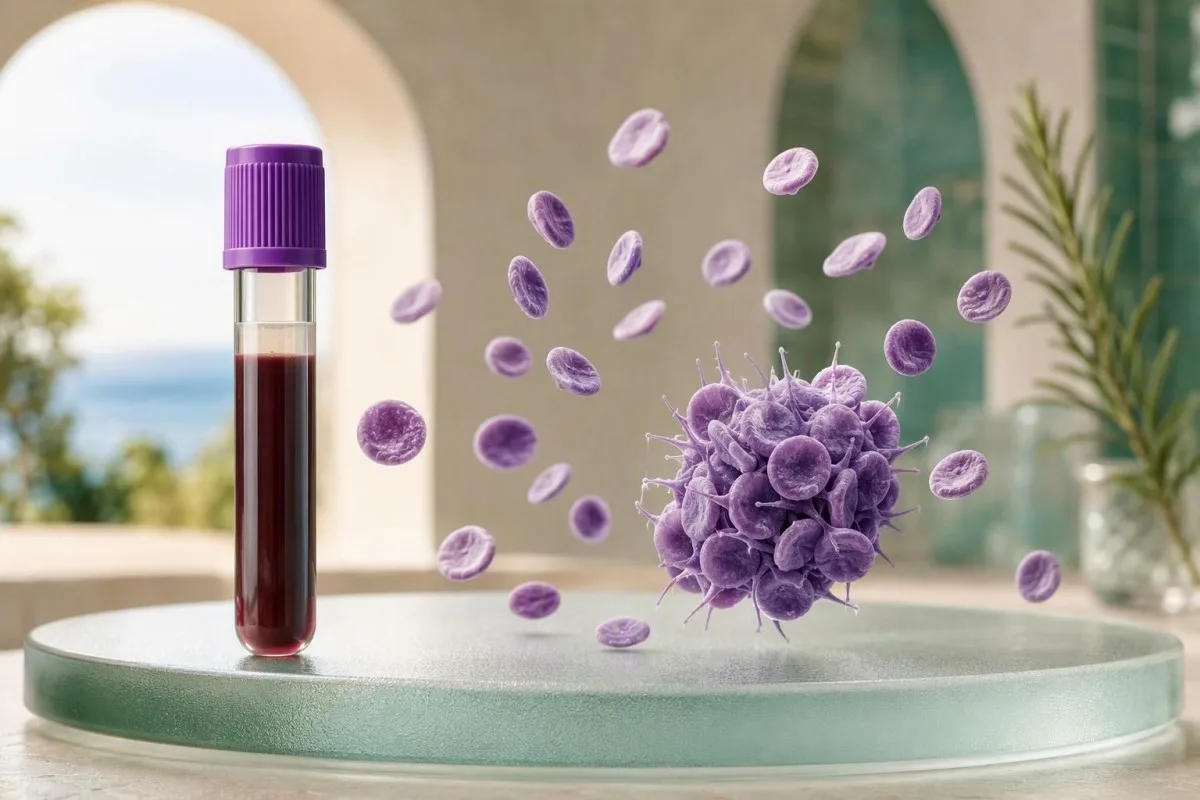
Nizka vrednost trombocitov je lahko občasno napaka pri merjenju v epruveti, ne pa težava znotraj telesa. Tukaj je opisano, kako se pseudotrombocitopenija, povezana z EDTA, diagnosticira, preden vas kdo označi s trombocitopenijo.


- Pseudotrombocitopenija je lažno nizko število trombocitov, ki ga povzroča agregacija trombocitov po odvzemu, najpogosteje v epruveti z EDTA.
- Tipičen razpon trombocitov za večino nosečih odraslih je približno 150–450 × 10⁹/L, čeprav laboratoriji določijo lastne intervale.
- Agregati trombocitov na razmazu lahko povzročijo, da avtomatski analizator podceni število trombocitov, ker skupka ne izmeri kot posamezne celice.
- Ponovno jemanje krvi s citratom pogosto odpravi agregacijo trombocitov v EDTA; laboratoriji običajno uporabijo 1,1-kratno korekcijo razredčitve za število trombocitov s citratom.
- Brez simptomov krvavitev in nepričakovano izolirano nizko število trombocitov naj sproži pregled razmaza pred odločitvami o zdravljenju ali nujni napotitvi.
- Prava trombocitopenija se lahko pojavi sočasno z agregacijo trombocitov v EDTA, zato je normalen rezultat v citratu pomirjujoč, vendar se mora ujemati s klinično sliko.
- Potrebna je nujna ocena je še vedno potrebna pri nenadzorovanem krvavljenju, novih razširjenih petehijah, hudih glavobolih, zmedi ali štetju trombocitov pod 10 × 10⁹/L.
Kaj dejansko pomeni agregacija trombocitov v EDTA
Agregacija trombocitov v EDTA je in vitro laboratorijski artefakt, pri katerem se trombociti zlepijo v epruveti za odvzem, kar povzroči napačno nizko avtomatizirano število trombocitov. Sam po sebi ne pomeni, da se trombociti uničujejo v telesu, in običajno ne povzroča tveganja krvavitve.
EDTA je aditiv v epruveti z vijoličnim zamaškom, ki se uporablja za večino popolnih krvnih slik, ker veže kalcij in preprečuje strjevanje. Pri majhnem podskupini ljudi odstranitev kalcija izpostavi površinske tarče trombocitov, ki omogočajo naravno prisotnim protitelesom, da povežejo trombocite med seboj. Analizator lahko združenje trombocitov šteje kot eno veliko delce, dogodek velikosti belih krvnih celic ali pa sploh ne; glejte naš pregled kaj vključuje CBC.
V mojem kliničnem delu je klasično poročilo število trombocitov 48 × 10⁹/L pri osebi, ki se počuti povsem dobro, nima podplutb in ima normalno število hemoglobina in belih krvnih celic. Ta neskladnost ni dokaz, je pa trenutek za premislek. Kantesti je AI analizator krvi ki označi izolirano nizko število trombocitov skupaj z laboratorijskimi komentarji, kot so agregati trombocitov, namesto da bi število obravnavali kot diagnozo.
Pseudotrombocitopenija, odvisna od EDTA, je ocenjena pri približno 0,03–0,27% rutinskih vzorcev zunanjih bolnikov, z višjimi stopnjami med vzorci, ki so že bili poslani na preiskavo zaradi nizkega števila trombocitov. Lippi in sodelavci jo opisujejo kot klinično neškodljiv, a potencialno posledičen preanalitični pojav, ker lahko sproži nepotrebne hospitalizacije, transfuzije trombocitov ali steroidno zdravljenje (Lippi et al., 2012).
Kako analizatorji trombocitov lahko podcenijo vzorce z agregati
Avtomatizirano štetje trombocitov je zanesljivo za razpršene trombocite, vendar se agregati ne ujemajo z velikostjo in signalnimi vzorci, ki jih pričakuje analizator. Število se zato lahko zmanjša s prvotnih 220 × 10⁹/L na navideznih 40 × 10⁹/L brez kakršne koli biološke izgube trombocitov.
Impedenčni analizatorji delce razvrščajo predvsem po volumnu, medtem ko optični sistemi dodajajo informacije o sipanju svetlobe. Trombocit je običajno širok približno 2-3 mikrometre, toda agregat se lahko prekriva z območjem fragmentov rdečih krvnih celic ali levkocitov. Zato je histogram trombocitov lahko nenormalen in zato lahko laboratorij doda zapis “prisotni agregati trombocitov” ali “število nezanesljivo”.”
Zastavica za trombocite na analizatorju je poziv k pregledu s strani človeka, ne končna diagnoza. Ročna ocena iz dobro pripravljenega perifernega razmaza je lahko bolj uporabna kot ponovitev iste epruvete z EDTA, še posebej, če je bil vzorec pred analizo čakal 2 uri. Za praktične pragove glede posegov si oglejte naš vodič za število trombocitov pred ekstrakcijo zob pojasnjuje, zakaj je preverjen rezultat pomemben.
Veliki trombociti povzročajo drugačen, včasih prekrivajoč problem. Zelo velike posamezne trombocite lahko imedenčne metode spregledajo tudi brez vidnih agregatov, kar pogosto zviša povprečni volumen trombocitov (MPV). Visok MPV ni zamenljiv s pseudotrombocitopenijo; naš pregled vzrokov velikih trombocitov ločuje ti dve ugotovitvi.
Kako izgledajo agregati trombocitov na razmazu
Agregati trombocitov na razmazu se pojavijo kot nepravilne skupine majhnih vijoličnih zrnatastih elementov, podobne grozdu, pogosto zgoščene na konici drsne plošče. Njihova lokacija je pomembna, ker štetje samo osrednjega polja razmaza lahko spregleda ravno tisto značilnost, ki pojasnjuje nizko število.
Usposobljen morfolog pregleda telo in rep filma pod povečavo, ne le enega reprezentativnega polja. Satelitizem trombocitov je redkejši vzorec, povezan z EDTA, pri katerem trombociti obkrožajo nevtropfile kot rozeta; lahko tudi zniža poročano število trombocitov. Obe ugotovitvi sta vzorčna pojava, čeprav se lahko satelitizem in široki agregati občasno pojavita skupaj.
Ena uporabna podrobnost je, da se agregacija v EDTA pogosto stopnjuje s časom. Vzorec, izmerjen 10 minut po odvzemu, lahko pokaže 118 × 10⁹/L, nato pa 42 × 10⁹/L čez 90 minut, ko nastane več agregatov. Laboratoriji se razlikujejo po svojem delovnem postopku, zato normalno začetno število ne izključuje popolnoma tega artefakta, če se pojavi poznejša zastavica analizatorja.
Ko jaz, Thomas Klein, MD, vidim nizko število celic v kombinaciji s komentarjem o razmazu, vendar brez klinične krvavitve, zahtevam dejansko interpretacijo razmaza, preden razpravljam o imunski trombocitopeniji. Podobno razmišljanje, ki temelji na mikroskopiji, je uporabno, ko poročilo omenja shistocite na krvnem filmu, čeprav shistociti zahtevajo veliko bolj nujne klinične okoliščine.
Zakaj EDTA pri nekaterih ljudeh povzroča agregate trombocitov
EDTA lahko povzroči aglutinacijo trombocitov s keliranjem kalcija in spremembo oblike membranskih glikoproteinov trombocitov, kar omogoča vezavo protiteles in premostitev sosednjih trombocitov. Ta reakcija se pojavi po odvzemu, ne zato, ker bi EDTA poškodoval krožeče trombocite v telesu.
Najbolj podprt mehanizem vključuje protitelesa, pogosto IgG, IgM ali IgA, ki prepoznajo skrite mesta na kompleksu GPIIb/IIIa trombocitov po kalcijevo odvisni strukturni spremembi. Reakcija je pri nekaterih bolnikih odvisna od temperature in časa, kar pojasnjuje, zakaj lahko segret vzorec občasno izboljša štetje, vendar to ni univerzalna rešitev. Gre za težavo združljivosti v laboratoriju, ne za alergijo na EDTA.
Pseudotrombocitopenija se lahko pojavi pri zdravih ljudeh in je bila poročana v povezavi s avtoimunskimi boleznimi, okužbami, malignostjo in nosečnostjo, vendar te povezave ne vzpostavljajo vzročnosti pri posamezniku. Pozitivna ANA ali nedavna virusna bolezen se ne smeta uporabiti za razlago števila celic, dokler se ne izključi artefakt. Kantesti je platforma za razlaga krvne slike z AI , ki analizira rezultate trombocitov s tipom epruvete, zastavicami analizatorja in ostalim delom CBC, namesto da bi jih obravnaval izolirano.
Pojav lahko traja več let, vendar se med odvzemi razlikuje. Bolnik ima lahko v ponedeljek v epruveti EDTA število trombocitov 35 × 10⁹/L, zjutraj istega dne v epruveti s citratom pa 230 × 10⁹/L, nato pa čez nekaj mesecev spet delno aglutinacijo. Zabeleženje preferirane epruvete v laboratorijski evidenci lahko prepreči ponavljajoče se alarme.
Kako ponovno jemanje krvi s citratom potrdi pseudotrombocitopenijo
Število trombocitov, ki se normalizira v epruveti z natrijevim citratom, medtem ko epruveta z EDTA vsebuje agregate, močno podpira pseudotrombocitopenijo, odvisno od EDTA. Število trombocitov v citratu potrebuje korekcijo redčenja, ker epruveta vsebuje tekoče antikoagulantno sredstvo.
Epruvete z modrim zamaškom z natrijevim citratom se običajno napolnijo v razmerju kri:antikoagulant 9:1. Mnogi laboratoriji pomnožijo izmerjeno število trombocitov v citratu z 1,1, da bi odpravili redčenje, vendar ima prednost validirana metoda lokalnega laboratorija. Na primer, surov rezultat v citratu 182 × 10⁹/L po korekciji postane približno 200 × 10⁹/L.
Ponovni odvzem mora biti pravilno napolnjen in nežno premešan. Premalo napolnjena epruveta s citratom spremeni razmerje antikoagulanta in lahko povzroči drugačen zavajajoč rezultat, kar je eden od razlogov, da lahko laboratorijski tehnik zavrne navidezno preprost ponovni odvzem. Naša razlaga barv epruvet za odvzem krvi pomaga bolnikom razumeti, zakaj je izbira epruvete del metode testiranja.
Epruvete z magnezijevim sulfatom ali kislino-citrat-dekstrozom (ACD) so lahko uporabne, če aglutinacija vztraja v citratu, vendar je to običajno odločitev laboratorija. Nagler in sodelavci so dokumentirali primer, v katerem je prepoznavanje pseudotrombocitopenije, odvisne od EDTA, preprečilo nepotrebno diagnostično delo po testiranju s citratom, ki je pokazalo ustrezno število celic (Nagler et al., 2014).
Kdaj ponovno jemanje krvi s citratom ne reši vprašanja
Ponovni odvzem s citratom ne izključuje prave trombocitopenije, ko korigirano število celic ostane nizko, aglutinacija se pojavi v več kot enem antikoagulantnem sredstvu ali simptomi nakazujejo krvavitev. Nekateri bolniki imajo agregacijo trombocitov v več antikoagulantnih sredstvih, nekateri pa imajo pravo nizko število celic poleg artefakta.
Če je korigirano število trombocitov v citratu 82 × 10⁹/L in je razmaz brez aglutinatov, je to prava trombocitopenija, dokler ni dokazano drugače. Če je v EDTA 25 × 10⁹/L in v citratu 86 × 10⁹/L s preostalimi agregati, sta lahko prisotna tako artefakt kot prava zmanjšana vrednost. Klinična ekipa naj uporabi najboljšo preverjeno oceno, ne da bi preprosto izbrala bolj pomirjujoče število.
Strjevanje v vzorcu lahko prav tako razveljavi CBC, ker so trombociti porabljeni v mikrokravku. Za razliko od pseudotrombocitopenije v EDTA lahko delno strjen vzorec vpliva tudi na bele krvničke in indekse rdečih krvničk. Preberite naš vodnik za ponovni odvzem po težavah z vzorci za praktične razlike med artefakti odvzema.
Vbodne vzorce s prsta ne vplivajo samodejno na varnost. Počasno zbiranje, stiskanje ali zapoznjeno mešanje lahko spodbujajo lokalno agregacijo in ogrozijo število trombocitov, zlasti ko je poročana vrednost pod 100 × 10⁹/L. Vensko ponovno jemanje vzorca s hitro obdelavo je običajno bolj zanesljiva pot za potrditev.
Območja števila trombocitov, tveganje za krvavitev in past artefaktov
Večina laboratorijev za odrasle uporablja referenčni interval števila trombocitov blizu 150–450 × 10⁹/L, vendar tveganje za krvavitev temelji na preverjenem številu, vzroku, funkciji trombocitov in zdravilih. Neresnično nizek rezultat EDTA ne smemo uporabiti samostojno za zavrnitev postopka ali predpisovanje zdravljenja.
Spontane hude krvavitve postanejo bolj verjetne, ko pravo število trombocitov pade pod približno 10 × 10⁹/L, medtem ko veliko ljudi s stabilnim številom nad 50 × 10⁹/L nima večjih spontanih krvavitev. To so splošna klinična merila, ne dovoljenje za zanemarjanje simptomov. Antikoagulansi, aspirin, bolezen jeter, odpoved ledvic in disfunkcija trombocitov lahko spremenijo tveganje pri katerikoli vrednosti.
Število trombocitov 90 × 10⁹/L zahteva drugačen pristop pri zdravi osebi z normalnim rezultatom citrata kot pri osebi z novo meleno in povišanim INR. Zato interpretacija števila trombocitov sodi poleg testiranja koagulacije; naš aPTT in test strjevanja vodilo pojasnjuje, kaj lahko in česa ne more izključiti normalen test strjevanja.
Laboratoriji lahko uporabljajo 140 × 10⁹/L namesto 150 × 10⁹/L kot spodnjo referenčno mejo, zlasti pri lokalno pridobljenih intervalih. Referenčni interval opisuje 95% primerjalne populacije; ne definira univerzalnega praga zdravljenja. Ta razlika prihrani presenetljivo količino nepotrebnih skrbi.
Vzroci CBC, ki povečujejo verjetnost artefakta
Izolirano nepričakovano nizko število trombocitov z normalnim hemoglobinom, belimi krvnimi celicami in komentarjem o aglutinaciji je vzorec CBC, ki najbolj kaže na pseudotrombocitopenijo. Ta vzorec je bolj sumljiv kot diagnostičen, ker zgodnja imunska ali na zdravila povzročena trombocitopenija je lahko tudi izolirana.
Prave motnje kostnega mozga pogosto vplivajo na več kot eno vrsto krvnih celic, čeprav obstajajo izjeme. Nizko število trombocitov v kombinaciji s padajočim hemoglobinom, nenormalnimi belimi krvnimi celicami, blasti ali vztrajnimi konstitucijskimi simptomi zahteva takojšen pregled pri zdravniku in pogosto formalni pregled brisa. Naš članek o poti CBC za krvne bolezni pojasnjuje, zakaj te skupine povečujejo nujnost.
Razmerje med trombociti in limfociti postane nesmiselno, ko je imenovalec veljaven, vendar je števec trombocitov umetno znižan. PLR 60, izračunan iz EDTA-aglutiniranega števila, ne smemo interpretirati kot vnetnega ali srčno-žilnega signala. To je tiha, a pogosta sekundarna napaka v samodejnih zdravstvenih poročilih; glejte našo razlago visokih PLR rezultatov.
Kantesti AI prepozna neskladje med nizkim številom trombocitov in normalnimi sosednjimi meritvami CBC, nato pa bralca usmeri, da preveri komentarje vzorcev. Orodje za analizo krvnih testov z umetno inteligenco nikoli ne sme pretvoriti enojne nepreverjene vrednosti trombocitov v diagnozo bolezni. Ta klinična zadržanost je pomembnejša od hitrosti.
Nosečnost, bolnišnično zdravljenje in drugi visoko tvegani položaji
Aglutinacija trombocitov v EDTA se lahko pojavi med nosečnostjo in bolnišničnim zdravljenjem, vendar je nikoli ne smemo domnevati, ko bi prava trombocitopenija lahko spremenila nujno obravnavo. Nosečnostno specifični vzroki, kot so nosečnostna trombocitopenija, preeklampsija, HELLP sindrom in imunska trombocitopenija, zahtevajo potrjeno število.
Število trombocitov se v nekomplicirani nosečnosti običajno znižuje, nekateri laboratoriji pa sprejemajo nižje referenčne meje, specifične za posamezno trimesesečje. Število pod 100 × 10⁹/L je manj značilno za nekomplicirano nosečnostno trombocitopenijo in zahteva skrbno klinično oceno, tudi če so vidni agregati EDTA. Naš vodnik po referenčnih vrednostih trombocitov v nosečnosti, specifičnih za trimesesečje, nudi kontekst, ne da bi nadomestil porodnični pregled. V bolnišnici lahko nenaden padec za več kot 50 % glede na izhodiščno vrednost vzbuja vprašanja o sepse, izpostavljenosti zdravilom, s heparinom povzročeni trombocitopeniji, razredčevanju ali porabi zaradi naprave. Artefakt EDTA lahko posnema dramatičen upad, zlasti kadar je prejšnji rezultat pridobljen z drugačno laboratorijsko metodo. Primerjava potrjenega citratnega rezultata z izhodiščno vrednostjo pacienta je pogosto bolj koristna kot ponovitev rutinskega EDTA CBC.
V bolnišnici lahko nenaden padec za več kot 50% glede na osnovno vrednost sproži vprašanja o sepsi, izpostavljenosti zdravilom, trombocitopeniji, ki jo povzroča heparin, razredčitvi ali porabi, povezani z napravami. EDTA artefakt lahko posnema dramatičen upad, zlasti kadar je prejšnji rezultat prišel iz druge laboratorijske metode. Primerjava potrjenega rezultatov s citratom z osnovno vrednostjo pacienta je pogosto bolj uporabna kot ponavljanje rutinske EDTA CBC.
Pred epiduralno anestezijo, operacijo, ciklusom kemoterapije ali transfuzijo trombocitov se pozanimajte, ali je laboratorij potrdil vrednost na razmazu ali z alternativnim antikoagulansom. Videla sem, da so bili zamudam pri oskrbi preprečeni s tem enim telefonskim klicem. Nasprotno, aktivne simptome ali nestabilnega pacienta je treba oceniti med potekom potrditve.
Zdravila in diagnoze, ki jih ne smemo prehitro kriviti
Pred pripisovanjem izoliranega nizkega števila trombocitov zdravilu, avtoimunski bolezni ali imenski trombocitopeniji je treba izključiti zlepljanje trombocitov v EDTA. Ustavitev dragocenega zdravila na podlagi nepotrjene vrednosti lahko povzroči škodo, ki se ji je mogoče izogniti.
Heparin, izdelki, ki vsebujejo kinin, trimetoprim-sulfametoksazol, valproat, linezolid, kemoterapija in nekatere imunske terapije lahko povzročijo pravo trombocitopenijo. Časovni odnos je pomemben: resničen padec, povezan z zdravilom, običajno vztraja v pravilno zbranem citratnem vzorcu in ne izgine, ko se EDTA zamenja. Zgodovina zdravljenja mora vključevati injekcije, izdelke brez recepta in zeliščne pripravke.
Imunska trombocitopenija je diagnoza izključitve, ne laboratorijska oznaka. Lahko se kaže z izoliranimi trombociti pod 100 × 10⁹/L, vendar zlepljen razmaz EDTA naredi začetno število neberljivo. Lippi in sod. (2012) posebej opozarjajo, da prepoznavanje pseudotrombocitopenije preprečuje neprimerne terapije, kot so kortikosteroidi in odstranitev vranice.
Če se zdi, da poročilo nasprotuje vašim prejšnjim rezultatom, shranite izvirno PDF datoteko in zabeležite datum odvzema, opombo o epruveti, akutno bolezen in nova zdravila. Naš vodnik po pomembnih spremembah med krvnimi testi pojasnjuje, zakaj numerična razlika ni samodejno biološka sprememba.
Kaj vprašati vaš laboratorij ali kliničnega zdravnika naslednjič
Pri nepričakovanem nizkem številu trombocitov vprašajte, ali so bili vidni zlepljeni trombociti, ali je bil pregledan periferni razmaz in ali je mogoče izvesti štetje z alternativnim antikoagulansom. Ta tri vprašanja običajno hitreje razjasnijo naslednji korak kot iskanje simptomov na spletu.
Praktična zahteva je: “Ali bi laboratorij lahko pregledal krvni razmaz glede agregatov trombocitov in, če je potrebno, ponovil štetje trombocitov v citratu?” To ni zahteva po določeni diagnozi; to je prošnja, da se meritev potrdi. Če je bil vzorec odvzet drugje, bo morda moral klinični zdravnik naročiti nov odvzem, namesto da bi dodal testiranje na staro epruveto.
Povprašajte za popravljeno citratni rezultat in ali zlepljenje vztraja v tej epruveti. Sirovi rezultat 145 × 10⁹/L je lahko mejni, dokler korekcija razredčenja ne da približno 160 × 10⁹/L. Vprašajte tudi, ali je laboratorij uporabil optično ali fluorescenčno štetje trombocitov, saj te metode včasih izboljšajo štetje v kompleksnih vzorcih.
Kantesti's 2026 interpretacijski potek spodbuja uporabnike, da pred ukrepanjem na podlagi opozorila primerjajo numerični rezultat z laboratorijsko pripovedjo in polji z oznakami. Za širši varnostni okvir naš kontrolno listo za točnost AI poročila pokriva transkripcijo, enote, referenčne razpone in potrditev rezultatov.
Česa ne smete storiti med čakanjem na potrditev
Ne začnite jemati dodatkov, ne prekinjajte predpisanih zdravil in ne domnevajte, da imate motnjo krvavitve samo zato, ker je eno štetje trombocitov z EDTA nizko. Hkrati ne prezrite aktivne krvavitve samo zato, ker se sumi na zlepljanje.
Ni diete, vitamina ali domačega zdravila, ki bi popravilo pseudotrombocitopenijo, odvisno od EDTA, ker se trombociti zlepljajo v epruveti, ne pa propadajo v telesu. Pomanjkanje folata, vitamina B12 in železa lahko v drugih okoliščinah vpliva na tvorbo krvi, vendar dodatki ne morejo potrditi vprašljivega števila. Zdravljenje artefakta se nanaša na odvzem in analizo.
Izogibajte se nujnim zdravilom kot so aspirin, ibuprofen, naproksen in uživanju večjih količin alkohola, dokler zdravnik ne pojasni zelo nizke zabeležene vrednosti, še posebej, če se zlahka pojavljate modrice. Ne prekinjajte antikoagulantov, antiplateletnih zdravil, zdravil proti epileptičnim napadom ali zdravljenja raka brez zdravniškega nasveta; indikacija za ta zdravila lahko predstavlja večje takojšnje tveganje kot nepreverjen rezultat.
Vodenje jedrnatega časovnega pregleda rezultatov lahko spremeni termin. Naš vodnik za sledenje laboratorijskim rezultatom predlaga beleženje časa odvzema, nedavne bolezni, zdravil, komentarjev vzorca in ali je rezultat iz EDTA ali citrata.
Rdeče zastavice, ki zahtevajo nujno zdravniško oceno
Poiščite nujno zdravniško oceno za nenadzorovano krvavitev, črno blato, bruhanje krvi, močan nov glavobol, zmedenost, omedlevico ali razširjen drobnih pikčast izpuščaj, tudi če sumite na aglutinacijo EDTA. Laboratorijski artefakt in resnična nujna situacija se lahko pojavljata hkrati.
Prava vrednost trombocitov pod 10 × 10⁹/L se običajno obravnava kot nujen rezultat, ker se tveganje za spontano sluznično in notranjo krvavitev znatno poveča. Vrednost pod 20 × 10⁹/L z novo krvavitvijo, vročino, hudo hipertenzijo, zapleti v nosečnosti ali nedavnim izpostavljanjem heparinu prav tako zahteva isti dan strokovni pregled. Lokalni nujni nasvet naj ima prednost pred kakršno koli spletno interpretacijo.
Novi nevrološki simptomi so še posebej pomembni, ker je intrakranialna krvavitev redka, a resna. Ne vozite sami, če imate močan glavobol s šibkostjo, spremembo govora, kolapsom ali zmedo. Pri otrocih nebledljiv izpuščaj z vročino potrebuje nujno oceno ne glede na rezultat trombocitov.
Thomas Klein, MD, svetuje bolnikom, naj ločijo vprašanje “Ali je ta vrednost resnična?” od vprašanja “Ali je ta oseba danes varna?”. Prvo običajno zahteva bris in ponoven odvzem v citratni epruveti; drugo je odvisno od simptomov, ugotovitev pregleda in celotne klinične slike. Naš vodnik za drugo mnenje na podlagi krvnega testa lahko pomaga pripraviti osredotočeno razpravo po obravnavi nujnih težav.
Kako Kantesti varno interpretira označen rezultat števila trombocitov
Kantesti AI obravnava nizko število trombocitov s komentarji o aglutinaciji v EDTA kot signal za preverjanje, ne kot dokaz trombocitopenije. Naša interpretacija daje prednost analizatorskim zastavicam, drugim linijam CBC, prejšnjim vrednostim in prijavljenim simptomom pred poenostavljeno oznako rdeče ali zelene barve.
Kantesti je storitvi za interpretacijo laboratorijskih testov AI zasnovan za pojasnjevanje laboratorijskih podatkov v preprostem jeziku, hkrati pa ohranja omejitve izvirnega poročila. Če naložena datoteka PDF navaja “aglutinacija trombocitov”, naj naš sistem uporabniku pove, da je število lahko lažno nizko in da ga lahko laboratorij ali zdravnik potrdi s pregledom razmaza ali citratnim vzorcem.
Prepoznavanje optičnih znakov lahko napačno prebere decimalno piko, enoto ali laboratorijsko opombo. Zato morajo bolniki pred zanašanjem na katero koli digitalno interpretacijo pregledati predogled slike, še posebej okoli vrednosti, kot so 18 proti 180 × 10⁹/L. Naš kontrolnem seznamu za kakovost nalaganja PDF pojasnjuje redke preglede, ki preprečujejo večino napak, ki bi se jim bilo mogoče izogniti.
Klinični nadzor ostaja človeško delo. Metodologija Kantesti se pregleduje glede na delovne procese, osredotočene na varnost; bralci, ki želijo razumeti naš pristop, si lahko ogledajo naš tehnično validacijo ter klinični nadzor. AI lahko učinkovito organizira vprašanja, vendar ne more pregledati dejanskega razmaza ali oceniti aktivne krvavitve.
Praktični načrt nadaljnjega ukrepanja po agregaciji trombocitov v EDTA
Običajni postopek nadaljnjega spremljanja je dokumentiranje artefakta EDTA, pridobitev preverjenega števila trombocitov iz epruvete z drugim antikoagulantom in uporaba tega rezultata za prihodnje klinične odločitve. Večina ljudi ne potrebuje zdravljenja za sam artefakt, ko laboratorij potrdi vzorec.
Zahtevajte, da laboratorijski zapis navede “aglutinacija trombocitov odvisna od EDTA” ali enakovredno besedilo, če je potrditev jasna. Pri prihodnjih odvzemanju lahko ekipa za flebotomijo ob rutinskem CBC v epruveti z EDTA odvzame tudi citratno epruveto, kar prihrani dodaten termin. To je še posebej koristno pred operacijo, med nosečnostjo ali ko protokol zdravljenja določa pragove za trombocite.
Preverjena osnovna vrednost je bolj dragocena kot ponovljene nepreverjene nizke vrednosti. Če je vaša popravljena citratna vrednost stabilna pri 205 × 10⁹/L v 12 mesecih, je prihodnja vrednost EDTA 55 × 10⁹/L z agregati veliko manj alarmantna kot enako število pri nekdo brez predhodne dokumentacije. Trendi so uporabni samo, če je metoda testiranja primerljiva.
Kantesti je podprl več kot 2 milijona uporabnikov v 127+ državah s večjezičnimi laboratorijskimi pojasnili, vendar rezultati ostajajo del odnosa s svojim zdravnikom. Naši medicinski recenzenti in Zdravniški svetovalni odbor poudarjajo isto končno pravilo: najprej preverite število trombocitov, nato pa se odločite, kaj – če sploh kaj – potrebuje zdravljenje.
Raziskovalne publikacije
Od 29. avgusta 2026 sta navedeni raziskovalni publikaciji Kantesti zgoraj navedeni kot dodatna izobraževalna gradiva. Ne potrjujeta diagnoze EDTA-odvisne psevdotrombocitopenije; laboratorijski razmaz in štetje trombocitov z alternativnim antikoagulantom ostajata ustrezni orodji za potrditev.
Pogosto zastavljena vprašanja
Ali lahko aglutinacija trombocitov z EDTA povzroči zelo nizko število trombocitov?
Da. Aglutinacija trombocitov z EDTA lahko povzroči znatno lažno nizko število trombocitov, včasih pod 50 × 10⁹/L, čeprav je pravo število cirkulirajočih trombocitov osebe normalno. Analizator podcenjuje agregacijo trombocitov, ker zanesljivo ne more prepoznati vsakega trombocita v klopki. Periferni razmaz, ki kaže agregate, in normalno popravljeno število trombocitov s citratom močno podpirajo pseudotrombocitopenijo. Izvid je še vedno treba nujno pregledati, če pride do aktivne krvavitve ali če število trombocitov s citratom ostane nizko.
Kako potrdimo pseudotrombocitopenijo?
Pseudotrombocitopenijo običajno potrdimo z analizo razmaza periferne krvi za prepoznavanje agregatov trombocitov in ponovitvijo določitve števila trombocitov v epruveti z natrijevim citratom. Citratne epruvete vsebujejo tekoče antikoagulantno sredstvo, zato mnogi laboratoriji pomnožijo izmerjeno število trombocitov z 1,1, da upoštevajo razredčenje. Na primer, začetno število trombocitov v citratni epruveti 180 × 10⁹/L se po korekciji običajno poroča kot približno 198 × 10⁹/L. Validiran postopek korekcije in interpretacija razmaza v lokalnem laboratoriju naj vodita končni rezultat.
Ali skrunjenje trombocitov v EDTA pomeni, da imam motnjo strjevanja krvi?
Ne. Zgrudki trombocitov v vzorcu EDTA so samo in vitro artefakt in ne pomenijo, da imate motnjo strjevanja krvi ali da se vaši trombociti zgrudijo v obtoku. Večina prizadetih ljudi nima krvavitvenih simptomov in ima potrjeno število trombocitov v običajnem odraslem intervalu približno 150-450 × 10⁹/L. Klinični zdravnik bi moral še vedno preiskati krvavitvene simptome, nenormalne koagulacijske teste ali vztrajno nizko število trombocitov v citratnem vzorcu. Artefakt osebe ne zaščiti pred nepovezanimi krvavitvenimi tveganji, ki jih povzročajo zdravila ali zdravstvena stanja.
Ali lahko do zlepljenja trombocitov pride tudi v citratu?
Da, čeprav natrijev citrat pogosto preprečuje aglomeracijo, povezano z EDTA, lahko agregacija trombocitov občasno vztraja v citratu ali se pojavi pri uporabi več antikoagulantov. V takšni situaciji lahko laboratorij uporabi optično ali fluorescenčno štetje trombocitov, hitro segrevanje, magnezijev sulfat ali raztopino ACD (acid-citrate-dextrose) v skladu s svojimi validiranimi protokoli. Popravljeno citratno štetje pod 150 × 10⁹/L brez agregatov je treba obravnavati kot možno pravo trombocitopenijo. Aglomeracija zaradi več antikoagulantov je redka in zahteva potrditev pod nadzorom laboratorija.
Ali naj ponovim število trombocitov, če poročilo navaja, da so trombociti zlepljeni?
Da. Poročilo, ki navaja skupke trombocitov, agregate trombocitov ali nezanesljivo število trombocitov, običajno upravičuje preverjanje namesto sprejetja numeričnega rezultata. Običajna ponovitev je sveže odvzeti vzorec z natrijevim citratom s pregledom razmaza, idealno hitro obdelan. Če je prvotno število pod 10 × 10⁹/L ali imate nenadzorovano krvavitev, črno blato, hude glavobole ali zmedenost, poiščite nujno zdravniško pomoč, medtem ko se ureja potrditev. Ne spreminjajte predpisanih zdravil brez posvetovanja z zdravnikom, ki ve, zakaj so bila predpisana.
Ali lahko EDTA-inducirana pseudotrombocitopenija prihaja in izginja?
Da. EDTA pseudotrombocitopenija je lahko vztrajna več let ali pa se kaže kot spremenljiva, ker je stopnja aglutinacije odvisna od časa po odvzemu, temperature vzorca in metode analizatorja. En vzorec EDTA lahko pokaže 70 × 10⁹/L, medtem ko drug vzorec, odvzet na drug dan, pokaže 145 × 10⁹/L, kljub stabilnemu dejanskemu številu trombocitov. Dokumentirana normalna vrednost v citratnem vzorcu zagotavlja uporaben temelj za prihodnje primerjave. Prošnja laboratoriju, da zabeleži prednostno antikoagulantno sredstvo, lahko prepreči ponavljajoče se lažne alarme.
Danes pridobite analizo krvnih preiskav z umetno inteligenco
Pridružite se več kot 2 milijonoma uporabnikov po vsem svetu, ki zaupajo Kantesti za takojšnjo, natančno analizo laboratorijskih preiskav. Naložite svoje rezultate krvnih preiskav in v nekaj sekundah prejmite celovito razlago biomarkerjev 15,000+.
📚 Citirane raziskovalne publikacije
Klein, T., Mitchell, S., & Weber, H. (2026). Kantesti AI. (2026). C3 C4 Komplement Krvni Test & ANA Titer Vodnik. Zenodo. https://doi.org/10.5281/zenodo.18353989. Kantesti AI Medical Research.
Klein, T., Mitchell, S., & Weber, H. (2026). Kantesti AI. (2026). Nipah Virus Krvni Test: Vodnik za Zgodnje Odkrivanje & Diagnozo 2026. Zenodo. https://doi.org/10.5281/zenodo.18487418. Kantesti AI Medical Research.
📖 Zunanje medicinske reference
⚕️ Medicinska izjava o omejitvi odgovornosti
Ta članek je namenjen izobraževalnim namenom in ne predstavlja medicinskega nasveta. Za odločitve o diagnozi in zdravljenju se vedno posvetujte z usposobljenim izvajalcem zdravstvenih storitev.
E-E-A-T zaupanja vredni signali
Izkušnje
Zdravniški klinični pregled delovnih postopkov za interpretacijo laboratorijskih izvidov.
Strokovno znanje
Laboratorijska medicina s poudarkom na tem, kako se biomarkerji obnašajo v kliničnem kontekstu.
Avtoritativnost
Napisal dr. Thomas Klein, pregledala dr. Sarah Mitchell in prof. dr. Hans Weber.
Zanesljivost
Interpretacija na podlagi dokazov z jasnimi nadaljnjimi potmi za zmanjšanje alarmiranja.