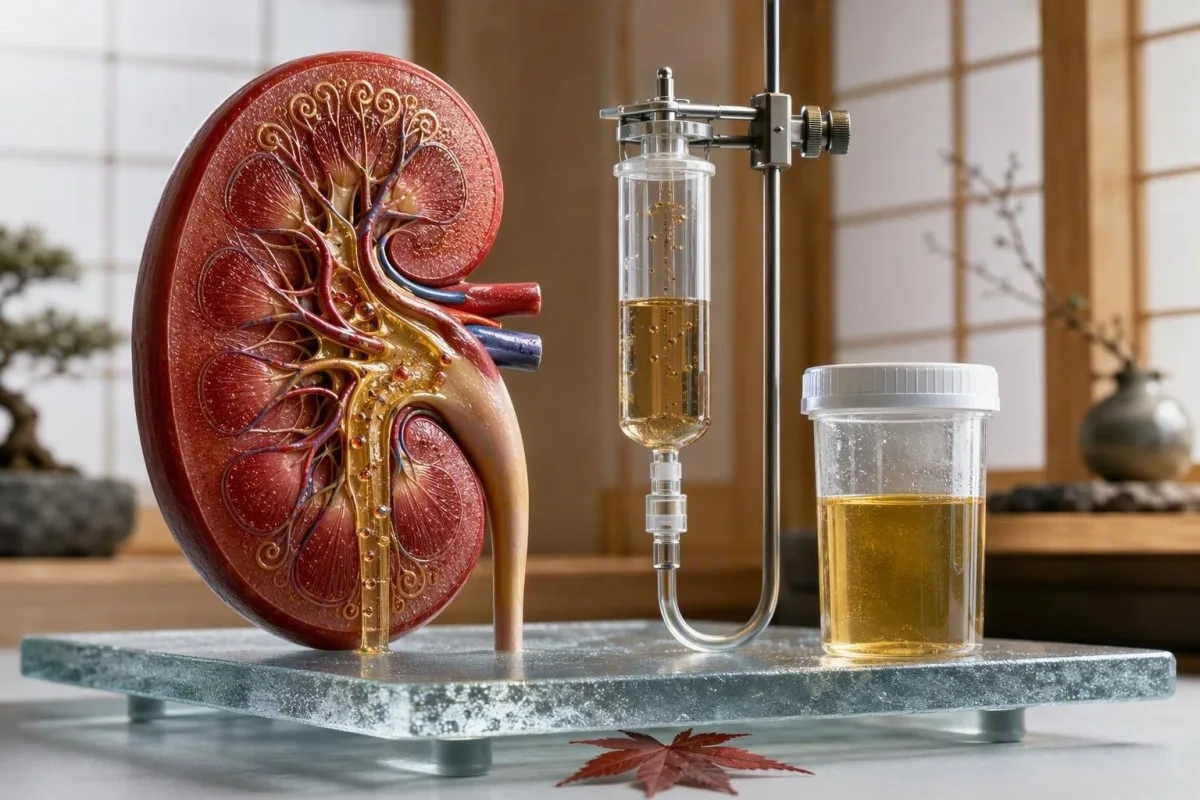
SIADH er en mønsterdiagnose, ikke et enkelt unormalt resultat. De nyttige spor kommer fra blod og urin indsamlet på nogenlunde samme tid, derefter fortolket sammen med medicin, skjoldbruskkirtelfunktion, kortisol og væskestatus.


- Ægte hypotone hyponatriæmi betyder, at serum natrium er under 135 mmol/L, og målt serum osmolalitet er normalt under 275 mOsm/kg.
- SIADH urin osmolalitet er upassende over 100 mOsm/kg på trods af lav serum osmolalitet; nyrerne tilbageholder vand, når de burde udskille fortyndet urin.
- Urin-natrium over 30 mmol/L understøtter SIADH kun efter udelukkelse af diuretika, binyreinsufficiens, skjoldbruskkirtelsygdom og klinisk åbenlys væskemangel.
- Dehydreringsmønster producerer normalt koncentreret urin med urin natrium under 30 mmol/L, forhøjet urea eller BUN, og tegn på reduceret cirkulerende volumen.
- Binyrebarkinsufficiens kan se næsten identisk ud med SIADH, så en lav morgenkortisol eller et tvetydigt resultat kræver akut klinisk opfølgning, før SIADH diagnosticeres.
- Alvorlige symptomer såsom anfald, forvirring, gentagne opkastninger eller nedsat bevidsthed med lavt natrium kræver akut behandling; behandlingen må ikke vente på en online fortolkning.
- Korrektionssikkerhed betyder: ved kronisk hyponatriæmi bør serum-natrium generelt ikke stige med mere end 8 mmol/L inden for en 24-timers periode for patienter med høj risiko for osmotisk demyelinisering.
- Timing betyder noget fordi en IV-salineinfusion, en diuretisk dosis eller flere liter vand kan ændre urinens natrium- og osmolaritet inden for få timer.
Hvorfor SIADH kræver parrede blod- og urinprøver
A SIADH blodprøve mønster er lavt serum-natrium med lav målt serum-osmolaritet, parret med urin, der forbliver for koncentreret og relativt natrium-rig. I praksis har kroppen overskydende vand i forhold til natrium, fordi antidiuretisk hormonaktivitet ikke normalt slukkes; en natriumværdi alene kan ikke bevise dette.
Serum-natrium under 135 mmol/L definerer hyponatriæmi, men natrium er en koncentration snarere end et mål for kroppens totale natrium. En person kan have lavt natrium fra vandretention, salt-tab, højt glukose, laboratorieartefakt eller en blanding af disse; vores vejledning til symptomer ved lavt natrium forklarer, hvorfor symptomernes sværhedsgrad ofte følger faldets hastighed snarere end det nøjagtige tal.
Den første nyttige skillevej er målt serum-osmolaritet: mindre end 275 mOsm/kg indikerer hypotonnisk hyponatriæmi, den situation hvor SIADH overvejes. Dr. Thomas Kleins kliniske regel er enkel: kald aldrig SIADH ud fra et simpelt metabolisk panel, før du har kontrolleret glukose, triglycerider, totalprotein og ideelt set målt osmolaritet.
Kantesti er en AI blodprøveanalysator der aflæser natrium, glukose, urinstof, kreatinin og parrede urinresultater som ét fysiologisk problem snarere end en samling af flag. I vores gennemgange er den mest farlige fejl beroligelse efter et natrium på 122 mmol/L, når rapporten ikke indeholder samtidige urinundersøgelser eller symptomhistorik; vores kliniske brugssituationer viser, hvorfor manglende kontekst ændrer næste skridt.
Hvad SIADH faktisk betyder
SIADH står for syndrom med upassende antidiurese, historisk kaldet syndrom med upassende antidiuretisk hormonsekretion. Syndromet kan opstå fra medicin, kvalme, lungesygdomme eller sygdomme i centralnervesystemet, smerte, postoperativ stress og lejlighedsvis malignitet; laboratoriemønsteret identificerer vandhåndtering, ikke den underliggende udløser.
Serum natrium og osmolalitet: bekræfter ægte væskeoverskud
Serum-osmolaritet under 275 mOsm/kg med natrium under 135 mmol/L bekræfter hypotonnisk hyponatriæmi, men det identificerer ikke SIADH i sig selv. En normal eller høj osmolaritet henviser klinikere til glukose, mannitol, kontrastmidler, alkoholer eller pseudohyponatriæmi i stedet.
De fleste laboratorier rapporterer beregnet osmolaritet, almindeligvis estimeret som 2 × natrium + glukose + urinstof i mmol/L, men en målt osmolaritet er at foretrække, når diagnosen er uklar. En meningsfuld forskel mellem målte og beregnede værdier kan afsløre umålte osmolder; dette er en grund til, at et natriumresultat kan være klinisk reelt, men ikke repræsentere SIADH.
Glukose over ca. 13,9 mmol/L (250 mg/dL) sænker målt natrium ved vandskifte fra celler til plasma. En almindelig anvendt korrektion tilføjer ca. 1,6 til 2,4 mmol/L natrium for hver 5,6 mmol/L (100 mg/dL) glukose over 5,6 mmol/L, selvom klinikere er uenige om den præcise faktor ved meget højt glukoseniveau.
Meget høje triglycerider eller paraproteiner kan forårsage pseudohyponatriæmi med indirekte ion-selektive assays, mens målt osmolalitet forbliver normal. Sammenlign natriumresultatet med en basisk metabolisk panel og spørg, om laboratoriet brugte en direkte eller indirekte elektrode, før du antager en vandbalancestyrke.
SIADH urin osmolalitet: nyre-sporet, der ændrer sagen
Urin osmolalitet over 100 mOsm/kg hos en hypotonsk patient betyder, at antidiuretisk hormonaktivitet er til stede. Ved SIADH er urin osmolalitet ofte 200 til 600 mOsm/kg, selvom ingen enkelt urinværdi er diagnostisk.
En urinosmolalitet på 100 mOsm/kg eller lavere indikerer næsten maksimalt fortyndet urin og gør SIADH usandsynlig. Dette mønster passer med primær polydipsi eller lavt solute-indtag, hvor vandindtaget overstiger nyrernes evne til at udskille frit vand; det er særligt relevant for personer, der indtager meget lidt protein og salt.
Her er det kontraintuitive punkt: koncentreret urin betyder ikke automatisk dehydrering. Både hypovolæmi og SIADH øger antidiuretisk hormon, men dehydrering gør det passende for at bevare cirkulationen, mens SIADH gør det på trods af klinisk tilstrækkeligt effektivt arterielt volumen.
Den europæiske hyponatriæmi-retningslinje anbefaler urin osmolalitet som en tidlig diskriminator, fordi fysisk vurdering af volumen ofte er upålidelig (Spasovski et al., 2014). Læs vores dybere forklaring af Urin-osmolalitetstest hvis din rapport bruger mOsm/kg snarere end en dipstick-specifik vægt.
Hvorfor en enkelt urinprøve kan vildlede
Urin osmolalitet kan falde hurtigt, efter kvalme er forsvundet, smerte er kontrolleret, eller et problematisk lægemiddel er seponeret. Hvis urin blev indsamlet efter intravenøs væske, efter et loop-diuretikum, eller timer efter blodprøven, betragter jeg det som et spor snarere end et bevis.
Urin natrium: SIADH versus dehydrering og lav effektiv volumen
Urin natrium over 30 mmol/L understøtter SIADH ved hypotonsk hyponatriæmi, når kostsaltindtaget er normalt, og diuretika er fraværende. Urin natrium under 30 mmol/L indikerer oftere renal natriumkonservering fra opkastning, diarré, svedtendens, hjertesvigt, cirrhose eller ægte dehydrering.
Ved ukompliceret SIADH er nyrerne ikke natrium-elskende, så urin natrium er ofte over 30 mmol/L og kan overstige 60 mmol/L. Urinstof er ofte lavt, og serumurinsyre kan være under 4 mg/dL (0,24 mmol/L), fordi mild volumenudvidelse øger urat-clearance.
En 68-årig, der tager hydrochlorthiazid, kan have urin natrium på 55 mmol/L og koncentreret urin efter en mavevirus; det etablerer ikke SIADH. Thiazid-associeret hyponatriæmi kan efterligne alle klassiske laboratoriefunktioner, hvorfor medicinlisten ikke er administrativ detalje, men diagnostiske data.
Urin natrium er mindre pålidelig efter diuretika, ved fremskreden nyresygdom eller ved meget lav kostnatrium. Par den med kreatinin, urinstof og electrolyte panel snarere end at behandle en 30 mmol/L cutoff som en stiv mur.
Fraktionel udskillelse af urat
En fraktionel udskillelse af urat over 12% kan understøtte SIADH, især når diuretika slører urinnatrium. Den normaliseres normalt efter korrektion af SIADH, hvorimod renale salt-tabstilstande kan holde den forhøjet; dette er specialistområde, men det kan være nyttigt, når historien ikke passer.
Hvordan dehydrering ser anderledes ud end SIADH på laboratorietests
Dehydrering forårsager normalt koncentreret urin med lav urinnatrium, stigende urea i forhold til kreatinin og klinisk evidens for volumenmangel. SIADH producerer ofte også koncentreret urin, men patienter er normalt klinisk euvolemiske og har ikke den samme natriumbevarende nyrespons.
Ved opkastning, diarré eller kraftig sveden nedsætter nyrerne typisk urinnatrium til under 20-30 mmol/L mens urinens osmolaritet stiger over 100 mOsm/kg. Urea kan stige uforholdsmæssigt i forhold til kreatinin, men dette forhold påvirkes af proteinindtag, gastrointestinal blødning, steroider og leverfunktion, så det er understøttende snarere end definitivt.
Ved SIADH kan blodtryk og undersøgelse se normale ud, men subtile fund betyder noget: ingen ortostatiske symptomer, ingen tørre slimhinder, ingen perifert ødem og ingen overbevisende gastrointestinalt tab. Jeg har set patienter kaldt "dehydrerede" simpelthen fordi deres urin var mørk; urinens farve er en dårlig proxy for natriumfysiologi, som vores guide til mørk urin diskuterer.
En forsigtig isotonisk saltvandsudfordring kan hjælpe i udvalgte monitorerede omgivelser: hypovolæmisk hyponatriæmi har tendens til at forbedres, da volumen undertrykker antidiuretisk hormon. Ved SIADH kan saltvand undlade at øge natrium eller kan forværre det, når urinen er meget mere koncentreret end infusionen; det bør aldrig være et hjemmeeksperiment.
Hvorfor saltvand kan forværre SIADH
En liter 0,9 % saltvand indeholder 154 mmol natrium, men en nyre, der producerer urin ved 600 mOsm/kg, kan udskille natrium, mens den tilbageholder proportionelt mere vand. Denne "desalineringseffekt" er mest sandsynlig, når urinnatrium plus kalium er høj i forhold til serum-natrium.
Binyrerinsufficiens: SIADH-efterligningen, som klinikere skal udelukke
Binyrebarkinsufficiens kan give lavt natrium, lav serumosmolaritet, urinens osmolaritet over 100 mOsm/kg og urinnatrium over 30 mmol/L – næsten det samme mønster som SIADH. En kortisolvurdering er derfor en del af en sikker SIADH-udredning, især ved træthed, vægttab, lavt blodtryk, hyperkaliæmi eller steroideksponering.
En morgen serumkortisol over cirka 15-18 mikrogram/dL (414-497 nmol/L) gør typisk klinisk signifikant binyrebarkinsufficiens usandsynlig, afhængigt af analysen og omgivelserne. Værdier under 3-5 mikrogram/dL (83-138 nmol/L) er bekymrende, mens mellemliggende resultater ofte kræver en ACTH-stimuleringstest snarere end gætværk.
Primær binyrebarkinsufficiens giver ofte højt kalium, fordi aldosteron er mangelfuldt, men sekundær binyrebarkinsufficiens kan have normalt kalium og stadig give alvorlig hyponatriæmi. Mekanismen er kortisolmangel, der øger frigørelsen af antidiuretisk hormon, ikke simpelthen salt-tab.
Ekspertpanelet fra 2013 ledet af Verbalis anbefaler at udelukke binyrebarkinsufficiens, før man konkluderer på SIADH (Verbalis et al., 2013). Hvis denne mulighed er på din rapport, vores oversigt over Addison sygdom laboratorie spor kan hjælpe dig med at forberede målrettede spørgsmål til en akut lægelig gennemgang.
Steroidmedicin komplicerer testning
Prednisolon, hydrocortison og visse injicerbare steroider kan ændre fortolkningen af kortisol og undertrykke den adrenale akse. Stop ikke foreskrevne steroider for at "få en ren test"; brat seponering kan udløse en adrenal krise.
Skjoldbruskkirtelprøver: hvornår hypothyroidisme virkelig forklarer lavt natrium
Svær hypothyroidisme kan forringe vandudskillelsen, men almindelig subklinisk hypothyroidisme forklarer sjældent meningsfuld hyponatriæmi. TSH og frit T4 tjekkes før diagnosticering af SIADH, da alvorlig skjoldbruskkirtelsvigt kan behandles og kan sameksistere med andre årsager.
Klinisk vigtig hypothyroid hyponatriæmi er mest sandsynlig ved alvorlig sygdom, især myksødemfysiologi med lavt frit T4, bradykardi, hypotermi eller nedsat hjerteoutput. En TSH på 6 mIU/L med normalt frit T4 er almindelig og bør ikke blive en nem forklaring på natrium på 121 mmol/L.
Kantesti AI er en AI blodprøvefortolkningsplatform der sammenligner TSH og frit T4 med natrium, nyrefunktion og medicineringstidspunkter, fordi et flagget TSH-resultat kan distrahere fra en mere akut adrenal eller lægemiddelrelateret årsag. En normal TSH udelukker ikke central hypothyroidisme; lavt frit T4 med en ikke-forhøjet TSH fortjener en anden vejledning, forklaret i vores artikel om lavt frit T4 med normal TSH.
Skjoldbruskkirteludskiftning bør justeres efter etablerede skjoldbruskkirtelindikationer, ikke bruges som en hurtig natriumbehandling. Efter min erfaring forbedres natrium ofte først, efter at den egentlige vandretentionsdriver – kvalme, medicin, kortisolmangel eller sygdom – også er blevet adresseret.
Hypofysesygdom ændrer udredningen
Hovedpine, synsfeltssymptomer, lav libido, uforklarligt lavt blodtryk eller multiple lave hypofysehormoner giver anledning til bekymring for central hypofysesygdom. I den sammenhæng, tjek kortisol, før du starter levothyroxin, fordi skjoldbruskkirtelhormon kan øge kortisolclearance.
Graviditet, høj alder og forskelle i kropsstørrelse i fortolkningen af SIADH
Graviditet sænker den normale osmotiske tærskel og serum natrium med ca. 4-5 mmol/L, så et natrium nær 130 mmol/L kan være fysiologisk tidligt i graviditeten, men kræver stadig kontekst. Ældre voksne har en højere risiko for medicinrelateret hyponatriæmi og præsenterer ofte med fald eller forvirring snarere end tørst.
Under ukompliceret graviditet falder serum osmolalitet typisk med omkring 5-10 mOsm/kg og natrium kan falde til omkring 130-134 mmol/L, fordi osmostaten nulstilles. Natrium under 130 mmol/L, neurologiske symptomer, hypertension, leverabnormiteter eller proteinuri kræver akut obstetrisk vurdering snarere end afvisning som normal graviditetsændring.
Hos personer over 75 år overlapper SSRI, thiazider, carbamazepin, desmopressin og diæter med lavt saltindhold ofte. Et fald i natrium på kun 5 mmol/L kan have betydning, når baseline kognition er skrøbelig; gangustabilitet og fald kan være de første observerbare tegn.
Nyrefiltrering ændres naturligt under graviditet, og fortolkningen bør bruge graviditetsbevidste referencer; vores guide til eGFR-værdier under graviditet forklarer, hvorfor en rapporteret eGFR ofte ikke er valideret under graviditet. Væskerestriktion bør individualiseres under graviditet og skrøbelighed, ikke kopieres fra et generisk SIADH-håndbog.
Lav kropsmasse er ikke en ubetydelig detalje
En person på 45 kg har mindre totalt kropsvand end en person på 100 kg, så den samme vandbelastning eller lægemiddeldosis kan give et større natriomskifte. Skrøbelige patienter har også mindre fysiologisk reserve, hvis natrium ændrer sig hurtigt.
Medicin virkninger, der efterligner eller udløser SIADH
Thiazid-diuretika, SSRI, SNRI, carbamazepin, oxcarbazepin, desmopressin og visse antipsykotika er hyppige medicinske årsager til hypotont hyponatriæmi. Nogle producerer sand SIADH-fysiologi, mens thiazider kan efterligne SIADH gennem nedsat fortynding og natriumtab.
Thiazid-relateret hyponatriæmi begynder ofte inden for de første 2 uger efter start eller dosisøgning, men det kan forekomme måneder senere, når sygdom, nedsat fødeindtagelse eller øget vandindtagelse tilføjes. Loop-diuretika er mindre tilbøjelige til at forårsage dette specifikke mønster, fordi de reducerer nyrernes koncentrerende kapacitet.
SSRI-associeret hyponatriæmi er mest almindelig hos ældre voksne, personer med lav kropsvægt og dem, der også tager diuretika. Et nyt antidepressivum er ikke automatisk synderen, men den tidsmæssige sekvens betyder mere end en lærebog: dokumenter hver start, stop og dosisændring i de foregående 30 dage.
Stop ikke medicin mod kramper, psykiatriske lidelser, hormoner eller blodtryk uden den ordinerende læge, der kender indikationerne. Lavt klorid kan ledsage diuretikabrug og opkastning; vores forklaring af lavt kloridresultat kan hjælpe med at skelne det bredere elektrolytmønster.
Bidragydere uden recept
Desmopressin, der bruges mod natlig vandladning, fortjener særlig opmærksomhed, fordi frit drikke efter en dosis kan forårsage pludselig væskeretention. NSAID'er kan også forstærke antidiuretisk hormonhandling hos modtagelige personer, især under mellemliggende sygdom.
Lavt soluteindtag og overskydende vand: mønstre, der ikke er SIADH
Primær polydipsi og meget lavt diætisk solute-indtag giver normalt en urinosmolalitet på 100 mOsm/kg eller mindre, i modsætning til klassisk SIADH. Forskellen er vigtig, fordi streng væskerestriktion alene kan overse fejlernæring, alkoholrelateret sygdom eller farlig hurtig korrektion, når solute-indtaget genoptages.
Nyren har brug for solute – hovedsageligt urinstof fra protein og elektrolytter – for at udskille vand. Med kun 250 mOsm solute tilgængelig dagligt kan en person udskille ca. 2,5 L urin ved 100 mOsm/kg, men kun 1 L, hvis antidiuretisk hormon holder urinen på 250 mOsm/kg.
Ved primær polydipsi er urinen ofte markant fortyndet, og anamnesen kan afsløre mere end 4-6 L væskeindtag dagligt, selvom erindring er ufuldstændig. Ved hyponatriæmi med lavt solute kan urinstof være lavt, og diætanamnesen kan afsløre en nylig periode med dårligt protein- og saltindtag.
Ketoner, lavt urinstof og vægttab kan signalere underernæring eller langvarig faste snarere end SIADH. Gennemgå vores artikel om urinketoner hvis ketose er til stede; diabetisk ketoacidose er en separat nødsituation og kan forvrænge natriumfortolkning.
Genopfodringsrisikoen
Når ernæringen genoprettes, kan natrium stige hurtigere end forventet, efterhånden som nyrerne genvinder solute-udskillelse. Hospitalsteams overvåger natrium hyppigt hos højrisikopatienter, undertiden hver 2-4 timer under aktiv korrektion.
Nyre-, hjerte- og leversygdomme: lavt natrium uden SIADH
Hjerteinsufficiens, cirrhose og fremskreden nyresygdom forårsager hyponatriæmi gennem lavt effektivt arterielt volumen, ikke primær SIADH. Disse tilstande kan stadig producere koncentreret urin, men ødem, nedsat perfusion, lavt albumin eller nedsat filtration ændrer normalt det samlede billede.
Ved hjertesvigt og cirrhose kan kroppen indeholde overskydende totalt vand og natrium, men opfatter utilstrækkelig arteriel fyldning, hvilket aktiverer antidiuretisk hormon og natriumretinerende veje. Urin natrium er ofte under 30 mmol/L medmindre diuretika eller nyreskade forstyrrer resultatet.
Avanceret nyresygdom begrænser både vandudskillelse og urinkoncentration, så urin osmolalitet kan ligge nær plasma osmolalitet omkring 250-350 mOsm/kg. I den situation mister klassiske SIADH-tærskler præcision, og nefrologisk input er mere nyttigt end gentagne spot urinmålinger.
Proteinuri, cylindre, albumin, kreatinin-tendens og ødem er ikke sekundære problemer; de hjælper med at identificere fysiologien. Vores praktiske vejledning til urinspecifik gravitet forklarer, hvorfor en teststrimmelvurdering ikke kan erstatte målt urin osmolalitet i en kompleks nyresag.
Ødem udelukker ikke fare
En person med ødem kan stadig udvikle alvorlige neurologiske symptomer ved natrium under 120 mmol/L. Væskestatus forklarer årsagen, men mindsker ikke alvorligheden af akut symptomatisk hyponatriæmi.
Prøvetagningstidspunkter, IV-væsker og laboratoriefælder
Blod og urin bør ideelt set indsamles før IV væsker og med få timers mellemrum, da behandling hurtigt kan ændre SIADH laboratorieresultater. En forsinket urinprøve kan beskrive responsen på behandling snarere end årsagen til hyponatriæmi.
En liter saltvand, en dosis furosemid, kvalmestillende behandling, smertelindring eller stop af desmopressin kan ændre urinproduktion og osmolalitet inden for timer. Registrer de præcise tidspunkter for prøvetagning, nyligt væskeindtag, IV-behandling og medicin; denne trivielle detalje løser ofte tilsyneladende modstridende SIADH laboratorieresultater.
Hæmolyse skaber normalt ikke et falsk lavt natrium, men svær hyperlipidæmi, hyperproteinæmi og prøvekontaminering kan. Et natriumresultat, der afviger markant fra gårsdagens værdi uden klinisk forklaring, bør medføre en ny prøve eller direkte ion-selektiv elektrode måling, ikke en diagnose via et regneark.
AI sammenligner datoer og flagger usandsynlige ændringer, men den kan ikke se en ikke-registreret saltvandsinfusion eller en overset dosis. Brug en blodprøve-tidslinje til at notere sygdom, motion, faste, væskeindtag og medicinbegivenheder ved siden af hvert resultat.
Urinens specifikke vægt er ikke osmolalitet
Specifik vægt afspejler partikelmasse såvel som koncentration og kan forvrænges af glukose, protein eller kontrastmidler. En værdi på 1,020 oversættes ikke pålideligt til en bestemt mOsm/kg værdi hos enhver patient.
Den fokuserede SIADH-undersøgelse, som klinikere normalt bestiller
En sikker SIADH evaluering inkluderer normalt serum natrium, kalium, glukose, urinstof, kreatinin, målt serum osmolalitet, urin osmolalitet, urin natrium, TSH, frit T4 og morgenkortisol. Målet er at bekræfte hypotisk hyponatriæmi og udelukke reversible efterligninger, før SIADH-mærkatet tildeles.
Yderligere tests afhænger af konteksten: urinsyre, levermarkører, lipidprofil, totalprotein, ACTH, brystbilleddannelse, hjernescanning eller medicingennemgang kan være relevant. Hos en tilsyneladende euvolæmisk patient med natrium på 126 mmol/L er det samtidige osmolalitetspar og kortisol normalt mere informativt end bred, ufokuseret testning.
Hoorn og Zietse's retningslinjesammenligning understreger, at alene volumensundersøgelse har begrænset diagnostisk nøjagtighed og understøtter en urinfokuseret biokemisk tilgang (Hoorn og Zietse, 2017). Dette er grunden til, at en normal udseende undersøgelse ikke bør tilsidesætte en urin osmolalitet på 550 mOsm/kg og serum osmolalitet på 260 mOsm/kg.
Dr. Thomas Klein anbefaler at tage et fotografi af hver resultatside, inklusive prøvetagningstidspunkt, referenceinterval og medicinliste, før et besøg. Vores AI medicinsk rapport sikkerhedscheckliste forklarer, hvordan man bevarer kildedata, som en fortolkning kræver.
Når billeddiagnostik bliver relevant
Ny, vedvarende SIADH uden en klar medicin eller akut sygdom kan føre til brystbilleddiagnostik, især hos ældre med eksponering for rygning eller respiratoriske symptomer. Billeddiagnostik målrettes ud fra anamnese og undersøgelse; det er ikke automatisk påkrævet for hver natrium på 132 mmol/L.
Hvad behandlingsnumre betyder, og hvorfor natriumkorrektion kan være farlig
Svær symptomatisk hyponatriæmi behandles på hospital med nøje overvåget hypertonisk saltvand, mens kronisk SIADH-håndtering retter sig mod årsagen og kontrolleret vandbalance. Faren er tosidig: ubehandlet hjerneødem og for hurtig korrektion kan begge forårsage permanent neurologisk skade.
Ved anfald, koma, dyb forvirring eller alvorlig opkastning på grund af hyponatriæmi anvender retningslinjer almindeligvis 100-150 mL 3% saltvand som en intermitterende bolus med gentagne natriumkontroller. Det indledende mål er en lille stigning på ca. 4-6 mmol/L for at reducere cerebralt ødem, ikke øjeblikkelig normalisering.
Ved kronisk hyponatriæmi begrænser mange klinikere korrektionen til 8 mmol/L i løbet af 24 timer for personer med høj risiko for osmotisk demyelinisering, herunder alkoholisme, fejlernæring, alvorlig leversygdom, hypokaliæmi eller meget lav startnatrium. Nogle retningslinjer tillader 10 mmol/L den første dag for patienter med lavere risiko, men jeg foretrækker forsigtighed, da et tal kan stige uventet, når antidiuretisk hormon falder.
Væskerestriktion starter ofte omkring 800-1.000 mL dagligt ved stabil SIADH, men succes afhænger af urinkoncentration og solindtag. Urinstof, loop-diuretika med salt eller vasopressinantagonister er specialistbeslutninger; Kantesti er en AI-drevet værktøj til analyse af blodprøver designet til at markere det relevante mønster, ikke til at ordinere eller erstatte akut behandling. Gennemgå vores teknisk klinisk tilsyn ved overvejelse af, hvordan automatiseret fortolkning medicinsk gennemgås.
Kaliumkorrektion øger også natrium
Kalium er et effektivt osmol, så behandling af hypokaliæmi kan øge serum-natrium selv uden saltvand. Dette bliver let overset, når den samlede 24-timers korrektionsrate beregnes.
Hvornår lavt natrium eller mulig SIADH kræver akut lægehjælp
Søg akut behandling nu ved anfald, svimmelhed, ny alvorlig forvirring, markant døsighed, gentagen opkastning, svær hovedpine eller vejrtrækningsbesvær med kendt eller mistænkt lavt natrium. Natrium under 120 mmol/L kræver klinisk vurdering samme dag, selvom symptomerne virker milde, især når faldet kan være nyt.
Ring straks til den kliniker, der bestilte testen, ved natrium 125-129 mmol/L, ny medicin, kræftbehandling, graviditet, binyresymptomer eller en meningsfuld nedadgående tendens. Drik ikke bevidst ekstra vand, tag saltpiller eller begræns alle væsker, før du modtager individuel rådgivning; hver handling kan forværre en anden årsag.
Fra den 27. august 2026 er det mest nyttige patientbidrag en præcis sygehistorie: daglige væsker, alkoholindtag, nylig opkastning eller diarré, alle recepter og kosttilskud, IV-væsker, smerter, kvalme, lungesymptomer og tidligere natriumværdier. Denne sygehistorie adskiller ofte forbigående frigivelse af antidiuretisk hormon fra vedvarende SIADH mere effektivt end en yderligere isoleret kemipanel.
Kantesti's medicinske team bruger mønsterbaseret resultatgennemgang med lægeligt tilsyn; læsere kan se de klinikere bag denne proces på vores Medicinsk Rådgivende Udvalg. Hvis resultaterne er forvirrende, medbring den originale laboratorierapport og dette parrede testrammeværk til en autoriseret kliniker i stedet for at selvbehandle et natriumtal.
Spørgsmål at tage med til din aftale
Spørg, om hyponatriæmien er bekræftet som hypotonsk, om urinen blev indsamlet før behandling, om kortisol og frit T4 blev kontrolleret, og om en medicin eller et lavt solindtag kunne forklare mønsteret. Disse fire spørgsmål holder diskussionen fokuseret på årsager, der ændrer behandlingen.
Ofte stillede spørgsmål
Hvilke blodprøveresultater tyder på SIADH?
SIADH foreslås ved serum-natrium under 135 mmol/L, målt serum-osmolalitet under 275 mOsm/kg, urin-osmolalitet over 100 mOsm/kg og urin-natrium ofte over 30 mmol/L. Personen er sædvanligvis klinisk euvolæmisk, uden overbevisende dehydrering, ødem, nyresvigt, binyrebarkinsufficiens eller svær hypothyroidisme. Lav urinstof og serum-urinsyre under ca. 4 mg/dL kan understøtte diagnosen, men ingen af delene er diagnostiske alene. Klinikere skal fortolke disse tests fra blod og urin indsamlet næsten samtidigt.
Hvilken urin-osmolalitet er typisk ved SIADH?
Urinosmolaliteten ved SIADH er upassende over 100 mOsm/kg på trods af lav serumosmolalitet, og mange patienter har værdier mellem 200 og 600 mOsm/kg. En urinosmolalitet på 100 mOsm/kg eller lavere taler imod SIADH, fordi den viser, at nyrerne kan fortynde urinen passende. Dehydrering kan også give en urinosmolalitet over 100 mOsm/kg, så urinnatrium og klinisk volumenvurdering er nødvendig. En prøve indsamlet efter saltvand, diuretika eller kvalmebehandling kan være vildledende.
Kan dehydrering forårsage lavt natrium og ligne SIADH?
Ja, dehydrering på grund af opkastning, diarré, svedtendens eller dårligt indtag kan forårsage hypotont hyponatriæmi med koncentreret urin over 100 mOsm/kg. Ved ukompliceret dehydrering er urinens natriumindhold normalt under 20-30 mmol/L, fordi nyrerne sparer på natrium, og urinstof kan stige i forhold til kreatinin. SIADH har oftere urinens natriumindhold over 30 mmol/L uden klare tegn på væskemangel. Diuretika kan sløre denne forskel, så medicinhistorik er essentiel.
Hvorfor måles kortisol, når læger har mistanke om SIADH?
Cortisol tjekkes, fordi binyrebarkinsufficiens kan forårsage det samme mønster med lavt natrium, lav serum-osmolalitet og koncentreret urin som SIADH. Et morgen-cortisol over ca. 15-18 mikrogram/dL, afhængigt af assay og klinisk situation, gør normalt betydelig binyrebarkinsufficiens usandsynlig; et resultat under 3-5 mikrogram/dL er bekymrende. Mellemresultater kræver ofte en ACTH-stimuleringstest. At overse binyrebarkinsufficiens er farligt, fordi det kræver steroidsubstitution, ikke kun væskebegrænsning.
Kan et SSRI eller vanddrivende middel forårsage SIADH-laboratorieresultater?
SSRI'er, SNRI'er, carbamazepin, oxcarbazepin og desmopressin kan udløse SIADH-lignende væskeretention, mens thiazid-vanddrivende piller tæt kan efterligne SIADH-laboratoriefund. Thiazid-associeret hyponatriæmi udvikler sig ofte inden for 14 dage efter start eller dosisøgning, men mellemliggende sygdom kan udløse det senere. Urin natrium kan forblive over 30 mmol/L ved begge tilstande, så medicin-tidslinjen er klinisk afgørende. Patienter bør ikke stoppe ordineret psykiatrisk medicin, medicin mod anfald eller medicin mod blodtryk uden rådgivning fra den ordinerende læge.
Hvor hurtigt kan lavt natrium korrigeres sikkert?
Ved kronisk hyponatriæmi sigter mange klinikere mod at holde natriumkorrektionen på eller under 8 mmol/L i løbet af 24 timer for patienter i høj risiko for osmotisk demyelinisering, såsom dem med fejlernæring, alkoholisme, svær leversygdom, hypokaliæmi eller meget lavt natriumindhold. Akutte symptomer kan kræve 100-150 mL bolus af 3% saltvand på hospitalet for at opnå en initial stigning på ca. 4-6 mmol/L. Det nøjagtige mål afhænger af varighed, symptomer og risikofaktorer. Natriumbehandling kræver gentagne blodprøver, fordi spontan vanddiurese kan få korrektionen til at accelerere uventet.
Få AI-drevet blodprøveanalyse i dag
Bliv en del af over 2 millioner brugere på verdensplan, som har tillid til Kantesti for øjeblikkelig og præcis analyse af laboratorieprøver. Upload dine blodprøveresultater, og få en omfattende forstå blodprøveresultater af 15,000+-biomarkører på få sekunder.
📚 Refererede forskningspublikationer
Klein, T., Mitchell, S., & Weber, H. (2026). Guide til kvinders sundhed: Ægløsning, overgangsalder og hormonelle symptomer. Kantesti AI Medical Research.
Klein, T., Mitchell, S., & Weber, H. (2026). Flersproget AI-assisteret klinisk beslutningsstøtte til tidlig hantavirus-triage: Design, teknisk validering og implementering i den virkelige verden på tværs af 50.000 fortolkede blodprøverapporter. Kantesti AI Medical Research.
📖 Eksterne medicinske referencer
⚕️ Medicinsk ansvarsfraskrivelse
Denne artikel er kun til undervisningsformål og udgør ikke lægelig rådgivning. Rådfør dig altid med en kvalificeret sundhedsprofessionel for beslutninger om diagnose og behandling.
E-E-A-T Trust Signals
Erfaring
Lægefagligt ledet klinisk gennemgang af arbejdsgange til laboratorietolkning.
Ekspertise
Fokus på laboratoriemedicin på, hvordan biomarkører opfører sig i klinisk kontekst.
Autoritet
Skrevet af Dr. Thomas Klein med gennemgang af Dr. Sarah Mitchell og Prof. Dr. Hans Weber.
Troværdighed
Evidensbaseret fortolkning med klare opfølgningsspor for at reducere alarm.