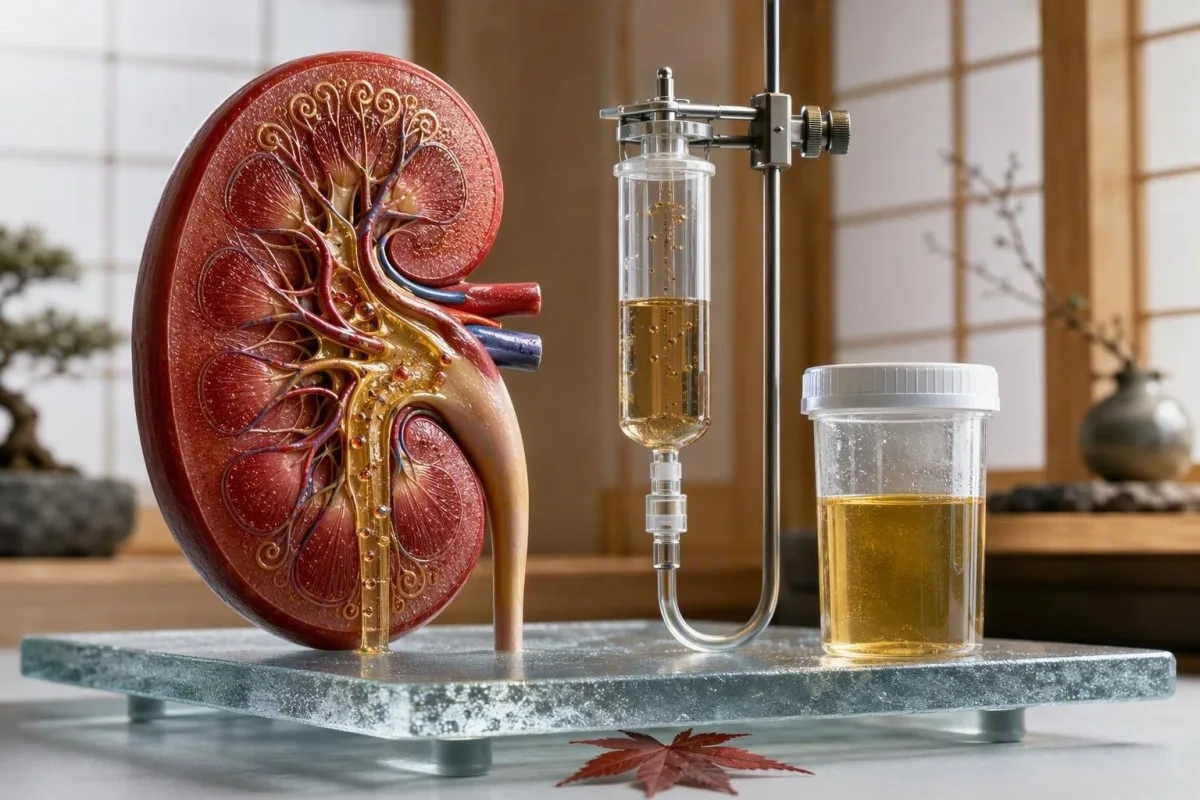
SIADH нь ганц эмгэг үзүүлэлт биш, харин оношлогддог хэлбэр юм. Цус, шээсний цуглуулсан шинжилгээний үр дүнг эм, бамбай булчирхайн шинжилгээ, кортизол болон биеийн шингэний байдалтай харьцуулан тайлбарлах нь чухал ач холбогдолтой.


- Бодит гипотоник гипонатриеми нь серумын натри 135 ммоль/л-аас доогуур, серумын осмоляр нь ихэвчлэн 275 мОсм/кг-аас доогуур байдаг гэсэн үг юм.
- SIADH шээсний осмоляр нь бага серумын осмоляр байгаа хэдий ч 100 мОсм/кг-аас буруугаар дээгүүр байдаг; бөөр нь сул шээс ялгаруулах ёстой байтал усыг хадгалж байдаг.
- Шээсний натри 30 ммоль/л-аас дээш байх нь шээс хөөх эм, бөөрний дутагдал, бамбай булчирхайн өвчин, илэрхий шингэн алдалтыг үгүйсгэсний дараа SIADH-ийг дэмждэг.
- Шингэн алдалтын хэв шинж нь ихэвчлэн шээсний натри 30 ммоль/л-аас доогуур, карбамид эсвэл BUN-ийг нэмэгдүүлсэн, эргэлдэх эзэлхүүний бууралттай байдаг, төвлөрсөн шээсийг үүсгэдэг.
- Бөөрний дээд булчирхайн дутлын (адреналийн дутагдал) нь SIADH-тай бараг адилхан харагдаж болно, тиймээс өглөөний кортизол бага эсвэл эргэлзээтэй үр дүн гарвал SIADH-ийг оношлохоос өмнө яаралтай эмнэлзүйн дагалдах хяналт шаардлагатай.
- Хүнд шинж тэмдгүүд нь таталт, төөрөлдөх байдал, ойр ойрхон бөөлжих, ухамсар буурах, бага натри зэрэг нь яаралтай тусламж шаарддаг; онлайн тайлбарыг хүлээлгүй эмчилгээ хийх ёстой.
- залруулгын аюулгүй байдал чухал: архаг гипонатриемийн үед цусны натрийн хэмжээ нь дахилттай байдлын хам шинжээр хүндрэх эрсдэлтэй өвчтнүүдийн хувьд 24 цагийн хугацаанд 8 ммоль/л-ээс хэтрэхгүй байх ёстой.
- Хугацаа чухал учир нь судсаар хийх давсны уусмал, шээс хөөх эм, эсвэл хэдэн литр ус нь хэдхэн цагийн дотор шээсний натри ба осмолыг өөрчилж чаддаг.
Яагаад SIADH-д цуг цуглуулсан цус, шээсний шинжилгээ хийх шаардлагатай байдаг вэ
A SIADH-ийн цусан дахь шинжилгээ нь бага цусны натри, бага хэмжигдсэн цусны осмолтой хослуулсан, шээс нь хэтэрхий өтгөн, харьцангуй натри ихтэй байх шинж чанартай байдаг. Бодит байдал дээр бие махбодод натритай харьцуулахад илүүдэл ус байдаг, учир нь антидиуретик гормоны үйлдэл хэвийн хэмжээнд буурахгүй байгаа; зөвхөн натрийн хэмжээ үүнийг нотлох боломжгүй.
Цусан дахь натри бага 135 ммоль/л нь гипонатриемийг тодорхойлдог боловч натри нь нийт биеийн натрийн хэмжээг хэмждэг биш харин концентрац юм. Хүн ус хуримтлагдах, давс алдагдах, глюкоз ихсэх, лабораторийн алдаа эсвэл эдгээрийн холимог зэргээс болж натри багатай байж болно; манай гарын авлага натри багатай шинж тэмдгүүдийн гарын авлага нь өвчний шинж тэмдгийн хүндрэл нь тодорхой тооноос илүү бууралтын хурдыг ихэвчлэн дагалдгийг тайлбарладаг.
Анхны ашигтай салаа нь хэмжигдсэн цусны осмол юм: 275 мОсм/кг-аас бага нь гипотоник гипонатриемийг илтгэнэ, энэ нь SIADH-ийг авч үзэх тохиолдол юм. Доктор Томас Клейний эмнэлзүйн дүрэм энгийн: глюкоз, триглицерид, нийт уураг, болон илүү зохимжтой хэмжигдсэн осмолгүйгээр үндсэн бодисын солилцооны хэмжилтийг хийхээс өмнө SIADH гэж бүү тэмдэглэ.
Кантести бол AI цусны шинжилгээний анализатор нь натри, глюкоз, шээг, креатинин, болон цуглуулсан шээсний үр дүнг тус тусад нь тусгаар тусад нь биш харин нэг физиологийн асуудал болгон авч үздэг. Бидний тоймд хамгийн аюултай алдаа нь 122 ммоль/л-ийн натрий байх үед тайлан нь орчин үеийн шээсний судалгаа эсвэл өвчний түүхгүй байх үед тайвшрах явдал юм.; бидний эмнэлзүйн хэрэглээний жишээ нь алдагдсан контекст нь дараагийн алхмыг хэрхэн өөрчилдөгийг харуулдаг.
SIADH-ийн бодит утга
SIADH нь "тохиромжгүй антидиурезийн хам шинж" гэсэн үг бөгөөд урьд нь "тохиромжгүй антидиуретик гормон ялгаруулах" гэж нэрлэдэг байсан. Энэ хам шинж нь эм, дотор муухайрах, уушиг эсвэл төв мэдрэлийн тогтолцооны өвчин, өвдөлт, мэс заслын дараах стресс, зарим тохиолдолд хавдар зэргээс үүдэлтэй байж болно; лабораторийн хэв маяг нь үндсэн шалтгааныг бус усны зохицуулалтыг илрүүлдэг.
Серумын натри ба осмоляр: бодит шингэний илүүдлийг баталгаажуулах
275 мОсм/кг-аас бага цусны осмолтой, 135 ммоль/л-ээс бага натритай байх нь гипотоник гипонатриемийг баталгаажуулдаг, боловч энэ нь дангаараа SIADH-ийг тодорхойлохгүй. Хэвийн эсвэл өндөр осмол нь эмч нарыг глюкоз, маннит, контраст бодис, спирт, эсвэл псевдогипонатриеми рүү чиглүүлдэг.
Ихэнх лабораториуд тооцоолсон осмоллыг ихэвчлэн 2 × натри + глюкоз + шээг (ммоль/л) гэж тооцдог боловч хэмжигдсэн осмол нь онош тодорхойгүй үед илүү дээр юм. Хэмжигдсэн болон тооцоолсон утгуудын хоорондох утга учиртай зөрүү нь хэмжигдээгүй осмолыг илрүүлж болно; энэ нь натрийн үр дүн нь эмнэлзүйн хувьд бодит байж болох ч SIADH-ийг төлөөлөхгүй байх нэг шалтгаан юм.
Глюкоз ойролцоогоор 13.9 ммоль/л (250 мг/dL) -аас их нь Хэлнийэснээс плазм руу шилжих усаар натрийн хэмжээг бууруулдаг. Нийтлэг ашиглагддаг залруулга нь 5.6 ммоль/л-аас их глюкозын 5.6 ммоль/л (100 мг/дл) тутамд ойролцоогоор 1.6-2.4 ммоль/л натри нэмдэг боловч эмч нар маш өндөр глюкозын нарийвчилсан факторын талаар санал зөрдөг.
Триглицерид эсвэл парапротеины маш өндөр түвшин нь шууд бус ион-сонголттой шинжилгээнд псевдогипонатриемийг үүсгэж болно, харин хэмжигдсэн осмоляльность хэвийн хэвээр байна. Натрийн үр дүнг харьцуулж үндсэн бодисын солилцооны самбар болон усыг хадгалах эмгэгийг шууд эсвэл шууд бус электродыг ашигласан эсэхийг лавлагаа хийхээсээ өмнө асуугаарай.
SIADH шээсний осмоляр: нөхцөл байдлыг өөрчилдөг бөөрний түлхүүр
Гипотоник өвчтөнд 100 мОсм/кг-аас дээш шээсний осмоляльность нь антидиуретик гормоны үйлчлэл байгааг илтгэнэ. SIADH-д шээсний осмоляльность нь ихэвчлэн 200-600 мОсм/кг байдаг боловч шээсний нэг ч үнэ цэнэ оношлогооны бус юм.
Шээсний осмолаль чанар 100 мОсм/кг ба түүнээс бага нь бараг хамгийн ихээр шингэрүүлсэн шээсийг илтгэж, SIADH-ийн магадлалыг бууруулдаг. Энэхүү загвар нь усыг хэтрүүлэн хэрэглэх эсвэл бага давс авах тохиолдолд тохирдог бөгөөд энд усны хэрэглээ нь бөөрний чөлөөт ус ялгаруулах чадвараас давдаг; ялангуяа маш бага уураг, давс хэрэглэдэг хүмүүст хамаатай.
Энд эсрэг ойлгомжтой зүйл байна: өтгөн шээс нь автоматаар шингэн алдалтыг илтгэхгүй. Гиповолеми ба SIADH хоёулаа антидиуретик гормоныг нэмэгдүүлдэг боловч шингэн алдалт нь эргэлтийг хадгалахын тулд зохих ёсоор үүнийг хийдэг бол SIADH нь үр дүнтэй артерийн эзэлхүүнтэй болоход хангалттай байхад үүнийг хийдэг.
Европын гипонатриемийн удирдамж нь бие махбодын эзэлхүүнийг үнэлэх нь ихэвчлэн найдвартай бус (Spasovski et al., 2014) тул шээсний осмоляльность-ийг эрт ялгах хэрэгсэл болгон зөвлөж байна. Манай гүн тайлбарыг уншина уу Шээсний осмолаль чанарын шинжилгээ хэрэв таны тайлан нь шингэн хэмжигчээс илүү mOsm/kg-ийг ашигладаг бол.
Яагаад ганц шээсний дээж төөрөгдүүлж болох вэ
Хэрэв ходоод өвдөх, өвчин намдах, эсвэл дургүйцэлтэй эм татаж авсны дараа шээсний осмоляльность хурдан буурч болно. Хэрэв шээсийг судсаар хийх шингэн, шээс хөөх эм эсвэл цусны дээжээс хэдэн цагийн дараа цуглуулсан бол би үүнийг нотолгоо гэхээсээ илүүтэйгээр анхаарлаа хандуулах зүйл гэж үздэг.
Шээсний натри: SIADH ба шингэн хатах, бага эргэлдэх эзэлхүүний ялгаа
30 ммоль/л-аас дээш шээсний натри нь хоолны давсны хэрэглээ хэвийн, шээс хөөх эм байхгүй тохиолдолд гипонатриемийн SIADH-ийг дэмждэг. 30 ммоль/л-аас доош шээсний натри нь бөөлжих, суулгах, хөлрөх, зүрхний дутагдал, элэгний хатуурал, эсвэл жинхэнэ шингэн алдалтын улмаас бөөрний натрийн хадгалалтыг илүү ойлгомжтой болгодог.
Энгийн SIADH-д бөөр нь натрид дуртай биш тул шээсний натри нь ихэвчлэн 30 ммоль/л-ээс дээш байх үед ба 60 ммоль/л-аас давж болно. Мочевина нь ихэвчлэн бага байдаг ба сийвэнгийн шээсний хүчлийн хэмжээ 4 мг/дл (0.24 ммоль/л) -аас доогуур байж болно, учир нь бага зэрэг эзэлхүүнтэй байдал нь шээсний хүчлийн ялгаралтыг нэмэгдүүлдэг.
Гидрохлоротиазид ууж буй 68 настай өвчтөн ходоодны вирусын дараа 55 ммоль/л шээсний натри ба өтгөн шээстэй байж болно; энэ нь SIADH-ийг баталгаажуулдаггүй. Тиазидтэй холбоотой гипонатриеми нь бүх сонгодог лабораторийн шинж чанарыг дуурайж чаддаг тул эмийн жагсаалт нь захиргааны нарийвчилсан зүйл биш, харин оношлогооны мэдээлэл юм.
Шээсний натри нь шээс хөөх эм, бөөрний өвчин, эсвэл маш бага хоолны давстай үед бага найдвартай байдаг. Үүнийг креатинин, мочевина болон электролитын самбар -тай хослуулж, 30 ммоль/л-ын хязгаарыг хатуу хана гэж үзэхгүйгээр.
Шээсний хүчлийн фракцын ялгаралт
Шээсний хүчлийн фракцын ялгаралт ихэссэн үед 12% нь SIADH-ийг дэмжих боломжтой, ялангуяа шээс хөөх эм нь шээсний натрийг бүдгэрүүлдэг. Ихэвчлэн SIADH-ийг эмчилсэний дараа хэвийн болдог бол бөөрөнд давс хуримтлагдах байдал үүсэх нь үүнийг өндөр хэвээр байлгаж болно; энэ нь мэргэжлийн чиглэл боловч нөхцөл байдал тохирохгүй байхад ашигтай байдаг.
Лабораторийн шинжилгээнд шингэн хаталт нь SIADH-аас хэрхэн ялгаатай харагддаг вэ
Шархлаа нь ихэвчлэн шээсийг өтгөрүүлж, шээсний натрийг багасгаж, креатининтэй харьцуулахад мочевиныг нэмэгдүүлдэг бөгөөд эзлэхүүний алдагдлын шинж тэмдэг илэрдэг. SIADH нь мөн шээсийг өтгөрүүлдэг боловч өвчтөнүүд ихэвчлэн клиникээр эуволемик байдаг бөгөөд натрийг хадгалдаг бөөрний ижил хариу урвал байдаггүй.
Бөөлжих, суулгах, хүнд хөлрөх үед бөөр нь ихэвчлэн шээсний натрийг бууруулдаг 20-30 ммоль/л-ээс доош харин шээсний осмол нь 100 мОсм/кг-аас дээш болдог. Мочевин нь креатининтэй харьцуулахад хэт их нэмэгдэж болно, гэхдээ энэ харьцаанд уургийн хэрэглээ, ходоод гэдэсний цус алдалт, стероид, элэгний үйл ажиллагаа нөлөөлдөг тул энэ нь баттай биш, харин туслах шинж чанартай байдаг.
SIADH-ийн үед цусны даралт болон үзлэг хэвийн харагдаж болох боловч нарийхан шинж тэмдэг нь чухал: ортостатик шинж тэмдэггүй, амны хөндийн салст хуурайгүй, захын хавангүй, ходоод гэдэсний цус алдалтын ноцтой шинж тэмдэггүй. Би "хатаж ширгэсэн" гэж нэрлэгдсэн өвчтөнүүдийг зөвхөн шээс нь бараан өнгөтэй байсан учраас харж байсан; шээсний өнгө нь натрийн физиологийн хувьд муу хэмжүүр юм, учир нь бидний бараан шээсний заавар хэлэлцдэг.
Хяналттай орчинд изотоник давсны уусмалыг болгоомжтой хэрэглэх нь тусалдаг: эзлэхүүн нь ADH-ийг дарах тул гиповолемик гипонатриеми нь эзлэхүүнийг нэмэгдүүлэх хандлагатай байдаг. SIADH-д давсны уусмал нь натрийг нэмэгдүүлж чадахгүй эсвэл шээс нь дусаахаас хамаагүй өтгөн байвал үүнийг улам хүндрүүлж болно; энэ нь гэртээ туршиж үзэх ёсгүй зүйл юм.
Яагаад давсны уусмал SIADH-ийг улам хүндрүүлж болно
0.9% давсны уусмалын нэг литр нь 154 ммоль натри агуулдаг боловч 600 мОсм/кг-аар шээс гаргадаг бөөр нь натрийг ялгаруулж, ус харьцангуй их хэмжээгээр хадгалж болно. Энэ "десалинаци" эффект нь шээсний натрий ба калийн нийлбэр нь ийлдэсний натрийтай харьцуулахад өндөр байх үед хамгийн их тохиолддог.
Бөөрний дутагдал: эмч нар үгүйсгэх ёстой SIADH-ийн хуурамч илрэл
Бөөрний дээд булчирхайн дутагдал нь бага натри, бага ийлдэсний осмол, 100 мОсм/кг-аас дээш шээсний осмол, 30 ммоль/л-ээс дээш шээсний натри зэрэг шинж тэмдгүүдийг үүсгэж болно - SIADH-тай бараг адилхан загвар. Тиймээс кортизолын үнэлгээ нь SIADH-ийг аюулгүй шалгах ажлын нэг хэсэг юм, ялангуяа ядаргаа, жин хасах, цусны даралт багасах, гиперкалеми эсвэл стероид хэрэглэсэн тохиолдолд.
Өглөөний ийлдэсний кортизол нь ойролцоогоор 15-18 микрограмм/дл (414-497 нмоль/л) ихэвчлэн клиникээр ач холбогдол бүхий бөөрний дутагдлыг үгүйсгэдэг, энэ нь шинжилгээний арга болон нөхцөл байдлаас хамаарна. Үнэ цэнэ нь доор 3-5 микрограмм/дл (83-138 нмоль/л) нь санаа зовоож байгаа бөгөөд дундаж үр дүн нь ихэвчлэн таамаглалаас илүү ACTH өдөөх сорилт шаарддаг.
Анхдагч бөөрний дутагдал нь ихэвчлэн альдостерон дутагдсанаас калийн түвшин өндөр байдаг, гэхад хоёрдогч бөөрний дутагдал нь хэвийн калитай байж, хүнд гипонатриемийг үүсгэж болно. Үйл ажиллагааны механизм нь давс алдагдал биш, харин кортизол дутагдсанаас ADH ялгаралтыг нэмэгдүүлдэг.
2013 онд Вербалисын удирдаж байсан шинжээчдийн зөвлөл нь SIADH-ийг тогтоохоос өмнө бөөрний дутагдлыг үгүйсгэхийг зөвлөжээ (Verbalis et al., 2013). Хэрэв энэ боломж нь таны тайланд байгаа бол бидний тойм Аддисоны өвчний лабораторийн шинж тэмдгүүд нь шуурхай эмчийн үзлэгт бэлдэхэд танд зориулсан асуултуудыг бэлтгэхэд тусална.
Стероид эм нь шинжилгээг төвөгтэй болгодог
Преднизолон, гидрокортизон болон зарим тарьдаг стероидүүд нь кортизолыг тайлбарлах, бөөрний дээд булчирхайг дарангуйлах боломжтой. "Цэвэр шинжилгээ авах" гэж заавал ууж байгаа стероидоос бүү татгалз; гэнэт зогсоовол бөөрний дээд булчирхайн хямралд хүргэж болзошгүй.
Бамбай булчирхайн шинжилгээ: гипотиреоидизм нь бага натрийг бодитоор тайлбарладаг
Гипотиреозын хүнд хэлбэр нь ус ялгаралтыг бууруулж болно, гэхдээ энгийн дэд клиник гипотиреоз нь утга учиртай гипонатриемийг ховорхон тайлбарладаг. SIADH-ийг оношлохоос өмнө TSH болон чөлөөт Т4-ийг шалгадаг, учир нь гипотиреозын хүнд хэлбэрийг эмчилж болох бөгөөд бусад шалтгаантай зэрэгцэн оршиж болно.
Эмнэлзүйн хувьд чухал гипотиреозын гипонатриеми нь хүнд өвчин, ялангуяа микседемийн физиологи, бага чөлөөт Т4, брадикарди, гипотерми эсвэл цусны эргэлтийн гарц багассан үед хамгийн их тааламжтай байдаг. 6 мЕд/л-ийн TSH, хэвийн чөлөөт Т4 нь түгээмэл бөгөөд 121 ммоль/л натрийн хувьд тохиромжтой тайлбар болохгүй.
Kantesti AI нь AI цусны шинжилгээний тайлал платформ нь TSH болон чөлөөт Т4-ийг натри, бөөрний функц, эмийн цагтай харьцуулдаг, учир нь тэмдэглэгдсэн TSH үр дүн нь илүү яаралтай бөөрний эсвэл эмийн холбоотой шалтгаанаас анхаарлыг нь сарниулж болзошгүй. Хэвийн TSH нь төвийн гипотиреозыг үгүйсгэхгүй; өндөр биш TSH-тай бага чөлөөт Т4 нь өөр арга зам шаардлагатай бөгөөд энэ нь бидний нийтлэлд тайлбарлагдсан болно. хэвийн TSH-тай бага чөлөөт Т4.
Бамбай булчирхайг орлуулах эмчилгээг хурдан натрийн эмчилгээ болгон ашиглах бус, харин бамбай булчирхайн тогтсон заалтын дагуу тохируулна. Миний туршлагаас үзэхэд, бодит ус хуримтлагдлыг бууруулдаг шалтгаан болох дотор муухайрах, эм, кортизолын дутагдал эсвэл өвчин зэргийг шийдвэрлэсний дараа л натри ихэвчлэн сайжирдаг.
Гипофизийн өвчин нь үзлэгийг өөрчилдөг
Толгой өвдөх, харааны талбайн шинж тэмдэг, бэлгийн сулрал, шалтгаангүй бага цусны даралт эсвэл олон тооны бага гипофизийн даавар нь төвийн гипофизийн өвчин үүсгэх болзошгүй юм. Энэ тохиолдолд левотироксин эхлэхээс өмнө кортизолыг шалгана, учир нь бамбай булчирхайн даавар нь кортизолын клиренсийг нэмэгдүүлж болно.
Жирэмслэлт, хөгшин нас, биеийн хэмжээний ялгаа нь SIADH тайлбарт хэрхэн нөлөөлдөг
Жирэмсний үед хэвийн осмотик босго болон сийвэнгийн натрийг ойролцоогоор 4-5 ммоль/л-ээр бууруулдаг тул 130 ммоль/л орчим байх натри нь жирэмсний эхэн үед физиологийн байж болох ч контекст шаардлагатай байдаг. Өндөр настай хүмүүс эмэнд хамааралтай гипонатриемийн эрсдэлтэй бөгөөд ихэвчлэн цангах биш харин унах эсвэл төөрөлдөх байдалтай байдаг.
Жирэмсний хүндрэлгүй үед сийвэнгийн осмол байдал нь ойролцоогоор буурдаг. 5-10 mOsm/kg болон натри нь 130-134 ммоль/л орчим тогтворжиж болно, учир нь осмостат дахин тохилогддог. 130 ммоль/л-ээс доош натри, мэдрэлийн шинж тэмдэг, гипертензи, элэгний хэвийн бус байдал эсвэл протеинури нь жирэмсний хэвийн өөрчлөлт гэж үгүйсгэхээс илүүтэйгээр яаралтай акушер-гинекологийн үзлэг шаардлагатай.
75-ээс дээш насны хүмүүст SSRI, тиазид, карбамазепин, десмопрессин боловч бага осмолын хоол хүнс нь ихэвчлэн давхцдаг. Суурь танин мэдэхүйн чадвар нь эмзэг байхад ердөө 5 ммоль/л-ийн натрийн бууралт нь ач холбогдолтой байж болох бөгөөд алхалт нь тогтворгүй болох, унах нь ажиглагдах эхний шинж тэмдэг болж болно.
Бөөрний шүүлт нь жирэмсний үед байгалийн жамаар өөрчлөгддөг бөгөөд тайлбар нь жирэмсэнд мэдрэмтгий лавлах материал ашиглах ёстой; манай гарын авлага жирэмсний eGFR утга тайлбарласнаар, жирэмсний үед ердийн eGFR-ийн тайланг баталгаажуулдаггүй. Шинийг барих нь жирэмсэн болон эмзэг байдлын үед хувь хүн дээр тулгуурласан байх ёстой, ердийн SIADH гарын авлагаас хуулах ёсгүй.
Бага биеийн жин нь ач холбогдолгүй зүйл биш юм
45 кг жинтэй хүн 100 кг жинтэй хүнээс илүү их усгүй, тиймээс ижил усны ачаалал эсвэл эмийн тун нь натрийн илүү их өөрчлөлтийг үүсгэж болно. Эмзэг өвчтөнүүд натри хурдан өөрчлөгдөхөд физиологийн нөөц багатай байдаг.
SIADH-ийг дуурайлган эсвэл үүсгэдэг эмийн нөлөө
Тиазид шээс хөөх эм, SSRI, SNRI, карбамазепин, оксарбазепин, десмопрессин ба зарим антипсихотик нь гипотони гипонатриемийн түгээмэл эмийн шалтгаан болдог. Зарим нь жинхэнэ SIADH физиологийг үүсгэдэг бол тиазидууд нь шээс ялгаруулалтыг бууруулж, натри алдах замаар SIADH-тай төстэй байдал үүсгэж болно.
Тиазидтэй холбоотой гипонатреми нь ихэвчлэн эхэлдэг. 2 долоо хоног тунг эхлүүлснээс хойш эсвэл тунг нэмэгдүүлснээс хойш хэдэн сарын дараа өвчин, хоолны оролт буурах, эсвэл нэмэлт ус уух үед тохиолдож болно. Уг нь эдгээр нь бөөрний нягтрах чадварыг бууруулдаг тул мөчлөгт шээс хөөх эм нь энэ өвөрмөц хэв шинжийг үүсгэх нь бага байдаг.
SSRI-тай холбоотой гипонатреми нь өндөр настай хүмүүс, биеийн жин багатай хүмүүс, мөн шээс хөөх эмийг хэрэглэж буй хүмүүст хамгийн түгээмэл байдаг. Шинэ сэтгэл гутралын эсрэг эм нь автоматаар буруутан болдоггүй, гэхдээ өмнөх 30 хоногийн хугацаанд бүх эхлэлт, зогсолт, тунг өөрчлөхийг баримтжуулж байх нь чухал.
Эмчилгээ хийж буй эмчтэй зөвлөлдөхгүйгээр таталт, сэтгэцийн, дааврын болон цусны даралтыг бууруулах эмийг зогсоож болохгүй. Шээсний бага хлорид нь шээс хөөх эм хэрэглэх, бөөлжих зэрэгтэй хамт байж болно; бидний тайлбар бага хлоридын үр дүн нь илүү өргөн электролитийн хэв шинжийг ялгахад тусална.
Худалдан авах боломжтой хувь нэмэр оруулагчид
Шөнийн шээсэнд хэрэглэдэг Десмопрессин нь онцгой анхаарал шаардлагатай, учир нь тунг ууснаас хойш чөлөөтэй уух нь гэнэт ус хадгалагдахад хүргэдэг. NSAID-ууд нь дархлаа суларсан хүмүүст, ялангуяа халдварт өвчний үед ADH-ийн үйлчлэлийг нэмэгдүүлж болно.
Бага давсгүй хоол, хэт их ус: SIADH биш хэлбэрүүд
Анхдагч полидипси ба маш бага хоолны дэглэмийн давс нь ердийн SIADH-аас ялгаатай нь шээсний осмолыг 100 mOsm/kg эсвэл түүнээс бага байлгадаг. Хязгаарлагдмал шингэн нь хоол тэжээлийн дутагдал, архитай холбоотой өвчин, эсвэл давс авах үед аюултай хурдан нөхөн сэргэлтийг алдаж болзошгүй тул ялгах нь чухал.
Бөөр нь ус ялгаруулахын тулд давс - голчлон уураг дахь мочевин ба электролит - хэрэгтэй байдаг. Өдөрт ердөө 250 mOsm давс байхад хүн 100 mOsm/kg-д 2.5 л орчим шээс ялгаруулж чаддаг, гэхдээ ADH нь шээсийг 250 mOsm/kg-д байлгавал ердөө 1 л л ялгаруулна.
Анхдагч полидипсийн үед шээс нь ихэвчлэн гайхалтай нимгэн байдаг бөгөөд түүхийн тэмдэглэл нь үүнээс илүү олон зүйлийг илчлэх боломжтой. 4-6 л хоногт шингэн уух, гэхдээ санах ой төгс биш. Бага давстай гипонатремид мочевин бага байж болох бөгөөд хоолны дэглэмийн түүх нь сүүлийн үед уураг, давс бага хэрэглэж байсныг илрүүлж болно.
Кетонууд, бага мочевин, жин алдалт нь SIADH-аас илүү тэжээлийн дутагдал эсвэл удаан хугацаагаар өлсөхийг илтгэж болно. Бидний нийтлэлийг үзнэ үү шээс дэх кетонууд хэрэв кетоз байвал; чихрийн шижингийн кетоацидоз нь тусад нь яаралтай тусламж бөгөөд натрийн тайлбарыг гажуудуулж болно.
Дахин хооллох эрсдэл
Тэжээл нь нөхөн сэргээгдэх үед бөөр нь давс ялгаруулах чадвараа сэргээх үед натри нь хүлээгдэж байснаас хурдан нэмэгдэж болно. Эмнэлгийн багууд эрсдэлтэй өвчтөнүүдийн натрийг байнга хянадаг, заримдаа идэвхтэй эмчилгээний үед 2-4 цаг тутамд хянадаг.
Бөөр, зүрх, элэгний өвчин: SIADHгүй бага натри
Зүрхний дутагдал, цирроз, бөөрний хүнд өвчин нь анхдагч SIADH-аас бус, бага артерийн эзлэхүүний улмаас гипонатреми үүсгэдэг. Эдгээр нөхцлүүд нь нягтралтай шээсийг үргэлжлүүлэн үүсгэж болох боловч хавагнах, перфузи буурах, альбумин бага байх, эсвэл шүүлт хийх чадвар буурах нь ерөнхий дүр төрхийг өөрчилдөг.
Зүрхний дутагдал болон элэгний хатуурал үед биед илүүдэл шингэн болон натрий агуулагдаж болох боловч артерийн цусны эргэлтийн хангалтгүй байгааг мэдэрч, антидиуретик гормон болон натрий хадгалах замыг идэвхжүүлдэг. Шээсээр ялгарах натрийн хэмжээ ихэвчлэн бага байдаг 30 ммоль/л диуретик эсвэл бөөрний гэмтэл үр дүнг төөрөгдүүлэхээс бусад тохиолдолд.
Бөөрний өвчин хүндэрсэн тохиолдолд шингэн ялгаруулах болон шээсийг өтгөрүүлэх чадвар хоёулаа буурдаг ту இதாலар шээсний оссмоляр шигтивних тогтмол хэмжээ ойролцоогоор 250-350 mOsm/kg. байдаг. Ийм тохиолдолд SIADH-ийн сонгодог хязгаарлалт нь нарийвчлалаа алдаж, давсгүйжүүлэлтийн шинжилгээг олон дахин хийхээс илүү бөөрний эмчийн зөвлөгөө илүү хэрэгтэй болно.
Шээсэнд уураг, цилиндр, альбумин, креатинин, хаванг хянах нь хажуугийн асуудал биш; тэдгээрийг физиологийг тодорхойлоход тусалдаг. Манай практик гарын авлага Шээсний хувийн жин нь нарийн төвөгтэй бөөрний өвчний үед зурвасан шинжилгээгээр шээсний оссмоляр хэмжээг хэмжихтэй орлуулж болохгүйг тайлбарладаг.
Хаван нь аюулыг үгүйсгэхгүй
Хавантай хүн натрийн хэмжээ 120 ммоль/л-ээс доош байсан ч хүнд мэдрэлийн шинж тэмдгүүд үүсч болно. Шингэний байдал нь шалтгааныг тайлбарладаг боловч цочмог шинж тэмдэгтэй гипонатриемийн яаралтай байдлыг бууруулдаггүй.
Дээж авах цаг, судсаар хийх шингэн, лабораторийн алдаанууд
Цус ба шээсийг IV шингэн хийхээс өмнө, хоорондоо хэдэн цагийн дотор цуглуулах нь хамгийн тохиромжтой, учир нь эмчилгээ нь SIADH-ийн лабораторийн үр дүнг хурдан өөрчилж болно. Хожимдуулсан шээсний дээж нь гипонатриемийн шалтгааны оронд эмчилгээний хариу урвалыг тодорхойлж болно.
Нэг литр давсны уусмал, фуросемидийн тун, дотор муухайрах эмчилгээ, өвдөлт намдаах, десмопрессин зогсоох нь хэдэн цагийн дотор шээс гадагшлах, оссмоляр хэмжээг өөрчилж болно. Цуглуулсан цаг, саяхан шингэн уусан байдал, IV эмчилгээ, эм, эмийн дэлгэрэнгүй мэдээллийг тэмдэглэ; энэ энгийн мэт санагдсан мэдээлэл нь SIADH-ийн лабораторийн үр дүнг ойлгомжгүй болгодог.
Цус задрал нь хэвийн бус бага натри үүсгэдэггүй, гэхдээ хүнд липидеми, гиперпротеинеми, дээжийг бохирдуулах нь үүсгэж болно. Эмнэлзүйн тайлбаргүйгээр өчигдрийн үр дүнгээс эрс ялгаатай натрийн үр дүн нь шууд тунгалаг электродын хэмжилт биш, дахин хэмжих шаардлагатай.
Kantesti AI нь огноог харьцуулж, боломжгүй өөрчлөлтийг тэмдэглэдэг боловч бүртгэгдээгүй давсны уусмал эсвэл алдсан тунг харах боломжгүй. Ашиглана уу цусны шинжилгээний цагийн шугамын хувьд Өвчин, дасгал, өлсөх, шингэн уух, эмчилгээний үйл явдлыг үр дүн бүрийн хажууд тэмдэглэх зорилгоор.
Шээсний хувийн жин нь оссмоляр биш
Хувийн жин нь бөөмийн массыг, мөн концентрацийг тусгадаг бөгөөд глюкоз, уураг эсвэл контраст бодисоор гаждаг. 1.020-ийн үнэ бүх өвчтөнд тодорхой mOsm/kg үнэ болж найдвартай орчуулагддаггүй.
Эмч нар ихэвчлэн захиалдаг SIADH-ийн төвлөрсөн шинжилгээ
Аюулгүй SIADH үнэлгээнд ихэвчлэн ийлдсийн натри, кали, глюкоз, шээг, креатинин, хэмжсэн ийлдсийн оссмоляр, шээсний оссмоляр, шээсний натри, TSH, чөлөөт Т4, өглөөний кортизол багтдаг. Зорилго нь гипотоник гипонатриемийг баталгаажуулж, SIADH шошгыг өгөхөөс өмнө арилгах боломжтой хуурамч шалтгааныг хасах явдал юм.
Нэмэлт шинжилгээ нь нөхцөл байдлаас хамаарна: шээсний хүчлийн, элэгний маркер, липидийн профиль, нийт уураг, ACTH, цээжний зураг, тархины зураг эсвэл эмчилгээний хяналт зэргийг хийх шаардлагатай байж болно. Натрийн хэмжээ 126 ммоль/л байсан, эуволемик гэж харагдаж байсан өвчтөнд зэрэгцсэн оссмоляр хос болон кортизол нь өргөн, төвлөрөөгүй шинжилгээнээс илүү ач холбогдолтой байдаг.
Hoorn болон Zietse-ийн удирдамжийн харьцуулалт нь зөвхөн эзэлхүүний шинжилгээ нь хязгаарлагдмал оношлогооны нарийвчлалтай байдаг бөгөөд шээсний эхний биохимийн хандлагыг дэмждэг (Hoorn болон Zietse, 2017) гэдгийг онцолсон. Ийм учраас хэвийн харагдаж буй шинжилгээ нь 550 mOsm/kg-ийн шээсний оссмоляр болон 260 mOsm/kg-ийн ийлдсийн оссмоляр хэмжээг давж гарах ёсгүй.
Доктор Томас Клейн өвчин, дасгал, өлсөх, шингэн уух, эмчилгээний үйл явдлыг үр дүн бүрийн хажууд тэмдэглэхийг зөвлөдөг. Манай AI эмнэлгийн тайлангийн аюулгүй байдлын жагсаалт Эх сурвалжийн дэлгэрэнгүй мэдээллийг тайлбарлахад хэрхэн хадгалах талаар тайлбарласан.
Зурган оношлогоо хэзээ чухал болох вэ?
Эм, хурц өвчин тодорхойгүй шинэ, удаан үргэлжилсэн SIADH нь цээжний зурган оношлогоонд хүргэж болно, ялангуяа харьцангуй ахмад, тамхи татдаг, амьсгалын замын шинж тэмдэгтэй хүмүүст. Зурган оношлогоо нь түүх, үзлэгээр тодорхойлогддог; натрийн 132 ммоль/л бүрт автоматаар шаардлагатай байдаггүй.
Эмчилгээний тоонуудын утга учир ба натрийг залруулах нь яагаад аюултай байж болох вэ
Хүнд шинж тэмдэгтэй гипонатриемийг эмнэлэгт хэтэрхий хурц натрийн уусмалаар эмчилдэг бол архаг SIADH-ийн менежмент нь шалтгааныг нь тогтоож, усны тэнцвэрийг хянах зорилготой. Аюул нь хоёр талтай: эмчилгээгүй тархины хавагнах, хэт хурдан залруулах нь хоёулаа мэдрэлийн тогтмол гэмтэлд хүргэж болзошгүй.
Гипонатриемийн улмаас үүссэн таталт, ухаан алдалт, гүнзгий төөрөлдөх, хүнд бөөлжилт зэрэгт, удирдамжид ихэвчлэн хэрэглэдэг 100-150 мл 3% натрийн уусмал тасралтгүй тарилга хэлбэрээр, давтан натрийн шинжилгээ хийхтэй хамт. Эхний зорилго нь тархины хаванг багасгах, нэн даруй хэвийн болгох биш, харин 4-6 ммоль/л орчим бага зэрэг өсөлтөд хүрэх явдал юм.
Архаг гипонатриемийн хувьд олон эмч нар залруулгыг хязгаарладаг 24 цагт 8 ммоль/л-ээс илүү хэмжээгээр нэмэх архи, тэжээлийн дутагдал, элэгний хүнд өвчин, гипокалиеми, эсвэл эхлэлийн натрийн түвшин маш бага зэрэг осмос демиелинизацийн эрсдэлтэй хүмүүст. Зарим удирдамжид эрсдэл багатай өвчтөнүүдэд эхний өдөр 10 ммоль/л зөвшөөрдөг боловч ADH буурмагц тоо хурдан нэмэгдэж болзошгүй тул би болгоомжтой байхыг илүүд үздэг.
Хэвийн SIADH-д ихэвчлэн хоногт 800-1,000 мл орчим шингэн уухыг хязгаарладаг боловч үр дүн нь шээсний өтгөрөлт, ууссан бодисын хэрэглээ зэргээс хамаарна. Шээсний бодис, давстай шээс хөөх эм, эсвэл вазопрессины антагонистууд нь мэргэжлийн шийдвэр байдаг; Kantesti нь AI-аар ажилладаг цусны шинжилгээний үр дүнгийн шинжилгээний хэрэгсэл яаралтай тусламжийг тогтоох эсвэл орлуулах биш, харин холбогдох хэв маягийг тэмдэглэх зорилготой. Манай техникийн клиник хяналт автомат тайлбарыг эмнэлзүйн хяналтад хэрхэн оруулдгийг авч үзэх үед.
Калийн залруулга нь натрийг нэмэгдүүлдэг
Кали нь үр дүнтэй осмол тул гипокалиемийг эмчлэх нь натрийн уусмалгүйгээр сийвэнгийн натрийг нэмэгдүүлж болно. Энэ нь 24 цагийн нийт залруулгын хурдыг тооцоолоход амархан алдагддаг.
Хэзээ бага натрий эсвэл боломжит SIADH нь яаралтай эмнэлгийн тусламж шаарддаг вэ
Таталт, ухаан алдалт, шинээр хүндэрсэн төөрөлдөх, их хэмжээний нойрмоглох, давтан бөөлжих, хүнд толгой өвдөх, амьсгалахад хүндрэлтэй байх зэрэг шинж тэмдэг илэрвэл яаралтай эмнэлгийн тусламж аваарай, хэрэв танд эсвэл таны сэжигтэй байгаа бага натри байгаа бол. 120 ммоль/л-аас бага натри нь шинж тэмдэг нь хөнгөн мэт санагдсан ч, ялангуяа сүүлийн үед буурсан байж болзошгүй тохиолдолд өдрийн дотор эмнэлзүйн үнэлгээ хийх шаардлагатай.
Шинжилгээг захиалсан эмчтэй яаралтай холбоо бариарай, натрийн хувьд 125-129 ммоль/л, шинэ эм хэрэглэх, хорт хавдрын эмчилгээ, жирэмсний үед, бөөрний шинж тэмдэг, эсвэл утга учиртай буурах хандлага. Бие даан зөвлөгөө авахаас өмнө санаатайгаар илүү их ус ууж, давсгүй таблет ууж, эсвэл бүх шингэнийг хязгаарлах хэрэггүй; энэ бүр өөр шалтгааныг улам хүндрүүлж болно.
2026 оны 8-р сарын 27-ны байдлаар хамгийн ашигтай өвчтөний хувь нэмэр бол тодорхой түүх юм: өдөр тутмын шингэн, архины хэрэглээ, саяхан бөөлжих эсвэл суулгах, бүх жороор олгосон эм, нэмэлт тэжээл, судсаар хийх шингэн, өвдөлт, дотор муухайрах, уушгины шинж тэмдэг, өмнөх натрийн түвшин. Энэ түүх нь нэмэлт тусдаа химийн шинжилгээний багцаас илүүтэйгээр үргэлжилсэн SIADH-аас түр зуурын ADH ялгаралтыг ялгахад тусалдаг.
Kantesti-ийн эмнэлгийн баг нь эмчийн хяналттайгаар загвар-суурилсан үр дүнг хянадаг; уншигчид манайхаас энэ процессыг хариуцдаг эмч нарыг харж болно Эмнэлгийн зөвлөх зөвлөл. Хэрэв үр дүн нь ойлгомжгүй байвал, анхны лабораторийн тайлан болон энэхүү хосолсон туршилтын хүрээг хуулийн дагуу эмчлэх эмч дээр аваачиж үзүүлээрэй, өөрөө өөрийгөө эмчлэхээс илүүтэйгээр.
Уулзалтад авч очих асуултууд
Гипонатриемийг гипотоник гэж баталгаажуулсан эсэх, эмчилгээ хийхээс өмнө шээс цуглуулсан эсэх, кортизол болон чөлөөт Т4-ийг шалгасан эсэх, эсвэл эм эсвэл бага ууссан бодисын хэрэглээ нь хэв маягийг тайлбарлаж чадах уу гэдгийг асуугаарай. Эдгээр дөрвөн асуулт нь эмчилгээг өөрчилдөг шалтгаануудад анхаарлаа төвлөрүүлэхэд тусалдаг.
Байнга асуудаг асуултууд
SIADH-ийг илтгэх ямар цусны шинжилгээний хариу байна вэ?
ЦУНХ-ийг цусан дахь натрийн хэмжээ 135 ммоль/л-ээс доош, цусан дахь осмол/кг-ын хэмжээ 275 мОсм/кг-аас доош, шээсний осмол/кг-ын хэмжээ 100 мОсм/кг-аас дээш, шээс дэх натрийн хэмжээ ихэвчлэн 30 ммоль/л-ээс дээш байхад сэжиглэнэ. Тухайн хүн ихэвчлэн эмнэлзүйн хувьд эуволемик байдаг бөгөөд илэрхий дегидратаци, хавагнах, бөөрний дутагдал, бөөрний дээд булчирхайн дутагдал, хүнд гипотиреоз зэрэг шинж тэмдэг илэрдэггүй. Цусан дахь мочевин болон сийвэн дэх шээсний хүчил 4 мг/дл орчим байвал нэмэлт дэмжлэг болж болох боловч дангаараа оношлогдохгүй. Эмч нар эдгээр шинжилгээг бараг зэрэг цуглуулсан цус, шээснээс тайлж ойлгох ёстой.
СЗИНН-д өвчний үед ердийн шээсний осмолярность хэд байдаг вэ?
Синдром неадекватной секреции антидиуретического гормона (СНСАДГ) нь ШНСАДГ-ийн үед цусан дахь осмалоолитийн түвшин бага байхад шээсний осмалоолитийн түвшин 100 мОсм/кг-аас дээш байдаг бөгөөд олон өвчтөнд 200-600 мОсм/кг хооронд байдаг. Шээсний осмалоолитийн түвшин 100 мОсм/кг ба түүнээс доош байвал бөйр нь шээсийг зохих ёсоор шингэлж чаддаг нь нотлогдож байгаа тул СНСАДГ-тай холбоогүй гэж үзнэ. Хэрэв биеийн усгүйжилтээс болсон бол шээсний натрийн хэмжээ болон клиник байдлын үнэлгээ хийх шаардлагатай. Салин, шээс хөөх эм, эсвэл дотор муухайрах эмчилгээ хийсний дараа авсан дээж нь буруу үр дүн өгч болзошгүй.
Халхгүй болох нь натрийн түвшинг бууруулж, SIADH-тай төстэй харагдаж болох уу?
Тийм ээ, бөөлжилт, суулгалт, хөлрөх, эсвэл бага шингэн ууснаас үүдэлтэй шингэн алдалтын улмаас шээс нь 100 мОсм/кг-аас их концентрацитай байх гипотоник гипонатриеми үүсч болно. Хэтрүүлэлгүй шингэн алдалтын үед бөөр натрийг хадгалдаг тул шээс дэх натри нь ихэвчлэн 20-30 ммоль/л-ээс доогуур байдаг ба шээсний цуугийн харьцаа нь креатининтэй харьцуулахад нэмэгдэж болно. SIADH-ийн үед шээс дэх натри нь ихэвчлэн 30 ммоль/л-ээс дээш байдаг ба шингэн дутагдлын тодорхой шинж тэмдэг ажиглагддаггүй. Шээс хөөх эм нь энэ ялгааг бүдгэрүүлж болзошгүй тул эмчилгээний түүхийг мэдэх нь чухал.
Эмч нар SIADH-тай сэжиглэж байхдаа яагаад кортизолыг шалгадаг вэ?
Ашигт малтмалын дутагдлыг шалгадаг шалтгаан нь бөөрний дээд булчирхайн дутагдал нь SIADH-тай адил бага натри, бага ийлдмэл оссмолал, шээсний өндөр концентрацийн хэв маягийг үүсгэж болзошгүй юм. Өглөөний кортизол нь ойролцоогоор 15-18 мкг/дл-ээс дээш байвал, шинжилгээ, эмнэлзүйн нөхцөл байдлаас хамааран, ихэвчлэн бөөрний дээд булчирхайн ноцтой дутагдлыг үгүйсгэдэг; 3-5 мкг/дл-ээс доош үр дүн нь санаа зовмог төрүүлэмжтэй байдаг. Дунд зэргийн утгууд нь ихэвчлэн ACTH өдөөх шинжилгээ хийх шаардлагатай байдаг. Ашигт малтмалын дутагдлыг алдаж болохгүй, учир нь үүнд шингэн хязгаарлалтаас гадна стероид орлуулах шаардлагатай байдаг.
SSRI эсвэл усны эм нь SIADH-ийн лабораторийн үр дүнг өгч чадах уу?
SSRI, SNRI, карбамазепин, окскарбазепин болон десмопрессин нь SIADH-төстэй ус хуримтлагдах өвчинг үүсгэж болно, харин тиазидын шээс хөөх эм нь SIADH-ийн лабораторийн шинжилгээний үр дүнг төстэй харуулж болно. Тиазидтай холбоотой гипонатриеми нь ихэвчлэн эмчилгээг эхлэх эсвэл нэмэгдүүлснээс хойш 14 хоногийн дотор үүсдэг боловч өөр өвчин нь үүнийг хожуу үүсгэж болно. Аль ч тохиолдолд шээсний натри 30 ммоль/л-ээс дээш байж болно, тиймээс эмчилгээний хугацаа нь эмнэлзүйн хувьд чухал шийдвэрлэх хүчин зүйл болно. Өвчтөнүүд эмчлэгч эмчээсээ зөвлөгөө аваагүйгээр сэтгэцийн, таталт эсвэл цусны даралтны эмчилгээг зогсоож болохгүй.
Хөнгөн натрийн дутагдлыг хэр хурдан аюулгүйгээр засах боломжтой вэ?
Архаг гипонатриемийн үед, олон эмч нар хоол тэжээлийн дутагдал, архинд донтох, элэгний хүнд өвчин, гипокалиеми эсвэл маш бага натри зэрэг осмтик демиелинизацийн эрсдэлтэй өвчнүүдэд 24 цагийн дотор натрийг 8 ммоль/Л ба түүнээс доош хурдтай залруулах зорилготой байдаг. Яаралтай тусламжийн шинж тэмдгүүд нь эхний 4-6 ммоль/Л-ын өсөлтийг хангаж, эмнэлэгт 100-150 мл 3% салст шүүсийг болюсаар өгөх шаардлагатай байж болно. Яг зорилтот хэмжээ нь хугацаа, шинж тэмдэг, эрсдэлт хүчин зүйлээс хамаарна. Сарын усны шээс нь залруулгыг гэнэт хурдасгаж болзошгүй тул натрийн эмчилгээ нь цусны шинжилгээг давтан хийх шаардлагатай.
Өнөөдөр AI-аар дэмжигдсэн цусны шинжилгээний тайлал аваарай
Лабораторийн шинжилгээний агшин зуур, үнэн зөв тайлалд итгэдэг дэлхийн 2 сая гаруй хэрэглэгчтэй нэгдээрэй. Цусны шинжилгээний хариугаа байршуулж, 15,000+ биомаркеруудын цогц тайллыг хэдхэн секундын дотор аваарай.
📚 Иш татсан судалгааны нийтлэлүүд
Клейн, Т., Митчелл, С., ба Вебер, Х. (2026). Эмэгтэйчүүдийн эрүүл мэндийн гарын авлага: Суперовуляци, цэвэршилт ба дааврын шинж тэмдгүүд. Kantesti AI Медикл Рисерч.
Клейн, Т., Митчелл, С., ба Вебер, Х. (2026). Гантовирусын эрт үеийн ялгаварлалтыг хэлний олон улсын хиймэл оюун ухааны тусламжтай эмнэлзүйн шийдвэр гаргах дэмжлэг: 50,000 тайланг тайлбарласан цусны шинжилгээний тайлангаар загварчлал, инженерчлэлийн баталгаажуулалт, бодит байдалд нэвтрүүлсэн байдал. Kantesti AI Медикл Рисерч.
📖 Гадаад эмнэлгийн лавлагаа
⚕️ Эмнэлгийн мэдэгдэл
Энэ нийтлэл зөвхөн боловсролын зорилготой бөгөөд эмнэлгийн зөвлөгөө биш болно. Оношилгоо, эмчилгээний шийдвэр гаргахдаа мэргэшсэн эрүүл мэндийн үйлчилгээ үзүүлэгчтэй заавал зөвлөлдөнө.
E-E-A-T итгэлийн дохио
Туршлага
Эмчийн удирдлагатай лабораторийн тайлалын ажлын урсгалын клиник хяналт.
Мэргэшсэн байдал
Биомаркерууд клиникийн нөхцөлд хэрхэн ажиллаж/өөрчлөгдөж байгаад чиглэсэн лабораторийн анагаах ухаан.
Эрх мэдэл
Доктор Томас Клейн бичсэн, Доктор Сара Митчелл, Проф. Доктор Ханс Вебер нар хянан тохиолдуулсан.
Найдвартай байдал
Сэрэмжлүүлгийг бууруулахын тулд тодорхой дараагийн алхамтай, нотолгоонд суурилсан тайлал.