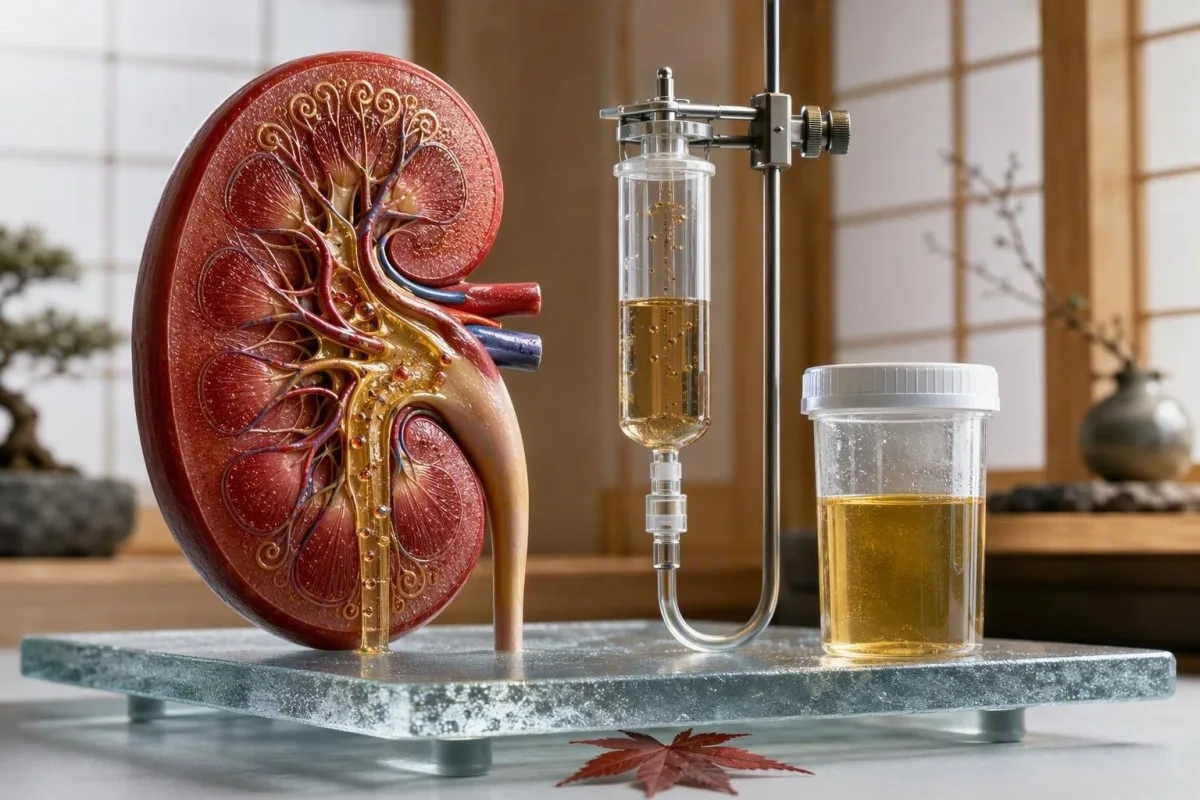
SIADH er munsturgreining, ekki eitt óeðlilegt niðurstaða. Gagnlegar vísbendingar koma frá blóði og þvagi sem safnað er á svipuðum tíma, síðan túlkaðar ásamt lyfjum, skjaldkirtilsstarfsemi, kortisóli og vökvastöðu.


- Raunverulegt ólífrænt blóðnatríumlækkun þýðir að serum natríum er undir 135 mmól/L og mæld serum osmóla er venjulega undir 275 mOsm/kg.
- SIADH þvagsmóla er óviðeigandi yfir 100 mOsm/kg þrátt fyrir lága serum osmóla; nýrun eru að halda vatni þegar þau ættu að vera að framleiða þynnt þvag.
- Þvagnatríum yfir 30 mmól/L styður SIADH aðeins eftir að þvagræsilyf, nýrnahettubilun, skjaldkirtilssjúkdóm og klínískt augljósan vökvaskort hefur verið útilokað.
- Ofþornunarmynstur framleiðir venjulega þétt þvag með þvags natríum undir 30 mmól/L, aukið þvagefni eða BUN, og merki um minnkað blóðrásarrúmmál.
- Nýrnahettubilun getur litið næstum eins út og SIADH, svo lágt morgun kortisól eða tvíræð niðurstaða þarf bráða klíníska eftirfylgni áður en SIADH er greint.
- Alvarleg einkenni svo sem krampar, ringulreið, endurtekin uppköst eða minnkað meðvitund með lágu natríum krefst bráðrar meðferðar; meðferð má ekki bíða eftir net túlkun.
- Öryggi við leiðréttingu skiptir máli: í langvinnri blóðnatríumlækkun ætti magn natríums í sermi almennt ekki að hækka meira en 8 mmól/L á sólarhring hjá sjúklingum í mikilli hættu á osmósu-demyelination.
- Tímasetning skiptir máli því IV saltvatn, þvagræsibætandi skammtur eða nokkrir lítrar af vatni geta breytt natríum- og osmólalitíum í þvagi innan klukkustunda.
Af hverju SIADH krefst samsvarandi blóð- og þv prófana
A SIADH blóðprufa mynstur er lágt natríum í sermi með lágu mældu osmólalitíum í sermi, ásamt þvagi sem er enn of þétt og tiltölulega natríumríkt. Í reynd hefur líkaminn umfram vatn miðað við natríum vegna þess að virkni þvagræsihormónsins slokknar ekki eðlilega; natríumgildi eitt og sér getur ekki sannað þetta.
Natríum í sermi undir 135 mmól/L skilgreinir blóðnatríumlækkun, en natríum er styrkur frekar en mælikvarði á heildarmagn natríums í líkamanum. Einstaklingur getur haft lágt natríum vegna vatnshalds, saltmissis, háþrýstings, rannsóknargalla eða blöndu af þessu; leiðbeiningar okkar um einkenni vegna lágs natríums útskýra hvers vegna alvarleiki einkenna fylgir oft hraða lækkunarinnar frekar en nákvæm tala.
Fyrsti gagnlegi greinirinn er mæld osmólalítíum í sermi: minna en 275 mOsm/kg sem les natríum, glúkósa, þvagefni, kreatínín og samsett þvagniðnað sem eitt lífeðlisfræðilegt vandamál frekar en safn af viðvörunum. Í úttektum okkar er hættulegasta mistakið fullvissun eftir natríumgildi 122 mmól/L þegar skýrslan hefur engar samtímis þvagrannsóknir eða einkennasögu;.
Kantesti er AI blóðprufugreiningartæki sem lesur natríum, glúkósa, þvagefni, kreatínín og samhliða þvagsýni sem eitt lífeðlisfræðilegt vandamál frekar en söfnun merkjara. Í úttektum okkar er hættulegasta mistökin endurvottun eftir natríum 122 mmól/L þegar skýrslan hefur engar samtímis þvagrannsóknir eða einkenni; notkunartilfelli okkar sýna hvers vegna missir samhengi breytir næsta skrefi.
Hvað SIADH raunverulega þýðir
SIADH stendur fyrir heilkenni óviðeigandi blóðvatnsneyslu, áður kallað óviðeigandi losun þvagræishormóns. Einkenni geta komið fram vegna lyfja, ógleði, lungna- eða miðtaugakerfissjúkdóma, verkja, streitu eftir aðgerð og stundum krabbameins; rannsóknarmynstrið auðkennir vatnshreyfingu, ekki undirliggjandi áhrifaþátt.
Serum natríum og osmóla: staðfesting á raunverulegum of miklum vökva
Osmólalítíum í sermi undir 275 mOsm/kg með natríum undir 135 mmól/L staðfestir blóðnatríumlækkun vegna ofþynningar, en það auðkennir ekki SIADH eitt og sér. Eðlilegt eða hátt osmólalítíum vísar læknum til glúkósa, mannitol, skuggaefna, áfengis eða pseudohyponatremia í staðinn.
Flest rannsóknarstofur gefa út reiknað osmólalítíum, almennt metið sem 2 × natríum + glúkósa + þvagefni í mmól/L, en mælt osmólalítíum er æskilegt þegar greiningin er óljós. Merkingarbilið milli mældra og reiknaðra gilda getur leitt í ljós ómælda osmóta; þetta er ein ástæða þess að natríumniðurstaða getur verið klínískt raunveruleg en samt ekki endurspeglað SIADH.
Glúkósi yfir um það bil 13,9 mmol/L (250 mg/dL) lækkar mælt natríum með vatnshreyfingu úr frumum í plasma. Algeng leiðrétting bætir gróflega 1,6 til 2,4 mmól/L natríum fyrir hver 5,6 mmól/L (100 mg/dL) glúkósa yfir 5,6 mmól/L, þótt læknar séu ósammála um nákvæman þátt við mjög háan glúkósa.
Mjög háar þríglýseríð eða próteinmýlur geta valdið gervilágum natríum með óbeinum jónafærðum mælingum, á meðan mæld osmóla helst eðlileg. Berið natríumgildið saman við grunn efnaskiptaspjald og spyrjið hvort rannsóknarstofan hafi notað beina eða óbeina rafskaut áður en vatnsjafnvægisröskun er gert ráð fyrir.
SIADH þvagsmóla: nýrnavísbendingin sem breytir málinu
Þvagsmóla yfir 100 mOsm/kg hjá sjúklingi með lágþrýsting þýðir að mótefnahormónastarfsemi er til staðar. Í SIADH er þvagsmóla oft 200 til 600 mOsm/kg, þótt engin einstök þvagupphæð sé greinandi.
Þvagósmólalni sem er 100 mOsm/kg eða lægra gefur til kynna næstum hámarkslítið þvag og gerir SIADH ólíklegt. Það mynstur passar við frumfjölþvagi eða lítið leysiefnisinntak, þar sem vatnsinntak fer fram úr getu nýrna til að skilja út frjálst vatn; það er sérstaklega viðeigandi hjá fólki sem neytir mjög lítið af próteini og salti.
Hér er hið gagnstæða punkt: þétt þvag þýðir ekki sjálfkrafa vökvaskort. Bæði blóðþurrð og SIADH auka mótefnahormón, en vökvaskortur gerir það á viðeigandi hátt til að viðhalda blóðrásinni, á meðan SIADH gerir það þrátt fyrir klínískt fullnægjandi virkt slagæðarrúmmál.
Evrópsk leiðbeining um lágþrýsting mælir með þvagsmólö til snemmbærs aðgreiningar vegna þess að líkamlegt mat á rúmmáli er oft óáreiðanlegt (Spasovski et al., 2014). Lestu dýpri útskýringu okkar á Þvagósmólalni próf ef skýrslan þín notar mOsm/kg frekar en stig úr þvagprufu.
Af hverju einfalt þvagpróf getur blekkt
Þvagsmóla getur fallið hratt eftir að ógleði lagast, sársauki er í skefjum, eða móðgandi lyf er hætt. Ef þvag var safnað eftir bláæðarvökva, eftir lykkjud þvagræsilyf, eða klukkustundum eftir blóðsýni, meðhöndla ég það sem vísbendingu frekar en sönnun.
Þvags natríum: SIADH gegn ofþornun og litlu virku rúmmáli
Þvagsnatríum yfir 30 mmól/L styður SIADH við lágþrýstings lágþrýsting þegar mataræði saltinntak er venjulegt og þvagræsilyf eru fjarverandi. Þvagsnatríum undir 30 mmól/L bendir oftar til nýrna natríumverndar vegna uppkasta, niðurgangs, svita, hjartabilunar, skorpulifur, eða sanns vökvaskorts.
Í einföldum SIADH eru nýrun ekki natríumgjarn, svo þvagsnatríum er algengt yfir 30 mmól/L og getur farið yfir 60 mmól/L. Þvagefni er oft lágt og sermisþvagsýra getur verið undir 4 mg/dL (0,24 mmól/L) vegna þess að væg rúmmálsþensla eykur þvagsýru úthreinsun.
68 ára einstaklingur sem tekur hýdróklóróþíazíð getur haft þvagsnatríum upp á 55 mmól/L og þétt þvag eftir magaveirusýkingu; það stofnar ekki SIADH. Hýdróklóróþíazíð-tengdur lágþrýstingur getur líkt öllum klassískum rannsóknarfræðilegum eiginleikum, sem er ástæðan fyrir því að lyfjaskráin er ekki stjórnunarupplýsing heldur greiningargögn.
Þvagsnatríum er minna áreiðanlegt eftir þvagræsilyf, með langt gengnum nýrnasjúkdómum, eða með mjög lágu mataræði saltinntaki. Par það með kreatínín, þvagefni og raflausnapanel frekar en að meðhöndla 30 mmól/L skurðpunkt sem stífan vegg.
Hlutfall útskilnaðar þvagsýru
Hlutfall útskilnaðar þvagsýru yfir 12% getur stutt SIADH, sérstaklega þegar þvagræsingarlyf dylja natríum í þvagi. Það jafnar sig venjulega eftir leiðréttingu SIADH, á meðan nýrna-natríumtap getur haldið því hækkuðu; þetta er sérfræðilegt svæði, en það getur verið gagnlegt þegar sagan passar ekki.
Hvernig ofþornun lítur öðruvísi út en SIADH á rannsóknarstofuprófum
Vökvaskortur veldur venjulega þéttu þvagi með lágu natríumi í þvagi, auknu þvagefni miðað við kreatínín og klínískum vísbendingum um rúmtaps. SIADH framleiðir oft þétt þvag líka, en sjúklingar eru venjulega klínískt eúvólemískir og hafa ekki sömu natríumvarnarviðbrögð nýrna.
Við uppköst, niðurgang eða mikla svitamyndun lækkar nýra venjulega natríum í þvagi til undir 20-30 mmól/L á meðan osmólaríki þvags hækkar yfir 100 mOsm/kg. Þvagefni getur hækkað óhóflega miðað við kreatínín, en þetta hlutfall hefur áhrif á próteininntöku, blæðingar í meltingarvegi, sterar og lifrarstarfsemi, svo það er stuðningsatriði frekar en endanlegt.
Í SIADH geta blóðþrýstingur og rannsóknir litið eðlilega út, en samt skipta lúmskar niðurstöður máli: engin orthostatic einkenni, engin þurr slímhúð, enginn útlægur bjúgur og enginn óyggjandi tap í meltingarvegi. Ég hef séð sjúklinga kallaða "vökvaskorta" einfaldlega vegna þess að þvag þeirra var dökkt; litur þvags er lélegur staðgengill fyrir natríumfisiologi, eins og okkar leiðarvísir um dökkt þvag ræðir.
Varúðarráðstafanir með ísótónískri saltvatnsörvun geta hjálpað í völdum skjáum aðstæðum: hypóvólemísk hyponatremia hefur tilhneigingu til að batna þegar rúmmál bæla mótvökva hormón. Í SIADH getur saltvatn mistekist að hækka natríum eða getur versnað það þegar þvag er miklu þéttara en innrennsli; það ætti aldrei að vera heimatilraun.
Hvers vegna saltvatn getur versnað SIADH
Einn lítri af 0.9% saltvatni inniheldur 154 mmól natríum, en nýra sem framleiðir þvag við 600 mOsm/kg getur skilið natríumið út á meðan það heldur hlutfallslega meira vatni. Þessi "afnatríunaráhrif" eru líklegust þegar natríumplús kalíum í þvagi er hátt miðað við natríum í sermi.
Nýrnahettubilun: SIADH eftirlíking sem læknar verða að útiloka
Nýrnahettubilun getur valdið lágum natríum, lágri osmólaríki í sermi, osmólaríki þvags yfir 100 mOsm/kg og natríumi í þvagi yfir 30 mmól/L - næstum sama mynstur og SIADH. Kortisólsmat er því hluti af öruggri SIADH rannsókn, sérstaklega við þreytu, þyngdartap, lágan blóðþrýsting, ofkalemíu eða útsetningu fyrir sterum.
Morgun kortisól í sermi yfir um það bil 15-18 míkróg/dL (414-497 nmol/L) gerir venjulega klínískt marktæka nýrnahettubilun ólíklega, allt eftir prófunaraðferð og aðstæðum. Gildi undir 3-5 míkróg/dL (83-138 nmol/L) eru áhyggjuvaldandi, en miðlungsgildi krefjast oft ACTH örvunarprófs frekar en giskunar.
Frum nýrnahettubilun veldur oft háu kalíumi vegna skorts á aldósteróni, en afleid nýrnahettubilun getur haft eðlilegt kalíum og samt valdið alvarlegri lágkalemíu. Aðferðin er skortur á kortisóli sem eykur losun mótvökva hormóns, ekki einfaldlega saltatap.
Verkefnishópur sérfræðinga frá 2013 undir stjórn Verbalis ráðleggur að útiloka nýrnahettubilun áður en ákveðið er SIADH (Verbalis o.fl., 2013). Ef þessi möguleiki er á skýrslu þinni, yfirlit okkar yfir Vísbendingar úr rannsóknarstofu vegna Addison-sjúkdóms geta hjálpað þér að undirbúa markvissar spurningar fyrir bráða læknisrannsókn.
Steralyf flækja próf
Prednisólón, hýdrókortisón og sum innsprott steralyf geta breytt túlkun kortisóls og bælt nýrnahettulosta. Hættið ekki ávísaðri steralyfjameðferð til að "fá hreint próf"; skyndileg hætta getur leitt til nýrnahettukreppu.
skjaldkirtilspróf: þegar skjaldvakabólga útskýrir raunverulega lágt natríum
Alvarlegt skjaldkirtilsvandamál getur skert útskilnað vatns, en venjulegt lágvirkni skjaldkirtilsvandamál útskýrir sjaldan marktæka blóðnatríumlækkun. TSH og frjálst T4 eru athugað áður en SIADH er greint vegna þess að alvarlegt skjaldkirtilsvandamál er meðhöndlanlegt og getur komið fyrir ásamt öðrum orsökum.
Klínískt mikilvæg skjaldkirtils-blóðnatríumlækkun er líklegust í alvarlegum sjúkdómum, sérstaklega hjá lífeðlisfræði myxedema með lágu frjálsu T4, hægum hjartslætti, ofkælingu eða minnkuðu hjartslætti. TSH upp á 6 mIU/L með eðlilegu frjálsu T4 er algengt og ætti ekki að verða þægileg skýring á natríumi upp á 121 mmol/L.
Kantesti AI er AI blóðrannsóknartúlkunarvettvangur sem ber saman TSH og frjálst T4 við natríum, nýrnastarfsemi og tímasetningu lyfja, vegna þess að merkt TSH niðurstaða getur dregið athyglina frá bráðari orsökum í nýrnahettum eða lyfjum. Eðlilegt TSH útilokar ekki miðlægt skjaldkirtilsvandamál; lágt frjálst T4 með óhækkuðu TSH réttlætir annan veg, útskýrðan í grein okkar um lágt frjálst T4 með eðlilegu TSH.
Bæta skal við skjaldkirtilsuppbót eftir staðfestum skjaldkirtilsvísbendingum, ekki nota sem hraðmeðferð natríums. Að mínu mati batnar natríum oft aðeins eftir að hin raunverulega vatns-heldur-drifkrafturinn - ógleði, lyf, kortisólskortur eða veikindi - hefur einnig verið tekinn á.
Hjáheilastarfsemi breytir rannsókninni
Höfuðverkur, sjóntruflanir, lágt kynlíf, óútskýrt lágt blóðþrýstingur eða margir lágu hjáheilastarfsemi hormón vekja áhyggjur af miðlægri hjáheilastarfsemi. Í þeim aðstæðum skal athuga kortisól áður en levothyroxin er byrjað því skjaldkirtilshormón getur aukið hreinsun kortisóls.
Meðganga, hærri aldur og líkamsstærðarmunur í túlkun SIADH
Meðganga lækkar eðlilegan osmótískan þröskuld og sermisnatríum um það bil 4-5 mmol/L, svo natríum nálægt 130 mmol/L getur verið lífeðlisfræðilegt snemma á meðgöngu en krefst samt samhengis. Eldra fólk er í aukinni hættu á lyfjum-tengdri blóðnatríumlækkun og kemur oft fram með fall eða rugling frekar en þorsta.
Meðan á óáfengri meðgöngu stendur, minnkar sermis osmósalýsing venjulega um um það bil 5-10 mOsm/kg og natríum getur sest nálægt 130-134 mmol/L vegna þess að osmóstatinn endurstillist. Natríum undir 130 mmol/L, taugasjúkdómaeinkenni, háþrýstingur, lifrarfrávik eða próteinþvaglát þurfa bráða fæðingarlæknaathugun frekar en að líta framhjá sem eðlilegri meðgöngubreytingu.
Hjá fólki eldra en 75 ára, SSRI, þíazíð, karbamazepín, desmopressín og lág-solútdætur skarast oft. Natríumfall upp á aðeins 5 mmol/L getur skipt máli þegar grunnvitund er brothætt; gangóframboð og fall geta verið fyrstu sýnilegu merkin.
Nýrnastarfsemi breytist náttúrulega á meðgöngu, og túlkun ætti að nota meðgöngu-vitandi tilvísanir; leiðarvísir okkar að meðgöngu eGFR gildi útskýrir hvers vegna tilkynnt eGFR er oft ekki staðfest á meðgöngu. Vökvatakmörkun ætti að vera einstaklingsbundin á meðgöngu og brothættu, ekki afrituð úr almennri SIADH handbók.
Lágur líkamsmassa er ekki lítið smáatriði
45 kg manneskja hefur minna heildar líkamsvatn en 100 kg manneskja, svo sama vatnshleðsla eða lyfjaskammtur getur valdið meiri natríumbreytingu. Brothættir sjúklingar hafa einnig minna lífeðlisfræðilegt varasjóð ef natríum breytist hratt.
Lyfjaáhrif sem líkja eftir eða kalla fram SIADH
Þíazíð þvagræsilyf, SSRI, SNRI, karbamazepín, oxkarbazepín, desmopressín og sum geðrofslyf eru algengar lyfjaorsakir þynntrar blóðnatríumlækkunar. Sumir framleiða raunverulega SIADH-fysiologi, en þíazíð geta líkt eftir SIADH með skertri þynningu og natríumneyslu.
Þíazíð-tengd hyponatremia byrjar oft innan fyrstu 2 vikur eftir að hafa hafið eða aukið skammt, en hún getur komið fram mánuðum síðar þegar sjúkdómur, minni fæðuinntaka eða aukin vatnsinntaka bætist við. Lykkjudíuretík eru ólíklegri til að valda þessu sérstaka mynstri vegna þess að þau draga úr samþjöppunargetu nýrna.
SSRI-tengd hyponatremia er algengust hjá eldra fólki, fólki með lágan líkamsþyngd og þeim sem einnig taka þvagræsilyf. Nýtt þunglyndislyf er ekki sjálfkrafa sökudólgurinn, en tímaröðin skiptir meira máli en kennslubókarröð: skráið hverja byrjun, hættingu og skammtbreytingu á undangengnum 30 dögum.
Ekki hætta krampa-, geð-, hormóna- eða blóðþrýstingslyfjum án lyfseðilsskyldu sem þekkir ábendinguna. Lágt klóríð getur fylgt þvagræsilyfjum og uppköstum; útskýring okkar á lágu klóríðni niðurstöðum getur hjálpað til við að greina víðara raflausnarmynstrið.
Framboð frá búðarhillum
Desmopressin notað fyrir næturþvaglát verðskuldar sérstaka athygli vegna þess að frjáls drykkja eftir skammt getur valdið skyndilegri vatnsvatnsvatnsþátttöku. NSAID geta einnig aukið verkun andþvaglætis hormóns hjá næmum einstaklingum, sérstaklega í millitíðar sjúkdómum.
Lítil upptaka uppleystra efna og umfram vatn: munstur sem eru ekki SIADH
Frumfjölþvaglæti og mjög lítil fæðuinntaka af leystum efnum valda venjulega þvag osmólalitá 100 mOsm/kg eða minna, öfugt við klassískt SIADH. Greinarmunur skiptir máli vegna þess að ströng vökvatakmörkun ein getur misskilist vannæringu, áfengistengdan sjúkdóm eða hættulega hröð leiðrétting þegar leyst efni inntaka er hafin að nýju.
Nýrun þurfa leyst efni - aðallega þvagefni úr próteini og raflausnum - til að skilja út vatn. Með aðeins 250 mOsm af leystum efnum í boði daglega, getur einstaklingur skilið út um það bil 2,5 L af þvagi við 100 mOsm/kg, en aðeins 1 L ef andþvaglætis hormón heldur þvagi við 250 mOsm/kg.
Í frumfjölþvaglæti er þvag oft ótrúlega þynnt og sagan getur leitt í ljós meira en 4-6 L af vökvainntöku daglega, þó að endurminning sé ófullkomin. Í lágleystu hyponatremia getur þvagefni verið lágt og fæðusagan getur leitt í ljós nýlegt tímabil lítillar prótein- og saltinntöku.
Ketónar, lágt þvagefni og þyngdartap geta bent til vannæringar eða langvarandi föstu frekar en SIADH. Endurskoðið grein okkar um þvags ketóna ef ketósa er til staðar; dæmigerð ketósu er sérstakt neyðarástand og getur brenglað natríum túlkun.
Endurárekstraráttan
Þegar næring er endurheimt getur natríum hækkað hraðar en búist var við þegar nýrun ná leystum efnum útskilnaði. Sjúkrahústeimar fylgjast með natríum oft hjá hááhættusjúklingum, stundum á 2-4 klukkustunda fresti meðan á virkri leiðréttingu stendur.
Nýrna-, hjarta- og lifrarsjúkdómar: lágt natríum án SIADH
Hjartabilun, skorpulifur og langt gengið nýrnasjúkdómur valda hyponatremia með litlu árangursríku slagæðarrúmmáli, ekki frumhæfu SIADH. Þessar aðstæður geta samt framkallað þétt þvag, en bjúgur, minni blóðrás, lágt albúmín eða skert síun breyta venjulega heildarmyndinni.
Við hjartabilun og skorpulifur getur líkaminn innihaldið umfram heildarvatn og natríum en skynjar ófullnægjandi slagæðafyllingu, sem virkjar svitalyktarhemlandi hormón og natríumvarðveitandi ferla. Natríum í þvagi er oft undir 30 mmól/L nema þvagræsilyf eða nýrnaskemmdir rugli niðurstöðuna.
Langgengur nýrnasjúkdómur takmarkar bæði útskilnað vatns og þéttni þvags, þannig að þvagsmælingarþéttni getur verið nálægt plasmapygnometry around 250-350 mOsm/kg. Í þeim aðstæðum missa klassísk SIADH viðmið nákvæmni og nýrnadeildarinnar er gagnlegri en endurteknar þvagrannsóknir á staðnum.
Próteinmæling, strok, albumin, kreatínínþróun og bjúgur eru ekki hliðarmál; þau hjálpa til við að bera kennsl á lífeðlisfræðina. Praktísk leiðarvísir okkar að þvagþéttni útskýrir hvers vegna þurrkstrikamats getur ekki komið í stað mældrar þvagsmælingarþéttni í flóknu nýrnastarfi.
Bjúgur útilokar ekki hættu
Einstaklingur með bjúg getur enn þróað alvarleg einkenni í taugakerfi við natríum undir 120 mmol/L. Vökvastaða útskýrir orsökina en dregur ekki úr brýnni ástandi bráðrar einkennalausrar blóðnatríumlækkunar.
Sýnataka, IV vökvar og rannsóknarstofugildrur
Blóð og þvag ætti helst að safna fyrir bláæðainnstungu og innan nokkurra klukkustunda frá hvoru öðru, vegna þess að meðferð getur fljótt breytt SIADH rannsóknarniðurstöðum. Seinkað þvagsýni getur lýst viðbrögðum við meðferð frekar en orsök blóðnatríumlækkunar.
Lítri af saltvatni, skammtur af fúrósemíði, meðferð við ógleði, verkjastilling, eða hætta á desmopressíni getur breytt þvagi og þvagmælingarþéttni innan klukkustunda. Skráðu nákvæma söfntíma, nýlega vökvanotkun, bláæðarmeðferð og lyf; þessi hversdagsleg smáatriði leysa oft greinilega mótsagnakenndar SIADH rannsóknarniðurstöður.
Hemólýsa skapar yfirleitt ekki falskt lágt natríum, en alvarleg offitissjúkdómur, ofpróteinþéttni og sýnasýking getur. Natríum útkoma sem er mjög frábrugðin fyrri degi án klínískrar skýringar ætti að kalla fram endurtekna eða beina jóna-rafskautsmælingu, ekki greiningu með reiknirit.
TPK6T AI ber saman dagsetningar og flaggar ótrúverðugum breytingum, en það sér ekki óskráða saltvatnsinnrennsli eða misst skammt. Notaðu tímalínu blóðprófs til að taka eftir veikindum, hreyfingu, föstu, vökvainntöku og lyfjaviðburðum við hlið hverrar niðurstöðu.
Sérþyngd þvags er ekki osmólalíð
Sérþyngd endurspeglar massamagn agna sem og þéttni og getur raskast af glúkósa, próteini eða skuggaefni. Gildi 1.020 þýðir ekki áreiðanlega ákveðið mOsm/kg gildi hjá öllum sjúklingum.
Læknar sem venjulega panta, einbeitt SIADH rannsókn
Örugg SIADH mati felur yfirleitt í sér sermis natríum, kalíum, glúkósa, þvagefni, kreatínín, mælt sermis osmólalíð, þvagsmælingarþéttni, þvags natríum, TSH, frjáls T4 og morgunkortisól. Markmiðið er að staðfesta undirþéttni blóðnatríumlækkun og útiloka endurlifanleg eftirlíkingu áður en SIADH merkið er gefið.
Viðbótarpróf fara eftir samhengi: þvagsýru, lifrarpróf, fiturannsóknir, heildarprótein, ACTH, lungnamyndir, heilarannsóknir eða lyfjamat geta verið viðeigandi. Hjá sjúklingi með natríum 126 mmol/L sem virðist vera í jafnvægi eru samtíma osmólalíð parið og kortisól yfirleitt upplýsandi en víðtæk, ómarkviss próf.
Samanburður á leiðbeiningum Hoorn og Zietse leggur áherslu á að eingöngu vökvaskoðun hafi takmarkaða greiningarnákvæmni og styður efnafræðilega nálgun sem byrjar á þvagi (Hoorn og Zietse, 2017). Þess vegna ætti eðlilegt útlit skoðun ekki að yfirstíga þvagsmælingarþéttni 550 mOsm/kg og sermis osmólalíð 260 mOsm/kg.
Dr. Thomas Klein mælir með því að taka ljósmynd af hverri niðurstöðusíðu, þar með talið söfntíma, viðmiðunarbil og lyfjalista, fyrir heimsókn. Okkar AI læknisskýrsla öryggiseftirlitslisti útskýrir hvernig á að varðveita upprunalegar upplýsingar sem túlkun þarfnast.
Þegar myndgreining verður viðeigandi
Nýtt, viðvarandi SIADH án greinilegrar lyfseðils eða bráðrar veikinda getur ástæðu til brjóstmyndgreiningar, sérstaklega hjá eldra fólki með reykingamengun eða öndunarfæraeinkenni. Myndgreining er miðuð við sögu og rannsókn; það er ekki sjálfkrafa krafist fyrir hverja natríummælingu upp á 132 mmól/L.
Hvað meðferðartölur þýða og hvers vegna natríum leiðrétting getur verið hættuleg
Alvarleg einkennafræðileg lágþrýstingur er meðhöndlaður á sjúkrahúsi með nákvæmlega eftirlitslausri saltvatni, á meðan langvarandi SIADH stjórnun miðar að orsökinni og stjórnaðri vatnsjafnvægi. Hættan er tvíhliða: ómeðhöndluð heilaþroti og of hröð leiðrétting geta bæði valdið varanlegu taugaskemmdum.
Fyrir krampa, dái, djúpa rugl eða alvarlegt uppköst vegna lágþrýstings, leiðbeiningar nota algengt 100-150 mL af 3% saltvatni sem hléabundinn bolus með endurtekinni natríummælingu. Upphaflega markmiðið er lítil hækkun um 4-6 mmól/L til að draga úr heilaþroti, ekki strax eðlilegt.
Fyrir langvarandi lágþrýsting, takmarka margir læknar leiðréttingu við 8 mmól/L á 24 klst. fyrir fólk í mikilli hættu á osmotic demyelination, þar á meðal alkóhólisma, vannæringu, alvarleg lifrarsjúkdóm, hypokalemia eða mjög lágt upphafs natríum. Sumar leiðbeiningar leyfa 10 mmól/L fyrsta daginn fyrir sjúklinga í minni hættu, en ég kýs varúð þar sem tala getur hækkað óvænt þegar and-þvaglega hormónið lækkar.
Vökvatakmarkanir hefjast oft um 800-1.000 mL á dag í stöðugu SIADH, en árangur þess fer eftir þvagsþéttni og upptöku leysiefnis. Urea, lykkjudíuretik með salti, eða vasopressin andstæðingar eru sérfræðingarákvarðanir; Kantesti er AI-knúið blóðprófunargreiningartól hannað til að flagga viðeigandi mynstri, ekki til að ávísa eða skipta út bráðri umönnun. Skoðaðu okkar tæknilegu klínísku eftirliti þegar þú íhugar hvernig sjálfvirk túlkun er læknisfræðilega yfirfarin.
Kalíumleiðrétting hækkar einnig natríum
Kalíum er áhrifarík osmósa, þannig að meðhöndlun á hypokalemia getur aukið natríum í sermi jafnvel án saltvatns. Þetta er auðveldlega saknað þegar heildar 24 klukkustunda leiðréttingarhraði er reiknaður út.
Hvenær lágt natríum eða mögulegt SIADH þarfnast bráðrar læknishjálpar
Leitaðu tafarlaust eftir neyðaraðstoð vegna krampa, yfirliðs, nýs alvarlegs rugls, mikillar syfju, endurtekinna uppkasta, alvarlegs höfuðverks eða öndunarörðugleika með þekktu eða grunlausri lágum natríum. Natríum undir 120 mmól/L á skilið klínískt mat sama dag jafnvel þótt einkenni virðist væg, sérstaklega þegar lækkunin kann að vera nýleg.
Hringdu strax í lækninn sem pantaði prófið vegna natríums 125-129 mmól/L, ný útsetning fyrir lyfjum, krabbameinsmeðferð, meðgöngu, nýrnaheilkennis einkenni, eða merkjanleg niðurstaða. Ekki drekka viljandi meira vatn, taka salt töflur, eða takmarka allt vökvann áður en einstaklingsráðgjöf er fengin; hver aðgerð getur versnað mismunandi orsök.
Frá og með 27. ágúst 2026 er mest gagnlegur framlag sjúklingsins nákvæm saga: daglegur vökvi, áfengisneysla, nýleg uppköst eða niðurgangur, allar lyfseðlar og bætiefni, IV vökvi, sársauki, ógleði, lungnaeinkenni og fyrri natríumgildi. Sú saga greinir oft tímabundna losun and-þvaglega hormóns frá viðvarandi SIADH árangursríkari en viðbótar einangrað efnafræðileg spjaldið.
Kantesti læknateymi notar mynsturbundna niðurstaða yfirferð með lækniseftirliti; lesendur geta séð læknana á bak við það ferli á okkar Læknisfræðileg ráðgjafarnefnd. Ef niðurstöður eru ruglingslegar, komdu með upprunalegu rannsóknarskýrsluna og þennan samhliða prófunarramma til leyfisbundins læknis frekar en að sjálfmeðhöndla natríum tala.
Spurningar sem þú átt að taka með á viðtalið
Spyrðu hvort lágþrýstingur sé staðfestur sem lágþrýstings, hvort þvag hafi verið safnað fyrir meðferð, hvort kortisól og frjáls T4 hafi verið prófuð, og hvort lyf eða lág-leysiefnisneysla gæti útskýrt mynstrið. Þessar fjórar spurningar halda umræðunni einbeittri á orsökum sem breyta meðferð.
Algengar spurningar
Hvaða niðurstöður blóðrannsókna benda til SIADH?
SIADH er bentótt af natríum í sermi undir 135 mmol/L, mælt osmólalitet í sermi undir 275 mOsm/kg, osmólalitet í þvagi yfir 100 mOsm/kg og natríum í þvagi oft yfir 30 mmol/L. Sjúklingurinn er venjulega klínískt í rúmmáli, án sannfærandi ofþornunar, bjúgmyndunar, nýrnabilunar, nýrnaheilkennisskorts eða alvarlegs skjaldvakabrests. Lár þvagefni og þvagsýra í sermi undir um það bil 4 mg/dL getur bætt við stuðningi, en ekkert þeirra er greinandi eitt sér. Læknar verða að túlka þessar prófanir úr blóði og þvagi sem tekin eru næstum á sama tíma.
Hvaða þvagsértæknisgildi er dæmigert við SIADH?
Osmólaþæði þvags við SIADH er óviðeigandi hærri en 100 mOsm/kg þrátt fyrir lágt osmólaþæði í sermi, og margir sjúklingar eru með gildi á bilinu 200 til 600 mOsm/kg. Osmólaþæði þvags sem er 100 mOsm/kg eða lægra er á móti SIADH þar sem það sýnir að nýrun geta þynnt þvag á viðeigandi hátt. Deýðing getur einnig valdið osmólaþæði þvags sem er hærra en 100 mOsm/kg, svo þörf er á mati á natríum í þvagi og klínískt vökvarúmmáli. Sýni sem tekið er eftir meðferð með saltvatni, þvagræfilyfjum eða við meðhöndlun á ógleði getur verið villandi.
Getur ofþornun valdið lágum natríumgildi og líkt og SIADH?
Já, ofþornun vegna uppkasta, niðurgangs, svitamyndunar eða lítillar inntöku getur valdið ofnæmissjúkdómi með þvagi sem er þéttara en 100 mOsm/kg. Við einfaldri ofþornun er natríum í þvagi venjulega undir 20-30 mmól/L vegna þess að nýrun varðveita natríum, og þvagefni getur hækkað hlutfallslega miðað við kreatínín. SIADH hefur oftar natríum í þvagi yfir 30 mmól/L án skýrra merkja um vökvaskort. Lyf (þvagræsi) geta þokað þennan mun, svo lyfjasaga er nauðsynleg.
Af hverju er kortisól athugað þegar læknar gruna SIADH?
Kortisóli er athugað vegna þess að nýrnahettubilun getur valdið sömu lágu natríum-, lágu osmólalitets- og þéttvísisþvagmynd og SIADH. Morgun kortisóll yfir um það bil 15-18 míkrógrom/dL, eftir mælitækni og klínísku umhverfi, gerir marktæka nýrnahettubilun venjulega ólíklega; niðurstaða undir 3-5 míkrógrom/dL er áhyggjuefni. Miðlungs gildi þarfnast oft ACTH örvunarprófs. Að missa af nýrnahettubilun er hættulegt vegna þess að það krefst sterauppbótar, ekki bara vökvatakmarkana.
Getur SSRI eða vatnslyf valdið SIADH rannsóknarniðurstöðum?
SSRI-lyfjar, SNRI-lyfjar, karbamazepin, oxkarbazepin og desmopressín geta valdið vörnum vökva sem líkjast SIADH, á meðan þvagræðilyf (þíazíð) geta líkt rannsóknarniðurstöðum SIADH mjög eftir. Natríumskortur tengdur þíazíðlyfjum kemur oft fram innan 14 daga frá upphafi eða aukningu meðferðar, en millikommandi sjúkdómur getur kallað fram það síðar. Natríum í þvagi getur verið yfir 30 mmól/L í báðum tilfellum, þannig að tímasetning lyfjagjafar er læknisfræðilega afgerandi. Sjúklingar ættu ekki að hætta ávísaðri geð-, flogaveiki- eða blóðþrýstingslyfjum án samráðs við lækni.
Hversu hratt er hægt að leiðrétta lágt natríummagn á öruggan hátt?
Í langvinnu lágum natríumgildi í blóði stefna margir læknar að halda natríum leiðréttingu á eða undir 8 mmol/L á 24 klukkustundum fyrir sjúklinga með mikla hættu á osmótískum dýflinnismi, svo sem þá sem eru með vannæringu, alkóhólisma, alvarlegan lifrarsjúkdóm, blóðkalíumlækkun eða mjög lágt natríum. Neyðareinkenni geta krafist 100-150 mL skammta af 3% saltvatni á sjúkrahúsi til að ná fyrstu hækkun um 4-6 mmol/L. Nákvæmt markmið veltur á tímalengd, einkennum og áhættuþáttum. Natríummeðferð krefst endurtekinna blóðrannsókna því óviljug vatnslosun getur gert leiðréttinguna óvænt hraðari.
Fáðu AI-knúna greiningu á blóðprufum í dag
Vertu með yfir 2 milljónir notenda um allan heim sem treysta Kantesti fyrir tafarlausa og nákvæma greiningu á blóðprufum. Hladdu upp niðurstöðum blóðrannsókna þinna og fáðu yfirgripsmikla túlkun á 15,000+ lífmerkjum á sekúndum.
📚 Tilvísuð rannsóknarútgáfa
Klein, T., Mitchell, S., & Weber, H. (2026). Leiðbeiningar um heilsu kvenna: Egglos, tíðahvörf og hormónaeinkenni. Kantesti AI Medical Research.
Klein, T., Mitchell, S., & Weber, H. (2026). Fjöltyngt AI-aðstoðað klínískt ákvarðanastuðningur fyrir snemmgreiningu á Hantavirus triage: Hönnun, verkfræðileg staðfesting og notkun í raunheimi yfir 50.000 túlkuð blóðpróf. Kantesti AI Medical Research.
📖 Ytri læknisfræðilegar heimildir
⚕️ Fyrirvari vegna læknisfræðilegra mála
Þessi grein er eingöngu til fræðslu og felur ekki í sér læknisráðgjöf. Leitaðu alltaf til hæfs heilbrigðisstarfsmanns vegna ákvarðana um greiningu og meðferð.
E-E-A-T traustmerki
Reynsla
Læknastýrð klínísk yfirferð á vinnuferlum við túlkun rannsóknarniðurstaðna.
Sérþekking
Áhersla á rannsóknarstofulækningar: hvernig lífmarkarar hegða sér í klínísku samhengi.
Yfirvald
Skrifað af Dr. Thomas Klein með yfirferð Dr. Sarah Mitchell og próf. Dr. Hans Weber.
Traustleiki
Rökstudd túlkun byggð á gögnum með skýrum eftirfylgnileiðum til að draga úr ávörun.