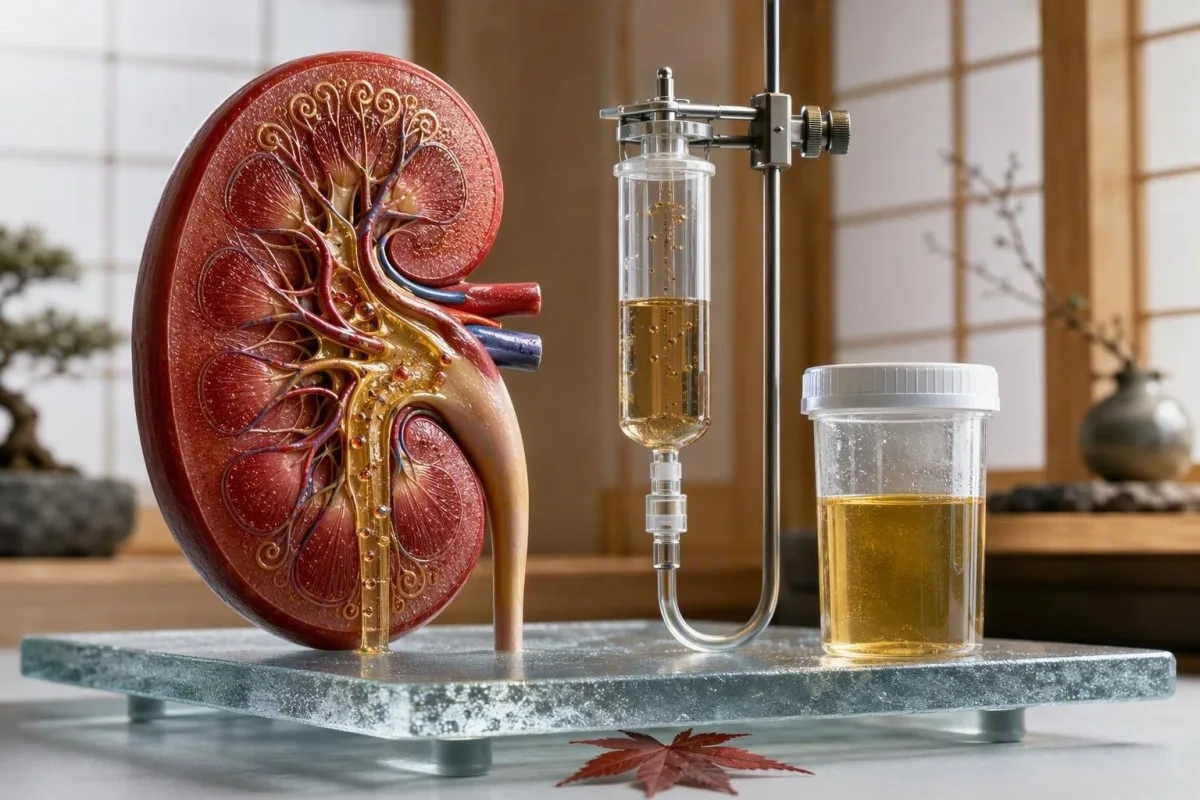
SIADH — это диагностическая картина, а не единичный аномальный результат. Полезные подсказки поступают из крови и мочи, собранных примерно в одно и то же время, а затем интерпретируются с учетом лекарств, функции щитовидной железы, кортизола и состояния объема.


- Истинная гипотоническая гипонатриемия означает, что натрий в сыворотке крови ниже 135 ммоль/л, а измеренная осмоляльность сыворотки крови обычно ниже 275 мОсм/кг.
- Осмоляльность мочи при SIADH необоснованно выше 100 мОсм/кг, несмотря на низкую осмоляльность сыворотки крови; почки удерживают воду, когда должны выделять разбавленную мочу.
- Несептегі натрий выше 30 ммоль/л подтверждает SIADH только после исключения диуретиков, надпочечниковой недостаточности, заболеваний щитовидной железы и клинически очевидного обезвоживания.
- Сусызлану үрнәге обычно приводит к концентрированной моче с содержанием натрия в моче ниже 30 ммоль/л, повышенным уровнем мочевины или BUN и признаками сниженного циркулирующего объема.
- Бөер өсте бизе җитешмәү (адреналь недостаточность) может выглядеть почти так же, как SIADH, поэтому низкий утренний уровень кортизола или неопределенный результат требуют срочного клинического наблюдения до постановки диагноза SIADH.
- Каты симптомнар такие как судороги, спутанность сознания, повторяющаяся рвота или снижение сознания при низком уровне натрия требуют неотложной помощи; лечение не должно ждать онлайн-интерпретации.
- Korrekcijos saugumas svarbu: esant lėtiniam hiponatremijai, seruminis natris paprastai neturėtų pakilti daugiau nei 8 mmol/L per 24 valandas pacientams, kuriems kyla didelė osmosinės demielinizacijos rizika.
- Вакыт мөһим nes IV fiziologinio tirpalo infuzija, diuretiko dozė ar keli litrai vandens gali pakeisti šlapimo natrio kiekį ir osmolialumą per kelias valandas.
Почему для SIADH требуется одновременное исследование крови и мочи
A SIADH kraujo tyrimas modelis pasireiškia mažu seruminio natrio kiekiu su mažu nustatytu seruminio osmolialumo kiekiu, kartu su šlapimu, kuris išlieka per daug koncentruotas ir santykinai turtingas natriu. Praktiniu požiūriu, organizmas turi vandens perteklių, palyginti su natriu, nes antidiurezinio hormono veikla normaliai nesustoja; vien natrio kiekis to negali įrodyti.
Seruminis natris žemiau 135 ммоль/л apibrėžia hiponatremiją, tačiau natris yra koncentracija, o ne bendrojo kūno natrio matas. Žmogus gali turėti mažai natrio dėl vandens susilaikymo, druskos netekimo, didelio gliukozės kiekio, laboratorinio artefakto ar šių veiksnių derinio; mūsų vadovas түбән натрий симптомнары буенча кулланма paaiškina, kodėl simptomų sunkumas dažnai seka greitį, o ne tikslų skaičių.
Pirmoji naudinga šakutė yra nustatytas seruminis osmolialumas: mažiau nei 275 mOsm/kg rodo hipotoninę hiponatrememiją, kurioje svarstomas SIADH. Dr. Thomas Klein'o klinikinė taisyklė yra paprasta: niekada neįvardykite SIADH iš pagrindinio metabolinio skydelio prieš tikrindami gliukozę, trigliceridus, bendrą baltymą ir idealiai – nustatytą osmolialumą.
Кантести - ЯИ анализы kuris traktuoja natrio, gliukozės, karbamido, kreatinino ir sujungtus šlapimo rodmenis kaip vieną fiziologijos problemą, o ne kaip vėliavėlių rinkinį. Mūsų apžvalgose didžiausia pavojinga klaida yra nuraminimas po 122 mmol/L natrio, kai ataskaitoje nėra šiuolaikinių šlapimo tyrimų ar simptomų istorijos; mūsų klinikiniai naudojimo atvejai parodo, kodėl trūkstant konteksto pasikeičia kitas žingsnis.
Ką iš tikrųjų reiškia SIADH
SIADH reiškia sindromą, kurio metu netinkamai veikia antidiurezė, anksčiau vadintas netinkamu antidiurezinio hormono išsiskyrimu. Sindromas gali atsirasti dėl vaistų, pykinimo, plaučių ar centrinės nervų sistemos sutrikimų, skausmo, pooperacinio streso ir kartais piktybinių navikų; laboratorinis modelis identifikuoja vandens apykaitą, o ne pagrindinę priežastį.
Натрий и осмоляльность сыворотки крови: подтверждение истинного избытка воды
Seruminis osmolialumas žemiau 275 mOsm/kg su natrio kiekiu žemiau 135 mmol/L patvirtina hipotoninę hiponatrememiją, tačiau tai savaime neidentifikuoja SIADH. Normalus ar aukštas osmolialumas nukreipia klinicistus link gliukozės, manitolio, kontrastinių agentų, alkoholio ar pseudohiponatrememijos.
Dauguma laboratorijų pateikia apskaičiuotą osmolialumą, paprastai apskaičiuojamą kaip 2 × natrio + gliukozės + karbamido mmol/L, tačiau nustatytas osmolialumas yra pageidautinas, kai diagnozė neaiški. Reikšmingas skirtumas tarp nustatytų ir apskaičiuotų verčių gali atskleisti nenustatytus osmolus; tai viena iš priežasčių, kodėl natrio rodmuo gali būti kliniškai realus, bet neatspindėti SIADH.
Gliukozė virš apie 13,9 mmol/L (250 mg/dL) понижает измеренный уровень натрия за счет перемещения воды из клеток в плазму. Общепринятая коррекция добавляет примерно 1,6–2,4 ммоль/л натрия на каждые 5,6 ммоль/л (100 мг/дл) глюкозы выше 5,6 ммоль/л, хотя клиницисты расходятся во мнениях относительно точного фактора при очень высоких уровнях глюкозы.
Очень высокие триглицериды или парапротеины могут вызывать псевдогипонатриемию при использовании непрямых ион-селективных методов анализа, в то время как измеренная осмоляльность остается в норме. Сравните результат содержания натрия с төп матдәләр алмашы панеле и спросите, использовал ли лаборатория прямой или непрямой электрод, прежде чем предполагать нарушение водного баланса.
Осмоляльность мочи при SIADH: ключ от почек, меняющий картину
Осмоляльность мочи выше 100 мОсм/кг у гипотонического пациента означает наличие антидиуретического гормона. При СНСАД осмоляльность мочи часто составляет от 200 до 600 мОсм/кг, хотя ни одно значение мочи не является диагностическим.
Сидек осмоляллеге 100 мОсм/кг или ниже указывает на почти максимально разбавленную мочу и делает СНСАД маловероятной. Этот паттерн соответствует первичной полидипсии или низкому потреблению соли, когда потребление воды превышает способность почек выводить свободную воду; это особенно актуально для людей, потребляющих очень мало белка и соли.
Вот контринтуитивный момент: концентрированная моча не означает автоматически обезвоживание. Как гиповолемия, так и СНСАД повышают уровень антидиуретического гормона, но обезвоживание делает это адекватно для поддержания кровообращения, тогда как СНСАД делает это, несмотря на клинически адекватный эффективный объем артерий.
Европейское руководство по гипонатриемии рекомендует использовать осмоляльность мочи в качестве раннего дискриминатора, поскольку физическая оценка объема часто ненадежна (Spasovski et al., 2014). Прочтите наше более подробное объяснение Несеп осмолялылығының талдауы если в вашем отчете используется мОсм/кг вместо удельного веса тест-полоски.
Почему один образец мочи может ввести в заблуждение
Осмоляльность мочи может быстро снизиться после прекращения тошноты, купирования боли или отмены вызывающего препарата. Если моча была собрана после внутривенного введения жидкости, после петлевого диуретика или через несколько часов после взятия образца крови, я рассматриваю это как подсказку, а не как доказательство.
Натрий в моче: SIADH против обезвоживания и низкого эффективного объема
Натрий в моче выше 30 ммоль/л подтверждает СНСАД при гипотонической гипонатриемии, когда потребление соли с пищей обычно, а диуретики отсутствуют. Натрий в моче ниже 30 ммоль/л чаще указывает на почечную задержку натрия из-за рвоты, диареи, потоотделения, сердечной недостаточности, цирроза или истинного обезвоживания.
При неосложненном СНСАД почки не жаждут натрия, поэтому натрий в моче обычно 30 ммоль/лдан югары и может превышать 60 ммоль/л. Мочевина часто низкая, а мочевая кислота в сыворотке может быть ниже 4 мг/дл (0,24 ммоль/л) из-за того, что легкое увеличение объема увеличивает клиренс уратов.
68-летняя женщина, принимающая гидрохлоротиазид, может иметь натрий в моче 55 ммоль/л и концентрированную мочу после желудочного вируса; это не подтверждает СНСАД. Гипонатриемия, связанная с тиазидами, может имитировать все классические лабораторные признаки, поэтому список лекарств является не административной деталью, а диагностическими данными.
Натрий в моче менее надежен после приема диуретиков, при прогрессирующем заболевании почек или при очень низком потреблении натрия с пищей. Сопоставьте его с креатинином, мочевиной и электролитлар панели вместо того, чтобы рассматривать отсечку в 30 ммоль/л как жесткую стену.
ūsų šlapimo frakcinis išskyrimas
ūsų šlapimo frakcinis išskyrimas didesnis nei 12% gali palaikyti SIADH, ypač kai diuretikai sutrikdo šlapimo natrio kiekį. Paprastai jis normalizuojasi po SIADH korekcijos, o inkstų druskos šalinimo būklės gali jį išlaikyti padidėjusį; tai yra specialistų sritis, bet gali būti naudinga, kai istorija netinka.
Как обезвоживание отличается от SIADH по лабораторным данным
Dehidracija paprastai sukelia koncentruotą šlapimą su mažu šlapimo natrio kiekiu, padidėjusį šlapalo kiekį, palyginti su kreatininu, ir klinikinius tūrio praradimo požymius. SIADH taip pat dažnai sukelia koncentruotą šlapimą, tačiau pacientai paprastai yra kliniškai eūvolemiški ir neturi tokios pat natrį taupančios inkstų reakcijos.
Vėmimas, viduriavimas ar didelis prakaitavimas inkstuose paprastai sumažina šlapimo natrio kiekį iki mažiau nei 20-30 mmol/L o šlapimo osmolialitas padidėja virš 100 mOsm/kg. Šlapalo kiekis gali padidėti neproporcingai kreatininui, tačiau šis santykis priklauso nuo baltymų suvartojimo, virškinimo trakto kraujavimo, steroidų ir kepenų funkcijos, todėl tai yra palaikomasis, o ne galutinis rodiklis.
Esant SIADH, kraujospūdis ir apžiūra gali atrodyti normalūs, tačiau subtilūs radiniai yra svarbūs: nėra ortostatinių simptomų, nėra sausų gleivinių, nėra periferinės edemos ir nėra ryškaus virškinimo trakto praradimo. Aš mačiau pacientų, kuriems buvo diagnozuota "dehidracija" tiesiog todėl, kad jų šlapimas buvo tamsus; šlapimo spalva yra prastas natrio fiziologijos rodiklis, kaip mūsų куе сидек буенча кулланма aptaria.
Atsargus izotoninio fiziologinio tirpalo perpylimas gali padėti pasirinktuose stebimose situacijose: hipovoleminė hiponatremija linkusi gerėti, kai tūris slopina antidiuretinį hormoną. Esant SIADH, fiziologinis tirpalas gali nepakelti natrio kiekio arba jį pabloginti, kai šlapimas yra daug koncentruotesnis nei infuzija; tai niekada neturėtų būti namų eksperimentas.
Kodėl fiziologinis tirpalas gali pabloginti SIADH
Viename litre 0,9% fiziologinio tirpalo yra 154 mmol natrio, tačiau inkstas, gaminantis šlapimą esant 600 mOsm/kg, gali pašalinti natrį, tuo pačiu išlaikydamas proporcingai daugiau vandens. Šis "desalinacijos" efektas yra labiausiai tikėtinas, kai šlapimo natrio ir kalio kiekis yra didelis, palyginti su serumo natrio kiekiu.
Надпочечниковая недостаточность: имитатор SIADH, который клиницисты должны исключить
Antinksčių nepakankamumas gali sukelti mažą natrio kiekį, mažą serumo osmolialitetą, šlapimo osmolialitetą virš 100 mOsm/kg ir šlapimo natrio kiekį virš 30 mmol/L – beveik tokį patį modelį kaip SIADH. Todėl kortizolio įvertinimas yra saugaus SIADH tyrimo dalis, ypač esant nuovargiui, svorio netekimui, žemam kraujospūdžiui, hiperkalemijai ar steroidų poveikiui.
Ryto kortizolio kiekis serume virš maždaug 15-18 mikrogramų/dL (414-497 nmol/L) paprastai daro kliniškai reikšmingą antinksčių nepakankamumą mažai tikėtiną, priklausomai nuo testo ir situacijos. Reikšmės žemiau 3-5 mikrogramai/dL (83-138 nmol/L) kelia susirūpinimą, o tarpiniai rezultatai dažnai reikalauja ACTH stimuliavimo testo, o ne spėliojimo.
Pirminis antinksčių nepakankamumas dažnai sukelia aukštą kalio kiekį, nes trūksta aldosterono, tačiau antrinis antinksčių nepakankamumas gali turėti normalų kalio kiekį ir vis tiek sukelti sunkų hiponatremiją. Mechanizmas yra kortizolio trūkumas, didinantis antidiuretinio hormono išsiskyrimą, o ne tiesiog druskos praradimas.
2013 m. ekspertų grupė, vadovaujama Verbalis, pataria atmesti antinksčių nepakankamumą prieš nustatant SIADH (Verbalis ir kt., 2013). Jei ši galimybė yra jūsų ataskaitoje, mūsų apžvalga apie Addisono ligos laboratoriniai požymiai може допомогти вам підготувати цілеспрямовані запитання для термінового огляду клініцистом.
Стероїдні препарати ускладнюють тестування
Преднізолон, гідрокортизон та деякі ін'єкційні стероїди можуть спотворювати інтерпретацію кортизолу та пригнічувати надниркову вісь. Не припиняйте прийом призначених стероїдів для "отримання чистого тесту"; раптове припинення може спровокувати адреналовий криз.
тиреоид анализы: когда гипотиреоз действительно объясняет низкий уровень натрия
Важкий гіпотиреоз може порушити виведення води, але звичайний субклінічний гіпотиреоз рідко пояснює значну гіпонатріємію. TSH та вільний Т4 перевіряються перед діагностикою SIADH, оскільки глибока недостатність щитоподібної залози піддається лікуванню і може співіснувати з іншими причинами.
Клінічно значуща гіпотиреоїдна гіпонатріємія найбільш ймовірна при важких захворюваннях, особливо при мікседематозній фізіології з низьким рівнем вільного Т4, брадикардією, гіпотермією або зниженим серцевим викидом. TSH 6 мМО/л з нормальним рівнем вільного Т4 є поширеним явищем і не повинен бути зручним поясненням для натрію 121 ммоль/л.
Kantesti AI — ул AI кан анализы нәтиҗәләрен аңлату платформасы який порівнює TSH та вільний Т4 з натрієм, функцією нирок та часом прийому ліків, оскільки виявлений результат TSH може відволікти від більш термінової причини, пов'язаної з наднирниками або ліками. Нормальний TSH не виключає центрального гіпотиреозу; низький рівень вільного Т4 при непідвищеному TSH потребує іншого підходу, поясненого в нашій статті про низький вільний Т4 при нормальному TSH.
Замісна терапія щитоподібної залози повинна коригуватися відповідно до встановлених показань до застосування для щитоподібної залози, а не використовуватися як швидке лікування натрію. На мій досвід, натрій часто покращується лише після того, як буде усунено справжній драйвер затримки води — нудота, медикаменти, дефіцит кортизолу або хвороба.
Захворювання гіпофіза змінює діагностичний пошук
Головний біль, симптоми порушення полів зору, знижене лібідо, незрозуміла гіпотензія або множинні низькі рівні гормонів гіпофіза викликають занепокоєння щодо центрального захворювання гіпофіза. У такому випадку перевірте кортизол перед початком левотироксину, оскільки гормон щитоподібної залози може збільшити кліренс кортизолу.
Беременность, пожилой возраст и различия в размерах тела при интерпретации SIADH
Вагітність знижує нормальний осмотичний поріг та сироватковий натрій приблизно на 4-5 ммоль/л, тому натрій близько 130 ммоль/л може бути фізіологічним на ранніх термінах вагітності, але все одно потребує контексту. Люди похилого віку мають вищий ризик гіпонатріємії, пов'язаної з ліками, і часто скаржаться на падіння або сплутаність свідомості, а не на спрагу.
Під час неускладненої вагітності осмоляльність сироватки крові зазвичай зменшується приблизно на 5-10 мОсм/кг і натрій може становити близько 130-134 ммоль/л, оскільки осмостат переналаштовується. Рівень натрію нижче 130 ммоль/л, неврологічні симптоми, гіпертензія, порушення функції печінки або протеїнурія потребують термінової оцінки акушером, а не відкидання як нормальної зміни вагітності.
У людей старше 75 років часто перекриваються СІЗЗС, тіазиди, карбамазепін, десмопресин та дієти з низьким вмістом солі. Падіння рівня натрію всього на 5 ммоль/л може мати значення, коли базове пізнання крихке; першими помітними ознаками можуть бути нестабільність ходи та падіння.
Фільтрація нирок природним чином змінюється під час вагітності, і інтерпретація повинна використовувати посилання, що враховують вагітність; наш посібник щодо значень eGFR під час вагітності пояснює, чому повідомлений eGFR часто не підтверджений під час вагітності. Обмеження рідини слід індивідуалізувати під час вагітності та слабкості, а не копіювати з загального роздавального матеріалу щодо SIADH.
Низька маса тіла — це не дрібна деталь
Особа вагою 45 кг має менше загальної води в організмі, ніж особа вагою 100 кг, тому однакове навантаження водою або доза ліків може призвести до більшого зрушення натрію. Слабкі пацієнти також мають менший фізіологічний резерв, якщо натрій швидко змінюється.
Влияние лекарств, имитирующих или вызывающих SIADH
Тіазидні діуретики, СІЗЗС, СІЗЗСН, карбамазепін, окскарбазепін, десмопресин та деякі антипсихотики є частими медикаментозними причинами гіпотонічної гіпонатріємії. Thor-3y SIADH физиологиясини ҳосил қилади, аммо тиазидлар суюлтириш ва натрий йўқотишнинг ёмонлашиши орқали SIADHни тақлид қилиши мумкин.
Тиазидлар билан боғлиқ гипонатриемия кўпинча биринчи 2 атна дан кейин бошланади, аммо у касаллик, озиқ-овқат қабулининг камайиши ёки қўшимча сув қабули қўшилганда бир неча ойдан кейин ҳам юз бериши мумкин. Ҳалқали диуретиклар бу каби натижаларни келтириб чиқариш эҳтимоли кам, чунки улар буйракнинг концентрлаш қобилиятини камайтиради.
SSRI билан боғлиқ гипонатриемия кўпинча кекса ёшдагилар, кам вазнли одамлар ва шунингдек, диуретиклар қабул қилаётганларда учрайди. Янги антидепрессант автоматик равишда айбдор эмас, аммо вақт ўтиши билан боғлиқ изчиллик китобдаги рўйхатдан кўра муҳимроқдир: сўнгги 30 кун давомида ҳар бир бошланган, тўхтатилган ва дозаси ўзгартирилганлигини ҳужжатлаштиринг.
Тутқаноқ, руҳий, гормон ёки қон босимига қарши дориларни кўрсатмасини биладиган шифокорсиз тўхтатманг. Кам хлорид диуретик ишлатилиши ва қусиш билан бирга келиши мумкин; бизнинг кам хлорид натижалари бўйича тушунтиришимиз кенгроқ электролитлар намунасини ажратишга ёрдам беради.
Рецептсиз сотиладиган қўшимчалар
Ноктурия учун ишлатиладиган Десмопрессин алоҳида эътиборга лойиқ, чунки дозадан кейин эркин ичиш тўсатдан сув тутилишига олиб келиши мумкин. НСАИДлар, айниқса, орадаги касалликлар вақтида, таъсирчан одамларда антидиуретик гормоннинг таъсирини кучайтириши мумкин.
Низкое потребление растворенных веществ и избыток воды: картины, не являющиеся SIADH
Бирламчи полидипсия ва парҳез тузининг жуда кам истеъмоли одатда классик SIADHдан фарқли ўлароқ, сийдикнинг осмолялллигини 100 мОсм/кг ёки камроқ бўлишига олиб келади. Фарқ муҳим, чунки қаттиқ суюқлик чекланишининг ўзи недоедание, алкогол билан боғлиқ касалликлар ёки туз истеъмоли қайта тикланганида хавфли тез коррекцияни яшириб қўйиши мумкин.
Буйракнинг сувни чиқариш учун тузга — асосан оқсилдан келадиган мочевина ва электролитларга — эҳтиёжи бор. Кунига атиги 250 мОсм туз мавжуд бўлса, бир киши 100 мОсм/кг дан 2,5 л сийдик чиқариши мумкин, аммо агар антидиуретик гормон сийдикни 250 мОсм/кг да сақласа, атиги 1 л.
Бирламчи полидипсияда сийдик кўпинча кескин суюқ бўлади ва тарих 4-6 л суюқлик ичиш ҳақида кўрсатиши мумкин, гарчи эслаб қолиш ноаниқ бўлса ҳам. Кам тузли гипонатриемияда мочевина кам бўлиши мумкин ва парҳез тарихи яқин орада оқсил ва туз истеъмолининг паст бўлганлигини кўрсатиши мумкин.
Кетoнлар, кам мочевина ва вазн йўқотиш SIADH ўрнига недоедание ёки узоқ муддатли рўза тутишни билдириши мумкин. Бизнинг мақоламизни кўриб чиқинг сийдик кетонлари агар кетоз мавжуд бўлса; диабетик кетоацидоз алоҳида фавқулодда ҳолатдир ва натрий талқинини бузиши мумкин.
Қайта овқатланиш хавфи
Озиқланиш тикланганда, буйрак туз чиқариш қобилиятини тиклаётганда натрий кутилганидан тезроқ кўтарилиши мумкин. Шифохона жамоалари юқори хавфли беморларда натрийни тез-тез, баъзан фаол коррекция вақтида ҳар 2-4 соатда кузатиб борадилар.
Заболевания почек, сердца и печени: низкий уровень натрия без SIADH
Юрак етишмовчилиги, цирроз ва напредка чиққан буйрак касаллиги бошланғич SIADH орқали эмас, балки артериал ҳажмнинг самарасизлиги туфайли гипонатриемияни келтириб чиқаради. Бу ҳолатлар ҳали ҳам концентрланган сийдик ҳосил қилиши мумкин, аммо шиш, қон айланишининг пасайиши, кам альбумин ёки фильтрациянинг ёмонлашиши одатда умумий расмни ўзгартиради.
Сърдечна недостатъчност и цироза, тялото може да съдържа излишно общо количество вода и натрий, но усеща неадекватно пълнене на артериите, което активира антидиуретичния хормон и пътищата за задържане на натрий. Натрият в урината често е под 30 ммоль/л , освен ако диуретици или бъбречно увреждане не объркат резултата.
Тежкото бъбречно заболяване ограничава както екскрецията на вода, така и концентрацията на урината, така че осмолалитетът на урината може да бъде близо до осмолалитета на плазмата около 250-350 mOsm/kg. В такава ситуация класическите прагове за SIADH губят точност и нефрологичният принос е по-полезен от повторното тестване на урина при случаен подбор.
Протеинурия, цилиндри, албумин, тенденция на креатинина и отоци не са странични въпроси; те помагат да се определи физиологията. Нашето практическо ръководство за сидек сидеклек обяснява защо оценката с лентичка не може да замести измерената осмолалитет на урината при сложен бъбречен случай.
Отоците не изключват опасност
Човек с отоци може все още да развие тежки неврологични симптоми при натрий под 120 mmol/L. Обемният статус обяснява причината, но не намалява спешността на остро симптоматичната хипонатриемия.
Время взятия проб, внутривенные жидкости и лабораторные ошибки
Кръв и урина трябва да бъдат взети преди интравенозни течности и в рамките на няколко часа един от друг, тъй като лечението може бързо да промени лабораторните резултати за SIADH. Забавената проба от урина може да опише реакцията на терапията, а не причината за хипонатриемия.
Един литър физиологичен разтвор, доза фуроземид, лечение против гадене, облекчаване на болката или спиране на десмопресин могат да променят изходната урина и осмолалитета в рамките на часове. Запишете точните часове на вземане на проби, скорошен прием на течности, интравенозна терапия и лекарства; тази обикновена подробност често разрешава привидно противоречиви лабораторни резултати за SIADH.
Хемолизата обикновено не създава фалшиво нисък натрий, но значителна хиперлипидемия, хиперпротеинемия и замърсяване на пробата могат. Резултатът за натрий, който рязко се различава от вчерашната стойност без клинично обяснение, трябва да предизвика повторно вземане на проба или директно измерване с йон-селективен електрод, а не диагноза чрез електронна таблица.
Kantesti AI сравнява датите и маркира неправдоподобни промени, но не може да види нерегистриран инфузионен разтвор или пропусната доза. Използвайте кан анализы таймлайны өчен за отбелязване на болест, упражнения, гладуване, прием на течности и медикаменти до всеки резултат.
Уринната специфична плътност не е осмолалитет
Специфичната плътност отразява масата на частиците, както и концентрацията, и може да бъде изкривена от глюкоза, протеин или контрастни вещества. Стойност 1.020 не се преобразува надеждно в конкретна стойност mOsm/kg при всеки пациент.
Сфокусированное исследование SIADH, которое обычно назначают клиницисты
Безопасната оценка на SIADH обикновено включва серумен натрий, калий, глюкоза, урея, креатинин, измерена серумна осмолалитет, уринна осмолалитет, уринен натрий, TSH, свободен T4 и сутрешен кортизол. Целта е да се потвърди хипотонична хипонатриемия и да се изключат обратими имитатори, преди да се постави етикетът SIADH.
Допълнителните тестове зависят от контекста: пикочна киселина, чернодробни маркери, липиден профил, общ протеин, ACTH, образно изследване на гръдния кош, образно изследване на мозъка или преглед на медикаменти може да бъдат подходящи. При привидно еуволемичен пациент с натрий 126 mmol/L, едновременната двойка осмолалитет и кортизол обикновено са по-информативни от широк, нефокусиран тест.
Сравнението на насоките на Hoorn и Zietse подчертава, че само прегледът на обема има ограничена диагностична точност и подкрепя биохимичен подход, започващ от урината (Hoorn и Zietse, 2017). Ето защо нормално изглеждащият преглед не трябва да надделява над уринната осмолалитет от 550 mOsm/kg и серумната осмолалитет от 260 mOsm/kg.
Д-р Томас Клайн препоръчва да се прави снимка на всяка страница с резултати, включително времето на вземане на проби, референтния интервал и списъка с лекарства, преди посещение. Нашият AI медицински доклад за проверка на безопасността шарҳ медиҳад, ки чӣ тавр ба нигоҳ доштани тафсилоти манбаъ, ки тафсир ба он ниёз дорад.
Вақте ки тасвир муҳим мегардад
SIADH-и нав, доимӣ, ки бо доруи равшан ё бемории шадид алоқаманд нест, метавонад барои тасвири сандуқ, бахусус дар одамони калонсол бо таърихи тамокукашӣ ё нишонаҳои нафасӣ, сабаб шавад. Тасвир аз рӯи таърих ва муоина муайян карда мешавад; он барои ҳар як натрийи 132 ммоль/л ба таври автоматикӣ талаб карда намешавад.
Что означают показатели лечения и почему коррекция натрия может быть опасной
Гипонатриемияи шадиди симптоматикӣ дар беморхона бо натрийи гипертоникӣ, ки бодиққат назорат карда мешавад, табобат карда мешавад, дар ҳоле ки идоракунии SIADH-и музмин ба сабаб ва мувозинати боэътимоди об нигаронида шудааст. Хатар дуҷониба аст: варами мағзи сар, ки табобат наёфтааст ва ислоҳи аз ҳад зиёд зуд метавонад ба осеби доимии асабӣ оварда расонад.
Барои сар задани ҳуҷум, кома, ошуфтагии шадид ё қайкунии шадид аз сабаби гипонатриемия, роҳнамоҳо одатан истифода мебаранд 100-150 мл натрийи 3% ҳамчун як болӯси фосилавӣ бо ташхиси такрории натрий. Ҳадафи ибтидоӣ як афзоиши хурд тақрибан 4-6 ммоль/л барои коҳиш додани варами мағзи сар аст, на ба эътидол овардани фаврӣ.
Барои гипонатриемияи музмин, бисёр клиникҳо ислоҳотро маҳдуд мекунанд 24 сәгатьтә 8 ммоль/л дан күбрәк күтәрү барои одамони гирифтори хатари баланди демиелинатсияи осмотикӣ, аз ҷумла майзадагӣ, камғизоӣ, бемории ҷигари шадид, гипокалиемия ё натрийи ибтидоии хеле паст. Баъзе роҳнамоҳо барои беморони камхатар дар рӯзи аввал 10 ммоль/л иҷозат медиҳанд, аммо ман эҳтиёткорӣ мекунам, зеро бо афтиши гормони зидди зидди пешоб, рақам метавонад ба таври ғайричашмдошт боло равад.
Маҳдудияти моеъ аксар вақт тақрибан 800-1000 мл дар як рӯз дар SIADH-и устувор оғоз меёбад, аммо муваффақияти он ба консентратсияи пешоб ва истеъмоли моддаҳои ҳалшаванда вобаста аст. Мода, диуретикҳои ҳалқавӣ бо намак ё антагонистҳои вазопрессин қарорҳои мутахассисон мебошанд; Kantesti як AI нигезендәге кан анализы тикшерү коралы аст, ки барои қайд кардани намунаи муҳим, на барои таъин кардан ё иваз кардани ёрии таъҷилӣ тарҳрезӣ шудааст. Мавриди моро баррасӣ кунед техник клиник күзәтчелек ҳангоми баррасии он, ки чӣ гуна тафсири автоматӣ аз ҷиҳати тиббӣ баррасӣ мешавад.
Ислоҳи калий низ натрийро зиёд мекунад
Калий як осмоли самарабахш аст, бинобар ин табобати гипокалиемия метавонад натрийи хунобаро ҳатто бидуни натрий зиёд кунад. Ин ҳангоми ҳисоб кардани суръати умумии ислоҳи 24-соат ба осонӣ гум мешавад.
Когда низкий уровень натрия или возможный SIADH требуют неотложной медицинской помощи
Фавран барои сар задани ҳуҷум, беҳушӣ, ошуфтагии нави шадид, хоболудии зиёд, қайкунии такрорӣ, дарди сахти сар ё душвории нафасгирӣ бо натрийи маълум ё гумонбаршудаи паст, ёрии таъҷилӣ ҷӯед. Натрий дар зери 120 ммоль/л баҳогузории клиникии ҳамонрӯзаро меарзад, ҳатто агар нишонаҳо сабук ба назар расанд, бахусус вақте ки пастшавӣ метавонад нав бошад.
Фавран бо клинициан, ки санҷишро фармоиш додааст, барои натрий тамос гиред 125-129 ммоль/л, таъсири нави доруворӣ, табобати саратон, ҳомиладорӣ, нишонаҳои гурда ё тамоюли муҳими пастшавӣ. Пеш аз гирифтани маслиҳати инфиродӣ, оби иловагӣ нанӯшед, лавҳаҳои намак нахӯред ё тамоми моеъҳоро маҳдуд накунед; ҳар як амал метавонад сабаби гуногунро бадтар кунад.
Аз 27 августи соли 2026, муҳимтарин саҳми бемор таърихи дақиқ аст: моеъҳои рӯзона, истеъмоли машрубот, қайкунӣ ё дарунравии اخیر, ҳамаи дорухатҳо ва иловаҳо, моеъҳои IV, дард, дилбеҳузурӣ, нишонаҳои шуш ва арзишҳои натрийи қаблӣ. Ин таърих аксар вақт аз баромади муваққатии гормони зидди зидди пешоб аз SIADH-и доимӣ нисбат ба панели химияи алоҳидаи иловагӣ самараноктар фарқ мекунад.
Дастаи тиббии Kantesti истифодаи намунавии натиҷаҳоро бо назорати пизишк истифода мебарад; хонандагон метавонанд клиниционҳои ин равандро дар саҳифаи мо бубинанд Медицина консультатив советы. Агар натиҷаҳо ошуфта бошанд, гузориши аслии лаборатория ва ин чорчӯбаи санҷиши муштаракро ба клинициани литсензияшуда биёред, на ин ки рақами натрийро худтабобат кунед.
Кабул итүгә алып барырга кирәкле сораулар
Бипурсед, ки оё гипонатриемия ҳамчун гипотоникӣ тасдиқ шудааст, оё пешоб пеш аз табобат ҷамъоварӣ шудааст, оё кортизол ва T4-и озод санҷида шудаанд ва оё доруворӣ ё истеъмоли пасти моддаҳои ҳалшаванда метавонад ин намудро шарҳ диҳад. Ин чор савол баҳсро дар атрофи сабабҳое, ки табобатро тағйир медиҳанд, тамаркуз мекунанд.
Еш бирелә торган сораулар
SIADH-ны күрсәткән кан анализы нәтиҗәләре нинди?
SIADH-ի հավանականությունը ենթադրվում է շիճուկային նատրիումի 135 մմոլ/լ-ից ցածր, չափված շիճուկային օսմոլյալությունը 275 մմOsm/կգ-ից ցածր, միզային օսմոլյալությունը 100 մմOsm/կգ-ից բարձր, իսկ միզային նատրիումը սովորաբար 30 մմոլ/լ-ից բարձր։ Հիվանդը սովորաբար կլինիկապես էուվոլեմիկ է, առանց համոզիչ դեհիդրատացիայի, այտուցների, երիկամային անբավարարության, ադրենալ անբավարարության կամ ծանր հիպոթիրեոզի։ Ցածր ուրեան և շիճուկային միզաթթուն մոտ 4 մգ/դլ-ից ցածր կարող են աջակցություն ավելացնել, սակայն ոչ մեկը ինքնին ախտորոշիչ չէ։ Կլինիցիստները պետք է մեկնաբանեն այս թեստերը արյան և մեզի նմուշներից, որոնք հավաքվել են գրեթե միևնույն ժամանակ։.
SIADH-లో మూత్ర ఆస్మోలాలిటీ సాధారణంగా ఎంత ఉంటుంది?
SIADH இல் சிறுநீர் ஆஸ்மோலాలిட்டி குறைந்த சீரம் ஆஸ்மோலాలిட்டி இருந்தபோதிலும், பொருத்தமற்ற முறையில் 100 mOsm/kg க்கு மேல் உள்ளது, மேலும் பல நோயாளிகளுக்கு 200 முதல் 600 mOsm/kg வரை மதிப்புகள் உள்ளன. 100 mOsm/kg அல்லது அதற்குக் குறைவான சிறுநீர் ஆஸ்மோலాలిட்டி SIADH க்கு எதிராக வாதிடுகிறது, ஏனெனில் இது சிறுநீரகத்தால் சிறுநீரை முறையாக நீர்த்துப்போகச் செய்ய முடியும் என்பதைக் காட்டுகிறது. நீரிழப்பு 100 mOsm/kg க்கு மேல் சிறுநீர் ஆஸ்மோலாலிட்டியையும் ஏற்படுத்தலாம், எனவே சிறுநீர் சோடியம் மற்றும் மருத்துவ அளவு மதிப்பீடு தேவை. சலைன், டையூரிடிக்ஸ் அல்லது குமட்டல் சிகிச்சைக்குப் பிறகு சேகரிக்கப்பட்ட மாதிரி தவறாக வழிநடத்தலாம்.
безводнение гипонатриемияны тудыра ала ма һәм SIADH кебек күренергә мөмкинме?
ஆம், வாந்தி, வயிற்றுப்போக்கு, வியர்வை அல்லது போதிய உட்கொள்ளல் இல்லாமை ஆகியவற்றால் ஏற்படும் நீரிழப்பு, 100 mOsm/kg க்கும் அதிகமான செறிவூட்டப்பட்ட சிறுநீருடன் ஹைப்போடோனிக் ஹைபோனாட்ரீமியாவை ஏற்படுத்தும். நேரான நீரிழப்பில், சிறுநீரகங்கள் சோடியத்தைப் பாதுகாப்பதால், சிறுநீர் சோடியம் பொதுவாக 20-30 mmol/L க்குக் குறைவாக இருக்கும், மேலும் யூரியா கிரியேட்டினினுடன் ஒப்பிடும்போது உயரக்கூடும். SIADH க்கு பெரும்பாலும் 30 mmol/L க்கும் அதிகமான சிறுநீர் சோடியம் இருக்கும், மேலும் திரவக் குறைபாட்டின் தெளிவான அறிகுறிகள் இருக்காது. சிறுநீரிறக்கிகள் இந்த வேறுபாட்டை மங்கலாக்கக்கூடும், எனவே மருந்து வரலாறு அவசியம்.
Чому перевіряється кортизол, коли лікарі підозрюють ННСАДГ?
Cortisol-ը ստուգվում է, քանի որ մակերիկամների անբավարարությունը կարող է առաջացնել նույն ցածր նատրիումի, ցածր շիճուկային օսմոլյարության, խտացված մեզի նախապատմություն, ինչպես SIADH-ը։ Առավոտյան կորտիզոլի մակարդակը մոտ 15-18 միկրոգրամ/դլ-ից բարձր, կախված վերլուծությունից և կլինիկական իրավիճակից, սովորաբար անհավանական է դարձնում մակերիկամների զգալի անբավարարությունը. 3-5 միկրոգրամ/դլ-ից ցածր արդյունքը մտահոգիչ է։ Միջանկյալ արժեքները հաճախ պահանջում են ACTH խթանման թեստ։ Մակերիկամների անբավարարության բացթողումը վտանգավոր է, քանի որ այն պահանջում է ստերոիդային փոխարինում, ոչ միայն հեղուկի սահմանափակում։.
МК-таблетки же SSRI немесе диуретиктері SIADH зертханалық нәтижелеріне әкелуі мүмкін бе?
SSRI, SNRI, karbamazepīns, okskarbazepīns un dezmopresīns var izraisīt SIADH līdzīgu ūdens aizturi, savukārt tiazīdu diurētiskie līdzekļi var ļoti līdzīgi atdarināt SIADH laboratorijas atradumus. Ar tiazīdiem saistīta hiponatriēmija bieži attīstās 14 dienu laikā pēc ārstēšanas sākšanas vai palielināšanas, taču blakusslimības var to izraisīt vēlāk. Urīna nātrija līmenis var palikt virs 30 mmol/L abos gadījumos, tāpēc zāļu lietošanas laiks ir klīniski izšķirošs. Pacienti nedrīkst pārtraukt paredzēto psihiatrisko, krampju vai asinsspiediena zāļu lietošanu bez ārstējošā ārsta norādījuma.
Low sodium ir kadii degdeg ah loo saxaa si badbaado leh?
हयापोनेट्रेमिया के पुराने मामलों में, कई चिकित्सक ओस्मोटिक डिमायलिनेशन के उच्च जोखिम वाले रोगियों, जैसे कि कुपोषण, शराब का सेवन, गंभीर यकृत रोग, हाइपोकैलिमिया या बहुत कम सोडियम वाले रोगियों में, 24 घंटे में सोडियम सुधार को 8 mmol/L या उससे कम रखने का लक्ष्य रखते हैं। आपातकालीन लक्षणों के लिए अस्पताल में 3% सलाइन के 100-150 mL boluses की आवश्यकता हो सकती है ताकि लगभग 4-6 mmol/L की प्रारंभिक वृद्धि प्राप्त की जा सके। सटीक लक्ष्य अवधि, लक्षणों और जोखिम कारकों पर निर्भर करता है। सोडियम उपचार के लिए बार-बार रक्त परीक्षण की आवश्यकता होती है क्योंकि स्वतः जल मूत्रवर्धक अनपेक्षित रूप से सुधार को तेज कर सकता है।.
Бүген үк AI белән эшләнгән кан анализы тикшерүе
Дөнья буенча 2 миллионнан артык кулланучы кушылыгыз: алар Kantestiны тиз һәм төгәл лаборатория анализы өчен ышана. Кан анализы нәтиҗәләрегезне йөкләгез һәм 15,000+ биомаркерларын секундлар эчендә тулы аңлатма белән алыгыз.
📚 Сылтама бирелгән тикшеренү басмалары
Klein, T., Mitchell, S., & Weber, H. (2026). Хатын-кызлар сәламәтлеге өчен кулланма: Овуляция, менопауза һәм гормональ симптомнар. Kantesti AI медицина тикшеренүе.
Klein, T., Mitchell, S., & Weber, H. (2026). Иртә Хантавирус триажы өчен күп телле AI ярдәме белән клиник карар кабул итү ярдәме: дизайн, инженер валидация һәм 50,000 аңлатылган кан анализы отчетлары буенча реаль дөньяда урнаштыру. Kantesti AI медицина тикшеренүе.
📖 Тышкы медицина белешмәләре
⚕️ Медицина кисәтүе
Бу мәкалә бары тик белем бирү максатларында гына һәм медицина киңәше булып тормый. Диагноз һәм дәвалау карарлары өчен һәрвакыт квалификацияле сәламәтлек саклау белгеченә мөрәҗәгать итегез.
E-E-A-T ышаныч сигналлары
Тәҗрибә
Табиб җитәкчелегендә лаборатория нәтиҗәләрен аңлату эш процессларын клиник тикшерү.
Белгечлек
Лаборатория медицинасы: биомаркерларның клиник контекстта үз-үзләрен тотышын аңлау.
Авторититет
Доктор Томас Кляйн тарафыннан язылган, доктор Сара Митчелл һәм профессор доктор Ханс Вебер тарафыннан тикшерелгән.
Ышанычлылык
Ачык күзәтү юллары белән куркуны киметү өчен дәлилләргә нигезләнгән аңлату.