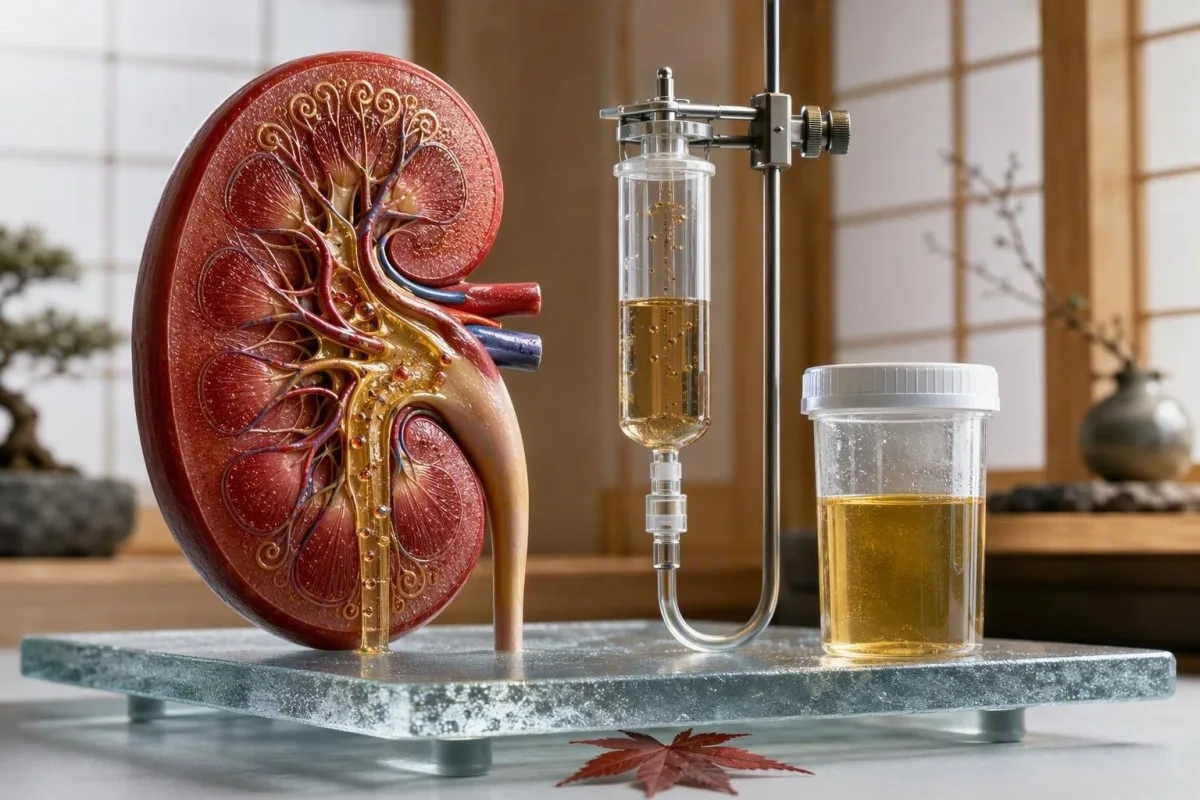
SIADH ni utambuzi wa muundo, sio matokeo moja ya kawaida. Dalili muhimu hutoka kwa damu na mkojo zilizokusanywa wakati huo huo, kisha hufasiriwa pamoja na dawa, utendaji wa tezi, cortisol na hali ya kiwango.


- Kweli hypotonic hyponatremia ina maana sodiamu ya seramu iko chini ya 135 mmol/L na osmolality ya seramu iliyopimwa kwa kawaida iko chini ya 275 mOsm/kg.
- SIADH osmolality ya mkojo kwa kawaida iko juu ya 100 mOsm/kg licha ya osmolality ya chini ya seramu; figo zinahifadhi maji wakati zinapaswa kutengeneza mkojo ulioyeyuka.
- sodiamu ya mkojo zaidi ya 30 mmol/L inasaidia SIADH tu baada ya kutenga diuretiki, upungufu wa adrenal, ugonjwa wa tezi na upungufu wa maji unaoonekana wazi kliniki.
- Muundo wa kukauka (dehydration) kwa kawaida hutengeneza mkojo wenye mkusanyiko na sodiamu ya mkojo chini ya 30 mmol/L, kiwango cha juu cha urea au BUN, na dalili za kupungua kwa kiwango cha damu kinachozunguka.
- Upungufu wa adrenal inaweza kuonekana karibu sawa na SIADH, kwa hivyo kiwango cha chini cha cortisol cha asubuhi au matokeo yasiyo ya uhakika yanahitaji ufuatiliaji wa haraka wa kliniki kabla ya SIADH kutambuliwa.
- Dalili kali kama vile kifafa, kuchanganyikiwa, kutapika mara kwa mara au kupungua kwa fahamu na sodiamu ya chini huhitaji huduma ya dharura; matibabu lazima yasubiri tafsiri mtandaoni.
- Usalama wa masahihisho mambo: kwa hyponatremia sugu, sodiamu ya seramu kwa ujumla haipaswi kupanda zaidi ya 8 mmol/L katika kipindi chochote cha saa 24 kwa wagonjwa walio katika hatari kubwa ya uondoaji wa osmotiki.
- Muda una umuhimu kwa sababu infusion ya salini ya IV, kipimo cha diuretiki, au lita kadhaa za maji zinaweza kubadilisha sodiamu ya mkojo na osmolality ndani ya saa.
Kwa nini SIADH inahitaji upimaji wa damu na mkojo uliofananishwa
A kipimo cha damu cha SIADH muundo ni sodiamu ya chini ya seramu yenye osmolality ya chini ya seramu, ikiwa na mkojo ambao unabaki kuwa mkali sana na wenye utajiri wa sodiamu. Kwa vitendo, mwili una maji mengi ikilinganishwa na sodiamu kwa sababu shughuli ya homoni ya antidiuretic haizimwi kawaida; thamani ya sodiamu pekee haiwezi kuthibitisha hili.
sodiamu ya seramu chini ya 135 mmol/L hufafanua hyponatremia, lakini sodiamu ni mkusanyiko badala ya kipimo cha sodiamu yote ya mwili. Mtu anaweza kuwa na sodiamu ya chini kutoka kwa uhifadhi wa maji, upotezaji wa chumvi, sukari ya juu, udanganyifu wa maabara, au mchanganyiko wa haya; mwongozo wetu wa dalili za sodiamu ya chini unaeleza kwa nini ukali wa dalili mara nyingi hufuatilia kasi ya kushuka zaidi kuliko nambari halisi.
Njia ya kwanza muhimu ni osmolality ya seramu iliyopimwa: chini ya 275 mOsm/kg inaonyesha hyponatremia ya hypotonic, hali ambayo SIADH inazingatiwa. Sheria ya kimatibabu ya Dk Thomas Klein ni rahisi: kamwe usiweke lebo ya SIADH kutoka kwa paneli ya kimsingi ya kimetaboliki kabla ya kuangalia sukari, triglycerides, protini jumla, na ikiwezekana osmolality iliyopimwa.
Kantesti ni Mchambuzi wa mtihani wa damu wa AI ambayo husoma sodiamu, sukari, urea, creatinine na matokeo ya mkojo yaliyounganishwa kama tatizo moja la fiziolojia badala ya mkusanyiko wa bendera. Katika maoni yetu, kosa la hatari zaidi ni utulivu baada ya sodiamu ya 122 mmol/L wakati ripoti haina tafiti za mkojo za wakati huo au historia ya dalili; matukio yetu ya matumizi ya kimatibabu zinaonyesha kwa nini kukosa muktadha hubadilisha hatua inayofuata.
SIADH kwa kweli inamaanisha nini
SIADH inasimama kwa ugonjwa wa ufyonzaji usiofaa, hapo awali uliitwa usiri usiofaa wa homoni ya antidiuretic. Ugonjwa huo unaweza kutokea kutokana na dawa, kichefuchefu, matatizo ya mapafu au mfumo mkuu wa neva, maumivu, mafadhaiko baada ya upasuaji, na wakati mwingine uvimbe; muundo wa maabara hutambua kushughulikia maji, sio kichocheo cha msingi.
Sodiamu ya seramu na osmolality: kuthibitisha ziada ya kweli ya maji
Osmolality ya seramu chini ya 275 mOsm/kg na sodiamu chini ya 135 mmol/L inathibitisha hyponatremia ya hypotonic, lakini haitambui SIADH yenyewe. Osmolality ya kawaida au ya juu hupeleka wataalamu wa matibabu kuelekea sukari, mannitol, mawakala wa utofauti, pombe, au pseudohyponatremia badala yake.
Maabara nyingi huripoti osmolality iliyokokotwa, kwa kawaida inakadiriwa kuwa 2 × sodiamu + sukari + urea katika mmol/L, lakini osmolality iliyopimwa inapendelewa wakati utambuzi hauko wazi. Pengo kubwa kati ya thamani zilizopimwa na zilizokokotwa zinaweza kufichua osmoles ambazo hazijapimwa; hii ni moja ya sababu kwa nini matokeo ya sodiamu yanaweza kuwa halisi kwa kimatibabu lakini hayawakilishi SIADH.
sukari juu ya takriban 13.9 mmol/L (250 mg/dL) hupunguza sodiamu iliyopimwa na uhamishaji wa maji kutoka kwa seli hadi kwenye plasma. Marekebisho yanayotumiwa kwa kawaida huongeza takriban 1.6 hadi 2.4 mmol/L sodiamu kwa kila 5.6 mmol/L (100 mg/dL) ya sukari juu ya 5.6 mmol/L, ingawa wataalamu wa matibabu hawakubaliani juu ya sababu kamili katika sukari ya juu sana.
Triglycerides nyingi sana au paraproteins zinaweza kusababisha pseudohyponatremia na vipimo vya moja kwa moja vya ioni-selective, wakati osmolality iliyopimwa inabaki kawaida. Linganisha matokeo ya sodiamu na paneli ya kimsingi ya kimetaboliki na uulize ikiwa maabara ilitumia elektrode ya moja kwa moja au isiyo ya moja kwa moja kabla ya kudhani shida ya usawa wa maji.
SIADH osmolality ya mkojo: dalili ya figo inayobadilisha kesi
Urine osmolality zaidi ya 100 mOsm/kg kwa mgonjwa wa hypotonic inamaanisha shughuli ya homoni ya kuzuia diuresis iko. Katika SIADH, urine osmolality mara nyingi ni 200 hadi 600 mOsm/kg, ingawa hakuna thamani moja ya mkojo inayodhibitisha.
Osmolality ya mkojo ya 100 mOsm/kg au chini inaonyesha mkojo uliofinyanzi karibu zaidi na hufanya SIADH kuwa hauwezekani. Mfumo huo unalingana na polydipsia ya msingi au ulaji mdogo wa dutu, ambapo ulaji wa maji unazidi uwezo wa figo wa kutoa maji safi; ni muhimu sana kwa watu wanaokula protini na chumvi kidogo sana.
Hapa kuna jambo la kushangaza: mkojo uliofinyanzi haimaanishi moja kwa moja upungufu wa maji mwilini. Wote hypovolemia na SIADH huongeza homoni ya kuzuia diuresis, lakini upungufu wa maji mwilini hufanya hivyo ipasavyo kulinda mzunguko wa damu, wakati SIADH hufanya hivyo licha ya kiasi cha kutosha cha damu kinachofaa kwenye mshipa.
Mwongozo wa Ulaya wa hyponatremia unapendekeza urine osmolality kama kiashiria cha mapema kwa sababu tathmini ya kimwili ya kiasi mara nyingi haiwezi kuaminika (Spasovski et al., 2014). Soma maelezo yetu ya kina ya kipimo cha osmolality ya mkojo ikiwa ripoti yako inatumia mOsm/kg badala ya uzito maalum wa dipstick.
Kwa nini sampuli moja ya mkojo inaweza kuidanganya
Urine osmolality inaweza kushuka haraka baada ya kichefuchefu kutulia, maumivu kudhibitiwa, au dawa inayokasirisha kusimamishwa. Ikiwa mkojo ulikusanywa baada ya maji ya mishipa, baada ya diuretiki ya kitanzi, au masaa baada ya sampuli ya damu, ninaichukulia kama kidokezo badala ya uthibitisho.
Sodiamu ya mkojo: SIADH dhidi ya upungufu wa maji na kiwango cha chini cha ufanisi cha maji
Sodium ya mkojo zaidi ya 30 mmol/L inasaidia SIADH katika hyponatremia ya hypotonic wakati ulaji wa chumvi wa chakula ni wa kawaida na diuretiki hazipo. Sodium ya mkojo chini ya 30 mmol/L mara nyingi huonyesha uhifadhi wa sodiamu wa figo kutokana na kutapika, kuhara, jasho, kushindwa kwa moyo, cirrhosis, au upungufu wa maji mwilini.
Katika SIADH isiyo ngumu, figo hazina hamu ya sodiamu, kwa hivyo sodium ya mkojo mara nyingi ni juu ya 30 mmol/L na inaweza kuzidi 60 mmol/L. Urea mara nyingi huwa chini, na serum uric acid inaweza kuwa chini ya 4 mg/dL (0.24 mmol/L) kwa sababu upanuzi mdogo wa kiasi huongeza kibali cha urate.
Mzee wa miaka 68 anayechukua hydrochlorothiazide anaweza kuwa na sodium ya mkojo ya 55 mmol/L na mkojo uliofinyanzi baada ya virusi vya tumbo; hiyo haithibitishi SIADH. Hyponatremia inayohusishwa na thiazide inaweza kuiga kila sifa ya maabara ya kawaida, ndiyo sababu orodha ya dawa sio maelezo ya kiutawala bali ni data ya uchunguzi.
Sodium ya mkojo haina uhakika baada ya diuretiki, na ugonjwa wa hali ya juu wa figo, au na sodiamu ya chakula kidogo sana. Linganisha na creatinine, urea na paneli ya elektrolaiti badala ya kutibu kiwango cha 30 mmol/L kama ukuta mgumu.
Uwiano wa kutolewa kwa urate
Kiwango cha juu cha uchimbaji wa asilimia ya urate 12% kinaweza kuunga mkono SIADH, hasa wakati dawa za diureti zinachafua sodiamu ya mkojo. Kawaida hurudi kawaida baada ya kurekebisha SIADH, wakati hali ya kupoteza chumvi kwa figo inaweza kuiweka juu; hii ni eneo la wataalamu, lakini inaweza kuwa na manufaa wakati hadithi haikubaliani.
Jinsi upungufu wa maji unavyoonekana tofauti na SIADH kwenye vipimo vya maabara
Upungufu wa maji mwilini kawaida husababisha mkojo uliojilimbikizia na sodiamu ya chini ya mkojo, kuongezeka kwa urea ikilinganishwa na creatinine, na ushahidi wa kliniki wa upotezaji wa kiwango. SIADH mara nyingi pia hutoa mkojo uliojilimbikizia, lakini wagonjwa kawaida huwa na kiwango sawa cha maji mwilini na hawana majibu sawa ya figo yanayohifadhi sodiamu.
Kwa kutapika, kuhara au jasho jingi, figo kawaida hupunguza sodiamu ya mkojo hadi chini ya 20-30 mmol/L wakati osmolality ya mkojo inapoongezeka juu ya 100 mOsm/kg. Urea inaweza kuongezeka kwa uwiano wa moja kwa moja na creatinine, lakini uwiano huu huathiriwa na ulaji wa protini, kutokwa na damu kwenye njia ya utumbo, steroids na utendaji wa ini, kwa hivyo ni msaada badala ya uhakika.
Katika SIADH, shinikizo la damu na uchunguzi vinaweza kuonekana kawaida, hata hivyo dalili za hila ni muhimu: hakuna dalili za orthostatic, hakuna utando wa mucous kavu, hakuna uvimbe wa pembeni, na hakuna upotezaji wa kulazimisha wa utumbo. Nimeona wagonjwa wanaoitwa "wenye upungufu wa maji mwilini" kwa sababu tu mkojo wao ulikuwa mweusi; rangi ya mkojo ni ishara duni ya fizikia ya sodiamu, kama yetu wa mkojo wa giza inajadili.
Changamoto ya tahadhari ya maji ya chumvi ya isotonic inaweza kusaidia katika mazingira yaliyochaguliwa yaliyofuatiliwa: hyponatremia ya hypovolemic huwa inaboreka kadiri kiwango kinavyokandamiza homoni ya antidiuretic. Katika SIADH, saline inaweza kushindwa kuongeza sodiamu au inaweza kuizidisha wakati mkojo umejilimbikizia zaidi kuliko infusion; haipaswi kamwe kuwa jaribio la nyumbani.
Kwa nini saline inaweza kuzidisha SIADH
Lita moja ya 0.9% saline ina 154 mmol ya sodiamu, lakini figo inayozalisha mkojo kwa 600 mOsm/kg inaweza kutoa sodiamu huku ikihifadhi maji kwa uwiano mkubwa zaidi. Athari hii ya "desalination" inatokea zaidi wakati sodiamu ya mkojo pamoja na potasiamu iko juu ikilinganishwa na sodiamu ya serum.
Upungufu wa adrenal: kielelezo cha SIADH ambacho wataalamu lazima wachunguze
Upungufu wa adrenal unaweza kusababisha sodiamu ya chini, osmolality ya chini ya serum, osmolality ya mkojo juu ya 100 mOsm/kg na sodiamu ya mkojo juu ya 30 mmol/L—karibu muundo sawa na SIADH. Kwa hivyo, tathmini ya cortisol ni sehemu ya uchunguzi salama wa SIADH, hasa kwa uchovu, kupoteza uzito, shinikizo la damu la chini, hyperkalemia au yatokanayo na steroid.
Cortisol ya serum ya asubuhi juu ya takriban 15-18 micrograms/dL (414-497 nmol/L) kwa kawaida hufanya upungufu wa adrenal wenye maana ya kliniki kuwa hauna uwezekano, kulingana na tathmini na mazingira. Maadili yaliyo chini ya 3-5 micrograms/dL (83-138 nmol/L) yanahusu, wakati matokeo ya kati mara nyingi yanahitaji kipimo cha kuchochea ACTH badala ya kukisia.
Upungufu wa msingi wa adrenal mara nyingi husababisha potasiamu ya juu kwa sababu aldosterone haitoshi, lakini upungufu wa pili wa adrenal unaweza kuwa na potasiamu ya kawaida na bado husababisha hyponatremia kali. Utaratibu ni upungufu wa cortisol unaoongeza kutolewa kwa homoni ya antidiuretic, sio tu kupoteza chumvi.
Jopo la wataalamu la 2013 lililoongozwa na Verbalis linashauri kutenga upungufu wa adrenal kabla ya kuamua SIADH (Verbalis et al., 2013). Ikiwa uwezekano huu uko kwenye ripoti yako, muhtasari wetu wa Vidokezo vya maabara vya ugonjwa wa Addison vinaweza kukusaidia kuandaa maswali yanayolengwa kwa uchunguzi wa dharura wa mtaalamu.
Dawa za steroid huleta ugumu katika upimaji
Prednisolone, hydrocortisone na baadhi ya steroid zinazodungwa kwenye mwili huweza kubadili tafsiri ya cortisol na kuzuia mfumo mkuu wa adrenal. Usisimamishe dawa za steroid ulizoagiziwa ili "kupata vipimo safi"; kusimama ghafla kwa dawa hizo huweza kusababisha shida kubwa sana ya adrenal.
Vipimo vya tezi: wakati hypothyroidism inapoonyesha kweli sodiamu ya chini
Hypothyroidism kali huweza kuzuia kutolewa kwa maji mwilini, lakini hypothyroidism ya kawaida isiyo na dalili kwa kawaida huwezi kueleza sababu ya hyponatremia yenye maana. TSH na free T4 huchunguzwa kabla ya kugundua SIADH kwa sababu kushindwa kwa tezi kwa kiasi kikubwa kunaweza kutibiwa na huweza kuambatana na sababu zingine.
Hyponatremia ya hypothyroidism yenye athari kiafya kwa kawaida huwa dhahiri zaidi katika magonjwa makali, hasa fisiolojia ya myxedema yenye free T4 ya chini, mapigo ya moyo ya polepole, homa ya chini au kupungua kwa utokaji wa damu moyoni. TSH ya 6 mIU/L ikiwa na free T4 ya kawaida ni kawaida na haipaswi kuwa kisingizio cha kutosheleza cha sodiamu ya 121 mmol/L.
Kantesti AI ni jukwaa la tafsiri ya vipimo vya damu la AI inayolinganisha TSH na free T4 na sodiamu, utendaji wa figo na muda wa matumizi ya dawa, kwa sababu matokeo ya TSH yaliyoonyeshwa yanaweza kukuvuruga kutoka sababu ya haraka zaidi ya adrenal au inayohusiana na dawa. TSH ya kawaida haiwatoi nje hypothyroidism ya mfumo mkuu wa neva; free T4 ya chini ikiwa na TSH isiyo juu huita njia tofauti, iliyoelezwa katika makala yetu kuhusu T4 huru ya chini yenye TSH ya kawaida.
Matibabu ya tezi yanapaswa kurekebishwa kwa dalili za tezi zilizothibitishwa, sio kutumika kama matibabu ya haraka ya sodiamu. Kwa uzoefu wangu, sodiamu mara nyingi huboreka tu baada ya dereva halisi wa kuhifadhi maji—kichefuchefu, dawa, upungufu wa cortisol, au ugonjwa—kuwa tayari umeshughulikiwa.
Magonjwa ya tezi ya pituitari hubadilisha uchunguzi
Maumivu ya kichwa, dalili za uonaji, hamu ndogo ya ngono, shinikizo la damu la chini lisiloeleweka au homoni nyingi za pituitari zilizo chini huleta wasiwasi kwa ugonjwa wa pituitari wa mfumo mkuu wa neva. Katika hali hiyo, pima cortisol kabla ya kuanza levothyroxine kwa sababu homoni ya tezi inaweza kuongeza kasi ya matumizi ya cortisol.
Mimba, umri mkubwa na tofauti za ukubwa wa mwili katika tafsiri ya SIADH
Mimba hupunguza kizingiti cha kawaida cha osmotic na sodiamu ya damu kwa karibu 4-5 mmol/L, kwa hivyo sodiamu karibu na 130 mmol/L inaweza kuwa ya kawaida katika mwanzo wa ujauzito lakini bado inahitaji muktadha. Wazee wana hatari kubwa zaidi ya hyponatremia inayohusiana na dawa na mara nyingi huonekana na kuanguka au kuchanganyikiwa badala ya kiu.
Wakati wa ujauzito usio na matatizo, osmolality ya damu kwa kawaida hupungua kwa karibu 5-10 mOsm/kg na sodiamu inaweza kuwa karibu 130-134 mmol/L kwa sababu osmostat inarekebishwa upya. Sodiamu chini ya 130 mmol/L, dalili za mfumo wa neva, shinikizo la damu, utofauti wa ini au proteinuria huhitaji tathmini ya haraka ya uzazi badala ya kupuuzwa kama mabadiliko ya kawaida ya ujauzito.
Kwa watu walio na umri wa zaidi ya 75, SSRIs, thiazides, carbamazepine, desmopressin na vyakula vyenye kiwango cha chini cha vitu vinavyoyeyuka huambatana mara kwa mara. Kupungua kwa sodiamu kwa 5 mmol/L tu kunaweza kuwa muhimu wakati utambuzi wa msingi ukiwa dhaifu; ukosefu wa usawa wa miguu na kuanguka vinaweza kuwa ishara za kwanza zinazoonekana.
Uchunguzi wa figo hubadilika kawaida wakati wa ujauzito, na tafsiri inapaswa kutumia marejeleo yanayofahamu ujauzito; mwongozo wetu wa maadili ya eGFR wakati wa ujauzito unaeleza kwa nini eGFR iliyoripotiwa mara nyingi haithibitishwi wakati wa ujauzito. Upungufu wa maji unapaswa kutolewa kwa mtu binafsi wakati wa ujauzito na udhaifu, sio kunakiliwa kutoka kwa kijitabu cha jumla cha SIADH.
Uzito mdogo wa mwili si jambo la kubeza
Mtu wa kilo 45 ana maji kidogo mwilini kuliko mtu wa kilo 100, kwa hivyo mzigo sawa wa maji au kipimo cha dawa kinaweza kusababisha mabadiliko makubwa ya sodiamu. Wagonjwa walio dhaifu pia wana akiba ndogo ya kisaikolojia ikiwa sodiamu hubadilika haraka.
Athari za dawa zinazoiga au kusababisha SIADH
Diuretics za Thiazide, SSRIs, SNRIs, carbamazepine, oxcarbazepine, desmopressin na baadhi ya antipsychotics ni sababu za dawa za mara kwa mara za hyponatremia ya hypotonic. Baadhi hutengeneza fisiolojia halisi ya SIADH, wakati thiazides zinaweza kuiga SIADH kupitia upungufu wa uwezo wa kutengeneza mkojo na upotevu wa sodiamu.
Madaktari wa tiba ya thiazide mara nyingi huanza ndani ya wiki chache wiki 2 baada ya kuanzisha au kuongeza kipimo, lakini inaweza kutokea miezi baadaye wakati ugonjwa, ulaji mdogo wa chakula au ulaji mwingi wa maji unapoongezwa. Vipunguza maji vya kitanzi vina uwezekano mdogo wa kusababisha muundo huu maalum kwa sababu hupunguza uwezo wa figo wa kuzalisha maji.
Madaktari wa tiba ya SSRI mara nyingi hupatikana kwa wazee, watu wenye uzito mdogo wa mwili, na wale wanaotumia dawa za kupunguza maji. Dawa mpya ya kukandamiza huzuni sio mara moja lawama, lakini mlolongo wa wakati una maana zaidi kuliko orodha ya vitabu vya kiada: rekodi kila kuanza, kusimamisha na mabadiliko ya kipimo wakati wa siku 30 zilizopita.
Usisimamishe dawa za kukandamiza mshtuko, akili, homoni au shinikizo la damu bila daktari anayejua sababu. Kloridi ya chini inaweza kuambatana na matumizi ya dawa za kupunguza maji na kutapika; maelezo yetu ya matokeo ya kloridi ya chini yanaweza kusaidia kutofautisha muundo mpana wa elektroni.
Vitu vinavyochangia bila agizo la daktari
Desmopressin inayotumiwa kwa ajili ya kukojoa usiku inahitaji umakini maalum kwa sababu kunywa kwa uhuru baada ya kipimo kunaweza kusababisha uhifadhi wa maji kwa kasi. NSAIDs pia zinaweza kuongeza hatua ya homoni ya kuzuia maji kwa watu wanaohusika, hasa wakati wa ugonjwa unaojitokeza.
Ulaji wa chini wa vitu mumunyifu na maji mengi: mifumo ambayo sio SIADH
Polydipsia ya msingi na ulaji mdogo sana wa chakula mara nyingi husababisha osmolality ya mkojo ya 100 mOsm/kg au chini, tofauti na SIADH ya kawaida. Tofauti ina maana kwa sababu vikwazo vikali vya maji pekee vinaweza kukosa utapiamlo, ugonjwa unaohusiana na pombe, au urekebishaji hatari wa haraka mara tu ulaji wa vitu unapojirejesha.
Figo huhitaji vitu—hasa urea kutoka kwa protini na elektroni—ili kutoa maji. Kwa vitu 250 mOsm tu vinavyopatikana kila siku, mtu anaweza kutoa takriban 2.5 L ya mkojo kwa 100 mOsm/kg, lakini 1 L tu ikiwa homoni ya kuzuia maji huweka mkojo kwa 250 mOsm/kg.
Katika polydipsia ya msingi, mkojo mara nyingi huwa mchache sana na historia inaweza kufunua zaidi ya 4-6 L ya ulaji wa maji kila siku, ingawa kumbukumbu si kamili. Katika hyponatremia ya vitu kidogo, urea inaweza kuwa ya chini na historia ya chakula inaweza kufunua kipindi cha hivi karibuni cha ulaji mdogo wa protini na chumvi.
Ketoni, urea ya chini na kupoteza uzito vinaweza kuashiria utapiamlo au kufunga kwa muda mrefu badala ya SIADH. Kagua makala yetu kuhusu ketoni za mkojo ikiwa ketosis iko; asidosis ya keto ya kisukari ni dharura tofauti na inaweza kupotosha tafsiri ya sodiamu.
Hatari ya kulisha upya
Wakati lishe imerejeshwa, sodiamu inaweza kuongezeka kwa kasi kuliko ilivyotarajiwa wakati figo inapopata uwezo wa kutoa vitu. Timu za hospitali hufuatilia sodiamu mara kwa mara kwa wagonjwa walio katika hatari kubwa, wakati mwingine kila masaa 2-4 wakati wa urekebishaji unaofanya kazi.
Magonjwa ya figo, moyo na ini: sodiamu ya chini bila SIADH
Kushindwa kwa moyo, ugonjwa wa ini na ugonjwa wa figo ulioendelea husababisha hyponatremia kupitia ujazo wa chini wa damu wenye ufanisi, sio SIADH ya msingi. Hali hizi bado zinaweza kuzalisha mkojo wenye mkusanyiko, lakini uvimbe, upungufu wa damu, upungufu wa albamini au uchujaji ulioharibika mara nyingi hubadilisha picha nzima.
Katika kushindwa kwa moyo na ugonjwa wa ini, mwili unaweza kuwa na maji na sodiamu nyingi lakini unahisi ujazo wa kutosha wa damu, ukifanya kazi ya homoni ya kuzuia maji na njia za kuhifadhi sodiamu. Sodiamu ya mkojo mara nyingi huwa chini ya 30 mmol/L isipokuwa dawa za kupunguza maji au majeraha ya figo yanapotatiza matokeo.
Ugonjwa wa figo wa hali ya juu hupunguza uwezo wa kutolewa kwa maji na mkusanyiko wa mkojo, kwa hivyo osmolality ya mkojo inaweza kuwa karibu na osmolality ya plasma karibu na 250-350 mOsm/kg. Katika hali hiyo, vizingiti vya kawaida vya SIADH hupoteza usahihi na mchango wa urolojia ni muhimu zaidi kuliko kupima mkojo mara kwa mara.
Protiniuria, maganda, albin, mwenendo wa kreatini na uvimbe sio maswala ya pembeni; husaidia kutambua fiziolojia. Mwongozo wetu wa vitendo wa wiani maalum wa mkojo unaelezea kwa nini makadirio ya kidude hayawezi kuchukua nafasi ya kupima osmolality ya mkojo katika kesi ngumu ya figo.
Uvimbe hautengui hatari
Mtu aliye na uvimbe bado anaweza kupata dalili kali za neva wakati sodiamu iko chini ya 120 mmol/L. Hali ya maji inaelezea sababu lakini haipunguzi uharaka wa hyponatremia kali yenye dalili.
Wakati wa sampuli, maji ya IV na mitego ya maabara
Damu na mkojo vinapaswa kukusanywa kabla ya maji ya IV na ndani ya saa chache kutoka kwa kila mmoja, kwa sababu matibabu yanaweza kubadilisha haraka matokeo ya maabara ya SIADH. Sampuli ya mkojo iliyocheleweshwa inaweza kuelezea majibu ya tiba badala ya sababu ya hyponatremia.
Lita moja ya chumvi, kipimo cha furosemide, matibabu ya kuzuia kichefuchefu, dawa za maumivu, au kusimamisha desmopressin kunaweza kubadilisha utoaji wa mkojo na osmolality ndani ya masaa. Rekodi saa kamili za ukusanyaji, ulaji wa maji wa hivi majuzi, tiba ya IV na dawa; maelezo haya ya kawaida mara nyingi hutatua matokeo ya maabara ya SIADH yanayoonekana kuwa yanapingana.
Hemolysis kwa kawaida haileti sodiamu ya chini isiyo sahihi, lakini hyperlipidemia kubwa, hyperproteinemia na uchafuzi wa sampuli unaweza. Matokeo ya sodiamu ambayo yanatofautiana sana na thamani ya jana bila maelezo ya kimatibabu yanapaswa kusababisha kuchorwa tena au kipimo cha moja kwa moja cha electrode ya kinga, sio utambuzi kwa lahajedwali.
Kantesti AI hulinganisha tarehe na kuashiria mabadiliko yasiyoaminika, lakini haiwezi kuona infusion ya chumvi ambayo haijarekodiwa au kipimo kilichokosekana. Tumia Ratiba ya kipimo cha damu kurekodi ugonjwa, mazoezi, kufunga, ulaji wa maji na matukio ya dawa kando ya kila matokeo.
Uzito maalum wa mkojo sio osmolality
Uzito maalum huonyesha misa ya chembe pamoja na mkusanyiko na inaweza kupotoshwa na sukari, protini au vyombo vya habari vya utofauti. Thamani ya 1.020 haiwezi kutafsiri kwa uaminifu kuwa thamani maalum ya mOsm/kg kwa kila mgonjwa.
Uchunguzi maalumu wa SIADH ambao wataalamu kwa kawaida huamuru
Tathmini salama ya SIADH kwa kawaida hujumuisha sodiamu ya serum, potasiamu, glukosi, urea, kreatini, osmolality ya serum iliyopimwa, osmolality ya mkojo, sodiamu ya mkojo, TSH, T4 huru na cortisol ya asubuhi. Lengo ni kuthibitisha hyponatremia ya hypotonic na kutenga waigizaji wanaoweza kurejeshwa kabla ya kupewa lebo ya SIADH.
Vipimo vya ziada hutegemea muktadha: asidi ya mkojo, viashiria vya ini, wasifu wa lipid, protini jumla, ACTH, upigaji picha wa kifua, upigaji picha wa ubongo au uhakiki wa dawa vinaweza kufaa. Kwa mgonjwa anayeonekana kuwa na euvolemia na sodiamu ya 126 mmol/L, jozi ya wakati huo huo ya osmolality na cortisol kwa kawaida hutoa taarifa zaidi kuliko upimaji mpana, usio na lengo.
Ulinganisho wa mwongozo wa Hoorn na Zietse unasisitiza kuwa uchunguzi wa kiwango pekee una usahihi mdogo wa utambuzi na unasaidia mbinu ya kwanza ya biokemikali ya mkojo (Hoorn na Zietse, 2017). Hii ndiyo sababu uchunguzi unaoonekana kuwa wa kawaida haupaswi kupuuza osmolality ya mkojo ya 550 mOsm/kg na osmolality ya serum ya 260 mOsm/kg.
Dk. Thomas Klein anapendekeza kupiga picha kila ukurasa wa matokeo, ikiwa ni pamoja na muda wa ukusanyaji, kiwango cha marejeleo na orodha ya dawa, kabla ya ziara. Yetu AI orodha ya ukaguzi wa usalama wa ripoti ya matibabu inaelezea jinsi ya kuhifadhi maelezo ya chanzo ambayo tafsiri inahitaji.
Wakati upigaji picha unakuwa muhimu
SIADH mpya, inayoendelea bila dawa ya wazi au ugonjwa mkali inaweza kuhitaji upigaji picha wa kifua, hasa kwa watu wazee walioathiriwa na uvutaji sigara au wenye dalili za kupumua. Upigaji picha unalengwa na historia na uchunguzi; hauhitajiki kiholela kwa kila sodiamu ya 132 mmol/L.
Nambari za matibabu zinamaanisha nini na kwa nini marekebisho ya sodiamu yanaweza kuwa hatari
Hyponatremia kali yenye dalili hutibiwa hospitalini kwa kutumia maji ya chumvi yenye nguvu iliyofuatiliwa kwa makini, huku usimamizi wa SIADH sugu ukilenga sababu na usawa wa maji uliodhibitiwa. Hatari ina pande mbili: uvimbe wa ubongo usiotibiwa na marekebisho ya haraka sana vinaweza kusababisha uharibifu wa kudumu wa neva.
Kwa kifafa, kukosa fahamu, kuchanganyikiwa sana au kutapika kali kutokana na hyponatremia, miongozo hutumia kawaida 100-150 mL ya maji ya chumvi ya 3% kama dozi ya mara kwa mara yenye ukaguzi wa sodiamu mara kwa mara. Lengo la awali ni ongezeko dogo la takriban 4-6 mmol/L kupunguza uvimbe kwenye ubongo, si kusawazisha mara moja.
Kwa hyponatremia sugu, wataalamu wengi wanapunguza marekebisho hadi 8 mmol/L ndani ya saa 24 kwa watu walio katika hatari kubwa ya ugonjwa wa demyelination wa osmotic, ikiwa ni pamoja na ulevi, utapiamlo, ugonjwa mkali wa ini, hypokalemia au sodiamu ya awali ya chini sana. Baadhi ya miongozo huruhusu 10 mmol/L katika siku ya kwanza kwa wagonjwa walio katika hatari ndogo, lakini mimi huunga mkono tahadhari kwa sababu nambari inaweza kupanda bila kutarajia mara tu homoni ya ADH inaposhuka.
Kupunguza maji mara nyingi huanza karibu na 800-1,000 mL kila siku kwa SIADH thabiti, lakini mafanikio yake hutegemea mkusanyiko wa mkojo na ulaji wa vitu mumunyifu. Urea, diuretiki za kitanzi zenye chumvi, au vizuizi vya vasopressin ni maamuzi ya wataalamu; Kantesti ni Zana ya uchambuzi wa vipimo vya damu inayotumia AI iliyoundwa kuashiria ruwaza husika, si kuagiza au kuchukua nafasi ya huduma ya haraka. Kagua yetu usimamizi wa kitaalamu wa kimatibabu unapozingatia jinsi tafsiri otomatiki inavyokaguliwa kitabibu.
Marekebisho ya potasiamu pia huongeza sodiamu
Potasiamu ni osmole yenye ufanisi, kwa hivyo kutibu hypokalemia kunaweza kuongeza sodiamu ya serum hata bila maji ya chumvi. Hii huonekana kwa urahisi wakati wa kuhesabu kiwango cha jumla cha marekebisho cha saa 24.
Wakati sodiamu ya chini au SIADH inayowezekana inahitaji huduma ya dharura ya matibabu
Tafuta huduma ya dharura sasa kwa kifafa, kuzirai, kuchanganyikiwa kali mpya, usingizi mwingi, kutapika mara kwa mara, maumivu makali ya kichwa au shida ya kupumua ikiwa unajua au unashuku kuwa na sodiamu ya chini. Sodiamu chini ya 120 mmol/L inastahili kutathminiwa na daktari siku hiyo hiyo hata kama dalili zinaonekana kuwa hafifu, hasa wakati kushuka kunaweza kuwa kwa hivi karibuni.
Piga simu daktari aliyeagiza kipimo haraka kwa ajili ya sodiamu 125-129 mmol/L, utumiaji mpya wa dawa, matibabu ya saratani, ujauzito, dalili za tezi, au mwelekeo unaoshuka kwa maana. Usinywe kwa makusudi maji ya ziada, usile vidonge vya chumvi, au usizuie maji yote kabla ya kupokea ushauri binafsi; kila hatua inaweza kuzidisha sababu tofauti.
Kufikia Agosti 27, 2026, mchango muhimu zaidi wa mgonjwa ni historia sahihi: maji ya kila siku, ulaji wa pombe, kutapika au kuhara kwa hivi karibuni, dawa zote na virutubisho, maji ya IV, maumivu, kichefuchefu, dalili za mapafu na maadili ya zamani ya sodiamu. Historia hiyo mara nyingi hutofautisha kutolewa kwa muda mfupi kwa homoni ya ADH kutoka kwa SIADH inayoendelea kwa ufanisi zaidi kuliko paneli ya ziada ya kemia iliyotengwa.
Timu ya matibabu ya Kantesti hutumia ukaguzi wa matokeo kulingana na ruwaza pamoja na usimamizi wa daktari; wasomaji wanaweza kuona wataalamu walio nyuma ya mchakato huo kwenye yetu Bodi ya Ushauri wa Matibabu. Ikiwa matokeo yanachanganya, le te ka ripoti asili ya maabara na mfumo huu wa majaribio ulioambatana kwa daktari mwenye leseni badala ya kujitibu nambari ya sodiamu.
Maswali ya kuchukua kwenye miadi yako
Uliza ikiwa hyponatremia imethibitishwa kuwa hypotoniki, ikiwa mkojo ulikusanywa kabla ya matibabu, ikiwa cortisol na T4 huru vilikaguliwa, na ikiwa dawa au ulaji wa vitu mumunyifu kidogo unaweza kueleza ruwaza hiyo. Maswali hayo manne huweka mjadala kulenga sababu zinazobadilisha matibabu.
Maswali Yanayoulizwa Mara Kwa Mara
Matokeo gani ya vipimo vya damu yanaashiria SIADH?
SIADH (Syndrome of Inappropriate Antidiuretic Hormone secretion) suggested by serum sodium < 135 mmol/L, serum osmolality 100 mOsm/kg, and urine sodium usually > 30 mmol/L. Usually clinically euvolemic, with no convincing dehydration, edema, kidney failure, adrenal insufficiency or severe hypothyroidism. Low urea and serum uric acid < 4 mg/dL can add support, but neither is diagnostic alone. Clinicians must interpret these tests from blood and urine collected at nearly the same time.
Mkusanyiko wa kawaida wa osmolarity ya mkojo katika SIADH ni upi?
Osmolaliti urin pada SIADH secara tidak semestinya di atas 100 mOsm/kg meskipun osmolaliti serum rendah, dan banyak pesakit mempunyai nilai antara 200 dan 600 mOsm/kg. Osmolaliti urin 100 mOsm/kg atau lebih rendah membantah SIADH kerana ia menunjukkan buah pinggang boleh mencairkan air kencing dengan sewajarnya. Dehidrasi juga boleh menghasilkan osmolaliti urin di atas 100 mOsm/kg, jadi natrium urin dan penilaian volum klinikal diperlukan. Sampel yang dikumpulkan selepas rawatan saline, diuretik atau loya boleh mengelirukan.
Je, upungufu wa maji mwilini unaweza kusababisha upungufu wa sodiamu na kufanana na SIADH?
Ndiyo, upungufu wa maji mwilini kutokana na kutapika, kuhara, jasho au ulaji mdogo unaweza kusababisha hyponatremia ya hypotonic na mkojo uliojilimbikizia zaidi ya 100 mOsm/kg. Katika upungufu wa maji mwilini unaoonekana wazi, sodiamu ya mkojo huwa chini ya 20-30 mmol/L kwa sababu figo huhifadhi sodiamu, na urea inaweza kupanda ikilinganishwa na kreatini. SIADH mara nyingi huwa na sodiamu ya mkojo zaidi ya 30 mmol/L bila dalili dhahiri za upungufu wa maji. Diuretics zinaweza kufanya tofauti hii kuwa ngumu, kwa hivyo historia ya dawa ni muhimu.
Kwa nini cortisol huchunguzwa wakati madaktari wanashuku SIADH?
Kortisol kontrolleras eftersom binjurebarkssvikt kan orsaka samma mönster av lågt natrium, låg serumosmolalitet och koncentrerad urin som SIADH. Ett morgonkortisol över cirka 15–18 mikrogram/dl, beroende på analysmetod och klinisk miljö, gör vanligtvis signifikant binjurebarkssvikt osannolik; ett resultat under 3–5 mikrogram/dl är oroande. Mellanliggande värden kräver ofta ett ACTH-stimuleringstest. Att missa en binjurebarkssvikt är farligt eftersom det kräver steroidersättning, inte bara vätskerestriktion.
Kan en SSRI eller vätskedrivande medicin orsaka SIADH-laboratorieresultat?
SSRI, SNRI, karbamazepin, okskarbazepin na desmopresin kan utlösa SIADH-liknande vätskeretention, medan tiazidvätskedrivande medel kan likna SIADH-laboratoriefynd nära. Tiazidassocierad hyponatremi utvecklas ofta inom 14 dagar efter insättning eller dosökning, men samtidig sjukdom kan utlösa den senare. Natrium i urinen kan förbli över 30 mmol/L vid båda tillstånden, så tidslinjen för medicinering är kliniskt avgörande. Patienter bör inte sluta med föreskrivna psykiatriska läkemedel, läkemedel mot epilepsi eller blodtrycksmediciner utan rådgivning från förskrivaren.
Kwa kasi gani upungufu wa sodiamu mwilini unaweza kurekebishwa kwa usalama?
Katika hyponatremia sugu, kliniki nyingi hufikia lengo la kudumisha marekebisho ya sodiamu kwa kiwango cha 8 mmol/L au chini yake kwa saa 24 kwa wagonjwa walio katika hatari kubwa ya ugonjwa wa kusababisha uharibifu wa mfumo mkuu wa neva, kama vile wale wenye utapiamlo, ulevi, ugonjwa mbaya wa ini, hypokalemia au sodiamu ya chini sana. Dalili za dharura zinaweza kuhitaji vipimo vya 100-150 mL vya salini ya 3% hospitalini ili kufikia ongezeko la awali la takriban 4-6 mmol/L. Lengo kamili hutegemea muda, dalili na mambo yanayohatarisha. Matibabu ya sodiamu huhitaji vipimo vya damu mara kwa mara kwa sababu diuresis ya maji ya hiari inaweza kusababisha marekebisho kuharakisha bila kutarajiwa.
Pata Uchambuzi wa Vipimo vya Damu kwa AI Leo
Jiunge na zaidi ya watumiaji 2 milioni duniani kote wanaoamini Kantesti kwa uchambuzi wa papo hapo na sahihi wa vipimo vya maabara. Pakia matokeo yako ya vipimo vya damu na upate tafsiri ya kina ya viashiria vya 15,000+ ndani ya sekunde.
📚 Machapisho ya Utafiti Yanayorejelewa
Klein, T., Mitchell, S., & Weber, H. (2026). Mwongozo wa Afya wa Wanawake: Ovulation, Kukoma Hedhi na Dalili za Homoni. Kantesti uchambuzi wa damu kwa AI ya utafiti wa matibabu.
Klein, T., Mitchell, S., & Weber, H. (2026). Usaidizi wa AI wa Kliniki wa Uamuzi wa Mapema wa Hantavirus: Muundo, Uhandisi wa Uthibitishaji, na Utekelezaji Halisi kwa Ripoti 50,000 za Vipimo vya Damu Vilivyotafsiriwa. Kantesti uchambuzi wa damu kwa AI ya utafiti wa matibabu.
📖 Marejeo ya Nje ya Tiba
⚕️ Kanusho la Kimatibabu
Makala haya ni kwa madhumuni ya elimu tu na si ushauri wa kimatibabu. Wasiliana na mtoa huduma aliyehitimu kila wakati kwa maamuzi ya utambuzi na matibabu.
E-E-A-T Trust Signals
Uzoefu
Mapitio ya kimatibabu inayoongozwa na daktari ya mifumo ya tafsiri ya maabara.
Utaalamu
Kuzingatia dawa za maabara kuhusu jinsi viashiria (biomarkers) vinavyobadilika katika muktadha wa kliniki.
Mamlaka
Imeandikwa na Dk. Thomas Klein kwa mapitio ya Dk. Sarah Mitchell na Prof. Dk. Hans Weber.
Uaminifu
Tafsiri inayotegemea ushahidi yenye njia zilizo wazi za ufuatiliaji ili kupunguza tahadhari za hofu.