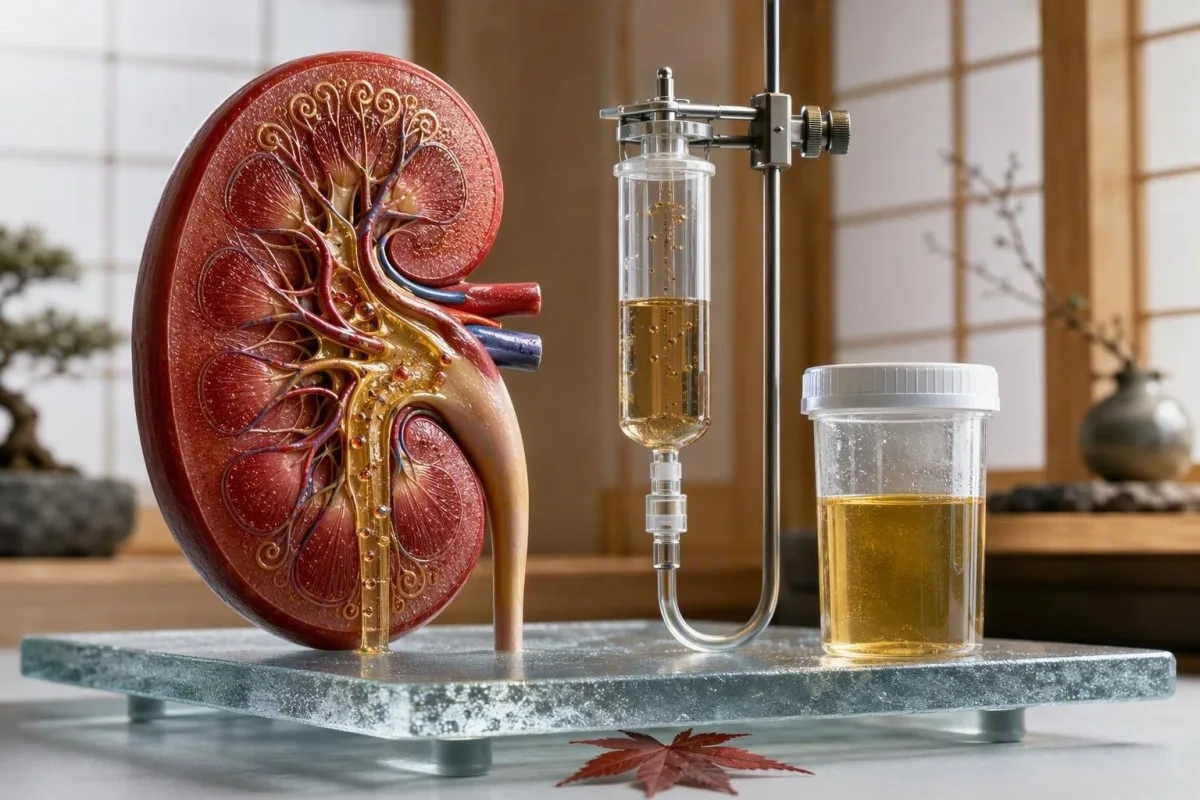
SIADH - бул үлгү диагнозу, бир гана анормалдуу жыйынтык эмес. Кан жана заара анализинин натыйжалары, дары-дармектер, калкан безинин иштеши, кортизол жана көлөмдүн абалы менен бирге каралат.


- Чыныгы гипотоникалык гипонатриемия сывороткадагы натрийдин 135 ммоль/л төмөн экендигин жана сыворотканын осмолялдык анализинин адатта 275 мОсм/кг төмөн экендигин билдирет.
- SIADH үчүн зааранын осмолялдык анализи сыворотканын осмолялдык анализи төмөн болгондугуна карабастан, 100 мОсм/кг жогору, бул бөйрөктөр заараны суюлтушу керек болгондо сууну кармап турганын көрсөтөт.
- Несептегі натрий 30 ммоль/л жогору болгондо, диуретиктер, бөйрөк үстүндөгү бездердин жетишсиздиги, калкан безинин оорусу жана клиникалык жактан көрүнүп турган суюктуктун азайышы четке кагылгандан кийин гана SIADHды колдойт.
- Суусуздануу үлгүсү адатта зааранын концентрациясы жогору, заарадагы натрий 30 ммоль/л төмөн, мочевина же BUN жогорулаган жана айлануучу көлөмдүн азайышынын белгилери байкалат.
- Бөйрөк үстү безинин жетишсиздиги SIADHга дээрлик окшош көрүнүшү мүмкүн, ошондуктан эртең мененки кортизолдун төмөндүгү же күмөндүү натыйжа SIADH диагнозу коюлганга чейин шашылыш клиникалык байкоону талап кылат.
- Катуу симптомдор талма, башаламандык, кайталап кусуу же эс-учун жоготуу сыяктуу белгилери бар натрийдин төмөндүгү шашылыш жардамды талап кылат; дарылоо онлайн интерпретацияны күтпөшү керек.
- Коопсуздукту оңдоо маанилүү: өнөкөт гипонатриемияда, серумдагы натрийдин деңгээли, түздөөчү демиелинизациянын жогорку тобокелдигине кабылган бейтаптар үчүн, 24 сааттын ичинде 8 ммоль/л ашпашы керек.
- Убакыт маанилүү анткени вена ичине туз эритмесин куюу, диуретик дозасы же бир нече литр суу бир нече сааттын ичинде заарадагы натрийди жана осмолялдуулукту өзгөртө алат.
Эмне үчүн SIADH үчүн кан жана заараны чогуу анализдоо керек
A SIADH кан анализи үлгүсү болуп саналат: төмөн серумдагы натрий, төмөн өлчөнгөн серум осмолялдуулугу менен бирге, өтө топтолгон жана салыштырмалуу натрийге бай заара менен коштолот. Практикалык жактан алганда, денеде натрийге караганда ашыкча суу бар, анткени антидиуретикалык гормондун активдүүлүгү нормалдуу өчпөйт; жалгыз натрийдин мааниси муну далилдей албайт.
Серумдагы натрий төмөн 135 ммоль/л гипонатриемияны аныктайт, бирок натрий - бул жалпы денедеги натрийдин өлчөмү эмес, концентрация. Адам суюктуктун кармалышынан, туздун жоголушунан, жогорку глюкозадан, лабораториялык артефакттан же алардын аралашмасынан улам натрийи төмөн болушу мүмкүн; биздин колдонмо төмөн натрий симптомдору боюнча колдонмобуз симптомдордун оордугу көбүнчө түшүүнүн ылдамдыгына караганда, так санга көбүрөөк байланыштуу экенин түшүндүрөт.
Биринчи пайдалуу бутак - өлчөнгөн серум осмолялдуулугу: 275 мОсм/кг дан төмөн гипотоникалык гипонатриемияны көрсөтөт, бул SIADH каралат. Доктор Томас Клейндин клиникалык эрежеси жөнөкөй: глюкозаны, триглицериддерди, жалпы белокту жана идеалдуу түрдө өлчөнгөн осмолялдуулукту текшергенге чейин эч качан негизги метаболизм панелинде SIADH белгисин койбоңуз.
Кантести - бул AI кан анализи анализатору натрий, глюкоза, мочевина, креатинин жана жупташкан зааранын жыйынтыктарын бир физиологиялык көйгөй катары карайт, алар бир катар белгилер эмес. Биздин кароолорубузда эң кооптуу ката - 122 ммоль/л натрий болгондо, бирок отчетто зааранын изилдөөлөрү же симптом тарыхы жок болгондо тынчтандыруу; биздин клиникалык колдонуу учурларыбыз контексттин жоголушу кийинки кадамды кантип өзгөртөрүн көрсөтөт.
SIADH чындыгында эмнени билдирет
SIADH - бул антидиуретикалык гормондун секрециясынын туура эмес синдрому, тарыхта антидиуретикалык гормондун секрециясынын туура эмес деп аталган. Синдром дары-дармектерден, жүрөк айлануудан, өпкө же борбордук нерв системасынын бузулушунан, оорудан, операциядан кийинки стресстен жана кээде залалдуу шишиктен келип чыгышы мүмкүн; лабораториялык үлгү сууга туруштук берүүнү аныктайт, бирок негизги себебин эмес.
Сывороткадагы натрий жана осмолялдык: суунун ашыкча болушун тастыктоо
Серум осмолялдуулугу 275 мОсм/кг дан төмөн, натрий 135 ммоль/л ден төмөн болгондо гипотоникалык гипонатриемияны тастыктайт, бирок ал өзү эле SIADHды аныктабайт. Кадимки же жогорку осмолялдуулук клиницисттерди глюкоза, маннит, контраст агенттери, спирттер же псевдогипонатриемияны көздөй багыттайт.
Көпчүлүк лабораториялар эсептелген осмолялдуулукту билдирет, көбүнчө 2 × натрий + глюкоза + мочевина ммоль/л катары бааланат, бирок өлчөнгөн осмолялдуулук диагноз так эмес болгондо артыкчылыктуу. Өлчөнгөн жана эсептелген маанилердин ортосундагы маанилүү айырма өлчөнбөгөн осмолаларды ачып бериши мүмкүн; бул натрийдин натыйжасы клиникалык жактан реалдуу болуп, SIADHды чагылдырбашынын бир себеби.
Глюкоза болжол менен жогору 13.9 ммоль/л (250 мг/дл) клеткалардан плазмага суунун агымынан улам ченемдеги натрийди төмөндөтөт. Кенен колдонулган коррекция 5,6 ммоль/л (100 мг/дл) глюкозадан 5,6 ммоль/л жогорулаган сайын болжол менен 1,6-2,4 ммоль/л натрийди кошот, бирок клиницисттер өтө жогорку глюкозадагы так фактор боюнча макул эмес.
Өтө жогорку триглицериддер же парапротеиндер, косметикалык иондук-селективдүү анализдер аркылуу псевдогипонатриемияны жаратышы мүмкүн, ал эми ченемделген осмолялдык кадимки бойдон калат. Натрийдин жыйынтыгын салыштырыңыз негизги метаболизм панелин жана лабораториянын тике же тике эмес электродду колдонгондугун сураңыз, суу балансынын бузулушун болжолдогонго чейин.
SIADH үчүн зааранын осмолялдык анализи: бөйрөккө байланыштуу өзгөчө жагдай
Гипотоникалык бейтапта 100 мОсм/кг жогору зааранын осмолялдыктары антидиуретикалык гормондун активдүүлүгү бар экенин билдирет. SIADHде зааранын осмолялдыктары көбүнчө 200-600 мОсм/кг болот, бирок эч кандай бир заара баасы диагноз коюуга болбойт.
Заара осмолярдуулугу 100 мОсм/кг же андан аз дээрлик максималдуу суюлтулган заараны билдирет жана SIADHди күмөндүү кылат. Бул көрүнүш негизги полидипсияга же төмөн туздуу тамак-ашка туура келет, мында сууну ичүү бөйрөктүн эркин сууну чыгаруу жөндөмүнөн ашып кетет; бул өзгөчө аз протеин жана туз жеген адамдарда актуалдуу.
Бул жерде карама-каршылыктуу ой бар: концентрленген заара автоматтык түрдө суусузданууну билдирбейт. Гиповолемия да, SIADH да антидиуретикалык гормонду жогорулатат, бирок суусуздануу кан айланууну сактоо үчүн туура жогорулайт, ал эми SIADH клиникалык жактан жетиштүү эффективдүү артериялык көлөмгө карабастан жогорулайт.
Европалык гипонатриемия боюнча жетекчилик зааранын осмолялдыктарын эрте дискриминатор катары сунуштайт, анткени көлөмдү физикалык баалоо көбүнчө ишенимсиз (Spasovski et al., 2014). Биздин терең түшүндүрмөбүздү окуңуз Несеп осмолялдылығының талдауы эгер сиздин отчетуңузда мОсм/кг колдонулса, дипстик-спецификалык оордукка караганда.
Бир заара үлгүсү эмне үчүн адаштырышы мүмкүн
Кусуу басаңдагандан, оору басылгандан же себепкер дары токтотулгандан кийин зааранын осмолялдыктары тез төмөндөшү мүмкүн. Эгерде заара вена ичине берилген суюктуктан, циклдик диуретиктерден кийин же кан үлгүсүнөн кийин бир нече саат өткөндөн кийин чогултулган болсо, мен аны далил катары эмес, белги катары карайм.
Заарадагы натрий: SIADH vs. суусуздануу жана натыйжалуу көлөмдүн аздыгы
30 ммоль/л жогору заара натрий SIADHти гипотоникалык гипонатриемияда, эгерде диеталык тузду алуу кадимкидей болсо жана диуретиктер жок болсо, колдойт. 30 ммоль/л төмөн заара натрий бөйрөк натрийди сактоону кусуу, ич өткөк, тердөө, жүрөк жетишсиздиги, цирроз же чыныгы суусуздануудан көбүрөөк көрсөтөт.
Жөнөкөй SIADHде бөйрөктөр натрийге умтулбайт, ошондуктан заара натрий көбүнчө 30 ммоль/лдан жогору жана 60 ммоль/л ашып кетиши мүмкүн. Заара көбүнчө төмөн болот, ал эми серумдук заара кислотасы 4 мг/дл (0,24 ммоль/л) төмөн болушу мүмкүн, анткени жеңил көлөмдү кеңейтүү заара кислотасынын клиренсин жогорулатат.
Гидрохлоротиазид ичип жүргөн 68 жаштагы адам ашказан вирусунан кийин 55 ммоль/л заара натрийи жана концентрленген заарага ээ болушу мүмкүн; бул SIADHди аныктабайт. Тиазид менен байланышкан гипонатриемия ар бир классикалык лабораториялык өзгөчөлүгүн туурап алышы мүмкүн, ошондуктан дары-дармектердин тизмеси административдик деталь эмес, диагностикалык маалымат болуп саналат.
Заара натрий диуретиктерден кийин, өнүккөн бөйрөк оорусунда же өтө төмөн диеталык натрий менен азыраак ишенимдүү. Аны креатинин, заара менен жупташтырыңыз жана электролиттер панели 30 ммоль/л чекинин ордуна катаал чек катары карабастан.
Заарадагы зааранын фракциялык экскрециясы
Заарадагы зааранын жогорулаган фракциялык экскрециясы 12% SIADH колдой алат, айрыкча диуретиктер зааранын натрийин жашырганда. Ал адатта SIADH оңдолгондон кийин нормалдашат, ал эми бөйрөктүн тузду жоготуучу абалдары аны жогорулатып жибериши мүмкүн; бул адистик аймак, бирок окуя дал келбегенде пайдалуу болушу мүмкүн.
Лабораториялык тесттерде суусуздануу SIADHдан кантип айырмаланат
Суусуздануу адатта зааранын натрийин төмөндөтүп, креатининге салыштырмалуу зааранын көбөйүшүн жана көлөмдүн жоголушунун клиникалык белгилерин пайда кылат. SIADH да көбүнчө заараны коюуртат, бирок бейтаптар адатта клиникалык жактан эуволемиялык болушат жана бөйрөктүн бирдей тузду сактоочу реакциясы жок.
Кусуу, диарея же катуу тердөө менен, бөйрөк адатта заарадагы натрийди төмөндөтөт 20-30 ммоль/л төмөн ал эми зааранын осмолялдуулугу 100 мОсм/кг жогорулайт. Заара креатининге караганда пропорционалдуу эмес түрдө көбөйүшү мүмкүн, бирок бул катыш белоктун тамактануусуна, ичеги-карындын кан кетишине, стероиддерге жана боордун иштешине таасир этет, ошондуктан ал аныктоочу эмес, колдоочу болуп саналат.
SIADH учурунда кан басымы жана текшерүү кадимкидей көрүнүшү мүмкүн, бирок майда-барат табылгалар маанилүү: ортостатикалык симптомдор жок, былжыр чел кургак эмес, перифериялык шишик жок жана ичеги-карындын күчтүү жоготуусу жок. Мен бейтаптарды заарасы караңгы болгондуктан эле "суусузданган" деп аташканын көрдүм; зааранын түсү натрий физиологиясынын начар көрсөткүчү, анткени биздин кара заара боюнча колдонмо талкуулайт.
Тандалган байкоо жүргүзүлгөн шарттарда этияттык менен изотоникалык туз эритмесинин сынагы жардам берет: гиповолемиялык гипонатриемия көлөм антидиуретикалык гормонду басканда жакшырат. SIADH учурунда туз эритмеси натрийди көтөрө албай калышы мүмкүн же заара инфузияга караганда алда канча коюу болгондо аны начарлатышы мүмкүн; ал эч качан үй эксперименти болбошу керек.
Эмне үчүн туз эритмеси SIADHди начарлатышы мүмкүн
0,9% туз эритмесинин бир литри 154 ммоль натрийди камтыйт, бирок 600 мОсм/кгда заара чыгарган бөйрөк натрийди бөлүп чыгарып, сууну пропорционалдуу түрдө көбүрөөк кармап калышы мүмкүн. Бул "десалинация" эффекти заарадагы натрий жана калийдин кандагы натрийге карата жогору болгондо эң ыктымалдуу.
Бөйрөк үстүндөгү бездердин жетишсиздиги: клиницисттер SIADH сыяктуу абалды четке кагышы керек
Адренал жетишсиздиги төмөнкү натрий, төмөнкү кан осмолялдуулугу, 100 мОсм/кг жогору заара осмолялдуулугу жана 30 ммоль/л жогору заара натрийин пайда кылышы мүмкүн—дээрлик SIADH сыяктуу эле. Ошондуктан кортизолду баалоо SIADHдин коопсуз текшерүүсүнүн бир бөлүгү болуп саналат, айрыкча чарчоо, салмактын жоголушу, кан басымынын төмөндөшү, гиперкалиемия же стероиддерди колдонуу учурунда.
Эртең мененки кан кортизолу болжол менен жогору 15-18 микрограмм/дл (414-497 нмоль/л) адатта клиникалык жактан маанилүү адренал жетишсиздикти жагымсыз кылат, тесттин жана чөйрөнүн жардамында. Төмөнкү маанилер 3-5 микрограмм/дл (83-138 нмоль/л) тынчсыздандырат, ал эми орточо натыйжалар көбүнчө божомолдоонун ордуна ACTH стимуляциялык тестти талап кылат.
Негизги адренал жетишсиздиги көбүнчө калийдин жогору болушуна алып келет, анткени альдостерон жетишсиз, бирок экинчилик адренал жетишсиздиги нормалдуу калийге ээ болуп, оор гипонатриемияны пайда кылышы мүмкүн. Механизм - кортизолдун жетишсиздиги жөн гана туз жоготуу эмес, антидиуретикалык гормондун бөлүнүп чыгышын жогорулатат.
2013-жылдагы адистер тобу Вербалистин жетекчилиги астында SIADHди чечүүдөн мурун адренал жетишсиздикти четке кагууну сунуштайт (Verbalis et al., 2013). Эгерде бул мүмкүнчүлүк сиздин отчетуңузда болсо, биздин серебиз Аддисон оорусунун лабораториялык белгилери тез клиникалык кароо үчүн максаттуу суроолорду даярдоого жардам берет.
Стероиддик дары-дармектер тестирлөөнү татаалдатат
Преднизолон, гидрокортизон жана кээ бир инъекциялык стероиддер кортизолдун чечмелөөсүн өзгөртүп, бөйрөк үстүндөгү бездин огуна таасир этиши мүмкүн. "Таза тест алуу" үчүн дайындалган стероиддерди токтотпоңуз; күтүлбөгөн токтотуу бөйрөк үстүндөгү бездин кризисин жаратышы мүмкүн.
Калкан безинин анализи: гипотиреоз натрийдин төмөндүгүн кантип түшүндүрөт
Катуу гипотиреоз сууну бөлүп чыгарууну начарлатышы мүмкүн, бирок кадимки клиникалык гипотиреоз сейрек учурда маанилүү гипонатриемияны түшүндүрөт. SIADH диагнозун коюудан мурун TSH жана эркин T4 текшерилет, анткени калкан безинин оор жетишсиздиги дарыланат жана башка себептер менен бирге болушу мүмкүн.
Клиникалык жактан маанилүү гипотиреоиддик гипонатриемия, айрыкча, эркин T4, брадикардия, гипотермия же жүрөк чыгаруунун азайышы менен болгон микседема физиологиясында эң ыктымалдуу. TSH 6 мIU/L жана нормалдуу эркин T4 кадимки көрүнүш жана натрий 121 ммоль/л үчүн ыңгайлуу түшүндүрмө болбошу керек.
Kantesti AI — бул AI кан анализинин жыйынтыгы платформасы TSH жана эркин T4 менен натрий, бөйрөк функциясы жана дары-дармектерди кабыл алуу убактысын салыштырат, анткени белгиленген TSH натыйжасы көбүрөөк шашылыш бөйрөк үстүндөгү же дары-дармекке байланыштуу себептен алаксытып кетиши мүмкүн. Нормалдуу TSH борбордук гипотиреозду жокко чыгарбайт; нормалдуу эмес TSH менен эркин T4 төмөндөшү башка жолду талап кылат, бул биздин макалабызда түшүндүрүлөт нормалдуу TSH менен төмөн эркин T4.
Калкан безинин алмаштыруучу терапиясы тезирээк натрийди дарылоо катары эмес, такталган калкан безинин көрсөткүчтөрү боюнча жөнгө салынышы керек. Менин тажрыйбамда, натрий көбүнчө чыныгы сууну кармап туруучу айдоочу - жүрөк айлануу, дары-дармектер, кортизолдун жетишсиздиги же оору - чечилгенден кийин гана жакшырат.
Гипофиздин оорусу текшерүүнү өзгөртөт
Баш оору, көрүү талаасынын симптомдору, аз либидо, түшүнүксүз төмөн кан басымы же гипофиздин бир нече гормондорунун төмөндөшү борбордук гипофиз оорусуна шектенүүнү жаратат. Бул учурда, левотироксинди баштоодон мурун кортизолду текшериңиз, анткени калкан безинин гормону кортизолдун клиренсин жогорулатышы мүмкүн.
Кош бойлуулук, улгайган курак жана дененин өлчөмүнө жараша SIADH анализинин өзгөчөлүктөрү
Кош бойлуулук нормалдуу осмотикалык чекти жана кандагы натрийди болжол менен 4-5 ммоль/л төмөндөтөт, ошондуктан 130 ммоль/лге жакын натрий кош бойлуулуктун башында физиологиялык болушу мүмкүн, бирок дагы эле контекстти талап кылат. Улгайган адамдарда дары-дармектерге байланыштуу гипонатриемиянын риски жогорулайт жана көбүнчө чаңкоо эмес, жыгылып калуу же баш аламандык менен байкалат.
Кош бойлуулуктун татаалдашпаган мезгилинде кандагы осмолалдуулук, адатта, тегерегинде төмөндөйт 5-10 mOsm/kg жана натрий 130-134 ммоль/лге жакын болушу мүмкүн, анткени осмостат кайра орнотулат. 130 ммоль/лден төмөн натрий, неврологиялык симптомдор, гипертония, боордун аномалиялары же протеинурия нормалдуу кош бойлуулук өзгөрүүсү катары четке кагууну эмес, шашылыш акушердик баалоону талап кылат.
75 жаштан ашкан адамдарда SSRI, тиазиддер, карбамазепин, десмопрессин жана аз туздуу диеталар көп учурда бири-бирине дал келет. Базалык когнитивдик жөндөмдүүлүк алсыз болгондо 5 ммоль/л гана натрийдин төмөндөшү маанилүү болушу мүмкүн; басуу туруксуздугу жана жыгылып калуу байкалган биринчи белгилер болушу мүмкүн.
Бөйрөк чыпкалоо кош бойлуулук учурунда табигый түрдө өзгөрөт жана чечмелөө кош бойлуулуктан кабардар болгон шилтемелерди колдонушу керек; биздин колдонмо кош бойлуулук eGFR маанилери отчетто берилген eGFR кош бойлуулук учурунда көп учурда тастыкталбаганын түшүндүрөт. Суюктукту чектөө кош бойлуулук жана алсыздык учурунда жекече болушу керек, жалпы SIADH баракчасынан көчүрүлбөстөн.
Дене салмагынын аздыгы анча маанилүү эмес детал эмес
45 кг салмактагы адам 100 кг салмактагы адамга караганда азыраак жалпы дене суусуна ээ, ошондуктан бирдей суу жүгү же дары-дармек дозасы чоңураак натрийдин өзгөрүшүнө алып келиши мүмкүн. Алсыз пациенттерде натрий тез өзгөрсө, физиологиялык резервдер да аз болот.
SIADHга окшош же аны пайда кылуучу дары-дармектердин таасири
Тиазиддик диуретиктер, SSRI, SNRI, карбамазепин, окскарбазепин, десмопрессин жана кээ бир антипсихотиктер гипотоникалык гипонатриемиянын кеңири таралган дары-дармек себептери болуп саналат. Айрымдары чыныгы SIADH физиологиясын жаратат, ал эми тиазиддер бөлүп чыгаруунун бузулушу жана натрий жоготуу аркылуу SIADHди туурай алышат.
Тиазид менен байланышкан гипонатриемия көбүнчө биринчи 2 жума баштагандан же дозаны көбөйткөндөн кийин башталат, бирок айыкпаган оору, тамак-аштын азайышы же сууну көбүрөөк ичүү кошулганда айлар өткөндөн кийин да пайда болушу мүмкүн. Циклдик диуретиктер бөйрөктүн концентрациялоо жөндөмүн азайтканына байланыштуу бул өзгөчө үлгүгө алып келиши азыраак.
SSRI менен байланышкан гипонатриемия көбүнчө улгайган адамдарда, аз салмактуу адамдарда жана диуретиктерди ичкендерде кездешет. Жаңы антидепрессант сөзсүз эле күнөөлүү эмес, бирок убакыт ырааттуулугу окуу китебинин тизмесинен маанилүүрөөк: акыркы 30 күндүн ичиндеги ар бир башталышын, токтотулушун жана дозанын өзгөргөндүгүн документтештириңиз.
Дарыгердин көрсөтмөсүн билген дарыгерсиз титирөөгө каршы, психиатриялык, гормоналдык же кан басымына каршы дары-дармектерди токтотпоңуз. Цианиддин төмөндүгү диуретиктерди колдонуу жана кусуу менен коштолушу мүмкүн; биздин төмөн цианиддин натыйжалары жөнүндөгү түшүндүрмөбүз жалпы электролиттик үлгүсүн айырмалоого жардам берет.
Рецептсиз сатылуучу кошумчалар
Түнкү заара үчүн колдонулган десмопрессин өзгөчө көңүл бурууга татыктуу, анткени дозадан кийин эркин ичүү суунун күтүлбөгөн кармалышына алып келиши мүмкүн. NSAIDтер, айрыкча мезгил-мезгили менен ооруганда, сезгич адамдарда антидиуретикалык гормондун ишин күчөтүшү мүмкүн.
Аз туздуу заттарды алуу жана суунун ашыкча болушу: SIADH эмес жагдайлар
Негизги полидипсия жана диетадагы эриген заттын өтө төмөн болушу, классикалык SIADHдан айырмаланып, көбүнчө 100 мОсм/кг же андан аз зааранын осмолялдуулугуна алып келет. Айырмачылык маанилүү, анткени катуу суюктукту чектөө гана жетишсиз тамактанууну, алкоголдук ичимдиктерге байланыштуу ооруну же эриген заттын кириши калыбына келгенде коркунучтуу тез оңдоону өткөрүп жибериши мүмкүн.
Бөйрөк заараны чыгаруу үчүн эриген затты - негизинен белоктун мочевинасынан жана электролиттерден - талап кылат. Күнүнө 250 мОсм эриген зат менен, бир адам 100 мОсм/кгда 2,5 л заара чыгара алат, бирок эгер антидиуретикалык гормон заараны 250 мОсм/кгда кармап турса, 1 л гана болот.
Негизги полидипсияда заара көбүнчө өтө суюлтулган болот жана тарыхы 4-6 л күнүнө суюктукту ичүү жөнүндө кабарлашы мүмкүн, бирок эстеп калуу кемчиликсиз. Төмөн эриген зат гипонатриемиясында, мочевина аз болушу мүмкүн жана диеталык тарых жакында начар белок жана тузду ичүү мезгилин көрсөтүшү мүмкүн.
Кетондар, аз мочевина жана салмактын жоголушу SIADH эмес, жетишсиз тамактанууну же узакка созулган орозону билдириши мүмкүн. Биздин макаланы караңыз заара кетондору эгер кетоз бар болсо; диабеттик кетоацидоз өзүнчө өзгөчө кырдаал болуп саналат жана натрийди интерпретациялоону бузушу мүмкүн.
Азыктандыруунун кайрадан башталышындагы коркунуч
Тамактануу калыбына келгенде, бөйрөк эриген затты чыгаруу жөндөмүн калыбына келтирип, натрий күтүлгөндөн тезирээк көтөрүлүшү мүмкүн. Оорукананын командалары жогорку тобокелдеги бейтаптарда натрийди тез-тез, кээде активдүү оңдоо учурунда ар 2-4 саат сайын көзөмөлдөп турушат.
Заара алуу убактысы, вена ичине суюктук куюу жана лабораториялык каталар
Жүрөк жетишсиздиги, цирроз жана өнүккөн бөйрөк оорулары негизги SIADH эмес, натыйжалуу артериялык көлөмдүн төмөндүгү аркылуу гипонатриемияны пайда кылат. Бул шарттар дагы эле концентрацияланган заараны пайда кылышы мүмкүн, бирок шишик, азайган перфузия, аз альбумин же чыпкалоонун бузулушу, адатта, жалпы сүрөттү өзгөртөт.
Жүрөк жетишсиздигинде жана цирроздо организмде ашыкча суу жана натрий болушу мүмкүн, бирок артериялык толтуруунун жетишсиздигин сезип, антидиуретикалык гормонду жана натрийди кармап туруучу жолдорду активдештирет. Заарадагы натрий көбүнчө төмөн болот 30 ммоль/л диуретиктер же бөйрөк жаракаты натыйжаны бузбаса.
Бөйрөк оорусунун өнүккөн стадиясы суунун бөлүнүп чыгышын жана зааранын концентрациясын чектейт, ошондуктан зааранын осмолялдуулугу плазманын осмолялдуулугуна жакын болушу мүмкүн, болжол менен 250-350 mOsm/kg. Бул кырдаалда, классикалык SIADH прапорщиктер тактыгын жоготот жана нефрология боюнча кеңеш кайталап текшерүүдөн артык.
Протеинурия, цилиндрлер, альбумин, креатинин тренди жана шишиктер терс эмес; алар физиологияны аныктоого жардам берет. Биздин практикалык жетекчилик зааранын спецификалык гравитациясы шишик баалоо комплекстүү бөйрөк ишинде зааранын осмолялдуулугун өлчөөнүн ордун баса албастыгын түшүндүрөт.
Шишик коркунучту четке какпайт
Шишиги бар адам дагы эле натрий 120 ммоль/л төмөн болгондо оор неврологиялык симптомдорду иштеп чыгышы мүмкүн. Суюктуктун статусу себебин түшүндүрөт, бирок курч симптомдуу гипонатриемиянын шашылыштыгын төмөндөтпөйт.
Үлгү алуу убактысы, IV суюктуктар жана лабораториялык каталар
Кан жана заара IV суюктуктардан мурун жана бири-биринен бир нече сааттын ичинде чогултулушу керек, анткени дарылоо SIADH лабораториялык жыйынтыктарын тез өзгөртө алат. Кечиктирилген заара үлгүсү гипонатриемиянын себебин эмес, терапияга жоопту сүрөттөй алат.
Туздун бир литри, фуросемиддин дозасы, жүрөк айланууга каршы дарылоо, ооруну басаңдатуу, же десмопрессинди токтотуу зааранын чыгышын жана осмолялдуулугун бир нече сааттын ичинде өзгөртө алат. Так чогултуу убакыттарын, акыркы суюктукту алууну, IV терапияны жана дары-дармектерди жазыңыз; бул жөнөкөй деталдар көбүнчө карама-каршы келген SIADH лабораториялык жыйынтыктарын чечет.
Гемолиз, адатта, жалган төмөн натрийди пайда кылбайт, бирок чоң гиперлипидемия, гиперпротеинемия жана үлгүлөрдү булгоо мүмкүн. Клиникалык түшүндүрмөсү жок кечээки көрсөткүчтөн кескин айырмаланган натрий натыйжасы кайрадан текшерүүгө же түз иондук-селективдүү электродду өлчөөгө алып келиши керек, таблица аркылуу диагноз коюуга эмес.
Kantesti AI даталарды салыштырып, мүмкүн эмес өзгөрүүлөрдү белгилейт, бирок ал жазылбаган туз инфузиясын же өткөрүлүп жиберилген дозаны көрө албайт. Колдонуңуз кан анализинин убакыт тилкеси үчүн ар бир жыйынтыктын жанына ооруну, көнүгүүлөрдү, орозону, суюктукту алууну жана дары-дармектерди белгилөө үчүн.
Зааранын салыштырмалуу салмагы осмолялдуулук эмес
Салыштырмалуу салмагы бөлүкчөлөрдүн массасын, ошондой эле концентрациясын чагылдырат жана глюкоза, протеин же контраст каражаттары менен бузулушу мүмкүн. 1.020 маани ар бир пациентте белгилүү бир mOsm/kg мааниге ишенимдүү которулбайт.
Клиницисттер көбүнчө заказ кылган SIADH анализинин негизги этаптары
Коопсуз SIADH баалоо, адатта, кан натрий, калий, глюкоза, мочевина, креатинин, өлчөнгөн кан осмолялдуулугу, заара осмолялдуулугу, заара натрий, TSH, эркин T4 жана эртең мененки кортизолду камтыйт. Максат - гипотоникалык гипонатриемияны тастыктоо жана SIADH этикеткасын коюудан мурун кайтарылуучу окшошторду четке кагуу.
Кошумча тесттер контекстке жараша болот: заара кислотасы, боор маркерлери, липид профили, жалпы протеин, ACTH, көкүрөккө сүрөткө тартуу, мээге сүрөткө тартуу же дары-дармектерди кароо ылайыктуу болушу мүмкүн. 126 ммоль/л натрий менен эуволемиялык көрүнгөн пациентте, бир эле учурда осмолялдуулук жупу жана кортизол, адатта, кеңири, фокусу жок тестирлөөгө караганда көбүрөөк маалымат берет.
Хорн жана Зитсенин көрсөтмөлөрүн салыштыруу көлөмүн текшерүү гана чектелген диагностикалык тактыкка ээ экенин баса белгилейт жана заарага биринчи биохимиялык ыкманы (Хорн жана Зитсе, 2017) колдойт. Мына ушундан улам, кадимкидей көрүнгөн текшерүү 550 mOsm/kg заара осмолялдуулугун жана 260 mOsm/kg кан осмолялдуулугун четке какпашы керек.
Доктор Томас Клейн ар бир жыйынтык барагынын, анын ичинде чогултуу убактысы, шилтеме аралыгы жана дары-дармектердин тизмесин, кабыл алуудан мурун сүрөткө тартууну сунуштайт. Биздин ИИ медициналык отчеттун коопсуздук тизмеси чечмелөөгө муктаж болгон булактын чоо-жайын кантип сактап калууну түшүндүрөт.
Сүрөттөө медициналык текшерүү качан актуалдуу болгондо
Жаңы, туруктуу SIADH дары-дармексиз же курч оорусуз пайда болгондо, көкүрөккө сүрөткө тартууну, айрыкча улгайган адамдарда тамеки чегүү же дем алуу симптомдору менен, талап кылынышы мүмкүн. Сүрөттөө тарыхы жана экспертизасы менен багытталат; ал ар бир натрий үчүн 132 ммоль/л сөзсүз түрдө талап кылынбайт.
Дарылоо сандары эмнени билдирет жана эмне үчүн натрийди оңдоо кооптуу болушу мүмкүн
Катуу симптомдуу гипонатриемия ооруканада кылдаттык менен көзөмөлдөнгөн гипертоникалык туз эритмеси менен дарыланат, ал эми өнөкөт SIADH башкаруу себебин жана суу балансынын контролун багыттайт. Коркунуч эки тараптуу: дарыланбаган мээнин шишиши жана өтө тез оңдоо экөө тең туруктуу неврологиялык жаракатка алып келиши мүмкүн.
Гипонатриемиядан улам талма, кома, терең баш аламандык же катуу кусуу үчүн, нускамалар көбүнчө колдонулат 100-150 мл 3% туз эритмеси аралыктык болус катары кайталанган натрий текшерүүлөрү менен. Баштапкы максат - мээнин шишигин азайтуу үчүн 4-6 ммоль/л кичинекей көтөрүлүш, дароо нормалдаштыруу эмес.
Өнөкөт гипонатриемия үчүн көптөгөн клиницисттер оңдоону чектешет 8 ммоль/лден ашык 24 саатта көтөрүү алкоголизм, тамактанбоо, боордун оор оорулары, гипокалиемия же өтө төмөн баштапкы натрийди камтыган осмотикалык демиелинизациянын жогорку коркунучу бар адамдар үчүн. Кээ бир нускамалар төмөнкү тобокелдиктерге кирген бейтаптар үчүн биринчи күнү 10 ммоль/л жол берет, бирок мен этият болууну жактырам, анткени антидиуретикалык гормон азайганда сан күтүүсүз көтөрүлүшү мүмкүн.
Суюктукту чектөө көбүнчө туруктуу SIADH үчүн күнүнө 800-1000 мл тегерегинде башталат, бирок анын ийгилиги зааранын концентрациясына жана эритменин киришине жараша болот. Заара, туз менен циклдик диуретиктер же вазопрессин антагонисттери адистердин чечимдери; Kantesti бул AI менен иштеген кан анализин талдоо куралы актуалдуу үлгүсүн белгилөө үчүн иштелип чыккан, дарылоо же шашылыш жардамды алмаштыруу үчүн эмес. Биздин карап чыгыңыз техникалык клиникалык көзөмөл автоматтык чечмелөө медициналык жактан каралып жатканын эске алуу менен.
Калийди оңдоо да натрийди көбөйтөт
Калий эффективдүү осмолит болуп саналат, андыктан гипокалиемияны дарылоо тузсуз деле кандагы натрийди көбөйтүшү мүмкүн. Бул жалпы 24 сааттык оңдоо ылдамдыгын эсептөөдө оңой эле байкалбай калат.
Натрийдин төмөндүгү же мүмкүн болгон SIADH качан шашылыш медициналык жардамды талап кылат
Тез жардамга кайрылыңыз, азыр талма, эсин жоготуу, жаңы катуу баш аламандык, белгилүү уйкучулук, кайталанган кусуу, катуу баш оору же дем алуу кыйынчылыгы менен белгилүү же шектелген төмөн натрий үчүн. 120 ммоль/л азыраак натрий, эгерде симптомдор жеңил көрүнсө да, өзгөчө төмөндөө жакында болушу мүмкүн болсо, ошол эле күнү клиникалык баалоого татыктуу.
Тез арада барыңыз, тестти тапшырган клиницистке натрий үчүн 125-129 ммоль/л, жаңы дары-дармектерге дуушар болгондо, рактын дарылоосу, кош бойлуулук, бөйрөк үстүндөгү бездин симптомдору, же маанилүү төмөндөө тенденциясы. Жеке кеңеш алганга чейин атайылап кошумча суу ичпеңиз, туз таблеткаларын ичпеңиз, же бардык суюктуктарды чектебеңиз; ар бир аракет ар кандай себепти начарлатышы мүмкүн.
27-август, 2026-жылга карата, эң пайдалуу бейтаптын салымы - бул так тарых: күн сайын суюктуктар, алкоголдук ичимдиктер, жакында болгон кусуу же диарея, бардык рецепттер жана кошумчалар, IV суюктуктар, оору, жүрөк айлануу, өпкө симптомдору жана мурунку натрий баалуулуктары. Бул тарых көбүнчө кошумча обочолонгон химиялык панелге караганда, туруктуу SIADH менен убактылуу антидиуретикалык гормондун бөлүнүп чыгышын натыйжалуураак айырмалайт.
Kantesti медициналык тобу дарыгердин көзөмөлү астында үлгүгө негизделген жыйынтыктарды карайт; окурмандар ошол процесстин артындагы клиницисттерди биздин Медициналык кеңеш. Эгер натыйжалар түшүнүксүз болсо, оригиналдуу лабораториялык отчетту жана бул жупташтырылган тесттик алкакты лицензияланган клиницистке алып барыңыз, эч кандай санды өз алдынча дарылабаңыз.
Жолугушууга алып барчу суроолор
Гипонатриемия гипотоникалык экени ырасталганын, дарылоо алдында заара чогултулганын, кортизол жана эркин T4 текшерилгенин, ошондой эле дары-дармек же аз эриген заттардын тамактануусу абалдын себебин түшүндүрө алабы деп сураңыз. Бул төрт суроо дарылоону өзгөртүүчү себептерге багыттайт.
Көп берилүүчү суроолор
SIADH сунуш кылган кан анализинин жыйынтыгы кайсылар?
SIADH диагнозунун күмөн предложению болуп serum sodium 135 ммоль/л аз, serum osmolality 275 мОсм/кг аз, urine osmolality 100 мОсм/кг көп, жана urine sodium, адатта, 30 ммоль/л көп. Адам, адатта, клиникалык жактан эуволемиялык болот, эч кандай ишенимдүү суусуздануу, шишик, бөйрөк жетишсиздиги, бөйрөк үстүндөгү бездердин жетишсиздиги же катуу гипотиреоз жок. Төмөн мочевина жана serum uric acid 4 мг/дл аз, колдоо көрсөтүүгө болот, бирок алар өз алдынча диагноз коюуга мүмкүн эмес. Клиницисттер бул тесттерди дээрлик бир эле учурда чогултулган кан жана заарадан чечмелеши керек.
SIADH менен ооруган бейтаптарда зааранын осмолялдуулугу кандай болот?
SIADH учурунда зааранын осмолялдуулугу 100 мОсм/кг жогору болгону менен, сыворотканын осмолялдуулугу төмөн болот, ал эми көпчүлүк бейтаптарда 200-600 мОсм/кг чейин болот. Зааранын 100 мОсм/кг же андан аз осмолялдуулугу SIADHга каршы келет, анткени ал бөйрөк заараны туура суюлта аларын көрсөтөт. Суусуздануу да 100 мОсм/кг жогору зааранын осмолялдуулугун пайда кылышы мүмкүн, ошондуктан заарадагы натрийди жана клиникалык көлөмдү баалоо талап кылынат. Туз, диуретиктер же жүрөк айлануу дарылоодон кийин чогултулган үлгү адаштырышы мүмкүн.
Ажыратуу натрийдин төмөндөшүнө алып келиши мүмкүнбү жана SIADHге окшошпу?
Ооба, кусуу, ич өткөк, тердөө же аз тамактануудан улам пайда болгон суусуздануу зааранын концентрациясы 100 мОсм/кг жогору болгон гипотоникалык гипонатриемияга алып келиши мүмкүн. Жөнөкөй суусузданууда, бөйрөк натрийди сактап калгандыктан, заарадагы натрийдин деңгээли, адатта, 20-30 ммоль/л төмөн болот, ал эми мочевина креатининге салыштырмалуу көтөрүлүшү мүмкүн. SIADH көбүнчө заарадагы натрийдин деңгээли 30 ммоль/л жогору болуп, суюктуктун жетишсиздигинин ачык белгилери жок болот. Диуретиктер бул айырмачылыкты бүдөмүк кылышы мүмкүн, ошондуктан дары-дармектерди кабыл алуу тарыхы абдан маанилүү.
Эмне үчүн дарыгерлер SIADHден шектелгенде кортизолду текшеришет?
Кортизол текшерилет, анткени бөйрөк үстүндөгү бездин жетишсиздиги SIADH сыяктуу эле натрийдин аздыгы, сыворотканын осмолялдуулугунун төмөндүгү жана зааранын концентрациясынын үлгүсүн пайда кылышы мүмкүн. Таңкы кортизолдун болжол менен 15-18 мкг/дл жогору болушу, анализдин жана клиникалык шарттын негизинде, адатта, бөйрөк үстүндөгү бездин олуттуу жетишсиздигин жактырбайт; 3-5 мкг/дл төмөн болгон натыйжа тынчсыздандырат. Орточо баалуулуктар көбүнчө ACTH стимулдоочу тестти талап кылат. Бөйрөк үстүндөгү бездин жетишсиздигин байкабай коюу кооптуу, анткени ал суюктукту чектөө эмес, стероид алмаштырууну талап кылат.
SSRI же диуретик СНПГ анализинин жыйынтыгын жаратышы мүмкүнбү?
SSRI, SNRI, карбамазепин, окскарбазепин жана десмопрессин SIADH сымал сууну кармап турууга алып келиши мүмкүн, ал эми тиазиддик диуретиктер SIADH лабораториялык жыйынтыктарын окшоштура алат. Тиазид менен байланышкан гипонатриемия көбүнчө дарылоону баштагандан же дозасын көбөйткөндөн кийин 14 күндүн ичинде пайда болот, бирок башка оорулар аны кийинчерээк козгоп жибериши мүмкүн. Заарадагы натрий бул эки шартта тең 30 ммоль/л жогору болушу мүмкүн, ошондуктан дары-дармектердин графиги клиникалык жактан чечүүчү болуп саналат. Бейтаптар дарыгердин сунушусуз психиатриялык, талма же кан басымына каршы дары-дармектерин токтотпошу керек.
Кантип тузду аздыгын тез жана коопсуз оңдоого болот?
Өнөкөт гипонатриемияда, көптөгөн клиницисттер тамактануунун начардыгы, алкоголизм, боордун катуу оорусу, гипокалиемия же өтө төмөн натрий сыяктуу осмотикалык демиелинизация тобокелдиги жогору бейтаптар үчүн 24 саат ичинде натрийди коррекциялоону 8 ммоль/л же андан төмөн кармоону максат кылышат. Шашылыш симптомдор баштапкы 4-6 ммоль/л көтөрүлүшкө жетишүү үчүн ооруканада 3% туздуу эритменин 100-150 мл дозасын талап кылышы мүмкүн. Так максат узактыгына, симптомдорго жана тобокелдик факторлоруна жараша болот. Натрийди дарылоо кайталап кан анализин талап кылат, анткени спонтандык суу диурези коррекциянын күтүүсүз ылдамдашына алып келиши мүмкүн.
Бүгүн AI менен күчөтүлгөн кан анализин талдоону алыңыз
Дүйнө жүзү боюнча 2 миллиондон ашык колдонуучу Kantestiти заматта, так лабораториялык анализ талдоосу үчүн ишенет. Кан анализиңизди жүктөп, бир нече секунд ичинде 15,000+ биомаркерлеринин комплекстүү чечмелөөсүн алыңыз.
📚 Шилтемеленген изилдөө басылмалары
Кляйн, Т., Митчелл, С., & Вебер, Х. (2026). Аялдардын ден соолугу боюнча колдонмо: Овуляция, менопауза жана гормоналдык симптомдор. Kantesti AI медициналык изилдөө.
Кляйн, Т., Митчелл, С., & Вебер, Х. (2026). Коп тилдүү AI жардам берген клиникалык чечимдерди колдоо, Хан авасынын алдын алуу, долбоорлоо, инженерияны текшерүү жана 50,000 кан анализинин отчетторун чечмелөө боюнча реалдуу дүйнөлүк жайылтуу. Kantesti AI медициналык изилдөө.
📖 Тышкы медициналык шилтемелер
⚕️ Медициналык эскертүү
Бул макала билим берүү максатында гана жана медициналык кеңеш болуп саналбайт. Диагноз коюу жана дарылоо чечимдери үчүн дайыма квалификациялуу саламаттыкты сактоо адисине кайрылыңыз.
E-E-A-T ишеним сигналдары
Тажрыйба
Дарыгер жетектеген лабораториялык чечмелөө иш процесстерин клиникалык кароо.
Экспертиза
Биомаркерлер клиникалык контекстте кандай жүрөрүнө лабораториялык медицина багыты.
Авторитеттүүлүк
Доктор Томас Клейн жазган, доктор Сара Митчелл жана профессор доктор Ханс Вебер тарабынан каралган.
Ишенимдүүлүк
Тынчсызданууну азайтуу үчүн так кийинки кадамдар менен далилге негизделген чечмелөө.