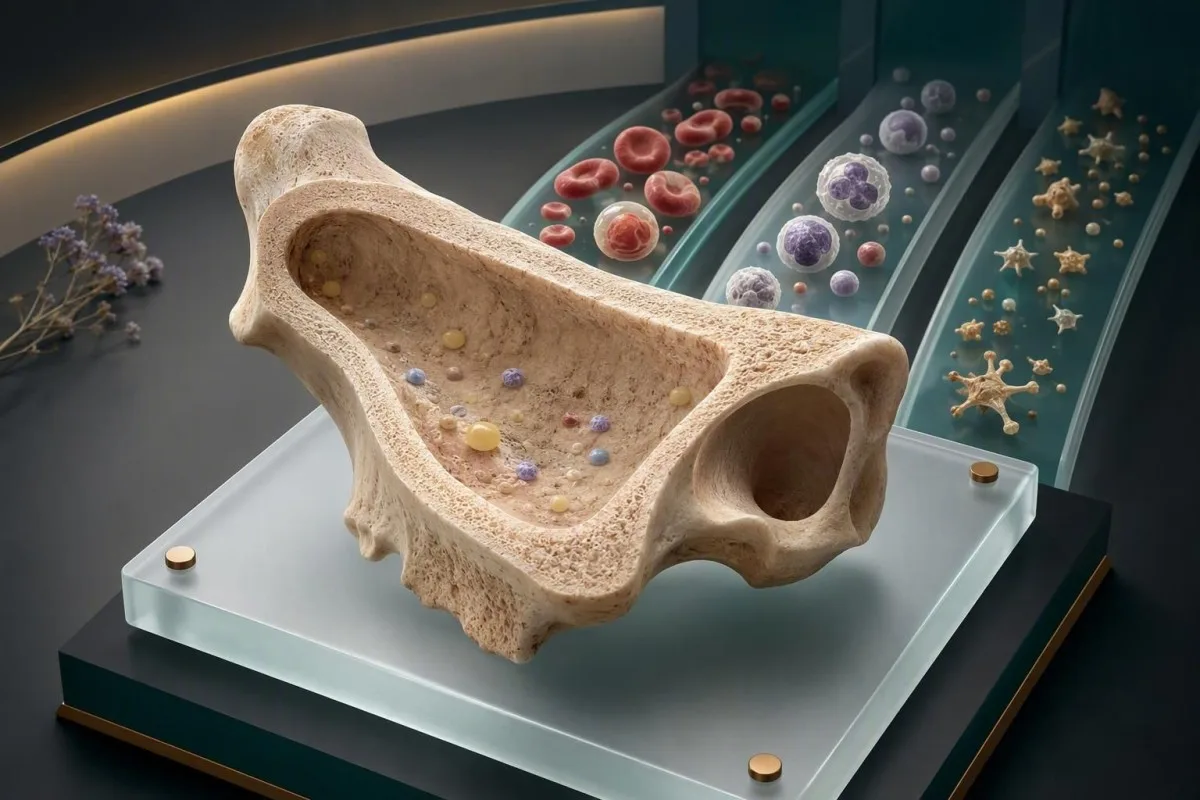
Anemia ya aplastiki kwa kawaida hutokeza ruwaza ya kushangaza ya mistari mitatu ya CBC: upungufu wa damu, seli nyeupe za damu chache, na chembechembe za damu chache na hesabu ya chini ya reticulocyte isiyolingana. Ruwaza hiyo inahitaji uthibitisho wa haraka wa kimatibabu kwa sababu hali kadhaa zinazoweza kurekebishwa na mbaya zinaweza kuonekana sawa mwanzoni.


- Pancytopenia inamaanisha seli nyekundu, seli nyeupe, na chembechembe za damu; ni ruwaza, sio utambuzi.
- Hesabu ya retikulocyte za ziada (Absolute reticulocyte count) chini ya 20 × 10⁹/L inasaidia kupungua kwa kiasi kikubwa kwa uti wa mgongo wakati upungufu wa damu upo.
- Anemia kali ya aplastiki inafafanuliwa na uti wa mgongo wa chini pamoja na angalau mbili kati ya: ANC chini ya 0.5 × 10⁹/L, chembechembe za damu chini ya 20 × 10⁹/L, au reticulocytes chini ya 20 × 10⁹/L.
- ANC chini ya 0.5 × 10⁹/L na homa ya 38.0°C au zaidi inahitaji tathmini ya dharura siku hiyo hiyo.
- Chembechembe za damu chini ya 10 × 10⁹/L hubeba hatari kubwa ya kuvuja damu kwa hiari na kwa kawaida huhitaji huduma ya haraka inayoongozwa na hospitali.
- Macrocytosis inaweza kutokea katika anemia ya aplastiki, lakini MCV zaidi ya 110 fL inapaswa kuwafanya waganga kuwatenga kwa nguvu upungufu wa B12 au folate.
- Blasts, dysplasia iliyokolezwa, seli za umbo la machozi, au schistocytes kwenye dawa huelekea mbali na upungufu wa damu usiokuwa na shida na hubadilisha uchunguzi.
- Usijitibu mwenyewe dawati la chini la mistari mitatu na chuma pekee; chuma hakirejeshi uzalishaji wa damu na kinaweza kuchelewesha uchunguzi wa haraka.
Ruwaza ya CBC ambayo inaleta wasiwasi kwa anemia ya aplastiki
An uchunguzi wa damu wa upungufu wa damu kwa kawaida huonyesha pancytopenia: hemoglobin ya chini, neutrophils za chini, na platelets za chini zinazotokea pamoja, wakati majibu ya reticulocyte yanabaki chini badala ya kulipa. Mchanganyiko huo unapaswa kusababisha ukaguzi wa dharura wa daktari, hasa ikiwa hesabu zimeanguka zaidi ya CBC moja ya awali.
Kwa watu wazima, kiwango cha kawaida cha marejeleo cha CBC ni hemoglobin kuhusu 120–155 g/L kwa wanawake wengi na 135–175 g/L kwa wanaume wengi, seli nyeupe 4.0–11.0 × 10⁹/L, na platelets 150–400 × 10⁹/L; maabara huweka mipaka yao wenyewe. Aplastic anemia hupunguza mistari yote mitatu kwa sababu malezi hayazalishi vipengele vya kutosha vya seli mpya. Kwa mwongozo wa msingi, angalia mwongozo wetu wa kile CBC inachojumuisha.
Mfumo ni wa taarifa zaidi kuliko matokeo yoyote ya chini ya pekee. Hemoglobin ya 92 g/L baada ya kupoteza damu nyingi za hedhi inaweza kuwa upungufu wa chuma, wakati hemoglobin 92 g/L pamoja na ANC 0.7 × 10⁹/L na platelets 34 × 10⁹/L ni tatizo la uzalishaji wa damu hadi utakapothibitishwa vinginevyo. Kwa uzoefu wangu wa kimatibabu, hatari sio upungufu wa damu pekee—ni maambukizi na hatari ya kuvuja damu zinazoingia kimya pamoja nayo.
Kantesti ni Mchambuzi wa mtihani wa damu wa AI ambayo husoma vipengele vya CBC kama muundo uliounganishwa, sio kama bendera tatu zisizohusiana. Mfumo wetu unaweza kusaidia kuandaa ripoti na matokeo ya awali, lakini hauwezi kugundua kushindwa kwa malezi au kuchukua nafasi ya tathmini ya haraka ya hematolojia. Kuanzia Agosti 26, 2026, cytopenia yoyote mpya ya mistari mitatu inastahili ukaguzi wa daktari halisi ndani ya siku, sio ufuatiliaji wa kawaida wa kila mwaka.
MCV inayotazama kawaida haifanyi pancytopenia kuwa hatari. Aplastic anemia ya mapema inaweza kuwa ya kawaida, ya wastani ya macrocytic, au wakati mwingine ya microcytic ikiwa upungufu wa chuma unapatikana; majibu ya malezi na smear ya pembeni mara nyingi hutoa mwelekeo zaidi kuliko MCV pekee. Kanuni ya vitendo ya Dk. Thomas Klein ni rahisi: uliza kama malezi yanajibu kabla ya kudhani maelezo ya lishe.
Kwa nini muundo mara nyingi hukosa
CBC inaweza kuashiria kila matokeo kivyake, kwa hivyo wagonjwa wakati mwingine huzingatia nambari ya chini zaidi na kupuuza kundi. Kupungua kwa platelets kutoka 260 hadi 92 × 10⁹/L, hata ikiwa bado iko juu ya kiwango cha dharura, ni maana ya kimatibabu wakati hemoglobin na neutrophils zinapungua kwa sambamba. Mitindo ya uchunguzi wa damu mara nyingi huonyesha mwelekeo huo mapema kuliko ripoti moja.
Upungufu wa damu pamoja na hesabu ya chini ya reticulocyte: kidokezo cha kutoka kwa uti wa mgongo
A hesabu ya reticulocyte ya chini kwa mtu mwenye upungufu wa damu inamaanisha kuwa malezi hayazalishi seli nyekundu za damu vya kutosha, na ni moja ya dalili muhimu zaidi zinazounga mkono upungufu wa damu. Hesabu kamili ya reticulocyte ina umuhimu zaidi kuliko asilimia ya reticulocyte kwa sababu asilimia inaweza kuonekana kuwa ya kawaida kwa udanganyifu wakati seli nyekundu za damu zote zikiwa chini.
Maabara nyingi huonyesha kiwango cha marejeleo kamili cha reticulocyte cha watu wazima karibu 25–100 × 10⁹/L, ingawa mbinu hutofautiana. Katika vigezo vya aplastic anemia kali, hesabu kamili ya reticulocyte chini ya 20 × 10⁹/L ni moja ya vipimo vya pato la chini vinavyofafanua wakati chembechembe za malezi zimepungua sana. Kina hesabu ya retikulocyte inaeleza kwa nini matokeo ya asilimia pekee yanaweza kudanganya.
Kinyume chake, kupoteza damu kwa kasi au uoshaji wa damu kwa kawaida husukuma reticulocyte juu baada ya siku kadhaa, mara nyingi juu ya 100 × 10⁹/L ikiwa usambazaji wa chuma na utendaji wa malezi uko sawa. Haptoglobin ya chini, bilirubini isiyo ya moja kwa moja inayoongezeka, na LDH iliyoinuliwa huunga mkono uoshaji wa damu; hizo ni hadithi tofauti ya kisaikolojia kutoka kwa aplasia. Tofauti ina umuhimu kwa sababu kutibu “upungufu wa damu” bila kutambua uzalishaji dhidi ya uharibifu ndivyo ucheleweshaji hutokea.
Mgonjwa niliyemwona na hemoglobin 76 g/L alikuwa na asilimia ya reticulocyte ya 1.2%, ambayo ilionekana kuwa ya kawaida hadi hesabu kamili ilipohesabiwa kwa 18 × 10⁹/L. Hiyo haikuwa majibu ya kupona. Wakati upungufu wa damu ni mkubwa, wataalamu wa matibabu wanaweza kutumia index ya uzalishaji wa reticulocyte, lakini reticulocyte kamili kwa ujumla hazina makosa kidogo katika ufuatiliaji wa kila siku.
Reticulocytes zinaweza kuwa za chini kwa muda mfupi wakati wa maambukizi makali, baada ya chemotherapy, na sumu ya pombe, au katika magonjwa ya figo yaliyokomaa, kwa hivyo matokeo haya sio maalum kwa aplastic anemia. Mapitio ya Young ya 2018 ya New England Journal of Medicine yanasisitiza kuwa utambuzi unahitaji tathmini ya malezi na kutengwa kwa njia za kurithi, kinga, sumu, na za kienyeji—sio matokeo ya reticulocyte pekee (Young, 2018).
Neutrophils za chini: nambari ya CBC inayobadilisha uharaka wa maambukizi
The hesabu kamili ya neutrofili (ANC) hutabiri hatari ya maambukizo ya bakteria na kuvu vizuri kuliko hesabu jumla ya seli nyeupe za damu. ANC chini ya 0.5 × 10⁹/L ni neutropenia kali, na homa ya 38.0°C au zaidi mara moja, au 38.0°C ikiendelea kwa saa moja, inahitaji tathmini ya dharura.
ANC huhesabiwa kama seli nyeupe zilizoongezeka kwa asilimia ya neutrophil pamoja na asilimia ya bendi. Kwa mfano, WBC 1.4 × 10⁹/L na neutrophils 40% hutoa ANC 0.56 × 10⁹/L—ni rahisi zaidi kuchukua hatua kuliko hesabu jumla pekee. Yetu mwongozo wa kikomo cha ANC inaelezea mabadiliko ya umri na ujauzito, lakini kizingiti cha 0.5 × 10⁹/L kinabaki kuwa mstari muhimu wa hatari kwa watu wazima.
Upungufu mkali wa damu wa aplastiki mara nyingi hutoa neutropenia bila ujanibishaji wenye sumu au mabadiliko ya kushoto ambayo yanaweza kuambatana na maambukizo ya bakteria. Hata hivyo, mgonjwa anaweza kuwa na kushindwa kwa marongo na maambukizo; kutokuwepo kwa hesabu ya juu ya seli nyeupe kamwe hakutoi dhana. Homa, baridi kali, kuchanganyikiwa mpya, ugumu wa kupumua, au koo linalozidi kuwa mbaya kwa kasi haipaswi kusubiri kurudia kwa CBC ya nje.
Upungufu mkali sana wa damu wa aplastiki hutumia kizingiti cha ANC hata cha chini: chini ya 0.2 × 10⁹/L. Sababu ya kutenganisha 0.2 kutoka 0.5 ni ya vitendo—kwenye hesabu hizi, vimelea vya kawaida vya mdomo na ngozi vinaweza kuwa hatari na wekundu kidogo wa ndani au usaha. Hospitalini, wataalamu wanaweza kupata tamaduni na kuanza matibabu ya kuua vijidudu kabla ya sababu haijathibitishwa kikamilifu.
Hesabu ya chini ya lymphocyte inaweza kuwepo lakini haichukui nafasi ya ANC katika maamuzi ya hatari kali. Ikiwa tofauti haipo, muulize maabara au daktari kwa hiyo badala ya kukisia kutoka kwa WBC jumla. Dalili za lymphocyte za chini zinastahili kufuatiliwa, hata hivyo kina cha neutrophil huendesha uamuzi wa siku hiyo hiyo.
Wakati homa ina maana zaidi kuliko uchapishaji wa CBC
Joto la 38.0°C kwa mtu aliye na ANC 0.4 × 10⁹/L ni la dharura hata ikiwa wanajisikia “wako sawa” na homa inapungua baada ya paracetamol. Antipyretics zinaweza kupunguza ishara inayoonekana bila kutibu tatizo la msingi. Leta CBC na orodha ya dawa kwenye huduma ya haraka; usichukue dawa za viuavijasumu zilizobaki kabla ya tamaduni isipokuwa daktari aelekeze.
Chembechembe za damu za chini: vizingiti vya kuvuja damu vinaposhukiwa kushindwa kwa uti wa mgongo
Platelets chini ya 50 × 10⁹/L huongeza michubuko na wasiwasi wa kutokwa na damu unaohusiana na taratibu, wakati hesabu chini ya 10 × 10⁹/L zinaweza kuruhusu kutokwa na damu kwa hiari. Katika upungufu wa damu wa aplastiki, thrombocytopenia kwa kawaida hutokea na upungufu wa damu na neutropenia badala ya tatizo la pekee la platelet.
Petechiae, kutokwa na damu puani kwa zaidi ya dakika 20, kutokwa na damu kwenye fizi, kutokwa na damu nyingi wakati wa hedhi, damu kwenye mkojo, kinyesi cheusi, au maumivu makali ya kichwa ghafla yanahitaji mawasiliano ya dharura ya kimatibabu wakati platelets ni za chini. Hesabu ya platelet ya 18 × 10⁹/L sio janga moja kwa moja, lakini sio nambari ya kudhibiti kupitia ushauri wa mtandaoni. Tazama majadiliano yetu ya vitendo kuhusu vizingiti vya platelet kabla ya kazi ya meno.
Kipimo husaidia kutenganisha uzalishaji uliopunguzwa kutoka kwa uharibifu wa pembeni. Katika thrombocytopenia ya kinga, platelets zinaweza kuwa mstari pekee wa chini na platelets kubwa zaidi za vijana mara nyingi huonekana; upungufu wa damu wa aplastiki mara nyingi huwa na sehemu ndogo au ya kawaida ya platelet changa kwa sababu uzalishaji wenyewe umepunguzwa. Hizi ni mielekeo, sio sheria, na mtaalamu wa umbo lazima asome kioo.
Epuka aspirin, ibuprofen, naproxen, na dozi kubwa za mafuta ya samaki ambazo hazina maagizo hadi daktari atakapokagua thrombocytopenia muhimu kwa sababu zinaweza kuharibu utendaji wa platelet hata wakati hesabu ya nambari haijabadilika. Pombe inaweza kuzidisha mfumo wa marongo na utendaji wa platelet pia. Acetaminophen/paracetamol pia haifai kila wakati—dozi na hali ya ini bado ni muhimu.
Hesabu ya platelet inaweza kuwa ya chini kimakosa wakati platelets zinajikusanya katika sampuli ya EDTA. Maabara inaweza kuripoti “vijisumu vya platelet vipo” na kurudia hesabu katika bomba la citrate; hii inaitwa pseudothrombocytopenia. Inaelezea platelets za chini za pekee, sio pancytopenia ya kushawishi na hesabu ya chini ya reticulocyte.
Waganga wanavyokadiria anemia kali sana na kali sana ya aplastiki
Upungufu mkali wa damu wa aplastiki unahitaji marongo yenye seli chache—kwa kawaida chini ya 25% ya seli—pamoja na angalau vigezo viwili vya pembeni: ANC chini ya 0.5 × 10⁹/L, platelets chini ya 20 × 10⁹/L, au reticulocyte kamili chini ya 20 × 10⁹/L. Ugonjwa mkali sana unakidhi vigezo hivyo na ANC chini ya 0.2 × 10⁹/L.
Vizingiti hivi vinatoka kwenye mfumo wa muda mrefu wa Camitta, lakini ni zana za kupanga matibabu na matibabu badala ya utambuzi unaotokana na lahajedwali. Mafuta ya mfupa yanaweza kuwa ya kiraka, na kuongezewa damu hivi karibuni kunaweza kubadilisha jinsi upungufu wa damu unavyoonekana. Waganga pia huzingatia dalili, historia ya maambukizi, hitaji la kuongezewa damu, umri, chaguo za wafadhili, na ushahidi wa shida ya clonal.
Anemia ya wastani ya aplastic haiainishwi kwa usahihi. Mtu aliye na sahani 58 × 10⁹/L, ANC 0.9 × 10⁹/L, na hemoglobin 98 g/L anaweza kutokidhi vigezo vikali lakini bado anaweza kuzorota au kuhitaji matibabu. Utata huo ndio hasa unamaanisha kwa nini CBC za mfululizo na ufuatiliaji wa magonjwa ya damu ni muhimu zaidi kuliko kujaribu kuweka lebo ya uhakika nyumbani.
Mwongozo wa British Society for Haematology unaelezea uchunguzi wa mafuta ya mfupa, cytogenetics, upimaji wa mtiririko wa koo za PNH, na tathmini ya kushindwa kwa mafuta ya mfupa ya kurithi kama sehemu za njia ya utambuzi (Killick et al., 2016). Matokeo ya kawaida ya cytogenetic hupunguza wasiwasi kwa baadhi ya magonjwa ya mfumo wa myelodysplastic lakini haithibitishi, kwa yenyewe, anemia ya aplastic ya kinga.
Kantesti AI huangazia michanganyiko inayovuka vizingiti vya haraka, ikijumuisha ANC chini ya 0.5 × 10⁹/L na sahani chini ya 20 × 10⁹/L, ili watumiaji waweze kuona kundi kabla ya miadi yao. Uchambuzi wetu ni kidokezo cha usalama, si upangaji wa ukali; vigezo vya msingi vinahitaji uchunguzi wa kimatibabu na matokeo ya mafuta ya mfupa. Kwa muktadha kuhusu bendera za ripoti za mtu binafsi, soma maana ya kuwa nje ya kiwango.
MCV, RDW na matokeo ya filamu ya damu ambayo hurekebisha ruwaza ya CBC
Anemia ya aplastic mara nyingi huwa na MCV ya kawaida au ya juu kidogo, lakini MCV pekee haiwezi kuitofautisha na upungufu wa B12, upungufu wa folate, athari za pombe, ugonjwa wa ini, au myelodysplasia. Uchunguzi wa pembeni kwa mikono ni muhimu wakati pancytopenia ni mpya, inaendelea, au haijulikani.
Kiwango cha marejeleo cha MCV kwa kawaida ni 80–100 fL. Macrocytosis ya wastani karibu na 101–105 fL inaweza kutokea katika anemia ya aplastic kwa sababu uzalishaji wa mafuta ya mfupa ulio na mkazo hubadilisha ukomavu wa seli nyekundu, lakini MCV juu ya 110 fL inapaswa kusababisha ukaguzi wa makusudi wa B12, folate, dawa, pombe, tezi, na ini. Linganisha viashirio katika yetu Mwongozo wa MCV dhidi ya MCH.
RDW hupima utofauti wa saizi ya seli nyekundu na mara nyingi huwa 11.5–14.5%, kulingana na kichambuzi. RDW ya kawaida haiwezi kutengwa na kushindwa kwa mafuta ya mfupa; kwa kweli, kundi la sare la seli nyekundu zilizopunguzwa linaweza kutokea wakati uzalishaji unapungua tu. RDW ya juu sana inaweza badala yake kupendekeza upungufu mchanganyiko, kuongezewa damu hivi karibuni, kupona baada ya matibabu, au dysplasia.
Blasts, promyelocytes, hypogranulation iliyoonekana, neutrophils za uwongo za Pelger, au aina za juu za dysplastic huhamisha wasiwasi kuelekea leukemia kali au ugonjwa wa myelodysplastic na zinapaswa kuharakisha tathmini ya mtaalamu. Schistocytes huonyesha mwelekeo tofauti tena—fragmentation ya seli nyekundu za damu za microangiopathic—na inaweza kuwa ya haraka ikijumuishwa na sahani za chini, uharibifu wa figo, au dalili za neva. Yetu mwongozo wa schistocyte unashughulikia ruwaza hiyo tofauti ya dharura.
Kantesti ni Zana ya uchambuzi wa vipimo vya damu inayotumia AI ambayo inaweza kulinganisha MCV, RDW, reticulocytes, na hesabu za kihistoria, lakini haibadilishi uchunguzi uliopitiwa. Kwa uzoefu wangu, uchunguzi ndio ambapo “CBC ya chini” inayoonekana kuwa rahisi inakuwa swali la utambuzi lililolenga sana. mwongozo wa teknolojia inaelezea jinsi AI yetu inavyohifadhi vipimo asili na vipindi vya marejeleo vya maabara.
Upungufu wa B12, folate na shaba unaweza kuiga kushindwa kwa uti wa mgongo
Upungufu wa Vitamini B12, folate, na shaba unaweza kusababisha pancytopenia na lazima utengwe kabla ya kuweka alama ya muundo wa CBC kama anemia ya aplastic. Upungufu huu unawezekana sana na mlo unaozuiwa, malabsorption, upasuaji wa bariatric, matumizi makubwa ya zinki, au dawa fulani.
Upungufu wa B12 kawaida huzaa macrocytosis, neutrophils zenye hypersegmented, na asidi ya methylmalonic iliyoinuliwa, hata hivyo wagonjwa wengine wana MCV chini ya 100 fL wakati upungufu wa chuma unapoambatana. B12 ya seramu chini ya 148 pmol/L, takriban 200 pg/mL, mara nyingi huchukuliwa kuwa na upungufu, wakati 148–221 pmol/L inaweza kuhitaji uthibitisho wa asidi ya methylmalonic au homocysteine. Yetu kulinganisha B12 na folate inaelezea kwa nini folate pekee inaweza kuficha dalili za damu wakati uharibifu wa neva unaendelea.
Upungufu wa Folate unaweza kupunguza mistari yote mitatu katika hali za juu, hasa kwa ulaji duni, matumizi ya pombe, malabsorption, methotrexate, trimethoprim, au dawa fulani za kuzuia kifafa. Folate ya seli nyekundu inaweza kuonyesha akiba za tishu vizuri kuliko kiwango kimoja cha seramu katika baadhi ya mazingira, lakini upatikanaji na tafsiri ya vipimo hutofautiana. Usianze asidi ya folic ya kipimo cha juu kabla ya B12 kutathminiwa isipokuwa daktari ana sababu maalum.
Upungufu wa shaba huchekwa mara kwa mara, hata hivyo unaweza kusababisha upungufu wa damu na neutropenia na unaweza kufanana na myelodysplasia kwenye uchunguzi wa mafuta ya mfupa. Zinki ya ziada kupita kiasi ni sababu ya kawaida inayoweza kurekebishwa kwa sababu zinki huleta metallothionein ya utumbo, ambayo hufunga shaba kwa upendeleo. uchunguzi wa upungufu wa shaba unafaa hasa kwa kufichua krimu ya meno, upasuaji wa bariatric, au dozi za zinki zaidi ya 40 mg kwa siku.
Lishe inaweza kuwa sehemu ya jibu, lakini haipaswi kuwa sababu ya kuchelewesha tathmini ya mafuta ya mfupa katika pancytopenia kali. Uingizwaji wa chuma, B12, folate, na shaba huwekwa kulingana na upungufu uliothibitishwa na muktadha wa kimatibabu; nyongeza isiyozingatiwa inaweza kuficha matokeo muhimu ya vipimo. Hili ni mojawapo ya maeneo ambapo muktadha ni muhimu zaidi kuliko nambari moja ya mpaka.
Dawa, sumu na sababu za virusi za pancytopenia za kuangalia kwanza
Dawa, sumu, na magonjwa ya virusi vinaweza kukandamiza utengenezaji wa damu na kusababisha muundo wa CBC unaofanana na aplastic anemia, wakati mwingine kwa njia ya kurudi nyuma. Historia kamili ya kufichuliwa inapaswa kujumuisha dawa zilizoagizwa, viuavunaji vya hivi karibuni, dawa za kifafa, tiba za kinga, bidhaa za mitishamba, vimumunyisho, pombe, na vitu vya burudani.
Chemotherapy ni sababu dhahiri, lakini mawakala wasio dhahiri ni pamoja na chloramphenicol katika maeneo ambapo bado inatumiwa, dawa za kupambana na tezi, linezolid, baadhi ya dawa za kifafa, na tiba za kudhibiti kinga. Muda husaidia: sumu ya dawa moja kwa moja kwenye damu mara nyingi hutokea wiki hadi miezi baada ya kufichuliwa, wakati athari za dawa za kinga zinaweza kutabirikiwa kidogo. Kamwe usisimamishe dawa iliyoagizwa ghafla bila daktari anayesimamia upungufu wa seli.
Hepatitis-associated aplastic anemia inaweza kutokea wiki hadi miezi baada ya kipindi cha hepatitis kali, mara nyingi kwa watu wachanga, na vipimo vya kawaida vya hepatitis A, B, C, E, HIV, EBV, CMV, na parvovirus vinaweza kuchaguliwa kulingana na historia. Kichunguzi cha virusi kisicho na matokeo hakiondoi aplastic anemia ya kinga. Inafuta tu maelezo muhimu yanayoshindana na inatoa miongozo ya tahadhari za maambukizi.
Mfiduo wa benzene unabaki kuwa hatari ya kazini na ya nyumbani, ikiwa ni pamoja na kazi za viwandani zenye uingizaji hewa duni, kushughulikia mafuta, na vimumunyisho vingine. Madaktari huuliza kuhusu majukumu ya kazi badala ya majina ya kazi kwa sababu “meneja wa ofisi katika mtoa huduma wa rangi” bado anaweza kuhusisha mfiduo wa mara kwa mara wa ghala. Leta majina ya bidhaa au karatasi za data za usalama ikiwa zinapatikana; kumbukumbu zisizo wazi ni za kawaida na hakuna mtu anayepaswa kuhisi kulaumiwa.
CBC iliyochukuliwa muda mfupi baada ya ugonjwa mbaya wa virusi inaweza kuhitaji kurudiwa ndani ya siku hadi wiki ikiwa mtu yuko sawa, lakini hesabu kali haipaswi kutazamwa kwa uvivu. Mabadiliko ya CBC baada ya ugonjwa yanaweza kusaidia kuweka muda, wakati homa na neutropenia kali inabaki kuwa dharura bila kujali kichochezi kinachoshukiwa.
Sababu za pancytopenia zinazoonekana tofauti na anemia ya aplastiki
Pancytopenia ina sababu nyingi, na aplastic anemia inatofautishwa na damu yenye kiwango cha chini cha seli bila uvamizi mbaya au dysplasia kubwa. Njia mbadala kuu ni pamoja na leukemia ya papo hapo, ugonjwa wa myelodysplastic, uvamizi wa damu, hypersplenism, hali mbaya za upungufu, syndromes za hemophagocytic, maambukizi, na athari za dawa.
Leukemia ya papo hapo inaweza kusababisha hesabu za chini kwa sababu milipuko hufunika damu ya kawaida, lakini milipuko inayozunguka haionekani kila wakati. Ugonjwa wa myelodysplastic unakuwa uwezekano zaidi na dysplasia, mabadiliko ya seli za jeni, au macrocytosis inayoendelea kwa wazee, ingawa umri pekee haithibitishi chochote. Njia katika yetu mwongozo wa upimaji wa saratani ya damu unaonyesha kwa nini smear, upimaji wa seli kwa kutumia mtiririko, na masomo ya damu yanasaidiana.
Hypersplenism hupunguza hesabu zinazozunguka kwa kutekwa, kwa kawaida na splenomegaly, shinikizo la damu kwenye lango, ugonjwa wa ini, au shida fulani za damu. Reticulocytes zinaweza kuwa kawaida au juu badala ya kukandamizwa sana, na utengenezaji wa damu kwa ujumla huhifadhiwa au huongezeka. Ultrasound inaweza kuwa muhimu, lakini haiiondoi hitaji la kuchunguza smear ya kutisha au neutropenia kali.
Paroxysmal nocturnal hemoglobinuria (PNH) inaweza kuingiliana kibiokemikali na aplastic anemia, kwa hivyo madaktari mara nyingi huagiza upimaji wa seli kwa kutumia mtiririko wa unyeti wa juu kwa granulocytes na monocytes zenye upungufu wa GPI-anchor. Mkojo mweusi hauhitajiki wala si maalum. Kugundua kiasi kidogo cha PNH kunaweza kusaidia muktadha wa kushindwa kwa damu kwa kinga, hata hivyo usimamizi unategemea ukubwa wa kiasi, hemolysis, hatari ya kuganda kwa damu, na picha kamili ya damu.
Kantesti ni huduma ya kutafsiri vipimo vya maabara ya AI ambayo inaweza kuleta ruwaza za pancytopenia na dalili mbadala zinazowezekana, ikiwa ni pamoja na bilirubini, LDH, viashiria vya ini, na upungufu wa hapo awali wa chembechembe. Haiwezi kubaini ikiwa damu haina kiwango cha chini cha seli, imeuvamia, au ina dysplasia—hayo ni maswali kwa magonjwa ya damu na patholojia. Orodha ya maandalizi ya maoni ya pili inaweza kuwasaidia wagonjwa kuandaa maswali yaliyolenga.
Ishara za onyo za haraka: wakati matokeo ya chini ya CBC yanahitaji huduma ya dharura
Utunzaji wa dharura unafaa kwa homa ya 38.0°C au zaidi na ANC chini ya 0.5 × 10⁹/L, kutokwa na damu bila kudhibitiwa, kinyesi cheusi, kukohoa damu, maumivu makali ya kichwa mapya, kuchanganyikiwa, kukata tamaa, maumivu ya kifua, au kupumua kwa shida wakati wa kupumzika. Usisubiri tafsiri mkondoni ikiwa mojawapo ya haya yatatokea.
Anemia kali inaweza kuharibu utoaji wa oksijeni hata bila damu inayoonekana. Hemoglobin chini ya 70 g/L ni kiwango cha kawaida kinachotumiwa cha kuzingatia kuongezewa damu kwa wagonjwa walio hospitalini wenye afya njema, lakini dalili, damu hai, ugonjwa wa moyo na mishipa, ujauzito, na muda mrefu hubadilisha maamuzi. Mtu aliye na hemoglobin 82 g/L ambaye anakata tamaa au anapumua kwa shida wakati wa kupumzika anahitaji tathmini kwa haraka zaidi kuliko mtu mzima mwenye nambari sawa.
Chembechembe zilizo chini ya 10 × 10⁹/L mara nyingi hushughulikiwa na maamuzi ya haraka yanayoongozwa na wataalam kwa sababu kutokwa na damu kwa nasibu kwa utando au ndani kunakuwa uwezekano zaidi. Epuka michezo ya kuwasiliana, sindano za ndani ya misuli, vipima joto vya puru, na taratibu za meno hadi timu inayotibu ivyoambie vingine. Ikiwa kuna jeraha la kichwa kwa kiwango chochote cha chini cha chembechembe, tafuta tathmini ya haraka hata kama dalili zinaonekana kuwa ndogo.
Joto la kawaida halihakikishi usalama katika neutropenia kali; wazee, watu wanaotumia steroidi, na wagonjwa walio wagonjwa sana wanaweza wasipate homa. Vidonda vipya vya mdomo, kumeza kwa uchungu, maumivu ya eneo la puru, au uchovu unaozidi kuwa mbaya haraka vinaweza kuwa dalili za kwanza za maambukizi. Ruwaza za maabara za Sepsis hutoa muktadha, lakini dalili na viashiria muhimu huamua hatua za haraka.
Daktari Thomas Klein anashauri wagonjwa kupiga picha au kupakua ripoti asili, kurekodi tarehe ya kipimo, na kuleta kila chombo cha dawa na nyongeza kwa ukaguzi wa haraka. Hatua hii ndogo mara nyingi hubaini ufunuo wa dawa unaotegemea wakati au kufafanua ikiwa idadi “mpya” ya chini ilikuwa tayari inaelekea. Usijitegemee kuendesha gari ikiwa unahisi kizunguzungu, kuzirai, au kutokwa na damu.
Ni vipimo gani vinathibitisha au kuondoa anemia ya aplastiki baada ya CBC
CBC haiwezi kuthibitisha upungufu wa damu wa aplastic; uthibitisho kwa kawaida unahitaji kupasuliwa kwa mfupa na biopsy ya trephine kuonyesha upungufu wa seli, pamoja na vipimo vinavyotenga sababu za clonal, urithi, maambukizi, lishe, na zile zinazohusiana na ufunuo. Kasi ya upimaji hutegemea ukali wa idadi na dalili.
Sampuli ya mfupa hutathmini upungufu wa seli, usanifu, milipuko, fibrosis, akiba ya chuma, na dysplasia. Kwa watu wazima, upungufu wa seli unaotarajiwa ni takriban 100 minus umri kama makadirio ya haraka ya kufundisha, lakini hii ni kutoonekana na ubora wa sampuli ni muhimu. Mtu mwenye umri wa miaka 30 na upungufu wa seli ya mfupa wa 10% ni tofauti sana na mtu mwenye umri wa miaka 80 na 10%, hata hivyo wote wanahitaji tafsiri ya kitaalam katika muktadha.
Cytogenetics, microarray ya kromosomu au paneli za mpangilio zinaweza kusaidia kutofautisha myelodysplastic syndrome ya hypocoellular kutoka kwa aplastic anemia iliyopatikana. Upimaji wa aina za PNH, magonjwa ya telomere, upungufu wa Fanconi, na hali zingine za kushindwa kwa mfupa za kurithi huchaguliwa na umri, historia ya familia, matokeo ya kimwili, na mipango ya kupandikiza. Upimaji wa vinasaba hauhifadhiwa tu kwa watoto; magonjwa ya kurithi yanayoonekana kwa watu wazima yanatambuliwa zaidi na zaidi.
Vipimo vya msingi mara nyingi ni pamoja na B12, folate, shaba, wasifu wa ini na figo, masomo ya tezi wakati yanapohitajika, alama za uharibifu, serolojia ya virusi, upimaji wa ujauzito wakati unahusika, na uchunguzi wa autoimmune uliolengwa kwa historia. Lengo si kuagiza kila kipimo. Ni kuepuka kukosa sababu zinazoweza kurekebishwa huku ukisonga mbele kwa haraka kuelekea tathmini ya uhakika.
Kantesti AI inaweza kupanga ripoti katika kategoria hizi na kutambua mambo ya msingi yaliyokosekana, lakini utawala wa kimatibabu ni muhimu wakati matokeo yana hatari kubwa. Yetu viwango vyetu vya uthibitisho wa kitabibu eleza mpaka kati ya tafsiri ya msaidizi wa AI na utambuzi wa matibabu. Uliza ni nani atakayekagua sampuli ya mfupa na ikiwa itatathminiwa na hematopathologist.
Ni lini ya kurudia CBC kabla ya kudhani matokeo ni halisi
CBC ya kurudiwa inafaa wakati kuganda kwa sampuli, kuganda kwa chembechembe, upungufu kutoka kwa maji ya mishipani, au bendera za kichambuzi zinaweza kupotosha matokeo, lakini upimaji wa kurudiwa kamwe haupaswi kuchelewesha huduma ya dharura kwa cytopenias kali au dalili za kutisha. Maabara mara nyingi zinaweza kuthibitisha matokeo kutoka kwa bomba asili ndani ya masaa.
Kuganda kwa chembechembe za EDTA kunaweza kutoa idadi ya chembechembe za chini vibaya, wakati bomba iliyoganda kwa sehemu inaweza kupunguza chembechembe na seli nyeupe za damu bila kutabirika. Uhakiki wa safu ya mwongozo na hesabu ya chembechembe za bomba la citrate inaweza kutatua tatizo. upimaji wa kurudiwa baada ya mwongozo wa uharibifu inaeleza kwa nini maoni ya ubora wa sampuli ni muhimu kwa kimatibabu, sio tu usimamizi wa maabara.
Maji ya mishipani yanaweza kupunguza hemoglobin na chembechembe, hasa baada ya lita kadhaa, lakini mara chache huelezea ANC ya chini sana au hesabu ya reticulocyte. Kinyume chake, upungufu wa maji mwilini unaweza kwa muda kuimarisha maadili na kuficha kina cha upungufu wa damu. Linganisha wakati wa kuchora, maji ya hivi karibuni, upandikizaji, ugonjwa mbaya, na msingi wa awali kabla ya kuhitimisha kuwa mabadiliko ya nambari yanaonyesha biolojia ya mfupa.
Upandikizaji huchanganya tafsiri kwa sababu seli nyekundu za mtoaji zinaweza kuboresha hemoglobin bila kusahihisha neutropenia, chembechembe, au reticulocytes. Hemoglobin inayoongezeka baada ya upandikizaji haipaswi kuchanganywa na kupona kwa mfupa. Kwa hivyo, waganga hufuatilia tarehe za upandikizaji pamoja na mielekeo ya reticulocyte na muda hadi upandikizaji unaohitajika unaofuata.
“Hundi ya delta” ya maabara inaweza kuashiria mabadiliko makali kutoka kwa maadili ya awali, lakini kushindwa halisi kwa mfupa kunaweza kutokea kati ya vipimo vya kawaida. Ikiwa ripoti inaonekana kutowezekana, piga simu kwa daktari anayeagiza au maabara mara moja; usiiandike tu tena katika tovuti tofauti ya kutembelea na kupoteza mwendelezo. Maabara asili inaweza kulinganisha bendera za kichambuzi na mikroskopu.
Nini cha kutofanya wakati unasubiri tathmini ya magonjwa ya damu
Usianze chuma, folate ya kiwango cha juu, “watu wa damu” wa mitishamba, aspirini, au viuavunaji vilivyobaki kwa sababu tu CBC iko chini. Katika upungufu wa damu wa aplastic unaoshukiwa, hatua za kwanza salama ni ukaguzi wa matibabu wa haraka, tahadhari za maambukizi, tahadhari za kutokwa na damu, na historia kamili ya dawa na nyongeza.
Upungufu wa chuma ni wa kawaida, lakini chuma hakiwezi kuelezea neutrophils na chembechembe za chini kwa watu wazima wengi. Kuchukua 45–65 mg ya chuma cha msingi kila siku kunaweza kusababisha kichefuchefu, kuvimbiwa, na mabadiliko ya utafiti wa chuma ya kupotosha bila kushughulikia kushindwa kwa mfupa. Angalia ferritin, uhamishaji wa uhamishaji, CRP, na muundo kamili wa CBC kabla ya kudhani kuwa uchovu ni sawa na upungufu wa chuma; yetu rasilimali ya tafiti za chuma husaidia na tofauti hizo.
Epuka maeneo yaliyojaa ndani na mawasiliano ya karibu na watu wenye dalili za kupumua ikiwa ANC iko chini sana, lakini usijitenge na huduma muhimu ya matibabu. Usafi wa mikono, ukaguzi wa joto wa haraka ukiwa mgonjwa, na usalama wa chakula ni busara. “Lishe kali ya xenopenic” haina ushahidi mdogo na inaweza kuzidisha lishe, kwa hivyo uliza timu inayotibu mwongozo unaofaa kulingana na eneo badala ya kufuata orodha za media za kijamii zenye vikwazo.
Weka ratiba ya ukurasa mmoja: CBC ya kwanza isiyo ya kawaida, CBC ya awali ya kawaida, maambukizi katika miezi 6 iliyopita, dawa zilizoanza au kusimamishwa, safari, ufunuo wa mahali pa kazi, upandikizaji, magonjwa ya damu ya familia, na dalili za kutokwa na damu. Habari hii inaweza kuokoa ziara nzima ya kliniki. kifuatiliaji cha matokeo ya maabara inatoa muundo wa vitendo kwa kurekodi tarehe na vitengo.
Kantesti’s jukwaa la tafsiri ya viashiria vya AI inaweza kuwasaidia watumiaji kulinganisha ripoti za CBC mfululizo na kuandaa maswali katika lugha yao wenyewe katika lugha 75+. Si huduma ya dharura na haiwezi kuona dalili, kumchunguza mgonjwa, au kupanga usaidizi wa kuongezewa damu. Tumia kuelewa ripoti, kisha ufuate njia ya kimatibabu ambayo tayari inaendelea.
Maswali yanayofanya miadi ya magonjwa ya damu kuwa na manufaa zaidi
Maswali muhimu zaidi ya magonjwa ya damu huuliza kuhusu ukali, utaratibu unaowezekana, vizingiti vya maambukizi na kutokwa na damu, na mpango wa utambuzi—si kama nambari moja iliyotengwa ni “mbaya.” Lete ripoti asili kwa sababu mielekeo katika ANC, plateleti, hemoglobin, MCV, na retikulocyte huongoza maamuzi.
Uliza: “Je, ninakidhi vigezo vya upungufu mkali wa damu, na ni vigezo gani ninavyokidhi?” Jibu linapaswa kujumuisha unene wa mfupa, ANC, hesabu ya plateleti, na hesabu kamili ya retikulocyte. Ikiwa utambuzi bado hauna uhakika, uliza ni dalili zipi zinazopendelea ugonjwa wa mfupa wa myelodysplastic wenye upungufu wa seli, leukemia papatika, upungufu wa virutubisho, au upungufu unaohusiana na dawa na ni kipimo gani kitavitenganisha.
Uliza vizingiti maalum vya usalama: kwa joto gani ninapaswa kutafuta huduma kwa haraka, ni dalili zipi za kutokwa na damu zinazoshinda kusubiri, ni dawa gani za maumivu ninazopaswa kuepuka, na ninaweza kusafiri? Maagizo haya hutofautiana na kina cha ANC na plateleti. Mtu aliye na ANC 1.1 × 10⁹/L na plateleti 95 × 10⁹/L hupokea ushauri tofauti kutoka kwa mtu aliye na ANC 0.18 × 10⁹/L na plateleti 8 × 10⁹/L.
Ikiwa upungufu wa damu umethibitishwa, majadiliano yanaweza kujumuisha tiba ya kinga, eltrombopag katika itifaki zilizochaguliwa, na upandikizaji wa seli shina za damu kulingana na umri, upatikanaji wa wafadhili, ukali wa ugonjwa, na utaalamu wa ndani. Hakuna uchaguzi wa matibabu unaopaswa kutokana na maelezo ya mtandaoni ya CBC. Kozi inayotarajiwa na hatari ni za kibinafsi, wakati mwingine hazina uhakika kabisa, na ni bora kuamuliwa na timu ya kushindwa kwa mfupa.
Yetu Bodi ya Ushauri wa Matibabu husaidia kuweka kanuni za uhakiki wa kimatibabu nyuma ya maudhui ya Kantesti, ikijumuisha sheria kwamba ruwaza za hatari kubwa za CBC zinahitaji kuhamishwa kwa mtaalamu. Lete mtu wa kumsaidia ikiwa inawezekana; miadi hii ina maneno mengi yasiyo ya kawaida, na msikilizaji mwingine huboresha kukumbuka.
Mpango salama wa hatua inayofuata baada ya CBC ya pancytopenia isiyo ya kawaida
Pancytopenia mpya yenye hesabu ya chini ya retikulocyte inapaswa kutibiwa kama uwezekano wa shida ya utengenezaji wa mfupa hadi daktari atambue sababu nyingine. Utunzaji wa siku hiyo hiyo unahitajika kwa homa na neutropenia kali, kutokwa na damu kwa sasa, dalili za neva, maumivu ya kifua, kukosa fahamu, au kupumua kwa pumzi ukiwa umepumzika.
Kwanza, thibitisha maadili na vitengo kamili: hemoglobin, WBC na ANC, plateleti, MCV, RDW, na retikulocyte kamili. Pili, zilinganishe na CBC ya mwisho inayopatikana, hata moja kutoka miaka 2 iliyopita. Hesabu ya chini ya wastani iliyobaki na anguko la haraka la mistari mitatu si tatizo sawa la kimatibabu; ulinganishaji wa CBC unaofanana kando inaweza kufanya tofauti hiyo ionekane.
Tatu, tafuta kiwango cha utunzaji ambacho dalili na vizingiti vyako vinahitaji. ANC chini ya 0.5 × 10⁹/L na homa, plateleti chini ya 10 × 10⁹/L, au kutokwa na damu kwa kiasi kikubwa haipaswi kusubiri rufaa ya kawaida. Kwa pancytopenia iliyobaki lakini isiyoeleweka, panga uhakiki wa haraka wa daktari na uulize ikiwa uhakiki wa smear, CBC rudufu, masomo ya lishe, upimaji wa virusi, na rufaa ya magonjwa ya damu zinahitajika.
Nne, usitafsiri kipimo kimoja cha usaidizi “cha kawaida” kama uhakikisho. Ferritin ya kawaida haizuii upungufu wa B12, LDH ya kawaida haizuii kushindwa kwa mfupa, na MCV ya kawaida haifutilii mbali mistari mitatu ya chini ya seli. Ruwaza nzima, muda wake, na uchunguzi huamua hatari.
Kantesti AI inasaidia uhakiki wa matokeo uliopangwa na uchambuzi wa mielekeo ya kihistoria, wakati utambuzi na matibabu yanabaki na timu yako ya kimatibabu. Makala haya yalipitiwa na matibabu chini ya viwango vilivyoelezwa na mchakato wa usimamizi wa kimatibabu wa Kantesti. Lengo la vitendo si kukufanya uogope kila bendera ya chini—ni kutambua mchanganyiko ambao haupaswi kupuuzwa kamwe.
Maswali Yanayoulizwa Mara Kwa Mara
Mfano wa upungufu wa damu wa aplastiki katika CBC ni upi?
Anemia aplastik kwa kawaida huonekana kama pancytopenia: hemoglobin ya chini, seli nyeupe za chini - hasa neutrophils - na platelets za chini kwenye CBC sawa. Ushahidi wa uzalishaji unaounga mkono ni hesabu ya chini ya reticulocyte kabisa isiyo na uwiano, mara nyingi chini ya 20 × 10⁹/L katika ugonjwa mbaya. MCV inaweza kuwa ya kawaida au iliyoinuliwa kidogo, kwa hivyo MCV ya kawaida haitengui hali hiyo. Utambuzi unahitaji ushahidi wa uboho wa mfupa wa hypocellularity na kutengwa kwa sababu zingine za pancytopenia.
Kan aplastisk anemi ha normale hvite blodceller i begynnelsen?
Ndiyo, aplasia ya awali inaweza kuathiri hatua moja au mbili za seli za damu kabla ya ugonjwa wa pancytopenia kujitokeza. Kupungua kwa hesabu za chembechembe za damu au upungufu wa damu unaoendelea na hesabu kamili za reticulocyte chini ya takriban 25 × 10⁹/L kunaweza kutangulia neutropenia kali. Kwa hivyo waganga hulinganisha CBCs za awali badala ya kutegemea matokeo moja ya kawaida ya WBC. Mwenendo mpya wa kushuka katika mistari mingi unapaswa kusababisha tathmini ya haraka ya kimatibabu.
Ni hesabu ngapi ya retikulositiki inayodhihirisha upungufu wa damu kwenye mfupa?
Hesabu kamili ya reticulocyte chini ya 20 × 10⁹/L inasaidia uzalishaji mdogo wa marongo wakati upungufu wa damu upo na ni sehemu ya vigezo vya upungufu mkali wa damu. Maabara nyingi hutumia kipindi cha marejeleo cha watu wazima karibu na 25–100 × 10⁹/L, ingawa safu kamili hutofautiana kulingana na njia. Asilimia ya reticulocyte inaweza kudanganya kuwa kawaida katika upungufu mkali wa damu, kwa hivyo hesabu kamili inapendekezwa. Reticulocyte za chini sio maalum kwa upungufu wa damu na pia hufanyika na upungufu wa virutubisho, magonjwa ya figo, maambukizi, na kukandamizwa kunakoletwa na dawa.
Je li broj trombocita od 20 opasan u aplastičnoj anemiji?
Ett trombocytantal på 20 × 10⁹/L är kraftigt sänkt och kräver omedelbar bedömning av hematolog, särskilt om det förekommer näsblod, tandköttsblödning, kraftig menstruationsblödning, svart avföring, blod i urinen eller huvudvärk. Räkningar under 10 × 10⁹/L medför en högre risk för spontan blödning och hanteras ofta på sjukhus beroende på personens symtom och orsak. Undvik acetylsalicylsyra och NSAID såvida inte den behandlande läkaren specifikt godkänner dem. Brådskan ökar ytterligare när anemi och neutropeni också föreligger.
Kapan hitung neutrofil rendah menjadi keadaan darurat?
En ANC som är lägre än 0,5 × 10⁹/L är svår neutropeni, och en temperatur på 38,0°C eller högre kräver akut bedömning samma dag. Mycket svår aplastisk anemi innebär en ANC under 0,2 × 10⁹/L, där allvarlig infektion kan uppstå med få lokala symtom. Frossa, ny förvirring, andfåddhet, smärta vid sväljning eller smärta perianalt motiverar också akut vård även utan dokumenterad feber. Totalt antal vita blodkroppar är ensamt mindre användbart än ANC för detta beslut.
Je li nedostatak vitamina B12 moguće zamijeniti s aplastičnom anemijom?
Vitamini B12 deficiency vanga omuloboto, seloza ntambala, seloza ya platini, makurositosi, nomuloboto omutono wa reticulocyte, kurondera vanga omubere okubere aplastic anemia. Serum B12 wansi wa 148 pmol/L, bw'ezana 200 pg/mL, kwemereza okubera okutono, ko mbw'omuloboto wegulugulana vanga omuloboto omusabirize owa methylmalonic acid. Neutrophils enywererere n'omutindo omutono wa MCV wa fL 110 okw'ekusiza omuloboto wa B12 oba folate, ko omuloboto omutono wa iron bw'akuteka makurositosi. Okubona omubabalo oba okubona omuloboto okusobora okugabanana bino bw'omuloboto wa CBC bw'omuloboto oba bw'omuloboto.
Pata Uchambuzi wa Vipimo vya Damu kwa AI Leo
Jiunge na zaidi ya watumiaji 2 milioni duniani kote wanaoamini Kantesti kwa uchambuzi wa papo hapo na sahihi wa vipimo vya maabara. Pakia matokeo yako ya vipimo vya damu na upate tafsiri ya kina ya viashiria vya 15,000+ ndani ya sekunde.
📚 Machapisho ya Utafiti Yanayorejelewa
Klein, T., Mitchell, S., & Weber, H. (2026). Mwili wa damu Aina ya B Negativu, Mwongozo wa Kipimo cha Damu cha LDH na Hesabu ya Reticulocyte. Kantesti uchambuzi wa damu kwa AI ya utafiti wa matibabu.
Klein, T., Mitchell, S., & Weber, H. (2026). Kuhara Baada ya Kufunga, Madoa Meusi kwenye Kinyesi na Mwongozo wa GI 2026. Kantesti uchambuzi wa damu kwa AI ya utafiti wa matibabu.
📖 Marejeo ya Nje ya Tiba
⚕️ Kanusho la Kimatibabu
Makala haya ni kwa madhumuni ya elimu tu na si ushauri wa kimatibabu. Wasiliana na mtoa huduma aliyehitimu kila wakati kwa maamuzi ya utambuzi na matibabu.
E-E-A-T Trust Signals
Uzoefu
Mapitio ya kimatibabu inayoongozwa na daktari ya mifumo ya tafsiri ya maabara.
Utaalamu
Kuzingatia dawa za maabara kuhusu jinsi viashiria (biomarkers) vinavyobadilika katika muktadha wa kliniki.
Mamlaka
Imeandikwa na Dk. Thomas Klein kwa mapitio ya Dk. Sarah Mitchell na Prof. Dk. Hans Weber.
Uaminifu
Tafsiri inayotegemea ushahidi yenye njia zilizo wazi za ufuatiliaji ili kupunguza tahadhari za hofu.