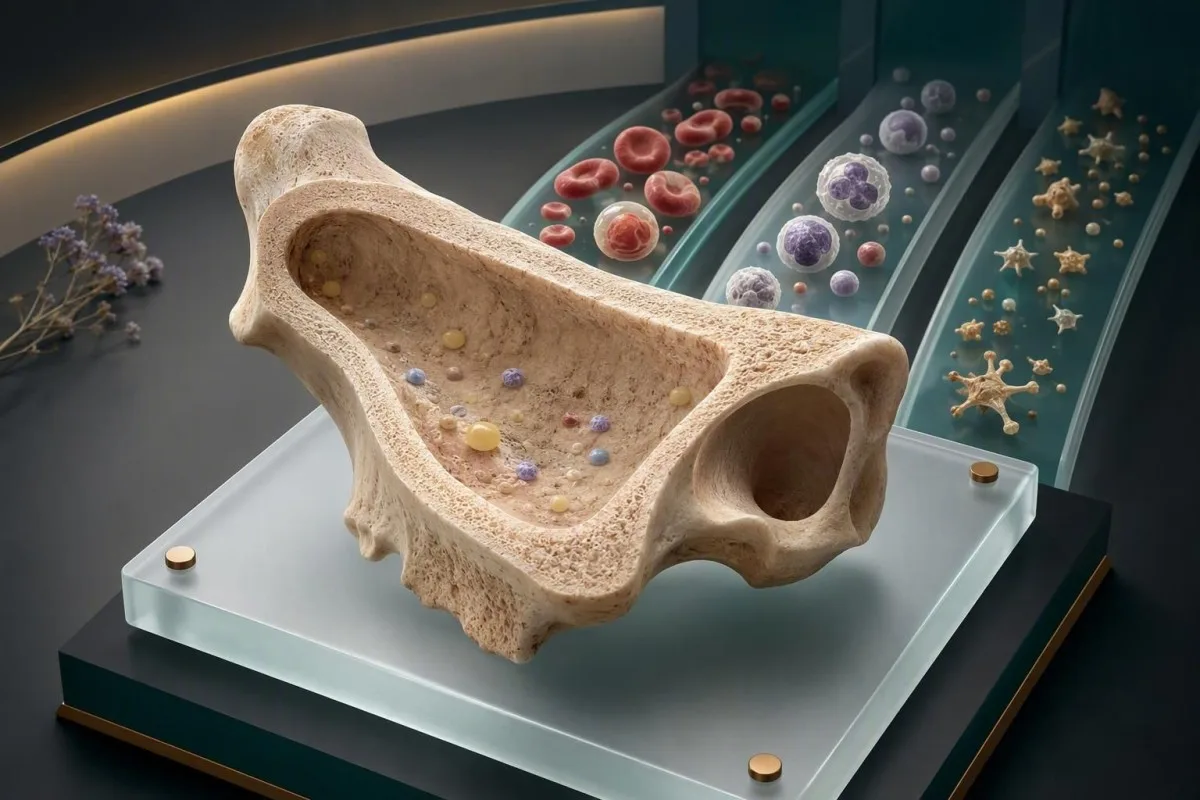
再生不良性貧血の血液検査:CBCの注意すべきパターン

カテゴリー
記事
血液学 検査の解釈 2026年の更新 患者さん向け

再生不良性貧血は通常、貧血、白血球減少、血小板減少という顕著な3ラインのCBCパターンを示し、網状赤血球数は不釣り合いに低くなります。このパターンは、見た目が似ている可能性のあるいくつかの可逆的かつ重篤な状態があるため、迅速な臨床的確認が必要です。.

📖 約11分 📅
📝 公開: 🩺 医学的監修: ✅ エビデンスに基づく
⚡ 簡単な概要 v1.0 —
  1. 汎血球減少症 赤血球、白血球、血小板の低下を意味し、診断ではなくパターンです。.
  2. 絶対網赤血球数 20 × 10⁹/L未満は、貧血が存在する場合の骨髄産出の著しい低下を支持します。.
  3. 重症再生不良性貧血 低形成骨髄に加え、ANC 0.5 × 10⁹/L未満、血小板 20 × 10⁹/L未満、または網状赤血球 20 × 10⁹/L未満の少なくとも2つによって定義されます。.
  4. ANC 0.5 × 10⁹/L未満 38.0℃以上の発熱を伴う場合は、同日の緊急評価が必要です。.
  5. 血小板 10 × 10⁹/L未満 自発性出血のリスクが相当あり、通常は緊急の病院での治療が必要です。.
  6. 大球性(macrocytosis) 再生不良性貧血で起こりえますが、MCVが110 fLを超える場合は、臨床医はB12または葉酸欠乏を積極的に除外する必要があります。.
  7. 芽球、著明な異形成、涙滴赤血球、または破砕赤血球 が塗抹標本で見られる場合、単純な再生不良性貧血とは異なり、検査方法を変更する必要があります。.
  8. 自己判断で治療しないでください 鉄剤のみによる3系統低値のCBC;鉄剤は骨髄造血を回復させず、緊急評価を遅らせる可能性があります。.

再生不良性貧血を疑わせるCBCパターン

アン 再生不良性貧血の血液検査 一般的に汎血球減少症を示します。すなわち、ヘモグロビン、好中球、血小板が同時に低下し、網状赤血球の反応は代償性ではなく低値のままです。この組み合わせは、特に以前のCBCの複数の系統で血球数が低下している場合、緊急の臨床医によるレビューを促すべきです。.

Aplastic anemia blood test showing a hematology analyzer processing an EDTA laboratory sample
図1: 自動CBC分析は、臨床医が比較する3つの主要な細胞系列を強調しています。.

成人では、一般的なCBC基準範囲は、多くの女性でヘモグロビン約120〜155 g/L、多くの男性で135〜175 g/L、白血球4.0〜11.0 × 10⁹/L、血小板150〜400 × 10⁹/Lです。検査室は独自の基準値を設定します。再生不良性貧血は、骨髄が十分な新しい細胞要素を産生していないため、これら3つの系列すべてを低下させます。基本的な概観については、当社のガイドをご覧ください。 CBCに含まれるもの.

パターンは、個々の低値よりも情報量が多いです。大量の月経出血後のヘモグロビン92 g/Lは鉄欠乏症である可能性がありますが、ヘモグロビン92 g/Lに加えて絶対好中球数0.7 × 10⁹/Lおよび血小板34 × 10⁹/Lは、他に証明されない限り骨髄造血の問題です。私の臨床経験では、危険なのは貧血単独ではなく、それと静かに併発する感染症と出血リスクです。.

カンテスティは AI血液検査分析装置 これは、3つの無関係な危険信号としてではなく、関連するパターンとしてCBCコンポーネントを読み取ります。当社のシステムは、レポートと過去の結果を整理するのに役立ちますが、骨髄不全を診断したり、緊急の血液内科評価に取って代わったりすることはできません。2026年8月26日現在、新しい3系統の血球減少は、通常の年次フォローアップではなく、数日以内の実際の臨床医によるレビューに値します。.

正常に見えるMCVだからといって汎血球減少症が良性であるとは限りません。早期の再生不良性貧血は正球性、軽度の大球性、または鉄欠乏症が併存する場合はまれに小球性である可能性があります。骨髄反応と末梢血塗抹標本は、MCV単独よりも多くの場合、より多くの方向性を示します。トーマス・クライン博士の実践的なルールはシンプルです。栄養学的説明を仮定する前に、骨髄が反応しているかどうかを尋ねてください。.

なぜパターンが見逃されることが多いのか

CBCは各結果を個別にフラグ付けする可能性があるため、患者は時々最も低い数値に焦点を当て、クラスターを見落とします。ヘモグロビンと好中球が並行して低下している場合、緊急閾値の上限内であっても、血小板が260から92 × 10⁹/Lに低下しても、臨床的に意味があります。. 血液検査の推移 は、単一のレポートよりも早期にその軌跡を明らかにすることがよくあります。.

貧血と網状赤血球数低下:骨髄からの産出の兆候

A 網赤血球数の低下 貧血の人において、骨髄が赤血球を適切に補充していないことを意味し、再生不良性貧血を支持する最も有用な手がかりの1つです。絶対網状赤血球数は、網状赤血球の割合よりも重要です。なぜなら、総赤血球数が低い場合に割合が欺瞞的に正常に見えることがあるからです。.

Aplastic anemia blood test with sparse immature red cellular elements in a laboratory slide view
図2: 未熟赤血球産出の低下は、骨髄の低産出の機能的特徴です。.

ほとんどの検査室では、成人の絶対網状赤血球の基準範囲を約25〜100 × 10⁹/Lで報告しますが、方法は異なります。重症再生不良性貧血の基準では、骨髄細胞数が著しく減少している場合、絶対網状赤血球数が20 × 10⁹/L未満であることが、低産出の定義的な指標の1つです。詳細な 網赤血球数ガイドは は、割合のみの結果が誤解を招く可能性がある理由を説明しています。.

対照的に、急性失血または溶血は、通常、数日後に網状赤血球を増加させるはずであり、鉄供給と骨髄機能が正常であれば、しばしば100 × 10⁹/Lを超えます。低ハプトグロビン、上昇した間接ビリルビン、および上昇したLDHは溶血を支持します。これらは、再生不良とは異なる生理学的ストーリーです。生産対破壊を特定せずに「貧血」を治療することが遅延を引き起こす方法であるため、この区別は重要です。.

ヘモグロビン76 g/Lの患者さんで、網状赤血球の割合が1.2%でしたが、絶対数が18 × 10⁹/Lと計算されるまでは、目立たないように見えました。それは回復反応ではありませんでした。貧血が顕著な場合、臨床医は網状赤血球産出指数を使用することがありますが、絶対網状赤血球は日常的なトリアージでは一般的にエラーが少ないです。.

網状赤血球は、重度の感染症中、化学療法後、アルコール毒性、または進行した腎臓病では一時的に低値になることがあるため、この結果は再生不良性貧血に特異的ではありません。Youngの2018年のNew England Journal of Medicineレビューでは、診断には骨髄評価と、遺伝性、免疫性、毒性、およびクローン性代替症の除外が必要であり、網状赤血球の結果単独ではない(Young, 2018)と強調しています。.

成人の期待される産出量 25–100 × 10⁹/L ヘモグロビンが正常な場合、通常は十分な赤血球放出。.
代償性産出 >100 × 10⁹/L Often seen with hemolysis or recovery after blood loss.
Inadequate with anemia 20–25 × 10⁹/L Needs context, repeat testing, and assessment for underproduction.
Severely reduced output <20 × 10⁹/L Supports severe marrow failure when paired with hypocellular marrow and cytopenias.

好中球減少:感染症の緊急度を変えるCBCの数値

絶対好中球数(ANC) predicts bacterial and fungal infection risk better than the total white-cell count. An ANC below 0.5 × 10⁹/L is severe neutropenia, and fever at or above 38.0°C once, or 38.0°C sustained for an hour, warrants emergency assessment.

Aplastic anemia blood test concept showing a differential counter separating scarce neutrophil cellular elements
図3: The absolute neutrophil count determines infection urgency more accurately than total white cells.

ANC is calculated as white cells multiplied by the neutrophil percentage plus band percentage. For example, WBC 1.4 × 10⁹/L with 40% neutrophils gives ANC 0.56 × 10⁹/L—far more actionable than the total count alone. Our ANCのカットオフ指標 explains age and pregnancy variations, but the 0.5 × 10⁹/L threshold remains the key adult danger line.

Severe aplastic anemia often produces neutropenia without the toxic granulation or left shift that can accompany bacterial infection. That said, a patient may have both marrow failure and infection; absence of a high white count never rules out sepsis. Fever, shaking chills, new confusion, shortness of breath, or a rapidly worsening sore throat should not wait for a repeat outpatient CBC.

Very severe aplastic anemia uses an even lower ANC threshold: below 0.2 × 10⁹/L. The reason for separating 0.2 from 0.5 is practical—at these counts, ordinary oral and skin organisms can become dangerous with little local redness or pus. In hospital, clinicians may obtain cultures and start empiric antimicrobial treatment before a cause is fully established.

A low lymphocyte count can coexist but does not substitute for ANC in acute risk decisions. If the differential is missing, ask the laboratory or clinician for it rather than guessing from total WBC. Low lymphocyte symptoms deserve follow-up, yet neutrophil depth drives the same-day decision.

When fever matters more than the CBC printout

A temperature of 38.0°C in someone with ANC 0.4 × 10⁹/L is urgent even if they feel “mostly fine” and the fever falls after paracetamol. Antipyretics can reduce the visible signal without treating the underlying problem. Bring the CBC and medication list to urgent care; do not take leftover antibiotics before cultures unless a clinician directs it.

血小板減少:骨髄不全が疑われる場合の出血閾値

Platelets below 50 × 10⁹/L increase bruising and procedure-related bleeding concerns, while counts below 10 × 10⁹/L can permit spontaneous bleeding. In aplastic anemia, thrombocytopenia usually occurs with anemia and neutropenia rather than as an isolated platelet problem.

Aplastic anemia blood test sample beside a platelet counting chamber and clinical safety materials
図4: Platelet depth and symptoms determine bleeding precautions and the speed of review.

Petechiae, nosebleeds lasting over 20 minutes, gum bleeding, heavy menstrual bleeding, blood in urine, black stool, or a sudden severe headache need urgent clinical contact when platelets are low. A platelet count of 18 × 10⁹/L is not automatically catastrophic, but it is not a number to manage through internet advice. See our practical discussion of platelet thresholds before dental work.

The smear helps separate reduced production from peripheral destruction. In immune thrombocytopenia, platelets may be the only low line and larger young platelets are often visible; aplastic anemia more often has a low or normal immature platelet fraction because production itself is reduced. These are tendencies, not rules, and a trained morphologist must read the slide.

Avoid aspirin, ibuprofen, naproxen, and non-prescribed fish-oil megadoses until a clinician reviews significant thrombocytopenia because they can impair platelet function even when the numerical count is unchanged. Alcohol can worsen marrow suppression and platelet function as well. Acetaminophen/paracetamol is not universally suitable either—dose and liver status still matter.

A platelet count can be falsely low when platelets clump in an EDTA sample. The laboratory may report “platelet clumps present” and repeat the count in a citrate tube; this is called pseudothrombocytopenia. It explains isolated low platelets, not convincing pancytopenia with a low reticulocyte count.

重症および超重症再生不良性貧血を臨床医がどのように分類するか

Severe aplastic anemia requires hypocellular bone marrow—usually below 25% cellularity—plus at least two peripheral criteria: ANC below 0.5 × 10⁹/L, platelets below 20 × 10⁹/L, or absolute reticulocytes below 20 × 10⁹/L. Very severe disease meets those criteria with ANC below 0.2 × 10⁹/L.

Aplastic anemia blood test severity concept with three low cellular lineages arranged for clinical comparison
図5: Severity classification combines marrow cellularity with neutrophil, platelet, and reticulocyte depth.

These thresholds come from the long-standing Camitta framework, but they are triage and treatment-planning tools rather than a diagnosis made from a spreadsheet. A marrow may be patchy, and recent transfusion can alter how anemia appears. Clinicians also consider symptoms, infection history, transfusion requirement, age, donor options, and evidence of a clonal disorder.

Moderate aplastic anemia is not defined as neatly. Someone with platelets 58 × 10⁹/L, ANC 0.9 × 10⁹/L, and hemoglobin 98 g/L may not meet severe criteria but can still deteriorate or require treatment. That ambiguity is exactly why serial CBCs and hematology follow-up matter more than trying to assign a reassuring label at home.

The British Society for Haematology guideline describes marrow examination, cytogenetics, flow testing for PNH clones, and inherited marrow-failure assessment as parts of the diagnostic pathway (Killick et al., 2016). A normal cytogenetic result lowers concern for some myelodysplastic syndromes but does not, by itself, prove immune aplastic anemia.

Kantesti AI highlights combinations that cross urgent thresholds, including ANC below 0.5 × 10⁹/L and platelets below 20 × 10⁹/L, so users can see the cluster before their appointment. Our analysis is a safety prompt, not severity grading; the underlying criteria require clinical examination and marrow findings. For context on individual report flags, read 範囲外が意味すること.

MCV、RDW、およびCBCパターンを精査する血液塗抹標本所見

Aplastic anemia often has a normal or mildly high MCV, but MCV alone cannot distinguish it from B12 deficiency, folate deficiency, alcohol effects, liver disease, or myelodysplasia. A manual peripheral smear is essential when pancytopenia is new, progressive, or unexplained.

Aplastic anemia blood test viewed as a peripheral cell sample slide with sparse uniform cellular elements
図6: Peripheral morphology can reveal patterns that automated CBC counts cannot classify.

An MCV reference range is commonly 80–100 fL. Mild macrocytosis around 101–105 fL can occur in aplastic anemia because stressed marrow production alters red-cell maturation, but MCV above 110 fL should prompt a deliberate B12, folate, medication, alcohol, thyroid, and liver review. Compare the indices in our MCV versus MCH guide.

RDW measures red-cell size variation and is often 11.5–14.5%, depending on the analyser. A normal RDW does not exclude marrow failure; in fact, a fairly uniform population of reduced red cells can occur when production simply dwindles. A sharply high RDW may instead suggest mixed deficiencies, recent transfusion, recovery after treatment, or dysplasia.

Blasts, promyelocytes, marked hypogranulation, pseudo-Pelger neutrophils, or significant dysplastic forms shift concern toward acute leukemia or myelodysplastic syndrome and should accelerate specialist evaluation. Schistocytes point in a different direction again—microangiopathic red-cell fragmentation—and can be urgent when paired with low platelets, kidney injury, or neurological symptoms. Our schistocyte guide covers that separate emergency pattern.

カンテスティは AI搭載の血液検査解析ツール that can compare MCV, RDW, reticulocytes, and historical counts, but it does not replace a reviewed smear. In my experience, the smear is where an apparently simple “low CBC” becomes a sharply focused diagnostic question. The テクノロジーガイド explains how our AI preserves the laboratory’s original units and reference intervals.

B12、葉酸、銅欠乏は骨髄不全を模倣しうる

Vitamin B12, folate, and copper deficiency can cause pancytopenia and must be excluded before labeling a CBC pattern aplastic anemia. These deficiencies are particularly plausible with restrictive diets, malabsorption, bariatric surgery, heavy zinc use, or certain medicines.

Aplastic anemia blood test differential scene with nutrient assay vials and a cellular maturation illustration
図7: Nutritional assays help distinguish reversible cytopenias from primary marrow failure.

B12 deficiency commonly produces macrocytosis, hypersegmented neutrophils, and elevated methylmalonic acid, yet some patients have MCV below 100 fL when iron deficiency coexists. Serum B12 below 148 pmol/L, roughly 200 pg/mL, is often considered deficient, while 148–221 pmol/L may need methylmalonic acid or homocysteine confirmation. Our B12 and folate comparison explains why folate alone can mask hematologic signs while neurological injury continues.

Folate deficiency can lower all three lines in advanced cases, particularly with poor intake, alcohol use, malabsorption, methotrexate, trimethoprim, or certain antiseizure medicines. Red-cell folate may reflect tissue stores better than a single serum level in some settings, but assay availability and interpretation vary. Do not start high-dose folic acid before B12 has been assessed unless a clinician has a specific reason.

Copper deficiency is less routinely checked, yet it can cause anemia and neutropenia and can resemble myelodysplasia on a marrow examination. Excess supplemental zinc is a classic reversible cause because zinc induces intestinal metallothionein, which preferentially binds copper. A low copper work-up is particularly relevant for denture-cream exposure, bariatric surgery, or zinc doses above 40 mg daily.

Nutrition can be part of the answer, but it should not become a reason to postpone marrow evaluation in severe pancytopenia. Iron, B12, folate, and copper replacement are tailored to confirmed deficits and medical context; indiscriminate supplementation can obscure useful test results. This is one of those areas where context matters more than a single borderline number.

まず確認すべき汎血球減少症の薬剤、毒物、ウイルス原因

Medicines, toxins, and viral illnesses can suppress marrow production and produce a CBC pattern similar to aplastic anemia, sometimes reversibly. A complete exposure history should include prescribed drugs, recent antibiotics, anticonvulsants, immunotherapies, herbal products, solvents, alcohol, and recreational substances.

Aplastic anemia blood test investigation with medication containers and virology sample preparation on a laboratory bench
図8: Exposure and viral testing are core parts of investigating new marrow suppression.

Chemotherapy is an obvious cause, but less obvious agents include chloramphenicol in regions where it is still used, antithyroid drugs, linezolid, some anticonvulsants, and immune-modulating therapies. Timing helps: direct drug marrow toxicity often emerges weeks to months after exposure, whereas immune drug reactions may be less predictable. Never stop a prescribed drug abruptly without the clinician managing the cytopenia.

Hepatitis-associated aplastic anemia can occur weeks to months after an acute hepatitis episode, often in younger people, and routine hepatitis A, B, C, E, HIV, EBV, CMV, and parvovirus testing may be selected based on history. A negative viral screen does not exclude immune aplastic anemia. It simply removes important competing explanations and guides infection precautions.

Benzene exposure remains a relevant occupational and household risk, including poorly ventilated industrial work, fuel handling, and some solvents. Clinicians ask about work tasks rather than job titles because “office manager at a paint supplier” can still involve periodic warehouse exposure. Bring product names or safety data sheets if available; vague recollection is common and no one should feel blamed.

A CBC taken soon after a significant viral illness may need repeating within days to weeks if the person is stable, but severe counts should not be watched passively. CBC changes after illness can help frame timing, while fever with severe neutropenia remains an emergency regardless of the suspected trigger.

再生不良性貧血とは異なる汎血球減少症の原因

Pancytopenia has many causes, and aplastic anemia is distinguished by a hypocellular marrow without malignant infiltration or major dysplasia. The major alternatives include acute leukemia, myelodysplastic syndrome, marrow infiltration, hypersplenism, severe deficiency states, hemophagocytic syndromes, infection, and medication effects.

Aplastic anemia blood test differential showing low-output marrow and enlarged spleen pathways in a medical diorama
図9: Different pancytopenia mechanisms require different tests despite similar CBC abnormalities.

Acute leukemia may produce low counts because blasts crowd out normal marrow, but circulating blasts are not always seen. Myelodysplastic syndrome becomes more likely with dysplasia, characteristic cytogenetic changes, or persistent macrocytosis in older adults, though age alone proves nothing. The pathway in our blood cancer testing guide shows why smear, flow cytometry, and marrow studies are complementary.

Hypersplenism lowers circulating counts by sequestration, usually with splenomegaly, portal hypertension, liver disease, or certain hematologic disorders. Reticulocytes may be normal or high rather than profoundly suppressed, and marrow cellularity is generally preserved or increased. An ultrasound may be useful, but it does not remove the need to investigate a concerning smear or severe neutropenia.

Paroxysmal nocturnal hemoglobinuria (PNH) can overlap biologically with aplastic anemia, so clinicians often order high-sensitivity flow cytometry for GPI-anchor deficient granulocytes and monocytes. Dark urine is neither required nor specific. Finding a small PNH clone can support an immune marrow-failure context, yet management depends on clone size, hemolysis, thrombosis risk, and the overall marrow picture.

カンテスティは AIラボ検査解釈サービス that can surface pancytopenia patterns and potential alternative clues, including bilirubin, LDH, liver indices, and historical platelet decline. It cannot determine whether a marrow is hypocellular, infiltrated, or dysplastic—those are questions for hematology and pathology. A second-opinion checklist can help patients prepare focused questions.

緊急警告サイン:CBC結果の低値が救急医療を必要とする場合

Emergency care is appropriate for fever of 38.0°C or higher with ANC below 0.5 × 10⁹/L, uncontrolled bleeding, black stools, coughing blood, a severe new headache, confusion, fainting, chest pain, or breathlessness at rest. Do not wait for an online interpretation if any of these occur.

Aplastic anemia blood test urgent-care triage scene with a clinician reviewing critical laboratory sample data
図10: Critical CBC results require symptom-based triage rather than delayed self-monitoring.

Profound anemia can impair oxygen delivery even without visible bleeding. Hemoglobin below 70 g/L is a commonly used adult transfusion consideration threshold in stable hospital patients, but symptoms, active bleeding, cardiovascular disease, pregnancy, and chronicity alter decisions. Someone with hemoglobin 82 g/L who is fainting or breathless at rest needs assessment more urgently than a well person with the same number.

Platelets below 10 × 10⁹/L are often managed with urgent specialist-directed decisions because spontaneous mucosal or internal bleeding becomes more likely. Avoid contact sports, intramuscular injections, rectal thermometers, and dental procedures until the treating team advises otherwise. If there is head injury at any low platelet count, seek urgent assessment even if symptoms seem minor.

A normal temperature does not guarantee safety in severe neutropenia; older adults, people taking steroids, and very unwell patients may not mount a fever. New mouth ulcers, painful swallowing, perianal pain, or rapidly worsening fatigue can be early infection clues. Sepsis laboratory patterns provide context, but symptoms and vital signs determine immediate action.

Dr. Thomas Klein advises patients to photograph or download the original report, record the test date, and bring every medication and supplement container to urgent review. This small step often identifies a time-sensitive drug exposure or clarifies whether the “new” low count was already trending. Do not drive yourself if you are dizzy, faint, or actively bleeding.

CBC後の再生不良性貧血の確定または除外のための検査

A CBC cannot confirm aplastic anemia; confirmation usually requires a bone-marrow aspirate and trephine biopsy showing hypocellularity, plus tests that exclude clonal, inherited, infectious, nutritional, and exposure-related causes. The pace of testing depends on count severity and symptoms.

Aplastic anemia blood test diagnostic workflow with marrow examination instruments and cytogenetic laboratory preparation
図11: Marrow morphology and genetic testing establish the cause behind a pancytopenia pattern.

The marrow sample assesses cellularity, architecture, blasts, fibrosis, iron stores, and dysplasia. In adults, expected cellularity is roughly 100 minus age as a rough teaching estimate, but this is imprecise and specimen quality matters. A 30-year-old with a marrow cellularity of 10% is very different from an 80-year-old with 10%, yet both need expert interpretation in context.

Cytogenetics, chromosomal microarray or sequencing panels may help distinguish hypocellular myelodysplastic syndrome from acquired aplastic anemia. Testing for PNH clones, telomere disorders, Fanconi anemia, and other inherited marrow-failure conditions is selected by age, family history, physical findings, and transplant planning. Genetic testing is not reserved only for children; adult-onset inherited disease is increasingly recognized.

Baseline tests often include B12, folate, copper, liver and kidney profile, thyroid studies when indicated, hemolysis markers, viral serology, pregnancy testing when relevant, and autoimmune investigations tailored to the history. The goal is not to order every test. It is to avoid missing reversible causes while moving promptly toward definitive assessment.

Kantesti AI can organize a report across these categories and identify missing basics, but clinical governance matters when results are high stakes. Our 医学的な検証基準 describe the boundary between AI-assisted interpretation and medical diagnosis. Ask who will review the marrow specimen and whether it will be assessed by a hematopathologist.

結果が正しいと仮定する前にCBCを再検査する時期

A repeat CBC is appropriate when sample clotting, platelet clumping, dilution from intravenous fluids, or analyzer flags could distort a result, but repeat testing must never delay emergency care for severe cytopenias or concerning symptoms. Laboratories can often verify a result from the original tube within hours.

Aplastic anemia blood test quality check with paired laboratory tubes and a manual cell sample slide review
図12: Laboratory verification separates sample artefacts from genuine multi-line cytopenia.

EDTA platelet clumping can produce a falsely low platelet count, while a partially clotted tube may lower platelets and white cells unpredictably. A manual smear review and a citrate-tube platelet count can settle the issue. The repeat testing after hemolysis guide explains why sample quality comments are clinically useful, not mere laboratory housekeeping.

Intravenous fluid can dilute hemoglobin and platelets, particularly after several litres, but it rarely explains a profoundly low ANC or reticulocyte count. Conversely, dehydration can temporarily concentrate values and hide the depth of anemia. Compare the time of draw, recent fluids, transfusions, acute illness, and prior baseline before concluding that a numerical change reflects marrow biology.

Transfusion complicates interpretation because donor red cells can improve hemoglobin without correcting neutropenia, platelets, or reticulocytes. A rising hemoglobin after transfusion should not be mistaken for marrow recovery. Clinicians therefore track transfusion dates alongside reticulocyte trends and the interval to the next required transfusion.

A laboratory “delta check” may flag a sharp departure from previous values, but genuine marrow failure can develop between routine tests. If a report looks implausible, call the ordering clinician or laboratory promptly; do not simply repeat it at a distant walk-in site and lose continuity. The original laboratory can compare analyser flags and microscopy.

Hematologyの評価を待つ間にやってはいけないこと

Do not start iron, high-dose folate, herbal “blood builders,” aspirin, or leftover antibiotics solely because a CBC is low. In suspected aplastic anemia, the safest first actions are prompt medical review, infection precautions, bleeding precautions, and a complete medication-and-supplement history.

Aplastic anemia blood test follow-up scene with a secure results review and carefully organized medication containers
図13: Safe follow-up starts with verified results and a complete exposure history.

Iron deficiency is common, but iron does not explain low neutrophils and platelets in most adults. Taking 45–65 mg elemental iron every day may cause nausea, constipation, and misleading iron-study changes without addressing marrow failure. Check ferritin, transferrin saturation, CRP, and the overall CBC pattern before assuming that fatigue equals iron deficiency; our iron studies resource helps with those distinctions.

Avoid crowded indoor spaces and close contact with people who have respiratory symptoms if ANC is severely low, but do not isolate yourself from necessary medical care. Hand hygiene, prompt temperature checks when unwell, and food safety are sensible. Extreme “neutropenic diets” have limited evidence and can worsen nutrition, so ask the treating team for locally appropriate guidance rather than following restrictive social-media lists.

Keep a one-page timeline: first abnormal CBC, previous normal CBC, infections in the prior 6 months, drugs started or stopped, travel, workplace exposures, transfusions, family blood disorders, and bleeding symptoms. This information can save an entire clinic visit. A lab-result tracker offers a practical structure for recording dates and units.

Kantestiの AIバイオマーカー解釈プラットフォーム can help users compare serial CBC reports and prepare questions in their own language across 75+ languages. It is not an emergency service and cannot see symptoms, examine a patient, or arrange transfusion support. Use it to understand the report, then follow the clinical pathway already underway.

Hematologyの予約をより有用にする質問

The most useful hematology questions ask about severity, likely mechanism, infection and bleeding thresholds, and the diagnostic plan—not whether one isolated number is “bad.” Bring original reports because trends in ANC, platelets, hemoglobin, MCV, and reticulocytes guide decisions.

Aplastic anemia blood test consultation preparation with organized CBC reports and hematology laboratory materials
図14: A clear timeline of counts helps hematology teams make faster, safer decisions.

Ask: “Do I meet criteria for severe aplastic anemia, and which criteria do I meet?” The answer should include marrow cellularity, ANC, platelet count, and absolute reticulocyte count. If the diagnosis remains uncertain, ask what findings favour hypocellular myelodysplastic syndrome, acute leukemia, nutritional deficiency, or drug-related suppression and what test will separate them.

Ask for explicit safety thresholds: at what temperature should I attend urgently, what bleeding symptoms override waiting, which pain medicines should I avoid, and can I travel? These instructions vary with ANC and platelet depth. A person with ANC 1.1 × 10⁹/L and platelets 95 × 10⁹/L receives different advice from someone with ANC 0.18 × 10⁹/L and platelets 8 × 10⁹/L.

If aplastic anemia is confirmed, discussion may include immunosuppressive therapy, eltrombopag in selected protocols, and hematopoietic stem-cell transplantation depending on age, donor availability, disease severity, and local expertise. No treatment choice should be inferred from an online CBC explanation. The anticipated course and risks are personal, sometimes genuinely uncertain, and best decided by a marrow-failure team.

私たちの 医療諮問委員会 helps set the clinical-review principles behind Kantesti content, including the rule that high-risk CBC patterns require professional escalation. Bring a support person if possible; these appointments contain a lot of unfamiliar terms, and another listener improves recall.

異常な汎血球減少症のCBC後の安全な次のステップ計画

New pancytopenia with a low reticulocyte count should be treated as a possible marrow-production disorder until a clinician identifies another cause. Same-day care is needed for fever with severe neutropenia, active bleeding, neurological symptoms, chest pain, fainting, or breathlessness at rest.

Aplastic anemia blood test care pathway showing trend review, verified sample processing, and specialist referral preparation
図15: Serial CBC data and prompt specialist review turn an alarming pattern into an actionable plan.

First, verify the exact values and units: hemoglobin, WBC with ANC, platelets, MCV, RDW, and absolute reticulocytes. Second, compare them with the last available CBC, even one from 2 years ago. A stable mild low count and a rapid three-line fall are not the same clinical problem; side-by-side CBC comparison can make that difference visible.

Third, seek the level of care your symptoms and thresholds require. ANC below 0.5 × 10⁹/L with fever, platelets below 10 × 10⁹/L, or significant bleeding should not wait for a standard referral. For stable but unexplained pancytopenia, arrange prompt clinician review and ask whether smear review, repeat CBC, nutritional studies, viral testing, and hematology referral are needed.

Fourth, do not interpret a single “normal” companion test as reassurance. Normal ferritin does not rule out B12 deficiency, normal LDH does not rule out marrow failure, and a normal MCV does not cancel three low cell lines. The whole pattern, its timing, and the examination determine the risk.

Kantesti AI supports structured result review and historical trend analysis, while diagnosis and treatment remain with your clinical team. This article was medically reviewed under the standards described by Kantesti’s clinical oversight process. The practical aim is not to make you fear every low flag—it is to recognize the combinations that should never be ignored.

よくある質問

CBCで再生不良性貧血はどのように見えますか?

再生不良性貧血は、通常、汎血球減少症として現れます。すなわち、同じCBCでヘモグロビン低値、白血球(特に好中球)低値、血小板低値が見られます。支持的な産生の手がかりは、重症例ではしばしば20 × 10⁹/L未満となる、不釣り合いに低い絶対網状赤血球数です。MCVは正常または軽度上昇することがあるため、MCV正常は本疾患を除外するものではありません。診断には、骨髄での低形成の証拠と、他の汎血球減少症の原因の除外が必要です。.

再生不良性貧血は、初期には白血球数が正常なことがありますか?

はい、早期の再生不良性貧血は、明らかな汎血球減少症が進行する前に、1つまたは2つの血球系統に影響を与える可能性があります。血小板数の減少や、絶対網状赤血球数が約25 × 10⁹/L未満の進行性貧血は、重度の好中球減少症に先行する可能性があります。したがって、臨床医は、正常なWBCの結果に頼るのではなく、以前のCBCを比較します。複数の系統にわたる新たな下降傾向は、タイムリーな医学的レビューを促すべきです。.

網状赤血球数がいくつだと再生不良性貧血を示唆しますか?

貧血が存在する場合、絶対網状赤血球数は20×10⁹/L未満であれば骨髄の産生低下が重度であることを支持し、重症再生不良性貧血の基準の一部です。多くの検査室では、成人参考範囲を25〜100×10⁹/L付近で使用していますが、正確な範囲は方法によって異なります。網状赤血球の割合は、重度の貧血では誤って正常と表示される可能性があるため、絶対数は好まれます。網状赤血球の低下は再生不良性貧血に特異的ではなく、栄養失調、腎臓病、感染症、薬物による抑制でも発生します。.

再生不良性貧血において、血小板数20は危険ですか?

血小板数が20×10⁹/Lは重度に低く、鼻血、歯肉出血、過多月経、黒色便、血尿、頭痛がある場合は、特に緊急の血液内科医による評価が必要です。10×10⁹/L未満の数値は自発性出血のリスクが高く、個人の症状や原因に応じて入院管理されることがよくあります。治療担当医が特に承認しない限り、アスピリンやNSAIDsは避けてください。貧血や好中球減少症も併存する場合は、緊急性がさらに高まります。.

好中球減少症が緊急事態となるのはいつですか?

ANCが0.5 × 10⁹/L未満は重度の好中球減少症であり、38.0℃以上の発熱は同日緊急評価を要する。非常に重症な再生不良性貧血ではANCが0.2 × 10⁹/L未満となり、局所症状がほとんどない場合でも重篤な感染症が発生する可能性がある。悪寒、新規の錯乱、呼吸困難、嚥下痛、または肛門周囲痛も、発熱が確認されなくても緊急受診が必要となる。白血球総数だけでは、この決定においてANCよりも有用性は低い。.

ビタミンB12欠乏症は再生不良性貧血と誤診されることがありますか?

ビタミンB12欠乏症は貧血、白血球減少、血小板減少、大球症、網状赤血球数減少を引き起こす可能性があり、初期には再生不良性貧血に似ることがあります。血清B12値が148 pmol/L(約200 pg/mL)未満は一般的に欠乏とみなされ、境界値の結果ではメチルマロン酸検査が必要となる場合があります。過分葉好中球とMCV 110 fL超はB12または葉酸欠乏を支持しますが、混合鉄欠乏は巨赤芽球症を隠す可能性があります。骨髄検査と標的血液検査は、CBCが重度または不明瞭な場合にこれらの疾患を区別します。.

今日、AIによる血液検査分析を

いますぐ利用しませんか。即時で正確な検査分析を提供するKantestiを信頼する、世界中の200万人以上のユーザーに参加してください。血液検査結果をアップロードすると、15,000+のバイオマーカーについて数秒で包括的な解釈が得られます。.

📚 Referenced Research Publications

1

Klein, T., Mitchell, S., & Weber, H. (2026). B型(Rh陰性)血液型、LDH血液検査、網赤血球数ガイド.。 Kantesti AI Medical Research.

2

Klein, T., Mitchell, S., & Weber, H. (2026). 断食後の下痢、便の黒い斑点、消化管ガイド2026.。 Kantesti AI Medical Research.

📖 外部の医学的参考文献

3

Young NS (2018). 再生不良性貧血.。 ニューイングランド・ジャーナル・オブ・メディシン。.

4

Killick SB et al. (2016). Guidelines for the diagnosis and management of adult aplastic anaemia.。 英国血液学雑誌。.

200万以上分析されたテスト
127+
75+言語

⚕️ 医療免責事項

E-E-A-T 信頼性シグナル

経験

医師主導による、検査結果解釈ワークフローの臨床レビュー。.

📋

専門知識

臨床的な文脈においてバイオマーカーがどのように振る舞うかに焦点を当てた検査医学。.

👤

権威

トーマス・クライン博士が執筆し、サラ・ミッチェル博士およびハンス・ヴェーバー教授によるレビュー。.

🛡️

信頼性

アラームを減らすための明確なフォローアップ経路を備えた、エビデンスに基づく解釈。.

🏢 カンテスティ株式会社 イングランドおよびウェールズに登録 · 会社番号. 17090423 ロンドン、イギリス · kantesti.net
blank
Prof. Dr. Thomas Kleinによる

トーマス・クライン博士は、Kantesti AIにおける最高医療責任者(CMO)を務める、ボード認定の臨床血液専門医です。検査医学における15年以上の経験に加え、「血液検査結果」のAI支援による解釈に強い関心を持ち、新しい技術を日常の臨床実践につなげることに取り組んでいます。関心領域には、バイオマーカー解析、臨床意思決定支援の研究、集団特異的な基準範囲の最適化が含まれます。CMOとして、同プラットフォームの内部ベンチマークに対する臨床的インプットを提供し、Kantestiの教育レポートの医療品質に関する臨床的監督を行います。.

コメントを残す

メールアドレスが公開されることはありません。 が付いている欄は必須項目です