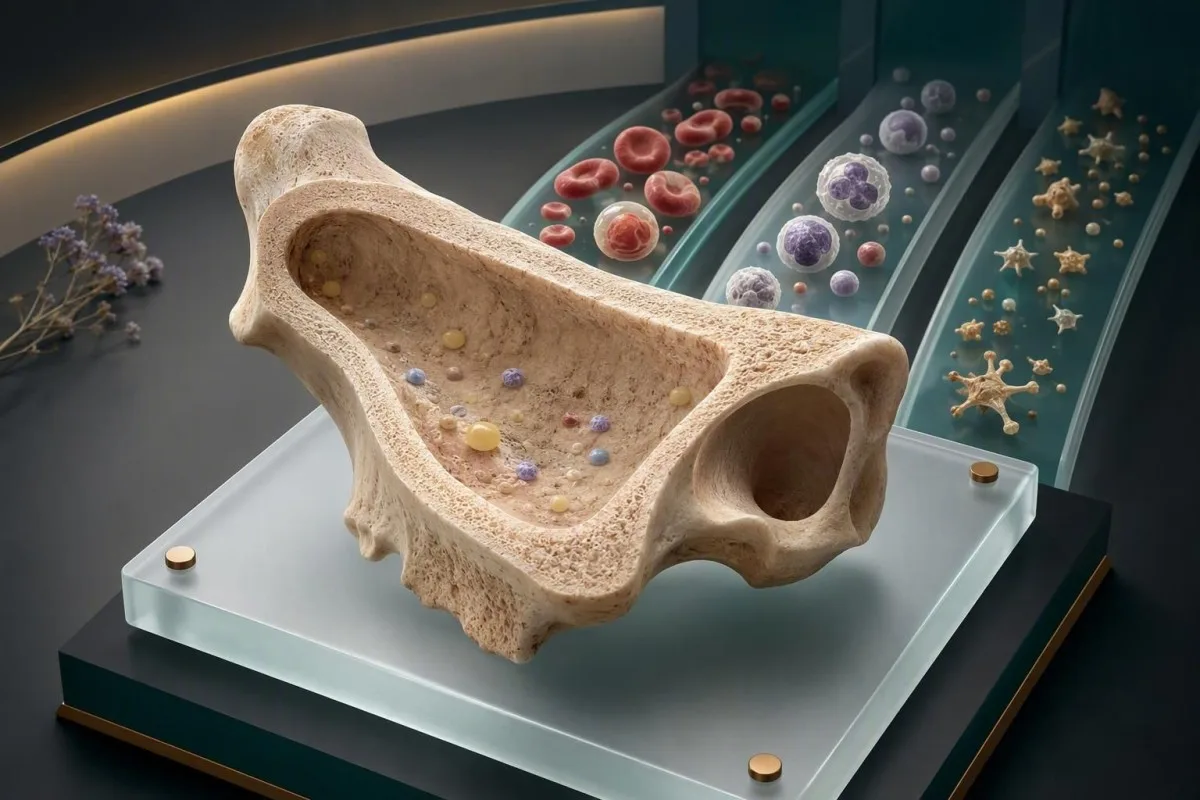
Mar as aill anaplastic anemia gu tricheadh trì phàtran CBC follaiseach: anemia, ceallan geala ìosal, agus truinnsearan ìosal le cunntas reticulocyte gu neo-iomchaidh ìosal. Feumaidh am pàtran dearbhadh clionaigeach sgiobalta leis gu bheil grunn chumhaichean a ghabhas atharrachadh agus a tha cunnartach a 'coimhead coltach aig a' chiad dol-a-mach.


- Pancytopenia a 'ciallachadh ceallan dearga, ceallan geala, agus truinnsearan ìosal; tha e na phàtran, chan e breithneachadh.
- Cunntas reticulocyte iomlan fo 20 × 10⁹/L a 'toirt taic do lughdachadh mòr ann an toradh smior nuair a tha anemia an làthair.
- Anemia aplastach dona air a mhìneachadh le smior hypocellular a bharrachd air co-dhiù dhà de na leanas: ANC fo 0.5 × 10⁹/L, truinnsearan fo 20 × 10⁹/L, no reticulocytes fo 20 × 10⁹/L.
- ANC fo 0.5 × 10⁹/L le fiabhras de 38.0°C no nas àirde feumaidh measadh èiginn air an aon latha.
- Truinnsearan fo 10 × 10⁹/L a 'giùlan cunnart mòr bho bhith a' sèid gu spontanach agus mar as trice feumach air cùram èiginneach air a stiùireadh le ospadal.
- Macrocytosis faodaidh tachairt ann an anemia aplastach, ach bu chòir do MCV os cionn 110 fL luchd-clionaigeach a bhith a 'cur às do dìth B12 no folate gu gnìomhach.
- Bleadhan, aileas drùithleach, ceallan dreathais, neo sgàth-cheallan air strì a’ comharrachadh air falbh bho anemia aplastic gun choimeas agus ag atharrachadh an obair-rannsachaidh.
- Na dèan fèin-làimhseachadh trì-loidhne ìosal CBC le iarann a-mhàin; chan eil iarann a’ toirt air ais cinneasachadh smior agus faodaidh e dàil a chuir air measadh èiginneach.
Am pàtran CBC a thogas dragh mu anemia aplastach
An deuchainn fala anemia aplastic mar as trice a’ nochdadh pancytopenia: ìosal hemoglobin, ìosal neutrophils, agus ìosal truinnsearan a’ tachairt còmhla, fhad ‘s a tha an freagairt reticulocyte ìosal an àite freagairt. Bu chòir an cothlamadh sin a bhith a’ brosnachadh ath-bhreithneachadh clionaigeach èiginneach, gu sònraichte ma tha cunntasan air tuiteam thairis air barrachd air aon CBC roimhe.
Ann an inbhich, tha raon iomraidh CBC àbhaisteach timcheall air 120–155 g/L airson mòran bhoireannach agus 135–175 g/L airson mòran fhireannach, ceallan geal 4.0–11.0 × 10⁹/L, agus truinnsearan 150–400 × 10⁹/L; bidh obair-lann a’ suidheachadh an crìochan fhèin. Tha anemia aplastic a’ lughdachadh na trì slighean oir chan eil am smior a’ dèanamh gu leòr de na h-earrainnean ceallach ùra. Airson stiùireadh bunaiteach, faic an stiùireadh againn gu dè tha CBC a’ gabhail a-steach.
Tha am pàtran nas fhiosaiche na toradh ìosal sam bith. Faodaidh hemoglobin de 92 g/L às deidh call menstrual trom a bhith na dhiadhachd iarainn, agus mar sin tha hemoglobin 92 g/L a bharrachd air ANC 0.7 × 10⁹/L agus truinnsearan 34 × 10⁹/L na dhuilgheadas cinneasachaidh smior gus an dearbhadh a chaochladh. Nam eòlas clionaigeach, chan e an anemia a-mhàin an cunnart – is e cunnart gabhaltachd agus bleeding a tha a’ tighinn a-steach còmhla ris.
Tha Kantesti na Anailisiche deuchainn fala AI a leughas pàirtean CBC mar phàtran ceangailte, chan e mar thrì bratagan dearga neo-cheangailte. Faodaidh an siostam againn cuideachadh le bhith a’ cur air dòigh an aithisg agus na toraidhean roimhe, ach chan urrainn dha fàilligeadh smior a dhearbhadh no measadh hematology èiginneach a chuir na àite. Bho 26 Lùnastal 2026, tha ge bith dè an cytopenia ùr trì-loidhne a’ nochdadh ath-bhreithneachadh clionaigeach fìor taobh a-staigh làithean, chan e ath-sgrùdadh bliadhnail cunbhalach.
Chan eil MCV a tha a’ coimhead àbhaisteach a’ dèanamh pancytopenia gun chron. Faodaidh anemia aplastic tràth a bhith normocytic, beagan macrocytic, no uaireannan microcytic ma tha diadhachd iarainn ann; bidh an freagairt smior agus an strì iomaill gu tric a’ toirt barrachd stiùiridh na MCV a-mhàin. Tha riaghailt practaigeach an Dr. Thomas Klein sìmplidh: faighnich a bheil an smior a’ freagairt mus gabh thu ri mìneachadh beathachaidh.
Carson a thathas gu tric ag ionndrainn a’ phàtrain
Faodaidh CBC gach toradh a chomharrachadh air leth, agus mar sin bidh euslaintich uaireannan a’ cuimseachadh air an àireamh as ìsle agus a’ seachnadh a’ chlàr. Tha tuiteam ann an truinnsearan bho 260 gu 92 × 10⁹/L, eadhon ged a tha e teicnigeach os cionn crìoch èiginn, tha e a’ ciallachadh gu clionaigeach nuair a tha hemoglobin agus neutrophils a’ tuiteam gu co-shìnte. Claonadh nan deuchainnean fala gu tric a’ nochdadh an t-slighe sin na bu tràithe na aon aithisg.
Anemia a bharrachd air cunntas reticulocyte ìosal: an comharra toradh smior
A cunntas reticulocyte ìosal ann an neach anaemic a’ ciallachadh nach eil am smior a’ cur nan ceallan dearga gu leòr an àite, agus is e aon de na rudan as fheumail a tha a’ toirt taic do anemia aplastic. Tha an àireamh reticulocyte iomlan nas cudromaiche na an ìre reticulocyte oir faodaidh ìre a bhith a’ coimhead gu meallta àbhaisteach nuair a tha na ceallan dearga gu lèir ìosal.
Bidh a’ mhòr-chuid de dh’obair-lann a’ toirt seachad raon iomraidh reticulocyte iomlan ann an inbhich timcheall air 25–100 × 10⁹/L, ged a tha na dòighean eadar-dhealaichte. Ann an slatan-tomhais anemia aplastic trom, tha cunntas reticulocyte iomlan fo 20 × 10⁹/L mar aon de na tomhasan toraidh ìosal a tha a’ comharrachadh nuair a tha choimeas smior gu mòr air a lughdachadh. Mion-fhiosrachadh stiùireadh cunntais reticulocyte a’ mìneachadh carson a dh’fhaodas toraidhean dìreach sa cheud a bhith a’ mealladh.
Air an làimh eile, bu chòir call fala luath no hemolysis gu tric a bhith a“ putadh reticulocytes suas às deidh grunn làithean, gu tric os cionn 100 × 10⁹/L ma tha solar iarainn agus gnìomh smior slàn. Tha ìosal haptoglobin, rising indirect bilirubin, agus àrdachadh LDH a” toirt taic do hemolysis; tha sin na sgeulachd fiosaigeach eadar-dhealaichte bho aplasia. Tha an eadar-dhealachadh cudromach oir is e mar a thachras dàil a th’ ann a bhith a’ làimhseachadh “anemia” gun a bhith a’ comharrachadh cinneasachadh an aghaidh sgrios.
Bha neach-euslaintich a chunnaic mi le hemoglobin 76 g/L le ìre reticulocyte de 1.2%, a bha a’ coimhead neo-chudromach gus an deach an cunntas iomlan a thomhas aig 18 × 10⁹/L. Cha b’ e sin freagairt ath-bheothachaidh. Nuair a tha anemia gu math mòr, faodaidh clionaigean clàr-innse cinneasachaidh reticulocyte a chleachdadh, ach tha reticulocytes iomlan mar as trice nas fhasa a dhèanamh gun mhearachd ann an sgrùdadh làitheil.
Faodaidh reticulocytes a bhith ìosal gu sealach rè galar trom, às deidh chemotherapy, le puinnseanta alcol, no ann an tinneas dubhaig adhartach, agus mar sin chan eil an toradh seo sònraichte airson anemia aplastic. Tha sgrùdadh Young’s 2018 ann an New England Journal of Medicine a’ cur cuideam air gu bheil feum air measadh smior agus dùnadh roghainnean oighreachail, dìonach, puinnseanta, agus clonal – chan e toradh reticulocyte leis fhèin (Young, 2018).
Neutrophils ìosal: an àireamh CBC a dh'atharraicheas èiginn ghalaran
An cunntas neutrophil iomlan (ANC) a ’ro-innse cunnart gabhaltachd bacterial agus fungach nas fheàrr na an àireamh cheallan fala geal iomlan. Tha ANC fo 0.5 × 10⁹/L na neutropenia dona, agus tha fiabhras aig no os cionn 38.0 ° C aon uair, no 38.0 ° C a tha a ’mairsinn airson uair a thìde, a’ toirt air falbh measadh èiginn.
Tha ANC air a thomhas mar cheallan geala air an iomadachadh leis an àireamh sa cheud neutrophil a bharrachd air an àireamh sa cheud bhàr. Mar eisimpleir, tha WBC 1.4 × 10⁹/L le 40% neutrophils a ’toirt ANC 0.56 × 10⁹/L—fada nas gnìomhaiche na an àireamh iomlan a-mhàin. Tha ar stiùireadh gearraidh ANC a ’mìneachadh atharrachaidhean aois is torrachais, ach tha an stairsneach 0.5 × 10⁹/L fhathast na loidhne cunnairt dhaoine inbheach.
Gu tric bidh anemia aplastic dona a ’toirt a-mach neutropenia às aonais an gràinealachd puinnseanta no an gluasad chlì a dh ’fhaodadh a bhith an cois galar bacterial. Thuirt sin, faodaidh gum bi galar smior agus gabhaltachd aig euslainteach; chan eil neo-làthaireachd àireamh geal àrd a ’riaghladh a-mach sepsis. Cha bu chòir fiabhras, fuachd chrith, troimh-chèile ùr, giorrad analach, no amhach ghoirt a tha a ’fàs gu luath a bhith a’ feitheamh ri ath-sgrùdadh CBC a-muigh.
Tha anemia aplastic gu math dona a ’cleachdadh stairsneach ANC eadhon nas ìsle: fo 0.2 × 10⁹/L. Is e an adhbhar airson a bhith a ’roinn 0.2 bho 0.5 practaigeach—aig na cunntasan sin, faodaidh organan beòil agus craiceann àbhaisteach a bhith cunnartach le glè bheag de dheargadh ionadail no pus. San ospadal, faodaidh luchd-clionaigeach cultaran fhaighinn agus tòiseachadh air làimhseachadh antimicrobial empiric mus tèid adhbhar a stèidheachadh gu tur.
Faodaidh àireamh lymphocyte ìosal a bhith ann ach chan eil e a ’dol an àite ANC ann an co-dhùnaidhean cunnairt geàrr-ùine. Mura h-eil an eadar-dhealachadh a dhìth, iarr air an obair-lann no an neach-clionaigeach e an àite a bhith a ’tomhas bho WBC iomlan. Comharraidhean lymphocyte ìosal airidh air leantainn, ach tha doimhneachd neutrophil a ’draibheadh an co-dhùnadh air an aon latha.
Nuair a tha fiabhras nas cudromaiche na an clò-bhualadh CBC
Tha teòthachd de 38.0 ° C aig cuideigin le ANC 0.4 × 10⁹/L na èiginn eadhon ged a tha iad a “faireachdainn” gu math rèidh ”agus a’ tuiteam an teòthachd às deidh paracetamol. Faodaidh antipyretics an comharra a tha ri fhaicinn a lughdachadh gun a bhith a ’làimhseachadh na cùise bunaiteach. Thoir an CBC agus liosta nan cungaidhean gu cùram èiginn; na gabh antibiotics a tha air fhàgail mus tèid cultaran a dhèanamh mura stiùir neach-clionaigeach e.
Truinnsearan ìosal: crìochan sèididh ann an droch dhòchas air fàilligeadh smior
Tha truinnsearan fo 50 × 10⁹/L a ’meudachadh dhraghan sèididh a dh’ fhaodadh a bhith air adhbhrachadh le bruthadh agus modhan-obrach, fhad ‘s a dh’ fhaodadh cunntasan fo 10 × 10⁹/L a bhith a ’ceadachadh sèididh spontaneous. Ann an anemia aplastic, bidh thrombocytopenia mar as trice a ’tachairt le anemia agus neutropenia an àite a bhith na dhuilgheadas truinnsear air leth.
Tha petechiae, sròinean a mhaireas nas fhaide na 20 mionaid, sèididh guma, sèididh menstrual trom, fuil san urine, stòl dubh, no ceann goirt obann dona a ’feumachdainn conaltradh clionaigeach èiginneach nuair a tha truinnsearan ìosal. Chan eil àireamh truinnsear de 18 × 10⁹/L gu fèin-ghluasadach catastrofaigeach, ach chan e àireamh a thèid a riaghladh tro chomhairle eadar-lìn. Faic an deasbad practaigeach againn mu dheidhinn stairsnean platelet mus dèan thu obair fhiaclaireachd.
Bidh an smear a ’cuideachadh le bhith a’ sgaradh cinneasachadh nas lugha bho sgrios iomaill. Ann an thrombocytopenia dìonach, faodaidh truinnsearan a bhith mar an aon loidhne ìosal agus tha truinnsearan òga nas motha gu tric rim faicinn; tha anemia aplastic nas trice a ’faighinn ìrean platelet neo-aibidh ìosal no àbhaisteach leis gu bheil an cinneasachadh fhèin air a lughdachadh. Is e seo gluasadan, chan e riaghailtean, agus feumaidh neach-morphologist trèanaichte an sleamhnag a leughadh.
Seachain aspirin, ibuprofen, naproxen, agus megadoses ola èisg gun òrdugh gus an ath-bhreithnich neach-clionaigeach thrombocytopenia cudromach oir faodaidh iad gnìomh platelet a mhilleadh eadhon nuair nach eil an àireamh àireamhach air atharrachadh. Faodaidh deoch-làidir cuideachd briseadh sìos smior agus gnìomh platelet a dhèanamh nas miosa. Chan eil acetaminophen / paracetamol gu tur freagarrach nas motha—tha an dòs agus inbhe grùthan fhathast cudromach.
Faodaidh àireamh truinnsear a bhith gu bràth ìosal nuair a bhios truinnsearan a “cruinneachadh ann an sampall EDTA. Faodaidh an obair-lann aithris ”cruinneachaidhean platelet an làthair” agus an cunntas ath-aithris ann an tiùb citrate; canar pseudothrombocytopenia ris seo. Tha e a ’mìneachadh truinnsearan air leth ìosal, chan e pancytopenia a tha a’ dearbhadh le àireamh reticulocyte ìosal.
Mar a tha luchd-clionaigeach a 'glasadh anemia aplastach dona agus gu math dona
Tha anemia aplastic dona a ’feumachdainn smior hipo-cheallach—mar as trice fo 25% cellularity—a bharrachd air co-dhiù dà chritéar iomaill: ANC fo 0.5 × 10⁹/L, truinnsearan fo 20 × 10⁹/L, no reticulocytes iomlan fo 20 × 10⁹/L. Tha galairean gu math dona a ’coinneachadh ris na slatan-tomhais sin le ANC fo 0.2 × 10⁹/L.
Thig na crìochan sin bhon fhrèam Camitta a tha air a bhith ann o chionn fhada, ach is e innealan clàr-ama agus planadh làimhseachaidh a th’ annta seach breithneachadh a thig bho dhuilleag obrach. Faodaidh smior a bhith tachais, agus faodaidh dùil-bhreac o chionn ghoir chaochladh mar a nochdas anemia. Bidh luchd-clionaigeach cuideachd a’ beachdachadh air comharran, eachdraidh ghalaran, feum air dùil-bhreac, aois, roghainnean tabhartais, agus fianais air eas-òrdugh clònach.
Chan eil anemia aplastic meadhanach air a mhìneachadh cho sìmplidh. Is dòcha nach coinnich neach le truileagan 58 × 10⁹/L, ANC 0.9 × 10⁹/L, agus hemoglobin 98 g/L ris na slatan-tomhais dian ach faodaidh iad fhathast a dhol sìos no feumachdainn air làimhseachadh. Is e an dìth soilleireachd sin dìreach carson a tha CBCan sreathach agus leanmhuinn hematology nas cudromaiche na bhith a’ feuchainn ri bileag gealltanach a thoirt seachad aig an taigh.
Tha an stiùireadh Comann Rìoghail airson Hematology a’ toirt cunntas air sgrùdadh smior, cytogenetics, deuchainn fleòdair airson clòinean PNH, agus measadh fàilligeadh smior oighreachail mar phàirtean den t-slighe breithneachaidh (Killick et al., 2016). Tha toradh cytogenetic àbhaisteach a’ lughdachadh dragh airson cuid de syndromes myelodysplastic ach chan eil e, leis fhèin, a’ dearbhadh anemia aplastic dìonach.
Tha AI a’ soilleireachadh nan cothlamadh a bhios a’ dol thairis air na crìochan èiginneach, a’ gabhail a-steach ANC fo 0.5 × 10⁹/L agus truileagan fo 20 × 10⁹/L, gus am faic luchd-cleachdaidh an cruinneachadh mus tig an dreuchd aca. Is e ceum sàbhailteachd a th’ anns an anailis againn, chan e rangachadh dianachd; tha na slatan-tomhais bunaiteach ag iarraidh sgrùdadh clionaigeach agus toraidhean smior. Airson co-theacs air brataichean aithisg fa leth, leugh dè tha “out-of-range” a’ ciallachadh.
MCV, RDW agus toraidhean film fala a nì am pàtran CBC nas fheàrr
Gu tric bidh MCV àbhaisteach no beagan àrd aig anemia aplastic, ach chan urrainn do MCV leis fhèin a bhith ga sgaradh bho dìth B12, dìth folate, buaidhean deoch-làidir, galair ae, no myelodysplasia. Tha smear iomaill làimhe riatanach nuair a tha pancytopenia ùr, a’ sìor fhàs, no neo-mhìnichte.
Tha raon iomraidh MCV mar as trice 80–100 fL. Faodaidh macrocytosis tlàth timcheall air 101–105 fL tachairt ann an anemia aplastic leis gu bheil cinneasachadh smior fo chuideam ag atharrachadh aibidh cheallan dearga, ach bu chòir do MCV os cionn 110 fL brosnachadh ath-sgrùdadh fìor mhath de B12, folate, cungaidhean, deoch-làidir, thyroid, agus ae. Dèan coimeas eadar na clàran-amais nar iùl MCV an aghaidh MCH.
Tha RDW a’ tomhas atharrachadh meud nan ceallan dearga agus mar as trice is e 11.5–14.5%, a rèir an neach-anailis. Chan eil RDW àbhaisteach a’ dùnadh a-mach fàilligeadh smior; gu dearbh, faodaidh sluagh gu math aon-ghnè de cheallan dearga nas lugha tachairt nuair a dh’ fhàsas cinneasachadh nas ìsle. Faodaidh RDW àrd gu h-obann, air an làimh eile, a bhith a’ nochdadh cothlamadh de dhìth, dùil-bhreac o chionn ghoir, faighinn seachad air às dèidh làimhseachaidh, no dysplasia.
Bidh blasan, promyelocytes, hypogranulation clàraichte, neutrophils pseudo-Pelger, no foirmean dysplastic cudromach a’ gluasad dragh a dh’ ionnsaigh leukemia acute no syndrome myelodysplastic agus bu chòir dhaibh sgrùdadh speisealta a luathachadh. Tha schistocytes a’ comharrachadh ann an slighe eile a-rithist - sgoltadh nan ceallan dearga microangiopathic - agus faodaidh iad a bhith èiginneach nuair a tha iad còmhla ri truileagan ìosal, leòn dubhaig, no comharraidhean nèurach. Ar iùl schistocyte a’ còmhdach a’ phàtran èiginn fa leth sin.
Tha Kantesti na Inneal mion-sgrùdaidh deuchainn fala le cumhachd AI as urrainn MCV, RDW, reticulocytes, agus cunntasan eachdraidheil a choimeas, ach chan eil e a“ cur an àite smear air ath-sgrùdadh. Nam’s eòlas-sa, is e an smear far a bheil ”CBC ìosal” a tha coltach gu sìmplidh a’ fàs na cheist breithneachaidh gu math fòcasach. Tha an iùl teicneòlais a’ mìneachadh mar a chumas ar AI aonadan tùsail agus raointean iomraidh na obair-lann.
Faodaidh dìth B12, folate agus copar a bhith coltach ri fàilligeadh smior
Faodaidh dìth bhiotamain B12, folate, agus copair adhbhrachadh pancytopenia agus feumar a bhith air an dùnadh a-mach mus tèid pàtran CBC a chomharrachadh mar anemia aplastic. Tha na dìth seo gu sònraichte comasach le daithead cuingealaichte, malabsorption, obair-lann bariatric, cleachdadh sinc trom, no cungaidhean sònraichte.
Mar as trice bidh dìth B12 a’ toirt a-mach macrocytosis, neutrophils hypersegmented, agus searbhag methylmalonic àrdaichte, ach tha aig cuid de dh’ euslaintich MCV fo 100 fL nuair a tha dìth iarainn an làthair. Mar as trice thathas den bheachd gu bheil B12 serum fo 148 pmol/L, timcheall air 200 pg/mL, a’ fàiligeadh, fhad ‘s a dh’ fhaodadh 148–221 pmol/L dearbhadh searbhag methylmalonic no homocysteine a dhìth. Ar coimeas B12 agus folate a’ mìneachadh carson a dh’ fhaodas folate leis fhèin a bhith a’ falach comharran hematological fhad ‘s a tha milleadh nèurach a’ leantainn.
Faodaidh dìth folate na trì loidhnichean a lughdachadh ann an cùisean adhartach, gu sònraichte le droch thoirt a-steach, cleachdadh deoch-làidir, malabsorption, methotrexate, trimethoprim, no cuid de chungaidhean anti-seizure. Faodaidh folate ceallan dearga na stòran nèapraig is fheàrr a nochdadh na dìreach aon ìre serum ann an cuid de shuidheachaidhean, ach bidh ruigsinneachd agus mìneachadh tomhais ag atharrachadh. Na tòisich searbhag folic àrd-dòis mus tèid B12 a mheasadh mura h-eil adhbhar sònraichte aig neach-clionaigeach.
Chan eilear a’ dèanamh sgrùdadh air dìth copair gu cunbhalach, ach faodaidh e adhbhrachadh anemia agus neutropenia agus faodaidh e a bhith coltach ri myelodysplasia air sgrùdadh smior. Is e cus sinc a bharrachd adhbhar clasaigeach a ghabhas ath-nuadhachadh leis gu bheil sinc a’ brosnachadh metallothionein caolanach, a tha a’ ceangal copar gu roghnach. A obair-lann copair ìosal gu sònraichte buntainneach airson nochdadh crann-cinn, obair-lann bariatric, no dòsan sinc os cionn 40 mg gach latha.
Faodaidh beathachadh a bhith na phàirt den fhreagairt, ach cha bu chòir dha a bhith na adhbhar airson sgrùdadh smior a chuir dheth ann an cùisean pancytopenia trom. Tha ath-nuadhachadh iarainn, B12, folate, agus copair air an atharrachadh gu dìth dearbhte agus co-theacs meidigeach; faodaidh cur-ris neo-chreidsinneach toradh deuchainn feumail a fhalach. Is e seo aon de na raointean sin far a bheil co-theacs nas cudromaiche na aon àireamh iomaill.
Drugaichean, tocsainnean agus adhbharan bhìorasach airson pancytopenia a sgrùdadh an toiseach
Faodaidh cungaidhean-leigheis, puinnseanan, agus galairean bhìorasach cinneasachadh smior a lughdachadh agus pàtran CBC a dhèanamh coltach ri anemia aplastic, uaireannan air ais. Bu chòir do gach eachdraidh nochdaidh a bhith a’ toirt a-steach cungaidhean òrdaichte, antibiotics o chionn ghoirid, anticonvulsants, immunotherapies, toraidhean luibheil, fuasglaidhean, deoch-làidir, agus stuthan cur-seachad.
Tha chemotherapy na adhbhar follaiseach, ach tha riochdairean nach eil cho follaiseach a’ toirt a-steach chloramphenicol far a bheil e fhathast air a chleachdadh, cungaidhean antithyroid, linezolid, cuid de anticonvulsants, agus leigheasan a tha a’ riaghladh an t-siostam dìon. Bidh ùine a’ cuideachadh: bidh tocsaileachd smior dhrogaichean dìreach gu tric a’ nochdadh sheachdainean gu mìosan às deidh nochdadh, fhad ‘s a dh’ fhaodadh freagairtean dhrogaichean dìonach a bhith nas duilghe ro-innse. Na stad gu bràth cungaidh òrdaichte gu h-obann gun an neach-clionaigeach a tha a’ riaghladh a’ chytopenia.
Faodaidh anemia aplastic co-cheangailte ri hepatitis tachairt sheachdainean gu mìosan às deidh tachartas hepatitis acute, gu tric ann an daoine nas òige, agus faodar deuchainn àbhaisteach airson hepatitis A, B, C, E, HIV, EBV, CMV, agus parvovirus a thaghadh stèidhichte air eachdraidh. Chan eil sgrìonadh bhìorasach àicheil a’ dùnadh a-mach anemia aplastic dìonach. Chan eil e ach a’ toirt air falbh mìneachaidhean farpaiseach cudromach agus a’ stiùireadh ceumannan casg gabhaltachd.
Tha nochdadh benzene na chunnart obrach is dachaigh buntainneach fhathast, a“ toirt a-steach obair gnìomhachais le droch fhionnarachadh, làimhseachadh connaidh, agus cuid de fhuasglaidhean. Bidh luchd-clionaigeach a” faighneachd mu ghnìomhan obrach seach tiotalan obrach oir faodaidh “manaidsear oifis aig solaraiche peant” fhathast a bhith a’ toirt a-steach nochdadh taigh-bathair bho àm gu àm. Thoir leibh ainmean toraidh no duilleagan dàta sàbhailteachd ma tha iad rim faighinn; tha cuimhne mhì-chinnteach cumanta agus cha bu chòir do dhuine sam bith a bhith a’ faireachdainn ciontach.
Is dòcha gum feumar CBC a chaidh a ghabhail goirid às deidh tinneas viral mòr ath-aithris taobh a-staigh làithean gu seachdainean ma tha an neach seasmhach, ach cha bu chòir cunntasan dona a bhith air an cumail gu fulangach. Atharrachaidhean CBC às deidh tinneas faodaidh cuideachadh le bhith a’ cruthachadh ùine, fhad ‘s a tha fiabhras le droch neutropenia fhathast na èiginn ge bith dè an brosnachadh a tha fo amharas.
Adhbharan pancytopenia a tha a 'coimhead eadar-dhealaichte bho anemia aplastach
Tha Pancytopenia air iomadh adhbhar, agus tha anemia aplastic air a chomharrachadh le smior hypocellular às aonais ionnsaigh malignant no dysplasia mòr. Tha na roghainnean mòra a’ toirt a-steach leukemia acute, syndrome myelodysplastic, ionnsaigh smior, hypersplenism, fìor dhroch stàitean, syndrome hemophagocytic, gabhaltachd, agus buaidhean cungaidh-leigheis.
Faodaidh leukemia acute cunntasan ìosal a thoirt gu buil oir bidh blastaichean a’ dùnadh a-mach smior àbhaisteach, ach chan fhaicear blastaichean a tha a’ cuairteachadh an-còmhnaidh. Bidh syndrome myelodysplastic a’ fàs nas dualtaiche le dysplasia, atharrachaidhean cytogenetic sònraichte, no macrocytosis leantainneach ann an daoine nas sine, ged nach eil aois leis fhèin a’ dearbhadh dad. An t-slighe ann an ar stiùireadh deuchainn aillse fala a’ sealltainn carson a tha smear, flow cytometry, agus sgrùdaidhean smior a’ cur ris a chèile.
Bidh Hypersplenism a’ lughdachadh cunntasan a tha a’ cuairteachadh le bhith a’ sgaradh, mar as trice le splanomegaly, bruthadh-fala portal, tinneas ae, no cuid de dhroch thinneasan hematologach. Faodaidh reticulocytes a bhith àbhaisteach no àrd an àite a bhith air an lughdachadh gu mòr, agus mar as trice tha cellularity smior glèidhte no air a mheudachadh. Faodaidh ultrasound a bhith feumail, ach chan eil e a’ toirt air falbh an fheum air smear draghail no droch neutropenia a sgrùdadh.
Faodaidh paroxysmal nocturnal hemoglobinuria (PNH) a bhith co-cheangailte gu bith-eòlasach ri anemia aplastic, agus mar sin bidh luchd-clionaigeach gu tric ag òrdachadh flow cytometry àrd-mhothachaidh airson granulocytes agus monocytes easbhaidheach GPI-anchor. Chan eil fual dorcha riatanach no sònraichte. Le bhith a’ lorg clò beag PNH faodaidh e taic a thoirt do cho-theacsa fàilligeadh smior dìonach, ach tha làimhseachadh an urra ri meud an clò, hemolysis, cunnart thrombosis, agus an sealladh smior iomlan.
Tha Kantesti na seirbheis eadar-mhìneachaidh deuchainn-lann AI a dh’ fhaodas pàtrain pancytopenia agus comharran eile a dh’ fhaodadh a bhith ann a nochdadh, a’ toirt a-steach bilirubin, LDH, clàran-ama ae, agus crìonadh platelet eachdraidheil. Chan urrainn dha dearbhadh a bheil smior hypocoilleach, air a ghabhail thairis, no dysplastic - is e sin ceistean airson hematology agus pathology. Liosta-sgrùdaidh dàrna beachd faodaidh e luchd-euslaintich a chuideachadh gus ceistean a chuimseachadh.
Comharran rabhaidh èiginneach: nuair a dh' fheumas toraidhean CBC ìosal cùram èiginn
Tha cùram èiginn freagarrach airson fiabhras de 38.0°C no nas àirde le ANC fo 0.5 × 10⁹/L, bleeding gun smachd, stòl dubh, casadaich fuil, ceann-cinnidh trom ùr, troimh-chèile, fainting, pian broilleach, no anail gann aig fois. Na bi a’ feitheamh ri mìneachadh air-loidhne ma thachras gin de na rudan sin.
Faodaidh anemia dhomhainn bacadh a chur air lìbhrigeadh ocsaidean eadhon às aonais bleeding faicsneach. Tha hemoglobin fo 70 g/L na stairsneach cumanta airson beachdachadh air tar-chur inbheach ann an euslaintich ospadail seasmhach, ach bidh comharran, bleeding gnìomhach, tinneas cridhe, torrachas, agus leantainneachd a’ atharrachadh cho-dhùnaidhean. Feumaidh neach le hemoglobin 82 g/L a tha a’ tuiteam no a’ faighinn anail gann aig fois measadh nas èiginneach na neach fallain leis an aon àireamh.
Mar as trice bidh truileag nas ìsle na 10 × 10⁹/L air an làimhseachadh le co-dhùnaidhean èiginneach air an stiùireadh le speisealaiche leis gu bheil bleeding spasmodic mucosal no a-staigh a’ fàs nas dualtaiche. Seachain spòrs conaltraidh, in-stealladh intramuscular, teirmomatairean rectal, agus modhan fiaclaireachd gus am bi an sgioba leigheis a’ comhairleachadh a chaochladh. Ma tha dochann cinn aig ìre truileag sam bith, iarr measadh èiginneach eadhon ged a tha na comharran a’ coimhead beag.
Chan urrainn teòthachd àbhaisteach gealltainn sàbhailteachd ann an droch neutropenia; faodaidh daoine nas sine, daoine a tha a’ gabhail steroids, agus euslaintich gu math tinn gun a bhith a’ cur suas fiabhras. Faodaidh ulcers beul ùr, slugadh pianail, pian perianal, no sgìths a tha a’ fàs gu luath a bhith nan comharran tràth air gabhaltachd. Pàtrain obair-lann sepsis a’ toirt seachad co-theacsa, ach tha comharran agus soidhnichean deatamach a’ dearbhadh gnìomh sa bhad.
Bu chòir do Dhotairean Thomas Klein ìomhaighean a thoirt no an aithisg tùsail a luchdachadh sìos, clàraich ceann-latha an deuchainn, agus thoir a h-uile cungaidh-leigheis agus inneal-taic gu ath-sgrùdadh èiginneach. Bidh an ceum beag seo gu tric a“ comharrachadh nochdadh dhrogaichean a tha mothachail air ùine no a” soilleireachadh an robh an àireamh ìosal “ùr” air a bhith a’ gluasad mar-thà. Na dràibheadh thu fhèin ma tha thu a’ faireachdainn ceann aotrom, lag, no gu bheil fuil làidir ort.
Dè na deuchainnean a dhearbhas no a chuireas às do anemia aplastach às deidh an CBC
Chan urrainn do CBC dearbhadh a dhèanamh air anemia aplastic; mar as trice feumaidh dearbhadh aspirate smior cnàimh agus biopsy trepan a sheallas hypocoillularity, a bharrachd air deuchainnean a chuireas às do adhbharan cloinne, oighreachail, gabhaltach, beathachaidh, agus co-cheangailte ri nochd. Tha astar nan deuchainnean an urra ri cho dona sa tha an àireamh agus na comharraidhean.
Tha an sampall smior a’ measadh mean-chumadh, ailtireachd, sprèadhadh, fibrosis, stòran iarainn, agus dysplasia. Ann an inbhich, tha mean-chumadh dùil timcheall air 100 air a thoirt às an aois mar ro-mheasadh teagaisg garbh, ach tha seo neo-shoilleir agus tha càileachd an t-sampall cudromach. Tha 30-bliadhna le mean-chumadh smior de 10% glè eadar-dhealaichte bho 80-bliadhna le 10%, ach feumaidh an dithis mìneachadh eòlaiche ann an co-theacsa.
Faodaidh cytogenetics, microarray chromosomal, no pannalan sreathach cuideachadh le bhith a’ dèanamh eadar-dhealachadh air syndrome myelodysplastic hypocoillular bho anemia aplastic fhaighte. Tha deuchainnean airson cloinne PNH, mì-rianadh telomere, anemia Fanconi, agus suidheachaidhean eile de chall smior oighreachail air an taghadh a rèir aois, eachdraidh teaghlaich, lorg corporra, agus dealbhadh tar-chuir. Chan eilear a’ glèidheadh deuchainnean ginteil a-mhàin airson clann; tha tinneas oighreachail aig aois inbheach air aithneachadh barrachd is barrachd.
Mar as trice bidh deuchainnean bunaiteach a’ toirt a-steach B12, folate, copar, pròifil grùthan is dubhaig, sgrùdaidhean thyroid nuair a tha iad air an comharrachadh, comharran hemolysis, serology bhìorasach, deuchainn torrachais nuair a tha e buntainneach, agus rannsachaidhean autoimmune a tha air an atharrachadh a rèir an eachdraidh. Is e an amas gun a bhith ag òrdachadh a h-uile deuchainn. Is e casg a chuir air adhbharan a ghabhas atharrachadh fhad ‘s a tha thu a’ gluasad gu sgiobalta a dh ’ionnsaigh measadh deimhinnte.
Faodaidh Kantesti AI aithisg a chuir air dòigh thar nan roinnean sin agus bunait a tha a dhìth a chomharrachadh, ach tha riaghladh clionaigeach cudromach nuair a tha toraidhean àrd-ùrlar. Ar inbhean dearbhaidh meidigeach cuir sìos an crìoch eadar eadar-mhìneachadh le cuideachadh AI agus breithneachadh meidigeach. Faighnich cò a nì ath-sgrùdadh air sampall smior agus an tèid a mheasadh le hematopathologist.
Cuin a chumas tu ath-sgrùdadh CBC mus gabh thu ris gu bheil an toradh fìor
Tha CBC ath-aithris iomchaidh nuair a dh’ fhaodadh dòrtadh sampall, cruinneachadh platelet, dìoladh bho lionntan intravenous, no brataichean lorgaireachd toradh a dhòrtadh, ach cha bu chòir deuchainnean ath-aithris a bhith a’ dàil air cùram èiginn airson cytopenias dona no comharraidhean draghail. Faodaidh grunn-taigh mòr dearbhadh fhaighinn air toradh bhon tiùb tùsail taobh a-staigh uairean.
Faodaidh cruinneachadh platelet EDTA cunntas platelet a tha gu bràth ìosal a thoirt gu buil, fhad ‘s a dh’ fhaodadh tiùb pàirt-cruinnichte platelet agus ceallan geala a lughdachadh gu neo-chreidsinneach. Faodaidh ath-sgrùdadh smear làimhe agus cunntas platelet tiùb citrate fuasgladh na cùise. An ath-aithris deuchainn às deidh stiùireadh hemolysis a’ mìneachadh carson a tha beachdan air càileachd sampall feumail gu clionaigeach, chan e dìreach glanadh grunn-taigh.
Faodaidh lionn intravenous hemoglobin agus platelet a dhìon, gu sònraichte às dèidh grunn liotairean, ach is ann ainneamh a mhìnicheas e ANC no cunntas reticulocyte gu math ìosal. Air an làimh eile, faodaidh dìth uisge sealach luachan a dhùmhlachadh agus doimhneachd anemia fhalach. Dèan coimeas eadar an ùine tarraing, lionntan o chionn ghoir, tar-chuir, tinneas geur, agus bunaitean roimhe mus co-dhùin thu gu bheil atharrachadh àireamhach a’ nochdadh mean-fhàs smior.
Tha tar-chuir a’ dèanamh mìneachadh duilich oir faodaidh ceallan dearga bhon neach-tabhartais hemoglobin a leasachadh gun a bhith a’ ceartachadh neutropenia, platelet, no reticulocytes. Cha bu chòir àrdachadh hemoglobin às dèidh tar-chuir a bhith air a mhearachdachadh mar ath-bheothachadh smior. Mar sin, bidh luchd-clionaigeach a’ cumail sùil air cinn-latha tar-chuir còmhla ri gluasadan reticulocyte agus an ùine gu an ath tar-chuir riatanach.
Faodaidh “sgrùdadh delta” deatamach atharrachadh mòr bho luachan roimhe a chomharrachadh, ach faodaidh fìor chall smior fàs eadar deuchainnean cunbhalach. Ma tha coltas neo-choltach air aithisg, cuir fios gu neach-òrdachaidh clionaigeach no grunn-taigh gu sgiobalta; na dèan ath-aithris air aig làrach walk-in fad às agus caill dìlseachd. Faodaidh an grund-taigh tùsail brataichean lorgaireachd agus microscopy a choimeas.
Dè nach dèan thu fhad ‘s a tha thu a’ feitheamh ri measaidh hematology
Na tòisich iarann, folate àrd-dòis, “luchd-togail fala” luibheach, aspirin, no antibiotics air fhàgail a-mhàin leis gu bheil CBC ìosal. Ann an amharas air anemia aplastic, is e na ciad cheumannan as sàbhailte ath-sgrùdadh meidigeach sgiobalta, ceumannan casg ghalaran, ceumannan casg sèididh, agus eachdraidh iomlan de chungaidhean-leigheis agus stuthan-taic.
Tha dìth iarainn cumanta, ach chan eil iarann a’ mìneachadh neutrophils agus platelet ìosal anns a’ mhòr-chuid de dh’inbhich. Faodaidh 50-65 mg de dh’ iarann elemental a ghabhail gach latha a bhith a’ cur nausea, constipation, agus atharrachaidhean meallta ann an sgrùdaidhean iarainn gun a bhith a’ dèiligeadh ri call smior. Thoir sùil air ferritin, làn-fhilleadh transferrin, CRP, agus am pàtran CBC iomlan mus gabh thu ris gu bheil sgìths co-ionann ri dìth iarainn; ar goireas sgrùdaidhean iarainn a’ cuideachadh leis na diofar.
Seachain àiteachan dùinte làn sluaigh agus dlùth cheangal ri daoine le comharran analach ma tha ANC gu math ìosal, ach na dì-chuir thu fhèin bho chùram meidigeach riatanach. Tha slàinteachas làmhan, sgrùdaidhean teòthachd sgiobalta nuair a tha thu tinn, agus sàbhailteachd bìdh ciallach. Tha daitheadan “neutropenic” fìor chuingealaichte aig fianais ìosal agus faodaidh iad beathachadh a dhèanamh nas miosa, mar sin faighnich don sgioba leigheis airson stiùireadh a tha freagarrach gu h-ionadail an àite a bhith a’ leantainn liostaichean meadhanan sòisealta sònraichte.
Cùm clàr-ama aon-dhuilleag: a’ chiad CBC neo-àbhaisteach, CBC àbhaisteach roimhe, galairean anns na 6 mìosan roimhe seo, cungaidhean-leigheis air an tòiseachadh no air an stad, siubhal, nochdaidhean obrach, tar-chuir, mì-rianan fala teaghlaich, agus comharran sèididh. Faodaidh am fiosrachadh seo tadhal air clinic gu lèir a shàbhaladh. Neach-leantainn toraidhean grund-taigh a’ tabhann structar practaigeach airson clàradh cinn-latha agus aonadan.
Kantesti’s àrd-ùrlar mìneachaidh biomarcadairean AI Faodaidh e luchd-cleachdaidh a chuideachadh gus aithisgean sreathach CBC a choimeas agus ceistean ullachadh nan cànan fhèin thairis air grunn chànanan. Chan e seirbheis èiginn a th’ ann agus chan urrainn dha comharraidhean fhaicinn, euslainteach a sgrùdadh, no taic tar-chuir a chuir air dòigh. Cleachd e gus an aithisg a thuigsinn, an uairsin lean an t-slighe clionaigeach a tha mar-thà a’ dol.
Ceistean a nì coinneamh hematology nas feumail
Bidh na ceistean hematology as fheumaile a“ faighneachd mu dhroch staid, modh-obrach a dh’fhaodadh a bhith ann, stairsneach ghalaran is sèididh, agus a” phlana breithneachaidh – chan ann am bheil aon àireamh leis fhèin “olc”. Thoir a-steach aithisgean tùsail oir tha gluasadan ann an ANC, truinnsearan, hemoglobin, MCV, agus reticulocytes a’ stiùireadh cho-dhùnaidhean.
Faighnich: “A bheil mi a” coinneachadh ris na slatan-tomhais airson droch aplastic anemia, agus dè na slatan-tomhais a tha mi a’ coinneachadh?” Bu chòir don fhreagairt a bhith a’ toirt a-steach ceallachd smior, ANC, cunntas truinnsearan, agus cunntas reticulocyte iomlan. Ma tha an dearbhadh fhathast mì-chinnteach, faighnich dè na toraidhean a tha a’ faighinn taic ri syndrom myelodysplastic hypocellular, leukemia acute, dìth beathachaidh, no bacadh bho dhrogaichean agus dè an deuchainn a nì sin eadar-dhealachadh.
Iarr stairsnean sàbhailteachd soilleir: aig dè an teòthachd am bu chòir dhomh tadhal gu èiginn, dè na comharran sèididh a chuireas stad air feitheamh, dè na cungaidhean pian a bu chòir dhomh a sheachnadh, agus an urrainn dhomh siubhal? Tha na stiùiridhean seo ag atharrachadh leis an ANC agus doimhneachd nan truinnsearan. Tha neach le ANC 1.1 × 10⁹/L agus truinnsearan 95 × 10⁹/L a’ faighinn comhairle eadar-dhealaichte bho neach le ANC 0.18 × 10⁹/L agus truinnsearan 8 × 10⁹/L.
Ma thèid dearbhadh a dhèanamh air aplastic anemia, faodaidh an deasbad a bhith a’ toirt a-steach leigheas immunosuppressive, eltrombopag ann an pròtacolaidhean taghte, agus tar-chur gas-chealla hematopoietic a rèir aois, ruigsinneachd neach-tabhartais, droch staid a’ ghalair, agus eòlas ionadail. Cha bu chòir roghainn leigheis sam bith a bhith air a mhìneachadh bho mhìneachadh CBC air-loidhne. Tha an cùrsa ris a bheil dùil agus na cunnartan pearsanta, uaireannan fìor mhì-chinnteach, agus is fheàrr a bhith air an co-dhùnadh le sgioba call smior.
Ar Bòrd Comhairleachaidh Meidigeach a chuidicheas le bhith a’ stèidheachadh prionnsapalan ath-bhreithneachaidh clionaigeach air cùl susbaint , a’ gabhail a-steach an riaghail a tha a’ toirt air pàtrain CBC àrd-chunnart a bhith air an cur air adhart gu proifeiseanta. Thoir neach-cuideachaidh leat ma ghabhas e dèanamh; tha mòran theirmean neo-fhaisgte anns na h-òrdanachaidhean sin, agus leasaicheas neach-èisteachd eile an cuimhne.
Plana ceum air adhart sàbhailte às deidh CBC pancytopenia neo-àbhaisteach
Bu chòir pancytopenia ùr le cunntas ìosal reticulocyte a bhith air a làimhseachadh mar dhuilgheadas cinneasachaidh smior a dh’fhaodadh a bhith ann gus an dearbhaich neach-clionaigeach adhbhar eile. Feumar cùram an aon latha airson fiabhras le neutropenia trom, sèididh gnìomhach, comharran nearbhach, pian broilleach, faochadh, no dìth anail aig fois.
An toiseach, dearbhaich na luachan agus na h-aonadan mionaideach: hemoglobin, WBC le ANC, truinnsearan, MCV, RDW, agus reticulocytes iomlan. San dàrna h-àite, dèan coimeas eatorra ris an CBC mu dheireadh a tha ri fhaighinn, eadhon fear bho 2 bhliadhna air ais. Chan eil cunntas beag seasmhach agus tuiteam luath trì-loidhne mar an aon dhuilgheadas clionaigeach; coimeas CBC taobh ri taobh faodaidh an diofar sin a bhith follaiseach.
San treas àite, iarr an ìre de chùram a dh’fheumas na comharran agad agus na stairsnean agad. Cha bu chòir ANC fo 0.5 × 10⁹/L le fiabhras, truinnsearan fo 10 × 10⁹/L, no sèididh chudromach feitheamh ri tar-chur àbhaisteach. Airson pancytopenia seasmhach ach neo-shoilleir, cuir air dòigh ath-bhreithneachadh luath le neach-clionaigeach agus faighnich am feumar ath-bhreithneachadh smear, ath-thaghadh CBC, sgrùdaidhean beathachaidh, deuchainn bhìorasach, agus tar-chur hematology.
An ceathramh, na dèan mìneachadh air aon deuchainn companach “àbhaisteach” mar ghealladh. Chan eil ferritin àbhaisteach a’ dùnadh a-mach dìth B12, chan eil LDH àbhaisteach a’ dùnadh a-mach call smior, agus chan eil MCV àbhaisteach a’ cur às do thrì loidhnichean cheallan ìosal. Tha am pàtran gu lèir, an ùine aige, agus an sgrùdadh a’ dearbhadh a’ chunnairt.
Tha AI bho Kantesti a’ toirt taic do ath-bhreithneachadh toraidhean structarail agus mion-sgrùdadh gluasadan eachdraidheil, fhad ‘s a tha breithneachadh agus leigheas fhathast leis an sgioba clionaigeach agad. Chaidh an artaigil seo ath-sgrùdadh gu meidigeach fon ìre a tha air a mhìneachadh le pròiseas stiùiridh clionaigeach Kantesti. Is e an amas practaigeach gun a bhith gad eagal mu gach bratach ìosal – is e a bhith ag aithneachadh nan cothlamadh nach bu chòir a bhith air an dearmad a-riamh.
Ceistean Bitheanta
Ciamar a tha anemia aplastic a’ coimhead air CBC?
Mar as trice bidh sgal an aplastaidh a’ nochdadh mar pancytopenia: ìosal haemoglobin, ìosal ceallan geala—gu sònraichte neutrophils—agus ìosal truileag air an aon CBC. Is e an comharra taice a tha a’ toirt a-steach cunntas neo-iomchaidh ìosal air reticulocytes, gu tric fo 20 × 10⁹/L ann an galar dona. Dh’fhaodadh an MCV a bhith àbhaisteach no air a thogail gu aotrom, mar sin chan eil MCV àbhaisteach a’ dùnadh a-mach an t-suidheachadh. Feumaidh breithneachadh fianais smior-chnàimh air hypocellularity agus dùnadh a-mach adhbharan eile de pancytopenia.
An urrainnear anemia aplastic a bhith aig ceallan geala fala àbhaisteach aig an toiseach?
Tha, faodaidh sgal aplastic tràth toiseach buaidh a thoirt air aon no dhà loidhne cealla fala mus tig pancytopenia soilleir. Faodaidh cunntas truinnsear a tha a’ tuiteam no anemia adhartach le reticulocytes iomlan fo timcheall air 25 × 10⁹/L a thighinn ro neutropenia dian. Mar sin, bidh clionaichean a’ coimeas CBCn roimhe sin an àite a bhith an urra ri aon toradh WBC àbhaisteach. Bu chòir gluasad ùr sìos thairis air iomadh loidhne a bhith a’ brosnachadh ath-sgrùdadh meidigeach ann an deagh àm.
Dè chunntas reticulocyte sam bith a’ nochdadh anemia aplastach?
Tha àireamh reitealocyte iomlan fo 20 × 10⁹/L a’ toirt taic do chruthachadh slaodach dona nuair a tha anemia an làthair agus tha e mar phàirt de na slatan-tomhais airson anemia aplastic dona. Bidh mòran de leabharlannan a’ cleachdadh raon iomraidh inbheach faisg air 25–100 × 10⁹/L, ged a tha an raon dearbh ag atharrachadh a rèir modh-obrach. Faodaidh an àireamh sa cheud de reitealocytes a bhith gu math àbhaisteach ann an anemia dona, mar sin is fheàrr an àireamh iomlan. Chan eil reitealocytes ìosal sònraichte do anemia aplastic agus bidh iad cuideachd a’ tachairt le dìth beathachaidh, tinneas dubhaig, galar, agus bacadh co-cheangailte ri cungaidhean-leigheis.
A bheil cunntas truinnsear de 20 cunnartach ann an anemia aplastic?
Tha cunntas pleitealac bheag a tha de 20 × 10⁹/L gu mòr agus feumar measadh sa bhad fo stiùireadh hematology, gu sònraichte ma tha sròn a’ sruthadh, gomaichean a’ sruthadh, sruthadh trom mìosach, stòl dubh, fuil anns an fhual, no ceann goirt. Tha cunnart nas àirde de shruthadh gun adhbhar aig cunntasan fo 10 × 10⁹/L agus gu tric ga riaghladh san ospadal a rèir comharraidhean agus adhbhar an neach. Seachain aspirin agus NSAIDs mura ceadaich an clionaichean a tha a’ làimhseachadh iad gu sònraichte. Tha an èiginn a’ meudachadh tuilleadh nuair a tha anemia agus neutropenia an làthair cuideachd.
Cuin a tha cunntas ìosal de neutrophil na èiginn?
Tha ANC gu h-ìosal na 0.5 × 10⁹/L na neutropenia dona, agus tha teòthachd de 38.0°C no nas àirde a’ feumachdainn measadh èiginneach air an aon latha. Tha anemia aplastic glè dhona a’ cleachdadh ANC fo 0.2 × 10⁹/L, far am faod galar dona tachairt le glè bheag de chomharran ionadail. Bidh fuachd, troimh-chèile ùr, giorrad analach, slugadh pianail, no pian perianal cuideachd a’ toirt airidh air cùram èiginneach eadhon às aonais fiabhras clàraichte. Chan eil cunntas iomlan de cheallan fala geal cho feumail na an ANC airson an co-dhùnadh seo.
An urrainnear easbhaidh bhiotaimin B12 a bhith air a mhearachdachadh airson anemia aplastach?
Faodaidh dìth bhiotaimin B12 a bhith a’ cothromachadh anemia, ceallan geala ìosal, truinnseirean ìosal, macrocytosis, agus cunntas ìosal de reticulocytes, mar sin is urrainn dha a bhith coltach ri aplastic anemia aig an toiseach. Mar as trice thathas a’ meas gu bheil Serum B12 fo 148 pmol/L, timcheall air 200 pg/mL, a’ nochdadh dìth, agus is dòcha gu feum air deuchainn searbhag methylmalonic airson toraidhean aig a’ chrìch. Tha neutrophils hypersegmented agus MCV os cionn 110 fL a’ fàbhar dìth B12 no folate, ach faodaidh dìth iarainn measgaichte falach macrocytosis. Bidh deuchainn smior cnàimh agus deuchainnean fala air an targaid a’ sgaradh nan cumhachan seo nuair a tha an CBC dona no neo-shoilleir.
Faigh Mion-sgrùdadh Deuchainn Fala le Cumhachd AI an-diugh
Thig còmhla ri còrr is 2 mhillean neach air feadh an t-saoghail a tha a’ earbsa Kantesti airson mion-sgrùdadh sa bhad, ceart air deuchainnean obair-lann. Luchdaich suas na toraidhean deuchainn fala agad agus faigh mìneachadh coileanta air biomarcair 15,000+ ann an diogan.
📚 Foillseachaidhean Rannsachaidh le Iomraidhean
Klein, T., Mitchell, S., & Weber, H. (2026). Stuth fala B àicheil, stiùireadh deuchainn fala LDH & cunntas reticulocyte. Rannsachadh Leigheis AI Kantesti.
Klein, T., Mitchell, S., & Weber, H. (2026). A' bhuinneach às dèidh trosgadh, breacan dubha anns an stòl & stiùireadh GI 2026. Rannsachadh Leigheis AI Kantesti.
📖 Iomraidhean Meidigeach Taobh a-muigh
⚕️ Àicheadh Meidigeach
Tha an artaigil seo dìreach airson adhbharan foghlaim agus chan eil e a’ dèanamh comhairle mheidigeach. Cuir fios an-còmhnaidh gu solaraiche cùram slàinte teisteanasach airson co-dhùnaidhean breithneachaidh is leigheis.
Comharran earbsa E-E-A-T
Eòlas
Lèirmheas clionaigeach air a stiùireadh le lighiche air sruthan-obrach mìneachaidh obair-lann.
Eòlas
Fòcas air leigheas obair-lann air mar a bhios bith-chomharraidhean (biomarkers) a’ giùlan ann an co-theacsa clionaigeach.
Ùghdarrasachd
Air a sgrìobhadh le Dr. Thomas Klein le ath-sgrùdadh le Dr. Sarah Mitchell agus Prof. Dr. Hans Weber.
Earbsachd
Mìneachadh stèidhichte air fianais le slighean leanmhainn soilleir gus dragh a lughdachadh.