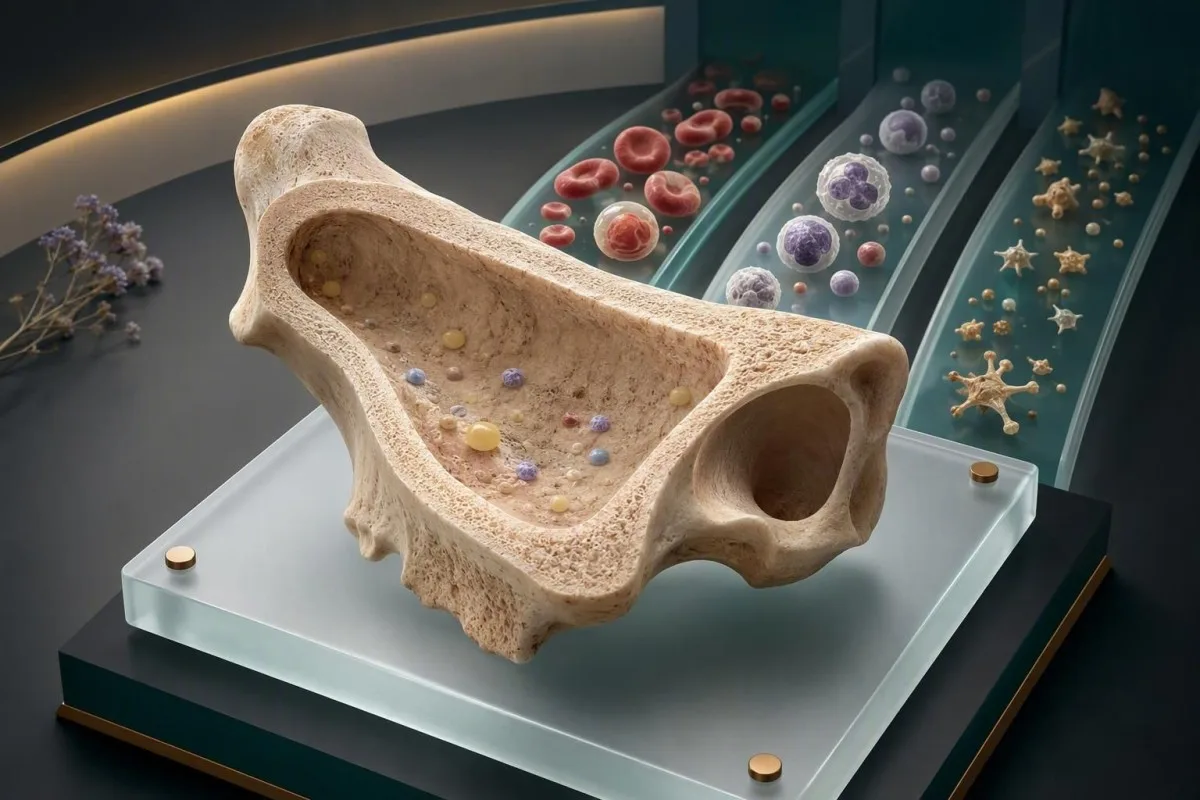
L'anemia aplastica di solito produce un quadro ematologico completo (CBC) marcato a tre linee: anemia, leucopenia e piastrinopenia con un conteggio dei reticolociti inappropriatamente basso. Il quadro richiede una conferma clinica tempestiva poiché diverse condizioni reversibili e gravi possono inizialmente apparire simili.


- Pancitopenia significa globuli rossi, globuli bianchi e piastrine bassi; è un quadro, non una diagnosi.
- Conteggio assoluto dei reticolociti inferiore a 20 × 10⁹/L supporta una marcata riduzione dell'output midollare quando è presente anemia.
- Anemia aplastica grave è definita da midollo ipocellulare più almeno due dei seguenti: ANC inferiore a 0,5 × 10⁹/L, piastrine inferiori a 20 × 10⁹/L o reticolociti inferiori a 20 × 10⁹/L.
- ANC inferiore a 0,5 × 10⁹/L con febbre di 38,0°C o superiore richiede valutazione di emergenza in giornata.
- Piastrine inferiori a 10 × 10⁹/L comportano un rischio sostanziale di sanguinamento spontaneo e di solito richiedono cure urgenti sotto controllo ospedaliero.
- Macrocitosi può verificarsi nell'anemia aplastica, ma un MCV superiore a 110 fL dovrebbe indurre i clinici a escludere attivamente la carenza di B12 o folati.
- Blastico, disgenesia marcata, dacriociti o schistociti in uno striscio depongono contro l'anemia aplastica non complicata e modificano l'iter diagnostico.
- Non trattare autonomamente un conteggio ematico di base tri-lineare basso con solo ferro; il ferro non ripristina la produzione del midollo e può ritardare la valutazione urgente.
Il quadro del CBC che solleva preoccupazioni per l'anemia aplastica
UN esame del sangue per l'anemia aplastica tipicamente mostra pancitopenia: bassi livelli di emoglobina, neutrofili e piastrine contemporaneamente, mentre la risposta dei reticolociti rimane bassa anziché compensatoria. Questa combinazione dovrebbe innescare una revisione clinica urgente, specialmente se i conteggi sono diminuiti in più di un precedente esame CBC.
Negli adulti, un intervallo di riferimento tipico del CBC è emoglobina circa 120–155 g/L per molte donne e 135–175 g/L per molti uomini, globuli bianchi 4,0–11,0 × 10⁹/L e piastrine 150–400 × 10⁹/L; i laboratori stabiliscono i propri limiti. L'anemia aplastica abbassa tutte e tre le linee perché il midollo non produce abbastanza nuovi elementi cellulari. Per un orientamento di base, vedere la nostra guida a cosa include una CBC.
Il quadro è più informativo di qualsiasi singolo risultato basso. Un'emoglobina di 92 g/L dopo una copiosa perdita mestruale può essere carenza di ferro, mentre emoglobina 92 g/L più ANC 0,7 × 10⁹/L e piastrine 34 × 10⁹/L è un problema di produzione midollare fino a prova contraria. Nella mia esperienza clinica, il pericolo non è l'anemia da sola, ma il rischio di infezione e sanguinamento che si presentano silenziosamente insieme ad essa.
Kantesti è un Analizzatore di analisi del sangue AI che legge le componenti del CBC come un modello collegato, non come tre segnali di allarme non correlati. Il nostro sistema può aiutare a organizzare il referto e i risultati precedenti, ma non può diagnosticare l'insufficienza midollare o sostituire una valutazione ematologica urgente. A partire dal 26 agosto 2026, qualsiasi nuova citopenia a tre linee merita la revisione di un clinico reale entro pochi giorni, non un controllo annuale di routine.
Un MCV dall'aspetto normale non rende benigna la pancitopenia. L'anemia aplastica precoce può essere normocitica, leggermente macrocitica o occasionalmente microcitica se coesiste carenza di ferro; la risposta midollare e lo striscio periferico spesso forniscono più indicazioni del solo MCV. La regola pratica del Dr. Thomas Klein è semplice: chiedersi se il midollo sta rispondendo prima di presumere una spiegazione nutrizionale.
Perché il pattern viene spesso trascurato
Un CBC può segnalare ogni risultato separatamente, quindi i pazienti a volte si concentrano sul numero più basso e trascurano il raggruppamento. Una diminuzione delle piastrine da 260 a 92 × 10⁹/L, anche se tecnicamente al di sopra di una soglia di emergenza, è clinicamente significativa quando l'emoglobina e i neutrofili stanno diminuendo in parallelo. Tendenze dell'esame del sangue rivelano spesso quella traiettoria prima di un singolo referto.
Anemia più basso conteggio dei reticolociti: l'indizio dell'output midollare
A conteggio dei reticolociti basso in una persona anemica significa che il midollo non sta sostituendo adeguatamente i globuli rossi, ed è uno degli indizi più utili a sostegno dell'anemia aplastica. Il conteggio assoluto dei reticolociti è più importante della percentuale di reticolociti perché una percentuale può apparire ingannevolmente normale quando i globuli rossi totali sono bassi.
La maggior parte dei laboratori riporta un intervallo di riferimento assoluto dei reticolociti nell'adulto intorno a 25–100 × 10⁹/L, sebbene i metodi differiscano. Nei criteri di anemia aplastica grave, un conteggio assoluto dei reticolociti inferiore a 20 × 10⁹/L è una delle misure di basso rendimento che definiscono quando la cellularità del midollo è marcatamente ridotta. Un dettagliato guida sul conteggio dei reticolociti spiega perché i risultati basati solo sulla percentuale possono essere fuorvianti.
Al contrario, un'emorragia acuta o un'emolisi dovrebbero solitamente aumentare i reticolociti dopo diversi giorni, spesso al di sopra di 100 × 10⁹/L se l'apporto di ferro e la funzione midollare sono intatti; la bassa aptoglobina, l'aumento della bilirubina indiretta e la LDH elevata supportano l'emolisi; queste rappresentano una storia fisiologica diversa dall'aplasia. La distinzione è importante perché trattare l“”anemia" senza identificare la produzione rispetto alla distruzione è come avvengono i ritardi.
Un paziente che ho visto con emoglobina 76 g/L aveva una percentuale di reticolociti dell'1,21%, che sembrava trascurabile finché il conteggio assoluto non è stato calcolato a 18 × 10⁹/L. Quella non era una risposta di recupero. Quando l'anemia è sostanziale, i medici possono utilizzare un indice di produzione dei reticolociti, ma i reticolociti assoluti sono generalmente meno soggetti a errori nel triage quotidiano.
I reticolociti possono essere bassi transientemente durante infezioni gravi, dopo chemioterapia, per tossicità alcolica o in malattie renali avanzate, quindi questo risultato non è specifico per l'anemia aplastica. La revisione di Young del 2018 sul New England Journal of Medicine sottolinea che la diagnosi richiede una valutazione midollare e l'esclusione di alternative ereditarie, immunitarie, tossiche e clonali, non un risultato isolato dei reticolociti (Young, 2018).
Neutrofili bassi: il valore del CBC che modifica l'urgenza dell'infezione
IL conteggio assoluto dei neutrofili (ANC) predice il rischio di infezioni batteriche e fungine meglio del conteggio totale dei globuli bianchi. Un ANC inferiore a 0,5 × 10⁹/L è neutropenia grave, e una febbre pari o superiore a 38,0°C una volta, o 38,0°C sostenuta per un'ora, richiede una valutazione di emergenza.
L'ANC si calcola moltiplicando i globuli bianchi per la percentuale di neutrofili più la percentuale di bande. Ad esempio, WBC 1,4 × 10⁹/L con neutrofili 40% dà un ANC 0,56 × 10⁹/L, molto più utile del solo conteggio totale. Il nostro guida per il cut-off dell’ANC spiega le variazioni legate all'età e alla gravidanza, ma la soglia di 0,5 × 10⁹/L rimane la principale linea di pericolo per gli adulti.
La grave anemia aplastica spesso produce neutropenia senza la granulazione tossica o lo spostamento a sinistra che possono accompagnare un'infezione batterica. Detto questo, un paziente può avere sia insufficienza midollare che infezione; l'assenza di un alto conteggio dei globuli bianchi non esclude mai la sepsi. Febbre, brividi intensi, nuova confusione, respiro corto o mal di gola in rapido peggioramento non dovrebbero attendere un ripetuto esame ambulatoriale della CBC.
La grave anemia aplastica utilizza una soglia ANC ancora più bassa: inferiore a 0,2 × 10⁹/L. Il motivo della separazione tra 0,2 e 0,5 è pratico: a questi conteggi, gli organismi comuni della bocca e della pelle possono diventare pericolosi con poco arrossamento locale o pus. In ospedale, i medici possono ottenere colture e iniziare un trattamento antimicrobico empirico prima che una causa sia completamente stabilita.
Un basso conteggio dei linfociti può coesistere ma non sostituisce l'ANC nelle decisioni relative al rischio acuto. Se manca il differenziale, chiedetelo al laboratorio o al medico piuttosto che indovinare dal WBC totale. Sintomi da basso conteggio di linfociti meritano un follow-up, ma la profondità dei neutrofili guida la decisione in giornata.
Quando la febbre conta più del referto della CBC
Una temperatura di 38,0°C in una persona con ANC 0,4 × 10⁹/L è urgente anche se si sente “per lo più bene” e la febbre scende dopo il paracetamolo. Gli antipiretici possono ridurre il segnale visibile senza trattare il problema sottostante. Portare la CBC e l'elenco dei farmaci al pronto soccorso; non assumere antibiotici avanzati prima delle colture a meno che un medico non lo indichi.
Piastrine basse: soglie di sanguinamento nella sospetta insufficienza midollare
Piastrine inferiori a 50 × 10⁹/L aumentano le preoccupazioni per lividi e sanguinamento correlato a procedure, mentre conteggi inferiori a 10 × 10⁹/L possono causare sanguinamento spontaneo. Nell'anemia aplastica, la trombocitopenia si verifica solitamente con anemia e neutropenia piuttosto che come problema piastrinico isolato.
Petecchie, epistassi di durata superiore a 20 minuti, sanguinamento gengivale, sanguinamento mestruale abbondante, sangue nelle urine, feci nere o un improvviso mal di testa intenso richiedono un contatto clinico urgente quando le piastrine sono basse. Un conteggio piastrinico di 18 × 10⁹/L non è automaticamente catastrofico, ma non è un numero da gestire tramite consigli da internet. Vedere la nostra discussione pratica sui valori soglia delle piastrine prima di interventi dentistici.
Lo striscio aiuta a distinguere tra ridotta produzione e distruzione periferica. Nella trombocitopenia immunitaria, le piastrine possono essere l'unica linea bassa e spesso si osservano piastrine giovani più grandi; l'anemia aplastica ha più spesso una frazione piastrinica immatura bassa o normale perché la produzione stessa è ridotta. Queste sono tendenze, non regole, e uno morfologo esperto deve leggere lo striscio.
Evitare aspirina, ibuprofene, naprossene e megadosi non prescritte di olio di pesce fino a quando un medico non valuta una trombocitopenia significativa, poiché possono compromettere la funzione piastrinica anche quando il conteggio numerico rimane invariato. Anche l'alcol può peggiorare la soppressione midollare e la funzione piastrinica. Anche l'acetaminofene/paracetamolo non è universalmente adatto: la dose e lo stato del fegato contano ancora.
Un conteggio piastrinico può essere falsamente basso quando le piastrine si aggregano in un campione EDTA. Il laboratorio può segnalare “agglomerati piastrinici presenti” e ripetere il conteggio in una provetta citrata; questo si chiama pseudotrombocitopenia. Spiega piastrine basse isolate, non una pancitopenia convincente con un basso numero di reticolociti.
Come i clinici classificano l'anemia aplastica grave e molto grave
La grave anemia aplastica richiede un midollo osseo ipocellulare, solitamente inferiore al 25% di cellularità, più almeno due criteri periferici: ANC inferiore a 0,5 × 10⁹/L, piastrine inferiori a 20 × 10⁹/L, o reticolociti assoluti inferiori a 20 × 10⁹/L. La malattia molto grave soddisfa questi criteri con ANC inferiore a 0,2 × 10⁹/L.
Queste soglie provengono dal collaudato quadro di Camitta, ma sono strumenti di triage e pianificazione del trattamento piuttosto che una diagnosi basata su un foglio di calcolo. Un midollo può essere a chiazze e una recente trasfusione può alterare l'aspetto dell'anemia. I medici considerano anche i sintomi, la storia di infezioni, la necessità di trasfusioni, l'età, le opzioni di donatore e l'evidenza di un disturbo clonale.
L'anemia aplastica moderata non è definita in modo così netto. Una persona con piastrine 58 × 10⁹/L, ANC 0,9 × 10⁹/L e emoglobina 98 g/L potrebbe non soddisfare i criteri di gravità ma può comunque deteriorarsi o richiedere un trattamento. Questa ambiguità è esattamente il motivo per cui le CBC seriali e il follow-up ematologico sono più importanti che cercare di assegnare un'etichetta rassicurante a casa.
La linea guida della British Society for Haematology descrive l'esame del midollo, la citogenetica, il test di flusso per i cloni PNH e la valutazione delle insufficienze midollari ereditarie come parti del percorso diagnostico (Killick et al., 2016). Un risultato citogenetico normale riduce la preoccupazione per alcune sindromi mielodisplastiche, ma non prova di per sé l'anemia aplastica immunitaria.
Kantesti AI evidenzia le combinazioni che superano le soglie urgenti, inclusi ANC inferiori a 0,5 × 10⁹/L e piastrine inferiori a 20 × 10⁹/L, in modo che gli utenti possano vedere il cluster prima del loro appuntamento. La nostra analisi è un avviso di sicurezza, non una classificazione della gravità; i criteri sottostanti richiedono un esame clinico e i risultati del midollo. Per il contesto sui flag dei singoli report, leggere cosa significa “fuori intervallo”.
MCV, RDW e reperti del sangue periferico che affinano il quadro del CBC
L'anemia aplastica presenta spesso un MCV normale o leggermente alto, ma l'MCV da solo non può distinguerla da carenza di B12, carenza di folati, effetti dell'alcol, epatopatia o mielodisplasia. Uno striscio periferico manuale è essenziale quando la pancitopenia è nuova, progressiva o inspiegabile.
Un intervallo di riferimento per l'MCV è comunemente 80–100 fL. Una lieve macrocitosi intorno a 101–105 fL può verificarsi nell'anemia aplastica perché la produzione midollare stressata altera la maturazione dei globuli rossi, ma un MCV superiore a 110 fL dovrebbe indurre una revisione mirata di B12, folati, farmaci, alcol, tiroide ed fegato. Confronta gli indici nel nostro Guida MCV vs MCH.
L'RDW misura la variazione delle dimensioni dei globuli rossi ed è spesso 11,5–14,5%, a seconda dell'analizzatore. Un RDW normale non esclude l'insufficienza midollare; infatti, una popolazione abbastanza uniforme di globuli rossi ridotti può verificarsi quando la produzione semplicemente diminuisce. Un RDW bruscamente alto può invece suggerire carenze miste, recente trasfusione, recupero dopo trattamento o displasia.
Blasti, promielociti, ipogranulazione marcata, neutrofili pseudo-Pelger o forme displastiche significative spostano la preoccupazione verso la leucemia acuta o la sindrome mielodisplastica e dovrebbero accelerare la valutazione specialistica. Gli schistociti indicano invece un'altra direzione: la frammentazione dei globuli rossi microangiopatica, e possono essere urgenti se associati a bassi livelli di piastrine, danno renale o sintomi neurologici. Il nostro guida sugli schistociti copre quel pattern di emergenza separato.
Kantesti è un Strumento di analisi degli esami del sangue basato su AI che può confrontare MCV, RDW, reticolociti e conteggi storici, ma non sostituisce uno striscio esaminato. Nella mia esperienza, è lo striscio che trasforma una “CBC bassa” apparentemente semplice in una domanda diagnostica chiaramente focalizzata. Il guida tecnologica spiega come la nostra AI preserva le unità originali e gli intervalli di riferimento del laboratorio.
Carenze di B12, folati e rame possono mimare l'insufficienza midollare
La carenza di vitamina B12, folati e rame può causare pancitopenia e deve essere esclusa prima di etichettare un pattern di CBC come anemia aplastica. Queste carenze sono particolarmente plausibili con diete restrittive, malassorbimento, chirurgia bariatrica, uso elevato di zinco o alcuni farmaci.
La carenza di B12 produce comunemente macrocitosi, neutrofili ipersegmentati e acido metilmalonico elevato, tuttavia alcuni pazienti hanno MCV inferiore a 100 fL quando coesiste la carenza di ferro. La B12 sierica inferiore a 148 pmol/L, circa 200 pg/mL, è spesso considerata deficitaria, mentre 148–221 pmol/L può richiedere la conferma con acido metilmalonico o omocisteina. Il nostro confronto B12 e folati spiega perché i soli folati possono mascherare i segni ematologici mentre il danno neurologico continua.
La carenza di folati può abbassare tutte e tre le linee in casi avanzati, in particolare con scarso apporto, uso di alcol, malassorbimento, metotrexato, trimetoprim o alcuni farmaci antiepilettici. I folati eritrocitari possono riflettere meglio le riserve tissutali rispetto a un singolo livello sierico in alcuni contesti, ma la disponibilità e l'interpretazione del dosaggio variano. Non iniziare un'alta dose di acido folico prima che la B12 sia stata valutata, a meno che un medico non abbia una ragione specifica.
La carenza di rame è meno comunemente controllata, ma può causare anemia e neutropenia e può assomigliare alla mielodisplasia in un esame del midollo. L'eccesso di zinco supplementare è una causa reversibile classica perché lo zinco induce la metallotioneina intestinale, che lega preferenzialmente il rame. Un work-up per basso contenuto di rame è particolarmente rilevante per l'esposizione a creme per dentiere, chirurgia bariatrica o dosi di zinco superiori a 40 mg al giorno.
La nutrizione può far parte della risposta, ma non dovrebbe diventare un motivo per posticipare la valutazione midollare in caso di pancitopenia grave. La sostituzione di ferro, B12, folati e rame è su misura per deficit confermati e contesto medico; l'integrazione indiscriminata può oscurare risultati utili dei test. Questa è una di quelle aree in cui il contesto conta più di un singolo numero borderline.
Cause farmacologiche, tossiche e virali di pancitopenia da verificare prima
Farmaci, tossine e malattie virali possono sopprimere la produzione midollare e produrre uno schema di CBC simile all'anemia aplastica, a volte reversibile. Una storia completa di esposizione dovrebbe includere farmaci prescritti, antibiotici recenti, anticonvulsivanti, immunoterapie, prodotti erboristici, solventi, alcol e sostanze ricreative.
La chemioterapia è una causa ovvia, ma agenti meno ovvi includono il cloramfenicolo nelle regioni in cui è ancora utilizzato, i farmaci antitiroidei, il linezolid, alcuni anticonvulsivanti e le terapie immunomodulanti. La tempistica aiuta: la tossicità midollare diretta da farmaco spesso emerge settimane o mesi dopo l'esposizione, mentre le reazioni immunitarie ai farmaci possono essere meno prevedibili. Non interrompere mai un farmaco prescritto bruscamente senza il clinico che gestisce la citopenia.
L'anemia aplastica associata a epatite può verificarsi settimane o mesi dopo un episodio acuto di epatite, spesso in persone più giovani, e test di routine per epatite A, B, C, E, HIV, EBV, CMV e parvovirus possono essere selezionati in base alla storia. Uno screening virale negativo non esclude l'anemia aplastica immunitaria. Semplicemente rimuove spiegazioni competitive importanti e guida le precauzioni contro le infezioni.
L'esposizione al benzene rimane un rischio professionale e domestico rilevante, inclusi lavori industriali poco ventilati, manipolazione di carburante e alcuni solventi. I medici chiedono compiti lavorativi piuttosto che titoli di lavoro perché “manager d'ufficio presso un fornitore di vernici” può ancora comportare un'esposizione periodica al magazzino. Portare nomi di prodotti o schede di sicurezza se disponibili; il ricordo vago è comune e nessuno dovrebbe sentirsi in colpa.
Un CBC eseguito poco dopo una grave malattia virale potrebbe necessitare di essere ripetuto entro giorni o settimane se la persona è stabile, ma conteggi gravi non dovrebbero essere osservati passivamente. Modifiche del CBC dopo la malattia possono aiutare a inquadrare la tempistica, mentre la febbre con neutropenia grave rimane un'emergenza indipendentemente dal fattore scatenante sospetto.
Cause di pancitopenia che differiscono dall'anemia aplastica
La pancitopenia ha molte cause e l'anemia aplastica si distingue per un midollo ipocellulare senza infiltrazione maligna o displasia maggiore. Le principali alternative includono leucemia acuta, sindrome mielodisplastica, infiltrazione midollare, ipersplenismo, gravi stati di carenza, sindromi emofagocitiche, infezioni ed effetti dei farmaci.
La leucemia acuta può produrre bassi conteggi perché i blasti soffocano il midollo normale, ma i blasti circolanti non sono sempre visibili. La sindrome mielodisplastica diventa più probabile con displasia, alterazioni citogenetiche caratteristiche o macrocitosi persistente negli adulti più anziani, sebbene l'età da sola non provi nulla. Il percorso nella nostra guida ai test sul cancro del sangue mostra perché striscio, citometria a flusso e studi midollari sono complementari.
L'ipersplenismo abbassa i conteggi circolanti per sequestro, solitamente con splenomegalia, ipertensione portale, epatopatia o alcuni disturbi ematologici. I reticolociti possono essere normali o elevati piuttosto che profondamente soppressi, e la cellularità midollare è generalmente preservata o aumentata. Un'ecografia può essere utile, ma non elimina la necessità di indagare uno striscio preoccupante o una neutropenia grave.
L'emoglobinuria parossistica notturna (PNH) può sovrapporsi biologicamente all'anemia aplastica, quindi i clinici spesso ordinano citometria a flusso ad alta sensibilità per granulociti e monociti deficienti dell'ancora GPI. L'urina scura non è né richiesta né specifica. Trovare un piccolo clone PNH può supportare un contesto di insufficienza midollare immunitaria, tuttavia la gestione dipende dalle dimensioni del clone, dall'emolisi, dal rischio di trombosi e dal quadro midollare generale.
Kantesti è un servizio di interpretazione dei test del laboratorio di IA che possono far emergere schemi di pancitopenia e potenziali indizi alternativi, tra cui bilirubina, LDH, indici epatici e declino piastrinico storico. Non può determinare se un midollo sia ipocellulare, infiltrato o displastico – quelle sono domande per l'ematologia e la patologia. Una checklist per la seconda opinione può aiutare i pazienti a preparare domande mirate.
Segni di allarme urgenti: quando i risultati bassi del CBC richiedono cure di emergenza
L'assistenza di emergenza è appropriata per febbre di 38,0°C o superiore con ANC inferiore a 0,5 × 10⁹/L, sanguinamento incontrollato, feci nere, tosse con sangue, grave nuovo mal di testa, confusione, svenimento, dolore toracico o respiro affannoso a riposo. Non aspettare un'interpretazione online se si verifica uno qualsiasi di questi eventi.
La grave anemia può compromettere la consegna di ossigeno anche senza sanguinamento visibile. L'emoglobina inferiore a 70 g/L è una soglia comunemente utilizzata per la considerazione della trasfusione in pazienti ospedalizzati stabili, ma sintomi, sanguinamento attivo, malattie cardiovascolari, gravidanza e cronicità modificano le decisioni. Una persona con emoglobina 82 g/L che sviene o è affannosa a riposo necessita di una valutazione più urgente di una persona sana con lo stesso valore.
Le piastrine inferiori a 10 × 10⁹/L sono spesso gestite con decisioni urgenti dirette da specialisti perché il sanguinamento mucoso o interno spontaneo diventa più probabile. Evitare sport di contatto, iniezioni intramuscolari, termometri rettali e procedure dentistiche finché il team curante non indica diversamente. In caso di trauma cranico con qualsiasi basso conteggio piastrinico, cercare una valutazione urgente anche se i sintomi sembrano lievi.
Una temperatura normale non garantisce la sicurezza in caso di neutropenia grave; anziani, persone che assumono steroidi e pazienti molto malati potrebbero non sviluppare febbre. Nuovi ulcere in bocca, deglutizione dolorosa, dolore perianale o affaticamento in rapido peggioramento possono essere indizi precoci di infezione. Schemi di laboratorio per sepsi forniscono contesto, ma sintomi e segni vitali determinano l'azione immediata.
Il Dr. Thomas Klein consiglia ai pazienti di fotografare o scaricare il referto originale, annotare la data dell'esame e portare ogni contenitore di farmaci e integratori per una revisione urgente. Questo piccolo passo spesso identifica un'esposizione a farmaci sensibile al tempo o chiarisce se il “nuovo” conteggio basso era già in tendenza. Non guidare se si è dizzy, svenuti o si sanguina attivamente.
Quali test confermano o escludono l'anemia aplastica dopo il CBC
Un CBC non può confermare l'anemia aplastica; la conferma richiede solitamente un'aspirazione del midollo osseo e una biopsia con trèfina che mostrino ipocellularità, oltre a test che escludano cause clonali, ereditarie, infettive, nutrizionali e correlate all'esposizione. Il ritmo dei test dipende dalla gravità del conteggio e dai sintomi.
Il campione di midollo valuta la cellularità, l'architettura, i blasti, la fibrosi, le riserve di ferro e la displasia. Negli adulti, la cellularità attesa è circa 100 meno l'età come stima approssimativa didattica, ma ciò è impreciso e la qualità del campione è importante. Un trentenne con una cellularità del midollo di 10% è molto diverso da un ottantenne con 10%, eppure entrambi necessitano di un'interpretazione esperta nel contesto.
La citogenetica, il microarray cromosomico o i pannelli di sequenziamento possono aiutare a distinguere la sindrome mielodisplastica ipocellulare dall'anemia aplastica acquisita. I test per cloni PNH, disturbi telomerici, anemia di Fanconi e altre condizioni di insufficienza midollare ereditaria sono selezionati in base all'età, alla storia familiare, ai reperti fisici e alla pianificazione del trapianto. I test genetici non sono riservati solo ai bambini; le malattie ereditarie ad esordio adulto sono sempre più riconosciute.
I test di base spesso includono B12, folati, rame, profilo epatico e renale, studi tiroidei quando indicati, marcatori di emolisi, sierologia virale, test di gravidanza quando pertinente e indagini autoimmuni adattate alla storia. L'obiettivo non è ordinare ogni test. È evitare di trascurare cause reversibili mentre si procede tempestivamente verso una valutazione definitiva.
L'IA Kantesti può organizzare un referto attraverso queste categorie e identificare le basi mancanti, ma la governance clinica è importante quando i risultati sono ad alto rischio. La nostra standard di validazione medica descrive il confine tra l'interpretazione assistita dall'IA e la diagnosi medica. Chiedere chi esaminerà il campione di midollo e se sarà valutato da un ematopatologo.
Quando ripetere un CBC prima di presumere che il risultato sia reale
Un ripetuto CBC è appropriato quando la coagulazione del campione, l'aggregazione piastrinica, la diluizione da fluidi intravenosi o le bandiere dell'analizzatore potrebbero distorcere un risultato, ma i test ripetuti non devono mai ritardare l'assistenza di emergenza per citopenie severe o sintomi preoccupanti. I laboratori possono spesso verificare un risultato dal tubo originale entro poche ore.
L'aggregazione piastrinica da EDTA può produrre un conteggio piastrinico falsamente basso, mentre un tubo parzialmente coagulato può abbassare piastrine e globuli bianchi in modo imprevedibile. Una revisione manuale dello striscio e un conteggio piastrinico con provetta di citrato possono risolvere il problema. Il ripetuto test dopo emolisi guida spiega perché i commenti sulla qualità del campione sono clinicamente utili, non mera gestione di laboratorio.
Il fluido endovenoso può diluire l'emoglobina e le piastrine, in particolare dopo diversi litri, ma raramente spiega un ANC o un conteggio dei reticolociti profondamente bassi. Al contrario, la disidratazione può concentrare temporaneamente i valori e nascondere la profondità dell'anemia. Confrontare l'ora del prelievo, i fluidi recenti, le trasfusioni, le malattie acute e il baseline precedente prima di concludere che un cambiamento numerico riflette la biologia del midollo.
La trasfusione complica l'interpretazione perché i globuli rossi del donatore possono migliorare l'emoglobina senza correggere la neutropenia, le piastrine o i reticolociti. Un'emoglobina in aumento dopo la trasfusione non deve essere scambiata per recupero del midollo. I medici tracciano quindi le date delle trasfusioni accanto alle tendenze dei reticolociti e all'intervallo fino alla prossima trasfusione richiesta.
Un “delta check” di laboratorio può segnalare una brusca deviazione dai valori precedenti, ma un fallimento del midollo genuino può svilupparsi tra i test di routine. Se un referto appare implausibile, chiamare tempestivamente il medico prescrittore o il laboratorio; non ripeterlo semplicemente in un sito distante "walk-in" e perdere la continuità. Il laboratorio originale può confrontare le bandiere dell'analizzatore e la microscopia.
Cosa non fare in attesa di una valutazione ematologica
Non iniziare ferro, folati ad alte dosi, “stimolanti del sangue” erboristici, aspirina o antibiotici avanzati solo perché un CBC è basso. Nella sospetta anemia aplastica, le prime azioni più sicure sono una revisione medica tempestiva, precauzioni contro le infezioni, precauzioni contro le emorragie e una completa storia di farmaci e integratori.
La carenza di ferro è comune, ma il ferro non spiega bassi neutrofili e piastrine nella maggior parte degli adulti. Assumere 45-65 mg di ferro elementare al giorno può causare nausea, costipazione e alterazioni fuorvianti negli studi sul ferro senza affrontare l'insufficienza midollare. Controllare ferritina, saturazione della transferrina, CRP e il pattern generale del CBC prima di presumere che la stanchezza equivalga a carenza di ferro; la nostra risorsa sugli studi sul ferro aiuta con queste distinzioni.
Evitare spazi interni affollati e contatti ravvicinati con persone che presentano sintomi respiratori se l'ANC è gravemente basso, ma non isolarsi dall'assistenza medica necessaria. L'igiene delle mani, i controlli rapidi della temperatura quando si sta male e la sicurezza alimentare sono sensati. Diete “neutropeniche” estreme hanno prove limitate e possono peggiorare la nutrizione, quindi chiedere al team di trattamento una guida appropriata a livello locale piuttosto che seguire elenchi restrittivi sui social media.
Mantenere una timeline di una pagina: primo CBC anomalo, CBC normale precedente, infezioni nei 6 mesi precedenti, farmaci iniziati o interrotti, viaggi, esposizioni sul posto di lavoro, trasfusioni, disturbi ematici familiari e sintomi emorragici. Queste informazioni possono far risparmiare un'intera visita in ambulatorio. Un tracciatore di risultati di laboratorio offre una struttura pratica per registrare date e unità.
Kantesti’s piattaforma di interpretazione dei biomarcatori AI può aiutare gli utenti a confrontare i referti CBC seriali e a preparare domande nella propria lingua in 75+ lingue. Non è un servizio di emergenza e non può vedere i sintomi, esaminare un paziente o organizzare il supporto trasfusionale. Usalo per comprendere il referto, quindi segui il percorso clinico già in corso.
Domande che rendono più utile un appuntamento ematologico
Le domande più utili di ematologia riguardano la gravità, il probabile meccanismo, le soglie di infezione e sanguinamento e il piano diagnostico, non se un singolo numero isolato sia “sbagliato”. Portare i referti originali perché i trend di ANC, piastrine, emoglobina, MCV e reticolociti guidano le decisioni.
Chiedere: “Soddisfo i criteri per l'anemia aplastica grave e quali criteri soddisfo?” La risposta dovrebbe includere la cellularità del midollo, l'ANC, la conta piastrinica e la conta assoluta dei reticolociti. Se la diagnosi rimane incerta, chiedere quali reperti favoriscono la sindrome mielodisplastica ipocellulare, la leucemia acuta, la carenza nutrizionale o la soppressione indotta da farmaci e quale test le separerà.
Chiedere soglie di sicurezza esplicite: a quale temperatura dovrei recarmi urgentemente, quali sintomi di sanguinamento sovrascrivono l'attesa, quali antidolorifici dovrei evitare e posso viaggiare? Queste istruzioni variano con la profondità dell'ANC e delle piastrine. Una persona con ANC 1,1 × 10⁹/L e piastrine 95 × 10⁹/L riceve consigli diversi da una persona con ANC 0,18 × 10⁹/L e piastrine 8 × 10⁹/L.
Se l'anemia aplastica è confermata, la discussione può includere la terapia immunosoppressiva, l'eltrombopag in protocolli selezionati e il trapianto di cellule staminali ematopoietiche a seconda dell'età, della disponibilità del donatore, della gravità della malattia e dell'esperienza locale. Nessuna scelta terapeutica dovrebbe essere desunta da una spiegazione online del CBC. Il decorso previsto e i rischi sono personali, a volte veramente incerti e meglio decisi da un team di insufficienza midollare.
Nostro Comitato consultivo medico aiuta a definire i principi della revisione clinica alla base dei contenuti di Kantesti, inclusa la regola che i pattern CBC ad alto rischio richiedono un'escalation professionale. Porta una persona di supporto se possibile; questi appuntamenti contengono molti termini sconosciuti e un altro ascoltatore migliora il richiamo.
Un piano di azione sicuro dopo un CBC anomalo di pancitopenia
La nuova pancitopenia con bassa conta dei reticolociti deve essere trattata come un possibile disturbo della produzione midollare finché un medico non identifica un'altra causa. È necessaria un'assistenza in giornata per febbre con neutropenia grave, sanguinamento attivo, sintomi neurologici, dolore toracico, svenimento o affanno a riposo.
Innanzitutto, verificare i valori e le unità esatte: emoglobina, WBC con ANC, piastrine, MCV, RDW e reticolociti assoluti. In secondo luogo, confrontarli con l'ultimo CBC disponibile, anche uno di 2 anni fa. Una conta bassa lieve stabile e una rapida caduta su tre linee non sono lo stesso problema clinico; confronto CBC affiancato può rendere visibile quella differenza.
In terzo luogo, cercare il livello di assistenza richiesto dai sintomi e dalle soglie. ANC inferiore a 0,5 × 10⁹/L con febbre, piastrine inferiori a 10 × 10⁹/L o sanguinamento significativo non dovrebbero attendere un rinvio standard. Per la pancitopenia stabile ma inspiegata, organizzare una rapida revisione clinica e chiedere se sono necessari la revisione dello striscio, il CBC di controllo, gli studi nutrizionali, i test virali e il rinvio ematologico.
In quarto luogo, non interpretare un singolo test “normale” di accompagnamento come rassicurazione. La ferritina normale non esclude la carenza di B12, l'LDH normale non esclude l'insufficienza midollare e un MCV normale non annulla tre linee cellulari basse. L'intero pattern, la sua tempistica e l'esame determinano il rischio.
Kantesti AI supporta la revisione strutturata dei risultati e l'analisi delle tendenze storiche, mentre la diagnosi e il trattamento rimangono a carico del tuo team clinico. Questo articolo è stato revisionato dal punto di vista medico secondo gli standard descritti da il processo di supervisione clinica di Kantesti. L'obiettivo pratico non è farti temere ogni segnale di allarme basso, ma riconoscere le combinazioni che non dovrebbero mai essere ignorate.
Domande frequenti
Come si presenta l'anemia aplastica su un esame emocromocitometrico (CBC)?
L'anemia aplastica di solito si manifesta come pancitopenia: bassi livelli di emoglobina, globuli bianchi bassi, in particolare neutrofili, e piastrine basse nello stesso esame emocromocitometrico completo (CBC). L'indizio di supporto per la produzione è un conteggio assoluto di reticolociti inappropriatamente basso, spesso inferiore a 20 × 10⁹/L in caso di malattia grave. L'MCV può essere normale o lievemente elevato, quindi un MCV normale non esclude la condizione. La diagnosi richiede prove di ipocellularità del midollo osseo e l'esclusione di altre cause di pancitopenia.
L'anemia aplastica può presentare globuli bianchi normali all'inizio?
Sì, l'anemia aplastica iniziale può colpire inizialmente una o due linee cellulari del sangue prima che si sviluppi una chiara pancitopenia. Un calo delle piastrine o un'anemia progressiva con reticolociti assoluti inferiori a circa 25 × 10⁹/L possono precedere una neutropenia grave. I medici confrontano quindi i CBC precedenti piuttosto che fare affidamento su un singolo risultato normale di WBC. Una nuova tendenza al ribasso su più linee dovrebbe richiedere una revisione medica tempestiva.
Quale conteggio di reticolociti suggerisce l'anemia aplastica?
Un conteggio assoluto di reticolociti inferiore a 20 × 10⁹/L supporta una grave sottoproduzione del midollo quando è presente anemia e fa parte dei criteri per l'anemia aplastica grave. Molti laboratori utilizzano un intervallo di riferimento per adulti vicino a 25–100 × 10⁹/L, sebbene l'intervallo esatto vari a seconda del metodo. La percentuale di reticolociti può essere fuorviante se normale in caso di anemia grave, quindi si preferisce il conteggio assoluto. I reticolociti bassi non sono specifici dell'anemia aplastica e si verificano anche in caso di carenza di nutrienti, malattie renali, infezioni e soppressione correlata a farmaci.
Un conteggio piastrinico di 20 è pericoloso nell'anemia aplastica?
Un conteggio piastrinico di 20 × 10⁹/L è gravemente basso e richiede una valutazione urgente diretta dall'ematologia, in particolare se sono presenti epistassi, sanguinamento gengivale, sanguinamento mestruale abbondante, feci nere, sangue nelle urine o mal di testa. Conteggi inferiori a 10 × 10⁹/L comportano un rischio maggiore di sanguinamento spontaneo e vengono spesso gestiti in ospedale in base ai sintomi e alla causa della persona. Evitare aspirina e FANS a meno che il medico curante non li approvi specificamente. L'urgenza aumenta ulteriormente quando sono presenti anche anemia e neutropenia.
Quando la conta dei neutrofili bassa è un'emergenza?
Un ANC inferiore a 0,5 × 10⁹/L indica neutropenia grave, e una temperatura di 38,0°C o superiore richiede una valutazione di emergenza in giornata. L'anemia aplastica molto grave utilizza un ANC inferiore a 0,2 × 10⁹/L, dove può verificarsi un'infezione grave con pochi sintomi locali. Brividi, nuova confusione, respiro corto, deglutizione dolorosa o dolore perianale giustificano anche un trattamento urgente anche senza febbre documentata. Il conteggio totale dei globuli bianchi da solo è meno utile dell'ANC per questa decisione.
La carenza di vitamina B12 può essere scambiata per anemia aplastica?
La carenza di vitamina B12 può causare anemia, bassi globuli bianchi, basse piastrine, macrocitosi e un basso numero di reticolociti, quindi può inizialmente assomigliare all'anemia aplastica. I livelli sierici di B12 inferiori a 148 pmol/L, circa 200 pg/mL, sono comunemente considerati una carenza, mentre i risultati borderline possono richiedere il test dell'acido metilmalonico. Neutrofili ipersegmentati e un MCV superiore a 110 fL favoriscono la carenza di B12 o folati, ma una carenza di ferro mista può nascondere la macrocitosi. L'esame del midollo osseo e gli esami del sangue mirati separano queste condizioni quando la CBC è grave o poco chiara.
Ottieni oggi l’analisi degli esami del sangue con IA (AI-Powered Blood Test Analysis)
Unisciti a oltre 2 milioni di utenti in tutto il mondo che si fidano di Kantesti per un’analisi istantanea e accurata degli esami di laboratorio. Carica i tuoi risultati analisi del sangue e ricevi un’interpretazione completa dei biomarcatori di 15,000+ in pochi secondi.
📚 Pubblicazioni di ricerca di riferimento
Klein, T., Mitchell, S., & Weber, H. (2026). Guida al gruppo sanguigno B negativo, al test del LDH e al conteggio dei reticolociti. Kantesti AI Medical Research.
Klein, T., Mitchell, S., & Weber, H. (2026). Diarrea dopo il digiuno, macchie nere nelle feci e guida gastrointestinale 2026. Kantesti AI Medical Research.
📖 Riferimenti medici esterni
⚕️ Esclusione di responsabilità medica
Questo articolo ha solo scopo educativo e non costituisce consulenza medica. Consulta sempre un operatore sanitario qualificato per decisioni su diagnosi e trattamento.
Segnali di fiducia E-E-A-T
Esperienza
Revisione clinica guidata da un medico dei flussi di lavoro di interpretazione degli esami.
Competenza
Focus sulla medicina di laboratorio su come i biomarcatori si comportano nel contesto clinico.
autorevolezza
Scritto dal dott. Thomas Klein con revisione della dott.ssa Sarah Mitchell e del Prof. Dr. Hans Weber.
Affidabilità
Interpretazione basata su evidenze, con percorsi di follow-up chiari per ridurre l’allarme.