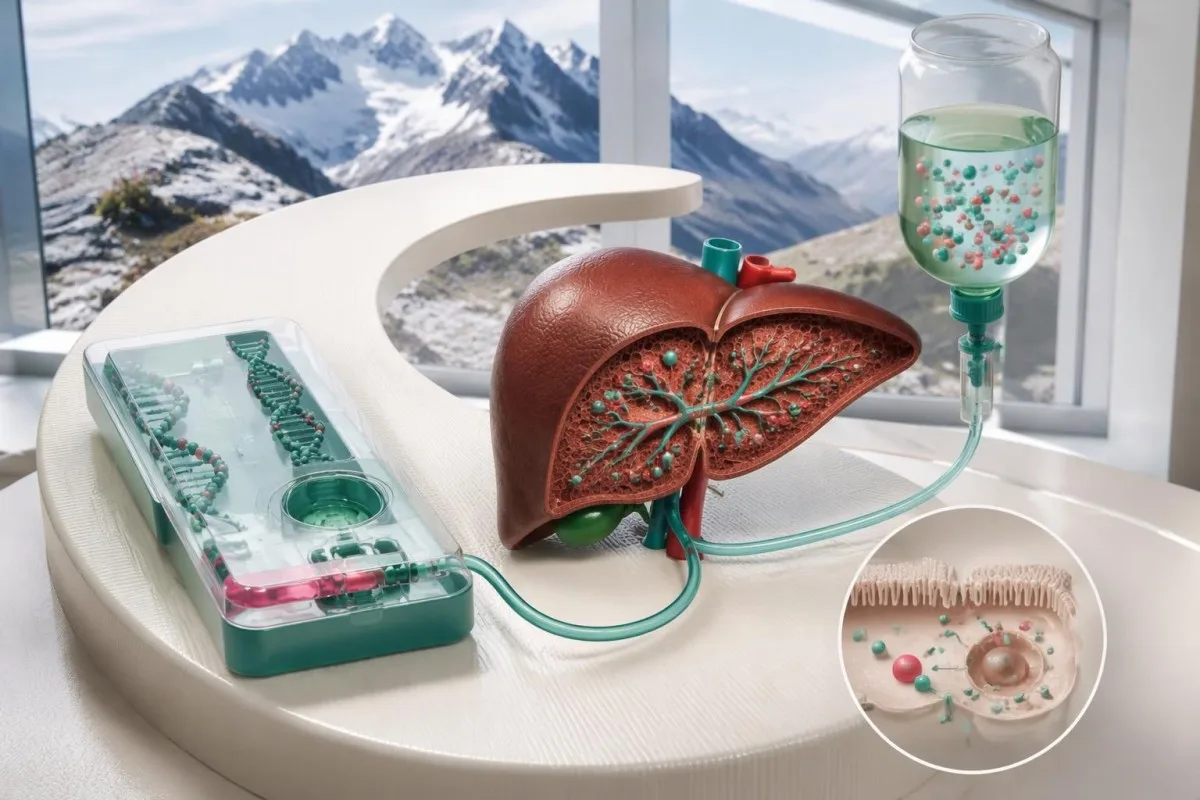
UGT1A1 परीक्षण, irinotecan के सक्रिय मेटाबोलाइट का कम निकासी-दर पहचान सकता है और अधिक सुरक्षित शुरुआती खुराक तय करने में मदद कर सकता है। यह हर प्रतिक्रिया का पूर्वानुमान नहीं लगा सकता, और निर्णय सटीक फॉर्मूलेशन, उपचार-रेजिमेन तथा आपकी ऑन्कोलॉजी टीम के आकलन पर निर्भर करता है।.

मुख्य निष्कर्ष
- UGT1A1 परीक्षण SN-38 के निष्क्रियकरण में वंशानुगत अंतर पहचानता है; नियमित बिलीरुबिन या लिवर परीक्षण आनुवंशिक परिणाम का विकल्प नहीं हो सकते।.
- Poor metabolizers में आम तौर पर *28/*28, *6/*6 या *6/*28 परिणाम होते हैं, जिनसे irinotecan-संबंधी गंभीर न्यूट्रोपीनिया का जोखिम बढ़ जाता है।.
- Intermediate metabolizers में आम तौर पर *1/*28 या *1/*6 परिणाम होते हैं; Dutch Pharmacogenetics Working Group इन रोगियों के लिए केवल जीनोटाइप के आधार पर स्वतः खुराक घटाने की सिफारिश नहीं करता।.
- शुरुआती खुराक संबंधी मार्गदर्शन अलग-अलग है: डच दिशानिर्देश poor metabolizers के लिए irinotecan की सामान्य शुरुआती खुराक के 70% की सिफारिश करता है, जिसके बाद चिकित्सक के मार्गदर्शन में समायोजन किया जाता है।.
- उपचार-रेजिमेन मायने रखता है क्योंकि पारंपरिक FOLFIRI में आम तौर पर हर 2 सप्ताह में 180 mg/m² दिया जाता है, जबकि अन्य शेड्यूल और लिपोसोमल फॉर्मूलेशन में अलग खुराकें इस्तेमाल होती हैं।.
- लिपोसोमल इरिनोटेकैन के लिए फॉर्मूलेशन-विशिष्ट निर्देश हैं; 70 mg/m² के रेजिमेन और 50 mg/m² के रेजिमेन को परस्पर विनिमेय नहीं मानना चाहिए।.
- विलंबित दस्त इरिनोटेकैन लेने के 24 घंटे से अधिक समय बाद शुरू होते हैं और निर्जलीकरण, इलेक्ट्रोलाइट की कमी या साथ में होने वाली न्यूट्रोपीनिया के कारण खतरनाक हो सकते हैं।.
- त्वरित मूल्यांकन की आवश्यकता कीमोथेरेपी के दौरान 38.0°C या इससे अधिक तापमान होने पर होती है, जब तक कि आपकी ऑन्कोलॉजी टीम ने कोई अलग, अधिक सख्त सीमा न बताई हो।.
पहली इन्फ्यूज़न से पहले UGT1A1 परीक्षण से क्या बदलाव आता है?
A इरिनोटेकैन से पहले UGT1A1 परीक्षण SN-38, दवा के सक्रिय मेटाबोलाइट, को निष्क्रिय करने की कम क्षमता की पहचान करता है। जैसे परिणाम 28/*28, *6/*6, या *6/*28 कम शुरुआती खुराक और गंभीर न्यूट्रोपीनिया तथा विलंबित दस्त के लिए अधिक करीबी निगरानी का आधार बन सकते हैं; ऑन्कोलॉजी टीम को इस परिणाम को वास्तविक रेजिमेन के अनुसार लागू करना चाहिए।.

परीक्षण चक्र 1 से पहले सबसे उपयोगी होता है, क्योंकि उपचार-संबंधी कोई भी लक्षण विकसित होने से पहले ही विरासत में मिली निकासी की भिन्नता मौजूद होती है। परिणाम यह नहीं मापता कि इस समय शरीर में कितना इरिनोटेकैन प्रवाहित हो रहा है, और यह भी तय नहीं करता कि कीमोथेरेपी काम करेगी या नहीं; ये अलग प्रश्न हैं, जिनका उत्तर उपचार की प्रतिक्रिया, नैदानिक आकलन और कभी-कभी विशेषज्ञ फार्माकोकाइनेटिक विधियों से मिलता है।.
पारंपरिक इरिनोटेकैन 180 mg/m² लेने के लिए निर्धारित किसी काल्पनिक रोगी को खराब मेटाबोलाइज़र का परिणाम आने के बाद अलग शुरुआती योजना दी जा सकती है, जबकि उसी जीनोटाइप वाले किसी अन्य रोगी को पहले से ही कम खुराक वाला संयोजन दिया जा रहा हो सकता है। उपयोगी प्रश्न केवल यह नहीं है कि परिणाम पॉज़िटिव है या नहीं: पूछें कि परिणाम से कौन-सी शुरुआती खुराक, निगरानी-सारणी और खुराक बढ़ाने के मानदंड बदलते हैं।.
कांटेस्टी एक एआई रक्त परीक्षण विश्लेषक जो नियमित CBC और बिलीरुबिन रिपोर्टों को समझने में मदद करता है, न कि ऐसी प्रयोगशाला जो UGT1A1 जीनोटाइपिंग करती हो या ऐसी सेवा जो कीमोथेरेपी लिखती हो। हमारी संगठन और नैदानिक उद्देश्य आपकी ऑन्कोलॉजी टीम की दवा लिखने की भूमिका से अलग हैं; आनुवंशिक रिपोर्ट और चक्र-विशिष्ट प्रयोगशाला परिणामों को उपचार रिकॉर्ड के 2 अलग-अलग हिस्सों के रूप में रखें।.
UGT1A1 *28 और *6, irinotecan के चयापचय को कैसे प्रभावित करते हैं?
UGT1A1 *28 एंजाइम की अभिव्यक्ति कम करता है, जबकि UGT1A1 *6 वैरिएंट कोडिंग में बदलाव के माध्यम से एंजाइम का कार्य कम करता है। दोनों सक्रिय SN-38 के बहुत कम सक्रिय ग्लूकुरोनाइड, SN-38G, में रूपांतरण को धीमा कर सकते हैं; इससे ALT या AST के असामान्य परिणाम आवश्यक हुए बिना ही शरीर में दवा का संपर्क बढ़ जाता है।.

इरिनोटेकैन को पहले कार्बोक्सिलएस्टरेज़ द्वारा SN-38 में बदला जाता है; इसके बाद UGT1A1, SN-38 के शुरुआती सक्रियण के बजाय उसे निष्क्रिय करने में भाग लेता है। *28 एलील में आमतौर पर *1 से जुड़े 6 प्रमोटर TA रिपीट के बजाय 7 होते हैं, जबकि *6 को आमतौर पर c.211G>A के रूप में वर्णित किया जाता है, जिससे p.Gly71Arg प्रतिस्थापन होता है।.
यही एंजाइम बिलीरुबिन का संयुग्मन भी करता है, जिससे इसका संबंध समझ आता है गिल्बर्ट सिंड्रोम और बिलीरुबिन से. । हालांकि, बिलीरुबिन का सामान्य परिणाम कम-कार्यशील जीनोटाइप को नकारता नहीं है, और बढ़ा हुआ परिणाम यह नहीं बताता कि कौन-सा वैरिएंट मौजूद है; उपवास, बीमारी, अवरोध और यकृत की खराबी किसी एक माप की व्याख्या बदल सकते हैं।.
Minami et al. ने जापानी रोगियों में *6 और *28 दोनों का अध्ययन किया और UGT1A की भिन्नता को इरिनोटेकैन फार्माकोकाइनेटिक्स और विषाक्तता से जोड़ा (Pharmacogenetics and Genomics, 2007)। उनका कार्य इसलिए महत्वपूर्ण है क्योंकि केवल *28 तक सीमित परीक्षण चिकित्सकीय रूप से प्रासंगिक *6 एलील को नज़रअंदाज़ कर सकता है; *28-निगेटिव बताए गए 2 रोगियों में SN-38 निकासी की क्षमता समान होना आवश्यक नहीं है।.
किन परिणामों का अर्थ UGT1A1 poor metabolizer है?
A UGT1A1 खराब मेटाबोलाइज़र generally carries 2 decreased-function alleles, including 28/*28, *6/*6, या *6/*28. A person with *1/*28 or *1/*6 usually has an intermediate-metabolizer phenotype; *1/*1 is usually classified as normal when the test adequately covers relevant variants.

The slash separates the 2 inherited gene copies; it is not a fraction or a drug concentration. A *6/*28 result usually means one decreased-function allele came from each parent, creating a compound-heterozygous poor-metabolizer result; possessing 2 different allele names does not make the result less clinically relevant than *28/*28.
Intermediate metabolism is not the same as zero risk. Although the Dutch guideline does not recommend an automatic reduction for *1/*28 or *1/*6, a patient starting at 180 mg/m² may still need modification because of elevated bilirubin, limited marrow reserve, previous toxicity, or the accompanying drugs; the phenotype is one input, not permission to ignore the rest.
Pharmacogenetic recommendations are drug-specific, as our explanation of SLCO1B1-related medication risk also illustrates. A reduced-function result does not mean every medicine is unsafe, and *28/*28 does not itself diagnose a hereditary cancer syndrome; ask the laboratory to provide the diplotype, assigned phenotype, and variants tested rather than a 1-word positive result.
आनुवंशिक परीक्षण में क्या शामिल होना चाहिए, और इसकी ज़रूरत कब होती है?
The test should clearly state whether it detects both *28 and *6, how it assigns the 2 alleles, and which other variants it evaluates. Testing before the first irinotecan dose allows the result to influence prevention rather than merely explain toxicity after it occurs.
UGT1A1 *6 is more frequent in several East Asian populations, while *28 occurs across multiple ancestry groups; ancestry can inform test coverage but cannot substitute for testing. Some assays also distinguish the 5-repeat *36 and 8-repeat *37 alleles, so reports from 2 laboratories may differ because their analytical scope differs—not because your inherited genotype changed.
A laboratory may use a blood-derived DNA sample or a validated saliva or cheek-cell method; fasting is not ordinarily required for the genetic analysis itself. Recent allogeneic stem-cell transplantation needs special discussion because circulating DNA may reflect the donor, and turnaround time must be checked locally rather than assumed to fit a treatment appointment in 2 days.
Genotyping and enzyme-activity testing are not interchangeable, a distinction also relevant to TPMT test interpretation. UGT1A1 genotype generally needs testing only once, but a narrow panel may warrant additional analysis if the clinical picture is unexpected; a report listing only 1 tested variant should not be read as proof that every other reduced-function allele is absent.
UGT1A1 से गंभीर न्यूट्रोपीनिया का जोखिम कितना बढ़ता है?
Poor-metabolizer genotypes increase the likelihood of गंभीर न्यूट्रोपीनिया, but the size of the increase depends on dose and regimen. Grade 3 neutropenia generally means an absolute neutrophil count below 1.0 down to 0.5 × 10⁹/L; grade 4 means below 0.5 × 10⁹/L.
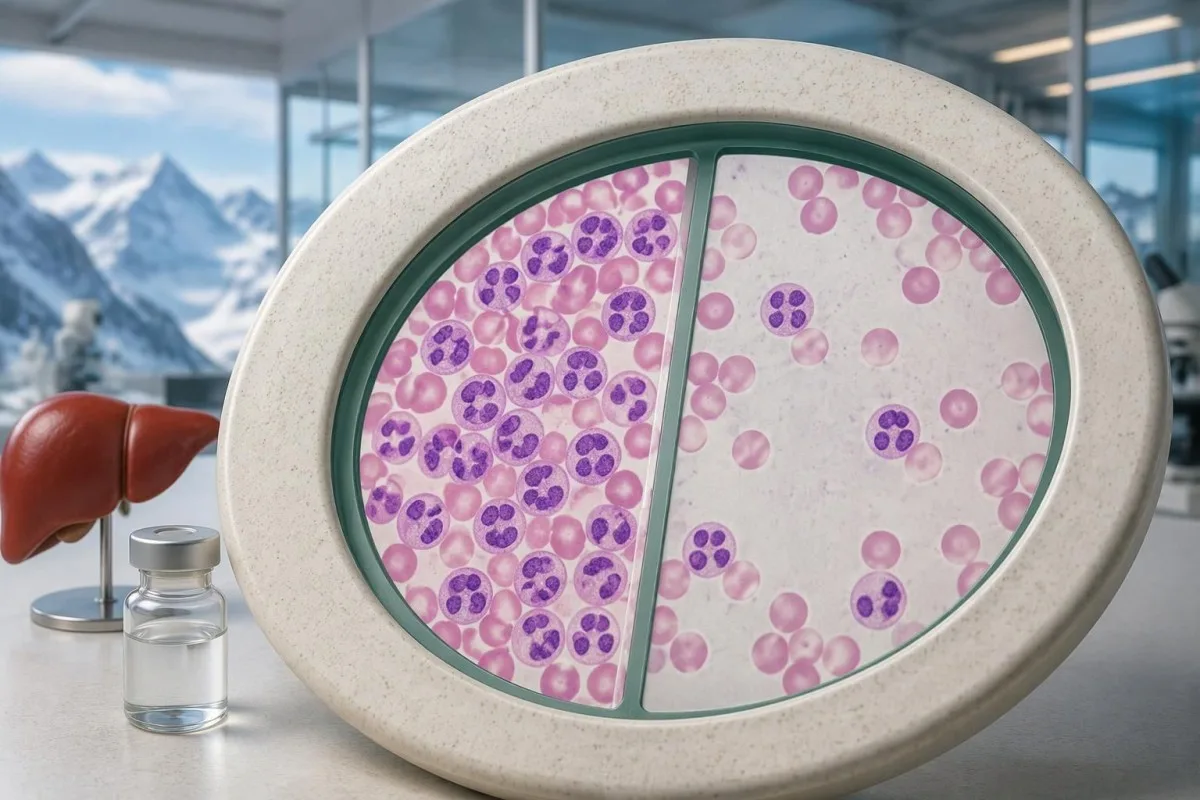
Hoskins et al. reported a dose-dependent association between *28/*28 and irinotecan-related neutropenia in their 2007 Journal of the National Cancer Institute meta-analysis. In the 150–250 mg/m² category, the pooled odds ratio was 3.22, with a 95% confidence interval of 1.52–6.81; older mixed schedules and wide uncertainty prevent treating this as a personal probability.
An odds ratio is not the percentage of patients affected. In a purely hypothetical illustration, if baseline risk were 10%, an odds ratio of 3 would correspond to approximately 25% risk—not 30%; the actual baseline varies with companion drugs, supportive care, prior treatment, and eligibility criteria, so no single percentage applies to every poor metabolizer.
Kantesti can help readers distinguish the ANC from the neutrophil percentage in routine reports, using the concepts explained in our निरपेक्ष न्यूट्रोफिल गणना मार्गदर्शिका. A pre-existing Duffy-null-associated lower ANC requires individualized interpretation, but a new chemotherapy-related fall below 0.5 × 10⁹/L still deserves prompt oncology assessment rather than reassurance based on ancestry alone.
शुरुआती और देर से होने वाले irinotecan दस्त अलग क्यों होते हैं?
Early diarrhea occurs during or shortly after infusion, usually within 24 hours, and may accompany cholinergic symptoms such as sweating or abdominal cramping. विलंबित दस्त begins more than 24 hours after treatment and is more closely related to intestinal toxicity, including exposure to SN-38.
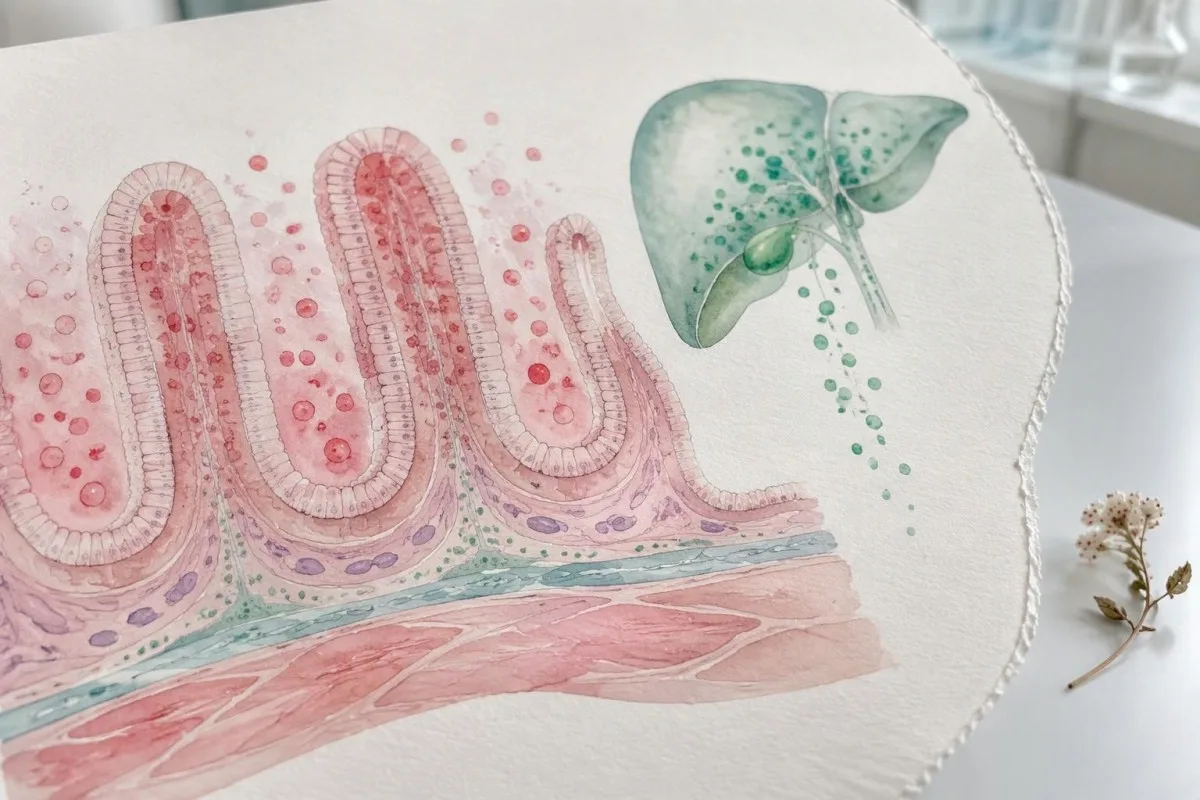
UGT1A1 genotype is more useful for anticipating delayed toxicity than predicting the immediate cholinergic syndrome. Clinicians may use atropine for early symptoms when appropriate, while delayed diarrhea requires a separate written treatment plan; intestinal bacteria can convert SN-38G back to SN-38 through beta-glucuronidase activity, illustrating why liver conjugation is not the only determinant of bowel exposure.
Grade 3 diarrhea commonly includes at least 7 additional stools per day above baseline, hospitalization being indicated, or a severe increase in ostomy output. Do not wait to reach that count before calling: persistent diarrhea despite the prescribed plan, vomiting that prevents drinking, fever, dizziness, or reduced urine output can justify urgent assessment at a much smaller stool increase.
Diarrhea during chemotherapy should not automatically be attributed to genotype, because antibiotics, infections, and accompanying drugs can produce similar symptoms; our C. difficile result guide explains one relevant diagnostic complication. If diarrhea lasts beyond 24 hours despite your oncology instructions, contact the team, and treat blood in the stool or significant abdominal pain as warning signs rather than ordinary treatment effects.
उपचार-रेजिमेन शुरुआती खुराक के निर्णय को कैसे बदलता है?
A starting-dose decision combines UGT1A1 phenotype with the planned regimen, not genotype alone. Conventional FOLFIRI commonly uses irinotecan 180 mg/m² every 2 weeks, whereas modified combinations may use 150 mg/m² or another protocol-specific amount; those differences change baseline exposure and toxicity.

The Dutch Pharmacogenetics Working Group recommends starting poor metabolizers at 70% of the normal irinotecan dose, with subsequent increases guided by neutrophil counts and clinical tolerance (Hulshof et al., 2023). Applied hypothetically to a 180 mg/m² protocol, 70% is 126 mg/m²; the prescribing team decides whether protocol rules permit rounding, what dose level to use, and when reassessment occurs.
A 70% calculation is relative to the regimen’s usual starting dose, not a fixed universal dose. For a hypothetical protocol starting at 150 mg/m², the same calculation gives 105 mg/m²; applying the 126 mg/m² figure from a different protocol would therefore be a genuine dosing error, especially if the infusion schedule or formulation also differed.
कांटेस्टी एक AI ब्लड टेस्ट रिपोर्ट समझें प्लेटफॉर्म for explaining reported laboratory values, not selecting a 180 mg/m² chemotherapy prescription; our क्लिनिकल वैलिडेशन फ्रेमवर्क describes the distinction between interpretation support and prescribing. In combinations containing fluorouracil or capecitabine, कीमोथेरेपी से पहले DPYD परीक्षण addresses a separate metabolic risk that a normal UGT1A1 result cannot rule out.
दिशानिर्देशों में irinotecan की खुराक संबंधी सिफारिशें अलग-अलग क्यों हैं?
Guidelines differ because they interpret dose-dependent evidence differently and serve different clinical settings. The Dutch guideline recommends a 70% starting dose for poor metabolizers, while US conventional irinotecan prescribing information advises considering a reduction by at least 1 dose level, without defining one percentage for every regimen.
A dose level is defined by the treatment protocol rather than by the genetic test. Moving from 180 to 150 mg/m² would be approximately a 17% reduction, while moving from 180 to 120 mg/m² would be approximately a 33% reduction; these are mathematical examples, not recommendations, and explain why the phrase reduce one level needs a named protocol.
The French RNPGx/GPCO dose-stratified framework has historically distinguished doses below 180 mg/m², doses of 180–230 mg/m², and high doses of at least 240 mg/m². It recommended approximately 25–30% reduction for *28/*28 at the intermediate range and advised against high-dose use in that genotype; the Dutch recommendation is broader, including lower-dose regimens and other poor-metabolizer combinations.
The evidence is genuinely less settled at lower doses, where severe events may be less frequent and studies less able to estimate genotype effects precisely. This differs from HLA-B*57:01 drug avoidance, where the relevant recommendation is avoidance rather than a 30% reduction; ask which local guideline your team follows and whether its advice specifically covers *6/*6 or *6/*28.
क्या लिपोसोमल irinotecan में UGT1A1 की खुराक के वही नियम लागू होते हैं?
Liposomal irinotecan is not interchangeable with conventional irinotecan, and its UGT1A1 instructions depend on the regimen. In the liposomal irinotecan plus fluorouracil/leucovorin setting, a usual 70 mg/m² dose is reduced to 50 mg/m² initially for known *28/*28; the NALIRIFOX regimen already starts at 50 mg/m².

Those 70 and 50 mg/m² figures refer to irinotecan free base in the relevant liposomal prescribing instructions. Some documents also express doses using the hydrochloride trihydrate equivalent, approximately 80 and 60 mg/m² respectively; the team must verify the convention rather than interpret a different-looking number as an intentional dose increase or decrease.
For NALIRIFOX—liposomal irinotecan with oxaliplatin, fluorouracil, and leucovorin—the labeled starting dose is 50 mg/m² every 2 weeks, including patients known to have *28/*28. This does not establish that every poor-metabolizer genotype has identical evidence, especially *6-containing combinations; the oncology pharmacist should check the relevant product information and local protocol rather than import conventional irinotecan rules automatically.
A medication list that says only irinotecan is insufficient for a pharmacogenetic decision: request the formulation, companion drugs, dose expression, and schedule before comparing 2 plans. Our बेसलाइन प्रयोगशाला तैयारी मार्गदर्शिका also explains why recording pretreatment measurements helps later interpretation, although those measurements cannot resolve a formulation or prescribing ambiguity.
जीनोटाइप के साथ कौन-से प्रयोगशाला परिणाम और दवाएँ मायने रखती हैं?
CBC with differential, bilirubin, liver tests, kidney function, and electrolytes provide information that UGT1A1 genotype cannot supply. A bilirubin of 2.0 mg/dL is approximately 34 µmol/L; conventional irinotecan studies often excluded values above this level, so higher results require specialist assessment rather than a genotype-only calculation.
An isolated indirect bilirubin rise may fit reduced UGT1A1 activity, while rising direct bilirubin with abnormal ALP or transaminases suggests an additional hepatobiliary problem. A hypothetical total bilirubin of 1.8 mg/dL with otherwise stable tests is therefore not equivalent to 1.8 mg/dL accompanied by new jaundice and obstruction; fractionation, trends, symptoms, and imaging determine the interpretation.
Strong CYP3A4 inducers can lower irinotecan exposure, while strong CYP3A4 or UGT1A1 inhibitors can increase clinically relevant exposure; examples requiring pharmacy review include rifampicin, carbamazepine, ketoconazole, and atazanavir. Do not stop a prescription yourself, and disclose supplements such as St John’s wort before cycle 1 because changing an interacting medicine can itself change exposure.
Kantesti can help explain routine kidney and electrolyte reports, but a normal creatinine does not guarantee tolerance of delayed diarrhea. The BUN/क्रिएटिनिन अनुपात गाइड describes contextual interpretation, while our electrolyte safety guide explains why potassium or magnesium losses can matter after 24 hours of gastrointestinal symptoms.
किस निगरानी और किन लक्षणों पर तुरंत कार्रवाई की ज़रूरत होती है?
Monitoring remains necessary for every genotype, with CBC checks before treatment and additional measurements when clinically indicated. A temperature of 38.0°C या उससे अधिक during chemotherapy warrants immediate contact with the oncology service unless the team has supplied a different threshold; follow a stricter local instruction.

Formal definitions of febrile neutropenia often use a single temperature of 38.3°C or a temperature of 38.0°C sustained for 1 hour, together with a low or falling ANC. These definitions are not instructions to wait at home: chemotherapy services often use simpler, more cautious telephone thresholds, and shaking chills, confusion, or sudden deterioration can be urgent without a documented fever.
A falling ANC can precede symptoms, so a patient feeling well should still attend the scheduled laboratory check. Our borderline neutrophil interpretation guide explains why a result near a cutoff needs context; during treatment, a change from 2.5 to 0.7 × 10⁹/L carries different significance from a stable longstanding count near 1.4 × 10⁹/L.
Dose escalation after a reduced start should follow a predefined plan based on counts, diarrhea, other toxicity, and treatment goals—not simply the absence of nausea after cycle 1. G-CSF may reduce neutropenia risk when indicated, but it does not prevent intestinal toxicity; urgent assessment is needed for diarrhea with fever, severe abdominal pain, inability to drink, or markedly reduced urination.
सामान्य जीनोटाइप के बावजूद गंभीर दुष्प्रभाव क्यों हो सकते हैं?
A normal UGT1A1 result does not guarantee safe treatment because irinotecan toxicity has multiple causes. Genotype does not adequately predict every episode of nausea, fatigue, hair loss, infusion symptoms, or toxicity from companion drugs; even *1/*1 patients can develop severe neutropenia or diarrhea.
A narrow assay may miss uncommon reduced-function variants, while liver impairment, interacting medicines, treatment intensity, and previous chemotherapy can increase risk independently. Thus, 2 patients both reported as *1/*1 may have different exposures and different marrow reserve; a phenotype assignment only describes the genetic information captured by the test, not every biological factor affecting treatment.
Companion drugs create additional attribution problems: oxaliplatin can cause neuropathy, and fluoropyrimidines can contribute diarrhea, mucositis, and marrow suppression. A hypothetical patient on a 4-drug combination with severe diarrhea cannot have the culprit assigned from UGT1A1 alone; timing, the complete regimen, microbiological testing when indicated, and other pharmacogenetic results may alter the clinical explanation.
Kantesti’s role in laboratory trend interpretation is to support understanding, not establish which drug caused a change between 2 cycles. Genetic reports also contain durable personal information, so review our गोपनीयता और डेटा प्रबंधन before sharing them; an inherited metabolic variant is not a complete forecast of your future health.
irinotecan लेने से पहले आपको अपनी ऑन्कोलॉजी टीम से क्या पूछना चाहिए?
Before treatment, ask which formulation and regimen you will receive, whether *28 and *6 were tested, and how the result changes the first dose. Also obtain a written diarrhea plan, a temperature threshold, and a 24-hour contact route; these practical details matter even when the genotype is normal.

Request the actual dose in mg/m² and the planned total dose in mg, because they answer different questions. For example, a hypothetical 126 mg/m² order for a body surface area of 1.8 m² gives 226.8 mg before institutional rounding; patients should not perform their own adjustment, but this distinction helps identify whether 2 documents describe the same prescription.
Ask how the team will judge tolerance after cycle 1, whether an interim CBC is planned, and what would justify later escalation. Your written diarrhea instructions may use a loperamide schedule different from ordinary over-the-counter directions, so follow the oncology prescription rather than inventing a schedule; fever, abdominal pain, or persistent symptoms may require assessment instead of additional self-treatment.
कांटेस्टी एक AI-संचालित रक्त परीक्षण विश्लेषण उपकरण that can help explain routine reports alongside your own treatment notes; our एआई तकनीक गाइड explains the supporting technology rather than a chemotherapy dosing system. Keep 3 items accessible: the genetic report, the current regimen sheet, and the emergency contact instructions, with the prescribing team verifying all clinical decisions.
शोध प्रकाशन: कौन-से प्रमाण सलाह का समर्थन करते हैं और कौन-से नहीं?
The dosing advice rests on drug-specific pharmacogenetic guidance and irinotecan studies, not on general blood-test education publications. The 2023 Dutch guideline recommends a 70% start for poor metabolizers, while the 2007 studies cited here help explain dose dependence and the relevance of both *28 and *6.
Hulshof et al. translate pharmacokinetic and toxicity evidence into prescribing guidance, whereas Hoskins et al. quantify associations across older dose categories, and Minami et al. examine relevant variants in Japanese patients. These 3 sources answer complementary questions; none supplies an individualized toxicity percentage for every contemporary combination, and observational associations should not be presented as proof that one starting dose suits everyone.
Kantesti’s 2 Zenodo publications listed below are educational resources on RDW and the BUN/creatinine ratio, not trials of UGT1A1-guided irinotecan dosing. Our RDW and CBC interpretation resource can explain accompanying red-cell indices, but RDW does not replace ANC, genotype, or a chemotherapy protocol; a DOI is a persistent identifier, not an automatic guarantee of clinical relevance or peer review.
The unresolved question is often how best to preserve treatment intensity while preventing a severe event in cycle 1, particularly in lower-dose combinations and less-studied genotypes. Our चिकित्सा सामग्री मानक require separating established guidance, hypothetical calculations, and genuine uncertainty; the oncology team should confirm the current local product information and protocol before applying any published recommendation.
अक्सर पूछे जाने वाले प्रश्न
क्या इरिनोटेकन से पहले सभी को UGT1A1 परीक्षण करवाना चाहिए?
परीक्षण नीति देश, संस्थान और उपचार-प्रणाली के अनुसार भिन्न होती है, लेकिन डच फ़ार्माकोजेनेटिक्स वर्किंग ग्रुप इरिनोटेकन शुरू करने से पहले UGT1A1 परीक्षण की अनुशंसा करता है। चक्र 1 से पहले परिणाम विशेष रूप से उपयोगी होता है, क्योंकि गंभीर विषाक्तता विकसित होने से पहले यह कम मेटाबोलाइज़र की पहचान कर सकता है। परीक्षण में *28 और *6, दोनों की जाँच स्पष्ट रूप से शामिल होनी चाहिए; केवल यह बताना पर्याप्त नहीं है कि *28 अनुपस्थित है। आपकी ऑन्कोलॉजी टीम को समझाना चाहिए कि क्या परीक्षण से आपकी शुरुआती खुराक में बदलाव होगा और क्या परिणाम की प्रतीक्षा करना उचित है।.
इरिनोटेकन की खुराक के लिए UGT1A1 *28/*28 का क्या अर्थ है?
UGT1A1 *28/*28 आम तौर पर खराब मेटाबोलाइज़र स्थिति और इरिनोटेकन-संबंधी गंभीर न्यूट्रोपीनिया के बढ़े हुए जोखिम को दर्शाता है। डच दिशानिर्देश सामान्य शुरुआती खुराक की 70% की सिफारिश करता है, जिसके बाद सहनशीलता और न्यूट्रोफिल की संख्या के आधार पर चिकित्सक खुराक में बदलाव करते हैं। काल्पनिक पारंपरिक 180 mg/m² रेजिमेन के लिए, यह गणना प्रोटोकॉल-विशिष्ट निर्णयों या राउंडिंग से पहले 126 mg/m² होती है। अमेरिकी प्रिस्क्राइबिंग निर्देश और लिपोसोमल रेजिमेन अलग-अलग तरीके अपनाते हैं, इसलिए यह गणना व्यक्तिगत प्रिस्क्रिप्शन नहीं है।.
क्या इरिनोटेकैन देने से पहले UGT1A1 *6, *28 जितना ही प्रासंगिक है?
UGT1A1 *6 एक चिकित्सकीय रूप से प्रासंगिक कम-कार्यशीलता वाला वैरिएंट है, जो SN-38 के निष्क्रियकरण को कम कर सकता है। *6/*6 या *6/*28 जैसे परिणाम आम तौर पर खराब मेटाबोलाइज़र स्थिति दर्शाते हैं, क्योंकि उनमें कम-कार्यशीलता वाले 2 एलील होते हैं। यह वैरिएंट कई पूर्वी एशियाई आबादियों में अधिक आम है, लेकिन केवल वंशगत पृष्ठभूमि से यह तय नहीं किया जा सकता कि किसी व्यक्ति में यह मौजूद है या नहीं। *28-नकारात्मक परिणाम को सामान्य मेटाबॉलिज़्म मानने से पहले पूछें कि क्या आपकी प्रयोगशाला ने *6 की जाँच की थी।.
क्या UGT1A1 *1/*28 में खुराक अपने-आप कम करने की आवश्यकता होती है?
UGT1A1 *1/*28 आम तौर पर खराब मेटाबोलाइज़र स्थिति के बजाय मध्यवर्ती-मेटाबोलाइज़र स्थिति को दर्शाता है। डच दिशानिर्देश मध्यवर्ती मेटाबोलाइज़र के लिए केवल जीनोटाइप के आधार पर शुरुआती खुराक में स्वतः कमी करने की सिफारिश नहीं करता। 180 mg/m² के लिए निर्धारित रोगी को फिर भी बिलीरुबिन, पूर्व उपचार, परस्पर क्रिया करने वाली दवाओं या संयोजन उपचार के कारण एक अलग योजना की आवश्यकता हो सकती है। मध्यवर्ती मेटाबोलिज़्म से CBC मॉनिटरिंग या दस्त संबंधी सुरक्षा योजना की आवश्यकता समाप्त नहीं होती।.
क्या सामान्य बिलीरुबिन UGT1A1 आनुवंशिक परीक्षण की जगह ले सकता है?
सामान्य बिलीरुबिन कम-कार्यशीलता वाले UGT1A1 जीनोटाइप को खारिज नहीं कर सकता, और बढ़ा हुआ बिलीरुबिन विशिष्ट एलील की पहचान नहीं कर सकता। बिलीरुबिन कई प्रक्रियाओं को दर्शाता है, जिनमें संयुग्मन, यकृत का कार्य, अवरोध और लाल रक्त कोशिकाओं का टर्नओवर शामिल हैं। 2.0 mg/dL का कुल बिलीरुबिन लगभग 34 µmol/L होता है और इसकी व्याख्या संबंधित इरिनोटेकैन प्रोटोकॉल के संदर्भ में की जानी चाहिए। आनुवंशिक परीक्षण और बिलीरुबिन मापन परस्पर पूरक जानकारी देते हैं, न कि एक-दूसरे के स्थानापन्न उत्तर।.
इरिनोटेकन के बाद दस्त या बुखार होने पर मुझे कब फ़ोन करना चाहिए?
कीमोथेरेपी के दौरान 38.0°C या इससे अधिक तापमान होने पर तुरंत अपनी कैंसर-सेवा टीम से संपर्क करें, जब तक कि टीम ने कोई अलग सीमा न बताई हो, और किसी भी अधिक सख्त निर्देश का पालन करें। इरिनोटेकैन से होने वाला विलंबित दस्त उपचार के 24 घंटे से अधिक समय बाद शुरू होता है और निर्जलीकरण या इलेक्ट्रोलाइट की कमी का कारण बन सकता है। निर्धारित योजना के बावजूद दस्त जारी रहने, पानी पीने में असमर्थता, पेशाब कम होने, मल में खून आने या पेट में तेज दर्द होने पर तुरंत फोन करें। मदद लेने से पहले प्रतिदिन 7 अतिरिक्त बार मल त्याग होने या निर्धारित रक्त जांच का इंतजार न करें।.
अपनी रक्त जांच रिपोर्ट समझें
अपनी लैब रिपोर्ट अपलोड करें और Kantesti का AI कुछ ही सेकंड में प्रत्येक बायोमार्कर को सरल भाषा में समझाएगा। दुनिया भर में 2 मिलियन से अधिक लोगों द्वारा इस्तेमाल किया जाता है।.
संदर्भ
- क्लाइन, टी., मिशेल, एस., & वेबर, एच. (2026)।. RDW रक्त जांच: RDW-CV, MCV और MCHC के लिए संपूर्ण मार्गदर्शिका।. Kantesti AI चिकित्सा अनुसंधान।. डीओआई
- क्लाइन, टी., मिशेल, एस., & वेबर, एच. (2026)।. BUN/क्रिएटिनिन अनुपात समझाया गया: किडनी फ़ंक्शन टेस्ट गाइड।. Kantesti AI चिकित्सा अनुसंधान।. डीओआई
- Hulshof DP et al. (2023). Dutch pharmacogenetics working group (DPWG) guideline for the gene–drug interaction between UGT1A1 and irinotecan. European Journal of Human Genetics.
- Hoskins JM et al. (2007). UGT1A1*28 genotype and irinotecan-induced neutropenia: dose matters. Journal of the National Cancer Institute. डीओआई
- Minami H et al. (2007). Irinotecan pharmacokinetics/pharmacodynamics and UGT1A genetic polymorphisms in Japanese: roles of UGT1A1*6 and *28. Pharmacogenetics and Genomics.
- 2एम+विश्लेषित परीक्षण
- 127+देशों
- 100+बोली
चिकित्सा दल के बारे में


E-E-A-T भरोसा संकेत
अनुभव
चिकित्सक-नेतृत्व वाली लैब व्याख्या वर्कफ़्लो की क्लिनिकल समीक्षा।.
विशेषज्ञता
लैबोरेटरी मेडिसिन का फोकस इस पर कि बायोमार्कर क्लिनिकल संदर्भ में कैसे व्यवहार करते हैं।.
अधिकारिता
डॉ. Thomas Klein द्वारा चिकित्सकीय समीक्षा, जिसमें डॉ. Sarah Mitchell और प्रो. डॉ. Hans Weber का योगदान शामिल है।.
विश्वसनीयता
साक्ष्य-आधारित व्याख्या, जिसमें अलार्म कम करने के लिए स्पष्ट फॉलो-अप मार्ग शामिल हैं।.






चिकित्सकीय अस्वीकरण
यह लेख केवल शैक्षिक उद्देश्यों के लिए है और चिकित्सा सलाह का गठन नहीं करता। निदान और उपचार संबंधी निर्णयों के लिए हमेशा किसी योग्य स्वास्थ्य सेवा प्रदाता से परामर्श करें।.
प्रकाशित · संपादकीय दल से संपर्क करें
Kantesti Ltd द्वारा प्रकाशित, इंग्लैंड और वेल्स में पंजीकृत, कंपनी संख्या. 17090423, लंदन, यूनाइटेड किंगडम।.
