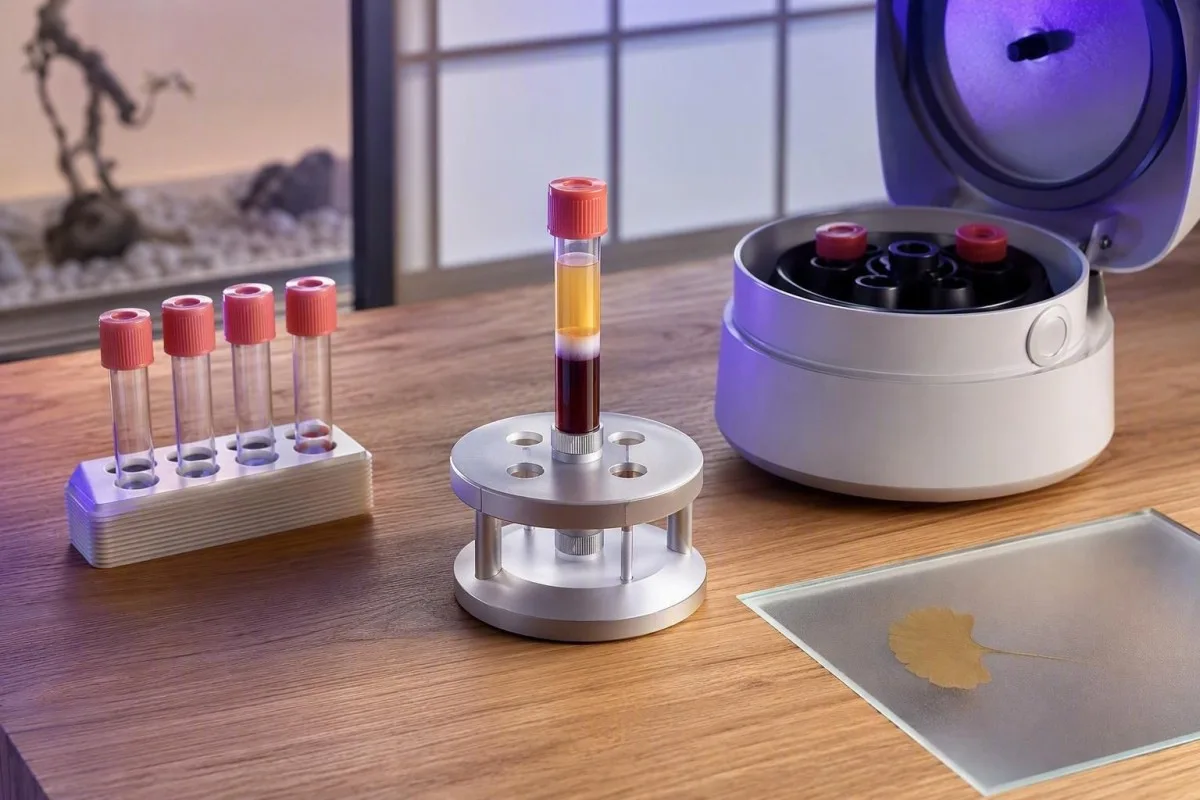
Une première prise de sang utile enregistre votre physiologie habituelle, et non l'écho biochimique de l'entraînement d'hier, des boissons, d'un mauvais sommeil ou d'un virus passager. L'objectif est un contexte reproductible que vous pouvez utiliser pendant des années.


- Moment de la référence: réservez un prélèvement matinal après 8 à 12 heures sans manger si la glycémie à jeun, les triglycérides, les tests du fer ou l'insuline sont inclus.
- Pause exercice: évitez l'entraînement en résistance inhabituellement intense, les intervalles ou les épreuves d'endurance pendant 24 à 48 heures avant les tests de référence de routine.
- Fenêtre alcool: évitez l'alcool pendant au moins 48 heures avant les tests de triglycérides et d'enzymes hépatiques ; une consommation excessive peut fausser les résultats plus longtemps.
- Règle de maladie: reportez une référence de bien-être jusqu'à au moins 2 semaines après la résolution de la fièvre ou de symptômes respiratoires ou gastro-intestinaux importants.
- Objectif d'hydratation: boire normalement la veille et prendre 250-500 mL d'eau dans les 2 heures précédant le prélèvement, sauf si restriction hydrique.
- Attention biotine: arrêter la biotine non prescrite à haute dose pendant 48-72 heures avant de nombreux dosages immuno-enzymatiques, mais ne jamais arrêter un traitement prescrit sans consulter le prescripteur.
- Contexte du cycle: noter le jour du cycle pour l'œstradiol, la progestérone, la LH, la FSH et parfois les lipides ; cela modifie l'interprétation plus que ce que beaucoup de gens pensent.
- Répétabilité: utiliser le même laboratoire, une heure matinale similaire et le même schéma de préparation lors du suivi des résultats de laboratoire dans le temps.
Qu'est-ce qui fait qu'une première prise de sang est une véritable référence ?
A test sanguin de référence est le plus utile lorsqu'il capture une semaine ordinaire : repas stables, hydratation habituelle, absence de maladie aiguë et absence d'entraînement ou de consommation d'alcool exceptionnels. Pour la plupart des adultes, je recommande un échantillon matinal après un jeûne de 8 à 12 heures lorsque le glucose, les triglycérides, les marqueurs du fer ou l'insuline sont mesurés.
L'objectif pratique n'est pas d'améliorer les résultats. Il est de réduire la variation pré-analytique—les changements qui se produisent avant que l'analyseur ne voie l'échantillon. Une glycémie à jeun de 96 mg/dL et un taux de triglycérides de 105 mg/dL peuvent être tout à fait ordinaires, mais leur signification change si la personne a mangé tard, couru 10 km ou dormi 3 heures.
Dans mon travail clinique, je demande aux patients de traiter le premier prélèvement comme une photographie de référence. Gardez une brève trace de l'heure du réveil, de la durée du jeûne, des médicaments, des suppléments, de l'alcool dans les 72 heures précédentes, de l'exercice dans les 48 heures précédentes, du jour du cycle menstruel et des infections récentes. Cette note est souvent plus utile lors du deuxième test qu'un simple indicateur “ normal ”.
Kantesti est un Analyseur de test sanguin AI conçu pour lire les résultats dans ce contexte pratique, plutôt que de traiter chaque valeur mise en évidence comme une maladie. Pour une liste de tests sensée, commencez par notre guide annuel d'analyses sanguines et convenez des ajouts avec un clinicien qui connaît vos antécédents.
La référence est personnelle, pas seulement “ dans les normes ”
Un intervalle de référence de laboratoire contient généralement le 50 % central des valeurs d'une population sélectionnée ; il ne définit pas votre chiffre personnel le plus sain ou le plus sûr. Un résultat de créatinine peut rester dans l'intervalle d'un laboratoire tout en augmentant de manière significative par rapport à votre propre valeur répétée, c'est pourquoi la documentation de référence est importante.
Comment le jeûne et les repas de la veille influencent les résultats
Fasting for 8-12 heures produit la comparaison initiale la plus nette pour les triglycérides, la glycémie à jeun, l'insuline et le fer sérique, bien que de nombreux panels lipidiques puissent être interprétés sans jeûne. L'eau est autorisée et généralement utile ; le café, le jus, la gomme et les boissons caloriques ne constituent pas un vrai jeûne.
Une glycémie à jeun inférieure à 100 mg/dL est généralement normale, 100-125 mg/dL indique un trouble de la glycémie à jeun, et 126 mg/dL ou plus nécessite une confirmation, sauf si des symptômes et une hyperglycémie marquée sont présents. L'HbA1c reflète environ les 8-12 semaines précédentes, de sorte qu'un seul petit-déjeuner ne peut pas la diminuer de manière significative ; les directives de laboratoire de l'ADA expliquent pourquoi le glucose et l'HbA1c répondent à des questions différentes (Sacks et al., 2023).
Les triglycérides sont particulièrement sensibles aux repas. Une valeur inférieure à 150 mg/dL est conventionnellement souhaitable, tandis que 500 mg/dL ou plus suscite des inquiétudes quant au risque de pancréatite et mérite une évaluation clinique rapide. Un repas tardif riche ou de l'alcool peut créer un premier résultat trompeur, alors utilisez un plan de re-test des triglycérides plutôt que d'essayer de “ manger parfaitement ” pendant une journée.
Kantesti est un plateforme d’interprétation prise de sang AI qui peut préserver le statut à jeun à côté de chaque panel, ce qui rend les comparaisons ultérieures moins sujettes aux erreurs. Notre guide des biomarqueurs explique quels tests sont réellement sensibles aux repas et lesquels ne le sont pas.
Comment l'exercice peut imiter des tests hépatiques et rénaux anormaux
Un exercice intense peut augmenter temporairement CK, AST, ALT, créatinine, globules blancs et parfois potassium, évitez donc l'entraînement intensif ou inhabituel pendant 24 à 48 heures avant un panel de référence. La marche légère et les mouvements quotidiens normaux sont acceptables.
J'ai examiné une coureuse de marathon de 52 ans qui avait une AST de 89 UI/L après une longue course, avec une ALT de 36 UI/L et une CK supérieure à 2 000 UI/L. Ce schéma indiquait davantage un muscle sollicité qu'une lésion hépatique, mais il nécessitait tout de même une répétition après récupération ; les chiffres isolés sont rarement suffisants. En savoir plus sur l'AST après l'exercice avant de supposer un problème hépatique.
Les limites de référence de la créatine kinase varient selon le laboratoire, le sexe, l'origine ethnique, la masse musculaire et le statut d'entraînement, mais de nombreux laboratoires signalent des valeurs supérieures à environ 200-300 UI/L. Une CK dépassant 5 fois la limite de référence supérieure après un effort est courante ; une CK supérieure à 5 000 UI/L avec des urines foncées, une douleur musculaire sévère ou une diminution du débit urinaire nécessite une évaluation urgente pour rhabdomyolyse d'exertion.
La créatinine augmente après une activité intense en partie à cause de la dégradation musculaire et de la diminution du flux sanguin rénal due à la perte de liquides. N'interprétez pas une diminution de l'eGFR d'un échantillon post-course comme une maladie rénale chronique sans test de récupération ; notre guide sur la créatinine à l’effort explique la fenêtre de nouveau prélèvement plus sûre.
Le délai de réinitialisation de 48 heures n'est pas une règle pour tout le monde
Pour une séance de gym récréative, 24 heures suffisent souvent. Après un ultra-marathon, une compétition CrossFit, un entraînement excentrique intensif ou une exposition à la chaleur, j'attends couramment 48 à 72 heures si l'objectif est un état stable plutôt que l'évaluation de l'événement lui-même.
Pourquoi l'alcool mérite une pause de référence de 48 heures
Éviter l'alcool pendant au moins 48 heures avant une prise de sang de référence réduit la distorsion à court terme des triglycérides, du glucose, de la GGT, de l'AST, des marqueurs d'hydratation et de la physiologie liée au sommeil. Une seule soirée arrosée peut avoir plus d'importance que ce que de nombreux patients pensent.
L'alcool peut augmenter les triglycérides en augmentant la production hépatique de lipoprotéines de très basse densité, en particulier après des repas riches en glucides. L'effet est variable : le résultat d'une personne revient à la normale en 24 heures, tandis qu'une autre souffrant de stéatose hépatique, de diabète ou d'une consommation plus importante peut présenter des changements pendant plusieurs jours. Des triglycérides à jeun de 220 mg/dL après un week-end de boissons doivent être répétés avant que quelqu'un ne les qualifie de problème métabolique fixe.
La GGT est sensible mais non spécifique. De nombreux laboratoires utilisent des limites supérieures d'environ 55-60 UI/L pour les hommes et 35-40 UI/L pour les femmes, pourtant les médicaments, la cholestase, la stéatose hépatique et l'alcool peuvent tous l'augmenter. Le schéma significatif est la GGT associée à l'ALT, à la PAL, à la bilirubine, à la numération plaquettaire et à l'historique d'alcool ; consultez notre explication du bilan hépatique pour comprendre comment ces éléments s'articulent.
Au 1er septembre 2026, je déconseille toujours les “détoxifications” ou le jeûne excessif pour améliorer les résultats hépatiques. Une alimentation normale, une eau normale, pas d'alcool et un intervalle documenté sont une science plus propre. Une ALT persistante au-dessus de la limite supérieure du laboratoire sur deux échantillons espacés de plusieurs semaines justifie un examen médical, pas une cure internet.
Quand la maladie ou la vaccination doit retarder un prélèvement de bien-être
Retardez un bilan de santé de référence pendant une fièvre, une maladie gastro-intestinale active, une infection respiratoire significative, ou pendant les 1 à 2 premières semaines après la guérison car CRP, ferritine, globules blancs, plaquettes, glucose et bilan thyroïdien peuvent varier temporairement. Les tests diagnostiques urgents sont différents : ne les retardez pas lorsque vous ne vous sentez pas bien.
La protéine C-réactive augmente couramment dans les 6 à 8 heures suivant un stimulus inflammatoire et peut chuter rapidement une fois le déclencheur résolu. Une CRP inférieure à 3 mg/L est souvent utilisée pour la stratification du risque cardiovasculaire uniquement lorsqu'une personne est cliniquement bien ; un résultat de 18 mg/L lors d'un rhume ne dit pas grand-chose du risque vasculaire à long terme. Le profil CRP et albumine est plus informatif que chacun des résultats pris isolément.
La ferritine est à la fois une protéine de stockage du fer et une protéine de phase aiguë. Une ferritine de 110 ng/mL pendant une infection peut masquer des réserves de fer épuisées, tandis qu'une ferritine inférieure à 15 ng/mL est hautement spécifique d'une carence en fer chez un adulte par ailleurs en bonne santé. C'est pourquoi j'associe la ferritine à la saturation de la transferrine, la CRP, l'hémoglobine et le contexte clinique.
La vaccination peut provoquer une brève réponse immunitaire, y compris des modifications transitoires de la CRP et des sous-ensembles de globules blancs. Les tests de routine peuvent généralement attendre 3 à 7 jours après la vaccination si l'objectif est une référence stable, mais un bilan de sécurité programmé pour le suivi de médicaments doit suivre les instructions du clinicien prescripteur. Notre guide de laboratoire post-vaccination couvre les distinctions pratiques.
Une règle de deux semaines comporte des exceptions
Après une pneumonie, une hospitalisation, une mononucléose infectieuse ou une poussée sévère d'une maladie chronique, deux semaines peuvent ne pas être suffisantes. Dans ces cas, j'utilise souvent la récupération des symptômes, la tendance de la CRP et le jugement clinique plutôt qu'un simple calendrier.
Comment la perte de sommeil et l'heure modifient une prise de sang
Une mauvaise nuit de sommeil peut augmenter la glycémie à jeun, le cortisol, la pression artérielle et les signaux inflammatoires, tandis que le moment de la journée peut modifier la testostérone, le cortisol, le fer et la TSH. Pour une première mesure de référence, visez 7 à 9 heures de sommeil habituel et prélevez entre environ 7h et 10h du matin si possible.
Le cortisol suit un rythme circadien marqué. Le cortisol sérique matinal est couramment mesuré vers 8h du matin, mais une valeur ne peut pas diagnostiquer une maladie surrénalienne sans l'heure du prélèvement, les symptômes et souvent des tests ACTH. Un prélèvement de l'après-midi comparé à un prélèvement précédent de 8h du matin n'est pas une tendance valable, même si le même laboratoire effectue les deux.
Une restriction de sommeil de 4 à 5 heures peut aggraver la sensibilité à l'insuline le lendemain matin et modifier les hormones de l'appétit ; l'ampleur de la modification biologique varie considérablement selon la personne. Je rencontre cela le plus souvent chez les travailleurs postés, les nouveaux parents et les grands voyageurs, où une “ référence ” doit représenter leur emploi du temps réel plutôt qu'un emploi du temps idéalisé. Notre guide sur les laboratoires de sommeil de mauvaise qualité offre une liste de contrôle d'annotation utile.
Les conseils pratiques du Dr Thomas Klein sont simples : n'annulez pas un test nécessaire parce que vous avez mal dormi, mais notez-le. Si une glycémie à jeun limite à 103 mg/dL après une nuit blanche, répétez le test dans des conditions normales avant de tirer des conclusions sur le prédiabète.
La caféine n'est pas toujours une préparation inoffensive
Le café noir peut avoir peu d'effet sur de nombreux panels, mais il peut affecter la glycémie, les catécholamines, la tension artérielle et certains tests endocriniens spécialisés. Lorsque l'on commande une glycémie, une insulinémie à jeun, un cortisol ou des métanéphrines, l'eau plate est le choix le moins ambigu.
Quels suppléments et médicaments doivent être enregistrés
N'arrêtez pas les médicaments prescrits pour un bilan sanguin de référence, sauf si le prescripteur vous le demande, mais notez tous les médicaments et suppléments avec la dose et l'heure. Biotine, fer, B12, créatine, iode, corticostéroïdes et décongestionnants peuvent modifier soit la biologie, soit le dosage du test.
Une forte dose de biotine, souvent 5 000 à 10 000 microgrammes par jour dans les produits pour cheveux et ongles, peut interférer avec certains dosages immunologiques streptavidine-biotine. Elle peut entraîner un TSH faussement bas ou une T4 libre, une troponine ou des résultats hormonaux faussement élevés, selon la conception du dosage. Une pause de 48 à 72 heures est couramment utilisée pour la biotine non prescrite, mais les personnes qui en prennent pour une condition médicale devraient d'abord demander l'avis de leur clinicien.
Le fer oral peut augmenter transitoirement le fer sérique, et les suppléments de créatine peuvent augmenter la créatinine sans réduire la filtration réelle. Les corticostéroïdes peuvent élever la glycémie et les globules blancs ; les inhibiteurs de la pompe à protons peuvent affecter le magnésium et la B12 au fil du temps. La bonne réponse est le contexte, pas l'arrêt brutal par soi-même ; notre guide des suppléments à jeun explique les exceptions courantes.
Kantesti est un Outil d’analyse de prise de sang alimenté par l’IA qui enregistre les suppléments signalés à côté des résultats afin qu'un changement apparent de la thyroïde ou des reins puisse être examiné avec l'exposition qui peut l'expliquer. Les patients peuvent également comparer les résultats signalés avec notre liste de contrôle d'exactitude clinique avant d'agir sur un signal inattendu.
Le moment de la prise des médicaments peut faire partie de la prescription
Le traitement de substitution thyroïdienne, la testostérone thérapie, l'insuline, les diurétiques et les anticoagulants ont chacun des règles de moment spécifiques pour les tests. Par exemple, les bilans thyroïdiens sont souvent prélevés avant la dose quotidienne de lévothyroxine lors du suivi de la cohérence, mais le protocole du clinicien prescripteur doit avoir la priorité.
Comment le cycle menstruel affecte une première référence hormonale
Pour le dosage des hormones reproductives, le jour du cycle fait partie du résultat. FSH, LH, œstradiol, progestérone, testostérone, prolactine et parfois lipides peuvent varier suffisamment au cours du cycle pour qu'une date non enregistrée affaiblisse l'interprétation.
Le dosage en début de phase folliculaire, souvent les jours 2 à 5 du cycle, est couramment utilisé pour le dosage de base de la FSH, de la LH et de l'œstradiol dans l'évaluation de la fertilité. La progestérone est généralement mesurée environ 7 jours après l'ovulation, pas automatiquement “jour 21”, car un cycle de 35 jours suit une biologie différente. Une valeur de progestérone supérieure à environ 3 ng/mL peut indiquer une ovulation récente dans de nombreux contextes, mais l'interprétation exacte dépend du dosage et du moment de la prise.
La prolactine est sensible au stress, à l'exercice récent, à l'activité sexuelle et à une collecte d'échantillons difficile. Les élévations légères sont souvent répétées après 20 à 30 minutes de repos calme, idéalement le matin ; un taux persistant au-dessus de 100 ng/mL mérite une évaluation endocrinienne rapide, bien que les effets des médicaments restent fréquents. Voir notre guide de reprise du dosage de prolactine pour les prochaines étapes judicieuses.
Les changements de lipides liés au cycle sont réels mais généralement plus petits que les changements dus au poids, à l'alimentation, à l'alcool, au diabète ou à la génétique. Si vous avez l'intention de surveiller votre santé avec des tests sanguins sur plusieurs années, choisissez une phase de cycle similaire pour répéter les dosages de lipides et d'hormones chaque fois que possible, en particulier lors de l'évaluation de symptômes ou de traitements.
La contraception hormonale modifie la question
La contraception hormonale combinée peut supprimer les mesures endogènes de FSH, LH, œstradiol et d'androgènes, de sorte que ces résultats peuvent ne pas décrire la physiologie non traitée. N'arrêtez pas la contraception simplement pour obtenir une référence sans tenir compte du risque de grossesse et de la raison clinique du test.
Pourquoi l'hydratation, la posture et la technique de prélèvement sont importantes
Une hydratation normale et 10 à 15 minutes de repos assis avant le prélèvement améliorent la répétabilité car la déshydratation, la station debout prolongée et un prélèvement difficile peuvent concentrer ou fausser plusieurs résultats. Buvez normalement la veille et, sauf restriction hydrique, prenez 250-500 mL d'eau dans les 2 heures précédant le rendez-vous.
La contraction du volume plasmatique peut faire apparaître l'hémoglobine, l'hématocrite, l'albumine, le calcium, les protéines totales et la créatinine plus élevés qu'ils ne le seraient dans des conditions d'hydratation normales. Inversement, boire agressivement des litres d'eau immédiatement avant le test peut diluer le sodium et d'autres mesures. Une plage de sodium normale est généralement de 135-145 mmol/L, mais un résultat inattendu doit toujours être interprété en tenant compte de l'état d'hydratation et de la glycémie.
La posture a plus d'importance que la plupart des gens ne le pensent. La station debout peut augmenter l'albumine et les analytes liés aux protéines par des déplacements de fluides, tandis qu'un temps de garrot prolongé et des serrements de poing répétés peuvent augmenter faussement le potassium et le lactate. Un potassium supérieur à 5,5 mmol/L sans maladie rénale, symptômes ou modifications de l'ECG est souvent recontrôlé rapidement car l'artefact de prélèvement est courant ; notre guide des erreurs de prélèvement de potassium explique pourquoi.
Les menstruations, la perte récente de liquide due à la diarrhée, les diurétiques et l'utilisation du sauna doivent tous être mentionnés dans la note jointe au prélèvement. Si le eGFR est anormalement bas après une déshydratation, rétablissez une prise normale et discutez d'un nouveau test ; voir changements temporaires de l'eGFR avant de supposer des lésions rénales permanentes.
Un tube rouge n'est pas un diagnostic
La couleur du tube identifie l'additif utilisé pour le traitement en laboratoire, et non la gravité du test. Ce qui compte cliniquement, c'est la sélection correcte du tube, la température de transport, le délai de traitement et si le laboratoire signale une hémolyse ou un échantillon insuffisant.
Comment rendre les résultats ultérieurs comparables à la première prise de sang
Utilisez le même laboratoire, une heure de prélèvement similaire et une routine de préparation similaire chaque fois que vous suivez les résultats de laboratoire dans le temps. Un véritable changement biologique peut être plus petit que l'effet combiné de la méthode d'analyse, du statut de jeûne, de l'exercice et de la variation quotidienne ordinaire.
Le cholestérol LDL peut être calculé plutôt que mesuré directement, et le calcul devient moins fiable à mesure que les triglycérides augmentent. La directive 2018 de l'AHA/ACC sur le cholestérol soutient le dépistage non à jeun chez de nombreuses personnes, mais recommande une évaluation à jeun dans des circonstances sélectionnées, y compris des triglycérides très élevés et une incertitude diagnostique (Grundy et al., 2019). Le point crucial est la cohérence, pas la perfection.
La valeur de changement de référence, ou RCV, combine la précision analytique avec la variation biologique normale d'un individu. Un mouvement de 10% dans un marqueur peut être du bruit tandis qu'un changement de 30% dans un autre est significatif ; il n'y a pas de pourcentage universel qui s'applique à chaque test. Notre guide ce changement est-il réel montre pourquoi les tendances nécessitent plus que des flèches codées par couleur.
Kantesti AI interprète les panels répétés en comparant les unités d'analyse, les intervalles de référence, les dates de prélèvement et les biomarqueurs connexes plutôt qu'en comptant simplement les drapeaux anormaux. Notre flux de travail de comparaison par IA est conçu pour cette question longitudinale : qu'est-ce qui a suffisamment changé pour mériter une attention ?
Conservez le rapport original
Enregistrez le PDF ou une photographie claire, pas seulement un résultat tapé. Les conversions d'unités, les plages de laboratoire, les commentaires sur l'hémolyse et si le LDL a été calculé peuvent modifier considérablement la façon dont un futur clinicien lira la tendance.
La note contextuelle à sauvegarder avec chaque prise de sang
Une courte note de contexte transforme des chiffres isolés en données longitudinales utilisables. Enregistrez la date, l'heure, les heures de jeûne, le sommeil, l'exercice, l'alcool, la maladie, les médicaments, les suppléments, le jour du cycle, les changements de poids et les nouveaux symptômes à chaque prélèvement.
Ma note minimale comporte huit éléments : heure du prélèvement ; durée du jeûne ; exercice dans les 48 heures ; alcool dans les 72 heures ; maladie actuelle ; changements de prescription ; dose de supplément et dernière dose ; et statut menstruel ou de grossesse le cas échéant. Ajoutez les voyages, le décalage horaire et l'altitude lorsqu'ils s'appliquent, car chacun peut modifier l'hydratation, le cortisol, l'hémoglobine et les marqueurs sensibles au sommeil.
Une perte de poids de 1,5 kg en 10 jours, un nouveau régime riche en protéines ou plusieurs nuits de sommeil fragmenté peuvent expliquer des changements modestes dans les analyses de sang au fil du temps. Cela ne rend pas le résultat sans importance, cela le rend interprétable. Pour une version réutilisable, notre suivi du contexte du laboratoire inclut les détails que les patients oublient le plus souvent.
Le Dr Thomas Klein recommande de rédiger la note avant de quitter la maison, et non en attendant les résultats. La mémoire devient peu fiable après un signal d'alerte inattendu, et les gens reconstruisent compréhensiblement la semaine précédente pour correspondre au chiffre.
Ce qu'il ne faut pas enregistrer comme un “ correctif ”
Ne manipulez pas le régime alimentaire, l'apport en eau, l'exercice ou les suppléments dans le seul but d'obtenir une première ligne de base plus attrayante. Une ligne de base doit représenter votre vie ; sinon, le test suivant pourrait sembler pire simplement parce qu'il est plus honnête.
Quels résultats limites doivent être répétés avant de s'inquiéter
De nombreux résultats de référence limites devraient être répétés dans des conditions stables avant d'être traités comme une maladie, en particulier des changements légers isolés des enzymes hépatiques, de la créatinine, du potassium, de la prolactine, des neutrophiles et des triglycérides. Les symptômes urgents ou les valeurs nettement anormales font exception.
Une ALT inférieure à 2 fois la limite supérieure du laboratoire avec une bilirubine, une PAL normales et l'absence de symptômes est généralement contrôlée après avoir éliminé les contributeurs temporaires tels que l'alcool, l'exercice intense ou une maladie intercurrente. Un taux de bilirubine supérieur à 3 mg/dL avec ictère, urine foncée, selles pâles, fièvre ou douleur abdominale est différent et ne devrait pas attendre un nouveau prélèvement de référence de routine.
Un faible taux de neutrophiles peut suivre une maladie virale ou refléter la normale stable d'un individu. Une numération absolue des neutrophiles de 1,0 à 1,5 × 10⁹/L est généralement une neutropénie légère, tandis qu'en dessous de 0,5 × 10⁹/L, le risque d'infection est considérablement plus élevé et nécessite des conseils médicaux urgents, en particulier en cas de fièvre. Notre guide de suivi des neutrophiles distingue les retests courants des signaux d'alerte.
L'une des mesures de sécurité les plus utiles est la vérification des tendances. Par exemple, un calcium élevé avec une hormone parathyroïdienne supprimée a une urgence différente d'un calcium élevé associé à une déshydratation et à une élévation de l'albumine ; la raison pour laquelle nous nous inquiétons des combinaisons est que la biologie ne modifie rarement qu'un seul marqueur.
Quand une prise de sang de référence ne doit pas remplacer les soins médicaux
Un protocole de référence n'est pas approprié en cas de symptômes d'alerte, de maladie rapidement évolutive, de complications de grossesse ou d'alerte de laboratoire critique. Une douleur thoracique, un essoufflement sévère, une confusion, une syncope, un ictère, des selles noires ou une déshydratation sévère nécessitent une évaluation clinique immédiate, et non un test répété mieux préparé.
Un potassium de 6,0 mmol/L ou plus, un sodium inférieur à 120 mmol/L, une glycémie supérieure à 300 mg/dL avec vomissements ou confusion, ou une hémoglobine proche de 7 g/dL sont des exemples de résultats pouvant nécessiter une action urgente, bien que le contexte clinique complet soit important. Les laboratoires contactent couramment l'équipe prescripteur pour les valeurs critiques, mais les patients ne doivent pas supposer qu'un appel manqué signifie qu'un résultat est sans danger.
Si vous êtes enceinte, si vous souffrez de maladie rénale chronique, si vous prenez de l'insuline, si vous utilisez des anticoagulants, si vous recevez une chimiothérapie ou si vous avez une maladie hépatique connue, les instructions de préparation peuvent différer du modèle de bien-être. Une période de jeûne peut être dangereuse pour certaines personnes atteintes de diabète, et le moment de la prise des médicaments peut être essentiel. Notre guide sur la fréquence des tests explique pourquoi le groupe à risque modifie le plan.
Kantesti est un service d’interprétation des tests de laboratoire par l’IA qui aide à identifier les questions pour les cliniciens, et non un substitut à une évaluation urgente ou à un diagnostic. Les garanties cliniques et les principes d'examen médical à la base de notre travail sont décrits par notre Conseil consultatif médical.
Un protocole pratique de 72 heures pour votre première référence
Pour une première ligne de base utile, conservez votre routine pendant 72 heures, évitez l'alcool pendant 48 heures, évitez l'exercice intense pendant 24 à 48 heures, dormez normalement, jeûnez pendant 8 à 12 heures si indiqué, buvez de l'eau et notez votre contexte. La cohérence est l'intervention.
Soixante-douze à 48 heures avant : ne commencez pas un nouveau supplément, un régime drastique, une cure détox ou un bloc d'entraînement. Si vous prenez déjà un supplément, notez la dose exacte ; s'il contient une forte dose de biotine, demandez à votre clinicien prescripteur ou à votre pharmacien si une interruption de 48 à 72 heures est appropriée. Évitez l'alcool pendant 48 heures et reportez les tests de routine si une maladie est active.
La veille : mangez vos repas habituels, hydratez-vous normalement, évitez le sauna ou les épreuves d'endurance, et prévoyez 7 à 9 heures de sommeil. Pour les panels à jeun, terminez de manger 8 à 12 heures avant le rendez-vous ; l'eau est autorisée. Le matin de la prise de sang, évitez le café et la nicotine si une analyse de la glycémie, de l'insuline, du cortisol, des catécholamines ou des tests endocriniens spécialisés est prévue.
Après réception du résultat, conservez le rapport original et sa note de contexte avant de modifier quoi que ce soit. L'IA de Kantesti peut organiser les résultats en vue longitudinale, tandis que notre guide technologique et méthodologique clinique explique pourquoi la reconnaissance des schémas nécessite toujours un suivi médical humain pour les symptômes, les anomalies majeures et les décisions de traitement.
Questions fréquemment posées
Comment me préparer à un bilan sanguin de référence ?
Préparez-vous pour une analyse sanguine de référence en respectant votre routine habituelle, en évitant l'alcool pendant 48 heures, en évitant les exercices physiques intenses pendant 24 à 48 heures, en dormant normalement et en documentant les médicaments et les suppléments. Jeûnez pendant 8 à 12 heures si la commande inclut une glycémie à jeun, des triglycérides, de l'insuline ou des analyses du fer ; l'eau est généralement autorisée. Buvez normalement plutôt que de vous surhydrater, et prévoyez un prélèvement le matin entre 7 et 10 heures lorsque des hormones ou du fer sont inclus. Reportez une analyse de référence de bien-être pendant une maladie aiguë, sauf si le test est nécessaire pour évaluer cette maladie.
Dois-je jeûner pour ma première prise de sang ?
Un jeûne de 8 à 12 heures est le plus utile pour une première analyse sanguine comprenant les triglycérides, la glycémie à jeun, l'insuline ou le fer sérique, bien que de nombreux panels lipidiques de routine ne nécessitent plus de jeûne. L'eau pure ne rompt pas le jeûne et aide à prévenir les difficultés de prélèvement ou les effets de concentration liés à la déshydratation. Le café, le jus, le lait, l'alcool, la gomme à mâcher et les suppléments peuvent modifier certains résultats ou invalider la préparation prévue. Suivez les instructions spécifiques à votre ordonnance si votre clinicien vous indique une durée de jeûne différente.
L'exercice peut-il affecter les résultats d'une prise de sang le lendemain ?
Oui, un exercice physique intense peut affecter les résultats d'une prise de sang pendant 24 à 72 heures en augmentant la créatine kinase, les AST, les ALT, la créatinine, les globules blancs et, occasionnellement, le potassium. L'entraînement de résistance intensif, le marathon, les intervalles à haute intensité et l'exposition à la chaleur entraînent des modifications plus importantes qu'une marche normale. Pour une mesure stable de votre état de bien-être, évitez tout exercice inhabituel ou intense pendant 24 à 48 heures ; après un événement d'endurance majeur, 48 à 72 heures sont souvent plus réalistes. Ne retardez pas les tests urgents en cas de symptômes tels que des douleurs musculaires intenses, une urine foncée, une faiblesse ou une diminution du débit urinaire.
Combien de temps dois-je éviter l'alcool avant une prise de sang ?
Évitez l'alcool pendant au moins 48 heures avant une analyse sanguine de référence, surtout lorsque les triglycérides, le glucose, la GGT, l'AST, l'ALT ou des marqueurs sensibles à l'hydratation sont évalués. L'alcool peut augmenter les triglycérides, même après une seule soirée arrosée, et l'effet peut durer plusieurs jours chez les personnes atteintes de diabète, de stéatose hépatique ou dont la consommation habituelle est plus importante. Un taux de triglycérides de 500 mg/dL ou plus nécessite une évaluation clinique rapide, car le risque de pancréatite augmente considérablement. N'essayez pas de détox ou de jeûne sévère après coup ; des repas ordinaires et une hydratation normale produiront un résultat de répétition plus fiable.
Un mauvais sommeil peut-il modifier les résultats de prise de sang ?
Un sommeil de mauvaise qualité peut modifier la glycémie à jeun du lendemain matin, le cortisol, la pression artérielle et certains signaux inflammatoires, en particulier après 4 à 5 heures de sommeil ou un travail de nuit. Cela ne modifie pas de manière significative le taux d'HbA1c, qui reflète la glycémie moyenne sur environ 8 à 12 semaines. Si un résultat de référence non urgent est limite après une nuit blanche, notez la perte de sommeil et envisagez de répéter le test dans des conditions normales. Les tests nécessaires doivent néanmoins être effectués, car les symptômes et les anomalies marquées sont plus importants qu'une préparation idéale.
Dois-je faire tester mes hormones un jour précis de mon cycle menstruel ?
Oui, les dosages hormonaux doivent être programmés en fonction de la question clinique et le jour du cycle menstruel doit toujours être enregistré. La FSH, la LH et l'œstradiol sont souvent évalués les jours 2 à 5 du cycle pour un dosage de référence en début de phase folliculaire, tandis que la progestérone est couramment vérifiée environ 7 jours après l'ovulation plutôt qu'automatiquement le jour 21. Un taux de progestérone supérieur à environ 3 ng/mL peut confirmer une ovulation récente, mais les laboratoires et les situations cliniques varient. La contraception hormonale modifie les résultats des hormones endogènes, ne l'arrêtez donc pas uniquement pour des tests sans avis médical.
Obtenez dès aujourd’hui une analyse de sang par IA
Rejoignez plus de 2 millions d’utilisateurs dans le monde qui font confiance à Kantesti pour une analyse instantanée et précise des analyses de laboratoire. Téléversez vos résultats prise de sang et recevez une interprétation complète des biomarqueurs de 15,000+ en quelques secondes.
📚 Publications de recherche citées
Klein, T., Mitchell, S., & Weber, H. (2026). Kantesti LTD. (2026). Guide du test sanguin du complément C3 C4 & du dosage des anticorps ANA. Zenodo.. Recherche médicale par IA Kantesti.
Klein, T., Mitchell, S., & Weber, H. (2026). Kantesti LTD. (2026). Guide d’analyse sanguine du virus Nipah : détection précoce et diagnostic 2026. Zenodo.. Recherche médicale par IA Kantesti.
📖 Références médicales externes
⚕️ Avertissement médical
Cet article est fourni à des fins éducatives uniquement et ne constitue pas un avis médical. Consultez toujours un professionnel de santé qualifié pour les décisions de diagnostic et de traitement.
Signaux de confiance E-E-A-T
Expérience
Revue clinique guidée par un médecin des flux d’interprétation des analyses.
Compétence
Orientation en médecine de laboratoire sur la façon dont les biomarqueurs se comportent dans un contexte clinique.
autorité
Rédigé par le Dr Thomas Klein, avec relecture par le Dr Sarah Mitchell et le Prof. Dr Hans Weber.
Fiabilité
Interprétation fondée sur des preuves, avec des parcours de suivi clairs pour réduire l’alarme.