Un primer análisis útil registra su fisiología habitual, no el eco bioquímico del entrenamiento de ayer, las bebidas, el mal sueño o un virus pasajero. El objetivo es un contexto repetible que pueda utilizar durante años.


- Momento de la referencia: reserve un análisis matutino después de 8-12 horas sin comer si se incluyen glucosa en ayunas, triglicéridos, estudios de hierro o insulina.
- Pausa de ejercicio: evite el entrenamiento de resistencia inusualmente intenso, los intervalos o los eventos de resistencia durante 24-48 horas antes de las pruebas de referencia de rutina.
- Ventana de alcohol: evite el alcohol durante al menos 48 horas antes de las pruebas de triglicéridos y enzimas hepáticas; el consumo excesivo puede distorsionar los resultados durante más tiempo.
- Regla de enfermedad: posponga una referencia de bienestar hasta al menos 2 semanas después de que se resuelvan la fiebre o los síntomas respiratorios o gastrointestinales significativos.
- Objetivo de hidratación: beber normalmente el día anterior y tomar 250-500 ml de agua en las 2 horas previas a la extracción, a menos que haya restricción de líquidos.
- Precaución con la biotina: suspender la biotina no prescrita en dosis altas durante 48-72 horas antes de muchos inmunoanálisis, pero nunca suspender el tratamiento prescrito sin consultar al médico prescriptor.
- Contexto del ciclo: registrar el día del ciclo para estradiol, progesterona, LH, FSH y, a veces, lípidos; cambia la interpretación más de lo que muchas personas esperan.
- Repetibilidad: utilizar el mismo laboratorio, una hora matutina similar y el mismo patrón de preparación al realizar un seguimiento de los resultados de laboratorio a lo largo del tiempo.
¿Qué hace que un primer análisis de sangre sea una verdadera referencia?
A análisis de sangre de referencia es más útil cuando captura una semana ordinaria: comidas estables, hidratación habitual, sin enfermedad aguda y sin entrenamiento o consumo de alcohol excepcionales. Para la mayoría de los adultos, recomiendo una muestra matutina después de un ayuno de 8-12 horas cuando se miden glucosa, triglicéridos, marcadores de hierro o insulina.
El objetivo práctico no es hacer que los resultados parezcan mejores. Es reducir la variación preanalítica—cambios que ocurren antes de que el analizador vea la muestra. Una glucosa en ayunas de 96 mg/dL y un nivel de triglicéridos de 105 mg/dL pueden ser completamente ordinarios, pero su significado cambia si la persona comió tarde, corrió 10 km o durmió 3 horas.
En mi práctica clínica, pido a los pacientes que traten la primera extracción como una fotografía de referencia. Lleve un registro breve de la hora de despertar, la duración del ayuno, los medicamentos, los suplementos, el alcohol en las 72 horas previas, el ejercicio en las 48 horas previas, el día del ciclo menstrual y la infección reciente. Ese registro es a menudo más útil en la segunda prueba que una única marca de “normal”.
Kantesti es un Analizador de sangre con inteligencia artificial diseñado para leer los resultados junto con ese contexto práctico, en lugar de tratar cada valor resaltado como una enfermedad. Para una lista de pruebas sensata, comience con nuestra guía anual de análisis de sangre y acuerde adiciones con un médico que conozca su historial.
La línea de referencia es personal, no meramente “dentro del rango”
Un intervalo de referencia de laboratorio generalmente contiene el 95 % central de los valores de una población seleccionada; no define su número personal más saludable o seguro. Un resultado de creatinina puede permanecer dentro de un rango de laboratorio mientras aumenta significativamente con respecto a su propio valor repetido, por eso la documentación de referencia es importante.
Cómo el ayuno y las comidas del día anterior moldean los resultados
En ayunas durante 8-12 horas produce la comparación inicial más limpia para triglicéridos, glucosa en ayunas, insulina y hierro sérico, aunque muchos paneles de lípidos se pueden interpretar sin ayuno. Se permite agua y suele ser útil; el café, los jugos, la goma de mascar y las bebidas calóricas no constituyen un ayuno verdadero.
Una glucosa plasmática en ayunas inferior a 100 mg/dL es generalmente normal, 100-125 mg/dL indica glucosa en ayunas alterada, y 126 mg/dL o superior requiere confirmación a menos que haya síntomas e hiperglucemia marcada. La HbA1c refleja aproximadamente las 8-12 semanas anteriores, por lo que un desayuno no puede reducirla significativamente; la guía de laboratorio de la ADA explica por qué la glucosa y la HbA1c responden a preguntas diferentes (Sacks et al., 2023).
Los triglicéridos son especialmente sensibles a las comidas. Un valor inferior a 150 mg/dL es convencionalmente deseable, mientras que 500 mg/dL o superior plantea preocupación por el riesgo de pancreatitis y merece una evaluación clínica inmediata. Una comida copiosa tardía o el alcohol pueden crear un primer resultado engañosamente alto, por lo que se debe utilizar un plan de repetición de triglicéridos en lugar de intentar “comer perfectamente” un día.
Kantesti es un plataforma de interpretación análisis de sangre de AI que puede preservar el estado de ayuno junto a cada panel, lo que hace que las comparaciones posteriores sean menos propensas a errores. Nuestro guía de biomarcadores explica qué pruebas son realmente sensibles a las comidas y cuáles no.
Cómo el ejercicio puede imitar pruebas hepáticas y renales anormales
El ejercicio intenso puede aumentar temporalmente CK, AST, ALT, creatinina, leucocitos y, a veces, potasio, por lo que evite el entrenamiento desconocido o de alta intensidad durante 24-48 horas antes de un panel de referencia. Caminar suavemente y el movimiento diario normal están bien.
Un corredor de maratón de 52 años que revisé tenía AST 89 UI/L después de una carrera larga, con ALT 36 UI/L y CK por encima de 2.000 UI/L. Ese patrón apuntaba más fuertemente a músculo ejercitado que a lesión hepática, pero aún así requirió una repetición después de la recuperación; los números aislados rara vez son suficientes. Lea más sobre AST después del ejercicio antes de asumir un problema hepático.
Los límites de referencia de la creatina quinasa varían según el laboratorio, el sexo, la ascendencia, la masa muscular y el estado de entrenamiento, pero muchos laboratorios señalan valores superiores a aproximadamente 200-300 UI/L. Es común que la CK supere 5 veces el límite superior de referencia después del esfuerzo; la CK por encima de 5.000 UI/L con orina oscura, dolor muscular severo o disminución del volumen de orina requiere evaluación urgente para rabdomiólisis por esfuerzo.
La creatinina aumenta después de la actividad intensa, en parte debido a la descomposición muscular y la reducción del flujo sanguíneo renal por la pérdida de líquidos. No interprete un eGFR más bajo de una muestra posterior a la carrera como enfermedad renal crónica sin pruebas de recuperación; nuestro guía de creatinina con el ejercicio explica la ventana de redibujo más segura.
El reinicio de 48 horas no es una regla para todos
Para una sesión recreativa en el gimnasio, 24 horas suele ser suficiente. Después de una ultramaratón, una competencia de CrossFit, levantamiento excéntrico pesado o exposición al calor, a menudo espero 48-72 horas si el propósito es una línea de base estable en lugar de la evaluación del evento en sí.
Por qué el alcohol merece una pausa de referencia de 48 horas
Evitar el alcohol durante al menos 48 horas antes de un análisis de sangre de referencia reduce la distorsión a corto plazo de triglicéridos, glucosa, GGT, AST, marcadores de hidratación y fisiología relacionada con el sueño. Una sola noche de consumo excesivo puede tener más importancia de la que muchos pacientes esperan.
El alcohol puede aumentar los triglicéridos al aumentar la producción hepática de lipoproteínas de muy baja densidad, particularmente después de comidas ricas en carbohidratos. El efecto es variable: el resultado de una persona vuelve a la línea de base en 24 horas, mientras que otra con hígado graso, diabetes o un consumo más elevado puede mostrar cambios durante varios días. Un triglicérido en ayunas de 220 mg/dL después de un fin de semana de bebidas debe repetirse antes de que alguien lo etiquete como un problema metabólico fijo.
La GGT es sensible pero inespecífica. Muchos laboratorios utilizan límites superiores alrededor de 55-60 UI/L para hombres y 35-40 UI/L para mujeres, sin embargo, los medicamentos, la colestasis, el hígado graso y el alcohol pueden aumentarla. El patrón significativo es la GGT con ALT, ALP, bilirrubina, recuento de plaquetas e historial de consumo de alcohol; vea nuestro explicación del panel hepático para ver cómo encajan estas piezas.
A partir del 1 de septiembre de 2026, sigo desaconsejando las “desintoxicaciones” o el ayuno excesivo para mejorar los resultados hepáticos. Comida normal, agua normal, sin alcohol y un intervalo documentado son ciencia más limpia. Una ALT persistente por encima del límite superior del laboratorio en dos muestras con varias semanas de diferencia justifica una revisión médica, no una limpieza por internet.
Cuándo una enfermedad o vacunación debe retrasar un análisis de bienestar
Retrasar una línea de base de bienestar durante la fiebre, una enfermedad gastrointestinal activa, una infección respiratoria significativa o durante las primeras 1-2 semanas después de la recuperación porque CRP, ferritina, glóbulos blancos, plaquetas, glucosa y pruebas de tiroides pueden variar temporalmente. Las pruebas de diagnóstico urgentes son diferentes: no las retrase cuando no se encuentre bien.
La proteína C reactiva comúnmente aumenta dentro de las 6-8 horas posteriores a un estímulo inflamatorio y puede disminuir rápidamente una vez que el desencadenante se resuelve. Una CRP por debajo de 3 mg/L se utiliza a menudo para la estratificación del riesgo cardiovascular solo cuando una persona está clínicamente bien; un resultado de 18 mg/L durante un resfriado dice poco sobre el riesgo vascular a largo plazo. El patrón de CRP y albúmina es más informativo que cualquiera de los resultados por sí solos.
La ferritina es tanto una proteína de almacenamiento de hierro como un reactante de fase aguda. Una ferritina de 110 ng/mL durante una infección puede ocultar reservas de hierro agotadas, mientras que una ferritina por debajo de 15 ng/mL es altamente específica de deficiencia de hierro en un adulto sano. Es por eso que emparejo la ferritina con la saturación de transferrina, la CRP, la hemoglobina y la historia clínica.
La vacunación puede causar una respuesta inmunitaria breve, incluidos cambios transitorios en la CRP y los subconjuntos de glóbulos blancos. Las pruebas de rutina generalmente pueden esperar 3-7 días después de la vacunación si el objetivo es una línea de base estable, pero un panel de seguridad programado para el control de medicamentos debe seguir las instrucciones del médico prescriptor. Nuestro guía de laboratorio posterior a la vacunación cubre las distinciones prácticas.
Una regla de dos semanas tiene excepciones
Después de neumonía, hospitalización, mononucleosis infecciosa o una exacerbación grave de una enfermedad crónica, dos semanas pueden no ser suficientes. En esos casos, a menudo utilizo la recuperación de los síntomas, la tendencia de la CRP y el juicio clínico en lugar de un calendario.
Cómo la falta de sueño y el horario cambian un análisis de sangre
Una mala noche de sueño puede aumentar la glucosa en ayunas, el cortisol, la presión arterial y las señales inflamatorias, mientras que el momento puede alterar la testosterona, el cortisol, el hierro y la TSH. Para una primera línea de base, apunte a 7-9 horas de sueño habitual y tome la muestra entre las 7 y las 10 a. m. aproximadamente, cuando sea posible.
El cortisol sigue un fuerte ritmo diario. Comúnmente se mide el cortisol sérico matutino alrededor de las 8 a. m., pero un valor no puede diagnosticar enfermedades suprarrenales sin la hora de la recolección, los síntomas y, a menudo, las pruebas de ACTH. Una muestra de la tarde comparada con una muestra anterior de las 8 a. m. no es una tendencia válida, incluso si el mismo laboratorio realiza ambas.
La restricción del sueño de 4-5 horas puede empeorar la sensibilidad a la insulina de la mañana siguiente y alterar las hormonas del apetito; el tamaño del cambio de laboratorio varía considerablemente según la persona. Veo esto con mayor frecuencia en trabajadores por turnos, padres recientes y viajeros frecuentes, donde una “línea de base” debe representar su horario real en lugar de uno idealizado. Nuestro guía de laboratorio de sueño deficiente ofrece una lista de verificación de anotaciones útil.
El consejo práctico del Dr. Thomas Klein es simple: no cancele una prueba necesaria porque durmió mal, pero regístrelo. Si una glucosa en ayunas límite es de 103 mg/dL después de una noche en vela, repita en condiciones normales antes de sacar conclusiones sobre la prediabetes.
La cafeína no siempre es una preparación inofensiva
El café negro puede tener poco efecto en muchos paneles, pero puede afectar la glucosa, las catecolaminas, la presión arterial y algunas pruebas endocrinas especializadas. Cuando se solicitan insulina en ayunas, glucosa, cortisol o metanefrinas, el agua sola es la opción menos ambigua.
Qué suplementos y medicamentos deben registrarse
No suspenda los medicamentos recetados para una prueba de sangre de referencia a menos que el médico se lo indique, pero registre cada medicamento y suplemento con la dosis y el horario. Biotina, hierro, B12, creatina, yodo, corticosteroides y descongestionantes pueden cambiar la biología o el ensayo de la prueba.
La biotina en dosis altas, a menudo de 5,000 a 10,000 microgramos al día en productos para el cabello y las uñas, puede interferir con ciertos inmunoensayos de estreptavidina-biotina. Puede crear resultados falsamente bajos de TSH o falsamente altos de T4 libre, troponina u hormonas, dependiendo del diseño del ensayo. Una pausa de 48 a 72 horas se usa comúnmente para la biotina no recetada, pero las personas que la toman para una condición médica deben consultar primero a su médico.
El hierro oral puede aumentar temporalmente el hierro sérico, y los suplementos de creatina pueden aumentar la creatinina sin reducir la filtración real. Los corticosteroides pueden elevar la glucosa y los glóbulos blancos; los inhibidores de la bomba de protones pueden afectar el magnesio y la B12 con el tiempo. La respuesta correcta es el contexto, no la interrupción abrupta por cuenta propia; nuestra guía de ayuno para suplementos explica las excepciones comunes.
Kantesti es un Herramienta de análisis de pruebas de sangre con IA que registra los suplementos reportados junto a los resultados para que un aparente cambio tiroideo o renal pueda ser revisado con la exposición que pueda explicarlo. Los pacientes también pueden comparar los resultados reportados con nuestra lista de verificación de precisión clínica antes de actuar ante una alerta inesperada.
El horario de la medicación puede ser parte de la prescripción
El reemplazo tiroideo, la terapia de testosterona, la insulina, los diuréticos y los anticoagulantes tienen cada uno reglas de horario específicas para las pruebas. Por ejemplo, las pruebas de tiroides a menudo se realizan antes de la dosis diaria de levotirotrina al monitorear la consistencia, pero el protocolo del médico prescriptor debe tener prioridad.
Cómo el momento menstrual afecta una primera referencia hormonal
Para las pruebas de hormonas reproductivas, el día del ciclo es parte del resultado. FSH, LH, estradiol, progesterona, testosterona, prolactina y, a veces, lípidos pueden variar lo suficiente a lo largo del ciclo como para que una fecha no registrada debilite la interpretación.
Las pruebas a principios de la fase folicular, a menudo los días 2-5 del ciclo, se usan comúnmente para la FSH, LH y estradiol de referencia en la evaluación de la fertilidad. La progesterona generalmente se mide aproximadamente 7 días después de la ovulación, no automáticamente “el día 21”, porque un ciclo de 35 días sigue una biología diferente. Un valor de progesterona superior a aproximadamente 3 ng/mL puede indicar ovulación reciente en muchos entornos, pero la interpretación exacta depende del ensayo y el horario.
La prolactina es sensible al estrés, al ejercicio reciente, a la actividad sexual y a la recolección difícil de la muestra. Las elevaciones leves a menudo se repiten después de 20-30 minutos de reposo tranquilo, idealmente por la mañana; un nivel persistentemente superior a 100 ng/mL merece una evaluación endocrina rápida, aunque los efectos de la medicación siguen siendo comunes. Consulte nuestra guía de repetición de prolactina para los próximos pasos sensatos.
Los cambios de lípidos relacionados con el ciclo son reales pero generalmente menores que los cambios debidos al peso, la dieta, el alcohol, la diabetes o la genética. Si tiene la intención de monitorear su salud con análisis de sangre a lo largo de los años, elija una fase de ciclo similar para repetir los paneles de lípidos y hormonas siempre que sea posible, especialmente al evaluar síntomas o tratamientos.
La anticoncepción hormonal cambia la pregunta
La anticoncepción hormonal combinada puede suprimir las mediciones endógenas de FSH, LH, estradiol y andrógenos, por lo que estos resultados pueden no describir la fisiología sin tratar. No suspenda la anticoncepción solo para obtener una referencia sin considerar el riesgo de embarazo y la razón clínica para la prueba.
Por qué la hidratación, la postura y la técnica de recolección son importantes
Una hidratación normal y 10-15 minutos de reposo sentado antes de la extracción mejoran la repetibilidad porque la deshidratación, estar de pie prolongadamente y una extracción difícil pueden concentrar o distorsionar varios resultados. Beba normalmente el día anterior y, a menos que tenga restricción de líquidos, tome 250-500 mL de agua en las 2 horas previas a la cita.
La contracción del volumen plasmático puede hacer que la hemoglobina, el hematocrito, la albúmina, el calcio, la proteína total y la creatinina parezcan más altos de lo que estarían con una hidratación ordinaria. Por el contrario, beber agresivamente litros de agua inmediatamente antes de la prueba puede diluir el sodio y otras mediciones. Un rango normal de sodio es generalmente de 135-145 mmol/L, pero un resultado inesperado siempre debe interpretarse teniendo en cuenta el estado de hidratación y glucosa.
La postura importa más de lo que la mayoría de la gente cree. Estar de pie puede aumentar la albúmina y los analitos unidos a proteínas debido a cambios de líquidos, mientras que un tiempo de torniquete prolongado y el apretamiento repetido del puño pueden elevar falsamente el potasio y el lactato. Un potasio superior a 5,5 mmol/L sin enfermedad renal, síntomas o cambios en el ECG se vuelve a verificar con frecuencia porque el artefacto de recolección es común; nuestra guía de errores de extracción de potasio explica por qué.
La menstruación, la pérdida reciente de líquidos por diarrea, los diuréticos y el uso de sauna deben anotarse en la nota adjunta a la extracción. Si la eGFR es inesperadamente baja después de la deshidratación, recupere la ingesta normal y discuta la repetición de la prueba; consulte cambios temporales del eGFR antes de asumir daño renal permanente.
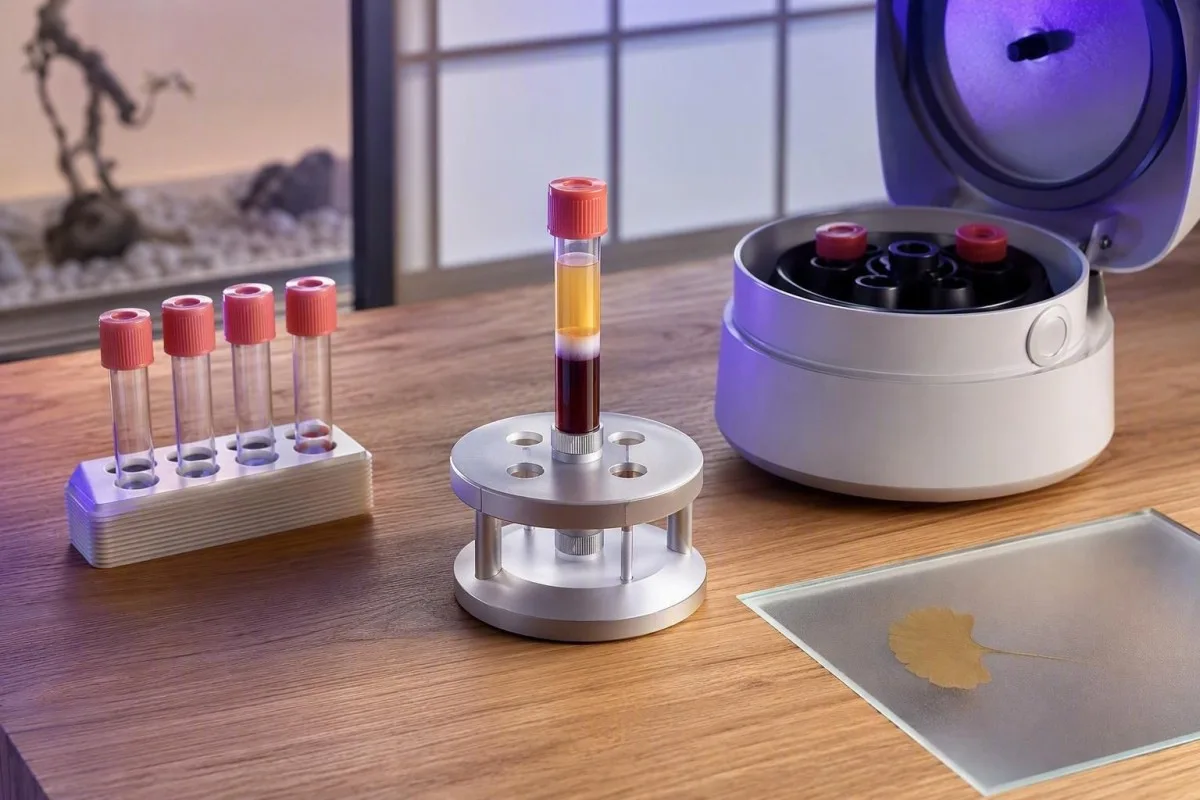
Un tubo rojo no es un diagnóstico
El color del tubo identifica el aditivo utilizado para el procesamiento de laboratorio, no la gravedad de la prueba. Lo que importa clínicamente es la selección correcta del tubo, la temperatura de transporte, el retraso en el procesamiento y si el laboratorio informa hemólisis o una muestra insuficiente.
Cómo hacer que los resultados posteriores sean comparables al primer análisis
Utilice el mismo laboratorio, una hora de extracción similar y una rutina de preparación similar siempre que siga los resultados de laboratorio a lo largo del tiempo. Un cambio biológico real puede ser menor que el efecto combinado del método de ensayo, el estado de ayuno, el ejercicio y la variación ordinaria diaria.
El colesterol LDL puede calcularse en lugar de medirse directamente, y el cálculo se vuelve menos fiable a medida que aumentan los triglicéridos. La guía de colesterol de la AHA/ACC de 2018 apoya el cribado no en ayunas en muchas personas, pero recomienda la evaluación en ayunas en circunstancias seleccionadas, incluyendo triglicéridos muy altos e incertidumbre diagnóstica (Grundy et al., 2019). El punto crucial es la coherencia, no la perfección.
El valor de cambio de referencia, o RCV, combina la imprecisión analítica con la variación biológica normal de un individuo. Un movimiento de 10% en un marcador puede ser ruido, mientras que un cambio de 30% en otro es significativo; no hay un porcentaje universal que se aplique a todas las pruebas. Nuestra guía ¿es real este cambio? muestra por qué las tendencias requieren más que flechas codificadas por colores.
Kantesti AI interpreta paneles repetidos comparando unidades de ensayo, intervalos de referencia, fechas de recolección y biomarcadores relacionados en lugar de simplemente contar indicadores anormales. Nuestro flujo de trabajo de comparación con AI está diseñado para esta pregunta longitudinal: ¿qué ha cambiado lo suficiente como para merecer atención?
Conserve el informe original
Guarde el PDF o una fotografía clara, no solo un resultado escrito. Las conversiones de unidades, los rangos de laboratorio, los comentarios sobre hemólisis y si el LDL se calculó pueden cambiar materialmente la forma en que un futuro médico lee la tendencia.
La nota de contexto para guardar con cada análisis de sangre
Una breve nota contextual convierte números aislados en datos longitudinales utilizables. Registre fecha, hora, horas de ayuno, sueño, ejercicio, alcohol, enfermedad, medicamentos, suplementos, día del ciclo, cambios de peso y síntomas nuevos en cada extracción.
Mi nota mínima tiene ocho elementos: hora de recolección; duración del ayuno; ejercicio en las últimas 48 horas; alcohol en las últimas 72 horas; enfermedad actual; cambios en la medicación; dosis y última dosis de suplementos; y estado menstrual o de embarazo, cuando sea relevante. Añada viajes, desfase horario y altitud cuando corresponda, ya que cada uno puede modificar los marcadores sensibles a la hidratación, el cortisol, la hemoglobina y el sueño.
Una pérdida de peso de 1.5 kg en 10 días, una nueva dieta alta en proteínas o varias noches de sueño fragmentado pueden explicar cambios moderados en los análisis de sangre a lo largo del tiempo. Eso no hace que el resultado sea insignificante, sino interpretable. Para una versión reutilizable, nuestro rastreador de contexto del laboratorio incluye los detalles que los pacientes olvidan con mayor frecuencia.
El Dr. Thomas Klein recomienda escribir la nota antes de salir de casa, no mientras se esperan los resultados. La memoria se vuelve poco fiable después de una alerta inesperada, y las personas reconstruyen comprensiblemente la semana anterior para ajustarla al número.
Qué no registrar como una “solución”
No manipule la dieta, la ingesta de agua, el ejercicio o los suplementos únicamente para obtener una primera línea de base más atractiva. Una línea de base debe representar su vida; de lo contrario, la siguiente prueba puede parecer peor simplemente porque es más honesta.
Qué hallazgos límite deben repetirse antes de preocuparse
Muchos resultados de línea de base limítrofes deben repetirse en condiciones estables antes de ser tratados como enfermedad, especialmente cambios leves aislados en las enzimas hepáticas, creatinina, potasio, prolactina, neutrófilos y triglicéridos. Los síntomas urgentes o los valores marcadamente anormales son la excepción.
Una ALT menor de 2 veces el límite superior del laboratorio con bilirrubina, FA y síntomas normales ausentes se reevalúa comúnmente después de eliminar contribuyentes temporales como el alcohol, el ejercicio intenso o una enfermedad intercurrente. Un nivel de bilirrubina superior a 3 mg/dL con ictericia, orina oscura, heces pálidas, fiebre o dolor abdominal es diferente y no debe esperar una repetición rutinaria de la línea de base.
Un recuento de neutrófilos levemente bajo puede seguir a una enfermedad viral o reflejar un nivel normal estable individual. Un recuento absoluto de neutrófilos de 1.0-1.5 × 10⁹/L suele ser neutropenia leve, mientras que por debajo de 0.5 × 10⁹/L conlleva un riesgo de infección sustancialmente mayor y requiere orientación médica urgente, particularmente con fiebre. Nuestra guía de seguimiento de neutrófilos separa las repeticiones comunes de las señales de alarma.
Una de las salvaguardias más útiles es la verificación de patrones. Por ejemplo, un calcio alto con hormona paratiroidea suprimida tiene una urgencia diferente que un calcio alto más deshidratación y elevación de albúmina; la razón por la que nos preocupan las combinaciones es que la biología rara vez cambia un solo marcador.
Cuándo un análisis de sangre de referencia no debe reemplazar la atención médica
Un protocolo de línea de base no es apropiado cuando tiene síntomas de alarma, enfermedad que empeora rápidamente, complicaciones del embarazo o una alerta de laboratorio crítica. Dolor en el pecho, dificultad severa para respirar, confusión, desmayos, ictericia, heces negras o deshidratación severa requieren evaluación clínica ahora, no una prueba repetida mejor preparada.
Potasio de 6.0 mmol/L o superior, sodio por debajo de 120 mmol/L, glucosa por encima de 300 mg/dL con vómitos o confusión, o hemoglobina cercana a 7 g/dL son ejemplos de resultados que pueden requerir acción urgente, aunque el contexto clínico completo es importante. Los laboratorios suelen ponerse en contacto con el equipo solicitante sobre valores críticos, pero los pacientes no deben asumir que una llamada perdida significa que un resultado es seguro.
Si está embarazada, tiene enfermedad renal crónica, toma insulina, usa anticoagulantes, recibe quimioterapia o tiene una enfermedad hepática conocida, las instrucciones de preparación pueden diferir de la plantilla de bienestar. Un período de ayuno puede ser inseguro para algunas personas con diabetes, y el momento de la medicación puede ser esencial. Nuestra guía sobre con qué frecuencia hacerse pruebas describe por qué el grupo de riesgo cambia el plan.
Kantesti es un servicio de interpretación de pruebas de laboratorio de IA que ayuda a identificar preguntas para los médicos, no sustituye a la evaluación urgente ni a un diagnóstico. Las salvaguardias clínicas y los principios de revisión médica detrás de nuestro trabajo se describen en nuestra Consejo Asesor Médico.
Un protocolo práctico de 72 horas para su primera referencia
Para una primera línea de base útil, mantenga su rutina durante 72 horas, evite el alcohol durante 48 horas, evite el ejercicio extenuante durante 24-48 horas, duerma normalmente, ayune 8-12 horas cuando se indique, beba agua y registre su contexto. La consistencia es la intervención.
Setenta y dos a 48 horas antes: no inicie un nuevo suplemento, dieta de choque, desintoxicación o bloque de entrenamiento. Si ya toma un suplemento, registre la dosis exacta; si contiene biotina en dosis altas, pregunte al médico o farmacéutico que lo solicitó si una interrupción de 48-72 horas es apropiada. Evite el alcohol durante 48 horas y posponga las pruebas de rutina si la enfermedad está activa.
El día anterior: coma sus comidas habituales, hidrátese normalmente, evite la sauna o los eventos de resistencia y planee dormir 7-9 horas. Para paneles en ayunas, termine de comer 8-12 horas antes de la cita; el agua está bien. La mañana de la extracción, evite el café y la nicotina si se planifican pruebas de glucosa, insulina, cortisol, catecolaminas o pruebas endocrinas especializadas.
Una vez que llegue el resultado, guarde el informe original y su nota de contexto antes de cambiar nada. Kantesti La IA puede organizar los resultados en una vista longitudinal, mientras que nuestra guía de tecnología y métodos clínicos explica por qué el reconocimiento de patrones aún necesita seguimiento médico humano para síntomas, anomalías importantes y decisiones de tratamiento.
Preguntas frecuentes
¿Cómo me preparo para un análisis de sangre de referencia?
Preparese para un análisis de sangre de referencia manteniendo su rutina habitual, evitando el alcohol durante 48 horas, evitando el ejercicio extenuante durante 24-48 horas, durmiendo con normalidad y documentando medicamentos y suplementos. Ayune durante 8-12 horas si la orden incluye glucosa en ayunas, triglicéridos, insulina o estudios de hierro; generalmente se permite agua. Beba con normalidad en lugar de sobrehidratarse y programe una recolección por la mañana entre las 7 y las 10 a.m. cuando se incluyan hormonas o hierro. Posponga una línea de base de bienestar durante una enfermedad aguda a menos que la prueba sea necesaria para evaluar esa enfermedad.
¿Debo ayunar para mi primer análisis de sangre?
Un ayuno de 8 a 12 horas es más útil para una primera extracción de sangre que incluya triglicéridos, glucosa en ayunas, insulina o hierro sérico, aunque muchos paneles lipídicos rutinarios ya no requieren ayuno. El agua pura no rompe el ayuno y ayuda a prevenir dificultades en la recolección o efectos de concentración relacionados con la deshidratación. El café, los jugos, la leche, el alcohol, la goma de mascar y los suplementos pueden alterar resultados seleccionados o invalidar la preparación deseada. Siga las instrucciones específicas del pedido si su médico le indica una duración de ayuno diferente.
¿Puede el ejercicio afectar los resultados de análisis de sangre al día siguiente?
Sí, el ejercicio extenuante puede afectar los resultados análisis de sangre durante 24-72 horas al elevar la creatina quinasa, AST, ALT, creatinina, glóbulos blancos y, ocasionalmente, el potasio. El entrenamiento de resistencia intenso, las maratones, los intervalos de alta intensidad y la exposición al calor producen cambios mayores que una caminata normal. Para una línea base de bienestar estable, evite el ejercicio inusual o intenso durante 24-48 horas; después de un evento de resistencia importante, 48-72 horas suele ser más realista. No retrase las pruebas urgentes para síntomas como dolor muscular intenso, orina oscura, debilidad o disminución de la producción de orina.
¿Cuánto tiempo debo evitar el alcohol antes de un análisis de sangre?
Evite el alcohol durante al menos 48 horas antes de un análisis de sangre de referencia, especialmente cuando se evalúan triglicéridos, glucosa, GGT, AST, ALT o marcadores sensibles a la hidratación. El alcohol puede elevar los triglicéridos incluso después de una noche de consumo excesivo, y el efecto puede durar varios días en personas con diabetes, hígado graso o un consumo habitual más elevado. Un resultado de triglicéridos de 500 mg/dL o superior requiere una evaluación clínica inmediata porque el riesgo de pancreatitis aumenta considerablemente. No intente una purga o un ayuno severo después; comidas y hidratación ordinarias producen un resultado repetido más honesto.
¿Puede el mal sueño alterar los resultados análisis de sangre?
El mal sueño puede alterar la glucosa en ayunas de la mañana siguiente, el cortisol, la presión arterial y algunas señales inflamatorias, particularmente después de 4-5 horas de sueño o un turno de noche. No cambia significativamente la HbA1c, que refleja la glucemia promedio durante aproximadamente 8-12 semanas. Si un resultado de referencia no urgente está en el límite después de una noche sin dormir, registre la falta de sueño y considere repetir la prueba en condiciones normales. Las pruebas necesarias aún deben realizarse, ya que los síntomas y las anomalías marcadas son más importantes que la preparación ideal.
¿Debo realizarme pruebas hormonales en un día específico de mi ciclo menstrual?
Sí, las pruebas hormonales deben programarse según la pregunta clínica y siempre se debe registrar el día del ciclo menstrual. La FSH, la LH y el estradiol a menudo se evalúan en los días 2-5 del ciclo para una línea de base folicular temprana, mientras que la progesterona se verifica comúnmente aproximadamente 7 días después de la ovulación en lugar de automáticamente el día 21. Un nivel de progesterona superior a aproximadamente 3 ng/mL puede confirmar la ovulación reciente, pero los laboratorios y las situaciones clínicas difieren. La anticoncepción hormonal cambia los resultados hormonales endógenos, por lo que no la suspenda únicamente para realizar pruebas sin consejo médico.
Obtén hoy un análisis de sangre con IA
Únete a más de 2 millones de usuarios en todo el mundo que confían en Kantesti para el análisis instantáneo y preciso de pruebas de laboratorio. Sube tus resultados de análisis de sangre y recibe una interpretación completa de los biomarcadores de 15,000+ en segundos.
📚 Publicaciones de investigación citadas
Klein, T., Mitchell, S., & Weber, H. (2026). Kantesti LTD. (2026). Guía de la prueba de sangre del complemento C3 C4 y el título de ANA. Zenodo.. Investigación médica con IA de Kantesti.
Klein, T., Mitchell, S., & Weber, H. (2026). Kantesti LTD. (2026). Guía de análisis de sangre del virus Nipah: detección temprana y diagnóstico 2026. Zenodo.. Investigación médica con IA de Kantesti.
📖 Referencias médicas externas
⚕️ Descargo de responsabilidad médica
Este artículo es solo con fines educativos y no constituye asesoramiento médico. Consulta siempre a un profesional sanitario cualificado para decisiones de diagnóstico y tratamiento.
Señales de confianza E-E-A-T
Experiencia
Revisión clínica dirigida por un médico de los flujos de interpretación de análisis.
Pericia
Enfoque en medicina de laboratorio sobre cómo se comportan los biomarcadores en el contexto clínico.
Autoridad
Escrito por el Dr. Thomas Klein, con revisión de la Dra. Sarah Mitchell y el Prof. Dr. Hans Weber.
Integridad
Interpretación basada en la evidencia con vías de seguimiento claras para reducir la alarma.