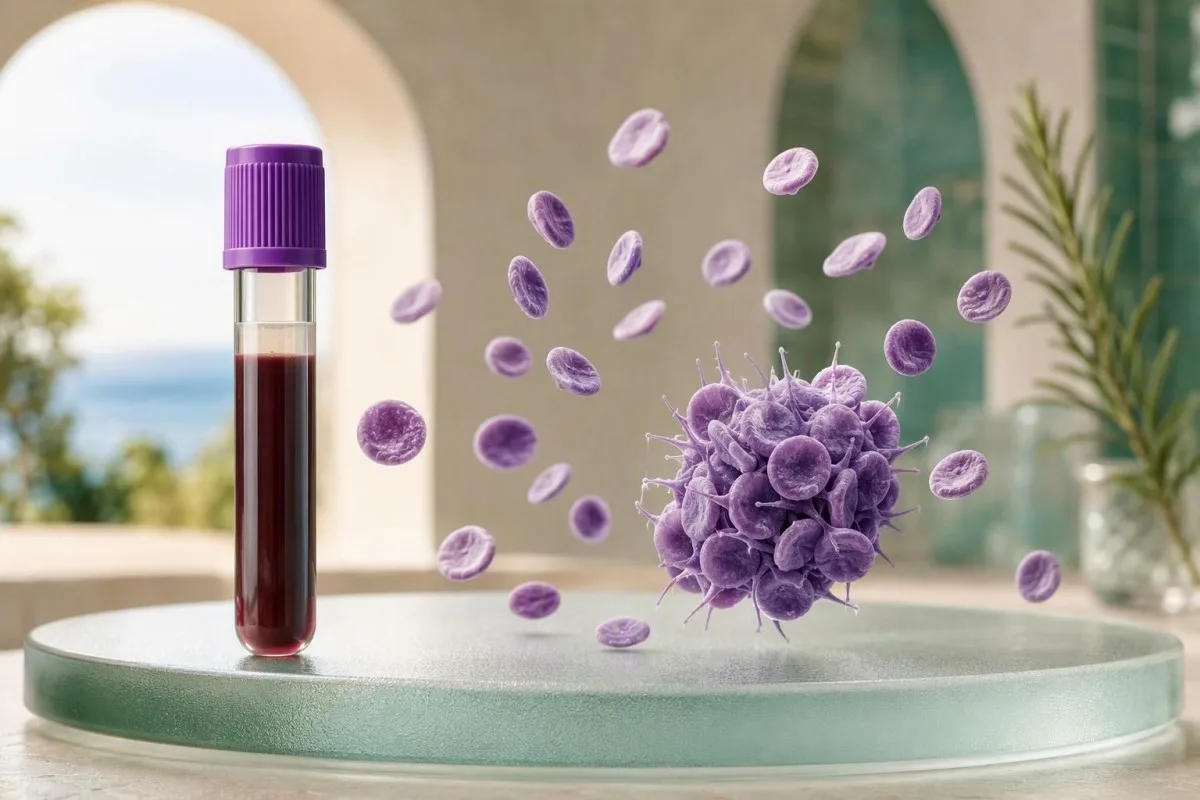
Нізкі лік трамбацытаў часам можа быць памылкай вымярэння, звязанай з прабіркай, а не праблемай у вашым арганізме. Вось як выяўляецца псеўдатрамбацытапенія, звязаная з ЭДТА, перш чым каго-небудзь абвінаваціць вас у трамбацытапеніі.


- Псеўдатрамбацытапенія гэта ілжыва нізкі лік трамбацытаў, выкліканы зліпаннем трамбацытаў пасля збору, часцей за ўсё ў прабірцы з ЭДТА.
- Тыповы дыяпазон трамбацытаў для большасці дарослых, якія не цяжарныя, складае прыблізна 150-450 × 10⁹/л, хоць лабараторыі ўсталёўваюць свае ўласныя інтэрвалы.
- Згусткі трамбацытаў на мазку могуць прывесці да недалічвання трамбацытаў аўтаматызаваным аналізатарам, паколькі агрэгат не вымяраецца як асобныя клеткі.
- Паўторны аналіз з цытратам часта ліквідуе зліпанне трамбацытаў у ЭДТА; лабараторыі звычайна прымяняюць карэкцыю развядзення 1,1 да колькасці трамбацытаў з цытратам.
- Адсутнасць сімптомаў крывацёку плюс нечакана ізаляваны нізкі лік трамбацытаў павінны выклікаць перагляд мазка перад лячэннем або прыняццем рашэнняў аб тэрміновым накіраванні.
- Сапраўдны тромбацытапенія можа суіснаваць з агрэгацыяй трамбацытаў у ЭДТА, таму нармальны вынік цытрату аспрэчвае, але павінен адпавядаць клінічнай карціне.
- Неадкладная ацэнка усё яшчэ неабходны пры некантралюемых крывацёках, новых распаўсюджаных петехіях, моцным галаўным болі, спутанності свядомасці або пры колькасці трамбацытаў ніжэй за 10 × 10⁹/л.
Што насамрэч азначае зліпанне трамбацытаў у ЭДТА
Агрэгацыя трамбацытаў у ЭДТА - гэта лабараторны артыфакт in-vitro, пры якім трамбацыты зліпаюцца ў прабірцы для збору, што прыводзіць да фальшыва нізкай аўтаматызаванай колькасці трамбацытаў. Гэта само па сабе не азначае, што трамбацыты разбураюцца ў арганізме, і звычайна не стварае рызыкі крывацёку.
ЭДТА - гэта дадатак да лавандовай прабіркі, які выкарыстоўваецца для большасці агульных аналізаў крыві, паколькі ён звязвае кальцый і прадухіляе згортванне. У невялікай часткі людзей выдаленне кальцыю агаляе паверхневыя рэцэптары трамбацытаў, якія дазваляюць натуральным антыцелам звязваць трамбацыты адзін з адным. Аналізатар можа разглядаць кластар трамбацытаў як адзін вялікі часціцу, падзею памерам з лейкацыт або нічога наогул; гл. наш агляд таму, што ўключае CBC.
У маёй клінічнай практыцы класічным справаздачай з'яўляецца колькасць трамбацытаў 48 × 10⁹/л у чалавека, які адчувае сябе зусім добра, не мае сінякоў і мае нармальны гемаглабін і колькасць лейкацытаў. Гэтая неадпаведнасць не з'яўляецца доказам, але гэта момант, каб зрабіць паўзу. Kantesti - гэта Аналізатар крыві са штучным інтэлектам які пазначае ізаляваную нізкую колькасць трамбацытаў разам з лабараторнымі каментарамі, такімі як агрэгаты трамбацытаў, а не разглядае лічбу як дыягназ.
EDTA-залежная псеўдатромбацытапенія ацэньваецца прыкладна ў 0,03-0,27% руцінных амбулаторных узораў, з больш высокімі паказчыкамі сярод узораў, ужо накіраваных на нізкую колькасць трамбацытаў. Ліппі і калегі апісваюць яе як клінічна бясшкодны, але патэнцыйна значны преаналітычный феномен, паколькі ён можа справакаваць непатрэбныя шпіталізацыі, пераліванне трамбацытаў або стэроідную тэрапію (Lippi et al., 2012).
Як аналізатары трамбацытаў могуць недалічваць зліплыя ўзоры
Аўтаматызаваныя падлікі трамбацытаў надзейныя для рассеяных трамбацытаў, але кластары выходзяць за межы памераў і сігналаў, якія чакае аналізатар. Такім чынам, падлік можа знізіцца з сапраўдных 220 × 10⁹/л да відавочных 40 × 10⁹/л без якой-небудзь біялагічнай страты трамбацытаў.
Імпедансныя аналізатары класіфікуюць часціцы галоўным чынам па аб'ёме, у той час як аптычныя сістэмы дадаюць інфармацыю аб рассеянні святла. Трамбацыт звычайна мае дыяметр каля 2-3 мікраметраў, але кластар можа перакрывацца з фрагментам эрытрацытаў або рэгіёнам лейкацытаў. Вось чаму гістаграма трамбацытаў можа быць анамальнай і чаму лабараторыя можа дадаць “прысутнічаюць кластары трамбацытаў” або “падлік ненадзейны”.”
Сігнал трамбацытаў аналізатара - гэта падказка для чалавечага разгляду, а не канчатковы дыягназ. Ручная ацэнка з добра падрыхтаванага мазка перыферычнай крыві можа быць больш карыснай, чым паўторнае выкарыстанне той жа EDTA-прабіркі, асабліва калі ўзор знаходзіўся 2 гадзіны перад аналізам. Для практычных памежаў вакол працэдур, наша кіраўніцтва па колькасць трамбацытаў перад выдаленнем зуба тлумачыць, чаму правераны вынік мае значэнне.
Вялікія трамбацыты ствараюць іншую, часам перакрываючуюся праблему. Вельмі вялікія асобныя трамбацыты могуць быць прапушчаны імпеданснымі метадамі нават без бачных кластараў, што часта павышае сярэдні аб'ём трамбацытаў (MPV). Высокі MPV не з'яўляецца ўзаемазаменным з псеўдатромбацытапеніяй; наш агляд прычыны вялікіх трамбацытаў размяжоўвае гэтыя два высновы.
Як выглядаюць згусткі трамбацытаў на мазку
Кластары трамбацытаў на мазку выглядаюць як няправільныя гронкападобныя групы малых пурпурных гранулярных элементаў, часта сканцэнтраваных на кучаравым краі прадметнага шкла. Іх размяшчэнне мае значэнне, таму што падлік толькі цэнтральнага поля мазка можа прапусціць менавіта тую асаблівасць, якая тлумачыць нізкі вынік.
Навучаны марфолаг правярае цела і хвост мазка пад моцным павелічэннем, а не толькі адно прадстаўнічае поле. Трамбацытарны сатэлітызм - гэта радзейшы феномен, звязаны з ЭДТА, пры якім трамбацыты атачаюць нейтрофілы як ружанец; ён таксама можа знізіць паведамленую колькасць трамбацытаў. Абодва высновы з'яўляюцца ўзорамі, хоць сатэлітызм і шырокія агрэгаты могуць часам сустракацца разам.
Адной карыснай дэталлю з'яўляецца тое, што агрэгацыя ЭДТА часта прагрэсуе з часам. Узор, вымераны праз 10 хвілін пасля збору, можа паказаць 118 × 10⁹/л, затым 42 × 10⁹/л праз 90 хвілін, паколькі ўтвараецца больш агрэгатаў. Лабараторыі адрозніваюцца сваім працоўным працэсам, таму нармальны пачатковы падлік не выключае цалкам гэты артыфакт, калі з'яўляецца пазнейшы сігнал аналізатара.
Калі я, Томас Кляйн, MD, бачу нізкі лік у спалучэнні з каментаром да мазка, але без клінічнай крывацёку, я прашу фактычную інтэрпрэтацыю мазка, перш чым абмяркоўваць імунную трамбацытапенію. Падобнае мысленне, заснаванае на мікраскапіі, карысна, калі ў справаздачы згадваецца схістацыты на мазку крыві, хоць схістацыты патрабуюць значна больш тэрміновага клінічнага кантэксту.
Чаму ЭДТА выклікае зліпанне трамбацытаў у некаторых людзей
EDTA можа справакаваць агрэгацыю трамбацытаў шляхам хелатавання кальцыя і змены формы глікапратэінаў мембраны трамбацытаў, дазваляючы антыцелам звязвацца і злучаць суседнія трамбацыты. Гэтая рэакцыя адбываецца пасля збору, а не таму, што EDTA нашкодзіў цыркулюючым трамбацытам у целе.
Найбольш абгрунтаваны механізм уключае антыцелы, часта IgG, IgM або IgA, якія распазнаюць крыптаграфічныя сайты на комплексе трамбацытаў GPIIb/IIIa пасля змены структуры, залежнай ад кальцыя. Рэакцыя залежыць ад тэмпературы і часу ў некаторых пацыентаў, што тлумачыць, чаму сагрэты ўзор можа часам палепшыць падлік, але не з'яўляецца універсальным рашэннем. Гэта праблема лабараторнай сумяшчальнасці, а не алергія на EDTA.
Псеўдатромбацытапенія можа ўзнікаць у здаровых людзей і паведамлялася разам з аутоіммуннымі захворваннямі, інфекцыямі, злаякаснымі пухлінамі і цяжарнасцю, але гэтыя асацыяцыі не ўстанаўліваюць прычынна-следчую сувязь у асобных пацыентаў. Станоўчы ANA або нядаўняя вірусная інфекцыя не павінны выкарыстоўвацца для тлумачэння ліку, пакуль не будзе выключаны артыфакт. Kantesti - гэта Платформа AI для расшыфроўкі аналізу крыві , які чытае вынік трамбацытаў разам з тыпам трубкі, маркерамі аналізатара і астатнімі дадзенымі CBC, а не ізалявана.
З'ява можа захоўвацца гадамі, але вар'іраваць паміж заборамі. Пацыент можа мець лік трамбацытаў 35 × 10⁹/л у EDTA ў панядзелак і 230 × 10⁹/л у цытраце ў той жа раніцы, а затым паказваць частковую агрэгацыю праз некалькі месяцаў. Запіс пераважнай трубкі ў лабараторным рэкордзе можа прадухіліць паўторныя сігналы трывогі.
Як паўторны аналіз з цытратам пацвярджае псеўдатрамбацытапенію
Лік трамбацытаў, які нармалізуецца ў прабірцы з цытратам натрыю, у той час як прабірка EDTA змяшчае агрэгаты, моцна пацвярджае залежную ад EDTA псеўдатромбацытапенію. Падлік цытрату патрабуе карэкцыі развядзення, таму што прабірка змяшчае вадкі антыкаагулянт.
Сінія прабіркі з цытратам натрыю звычайна запаўняюцца ў суадносінах кроў:антыкаагулянт 9:1. Шматлікія лабараторыі множаць вымераны лік трамбацытаў цытрату на 1.1 для карэкцыі развядзення, хоць правераны метад мясцовай лабараторыі мае прыярытэт. Напрыклад, сыры вынік цытрату 182 × 10⁹/л становіцца прыкладна 200 × 10⁹/л пасля карэкцыі.
Паўторны забор павінен быць правільна запоўнены і акуратна змешаны. Недастаткова запоўненая прабірка цытрату змяняе суадносіны антыкаагулянтаў і можа даць іншы зманлівы вынік, што з'яўляецца адной з прычын, па якіх лабарант можа адхіліць, здавалася б, просты паўторны забор. Наша тлумачэнне колераў прабірак для аналізу крыві дапамагае пацыентам зразумець, чаму выбар прабіркі з'яўляецца часткай метаду аналізу.
Прабіркі з сульфатам магнію або кіслотна-цытратна-декстрозным растворам могуць быць карысныя, калі агрэгацыя захоўваецца ў цытраце, але гэта звычайна рашэнне лабараторыі. Наглер і калегі зафіксавалі выпадак, калі распазнаванне залежнай ад EDTA псеўдатромбацытапеніі дазволіла пазбегнуць непатрэбнага дыягнастычнага даследавання пасля таго, як тэсціраванне цытратам паказала дастатковы лік (Nagler et al., 2014).
Калі аналіз трамбацытаў з цытратам не вырашае пытанне
Паўторны забор цытрату не выключае сапраўднай трамбацытапеніі, калі карэкціраваны лік застаецца нізкім, агрэгацыя адбываецца больш чым у адным антыкаагулянце, або сімптомы паказваюць на крывацёк. У некаторых пацыентаў назіраецца агрэгацыя трамбацытаў у некалькіх антыкаагулянтах, а ў некаторых — сапраўды нізкі лік разам з артыфактам.
Калі карэкціраваны лік трамбацытаў цытрату складае 82 × 10⁹/л, а мазок без агрэгатаў, гэта сапраўдная трамбацытапенія, пакуль не даказана адваротнае. Калі EDTA складае 25 × 10⁹/л, а цытрат — 86 × 10⁹/л з рэшткавымі агрэгатамі, могуць прысутнічаць як артыфакт, так і сапраўднае зніжэнне. Клінічная група павінна выкарыстоўваць найлепшую правераную ацэнку, а не проста выбіраць больш супакойваючую лічбу.
Згортванне ўзору таксама можа зрабіць CBC несапраўдным, таму што трамбацыты спажываюцца ў мікразгустку. У адрозненне ад EDTA-псеўдатромбацытапеніі, часткова згорнуты ўзор можа закрануць і лейкацыты, і параметры эрытрацытаў. Прачытайце наш дапаможнік па паўторным заборы пасля праблем з узорамі для практычных адрозненняў паміж артыфактамі збору.
Уколы пальца не обязательно безопаснее. Медленный сбор, сдавливание или задержка смешивания могут способствовать местной агрегации и влиять на подсчет тромбоцитов, особенно когда сообщаемое значение ниже 100 × 10⁹/л. Повторный забор венозной крови с немедленной обработкой обычно является более надежным способом подтверждения.
Дыяпазоны колькасці трамбацытаў, рызыка крывацёку і пастка артэфактаў
Большинство взрослых лабораторий используют референсный интервал подсчета тромбоцитов около 150-450 × 10⁹/л, но риск кровотечения зависит от подтвержденного подсчета, его причины, функции тромбоцитов и принимаемых лекарств. Ложно низкий результат ЭДТА не должен использоваться сам по себе для отказа в процедуре или назначения лечения.
Спонтанное массивное кровотечение становится более вероятным, когда истинный подсчет тромбоцитов падает ниже примерно 10 × 10⁹/л, в то время как у многих людей со стабильным количеством выше 50 × 10⁹/л спонтанное кровотечение незначительно. Это общие клинические ориентиры, а не разрешение игнорировать симптомы. Антикоагулянты, аспирин, заболевания печени, почечная недостаточность и дисфункция тромбоцитов могут изменять риск при любом количестве.
Подсчет тромбоцитов 90 × 10⁹/л требует иного подхода у здорового человека с нормальным результатом цитрата, чем у человека с новой меленой и повышенным INR. Вот почему интерпретация подсчета тромбоцитов должна сопровождаться коагуляционными тестами; наши aPTT и тест на свертываемость дают руководство объясняет, что может и чего не может исключить нормальный скрининг свертываемости.
Лаборатории могут использовать 140 × 10⁹/л вместо 150 × 10⁹/л в качестве нижнего предела нормы, особенно при использовании локально полученных интервалов. Референсный интервал описывает 95% сравнительной популяции; он не определяет универсальный порог для лечения. Это различие позволяет избежать удивительного количества ненужных беспокойств.
Шаблоны CBC, якія робяць артэфакт больш верагодным
Изолированный неожиданно низкий подсчет тромбоцитов с нормальным гемоглобином, лейкоцитами и комментарием о склеивании является паттерном CBC, наиболее suggestive псевдотромбоцитопении. Этот паттерн является suggestive, а не диагностическим, поскольку ранняя иммунная или лекарственная тромбоцитопения также может быть изолированной.
Истинные нарушения костного мозга часто затрагивают более одной линии клеток крови, хотя исключения существуют. Низкое количество тромбоцитов в сочетании со снижением гемоглобина, аномальными лейкоцитами, бластами или постоянными конституциональными симптомами требует срочного рассмотрения врачом и часто формального исследования мазка. Наша статья о пути CBC при заболеваниях крови описывает, почему эти кластеры изменяют срочность.
Соотношение тромбоцитов к лимфоцитам может стать бессмысленным, когда знаменатель действителен, но числитель тромбоцитов искусственно занижен. PLR 60, рассчитанное на основе склеенного образца ЭДТА, не следует интерпретировать как воспалительный или сердечно-сосудистый сигнал. Это тихая, но распространенная вторичная ошибка в автоматизированных отчетах о состоянии здоровья; см. наше объяснение высоких результатов PLR.
Kantesti AI идентифицирует несоответствие между низким количеством тромбоцитов и нормальными соседними показателями CBC, а затем направляет читателя к проверке комментариев к образцу. Інструмент аналізу вынікаў аналізу крыві з падтрымкай AI никогда не должен преобразовывать единичное неподтвержденное значение тромбоцитов в диагноз заболевания. Эта клиническая сдержанность важнее скорости.
Цяжарнасць, стацыянарнае лячэнне і іншыя сітуацыі з высокімі стаўкамі
Склеивание тромбоцитов в ЭДТА может происходить во время беременности и ухода в больнице, но никогда не следует предполагать, когда истинная тромбоцитопения может изменить неотложное лечение. Прычыны, звязаныя з цяжарнасцю, такія як гестацыйная тромбацытапенія, прээклампсія, HELLP-сіндром і імунная тромбацытапенія, патрабуюць пацверджанага падліку.
Лік трамбацытаў звычайна зніжаецца пры неўскладненай цяжарнасці, і некаторыя лабараторыі прымаюць ніжэйшыя тэрміновыя рэферэнтныя межы. Лік ніжэй за 100 × 10⁹/л менш характэрны для неўскладненай гестацыйнай тромбацытапеніі і патрабуе пільнай клінічнай ацэнкі, нават калі бачныя агрэгаты EDTA. Наша тэрміновая кіраўніцтва па рэферэнтных значэннях трамбацытаў пры цяжарнасці дае кантэкст, але не замяняе акушэрскую ацэнку.
У стацыянары раптоўнае зніжэнне больш чым на 50% ад зыходнага ўзроўню можа выклікаць сумневы адносна сэпсісу, уздзеяння лекаў, гепарын-індукаванай тромбацытапеніі, развядзення або спажывання праз прылады. Артыфакт EDTA можа імітаваць драматычнае зніжэнне, асабліва калі папярэдні вынік атрыманы з іншага лабараторнага метаду. Параўнанне пацверджанага цытратнага выніку з зыходнымі дадзенымі пацыента часта больш карысна, чым паўторны руцінны CBC EDTA.
Перад эпидуральной анестэзіяй, хірургічным умяшаннем, цыклам хіміётэрапіі або трансфузіяй трамбацытаў спытайце, ці пацвердзіла лабараторыя значэнне на мазке або з альтэрнатыўным антыкаагулянтам. Я бачыў, як затрымкі ў лячэнні прадухіляліся адным тэлефонным званком. Наадварот, актыўныя сімптомы або нестабільны пацыент павінны быць ацэнены, пакуль пацвярджэнне працягваецца.
Лекі і дыягназы, у якіх не варта вінаваціць занадта хутка
Неабходна выключыць згушчэнне трамбацытаў EDTA, перш чым прыпісваць ізалявана нізкі лік трамбацытаў лекам, аутоіммунным захворваннем або імуннай тромбацытапеніяй. Спыненне каштоўнага медыкамента на аснове непацверджанага падліку можа прывесці да шкоды, якой можна было пазбегнуць.
Гепарын, прадукты, якія змяшчаюць хінін, триметоприм-сульфаметоксазол, вальпроат, линезолид, хіміятэрапія і некаторыя імунныя тэрапіі могуць выклікаць сапраўдную тромбацытапенію. Часавыя адносіны маюць значэнне: сапраўднае зніжэнне, звязанае з лекамі, звычайна захоўваецца ў правільна сабраным цытратным узоры і не знікае пры замене EDTA. Гісторыя прыёму лекаў павінна ўключаць ін'екцыі, безрэцэптурныя прадукты і раслінныя сродкі.
Імунная тромбацытапенія - гэта дыягназ выключэння, а не лабараторны сігнал. Яна можа праяўляцца ізаляванымі трамбацытамі ніжэй за 100 × 10⁹/л, але згушчаны мазок EDTA робіць першапачатковы падлік неінтэрпрэтавальным. Lippi et al. (2012) асабліва папярэджваюць, што распазнаванне псевдотромбоцитопении прадухіляе неадпаведную тэрапію, такую як кортікостэроіды і спленэктомія.
Калі справаздача супярэчыць вашым папярэднім вынікам, захавайце арыгінальны PDF і адзначце дату збору, каментар да прабіркі, вострае захворванне і новыя лекі. Наша кіраўніцтва па значущі зміни між аналізами крові тлумачыць, чаму колькасная розніца не абавязкова з'яўляецца біялагічнай зменай.
Што спытаць у вашай лабараторыі ці ўрача далей
У выпадку нечакана нізкага ліку трамбацытаў спытайце, ці былі бачныя згусткі трамбацытаў, ці быў агледжаны перыферычны мазок і ці можна правесці падлік з альтэрнатыўным антыкаагулянтам. Гэтыя тры пытанні звычайна хутчэй праясняюць наступны крок, чым пошук сімптомаў у Інтэрнэце.
Практычны запыт: “Ці можа лабараторыя праглядзець мазок крыві на агрэгаты трамбацытаў і, пры неабходнасці, паўтарыць падлік трамбацытаў у цытраце?” Гэта не патрабаванне пэўнага дыягназу; гэта просьба аб пацвярджэнні вымярэння. Калі ўзор быў сабраны ў іншым месцы, клініцыст можа спатрэбіцца замовіць новы забор, а не дадаваць тэсціраванне да старой прабіркі.
Папрасіце выпраўленая цытратны вынік і ці захоўваюцца згусткі ў гэтай прабірцы. Сыры вынік 145 × 10⁹/л можа выглядаць памежным, пакуль карэкцыя развядзення не дасць прыкладна 160 × 10⁹/л. Таксама спытайце, ці выкарыстоўвала лабараторыя аптычны або флуарэсцэнтны падлік трамбацытаў, бо гэтыя метады часам паляпшаюць падлік у складаных узорах.
Працоўны працэс інтэрпрэтацыі Kantesti ад 2026 года заахвочвае карыстальнікаў параўноўваць колькасны вынік з лабараторным апісаннем і палямі паведамленняў перад дзеяннямі па папярэджанні. Для больш шырокай сістэмы бяспекі, наша чэк-ліст дакладнасці AI-справаздачы ахоплівае транскрыпцыю, адзінкі, рэферэнтныя дыяпазоны і пацвярджэнне вынікаў.
Што не рабіць падчас чакання пацвярджэння
Не пачынайце прыём харчовых дабавак, не спыняйце прыём прызначаных лекаў і не мяркуйце, што ў вас ёсць парушэнне згортвання крыві толькі таму, што адзін падлік трамбацытаў EDTA нізкі. У той жа час не ігнаруйце актыўнае крывацёк толькі таму, што падазраецца згушчэнне.
Не існуе дыеты, вітамінаў або хатніх сродкаў, якія б карэктавалі псевдотромбоцитопению, залежную ад EDTA, таму што трамбацыты згушчаюцца ў прабірцы, а не выходзяць з ладу ў арганізме. Дэфіцыт фолата, вітаміна B12 і жалеза можа паўплываць на крыватворанне ў іншых сітуацыях, але харчовыя дабаўкі не могуць пацвердзіць сумнеўны падлік. Лячэнне артыфакту заключаецца ў зборы і аналізе.
Пазбягайце неабавязковага прыёму аспірыну, ібупрофена, напроксена і ўжывання алкаголю, пакуль лекар не высветліць вельмі нізкі паказаны вынік, асабліва калі ў вас лёгка з'яўляюцца сінякі. Не спыняйце прыём антыкаагулянтаў, антытромбацытарных прэпаратаў, супрацьсутаргавых сродкаў або працэсу лячэння раку без кансультацыі з лекарам; паказанне да прыёму гэтых лекаў можа несці большы непасрэдны рызыка, чым непацверджаны вынік.
Вядзенне кароткага храналагічнага спісу вынікаў можа змяніць прыём у лекара. Наш дапаможнік па адсочванні вынікаў лабараторных даследаванняў прапануе запісваць час узяцця пробы, нядаўнія захворванні, прыём лекаў, каментарыі да пробы і ці быў вынік атрыманы з EDTA або цытрату.
Чырвоныя сцяжкі, якія патрабуюць тэрміновай медыцынскай ацэнкі
Звярніцеся за тэрміновай медыцынскай дапамогай пры некантралюемым крывацёку, чорным кале, ванітах з крывёю, моцным новым галаўным болі, спутанності свядомасці, страце прытомнасці або шырока распаўсюджанай кропкавай сыпе, нават калі ёсць падазрэнне на згушчэнне EDTA. Лабараторны артэфакт і сапраўдная неадкладная сітуацыя могуць суіснаваць.
Сапраўдная колькасць трамбацытаў ніжэй за 10 × 10⁹/л звычайна разглядаецца як тэрміновы вынік, паколькі значна павышаецца рызыка спантаннага крывацёку з слізістых абалонак і ўнутранага крывацёку. Колькасць ніжэй за 20 × 10⁹/л з новым крывацёкам, ліхаманкай, цяжкай гіпертэнзіяй, ускладненнямі цяжарнасці або нядаўнім уздзеяннем гепарыну таксама патрабуе кансультацыі лекара ў той жа дзень. Мясцовыя рэкамендацыі па надзвычайных сітуацыях павінны мець прыярытэт перад любой інтэрпрэтацыяй у Інтэрнэце.
Новыя неўралагічныя сімптомы асабліва значныя, таму што ўнутрычэрапнае крывацёк рэдка, але сур'ёзна. Не кіруйце аўтамабілем, калі ў вас моцны галаўны боль з слабасцю, зменай прамовы, калапсам або спутаннасцю свядомасці. У дзяцей сып, якая не блякне, з ліхаманкай патрабуе тэрміновай ацэнкі незалежна ад выніку па колькасці трамбацытаў.
Томас Кляйн, MD, раіць пацыентам аддзяляць пытанне “Ці рэальны гэты паказчык?” ад “Ці бяспечны гэты чалавек сёння?”. Першае звычайна патрабуе мазка і паўторнага ўзяцця пробы цытрату; другое залежыць ад сімптомаў, вынікаў агляду і ўсёй клінічнай карціны. Наш даведнік для другой думкі па аналізе крыві можа дапамагчы падрыхтаваць сфакусаванае абмеркаванне пасля вырашэння тэрміновых пытанняў.
Як Kantesti бяспечна інтэрпрэтуе адзначаны лік трамбацытаў
Kantesti AI разглядае нізкі паказчык трамбацытаў з каментарамі аб згушчэнні EDTA як сігнал для праверкі, а не як доказ трамбацытапеніі. Наша інтэрпрэтацыя ставіць сігналы аналізатара, іншыя параметры CBC, папярэднія значэнні і паведамленыя сімптомы перад спрошчанай пазнакай "чырвоны ці зялёны".
Кантэсці — гэта сервісі інтерпретації тестів ШІ прызначаны для тлумачэння лабараторных дадзеных на простай мове, захоўваючы пры гэтым абмежаванні зыходнага справаздачы. Калі загружаны PDF змяшчае “згусткі трамбацытаў”, наша сістэма павінна паведаміць карыстальніку, што паказчык можа быць фальшыва нізкім і што лабараторыя або лекар могуць пацвердзіць гэта шляхам агляду мазка або ўзору цытрату.
Аптычнае распазнаванне сімвалаў можа памылкова прачытаць дзесятковую коску, адзінку вымярэння або лабараторную зноску. Вось чаму пацыенты павінны правяраць папярэдні прагляд выявы, перш чым разлічваць на любую лічбавую інтэрпрэтацыю, асабліва вакол такіх значэнняў, як 18 супраць 180 × 10⁹/л. Наш Чек-ліст якасці загрузкі PDF тлумачыць некалькі праверак, якія прадухіляюць большасць памылак, якіх можна пазбегнуць.
Клінічны нагляд застаецца чалавечай працай. Метадалогія Kantesti правяраецца ў адпаведнасці з рабочымі працэсамі, арыентаванымі на бяспеку; чытачы, якія хочуць зразумець наш падыход, могуць азнаёміцца з нашым тэхнічная валідацыя і клінічны нагляд. AI можа эфектыўна арганізоўваць пытанні, але ён не можа аглядаць мазок або ацэньваць актыўнае крывацёк.
Практычны план наступных дзеянняў пасля зліпання трамбацытаў у ЭДТА
Звычайны план наступных дзеянняў - дакументаваць артэфакт EDTA, атрымаць правераны альтэрнатыўны паказчык трамбацытаў з пробіркі і выкарыстоўваць гэты вынік для будучых клінічных рашэнняў. Большасць людзей не патрабуе лячэння ад самога артэфакту пасля таго, як лабараторыя ўстанавіла гэтую заканамернасць.
Запытайце, каб у лабараторнай картцы было адзначана “згушчэнне трамбацытаў, залежнае ад EDTA” або эквівалентная фармулёўка, калі пацвярджэнне яснае. Пры наступных узяццях проб медсястра можа ўзяць цытратную пробірку разам са звычайным EDTA CBC, што дазволіць пазбегнуць другога візіту. Гэта асабліва карысна перад аперацыяй, падчас цяжарнасці або калі пратакол лячэння мае парогавыя значэнні трамбацытаў.
Правераная базавая лінія больш каштоўная, чым паўторныя неправераныя нізкія значэнні. Калі ваш выпраўлены паказчык трамбацытаў з цытрату стабільны на ўзроўні 205 × 10⁹/л на працягу 12 месяцаў, будучы паказчык EDTA 55 × 10⁹/л з агрэгатамі значна менш трывожны, чым той жа лік у чалавека без папярэдняй дакументацыі. Трэнды карысныя толькі тады, калі метад тэсціравання супастаўны.
Kantesti падтрымаў больш за 2 мільёны карыстальнікаў у 127+ краінах з шматмоўнымі лабараторнымі тлумачэннямі, але вынікі застаюцца ў рамках адносін па догляду з вашым лекарам. Нашы медыцынскія аглядальнікі і Медыцынская кансультатыўная рада падкрэсліваюць тое ж фінальнае правіла: спачатку праверце колькасць трамбацытаў, а затым вырашайце, што — калі нешта — патрабуе лячэння.
Навуковыя публікацыі
Па стане на 29 жніўня 2026 года два даследчыя публікацыі Kantesti, пералічаныя ніжэй, з'яўляюцца дадатковымі адукацыйнымі рэсурсамі. Яны не пацвярджаюць дыягназ псевдатромбацытапеніі, залежнай ад EDTA; лабараторны мазок і падлік трамбацытаў з выкарыстаннем альтэрнатыўнага антыкаагулянта застаюцца адпаведнымі інструментамі пацвярджэння.
Часта задаваныя пытанні
Ці можа агрэгацыя трамбацытаў EDTA выклікаць вельмі нізкі ўзровень трамбацытаў?
Так. Зліпанне трамбацытаў у ЭДТА можа прывесці да значнага ілжывага паніжэння колькасці трамбацытаў, часам ніжэй за 50 × 10⁹/л, калі сапраўдная колькасць трамбацытаў у крыві чалавека нармальная. Аналізатар недалічвае агрэгаты трамбацытаў, бо ён не можа надзейна распазнаць кожны трамбацыт у кластары. Мазок перыферычнай крыві, які паказвае агрэгаты, і нармальны скарэкціраваны цытратны падлік моцна сведчаць аб псеўдатромбацытапеніі. Вынік усё ж павінен быць неадкладна перагледжаны, калі ёсць актыўнае крывацёк або цытратны падлік застаецца нізкім.
Як пацвердзіць псеўдатромбацытапенію?
Псеўдатромбацытапенія звычайна пацвярджаецца пры аглядзе мазка перыферычнай крыві на наяўнасць агрэгатаў трамбацытаў і паўторным вызначэнні колькасці трамбацытаў у прабірцы з цытратам натрыю. Цытратныя прабіркі ўтрымліваюць вадкі антыкаагулянт, таму многія лабараторыі памнажаюць вымераную колькасць трамбацытаў на 1.1, каб улічыць развядзенне. Напрыклад, зыходная колькасць трамбацытаў у цытратнай прабірцы 180 × 10⁹/л звычайна паведамляецца як прыкладна 198 × 10⁹/л пасля карэкцыі. Валідаваная карэкцыя і інтэрпрэтацыя мазка мясцовай лабараторыі павінны кіраваць канчатковым вынікам.
Ці азначае агрэгацыя трамбацытаў у ЭДТА, што ў мяне парушэнне згортвання крыві?
Не. Аглютынацыя трамбацытаў у прабірцы з ЭДТА сама па сабе з'яўляецца ін-віта артэфактам узору і не азначае, што ў вас парушэнне крывацёку або што вашыя трамбацыты аглютынуюцца ў вашым кровазвароце. У большасці пацярпелых людзей няма сімптомаў крывацёку, і ў іх пацверджаны лік трамбацытаў у межах звычайнага дарослага інтэрвалу ад 150 да 450 × 10⁹/л. Клініцыст павінен працягваць даследаваць сімптомы крывацёку, анамальныя тэсты каагуляцыі або пастаянна нізкі лік трамбацытаў у цытраце. Артэфакт не абараняе чалавека ад незвязаных рызык крывацёку, выкліканых лекамі або медыцынскімі станамі.
Ці можа згушчэнне трамбацытаў адбывацца і ў цытраце?
Так, хоць цытрат натрыю часта прадухіляе згортванне, звязанае з ЭДТА, агрэгацыя трамбацытаў час ад часу можа захоўвацца ў цытраце або адбывацца пры выкарыстанні некалькіх антыкаагулянтаў. У такой сітуацыі лабараторыя можа выкарыстоўваць аптычны або флуарэсцэнтны падлік трамбацытаў, хуткую праграму нагрэву, сульфат магнію або кісла-цытратна-декстразны раствор у залежнасці ад сваіх правераных пратаколаў. Скарэкціраваны падлік у цытраце ніжэй за 150 × 10⁹/л без агрэгатаў варта разглядаць як магчымую сапраўдную трамбацытапенію. Згортванне пры выкарыстанні некалькіх антыкаагулянтаў сустракаецца рэдка і патрабуе пацверджання пад кіраўніцтвам лабараторыі.
Ці варта мне паўтарыць аналіз на колькасць трамбацытаў, калі ў справаздачы пазначана, што трамбацыты зліпліся?
Так. Справаздача, якая паказвае на згусткі трамбацытаў, агрэгаты трамбацытаў або ненадзейны падлік трамбацытаў, як правіла, патрабуе праверкі, а не прыняцця лікавага выніку. Звычайна паўтарэнне праводзіцца са свежа сабранага ўзору натрыевага цытрату з даследаваннем мазка, у ідэале апрацаванага неадкладна. Калі першапачатковы падлік ніжэй за 10 × 10⁹/л або ў вас ёсць некантралюемая крывацёк, чорны крэсла, моцны галаўны боль або спутанность свядомасці, звярніцеся за неадкладнай медыцынскай дапамогай падчас арганізацыі пацверджання. Не мяняйце прызначаныя лекі без кансультацыі з клініцыстам, які ведае, чаму яно было прызначана.
Ці можа EDTA-псевдатромбацытапенія з'яўляцца і знікаць?
Так. EDTA-псевдатромбацытапенія можа быць працяглай гадамі або мець зменлівы характар, паколькі ступень аглютынацыі залежыць ад часу пасля збору, тэмпературы пробы і метаду аналізатара. Адзін узор EDTA можа паказаць 70 × 10⁹/л, у той час як іншы, сабраны ў іншы дзень, пакажа 145 × 10⁹/л, нягледзячы на стабільную рэальную колькасць трамбацытаў. Дакументальна пацверджаны нармальны ўзровень цытрату забяспечвае карысную базу для будучага параўнання. Запыт у лабараторыю аб запісе пераважнага антыкаагулянта можа прадухіліць паўторныя фальшывыя сігналы.
Атрымаць аналіз крыві з AI сёння
Далучайцеся больш чым да 2 мільёнаў карыстальнікаў па ўсім свеце, якія давяраюць Kantesti для імгненнага, дакладнага аналізу лабараторных тэстаў. Загрузіце вынікі аналізу крыві і атрымайце поўную інтэрпрэтацыю біямаркераў 15,000+ за лічаныя секунды.
📚 Публікацыі даследаванняў са спасылкамі
Кляйн, Т., Мітчэл, С., і Вебер, Г. (2026). Kantesti AI. (2026). Аналіз крыві на кампаненты C3 і C4 сістэмы камлементу і тытр ANA: даведнік. Zenodo. https://doi.org/10.5281/zenodo.18353989. Kantesti AI Medical Research.
Кляйн, Т., Мітчэл, С., і Вебер, Г. (2026). Kantesti AI. (2026). Аналіз крыві на вірус Ніпах: даведнік па раннім выяўленні і дыягностыцы, 2026. Zenodo. https://doi.org/10.5281/zenodo.18487418. Kantesti AI Medical Research.
📖 Знешнія медыцынскія спасылкі
⚕️ Медыцынская адмова ад адказнасці
Гэты артыкул прызначаны толькі для адукацыйных мэт і не з’яўляецца медычнай парадай. Заўсёды кансультуйцеся з кваліфікаваным спецыялістам аховы здароўя для прыняцця рашэнняў па дыягностыцы і лячэнні.
Сігналы даверу E-E-A-T
Вопыт
Клінічны агляд, які вядзе лекар, працэсаў інтэрпрэтацыі лабараторных паказчыкаў.
Экспертыза
Фокус лабараторнай медыцыны на тым, як біямаркеры паводзяць сябе ў клінічным кантэксце.
Аўтарытэтнасць
Напісана доктарам Томасам Кляйнам, з аглядам доктара Сара Мітчэл і праф. доктара Ганса Вебера.
Надзейнасць
Інтэрпрэтацыя на аснове доказаў з выразнымі шляхамі далейшых дзеянняў, каб паменшыць трывогу.