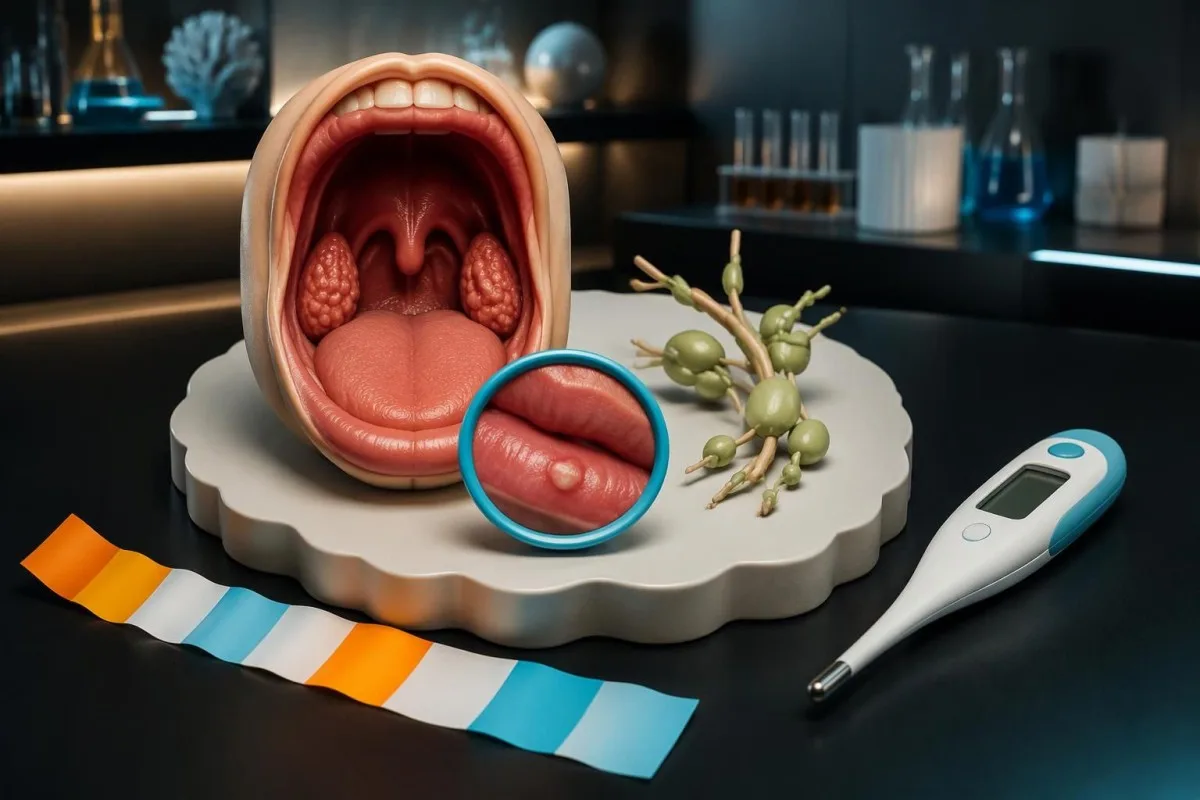
กลุ่มอาการ PFAPA อาจทำให้มีไข้สูงเป็นซ้ำ ร่วมกับแผลในปาก เจ็บคอ และต่อมน้ำเหลืองบริเวณคอโต โดยมักเป็นนาน 3–7 วัน และหายเป็นปกติระหว่างการกำเริบ การวินิจฉัยขึ้นอยู่กับรูปแบบที่เกิดซ้ำและการ排除สาเหตุอื่น ไม่ใช่ผลตรวจเลือดที่ผิดปกติเพียงครั้งเดียว การจดบันทึกอาการช่วยได้ ส่วนอาการที่รุนแรงผิดปกติหรือแตกต่างจากเดิมต้องได้รับการประเมินใหม่.

ประเด็นสำคัญ
- กลุ่มอาการ PFAPA มักทำให้เกิดอาการไข้เป็นช่วง ๆ นาน 3–7 วัน โดยแต่ละครั้งห่างกันหลายสัปดาห์และมีสุขภาพดี.
- อาการ PFAPA ได้แก่ แผลร้อนใน คอหอยอักเสบ และต่อมน้ำเหลืองบริเวณคอโต โดยไม่จำเป็นต้องมีอาการครบทั้ง 3 อย่างพร้อมกัน.
- ช่วงเวลาที่มีไข้ มักเป็นไปตามวงจรราว 2–8 สัปดาห์ แต่ไม่จำเป็นต้องเกิดขึ้นตรงตามปฏิทินอย่างสม่ำเสมอเพื่อใช้วินิจฉัย.
- บันทึกอาการ ควรจดวันที่เกิดอาการ อุณหภูมิสูงสุดเป็น °C หรือ °F อาการ ยา และการฟื้นตัวระหว่างการกำเริบ.
- การตรวจเลือด อาจพบ CRP และนิวโทรฟิลสูงขึ้นระหว่างการกำเริบ แต่ค่า CRP 80 mg/L ไม่สามารถแยก PFAPA ออกจากการติดเชื้อได้.
- ภาวะนิวโทรพีเนียเป็นรอบ อาจกลับเป็นซ้ำทุกประมาณ 21 วัน และอาจต้องตรวจนับเม็ดเลือดเป็นระยะ แทนการอาศัย CBC เพียงครั้งเดียวที่ดูไม่น่ากังวล.
- การตัดสินใจการรักษา อาจเกี่ยวข้องกับการใช้คอร์ติโคสเตียรอยด์ที่แพทย์สั่ง ยาป้องกัน หรือการผ่าตัดต่อมทอนซิล; ไม่ควรดำเนินการใด ๆ เหล่านี้จากผลตรวจทางห้องปฏิบัติการเพียงอย่างเดียว.
- การประเมินอย่างเร่งด่วน จำเป็นสำหรับทารกทุกคนที่อายุน้อยกว่า 3 เดือนและมีอุณหภูมิ 38°C ขึ้นไป หรือเด็กที่มีอาการหายใจลำบาก การตอบสนองลดลง หรือผื่นที่กดแล้วไม่จาง.
กลุ่มอาการ PFAPA คืออะไร และอะไรเป็นสาเหตุของไข้?
กลุ่มอาการ PFAPA เป็นภาวะอักเสบอัตโนมัติที่ทำให้เกิดไข้ซ้ำเป็นช่วง ๆ ร่วมกับแผลร้อนในในปาก คอหอยอักเสบ และต่อมน้ำเหลืองบริเวณคออักเสบ อาการกำเริบมักนาน 3–7 วัน; โดยปกติเด็กจะกลับมามีพลังงาน ความอยากอาหาร และการเจริญเติบโตตามปกติระหว่างช่วงที่มีอาการ.
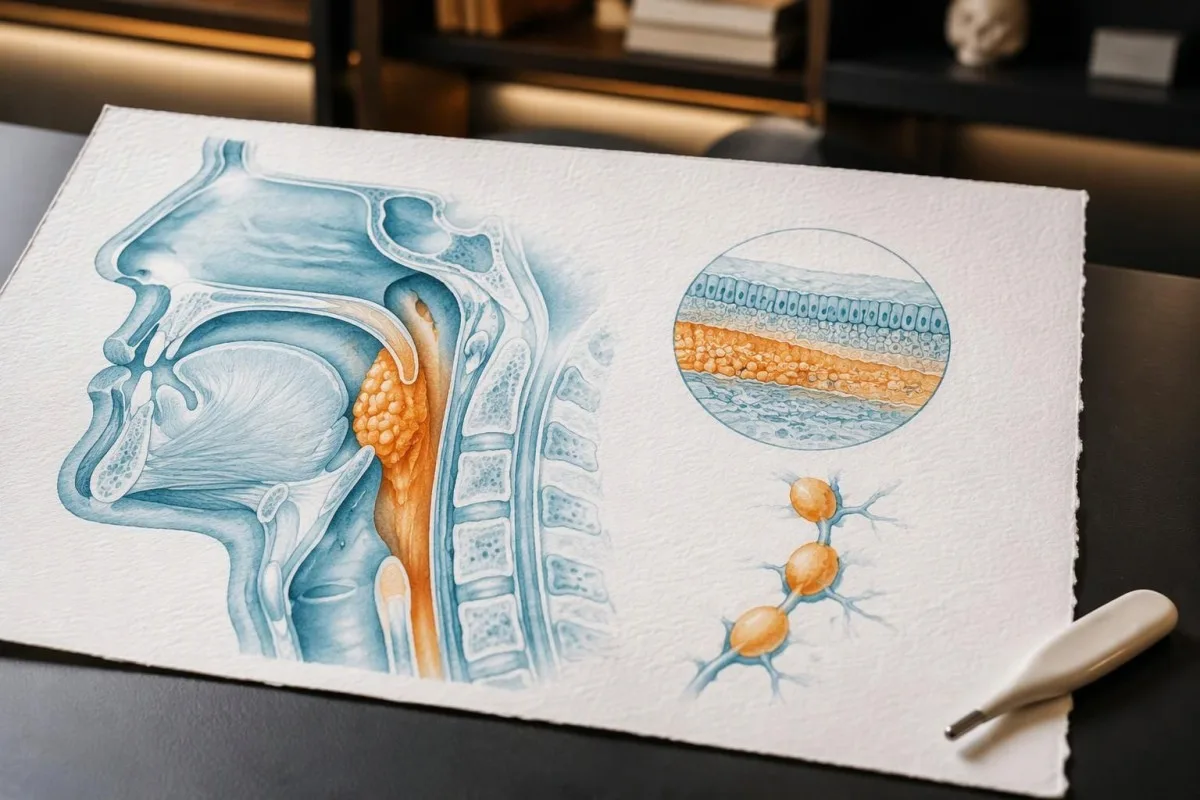
PFAPA สะท้อนถึงการกระตุ้นเส้นทางการอักเสบอย่างไม่เหมาะสม มากกว่าจะเป็นการเจ็บป่วยติดต่อชนิดใหม่ทุกสองสามสัปดาห์ มักเริ่มก่อนอายุ 5 ปี แต่เด็กโตและผู้ใหญ่ก็อาจได้รับผลกระทบได้ ดังนั้นเกณฑ์อายุที่ใช้อ้างอิงในอดีตจึงเป็นเพียงข้อบ่งชี้ ไม่ใช่ข้อยกเว้นโดยเด็ดขาด (Wang et al., 2021) การเป็น PFAPA ไม่ได้หมายความว่าไข้ทุกครั้งในอนาคตจะไม่เกิดจากการติดเชื้อ.
คำย่อนี้อธิบายองค์ประกอบ 4 ประการ ได้แก่ ไข้เป็นรอบ เยื่อบุช่องปากอักเสบชนิดแผลร้อนใน คอหอยอักเสบ และต่อมน้ำเหลืองอักเสบ แตกต่างจากภาวะไข้เป็นรอบที่ถ่ายทอดทางพันธุกรรมหลายชนิด ตรงที่ PFAPA ไม่มีการตรวจทางพันธุกรรมแบบใดแบบหนึ่งที่ได้รับการยืนยันว่าใช้ยืนยันการวินิจฉัยได้ แม้อาจพบการเกิดกระจุกตัวในครอบครัวก็ตาม; ผลตรวจแผงพันธุกรรมแบบครอบคลุมที่เป็นลบไม่ได้พิสูจน์ว่าเป็น PFAPA และไม่ได้ตัดภาวะอักเสบอื่นที่เป็นไปได้ทั้งหมดออกไป.
คันเตสตีเป็น เครื่องวิเคราะห์ผลเลือด AI ที่ช่วยอธิบายได้ว่าเหตุใดผล CRP ที่ 80 mg/L จึงต้องพิจารณาบริบททางคลินิก แทนการระบุชื่อโรคจากผลตรวจ Our องค์กรและแนวทางของเรา อธิบายบริการ แต่การระบุว่าเป็น PFAPA ต้องอาศัยแพทย์เชื่อมโยงอาการที่เกิดในหลายครั้ง ตรวจร่างกายเด็ก และพิจารณาภาวะที่รายงานผลทางห้องปฏิบัติการไม่อาจบอกได้.
อาการ PFAPA ข้อใดทำให้สังเกตรูปแบบได้?
อาการ PFAPA มักมีไข้ร่วมกับเจ็บคอ ต่อมน้ำเหลืองที่คอโตและกดเจ็บ หรือแผลเล็ก ๆ ในปาก การพบอาการร่วมแบบเดิมซ้ำ ๆ ตลอด 3 ครั้งขึ้นไปที่มีการบันทึกไว้ ให้ข้อมูลมากกว่าอาการใดอาการหนึ่งที่เกิดขึ้นเพียงครั้งเดียว แม้ไม่มีจำนวนครั้งขั้นต่ำที่เป็นมาตรฐานสากลซึ่งใช้ยืนยัน PFAPA ได้.
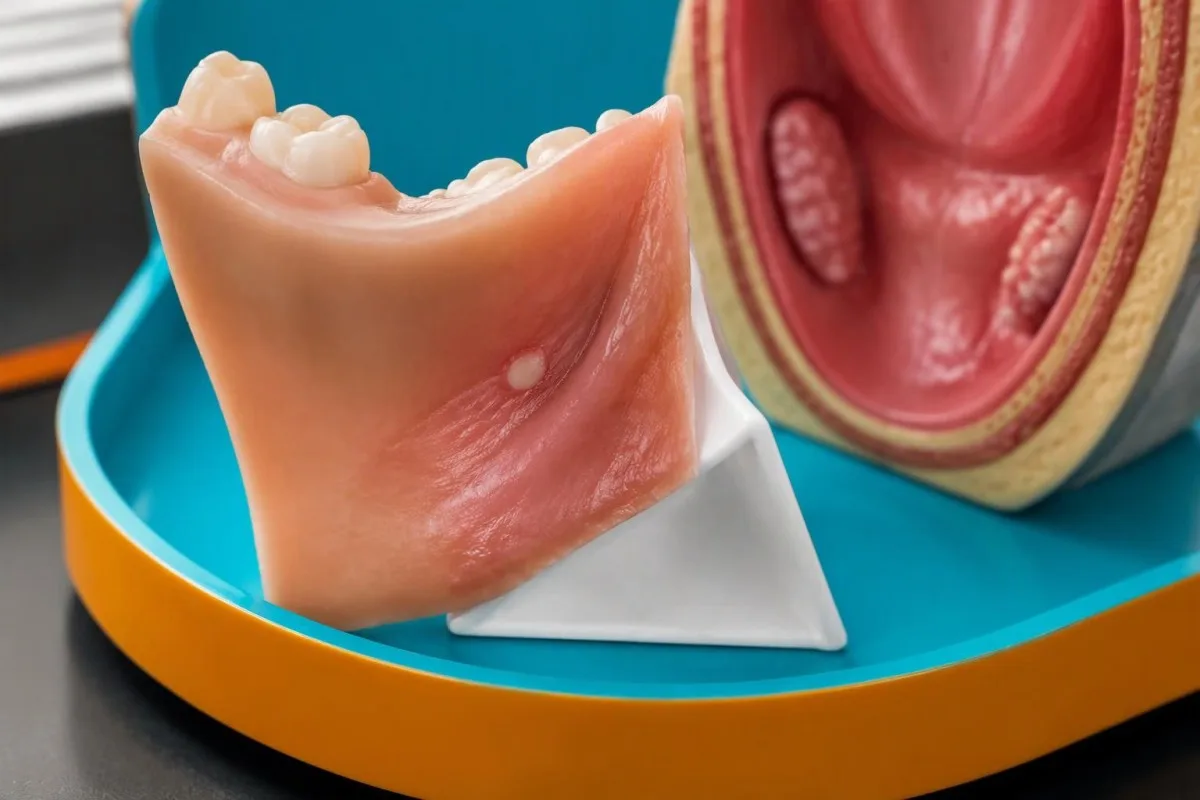
แผลร้อนในมักเป็นแผลตื้นขนาดเล็กที่ด้านในของริมฝีปาก กระพุ้งแก้ม หรือพื้นผิวอื่น ๆ ในช่องปาก ไม่เหมือนตุ่มพองที่รวมกลุ่มกันบนริมฝีปากด้านนอก เด็กอาจมีแผลเพียง 1 หรือ 2 แผล และบางครั้งอาจไม่มีแผลระหว่างที่อาการกำเริบ การถ่ายภาพแผลที่มองเห็นได้อาจช่วยได้หากแผลหายไปก่อนถึงวันนัด.
คอหอยอักเสบอาจมีรอยแดงหรือคราบบนต่อมทอนซิล ดังนั้นจึงไม่สามารถแยก PFAPA จากการติดเชื้อสเตรปโตคอคคัสได้ด้วยลักษณะที่เห็นเพียงอย่างเดียว ต่อมน้ำเหลืองที่โตมักเป็นต่อมน้ำเหลืองบริเวณคอ ส่วนต่อมน้ำเหลืองที่โตขึ้นอย่างต่อเนื่อง ต่อมน้ำเหลืองโตทั่วร่างกาย หรืออาการที่นานเกินช่วงกำเริบ 3–7 วัน จำเป็นต้องหาคำอธิบายอื่น แทนการสรุปว่าเกิดจาก PFAPA โดยอัตโนมัติ.
แผลในปากเพียงอย่างเดียวไม่ใช่การวินิจฉัยภาวะไข้เป็นรอบ การมีแผลในปากซ้ำร่วมกับแผลที่อวัยวะเพศ ตาแดงและปวดตา การมองเห็นเปลี่ยนแปลง หรือความผิดปกติของผิวหนังที่ไม่ปกติ ชวนให้นึกถึงความเป็นไปได้อื่น รวมถึง รูปแบบอาการของโรคเบเชต์; แม้มีอาการปวดตาเพียง 1 ครั้งร่วมกับการมองเห็นบกพร่อง ก็ควรเข้ารับการประเมินโดยเร็ว โดยไม่ต้องรอให้เกิดไข้รอบถัดไป.
ไข้จาก PFAPA เป็นนานเท่าใด และกลับมาเป็นบ่อยแค่ไหน?
ไข้จาก PFAPA มักนาน 3–7 วัน และกลับเป็นซ้ำทุกประมาณ 2–8 สัปดาห์, โดยมักมีอาการคล้ายเดิมอย่างชัดเจน เด็กบางคนมีรูปแบบที่คาดการณ์ได้ แต่ช่วงห่างที่แปรผันไม่ได้ตัด PFAPA ออกโดยอัตโนมัติ.

Temperatures during PFAPA attacks often reach 39–40°C, but fever height does not determine the diagnosis or reliably measure danger. The timing of associated throat symptoms, the child's appearance and the return to baseline matter more; measuring temperature with the same method also makes comparisons more useful than alternating between forehead, ear and underarm readings.
For a hypothetical child, fevers beginning on days 1, 29 and 58 with 4-day attacks suggest a repeated cycle—not proof of PFAPA. Count start-to-start intervals separately from fever-free days, and record whether corticosteroid treatment changed an interval; a shortened next cycle after treatment can otherwise make a previously regular pattern look inexplicably irregular.
A fever that does not stop is not a series of separate PFAPA episodes. If symptoms persist beyond 7 days, or recovery never occurs, clinicians reconsider infection and other inflammatory conditions; our explanation of ผลของช่วงเวลาการตรวจเลือด also shows why a sample taken on day 1 cannot be interpreted like one taken after recovery.
บันทึกอาการ PFAPA ควรจดอะไรบ้าง?
A PFAPA symptom diary should record episode start and finish dates, measured temperature, mouth and throat findings, neck swelling, medication timing and wellness between attacks. Even 3 carefully documented episodes can reveal details that a single clinic visit misses.

Document the thermometer method and the highest measured temperature, not just 'very hot.' For each day of a 4-day attack, note drinking, urine output, activity, cough, runny nose, abdominal symptoms and whether anyone nearby was ill; these observations distinguish a repeated inflammatory pattern from unrelated respiratory or gastrointestinal illnesses more effectively than recording fever alone.
Medication entries need the name, dose, administration time and observed response. If a prescribed medicine is given at 09:00 and fever settles by 14:00, record that interval without claiming the medicine established PFAPA; include throat swab results and whether a laboratory sample preceded treatment, because both antibiotics and corticosteroids can complicate interpretation of subsequent findings.
Well days deserve entries too. A weekly note of normal appetite, play, school attendance and any lingering symptoms prevents a diary from becoming an attack-only record; when a clinician requests a recovery sample, our การเตรียมตัวก่อนตรวจค่าพื้นฐาน explains how to record recent illness and medicines rather than treating a sample 2 days after fever as an unquestionable baseline.
เหตุใดการมีสุขภาพดีระหว่างช่วงที่ PFAPA กำเริบจึงสำคัญมาก?
Complete wellness between episodes strongly supports a typical PFAPA pattern: normal activity, appetite and growth should return after the 3–7-day attack. Persistent symptoms or continuing inflammation between attacks make clinicians reconsider the diagnosis.
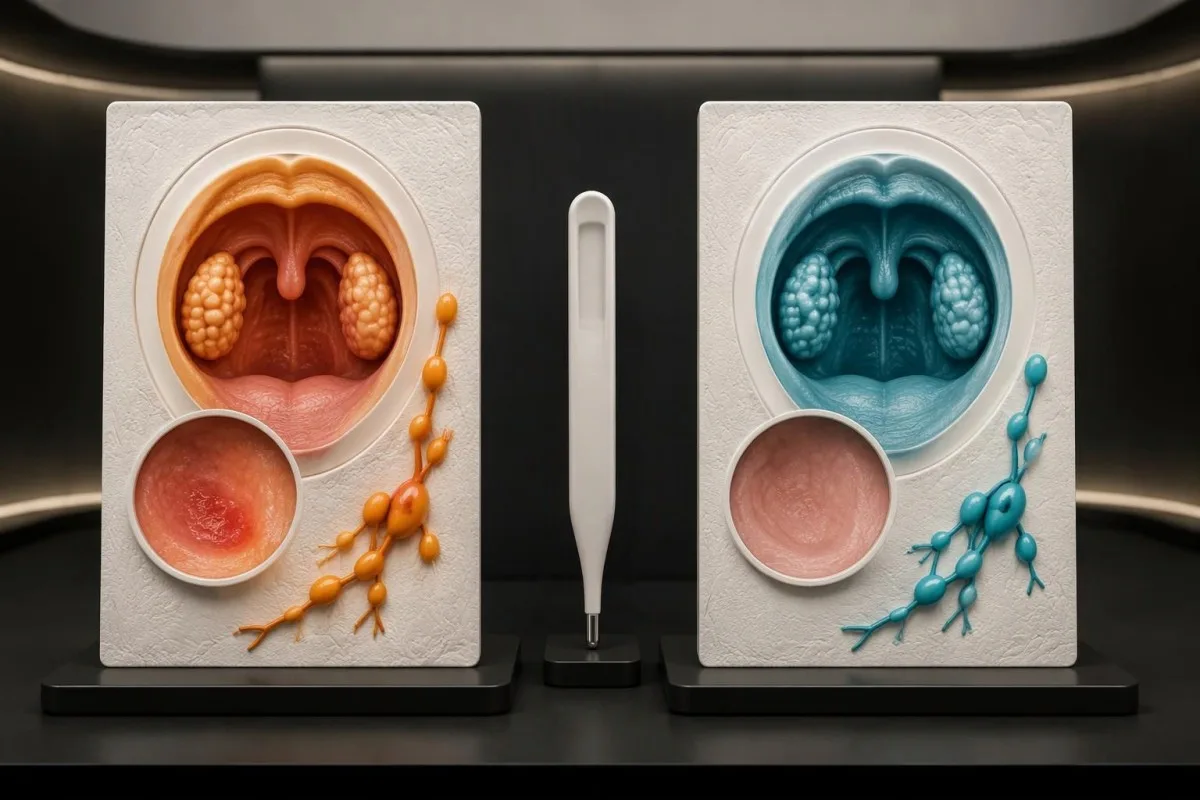
A child who is fever-free but remains exhausted, loses weight or develops daily pain has not truly returned to baseline. Growth is assessed through serial height and weight measurements, not 1 percentile in isolation; crossing growth centiles over time may justify investigation even when individual fever episodes resemble PFAPA and routine examinations during attacks look familiar.
Repeated ordinary infections are common in young children, but unusually severe, prolonged or unusual infections suggest a different evaluation. A history of 2 hospital-treated infections or recurrent deep infections matters differently from several mild colds; clinicians consider the organisms, sites, treatment response and family history, as discussed in our guide to การทดสอบการติดเชื้อบ่อยครั้ง.
Inflammatory markers usually fall toward the laboratory reference range between PFAPA attacks, but an immediately post-fever sample may still reflect recovery. A persistent CRP of 25 mg/L on repeated genuinely well-day samples is not proof of another disease, yet it deserves explanation; a clinician may check for an unnoticed infection, ongoing inflammatory symptoms or a sampling timeline that was mislabeled.
CRP, ESR และการตรวจนับเม็ดเลือดบ่งบอกอะไรใน PFAPA?
PFAPA attacks can raise CRP, ESR and neutrophil counts, but none of these tests confirms PFAPA or excludes infection. Many laboratories use a CRP upper reference limit around 5 mg/L, ขณะที่บางแห่งใช้ 10 มก./ล.; the report's own range matters.
Consider a hypothetical child with CRP 80 mg/L during fever and 3 mg/L after recovery. That change supports an episodic inflammatory process but does not identify its cause; infection can produce the same pattern, while ESR may normalize more slowly than CRP, making a modestly raised recovery ESR less surprising than persistent symptoms or repeatedly elevated CRP.
White-cell interpretation must use age-appropriate absolute counts rather than adult ranges or percentages alone. At Kantesti, we emphasize that CRP 8 mg/dL equals 80 mg/L—a tenfold unit conversion that can otherwise create a false impression of improvement; our การเปรียบเทียบ WBC และ CRP explains why these markers can disagree because they change at different rates.
Procalcitonin is sometimes considered when serious bacterial infection is suspected, but it is not a standalone PFAPA discriminator. A low result, including a value below 0.1 ng/mL, cannot safely overrule a concerning examination or very early illness; the limits described in our คู่มือการแปลผลโปรแคลซิโทนิน matter more than using one reassuring number to justify home treatment.
แพทย์วินิจฉัย PFAPA อย่างไร?
PFAPA diagnosis is clinical: clinicians identify repeated characteristic attacks, document recovery between them and exclude plausible alternatives. Onset before age 5 supports traditional criteria, but later onset does not prevent a diagnosis when the overall pattern fits.
The diagnostic process usually starts with history and examination rather than an extensive panel of rare-disease tests. Wang et al. (2021) describe the value of stereotyped episodes, absence of typical respiratory symptoms, negative relevant cultures and response to prescribed corticosteroids; however, 1 negative throat swab or 1 rapid response cannot independently establish PFAPA, and classification criteria are not identical to bedside diagnosis.
Streptococcal testing addresses the current throat illness, while an ASO antibody test mainly reflects previous exposure. An ASO result of 400 IU/mL does not prove that today's recurrent fever is active strep infection; age, local reference ranges and symptom timing affect interpretation, as explained in our discussion of ASO and recent exposure.
คันเตสตีเป็น เครื่องมือวิเคราะห์ผลตรวจเลือดที่ขับเคลื่อนด้วย AI that can contextualize laboratory units and repeated results, but 2 matching reports cannot confirm PFAPA. Our การกำกับดูแลด้านเทคนิคและทางคลินิก information should not be read as validation of a PFAPA diagnostic test; pediatric or rheumatology assessment remains necessary when the pattern is atypical, severe or uncertain.
แยก PFAPA ออกจากการติดเชื้อซ้ำได้อย่างไร?
Repeated infections are more likely when episodes follow sick contacts, have varying symptoms or include cough, runny nose, diarrhea or a confirmed pathogen. PFAPA more often repeats a similar 3–7-day pattern with complete wellness between attacks, but the two can coexist.
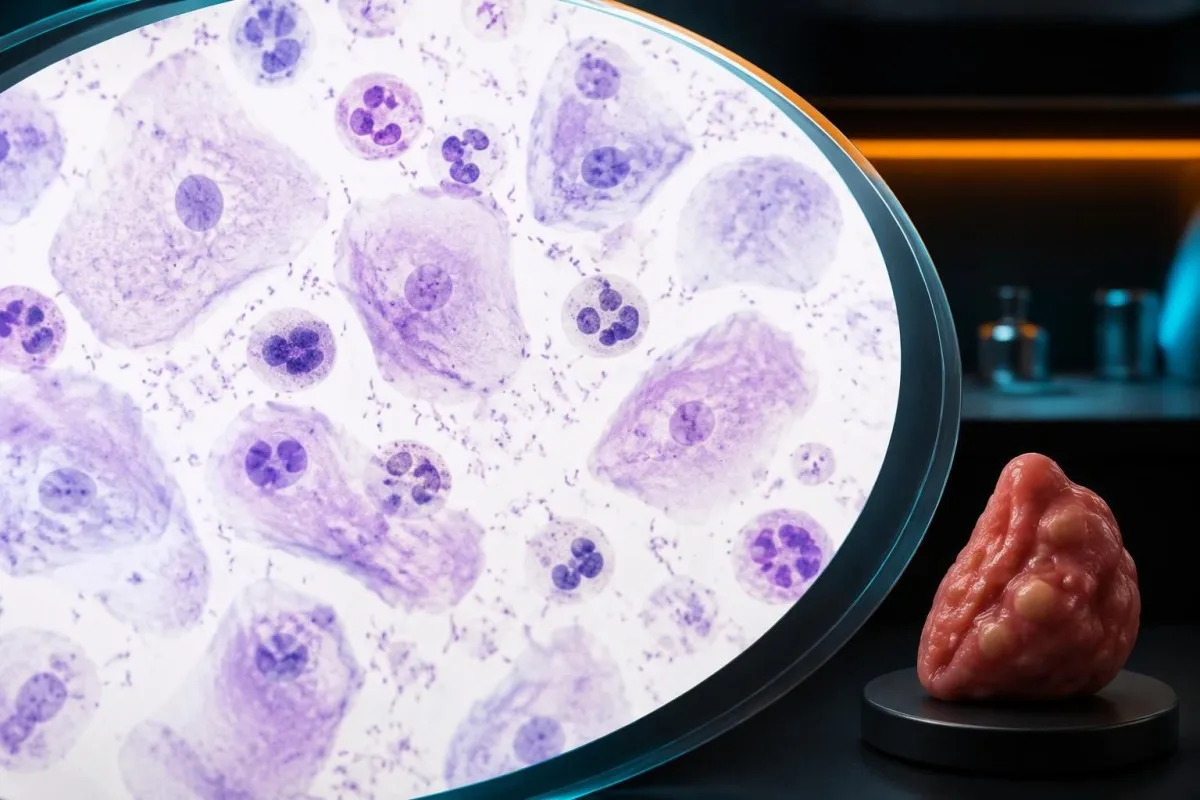
A positive respiratory PCR does not always explain the entire fever history. Adenovirus can remain detectable after an illness, so 1 positive result must be matched to current symptoms, examination and timing; our discussion of การตรวจพบและการขับเชื้ออะดีโนไวรัส explains why a molecular result may indicate recent exposure rather than the cause of every subsequent attack.
Longer-lasting sore throat, fatigue and gland enlargement can suggest a different illness rather than PFAPA. EBV antibody patterns distinguish recent infection from prior exposure more effectively than a single positive IgG result; our คู่มือรูปแบบแอนติบอดี EBV explains the roles of 3 commonly reported markers—VCA IgM, VCA IgG and EBNA IgG—without equating past exposure with today's symptoms.
Antibiotic response is also easy to misread. If an antibiotic begins on day 4 and the fever ends on day 5, spontaneous resolution of a PFAPA attack is possible; conversely, a confirmed bacterial infection still requires appropriate treatment, and neither previous PFAPA nor prior antibiotic failure permits a new illness with different symptoms to be dismissed without assessment.
โรคไข้เป็นระยะชนิดอื่นใดที่อาจมีอาการคล้าย PFAPA?
ภาวะนิวโทรพีเนียเป็นรอบ and inherited autoinflammatory disorders can resemble PFAPA, especially when mouth sores accompany recurring fever. Approximately 21-day cycles, severe infections, marked abdominal or chest pain, unusual rashes or persistent inflammation help clinicians decide which alternatives to investigate.
Cyclic neutropenia can produce recurrent fever, mouth sores and gum problems while a blood count between low-count periods looks normal. When suspected, clinicians may request CBCs 2–3 times weekly for about 6 weeks to identify repeated neutrophil nadirs; an absolute neutrophil count below 0.5 × 10^9/L during fever requires urgent clinical assessment rather than being labeled a routine PFAPA attack.
Familial Mediterranean fever often causes shorter attacks, commonly 12–72 hours, with abdominal or chest pain from serosal inflammation or joint symptoms. Our เกี่ยวกับการตรวจ MEFV shows why genotype and symptoms must be interpreted together; TRAPS may produce longer attacks, sometimes over 7 days, while mevalonate kinase deficiency can involve diarrhea, vomiting and attacks triggered by vaccination or other stressors.
Ancestry and family history guide assessment, but neither should become a gatekeeper that excludes an inherited disorder. Persistently raised serum amyloid A between attacks can indicate ongoing inflammation and requires context, as our serum amyloid A guide explains; a single high value during a 4-day fever does not diagnose amyloidosis, and typical PFAPA should not automatically be assigned the complication risks of other syndromes.
สัญญาณเตือนไข้ข้อใดที่ต้องได้รับการประเมินเร่งด่วน?
ไปเข้ารับการรักษาฉุกเฉิน for fever with breathing difficulty, reduced responsiveness, a stiff neck, a non-blanching rash or severe dehydration. An infant younger than 3 เดือน ที่มีอุณหภูมิ 38°C หรือสูงกว่า needs urgent medical assessment, even if a family member has PFAPA.
Difficulty swallowing saliva, drooling, a muffled voice or marked one-sided throat swelling can indicate an airway-threatening problem rather than a usual PFAPA flare. A child aged 3–6 months with a temperature of 39°C or higher also needs urgent assessment; contact local emergency services for immediate danger instead of waiting for a blood result or an expected fever endpoint.
Fever lasting 5 days or longer warrants prompt medical review, particularly with red eyes, cracked lips, rash or swollen hands and feet. These findings can suggest Kawasaki disease, discussed in our Kawasaki assessment guide; incomplete presentations occur, so clinicians do not require every classic feature, and concerning symptoms should be assessed before day 5 rather than waiting for a threshold.
New severe localized abdominal pain, persistent vomiting or inability to walk normally should not be attributed to PFAPA without examination. Even 1 normal WBC or CRP result cannot reliably exclude an early abdominal emergency, as our appendicitis laboratory limits explain; children with a known fever syndrome can still develop unrelated illnesses, especially when the attack looks different from their established pattern.
รักษาอาการกำเริบของ PFAPA อย่างไร และการตอบสนองต่อสเตียรอยด์บ่งบอกอะไร?
PFAPA attack treatment focuses on comfort, hydration and, when prescribed, corticosteroids that often stop fever within hours. Published prednisone or prednisolone regimens range from 0.5–2 mg/kg, but dosing, maximum dose and eligibility must be set by the treating clinician.
Vanoni et al. (2016) describe rapid corticosteroid responses alongside the limitation that treatment may shorten the interval to the next attack. Reports summarized in that review estimated shorter intervals in approximately 25–50% of patients, but these observations come from heterogeneous studies rather than a precise prediction for an individual child; attack control and long-term prevention are separate treatment goals.
For a hypothetical 20-kg child, a clinician-selected dose of 1 mg/kg would equal 20 mg; this calculation illustrates weight-based prescribing, not a home-treatment recommendation. Families need a written plan explaining when a familiar attack qualifies for treatment, when to seek assessment first and what to do if the expected response does not occur—especially if symptoms suggest a new infection.
Antipyretics may improve discomfort even when they do not end the inflammatory episode. Choose child-appropriate preparations with a clinician or pharmacist, avoid aspirin unless specifically prescribed and do not duplicate paracetamol/acetaminophen across 2 products; Kantesti cannot authorize steroid treatment, and our discussion of การตีความ AI ในเด็ก explains why pediatric decisions need more than laboratory pattern recognition.
พิจารณาใช้ยาป้องกันหรือตัดทอนซิลเมื่อใด?
Prevention or tonsillectomy may be considered when PFAPA attacks repeatedly disrupt daily life or attack treatment is unsatisfactory. A Cochrane review included 2 randomized trials involving 67 children, finding benefit from tonsil surgery while emphasizing the limited size of the evidence base.
Burton et al. (2019) judged the evidence for several tonsillectomy outcomes to be of moderate certainty, but the trials were too small to characterize uncommon harms confidently. The evidence concerns selected children rather than every person with recurrent sore throat; a child missing 4 school days each month may value potential benefit differently from a child with infrequent, easily managed attacks.
Colchicine is sometimes used to reduce attacks under specialist supervision, whereas cimetidine has less convincing evidence. Treatment selection should consider the diagnosis, kidney and liver function, other medicines and the possibility of an inherited fever disorder; when several options exist, agree in advance on a measurable goal, such as fewer attacks across 3 months, rather than assuming a changed laboratory number demonstrates success.
Tonsillectomy carries postoperative pain, dehydration, anesthesia-related risks and bleeding risk, even when it improves PFAPA. Kantesti's การใช้ AI อย่างมีความรับผิดชอบ supports a clear boundary: neither 1 elevated inflammatory marker nor an automated report can decide whether surgery is appropriate; that discussion belongs with the treating pediatric team and an ENT specialist who can assess the child's individual risks.
การติดตามดูแลแบบใดช่วยเด็ก ผู้ใหญ่ และครอบครัวที่มี PFAPA?
PFAPA follow-up should track attack burden, growth or weight, treatment response and any symptoms between episodes. Many childhood cases improve over several years, but persistence, relapse and adult-onset disease occur; a 3-month review interval can be a practical individualized plan rather than a universal rule.

Adults require the same attention to repeated patterns and alternative causes, not an assumption that PFAPA is impossible after childhood. Fever with oral sores and pharyngitis can support the diagnosis, but new constitutional symptoms, persistent gland enlargement or abnormal findings between attacks need assessment; a 35-year-old with a first prolonged fever should not self-diagnose PFAPA from an online symptom match.
Prepare a concise appointment summary: attack dates, duration, associated features, well-day symptoms, test results and response to prescribed treatment. Include 1 clearly labeled attack sample and any clinician-requested recovery sample, rather than ordering a broad panel every month; repeated testing is useful only when it answers a specific question, such as whether inflammation persists or neutrophil counts cycle.
คันเตสตีเป็น แพลตฟอร์มการแปลผลตรวจเลือดของ AI that can help explain uploaded CBC and inflammatory-marker reports alongside their dates, units and stated reference ranges. For a family sharing 2 or more records, check each person's identity and consent before upload, and review our ความเป็นส่วนตัวและการจัดการข้อมูล; AI explanation does not replace pediatric examination, urgent triage or a specialist diagnosis.
งานวิจัยที่ตีพิมพ์: หลักฐานเทียบกับคู่มือพื้นฐานด้านห้องปฏิบัติการ
PFAPA evidence comes from clinical descriptions, differential-diagnosis research and treatment studies—not from a specific clotting or serum-protein test. The 2 background publications below explain other laboratory topics and should not be mistaken for studies validating PFAPA diagnosis.
The peer-reviewed PFAPA review by Wang et al. (2021), treatment review by Vanoni et al. (2016) and Cochrane analysis by Burton et al. (2019) directly inform this article's clinical discussion. The surgical review's 67-child evidence base illustrates why certainty must be proportionate to study size; a named source supports a specific claim, not every recommendation made elsewhere on the page.
ของ Kantesti clotting test background guide และ คู่มือข้อมูลพื้นฐานเกี่ยวกับโปรตีนในซีรัม accompany the 2 Zenodo records listed below. Neither aPTT nor an albumin/globulin ratio confirms PFAPA, and neither guide establishes that routine testing of those markers improves PFAPA care; additional tests should follow an identified clinical concern rather than the availability of a panel.
Evidence interpretation should distinguish a repository-hosted educational guide from a peer-reviewed condition-specific study or systematic review. Our มาตรฐานเนื้อหาทางการแพทย์ explain the editorial approach; for a child with 3 apparently similar attacks, the practical priority remains documented recovery, targeted exclusion of alternatives and a clear safety plan, not accumulating more citations or tests that do not answer the clinical question.
คำถามที่พบบ่อย
กลุ่มอาการ PFAPA คืออะไร?
กลุ่มอาการ PFAPA เป็นภาวะอักเสบอัตโนมัติที่ทำให้มีไข้เป็นๆ หายๆ ร่วมกับแผลร้อนในในปาก คอหอยอักเสบ และต่อมน้ำเหลืองบริเวณคอโต อาการแต่ละครั้งมักนาน 3–7 วัน และกลับเป็นซ้ำทุกหลายสัปดาห์ โดยมีสุขภาพปกติระหว่างครั้งที่มีอาการ ภาวะนี้มักเริ่มก่อนอายุ 5 ปี แต่อาจพบในเด็กโตและผู้ใหญ่ได้ ไม่มีการตรวจเลือดชนิดใดชนิดหนึ่งที่ยืนยัน PFAPA ได้ การวินิจฉัยจึงอาศัยรูปแบบอาการทางคลินิกที่เกิดซ้ำและการประเมินหาสาเหตุอื่นที่เป็นไปได้.
ไข้จาก PFAPA เกิดขึ้นบ่อยแค่ไหน?
ไข้จาก PFAPA มักกลับมาเป็นซ้ำประมาณทุก 2–8 สัปดาห์ และแต่ละครั้งมักกินเวลา 3–7 วัน เด็กบางคนมีรอบที่สม่ำเสมอมาก ขณะที่บางคนมีช่วงห่างที่ไม่แน่นอน การรักษาด้วยคอร์ติโคสเตียรอยด์อาจทำให้ระยะเวลาก่อนเกิดครั้งถัดไปสั้นลง จึงควรบันทึกเวลาที่ให้ยาไว้ในสมุดบันทึกไข้ หากมีไข้ต่อเนื่องหรือไม่หายเป็นปกติระหว่างครั้ง ควรประเมินอาการซ้ำ แทนที่จะสันนิษฐานว่าเป็นไปตามลักษณะของ PFAPA.
ผลตรวจเลือดที่พบค่า CRP สูงสามารถวินิจฉัย PFAPA ได้หรือไม่?
ผล CRP สูงไม่สามารถใช้วินิจฉัย PFAPA ได้ เพราะการติดเชื้อและความผิดปกติจากการอักเสบอื่น ๆ ก็ทำให้ค่าเพิ่มขึ้นในลักษณะเดียวกันได้ ตัวอย่างเช่น ค่า CRP 80 mg/L ระหว่างมีไข้ และ 3 mg/L หลังฟื้นตัว สนับสนุนว่ามีการอักเสบเป็นช่วง ๆ แต่ไม่ได้บ่งชี้สาเหตุ ห้องปฏิบัติการหลายแห่งใช้ค่าอ้างอิงสูงสุดของ CRP อยู่ที่ประมาณ 5 mg/L ขณะที่บางแห่งใช้ 10 mg/L แพทย์จะแปลผลร่วมกับอาการ การตรวจร่างกาย ช่วงเวลาที่เก็บตัวอย่าง และผลตรวจการติดเชื้อที่เกี่ยวข้องибашь.
PFAPA ติดต่อกันได้หรือไม่ และจำเป็นต้องใช้ยาปฏิชีวนะหรือไม่?
PFAPA ไม่ใช่โรคติดต่อ และยาปฏิชีวนะไม่ได้รักษากระบวนการอักเสบที่เป็นสาเหตุของโรคนี้ อาการกำเริบที่มักนาน 3–7 วันอาจหายไปเองหลังเริ่มใช้ยาปฏิชีวนะ ทำให้เข้าใจผิดว่ายาปฏิชีวนะได้ผล เด็กที่เป็น PFAPA ยังสามารถติดโรคไวรัสหรือการติดเชื้อแบคทีเรียที่ติดต่อได้ ไข้ครั้งใหม่ที่มีอาการแตกต่างกัน สัมผัสใกล้ชิดกับผู้ป่วย หรือมีสาเหตุจากแบคทีเรียที่ยืนยันแล้ว ควรได้รับการประเมินและรักษาตามสาเหตุของตนเอง.
การตอบสนองอย่างรวดเร็วต่อเพรดนิโซนยืนยันว่าเป็น PFAPA หรือไม่?
การตอบสนองอย่างรวดเร็วต่อเพรดนิโซนหรือเพรดนิโซโลนที่แพทย์สั่งใช้ ช่วยสนับสนุนการวินิจฉัย PFAPA แต่ไม่สามารถยืนยันการวินิจฉัยได้ แนวทางการใช้ยาสำหรับ PFAPA ที่มีการตีพิมพ์ระบุขนาดยา 0.5–2 mg/kg โดยแพทย์ผู้รักษาเป็นผู้กำหนดขนาดยาที่ใช้จริงและขนาดยาสูงสุด คอร์ติโคสเตียรอยด์อาจกดอาการจากภาวะอื่น ๆ และอาจทำให้ช่วงห่างจนถึงการกำเริบของ PFAPA ครั้งถัดไปสั้นลง ครอบครัวควรใช้แผนการรักษาที่เป็นลายลักษณ์อักษร และพาผู้ป่วยเข้ารับการประเมินก่อนเริ่มรักษา หากอาการกำเริบรุนแรงผิดปกติหรือแตกต่างจากเดิม.
เด็กที่สงสัยว่าเป็น PFAPA ควรได้รับการดูแลฉุกเฉินเมื่อใด?
เด็กที่สงสัยว่าเป็น PFAPA ควรได้รับการดูแลฉุกเฉินหากมีไข้ร่วมกับหายใจลำบาก ตอบสนองน้อยลง คอแข็ง มีผื่นที่กดแล้วไม่จาง หรือขาดน้ำอย่างรุนแรง ทารกอายุต่ำกว่า 3 เดือนทุกรายที่มีอุณหภูมิ 38°C ขึ้นไปต้องได้รับการประเมินทางการแพทย์อย่างเร่งด่วน ไข้ที่นานตั้งแต่ 5 วันขึ้นไปก็ควรได้รับการตรวจโดยเร็ว โดยเฉพาะเมื่อมีตาแดง ผื่น ริมฝีปากแตก หรือมือและเท้าบวม การเคยได้รับการวินิจฉัยว่าเป็น PFAPA ไม่ได้หมายความว่าจะละเลยอาการเจ็บป่วยครั้งใหม่ที่มีอาการแตกต่างกันได้.
อ่านผลตรวจเลือดอย่างไร
อัปโหลดรายงานผลตรวจของคุณ แล้ว AI ของ Kantesti จะอธิบายตัวบ่งชี้ทางชีวภาพแต่ละรายการด้วยภาษาที่เข้าใจง่ายภายในไม่กี่วินาที มีผู้ใช้ทั่วโลกมากกว่า 2 ล้านคน.
เอกสารอ้างอิง
- ไคลน์, ที., มิตเชลล์, เอส., & เวเบอร์, เอช. (2026). ช่วงค่าปกติของ aPTT: คู่มือ D-Dimer และ Protein C เกี่ยวกับการแข็งตัวของเลือด. Kantesti AI การวิจัยทางการแพทย์. โดอิ
- ไคลน์, ที., มิตเชลล์, เอส., & เวเบอร์, เอช. (2026). คู่มือโปรตีนในซีรัม: การตรวจเลือดหาโกลบูลิน อัลบูมิน และอัตราส่วน A/G. Kantesti AI การวิจัยทางการแพทย์. โดอิ
- Wang A et al. (2021). Periodic fever, aphthous stomatitis, pharyngitis, and adenitis (PFAPA) syndrome: A review. World Journal of Otorhinolaryngology - Head and Neck Surgery. โดอิ
- Vanoni F et al. (2016). PFAPA syndrome: a review on treatment and outcome. Pediatric Rheumatology. โดอิ
- Burton MJ et al. (2019). Tonsillectomy for periodic fever, aphthous stomatitis, pharyngitis and cervical adenitis syndrome (PFAPA). ฐานข้อมูลการทบทวนวรรณกรรมอย่างเป็นระบบ Cochrane. โดอิ
- 2 ล้าน+การตรวจที่วิเคราะห์
- 127+ประเทศ
- 100+ภาษา
เกี่ยวกับทีมแพทย์


สัญญาณความน่าเชื่อถือ E-E-A-T
ประสบการณ์
การทบทวนเชิงคลินิกโดยแพทย์ที่นำโดยกระบวนการตีความผลตรวจในห้องแล็บ.
ความเชี่ยวชาญ
โฟกัสด้านเวชศาสตร์ห้องปฏิบัติการเกี่ยวกับพฤติกรรมของไบโอมาร์กเกอร์ในบริบททางคลินิก.
อำนาจ
ทบทวนทางการแพทย์โดย นพ. Thomas Klein พร้อมผลงานจาก นพ. Sarah Mitchell และศาสตราจารย์ ดร. Hans Weber.
ความน่าเชื่อถือ
การตีความที่อิงหลักฐาน พร้อมเส้นทางการติดตามที่ชัดเจนเพื่อลดความตื่นตระหนก.





ข้อจำกัดความรับผิดชอบทางการแพทย์
บทความนี้จัดทำเพื่อวัตถุประสงค์ด้านการศึกษาเท่านั้น และไม่ถือเป็นคำแนะนำทางการแพทย์ โปรดปรึกษาผู้ให้บริการด้านสุขภาพที่มีคุณสมบัติเหมาะสมเสมอสำหรับการตัดสินใจด้านการวินิจฉัยและการรักษา.
เผยแพร่แล้ว · ติดต่อทีมบรรณาธิการ
เผยแพร่โดย Kantesti Ltd จดทะเบียนในอังกฤษและเวลส์ เลขทะเบียนบริษัท. 17090423, ลอนดอน สหราชอาณาจักร.
