
Zespół PFAPA może powodować nawracające wysokie gorączki z owrzodzeniami jamy ustnej, bólem gardła i powiększonymi węzłami chłonnymi szyi, trwające zazwyczaj 3–7 dni, z całkowitym powrotem do zdrowia między napadami. Rozpoznanie opiera się na powtarzającym się schemacie i wykluczeniu innych przyczyn — a nie na jednym nieprawidłowym wyniku badania krwi. Pomocny jest dzienniczek objawów; nietypowo ciężki lub odmienny epizod wymaga ponownej oceny.

Najważniejsze wnioski
- Zespół PFAPA zwykle powoduje epizody gorączki trwające 3–7 dni, oddzielone kilkoma tygodniami dobrego samopoczucia.
- Objawy PFAPA obejmują afty w jamie ustnej, zapalenie gardła i powiększone węzły chłonne szyjne; nie wszystkie 3 objawy muszą występować jednocześnie.
- Czas występowania gorączki często wpisuje się w przybliżony cykl trwający 2–8 tygodni, ale dokładna regularność kalendarzowa nie jest konieczna do rozpoznania.
- Dzienniczki objawów powinny zawierać daty epizodów, maksymalną temperaturę w °C lub °F, objawy, przyjmowane leki i informacje o powrocie do zdrowia między napadami.
- Badania krwi mogą wykazywać podwyższone CRP i liczbę neutrofili podczas napadów; stężenie CRP wynoszące 80 mg/L nie pozwala odróżnić PFAPA od zakażenia.
- Neutropenia cykliczna może nawracać mniej więcej co 21 dni i może wymagać seryjnych badań morfologii krwi zamiast pojedynczego, uspokajającego wyniku CBC.
- Decyzje dotyczące leczenia może obejmować kortykosteroidy przepisane przez lekarza, leki zapobiegawcze lub tonsillektomię; żadnego z tych działań nie należy podejmować wyłącznie na podstawie wyniku badania laboratoryjnego.
- Pilna ocena jest konieczna w przypadku każdego niemowlęcia w wieku poniżej 3 miesięcy z temperaturą 38°C lub wyższą albo każdego dziecka z trudnościami w oddychaniu, obniżoną reakcją na bodźce lub wysypką nieblednącą pod uciskiem.
Czym jest zespół PFAPA i co powoduje gorączki?
Zespół PFAPA jest chorobą autoinfekcyjną powodującą nawracające epizody gorączki z aftami, zapaleniem gardła i zapaleniem węzłów chłonnych szyjnych. Napady zwykle trwają 3–7 dni; między epizodami dzieci zazwyczaj odzyskują zwykły poziom energii, apetyt i prawidłowe tempo wzrostu.
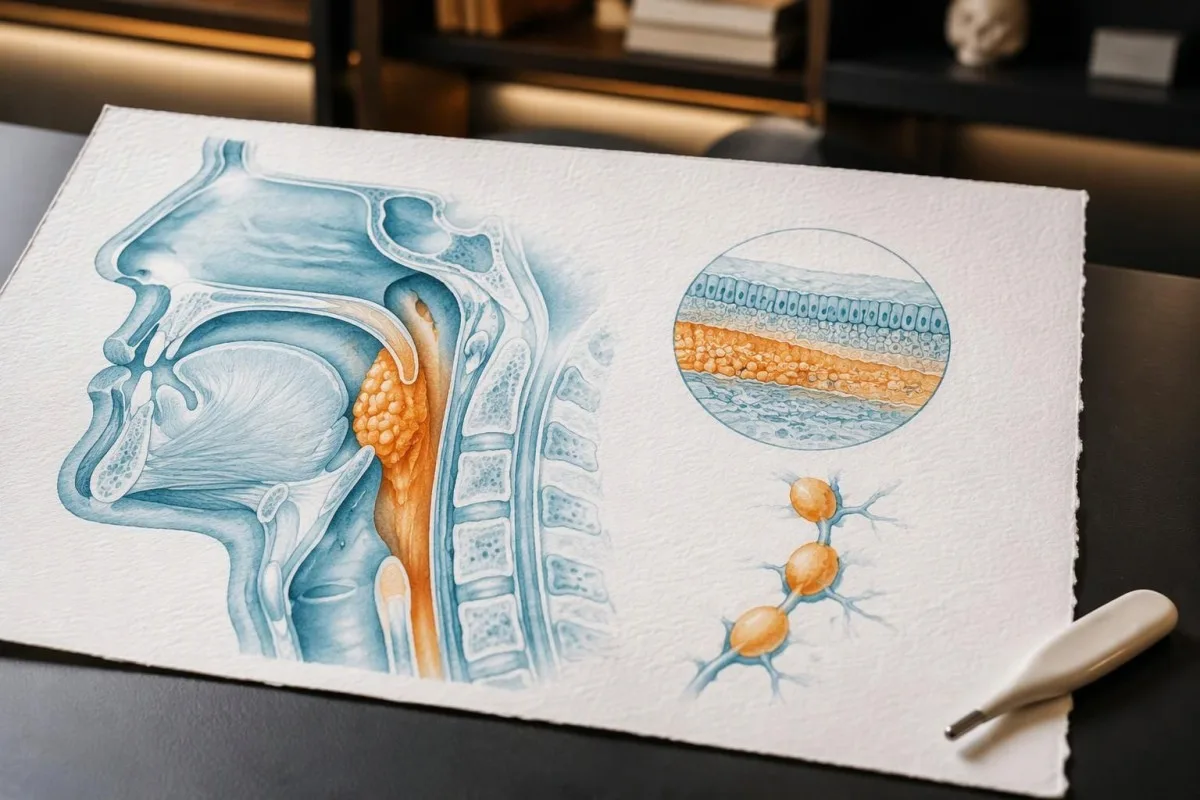
PFAPA wynika z nieprawidłowej aktywacji szlaków zapalnych, a nie z nowej, zaraźliwej choroby pojawiającej się co kilka tygodni. Początek choroby najczęściej przypada przed 5. rokiem życia, ale może ona dotyczyć starszych dzieci i dorosłych; historyczna granica wieku jest zatem wskazówką, a nie bezwzględnym kryterium wykluczającym (Wang i in., 2021). PFAPA nie oznacza, że każda przyszła gorączka będzie niezakaźna.
Skrót ten opisuje 4 składowe: gorączkę okresową, aftowe zapalenie jamy ustnej, zapalenie gardła i zapalenie węzłów chłonnych. W przeciwieństwie do kilku dziedzicznych zespołów gorączek okresowych PFAPA nie ma jednego, potwierdzonego testu genetycznego, który rozstrzygałby o rozpoznaniu, choć może występować rodzinnie; ujemny wynik szerokiego panelu genetycznego ani nie potwierdza PFAPA, ani nie wyklucza wszystkich innych chorób zapalnych.
Kantesti jest Analizator do badań krwi AI które mogą pomóc wyjaśnić, dlaczego wynik CRP wynoszący 80 mg/L wymaga kontekstu klinicznego, a nie przypisania etykiety diagnostycznej. Nasza organizacja i podejście opisują usługę, ale rozpoznanie PFAPA wymaga, by lekarz powiązał objawy z wielu epizodów, zbadał dziecko i uwzględnił schorzenia, których nie można uchwycić w wyniku badania laboratoryjnego.
Które objawy PFAPA pozwalają rozpoznać typowy schemat?
Objawy PFAPA zazwyczaj łączą gorączkę z bólem gardła, tkliwymi węzłami chłonnymi szyi lub niewielkimi aftami. Taka sama kombinacja objawów powracająca w ciągu 3 lub więcej udokumentowanych epizodów dostarcza więcej informacji niż jakikolwiek pojedynczy objaw, choć nie ma uniwersalnej minimalnej liczby epizodów potwierdzającej PFAPA.
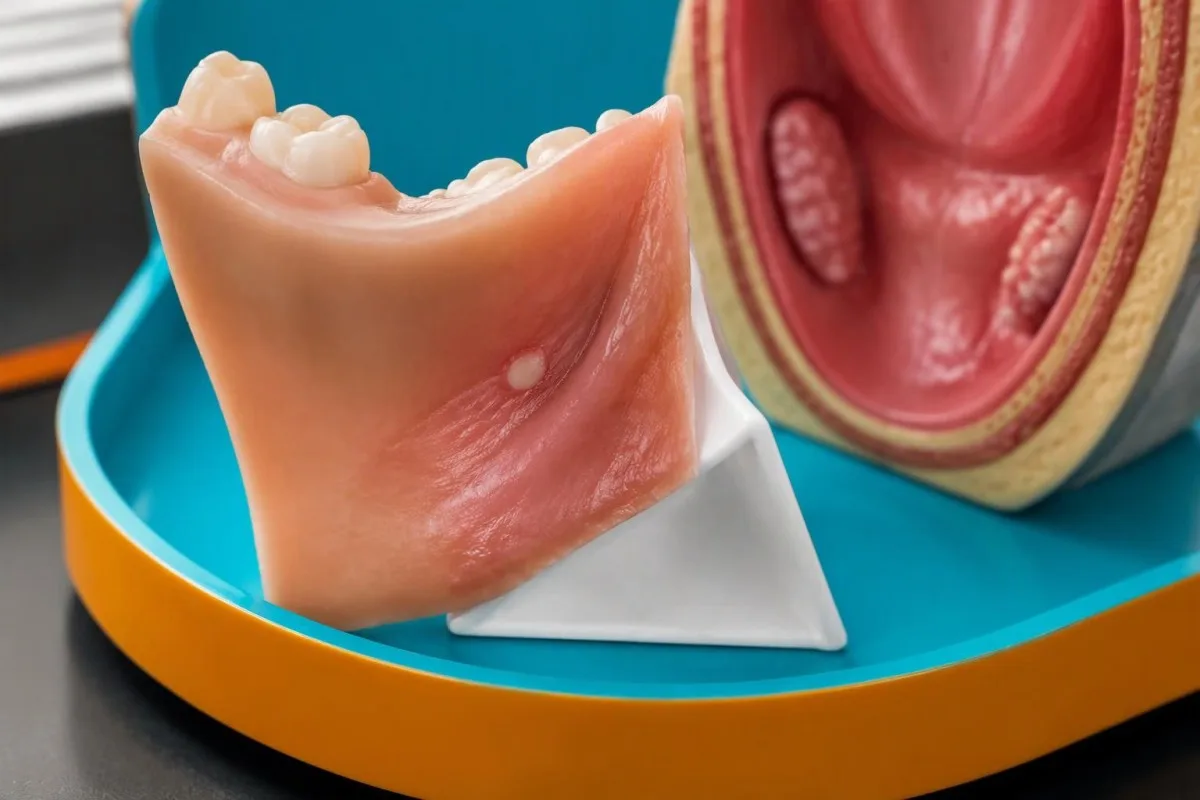
Afty są zwykle niewielkimi, płytkimi owrzodzeniami na wewnętrznej stronie warg, policzkach lub innych powierzchniach jamy ustnej — nie są tym samym co skupiska pęcherzyków na zewnętrznej stronie wargi. Dziecko może mieć zaledwie 1 lub 2 owrzodzenia, a podczas niektórych napadów mogą one nie występować; zdjęcie widocznego owrzodzenia może być pomocne, jeśli zniknie przed wizytą.
Zapalenie gardła może obejmować zaczerwienienie lub nalot na migdałkach, dlatego sam wygląd nie pozwala odróżnić PFAPA od zakażenia paciorkowcowego. Powiększenie węzłów chłonnych zazwyczaj dotyczy węzłów szyjnych, natomiast stale powiększający się węzeł, uogólnione powiększenie węzłów lub objawy utrzymujące się dłużej niż napad trwający 3–7 dni wymagają innego wyjaśnienia, zamiast automatycznego przypisywania ich PFAPA.
Same owrzodzenia jamy ustnej nie stanowią rozpoznania gorączki okresowej. Nawracające owrzodzenia jamy ustnej, którym towarzyszą owrzodzenia narządów płciowych, bolesne zaczerwienienie oczu, zaburzenia widzenia lub nietypowe zmiany skórne, wskazują na inne możliwości, w tym objawów choroby Behçeta; nawet 1 epizod bólu oka z zaburzeniami widzenia wymaga pilnej oceny, bez czekania na kolejny cykl gorączki.
Jak długo utrzymują się gorączki w PFAPA i jak często nawracają?
Gorączka w PFAPA zwykle trwa 3–7 dni i nawraca mniej więcej co 2–8 tygodni, często z uderzająco podobnymi objawami. U niektórych dzieci rytm jest przewidywalny, ale różne odstępy między epizodami nie wykluczają automatycznie PFAPA.

Temperatures during PFAPA attacks often reach 39–40°C, but fever height does not determine the diagnosis or reliably measure danger. The timing of associated throat symptoms, the child's appearance and the return to baseline matter more; measuring temperature with the same method also makes comparisons more useful than alternating between forehead, ear and underarm readings.
For a hypothetical child, fevers beginning on days 1, 29 and 58 with 4-day attacks suggest a repeated cycle—not proof of PFAPA. Count start-to-start intervals separately from fever-free days, and record whether corticosteroid treatment changed an interval; a shortened next cycle after treatment can otherwise make a previously regular pattern look inexplicably irregular.
A fever that does not stop is not a series of separate PFAPA episodes. If symptoms persist beyond 7 days, or recovery never occurs, clinicians reconsider infection and other inflammatory conditions; our explanation of wpływ terminu badania krwi also shows why a sample taken on day 1 cannot be interpreted like one taken after recovery.
Co należy zapisywać w dzienniczku objawów PFAPA?
A PFAPA symptom diary should record episode start and finish dates, measured temperature, mouth and throat findings, neck swelling, medication timing and wellness between attacks. Even 3 carefully documented episodes can reveal details that a single clinic visit misses.

Document the thermometer method and the highest measured temperature, not just 'very hot.' For each day of a 4-day attack, note drinking, urine output, activity, cough, runny nose, abdominal symptoms and whether anyone nearby was ill; these observations distinguish a repeated inflammatory pattern from unrelated respiratory or gastrointestinal illnesses more effectively than recording fever alone.
Medication entries need the name, dose, administration time and observed response. If a prescribed medicine is given at 09:00 and fever settles by 14:00, record that interval without claiming the medicine established PFAPA; include throat swab results and whether a laboratory sample preceded treatment, because both antibiotics and corticosteroids can complicate interpretation of subsequent findings.
Well days deserve entries too. A weekly note of normal appetite, play, school attendance and any lingering symptoms prevents a diary from becoming an attack-only record; when a clinician requests a recovery sample, our przewodnik po przygotowaniu do badań wyjściowych explains how to record recent illness and medicines rather than treating a sample 2 days after fever as an unquestionable baseline.
Dlaczego dobre samopoczucie między epizodami PFAPA ma tak duże znaczenie?
Complete wellness between episodes strongly supports a typical PFAPA pattern: normal activity, appetite and growth should return after the 3–7-day attack. Persistent symptoms or continuing inflammation between attacks make clinicians reconsider the diagnosis.

A child who is fever-free but remains exhausted, loses weight or develops daily pain has not truly returned to baseline. Growth is assessed through serial height and weight measurements, not 1 percentile in isolation; crossing growth centiles over time may justify investigation even when individual fever episodes resemble PFAPA and routine examinations during attacks look familiar.
Repeated ordinary infections are common in young children, but unusually severe, prolonged or unusual infections suggest a different evaluation. A history of 2 hospital-treated infections or recurrent deep infections matters differently from several mild colds; clinicians consider the organisms, sites, treatment response and family history, as discussed in our guide to częstych infekcji.
Inflammatory markers usually fall toward the laboratory reference range between PFAPA attacks, but an immediately post-fever sample may still reflect recovery. A persistent CRP of 25 mg/L on repeated genuinely well-day samples is not proof of another disease, yet it deserves explanation; a clinician may check for an unnoticed infection, ongoing inflammatory symptoms or a sampling timeline that was mislabeled.
Co pokazują wyniki CRP, ESR i morfologii krwi w PFAPA?
PFAPA attacks can raise CRP, ESR and neutrophil counts, but none of these tests confirms PFAPA or excludes infection. Many laboratories use a CRP upper reference limit around 5 mg/L, podczas gdy inne stosują 10 mg/l; the report's own range matters.
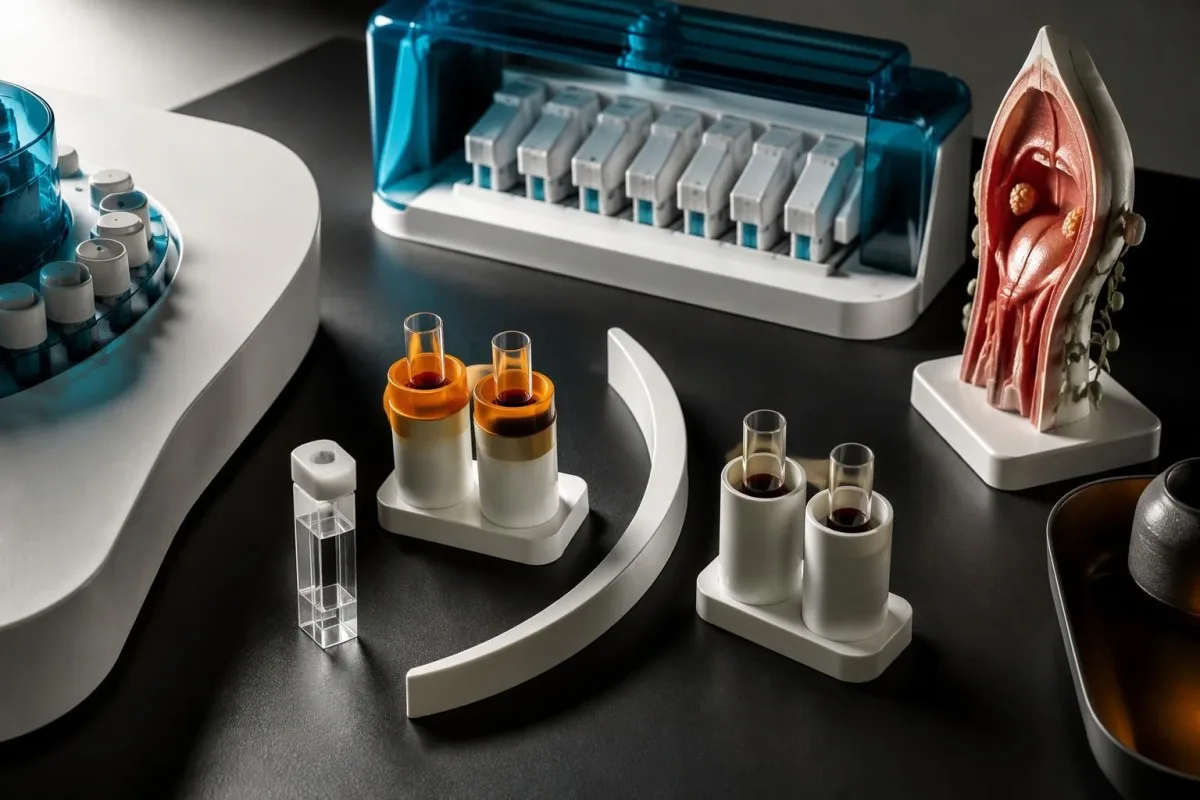
Consider a hypothetical child with CRP 80 mg/L during fever and 3 mg/L after recovery. That change supports an episodic inflammatory process but does not identify its cause; infection can produce the same pattern, while ESR may normalize more slowly than CRP, making a modestly raised recovery ESR less surprising than persistent symptoms or repeatedly elevated CRP.
White-cell interpretation must use age-appropriate absolute counts rather than adult ranges or percentages alone. At Kantesti, we emphasize that CRP 8 mg/dL equals 80 mg/L—a tenfold unit conversion that can otherwise create a false impression of improvement; our porównanie WBC i CRP explains why these markers can disagree because they change at different rates.
Procalcitonin is sometimes considered when serious bacterial infection is suspected, but it is not a standalone PFAPA discriminator. A low result, including a value below 0.1 ng/mL, cannot safely overrule a concerning examination or very early illness; the limits described in our przewodnik po interpretacji prokalcytoniny matter more than using one reassuring number to justify home treatment.
Jak lekarze rozpoznają PFAPA?
PFAPA diagnosis is clinical: clinicians identify repeated characteristic attacks, document recovery between them and exclude plausible alternatives. Onset before age 5 supports traditional criteria, but later onset does not prevent a diagnosis when the overall pattern fits.
The diagnostic process usually starts with history and examination rather than an extensive panel of rare-disease tests. Wang et al. (2021) describe the value of stereotyped episodes, absence of typical respiratory symptoms, negative relevant cultures and response to prescribed corticosteroids; however, 1 negative throat swab or 1 rapid response cannot independently establish PFAPA, and classification criteria are not identical to bedside diagnosis.
Streptococcal testing addresses the current throat illness, while an ASO antibody test mainly reflects previous exposure. An ASO result of 400 IU/mL does not prove that today's recurrent fever is active strep infection; age, local reference ranges and symptom timing affect interpretation, as explained in our discussion of ASO and recent exposure.
Kantesti jest Narzędzie do analizy wyników badań krwi oparte na AI that can contextualize laboratory units and repeated results, but 2 matching reports cannot confirm PFAPA. Our nadzór techniczny i kliniczny information should not be read as validation of a PFAPA diagnostic test; pediatric or rheumatology assessment remains necessary when the pattern is atypical, severe or uncertain.
Jak odróżnia się PFAPA od nawracających zakażeń?
Repeated infections are more likely when episodes follow sick contacts, have varying symptoms or include cough, runny nose, diarrhea or a confirmed pathogen. PFAPA more often repeats a similar 3–7-day pattern with complete wellness between attacks, but the two can coexist.
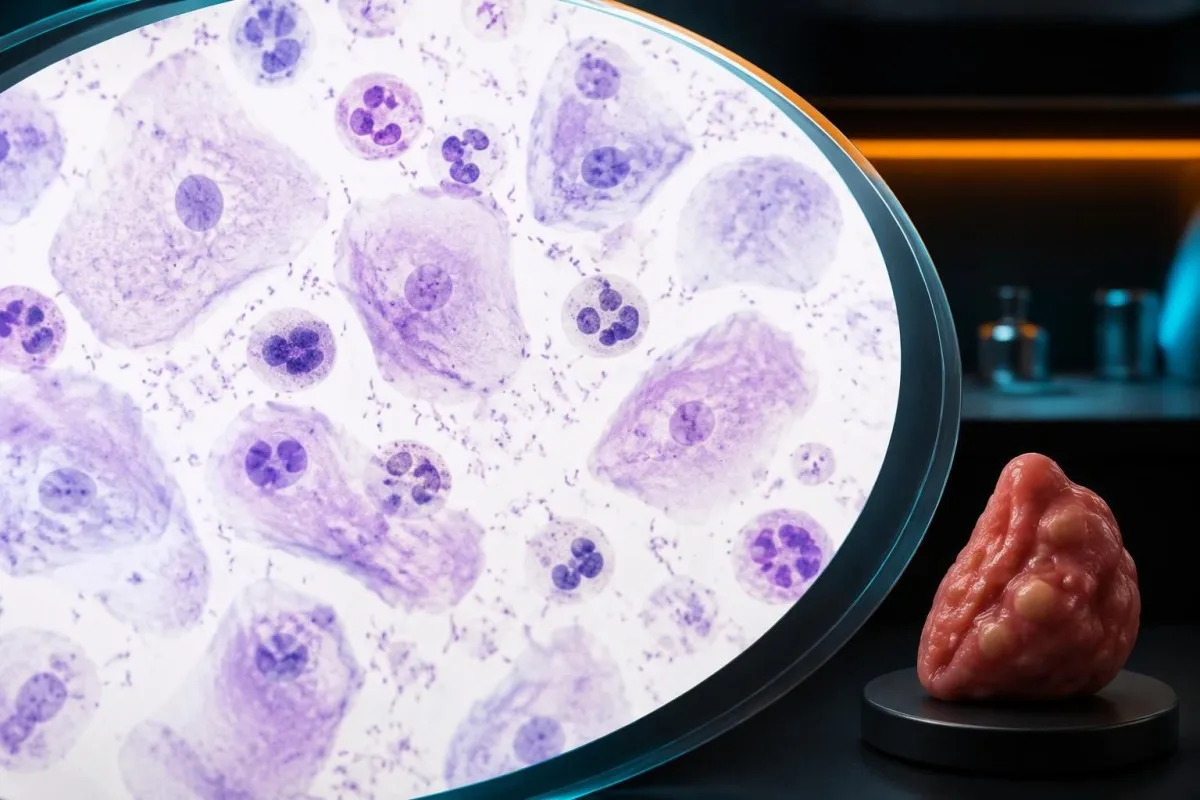
A positive respiratory PCR does not always explain the entire fever history. Adenovirus can remain detectable after an illness, so 1 positive result must be matched to current symptoms, examination and timing; our discussion of wykrywania i wydalania adenowirusa explains why a molecular result may indicate recent exposure rather than the cause of every subsequent attack.
Longer-lasting sore throat, fatigue and gland enlargement can suggest a different illness rather than PFAPA. EBV antibody patterns distinguish recent infection from prior exposure more effectively than a single positive IgG result; our Przewodnik po wzorcach przeciwciał EBV explains the roles of 3 commonly reported markers—VCA IgM, VCA IgG and EBNA IgG—without equating past exposure with today's symptoms.
Antibiotic response is also easy to misread. If an antibiotic begins on day 4 and the fever ends on day 5, spontaneous resolution of a PFAPA attack is possible; conversely, a confirmed bacterial infection still requires appropriate treatment, and neither previous PFAPA nor prior antibiotic failure permits a new illness with different symptoms to be dismissed without assessment.
Które inne zaburzenia przebiegające z gorączką okresową mogą przypominać PFAPA?
Neutropenia cykliczna and inherited autoinflammatory disorders can resemble PFAPA, especially when mouth sores accompany recurring fever. Approximately 21-day cycles, severe infections, marked abdominal or chest pain, unusual rashes or persistent inflammation help clinicians decide which alternatives to investigate.

Cyclic neutropenia can produce recurrent fever, mouth sores and gum problems while a blood count between low-count periods looks normal. When suspected, clinicians may request CBCs 2–3 times weekly for about 6 weeks to identify repeated neutrophil nadirs; an absolute neutrophil count below 0.5 × 10^9/L during fever requires urgent clinical assessment rather than being labeled a routine PFAPA attack.
Familial Mediterranean fever often causes shorter attacks, commonly 12–72 hours, with abdominal or chest pain from serosal inflammation or joint symptoms. Our wyjaśnienie dotyczące badania MEFV shows why genotype and symptoms must be interpreted together; TRAPS may produce longer attacks, sometimes over 7 days, while mevalonate kinase deficiency can involve diarrhea, vomiting and attacks triggered by vaccination or other stressors.
Ancestry and family history guide assessment, but neither should become a gatekeeper that excludes an inherited disorder. Persistently raised serum amyloid A between attacks can indicate ongoing inflammation and requires context, as our serum amyloid A guide explains; a single high value during a 4-day fever does not diagnose amyloidosis, and typical PFAPA should not automatically be assigned the complication risks of other syndromes.
Które objawy alarmowe podczas gorączki wymagają pilnej oceny?
Zgłoś się po pilną pomoc medyczną for fever with breathing difficulty, reduced responsiveness, a stiff neck, a non-blanching rash or severe dehydration. An infant younger than 3 miesiące z temperaturą 38°C lub wyższa needs urgent medical assessment, even if a family member has PFAPA.
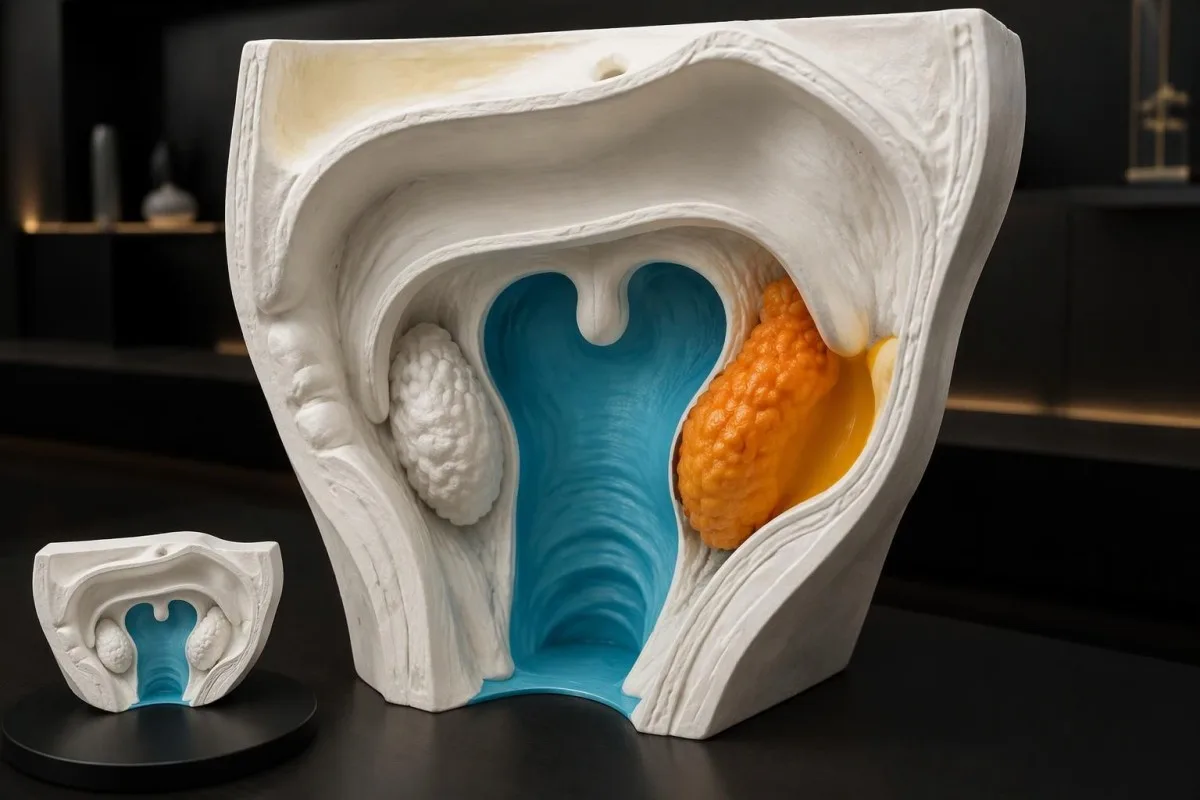
Difficulty swallowing saliva, drooling, a muffled voice or marked one-sided throat swelling can indicate an airway-threatening problem rather than a usual PFAPA flare. A child aged 3–6 months with a temperature of 39°C or higher also needs urgent assessment; contact local emergency services for immediate danger instead of waiting for a blood result or an expected fever endpoint.
Fever lasting 5 days or longer warrants prompt medical review, particularly with red eyes, cracked lips, rash or swollen hands and feet. These findings can suggest Kawasaki disease, discussed in our Kawasaki assessment guide; incomplete presentations occur, so clinicians do not require every classic feature, and concerning symptoms should be assessed before day 5 rather than waiting for a threshold.
New severe localized abdominal pain, persistent vomiting or inability to walk normally should not be attributed to PFAPA without examination. Even 1 normal WBC or CRP result cannot reliably exclude an early abdominal emergency, as our appendicitis laboratory limits explain; children with a known fever syndrome can still develop unrelated illnesses, especially when the attack looks different from their established pattern.
Jak leczy się napady PFAPA i co oznacza odpowiedź na steroidy?
PFAPA attack treatment focuses on comfort, hydration and, when prescribed, corticosteroids that often stop fever within hours. Published prednisone or prednisolone regimens range from 0.5–2 mg/kg, but dosing, maximum dose and eligibility must be set by the treating clinician.
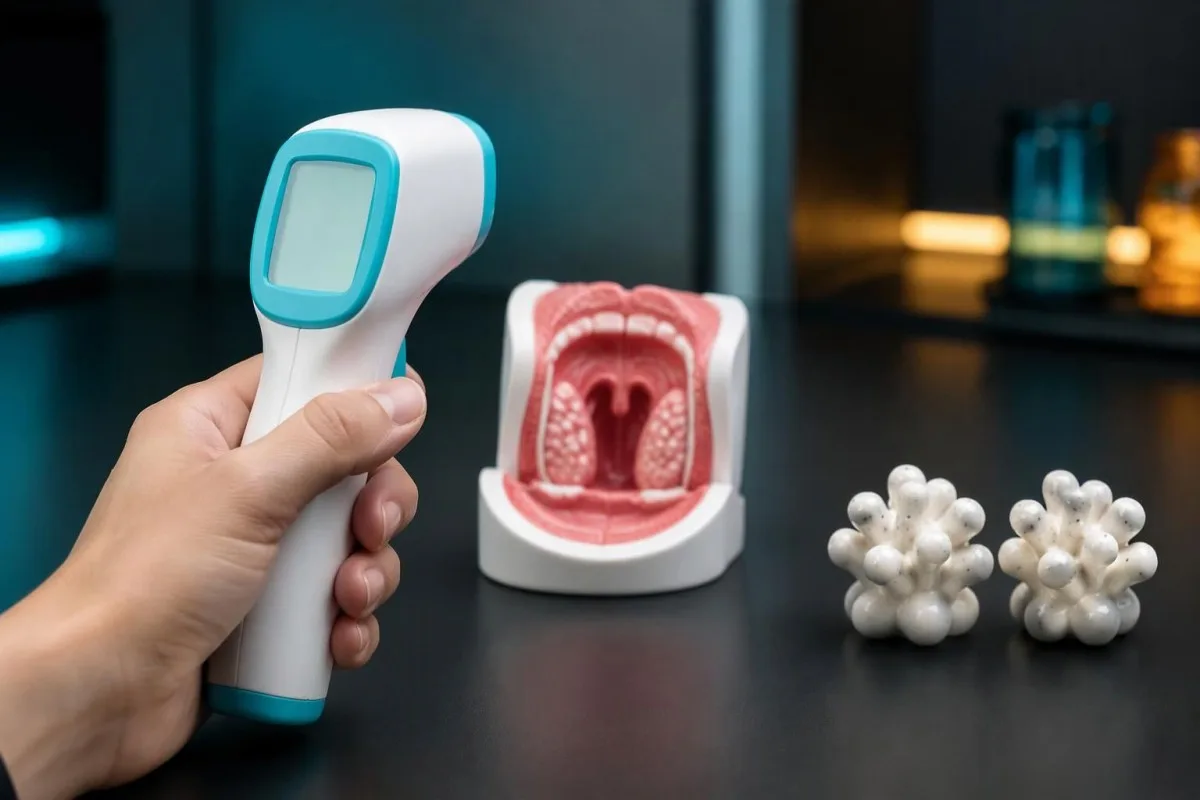
Vanoni et al. (2016) describe rapid corticosteroid responses alongside the limitation that treatment may shorten the interval to the next attack. Reports summarized in that review estimated shorter intervals in approximately 25–50% of patients, but these observations come from heterogeneous studies rather than a precise prediction for an individual child; attack control and long-term prevention are separate treatment goals.
For a hypothetical 20-kg child, a clinician-selected dose of 1 mg/kg would equal 20 mg; this calculation illustrates weight-based prescribing, not a home-treatment recommendation. Families need a written plan explaining when a familiar attack qualifies for treatment, when to seek assessment first and what to do if the expected response does not occur—especially if symptoms suggest a new infection.
Antipyretics may improve discomfort even when they do not end the inflammatory episode. Choose child-appropriate preparations with a clinician or pharmacist, avoid aspirin unless specifically prescribed and do not duplicate paracetamol/acetaminophen across 2 products; Kantesti cannot authorize steroid treatment, and our discussion of interpretacji AI u dzieci explains why pediatric decisions need more than laboratory pattern recognition.
Kiedy rozważa się leki zapobiegawcze lub tonsilektomię?
Prevention or tonsillectomy may be considered when PFAPA attacks repeatedly disrupt daily life or attack treatment is unsatisfactory. A Cochrane review included 2 randomized trials involving 67 children, finding benefit from tonsil surgery while emphasizing the limited size of the evidence base.
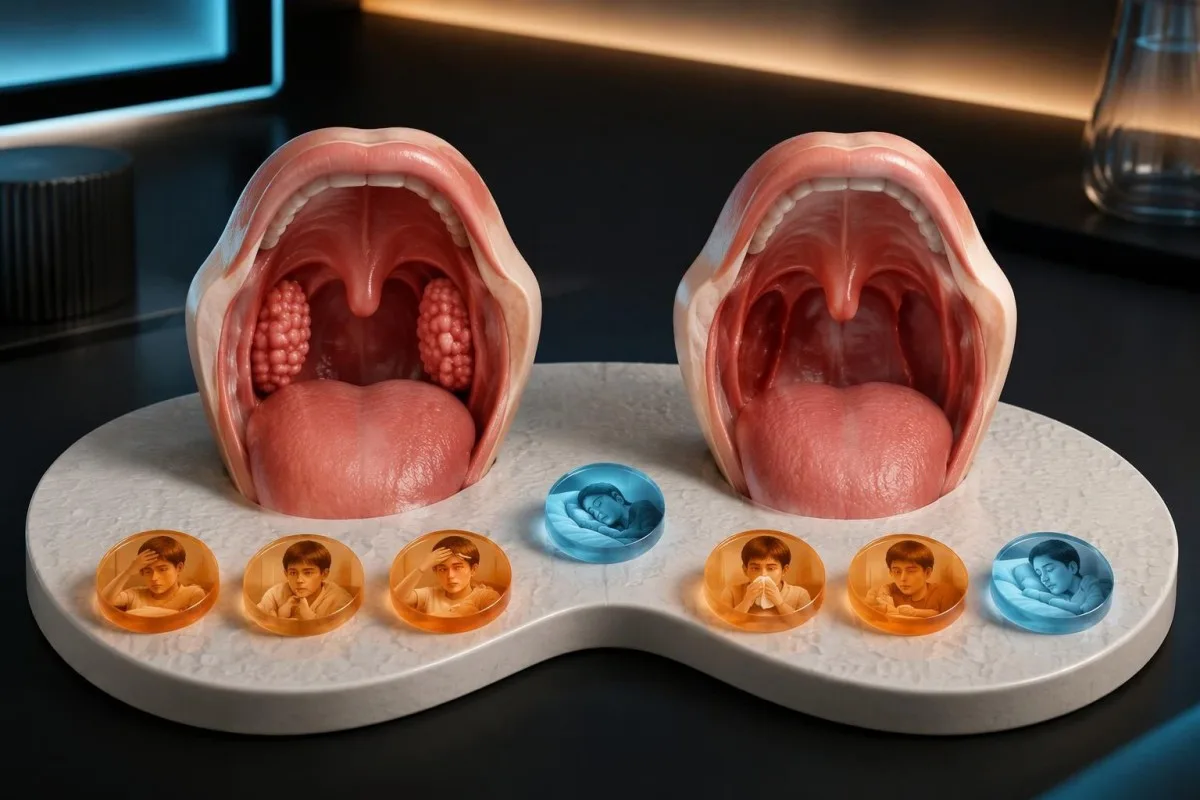
Burton et al. (2019) judged the evidence for several tonsillectomy outcomes to be of moderate certainty, but the trials were too small to characterize uncommon harms confidently. The evidence concerns selected children rather than every person with recurrent sore throat; a child missing 4 school days each month may value potential benefit differently from a child with infrequent, easily managed attacks.
Colchicine is sometimes used to reduce attacks under specialist supervision, whereas cimetidine has less convincing evidence. Treatment selection should consider the diagnosis, kidney and liver function, other medicines and the possibility of an inherited fever disorder; when several options exist, agree in advance on a measurable goal, such as fewer attacks across 3 months, rather than assuming a changed laboratory number demonstrates success.
Tonsillectomy carries postoperative pain, dehydration, anesthesia-related risks and bleeding risk, even when it improves PFAPA. Kantesti's wytyczne dotyczące odpowiedzialnego korzystania z AI supports a clear boundary: neither 1 elevated inflammatory marker nor an automated report can decide whether surgery is appropriate; that discussion belongs with the treating pediatric team and an ENT specialist who can assess the child's individual risks.
Jaka opieka kontrolna pomaga dzieciom, dorosłym i rodzinom zmagającym się z PFAPA?
PFAPA follow-up should track attack burden, growth or weight, treatment response and any symptoms between episodes. Many childhood cases improve over several years, but persistence, relapse and adult-onset disease occur; a 3-month review interval can be a practical individualized plan rather than a universal rule.

Adults require the same attention to repeated patterns and alternative causes, not an assumption that PFAPA is impossible after childhood. Fever with oral sores and pharyngitis can support the diagnosis, but new constitutional symptoms, persistent gland enlargement or abnormal findings between attacks need assessment; a 35-year-old with a first prolonged fever should not self-diagnose PFAPA from an online symptom match.
Prepare a concise appointment summary: attack dates, duration, associated features, well-day symptoms, test results and response to prescribed treatment. Include 1 clearly labeled attack sample and any clinician-requested recovery sample, rather than ordering a broad panel every month; repeated testing is useful only when it answers a specific question, such as whether inflammation persists or neutrophil counts cycle.
Kantesti jest platforma do interpretacji wyników badań krwi AI that can help explain uploaded CBC and inflammatory-marker reports alongside their dates, units and stated reference ranges. For a family sharing 2 or more records, check each person's identity and consent before upload, and review our zasadami ochrony prywatności i przetwarzania danych; AI explanation does not replace pediatric examination, urgent triage or a specialist diagnosis.
Publikacje naukowe: dowody a materiały wprowadzające na temat badań laboratoryjnych
PFAPA evidence comes from clinical descriptions, differential-diagnosis research and treatment studies—not from a specific clotting or serum-protein test. The 2 background publications below explain other laboratory topics and should not be mistaken for studies validating PFAPA diagnosis.
The peer-reviewed PFAPA review by Wang et al. (2021), treatment review by Vanoni et al. (2016) and Cochrane analysis by Burton et al. (2019) directly inform this article's clinical discussion. The surgical review's 67-child evidence base illustrates why certainty must be proportionate to study size; a named source supports a specific claim, not every recommendation made elsewhere on the page.
Materiały Kantesti clotting test background guide I przewodnik po tle białek surowicy accompany the 2 Zenodo records listed below. Neither aPTT nor an albumin/globulin ratio confirms PFAPA, and neither guide establishes that routine testing of those markers improves PFAPA care; additional tests should follow an identified clinical concern rather than the availability of a panel.
Evidence interpretation should distinguish a repository-hosted educational guide from a peer-reviewed condition-specific study or systematic review. Our standardy treści medycznych explain the editorial approach; for a child with 3 apparently similar attacks, the practical priority remains documented recovery, targeted exclusion of alternatives and a clear safety plan, not accumulating more citations or tests that do not answer the clinical question.
Często zadawane pytania
Czym jest zespół PFAPA?
Zespół PFAPA to choroba autoin zapalna powodująca nawracającą gorączkę, afty w jamie ustnej, zapalenie gardła i powiększenie węzłów chłonnych szyjnych. Epizody zwykle trwają 3–7 dni i powtarzają się co kilka tygodni, a między nimi stan zdrowia jest prawidłowy. Choroba zazwyczaj zaczyna się przed ukończeniem 5. roku życia, choć może występować także u starszych dzieci i dorosłych. Nie ma pojedynczego badania krwi potwierdzającego zespół PFAPA, dlatego rozpoznanie opiera się na powtarzającym się obrazie klinicznym i ocenie innych możliwych przyczyn.
Jak często występują gorączki PFAPA?
Gorączki w przebiegu PFAPA nawracają zwykle co około 2–8 tygodni, a pojedyncze epizody trwają zazwyczaj 3–7 dni. U niektórych dzieci odstępy między epizodami są bardzo regularne, u innych — zmienne. Leczenie kortykosteroidami może skrócić czas do kolejnego epizodu, dlatego w dzienniczku gorączek należy odnotowywać przyjmowanie leków. Utrzymująca się gorączka lub brak poprawy między epizodami wymagają ponownej oceny, zamiast zakładania, że są typowe dla PFAPA.
Czy wysokie stężenie CRP we krwi może pomóc w rozpoznaniu zespołu PFAPA?
Wysoki wynik CRP nie pozwala rozpoznać PFAPA, ponieważ zakażenia i inne choroby zapalne mogą powodować taki sam wzrost. Na przykład CRP wynoszące 80 mg/L podczas gorączki i 3 mg/L po wyzdrowieniu przemawia za epizodycznym stanem zapalnym, ale nie wskazuje jego przyczyny. W wielu laboratoriach górna granica wartości referencyjnej CRP wynosi około 5 mg/L, a w niektórych 10 mg/L. Lekarze interpretują wynik w połączeniu z objawami, badaniem, momentem pobrania próbki i wynikami ewentualnych badań w kierunku zakażeń.
Czy PFAPA jest zaraźliwe i czy wymaga antybiotyków?
PFAPA samo w sobie nie jest zaraźliwe, a antybiotyki nie leczą jego podłoża zapalnego. Typowy napad trwający 3–7 dni może ustąpić samoistnie po rozpoczęciu antybiotykoterapii, co może stwarzać mylne wrażenie, że antybiotyk zadziałał. Dzieci z PFAPA nadal mogą zarazić się chorobami wirusowymi lub zakażeniami bakteryjnymi. Nową gorączkę z innymi objawami, po kontakcie z osobami chorymi lub przy potwierdzonej przyczynie bakteryjnej należy ocenić i leczyć niezależnie.
Czy szybka odpowiedź na prednizon potwierdza PFAPA?
Szybka odpowiedź na przepisany prednizon lub prednizolon przemawia za PFAPA, ale nie potwierdza rozpoznania. W opublikowanych schematach leczenia PFAPA stosuje się dawki 0,5–2 mg/kg; dawkę i maksymalną dawkę ustala lekarz prowadzący. Kortykosteroidy mogą tłumić objawy innych schorzeń i skracać odstęp do kolejnego napadu PFAPA. Rodziny powinny stosować się do pisemnego planu leczenia i zgłosić się na ocenę przed rozpoczęciem leczenia, jeśli epizod jest nietypowo ciężki lub ma inny przebieg.
Kiedy dziecko z podejrzeniem PFAPA powinno otrzymać pilną pomoc medyczną?
Dziecko z podejrzeniem zespołu PFAPA wymaga natychmiastowej pomocy medycznej w przypadku gorączki z trudnościami w oddychaniu, osłabioną reakcją na bodźce, sztywnością karku, wysypką nieblednącą pod uciskiem lub ciężkim odwodnieniem. Każde niemowlę w wieku poniżej 3 miesięcy z temperaturą 38°C lub wyższą wymaga pilnej oceny lekarskiej. Gorączka trwająca 5 dni lub dłużej również wymaga szybkiej konsultacji, szczególnie jeśli towarzyszą jej zaczerwienione oczy, wysypka, popękane usta albo obrzęk dłoni i stóp. Wcześniejsze rozpoznanie zespołu PFAPA nie oznacza, że można zignorować nową chorobę z innymi objawami.
Dowiedz się, jak czytać wyniki badań krwi
Prześlij wynik badania laboratoryjnego, a sztuczna inteligencja Kantesti w kilka sekund objaśni prostym językiem każdy biomarker. Z narzędzia korzysta ponad 2 miliony osób na całym świecie.
Odniesienia
- Klein, T., Mitchell, S. i Weber, H. (2026). Prawidłowy zakres aPTT: przewodnik po D-dimerze i białku C w krzepnięciu krwi. Badania medyczne z wykorzystaniem sztucznej inteligencji Kantesti. DOI
- Klein, T., Mitchell, S. i Weber, H. (2026). Przewodnik po białkach surowicy: globuliny, albumina i stosunek A/G w badaniu krwi. Badania medyczne z wykorzystaniem sztucznej inteligencji Kantesti. DOI
- Wang A et al. (2021). Periodic fever, aphthous stomatitis, pharyngitis, and adenitis (PFAPA) syndrome: A review. World Journal of Otorhinolaryngology - Head and Neck Surgery. DOI
- Vanoni F et al. (2016). PFAPA syndrome: a review on treatment and outcome. Pediatric Rheumatology. DOI
- Burton MJ et al. (2019). Tonsillectomy for periodic fever, aphthous stomatitis, pharyngitis and cervical adenitis syndrome (PFAPA). Cochrane Database of Systematic Reviews. DOI
- 2 mln+Analizowane badania
- 127+Kraje
- 100+Języki
O zespole medycznym


Sygnały zaufania E-E-A-T
Doświadczenie
Kliniczna weryfikacja procesów interpretacji przez lekarza.
Ekspertyza
Medycyna laboratoryjna skupiona na tym, jak zachowują się biomarkery w kontekście klinicznym.
Autorytatywność
Recenzja medyczna: dr Thomas Klein, przy współpracy dr Sarah Mitchell i prof. dr. Hansa Webera.
Solidność
Interpretacja oparta na dowodach, z jasnymi ścieżkami dalszego postępowania, aby ograniczyć alarm.





Zastrzeżenie medyczne
Ten artykuł ma wyłącznie charakter edukacyjny i nie stanowi porady medycznej. Zawsze konsultuj decyzje dotyczące diagnozy i leczenia z wykwalifikowanym pracownikiem ochrony zdrowia.
Opublikowano · Skontaktuj się z zespołem redakcyjnym
Opublikowano przez Kantesti Ltd, zarejestrowaną w Anglii i Walii, numer firmy. 17090423, Londyn, Wielka Brytania.
