
Maaaring magdulot ang PFAPA syndrome ng paulit-ulit na mataas na lagnat na may singaw sa bibig, pananakit ng lalamunan at namamagang mga kulani sa leeg, na karaniwang tumatagal nang 3–7 araw at sinusundan ng ganap na paggaling sa pagitan ng mga atake. Nakabatay ang diagnosis sa paulit-ulit na padron at pagbubukod sa iba pang mga sanhi—hindi sa iisang abnormal na pagsusuri ng dugo. Makakatulong ang talaan ng mga sintomas; kailangan ng panibagong pagsusuri kung may episode na di-pangkaraniwang malubha o naiiba.

Mahahalagang punto
- PFAPA syndrome karaniwang nagdudulot ng mga episode ng lagnat na tumatagal nang 3–7 araw, na pinaghihiwalay ng ilang linggong mabuting kalusugan.
- Mga sintomas ng PFAPA kabilang ang mga singaw sa bibig, pharyngitis at namamagang mga kulani sa leeg; hindi kailangang lumitaw nang sabay-sabay ang lahat ng 3 palatandaan.
- Oras ng paglitaw ng lagnat ay kadalasang sumusunod sa tinatayang siklo na 2–8 linggo, ngunit hindi kailangan ang eksaktong pagiging regular ng pagitan para sa diagnosis.
- Mga talaan ng sintomas ay dapat magtala ng mga petsa ng episode, pinakamataas na temperatura sa °C o °F, mga sintomas, gamot at paggaling sa pagitan ng mga atake.
- Mga pagsusuri sa dugo maaaring magpakita ng mataas na CRP at neutrophil sa mga atake; hindi naihihiwalay ng CRP na 80 mg/L ang PFAPA sa impeksiyon.
- Paikot na neutropenia maaaring maulit nang humigit-kumulang bawat 21 araw at maaaring mangailangan ng sunod-sunod na bilang ng selula ng dugo sa halip na isang nakapagpapapanatag na CBC.
- Mga desisyon sa paggamot maaaring kabilang dito ang mga corticosteroid na inireseta ng clinician, mga gamot na pang-iwas o tonsillectomy; hindi dapat ibatay ang alinman dito sa resulta ng laboratoryo lamang.
- Agarang pagsusuri kailangan ito para sa sinumang sanggol na wala pang 3 buwan na may temperaturang 38°C o mas mataas, o sinumang bata na nahihirapang huminga, nabawasan ang pagtugon o may pantal na hindi namumutla kapag pinisil.
Ano ang PFAPA syndrome, at ano ang sanhi ng mga lagnat?
PFAPA syndrome ay isang kondisyong autoinflammatory na nagdudulot ng paulit-ulit na mga episode ng lagnat na may aphthous ulcer sa bibig, pharyngitis at adenitis sa leeg. Karaniwang tumatagal ang mga atake nang 3–7 araw; karaniwang bumabalik ang mga bata sa normal nilang sigla, gana sa pagkain at paglaki sa pagitan ng mga episode.
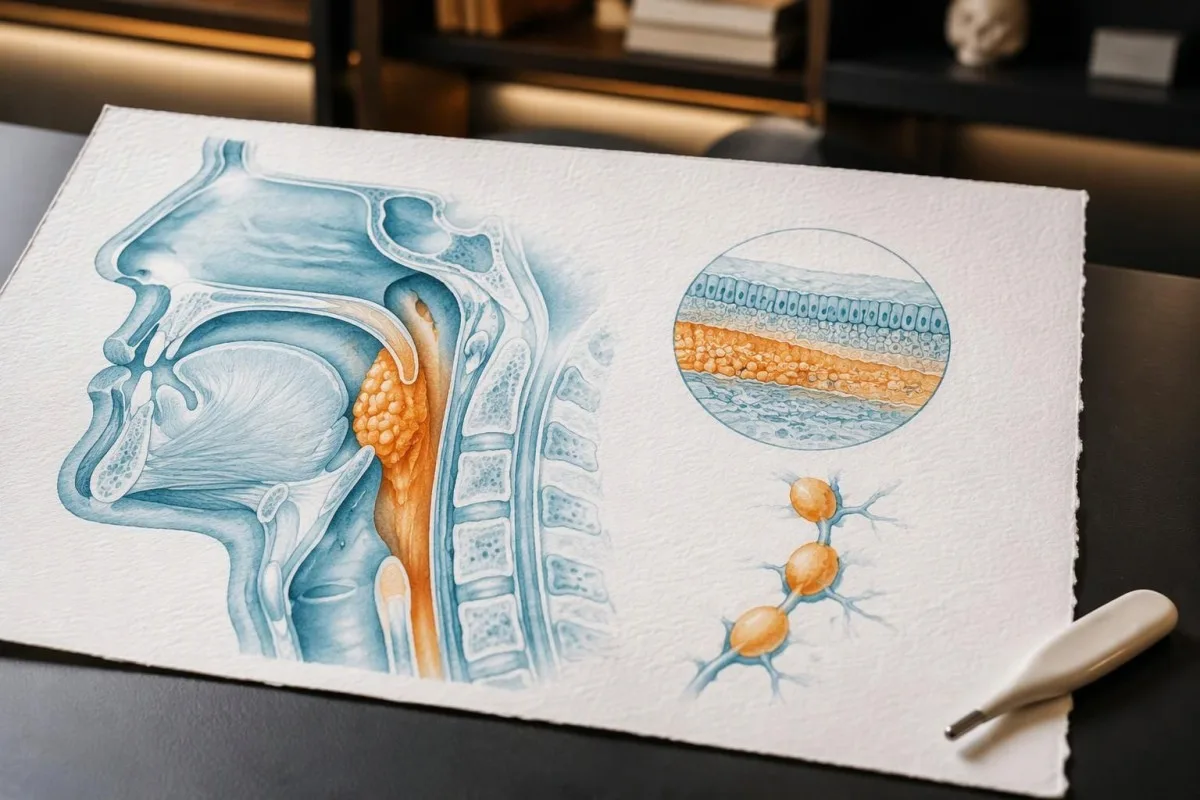
Sumasalamin ang PFAPA sa hindi angkop na pag-aktibo ng mga inflammatory pathway sa halip na isang bagong nakahahawang sakit kada ilang linggo. Kadalasang nagsisimula ito bago mag-5 taong gulang, ngunit maaari ring maapektuhan ang mas matatandang bata at matatanda; kaya pahiwatig lamang ang dating limitasyon sa edad, hindi ito ganap na batayan para alisin ang posibilidad (Wang et al., 2021). Hindi nangangahulugan ang PFAPA na hindi nakahahawa ang bawat susunod na lagnat.
Inilalarawan ng acronym ang 4 na bahagi: periodic fever, aphthous stomatitis, pharyngitis at adenitis. Di-gaya ng ilang minanang kondisyon ng periodic fever, walang iisang itinatag na genetic test ang PFAPA na nagpapatunay sa diagnosis, bagaman maaaring magkaroon nito ang magkakapamilya; hindi pinatutunayan ng negatibong malawakang genetic panel ang PFAPA at hindi rin nito inaalis ang bawat alternatibong inflammatory disorder.
Si Kantesti ay isang AI blood test analyzer na makatutulong ipaliwanag kung bakit kailangan ng klinikal na konteksto ang resulta ng CRP na 80 mg/L sa halip na lagyan ito ng diagnostic label. Ang aming organisasyon at paraan ng pagharap ay naglalarawan sa serbisyo, ngunit kailangang pag-ugnayin ng clinician ang mga sintomas sa maraming episode, suriin ang bata at isaalang-alang ang mga kondisyong hindi makikita sa ulat ng laboratoryo upang matukoy ang PFAPA.
Aling mga sintomas ng PFAPA ang nagpapakilala sa padron?
Mga sintomas ng PFAPA karaniwang may kasamang lagnat, pananakit ng lalamunan, malalambot na kulani sa leeg o maliliit na ulser sa bibig. Mas nagbibigay-kaalaman ang parehong kombinasyong nauulit sa loob ng 3 o higit pang naitalang episode kaysa sa alinmang nag-iisang sintomas, bagaman walang pangkalahatang minimum na bilang ng episode na nagpapatunay sa PFAPA.
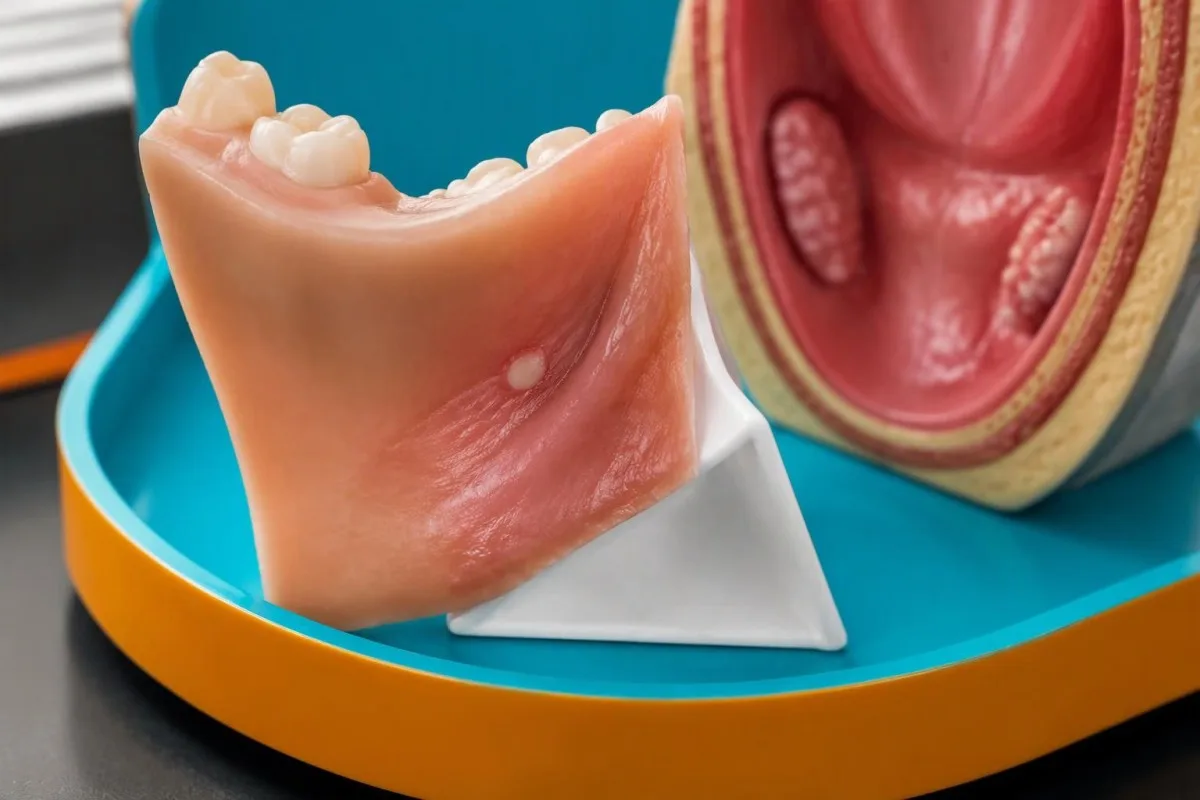
Karaniwang maliliit at mabababaw na sugat ang mga aphthous ulcer sa loob ng mga labi, pisngi o iba pang bahagi ng bibig—hindi katulad ng magkakumpol na paltos sa panlabas na labi. Maaaring 1 o 2 sugat lamang ang mayroon ang bata, at maaaring walang ulser sa ilang atake; makatutulong ang pagkuha ng larawan ng nakikitang sugat kung mawala ito bago ang appointment.
Maaaring kabilang sa pharyngitis ang pamumula o balot sa tonsil, kaya hindi matutukoy batay lamang sa hitsura kung PFAPA ito o impeksiyong streptococcal. Karaniwang nasa mga cervical node sa palibot ng leeg ang namamagang kulani, samantalang nangangailangan ng ibang paliwanag ang kulaning patuloy na lumalaki, pangkalahatang pamamaga ng mga kulani o mga sintomas na tumatagal lampas sa 3–7-araw na atake, sa halip na awtomatikong iugnay ang mga ito sa PFAPA.
Hindi sapat ang mga sugat sa bibig lamang upang masabing periodic fever ito. Ang paulit-ulit na mga sugat sa bibig na may kasamang mga sugat sa ari, masakit at mapupulang mata, pagbabago sa paningin o di-pangkaraniwang mga palatandaan sa balat ay nagpapahiwatig ng iba pang posibilidad, kabilang ang mga padron ng sintomas ng Behçet; kahit 1 episode ng pananakit ng mata na may kapansanan sa paningin ay nangangailangan ng agarang pagsusuri, nang hindi naghihintay ng panibagong siklo ng lagnat.
Gaano katagal ang mga lagnat na dulot ng PFAPA, at gaano kadalas bumabalik ang mga ito?
Ang mga lagnat na dulot ng PFAPA ay karaniwang tumatagal nang 3–7 araw at umuulit nang humigit-kumulang bawat 2–8 linggo, kadalasan ay may kapansin-pansing magkakatulad na mga sintomas. Nagkakaroon ang ilang bata ng mahuhulaang ritmo, ngunit hindi awtomatikong inaalis ng pabagu-bagong pagitan ang posibilidad ng PFAPA.
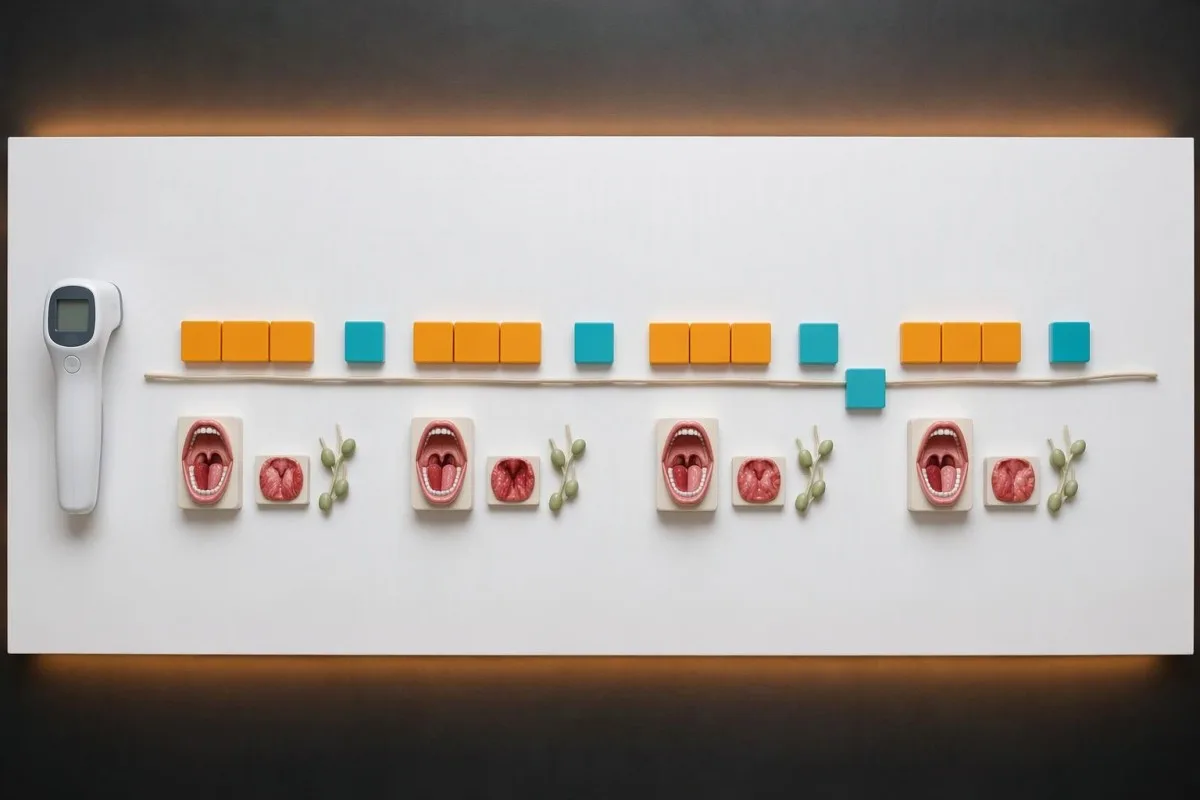
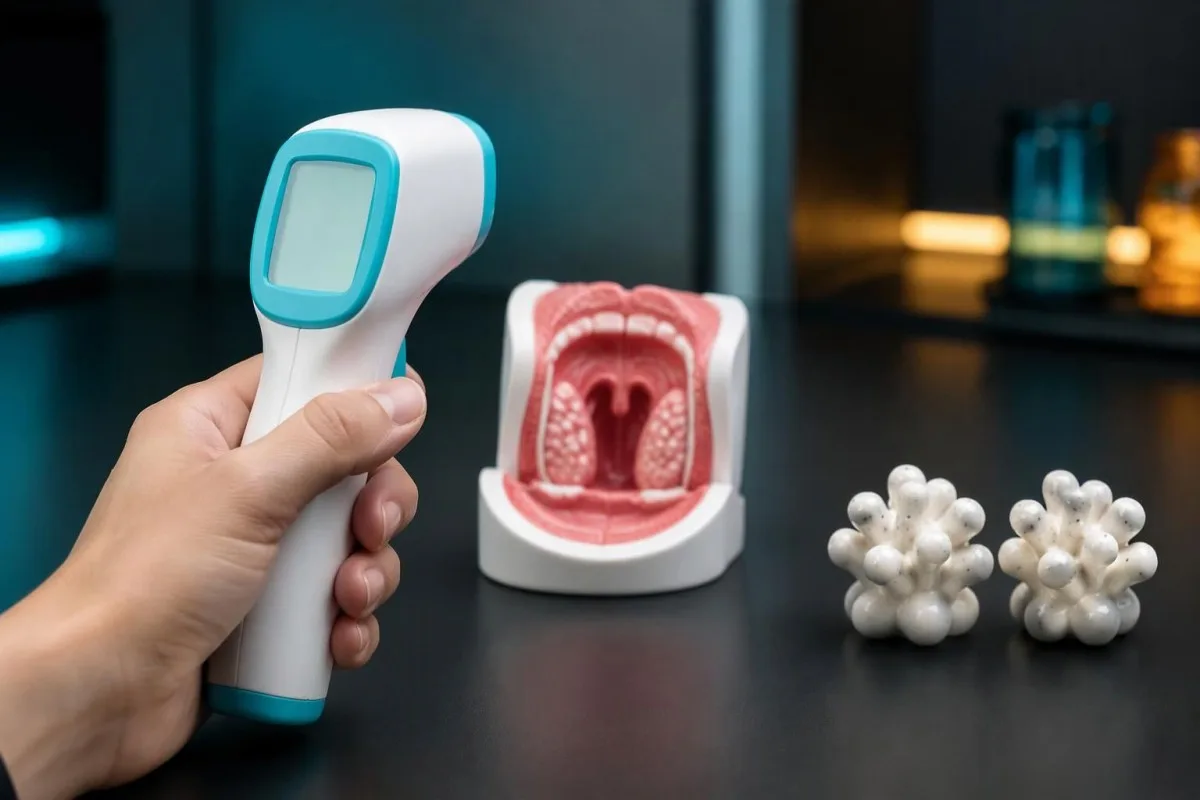
Temperatures during PFAPA attacks often reach 39–40°C, but fever height does not determine the diagnosis or reliably measure danger. The timing of associated throat symptoms, the child's appearance and the return to baseline matter more; measuring temperature with the same method also makes comparisons more useful than alternating between forehead, ear and underarm readings.
For a hypothetical child, fevers beginning on days 1, 29 and 58 with 4-day attacks suggest a repeated cycle—not proof of PFAPA. Count start-to-start intervals separately from fever-free days, and record whether corticosteroid treatment changed an interval; a shortened next cycle after treatment can otherwise make a previously regular pattern look inexplicably irregular.
A fever that does not stop is not a series of separate PFAPA episodes. If symptoms persist beyond 7 days, or recovery never occurs, clinicians reconsider infection and other inflammatory conditions; our explanation of mga epekto ng oras ng pagsusuri ng dugo also shows why a sample taken on day 1 cannot be interpreted like one taken after recovery.
Ano ang dapat itala sa talaan ng mga sintomas ng PFAPA?
A PFAPA symptom diary should record episode start and finish dates, measured temperature, mouth and throat findings, neck swelling, medication timing and wellness between attacks. Even 3 carefully documented episodes can reveal details that a single clinic visit misses.

Document the thermometer method and the highest measured temperature, not just 'very hot.' For each day of a 4-day attack, note drinking, urine output, activity, cough, runny nose, abdominal symptoms and whether anyone nearby was ill; these observations distinguish a repeated inflammatory pattern from unrelated respiratory or gastrointestinal illnesses more effectively than recording fever alone.
Medication entries need the name, dose, administration time and observed response. If a prescribed medicine is given at 09:00 and fever settles by 14:00, record that interval without claiming the medicine established PFAPA; include throat swab results and whether a laboratory sample preceded treatment, because both antibiotics and corticosteroids can complicate interpretation of subsequent findings.
Well days deserve entries too. A weekly note of normal appetite, play, school attendance and any lingering symptoms prevents a diary from becoming an attack-only record; when a clinician requests a recovery sample, our paghahanda para sa panimulang pagsusuri explains how to record recent illness and medicines rather than treating a sample 2 days after fever as an unquestionable baseline.
Bakit napakahalaga ng pagiging walang sakit sa pagitan ng mga episode ng PFAPA?
Complete wellness between episodes strongly supports a typical PFAPA pattern: normal activity, appetite and growth should return after the 3–7-day attack. Persistent symptoms or continuing inflammation between attacks make clinicians reconsider the diagnosis.

A child who is fever-free but remains exhausted, loses weight or develops daily pain has not truly returned to baseline. Growth is assessed through serial height and weight measurements, not 1 percentile in isolation; crossing growth centiles over time may justify investigation even when individual fever episodes resemble PFAPA and routine examinations during attacks look familiar.
Repeated ordinary infections are common in young children, but unusually severe, prolonged or unusual infections suggest a different evaluation. A history of 2 hospital-treated infections or recurrent deep infections matters differently from several mild colds; clinicians consider the organisms, sites, treatment response and family history, as discussed in our guide to pagsubok sa madalas na mga impeksyon.
Inflammatory markers usually fall toward the laboratory reference range between PFAPA attacks, but an immediately post-fever sample may still reflect recovery. A persistent CRP of 25 mg/L on repeated genuinely well-day samples is not proof of another disease, yet it deserves explanation; a clinician may check for an unnoticed infection, ongoing inflammatory symptoms or a sampling timeline that was mislabeled.
Ano ang ipinapakita ng CRP, ESR at mga bilang ng selula ng dugo sa PFAPA?
PFAPA attacks can raise CRP, ESR and neutrophil counts, but none of these tests confirms PFAPA or excludes infection. Many laboratories use a CRP upper reference limit around 5 mg/L, habang ang iba ay gumagamit ng 10 mg/L; the report's own range matters.
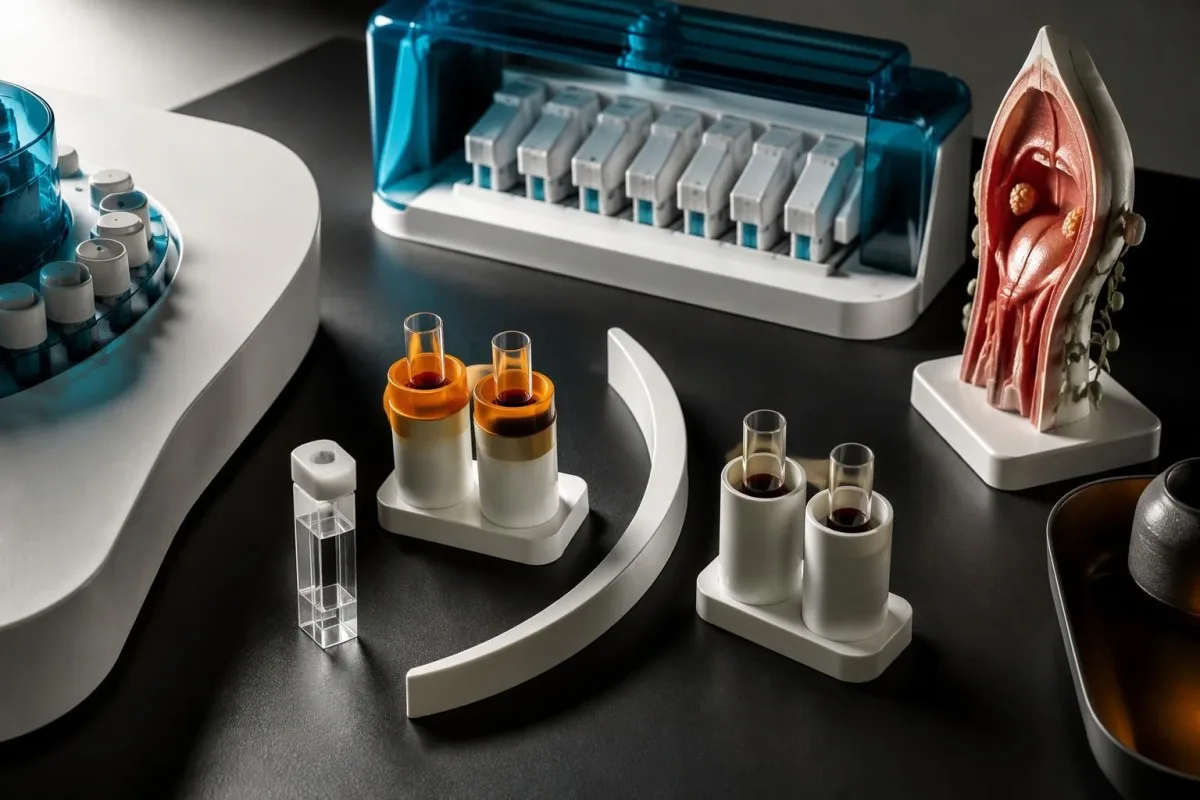
Consider a hypothetical child with CRP 80 mg/L during fever and 3 mg/L after recovery. That change supports an episodic inflammatory process but does not identify its cause; infection can produce the same pattern, while ESR may normalize more slowly than CRP, making a modestly raised recovery ESR less surprising than persistent symptoms or repeatedly elevated CRP.
White-cell interpretation must use age-appropriate absolute counts rather than adult ranges or percentages alone. At Kantesti, we emphasize that CRP 8 mg/dL equals 80 mg/L—a tenfold unit conversion that can otherwise create a false impression of improvement; our WBC and CRP comparison explains why these markers can disagree because they change at different rates.
Procalcitonin is sometimes considered when serious bacterial infection is suspected, but it is not a standalone PFAPA discriminator. A low result, including a value below 0.1 ng/mL, cannot safely overrule a concerning examination or very early illness; the limits described in our gabay sa interpretasyon ng procalcitonin matter more than using one reassuring number to justify home treatment.
Paano nagtatakda ng diagnosis ng PFAPA ang mga clinician?
PFAPA diagnosis is clinical: clinicians identify repeated characteristic attacks, document recovery between them and exclude plausible alternatives. Onset before age 5 supports traditional criteria, but later onset does not prevent a diagnosis when the overall pattern fits.
The diagnostic process usually starts with history and examination rather than an extensive panel of rare-disease tests. Wang et al. (2021) describe the value of stereotyped episodes, absence of typical respiratory symptoms, negative relevant cultures and response to prescribed corticosteroids; however, 1 negative throat swab or 1 rapid response cannot independently establish PFAPA, and classification criteria are not identical to bedside diagnosis.
Streptococcal testing addresses the current throat illness, while an ASO antibody test mainly reflects previous exposure. An ASO result of 400 IU/mL does not prove that today's recurrent fever is active strep infection; age, local reference ranges and symptom timing affect interpretation, as explained in our discussion of ASO and recent exposure.
Si Kantesti ay isang AI-powered tool para sa pagsusuri ng dugo that can contextualize laboratory units and repeated results, but 2 matching reports cannot confirm PFAPA. Our teknikal at klinikal na pangangasiwa information should not be read as validation of a PFAPA diagnostic test; pediatric or rheumatology assessment remains necessary when the pattern is atypical, severe or uncertain.
Paano naihihiwalay ang PFAPA sa mga paulit-ulit na impeksiyon?
Repeated infections are more likely when episodes follow sick contacts, have varying symptoms or include cough, runny nose, diarrhea or a confirmed pathogen. PFAPA more often repeats a similar 3–7-day pattern with complete wellness between attacks, but the two can coexist.
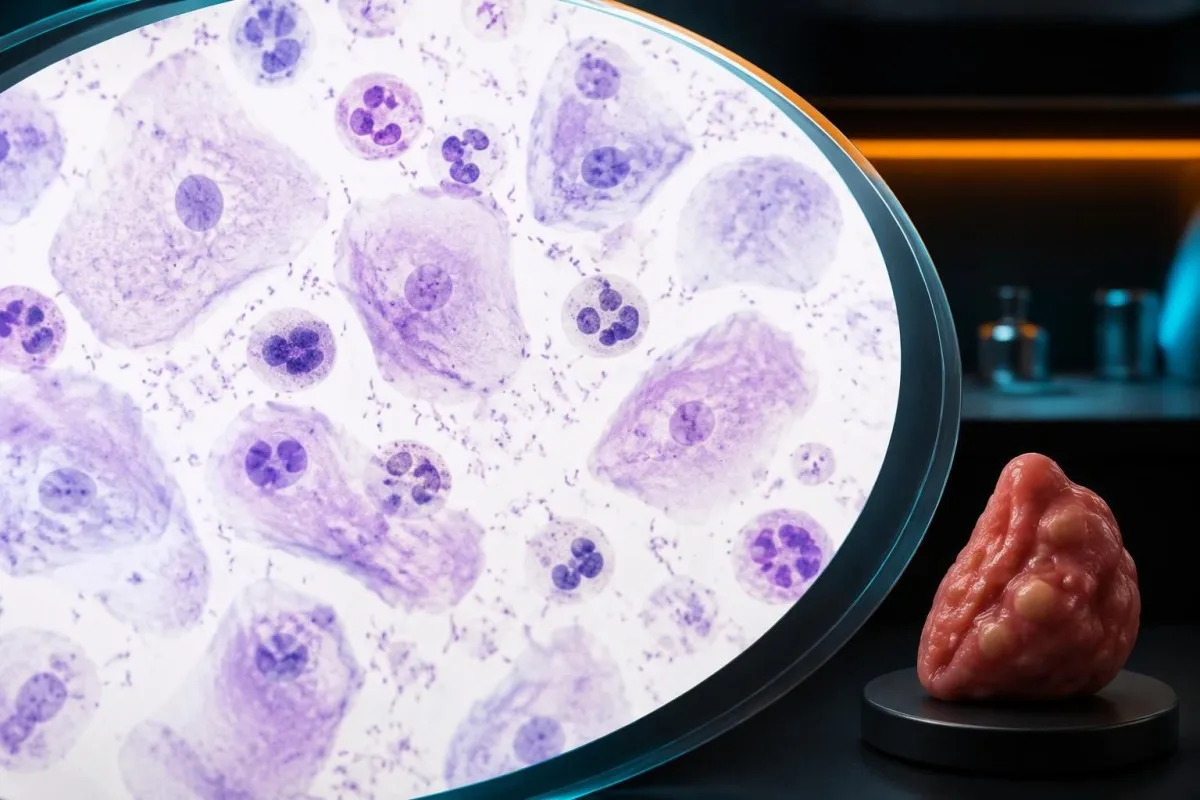
A positive respiratory PCR does not always explain the entire fever history. Adenovirus can remain detectable after an illness, so 1 positive result must be matched to current symptoms, examination and timing; our discussion of pagkakatukoy at paglabas ng adenovirus explains why a molecular result may indicate recent exposure rather than the cause of every subsequent attack.
Longer-lasting sore throat, fatigue and gland enlargement can suggest a different illness rather than PFAPA. EBV antibody patterns distinguish recent infection from prior exposure more effectively than a single positive IgG result; our gabay sa pattern ng EBV antibody explains the roles of 3 commonly reported markers—VCA IgM, VCA IgG and EBNA IgG—without equating past exposure with today's symptoms.
Antibiotic response is also easy to misread. If an antibiotic begins on day 4 and the fever ends on day 5, spontaneous resolution of a PFAPA attack is possible; conversely, a confirmed bacterial infection still requires appropriate treatment, and neither previous PFAPA nor prior antibiotic failure permits a new illness with different symptoms to be dismissed without assessment.
Aling iba pang mga sakit na may panaka-nakang lagnat ang maaaring mapagkamalang PFAPA?
Paikot na neutropenia and inherited autoinflammatory disorders can resemble PFAPA, especially when mouth sores accompany recurring fever. Approximately 21-day cycles, severe infections, marked abdominal or chest pain, unusual rashes or persistent inflammation help clinicians decide which alternatives to investigate.
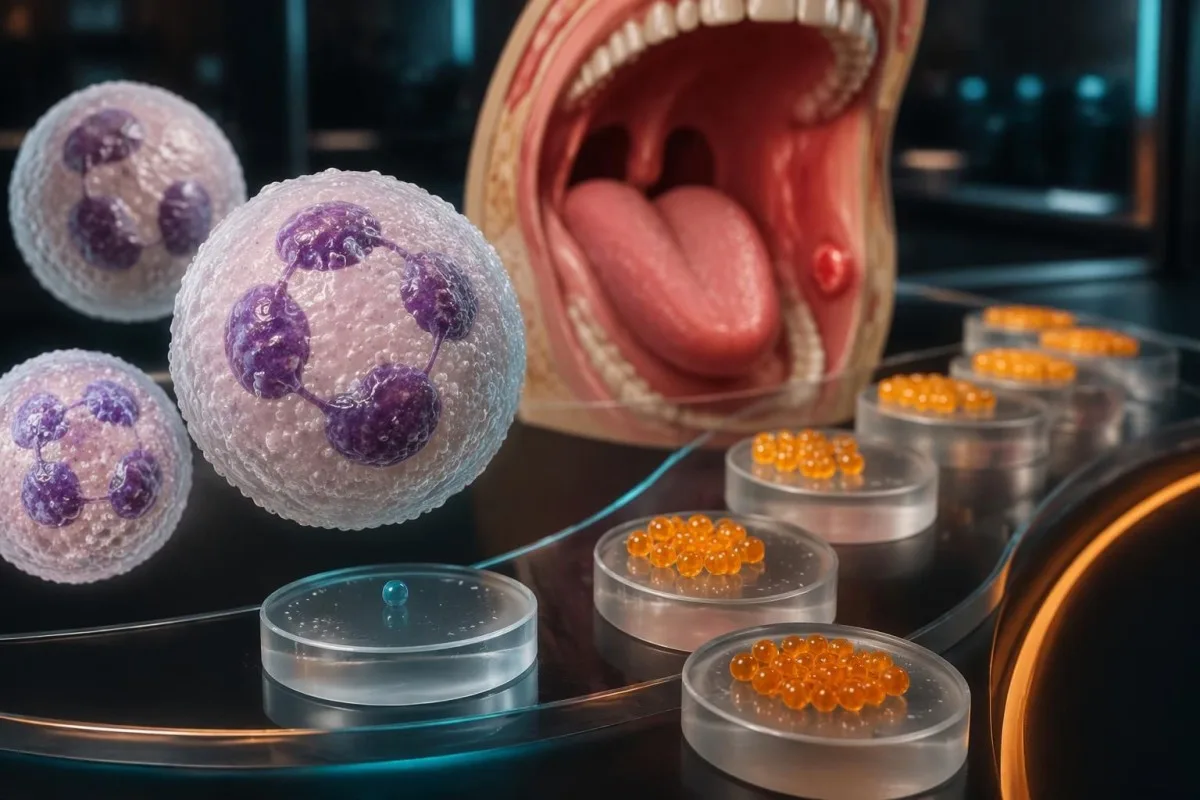
Cyclic neutropenia can produce recurrent fever, mouth sores and gum problems while a blood count between low-count periods looks normal. When suspected, clinicians may request CBCs 2–3 times weekly for about 6 weeks to identify repeated neutrophil nadirs; an absolute neutrophil count below 0.5 × 10^9/L during fever requires urgent clinical assessment rather than being labeled a routine PFAPA attack.
Familial Mediterranean fever often causes shorter attacks, commonly 12–72 hours, with abdominal or chest pain from serosal inflammation or joint symptoms. Our paliwanag tungkol sa pagsusuri sa MEFV shows why genotype and symptoms must be interpreted together; TRAPS may produce longer attacks, sometimes over 7 days, while mevalonate kinase deficiency can involve diarrhea, vomiting and attacks triggered by vaccination or other stressors.
Ancestry and family history guide assessment, but neither should become a gatekeeper that excludes an inherited disorder. Persistently raised serum amyloid A between attacks can indicate ongoing inflammation and requires context, as our serum amyloid A guide explains; a single high value during a 4-day fever does not diagnose amyloidosis, and typical PFAPA should not automatically be assigned the complication risks of other syndromes.
Aling mga babalang palatandaan ng lagnat ang nangangailangan ng agarang pagsusuri?
Humingi ng emerhensiyang pangangalaga for fever with breathing difficulty, reduced responsiveness, a stiff neck, a non-blanching rash or severe dehydration. An infant younger than 3 buwan na may temperaturang 38°C o mas mataas needs urgent medical assessment, even if a family member has PFAPA.
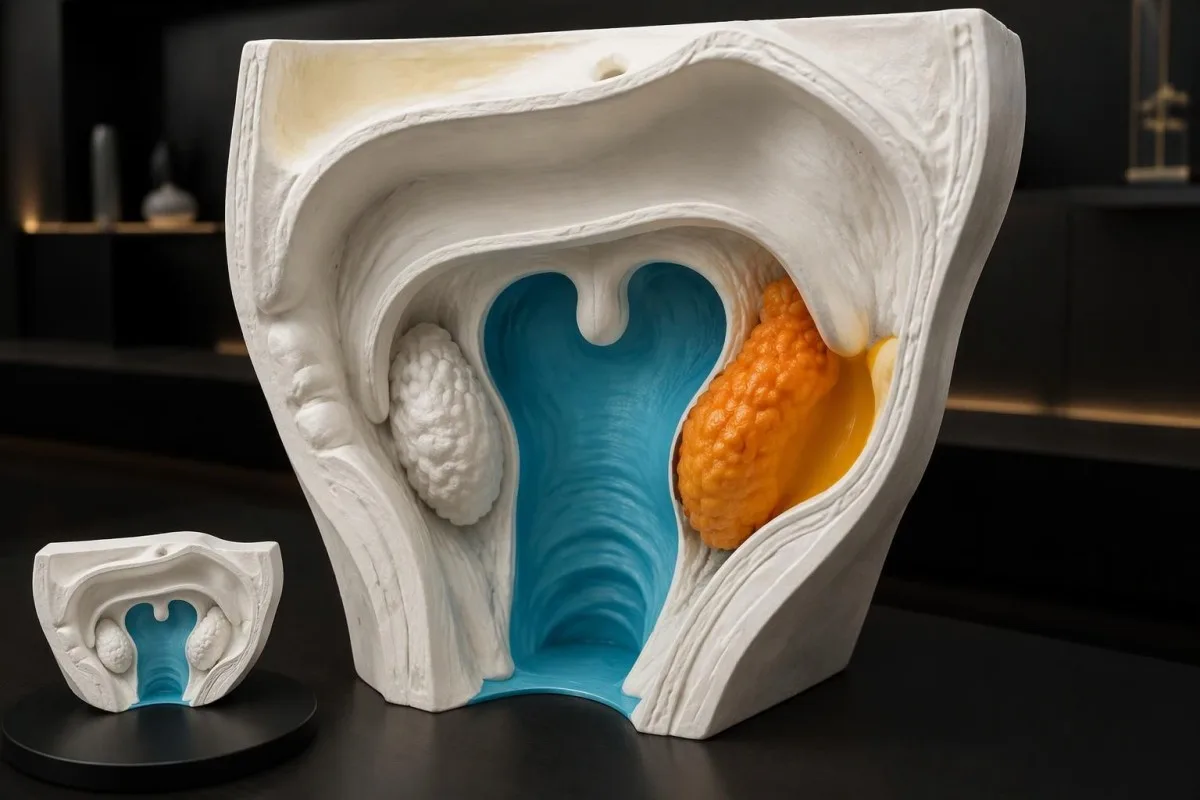
Difficulty swallowing saliva, drooling, a muffled voice or marked one-sided throat swelling can indicate an airway-threatening problem rather than a usual PFAPA flare. A child aged 3–6 months with a temperature of 39°C or higher also needs urgent assessment; contact local emergency services for immediate danger instead of waiting for a blood result or an expected fever endpoint.
Fever lasting 5 days or longer warrants prompt medical review, particularly with red eyes, cracked lips, rash or swollen hands and feet. These findings can suggest Kawasaki disease, discussed in our Kawasaki assessment guide; incomplete presentations occur, so clinicians do not require every classic feature, and concerning symptoms should be assessed before day 5 rather than waiting for a threshold.
New severe localized abdominal pain, persistent vomiting or inability to walk normally should not be attributed to PFAPA without examination. Even 1 normal WBC or CRP result cannot reliably exclude an early abdominal emergency, as our appendicitis laboratory limits explain; children with a known fever syndrome can still develop unrelated illnesses, especially when the attack looks different from their established pattern.
Paano ginagamot ang mga atake ng PFAPA, at ano ang ipinahihiwatig ng pagtugon sa steroid?
PFAPA attack treatment focuses on comfort, hydration and, when prescribed, corticosteroids that often stop fever within hours. Published prednisone or prednisolone regimens range from 0.5–2 mg/kg, but dosing, maximum dose and eligibility must be set by the treating clinician.
Vanoni et al. (2016) describe rapid corticosteroid responses alongside the limitation that treatment may shorten the interval to the next attack. Reports summarized in that review estimated shorter intervals in approximately 25–50% of patients, but these observations come from heterogeneous studies rather than a precise prediction for an individual child; attack control and long-term prevention are separate treatment goals.
For a hypothetical 20-kg child, a clinician-selected dose of 1 mg/kg would equal 20 mg; this calculation illustrates weight-based prescribing, not a home-treatment recommendation. Families need a written plan explaining when a familiar attack qualifies for treatment, when to seek assessment first and what to do if the expected response does not occur—especially if symptoms suggest a new infection.
Antipyretics may improve discomfort even when they do not end the inflammatory episode. Choose child-appropriate preparations with a clinician or pharmacist, avoid aspirin unless specifically prescribed and do not duplicate paracetamol/acetaminophen across 2 products; Kantesti cannot authorize steroid treatment, and our discussion of AI interpretation in children explains why pediatric decisions need more than laboratory pattern recognition.
Kailan isinasaalang-alang ang mga pang-iwas na gamot o tonsillectomy?
Prevention or tonsillectomy may be considered when PFAPA attacks repeatedly disrupt daily life or attack treatment is unsatisfactory. A Cochrane review included 2 randomized trials involving 67 children, finding benefit from tonsil surgery while emphasizing the limited size of the evidence base.
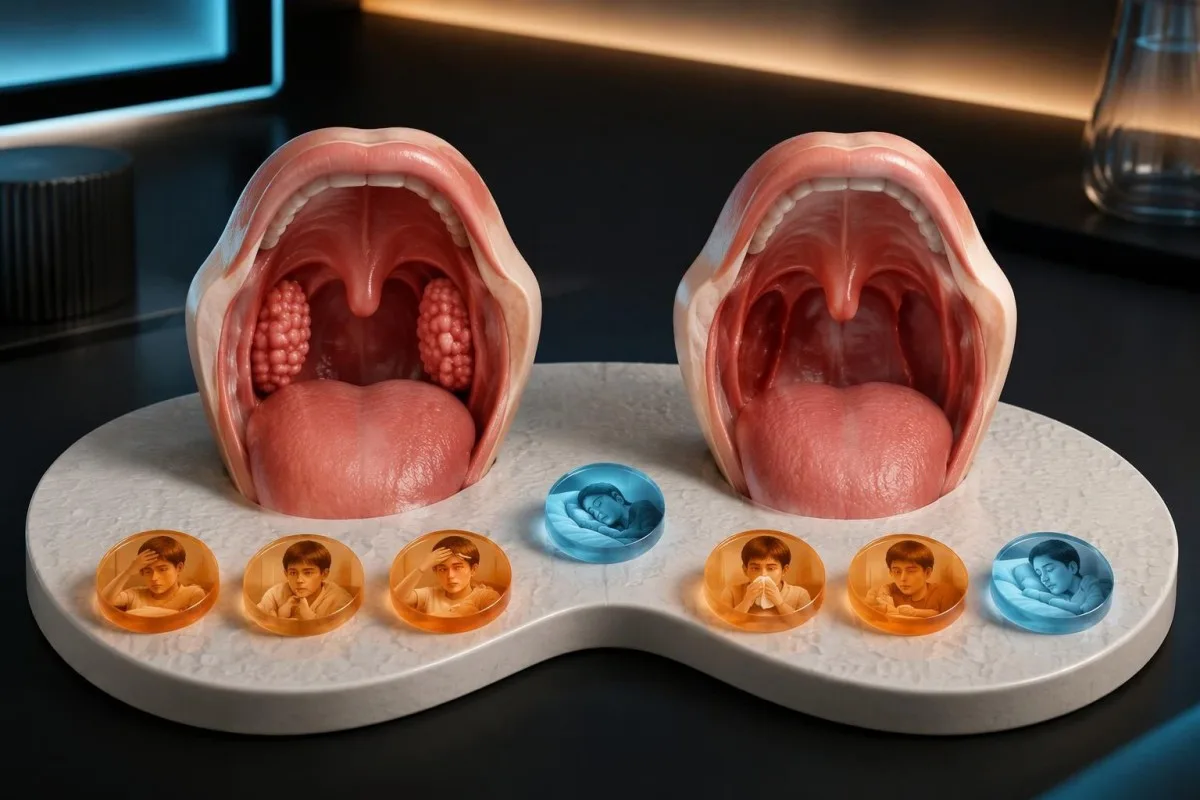
Burton et al. (2019) judged the evidence for several tonsillectomy outcomes to be of moderate certainty, but the trials were too small to characterize uncommon harms confidently. The evidence concerns selected children rather than every person with recurrent sore throat; a child missing 4 school days each month may value potential benefit differently from a child with infrequent, easily managed attacks.
Colchicine is sometimes used to reduce attacks under specialist supervision, whereas cimetidine has less convincing evidence. Treatment selection should consider the diagnosis, kidney and liver function, other medicines and the possibility of an inherited fever disorder; when several options exist, agree in advance on a measurable goal, such as fewer attacks across 3 months, rather than assuming a changed laboratory number demonstrates success.
Tonsillectomy carries postoperative pain, dehydration, anesthesia-related risks and bleeding risk, even when it improves PFAPA. Kantesti's gabay sa responsableng paggamit ng AI supports a clear boundary: neither 1 elevated inflammatory marker nor an automated report can decide whether surgery is appropriate; that discussion belongs with the treating pediatric team and an ENT specialist who can assess the child's individual risks.
Anong follow-up ang makatutulong sa mga bata, nasa hustong gulang at pamilya na may PFAPA?
PFAPA follow-up should track attack burden, growth or weight, treatment response and any symptoms between episodes. Many childhood cases improve over several years, but persistence, relapse and adult-onset disease occur; a 3-month review interval can be a practical individualized plan rather than a universal rule.

Adults require the same attention to repeated patterns and alternative causes, not an assumption that PFAPA is impossible after childhood. Fever with oral sores and pharyngitis can support the diagnosis, but new constitutional symptoms, persistent gland enlargement or abnormal findings between attacks need assessment; a 35-year-old with a first prolonged fever should not self-diagnose PFAPA from an online symptom match.
Prepare a concise appointment summary: attack dates, duration, associated features, well-day symptoms, test results and response to prescribed treatment. Include 1 clearly labeled attack sample and any clinician-requested recovery sample, rather than ordering a broad panel every month; repeated testing is useful only when it answers a specific question, such as whether inflammation persists or neutrophil counts cycle.
Si Kantesti ay isang AI blood test interpretation platform that can help explain uploaded CBC and inflammatory-marker reports alongside their dates, units and stated reference ranges. For a family sharing 2 or more records, check each person's identity and consent before upload, and review our privacy at pangangasiwa ng datos; AI explanation does not replace pediatric examination, urgent triage or a specialist diagnosis.
Mga publikasyong pananaliksik: ebidensiya kumpara sa mga gabay sa laboratoryo bilang pangkalahatang kaalaman
PFAPA evidence comes from clinical descriptions, differential-diagnosis research and treatment studies—not from a specific clotting or serum-protein test. The 2 background publications below explain other laboratory topics and should not be mistaken for studies validating PFAPA diagnosis.
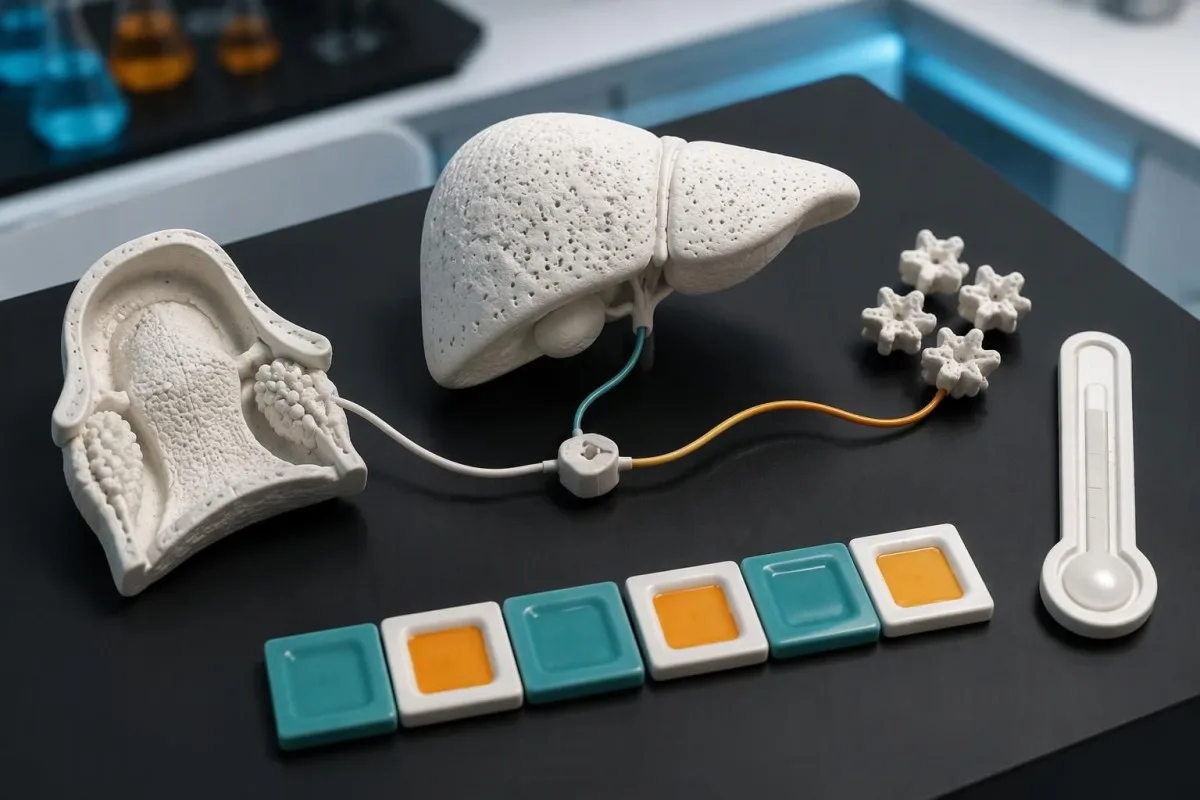
The peer-reviewed PFAPA review by Wang et al. (2021), treatment review by Vanoni et al. (2016) and Cochrane analysis by Burton et al. (2019) directly inform this article's clinical discussion. The surgical review's 67-child evidence base illustrates why certainty must be proportionate to study size; a named source supports a specific claim, not every recommendation made elsewhere on the page.
Ang mga clotting test background guide at gabay sa mga pangunahing kaalaman tungkol sa protina sa serum accompany the 2 Zenodo records listed below. Neither aPTT nor an albumin/globulin ratio confirms PFAPA, and neither guide establishes that routine testing of those markers improves PFAPA care; additional tests should follow an identified clinical concern rather than the availability of a panel.
Evidence interpretation should distinguish a repository-hosted educational guide from a peer-reviewed condition-specific study or systematic review. Our mga pamantayan sa nilalamang medikal explain the editorial approach; for a child with 3 apparently similar attacks, the practical priority remains documented recovery, targeted exclusion of alternatives and a clear safety plan, not accumulating more citations or tests that do not answer the clinical question.
Mga Madalas Itanong
Ano ang PFAPA syndrome?
Ang PFAPA syndrome ay isang autoinflammatory na kondisyon na nagdudulot ng pabalik-balik na lagnat na may mga singaw sa bibig, pharyngitis, at namamagang mga kulani sa leeg. Karaniwang tumatagal nang 3–7 araw ang mga episode at umuulit kada ilang linggo, habang normal ang kalusugan sa pagitan ng mga pag-atake. Karaniwang nagsisimula ang kondisyon bago mag-5 taong gulang, bagaman maaari rin itong makaapekto sa mas matatandang bata at matatanda. Walang iisang pagsusuri sa dugo na makapagkukumpirma ng PFAPA, kaya nakabatay ang diagnosis sa paulit-ulit na klinikal na pattern at sa pagsusuri para sa iba pang posibleng sanhi.
Gaano kadalas nagkakaroon ng lagnat dahil sa PFAPA?
Karaniwang umuulit ang mga lagnat na dulot ng PFAPA humigit-kumulang tuwing 2–8 linggo, at karaniwang tumatagal nang 3–7 araw ang bawat pag-atake. May mga batang napakaregular ng mga siklo, samantalang pabagu-bago ang pagitan ng mga ito sa iba. Maaaring paikliin ng paggamot gamit ang corticosteroid ang panahon bago ang susunod na episode, kaya dapat itala sa talaarawan ng lagnat ang oras ng pag-inom ng gamot. Kailangang muling suriin ang tuloy-tuloy na lagnat o ang hindi paggaling sa pagitan ng mga pag-atake, sa halip na ipagpalagay na bahagi ito ng PFAPA.
Maaari bang matukoy ang PFAPA sa pamamagitan ng pagsusuri ng dugo na nagpapakita ng mataas na CRP?
Hindi matutukoy ang PFAPA sa pamamagitan lamang ng mataas na resulta ng CRP dahil maaari ring magdulot ng kaparehong pagtaas ang mga impeksiyon at iba pang karamdamang nagpapaalab. Halimbawa, ang CRP na 80 mg/L habang nilalagnat at 3 mg/L matapos gumaling ay sumusuporta sa episodikong pamamaga, ngunit hindi nito natutukoy ang sanhi. Maraming laboratoryo ang gumagamit ng pinakamataas na limitasyon ng reference range para sa CRP na humigit-kumulang 5 mg/L, samantalang ang ilan ay gumagamit ng 10 mg/L. Binibigyang-kahulugan ng mga clinician ang resulta kasabay ng mga sintomas, pagsusuri, oras ng pagkuha ng sample, at anumang kaugnay na pagsusuri para sa impeksiyon.
Nakakahawa ba ang PFAPA, at kailangan ba ito ng mga antibiotic?
Hindi nakahahawa ang PFAPA at hindi ginagamot ng mga antibiotic ang pinagmumulan nitong pamamaga. Maaaring kusang matapos ang karaniwang 3–7 araw na atake matapos masimulan ang pag-inom ng antibiotic, kaya nagkakaroon ng maling impresyon na gumana ito. Maaari pa ring magkaroon ang mga batang may PFAPA ng mga nakahahawang sakit na dulot ng virus o mga impeksiyong dulot ng bakterya. Dapat suriin at gamutin batay sa sarili nitong mga katangian ang bagong lagnat na may ibang sintomas, pagkakalantad sa mga taong may sakit, o kumpirmadong sanhi ng bakterya.
Pinatutunayan ba ng mabilis na pagtugon sa prednisone na PFAPA ito?
Sinusuportahan ng mabilis na pagtugon sa iniresetang prednisone o prednisolone ang PFAPA ngunit hindi nito pinatutunayan ang diagnosis. Kabilang sa mga nailathalang regimen para sa PFAPA ang 0.5–2 mg/kg, kung saan ang aktuwal na dosis at pinakamataas na dosis ay itinatakda ng gumagamot na clinician. Maaaring supilin ng mga corticosteroid ang mga sintomas ng iba pang kondisyon at paikliin ang pagitan bago ang susunod na pag-atake ng PFAPA. Dapat gumamit ang mga pamilya ng nakasulat na plano sa paggamot at magpatingin muna bago simulan ang paggamot kapag lubhang malala o naiiba ang isang episode.
Kailan dapat tumanggap ng agarang pangangalaga ang batang pinaghihinalaang may PFAPA?
Kailangan ng batang pinaghihinalaang may PFAPA ng agarang lunas kapag may lagnat na may kasamang hirap sa paghinga, mahinang pagtugon, paninigas ng leeg, pantal na hindi namumutla kapag diniinan, o matinding dehydration. Kailangang masuri agad ng doktor ang sinumang sanggol na wala pang 3 buwan at may temperaturang 38°C o mas mataas. Kailangan ding magpatingin agad kapag tumagal nang 5 araw o higit pa ang lagnat, lalo na kung namumula ang mga mata, may pantal, bitak-bitak ang mga labi, o namamaga ang mga kamay at paa. Hindi nangangahulugang ligtas nang ipagwalang-bahala ang bagong karamdaman na may ibang sintomas dahil lamang dati nang na-diagnose na may PFAPA ang bata.
Ipaliwanag sa iyo ang resulta ng blood test
I-upload ang iyong ulat sa laboratoryo at ipapaliwanag ng AI ng Kantesti ang bawat biomarker sa payak na pananalita sa loob ng ilang segundo. Ginagamit ng mahigit 2 milyong tao sa buong mundo.
Mga Sanggunian
- Klein, T., Mitchell, S., & Weber, H. (2026). Normal na Saklaw ng aPTT: Gabay sa D-Dimer at Pamumuo ng Dugo ng Protein C. Kantesti AI Medical Research. DOI
- Klein, T., Mitchell, S., & Weber, H. (2026). Gabay sa Serum Protein: Pagsusuri ng Dugo para sa mga Globulin, Albumin at A/G Ratio. Kantesti AI Medical Research. DOI
- Wang A et al. (2021). Periodic fever, aphthous stomatitis, pharyngitis, and adenitis (PFAPA) syndrome: A review. World Journal of Otorhinolaryngology - Head and Neck Surgery. DOI
- Vanoni F et al. (2016). PFAPA syndrome: a review on treatment and outcome. Pediatric Rheumatology. DOI
- Burton MJ et al. (2019). Tonsillectomy for periodic fever, aphthous stomatitis, pharyngitis and cervical adenitis syndrome (PFAPA). Cochrane Database of Systematic Reviews. DOI
- 2M+Mga sinuring pagsusuri
- 127+Mga bansa
- 100+Mga wika
Tungkol sa pangkat medikal


Mga Signal ng Tiwala ng E-E-A-T
Karanasan
Pinamumunuan ng manggagamot na klinikal na pagsusuri ng mga daloy ng interpretasyon ng mga pagsusuri sa laboratoryo.
Kadalubhasaan
Pokus sa laboratoryong medisina kung paano kumikilos ang mga biomarker sa kontekstong klinikal.
Pagka-awtoridad
Sinuri sa medikal na aspeto ni Dr. Thomas Klein, kasama ang mga kontribusyon nina Dr. Sarah Mitchell at Prof. Dr. Hans Weber.
Pagiging Mapagkakatiwalaan
Interpretasyong nakabatay sa ebidensya na may malinaw na mga susunod na hakbang upang mabawasan ang pag-aalarma.





Paunawang medikal
Ang artikulong ito ay para sa mga layuning pang-edukasyon lamang at hindi ito bumubuo ng medikal na payo. Palaging kumonsulta sa isang kwalipikadong tagapagbigay ng pangangalagang pangkalusugan para sa mga desisyon sa diagnosis at paggamot.
Inilathala · Makipag-ugnayan sa pangkat ng editoryal
Inilathala ng Kantesti Ltd, nakarehistro sa England at Wales, numero ng kumpanya. 17090423, London, United Kingdom.
