
PFAPA 综合征可导致反复高热,并伴有口腔溃疡、咽痛和颈部淋巴结肿大,通常持续 3–7 天,发作间期可完全恢复。诊断依据是反复出现的发作模式并排除其他病因,而不是某一项异常血液检查。记录症状日记很有帮助;如果某次发作异常严重或与以往不同,应重新评估。

要点
- PFAPA 综合征 通常会导致持续 3–7 天的发热发作,发作间隔数周且身体状况良好。
- PFAPA 症状 包括阿弗他口腔溃疡、咽炎和颈部淋巴结肿大;这 3 种表现不必同时出现。
- 发热时间 通常大致以 2–8 周为周期,但诊断并不要求日历上的间隔完全规律。
- 症状日记 应记录发作日期、最高体温(°C 或 °F)、症状、用药情况以及发作间期的恢复情况。
- 血液检查 发作期间可能会显示 CRP 和中性粒细胞升高;CRP 为 80 mg/L 并不能区分 PFAPA 与感染。
- 周期性中性粒细胞减少症 可能大约每 21 天复发一次,因此可能需要连续进行血细胞计数,而不是仅凭一次令人安心的 CBC。
- 治疗决策 可能涉及由临床医生开具的皮质类固醇、预防性药物或扁桃体切除术;不能仅根据实验室检查结果采取这些措施。
- 需要紧急评估 任何未满 3 个月且体温达到或超过 38°C 的婴儿,或任何出现呼吸困难、反应减弱或不褪色皮疹的儿童,均需接受评估。
什么是 PFAPA 综合征,发热由什么引起?
PFAPA 综合征 是一种自身炎症性疾病,会导致反复发热,并伴有口腔阿弗他溃疡、咽炎和颈淋巴结炎。发作通常持续 3–7天;儿童通常会在发作间期恢复正常的精力、食欲和生长状态。
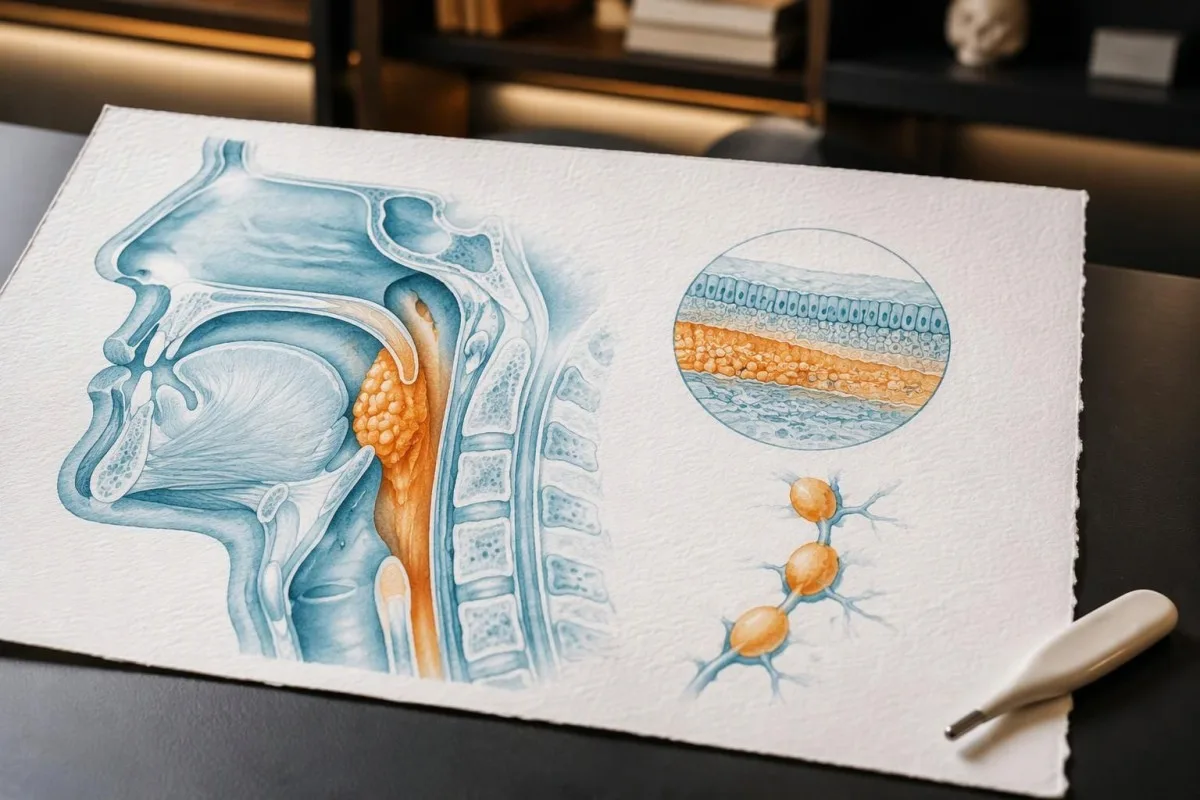
PFAPA 反映的是炎症通路的不恰当激活,而不是每隔几周就发生一次新的传染病。起病最常见于 5 岁前,但较大的儿童和成人也可能患病;因此,传统的年龄界限只是一个线索,并非绝对的排除标准(Wang 等,2021)。PFAPA 并不意味着今后每次发热都不是感染所致。
该缩写代表 4 个组成部分:周期性发热、阿弗他性口炎、咽炎和淋巴结炎。与几种遗传性周期性发热疾病不同,PFAPA 没有可确诊该病的单一既定基因检测,尽管可能出现家族聚集;广泛基因检测结果阴性既不能证实 PFAPA,也不能排除所有其他炎症性疾病。
Kantesti 是一个 人工智能血液检测分析仪 这有助于解释为何 CRP 结果为 80 mg/L 时,需要结合临床背景解读,而不能直接贴上诊断标签。我们的 机构与诊疗方式 介绍了这项服务,但要识别 PFAPA,临床医生必须联系多次发作中的症状、检查患儿,并考虑实验室报告无法反映的疾病。
哪些 PFAPA 症状能让人识别出这种发作模式?
PFAPA 症状 通常表现为发热并伴有咽喉痛、颈部淋巴结触痛或小的口腔溃疡。同样的症状组合反复出现超过 3 次或更多次有记录的发作 比任何单一症状都更有参考价值,不过没有普遍适用的最低发作次数可以确诊 PFAPA。
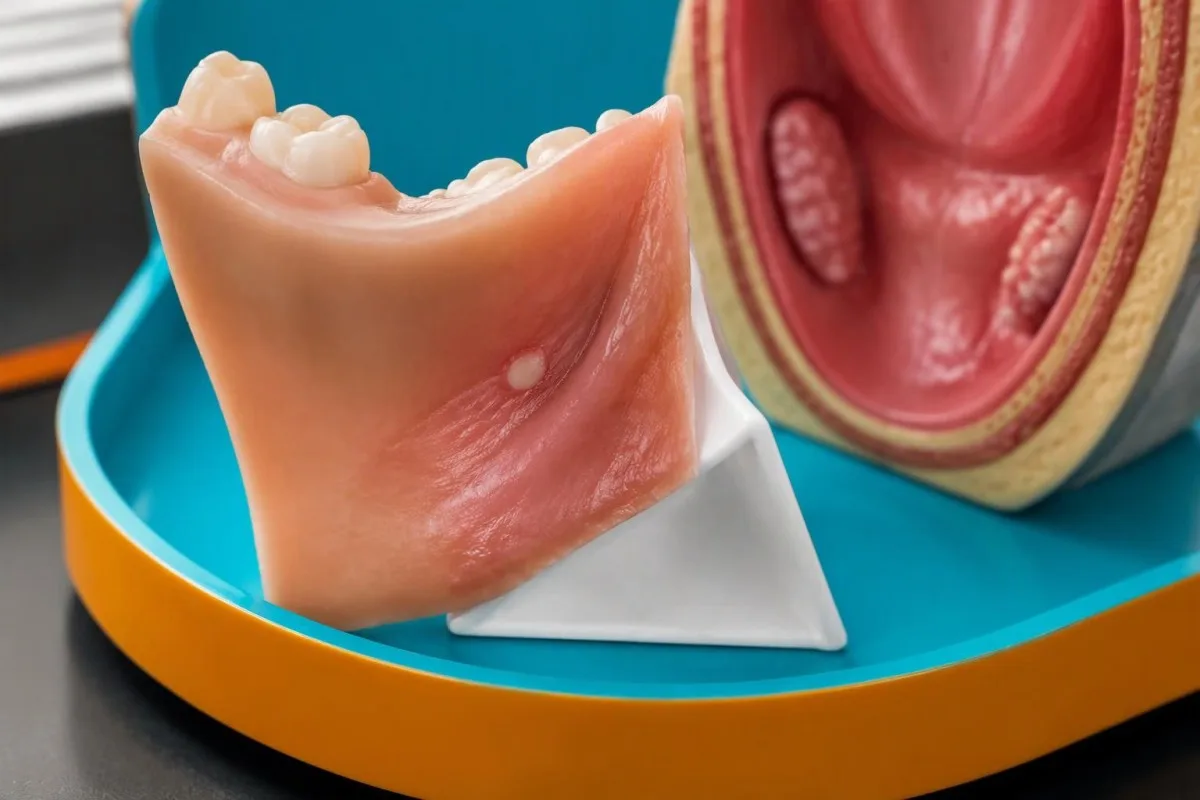
阿弗他溃疡通常是内唇、颊黏膜或其他口腔表面上的小而浅的溃疡,不同于外唇上成簇的水疱。儿童可能只有 1 或 2 处溃疡,且有些发作时可能没有溃疡;如果溃疡在就诊前消失,拍下可见溃疡的照片会有所帮助。
咽炎可能包括扁桃体发红或表面有覆盖物,因此仅凭外观无法区分 PFAPA 与链球菌感染。淋巴结肿大通常累及颈部周围的颈淋巴结;而淋巴结持续增大、全身多处淋巴结肿大,或症状持续超过一次 3–7 天的发作,则需要寻找其他解释,而不应自动归因于 PFAPA。
仅有口腔溃疡并不能诊断周期性发热。反复出现口腔溃疡并伴有生殖器溃疡、眼睛发红疼痛、视力变化或不寻常的皮肤表现,提示其他可能性,包括 白塞病症状模式指南;即使仅出现 1 次眼痛并伴有视力受损,也应及时评估,不要等到下一次发热周期。
PFAPA 发热会持续多久,又多久复发一次?
PFAPA 发热 通常持续 3–7天 并且大约每隔 2–8周, 复发一次,症状往往十分相似。有些儿童会出现可预测的发作规律,但间隔时间不一并不自动排除 PFAPA。

Temperatures during PFAPA attacks often reach 39–40°C, but fever height does not determine the diagnosis or reliably measure danger. The timing of associated throat symptoms, the child's appearance and the return to baseline matter more; measuring temperature with the same method also makes comparisons more useful than alternating between forehead, ear and underarm readings.
For a hypothetical child, fevers beginning on days 1, 29 and 58 with 4-day attacks suggest a repeated cycle—not proof of PFAPA. Count start-to-start intervals separately from fever-free days, and record whether corticosteroid treatment changed an interval; a shortened next cycle after treatment can otherwise make a previously regular pattern look inexplicably irregular.
A fever that does not stop is not a series of separate PFAPA episodes. If symptoms persist beyond 7 days, or recovery never occurs, clinicians reconsider infection and other inflammatory conditions; our explanation of 血液检测时间的影响 also shows why a sample taken on day 1 cannot be interpreted like one taken after recovery.
PFAPA 症状日记应记录哪些内容?
A PFAPA symptom diary should record episode start and finish dates, measured temperature, mouth and throat findings, neck swelling, medication timing and wellness between attacks. Even 3 carefully documented episodes can reveal details that a single clinic visit misses.

Document the thermometer method and the highest measured temperature, not just 'very hot.' For each day of a 4-day attack, note drinking, urine output, activity, cough, runny nose, abdominal symptoms and whether anyone nearby was ill; these observations distinguish a repeated inflammatory pattern from unrelated respiratory or gastrointestinal illnesses more effectively than recording fever alone.
Medication entries need the name, dose, administration time and observed response. If a prescribed medicine is given at 09:00 and fever settles by 14:00, record that interval without claiming the medicine established PFAPA; include throat swab results and whether a laboratory sample preceded treatment, because both antibiotics and corticosteroids can complicate interpretation of subsequent findings.
Well days deserve entries too. A weekly note of normal appetite, play, school attendance and any lingering symptoms prevents a diary from becoming an attack-only record; when a clinician requests a recovery sample, our 基线检查准备 explains how to record recent illness and medicines rather than treating a sample 2 days after fever as an unquestionable baseline.
为什么 PFAPA 发作间期身体状况良好如此重要?
Complete wellness between episodes strongly supports a typical PFAPA pattern: normal activity, appetite and growth should return after the 3–7-day attack. Persistent symptoms or continuing inflammation between attacks make clinicians reconsider the diagnosis.

A child who is fever-free but remains exhausted, loses weight or develops daily pain has not truly returned to baseline. Growth is assessed through serial height and weight measurements, not 1 percentile in isolation; crossing growth centiles over time may justify investigation even when individual fever episodes resemble PFAPA and routine examinations during attacks look familiar.
Repeated ordinary infections are common in young children, but unusually severe, prolonged or unusual infections suggest a different evaluation. A history of 2 hospital-treated infections or recurrent deep infections matters differently from several mild colds; clinicians consider the organisms, sites, treatment response and family history, as discussed in our guide to 检测频繁感染的讨论.
Inflammatory markers usually fall toward the laboratory reference range between PFAPA attacks, but an immediately post-fever sample may still reflect recovery. A persistent CRP of 25 mg/L on repeated genuinely well-day samples is not proof of another disease, yet it deserves explanation; a clinician may check for an unnoticed infection, ongoing inflammatory symptoms or a sampling timeline that was mislabeled.
CRP、ESR 和血细胞计数能显示 PFAPA 的哪些情况?
PFAPA attacks can raise CRP, ESR and neutrophil counts, but none of these tests confirms PFAPA or excludes infection. Many laboratories use a CRP upper reference limit around 5 mg/L;而高于, ,而另一些使用 10 mg/L; the report's own range matters.
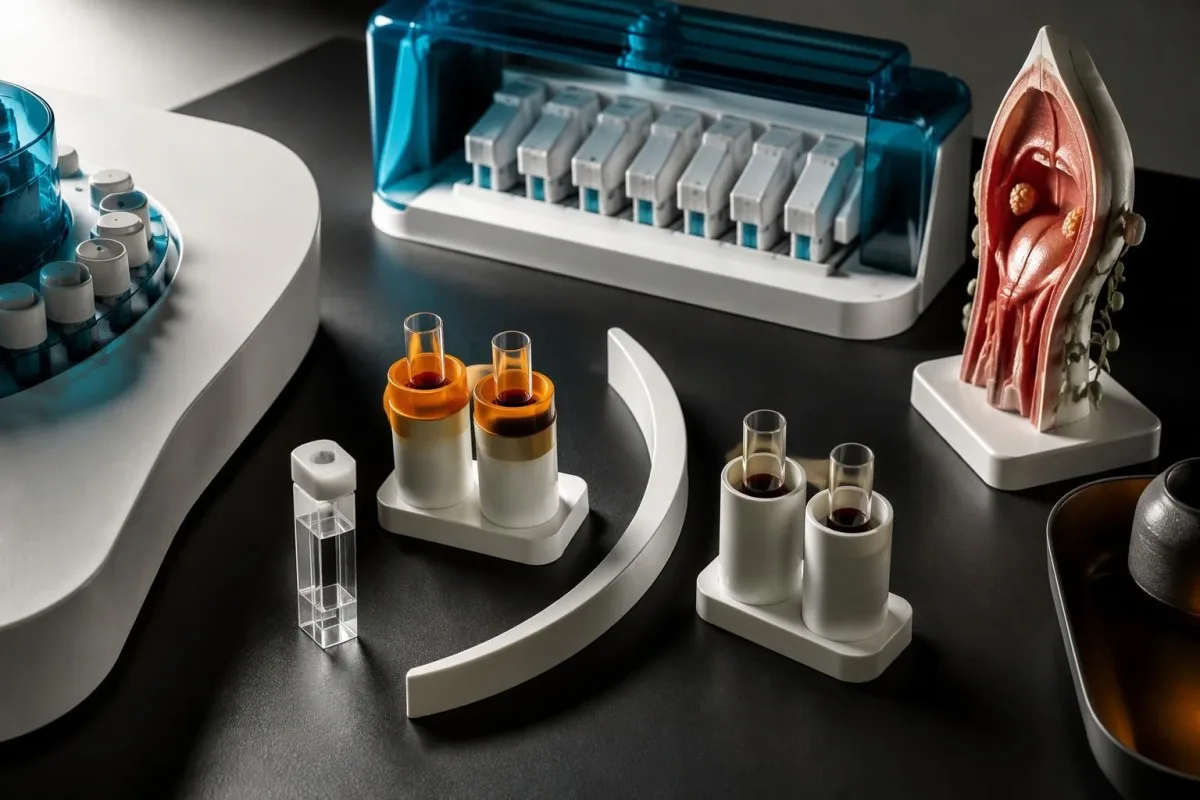
Consider a hypothetical child with CRP 80 mg/L during fever and 3 mg/L after recovery. That change supports an episodic inflammatory process but does not identify its cause; infection can produce the same pattern, while ESR may normalize more slowly than CRP, making a modestly raised recovery ESR less surprising than persistent symptoms or repeatedly elevated CRP.
White-cell interpretation must use age-appropriate absolute counts rather than adult ranges or percentages alone. At Kantesti, we emphasize that CRP 8 mg/dL equals 80 mg/L—a tenfold unit conversion that can otherwise create a false impression of improvement; our WBC 和 CRP 对比 explains why these markers can disagree because they change at different rates.
Procalcitonin is sometimes considered when serious bacterial infection is suspected, but it is not a standalone PFAPA discriminator. A low result, including a value below 0.1 ng/mL, cannot safely overrule a concerning examination or very early illness; the limits described in our 降钙素原解读指南 matter more than using one reassuring number to justify home treatment.
临床医生如何诊断 PFAPA?
PFAPA diagnosis is clinical: clinicians identify repeated characteristic attacks, document recovery between them and exclude plausible alternatives. Onset before age 5 supports traditional criteria, but later onset does not prevent a diagnosis when the overall pattern fits.
The diagnostic process usually starts with history and examination rather than an extensive panel of rare-disease tests. Wang et al. (2021) describe the value of stereotyped episodes, absence of typical respiratory symptoms, negative relevant cultures and response to prescribed corticosteroids; however, 1 negative throat swab or 1 rapid response cannot independently establish PFAPA, and classification criteria are not identical to bedside diagnosis.
Streptococcal testing addresses the current throat illness, while an ASO antibody test mainly reflects previous exposure. An ASO result of 400 IU/mL does not prove that today's recurrent fever is active strep infection; age, local reference ranges and symptom timing affect interpretation, as explained in our discussion of ASO and recent exposure.
Kantesti 是一个 基于 AI 的血液检测分析工具 that can contextualize laboratory units and repeated results, but 2 matching reports cannot confirm PFAPA. Our 技术和临床监督 information should not be read as validation of a PFAPA diagnostic test; pediatric or rheumatology assessment remains necessary when the pattern is atypical, severe or uncertain.
如何区分 PFAPA 与反复感染?
Repeated infections are more likely when episodes follow sick contacts, have varying symptoms or include cough, runny nose, diarrhea or a confirmed pathogen. PFAPA more often repeats a similar 3–7-day pattern with complete wellness between attacks, but the two can coexist.
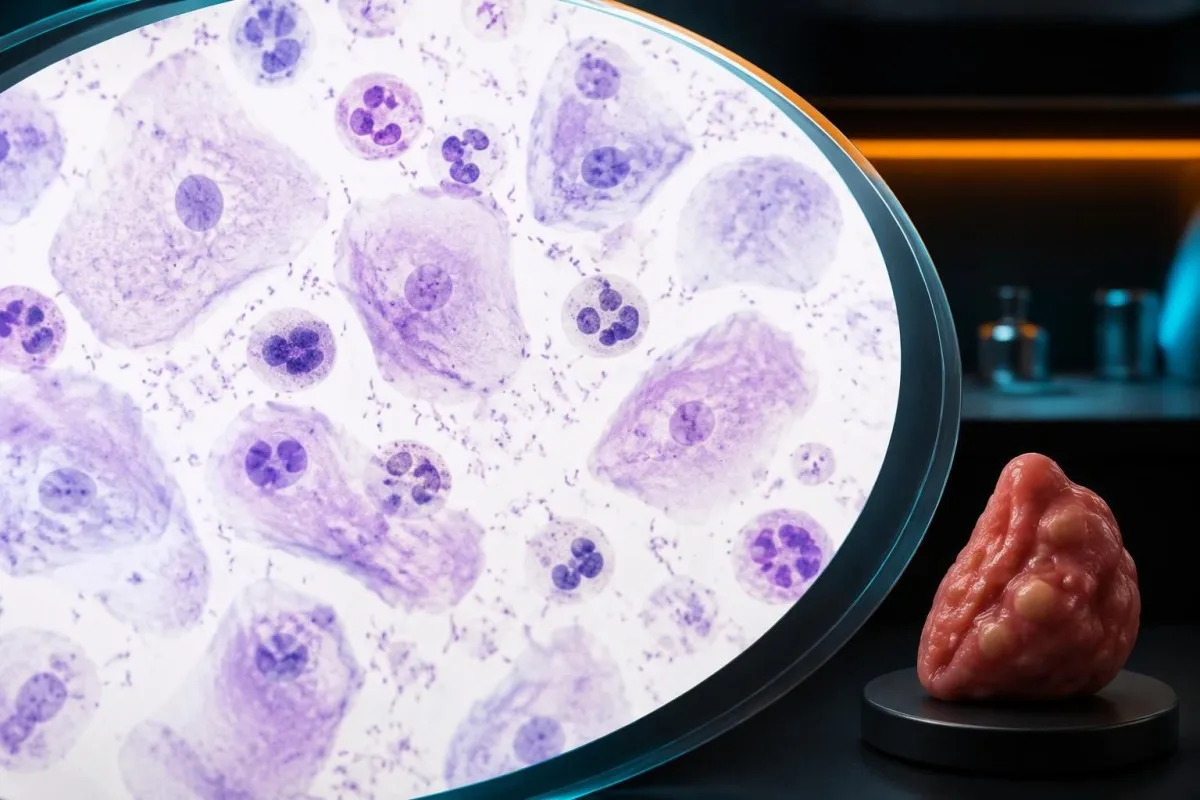
A positive respiratory PCR does not always explain the entire fever history. Adenovirus can remain detectable after an illness, so 1 positive result must be matched to current symptoms, examination and timing; our discussion of 腺病毒检出与排毒 explains why a molecular result may indicate recent exposure rather than the cause of every subsequent attack.
Longer-lasting sore throat, fatigue and gland enlargement can suggest a different illness rather than PFAPA. EBV antibody patterns distinguish recent infection from prior exposure more effectively than a single positive IgG result; our EBV抗体模式指南 explains the roles of 3 commonly reported markers—VCA IgM, VCA IgG and EBNA IgG—without equating past exposure with today's symptoms.
Antibiotic response is also easy to misread. If an antibiotic begins on day 4 and the fever ends on day 5, spontaneous resolution of a PFAPA attack is possible; conversely, a confirmed bacterial infection still requires appropriate treatment, and neither previous PFAPA nor prior antibiotic failure permits a new illness with different symptoms to be dismissed without assessment.
哪些其他周期性发热疾病可能与 PFAPA 相似?
周期性中性粒细胞减少症 and inherited autoinflammatory disorders can resemble PFAPA, especially when mouth sores accompany recurring fever. Approximately 21-day cycles, severe infections, marked abdominal or chest pain, unusual rashes or persistent inflammation help clinicians decide which alternatives to investigate.
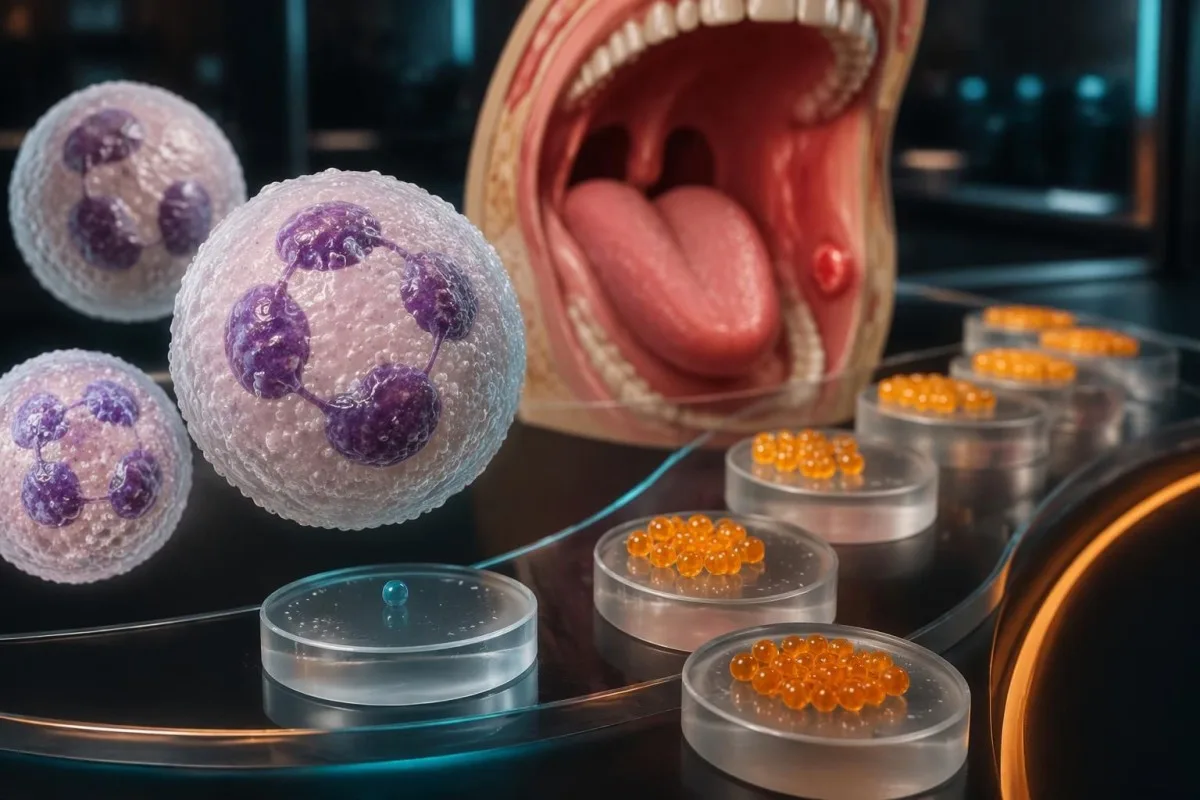
Cyclic neutropenia can produce recurrent fever, mouth sores and gum problems while a blood count between low-count periods looks normal. When suspected, clinicians may request CBCs 2–3 times weekly for about 6 weeks to identify repeated neutrophil nadirs; an absolute neutrophil count below 0.5 × 10^9/L during fever requires urgent clinical assessment rather than being labeled a routine PFAPA attack.
Familial Mediterranean fever often causes shorter attacks, commonly 12–72 hours, with abdominal or chest pain from serosal inflammation or joint symptoms. Our MEFV 检测说明 shows why genotype and symptoms must be interpreted together; TRAPS may produce longer attacks, sometimes over 7 days, while mevalonate kinase deficiency can involve diarrhea, vomiting and attacks triggered by vaccination or other stressors.
Ancestry and family history guide assessment, but neither should become a gatekeeper that excludes an inherited disorder. Persistently raised serum amyloid A between attacks can indicate ongoing inflammation and requires context, as our serum amyloid A guide explains; a single high value during a 4-day fever does not diagnose amyloidosis, and typical PFAPA should not automatically be assigned the complication risks of other syndromes.
哪些发热警示征象需要紧急评估?
出现以下情况请寻求急诊救治 for fever with breathing difficulty, reduced responsiveness, a stiff neck, a non-blanching rash or severe dehydration. An infant younger than 超过 的婴儿体温达到 38°C或更高 needs urgent medical assessment, even if a family member has PFAPA.
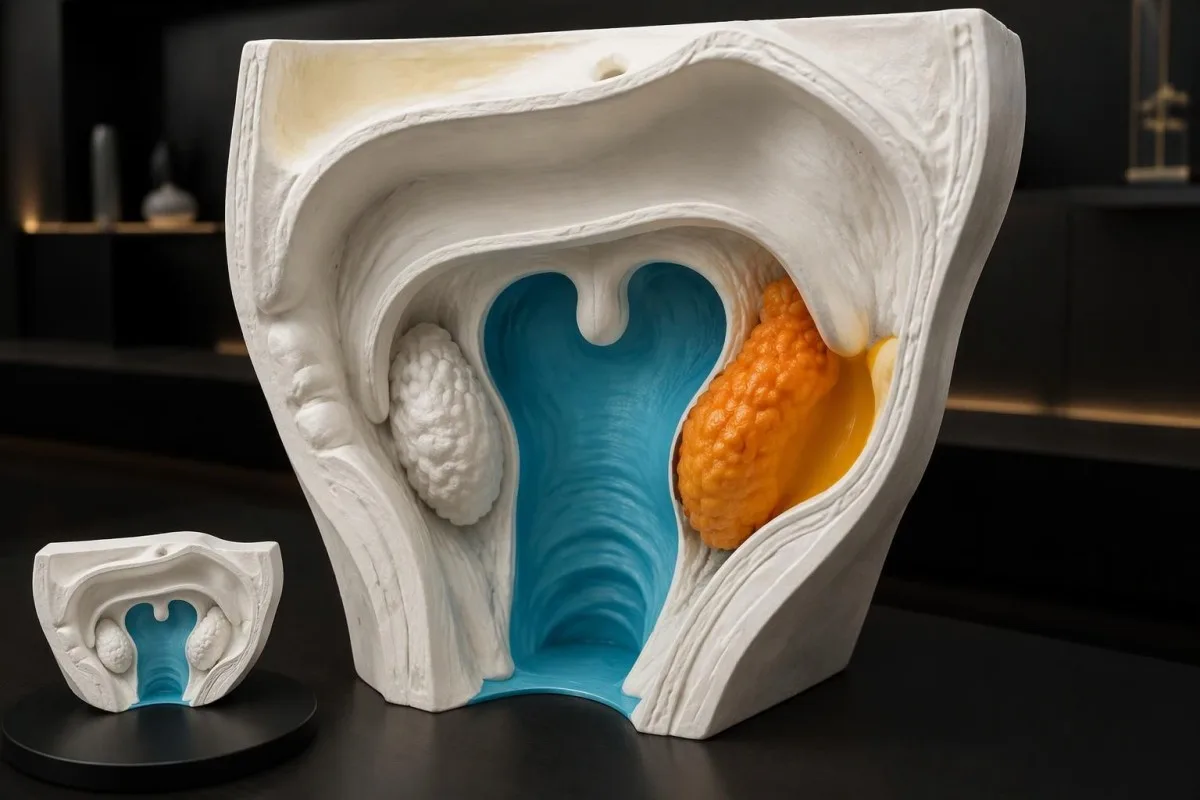
Difficulty swallowing saliva, drooling, a muffled voice or marked one-sided throat swelling can indicate an airway-threatening problem rather than a usual PFAPA flare. A child aged 3–6 months with a temperature of 39°C or higher also needs urgent assessment; contact local emergency services for immediate danger instead of waiting for a blood result or an expected fever endpoint.
Fever lasting 5 days or longer warrants prompt medical review, particularly with red eyes, cracked lips, rash or swollen hands and feet. These findings can suggest Kawasaki disease, discussed in our Kawasaki assessment guide; incomplete presentations occur, so clinicians do not require every classic feature, and concerning symptoms should be assessed before day 5 rather than waiting for a threshold.
New severe localized abdominal pain, persistent vomiting or inability to walk normally should not be attributed to PFAPA without examination. Even 1 normal WBC or CRP result cannot reliably exclude an early abdominal emergency, as our appendicitis laboratory limits explain; children with a known fever syndrome can still develop unrelated illnesses, especially when the attack looks different from their established pattern.
如何治疗 PFAPA 发作,类固醇治疗反应意味着什么?
PFAPA attack treatment focuses on comfort, hydration and, when prescribed, corticosteroids that often stop fever within hours. Published prednisone or prednisolone regimens range from 0.5–2 mg/kg, but dosing, maximum dose and eligibility must be set by the treating clinician.
Vanoni et al. (2016) describe rapid corticosteroid responses alongside the limitation that treatment may shorten the interval to the next attack. Reports summarized in that review estimated shorter intervals in approximately 25–50% of patients, but these observations come from heterogeneous studies rather than a precise prediction for an individual child; attack control and long-term prevention are separate treatment goals.
For a hypothetical 20-kg child, a clinician-selected dose of 1 mg/kg would equal 20 mg; this calculation illustrates weight-based prescribing, not a home-treatment recommendation. Families need a written plan explaining when a familiar attack qualifies for treatment, when to seek assessment first and what to do if the expected response does not occur—especially if symptoms suggest a new infection.
Antipyretics may improve discomfort even when they do not end the inflammatory episode. Choose child-appropriate preparations with a clinician or pharmacist, avoid aspirin unless specifically prescribed and do not duplicate paracetamol/acetaminophen across 2 products; Kantesti cannot authorize steroid treatment, and our discussion of 儿童AI解读 explains why pediatric decisions need more than laboratory pattern recognition.
何时考虑预防性药物或扁桃体切除术?
Prevention or tonsillectomy may be considered when PFAPA attacks repeatedly disrupt daily life or attack treatment is unsatisfactory. A Cochrane review included 2 randomized trials involving 67 children, finding benefit from tonsil surgery while emphasizing the limited size of the evidence base.
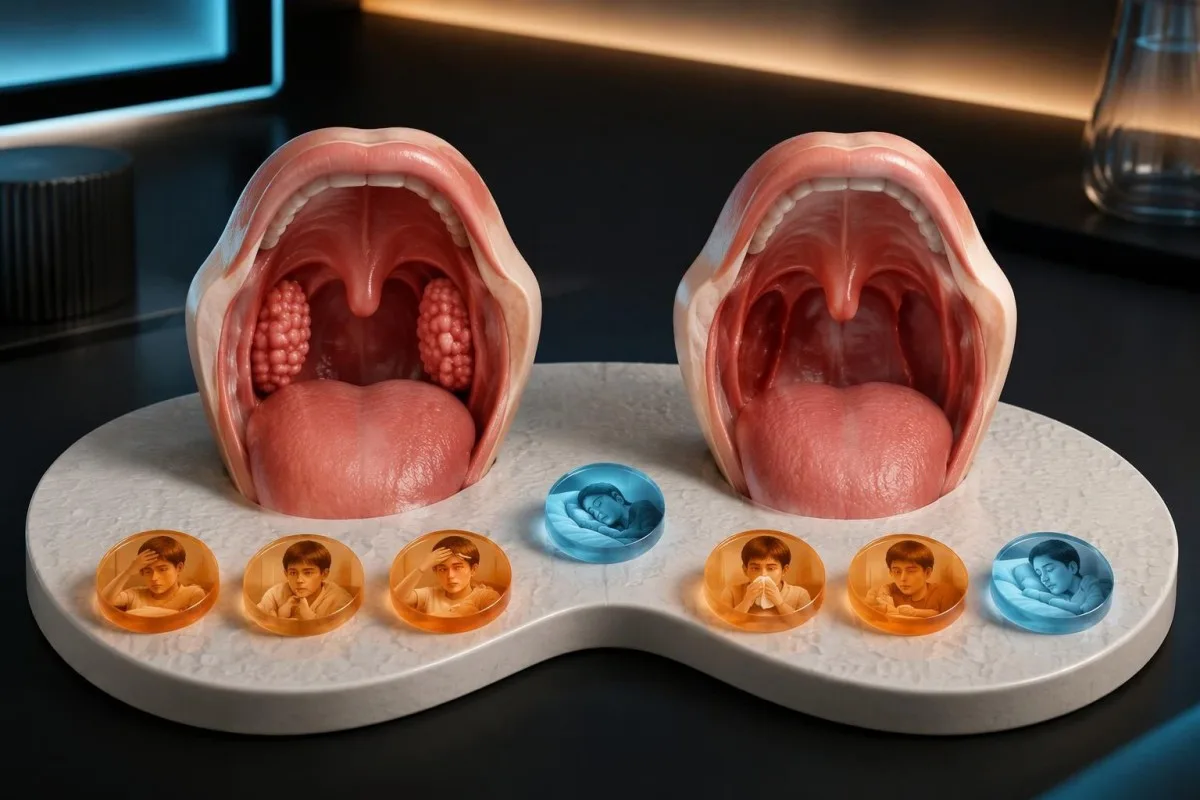
Burton et al. (2019) judged the evidence for several tonsillectomy outcomes to be of moderate certainty, but the trials were too small to characterize uncommon harms confidently. The evidence concerns selected children rather than every person with recurrent sore throat; a child missing 4 school days each month may value potential benefit differently from a child with infrequent, easily managed attacks.
Colchicine is sometimes used to reduce attacks under specialist supervision, whereas cimetidine has less convincing evidence. Treatment selection should consider the diagnosis, kidney and liver function, other medicines and the possibility of an inherited fever disorder; when several options exist, agree in advance on a measurable goal, such as fewer attacks across 3 months, rather than assuming a changed laboratory number demonstrates success.
Tonsillectomy carries postoperative pain, dehydration, anesthesia-related risks and bleeding risk, even when it improves PFAPA. Kantesti's 负责任的 AI 指南 supports a clear boundary: neither 1 elevated inflammatory marker nor an automated report can decide whether surgery is appropriate; that discussion belongs with the treating pediatric team and an ENT specialist who can assess the child's individual risks.
对 PFAPA 患儿、成人及其家庭而言,哪些随访有帮助?
PFAPA follow-up should track attack burden, growth or weight, treatment response and any symptoms between episodes. Many childhood cases improve over several years, but persistence, relapse and adult-onset disease occur; a 3-month review interval can be a practical individualized plan rather than a universal rule.

Adults require the same attention to repeated patterns and alternative causes, not an assumption that PFAPA is impossible after childhood. Fever with oral sores and pharyngitis can support the diagnosis, but new constitutional symptoms, persistent gland enlargement or abnormal findings between attacks need assessment; a 35-year-old with a first prolonged fever should not self-diagnose PFAPA from an online symptom match.
Prepare a concise appointment summary: attack dates, duration, associated features, well-day symptoms, test results and response to prescribed treatment. Include 1 clearly labeled attack sample and any clinician-requested recovery sample, rather than ordering a broad panel every month; repeated testing is useful only when it answers a specific question, such as whether inflammation persists or neutrophil counts cycle.
Kantesti 是一个 AI 血液检查解读平台 that can help explain uploaded CBC and inflammatory-marker reports alongside their dates, units and stated reference ranges. For a family sharing 2 or more records, check each person's identity and consent before upload, and review our 隐私与数据处理; AI explanation does not replace pediatric examination, urgent triage or a specialist diagnosis.
研究文献:证据与背景实验室指南
PFAPA evidence comes from clinical descriptions, differential-diagnosis research and treatment studies—not from a specific clotting or serum-protein test. The 2 background publications below explain other laboratory topics and should not be mistaken for studies validating PFAPA diagnosis.
The peer-reviewed PFAPA review by Wang et al. (2021), treatment review by Vanoni et al. (2016) and Cochrane analysis by Burton et al. (2019) directly inform this article's clinical discussion. The surgical review's 67-child evidence base illustrates why certainty must be proportionate to study size; a named source supports a specific claim, not every recommendation made elsewhere on the page.
Kantesti 的 clotting test background guide 和 血清蛋白背景指南 accompany the 2 Zenodo records listed below. Neither aPTT nor an albumin/globulin ratio confirms PFAPA, and neither guide establishes that routine testing of those markers improves PFAPA care; additional tests should follow an identified clinical concern rather than the availability of a panel.
Evidence interpretation should distinguish a repository-hosted educational guide from a peer-reviewed condition-specific study or systematic review. Our 医疗内容标准 explain the editorial approach; for a child with 3 apparently similar attacks, the practical priority remains documented recovery, targeted exclusion of alternatives and a clear safety plan, not accumulating more citations or tests that do not answer the clinical question.
常见问题解答
什么是 PFAPA 综合征?
PFAPA综合征是一种自身炎症性疾病,会导致反复发热,并伴有口腔阿弗他溃疡、咽炎和颈部淋巴结肿大。发作通常持续3–7天,每隔数周复发一次,发作间期健康状况正常。该病通常在5岁前发病,但年龄较大的儿童和成人也可能患病。目前没有任何单项血液检测可以确诊PFAPA,因此诊断取决于反复出现的临床表现模式,以及对其他可能病因的评估。
PFAPA发热多久发生一次?
PFAPA发热通常每隔约2–8周复发,每次发作通常持续3–7天。有些儿童的发作周期非常规律,而另一些儿童的间隔则不固定。皮质类固醇治疗可能缩短至下一次发作的间隔,因此应在发热日记中记录用药时间。持续发热或发作间未能恢复健康时,应重新评估,而不应想当然地认为这符合PFAPA的表现。
CRP血液检测值高可以诊断PFAPA吗?
CRP结果升高不能诊断PFAPA,因为感染和其他炎症性疾病也可能导致同样的升高。例如,发热期间CRP为80 mg/L、康复后为3 mg/L,这支持存在发作性炎症,但无法确定其病因。许多实验室采用约5 mg/L作为CRP参考上限,部分实验室则采用10 mg/L。临床医生会结合症状、体格检查、采样时间以及相关感染检测结果来解读该结果。
PFAPA会传染吗?需要使用抗生素吗?
PFAPA 本身不具有传染性,抗生素也无法治疗其潜在的炎症过程。一次典型的发作持续 3–7 天,即使在开始使用抗生素后,也可能自然结束,从而造成抗生素起效的误导性印象。PFAPA 患儿仍可能感染具有传染性的病毒性疾病或细菌感染。若出现新的发热,并伴有不同症状、接触过患病者或已确认由细菌引起,应根据具体情况进行评估和治疗。
对泼尼松迅速产生反应能否证明是 PFAPA?
对处方泼尼松或泼尼松龙迅速产生反应可支持 PFAPA 的诊断,但不能确诊。已发表的 PFAPA 治疗方案包括 0.5–2 mg/kg,实际剂量和最大剂量由治疗医生确定。糖皮质激素可能抑制其他疾病引起的症状,并可能缩短至下一次 PFAPA 发作的间隔。若发作异常严重或与以往不同,家属应遵循书面治疗计划,并在治疗前寻求评估。
疑似患有 PFAPA 的儿童何时应接受紧急护理?
疑似患有 PFAPA 的儿童如果发热并伴有呼吸困难、反应迟钝、颈部僵硬、按压不褪色的皮疹或严重脱水,需要接受急诊救治。任何未满 3 个月且体温达到或超过 38°C 的婴儿都需要立即接受医疗评估。发热持续 5 天或更久也应尽快就医,尤其是伴有眼睛发红、皮疹、嘴唇干裂或手脚肿胀时。既往确诊 PFAPA,并不意味着可以忽视症状不同的新疾病。
获取血液检查结果解读
上传您的实验室报告,Kantesti 的 AI 会在几秒内用通俗语言解释每项生物标志物。全球已有超过 200 万人使用。.
参考
- Klein, T., Mitchell, S., & Weber, H. (2026). aPTT 正常范围:D-二聚体、蛋白 C 与凝血指南。. Kantesti AI 医学研究。. DOI
- Klein, T., Mitchell, S., & Weber, H. (2026). 血清蛋白指南:球蛋白、白蛋白与 A/G 比值血液检查。. Kantesti AI 医学研究。. DOI
- Wang A et al. (2021). Periodic fever, aphthous stomatitis, pharyngitis, and adenitis (PFAPA) syndrome: A review. World Journal of Otorhinolaryngology - Head and Neck Surgery. DOI
- Vanoni F et al. (2016). PFAPA syndrome: a review on treatment and outcome. Pediatric Rheumatology. DOI
- Burton MJ et al. (2019). Tonsillectomy for periodic fever, aphthous stomatitis, pharyngitis and cervical adenitis syndrome (PFAPA). Cochrane 系统评价数据库。. DOI
- 200万+分析的检测项目
- 127+国家
- 100+语言
关于医疗团队


E-E-A-T信任信号
经验
由医生主导的临床审阅:实验室解读工作流程。.
专业知识
实验室医学重点:生物标志物在临床情境中的表现。.
权威
经 Thomas Klein 医生医学审核,并由 Sarah Mitchell 医生和 Hans Weber 教授参与撰写。.
可信度
基于循证的解读,并提供清晰的后续路径以减少警报。.





医疗免责声明
本文仅用于教育目的,不构成医疗建议。诊断和治疗决策请始终咨询合格的医疗专业人员。.
发表 · 联系编辑团队
由 Kantesti Ltd 发布,在英格兰和威尔士注册,注册公司编号:. 17090423, ,英国伦敦。.
