
Sindrom PFAPA lahko povzroča ponavljajoče se visoke vročine z razjedami v ustih, bolečim žrelom in povečanimi vratnimi bezgavkami, ki običajno trajajo 3–7 dni, med napadi pa pride do popolnega okrevanja. Diagnoza temelji na ponavljajočem se vzorcu in izključitvi drugih vzrokov – ne na enem nenormalnem izvidu krvne preiskave. Dnevnik simptomov je v pomoč; neobičajno hud ali drugačen napad zahteva ponovno oceno.

Ključne ugotovitve
- Sindrom PFAPA običajno povzroča epizode vročine, ki trajajo 3–7 dni, med njimi pa je več tednov dobrega počutja.
- Simptomi PFAPA vključujejo afte v ustih, faringitis in povečane vratne bezgavke; ni nujno, da se vse 3 značilnosti pojavijo hkrati.
- Časovni potek vročine pogosto sledi približno 2–8-tedenskemu ciklu, vendar za diagnozo ni potrebna natančna koledarska pravilnost.
- Dnevniki simptomov naj beležijo datume epizod, najvišjo temperaturo v °C ali °F, simptome, zdravila in okrevanje med napadi.
- Krvne preiskave lahko pokažejo povišan CRP in število nevtrofilcev med napadi; CRP 80 mg/L ne razlikuje PFAPA od okužbe.
- Ciklična nevtropenija se lahko ponavlja približno vsakih 21 dni, zato so morda potrebne zaporedne krvne slike in ne le ena pomirjujoča krvna slika CBC.
- Odločitve o zdravljenju lahko vključuje kortikosteroide, zdravila za preprečevanje ali tonzilektomijo, ki jih predpiše zdravnik; noben od teh ukrepov ne sme temeljiti zgolj na izvidu laboratorijske preiskave.
- Nujna ocena je potrebna pri vsakem dojenčku, mlajšem od 3 mesecev, s temperaturo 38 °C ali več, ali pri vsakem otroku s težavami z dihanjem, zmanjšano odzivnostjo ali izpuščajem, ki ob pritisku ne pobledi.
Kaj je sindrom PFAPA in kaj povzroča vročino?
Sindrom PFAPA je avtoinflamatorno stanje, ki povzroča ponavljajoče se epizode vročine z aftami v ustih, faringitisom in cervikalnim adenitisom. Napadi običajno trajajo 3–7 dni; otroci med epizodami običajno spet pridobijo običajno raven energije, tek in rast.
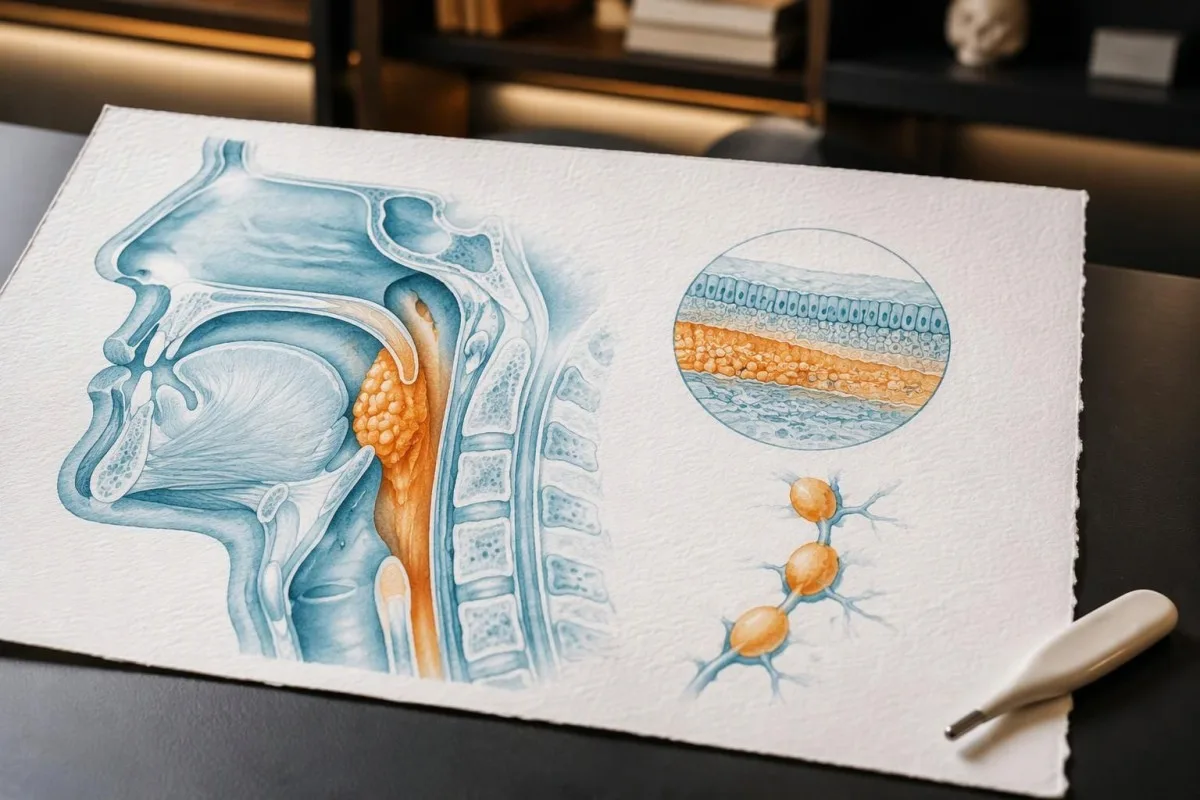
Pri PFAPA gre za neustrezno aktivacijo vnetnih poti in ne za vsakič novo nalezljivo bolezen na vsakih nekaj tednov. Začetek je najpogostejši pred 5. letom starosti, vendar lahko zbolijo tudi starejši otroci in odrasli; zgodovinska starostna meja je zato namig, ne pa absolutno izključitveno merilo (Wang et al., 2021). PFAPA ne pomeni, da vsaka prihodnja vročina ni nalezljiva.
Kratica opisuje 4 sestavine: periodično vročino, aftozni stomatitis, faringitis in adenitis. Za razliko od več dednih periodičnih vročinskih stanj za PFAPA ni enega samega uveljavljenega genetskega testa, ki bi potrdil diagnozo, čeprav se lahko pojavlja pri več članih družine; negativen izvid obsežnega genetskega panela ne potrjuje PFAPA in ne izključuje vseh drugih vnetnih motenj.
Kantesti je AI analizator krvi ki lahko pojasni, zakaj je treba izvid CRP 80 mg/L presojati v kliničnem kontekstu in mu ne pripisati diagnostične oznake. Naša organizacija in pristop opisujeta storitev, vendar mora zdravnik za prepoznavanje PFAPA povezati simptome iz več epizod, pregledati otroka in upoštevati stanja, ki jih laboratorijski izvid ne more zajeti.
Kateri simptomi PFAPA omogočajo prepoznavanje značilnega vzorca?
Simptomi PFAPA običajno združujejo vročino z bolečim žrelom, občutljivimi bezgavkami na vratu ali majhnimi aftami v ustih. Ista kombinacija, ki se ponavlja v 3 ali več dokumentiranih epizodah, je povednejša kot kateri koli posamezen simptom, čeprav ni univerzalnega najmanjšega števila epizod, ki bi potrdilo PFAPA.
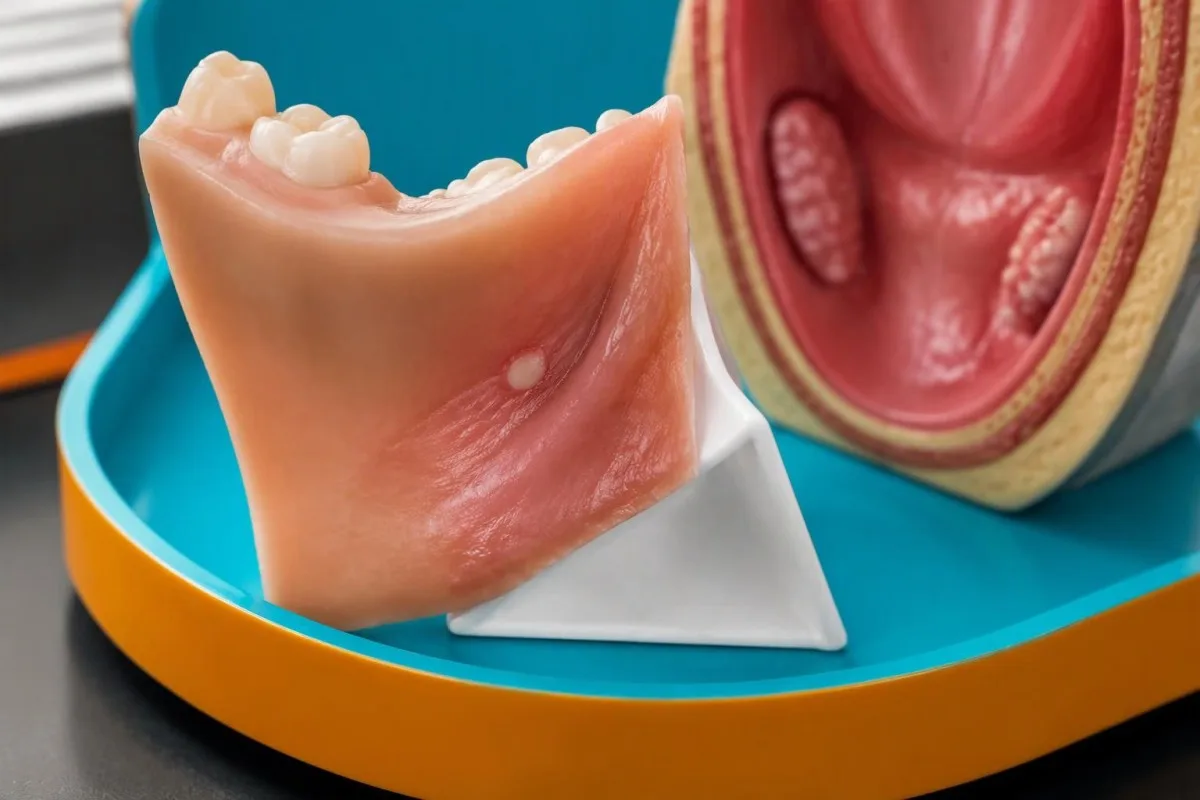
Aftozne razjede so običajno majhne, plitve ranice na notranji strani ustnic, licih ali drugih ustnih površinah – niso enake skupkom mehurčkov na zunanji strani ustnice. Otrok ima lahko le 1 ali 2 ranici, razjede pa so lahko med nekaterimi napadi odsotne; fotografija vidne ranice je lahko v pomoč, če izgine pred pregledom.
Faringitis lahko vključuje pordelost ali obloge na mandljih, zato samo videz ne omogoča razlikovanja PFAPA od streptokokne okužbe. Otekle bezgavke so običajno vratne, medtem ko povečana bezgavka, ki vztraja, splošna oteklina bezgavk ali simptomi, ki trajajo dlje kot 3–7-dnevni napad, zahtevajo drugačno razlago in jih ne smemo samodejno pripisati PFAPA.
Same afte v ustih ne pomenijo diagnoze periodične vročine. Ponavljajoče se ustne afte, ki jih spremljajo genitalne razjede, boleče rdeče oči, spremembe vida ali nenavadne kožne spremembe, nakazujejo druge možnosti, vključno z vzorcih simptomov Behçetove bolezni; že 1 epizoda bolečine v očesu z oslabljenim vidom zahteva hitro oceno, ne da bi čakali na naslednji vročinski cikel.
Kako dolgo trajajo vročine pri PFAPA in kako pogosto se ponavljajo?
Vročine pri PFAPA običajno trajajo 3–7 dni in se ponavljajo približno vsakih 2–8 tednov, pogosto z izrazito podobnimi simptomi. Pri nekaterih otrocih se vzpostavi predvidljiv ritem, vendar različno dolgi presledki PFAPA ne izključujejo samodejno.

Temperatures during PFAPA attacks often reach 39–40°C, but fever height does not determine the diagnosis or reliably measure danger. The timing of associated throat symptoms, the child's appearance and the return to baseline matter more; measuring temperature with the same method also makes comparisons more useful than alternating between forehead, ear and underarm readings.
For a hypothetical child, fevers beginning on days 1, 29 and 58 with 4-day attacks suggest a repeated cycle—not proof of PFAPA. Count start-to-start intervals separately from fever-free days, and record whether corticosteroid treatment changed an interval; a shortened next cycle after treatment can otherwise make a previously regular pattern look inexplicably irregular.
A fever that does not stop is not a series of separate PFAPA episodes. If symptoms persist beyond 7 days, or recovery never occurs, clinicians reconsider infection and other inflammatory conditions; our explanation of učinki časa odvzema krvnega testa also shows why a sample taken on day 1 cannot be interpreted like one taken after recovery.
Katere podatke naj beleži dnevnik simptomov PFAPA?
A PFAPA symptom diary should record episode start and finish dates, measured temperature, mouth and throat findings, neck swelling, medication timing and wellness between attacks. Even 3 carefully documented episodes can reveal details that a single clinic visit misses.

Document the thermometer method and the highest measured temperature, not just 'very hot.' For each day of a 4-day attack, note drinking, urine output, activity, cough, runny nose, abdominal symptoms and whether anyone nearby was ill; these observations distinguish a repeated inflammatory pattern from unrelated respiratory or gastrointestinal illnesses more effectively than recording fever alone.
Medication entries need the name, dose, administration time and observed response. If a prescribed medicine is given at 09:00 and fever settles by 14:00, record that interval without claiming the medicine established PFAPA; include throat swab results and whether a laboratory sample preceded treatment, because both antibiotics and corticosteroids can complicate interpretation of subsequent findings.
Well days deserve entries too. A weekly note of normal appetite, play, school attendance and any lingering symptoms prevents a diary from becoming an attack-only record; when a clinician requests a recovery sample, our vodnik za pripravo na izhodiščne meritve explains how to record recent illness and medicines rather than treating a sample 2 days after fever as an unquestionable baseline.
Zakaj je dobro počutje med epizodami PFAPA tako pomembno?
Complete wellness between episodes strongly supports a typical PFAPA pattern: normal activity, appetite and growth should return after the 3–7-day attack. Persistent symptoms or continuing inflammation between attacks make clinicians reconsider the diagnosis.

A child who is fever-free but remains exhausted, loses weight or develops daily pain has not truly returned to baseline. Growth is assessed through serial height and weight measurements, not 1 percentile in isolation; crossing growth centiles over time may justify investigation even when individual fever episodes resemble PFAPA and routine examinations during attacks look familiar.
Repeated ordinary infections are common in young children, but unusually severe, prolonged or unusual infections suggest a different evaluation. A history of 2 hospital-treated infections or recurrent deep infections matters differently from several mild colds; clinicians consider the organisms, sites, treatment response and family history, as discussed in our guide to testiranju pogostih okužb.
Inflammatory markers usually fall toward the laboratory reference range between PFAPA attacks, but an immediately post-fever sample may still reflect recovery. A persistent CRP of 25 mg/L on repeated genuinely well-day samples is not proof of another disease, yet it deserves explanation; a clinician may check for an unnoticed infection, ongoing inflammatory symptoms or a sampling timeline that was mislabeled.
Kaj pokažejo CRP, ESR in krvna slika pri PFAPA?
PFAPA attacks can raise CRP, ESR and neutrophil counts, but none of these tests confirms PFAPA or excludes infection. Many laboratories use a CRP upper reference limit around 5 mg/L, drugi pa uporabljajo 10 mg/L; the report's own range matters.
Consider a hypothetical child with CRP 80 mg/L during fever and 3 mg/L after recovery. That change supports an episodic inflammatory process but does not identify its cause; infection can produce the same pattern, while ESR may normalize more slowly than CRP, making a modestly raised recovery ESR less surprising than persistent symptoms or repeatedly elevated CRP.
White-cell interpretation must use age-appropriate absolute counts rather than adult ranges or percentages alone. At Kantesti, we emphasize that CRP 8 mg/dL equals 80 mg/L—a tenfold unit conversion that can otherwise create a false impression of improvement; our primerjava WBC in CRP explains why these markers can disagree because they change at different rates.
Procalcitonin is sometimes considered when serious bacterial infection is suspected, but it is not a standalone PFAPA discriminator. A low result, including a value below 0.1 ng/mL, cannot safely overrule a concerning examination or very early illness; the limits described in our vodič za razlago prokalcitonina matter more than using one reassuring number to justify home treatment.
Kako zdravniki postavijo diagnozo PFAPA?
PFAPA diagnosis is clinical: clinicians identify repeated characteristic attacks, document recovery between them and exclude plausible alternatives. Onset before age 5 supports traditional criteria, but later onset does not prevent a diagnosis when the overall pattern fits.
The diagnostic process usually starts with history and examination rather than an extensive panel of rare-disease tests. Wang et al. (2021) describe the value of stereotyped episodes, absence of typical respiratory symptoms, negative relevant cultures and response to prescribed corticosteroids; however, 1 negative throat swab or 1 rapid response cannot independently establish PFAPA, and classification criteria are not identical to bedside diagnosis.
Streptococcal testing addresses the current throat illness, while an ASO antibody test mainly reflects previous exposure. An ASO result of 400 IU/mL does not prove that today's recurrent fever is active strep infection; age, local reference ranges and symptom timing affect interpretation, as explained in our discussion of ASO and recent exposure.
Kantesti je Orodje za analizo krvnih testov z umetno inteligenco that can contextualize laboratory units and repeated results, but 2 matching reports cannot confirm PFAPA. Our tehnični in klinični nadzor information should not be read as validation of a PFAPA diagnostic test; pediatric or rheumatology assessment remains necessary when the pattern is atypical, severe or uncertain.
Kako se PFAPA razlikuje od ponavljajočih se okužb?
Repeated infections are more likely when episodes follow sick contacts, have varying symptoms or include cough, runny nose, diarrhea or a confirmed pathogen. PFAPA more often repeats a similar 3–7-day pattern with complete wellness between attacks, but the two can coexist.
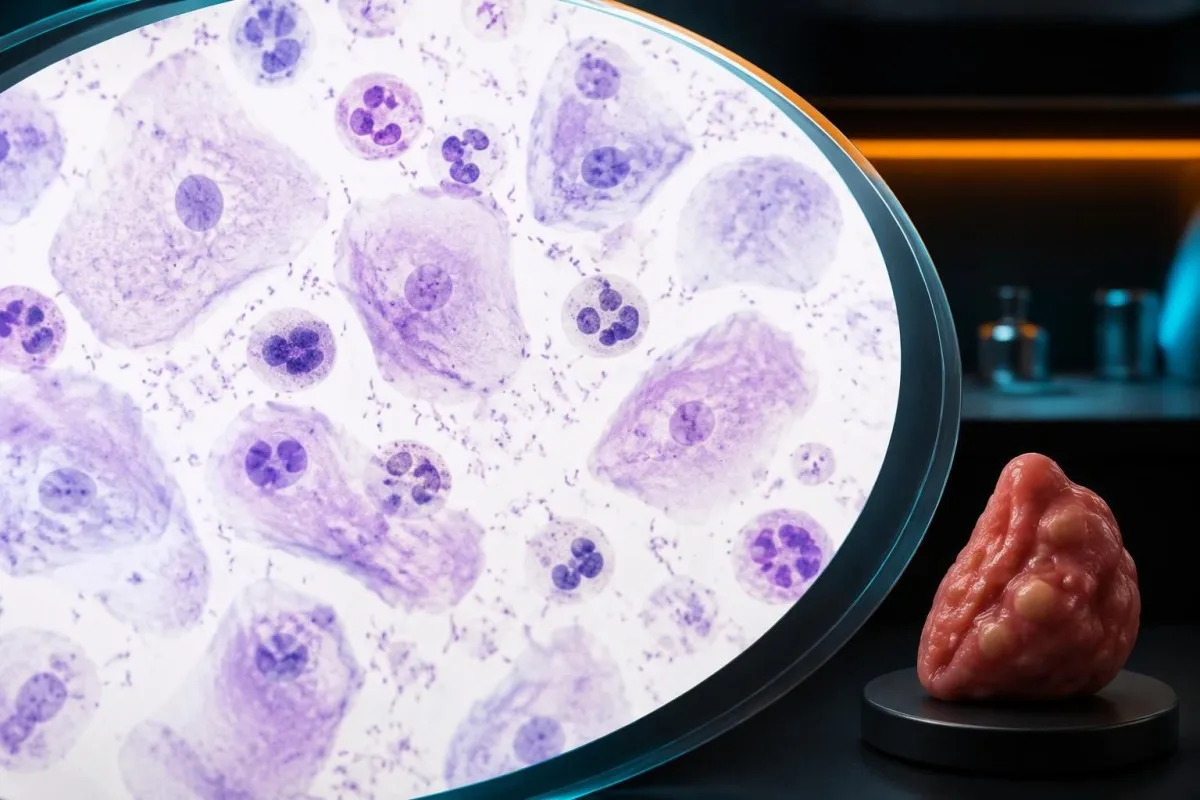
A positive respiratory PCR does not always explain the entire fever history. Adenovirus can remain detectable after an illness, so 1 positive result must be matched to current symptoms, examination and timing; our discussion of zaznavanja in izločanja adenovirusa explains why a molecular result may indicate recent exposure rather than the cause of every subsequent attack.
Longer-lasting sore throat, fatigue and gland enlargement can suggest a different illness rather than PFAPA. EBV antibody patterns distinguish recent infection from prior exposure more effectively than a single positive IgG result; our Vodilo za vzorec protiteles proti EBV explains the roles of 3 commonly reported markers—VCA IgM, VCA IgG and EBNA IgG—without equating past exposure with today's symptoms.
Antibiotic response is also easy to misread. If an antibiotic begins on day 4 and the fever ends on day 5, spontaneous resolution of a PFAPA attack is possible; conversely, a confirmed bacterial infection still requires appropriate treatment, and neither previous PFAPA nor prior antibiotic failure permits a new illness with different symptoms to be dismissed without assessment.
Katere druge motnje s periodično vročino so lahko podobne PFAPA?
Ciklična nevtropenija and inherited autoinflammatory disorders can resemble PFAPA, especially when mouth sores accompany recurring fever. Approximately 21-day cycles, severe infections, marked abdominal or chest pain, unusual rashes or persistent inflammation help clinicians decide which alternatives to investigate.

Cyclic neutropenia can produce recurrent fever, mouth sores and gum problems while a blood count between low-count periods looks normal. When suspected, clinicians may request CBCs 2–3 times weekly for about 6 weeks to identify repeated neutrophil nadirs; an absolute neutrophil count below 0.5 × 10^9/L during fever requires urgent clinical assessment rather than being labeled a routine PFAPA attack.
Familial Mediterranean fever often causes shorter attacks, commonly 12–72 hours, with abdominal or chest pain from serosal inflammation or joint symptoms. Our razlaga testiranja gena MEFV shows why genotype and symptoms must be interpreted together; TRAPS may produce longer attacks, sometimes over 7 days, while mevalonate kinase deficiency can involve diarrhea, vomiting and attacks triggered by vaccination or other stressors.
Ancestry and family history guide assessment, but neither should become a gatekeeper that excludes an inherited disorder. Persistently raised serum amyloid A between attacks can indicate ongoing inflammation and requires context, as our serum amyloid A guide explains; a single high value during a 4-day fever does not diagnose amyloidosis, and typical PFAPA should not automatically be assigned the complication risks of other syndromes.
Kateri opozorilni znaki ob vročini zahtevajo nujno oceno?
Poiščite nujno zdravniško pomoč for fever with breathing difficulty, reduced responsiveness, a stiff neck, a non-blanching rash or severe dehydration. An infant younger than 3 mesece , s temperaturo 38 °C ali več needs urgent medical assessment, even if a family member has PFAPA.
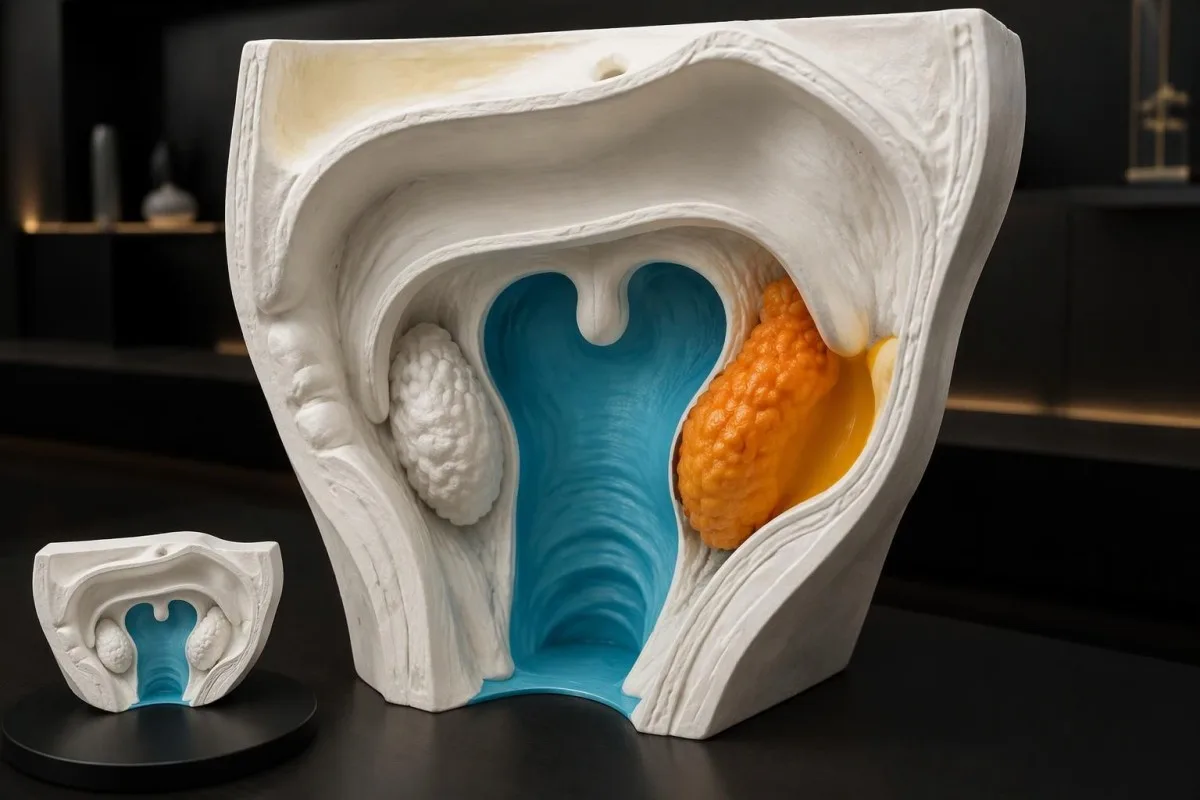
Difficulty swallowing saliva, drooling, a muffled voice or marked one-sided throat swelling can indicate an airway-threatening problem rather than a usual PFAPA flare. A child aged 3–6 months with a temperature of 39°C or higher also needs urgent assessment; contact local emergency services for immediate danger instead of waiting for a blood result or an expected fever endpoint.
Fever lasting 5 days or longer warrants prompt medical review, particularly with red eyes, cracked lips, rash or swollen hands and feet. These findings can suggest Kawasaki disease, discussed in our Kawasaki assessment guide; incomplete presentations occur, so clinicians do not require every classic feature, and concerning symptoms should be assessed before day 5 rather than waiting for a threshold.
New severe localized abdominal pain, persistent vomiting or inability to walk normally should not be attributed to PFAPA without examination. Even 1 normal WBC or CRP result cannot reliably exclude an early abdominal emergency, as our appendicitis laboratory limits explain; children with a known fever syndrome can still develop unrelated illnesses, especially when the attack looks different from their established pattern.
Kako zdravimo napade PFAPA in kaj pomeni odziv na steroide?
PFAPA attack treatment focuses on comfort, hydration and, when prescribed, corticosteroids that often stop fever within hours. Published prednisone or prednisolone regimens range from 0.5–2 mg/kg, but dosing, maximum dose and eligibility must be set by the treating clinician.
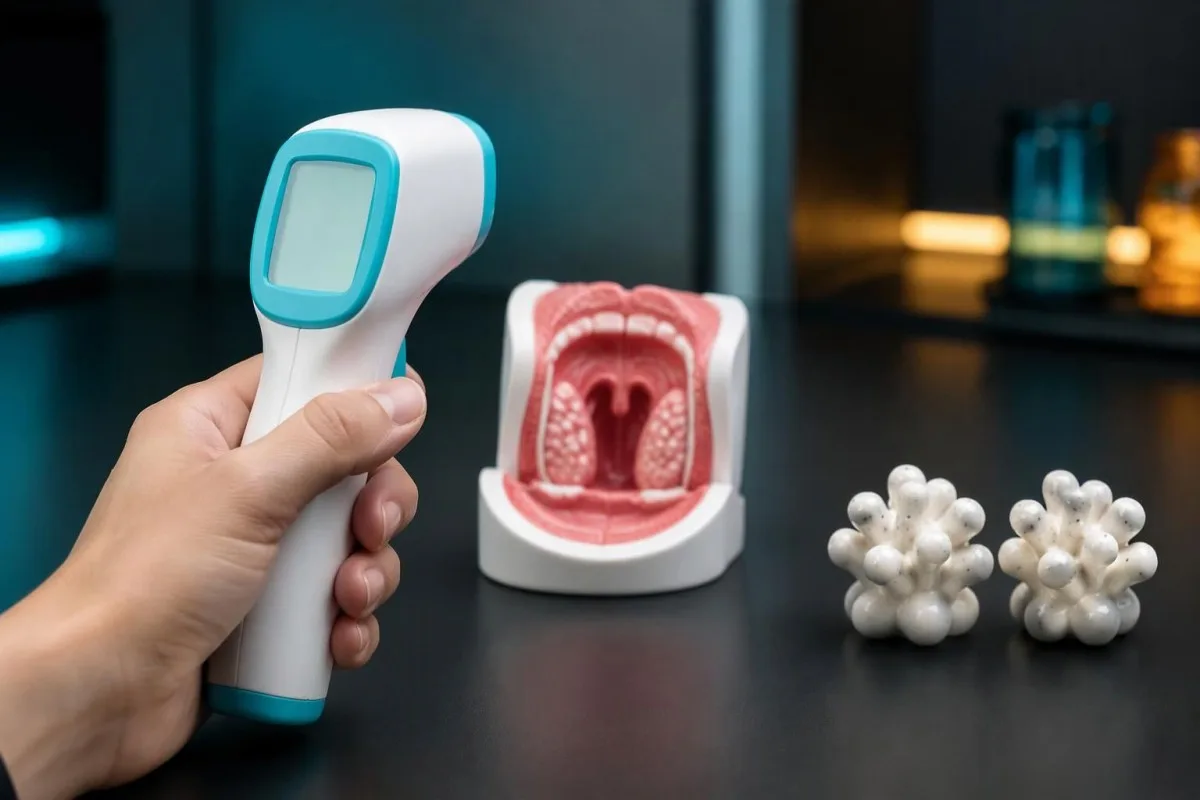
Vanoni et al. (2016) describe rapid corticosteroid responses alongside the limitation that treatment may shorten the interval to the next attack. Reports summarized in that review estimated shorter intervals in approximately 25–50% of patients, but these observations come from heterogeneous studies rather than a precise prediction for an individual child; attack control and long-term prevention are separate treatment goals.
For a hypothetical 20-kg child, a clinician-selected dose of 1 mg/kg would equal 20 mg; this calculation illustrates weight-based prescribing, not a home-treatment recommendation. Families need a written plan explaining when a familiar attack qualifies for treatment, when to seek assessment first and what to do if the expected response does not occur—especially if symptoms suggest a new infection.
Antipyretics may improve discomfort even when they do not end the inflammatory episode. Choose child-appropriate preparations with a clinician or pharmacist, avoid aspirin unless specifically prescribed and do not duplicate paracetamol/acetaminophen across 2 products; Kantesti cannot authorize steroid treatment, and our discussion of AI interpretacijo pri otrocih explains why pediatric decisions need more than laboratory pattern recognition.
Kdaj pridejo v poštev preventivna zdravila ali tonzilektomija?
Prevention or tonsillectomy may be considered when PFAPA attacks repeatedly disrupt daily life or attack treatment is unsatisfactory. A Cochrane review included 2 randomized trials involving 67 children, finding benefit from tonsil surgery while emphasizing the limited size of the evidence base.
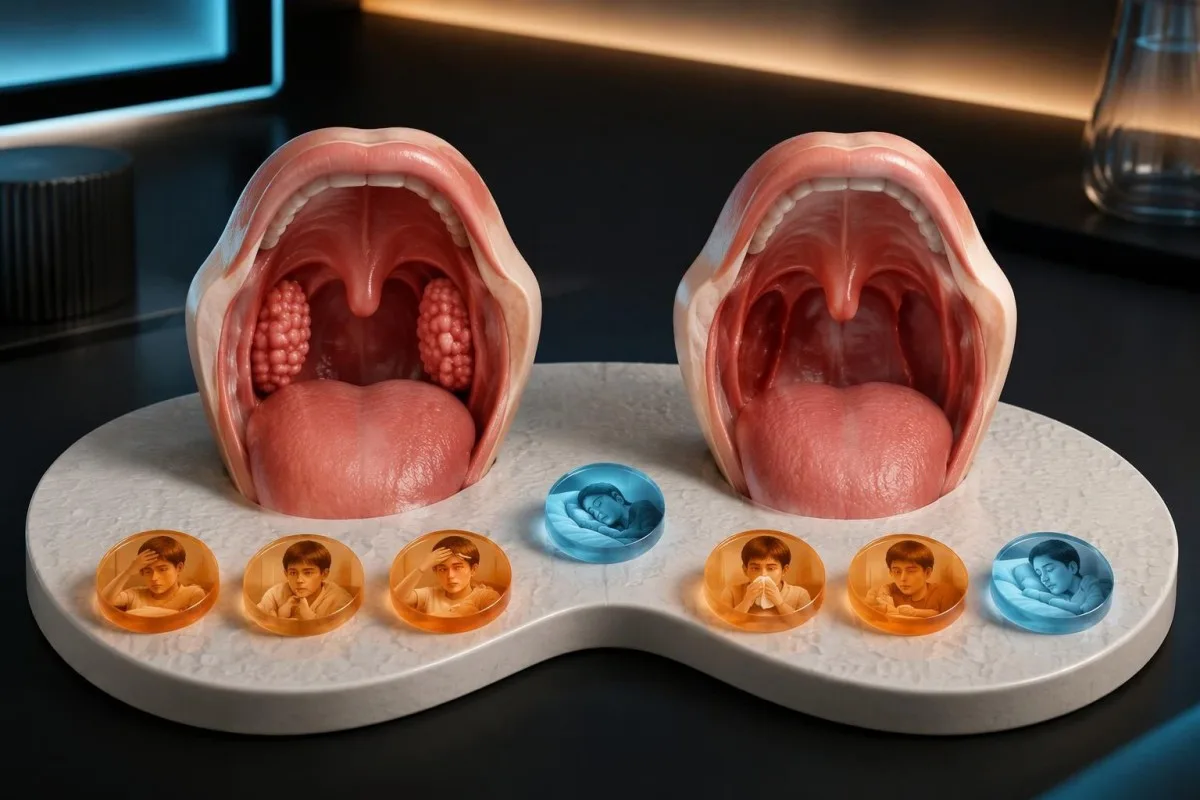
Burton et al. (2019) judged the evidence for several tonsillectomy outcomes to be of moderate certainty, but the trials were too small to characterize uncommon harms confidently. The evidence concerns selected children rather than every person with recurrent sore throat; a child missing 4 school days each month may value potential benefit differently from a child with infrequent, easily managed attacks.
Colchicine is sometimes used to reduce attacks under specialist supervision, whereas cimetidine has less convincing evidence. Treatment selection should consider the diagnosis, kidney and liver function, other medicines and the possibility of an inherited fever disorder; when several options exist, agree in advance on a measurable goal, such as fewer attacks across 3 months, rather than assuming a changed laboratory number demonstrates success.
Tonsillectomy carries postoperative pain, dehydration, anesthesia-related risks and bleeding risk, even when it improves PFAPA. Kantesti's navodila za odgovorno uporabo UI supports a clear boundary: neither 1 elevated inflammatory marker nor an automated report can decide whether surgery is appropriate; that discussion belongs with the treating pediatric team and an ENT specialist who can assess the child's individual risks.
Kakšno spremljanje je koristno za otroke, odrasle in družine s PFAPA?
PFAPA follow-up should track attack burden, growth or weight, treatment response and any symptoms between episodes. Many childhood cases improve over several years, but persistence, relapse and adult-onset disease occur; a 3-month review interval can be a practical individualized plan rather than a universal rule.

Adults require the same attention to repeated patterns and alternative causes, not an assumption that PFAPA is impossible after childhood. Fever with oral sores and pharyngitis can support the diagnosis, but new constitutional symptoms, persistent gland enlargement or abnormal findings between attacks need assessment; a 35-year-old with a first prolonged fever should not self-diagnose PFAPA from an online symptom match.
Prepare a concise appointment summary: attack dates, duration, associated features, well-day symptoms, test results and response to prescribed treatment. Include 1 clearly labeled attack sample and any clinician-requested recovery sample, rather than ordering a broad panel every month; repeated testing is useful only when it answers a specific question, such as whether inflammation persists or neutrophil counts cycle.
Kantesti je platforma za razlaga krvne slike z AI that can help explain uploaded CBC and inflammatory-marker reports alongside their dates, units and stated reference ranges. For a family sharing 2 or more records, check each person's identity and consent before upload, and review our pravilnik o zasebnosti in ravnanju s podatki; AI explanation does not replace pediatric examination, urgent triage or a specialist diagnosis.
Raziskovalne publikacije: dokazi v primerjavi z osnovnimi laboratorijskimi priročniki
PFAPA evidence comes from clinical descriptions, differential-diagnosis research and treatment studies—not from a specific clotting or serum-protein test. The 2 background publications below explain other laboratory topics and should not be mistaken for studies validating PFAPA diagnosis.
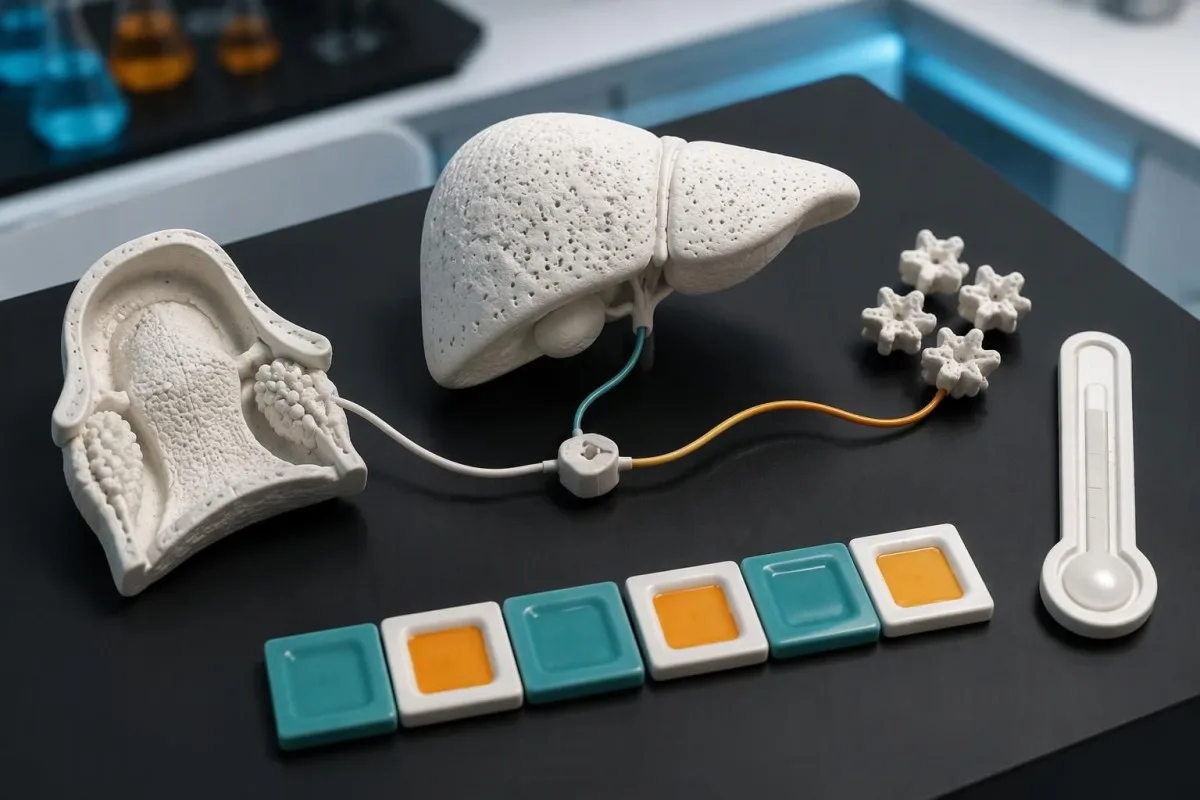
The peer-reviewed PFAPA review by Wang et al. (2021), treatment review by Vanoni et al. (2016) and Cochrane analysis by Burton et al. (2019) directly inform this article's clinical discussion. The surgical review's 67-child evidence base illustrates why certainty must be proportionate to study size; a named source supports a specific claim, not every recommendation made elsewhere on the page.
Gradivo Kantesti clotting test background guide in osnovno gradivo o serumskih beljakovinah accompany the 2 Zenodo records listed below. Neither aPTT nor an albumin/globulin ratio confirms PFAPA, and neither guide establishes that routine testing of those markers improves PFAPA care; additional tests should follow an identified clinical concern rather than the availability of a panel.
Evidence interpretation should distinguish a repository-hosted educational guide from a peer-reviewed condition-specific study or systematic review. Our standardi za medicinske vsebine explain the editorial approach; for a child with 3 apparently similar attacks, the practical priority remains documented recovery, targeted exclusion of alternatives and a clear safety plan, not accumulating more citations or tests that do not answer the clinical question.
Pogosta vprašanja
Kaj je sindrom PFAPA?
Sindrom PFAPA je avtoinflamatorno stanje, ki povzroča ponavljajočo se vročino z aftami v ustih, faringitisom in povečanimi vratnimi bezgavkami. Epizode običajno trajajo 3–7 dni in se ponovijo vsakih nekaj tednov, med napadi pa je zdravstveno stanje normalno. Stanje se običajno začne pred 5. letom starosti, čeprav lahko prizadene tudi starejše otroke in odrasle. Sindroma PFAPA ne potrdi nobena posamezna krvna preiskava, zato diagnoza temelji na ponavljajočem se kliničnem vzorcu in oceni drugih možnih vzrokov.
Kako pogosto se pojavljajo vročine pri PFAPA?
Vročine pri PFAPA se običajno ponavljajo približno na 2–8 tednov, posamezni napadi pa običajno trajajo 3–7 dni. Pri nekaterih otrocih so cikli zelo redni, pri drugih pa so presledki spremenljivi. Zdravljenje s kortikosteroidi lahko skrajša čas do naslednje epizode, zato je treba čas jemanja zdravil zabeležiti v dnevnik vročine. Stalna vročina ali to, da otrok med napadi ne okreva, zahtevata ponovno oceno, ne pa domneve, da gre za PFAPA.
Ali je mogoče z visokimi vrednostmi CRP v krvnem testu diagnosticirati PFAPA?
Povišana vrednost CRP ne more potrditi diagnoze PFAPA, saj lahko enako zvišanje povzročijo okužbe in druge vnetne bolezni. Na primer, vrednost CRP 80 mg/L med vročino in 3 mg/L po okrevanju kaže na epizodično vnetje, vendar ne opredeli njegovega vzroka. Številni laboratoriji uporabljajo zgornjo referenčno mejo za CRP okoli 5 mg/L, nekateri pa 10 mg/L. Zdravniki rezultat razlagajo ob upoštevanju simptomov, pregleda, časa odvzema vzorca in morebitnih ustreznih preiskav za ugotavljanje okužbe.
Ali je PFAPA nalezljiv in ali so potrebni antibiotiki?
PFAPA sam po sebi ni nalezljiv, antibiotiki pa ne zdravijo vnetnega procesa, ki je vzrok zanj. Značilen napad, ki traja 3–7 dni, se lahko konča sam od sebe po začetku jemanja antibiotika, kar ustvari zavajajoč vtis, da je antibiotik učinkoval. Otroci s PFAPA lahko vseeno zbolijo za nalezljivimi virusnimi boleznimi ali bakterijskimi okužbami. Novo vročinsko stanje z drugačnimi simptomi, stik z bolnimi osebami ali potrjen bakterijski vzrok je treba oceniti in zdraviti glede na konkretne okoliščine.
Ali hiter odziv na prednizon dokazuje PFAPA?
Hiter odziv na predpisani prednizon ali prednizolon podpira diagnozo sindroma PFAPA, vendar je ne potrjuje. Objavljeni režimi zdravljenja sindroma PFAPA vključujejo odmerke 0,5–2 mg/kg; dejanski odmerek in največji odmerek določi lečeči zdravnik. Kortikosteroidi lahko ublažijo simptome drugih bolezni in skrajšajo čas do naslednjega napada sindroma PFAPA. Družine naj upoštevajo pisni načrt zdravljenja in pred zdravljenjem poiščejo zdravniško oceno, če je epizoda nenavadno huda ali drugačna.
Kdaj naj otrok s sumom na PFAPA prejme nujno oskrbo?
Otrok s sumom na PFAPA potrebuje nujno oskrbo, če ima vročino in težko diha, se slabše odziva, ima otrdel vrat, izpuščaj, ki ob pritisku ne pobledi, ali hudo dehidracijo. Vsakega dojenčka, mlajšega od 3 mesecev, s telesno temperaturo 38 °C ali več mora zdravnik nujno pregledati. Tudi vročina, ki traja 5 dni ali več, zahteva čimprejšnji pregled, zlasti če so prisotne rdeče oči, izpuščaj, razpokane ustnice ali otekle dlani in stopala. Prejšnja diagnoza PFAPA ne pomeni, da lahko novo bolezen z drugačnimi simptomi varno prezremo.
Poskrbite, da vam razložijo rezultate krvnih preiskav
Naložite svoj laboratorijski izvid in AI Kantesti bo v nekaj sekundah preprosto razložil vsak biomarker. Uporablja ga več kot 2 milijona ljudi po vsem svetu.
Reference
- Klein, T., Mitchell, S., & Weber, H. (2026). Normalno območje aPTT: vodnik za D-dimer, protein C in strjevanje krvi. Kantesti AI Medical Research. DOI
- Klein, T., Mitchell, S., & Weber, H. (2026). Vodnik po serumskih beljakovinah: globulini, albumin in razmerje A/G v krvni preiskavi. Kantesti AI Medical Research. DOI
- Wang A et al. (2021). Periodic fever, aphthous stomatitis, pharyngitis, and adenitis (PFAPA) syndrome: A review. World Journal of Otorhinolaryngology - Head and Neck Surgery. DOI
- Vanoni F et al. (2016). PFAPA syndrome: a review on treatment and outcome. Pediatric Rheumatology. DOI
- Burton MJ et al. (2019). Tonsillectomy for periodic fever, aphthous stomatitis, pharyngitis and cervical adenitis syndrome (PFAPA). Cochrane Database of Systematic Reviews. DOI
- 2 milijona+Analizirani testi
- 127+Države
- 100+Jeziki
O zdravstveni ekipi


E-E-A-T zaupanja vredni signali
Izkušnje
Zdravniški klinični pregled delovnih postopkov za interpretacijo laboratorijskih izvidov.
Strokovno znanje
Laboratorijska medicina s poudarkom na tem, kako se biomarkerji obnašajo v kliničnem kontekstu.
Avtoritativnost
Zdravstveno pregledal dr. Thomas Klein, s prispevki dr. Sarah Mitchell in prof. dr. Hansa Webra.
Zanesljivost
Interpretacija na podlagi dokazov z jasnimi nadaljnjimi potmi za zmanjšanje alarmiranja.





Zdravstvena omejitev odgovornosti
Ta članek je namenjen izobraževalnim namenom in ne predstavlja medicinskega nasveta. Za odločitve o diagnozi in zdravljenju se vedno posvetujte z usposobljenim izvajalcem zdravstvenih storitev.
Objavljeno · Obrnite se na uredniško ekipo
Izdala družba Kantesti Ltd, registrirana v Angliji in Walesu, matična št. 17090423, London, Združeno kraljestvo.
