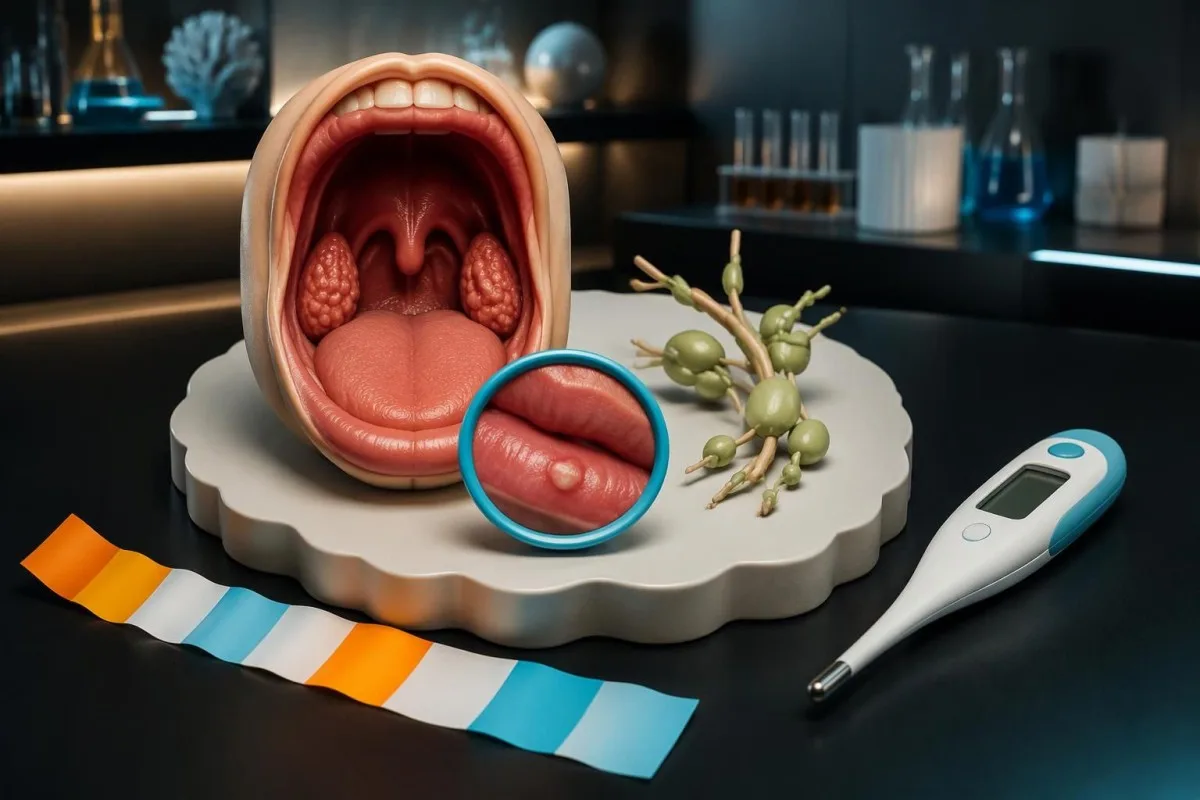
PFAPA sindromi og‘iz yaralari, tomoq og‘rig‘i va bo‘yin bezlarining shishishi bilan kechadigan takroriy yuqori isitmani keltirib chiqarishi mumkin. Odatda, isitma 3–7 kun davom etadi va xurujlar orasida bemor to‘liq sog‘ayadi. Tashxis takrorlanuvchi holatga va boshqa sabablarni istisno qilishga asoslanadi — bitta g‘ayritabiiy qon tahliliga emas. Alomatlar kundaligi yordam beradi; noodatiy darajada og‘ir yoki boshqacha kechayotgan xuruj yangidan baholanishi kerak.

Asosiy xulosalar
- PFAPA sindromi ko‘pincha 3–7 kun davom etadigan, oralig‘ida bir necha hafta davomida sog‘lomlik kuzatiladigan isitma xurujlarini keltirib chiqaradi.
- PFAPA alomatlari og‘izdagi aftoz yaralar, faringit va bo‘yin limfa tugunlarining shishishini o‘z ichiga oladi; uchala belgi ham bir vaqtda kuzatilishi shart emas.
- Isitmaning vaqti ko‘pincha taxminan 2–8 haftalik siklga to‘g‘ri keladi, ammo tashxis qo‘yish uchun taqvimdagi aniq muntazamlik talab etilmaydi.
- Alomatlar kundaliklari xuruj sanalari, °C yoki °F dagi eng yuqori harorat, alomatlar, dorilar va xurujlar orasidagi sog‘ayish holatini qayd etishi kerak.
- Qon tahlillari xurujlar vaqtida CRP va neytrofillar ko‘tarilganini ko‘rsatishi mumkin; CRP 80 mg/L bo‘lishi PFAPAni infeksiyadan farqlamaydi.
- Siklik neytropeniya taxminan har 21 kunda qaytalanishi mumkin va bitta xotirjam qiluvchi CBC o‘rniga ketma-ket qon tahlillarini talab qilishi mumkin.
- Davolash bo‘yicha qarorlar shifokor buyurgan kortikosteroidlar, profilaktik dorilar yoki tonzillektomiyani o‘z ichiga olishi mumkin; bularning hech biri faqat laboratoriya natijasiga asoslanib qo‘llanmasligi kerak.
- Shoshilinch baholash harorati 38°C yoki undan yuqori bo‘lgan 3 oylikdan kichik har qanday chaqaloq yoki nafas olish qiyinlashuvi, hushyorlik pasayishi yoxud bosganda oqarib ketmaydigan toshmasi bor har qanday bola uchun zarur.
PFAPA sindromi nima va isitmaga nima sabab bo‘ladi?
PFAPA sindromi aftoz og‘iz yaralari, faringit va bo‘yin limfa tugunlari yallig‘lanishi bilan kechadigan takroriy isitma xurujlariga sabab bo‘ladigan autoyallig‘lanish holatidir. Xurujlar odatda davom etadi 3–7 kun; bolalar xurujlar orasida odatda odatdagi quvvati, ishtahasi va o‘sishiga qaytadi.
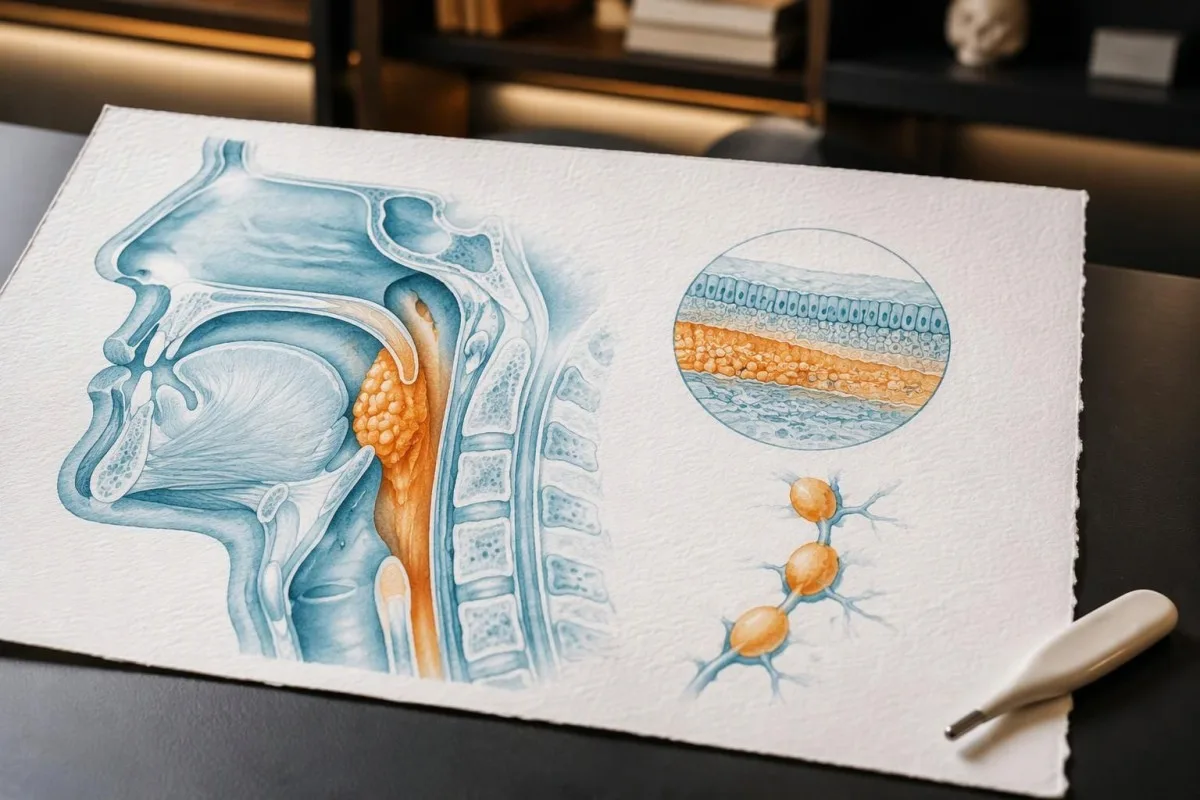
PFAPA har bir necha haftada yangi yuqumli kasallik paydo bo‘lishini emas, balki yallig‘lanish yo‘llarining noo‘rin faollashuvini anglatadi. Kasallik ko‘pincha 5 yoshgacha boshlanadi, ammo kattaroq bolalar va kattalarda ham uchrashi mumkin; shu bois tarixiy yosh chegarasi mutlaq istisno mezoni emas, balki bir ishoradir (Wang et al., 2021). PFAPA kelajakdagi har qanday isitma yuqumsiz bo‘ladi degani emas.
Qisqartma 4 tarkibiy qismni ifodalaydi: davriy isitma, aftoz stomatit, faringit va adenit. Irsiy davriy isitma holatlarining bir nechtasidan farqli ravishda, PFAPA tashxisini tasdiqlaydigan yagona, tan olingan genetik test yo‘q, garchi oilaviy guruhlanish kuzatilishi mumkin; keng qamrovli genetik panelning manfiy natijasi PFAPAni tasdiqlamaydi va boshqa barcha yallig‘lanish kasalliklarini istisno qilmaydi.
Kantesti - bu AI qon testi analizatori 80 mg/L CRP natijasi nega tashxis yorlig‘i emas, balki klinik kontekstni talab qilishini tushuntirishga yordam berishi mumkin. Bizning tashkilotimiz va yondashuvimiz xizmatni tavsiflaydi, ammo PFAPAni aniqlash uchun shifokor bir necha xuruj davomidagi alomatlarni o‘zaro bog‘lashi, bolani tekshirishi va laboratoriya hisoboti aks ettira olmaydigan holatlarni ko‘rib chiqishi kerak.
Qaysi PFAPA alomatlari kasallik kechishini tanib olishga yordam beradi?
PFAPA alomatlari odatda isitma bilan birga tomoq og‘rig‘i, bo‘yindagi og‘riqli limfa tugunlari yoki og‘izdagi kichik yaralar kuzatiladi. Xuddi shu belgilar birgalikda qayta-qayta kuzatilishi hujjatlashtirilgan 3 yoki undan ortiq xurujda har qanday alohida alomatdan ko‘ra ko‘proq ma’lumot beradi, biroq PFAPAni tasdiqlaydigan universal minimal xurujlar soni yo‘q.
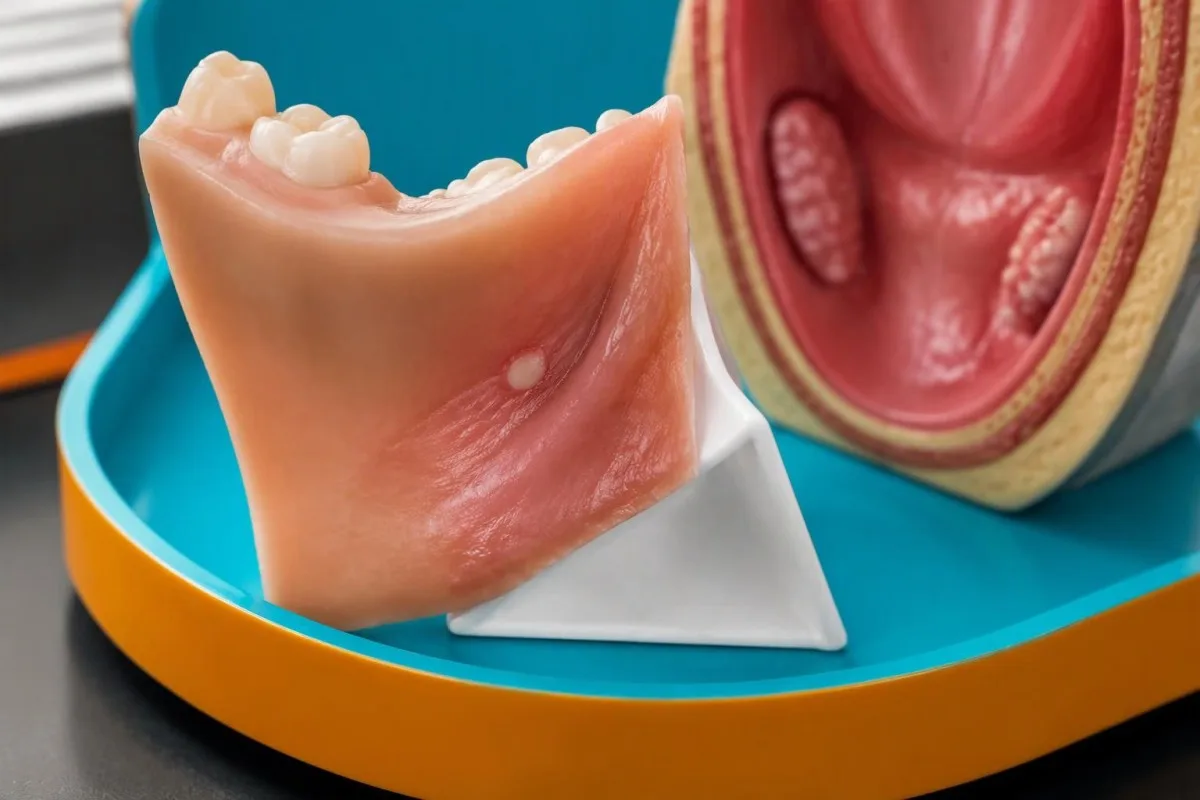
Aftoz yaralar odatda lab va yonoqlarning ichki tomonida yoki og‘izning boshqa yuzalarida paydo bo‘ladigan kichik, yuza yaralardir; ular labning tashqi tomonidagi to‘p-to‘p pufakchalar bilan bir xil emas. Bolada atigi 1 yoki 2 ta yara bo‘lishi, ayrim xurujlarda esa yaralar kuzatilmasligi mumkin; ko‘rinib turgan yarani suratga olish, u qabulga kelishdan oldin yo‘qolib qolsa, yordam berishi mumkin.
Faringit bodomcha bezlar qizarishi yoki ularning ustida qoplama paydo bo‘lishi bilan kechishi mumkin, shu bois faqat tashqi ko‘rinishiga qarab PFAPAni streptokokk infeksiyasidan ajratib bo‘lmaydi. Shishgan limfa tugunlari odatda bo‘yin atrofidagi servikal tugunlarni qamrab oladi, doimiy kattalashib boradigan tugun, butun tanada limfa tugunlarining shishishi yoki 3–7 kunlik xurujdan ortiq davom etadigan alomatlar esa avtomatik ravishda PFAPAga yo‘yilmasdan, boshqa izohni talab qiladi.
Faqat og‘iz yaralarining o‘zi davriy isitma tashxisi uchun yetarli emas. Jinsiy a’zolardagi yaralar, ko‘zlarning og‘riqli qizarishi, ko‘rishdagi o‘zgarishlar yoki noodatiy teri belgilari bilan birga takrorlanadigan og‘iz yaralari boshqa ehtimollarni, jumladan Behçet alomatlari kechishi shakllari; ni ham ko‘rib chiqishni talab qiladi; ko‘rish qobiliyati buzilishi bilan kechadigan hatto 1 marta ko‘z og‘rishi ham keyingi isitma siklini kutmasdan, tezkor baholashni talab qiladi.
PFAPA isitmasi qancha davom etadi va qanchalik tez-tez qaytalanadi?
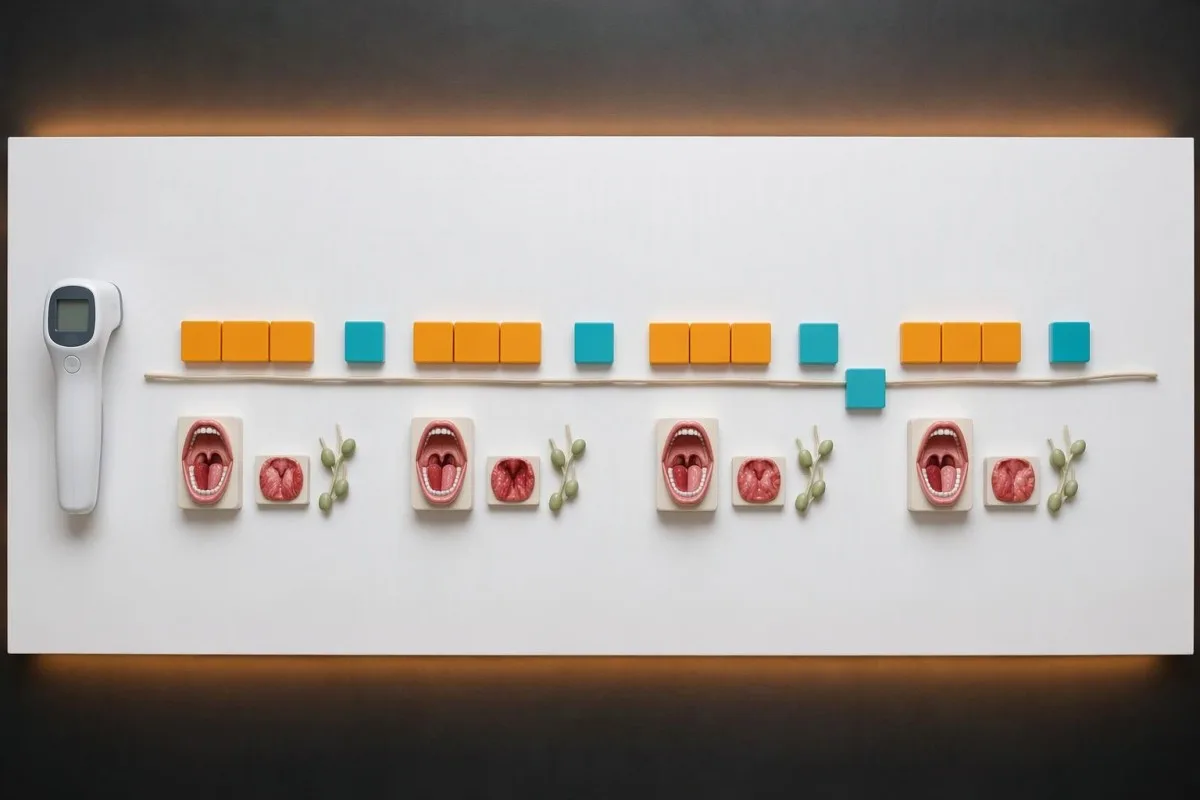
PFAPA isitmalari odatda davom etadi 3–7 kun va taxminan har 2–8 hafta, da qaytalanadi, ko‘pincha alomatlar nihoyatda o‘xshash bo‘ladi. Ayrim bolalarda oldindan aytish mumkin bo‘lgan ritm shakllanadi, biroq oraliqlarning o‘zgarib turishi PFAPAni avtomatik ravishda istisno qilmaydi.
Temperatures during PFAPA attacks often reach 39–40°C, but fever height does not determine the diagnosis or reliably measure danger. The timing of associated throat symptoms, the child's appearance and the return to baseline matter more; measuring temperature with the same method also makes comparisons more useful than alternating between forehead, ear and underarm readings.
For a hypothetical child, fevers beginning on days 1, 29 and 58 with 4-day attacks suggest a repeated cycle—not proof of PFAPA. Count start-to-start intervals separately from fever-free days, and record whether corticosteroid treatment changed an interval; a shortened next cycle after treatment can otherwise make a previously regular pattern look inexplicably irregular.
A fever that does not stop is not a series of separate PFAPA episodes. If symptoms persist beyond 7 days, or recovery never occurs, clinicians reconsider infection and other inflammatory conditions; our explanation of qon olish vaqtining ta’siri also shows why a sample taken on day 1 cannot be interpreted like one taken after recovery.
PFAPA alomatlari kundaligida nimalar qayd etilishi kerak?
A PFAPA symptom diary should record episode start and finish dates, measured temperature, mouth and throat findings, neck swelling, medication timing and wellness between attacks. Even 3 carefully documented episodes can reveal details that a single clinic visit misses.

Document the thermometer method and the highest measured temperature, not just 'very hot.' For each day of a 4-day attack, note drinking, urine output, activity, cough, runny nose, abdominal symptoms and whether anyone nearby was ill; these observations distinguish a repeated inflammatory pattern from unrelated respiratory or gastrointestinal illnesses more effectively than recording fever alone.
Medication entries need the name, dose, administration time and observed response. If a prescribed medicine is given at 09:00 and fever settles by 14:00, record that interval without claiming the medicine established PFAPA; include throat swab results and whether a laboratory sample preceded treatment, because both antibiotics and corticosteroids can complicate interpretation of subsequent findings.
Well days deserve entries too. A weekly note of normal appetite, play, school attendance and any lingering symptoms prevents a diary from becoming an attack-only record; when a clinician requests a recovery sample, our boshlang‘ich tekshiruvga tayyorgarlik explains how to record recent illness and medicines rather than treating a sample 2 days after fever as an unquestionable baseline.
PFAPA xurujlari orasidagi sog‘lomlik nega juda muhim?
Complete wellness between episodes strongly supports a typical PFAPA pattern: normal activity, appetite and growth should return after the 3–7-day attack. Persistent symptoms or continuing inflammation between attacks make clinicians reconsider the diagnosis.

A child who is fever-free but remains exhausted, loses weight or develops daily pain has not truly returned to baseline. Growth is assessed through serial height and weight measurements, not 1 percentile in isolation; crossing growth centiles over time may justify investigation even when individual fever episodes resemble PFAPA and routine examinations during attacks look familiar.
Repeated ordinary infections are common in young children, but unusually severe, prolonged or unusual infections suggest a different evaluation. A history of 2 hospital-treated infections or recurrent deep infections matters differently from several mild colds; clinicians consider the organisms, sites, treatment response and family history, as discussed in our guide to tez-tez uchraydigan infektsiyalarni tekshirish.
Inflammatory markers usually fall toward the laboratory reference range between PFAPA attacks, but an immediately post-fever sample may still reflect recovery. A persistent CRP of 25 mg/L on repeated genuinely well-day samples is not proof of another disease, yet it deserves explanation; a clinician may check for an unnoticed infection, ongoing inflammatory symptoms or a sampling timeline that was mislabeled.
CRP, ESR va qon tahlillari PFAPA haqida nimalarni ko‘rsatadi?
PFAPA attacks can raise CRP, ESR and neutrophil counts, but none of these tests confirms PFAPA or excludes infection. Many laboratories use a CRP upper reference limit around 5 mg/L, qilib belgilaydi, boshqalari esa 10 mg/L; the report's own range matters.
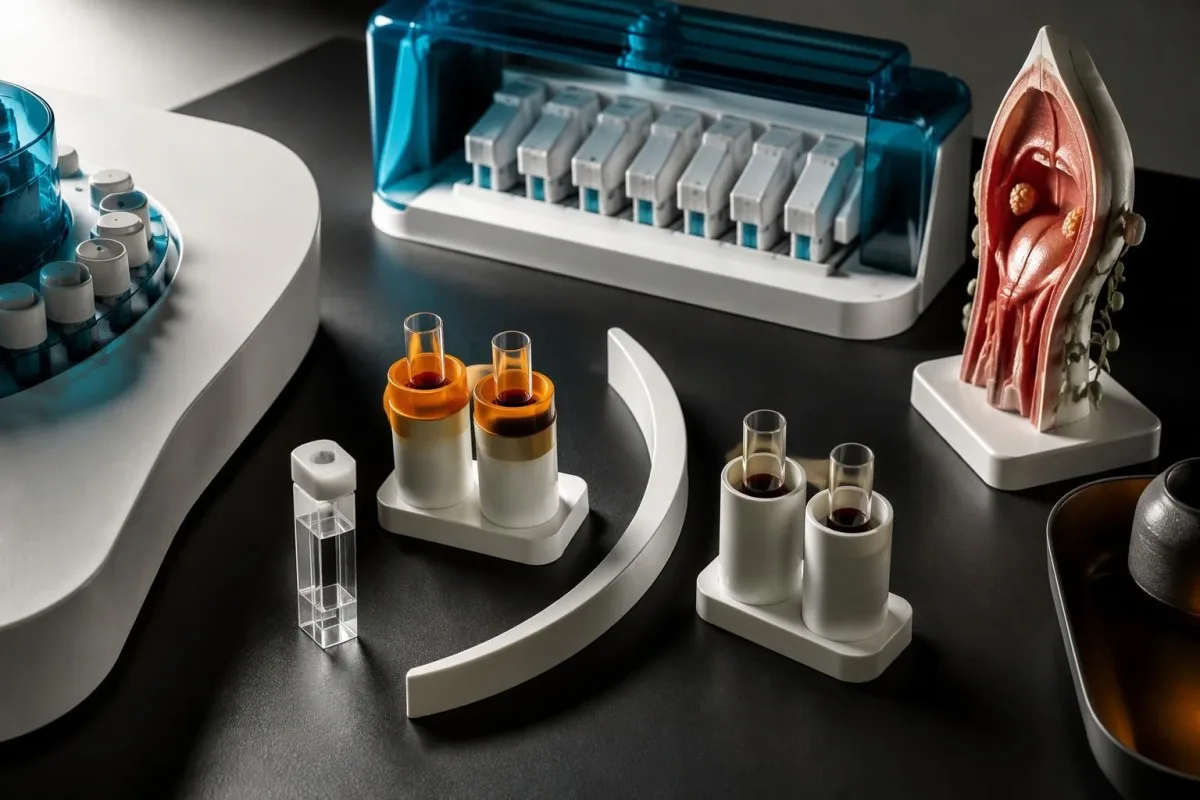
Consider a hypothetical child with CRP 80 mg/L during fever and 3 mg/L after recovery. That change supports an episodic inflammatory process but does not identify its cause; infection can produce the same pattern, while ESR may normalize more slowly than CRP, making a modestly raised recovery ESR less surprising than persistent symptoms or repeatedly elevated CRP.
White-cell interpretation must use age-appropriate absolute counts rather than adult ranges or percentages alone. At Kantesti, we emphasize that CRP 8 mg/dL equals 80 mg/L—a tenfold unit conversion that can otherwise create a false impression of improvement; our WBC va CRP taqqoslashi explains why these markers can disagree because they change at different rates.
Procalcitonin is sometimes considered when serious bacterial infection is suspected, but it is not a standalone PFAPA discriminator. A low result, including a value below 0.1 ng/mL, cannot safely overrule a concerning examination or very early illness; the limits described in our prokalsitoninni talqin qilish bo‘yicha qo‘llanmamiz matter more than using one reassuring number to justify home treatment.
Shifokorlar PFAPA tashxisini qanday qo‘yadi?
PFAPA diagnosis is clinical: clinicians identify repeated characteristic attacks, document recovery between them and exclude plausible alternatives. Onset before age 5 supports traditional criteria, but later onset does not prevent a diagnosis when the overall pattern fits.
The diagnostic process usually starts with history and examination rather than an extensive panel of rare-disease tests. Wang et al. (2021) describe the value of stereotyped episodes, absence of typical respiratory symptoms, negative relevant cultures and response to prescribed corticosteroids; however, 1 negative throat swab or 1 rapid response cannot independently establish PFAPA, and classification criteria are not identical to bedside diagnosis.
Streptococcal testing addresses the current throat illness, while an ASO antibody test mainly reflects previous exposure. An ASO result of 400 IU/mL does not prove that today's recurrent fever is active strep infection; age, local reference ranges and symptom timing affect interpretation, as explained in our discussion of ASO and recent exposure.
Kantesti - bu AI asosidagi qon tahlili analiz vositasi that can contextualize laboratory units and repeated results, but 2 matching reports cannot confirm PFAPA. Our texnik va klinik nazoratimiz information should not be read as validation of a PFAPA diagnostic test; pediatric or rheumatology assessment remains necessary when the pattern is atypical, severe or uncertain.
PFAPAni takrorlanuvchi infeksiyalardan qanday farqlash mumkin?
Repeated infections are more likely when episodes follow sick contacts, have varying symptoms or include cough, runny nose, diarrhea or a confirmed pathogen. PFAPA more often repeats a similar 3–7-day pattern with complete wellness between attacks, but the two can coexist.
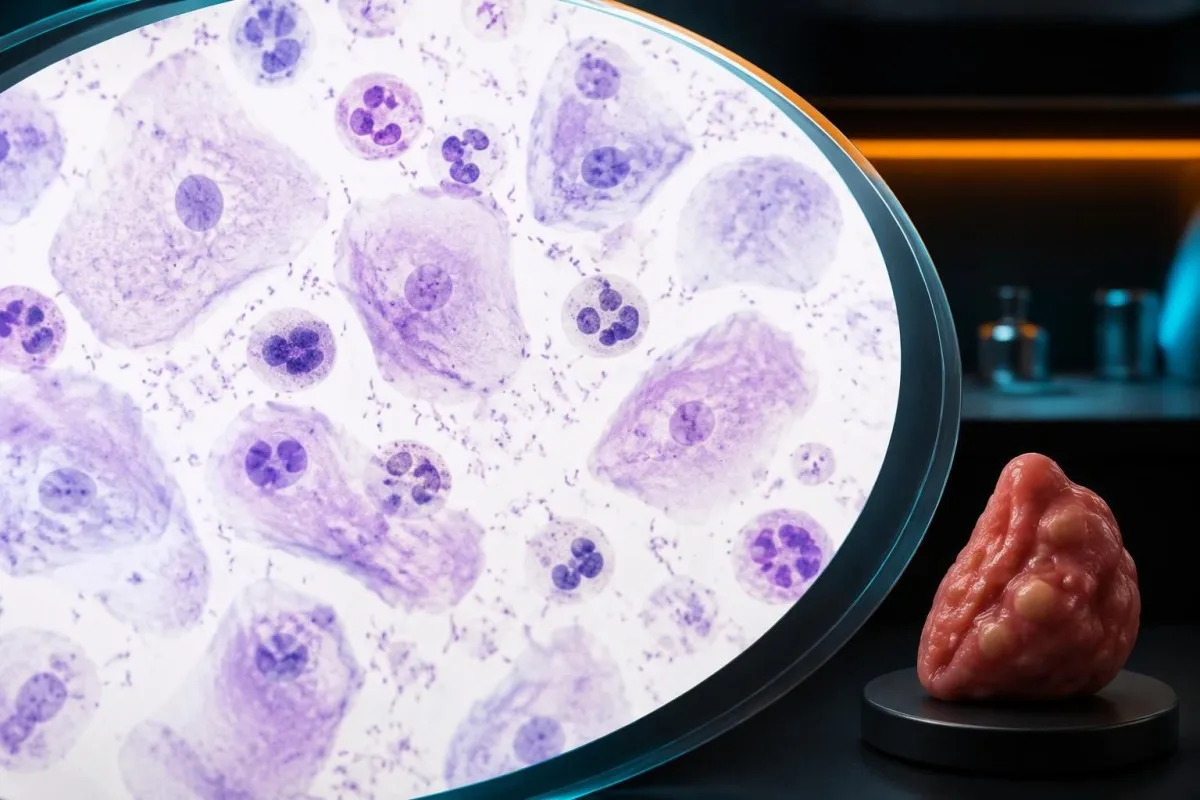
A positive respiratory PCR does not always explain the entire fever history. Adenovirus can remain detectable after an illness, so 1 positive result must be matched to current symptoms, examination and timing; our discussion of adenovirus aniqlanishi va ajralishi explains why a molecular result may indicate recent exposure rather than the cause of every subsequent attack.
Longer-lasting sore throat, fatigue and gland enlargement can suggest a different illness rather than PFAPA. EBV antibody patterns distinguish recent infection from prior exposure more effectively than a single positive IgG result; our EBV antitelasi namunasining qo'llanmasi explains the roles of 3 commonly reported markers—VCA IgM, VCA IgG and EBNA IgG—without equating past exposure with today's symptoms.
Antibiotic response is also easy to misread. If an antibiotic begins on day 4 and the fever ends on day 5, spontaneous resolution of a PFAPA attack is possible; conversely, a confirmed bacterial infection still requires appropriate treatment, and neither previous PFAPA nor prior antibiotic failure permits a new illness with different symptoms to be dismissed without assessment.
Yana qaysi davriy isitma kasalliklari PFAPAga o‘xshashi mumkin?
Siklik neytropeniya and inherited autoinflammatory disorders can resemble PFAPA, especially when mouth sores accompany recurring fever. Approximately 21-day cycles, severe infections, marked abdominal or chest pain, unusual rashes or persistent inflammation help clinicians decide which alternatives to investigate.
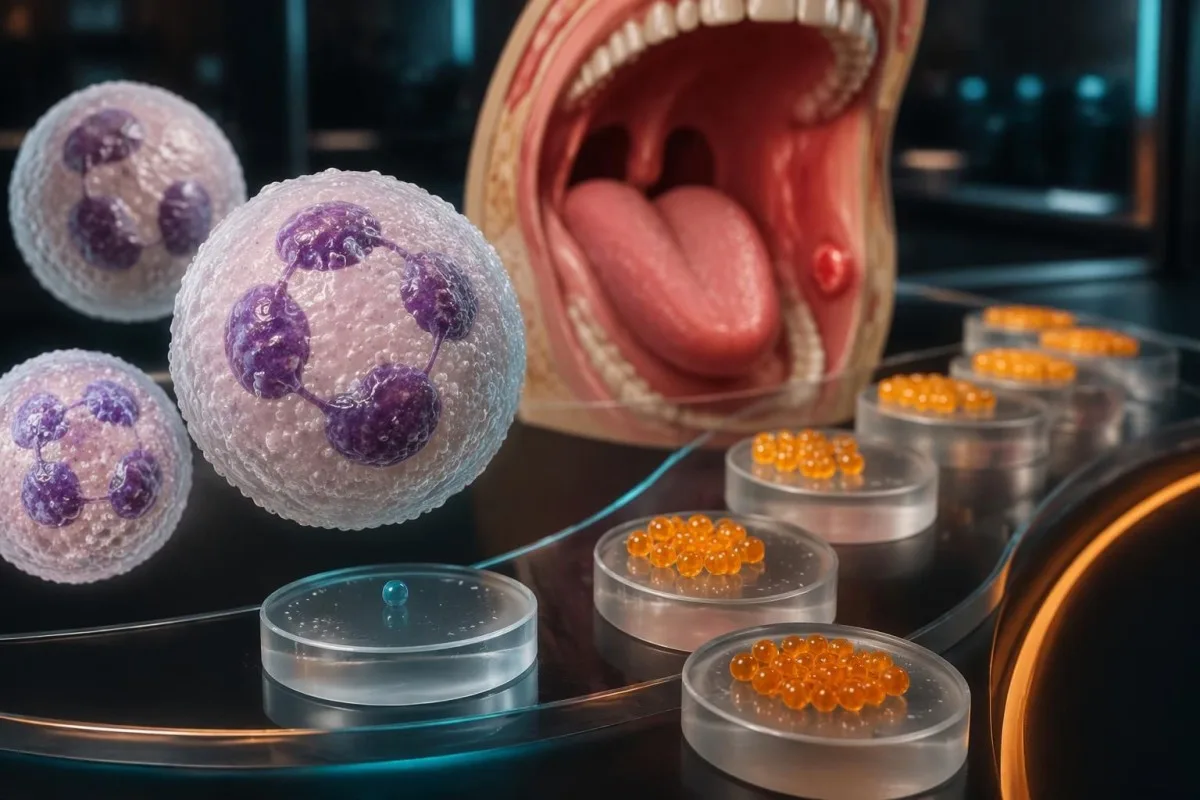
Cyclic neutropenia can produce recurrent fever, mouth sores and gum problems while a blood count between low-count periods looks normal. When suspected, clinicians may request CBCs 2–3 times weekly for about 6 weeks to identify repeated neutrophil nadirs; an absolute neutrophil count below 0.5 × 10^9/L during fever requires urgent clinical assessment rather than being labeled a routine PFAPA attack.
Familial Mediterranean fever often causes shorter attacks, commonly 12–72 hours, with abdominal or chest pain from serosal inflammation or joint symptoms. Our MEFV tekshiruvi haqidagi izohimiz shows why genotype and symptoms must be interpreted together; TRAPS may produce longer attacks, sometimes over 7 days, while mevalonate kinase deficiency can involve diarrhea, vomiting and attacks triggered by vaccination or other stressors.
Ancestry and family history guide assessment, but neither should become a gatekeeper that excludes an inherited disorder. Persistently raised serum amyloid A between attacks can indicate ongoing inflammation and requires context, as our serum amyloid A guide explains; a single high value during a 4-day fever does not diagnose amyloidosis, and typical PFAPA should not automatically be assigned the complication risks of other syndromes.
Qaysi isitma belgilari zudlik bilan tekshiruvdan o‘tishni talab qiladi?
Shoshilinch tibbiy yordamga murojaat qiling for fever with breathing difficulty, reduced responsiveness, a stiff neck, a non-blanching rash or severe dehydration. An infant younger than 3 oy harorati 38°C ёки ундан юқори needs urgent medical assessment, even if a family member has PFAPA.
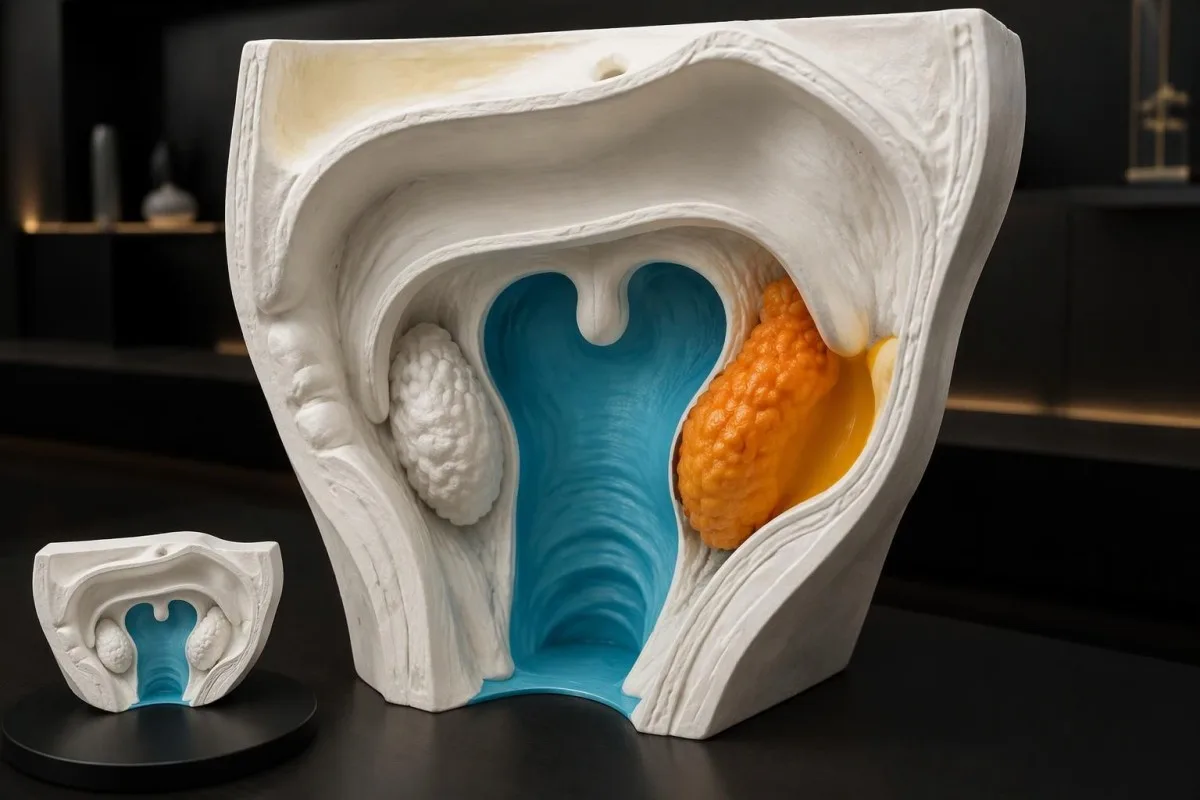
Difficulty swallowing saliva, drooling, a muffled voice or marked one-sided throat swelling can indicate an airway-threatening problem rather than a usual PFAPA flare. A child aged 3–6 months with a temperature of 39°C or higher also needs urgent assessment; contact local emergency services for immediate danger instead of waiting for a blood result or an expected fever endpoint.
Fever lasting 5 days or longer warrants prompt medical review, particularly with red eyes, cracked lips, rash or swollen hands and feet. These findings can suggest Kawasaki disease, discussed in our Kawasaki assessment guide; incomplete presentations occur, so clinicians do not require every classic feature, and concerning symptoms should be assessed before day 5 rather than waiting for a threshold.
New severe localized abdominal pain, persistent vomiting or inability to walk normally should not be attributed to PFAPA without examination. Even 1 normal WBC or CRP result cannot reliably exclude an early abdominal emergency, as our appendicitis laboratory limits explain; children with a known fever syndrome can still develop unrelated illnesses, especially when the attack looks different from their established pattern.
PFAPA xurujlari qanday davolanadi va steroidlarga javob nimani anglatadi?
PFAPA attack treatment focuses on comfort, hydration and, when prescribed, corticosteroids that often stop fever within hours. Published prednisone or prednisolone regimens range from 0.5–2 mg/kg, but dosing, maximum dose and eligibility must be set by the treating clinician.
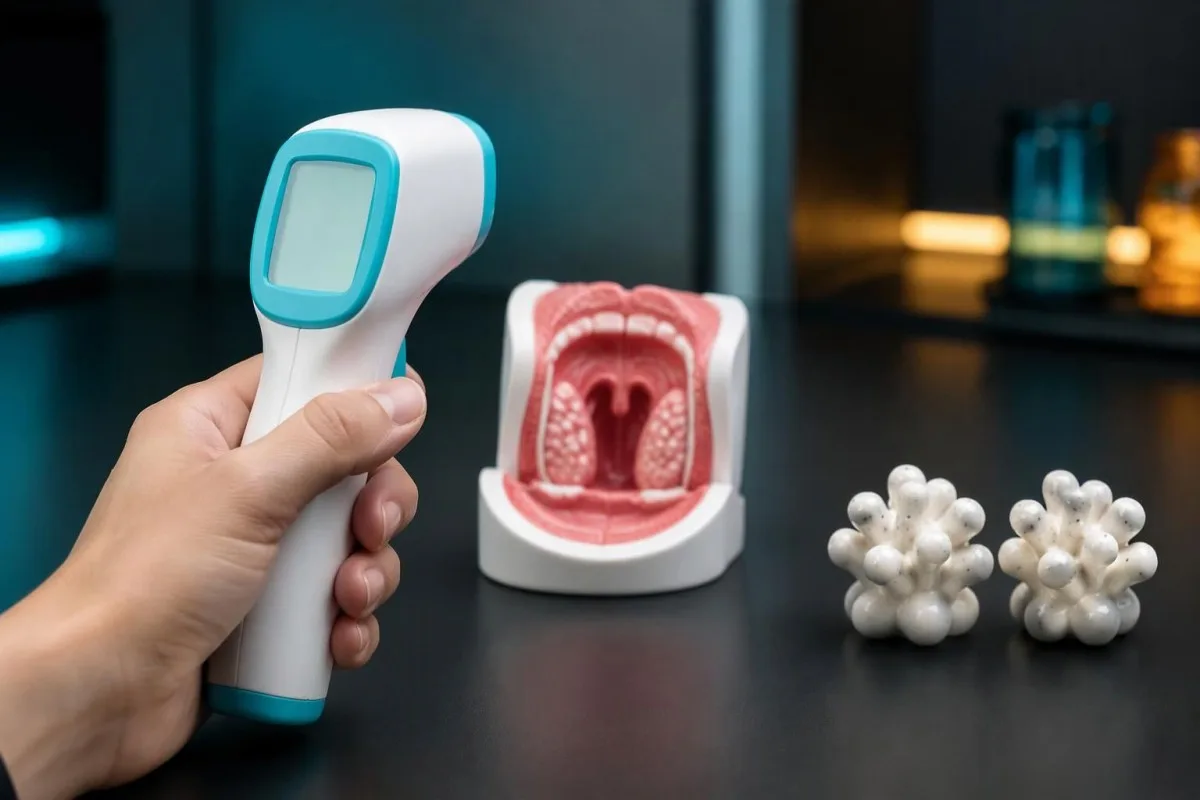
Vanoni et al. (2016) describe rapid corticosteroid responses alongside the limitation that treatment may shorten the interval to the next attack. Reports summarized in that review estimated shorter intervals in approximately 25–50% of patients, but these observations come from heterogeneous studies rather than a precise prediction for an individual child; attack control and long-term prevention are separate treatment goals.
For a hypothetical 20-kg child, a clinician-selected dose of 1 mg/kg would equal 20 mg; this calculation illustrates weight-based prescribing, not a home-treatment recommendation. Families need a written plan explaining when a familiar attack qualifies for treatment, when to seek assessment first and what to do if the expected response does not occur—especially if symptoms suggest a new infection.
Antipyretics may improve discomfort even when they do not end the inflammatory episode. Choose child-appropriate preparations with a clinician or pharmacist, avoid aspirin unless specifically prescribed and do not duplicate paracetamol/acetaminophen across 2 products; Kantesti cannot authorize steroid treatment, and our discussion of bolalarda sunʼiy intellekt talqini explains why pediatric decisions need more than laboratory pattern recognition.
Profilaktik dorilar yoki tonzillektomiya qachon ko‘rib chiqiladi?
Prevention or tonsillectomy may be considered when PFAPA attacks repeatedly disrupt daily life or attack treatment is unsatisfactory. A Cochrane review included 2 randomized trials involving 67 children, finding benefit from tonsil surgery while emphasizing the limited size of the evidence base.
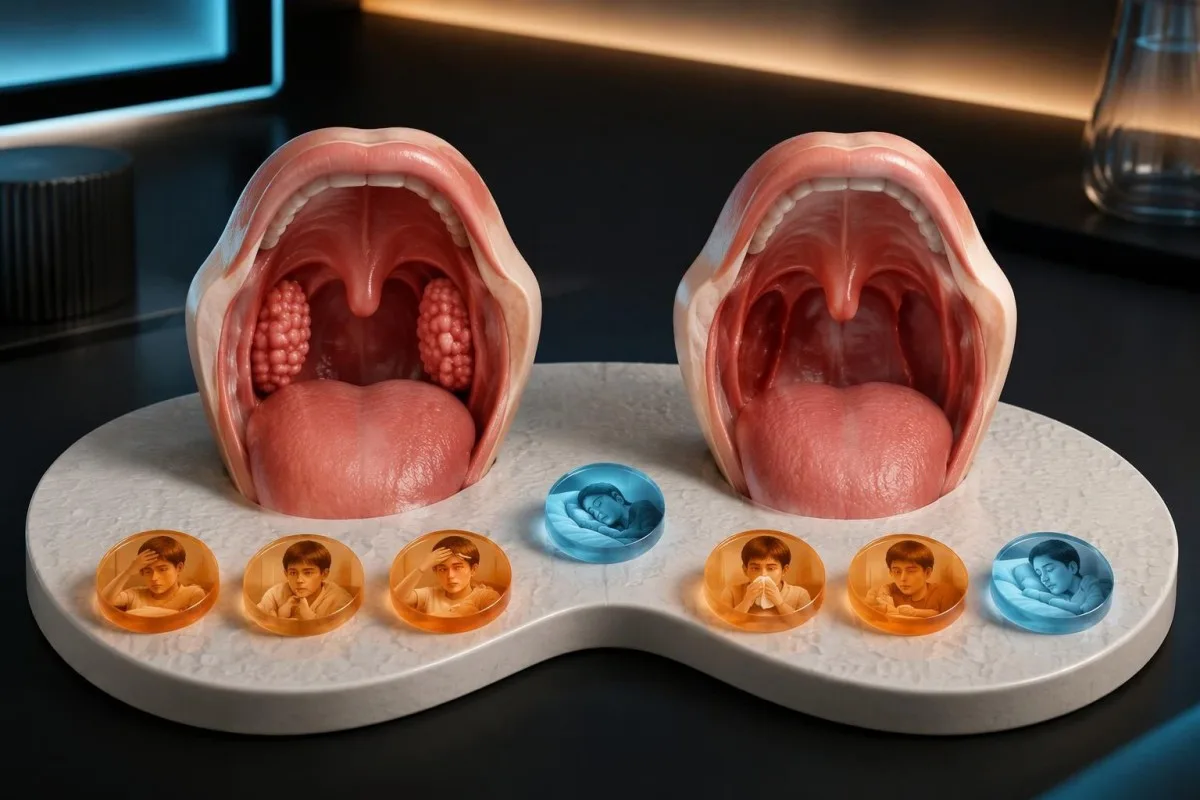
Burton et al. (2019) judged the evidence for several tonsillectomy outcomes to be of moderate certainty, but the trials were too small to characterize uncommon harms confidently. The evidence concerns selected children rather than every person with recurrent sore throat; a child missing 4 school days each month may value potential benefit differently from a child with infrequent, easily managed attacks.
Colchicine is sometimes used to reduce attacks under specialist supervision, whereas cimetidine has less convincing evidence. Treatment selection should consider the diagnosis, kidney and liver function, other medicines and the possibility of an inherited fever disorder; when several options exist, agree in advance on a measurable goal, such as fewer attacks across 3 months, rather than assuming a changed laboratory number demonstrates success.
Tonsillectomy carries postoperative pain, dehydration, anesthesia-related risks and bleeding risk, even when it improves PFAPA. Kantesti's mas’uliyatli sun’iy intellekt bo‘yicha yo‘riqnomamiz supports a clear boundary: neither 1 elevated inflammatory marker nor an automated report can decide whether surgery is appropriate; that discussion belongs with the treating pediatric team and an ENT specialist who can assess the child's individual risks.
PFAPA bilan yashayotgan bolalar, kattalar va oilalarga qanday kuzatuv yordam beradi?
PFAPA follow-up should track attack burden, growth or weight, treatment response and any symptoms between episodes. Many childhood cases improve over several years, but persistence, relapse and adult-onset disease occur; a 3-month review interval can be a practical individualized plan rather than a universal rule.

Adults require the same attention to repeated patterns and alternative causes, not an assumption that PFAPA is impossible after childhood. Fever with oral sores and pharyngitis can support the diagnosis, but new constitutional symptoms, persistent gland enlargement or abnormal findings between attacks need assessment; a 35-year-old with a first prolonged fever should not self-diagnose PFAPA from an online symptom match.
Prepare a concise appointment summary: attack dates, duration, associated features, well-day symptoms, test results and response to prescribed treatment. Include 1 clearly labeled attack sample and any clinician-requested recovery sample, rather than ordering a broad panel every month; repeated testing is useful only when it answers a specific question, such as whether inflammation persists or neutrophil counts cycle.
Kantesti - bu AI qon tahlili natijalari platformasi that can help explain uploaded CBC and inflammatory-marker reports alongside their dates, units and stated reference ranges. For a family sharing 2 or more records, check each person's identity and consent before upload, and review our maxfiylik va ma’lumotlarga ishlov berish; AI explanation does not replace pediatric examination, urgent triage or a specialist diagnosis.
Tadqiqot nashrlari: dalillar va laboratoriya tahlillari haqidagi umumiy qo‘llanmalar
PFAPA evidence comes from clinical descriptions, differential-diagnosis research and treatment studies—not from a specific clotting or serum-protein test. The 2 background publications below explain other laboratory topics and should not be mistaken for studies validating PFAPA diagnosis.
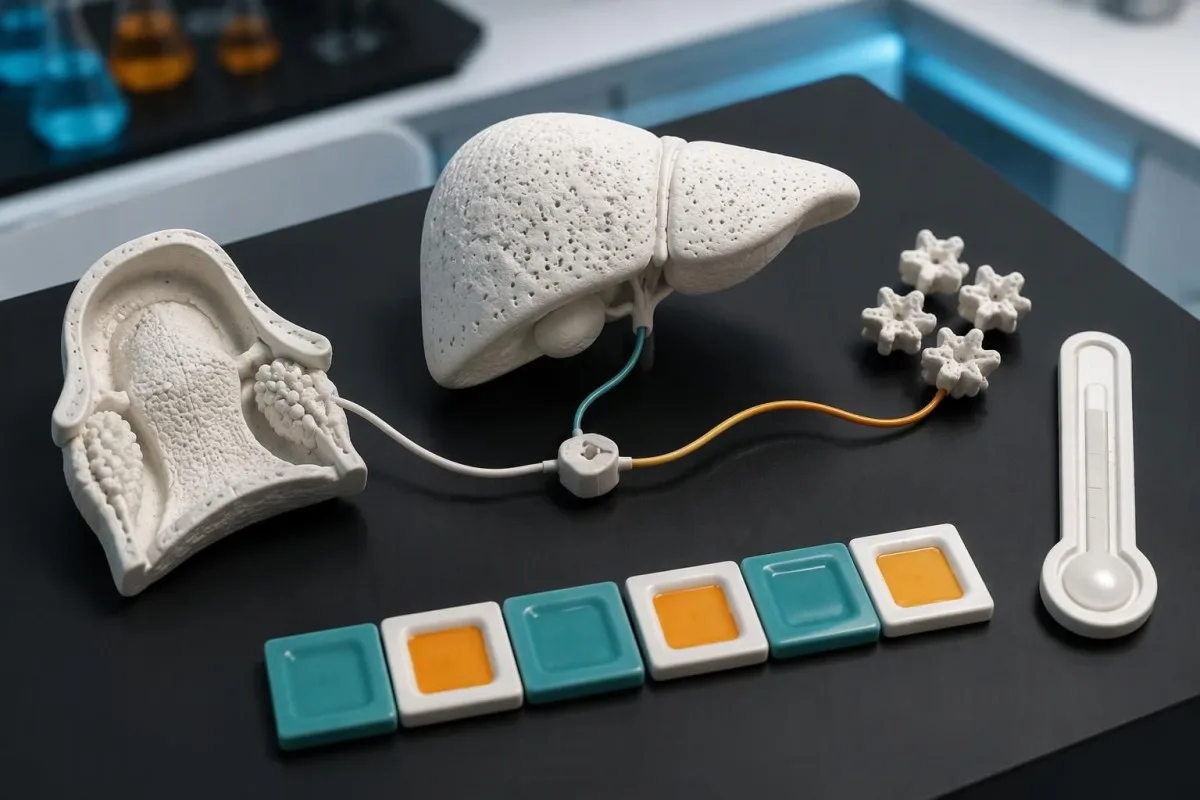
The peer-reviewed PFAPA review by Wang et al. (2021), treatment review by Vanoni et al. (2016) and Cochrane analysis by Burton et al. (2019) directly inform this article's clinical discussion. The surgical review's 67-child evidence base illustrates why certainty must be proportionate to study size; a named source supports a specific claim, not every recommendation made elsewhere on the page.
Kantestining clotting test background guide va zardob oqsillari haqida ma’lumot beruvchi qo‘llanma accompany the 2 Zenodo records listed below. Neither aPTT nor an albumin/globulin ratio confirms PFAPA, and neither guide establishes that routine testing of those markers improves PFAPA care; additional tests should follow an identified clinical concern rather than the availability of a panel.
Evidence interpretation should distinguish a repository-hosted educational guide from a peer-reviewed condition-specific study or systematic review. Our tibbiy kontent standartlari explain the editorial approach; for a child with 3 apparently similar attacks, the practical priority remains documented recovery, targeted exclusion of alternatives and a clear safety plan, not accumulating more citations or tests that do not answer the clinical question.
Tez-tez beriladigan savollar
PFAPA sindromi nima?
PFAPA sindromi — aftoz og‘iz yaralari, faringit va bo‘yindagi limfa tugunlarining shishishi bilan kechadigan takroriy isitmani keltirib chiqaruvchi autoyallig‘lanishli holat. Xurujlar odatda 3–7 kun davom etadi va har bir necha haftada takrorlanadi; xurujlar orasida bemorning ahvoli yaxshi bo‘ladi. Holat odatda 5 yoshgacha boshlanadi, biroq katta yoshli bolalar va kattalarda ham uchrashi mumkin. PFAPA tashxisini tasdiqlaydigan yagona qon tahlili yo‘q, shu sababli tashxis takrorlanuvchi klinik manzara va boshqa ehtimoliy sabablarni baholashga asoslanadi.
PFAPA isitmalari qanchalik tez-tez kuzatiladi?
PFAPA isitmalari odatda har 2–8 haftada takrorlanadi va har bir xuruj odatda 3–7 kun davom etadi. Ayrim bolalarda xurujlar juda muntazam davriy takrorlanadi, boshqalarida esa ular orasidagi vaqt turlicha bo‘ladi. Kortikosteroid bilan davolash keyingi xurujgacha bo‘lgan vaqtni qisqartirishi mumkin, shu sababli dori qabul qilingan vaqtni isitma kundaligiga yozib borish kerak. Isitmaning uzluksiz davom etishi yoki xurujlar orasida bolaning ahvoli yaxshilanmasligi PFAPAga xos deb taxmin qilinmasdan, qayta baholanishi kerak.
CRP qon tahlilining yuqori natijasi PFAPA tashxisini qo‘yishi mumkinmi?
CRP natijasining yuqori bo‘lishi PFAPA tashxisini qo‘yishga imkon bermaydi, chunki infeksiyalar va boshqa yallig‘lanish kasalliklari ham xuddi shunday oshishga olib kelishi mumkin. Masalan, isitma paytida CRP 80 mg/L, tuzalgandan keyin esa 3 mg/L bo‘lishi xurujsimon yallig‘lanishni ko‘rsatadi, ammo uning sababini aniqlamaydi. Ko‘plab laboratoriyalarda CRP uchun yuqori me’yoriy chegara taxminan 5 mg/L, ayrimlarida esa 10 mg/L qilib belgilangan. Shifokorlar natijani simptomlar, ko‘rik, namuna olingan vaqt va infeksiyani aniqlashga oid tegishli tahlillar bilan birga baholaydilar.
PFAPA yuqumlimi va antibiotiklar kerakmi?
PFAPAning o‘zi yuqumli emas va antibiotiklar uning asosidagi yallig‘lanish jarayonini davolamaydi. Antibiotik qabul qilish boshlanganidan keyin odatdagi 3–7 kunlik xuruj o‘z-o‘zidan tugashi mumkin, bu esa antibiotik ta’sir qilgandek noto‘g‘ri taassurot uyg‘otadi. PFAPA bilan og‘rigan bolalar ham yuqumli virusli kasalliklar yoki bakterial infeksiyalarni yuqtirib olishlari mumkin. Boshqa alomatlar bilan kechadigan yangi isitma, kasal odamlar bilan aloqada bo‘lish yoki bakterial sabab tasdiqlanishi alohida baholanishi va tegishlicha davolanishi kerak.
Prednizonga tez javob berish PFAPA borligini isbotlaydimi?
Prednizon yoki prednizolonning shifokor buyurgan dozasiga tezkor javob PFAPA ehtimolini qo‘llab-quvvatlaydi, ammo tashxisni tasdiqlamaydi. PFAPA uchun e’lon qilingan davolash sxemalarida 0,5–2 mg/kg doza keltirilgan; aniq doza va maksimal miqdorni davolovchi shifokor belgilaydi. Kortikosteroidlar boshqa kasalliklarning alomatlarini ham bostirishi va PFAPA xurujlari orasidagi vaqtni qisqartirishi mumkin. Xuruj odatdagidan ancha og‘ir yoki boshqacha kechsa, oilalar yozma davolash rejasiga amal qilishi va davolashni boshlashdan oldin shifokorga murojaat qilishi kerak.
PFAPA gumon qilingan bolaga qachon shoshilinch tibbiy yordam ko‘rsatish kerak?
PFAPAga shubha qilingan bolada isitma bilan birga nafas olish qiyinlashishi, hushyorlikning pasayishi, bo‘yin qotishi, bosganda oqarib ketmaydigan toshma yoki og‘ir suvsizlanish kuzatilsa, shoshilinch tibbiy yordam kerak. 3 oylikdan kichik, tana harorati 38°C yoki undan yuqori bo‘lgan har qanday chaqaloq zudlik bilan shifokor ko‘rigidan o‘tishi lozim. Isitma 5 kun yoki undan ko‘proq davom etsa ham, ayniqsa ko‘zlar qizarishi, toshma, lablarning yorilishi yoki qo‘l-oyoqlarning shishishi bilan kechsa, tezda shifokorga murojaat qilish kerak. Ilgari PFAPA tashxisi qo‘yilgan bo‘lishi, alomatlari boshqacha bo‘lgan yangi kasallikka e’tibor bermaslik mumkin degani emas.
Qon tahlili natijalarini qanday o‘qish kerak
Laboratoriya hisobotingizni yuklang va Kantesti sun’iy intellekti har bir biomarkerni soniyalar ichida sodda tilda tushuntiradi. Dunyo bo‘ylab 2 milliondan ortiq kishi foydalanadi.
Adabiyotlar
- Klein, T., Mitchell, S., & Weber, H. (2026). aPTTning me’yoriy oralig‘i: D-dimer, Protein C va qon ivishi bo‘yicha qo‘llanma. Kantesti AI tibbiy tadqiqotlari. DOI
- Klein, T., Mitchell, S., & Weber, H. (2026). Zardob oqsillari bo‘yicha qo‘llanma: globulinlar, albumin va A/G nisbati qon tahlili. Kantesti AI tibbiy tadqiqotlari. DOI
- Wang A et al. (2021). Periodic fever, aphthous stomatitis, pharyngitis, and adenitis (PFAPA) syndrome: A review. World Journal of Otorhinolaryngology - Head and Neck Surgery. DOI
- Vanoni F et al. (2016). PFAPA syndrome: a review on treatment and outcome. Pediatric Rheumatology. DOI
- Burton MJ et al. (2019). Tonsillectomy for periodic fever, aphthous stomatitis, pharyngitis and cervical adenitis syndrome (PFAPA). Cochrane tizimli sharhlar bazasi. DOI
- 2M+Tahlil qilingan testlar
- 127+Mamlakatlar
- 100+Tillar
Tibbiy guruh haqida


E-E-A-T ishonch signallari
Tajriba
Shifokor boshchiligidagi laboratoriya talqin qilish ish jarayonlarini klinik ko‘rib chiqish.
Tajriba
Laboratoriya tibbiyoti biomarkerlarning klinik kontekstda qanday o‘zini tutishini yoritadi.
Vakolatlilik
Doktor Thomas Klein tomonidan tibbiy jihatdan ko‘rib chiqilgan, doktor Sarah Mitchell va professor doktor Hans Weber hissalari bilan.
Ishonchlilik
Xavotirni kamaytirish uchun aniq keyingi qadamlar yo‘nalishlari bilan dalillarga asoslangan talqin.





Tibbiy ogohlantirish
Ushbu maqola faqat ta’lim maqsadlari uchun mo‘ljallangan va tibbiy maslahatni anglatmaydi. Tashxis va davolash bo‘yicha qarorlar uchun har doim malakali sog‘liqni saqlash mutaxassisiga murojaat qiling.
Nashr etilgan · Tahririyat jamoasi bilan bog‘laning
Angliya va Uelsda ro‘yxatdan o‘tgan Kantesti Ltd tomonidan nashr etilgan, kompaniya raqami. 17090423, London, Birlashgan Qirollik.
