
Het PFAPA-syndroom kan terugkerende hoge koorts veroorzaken, samen met mondzweren, keelpijn en gezwollen halsklieren, die meestal 3–7 dagen aanhouden, met volledig herstel tussen de aanvallen. De diagnose is gebaseerd op het terugkerende patroon en het uitsluiten van andere oorzaken—not één afwijkende bloedtest. Een symptoomdagboek helpt; een ongewoon ernstige of andere episode moet opnieuw worden beoordeeld.

Belangrijkste punten
- PFAPA-syndroom veroorzaakt vaak koortsaanvallen die 3–7 dagen duren, met tussenpozen van enkele weken waarin iemand zich goed voelt.
- PFAPA-symptomen omvatten aften, faryngitis en gezwollen cervicale lymfeklieren; niet alle 3 kenmerken hoeven tegelijk op te treden.
- Koortstiming volgt vaak een cyclus van ongeveer 2–8 weken, maar een exacte regelmaat op de kalender is niet vereist voor de diagnose.
- Symptoomdagboeken moeten de data van episodes, de maximumtemperatuur in °C of °F, symptomen, geneesmiddelen en herstel tussen aanvallen registreren.
- Bloedonderzoek kunnen tijdens aanvallen verhoogde CRP-waarden en neutrofielen laten zien; een CRP van 80 mg/L maakt geen onderscheid tussen PFAPA en een infectie.
- Cyclische neutropenie kan ongeveer elke 21 dagen terugkeren en kan herhaalde bloedbeeldcontroles vereisen in plaats van één geruststellende CBC.
- Behandelbeslissingen kan bestaan uit door een arts voorgeschreven corticosteroïden, preventieve geneesmiddelen of tonsillectomie; geen van deze behandelingen mag uitsluitend op basis van een laboratoriumuitslag worden ingezet.
- Spoedige beoordeling is nodig voor elke baby jonger dan 3 maanden met een temperatuur van 38°C of hoger, of voor elk kind met ademhalingsproblemen, verminderd reactievermogen of een niet-wegdrukbare huiduitslag.
Wat is het PFAPA-syndroom en waardoor ontstaat de koorts?
PFAPA-syndroom is een autoinflammatoire aandoening die terugkerende koortsaanvallen veroorzaakt, met afteuze mondzweren, faryngitis en cervicale adenitis. Aanvallen duren meestal 3–7 dagen; tussen de episoden door keren kinderen meestal terug naar hun normale energieniveau, eetlust en groei.
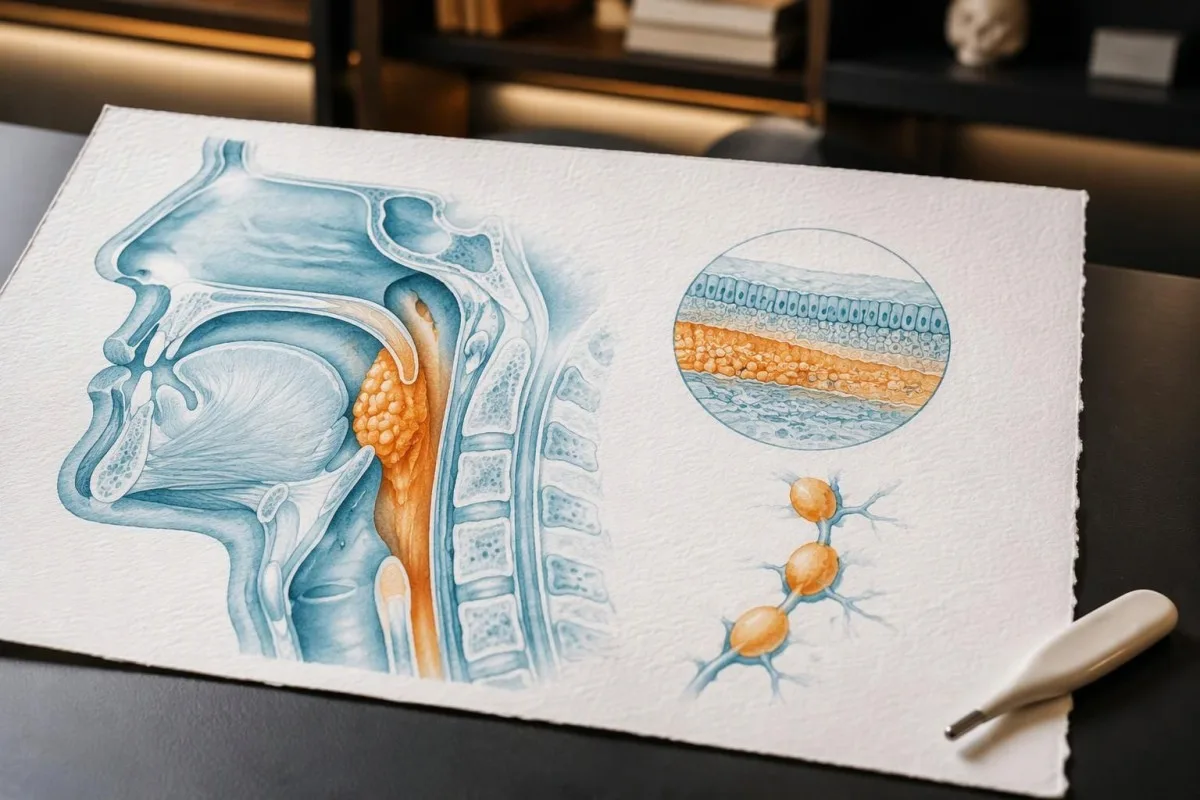
PFAPA weerspiegelt een ongepaste activering van ontstekingsroutes, en niet telkens een nieuwe besmettelijke ziekte om de paar weken. De aandoening begint meestal vóór de leeftijd van 5 jaar, maar ook oudere kinderen en volwassenen kunnen erdoor worden getroffen; de historische leeftijdsgrens is daarom een aanwijzing, geen absolute uitsluiting (Wang et al., 2021). PFAPA betekent niet dat elke toekomstige koorts niet-infectieus is.
Het acroniem beschrijft 4 kenmerken: periodieke koorts, afteuze stomatitis, faryngitis en adenitis. In tegenstelling tot verschillende erfelijke periodieke-koortsziekten heeft PFAPA geen enkele vastgestelde genetische test die de diagnose bevestigt, hoewel familiaire clustering kan voorkomen; een negatief breed genetisch panel bewijst PFAPA niet en sluit ook niet elke andere inflammatoire aandoening uit.
Kantesti is een AI-bloedtestanalysator die kunnen helpen verklaren waarom een CRP-uitslag van 80 mg/L klinische context nodig heeft in plaats van een diagnostisch etiket. Onze organisatie en aanpak beschrijven de dienstverlening, maar voor het herkennen van PFAPA moet een arts symptomen van meerdere episoden met elkaar in verband brengen, het kind onderzoeken en aandoeningen overwegen die niet uit een laboratoriumrapport kunnen blijken.
Welke PFAPA-symptomen maken het patroon herkenbaar?
PFAPA-symptomen gaan meestal samen met koorts, keelpijn, gevoelige halsklieren of kleine mondzweren. Dezelfde combinatie die terugkeert gedurende 3 of meer gedocumenteerde episoden is informatiever dan een afzonderlijk symptoom, hoewel er geen universeel minimumaantal episoden bestaat dat PFAPA bevestigt.
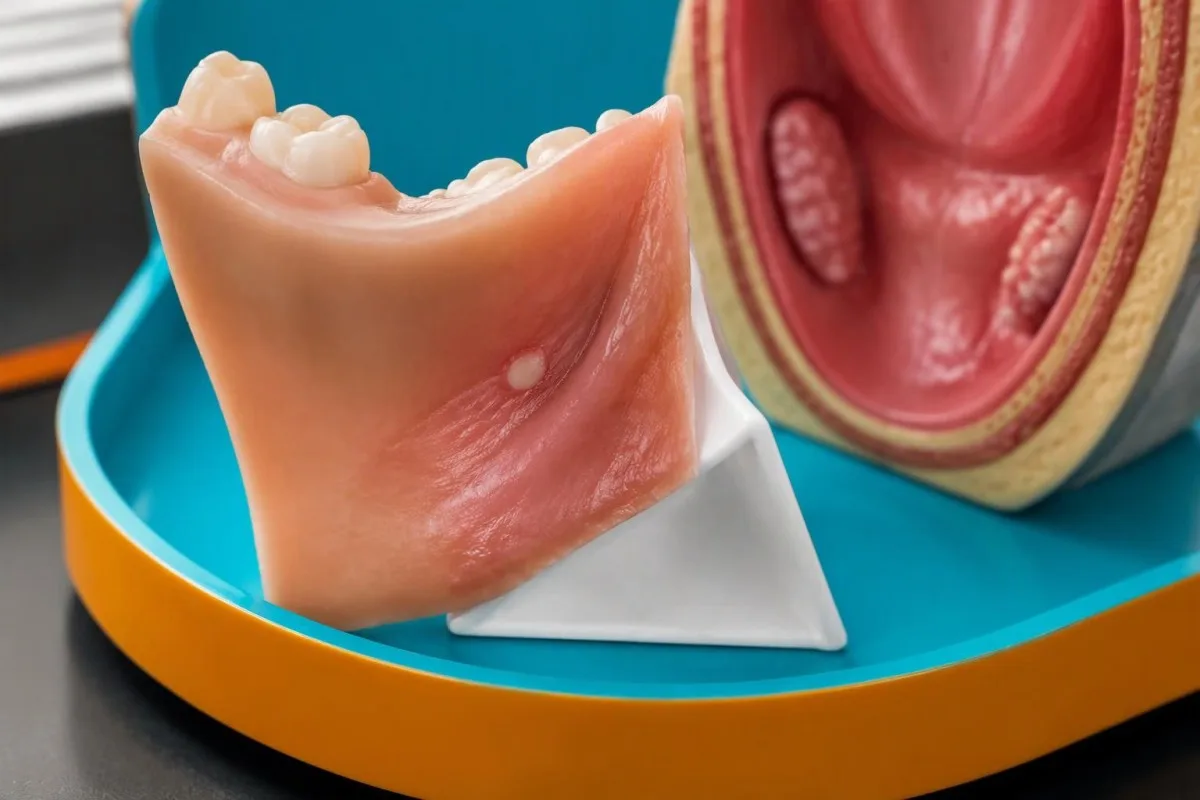
Aften zijn meestal kleine, oppervlakkige zweertjes aan de binnenkant van de lippen, de wangen of andere plekken in de mond, en zijn niet hetzelfde als gegroepeerde blaasjes aan de buitenkant van de lip. Een kind kan slechts 1 of 2 zweertjes hebben, en tijdens sommige aanvallen kunnen zweren ontbreken; een foto van een zichtbaar zweertje kan helpen als het vóór de afspraak verdwijnt.
Faryngitis kan roodheid of beslag op de amandelen veroorzaken, waardoor alleen het uiterlijk geen onderscheid kan maken tussen PFAPA en een streptokokkeninfectie. Gezwollen klieren betreffen meestal de cervicale lymfeklieren rond de hals, terwijl een aanhoudend groter wordende klier, gegeneraliseerde klierzwelling of symptomen die langer aanhouden dan een aanval van 3–7 dagen een andere verklaring vereisen en niet automatisch aan PFAPA mogen worden toegeschreven.
Alleen mondzweren vormen geen diagnose van periodieke koorts. Terugkerende mondzweren in combinatie met genitale zweren, pijnlijke rode ogen, veranderingen in het gezichtsvermogen of ongebruikelijke huidverschijnselen wijzen op andere mogelijkheden, waaronder symptoompatronen bij de ziekte van Behçet; zelfs één episode van oogpijn met verminderd gezichtsvermogen vereist snelle beoordeling, zonder te wachten op een volgende koortscyclus.
Hoe lang houdt PFAPA-koorts aan en hoe vaak keert deze terug?
PFAPA-koorts duurt meestal 3–7 dagen en keert ongeveer elke 2–8 weeks, terug, vaak met opvallend vergelijkbare symptomen. Sommige kinderen ontwikkelen een voorspelbaar ritme, maar wisselende tussenpozen sluiten PFAPA niet automatisch uit.

Temperatures during PFAPA attacks often reach 39–40°C, but fever height does not determine the diagnosis or reliably measure danger. The timing of associated throat symptoms, the child's appearance and the return to baseline matter more; measuring temperature with the same method also makes comparisons more useful than alternating between forehead, ear and underarm readings.
For a hypothetical child, fevers beginning on days 1, 29 and 58 with 4-day attacks suggest a repeated cycle—not proof of PFAPA. Count start-to-start intervals separately from fever-free days, and record whether corticosteroid treatment changed an interval; a shortened next cycle after treatment can otherwise make a previously regular pattern look inexplicably irregular.
A fever that does not stop is not a series of separate PFAPA episodes. If symptoms persist beyond 7 days, or recovery never occurs, clinicians reconsider infection and other inflammatory conditions; our explanation of effecten van timing van bloedonderzoek also shows why a sample taken on day 1 cannot be interpreted like one taken after recovery.
Wat moet een PFAPA-symptoomdagboek registreren?
A PFAPA symptom diary should record episode start and finish dates, measured temperature, mouth and throat findings, neck swelling, medication timing and wellness between attacks. Even 3 carefully documented episodes can reveal details that a single clinic visit misses.

Document the thermometer method and the highest measured temperature, not just 'very hot.' For each day of a 4-day attack, note drinking, urine output, activity, cough, runny nose, abdominal symptoms and whether anyone nearby was ill; these observations distinguish a repeated inflammatory pattern from unrelated respiratory or gastrointestinal illnesses more effectively than recording fever alone.
Medication entries need the name, dose, administration time and observed response. If a prescribed medicine is given at 09:00 and fever settles by 14:00, record that interval without claiming the medicine established PFAPA; include throat swab results and whether a laboratory sample preceded treatment, because both antibiotics and corticosteroids can complicate interpretation of subsequent findings.
Well days deserve entries too. A weekly note of normal appetite, play, school attendance and any lingering symptoms prevents a diary from becoming an attack-only record; when a clinician requests a recovery sample, our gids voor voorbereiding op uitgangsmetingen explains how to record recent illness and medicines rather than treating a sample 2 days after fever as an unquestionable baseline.
Waarom is het zo belangrijk dat iemand zich tussen PFAPA-episodes goed voelt?
Complete wellness between episodes strongly supports a typical PFAPA pattern: normal activity, appetite and growth should return after the 3–7-day attack. Persistent symptoms or continuing inflammation between attacks make clinicians reconsider the diagnosis.

A child who is fever-free but remains exhausted, loses weight or develops daily pain has not truly returned to baseline. Growth is assessed through serial height and weight measurements, not 1 percentile in isolation; crossing growth centiles over time may justify investigation even when individual fever episodes resemble PFAPA and routine examinations during attacks look familiar.
Repeated ordinary infections are common in young children, but unusually severe, prolonged or unusual infections suggest a different evaluation. A history of 2 hospital-treated infections or recurrent deep infections matters differently from several mild colds; clinicians consider the organisms, sites, treatment response and family history, as discussed in our guide to testen van frequente infecties.
Inflammatory markers usually fall toward the laboratory reference range between PFAPA attacks, but an immediately post-fever sample may still reflect recovery. A persistent CRP of 25 mg/L on repeated genuinely well-day samples is not proof of another disease, yet it deserves explanation; a clinician may check for an unnoticed infection, ongoing inflammatory symptoms or a sampling timeline that was mislabeled.
Wat laten CRP, ESR en bloedbeeld zien bij PFAPA?
PFAPA attacks can raise CRP, ESR and neutrophil counts, but none of these tests confirms PFAPA or excludes infection. Many laboratories use a CRP upper reference limit around 5 mg/L, terwijl anderen gebruiken 10 mg/L; the report's own range matters.
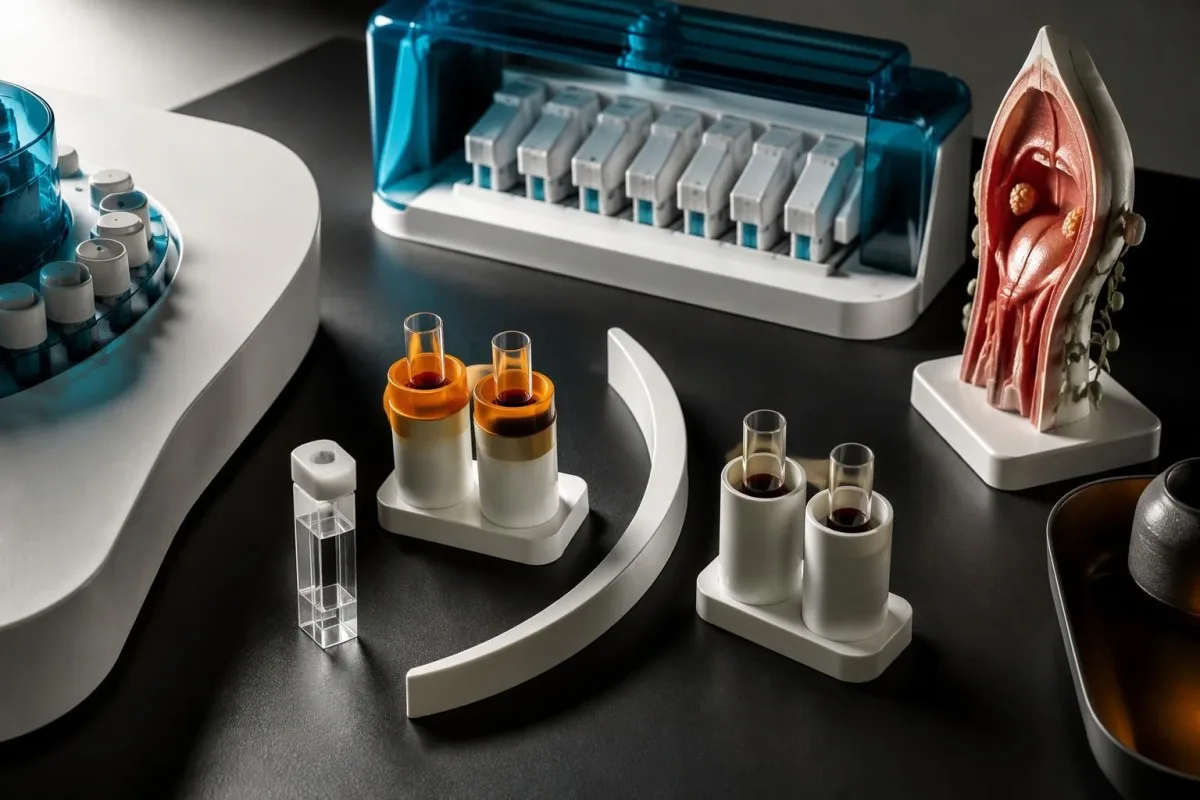
Consider a hypothetical child with CRP 80 mg/L during fever and 3 mg/L after recovery. That change supports an episodic inflammatory process but does not identify its cause; infection can produce the same pattern, while ESR may normalize more slowly than CRP, making a modestly raised recovery ESR less surprising than persistent symptoms or repeatedly elevated CRP.
White-cell interpretation must use age-appropriate absolute counts rather than adult ranges or percentages alone. At Kantesti, we emphasize that CRP 8 mg/dL equals 80 mg/L—a tenfold unit conversion that can otherwise create a false impression of improvement; our WBC en CRP vergelijking explains why these markers can disagree because they change at different rates.
Procalcitonin is sometimes considered when serious bacterial infection is suspected, but it is not a standalone PFAPA discriminator. A low result, including a value below 0.1 ng/mL, cannot safely overrule a concerning examination or very early illness; the limits described in our gids voor de interpretatie van procalcitonine matter more than using one reassuring number to justify home treatment.
Hoe stellen artsen de diagnose PFAPA?
PFAPA diagnosis is clinical: clinicians identify repeated characteristic attacks, document recovery between them and exclude plausible alternatives. Onset before age 5 supports traditional criteria, but later onset does not prevent a diagnosis when the overall pattern fits.
The diagnostic process usually starts with history and examination rather than an extensive panel of rare-disease tests. Wang et al. (2021) describe the value of stereotyped episodes, absence of typical respiratory symptoms, negative relevant cultures and response to prescribed corticosteroids; however, 1 negative throat swab or 1 rapid response cannot independently establish PFAPA, and classification criteria are not identical to bedside diagnosis.
Streptococcal testing addresses the current throat illness, while an ASO antibody test mainly reflects previous exposure. An ASO result of 400 IU/mL does not prove that today's recurrent fever is active strep infection; age, local reference ranges and symptom timing affect interpretation, as explained in our discussion of ASO and recent exposure.
Kantesti is een AI-aangedreven tool voor analyse van bloedtesten that can contextualize laboratory units and repeated results, but 2 matching reports cannot confirm PFAPA. Our technische en klinische supervisie information should not be read as validation of a PFAPA diagnostic test; pediatric or rheumatology assessment remains necessary when the pattern is atypical, severe or uncertain.
Hoe wordt PFAPA onderscheiden van terugkerende infecties?
Repeated infections are more likely when episodes follow sick contacts, have varying symptoms or include cough, runny nose, diarrhea or a confirmed pathogen. PFAPA more often repeats a similar 3–7-day pattern with complete wellness between attacks, but the two can coexist.
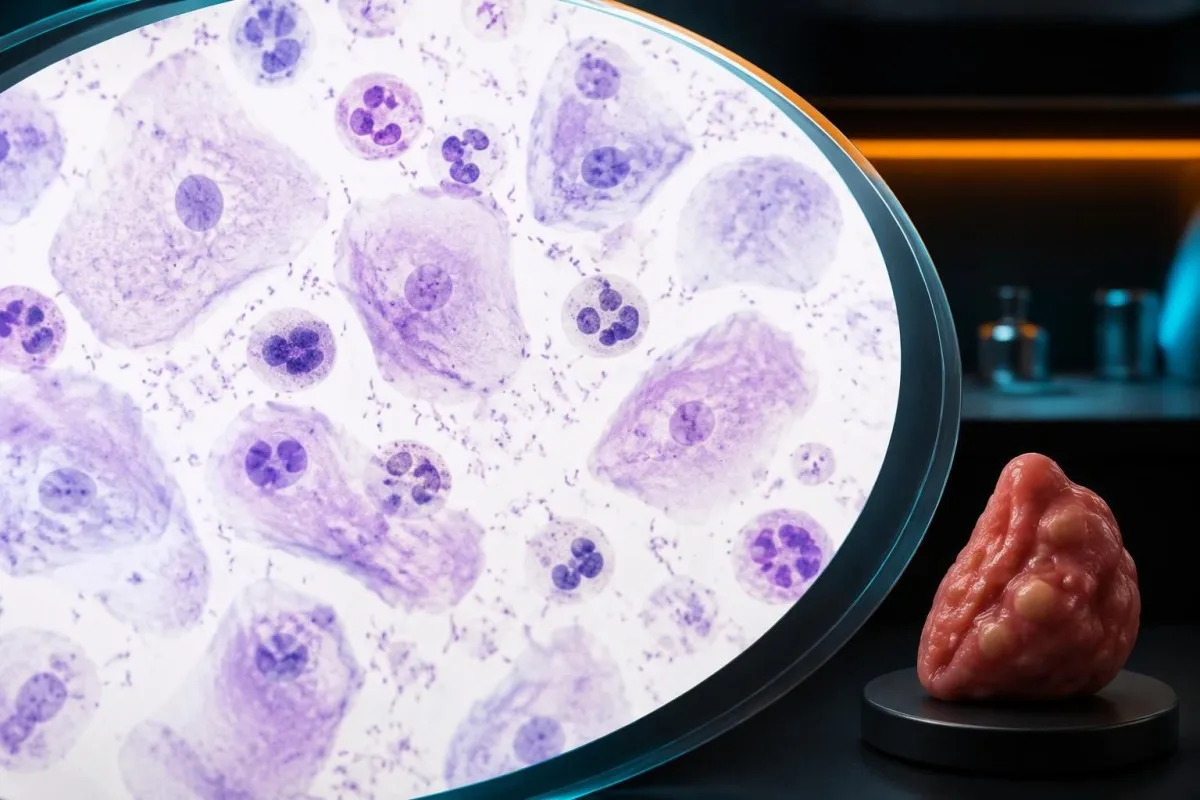
A positive respiratory PCR does not always explain the entire fever history. Adenovirus can remain detectable after an illness, so 1 positive result must be matched to current symptoms, examination and timing; our discussion of adenovirusdetectie en virusuitscheiding explains why a molecular result may indicate recent exposure rather than the cause of every subsequent attack.
Longer-lasting sore throat, fatigue and gland enlargement can suggest a different illness rather than PFAPA. EBV antibody patterns distinguish recent infection from prior exposure more effectively than a single positive IgG result; our EBV-antilichaamspatroonhandleiding explains the roles of 3 commonly reported markers—VCA IgM, VCA IgG and EBNA IgG—without equating past exposure with today's symptoms.
Antibiotic response is also easy to misread. If an antibiotic begins on day 4 and the fever ends on day 5, spontaneous resolution of a PFAPA attack is possible; conversely, a confirmed bacterial infection still requires appropriate treatment, and neither previous PFAPA nor prior antibiotic failure permits a new illness with different symptoms to be dismissed without assessment.
Welke andere periodieke koortsstoornissen kunnen op PFAPA lijken?
Cyclische neutropenie and inherited autoinflammatory disorders can resemble PFAPA, especially when mouth sores accompany recurring fever. Approximately 21-day cycles, severe infections, marked abdominal or chest pain, unusual rashes or persistent inflammation help clinicians decide which alternatives to investigate.

Cyclic neutropenia can produce recurrent fever, mouth sores and gum problems while a blood count between low-count periods looks normal. When suspected, clinicians may request CBCs 2–3 times weekly for about 6 weeks to identify repeated neutrophil nadirs; an absolute neutrophil count below 0.5 × 10^9/L during fever requires urgent clinical assessment rather than being labeled a routine PFAPA attack.
Familial Mediterranean fever often causes shorter attacks, commonly 12–72 hours, with abdominal or chest pain from serosal inflammation or joint symptoms. Our uitleg over MEFV-tests shows why genotype and symptoms must be interpreted together; TRAPS may produce longer attacks, sometimes over 7 days, while mevalonate kinase deficiency can involve diarrhea, vomiting and attacks triggered by vaccination or other stressors.
Ancestry and family history guide assessment, but neither should become a gatekeeper that excludes an inherited disorder. Persistently raised serum amyloid A between attacks can indicate ongoing inflammation and requires context, as our serum amyloid A guide explains; a single high value during a 4-day fever does not diagnose amyloidosis, and typical PFAPA should not automatically be assigned the complication risks of other syndromes.
Welke waarschuwingssignalen bij koorts vereisen een dringende beoordeling?
Zoek spoedeisende hulp for fever with breathing difficulty, reduced responsiveness, a stiff neck, a non-blanching rash or severe dehydration. An infant younger than 3 maanden met een temperatuur van 38°C of hoger needs urgent medical assessment, even if a family member has PFAPA.
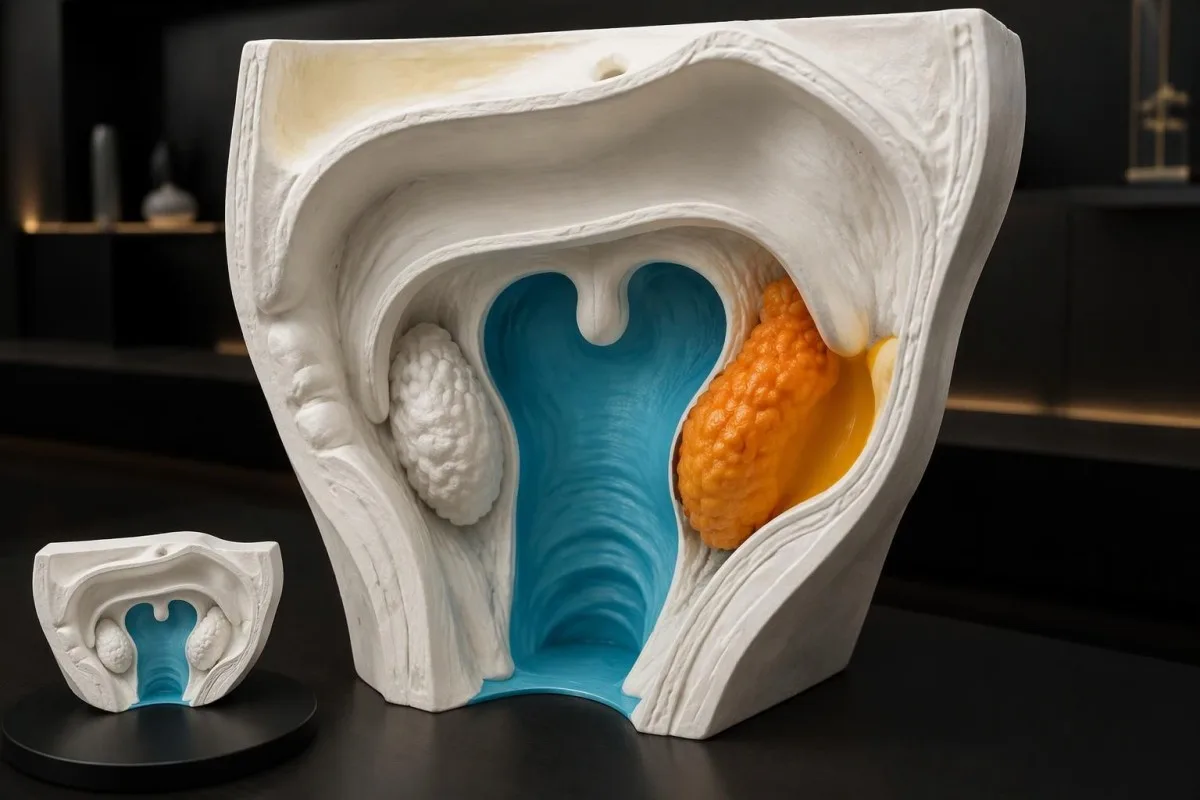
Difficulty swallowing saliva, drooling, a muffled voice or marked one-sided throat swelling can indicate an airway-threatening problem rather than a usual PFAPA flare. A child aged 3–6 months with a temperature of 39°C or higher also needs urgent assessment; contact local emergency services for immediate danger instead of waiting for a blood result or an expected fever endpoint.
Fever lasting 5 days or longer warrants prompt medical review, particularly with red eyes, cracked lips, rash or swollen hands and feet. These findings can suggest Kawasaki disease, discussed in our Kawasaki assessment guide; incomplete presentations occur, so clinicians do not require every classic feature, and concerning symptoms should be assessed before day 5 rather than waiting for a threshold.
New severe localized abdominal pain, persistent vomiting or inability to walk normally should not be attributed to PFAPA without examination. Even 1 normal WBC or CRP result cannot reliably exclude an early abdominal emergency, as our appendicitis laboratory limits explain; children with a known fever syndrome can still develop unrelated illnesses, especially when the attack looks different from their established pattern.
Hoe worden PFAPA-aanvallen behandeld en wat betekent een reactie op steroïden?
PFAPA attack treatment focuses on comfort, hydration and, when prescribed, corticosteroids that often stop fever within hours. Published prednisone or prednisolone regimens range from 0.5–2 mg/kg, but dosing, maximum dose and eligibility must be set by the treating clinician.
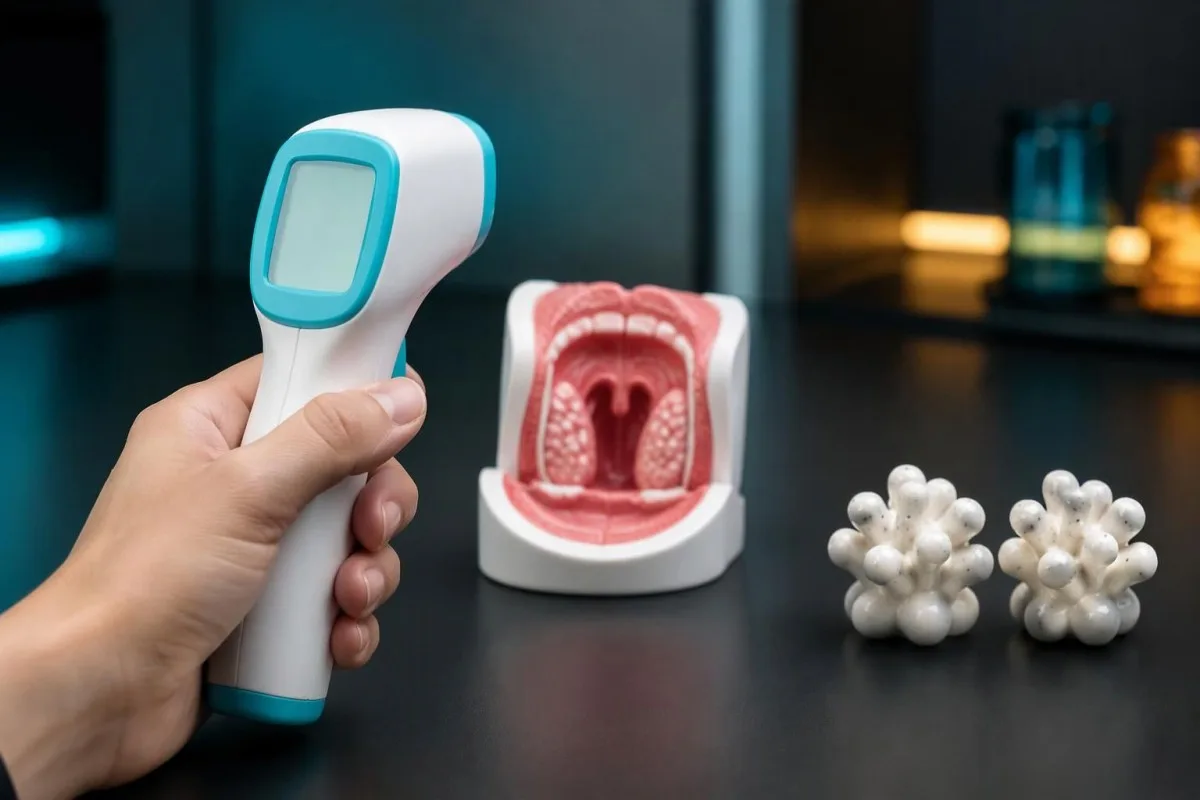
Vanoni et al. (2016) describe rapid corticosteroid responses alongside the limitation that treatment may shorten the interval to the next attack. Reports summarized in that review estimated shorter intervals in approximately 25–50% of patients, but these observations come from heterogeneous studies rather than a precise prediction for an individual child; attack control and long-term prevention are separate treatment goals.
For a hypothetical 20-kg child, a clinician-selected dose of 1 mg/kg would equal 20 mg; this calculation illustrates weight-based prescribing, not a home-treatment recommendation. Families need a written plan explaining when a familiar attack qualifies for treatment, when to seek assessment first and what to do if the expected response does not occur—especially if symptoms suggest a new infection.
Antipyretics may improve discomfort even when they do not end the inflammatory episode. Choose child-appropriate preparations with a clinician or pharmacist, avoid aspirin unless specifically prescribed and do not duplicate paracetamol/acetaminophen across 2 products; Kantesti cannot authorize steroid treatment, and our discussion of AI-interpretatie bij kinderen explains why pediatric decisions need more than laboratory pattern recognition.
Wanneer worden preventieve geneesmiddelen of een tonsillectomie overwogen?
Prevention or tonsillectomy may be considered when PFAPA attacks repeatedly disrupt daily life or attack treatment is unsatisfactory. A Cochrane review included 2 randomized trials involving 67 children, finding benefit from tonsil surgery while emphasizing the limited size of the evidence base.
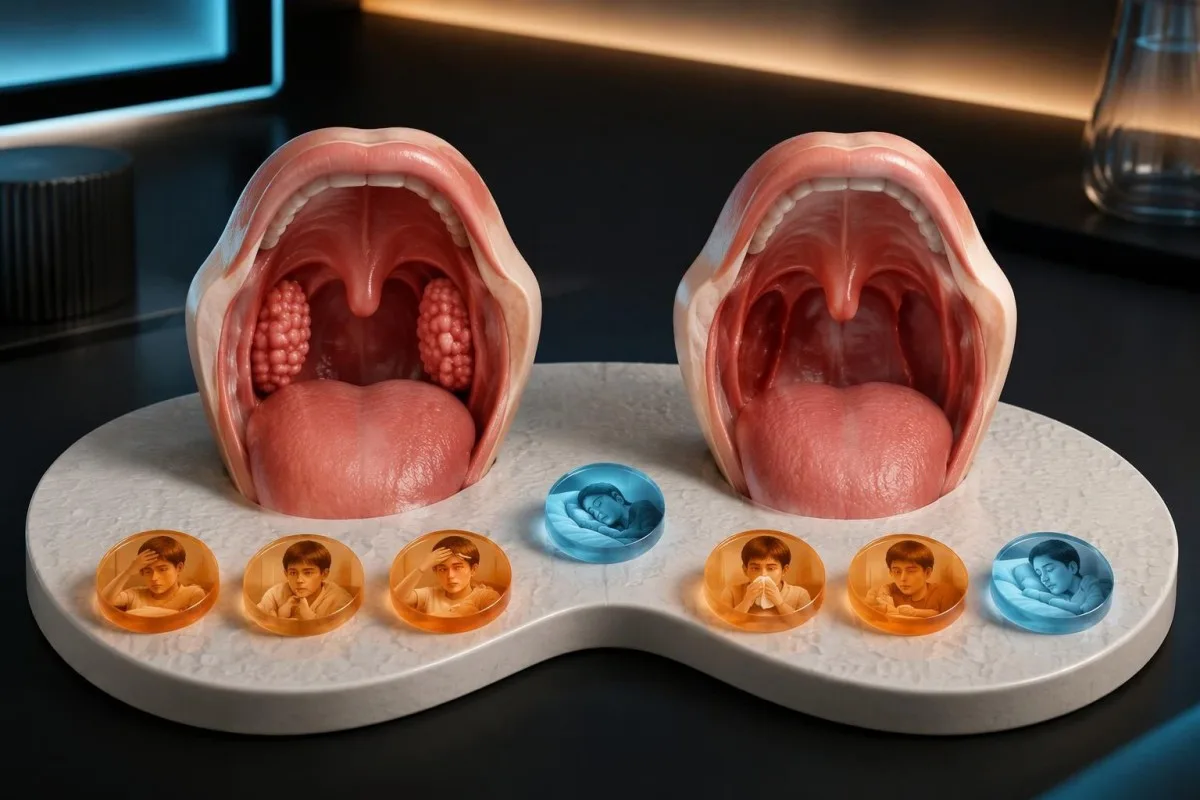
Burton et al. (2019) judged the evidence for several tonsillectomy outcomes to be of moderate certainty, but the trials were too small to characterize uncommon harms confidently. The evidence concerns selected children rather than every person with recurrent sore throat; a child missing 4 school days each month may value potential benefit differently from a child with infrequent, easily managed attacks.
Colchicine is sometimes used to reduce attacks under specialist supervision, whereas cimetidine has less convincing evidence. Treatment selection should consider the diagnosis, kidney and liver function, other medicines and the possibility of an inherited fever disorder; when several options exist, agree in advance on a measurable goal, such as fewer attacks across 3 months, rather than assuming a changed laboratory number demonstrates success.
Tonsillectomy carries postoperative pain, dehydration, anesthesia-related risks and bleeding risk, even when it improves PFAPA. Kantesti's richtlijnen voor verantwoord gebruik van AI supports a clear boundary: neither 1 elevated inflammatory marker nor an automated report can decide whether surgery is appropriate; that discussion belongs with the treating pediatric team and an ENT specialist who can assess the child's individual risks.
Welke follow-up helpt kinderen, volwassenen en gezinnen met PFAPA?
PFAPA follow-up should track attack burden, growth or weight, treatment response and any symptoms between episodes. Many childhood cases improve over several years, but persistence, relapse and adult-onset disease occur; a 3-month review interval can be a practical individualized plan rather than a universal rule.

Adults require the same attention to repeated patterns and alternative causes, not an assumption that PFAPA is impossible after childhood. Fever with oral sores and pharyngitis can support the diagnosis, but new constitutional symptoms, persistent gland enlargement or abnormal findings between attacks need assessment; a 35-year-old with a first prolonged fever should not self-diagnose PFAPA from an online symptom match.
Prepare a concise appointment summary: attack dates, duration, associated features, well-day symptoms, test results and response to prescribed treatment. Include 1 clearly labeled attack sample and any clinician-requested recovery sample, rather than ordering a broad panel every month; repeated testing is useful only when it answers a specific question, such as whether inflammation persists or neutrophil counts cycle.
Kantesti is een AI-bloedonderzoek uitslagplatform that can help explain uploaded CBC and inflammatory-marker reports alongside their dates, units and stated reference ranges. For a family sharing 2 or more records, check each person's identity and consent before upload, and review our privacy- en gegevensverwerkingsbeleid; AI explanation does not replace pediatric examination, urgent triage or a specialist diagnosis.
Onderzoekspublicaties: bewijs versus achtergrondinformatie over laboratoriumonderzoek
PFAPA evidence comes from clinical descriptions, differential-diagnosis research and treatment studies—not from a specific clotting or serum-protein test. The 2 background publications below explain other laboratory topics and should not be mistaken for studies validating PFAPA diagnosis.
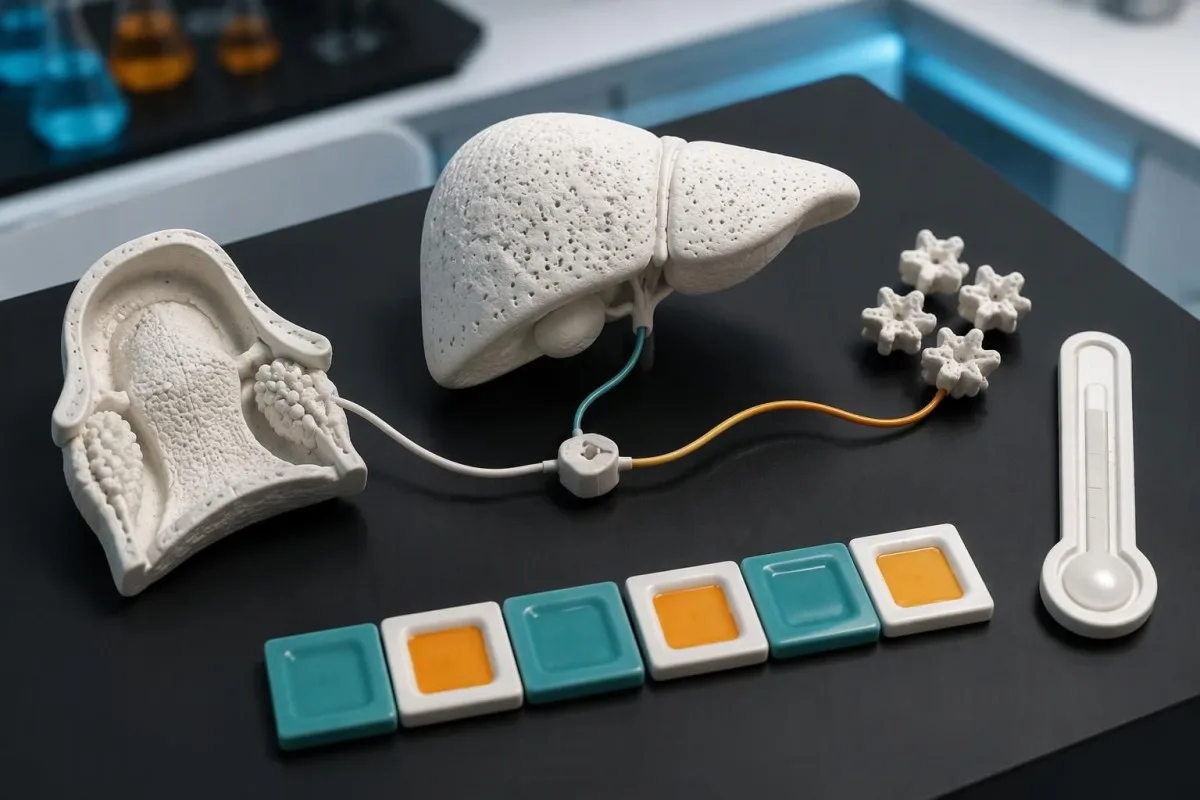
The peer-reviewed PFAPA review by Wang et al. (2021), treatment review by Vanoni et al. (2016) and Cochrane analysis by Burton et al. (2019) directly inform this article's clinical discussion. The surgical review's 67-child evidence base illustrates why certainty must be proportionate to study size; a named source supports a specific claim, not every recommendation made elsewhere on the page.
De materialen van Kantesti clotting test background guide En achtergrondgids over serumproteïnen accompany the 2 Zenodo records listed below. Neither aPTT nor an albumin/globulin ratio confirms PFAPA, and neither guide establishes that routine testing of those markers improves PFAPA care; additional tests should follow an identified clinical concern rather than the availability of a panel.
Evidence interpretation should distinguish a repository-hosted educational guide from a peer-reviewed condition-specific study or systematic review. Our medische inhoudsnormen explain the editorial approach; for a child with 3 apparently similar attacks, the practical priority remains documented recovery, targeted exclusion of alternatives and a clear safety plan, not accumulating more citations or tests that do not answer the clinical question.
Veelgestelde vragen
Wat is het PFAPA-syndroom?
Het PFAPA-syndroom is een auto-inflammatoire aandoening die terugkerende koorts veroorzaakt, samen met afteuze mondzweren, faryngitis en gezwollen cervicale lymfeklieren. Episoden duren meestal 3–7 dagen en keren om de paar weken terug, met een normale gezondheid tussen de aanvallen door. De aandoening begint meestal vóór de leeftijd van 5 jaar, hoewel ook oudere kinderen en volwassenen erdoor getroffen kunnen worden. Er is geen enkele bloedtest die PFAPA bevestigt; de diagnose is daarom gebaseerd op het terugkerende klinische patroon en de beoordeling van mogelijke andere oorzaken.
Hoe vaak komen PFAPA-koortsen voor?
PFAPA-koorts komt doorgaans ongeveer elke 2–8 weken terug en afzonderlijke aanvallen duren meestal 3–7 dagen. Sommige kinderen hebben zeer regelmatige cycli, terwijl de tussenpozen bij andere variëren. Behandeling met corticosteroïden kan de tijd tot de volgende episode verkorten, dus het tijdstip van de medicatie hoort in het koortsdagboek te worden genoteerd. Bij aanhoudende koorts of als een kind tussen de aanvallen door niet opknapt, is een herbeoordeling nodig; ga er niet zonder meer van uit dat dit bij PFAPA past.
Kan een hoge CRP-waarde in een bloedtest PFAPA diagnosticeren?
Een hoge CRP-uitslag kan geen diagnose PFAPA stellen, omdat infecties en andere ontstekingsziekten dezelfde stijging kunnen veroorzaken. Een CRP-waarde van bijvoorbeeld 80 mg/L tijdens koorts en 3 mg/L na herstel wijst op episodische ontsteking, maar stelt de oorzaak ervan niet vast. Veel laboratoria hanteren een bovengrens voor de CRP-referentiewaarde van ongeveer 5 mg/L, terwijl sommige 10 mg/L hanteren. Artsen beoordelen de uitslag in samenhang met de symptomen, het lichamelijk onderzoek, het tijdstip van de bloedafname en eventuele relevante infectietests.
Is PFAPA besmettelijk en zijn antibiotica nodig?
PFAPA zelf is niet besmettelijk en antibiotica behandelen het onderliggende ontstekingsproces niet. Een typische aanval van 3–7 dagen kan vanzelf eindigen nadat met antibiotica is gestart, waardoor ten onrechte de indruk kan ontstaan dat de antibiotica hebben gewerkt. Kinderen met PFAPA kunnen wel besmettelijke virusziekten of bacteriële infecties oplopen. Een nieuwe koorts met andere symptomen, contact met zieke personen of een bevestigde bacteriële oorzaak moet afzonderlijk worden beoordeeld en behandeld.
Bewijst een snelle reactie op prednison PFAPA?
Een snelle reactie op voorgeschreven prednison of prednisolon ondersteunt de diagnose PFAPA, maar bewijst deze niet. Gepubliceerde PFAPA-schema’s omvatten 0,5–2 mg/kg; de behandelend arts bepaalt de werkelijke dosis en de maximale dosis. Corticosteroïden kunnen symptomen van andere aandoeningen onderdrukken en de tijd tot de volgende PFAPA-aanval verkorten. Gezinnen moeten een schriftelijk behandelplan volgen en vóór de behandeling een arts raadplegen als een episode ongewoon ernstig of anders is.
Wanneer moet een kind met vermoedelijke PFAPA met spoed medische hulp krijgen?
Een kind bij wie PFAPA wordt vermoed, heeft spoedeisende zorg nodig bij koorts in combinatie met ademhalingsproblemen, verminderd reactievermogen, een stijve nek, een niet-wegdrukbare huiduitslag of ernstige uitdroging. Elke baby jonger dan 3 maanden met een temperatuur van 38 °C of hoger moet met spoed medisch worden beoordeeld. Koorts die 5 dagen of langer aanhoudt, moet ook snel worden beoordeeld, vooral bij rode ogen, huiduitslag, gebarsten lippen of gezwollen handen en voeten. Een eerdere diagnose PFAPA betekent niet dat u een nieuwe ziekte met andere symptomen veilig kunt negeren.
Laat uw bloedwaarden begrijpen
Upload uw laboratoriumrapport en de AI van Kantesti legt elke biomarker binnen enkele seconden uit in begrijpelijke taal. Wereldwijd gebruikt door meer dan 2 miljoen mensen.
Referenties
- Klein, T., Mitchell, S., & Weber, H. (2026). Normaalbereik voor aPTT: handleiding voor D-dimeer, proteïne C en bloedstolling. Kantesti AI Medisch Onderzoek. DOI
- Klein, T., Mitchell, S., & Weber, H. (2026). Gids voor serumeiwitten: globulinen, albumine en de A/G-verhouding bij bloedonderzoek. Kantesti AI Medisch Onderzoek. DOI
- Wang A et al. (2021). Periodic fever, aphthous stomatitis, pharyngitis, and adenitis (PFAPA) syndrome: A review. World Journal of Otorhinolaryngology - Head and Neck Surgery. DOI
- Vanoni F et al. (2016). PFAPA syndrome: a review on treatment and outcome. Pediatric Rheumatology. DOI
- Burton MJ et al. (2019). Tonsillectomy for periodic fever, aphthous stomatitis, pharyngitis and cervical adenitis syndrome (PFAPA). Cochrane Database of Systematic Reviews. DOI
- 2M+Geanalyseerde tests
- 127+Landen
- 100+Talen
Over het medische team


E-E-A-T Vertrouwenssignalen
Ervaring
Klinische beoordeling door artsen van lab-interpretatieworkflows.
Expertise
Laboratoriumgeneeskunde met focus op hoe biomarkers zich gedragen in een klinische context.
Gezag
Medisch beoordeeld door Dr. Thomas Klein, met bijdragen van Dr. Sarah Mitchell en Prof. Dr. Hans Weber.
Betrouwbaarheid
Evidence-based interpretatie met duidelijke vervolgstappen om onrust te verminderen.





Medische disclaimer
Dit artikel is uitsluitend bedoeld voor educatieve doeleinden en vormt geen medisch advies. Raadpleeg altijd een gekwalificeerde zorgverlener voor beslissingen over diagnose en behandeling.
Gepubliceerd · Neem contact op met het redactieteam
Uitgegeven door Kantesti Ltd, geregistreerd in Engeland en Wales, bedrijfsnr. 17090423, Londen, Verenigd Koninkrijk.
