
Faodaidh sionndrom PFAPA fiabhrasan àrda a thilleas adhbharachadh, còmhla ri lotan sa bheul, amhach ghoirt agus fàireagan at sa mhuineal. Mar as trice mairidh iad 3–7 làithean, le làn shlànachadh eadar ionnsaighean. Tha am breithneachadh an urra ris a’ phàtran a tha a’ nochdadh a-rithist agus ri bhith a’ cur às do dh’adhbharan eile — chan ann ri aon deuchainn fala neo-àbhaisteach. Tha leabhar-latha nan comharraidhean feumail; feumar measadh ùr a dhèanamh air tachartas a tha gu h-annasach dona no eadar-dhealaichte.

Prìomh phuingean
- Sionndrom PFAPA gu tric ag adhbharachadh eapasodan fiabhrais a mhaireas 3–7 làithean, le grunn sheachdainean de dheagh shlàinte eatarra.
- Comharraidhean PFAPA a’ gabhail a-steach lotan aphthach sa bheul, pharyngitis agus nodan limfacha at anns an amhaich; chan fheum na 3 feartan nochdadh còmhla uile.
- Àm an fhiabhrais gu tric a’ leantainn cearcall timcheall air gach 2–8 seachdainean, ach chan eil feum air cunbhalachd cheart a rèir a’ mhìosachain airson breithneachadh.
- Leabhraichean-latha nan comharraidhean bu chòir dhaibh cinn-latha nan eapasodan, an teòthachd as àirde ann an °C no °F, na comharraidhean, na cungaidhean agus an t-ath-bheothachadh eadar ionnsaighean a chlàradh.
- Deuchainnean fala faodaidh iad CRP agus neutrophils àrdaichte a shealltainn rè ionnsaighean; chan eil CRP de 80 mg/L a’ sgaradh PFAPA bho ghalar.
- Neutropenia chuairteach faodaidh i nochdadh a-rithist timcheall air a h-uile 21 latha agus dh’fhaodadh gum bi feum air cunntasan fala sreathach seach aon CBC a bheir misneachd.
- Co-dhùnaidhean làimhseachaidh dh’fhaodadh gum bi corticosteroids, cungaidhean bacaidh no tonsileactamaidh òrdaichte le clionaigear an lùib seo; cha bu chòir gin dhiubh sin a leantainn bho thoradh obair-lann a-mhàin.
- Measadh èiginneach Tha feum air airson pàiste sam bith fo 3 mìosan a dh’aois aig a bheil teòthachd de 38°C no nas àirde, no pàiste sam bith aig a bheil duilgheadas analach, nas lugha de fhreagairteachd no broth nach searg nuair a bhrùthar air.
Dè th’ ann an sionndrom PFAPA, agus dè a dh’adhbharaicheas na fiabhrasan?
Sionndrom PFAPA ’S e suidheachadh fèin-atannach a th’ ann a dh’adhbhraicheas amannan fiabhrasach ath-aithriseach, còmhla ri ulcers aphthous sa bheul, pharyngitis agus adenitis cervical. Mairidh na h-ionnsaighean gu tric 3–7 làithean; mar as trice bidh clann a’ tilleadh chun an lùtha, am miann-bìdh agus am fàs àbhaisteach eadar na h-amannan.
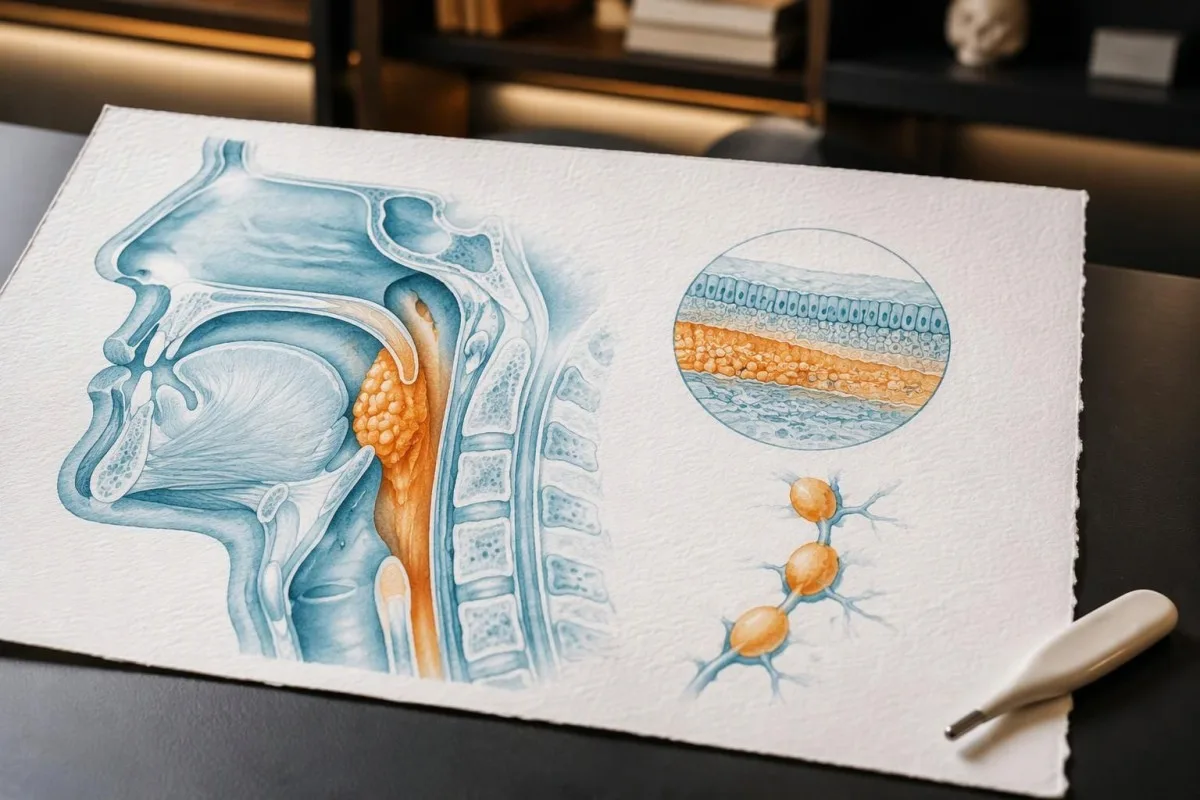
Tha PFAPA a’ nochdadh gnìomhachadh mì-iomchaidh shlighean atannach seach tinneas gabhaltach ùr a h-uile beagan sheachdainean. Mar as trice tòisichidh e mus bi an leanabh 5 bliadhna a dh’aois, ach faodaidh clann nas sine agus inbhich a bhith fo bhuaidh; mar sin, ’s e sanas a th’ anns a’ chrìoch aoise eachdraidheil, chan e às-dùnadh iomlan (Wang et al., 2021). Chan eil PFAPA a’ ciallachadh gum bi a h-uile fiabhras san àm ri teachd neo-ghabhaltach.
Tha an giorrachadh a’ toirt cunntas air 4 pàirtean: fiabhras ùineach, stomatitis aphthous, pharyngitis agus adenitis. Eu-coltach ri grunn shuidheachaidhean fiabhrasach ùineach oighreachail, chan eil aon deuchainn ginteil stèidhichte ann a dhearbhas breithneachadh PFAPA, ged a dh’fhaodas cruinneachadh taobh a-staigh theaghlaichean tachairt; chan eil pannal ginteil farsaing àicheil a’ dearbhadh PFAPA agus chan eil e a’ dùnadh a-mach gach eas-òrdugh atannach eile.
Tha Kantesti na Anailisiche deuchainn fala AI a chuidicheas le mìneachadh carson a tha feum aig toradh CRP de 80 mg/L air co-theacsa clionaigeach seach bileag breithneachaidh. Tha an buidheann agus an dòigh-obrach againn a’ toirt cunntas air an t-seirbheis, ach feumaidh clionaigear comharraidhean thar iomadh àm a cheangal ri chèile, an leanabh a sgrùdadh agus beachdachadh air suidheachaidhean nach urrainn do dh’aithisg obair-lann a ghlacadh mus aithnich e PFAPA.
Dè na comharraidhean PFAPA a dh’aithnicheas am pàtran?
Comharraidhean PFAPA mar as trice bidh fiabhras an cois amhach ghoirt, fàireagan amhaich goirt no ulcers beaga sa bheul. Tha an aon mheasgachadh a’ nochdadh a-rithist thar 3 tachartasan clàraichte no barrachd nas fiosrachaile na comharra iomallach sam bith, ged nach eil àireamh as lugha choitcheann de thachartasan ann a dhearbhas PFAPA.
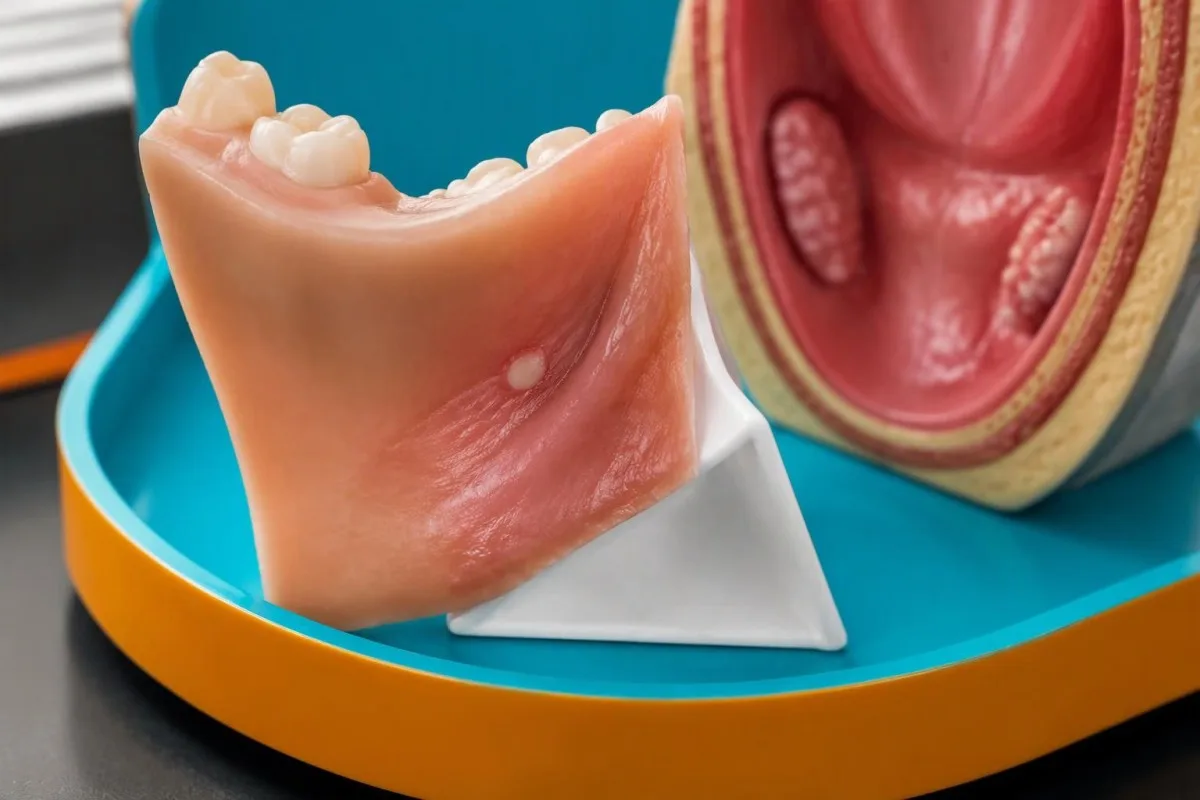
Mar as trice, ’s e lotan beaga, eu-domhainn a th’ ann an ulcers aphthous air taobh a-staigh nam bilean, nan gruaidhean no uachdaran eile sa bheul—chan e an aon rud ri builgeanan ann am buidhnean air taobh a-muigh na bile. Dh’fhaodadh nach bi ach 1 no 2 lot aig pàiste, agus dh’fhaodadh nach bi ulcers ann rè cuid de na h-ionnsaighean; faodaidh dealbh de lot a tha ri fhaicinn a bhith feumail ma thèid e à sealladh mus tig àm na coinneimh.
Faodaidh deargadh no còmhdach air na tonsils a bhith an lùib pharyngitis, agus mar sin chan urrainnear PFAPA a dhealachadh bho ghalar streptococcal a rèir coltais a-mhàin. Mar as trice, ’s ann air na nòdan cervical timcheall na h-amhaich a bhios fàireagan at, ach feumar mìneachadh eile seach a bhith gan cur às leth PFAPA gu fèin-obrachail ma tha nòd a’ sìor fhàs, ma tha fàireagan air feadh a’ chuirp at, no ma mhaireas na comharran nas fhaide na ionnsaigh 3–7 latha.
Chan eil lotan sa bheul leotha fhèin a’ dearbhadh fiabhras ùineach. Ma thig lotan beòil ath-aithriseach còmhla ri lotan gineadach, sùilean dearga goirt, atharrachaidhean lèirsinn no comharran neo-àbhaisteach air a’ chraiceann, tha cothroman eile ann, a’ gabhail a-steach pàtrain chomharran Behçet; feumar measadh luath a dhèanamh fiù ’s às dèidh dìreach 1 tachartas de phian sùla le lèirsinn lagaichte, gun a bhith a’ feitheamh ri cearcall fiabhrasach eile.
Dè cho fada ’s a mhaireas fiabhrasan PFAPA, agus dè cho tric ’s a thilleas iad?
Tha fiabhrasan PFAPA mar as trice a’ mairsinn 3–7 làithean agus a’ nochdadh a-rithist timcheall air a h-uile 2–8 seachdainean, gu tric leis na h-aon chomharran iongantach coltach ri chèile. Bidh ruitheam ro-innseach aig cuid de chloinn, ach chan eil amannan caochlaideach a’ cur PFAPA às a’ cheist gu fèin-obrachail.
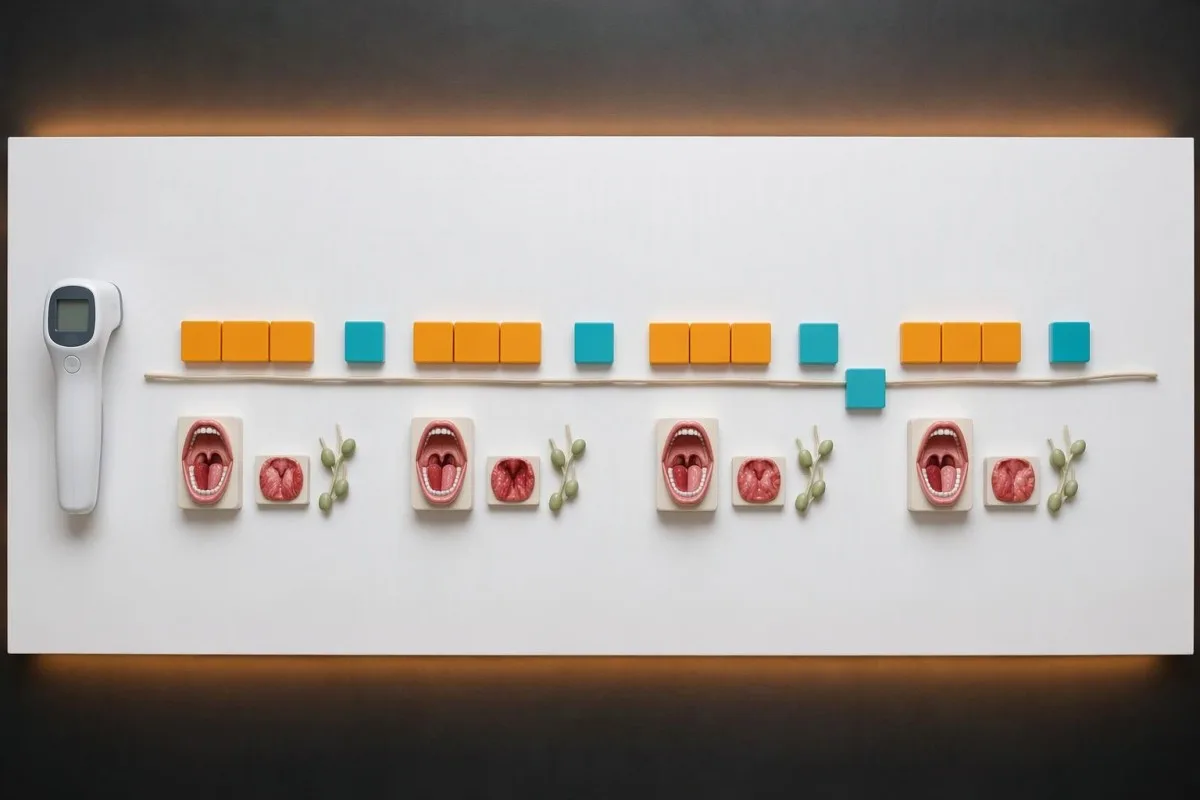
Temperatures during PFAPA attacks often reach 39–40°C, but fever height does not determine the diagnosis or reliably measure danger. The timing of associated throat symptoms, the child's appearance and the return to baseline matter more; measuring temperature with the same method also makes comparisons more useful than alternating between forehead, ear and underarm readings.
For a hypothetical child, fevers beginning on days 1, 29 and 58 with 4-day attacks suggest a repeated cycle—not proof of PFAPA. Count start-to-start intervals separately from fever-free days, and record whether corticosteroid treatment changed an interval; a shortened next cycle after treatment can otherwise make a previously regular pattern look inexplicably irregular.
A fever that does not stop is not a series of separate PFAPA episodes. If symptoms persist beyond 7 days, or recovery never occurs, clinicians reconsider infection and other inflammatory conditions; our explanation of buaidh àm deuchainn-fala also shows why a sample taken on day 1 cannot be interpreted like one taken after recovery.
Dè bu chòir a chlàradh ann an leabhar-latha chomharran PFAPA?
A PFAPA symptom diary should record episode start and finish dates, measured temperature, mouth and throat findings, neck swelling, medication timing and wellness between attacks. Even 3 carefully documented episodes can reveal details that a single clinic visit misses.

Document the thermometer method and the highest measured temperature, not just 'very hot.' For each day of a 4-day attack, note drinking, urine output, activity, cough, runny nose, abdominal symptoms and whether anyone nearby was ill; these observations distinguish a repeated inflammatory pattern from unrelated respiratory or gastrointestinal illnesses more effectively than recording fever alone.
Medication entries need the name, dose, administration time and observed response. If a prescribed medicine is given at 09:00 and fever settles by 14:00, record that interval without claiming the medicine established PFAPA; include throat swab results and whether a laboratory sample preceded treatment, because both antibiotics and corticosteroids can complicate interpretation of subsequent findings.
Well days deserve entries too. A weekly note of normal appetite, play, school attendance and any lingering symptoms prevents a diary from becoming an attack-only record; when a clinician requests a recovery sample, our ullachadh airson deuchainn bun-loidhne explains how to record recent illness and medicines rather than treating a sample 2 days after fever as an unquestionable baseline.
Carson a tha e cho cudromach a bhith gu math eadar eapasodan PFAPA?
Complete wellness between episodes strongly supports a typical PFAPA pattern: normal activity, appetite and growth should return after the 3–7-day attack. Persistent symptoms or continuing inflammation between attacks make clinicians reconsider the diagnosis.
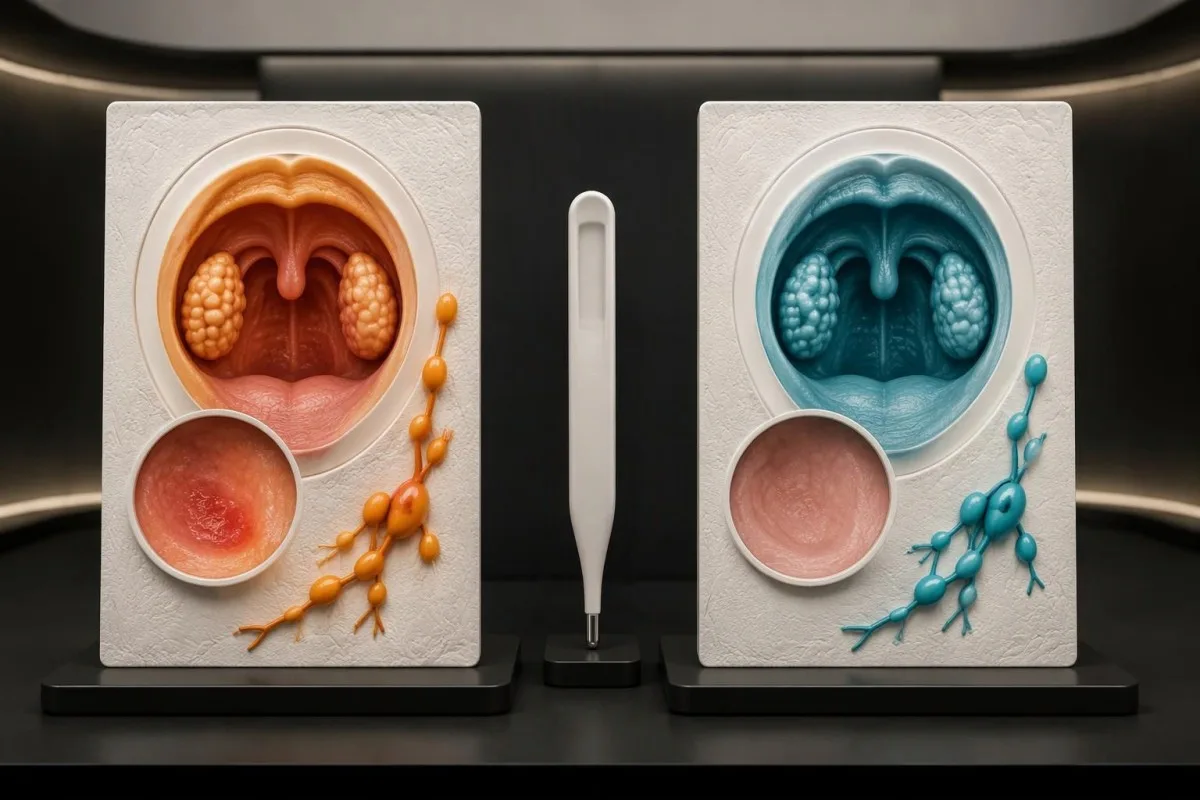
A child who is fever-free but remains exhausted, loses weight or develops daily pain has not truly returned to baseline. Growth is assessed through serial height and weight measurements, not 1 percentile in isolation; crossing growth centiles over time may justify investigation even when individual fever episodes resemble PFAPA and routine examinations during attacks look familiar.
Repeated ordinary infections are common in young children, but unusually severe, prolonged or unusual infections suggest a different evaluation. A history of 2 hospital-treated infections or recurrent deep infections matters differently from several mild colds; clinicians consider the organisms, sites, treatment response and family history, as discussed in our guide to deuchainn tric ghalaran.
Inflammatory markers usually fall toward the laboratory reference range between PFAPA attacks, but an immediately post-fever sample may still reflect recovery. A persistent CRP of 25 mg/L on repeated genuinely well-day samples is not proof of another disease, yet it deserves explanation; a clinician may check for an unnoticed infection, ongoing inflammatory symptoms or a sampling timeline that was mislabeled.
Dè tha CRP, ESR agus cunntasan fala a’ sealltainn ann am PFAPA?
PFAPA attacks can raise CRP, ESR and neutrophil counts, but none of these tests confirms PFAPA or excludes infection. Many laboratories use a CRP upper reference limit around 5 mg/L, agus cuid eile a’ cleachdadh 10 mg/L; the report's own range matters.
Consider a hypothetical child with CRP 80 mg/L during fever and 3 mg/L after recovery. That change supports an episodic inflammatory process but does not identify its cause; infection can produce the same pattern, while ESR may normalize more slowly than CRP, making a modestly raised recovery ESR less surprising than persistent symptoms or repeatedly elevated CRP.
White-cell interpretation must use age-appropriate absolute counts rather than adult ranges or percentages alone. At Kantesti, we emphasize that CRP 8 mg/dL equals 80 mg/L—a tenfold unit conversion that can otherwise create a false impression of improvement; our coimeas WBC agus CRP againn explains why these markers can disagree because they change at different rates.
Procalcitonin is sometimes considered when serious bacterial infection is suspected, but it is not a standalone PFAPA discriminator. A low result, including a value below 0.1 ng/mL, cannot safely overrule a concerning examination or very early illness; the limits described in our mìneachadh procalcitonin matter more than using one reassuring number to justify home treatment.
Ciamar a nì luchd-clionaigeach breithneachadh air PFAPA?
PFAPA diagnosis is clinical: clinicians identify repeated characteristic attacks, document recovery between them and exclude plausible alternatives. Onset before age 5 supports traditional criteria, but later onset does not prevent a diagnosis when the overall pattern fits.
The diagnostic process usually starts with history and examination rather than an extensive panel of rare-disease tests. Wang et al. (2021) describe the value of stereotyped episodes, absence of typical respiratory symptoms, negative relevant cultures and response to prescribed corticosteroids; however, 1 negative throat swab or 1 rapid response cannot independently establish PFAPA, and classification criteria are not identical to bedside diagnosis.
Streptococcal testing addresses the current throat illness, while an ASO antibody test mainly reflects previous exposure. An ASO result of 400 IU/mL does not prove that today's recurrent fever is active strep infection; age, local reference ranges and symptom timing affect interpretation, as explained in our discussion of ASO and recent exposure.
Tha Kantesti na Inneal mion-sgrùdaidh deuchainn fala le cumhachd AI that can contextualize laboratory units and repeated results, but 2 matching reports cannot confirm PFAPA. Our stiùireadh teicnigeach agus clionaigeach againn information should not be read as validation of a PFAPA diagnostic test; pediatric or rheumatology assessment remains necessary when the pattern is atypical, severe or uncertain.
Ciamar a dhealaichear PFAPA bho ghalaran a thilleas?
Repeated infections are more likely when episodes follow sick contacts, have varying symptoms or include cough, runny nose, diarrhea or a confirmed pathogen. PFAPA more often repeats a similar 3–7-day pattern with complete wellness between attacks, but the two can coexist.
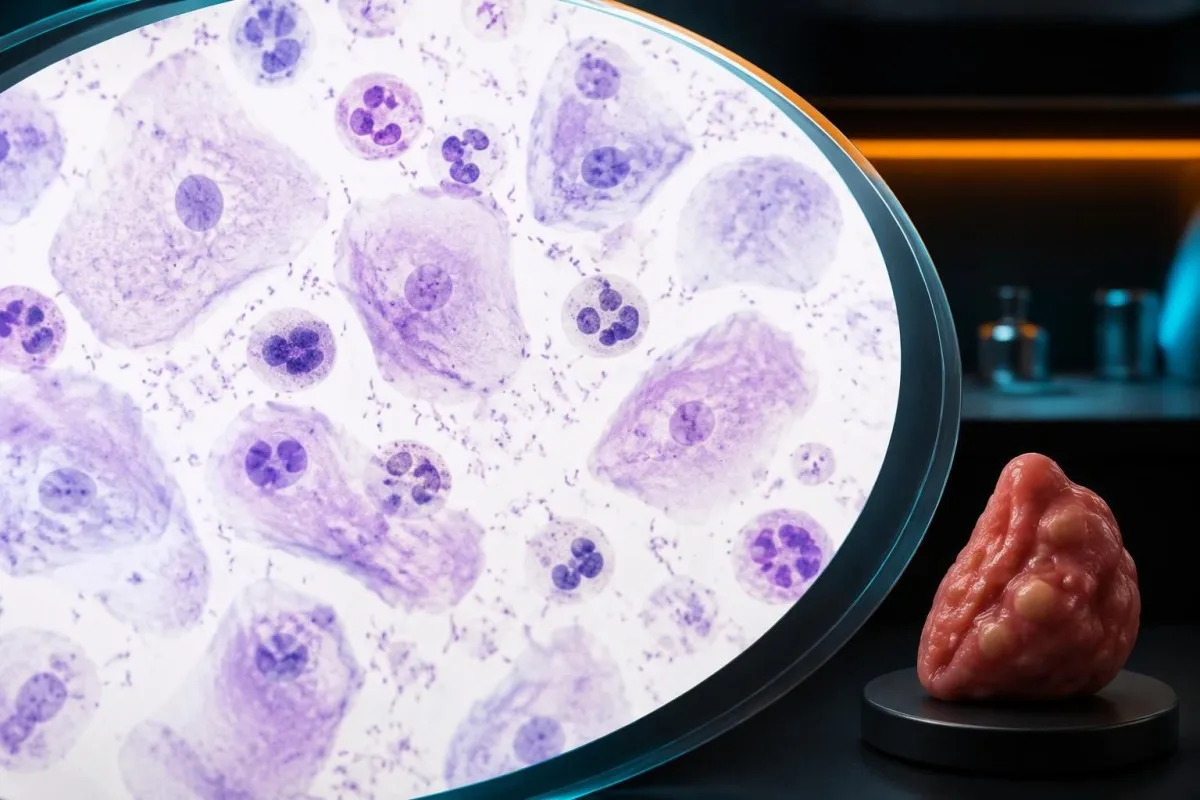
A positive respiratory PCR does not always explain the entire fever history. Adenovirus can remain detectable after an illness, so 1 positive result must be matched to current symptoms, examination and timing; our discussion of lorg agus sgaoileadh adenovirus explains why a molecular result may indicate recent exposure rather than the cause of every subsequent attack.
Longer-lasting sore throat, fatigue and gland enlargement can suggest a different illness rather than PFAPA. EBV antibody patterns distinguish recent infection from prior exposure more effectively than a single positive IgG result; our stiùireadh airson pàtran antibody EBV explains the roles of 3 commonly reported markers—VCA IgM, VCA IgG and EBNA IgG—without equating past exposure with today's symptoms.
Antibiotic response is also easy to misread. If an antibiotic begins on day 4 and the fever ends on day 5, spontaneous resolution of a PFAPA attack is possible; conversely, a confirmed bacterial infection still requires appropriate treatment, and neither previous PFAPA nor prior antibiotic failure permits a new illness with different symptoms to be dismissed without assessment.
Dè na h-eas-òrdughan fiabhrais ràitheil eile a dh’fhaodadh a bhith coltach ri PFAPA?
Neutropenia chuairteach and inherited autoinflammatory disorders can resemble PFAPA, especially when mouth sores accompany recurring fever. Approximately 21-day cycles, severe infections, marked abdominal or chest pain, unusual rashes or persistent inflammation help clinicians decide which alternatives to investigate.
Cyclic neutropenia can produce recurrent fever, mouth sores and gum problems while a blood count between low-count periods looks normal. When suspected, clinicians may request CBCs 2–3 times weekly for about 6 weeks to identify repeated neutrophil nadirs; an absolute neutrophil count below 0.5 × 10^9/L during fever requires urgent clinical assessment rather than being labeled a routine PFAPA attack.
Familial Mediterranean fever often causes shorter attacks, commonly 12–72 hours, with abdominal or chest pain from serosal inflammation or joint symptoms. Our mìneachadh air deuchainnean MEFV shows why genotype and symptoms must be interpreted together; TRAPS may produce longer attacks, sometimes over 7 days, while mevalonate kinase deficiency can involve diarrhea, vomiting and attacks triggered by vaccination or other stressors.
Ancestry and family history guide assessment, but neither should become a gatekeeper that excludes an inherited disorder. Persistently raised serum amyloid A between attacks can indicate ongoing inflammation and requires context, as our serum amyloid A guide explains; a single high value during a 4-day fever does not diagnose amyloidosis, and typical PFAPA should not automatically be assigned the complication risks of other syndromes.
Dè na comharran rabhaidh co-cheangailte ri fiabhras a dh’fheumas measadh èiginneach?
Faigh cùram èiginneach for fever with breathing difficulty, reduced responsiveness, a stiff neck, a non-blanching rash or severe dehydration. An infant younger than 3 mìosan le teòthachd de 38°C no nas àirde needs urgent medical assessment, even if a family member has PFAPA.
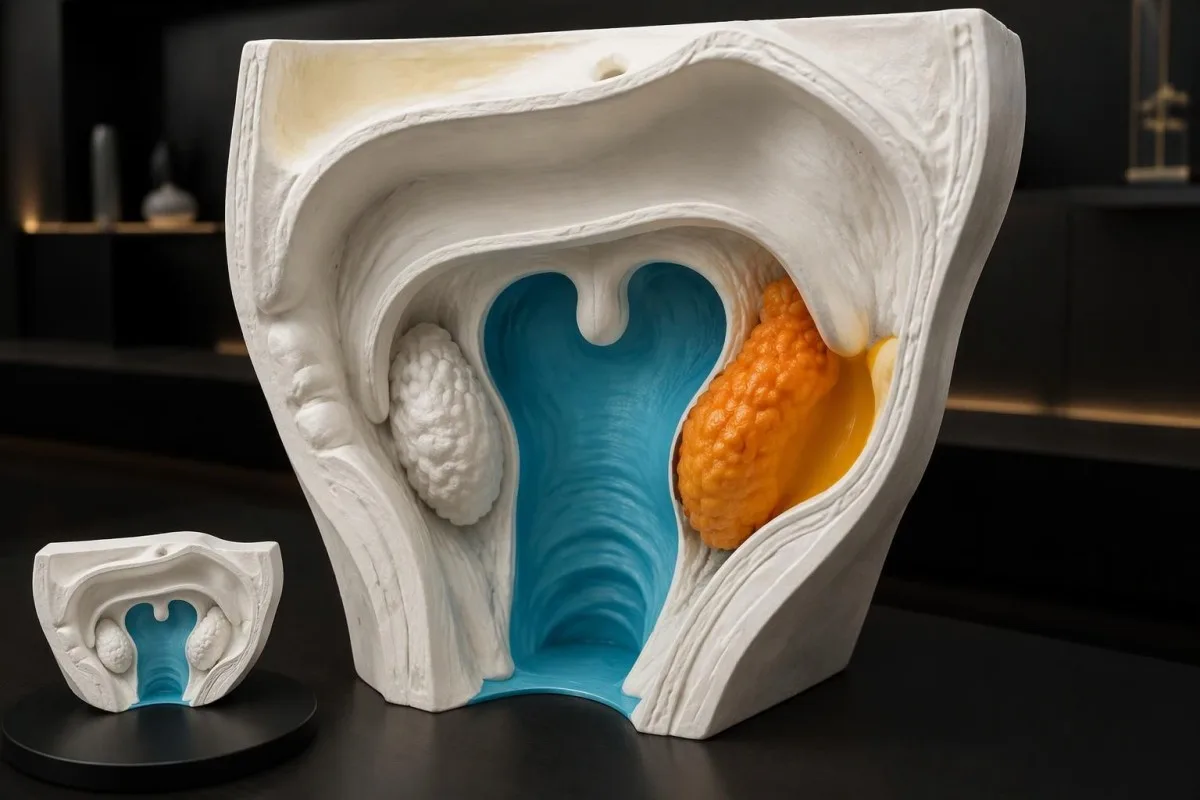
Difficulty swallowing saliva, drooling, a muffled voice or marked one-sided throat swelling can indicate an airway-threatening problem rather than a usual PFAPA flare. A child aged 3–6 months with a temperature of 39°C or higher also needs urgent assessment; contact local emergency services for immediate danger instead of waiting for a blood result or an expected fever endpoint.
Fever lasting 5 days or longer warrants prompt medical review, particularly with red eyes, cracked lips, rash or swollen hands and feet. These findings can suggest Kawasaki disease, discussed in our Kawasaki assessment guide; incomplete presentations occur, so clinicians do not require every classic feature, and concerning symptoms should be assessed before day 5 rather than waiting for a threshold.
New severe localized abdominal pain, persistent vomiting or inability to walk normally should not be attributed to PFAPA without examination. Even 1 normal WBC or CRP result cannot reliably exclude an early abdominal emergency, as our appendicitis laboratory limits explain; children with a known fever syndrome can still develop unrelated illnesses, especially when the attack looks different from their established pattern.
Ciamar a thathar a’ làimhseachadh ionnsaighean PFAPA, agus dè tha freagairt do steroids a’ ciallachadh?
PFAPA attack treatment focuses on comfort, hydration and, when prescribed, corticosteroids that often stop fever within hours. Published prednisone or prednisolone regimens range from 0.5–2 mg/kg, but dosing, maximum dose and eligibility must be set by the treating clinician.
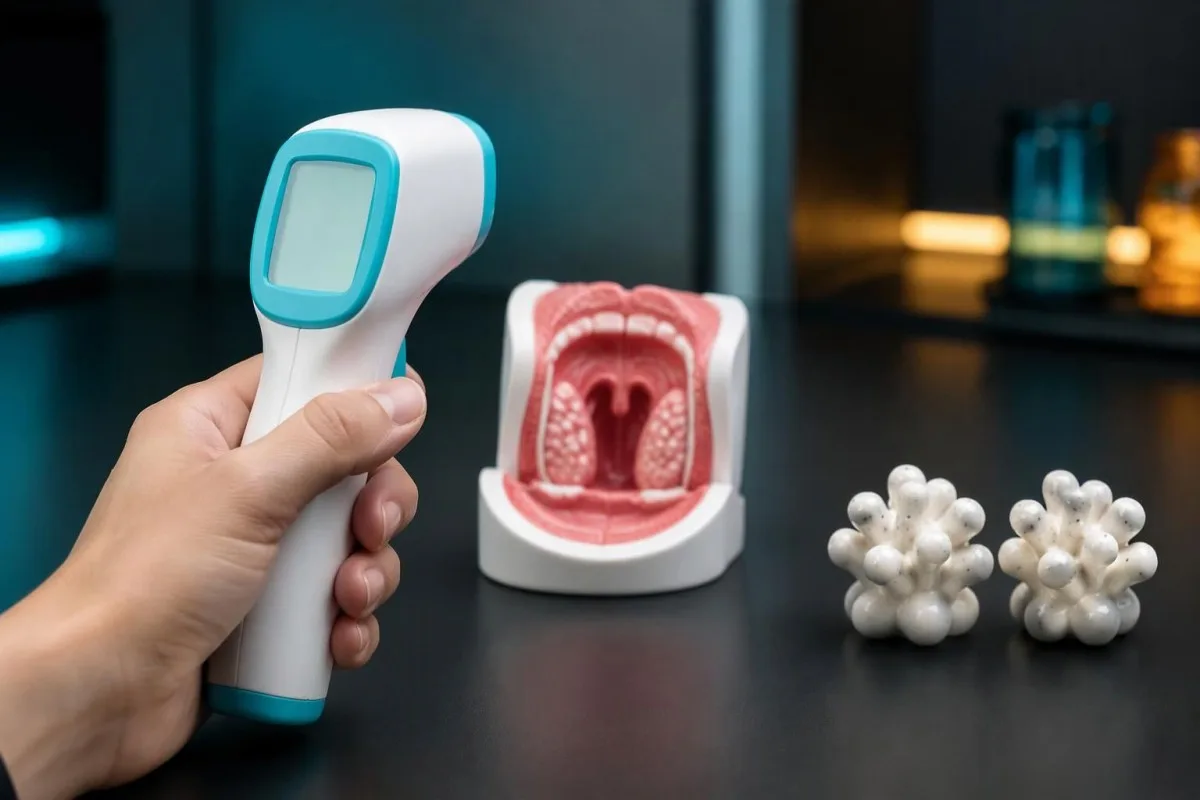
Vanoni et al. (2016) describe rapid corticosteroid responses alongside the limitation that treatment may shorten the interval to the next attack. Reports summarized in that review estimated shorter intervals in approximately 25–50% of patients, but these observations come from heterogeneous studies rather than a precise prediction for an individual child; attack control and long-term prevention are separate treatment goals.
For a hypothetical 20-kg child, a clinician-selected dose of 1 mg/kg would equal 20 mg; this calculation illustrates weight-based prescribing, not a home-treatment recommendation. Families need a written plan explaining when a familiar attack qualifies for treatment, when to seek assessment first and what to do if the expected response does not occur—especially if symptoms suggest a new infection.
Antipyretics may improve discomfort even when they do not end the inflammatory episode. Choose child-appropriate preparations with a clinician or pharmacist, avoid aspirin unless specifically prescribed and do not duplicate paracetamol/acetaminophen across 2 products; Kantesti cannot authorize steroid treatment, and our discussion of AI eadar-mhìneachadh ann an clann explains why pediatric decisions need more than laboratory pattern recognition.
Cuin a thathar a’ beachdachadh air cungaidhean dìonach no tonsileactamaidh?
Prevention or tonsillectomy may be considered when PFAPA attacks repeatedly disrupt daily life or attack treatment is unsatisfactory. A Cochrane review included 2 randomized trials involving 67 children, finding benefit from tonsil surgery while emphasizing the limited size of the evidence base.
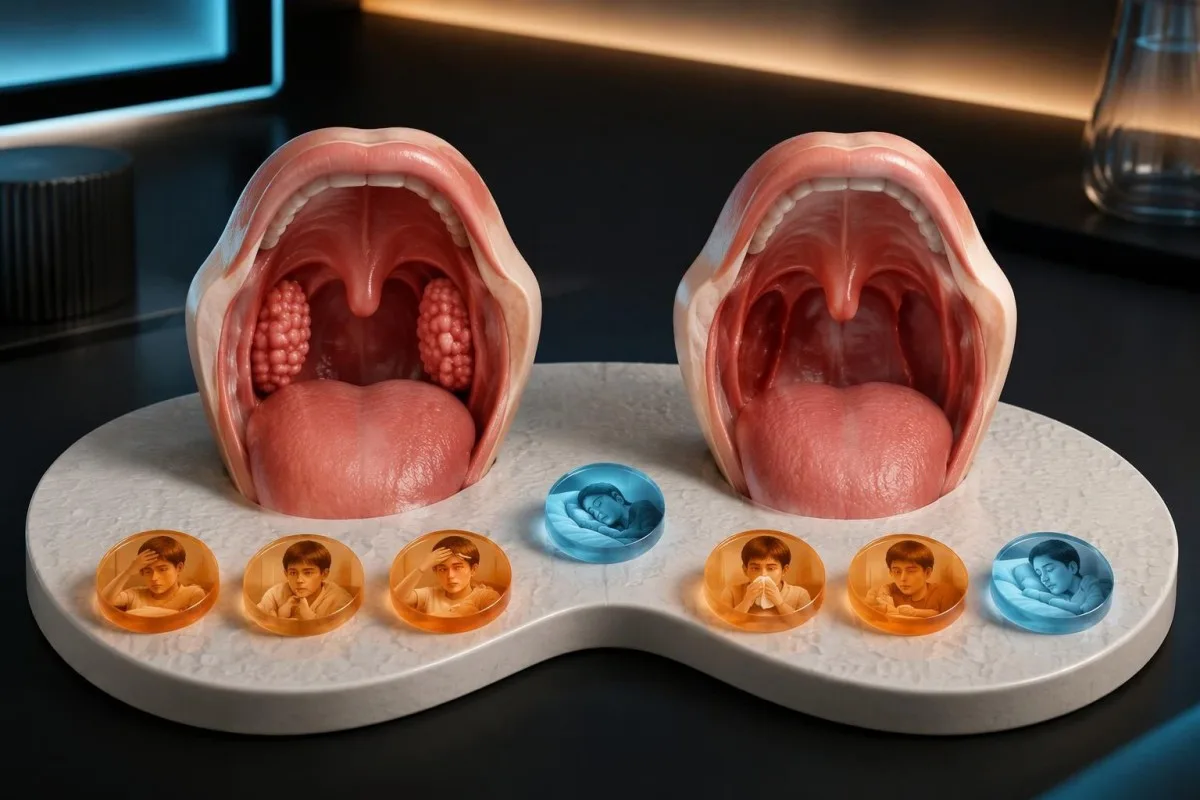
Burton et al. (2019) judged the evidence for several tonsillectomy outcomes to be of moderate certainty, but the trials were too small to characterize uncommon harms confidently. The evidence concerns selected children rather than every person with recurrent sore throat; a child missing 4 school days each month may value potential benefit differently from a child with infrequent, easily managed attacks.
Colchicine is sometimes used to reduce attacks under specialist supervision, whereas cimetidine has less convincing evidence. Treatment selection should consider the diagnosis, kidney and liver function, other medicines and the possibility of an inherited fever disorder; when several options exist, agree in advance on a measurable goal, such as fewer attacks across 3 months, rather than assuming a changed laboratory number demonstrates success.
Tonsillectomy carries postoperative pain, dehydration, anesthesia-related risks and bleeding risk, even when it improves PFAPA. Kantesti's stiùireadh againn air AI cunntachail supports a clear boundary: neither 1 elevated inflammatory marker nor an automated report can decide whether surgery is appropriate; that discussion belongs with the treating pediatric team and an ENT specialist who can assess the child's individual risks.
Dè an ath-chùram a chuidicheas clann, inbhich agus teaghlaichean le PFAPA?
PFAPA follow-up should track attack burden, growth or weight, treatment response and any symptoms between episodes. Many childhood cases improve over several years, but persistence, relapse and adult-onset disease occur; a 3-month review interval can be a practical individualized plan rather than a universal rule.

Adults require the same attention to repeated patterns and alternative causes, not an assumption that PFAPA is impossible after childhood. Fever with oral sores and pharyngitis can support the diagnosis, but new constitutional symptoms, persistent gland enlargement or abnormal findings between attacks need assessment; a 35-year-old with a first prolonged fever should not self-diagnose PFAPA from an online symptom match.
Prepare a concise appointment summary: attack dates, duration, associated features, well-day symptoms, test results and response to prescribed treatment. Include 1 clearly labeled attack sample and any clinician-requested recovery sample, rather than ordering a broad panel every month; repeated testing is useful only when it answers a specific question, such as whether inflammation persists or neutrophil counts cycle.
Tha Kantesti na àrd-ùrlar mìneachaidh deuchainn fala AI that can help explain uploaded CBC and inflammatory-marker reports alongside their dates, units and stated reference ranges. For a family sharing 2 or more records, check each person's identity and consent before upload, and review our prìobhaideachd agus làimhseachadh dàta; AI explanation does not replace pediatric examination, urgent triage or a specialist diagnosis.
Foillseachaidhean rannsachaidh: fianais an coimeas ri iùil-lann-chùil
PFAPA evidence comes from clinical descriptions, differential-diagnosis research and treatment studies—not from a specific clotting or serum-protein test. The 2 background publications below explain other laboratory topics and should not be mistaken for studies validating PFAPA diagnosis.
The peer-reviewed PFAPA review by Wang et al. (2021), treatment review by Vanoni et al. (2016) and Cochrane analysis by Burton et al. (2019) directly inform this article's clinical discussion. The surgical review's 67-child evidence base illustrates why certainty must be proportionate to study size; a named source supports a specific claim, not every recommendation made elsewhere on the page.
Kantesti clotting test background guide agus iùl cùl-fhiosrachaidh mu phròtain sèirime accompany the 2 Zenodo records listed below. Neither aPTT nor an albumin/globulin ratio confirms PFAPA, and neither guide establishes that routine testing of those markers improves PFAPA care; additional tests should follow an identified clinical concern rather than the availability of a panel.
Evidence interpretation should distinguish a repository-hosted educational guide from a peer-reviewed condition-specific study or systematic review. Our inbhean susbaint mheidigeach explain the editorial approach; for a child with 3 apparently similar attacks, the practical priority remains documented recovery, targeted exclusion of alternatives and a clear safety plan, not accumulating more citations or tests that do not answer the clinical question.
Ceistean cumanta
Dè a th’ ann an sionndrom PFAPA?
’S eàrr-syndrome PFAPA na thinneas fèin-at atachail a dh’adhbhraicheas fiabhras ath-chuairteach còmhla ri lotan aphthach sa bheul, sèid sa pharynx agus nodan lymph ceirbheacsach ata. Mar as trice mairidh na h-amannan seo 3–7 làithean agus thig iad a-rithist gach beagan sheachdainean, le slàinte àbhaisteach eadar na h-ionnsaighean. Tòisichidh an tinneas mar as trice ro aois 5, ged a dh’fhaodadh buaidh a bhith aige air clann nas sine agus inbhich cuideachd. Chan eil aon deuchainn fala ann a dhearbhas PFAPA, agus mar sin tha am breithneachadh an urra ris a’ phàtran clionaigeach ath-chuairteach agus ri measadh air adhbharan eile a dh’fhaodadh a bhith ann.
Dè cho tric ’s a bhios fiabhrasan PFAPA a’ tachairt?
Bidh fiabhrasan PFAPA a’ tilleadh gu tric timcheall air a h-uile 2–8 seachdainean, agus mar as trice mairidh gach ionnsaigh 3–7 làithean. Bidh cuairtean glè riaghailteach aig cuid de chloinn, agus bidh amannan eadar-dhealaichte aig cuid eile. Faodaidh làimhseachadh le corticosteroids an ùine gus an ath ionnsaigh a ghiorrachadh, agus mar sin bu chòir àm na cungaidh a chlàradh ann an leabhar-latha an fhiabhrais. Feumar ath-mheasadh a dhèanamh ma tha am fiabhras leantainneach no mura tig an leanabh gu bhith gu math eadar na h-ionnsaighean, seach a bhith a’ gabhail ris gu bheil seo a’ freagairt air PFAPA.
An urrainn do dheuchainn fala le CRP àrd PFAPA a dhearbhadh?
Chan urrainn do thoradh CRP àrd PFAPA a dhearbhadh, oir faodaidh galairean agus eas-òrdughan sèididh eile an aon àrdachadh adhbharachadh. Mar eisimpleir, tha CRP de 80 mg/L rè fiabhras agus 3 mg/L an dèidh faighinn seachad a’ toirt taic do shèid thursach, ach chan eil e ag aithneachadh a h-adhbhair. Bidh mòran de dh’obair-lannan a’ cleachdadh crìoch iomraidh àrd airson CRP de mu 5 mg/L, agus bidh cuid a’ cleachdadh 10 mg/L. Bidh clionaigearan a’ mìneachadh an toraidh còmhla ris na comharraidhean, an sgrùdadh, àm an t-samplachaidh agus deuchainnean iomchaidh sam bith airson galairean.
A bheil PFAPA gabhaltach, agus a bheil feum air antibiotaicean?
Chan eil PFAPA fhèin gabhaltach, agus cha làimhsich antibiotaicean am pròiseas sèididh bunaiteach a tha ga adhbharachadh. Faodaidh ionnsaigh àbhaisteach a mhaireas 3–7 làithean tighinn gu crìch gu nàdarra às dèidh tòiseachadh air antibiotaic, agus mar sin dh’fhaodadh e nochdadh gu meallta gun do dh’obraich an antibiotaic. Faodaidh clann le PFAPA tinneasan bhìorasach gabhaltach no galairean bactaraidh fhaighinn cuideachd. Bu chòir fiabhras ùr le comharraidhean eadar-dhealaichte, conaltradh ri daoine tinn no adhbhar bactaraidh dearbhte a mheasadh agus a làimhseachadh a rèir a shuidheachaidh fhèin.
A bheil freagairt luath do prednisone a’ dearbhadh PFAPA?
Tha freagairt luath do prednisone no prednisolone a chaidh òrdachadh a’ toirt taic do PFAPA, ach chan eil i a’ dearbhadh a’ bhreithneachaidh. Tha na dòsan de prednisone a chaidh fhoillseachadh airson PFAPA a’ gabhail a-steach 0.5–2 mg/kg; tha an dearbh-dòs agus an ìre as àirde air an suidheachadh leis an neach-clionaigeach a tha a’ toirt seachad an làimhseachaidh. Faodaidh corticosteroids comharraidhean bho thinneasan eile a chumail fodha, agus faodaidh iad an ùine gus an ath-ionnsaigh PFAPA a ghiorrachadh. Bu chòir do theaghlaichean plana làimhseachaidh sgrìobhte a leantainn agus measadh fhaighinn mus tòisich iad air làimhseachadh ma tha tachartas gu h-annasach dona no eadar-dhealaichte.
Cuin a bu chòir cùram èiginneach fhaighinn airson pàiste aig a bheil amharas gu bheil PFAPA air?
Feumaidh pàiste aig a bheil amharas gu bheil PFAPA air cùram èiginneach fhaighinn ma tha fiabhras air còmhla ri duilgheadas analach, nas lugha de mhothachadh, amhach rag, broth nach searg nuair a bhrùthar air no dìth-uisgeachaidh throm. Feumaidh pàiste sam bith fo 3 mìosan a dh’aois aig a bheil teòthachd 38°C no nas àirde measadh meidigeach èiginneach fhaighinn. Tha fiabhras a mhaireas 5 làithean no nas fhaide cuideachd a’ cur feum air lèirmheas luath, gu h-àraidh ma tha sùilean dearga, broth, bilean sgàinte no làmhan is casan ata ann. Chan eil breithneachadh PFAPA a chaidh a dhèanamh roimhe a’ ciallachadh gu bheil e sàbhailte tinneas ùr le comharraidhean eadar-dhealaichte a leigeil seachad.
Faigh mìneachadh air na toraidhean deuchainn fala agad
Luchdaich suas aithisg an obair-lann agad agus mìnichidh AI Kantesti gach bith-chomharradh ann an cànan soilleir taobh a-staigh diogan. Air a chleachdadh le còrr is 2 mhillean neach air feadh an t-saoghail.
Tùsan
- Klein, T., Mitchell, S., & Weber, H. (2026). Raon àbhaisteach aPTT: Stiùireadh air D-Dimer agus dòrtadh fala Protein C. Rannsachadh Meidigeach AI Kantesti. DOI
- Klein, T., Mitchell, S., & Weber, H. (2026). Stiùireadh air Pròtainean Serum: Globulins, Albumin agus Deuchainn Fala Co-mheas A/G. Rannsachadh Meidigeach AI Kantesti. DOI
- Wang A et al. (2021). Periodic fever, aphthous stomatitis, pharyngitis, and adenitis (PFAPA) syndrome: A review. World Journal of Otorhinolaryngology - Head and Neck Surgery. DOI
- Vanoni F et al. (2016). PFAPA syndrome: a review on treatment and outcome. Pediatric Rheumatology. DOI
- Burton MJ et al. (2019). Tonsillectomy for periodic fever, aphthous stomatitis, pharyngitis and cervical adenitis syndrome (PFAPA). Stòr-dàta Cochrane de Lèirmheasan Siostamach. DOI
- 2M+Deuchainnean air an sgrùdadh
- 127+Dùthchannan
- 100+Cànanan
Mu dheidhinn an sgioba mheidigeach


Comharran earbsa E-E-A-T
Eòlas
Lèirmheas clionaigeach air a stiùireadh le lighiche air sruthan-obrach mìneachaidh obair-lann.
Eòlas
Fòcas air leigheas obair-lann air mar a bhios bith-chomharraidhean (biomarkers) a’ giùlan ann an co-theacsa clionaigeach.
Ùghdarrasachd
Ath-sgrùdadh meidigeach leis an Dr Thomas Klein, le tabhartasan bhon Dr Sarah Mitchell agus an t-Oll. Dr Hans Weber.
Earbsachd
Mìneachadh stèidhichte air fianais le slighean leanmhainn soilleir gus dragh a lughdachadh.





Àicheadh meidigeach
Tha an artaigil seo dìreach airson adhbharan foghlaim agus chan eil e a’ dèanamh comhairle mheidigeach. Cuir fios an-còmhnaidh gu solaraiche cùram slàinte teisteanasach airson co-dhùnaidhean breithneachaidh is leigheis.
Foillsichte · Cuir fios chun sgioba dheasachaidh
Foillsichte le Kantesti Ltd, clàraichte ann an Sasainn agus sa Chuimrigh, àireamh companaidh. 17090423, Lunnainn, an Rìoghachd Aonaichte.
