
El síndrome PFAPA puede causar fiebres altas recurrentes con úlceras bucales, dolor de garganta e inflamación de los ganglios del cuello, que suelen durar de 3 a 7 días, con recuperación completa entre episodios. El diagnóstico depende del patrón repetido y de descartar otras causas, no de un único análisis de sangre anormal. Llevar un diario de síntomas ayuda; un episodio inusualmente intenso o diferente requiere una nueva evaluación.

Conclusiones clave
- Síndrome PFAPA suele causar episodios de fiebre que duran de 3 a 7 días, separados por varias semanas de buen estado de salud.
- Síntomas del síndrome PFAPA incluyen úlceras aftosas bucales, faringitis e inflamación de los ganglios linfáticos cervicales; no es necesario que aparezcan juntos los 3 signos.
- Patrón temporal de la fiebre suele seguir un ciclo aproximado de 2 a 8 semanas, pero no es necesario que haya una regularidad exacta en el calendario para establecer el diagnóstico.
- Diarios de síntomas deben registrar las fechas de los episodios, la temperatura máxima en °C o °F, los síntomas, los medicamentos y la recuperación entre episodios.
- Análisis de sangre pueden mostrar niveles elevados de CRP y neutrófilos durante los episodios; una CRP de 80 mg/L no permite distinguir el síndrome PFAPA de una infección.
- Neutropenia cíclica puede recurrir aproximadamente cada 21 días y requerir hemogramas seriados en lugar de un solo CBC tranquilizador.
- Decisiones de tratamiento puede incluir corticosteroides recetados por un médico, medicamentos preventivos o amigdalectomía; ninguna de estas medidas debe derivarse únicamente de un resultado de laboratorio.
- Evaluación urgente se necesita para cualquier bebé menor de 3 meses con una temperatura de 38 °C o más, o cualquier niño con dificultad para respirar, menor capacidad de respuesta o una erupción que no palidece a la presión.
¿Qué es el síndrome PFAPA y qué causa las fiebres?
Síndrome PFAPA es una afección autoinflamatoria que causa episodios repetidos de fiebre con aftas bucales, faringitis y adenitis cervical. Los ataques suelen durar 3–7 días; los niños suelen recuperar su energía, apetito y crecimiento habituales entre los episodios.
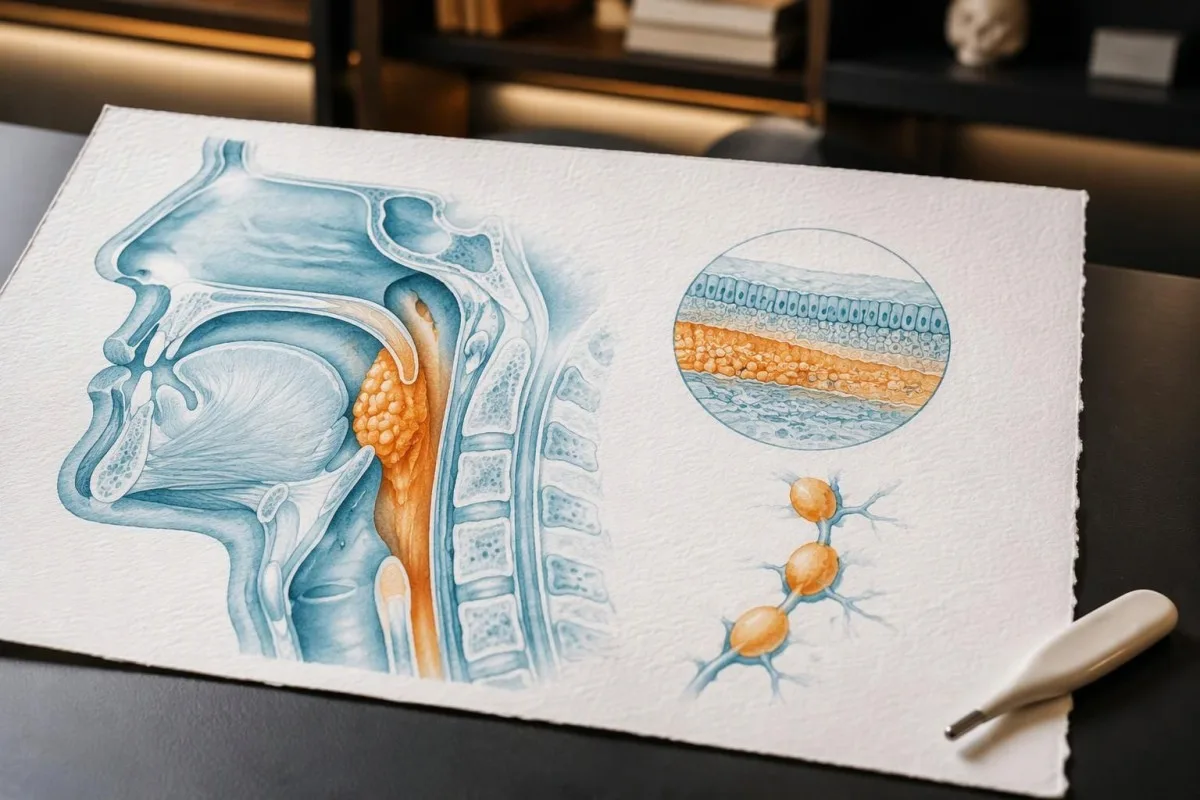
PFAPA refleja una activación inadecuada de las vías inflamatorias, en lugar de una nueva enfermedad contagiosa cada pocas semanas. El inicio suele producirse antes de los 5 años, pero también puede afectar a niños mayores y adultos; por lo tanto, el límite de edad histórico es una pista, no una exclusión absoluta (Wang et al., 2021). PFAPA no significa que toda fiebre futura sea no infecciosa.
El acrónimo describe 4 componentes: fiebre periódica, estomatitis aftosa, faringitis y adenitis. A diferencia de varias afecciones hereditarias de fiebre periódica, PFAPA no tiene una prueba genética única establecida que confirme el diagnóstico, aunque puede haber agrupación familiar; un panel genético amplio negativo no demuestra PFAPA ni descarta todos los trastornos inflamatorios alternativos.
Kantesti es un Analizador de sangre con inteligencia artificial que puede ayudar a explicar por qué un resultado de CRP de 80 mg/L requiere contexto clínico y no una etiqueta diagnóstica. Nuestra organización y enfoque describen el servicio, pero identificar PFAPA requiere que un médico relacione los síntomas de varios episodios, examine al niño y considere afecciones que un informe de laboratorio no puede detectar.
¿Qué síntomas del síndrome PFAPA permiten reconocer el patrón?
Síntomas del síndrome PFAPA suelen combinar fiebre con dolor de garganta, ganglios sensibles en el cuello o pequeñas aftas bucales. La misma combinación recurrente a lo largo de 3 o más episodios documentados es más informativa que cualquier síntoma aislado, aunque no existe un número mínimo universal de episodios que confirme PFAPA.
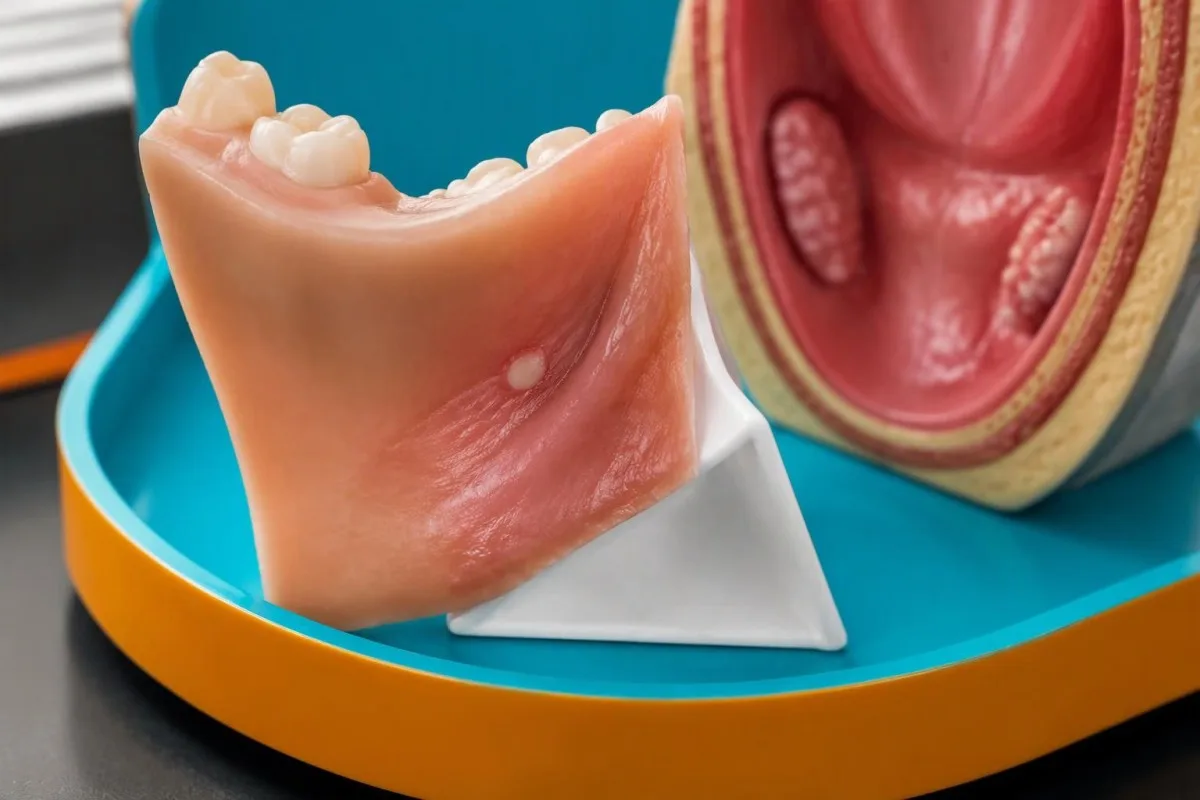
Las aftas suelen ser pequeñas llagas superficiales en la parte interna de los labios, las mejillas u otras superficies bucales; no son lo mismo que las ampollas agrupadas en el labio exterior. Un niño puede tener solo 1 o 2 llagas, y las aftas pueden estar ausentes durante algunos ataques; fotografiar una llaga visible puede ser útil si desaparece antes de la consulta.
La faringitis puede incluir enrojecimiento o una capa sobre las amígdalas, por lo que el aspecto por sí solo no permite distinguir PFAPA de una infección estreptocócica. Los ganglios inflamados suelen ser los ganglios cervicales alrededor del cuello, mientras que un ganglio que aumenta de tamaño de manera persistente, la inflamación generalizada de los ganglios o los síntomas que duran más de un ataque de 3–7 días requieren otra explicación, en lugar de atribuirse automáticamente a PFAPA.
Las aftas bucales por sí solas no constituyen un diagnóstico de fiebre periódica. Las aftas recurrentes acompañadas de úlceras genitales, ojos rojos dolorosos, cambios en la visión o hallazgos cutáneos inusuales plantean otras posibilidades, incluida los patrones de síntomas de Behçet; incluso 1 episodio de dolor ocular con visión alterada requiere una evaluación inmediata, sin esperar otro ciclo febril.
¿Cuánto duran las fiebres por PFAPA y con qué frecuencia reaparecen?
Las fiebres por PFAPA suelen durar 3–7 días y recurrir aproximadamente cada 2–8 semanas, a menudo con síntomas notablemente similares. Algunos niños desarrollan un ritmo predecible, pero los intervalos variables no descartan automáticamente PFAPA.

Temperatures during PFAPA attacks often reach 39–40°C, but fever height does not determine the diagnosis or reliably measure danger. The timing of associated throat symptoms, the child's appearance and the return to baseline matter more; measuring temperature with the same method also makes comparisons more useful than alternating between forehead, ear and underarm readings.
For a hypothetical child, fevers beginning on days 1, 29 and 58 with 4-day attacks suggest a repeated cycle—not proof of PFAPA. Count start-to-start intervals separately from fever-free days, and record whether corticosteroid treatment changed an interval; a shortened next cycle after treatment can otherwise make a previously regular pattern look inexplicably irregular.
A fever that does not stop is not a series of separate PFAPA episodes. If symptoms persist beyond 7 days, or recovery never occurs, clinicians reconsider infection and other inflammatory conditions; our explanation of efectos del momento de la prueba de sangre also shows why a sample taken on day 1 cannot be interpreted like one taken after recovery.
¿Qué debe registrar un diario de síntomas de PFAPA?
A PFAPA symptom diary should record episode start and finish dates, measured temperature, mouth and throat findings, neck swelling, medication timing and wellness between attacks. Even 3 carefully documented episodes can reveal details that a single clinic visit misses.

Document the thermometer method and the highest measured temperature, not just 'very hot.' For each day of a 4-day attack, note drinking, urine output, activity, cough, runny nose, abdominal symptoms and whether anyone nearby was ill; these observations distinguish a repeated inflammatory pattern from unrelated respiratory or gastrointestinal illnesses more effectively than recording fever alone.
Medication entries need the name, dose, administration time and observed response. If a prescribed medicine is given at 09:00 and fever settles by 14:00, record that interval without claiming the medicine established PFAPA; include throat swab results and whether a laboratory sample preceded treatment, because both antibiotics and corticosteroids can complicate interpretation of subsequent findings.
Well days deserve entries too. A weekly note of normal appetite, play, school attendance and any lingering symptoms prevents a diary from becoming an attack-only record; when a clinician requests a recovery sample, our guía de preparación para las pruebas basales explains how to record recent illness and medicines rather than treating a sample 2 days after fever as an unquestionable baseline.
¿Por qué es tan importante sentirse bien entre los episodios de PFAPA?
Complete wellness between episodes strongly supports a typical PFAPA pattern: normal activity, appetite and growth should return after the 3–7-day attack. Persistent symptoms or continuing inflammation between attacks make clinicians reconsider the diagnosis.

A child who is fever-free but remains exhausted, loses weight or develops daily pain has not truly returned to baseline. Growth is assessed through serial height and weight measurements, not 1 percentile in isolation; crossing growth centiles over time may justify investigation even when individual fever episodes resemble PFAPA and routine examinations during attacks look familiar.
Repeated ordinary infections are common in young children, but unusually severe, prolonged or unusual infections suggest a different evaluation. A history of 2 hospital-treated infections or recurrent deep infections matters differently from several mild colds; clinicians consider the organisms, sites, treatment response and family history, as discussed in our guide to pruebas de infecciones frecuentes.
Inflammatory markers usually fall toward the laboratory reference range between PFAPA attacks, but an immediately post-fever sample may still reflect recovery. A persistent CRP of 25 mg/L on repeated genuinely well-day samples is not proof of another disease, yet it deserves explanation; a clinician may check for an unnoticed infection, ongoing inflammatory symptoms or a sampling timeline that was mislabeled.
¿Qué indican la CRP, la ESR y los recuentos sanguíneos en el síndrome PFAPA?
PFAPA attacks can raise CRP, ESR and neutrophil counts, but none of these tests confirms PFAPA or excludes infection. Many laboratories use a CRP upper reference limit around 5 mg/L, mientras que otros usan 10 mg/L; the report's own range matters.
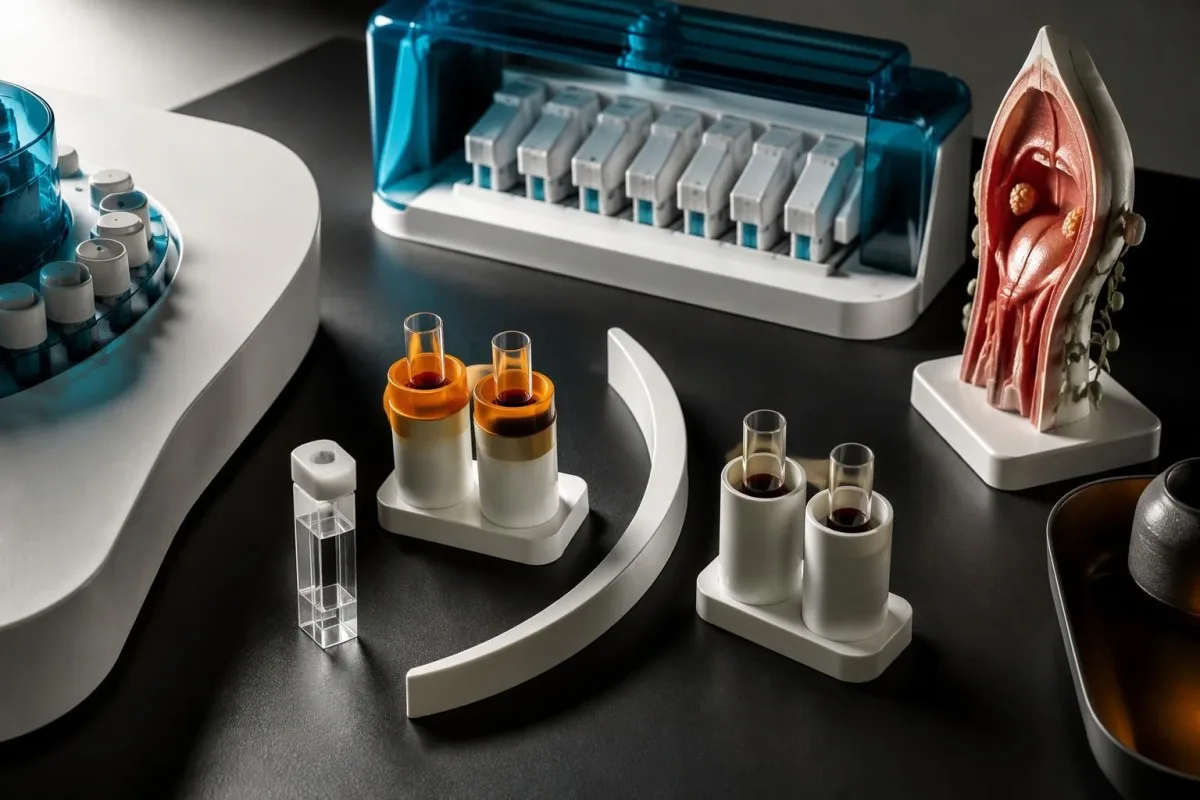
Consider a hypothetical child with CRP 80 mg/L during fever and 3 mg/L after recovery. That change supports an episodic inflammatory process but does not identify its cause; infection can produce the same pattern, while ESR may normalize more slowly than CRP, making a modestly raised recovery ESR less surprising than persistent symptoms or repeatedly elevated CRP.
White-cell interpretation must use age-appropriate absolute counts rather than adult ranges or percentages alone. At Kantesti, we emphasize that CRP 8 mg/dL equals 80 mg/L—a tenfold unit conversion that can otherwise create a false impression of improvement; our comparación de WBC y CRP explains why these markers can disagree because they change at different rates.
Procalcitonin is sometimes considered when serious bacterial infection is suspected, but it is not a standalone PFAPA discriminator. A low result, including a value below 0.1 ng/mL, cannot safely overrule a concerning examination or very early illness; the limits described in our guía de interpretación de la procalcitonina matter more than using one reassuring number to justify home treatment.
¿Cómo se diagnostica el síndrome PFAPA?
PFAPA diagnosis is clinical: clinicians identify repeated characteristic attacks, document recovery between them and exclude plausible alternatives. Onset before age 5 supports traditional criteria, but later onset does not prevent a diagnosis when the overall pattern fits.
The diagnostic process usually starts with history and examination rather than an extensive panel of rare-disease tests. Wang et al. (2021) describe the value of stereotyped episodes, absence of typical respiratory symptoms, negative relevant cultures and response to prescribed corticosteroids; however, 1 negative throat swab or 1 rapid response cannot independently establish PFAPA, and classification criteria are not identical to bedside diagnosis.
Streptococcal testing addresses the current throat illness, while an ASO antibody test mainly reflects previous exposure. An ASO result of 400 IU/mL does not prove that today's recurrent fever is active strep infection; age, local reference ranges and symptom timing affect interpretation, as explained in our discussion of ASO and recent exposure.
Kantesti es un Herramienta de análisis de pruebas de sangre con IA that can contextualize laboratory units and repeated results, but 2 matching reports cannot confirm PFAPA. Our supervisión técnica y clínica information should not be read as validation of a PFAPA diagnostic test; pediatric or rheumatology assessment remains necessary when the pattern is atypical, severe or uncertain.
¿Cómo se distingue el síndrome PFAPA de las infecciones recurrentes?
Repeated infections are more likely when episodes follow sick contacts, have varying symptoms or include cough, runny nose, diarrhea or a confirmed pathogen. PFAPA more often repeats a similar 3–7-day pattern with complete wellness between attacks, but the two can coexist.
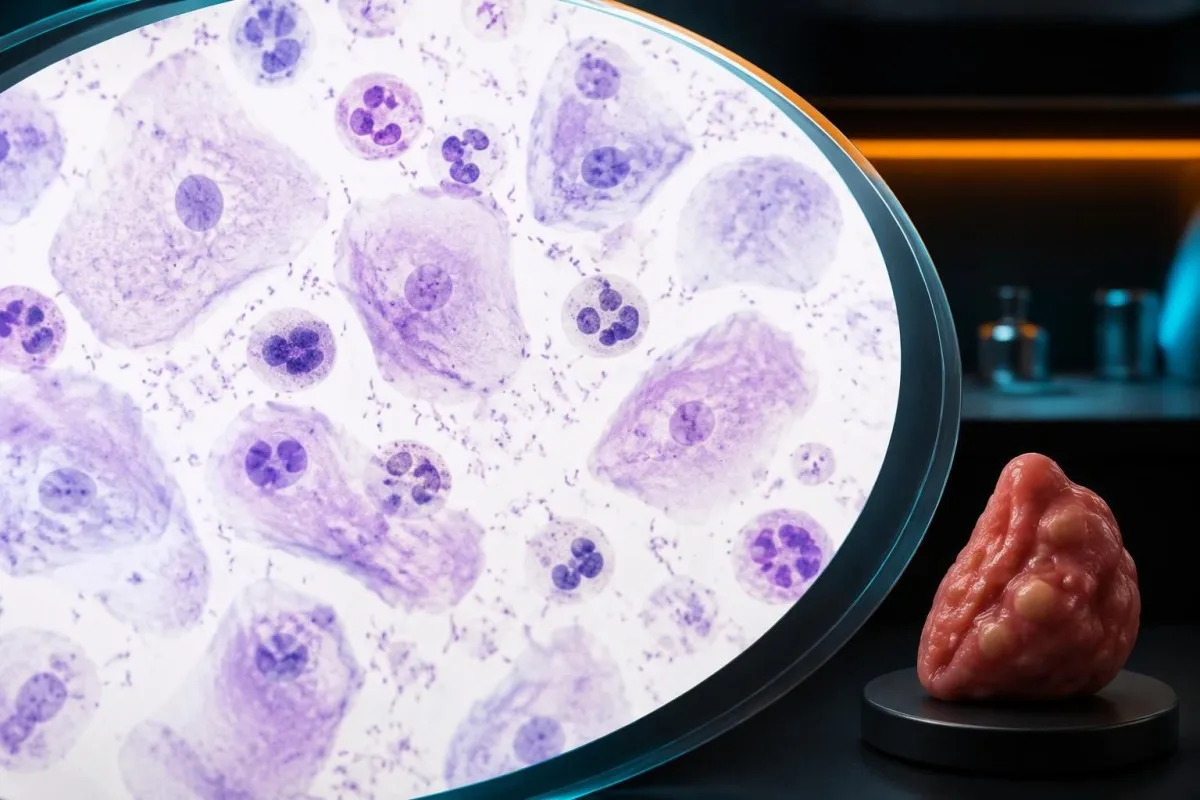
A positive respiratory PCR does not always explain the entire fever history. Adenovirus can remain detectable after an illness, so 1 positive result must be matched to current symptoms, examination and timing; our discussion of detección y excreción de adenovirus explains why a molecular result may indicate recent exposure rather than the cause of every subsequent attack.
Longer-lasting sore throat, fatigue and gland enlargement can suggest a different illness rather than PFAPA. EBV antibody patterns distinguish recent infection from prior exposure more effectively than a single positive IgG result; our guía de patrón de anticuerpos EBV explains the roles of 3 commonly reported markers—VCA IgM, VCA IgG and EBNA IgG—without equating past exposure with today's symptoms.
Antibiotic response is also easy to misread. If an antibiotic begins on day 4 and the fever ends on day 5, spontaneous resolution of a PFAPA attack is possible; conversely, a confirmed bacterial infection still requires appropriate treatment, and neither previous PFAPA nor prior antibiotic failure permits a new illness with different symptoms to be dismissed without assessment.
¿Qué otros trastornos de fiebre periódica pueden parecerse al síndrome PFAPA?
Neutropenia cíclica and inherited autoinflammatory disorders can resemble PFAPA, especially when mouth sores accompany recurring fever. Approximately 21-day cycles, severe infections, marked abdominal or chest pain, unusual rashes or persistent inflammation help clinicians decide which alternatives to investigate.

Cyclic neutropenia can produce recurrent fever, mouth sores and gum problems while a blood count between low-count periods looks normal. When suspected, clinicians may request CBCs 2–3 times weekly for about 6 weeks to identify repeated neutrophil nadirs; an absolute neutrophil count below 0.5 × 10^9/L during fever requires urgent clinical assessment rather than being labeled a routine PFAPA attack.
Familial Mediterranean fever often causes shorter attacks, commonly 12–72 hours, with abdominal or chest pain from serosal inflammation or joint symptoms. Our explicación de las pruebas de MEFV shows why genotype and symptoms must be interpreted together; TRAPS may produce longer attacks, sometimes over 7 days, while mevalonate kinase deficiency can involve diarrhea, vomiting and attacks triggered by vaccination or other stressors.
Ancestry and family history guide assessment, but neither should become a gatekeeper that excludes an inherited disorder. Persistently raised serum amyloid A between attacks can indicate ongoing inflammation and requires context, as our serum amyloid A guide explains; a single high value during a 4-day fever does not diagnose amyloidosis, and typical PFAPA should not automatically be assigned the complication risks of other syndromes.
¿Qué signos de alarma relacionados con la fiebre requieren evaluación urgente?
Busque atención de emergencia for fever with breathing difficulty, reduced responsiveness, a stiff neck, a non-blanching rash or severe dehydration. An infant younger than 3 meses con una temperatura de 38 °C o más needs urgent medical assessment, even if a family member has PFAPA.
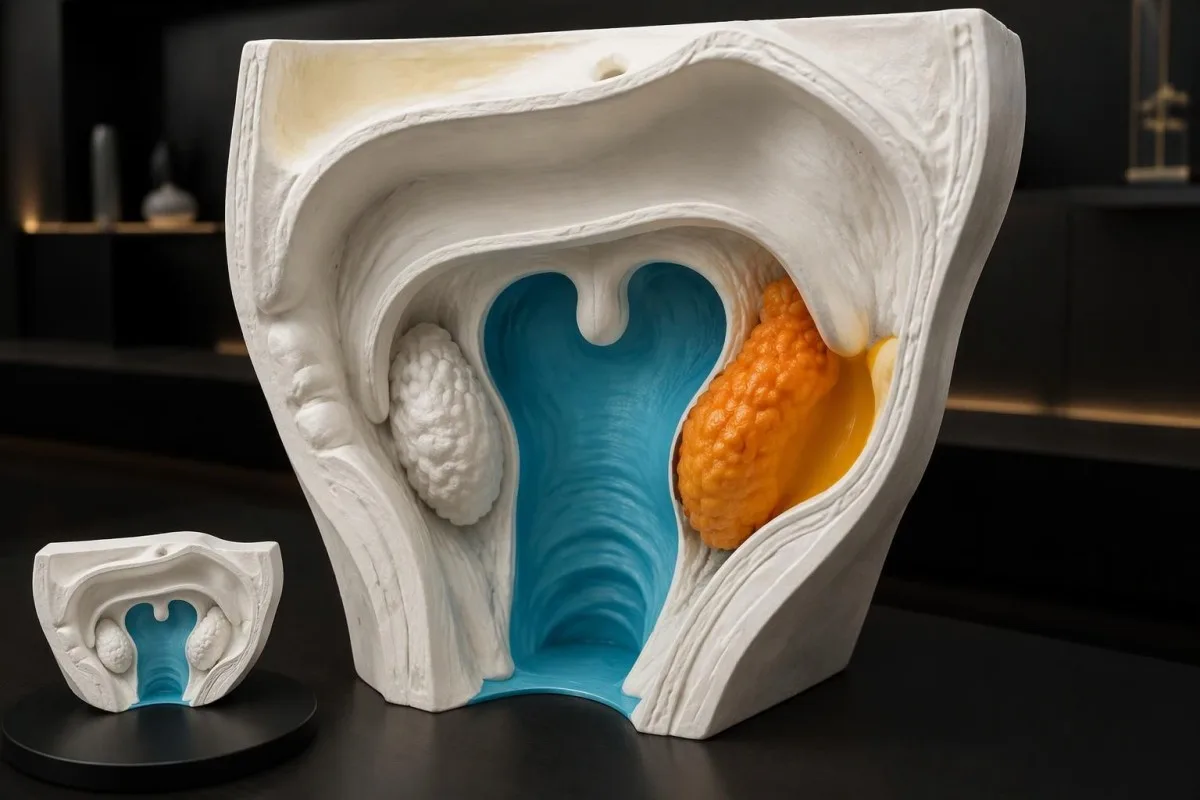
Difficulty swallowing saliva, drooling, a muffled voice or marked one-sided throat swelling can indicate an airway-threatening problem rather than a usual PFAPA flare. A child aged 3–6 months with a temperature of 39°C or higher also needs urgent assessment; contact local emergency services for immediate danger instead of waiting for a blood result or an expected fever endpoint.
Fever lasting 5 days or longer warrants prompt medical review, particularly with red eyes, cracked lips, rash or swollen hands and feet. These findings can suggest Kawasaki disease, discussed in our Kawasaki assessment guide; incomplete presentations occur, so clinicians do not require every classic feature, and concerning symptoms should be assessed before day 5 rather than waiting for a threshold.
New severe localized abdominal pain, persistent vomiting or inability to walk normally should not be attributed to PFAPA without examination. Even 1 normal WBC or CRP result cannot reliably exclude an early abdominal emergency, as our appendicitis laboratory limits explain; children with a known fever syndrome can still develop unrelated illnesses, especially when the attack looks different from their established pattern.
¿Cómo se tratan los episodios de PFAPA y qué significa la respuesta a los corticoides?
PFAPA attack treatment focuses on comfort, hydration and, when prescribed, corticosteroids that often stop fever within hours. Published prednisone or prednisolone regimens range from 0.5–2 mg/kg, but dosing, maximum dose and eligibility must be set by the treating clinician.
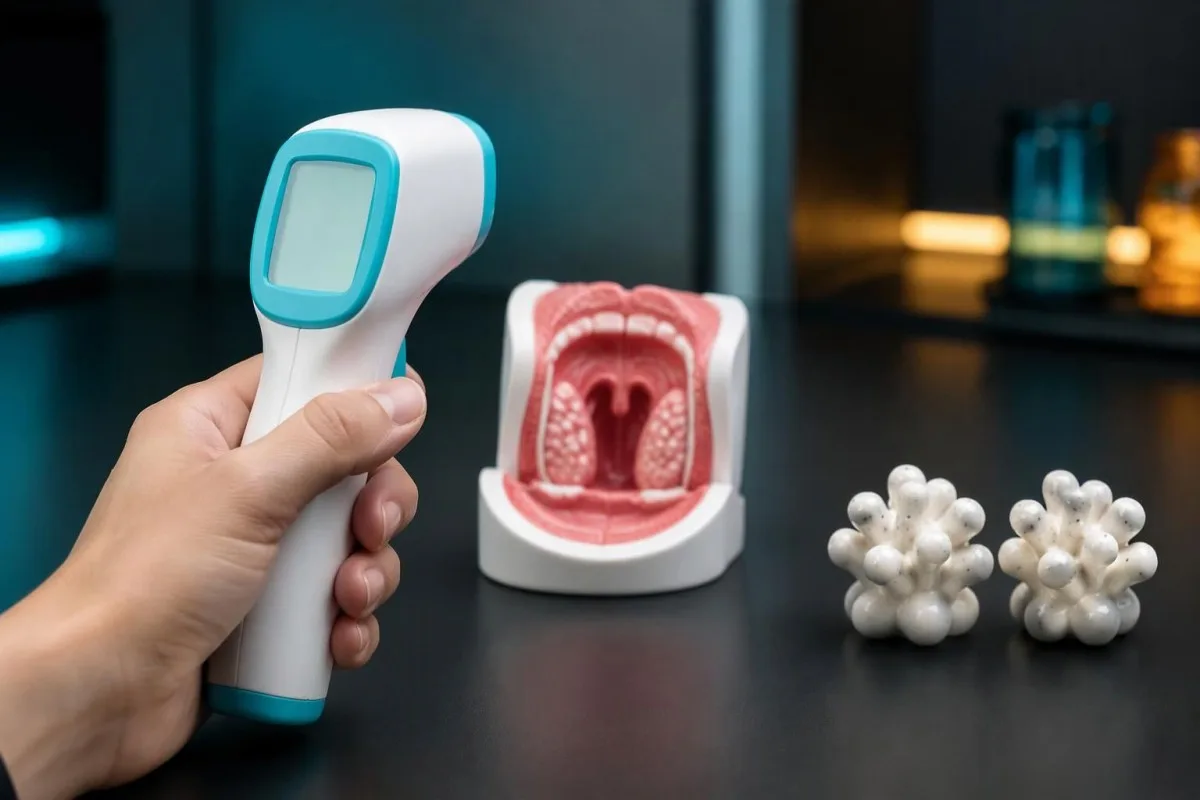
Vanoni et al. (2016) describe rapid corticosteroid responses alongside the limitation that treatment may shorten the interval to the next attack. Reports summarized in that review estimated shorter intervals in approximately 25–50% of patients, but these observations come from heterogeneous studies rather than a precise prediction for an individual child; attack control and long-term prevention are separate treatment goals.
For a hypothetical 20-kg child, a clinician-selected dose of 1 mg/kg would equal 20 mg; this calculation illustrates weight-based prescribing, not a home-treatment recommendation. Families need a written plan explaining when a familiar attack qualifies for treatment, when to seek assessment first and what to do if the expected response does not occur—especially if symptoms suggest a new infection.
Antipyretics may improve discomfort even when they do not end the inflammatory episode. Choose child-appropriate preparations with a clinician or pharmacist, avoid aspirin unless specifically prescribed and do not duplicate paracetamol/acetaminophen across 2 products; Kantesti cannot authorize steroid treatment, and our discussion of interpretación de IA en niños explains why pediatric decisions need more than laboratory pattern recognition.
¿Cuándo se consideran los medicamentos preventivos o la amigdalectomía?
Prevention or tonsillectomy may be considered when PFAPA attacks repeatedly disrupt daily life or attack treatment is unsatisfactory. A Cochrane review included 2 randomized trials involving 67 children, finding benefit from tonsil surgery while emphasizing the limited size of the evidence base.
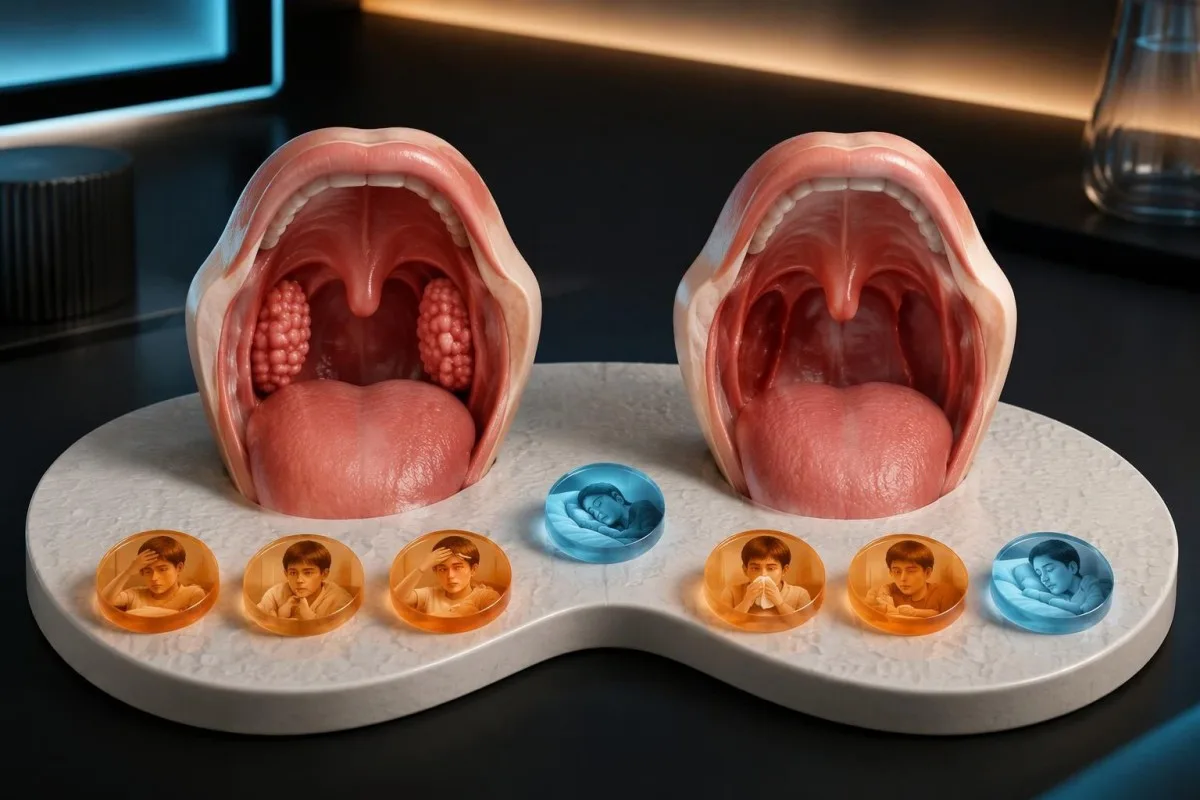
Burton et al. (2019) judged the evidence for several tonsillectomy outcomes to be of moderate certainty, but the trials were too small to characterize uncommon harms confidently. The evidence concerns selected children rather than every person with recurrent sore throat; a child missing 4 school days each month may value potential benefit differently from a child with infrequent, easily managed attacks.
Colchicine is sometimes used to reduce attacks under specialist supervision, whereas cimetidine has less convincing evidence. Treatment selection should consider the diagnosis, kidney and liver function, other medicines and the possibility of an inherited fever disorder; when several options exist, agree in advance on a measurable goal, such as fewer attacks across 3 months, rather than assuming a changed laboratory number demonstrates success.
Tonsillectomy carries postoperative pain, dehydration, anesthesia-related risks and bleeding risk, even when it improves PFAPA. Kantesti's guía de IA responsable supports a clear boundary: neither 1 elevated inflammatory marker nor an automated report can decide whether surgery is appropriate; that discussion belongs with the treating pediatric team and an ENT specialist who can assess the child's individual risks.
¿Qué seguimiento ayuda a los niños, los adultos y las familias con PFAPA?
PFAPA follow-up should track attack burden, growth or weight, treatment response and any symptoms between episodes. Many childhood cases improve over several years, but persistence, relapse and adult-onset disease occur; a 3-month review interval can be a practical individualized plan rather than a universal rule.

Adults require the same attention to repeated patterns and alternative causes, not an assumption that PFAPA is impossible after childhood. Fever with oral sores and pharyngitis can support the diagnosis, but new constitutional symptoms, persistent gland enlargement or abnormal findings between attacks need assessment; a 35-year-old with a first prolonged fever should not self-diagnose PFAPA from an online symptom match.
Prepare a concise appointment summary: attack dates, duration, associated features, well-day symptoms, test results and response to prescribed treatment. Include 1 clearly labeled attack sample and any clinician-requested recovery sample, rather than ordering a broad panel every month; repeated testing is useful only when it answers a specific question, such as whether inflammation persists or neutrophil counts cycle.
Kantesti es un plataforma de interpretación análisis de sangre de AI that can help explain uploaded CBC and inflammatory-marker reports alongside their dates, units and stated reference ranges. For a family sharing 2 or more records, check each person's identity and consent before upload, and review our privacidad y tratamiento de datos; AI explanation does not replace pediatric examination, urgent triage or a specialist diagnosis.
Publicaciones de investigación: evidencia frente a guías de laboratorio de contexto
PFAPA evidence comes from clinical descriptions, differential-diagnosis research and treatment studies—not from a specific clotting or serum-protein test. The 2 background publications below explain other laboratory topics and should not be mistaken for studies validating PFAPA diagnosis.
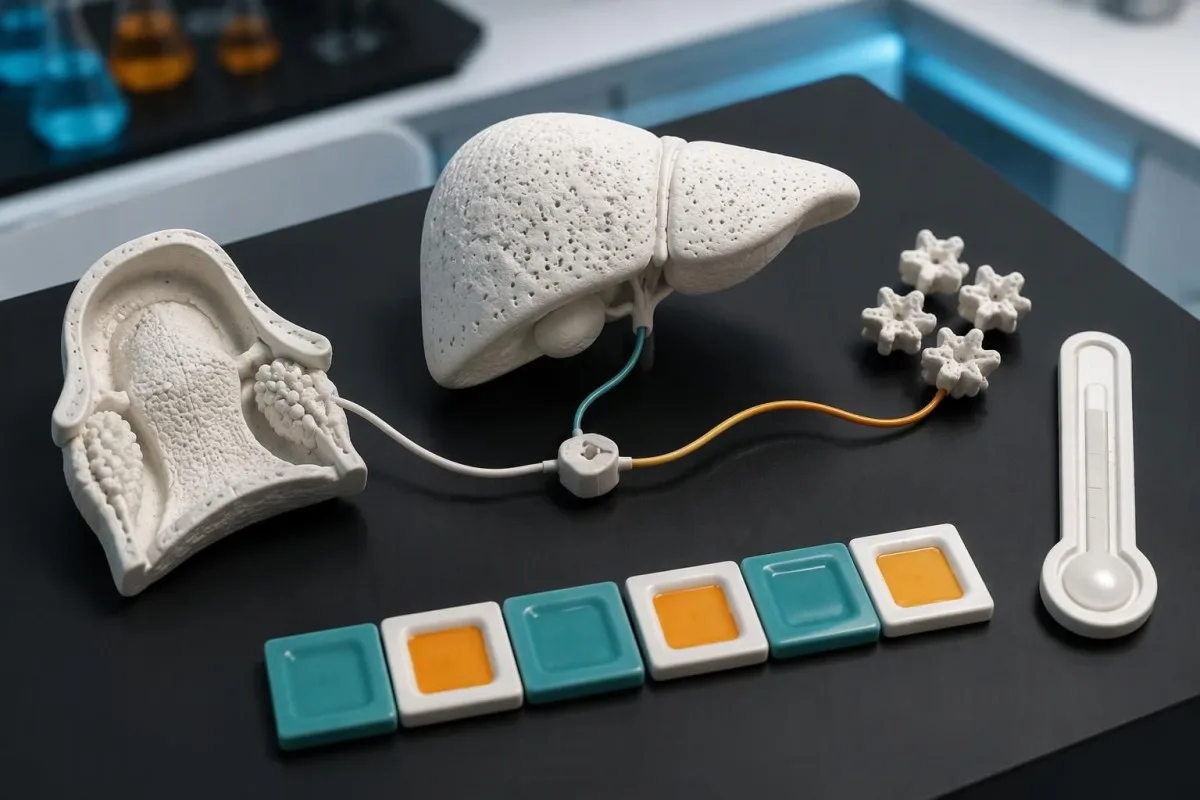
The peer-reviewed PFAPA review by Wang et al. (2021), treatment review by Vanoni et al. (2016) and Cochrane analysis by Burton et al. (2019) directly inform this article's clinical discussion. The surgical review's 67-child evidence base illustrates why certainty must be proportionate to study size; a named source supports a specific claim, not every recommendation made elsewhere on the page.
Los clotting test background guide y guía de referencia sobre proteínas séricas accompany the 2 Zenodo records listed below. Neither aPTT nor an albumin/globulin ratio confirms PFAPA, and neither guide establishes that routine testing of those markers improves PFAPA care; additional tests should follow an identified clinical concern rather than the availability of a panel.
Evidence interpretation should distinguish a repository-hosted educational guide from a peer-reviewed condition-specific study or systematic review. Our estándares de contenido médico explain the editorial approach; for a child with 3 apparently similar attacks, the practical priority remains documented recovery, targeted exclusion of alternatives and a clear safety plan, not accumulating more citations or tests that do not answer the clinical question.
Preguntas frecuentes
¿Qué es el síndrome PFAPA?
El síndrome PFAPA es una afección autoinflamatoria que causa episodios recurrentes de fiebre acompañados de úlceras aftosas en la boca, faringitis e inflamación de los ganglios linfáticos cervicales. Los episodios suelen durar de 3 a 7 días y reaparecer cada varias semanas, con un estado de salud normal entre los ataques. La afección suele comenzar antes de los 5 años, aunque también puede afectar a niños mayores y adultos. Ningún análisis de sangre por sí solo confirma el PFAPA, por lo que el diagnóstico depende del patrón clínico recurrente y de la evaluación de otras posibles causas.
¿Con qué frecuencia se presentan las fiebres de PFAPA?
Las fiebres por PFAPA suelen reaparecer aproximadamente cada 2–8 semanas, y cada episodio suele durar 3–7 días. Algunos niños presentan ciclos muy regulares, mientras que otros tienen intervalos variables. El tratamiento con corticosteroides puede acortar el tiempo hasta el siguiente episodio, por lo que conviene anotar cuándo se administra el medicamento en el diario de fiebre. La fiebre continua o la falta de recuperación entre episodios requieren una reevaluación, en lugar de asumir que corresponden a PFAPA.
¿Puede un análisis de sangre con CRP elevada diagnosticar PFAPA?
Un resultado elevado de CRP no permite diagnosticar PFAPA, porque las infecciones y otros trastornos inflamatorios pueden producir el mismo aumento. Por ejemplo, una CRP de 80 mg/L durante la fiebre y de 3 mg/L tras la recuperación es compatible con una inflamación episódica, pero no permite identificar su causa. Muchos laboratorios utilizan un límite superior de referencia para la CRP de alrededor de 5 mg/L, mientras que algunos utilizan 10 mg/L. Los profesionales clínicos interpretan el resultado junto con los síntomas, la exploración, el momento de la toma de la muestra y cualquier prueba pertinente para detectar infecciones.
¿El PFAPA es contagioso y necesita antibióticos?
El PFAPA en sí no es contagioso y los antibióticos no tratan el proceso inflamatorio subyacente. Un episodio típico de 3–7 días puede terminar de forma natural después de iniciar un antibiótico, lo que crea la impresión engañosa de que este funcionó. Los niños con PFAPA aún pueden contraer enfermedades virales contagiosas o infecciones bacterianas. Una nueva fiebre con síntomas distintos, contactos enfermos o una causa bacteriana confirmada debe evaluarse y tratarse por sus propios méritos.
¿Una respuesta rápida a la prednisona confirma el PFAPA?
Una respuesta rápida a la prednisona o prednisolona prescrita respalda el diagnóstico de PFAPA, pero no lo confirma. Los esquemas publicados para PFAPA incluyen dosis de 0,5–2 mg/kg; el médico tratante determina la dosis exacta y la dosis máxima. Los corticosteroides pueden suprimir los síntomas de otras afecciones y acortar el intervalo hasta el siguiente episodio de PFAPA. Las familias deben seguir un plan de tratamiento por escrito y solicitar una evaluación antes de iniciar el tratamiento si un episodio es inusualmente grave o diferente.
¿Cuándo debe recibir atención urgente un niño con sospecha de PFAPA?
Un niño con sospecha de PFAPA necesita atención de urgencia si presenta fiebre con dificultad para respirar, disminución del nivel de respuesta, rigidez de cuello, una erupción que no palidece al presionarla o deshidratación grave. Todo lactante menor de 3 meses con una temperatura de 38 °C o más necesita una evaluación médica urgente. La fiebre que dura 5 días o más también requiere una valoración médica pronta, especialmente si se acompaña de ojos rojos, erupción, labios agrietados o manos y pies hinchados. Un diagnóstico previo de PFAPA no significa que sea seguro ignorar una nueva enfermedad con síntomas diferentes.
Obtenga una explicación de los resultados análisis de sangre
Cargue su informe de laboratorio y la IA de Kantesti explica cada biomarcador en lenguaje sencillo en cuestión de segundos. Más de 2 millones de personas en todo el mundo la han utilizado.
Referencias
- Klein, T., Mitchell, S., & Weber, H. (2026). Intervalo normal de aPTT: guía sobre dímero D y proteína C en la coagulación sanguínea. Investigación médica de Kantesti AI. DOI
- Klein, T., Mitchell, S., & Weber, H. (2026). Guía sobre proteínas séricas: análisis de sangre de globulinas, albúmina y relación A/G. Investigación médica de Kantesti AI. DOI
- Wang A et al. (2021). Periodic fever, aphthous stomatitis, pharyngitis, and adenitis (PFAPA) syndrome: A review. World Journal of Otorhinolaryngology - Head and Neck Surgery. DOI
- Vanoni F et al. (2016). PFAPA syndrome: a review on treatment and outcome. Pediatric Rheumatology. DOI
- Burton MJ et al. (2019). Tonsillectomy for periodic fever, aphthous stomatitis, pharyngitis and cervical adenitis syndrome (PFAPA). Base de Datos Cochrane de Revisiones Sistemáticas. DOI
- Más de 2 millonesPruebas analizadas
- 127+Países
- 100+Idiomas
Acerca del equipo médico


Señales de confianza E-E-A-T
Experiencia
Revisión clínica dirigida por un médico de los flujos de interpretación de análisis.
Pericia
Enfoque en medicina de laboratorio sobre cómo se comportan los biomarcadores en el contexto clínico.
Autoridad
Revisado médicamente por el Dr. Thomas Klein, con contribuciones de la Dra. Sarah Mitchell y el Prof. Dr. Hans Weber.
Integridad
Interpretación basada en la evidencia con vías de seguimiento claras para reducir la alarma.





Aviso médico
Este artículo es solo con fines educativos y no constituye asesoramiento médico. Consulta siempre a un profesional sanitario cualificado para decisiones de diagnóstico y tratamiento.
Publicado · Contacta con el equipo editorial
Publicado por Kantesti Ltd, registrado en Inglaterra y Gales, número de empresa. 17090423, Londres, Reino Unido.
