
PFAPA syndrome can cause recurring high fevers with mouth ulcers, sore throat and swollen neck glands, usually lasting 3–7 days with complete recovery between attacks. Diagnosis depends on the repeated pattern and exclusion of other causes—not one abnormal blood test. A symptom diary helps; an unusually severe or different episode needs fresh assessment.

Những điểm chính cần ghi nhớ
- PFAPA syndrome commonly causes fever episodes lasting 3–7 days, separated by several weeks of good health.
- PFAPA symptoms include aphthous mouth ulcers, pharyngitis and swollen cervical lymph nodes; all 3 features need not appear together.
- Fever timing often follows a roughly 2–8-week cycle, but exact calendar regularity is not required for diagnosis.
- Symptom diaries should record episode dates, maximum temperature in °C or °F, symptoms, medicines and recovery between attacks.
- Xét nghiệm máu may show raised CRP and neutrophils during attacks; a CRP of 80 mg/L does not distinguish PFAPA from infection.
- Cyclic neutropenia can recur approximately every 21 days and may require serial blood counts rather than one reassuring CBC.
- Quyết định điều trị may involve clinician-prescribed corticosteroids, prevention medicines or tonsillectomy; none should follow from a laboratory result alone.
- Cần đánh giá khẩn cấp is needed for any infant younger than 3 months with a temperature of 38°C or higher, or any child with breathing difficulty, reduced responsiveness or a non-blanching rash.
What is PFAPA syndrome, and what causes the fevers?
PFAPA syndrome is an autoinflammatory condition that causes repeated fever episodes with aphthous mouth ulcers, pharyngitis and cervical adenitis. Attacks commonly last 3–7 ngày; children usually return to their normal energy, appetite and growth between episodes.

PFAPA reflects inappropriate activation of inflammatory pathways rather than a new contagious illness every few weeks. Onset is most often before age 5, but older children and adults can be affected; the historical age cutoff is therefore a clue, not an absolute exclusion (Wang et al., 2021). PFAPA does not mean that every future fever is noninfectious.
The acronym describes 4 components: periodic fever, aphthous stomatitis, pharyngitis and adenitis. Unlike several inherited periodic fever conditions, PFAPA has no single established genetic test that confirms the diagnosis, although familial clustering can occur; a negative broad genetic panel neither proves PFAPA nor excludes every alternative inflammatory disorder.
Kantesti là một Máy phân tích xét nghiệm máu AI that can help explain why a CRP result of 80 mg/L needs clinical context rather than a diagnostic label. Our organization and approach describe the service, but identifying PFAPA requires a clinician to connect symptoms across multiple episodes, examine the child and consider conditions a laboratory report cannot capture.
Which PFAPA symptoms make the pattern recognizable?
PFAPA symptoms usually combine fever with a sore throat, tender neck glands or small mouth ulcers. The same combination recurring over 3 or more documented episodes is more informative than any isolated symptom, although no universal minimum episode count confirms PFAPA.
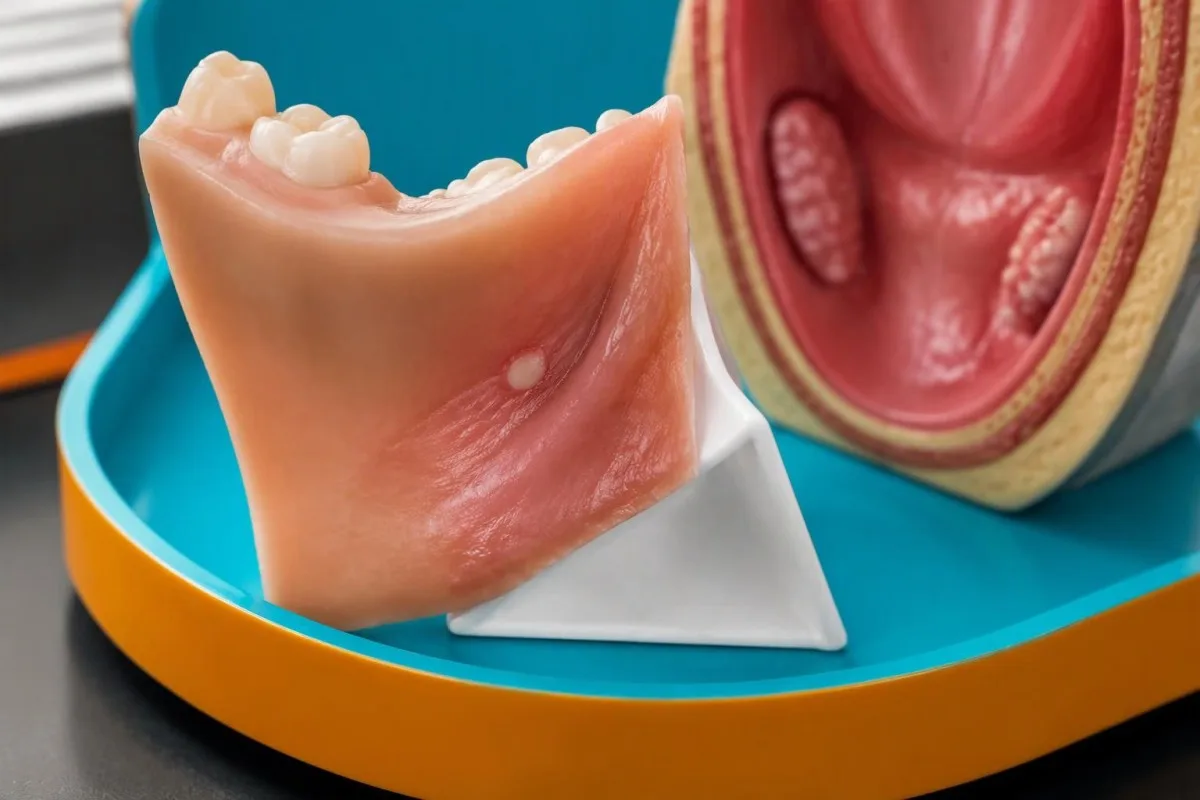
Aphthous ulcers are usually small, shallow sores on the inner lips, cheeks or other oral surfaces—not the same as clustered blisters on the outer lip. A child may have only 1 or 2 sores, and ulcers may be absent during some attacks; photographing a visible sore can help when it disappears before the appointment.
Pharyngitis can include redness or a coating on the tonsils, so appearance alone cannot distinguish PFAPA from streptococcal infection. Swollen glands usually involve the cervical nodes around the neck, whereas a persistently enlarging node, generalized gland swelling or symptoms lasting beyond a 3–7-day attack need a different explanation rather than automatic attribution to PFAPA.
Mouth sores alone are not a periodic fever diagnosis. Repeated oral sores accompanied by genital sores, painful red eyes, vision changes or unusual skin findings raise other possibilities, including các kiểu triệu chứng của bệnh Behçet; even 1 episode of eye pain with impaired vision warrants prompt assessment, without waiting for another fever cycle.
How long do PFAPA fevers last, and how often do they return?
PFAPA fevers commonly last 3–7 ngày and recur approximately every 2–8 tuần, often with strikingly similar symptoms. Some children develop a predictable rhythm, but varying intervals do not automatically rule out PFAPA.

Temperatures during PFAPA attacks often reach 39–40°C, but fever height does not determine the diagnosis or reliably measure danger. The timing of associated throat symptoms, the child's appearance and the return to baseline matter more; measuring temperature with the same method also makes comparisons more useful than alternating between forehead, ear and underarm readings.
For a hypothetical child, fevers beginning on days 1, 29 and 58 with 4-day attacks suggest a repeated cycle—not proof of PFAPA. Count start-to-start intervals separately from fever-free days, and record whether corticosteroid treatment changed an interval; a shortened next cycle after treatment can otherwise make a previously regular pattern look inexplicably irregular.
A fever that does not stop is not a series of separate PFAPA episodes. If symptoms persist beyond 7 days, or recovery never occurs, clinicians reconsider infection and other inflammatory conditions; our explanation of ảnh hưởng của thời điểm xét nghiệm máu also shows why a sample taken on day 1 cannot be interpreted like one taken after recovery.
What should a PFAPA symptom diary record?
A PFAPA symptom diary should record episode start and finish dates, measured temperature, mouth and throat findings, neck swelling, medication timing and wellness between attacks. Even 3 carefully documented episodes can reveal details that a single clinic visit misses.

Document the thermometer method and the highest measured temperature, not just 'very hot.' For each day of a 4-day attack, note drinking, urine output, activity, cough, runny nose, abdominal symptoms and whether anyone nearby was ill; these observations distinguish a repeated inflammatory pattern from unrelated respiratory or gastrointestinal illnesses more effectively than recording fever alone.
Medication entries need the name, dose, administration time and observed response. If a prescribed medicine is given at 09:00 and fever settles by 14:00, record that interval without claiming the medicine established PFAPA; include throat swab results and whether a laboratory sample preceded treatment, because both antibiotics and corticosteroids can complicate interpretation of subsequent findings.
Well days deserve entries too. A weekly note of normal appetite, play, school attendance and any lingering symptoms prevents a diary from becoming an attack-only record; when a clinician requests a recovery sample, our chuẩn bị xét nghiệm nền explains how to record recent illness and medicines rather than treating a sample 2 days after fever as an unquestionable baseline.
Why does wellness between PFAPA episodes matter so much?
Complete wellness between episodes strongly supports a typical PFAPA pattern: normal activity, appetite and growth should return after the 3–7-day attack. Persistent symptoms or continuing inflammation between attacks make clinicians reconsider the diagnosis.

A child who is fever-free but remains exhausted, loses weight or develops daily pain has not truly returned to baseline. Growth is assessed through serial height and weight measurements, not 1 percentile in isolation; crossing growth centiles over time may justify investigation even when individual fever episodes resemble PFAPA and routine examinations during attacks look familiar.
Repeated ordinary infections are common in young children, but unusually severe, prolonged or unusual infections suggest a different evaluation. A history of 2 hospital-treated infections or recurrent deep infections matters differently from several mild colds; clinicians consider the organisms, sites, treatment response and family history, as discussed in our guide to xét nghiệm các bệnh nhiễm trùng thường xuyên.
Inflammatory markers usually fall toward the laboratory reference range between PFAPA attacks, but an immediately post-fever sample may still reflect recovery. A persistent CRP of 25 mg/L on repeated genuinely well-day samples is not proof of another disease, yet it deserves explanation; a clinician may check for an unnoticed infection, ongoing inflammatory symptoms or a sampling timeline that was mislabeled.
What do CRP, ESR and blood counts show in PFAPA?
PFAPA attacks can raise CRP, ESR and neutrophil counts, but none of these tests confirms PFAPA or excludes infection. Many laboratories use a CRP upper reference limit around 5 mg/L, trong khi những nơi khác dùng 10 mg/L; the report's own range matters.
Consider a hypothetical child with CRP 80 mg/L during fever and 3 mg/L after recovery. That change supports an episodic inflammatory process but does not identify its cause; infection can produce the same pattern, while ESR may normalize more slowly than CRP, making a modestly raised recovery ESR less surprising than persistent symptoms or repeatedly elevated CRP.
White-cell interpretation must use age-appropriate absolute counts rather than adult ranges or percentages alone. At Kantesti, we emphasize that CRP 8 mg/dL equals 80 mg/L—a tenfold unit conversion that can otherwise create a false impression of improvement; our so sánh WBC và CRP của chúng tôi explains why these markers can disagree because they change at different rates.
Procalcitonin is sometimes considered when serious bacterial infection is suspected, but it is not a standalone PFAPA discriminator. A low result, including a value below 0.1 ng/mL, cannot safely overrule a concerning examination or very early illness; the limits described in our cách diễn giải procalcitonin matter more than using one reassuring number to justify home treatment.
How do clinicians make a PFAPA diagnosis?
PFAPA diagnosis is clinical: clinicians identify repeated characteristic attacks, document recovery between them and exclude plausible alternatives. Onset before age 5 supports traditional criteria, but later onset does not prevent a diagnosis when the overall pattern fits.
The diagnostic process usually starts with history and examination rather than an extensive panel of rare-disease tests. Wang et al. (2021) describe the value of stereotyped episodes, absence of typical respiratory symptoms, negative relevant cultures and response to prescribed corticosteroids; however, 1 negative throat swab or 1 rapid response cannot independently establish PFAPA, and classification criteria are not identical to bedside diagnosis.
Streptococcal testing addresses the current throat illness, while an ASO antibody test mainly reflects previous exposure. An ASO result of 400 IU/mL does not prove that today's recurrent fever is active strep infection; age, local reference ranges and symptom timing affect interpretation, as explained in our discussion of ASO and recent exposure.
Kantesti là một Công cụ phân tích xét nghiệm máu dựa trên AI that can contextualize laboratory units and repeated results, but 2 matching reports cannot confirm PFAPA. Our giám sát kỹ thuật và lâm sàng information should not be read as validation of a PFAPA diagnostic test; pediatric or rheumatology assessment remains necessary when the pattern is atypical, severe or uncertain.
How is PFAPA distinguished from repeated infections?
Repeated infections are more likely when episodes follow sick contacts, have varying symptoms or include cough, runny nose, diarrhea or a confirmed pathogen. PFAPA more often repeats a similar 3–7-day pattern with complete wellness between attacks, but the two can coexist.
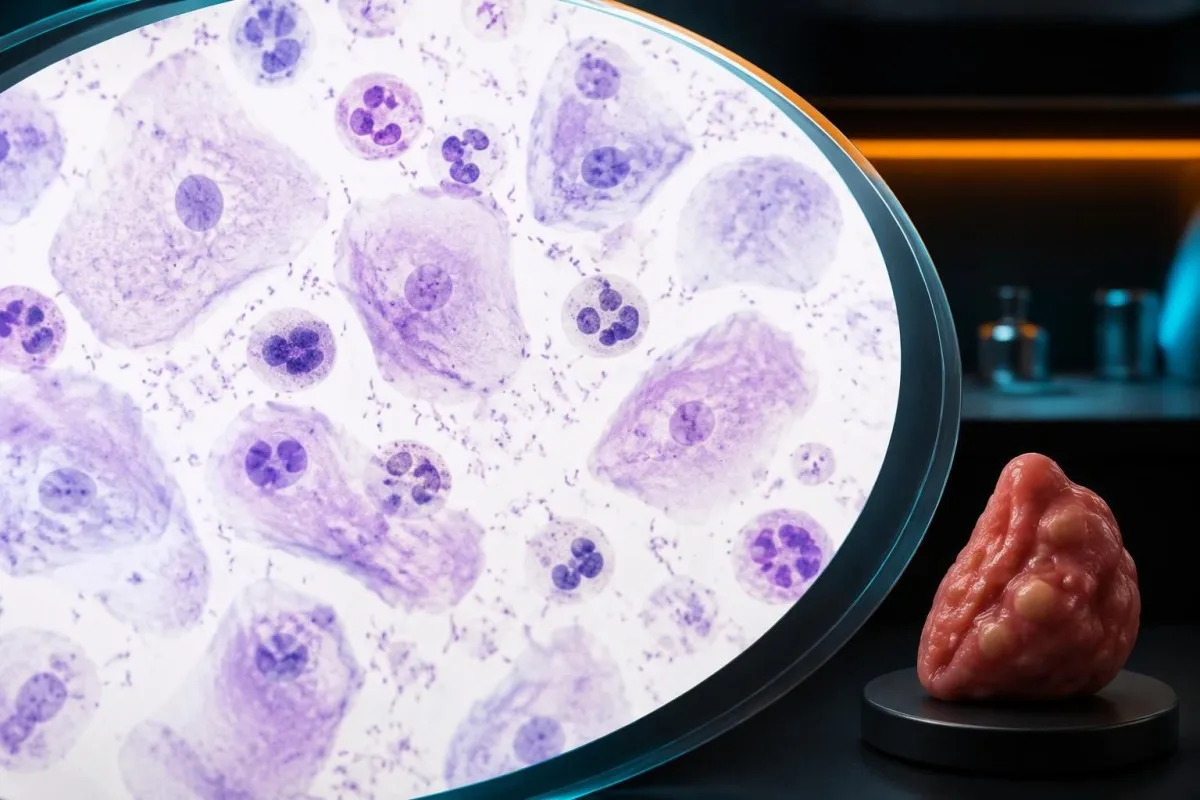
A positive respiratory PCR does not always explain the entire fever history. Adenovirus can remain detectable after an illness, so 1 positive result must be matched to current symptoms, examination and timing; our discussion of tình trạng phát hiện và thải adenovirus explains why a molecular result may indicate recent exposure rather than the cause of every subsequent attack.
Longer-lasting sore throat, fatigue and gland enlargement can suggest a different illness rather than PFAPA. EBV antibody patterns distinguish recent infection from prior exposure more effectively than a single positive IgG result; our Hướng dẫn mô hình kháng thể EBV explains the roles of 3 commonly reported markers—VCA IgM, VCA IgG and EBNA IgG—without equating past exposure with today's symptoms.
Antibiotic response is also easy to misread. If an antibiotic begins on day 4 and the fever ends on day 5, spontaneous resolution of a PFAPA attack is possible; conversely, a confirmed bacterial infection still requires appropriate treatment, and neither previous PFAPA nor prior antibiotic failure permits a new illness with different symptoms to be dismissed without assessment.
Which other periodic fever disorders can resemble PFAPA?
Cyclic neutropenia and inherited autoinflammatory disorders can resemble PFAPA, especially when mouth sores accompany recurring fever. Approximately 21-day cycles, severe infections, marked abdominal or chest pain, unusual rashes or persistent inflammation help clinicians decide which alternatives to investigate.

Cyclic neutropenia can produce recurrent fever, mouth sores and gum problems while a blood count between low-count periods looks normal. When suspected, clinicians may request CBCs 2–3 times weekly for about 6 weeks to identify repeated neutrophil nadirs; an absolute neutrophil count below 0.5 × 10^9/L during fever requires urgent clinical assessment rather than being labeled a routine PFAPA attack.
Familial Mediterranean fever often causes shorter attacks, commonly 12–72 hours, with abdominal or chest pain from serosal inflammation or joint symptoms. Our giải thích về xét nghiệm MEFV của chúng tôi shows why genotype and symptoms must be interpreted together; TRAPS may produce longer attacks, sometimes over 7 days, while mevalonate kinase deficiency can involve diarrhea, vomiting and attacks triggered by vaccination or other stressors.
Ancestry and family history guide assessment, but neither should become a gatekeeper that excludes an inherited disorder. Persistently raised serum amyloid A between attacks can indicate ongoing inflammation and requires context, as our serum amyloid A guide explains; a single high value during a 4-day fever does not diagnose amyloidosis, and typical PFAPA should not automatically be assigned the complication risks of other syndromes.
Which fever warning signs need urgent evaluation?
Hãy tìm kiếm sự chăm sóc cấp cứu for fever with breathing difficulty, reduced responsiveness, a stiff neck, a non-blanching rash or severe dehydration. An infant younger than 3 tháng có nhiệt độ 38°C trở lên needs urgent medical assessment, even if a family member has PFAPA.
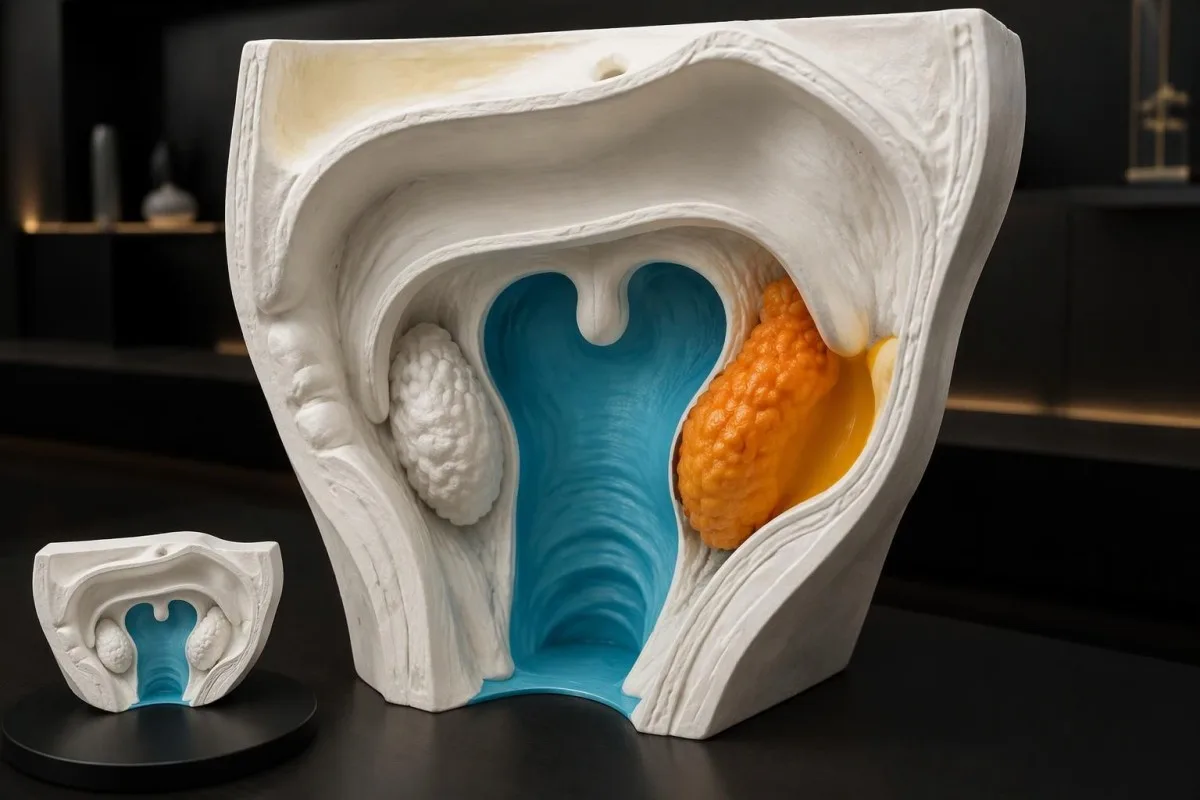
Difficulty swallowing saliva, drooling, a muffled voice or marked one-sided throat swelling can indicate an airway-threatening problem rather than a usual PFAPA flare. A child aged 3–6 months with a temperature of 39°C or higher also needs urgent assessment; contact local emergency services for immediate danger instead of waiting for a blood result or an expected fever endpoint.
Fever lasting 5 days or longer warrants prompt medical review, particularly with red eyes, cracked lips, rash or swollen hands and feet. These findings can suggest Kawasaki disease, discussed in our Kawasaki assessment guide; incomplete presentations occur, so clinicians do not require every classic feature, and concerning symptoms should be assessed before day 5 rather than waiting for a threshold.
New severe localized abdominal pain, persistent vomiting or inability to walk normally should not be attributed to PFAPA without examination. Even 1 normal WBC or CRP result cannot reliably exclude an early abdominal emergency, as our appendicitis laboratory limits explain; children with a known fever syndrome can still develop unrelated illnesses, especially when the attack looks different from their established pattern.
How are PFAPA attacks treated, and what does steroid response mean?
PFAPA attack treatment focuses on comfort, hydration and, when prescribed, corticosteroids that often stop fever within hours. Published prednisone or prednisolone regimens range from 0.5–2 mg/kg, but dosing, maximum dose and eligibility must be set by the treating clinician.
Vanoni et al. (2016) describe rapid corticosteroid responses alongside the limitation that treatment may shorten the interval to the next attack. Reports summarized in that review estimated shorter intervals in approximately 25–50% of patients, but these observations come from heterogeneous studies rather than a precise prediction for an individual child; attack control and long-term prevention are separate treatment goals.
For a hypothetical 20-kg child, a clinician-selected dose of 1 mg/kg would equal 20 mg; this calculation illustrates weight-based prescribing, not a home-treatment recommendation. Families need a written plan explaining when a familiar attack qualifies for treatment, when to seek assessment first and what to do if the expected response does not occur—especially if symptoms suggest a new infection.
Antipyretics may improve discomfort even when they do not end the inflammatory episode. Choose child-appropriate preparations with a clinician or pharmacist, avoid aspirin unless specifically prescribed and do not duplicate paracetamol/acetaminophen across 2 products; Kantesti cannot authorize steroid treatment, and our discussion of diễn giải AI ở trẻ em explains why pediatric decisions need more than laboratory pattern recognition.
When are preventive medicines or tonsillectomy considered?
Prevention or tonsillectomy may be considered when PFAPA attacks repeatedly disrupt daily life or attack treatment is unsatisfactory. A Cochrane review included 2 randomized trials involving 67 children, finding benefit from tonsil surgery while emphasizing the limited size of the evidence base.
Burton et al. (2019) judged the evidence for several tonsillectomy outcomes to be of moderate certainty, but the trials were too small to characterize uncommon harms confidently. The evidence concerns selected children rather than every person with recurrent sore throat; a child missing 4 school days each month may value potential benefit differently from a child with infrequent, easily managed attacks.
Colchicine is sometimes used to reduce attacks under specialist supervision, whereas cimetidine has less convincing evidence. Treatment selection should consider the diagnosis, kidney and liver function, other medicines and the possibility of an inherited fever disorder; when several options exist, agree in advance on a measurable goal, such as fewer attacks across 3 months, rather than assuming a changed laboratory number demonstrates success.
Tonsillectomy carries postoperative pain, dehydration, anesthesia-related risks and bleeding risk, even when it improves PFAPA. Kantesti's về AI có trách nhiệm supports a clear boundary: neither 1 elevated inflammatory marker nor an automated report can decide whether surgery is appropriate; that discussion belongs with the treating pediatric team and an ENT specialist who can assess the child's individual risks.
What follow-up helps children, adults and families with PFAPA?
PFAPA follow-up should track attack burden, growth or weight, treatment response and any symptoms between episodes. Many childhood cases improve over several years, but persistence, relapse and adult-onset disease occur; a 3-month review interval can be a practical individualized plan rather than a universal rule.

Adults require the same attention to repeated patterns and alternative causes, not an assumption that PFAPA is impossible after childhood. Fever with oral sores and pharyngitis can support the diagnosis, but new constitutional symptoms, persistent gland enlargement or abnormal findings between attacks need assessment; a 35-year-old with a first prolonged fever should not self-diagnose PFAPA from an online symptom match.
Prepare a concise appointment summary: attack dates, duration, associated features, well-day symptoms, test results and response to prescribed treatment. Include 1 clearly labeled attack sample and any clinician-requested recovery sample, rather than ordering a broad panel every month; repeated testing is useful only when it answers a specific question, such as whether inflammation persists or neutrophil counts cycle.
Kantesti là một nền tảng giải thích kết quả xét nghiệm máu AI that can help explain uploaded CBC and inflammatory-marker reports alongside their dates, units and stated reference ranges. For a family sharing 2 or more records, check each person's identity and consent before upload, and review our quyền riêng tư và xử lý dữ liệu; AI explanation does not replace pediatric examination, urgent triage or a specialist diagnosis.
Research publications: evidence versus background laboratory guides
PFAPA evidence comes from clinical descriptions, differential-diagnosis research and treatment studies—not from a specific clotting or serum-protein test. The 2 background publications below explain other laboratory topics and should not be mistaken for studies validating PFAPA diagnosis.
The peer-reviewed PFAPA review by Wang et al. (2021), treatment review by Vanoni et al. (2016) and Cochrane analysis by Burton et al. (2019) directly inform this article's clinical discussion. The surgical review's 67-child evidence base illustrates why certainty must be proportionate to study size; a named source supports a specific claim, not every recommendation made elsewhere on the page.
Các tài liệu của Kantesti clotting test background guide Và là cẩm nang tổng quan về protein huyết thanh accompany the 2 Zenodo records listed below. Neither aPTT nor an albumin/globulin ratio confirms PFAPA, and neither guide establishes that routine testing of those markers improves PFAPA care; additional tests should follow an identified clinical concern rather than the availability of a panel.
Evidence interpretation should distinguish a repository-hosted educational guide from a peer-reviewed condition-specific study or systematic review. Our các tiêu chuẩn về nội dung y khoa explain the editorial approach; for a child with 3 apparently similar attacks, the practical priority remains documented recovery, targeted exclusion of alternatives and a clear safety plan, not accumulating more citations or tests that do not answer the clinical question.
Câu hỏi thường gặp
Hội chứng PFAPA là gì?
Hội chứng PFAPA là một tình trạng viêm tự phát gây sốt tái diễn kèm loét áp-tơ trong miệng, viêm họng và sưng hạch bạch huyết cổ. Các đợt bệnh thường kéo dài 3–7 ngày và tái diễn sau mỗi vài tuần; người bệnh khỏe mạnh bình thường giữa các đợt. Tình trạng này thường khởi phát trước 5 tuổi, mặc dù trẻ lớn hơn và người lớn cũng có thể mắc. Không có xét nghiệm máu đơn lẻ nào xác nhận được PFAPA, vì vậy chẩn đoán dựa vào biểu hiện lâm sàng tái diễn và đánh giá các nguyên nhân khác có thể gây ra tình trạng này.
Sốt PFAPA xảy ra thường xuyên như thế nào?
Các cơn sốt PFAPA thường tái phát khoảng mỗi 2–8 tuần và mỗi đợt thường kéo dài 3–7 ngày. Một số trẻ có chu kỳ rất đều đặn, trong khi những trẻ khác có khoảng cách giữa các đợt thay đổi. Điều trị bằng corticosteroid có thể rút ngắn thời gian đến đợt tiếp theo, vì vậy cần ghi lại thời điểm dùng thuốc trong nhật ký theo dõi sốt. Sốt liên tục hoặc không khỏe lại giữa các đợt cần được đánh giá lại, thay vì mặc định là phù hợp với PFAPA.
Xét nghiệm máu CRP cao có thể chẩn đoán PFAPA không?
A high CRP result cannot diagnose PFAPA because infections and other inflammatory disorders can produce the same increase. For example, a CRP of 80 mg/L during fever and 3 mg/L after recovery supports episodic inflammation but does not identify its cause. Many laboratories use an upper CRP reference limit around 5 mg/L, while some use 10 mg/L. Clinicians interpret the result alongside symptoms, examination, sampling timing and any relevant infection testing.
Is PFAPA contagious, and does it need antibiotics?
PFAPA itself is not contagious and antibiotics do not treat its underlying inflammatory process. A typical 3–7-day attack can end naturally after an antibiotic has been started, creating a misleading impression that the antibiotic worked. Children with PFAPA can still acquire contagious viral illnesses or bacterial infections. A new fever with different symptoms, sick contacts or a confirmed bacterial cause should be assessed and treated on its own merits.
Does a rapid response to prednisone prove PFAPA?
A rapid response to prescribed prednisone or prednisolone supports PFAPA but does not prove the diagnosis. Published PFAPA regimens include 0.5–2 mg/kg, with the actual dose and maximum determined by the treating clinician. Corticosteroids can suppress symptoms from other conditions and may shorten the interval to the next PFAPA attack. Families should use a written treatment plan and seek assessment before treatment when an episode is unusually severe or different.
When should a child with suspected PFAPA receive urgent care?
A child with suspected PFAPA needs emergency care for fever with breathing difficulty, reduced responsiveness, a stiff neck, a non-blanching rash or severe dehydration. Any infant younger than 3 months with a temperature of 38°C or higher needs urgent medical assessment. Fever lasting 5 days or longer also warrants prompt review, particularly with red eyes, rash, cracked lips or swollen hands and feet. A previous PFAPA diagnosis does not make a new illness with different symptoms safe to ignore.
Tìm hiểu cách đọc kết quả xét nghiệm máu của bạn
Tải lên báo cáo xét nghiệm của bạn và AI của Kantesti sẽ giải thích từng dấu ấn sinh học bằng ngôn ngữ dễ hiểu chỉ trong vài giây. Được hơn 2 triệu người trên toàn thế giới sử dụng.
Tài liệu tham khảo
- Klein, T., Mitchell, S., & Weber, H. (2026). Khoảng bình thường của aPTT: Hướng dẫn về D-Dimer, Protein C và đông máu. Nghiên cứu y khoa của Kantesti AI. DOI
- Klein, T., Mitchell, S., & Weber, H. (2026). Hướng dẫn về protein huyết thanh: Xét nghiệm máu về globulin, albumin và tỷ số A/G. Nghiên cứu y khoa của Kantesti AI. DOI
- Wang A et al. (2021). Periodic fever, aphthous stomatitis, pharyngitis, and adenitis (PFAPA) syndrome: A review. World Journal of Otorhinolaryngology - Head and Neck Surgery. DOI
- Vanoni F et al. (2016). PFAPA syndrome: a review on treatment and outcome. Pediatric Rheumatology. DOI
- Burton MJ et al. (2019). Tonsillectomy for periodic fever, aphthous stomatitis, pharyngitis and cervical adenitis syndrome (PFAPA). Cơ sở dữ liệu Cochrane về các tổng quan hệ thống. DOI
- 2 triệu+Các xét nghiệm được phân tích
- 127+Các quốc gia
- 100+Ngôn ngữ
Về đội ngũ y tế


Tín hiệu tin cậy E-E-A-T
Kinh nghiệm
Đánh giá lâm sàng do bác sĩ phụ trách đối với quy trình diễn giải kết quả xét nghiệm.
Chuyên môn
Tập trung vào y học xét nghiệm: cách các chỉ dấu sinh học (biomarker) hoạt động trong bối cảnh lâm sàng.
Tính uy quyền
Được Tiến sĩ Thomas Klein đánh giá về mặt y khoa, với sự đóng góp của Tiến sĩ Sarah Mitchell và Giáo sư, Tiến sĩ Hans Weber.
Độ tin cậy
Diễn giải dựa trên bằng chứng, kèm các lộ trình theo dõi rõ ràng để giảm mức độ báo động.






Tuyên bố miễn trừ trách nhiệm y tế
Bài viết này chỉ nhằm mục đích giáo dục và không cấu thành lời khuyên y tế. Luôn tham khảo ý kiến của nhà cung cấp dịch vụ chăm sóc sức khỏe đủ năng lực để đưa ra quyết định chẩn đoán và điều trị.
Đã xuất bản · Liên hệ với ban biên tập
Xuất bản bởi Kantesti Ltd, đăng ký tại Anh và xứ Wales, số công ty. 17090423, London, Vương quốc Anh.
