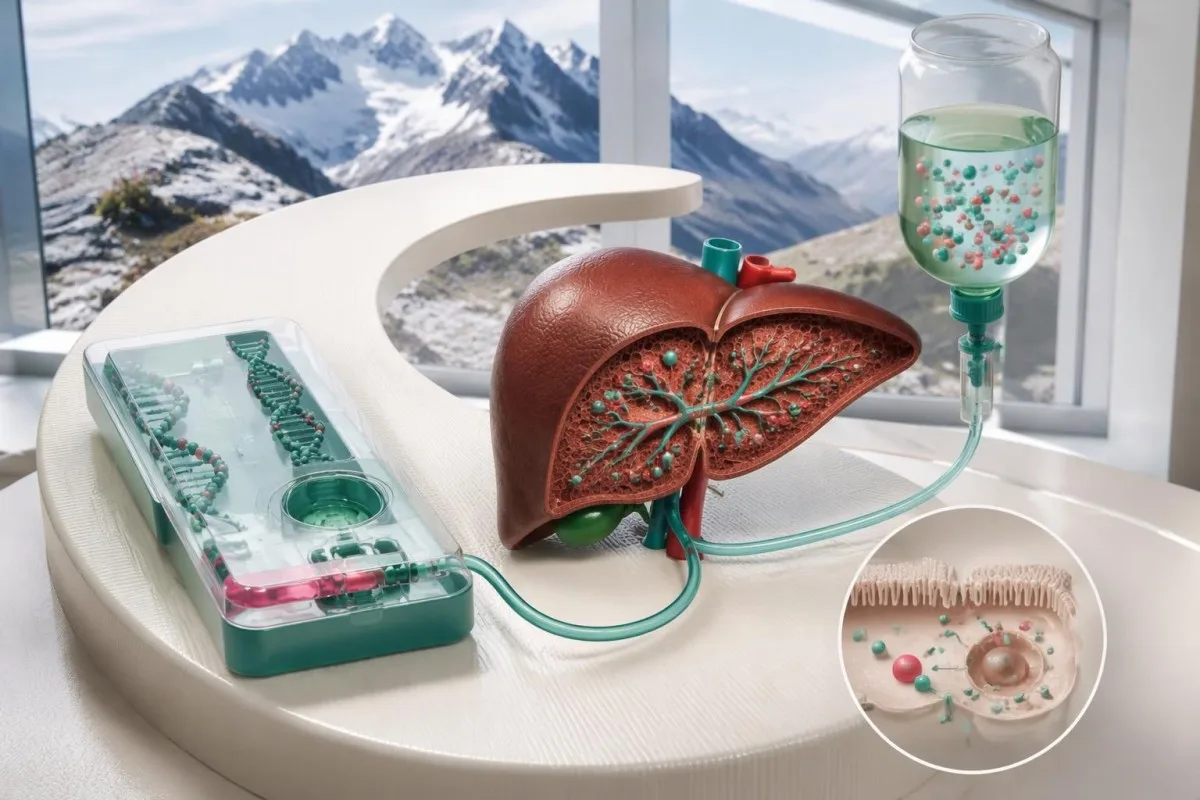
UGT1A1 testing can identify reduced clearance of irinotecan’s active metabolite and support a safer starting dose. It cannot predict every reaction, and the decision depends on the exact formulation, regimen, and your oncology team’s assessment.

Kľúčové poznatky
- UGT1A1 testing identifies inherited differences in SN-38 inactivation; routine bilirubin or liver tests cannot replace the genetic result.
- Poor metabolizers commonly have *28/*28, *6/*6, or *6/*28 results, which increase the risk of severe irinotecan-related neutropenia.
- Intermediate metabolizers commonly have *1/*28 or *1/*6 results; the Dutch Pharmacogenetics Working Group does not recommend an automatic genotype-only reduction for these patients.
- Starting-dose guidance differs: the Dutch guideline recommends 70% of the usual irinotecan starting dose for poor metabolizers, followed by clinician-led adjustment.
- Regimen matters because conventional FOLFIRI commonly uses 180 mg/m² every 2 weeks, while other schedules and liposomal formulations use different doses.
- Liposomal irinotecan has formulation-specific instructions; a 70 mg/m² regimen and a 50 mg/m² regimen must not be treated as interchangeable.
- Delayed diarrhea begins more than 24 hours after irinotecan and can become dangerous through dehydration, electrolyte loss, or accompanying neutropenia.
- Urgentné vyšetrenie is needed for a temperature of 38.0°C or higher during chemotherapy unless your oncology team has given a different, stricter threshold.
What does a UGT1A1 test change before the first infusion?
A UGT1A1 test before irinotecan identifies reduced ability to inactivate SN-38, the drug’s active metabolite. Results such as 28/*28, *6/*6, or *6/*28 can support a lower starting dose and closer monitoring for severe neutropenia and delayed diarrhea; the oncology team must apply the result to the actual regimen.

Testing is most useful before cycle 1 because an inherited clearance difference is present before any treatment-related symptoms develop. A result does not measure how much irinotecan is currently circulating, and it does not establish whether chemotherapy will work; those are different questions answered through treatment response, clinical assessment, and occasionally specialist pharmacokinetic methods.
A hypothetical patient scheduled for conventional irinotecan at 180 mg/m² may receive a different starting plan after a poor-metabolizer result, whereas another patient with the same genotype may already be receiving a lower-dose combination. The useful question is not simply whether the result is positive: ask which starting dose, monitoring schedule, and escalation criteria the result changes.
Kantesti je Analyzátor krvných testov s umelou inteligenciou that helps explain routine CBC and bilirubin reports, not a laboratory that performs UGT1A1 genotyping or a service that prescribes chemotherapy. Our organizácia a klinický účel are distinct from your oncology team’s prescribing role; keep the genetic report and cycle-specific laboratory results as 2 separate parts of the treatment record.
How do UGT1A1 *28 and *6 affect irinotecan metabolism?
UGT1A1 *28 reduces enzyme expression, while the UGT1A1 *6 variant reduces enzyme function through a coding change. Both can slow conversion of active SN-38 into its much less active glucuronide, SN-38G; this increases exposure without requiring abnormal ALT or AST results.

Irinotecan is first converted to SN-38 by carboxylesterases; UGT1A1 then participates in SN-38 inactivation rather than its initial activation. The *28 allele usually contains 7 promoter TA repeats instead of the 6 associated with *1, while *6 is commonly described as c.211G>A, producing the p.Gly71Arg substitution.
The same enzyme also conjugates bilirubin, which explains the connection with Gilbert syndrome and bilirubin. However, a normal bilirubin result does not exclude a reduced-function genotype, and an elevated result does not identify which variant is present; fasting, illness, obstruction, and liver impairment can change the interpretation of a single measurement.
Minami et al. examined both *6 and *28 in Japanese patients and linked UGT1A variation with irinotecan pharmacokinetics and toxicity (Pharmacogenetics and Genomics, 2007). Their work matters because a test limited to *28 may overlook a clinically relevant *6 allele; 2 patients described as *28-negative do not necessarily have the same SN-38 clearance capacity.
Which results mean UGT1A1 poor metabolizer?
A UGT1A1 poor metabolizer generally carries 2 decreased-function alleles, including 28/*28, *6/*6, or *6/*28. A person with *1/*28 or *1/*6 usually has an intermediate-metabolizer phenotype; *1/*1 is usually classified as normal when the test adequately covers relevant variants.

The slash separates the 2 inherited gene copies; it is not a fraction or a drug concentration. A *6/*28 result usually means one decreased-function allele came from each parent, creating a compound-heterozygous poor-metabolizer result; possessing 2 different allele names does not make the result less clinically relevant than *28/*28.
Intermediate metabolism is not the same as zero risk. Although the Dutch guideline does not recommend an automatic reduction for *1/*28 or *1/*6, a patient starting at 180 mg/m² may still need modification because of elevated bilirubin, limited marrow reserve, previous toxicity, or the accompanying drugs; the phenotype is one input, not permission to ignore the rest.
Pharmacogenetic recommendations are drug-specific, as our explanation of SLCO1B1-related medication risk also illustrates. A reduced-function result does not mean every medicine is unsafe, and *28/*28 does not itself diagnose a hereditary cancer syndrome; ask the laboratory to provide the diplotype, assigned phenotype, and variants tested rather than a 1-word positive result.
What should the genetic test include, and when is it needed?
The test should clearly state whether it detects both *28 and *6, how it assigns the 2 alleles, and which other variants it evaluates. Testing before the first irinotecan dose allows the result to influence prevention rather than merely explain toxicity after it occurs.
UGT1A1 *6 is more frequent in several East Asian populations, while *28 occurs across multiple ancestry groups; ancestry can inform test coverage but cannot substitute for testing. Some assays also distinguish the 5-repeat *36 and 8-repeat *37 alleles, so reports from 2 laboratories may differ because their analytical scope differs—not because your inherited genotype changed.
A laboratory may use a blood-derived DNA sample or a validated saliva or cheek-cell method; fasting is not ordinarily required for the genetic analysis itself. Recent allogeneic stem-cell transplantation needs special discussion because circulating DNA may reflect the donor, and turnaround time must be checked locally rather than assumed to fit a treatment appointment in 2 days.
Genotyping and enzyme-activity testing are not interchangeable, a distinction also relevant to TPMT test interpretation. UGT1A1 genotype generally needs testing only once, but a narrow panel may warrant additional analysis if the clinical picture is unexpected; a report listing only 1 tested variant should not be read as proof that every other reduced-function allele is absent.
How much does UGT1A1 increase severe neutropenia risk?
Poor-metabolizer genotypes increase the likelihood of ťažká neutropénia, but the size of the increase depends on dose and regimen. Grade 3 neutropenia generally means an absolute neutrophil count below 1.0 down to 0.5 × 10⁹/L; grade 4 means below 0.5 × 10⁹/L.
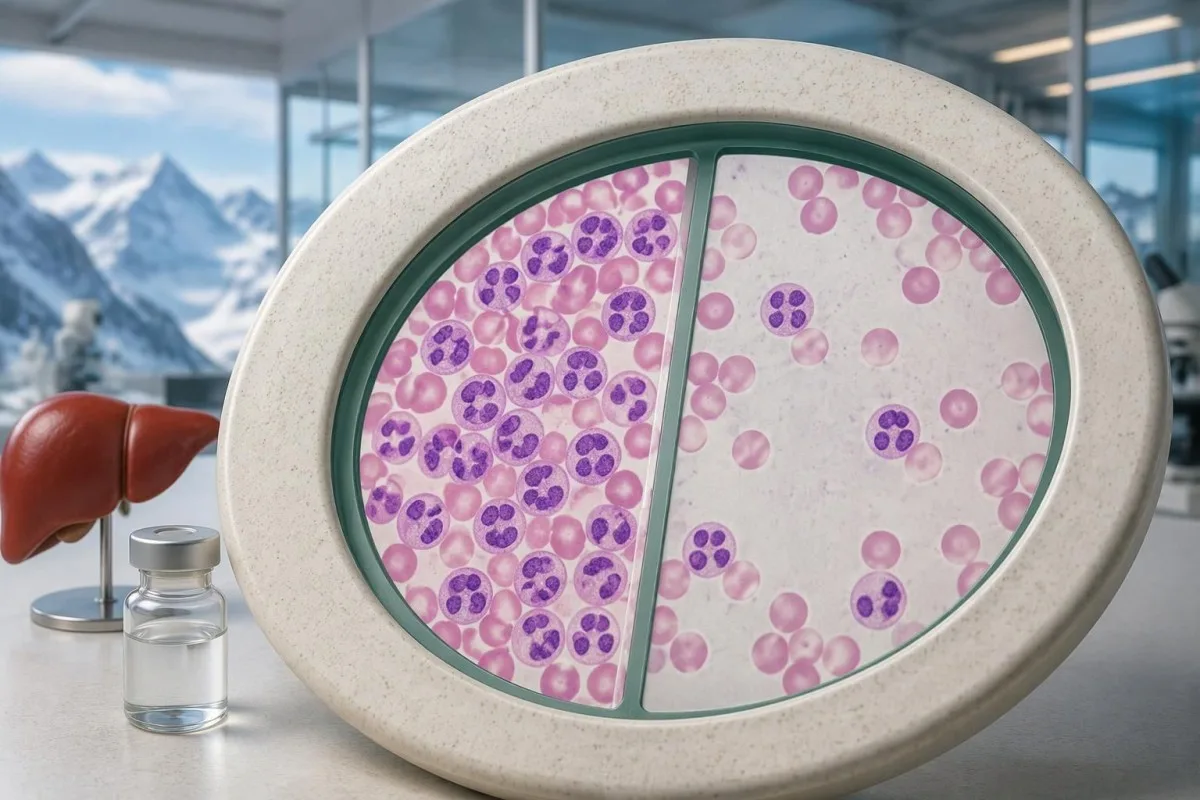
Hoskins et al. reported a dose-dependent association between *28/*28 and irinotecan-related neutropenia in their 2007 Journal of the National Cancer Institute meta-analysis. In the 150–250 mg/m² category, the pooled odds ratio was 3.22, with a 95% confidence interval of 1.52–6.81; older mixed schedules and wide uncertainty prevent treating this as a personal probability.
An odds ratio is not the percentage of patients affected. In a purely hypothetical illustration, if baseline risk were 10%, an odds ratio of 3 would correspond to approximately 25% risk—not 30%; the actual baseline varies with companion drugs, supportive care, prior treatment, and eligibility criteria, so no single percentage applies to every poor metabolizer.
Kantesti can help readers distinguish the ANC from the neutrophil percentage in routine reports, using the concepts explained in our sprievodca absolútnym počtom neutrofilov. A pre-existing Duffy-null-associated lower ANC requires individualized interpretation, but a new chemotherapy-related fall below 0.5 × 10⁹/L still deserves prompt oncology assessment rather than reassurance based on ancestry alone.
Why are early and delayed irinotecan diarrhea different?
Early diarrhea occurs during or shortly after infusion, usually within 24 hours, and may accompany cholinergic symptoms such as sweating or abdominal cramping. Delayed diarrhea begins more than 24 hours after treatment and is more closely related to intestinal toxicity, including exposure to SN-38.

UGT1A1 genotype is more useful for anticipating delayed toxicity than predicting the immediate cholinergic syndrome. Clinicians may use atropine for early symptoms when appropriate, while delayed diarrhea requires a separate written treatment plan; intestinal bacteria can convert SN-38G back to SN-38 through beta-glucuronidase activity, illustrating why liver conjugation is not the only determinant of bowel exposure.
Grade 3 diarrhea commonly includes at least 7 additional stools per day above baseline, hospitalization being indicated, or a severe increase in ostomy output. Do not wait to reach that count before calling: persistent diarrhea despite the prescribed plan, vomiting that prevents drinking, fever, dizziness, or reduced urine output can justify urgent assessment at a much smaller stool increase.
Diarrhea during chemotherapy should not automatically be attributed to genotype, because antibiotics, infections, and accompanying drugs can produce similar symptoms; our C. difficile result guide explains one relevant diagnostic complication. If diarrhea lasts beyond 24 hours despite your oncology instructions, contact the team, and treat blood in the stool or significant abdominal pain as warning signs rather than ordinary treatment effects.
How does the treatment regimen change the starting-dose decision?
A starting-dose decision combines UGT1A1 phenotype with the planned regimen, not genotype alone. Conventional FOLFIRI commonly uses irinotecan 180 mg/m² every 2 weeks, whereas modified combinations may use 150 mg/m² or another protocol-specific amount; those differences change baseline exposure and toxicity.

The Dutch Pharmacogenetics Working Group recommends starting poor metabolizers at 70% of the normal irinotecan dose, with subsequent increases guided by neutrophil counts and clinical tolerance (Hulshof et al., 2023). Applied hypothetically to a 180 mg/m² protocol, 70% is 126 mg/m²; the prescribing team decides whether protocol rules permit rounding, what dose level to use, and when reassessment occurs.
A 70% calculation is relative to the regimen’s usual starting dose, not a fixed universal dose. For a hypothetical protocol starting at 150 mg/m², the same calculation gives 105 mg/m²; applying the 126 mg/m² figure from a different protocol would therefore be a genuine dosing error, especially if the infusion schedule or formulation also differed.
Kantesti je platforma na interpretáciu krvného testu AI for explaining reported laboratory values, not selecting a 180 mg/m² chemotherapy prescription; our klinickú validačnú rámcovú describes the distinction between interpretation support and prescribing. In combinations containing fluorouracil or capecitabine, testovanie DPYD pred chemoterapiou addresses a separate metabolic risk that a normal UGT1A1 result cannot rule out.
Why do irinotecan dosing recommendations differ between guidelines?
Guidelines differ because they interpret dose-dependent evidence differently and serve different clinical settings. The Dutch guideline recommends a 70% starting dose for poor metabolizers, while US conventional irinotecan prescribing information advises considering a reduction by at least 1 dose level, without defining one percentage for every regimen.

A dose level is defined by the treatment protocol rather than by the genetic test. Moving from 180 to 150 mg/m² would be approximately a 17% reduction, while moving from 180 to 120 mg/m² would be approximately a 33% reduction; these are mathematical examples, not recommendations, and explain why the phrase reduce one level needs a named protocol.
The French RNPGx/GPCO dose-stratified framework has historically distinguished doses below 180 mg/m², doses of 180–230 mg/m², and high doses of at least 240 mg/m². It recommended approximately 25–30% reduction for *28/*28 at the intermediate range and advised against high-dose use in that genotype; the Dutch recommendation is broader, including lower-dose regimens and other poor-metabolizer combinations.
The evidence is genuinely less settled at lower doses, where severe events may be less frequent and studies less able to estimate genotype effects precisely. This differs from HLA-B*57:01 drug avoidance, where the relevant recommendation is avoidance rather than a 30% reduction; ask which local guideline your team follows and whether its advice specifically covers *6/*6 or *6/*28.
Does liposomal irinotecan use the same UGT1A1 dose rules?
Liposomal irinotecan is not interchangeable with conventional irinotecan, and its UGT1A1 instructions depend on the regimen. In the liposomal irinotecan plus fluorouracil/leucovorin setting, a usual 70 mg/m² dose is reduced to 50 mg/m² initially for known *28/*28; the NALIRIFOX regimen already starts at 50 mg/m².

Those 70 and 50 mg/m² figures refer to irinotecan free base in the relevant liposomal prescribing instructions. Some documents also express doses using the hydrochloride trihydrate equivalent, approximately 80 and 60 mg/m² respectively; the team must verify the convention rather than interpret a different-looking number as an intentional dose increase or decrease.
For NALIRIFOX—liposomal irinotecan with oxaliplatin, fluorouracil, and leucovorin—the labeled starting dose is 50 mg/m² every 2 weeks, including patients known to have *28/*28. This does not establish that every poor-metabolizer genotype has identical evidence, especially *6-containing combinations; the oncology pharmacist should check the relevant product information and local protocol rather than import conventional irinotecan rules automatically.
A medication list that says only irinotecan is insufficient for a pharmacogenetic decision: request the formulation, companion drugs, dose expression, and schedule before comparing 2 plans. Our sprievodcovi prípravou na základné laboratórne vyšetrenia also explains why recording pretreatment measurements helps later interpretation, although those measurements cannot resolve a formulation or prescribing ambiguity.
Which laboratory results and medicines matter alongside genotype?
CBC with differential, bilirubin, liver tests, kidney function, and electrolytes provide information that UGT1A1 genotype cannot supply. A bilirubin of 2.0 mg/dL is approximately 34 µmol/L; conventional irinotecan studies often excluded values above this level, so higher results require specialist assessment rather than a genotype-only calculation.
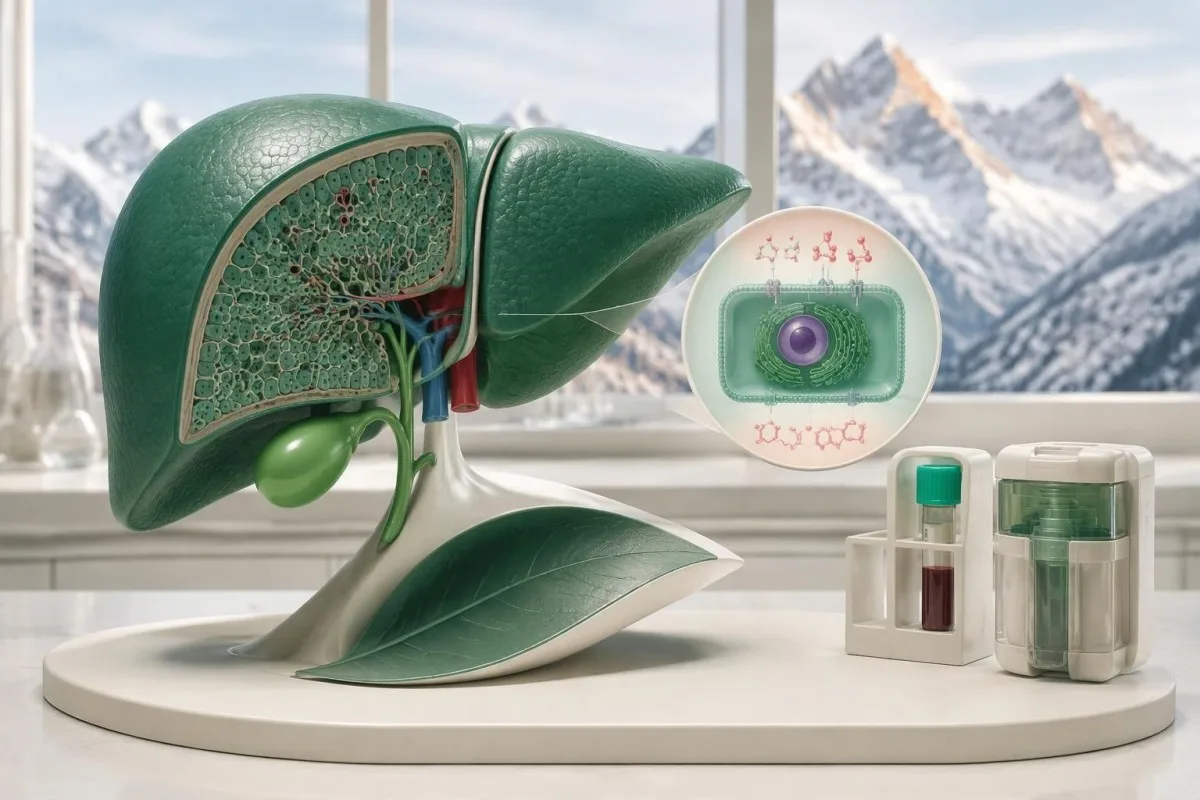
An isolated indirect bilirubin rise may fit reduced UGT1A1 activity, while rising direct bilirubin with abnormal ALP or transaminases suggests an additional hepatobiliary problem. A hypothetical total bilirubin of 1.8 mg/dL with otherwise stable tests is therefore not equivalent to 1.8 mg/dL accompanied by new jaundice and obstruction; fractionation, trends, symptoms, and imaging determine the interpretation.
Strong CYP3A4 inducers can lower irinotecan exposure, while strong CYP3A4 or UGT1A1 inhibitors can increase clinically relevant exposure; examples requiring pharmacy review include rifampicin, carbamazepine, ketoconazole, and atazanavir. Do not stop a prescription yourself, and disclose supplements such as St John’s wort before cycle 1 because changing an interacting medicine can itself change exposure.
Kantesti can help explain routine kidney and electrolyte reports, but a normal creatinine does not guarantee tolerance of delayed diarrhea. The sprievodcovi pomerom BUN/kreatinín describes contextual interpretation, while our electrolyte safety guide explains why potassium or magnesium losses can matter after 24 hours of gastrointestinal symptoms.
What monitoring and symptoms require urgent action?
Monitoring remains necessary for every genotype, with CBC checks before treatment and additional measurements when clinically indicated. A temperature of 38,0 °C alebo vyššia during chemotherapy warrants immediate contact with the oncology service unless the team has supplied a different threshold; follow a stricter local instruction.

Formal definitions of febrile neutropenia often use a single temperature of 38.3°C or a temperature of 38.0°C sustained for 1 hour, together with a low or falling ANC. These definitions are not instructions to wait at home: chemotherapy services often use simpler, more cautious telephone thresholds, and shaking chills, confusion, or sudden deterioration can be urgent without a documented fever.
A falling ANC can precede symptoms, so a patient feeling well should still attend the scheduled laboratory check. Our borderline neutrophil interpretation guide explains why a result near a cutoff needs context; during treatment, a change from 2.5 to 0.7 × 10⁹/L carries different significance from a stable longstanding count near 1.4 × 10⁹/L.
Dose escalation after a reduced start should follow a predefined plan based on counts, diarrhea, other toxicity, and treatment goals—not simply the absence of nausea after cycle 1. G-CSF may reduce neutropenia risk when indicated, but it does not prevent intestinal toxicity; urgent assessment is needed for diarrhea with fever, severe abdominal pain, inability to drink, or markedly reduced urination.
Why can a normal genotype still be followed by severe side effects?
A normal UGT1A1 result does not guarantee safe treatment because irinotecan toxicity has multiple causes. Genotype does not adequately predict every episode of nausea, fatigue, hair loss, infusion symptoms, or toxicity from companion drugs; even *1/*1 patients can develop severe neutropenia or diarrhea.

A narrow assay may miss uncommon reduced-function variants, while liver impairment, interacting medicines, treatment intensity, and previous chemotherapy can increase risk independently. Thus, 2 patients both reported as *1/*1 may have different exposures and different marrow reserve; a phenotype assignment only describes the genetic information captured by the test, not every biological factor affecting treatment.
Companion drugs create additional attribution problems: oxaliplatin can cause neuropathy, and fluoropyrimidines can contribute diarrhea, mucositis, and marrow suppression. A hypothetical patient on a 4-drug combination with severe diarrhea cannot have the culprit assigned from UGT1A1 alone; timing, the complete regimen, microbiological testing when indicated, and other pharmacogenetic results may alter the clinical explanation.
Kantesti’s role in laboratory trend interpretation is to support understanding, not establish which drug caused a change between 2 cycles. Genetic reports also contain durable personal information, so review our zásady ochrany súkromia a nakladania s údajmi before sharing them; an inherited metabolic variant is not a complete forecast of your future health.
What should you ask your oncology team before irinotecan?
Before treatment, ask which formulation and regimen you will receive, whether *28 and *6 were tested, and how the result changes the first dose. Also obtain a written diarrhea plan, a temperature threshold, and a 24-hour contact route; these practical details matter even when the genotype is normal.

Request the actual dose in mg/m² and the planned total dose in mg, because they answer different questions. For example, a hypothetical 126 mg/m² order for a body surface area of 1.8 m² gives 226.8 mg before institutional rounding; patients should not perform their own adjustment, but this distinction helps identify whether 2 documents describe the same prescription.
Ask how the team will judge tolerance after cycle 1, whether an interim CBC is planned, and what would justify later escalation. Your written diarrhea instructions may use a loperamide schedule different from ordinary over-the-counter directions, so follow the oncology prescription rather than inventing a schedule; fever, abdominal pain, or persistent symptoms may require assessment instead of additional self-treatment.
Kantesti je Nástroj na analýzu krvných testov poháňaný AI that can help explain routine reports alongside your own treatment notes; our Sprievodca AI technológiou explains the supporting technology rather than a chemotherapy dosing system. Keep 3 items accessible: the genetic report, the current regimen sheet, and the emergency contact instructions, with the prescribing team verifying all clinical decisions.
Research publications: what supports the advice and what does not?
The dosing advice rests on drug-specific pharmacogenetic guidance and irinotecan studies, not on general blood-test education publications. The 2023 Dutch guideline recommends a 70% start for poor metabolizers, while the 2007 studies cited here help explain dose dependence and the relevance of both *28 and *6.
Hulshof et al. translate pharmacokinetic and toxicity evidence into prescribing guidance, whereas Hoskins et al. quantify associations across older dose categories, and Minami et al. examine relevant variants in Japanese patients. These 3 sources answer complementary questions; none supplies an individualized toxicity percentage for every contemporary combination, and observational associations should not be presented as proof that one starting dose suits everyone.
Kantesti’s 2 Zenodo publications listed below are educational resources on RDW and the BUN/creatinine ratio, not trials of UGT1A1-guided irinotecan dosing. Our RDW and CBC interpretation resource can explain accompanying red-cell indices, but RDW does not replace ANC, genotype, or a chemotherapy protocol; a DOI is a persistent identifier, not an automatic guarantee of clinical relevance or peer review.
The unresolved question is often how best to preserve treatment intensity while preventing a severe event in cycle 1, particularly in lower-dose combinations and less-studied genotypes. Our štandardy medicínskeho obsahu require separating established guidance, hypothetical calculations, and genuine uncertainty; the oncology team should confirm the current local product information and protocol before applying any published recommendation.
Často kladené otázky
Mal by každý pred liečbou irinotekanom absolvovať test UGT1A1?
Politika testovania sa líši podľa krajiny, inštitúcie a liečebného režimu, ale Holandská pracovná skupina pre farmakogenetiku odporúča pred liečbou irinotekanom vykonať testovanie UGT1A1. Výsledok je obzvlášť užitočný pred prvým cyklom, pretože môže identifikovať pomalých metabolizátorov ešte pred rozvojom závažnej toxicity. Test by mal objasniť, či zahŕňa oba varianty *28 aj *6, a nemal by iba uvádzať, že variant *28 chýba. Váš onkologický tím by vám mal vysvetliť, či výsledok testovania ovplyvní vašu konkrétnu začiatočnú dávku a či je vhodné počkať na výsledok.
Čo znamená UGT1A1 *28/*28 pri dávkovaní irinotekánu?
UGT1A1 *28/*28 vo všeobecnosti poukazuje na stav pomalého metabolizátora a zvýšené riziko závažnej neutropénie súvisiacej s irinotekánom. Holandské odporúčanie navrhuje 70% zvyčajnej úvodnej dávky, po ktorej nasleduje úprava dávky lekárom podľa tolerancie a počtu neutrofilov. Pri hypotetickom konvenčnom režime 180 mg/m² predstavuje tento výpočet 126 mg/m² pred rozhodnutiami špecifickými pre daný protokol alebo zaokrúhlením. Americké pokyny na predpisovanie a lipozomálne režimy používajú odlišné postupy, takže tento výpočet nie je osobným predpisom.
Je variant UGT1A1 *6 rovnako relevantný ako *28 pred liečbou irinotekanom?
UGT1A1 *6 je klinicky významný variant so zníženou funkciou, ktorý môže znížiť inaktiváciu SN-38. Výsledky ako *6/*6 alebo *6/*28 vo všeobecnosti poukazujú na status pomalého metabolizátora, pretože obsahujú 2 alely so zníženou funkciou. Tento variant je častejší v niekoľkých východoázijských populáciách, ale samotný pôvod nemôže určiť, či ho človek nesie. Pred interpretáciou negatívneho výsledku pre *28 ako normálneho metabolizmu sa opýtajte, či vaše laboratórium testovalo *6.
Does UGT1A1 *1/*28 require an automatic dose reduction?
UGT1A1 *1/*28 generally indicates intermediate-metabolizer status rather than poor-metabolizer status. The Dutch guideline does not recommend an automatic genotype-only starting-dose reduction for intermediate metabolizers. A patient scheduled for 180 mg/m² may nevertheless need a different plan because of bilirubin, prior treatment, interacting medicines, or the combination regimen. Intermediate metabolism does not eliminate the need for CBC monitoring or a diarrhea safety plan.
Can normal bilirubin replace UGT1A1 genetic testing?
Normal bilirubin cannot exclude a decreased-function UGT1A1 genotype, and elevated bilirubin cannot identify the specific allele. Bilirubin reflects several processes, including conjugation, liver function, obstruction, and red-cell turnover. A total bilirubin of 2.0 mg/dL is approximately 34 µmol/L and requires interpretation within the relevant irinotecan protocol. Genetic testing and bilirubin measurement provide complementary information rather than interchangeable answers.
When should I call about diarrhea or fever after irinotecan?
Contact your oncology service immediately for a temperature of 38.0°C or higher during chemotherapy unless the team has supplied a different threshold, and follow any stricter instructions. Delayed irinotecan diarrhea begins more than 24 hours after treatment and can cause dehydration or electrolyte loss. Call promptly for diarrhea persisting despite the prescribed plan, inability to drink, reduced urination, blood in stool, or significant abdominal pain. Do not wait for 7 additional stools per day or a scheduled blood test before seeking help.
Získajte vysvetlenie výsledkov krvných testov
Nahrajte svoj laboratórny nález a AI nástroja Kantesti vám v priebehu niekoľkých sekúnd vysvetlí každý biomarker jednoduchým jazykom. Používa ho viac než 2 milióny ľudí na celom svete.
Referencie
- Klein, T., Mitchell, S., & Weber, H. (2026). Krvný test RDW: kompletný sprievodca hodnotami RDW-CV, MCV a MCHC. Kantesti AI lekársky výskum. DOI
- Klein, T., Mitchell, S., & Weber, H. (2026). Vysvetlenie pomeru BUN/Creatinín: Sprievodca testom funkcie obličiek. Kantesti AI lekársky výskum. DOI
- Hulshof DP et al. (2023). Dutch pharmacogenetics working group (DPWG) guideline for the gene–drug interaction between UGT1A1 and irinotecan. European Journal of Human Genetics.
- Hoskins JM et al. (2007). UGT1A1*28 genotype and irinotecan-induced neutropenia: dose matters. Journal of the National Cancer Institute. DOI
- Minami H et al. (2007). Irinotecan pharmacokinetics/pharmacodynamics and UGT1A genetic polymorphisms in Japanese: roles of UGT1A1*6 and *28. Pharmacogenetics and Genomics.
- 2 milióny+Analyzované testy
- 127+Krajiny
- 100+Jazyky
O zdravotníckom tíme


Signály dôvery E-E-A-T Trust Signals
Skúsenosti
Klinické hodnotenie vedené lekárom pracovných postupov interpretácie laboratórnych výsledkov.
Odbornosť
Laboratórna medicína so zameraním na to, ako sa biomarkery správajú v klinickom kontexte.
Autoritatívnosť
Lekársky recenzoval Dr. Thomas Klein, s príspevkami Dr. Sarah Mitchell a prof. Dr. Hansa Webera.
Dôveryhodnosť
Interpretácia založená na dôkazoch s jasnými následnými krokmi na zníženie poplachu.






Zdravotnícke upozornenie
Tento článok je určený len na vzdelávacie účely a nepredstavuje lekárske poradenstvo. Pri rozhodnutiach o diagnostike a liečbe sa vždy poraďte s kvalifikovaným poskytovateľom zdravotnej starostlivosti.
Publikované · Kontaktujte redakčný tím
Vydáva Kantesti Ltd, registrovaná v Anglicku a Walese, číslo spoločnosti. 17090423, Londýn, Spojené kráľovstvo.
