Uma primeira coleta útil registra sua fisiologia usual, não o eco bioquímico do treino de ontem, bebidas, sono ruim ou um vírus passageiro. O objetivo é um contexto repetível que você pode usar por anos.


- Horário da linha de base: agende uma coleta matinal após 8 a 12 horas sem alimentos, quando glicose em jejum, triglicerídeos, estudos de ferro ou insulina estiverem incluídos.
- Pausa para exercícios: evite treinamento de resistência incomumente pesado, intervalos ou eventos de resistência por 24 a 48 horas antes dos testes de rotina de base.
- Janela de álcool: pule o álcool por pelo menos 48 horas antes dos testes de triglicerídeos e enzimas hepáticas; o consumo excessivo de álcool pode distorcer os resultados por mais tempo.
- Regra de doença: adie uma linha de base de bem-estar até pelo menos 2 semanas após a resolução de febre ou sintomas respiratórios ou gastrointestinais significativos.
- Meta de hidratação: beber normalmente no dia anterior e ingerir 250-500 mL de água nas 2 horas anteriores à coleta, a menos que haja restrição de líquidos.
- Cautela com biotina: interromper o uso de biotina em altas doses não prescritas por 48-72 horas antes de muitos imunoensaios, mas nunca interromper o tratamento prescrito sem consultar o médico prescritor.
- Contexto do ciclo: registrar o dia do ciclo para estradiol, progesterona, LH, FSH e, às vezes, lipídios; isso altera a interpretação mais do que muitas pessoas esperam.
- Repetibilidade: usar o mesmo laboratório, horário matutino semelhante e o mesmo padrão de preparação ao acompanhar resultados de exames de laboratório ao longo do tempo.
O que torna uma primeira coleta de sangue uma verdadeira linha de base?
A exame de sangue basal é mais útil quando captura uma semana comum: refeições estáveis, hidratação usual, sem doença aguda e sem treinamento ou consumo de álcool excepcionais. Para a maioria dos adultos, recomendo uma amostra matutina após um jejum de 8-12 horas, quando glicose, triglicerídeos, marcadores de ferro ou insulina estão sendo medidos.
O objetivo prático não é fazer os resultados parecerem melhores. É reduzir variação pré-analítica—alterações que ocorrem antes mesmo de o analisador ver a amostra. Uma glicemia de jejum de 96 mg/dL e um nível de triglicerídeos de 105 mg/dL podem ser totalmente normais, mas seu significado muda se a pessoa comeu tarde, correu 10 km ou dormiu 3 horas.
Em meu trabalho clínico, peço aos pacientes que tratem a primeira coleta como uma fotografia de referência. Mantenha um breve registro do horário de acordar, duração do jejum, medicamentos, suplementos, álcool nas 72 horas anteriores, exercícios nas 48 horas anteriores, dia do ciclo menstrual e infecção recente. Esse registro é frequentemente mais útil no segundo exame do que um único sinal de “normal”.
Kantesti é um Analisador de teste de sangue de IA projetado para ler os resultados juntamente com esse contexto prático, em vez de tratar cada valor destacado como doença. Para uma lista sensata de exames, comece com nosso guia de exames de sangue anuais e combine adições com um clínico que conheça seu histórico.
O basal é pessoal, não meramente “dentro da faixa”
Um intervalo de referência laboratorial geralmente contém os 95% centrais de valores de uma população selecionada; não define seu número pessoal mais saudável ou mais seguro. Um resultado de creatinina pode permanecer dentro da faixa de um laboratório enquanto aumenta significativamente em relação ao seu próprio valor repetido, e é por isso que a documentação do basal é importante.
Como o jejum e as refeições do dia anterior moldam os resultados
Jejum de 8-12 horas produz a primeira comparação mais limpa para triglicerídeos, glicose de jejum, insulina e ferro sérico, embora muitos painéis lipídicos possam ser interpretados sem jejum. Água é permitida e geralmente útil; café, suco, chiclete e bebidas calóricas não constituem um jejum verdadeiro.
Uma glicemia de jejum abaixo de 100 mg/dL é geralmente normal, 100-125 mg/dL indica glicemia de jejum alterada e 126 mg/dL ou acima requer confirmação, a menos que haja sintomas e hiperglicemia acentuada. HbA1c reflete aproximadamente as 8-12 semanas anteriores, portanto um café da manhã não pode reduzi-la significativamente; a orientação laboratorial da ADA explica por que glicose e HbA1c respondem a perguntas diferentes (Sacks et al., 2023).
Triglicerídeos são especialmente sensíveis à alimentação. Um valor abaixo de 150 mg/dL é convencionalmente desejável, enquanto 500 mg/dL ou acima levanta preocupação quanto ao risco de pancreatite e merece avaliação clínica imediata. Uma refeição rica e tardia ou álcool podem gerar um primeiro resultado enganosamente alto, portanto, use um plano de reexame de triglicerídeos em vez de tentar “comer perfeitamente” por um dia.
Kantesti é um plataforma de interpretação de exame de sangue da AI que pode preservar o estado de jejum ao lado de cada painel, o que torna comparações posteriores menos propensas a erros. Nosso guia de biomarcadores explica quais testes são genuinamente sensíveis à refeição e quais não são.
Como o exercício pode mimetizar testes anormais de fígado e rins
O exercício intenso pode aumentar temporariamente CK, AST, ALT, creatinina, leucócitos e, às vezes, potássio, portanto, evite treinamento não familiar ou de alta intensidade por 24-48 horas antes de um painel de base. Caminhada leve e movimento diário normal estão bem.
Um corredor maratonista de 52 anos que revisei teve AST 89 UI/L após uma corrida longa, com ALT 36 UI/L e CK acima de 2.000 UI/L. Esse padrão apontou mais fortemente para músculo exercitado do que para lesão hepática, mas ainda exigiu repetição após a recuperação; números isolados raramente são suficientes. Leia mais sobre AST após exercício antes de presumir um problema hepático.
Os limites de referência da creatina quinase variam por laboratório, sexo, ancestralidade, massa muscular e status de treinamento, mas muitos laboratórios sinalizam valores acima de aproximadamente 200-300 UI/L. É comum a CK exceder 5 vezes o limite superior de referência após o esforço; CK acima de 5.000 UI/L com urina escura, dor muscular intensa ou diminuição da produção de urina requer avaliação urgente para rabdomiólise de esforço.
A creatinina aumenta após atividade intensa, em parte devido à quebra muscular e à redução do fluxo sanguíneo renal devido à perda de líquidos. Não interprete um eGFR mais baixo de uma amostra pós-corrida como doença renal crônica sem testes de recuperação; nosso guia de creatinina durante o exercício explica a janela de repetição mais segura.
O reset de 48 horas não é uma regra para todos
Para uma sessão de academia recreativa, 24 horas geralmente é suficiente. Após uma ultramaratona, competição de CrossFit, levantamento pesado excêntrico ou exposição ao calor, geralmente espero de 48 a 72 horas se o propósito for um baseline estável em vez de avaliação do evento em si.
Por que o álcool merece uma pausa de 48 horas na linha de base
Evitar álcool por pelo menos 48 horas antes de um exame de sangue de base reduz a distorção de curto prazo de triglicerídeos, glicose, GGT, AST, marcadores de hidratação e fisiologia relacionada ao sono. Uma única noite de bebedeira pode ter mais impacto do que muitos pacientes esperam.
O álcool pode elevar os triglicerídeos aumentando a produção hepática de lipoproteínas de muito baixa densidade, particularmente após refeições ricas em carboidratos. O efeito é variável: o resultado de uma pessoa retorna ao baseline em 24 horas, enquanto outra com fígado gorduroso, diabetes ou consumo maior pode apresentar alterações por vários dias. Um triglicerídeo em jejum de 220 mg/dL após um fim de semana de bebidas deve ser repetido antes que alguém o rotule como um problema metabólico fixo.
GGT é sensível, mas inespecífico. Muitos laboratórios usam limites superiores em torno de 55-60 UI/L para homens e 35-40 UI/L para mulheres, mas medicamentos, colestase, fígado gorduroso e álcool podem elevá-lo. O padrão significativo é GGT com ALT, FA, bilirrubina, contagem de plaquetas e histórico de álcool; veja nosso explicação do painel hepático para ver como essas peças se encaixam.
A partir de 1º de setembro de 2026, ainda desaconselho “desintoxicação” ou jejum excessivo para melhorar os resultados hepáticos. Comida normal, água normal, sem álcool e um intervalo documentado são ciência mais limpa. ALT persistente acima do limite superior do laboratório em duas amostras com semanas de intervalo justifica revisão médica, não uma "limpeza" da internet.
Quando doenças ou vacinação devem atrasar uma coleta de bem-estar
Atrasar uma linha de base de bem-estar durante febre, doença gastrointestinal ativa, uma infecção respiratória significativa ou nas primeiras 1-2 semanas após a recuperação porque CRP, ferritina, leucócitos, plaquetas, glicose e exames de tireoide podem mudar temporariamente. Testes diagnósticos urgentes são diferentes: não os atrase quando estiver indisposto.
A proteína C-reativa aumenta comumente dentro de 6-8 horas de um estímulo inflamatório e pode cair rapidamente assim que o gatilho se resolve. Uma CRP abaixo de 3 mg/L é frequentemente usada para estratificação de risco cardiovascular apenas quando uma pessoa está clinicamente bem; um resultado de 18 mg/L durante um resfriado diz pouco sobre o risco vascular a longo prazo. O padrão de CRP e albumina é mais informativo do que qualquer resultado isoladamente.
A ferritina é tanto uma proteína de armazenamento de ferro quanto um reagente de fase aguda. Uma ferritina de 110 ng/mL durante uma infecção pode ocultar estoques de ferro depletados, enquanto uma ferritina abaixo de 15 ng/mL é altamente específica para deficiência de ferro em um adulto saudável. É por isso que eu combino ferritina com saturação de transferrina, CRP, hemoglobina e o histórico clínico.
A vacinação pode causar uma breve resposta imune, incluindo alterações transitórias em subconjuntos de CRP e leucócitos. Testes de rotina geralmente podem esperar 3-7 dias após a vacinação se o objetivo for uma linha de base silenciosa, mas um painel de segurança agendado para monitoramento de medicamentos deve seguir as instruções do médico prescritor. Nosso guia laboratorial pós-vacinação abrange as distinções práticas.
Uma regra de duas semanas tem exceções
Após pneumonia, hospitalização, mononucleose infecciosa ou uma exacerbação grave de doença crônica, duas semanas podem não ser suficientes. Nesses casos, muitas vezes utilizo a recuperação dos sintomas, a tendência da CRP e o julgamento clínico em vez de apenas um calendário.
Como a perda de sono e o horário alteram um exame de sangue
Uma noite de sono ruim pode aumentar a glicose em jejum, o cortisol, a pressão arterial e os sinais inflamatórios, enquanto o momento pode alterar testosterona, cortisol, ferro e TSH. Para uma primeira linha de base, mire em 7-9 horas de sono habitual e colete a amostra entre cerca de 7 e 10 da manhã, quando possível.
O cortisol segue um forte ritmo diário. O cortisol sérico matinal é comumente medido por volta das 8h, mas um valor não pode diagnosticar doença adrenal sem o horário da coleta, sintomas e, muitas vezes, testes de ACTH. Uma amostra da tarde comparada com uma amostra anterior das 8h não é uma tendência válida, mesmo que o mesmo laboratório realize ambas.
A restrição de sono de 4-5 horas pode piorar a sensibilidade à insulina na manhã seguinte e alterar os hormônios do apetite; o tamanho da alteração laboratorial varia consideravelmente de pessoa para pessoa. Vejo isso com mais frequência em trabalhadores por turnos, pais recentes e viajantes frequentes, onde uma “linha de base” precisa representar sua programação real em vez de uma idealizada. Nosso guia de laboratório de sono ruim oferece uma lista de verificação de anotação útil.
O conselho prático do Dr. Thomas Klein é simples: não cancele um teste necessário porque você dormiu mal, mas registre. Se uma glicose em jejum limítrofe for 103 mg/dL após uma noite em claro, repita em condições normais antes de tirar conclusões sobre pré-diabetes.
A cafeína nem sempre é uma preparação inofensiva
Café preto pode ter pouco efeito em muitos painéis, mas pode afetar glicose, catecolaminas, pressão arterial e alguns testes endócrinos especializados. Quando a insulina em jejum, glicose, cortisol ou metanefrinas são solicitados, água pura é a escolha menos ambígua.
Quais suplementos e medicamentos precisam ser registrados
Não interrompa medicamentos prescritos para um exame de sangue de base, a menos que o prescritor lhe diga para fazê-lo, mas registre todos os medicamentos e suplementos com dose e horário. Biotina, ferro, B12, creatina, iodo, corticosteroides e descongestionantes podem alterar a biologia ou o ensaio do teste.
Altas doses de biotina, geralmente 5.000 a 10.000 microgramas diários em produtos para cabelo e unhas, podem interferir em certos imunoensaios de estreptavidina-biotina. Pode criar TSH falsamente baixo ou T4 livre, troponina ou resultados hormonais falsamente altos, dependendo do design do ensaio. Uma pausa de 48-72 horas é comumente usada para biotina não prescrita, mas as pessoas que a tomam para uma condição médica devem primeiro perguntar ao seu médico.
Ferro oral pode elevar o ferro sérico transitoriamente, e suplementos de creatina podem aumentar a creatinina sem reduzir a filtração real. Corticosteroides podem elevar a glicose e os glóbulos brancos; inibidores da bomba de prótons podem afetar magnésio e B12 ao longo do tempo. A resposta correta é o contexto, não a descontinuação abrupta por conta própria; nosso guia de jejum de suplementos explica exceções comuns.
Kantesti é um Ferramenta de análise de exames de sangue com IA que registra os suplementos relatados ao lado dos resultados para que uma aparente alteração tireoidea ou renal possa ser revisada com a exposição que pode explicá-la. Os pacientes também podem comparar os resultados relatados com nosso checklist de precisão clínica antes de agir sobre uma bandeira inesperada.
O horário da medicação pode fazer parte da prescrição
Reposição tireoidiana, terapia de testosterona, insulina, diuréticos e anticoagulantes cada um tem regras de horário específicas para exames. Por exemplo, exames de tireoide são frequentemente coletados antes da dose diária de levotiroxina ao monitorar a consistência, mas o protocolo do médico prescritor deve ter prioridade.
Como o ciclo menstrual afeta uma linha de base hormonal inicial
Para testes de hormônios reprodutivos, o dia do ciclo faz parte do resultado. FSH, LH, estradiol, progesterona, testosterona, prolactina e, às vezes, lipídios podem variar o suficiente ao longo do ciclo que uma data não registrada enfraquece a interpretação.
O teste no início da fase folicular, geralmente nos dias 2-5 do ciclo, é comumente usado para FSH, LH e estradiol de base na avaliação de fertilidade. A progesterona é geralmente medida cerca de 7 dias após a ovulação — não automaticamente “dia 21”, porque um ciclo de 35 dias segue uma biologia diferente. Um valor de progesterona acima de aproximadamente 3 ng/mL pode indicar ovulação recente em muitos casos, mas a interpretação exata depende do ensaio e do horário.
A prolactina é sensível ao estresse, exercício recente, atividade sexual e coleta difícil de amostra. Elevações leves são frequentemente repetidas após 20-30 minutos de repouso tranquilo, idealmente pela manhã; um nível persistentemente acima de 100 ng/mL merece avaliação endócrina imediata, embora os efeitos da medicação permaneçam comuns. Veja nosso guia de repetição de prolactina para os próximos passos sensatos.
Mudanças lipídicas relacionadas ao ciclo são reais, mas geralmente menores do que as mudanças causadas por peso, dieta, álcool, diabetes ou genética. Se você pretende monitorar a saúde com exames de sangue ao longo de anos, escolha uma fase semelhante do ciclo para repetir os painéis de lipídios e hormônios sempre que possível, especialmente ao avaliar sintomas ou tratamento.
Contracepção hormonal muda a questão
A contracepção hormonal combinada pode suprimir as medições endógenas de FSH, LH, estradiol e andrógenos, portanto, esses resultados podem não descrever a fisiologia não tratada. Não interrompa a contracepção apenas para obter uma linha de base sem considerar o risco de gravidez e a razão clínica para o teste.
Por que hidratação, postura e técnica de coleta importam
A hidratação normal e 10-15 minutos de repouso sentado antes da coleta melhoram a repetibilidade porque a desidratação, a permanência prolongada em pé e uma coleta difícil podem concentrar ou distorcer vários resultados. Beba normalmente no dia anterior e, a menos que a ingestão de líquidos seja restrita, tome 250-500 mL de água nas 2 horas antes da consulta.
A contração do volume plasmático pode fazer com que a hemoglobina, o hematócrito, a albumina, o cálcio, a proteína total e a creatinina pareçam mais altos do que seriam sob hidratação comum. Inversamente, beber agressivamente litros de água imediatamente antes do teste pode diluir sódio e outras medições. Uma faixa normal de sódio é geralmente de 135-145 mmol/L, mas um resultado inesperado deve sempre ser interpretado com o status de hidratação e glicose.
A postura importa mais do que a maioria das pessoas percebe. Ficar em pé pode aumentar a albumina e analitos ligados à proteína através de mudanças de fluidos, enquanto o tempo prolongado do torniquete e o aperto repetido do punho podem aumentar spuriousmente o potássio e o lactato. Um potássio acima de 5,5 mmol/L sem doença renal, sintomas ou alterações no ECG é frequentemente reavaliado prontamente porque o artefato de coleta é comum; nosso guia de erro de coleta de potássio explica por quê.
Menstruação, perda recente de fluidos por diarreia, diuréticos e uso de sauna pertencem à nota anexada à coleta. Se o eGFR estiver inesperadamente baixo após a desidratação, recupere a ingestão normal e discuta o reteste; veja alterações temporárias do eGFR antes de assumir danos renais permanentes.
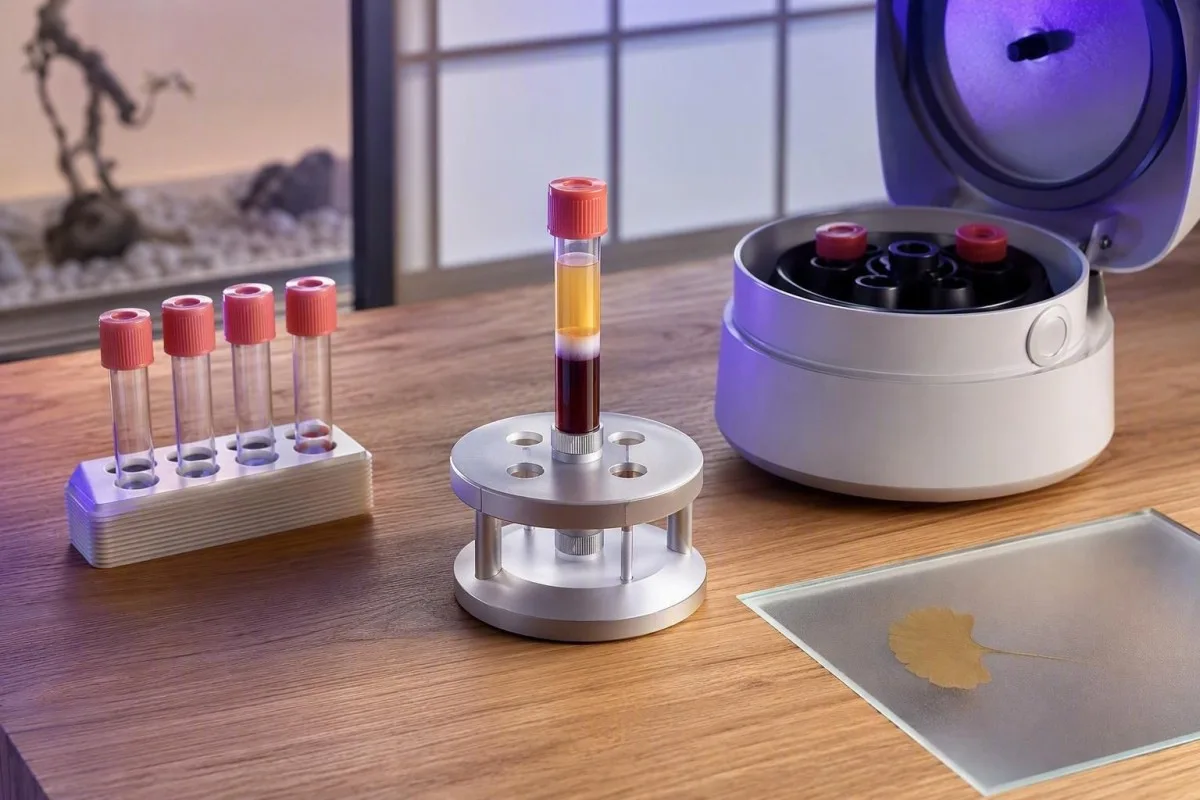
Um tubo vermelho não é um diagnóstico
A cor do tubo identifica o aditivo usado para o processamento laboratorial, não a gravidade do teste. O que importa clinicamente é a seleção correta do tubo, a temperatura de transporte, o atraso no processamento e se o laboratório relata hemólise ou uma amostra insuficiente.
Como tornar os resultados posteriores comparáveis à primeira coleta
Use o mesmo laboratório, um horário de coleta semelhante e uma rotina de preparação semelhante sempre que rastrear resultados de laboratório ao longo do tempo. Uma mudança biológica real pode ser menor do que o efeito combinado do método do ensaio, status de jejum, exercício e variação diária comum.
O colesterol LDL pode ser calculado em vez de medido diretamente, e o cálculo torna-se menos confiável à medida que os triglicerídeos aumentam. A diretriz de colesterol AHA/ACC de 2018 apoia a triagem não em jejum em muitas pessoas, mas recomenda avaliação em jejum em circunstâncias selecionadas, incluindo triglicerídeos muito altos e incerteza diagnóstica (Grundy et al., 2019). O ponto crucial é a consistência, não a perfeição.
O valor de mudança de referência, ou RCV, combina a imprecisão analítica com a variação biológica normal de um indivíduo. Um movimento de 10% em um marcador pode ser ruído, enquanto uma mudança de 30% em outro é significativa; não há porcentagem universal que se aplique a todos os testes. Nosso guia "esta mudança é real" mostra por que as tendências exigem mais do que setas coloridas.
Kantesti AI interpreta painéis repetidos comparando unidades de ensaio, intervalos de referência, datas de coleta e biomarcadores relacionados, em vez de simplesmente contar sinalizadores anormais. Nosso fluxo de trabalho de comparação com AI é construído para esta pergunta longitudinal: o que mudou o suficiente para merecer atenção?
Guarde o relatório original
Salve o PDF ou uma fotografia nítida, não apenas um resultado digitado. Conversões de unidades, intervalos de laboratório, comentários sobre hemólise e se o LDL foi calculado podem alterar materialmente como um futuro clínico lê a tendência.
A nota de contexto para salvar com cada exame de sangue
Uma nota contextual curta transforma números isolados em dados longitudinais utilizáveis. Registre data, hora, horas de jejum, sono, exercício, álcool, doença, medicamentos, suplementos, dia do ciclo, alterações de peso e novos sintomas a cada coleta.
Meu lembrete mínimo tem oito itens: hora da coleta; duração do jejum; exercício nas últimas 48 horas; álcool nas últimas 72 horas; doença atual; alterações na prescrição; dose e última dose de suplementos; e status menstrual ou de gravidez, quando relevante. Adicione viagem, jet lag e altitude quando aplicável, pois cada um pode alterar marcadores sensíveis à hidratação, cortisol, hemoglobina e sono.
Uma perda de peso de 1,5 kg em 10 dias, uma nova dieta rica em proteínas ou várias noites de sono fragmentado podem explicar alterações modestas nos exames de sangue ao longo do tempo. Isso não torna o resultado sem importância – torna-o interpretável. Para uma versão reutilizável, nosso rastreador de contexto do laboratório inclui os detalhes que os pacientes mais esquecem.
O Dr. Thomas Klein recomenda escrever o lembrete antes de sair de casa, não enquanto espera pelos resultados. A memória torna-se pouco confiável após um alerta inesperado, e as pessoas compreensivelmente reconstróem a semana anterior para se adequar ao número.
O que não registrar como um “ajuste”
Não manipule a dieta, a ingestão de água, o exercício ou os suplementos apenas para obter uma linha de base inicial mais atraente. Uma linha de base deve representar sua vida; caso contrário, o próximo exame pode parecer pior simplesmente porque é mais honesto.
Quais achados limítrofes devem ser repetidos antes da preocupação
Muitos resultados de linha de base limítrofes devem ser repetidos em condições estáveis antes de serem tratados como doença, especialmente alterações leves isoladas nas enzimas hepáticas, creatinina, potássio, prolactina, neutrófilos e triglicerídeos. Sintomas urgentes ou valores marcadamente anormais são a exceção.
Um ALT inferior a 2 vezes o limite superior do laboratório com bilirrubina, FA normais e ausência de sintomas é comumente reexaminado após a remoção de contribuintes temporários, como álcool, exercício intenso ou doença intercorrente. Um nível de bilirrubina acima de 3 mg/dL com icterícia, urina escura, fezes pálidas, febre ou dor abdominal é diferente e não deve esperar por uma repetição rotineira da linha de base.
Uma contagem de neutrófilos levemente baixa pode ocorrer após uma doença viral ou refletir o normal estável de um indivíduo. Uma contagem absoluta de neutrófilos de 1,0-1,5 × 10⁹/L é geralmente neutropenia leve, enquanto abaixo de 0,5 × 10⁹/L acarreta risco de infecção substancialmente maior e requer orientação médica urgente, particularmente com febre. Nosso guia de acompanhamento de neutrófilos separa retestes comuns de sinais de alerta.
Uma das salvaguardas mais úteis é a verificação de padrões. Por exemplo, cálcio alto com hormônio paratireoideo suprimido tem uma urgência diferente do que cálcio alto mais desidratação e elevação da albumina; a razão pela qual nos preocupamos com combinações é que a biologia raramente muda um marcador isoladamente.
Quando um exame de sangue de base não deve substituir o atendimento médico
Um protocolo de linha de base não é apropriado quando você tem sintomas de alerta, doença em rápida piora, complicações na gravidez ou um alerta laboratorial crítico. Dor no peito, falta de ar grave, confusão, desmaio, icterícia, fezes pretas ou desidratação grave exigem avaliação clínica agora – não um teste repetido com melhor preparação.
Potássio de 6,0 mmol/L ou superior, sódio abaixo de 120 mmol/L, glicose acima de 300 mg/dL com vômitos ou confusão, ou hemoglobina perto de 7 g/dL são exemplos de resultados que podem necessitar de ação urgente, embora o quadro clínico completo seja importante. Os laboratórios geralmente entram em contato com a equipe solicitante sobre valores críticos, mas os pacientes não devem presumir que uma ligação perdida significa que um resultado é seguro.
Se você está grávida, tem doença renal crônica, usa insulina, usa anticoagulantes, recebe quimioterapia ou tem doença hepática conhecida, as instruções de preparação podem diferir do modelo de bem-estar. Um período de jejum pode ser inseguro para algumas pessoas com diabetes, e o horário da medicação pode ser essencial. Nosso guia sobre a frequência de testes descreve por que o grupo de risco altera o plano.
Kantesti é um serviço de interpretação de testes do laboratório de IA que ajuda a identificar perguntas para médicos, não é um substituto para avaliação urgente ou diagnóstico. As salvaguardas clínicas e os princípios de revisão médica por trás do nosso trabalho são descritos por nosso Conselho Consultivo Médico.
Um protocolo prático de 72 horas para sua primeira linha de base
Para uma linha de base inicial útil, mantenha sua rotina por 72 horas, evite álcool por 48 horas, evite exercícios extenuantes por 24-48 horas, durma normalmente, jejue por 8-12 horas quando indicado, beba água e registre seu contexto. A consistência é a intervenção.
Setenta e duas a 48 horas antes: não inicie um novo suplemento, dieta restritiva, desintoxicação ou bloco de treinamento. Se você já toma um suplemento, registre a dose exata; se ele contiver biotina em alta dose, pergunte ao médico ou farmacêutico solicitante se uma interrupção de 48-72 horas é apropriada. Evite álcool por 48 horas e adie os testes de rotina se a doença estiver ativa.
No dia anterior: faça suas refeições habituais, hidrate-se normalmente, evite sauna ou eventos de resistência e planeje 7-9 horas na cama. Para painéis em jejum, termine de comer 8-12 horas antes da consulta; água é permitida. Na manhã da coleta, evite café e nicotina se exames de glicose, insulina, cortisol, catecolaminas ou testes endócrinos especializados estiverem planejados.
Após a chegada do resultado, salve o relatório original e sua nota de contexto antes de alterar qualquer coisa. Kantesti AI pode organizar resultados em uma visualização longitudinal, enquanto nosso guia de tecnologia e método clínico explica por que o reconhecimento de padrões ainda precisa de acompanhamento médico humano para sintomas, anormalidades importantes e decisões de tratamento.
Perguntas frequentes
Como me preparo para um exame de sangue de base?
Prepare-se para um exame de sangue de base mantendo sua rotina habitual, evitando álcool por 48 horas, evitando exercícios extenuantes por 24-48 horas, dormindo normalmente e documentando medicamentos e suplementos. Jejuar por 8-12 horas se a solicitação incluir glicose em jejum, triglicerídeos, insulina ou estudos de ferro; a água é geralmente permitida. Beba normalmente em vez de se hidratar em excesso e agende a coleta pela manhã, entre 7 e 10 horas, quando hormônios ou ferro forem incluídos. Adie uma avaliação de bem-estar de base durante uma doença aguda, a menos que o exame seja necessário para avaliar essa doença.
Devo jejuar para o meu primeiro exame de sangue?
Um jejum de 8 a 12 horas é mais útil para um primeiro exame de sangue que inclua triglicerídeos, glicose em jejum, insulina ou ferro sérico, embora muitos painéis lipídicos de rotina não exijam mais jejum. Água pura não quebra o jejum e ajuda a prevenir dificuldades na coleta ou efeitos de concentração relacionados à desidratação. Café, suco, leite, álcool, chiclete e suplementos podem alterar resultados selecionados ou invalidar a preparação pretendida. Siga as instruções específicas do pedido se o seu médico fornecer uma duração de jejum diferente.
O exercício pode afetar os resultados do exame de sangue no dia seguinte?
Sim, exercício extenuante pode afetar resultados exame de sangue por 24-72 horas ao aumentar creatina quinase, AST, ALT, creatinina, leucócitos e, ocasionalmente, potássio. Treinamento de resistência intenso, corrida de maratona, intervalos de alta intensidade e exposição ao calor produzem maiores alterações do que uma caminhada normal. Para uma linha de base de bem-estar estável, evite exercícios incomuns ou intensos por 24-48 horas; após um evento de resistência importante, 48-72 horas é muitas vezes mais realista. Não atrase testes urgentes para sintomas como dor muscular intensa, urina escura, fraqueza ou diminuição da produção de urina.
Por quanto tempo devo evitar álcool antes de um exame de sangue?
Evite o álcool por pelo menos 48 horas antes de um exame de sangue de base, especialmente quando triglicerídeos, glicose, GGT, AST, ALT ou marcadores sensíveis à hidratação estão sendo avaliados. O álcool pode aumentar os triglicerídeos mesmo após uma única noite de consumo excessivo, e o efeito pode durar vários dias em pessoas com diabetes, fígado gordo ou consumo habitual mais elevado. Um resultado de triglicerídeos de 500 mg/dL ou superior requer avaliação clínica imediata, pois o risco de pancreatite aumenta substancialmente. Não tente uma desintoxicação ou jejum severo depois; refeições e hidratação normais produzem um resultado repetido mais honesto.
Um sono ruim pode alterar os resultados de exames de sangue?
O sono insuficiente pode alterar a glicose em jejum da manhã seguinte, o cortisol, a pressão arterial e alguns sinais inflamatórios, particularmente após 4-5 horas de sono ou um turno noturno. Não altera significativamente a HbA1c, que reflete a glicemia média ao longo de aproximadamente 8-12 semanas. Se um resultado de base não urgente estiver limítrofe após uma noite sem dormir, registre a privação de sono e considere repetir o teste em condições normais. Testes necessários devem prosseguir, pois os sintomas e anormalidades acentuadas são mais importantes do que a preparação ideal.
Devo fazer exames hormonais em um dia específico do meu ciclo menstrual?
Sim, os exames hormonais devem ser agendados de acordo com a questão clínica e o dia do ciclo menstrual deve ser sempre registrado. FSH, LH e estradiol são frequentemente avaliados nos dias 2-5 do ciclo para uma linha de base do início da fase folicular, enquanto a progesterona é comumente verificada cerca de 7 dias após a ovulação, em vez de automaticamente no dia 21. Um nível de progesterona acima de aproximadamente 3 ng/mL pode confirmar ovulação recente, mas os laboratórios e as situações clínicas variam. A contracepção hormonal altera os resultados hormonais endógenos, portanto, não a interrompa apenas para exames sem aconselhamento médico.
Faça hoje a análise de exame de sangue com IA
Junte-se a mais de 2 milhões de usuários no mundo todo que confiam na Kantesti para análise instantânea e precisa de exames laboratoriais. Envie seus resultados de exame de sangue e receba uma interpretação abrangente de biomarcadores 15,000+ em segundos.
📚 Publicações de pesquisa referenciadas
Klein, T., Mitchell, S., & Weber, H. (2026). Kantesti LTD. (2026). Guia de teste de sangue C3 C4 do complemento e título ANA. Zenodo.. Pesquisa Médica por IA da Kantesti.
Klein, T., Mitchell, S., & Weber, H. (2026). Kantesti LTD. (2026). Guia de Exame de Sangue para o Vírus Nipah: Detecção Precoce e Diagnóstico 2026. Zenodo.. Pesquisa Médica por IA da Kantesti.
📖 Referências Médicas Externas
⚕️ Aviso Médico
Este artigo é apenas para fins educacionais e não constitui aconselhamento médico. Consulte sempre um profissional de saúde qualificado para decisões de diagnóstico e tratamento.
Sinais de confiança E-E-A-T
Experiência
Revisão clínica orientada por médicos dos fluxos de interpretação de exames laboratoriais.
Especialização
Foco em medicina laboratorial sobre como os biomarcadores se comportam no contexto clínico.
Autoridade
Escrito pelo Dr. Thomas Klein, com revisão da Dra. Sarah Mitchell e do Prof. Dr. Hans Weber.
Confiabilidade
Interpretação baseada em evidências, com caminhos de acompanhamento claros para reduzir alarmes.