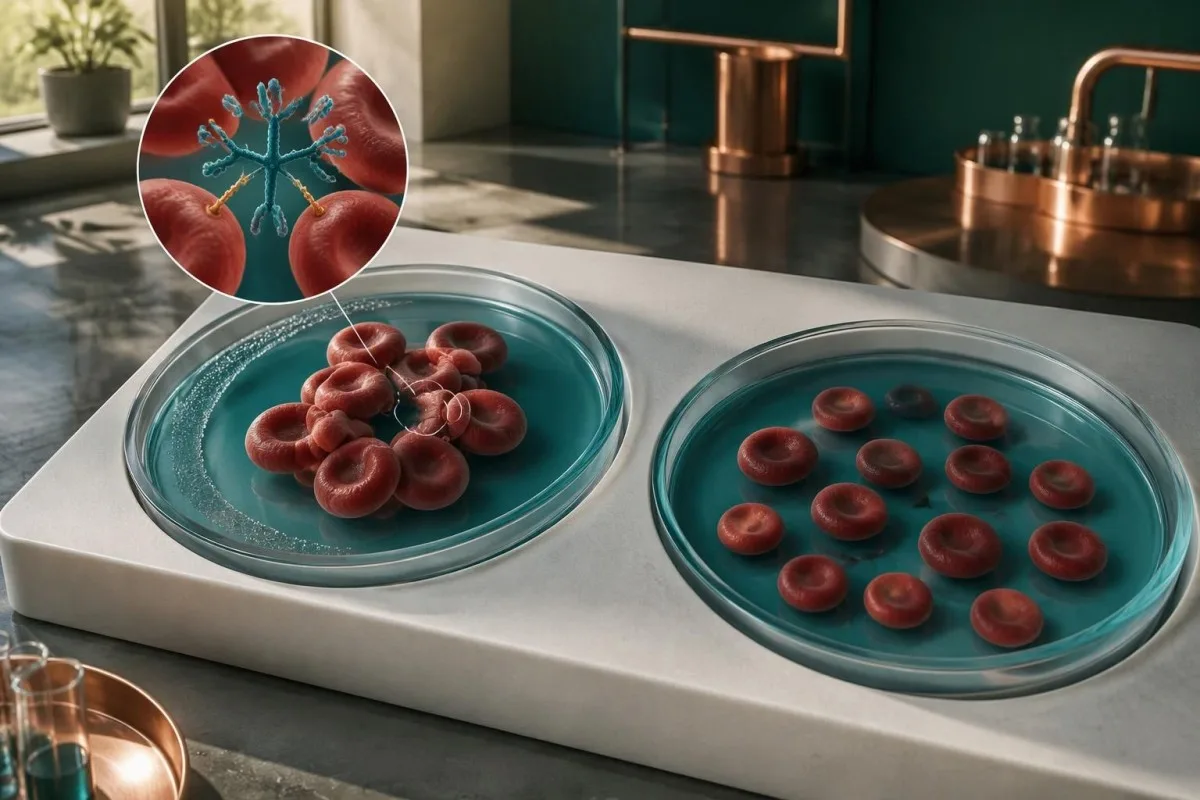
Titer aglutinin sejuk yang tinggi bermakna antibodi masih dapat dikesan selepas pencairan yang ketara—tidak semestinya antibodi tersebut merosakkan sel darah merah anda. Perbezaannya bergantung pada julat suhu, bukti hemolisis, ujian positif komplemen dan pengendalian sampel yang boleh dipercayai.

Perkara utama
- Keputusan positif mengenal pasti antibodi yang reaktif terhadap sejuk; ia tidak mengesahkan penyakit aglutinin sejuk secara bersendirian.
- Titer sekurang-kurangnya 1:64 pada 4°C ialah komponen diagnostik yang lazim digunakan, tetapi pakar klinikal juga memerlukan bukti hemolisis dan corak ujian antiglobulin langsung yang sesuai.
- Amplitud terma menerangkan suhu tertinggi antibodi bertindak balas; aktiviti pada sekitar 30°C atau lebih lazimnya lebih membimbangkan berbanding aktiviti yang terhad kepada keadaan makmal yang sangat sejuk.
- Ujian antiglobulin langsung positif C3d menyokong proses yang diperantarai komplemen, tetapi corak yang sama juga boleh berlaku di luar penyakit aglutinin sejuk.
- Penilaian hemolisis menggabungkan trend hemoglobin, retikulosit, LDH, bilirubin tidak langsung dan haptoglobin, bukannya bergantung pada satu penanda yang abnormal.
- Pengendalian sampel pada 37–38°C sehingga pemisahan serum mungkin diperlukan untuk ujian aglutinin sejuk; sahkan arahan makmal pengambilan sebelum janji temu anda.
- Antibodi berkaitan jangkitan boleh bersifat sementara, walaupun hemolisis yang signifikan secara klinikal masih memerlukan penilaian walaupun jangkitan menjadi pencetusnya.
- Gejala yang mendesak termasuk sakit dada, sesak nafas ketika berehat, pengsan atau kekeliruan; jaundis baharu, air kencing gelap atau keletihan yang semakin teruk dengan cepat memerlukan penilaian perubatan segera.
Adakah ujian aglutinin sejuk yang positif bermakna anda menghidap penyakit?
A ujian aglutinin sejuk yang positif tidak secara automatik bermakna penyakit aglutinin sejuk. Titer yang tinggi sekalipun mesti ditafsirkan bersama 3 dapatan klinikal: julat suhu antibodi, bukti pemusnahan sel darah merah dan ujian antiglobulin langsung yang positif bagi komplemen.

Aglutinin sejuk biasanya ialah antibodi IgM yang boleh mengikat sel darah merah dengan lebih mudah pada suhu yang lebih rendah lalu menyebabkannya bergumpal. Ujian lazimnya mengukur aktivitinya pada 4°C—jauh lebih sejuk daripada kebanyakan darah yang beredar—jadi tindak balas makmal yang ketara boleh berlaku serentak dengan aktiviti yang sedikit atau tiada kepentingan klinikal di dalam badan.
Keputusan tunggal seperti 1:256 tidak dapat memberitahu anda sama ada anda mengalami anemia, sama ada antibodi itu bertindak balas hampir pada suhu badan atau sama ada ia bersifat sementara selepas suatu penyakit. Penjelasan kami tentang keputusan antibodi positif membezakan pengesanan daripada diagnosis; soalan berguna seterusnya ialah apakah yang ditunjukkan oleh ujian berkaitan.
Kantesti ialah seorang Penganalisis ujian darah AI yang membantu menjelaskan titer aglutinin sejuk bersama keputusan makmal berkaitan, termasuk sama ada suhu ujian yang dilaporkan ialah 4°C. Kami latar belakang syarikat menerangkan organisasi di sebalik perkhidmatan pendidikan ini; kami tidak menggantikan penilaian hematologi dan makmal yang diperlukan untuk menetapkan diagnosis.
Apakah yang diukur oleh titer aglutinin sejuk yang tinggi?
A titer aglutinin sejuk ialah pencairan serum anda yang paling tinggi yang masih menghasilkan tindak balas aglutinasi yang ditakrifkan oleh makmal. Keputusan 1:512 bermakna aktiviti masih dapat dikesan selepas pencairan yang jauh lebih besar berbanding keputusan 1:32; kedua-dua nombor itu tidak mengukur jumlah anemia secara langsung.
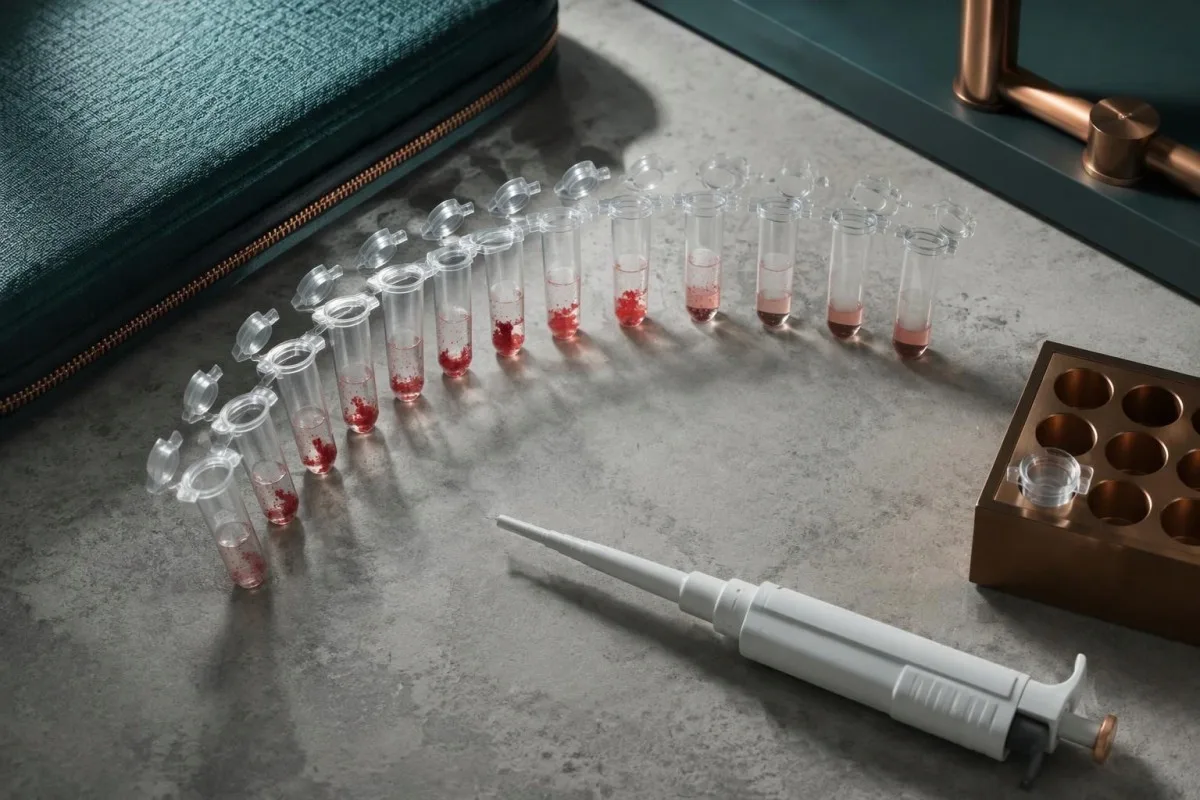
Titer sekurang-kurangnya 1:64 pada 4°C ialah komponen yang lazim digunakan dalam diagnosis penyakit aglutinin sejuk, bukannya keputusan saringan muktamad secara bersendirian. Ulasan Hematology menghuraikan ambang ini bersama hemolisis kronik dan kepositifan C3d yang kuat pada ujian antiglobulin langsung (Berentsen, 2016); tiada titer universal yang secara automatik memerlukan rawatan kecemasan.
Langkah pencairan dua kali ganda lazimnya menghasilkan keputusan seperti 1:64, 1:128 dan 1:256. Perbezaan satu langkah boleh mencerminkan variasi asai, titik akhir yang dipilih atau pengendalian spesimen, bukannya perubahan biologi yang bermakna; perbandingan angka paling kukuh apabila makmal yang sama menggunakan kaedah dan suhu yang sama.
Sesetengah makmal hanya melaporkan positif atau negatif, manakala yang lain memberikan nombor timbal balik seperti 256 dan bukannya menulis 1:256. Panduan kami tentang keputusan kualitatif dan kuantitatif explains that distinction; ask for the actual dilution, assay temperature and local reference interval before comparing reports.
| Tahap | Julat | Maksudnya |
|---|---|---|
| Low-level activity | Below 1:64 at 4°C | Often incidental when thermal amplitude is narrow and hemolysis is absent; this is not a universal laboratory reference interval. |
| Common diagnostic threshold | At least 1:64 at 4°C | Supports further assessment when hemolysis and a compatible direct antiglobulin test are present; does not confirm disease alone. |
| Higher dilution endpoint | Examples: 1:256 or 1:512 | Shows activity after greater dilution, but does not establish thermal amplitude or predict treatment need. |
| Very high reported endpoint | Example: 1:1024 or higher | Still requires clinical interpretation; no titer-only emergency threshold is established. |
Mengapa amplitud terma mungkin lebih penting daripada titer
Amplitud terma is the highest temperature at which a cold antibody reacts under the laboratory's testing conditions. Reactivity around 30°C or above is generally more clinically concerning than reactivity confined to 4°C, because cooler peripheral circulation can reach temperatures at which the antibody becomes active.
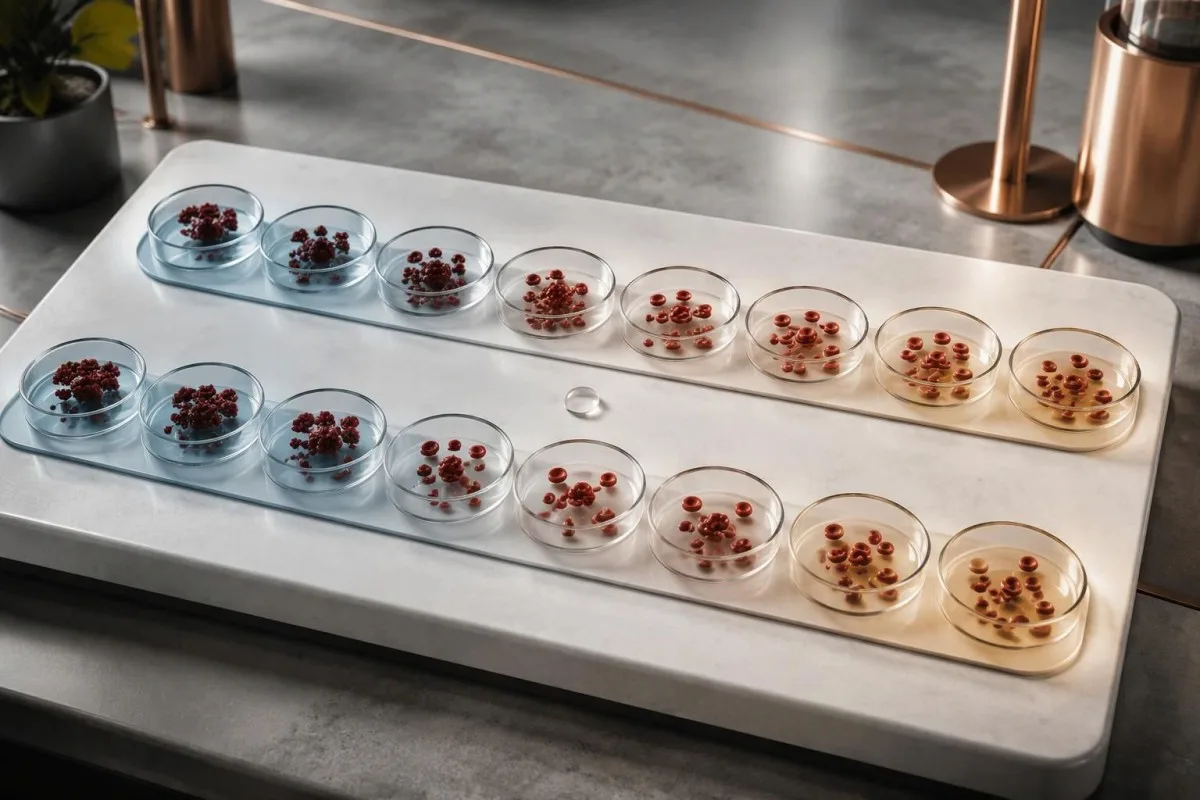
A high-titer antibody active only at 4°C may matter less clinically than a lower-titer antibody that remains active at 30–32°C. The reason is exposure: red cells do not normally circulate at refrigerator temperature, but they can encounter substantially cooler conditions in fingers, toes and other peripheral areas.
Complement can attach while red cells are cool and remain relevant after they return toward 37°C, even when the IgM antibody detaches. This explains why antibody-related injury is not simply a matter of visible clumping; our panduan ujian pelengkap also distinguishes circulating complement measurements from complement deposited on cells.
Thermal amplitude testing is not standardized into 1 universal patient-facing cutoff, and many routine reports omit it entirely. Specialist laboratories may test several temperatures, such as 4°C, room temperature, 30°C and 37°C; clinicians usually request that additional work when the titer, symptoms and hemolysis results do not fit together.
Keputusan darah yang manakah menunjukkan hemolisis sebenar?
Hemolysis means red cells are being destroyed faster than expected, and assessment usually combines 5 measurements: hemoglobin, reticulocytes, LDH, indirect bilirubin and haptoglobin. A high cold agglutinin titer without this supporting pattern does not establish a hemolytic disorder.
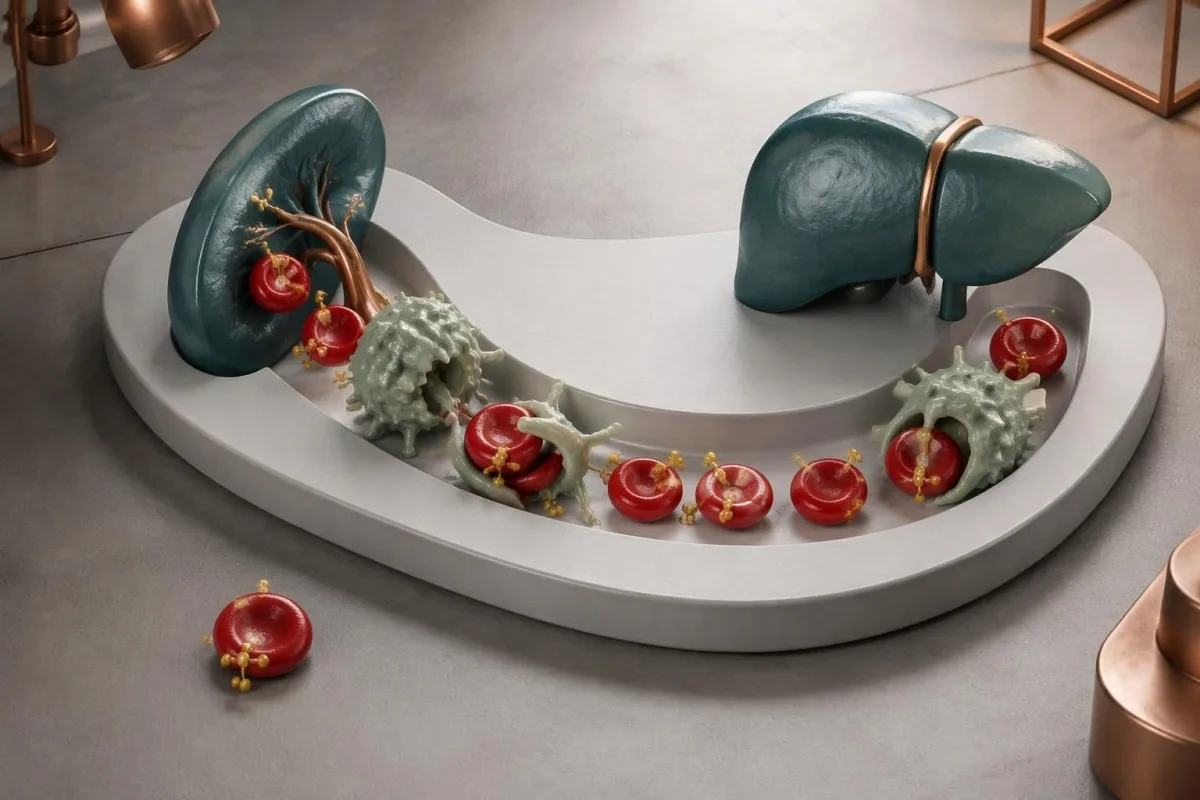
A hypothetical hemoglobin fall from 13.2 to 9.6 g/dL, accompanied by rising indirect bilirubin and LDH, is more concerning than an unchanged hemoglobin with the same titer. Reticulocytes often increase as the marrow replaces lost cells, although an early episode, nutrient deficiency or marrow disorder can blunt that response.
Low haptoglobin supports hemolysis but is not definitive: liver disease can reduce production, while an acute-phase response can raise the concentration despite red-cell destruction. Our explanation of punca haptoglobin rendah covers these exceptions; a result below 1 laboratory's reference limit should be interpreted with the other markers rather than alone.
Kantesti AI helps explain LDH trends, including why a hypothetical rise from 220 to 650 U/L needs the laboratory's reference interval and specimen-quality information. Our LDH interpretation guide describes other sources of elevation; normal hemoglobin also does not exclude compensated hemolysis when the marrow is keeping pace.
Apakah maksud ujian antiglobulin langsung positif C3d?
A C3d-positive direct antiglobulin test, also called a direct Coombs test, detects complement fragments attached to red cells. Cold agglutinin disease typically produces strong C3d positivity with absent or sometimes weak IgG reactivity, but these 2 antibody-testing results are not sufficient without clinical evidence of hemolysis.

The direct antiglobulin test and the cold agglutinin titer answer 2 soalan yang berbeza: what is attached to your red cells, and what cold-reactive activity is present in your serum? The Blood Reviews international consensus recommends a monospecific direct antiglobulin test as part of autoimmune hemolytic anemia assessment (Jäger et al., 2020).
A report stating only DAT positive may not distinguish IgG from C3d; asking for those 2 components can materially change interpretation. Our guide to a ujian Coombs terus positif explains why transfusion-related antibodies, medications and other immune processes can also produce a positive result without proving cold agglutinin disease.
In a child with abrupt post-illness hemolysis, a C3d-positive DAT and a low cold agglutinin titer can raise a different possibility: paroxysmal cold hemoglobinuria. This condition usually involves an IgG antibody assessed by Donath–Landsteiner testing, so a cold agglutinin result below 1:64 should not end the investigation when symptoms suggest significant hemolysis.
Antibodi yang ditemui secara kebetulan, jangkitan dan penyakit berterusan
Incidental cold antibodies may cause no symptoms, while infection-related antibodies can be temporary and occasionally cause substantial hemolysis. Persistent cold agglutinin disease is usually associated with a clonal marrow B-cell process; these 3 situations require different follow-up rather than the same response to a positive test.
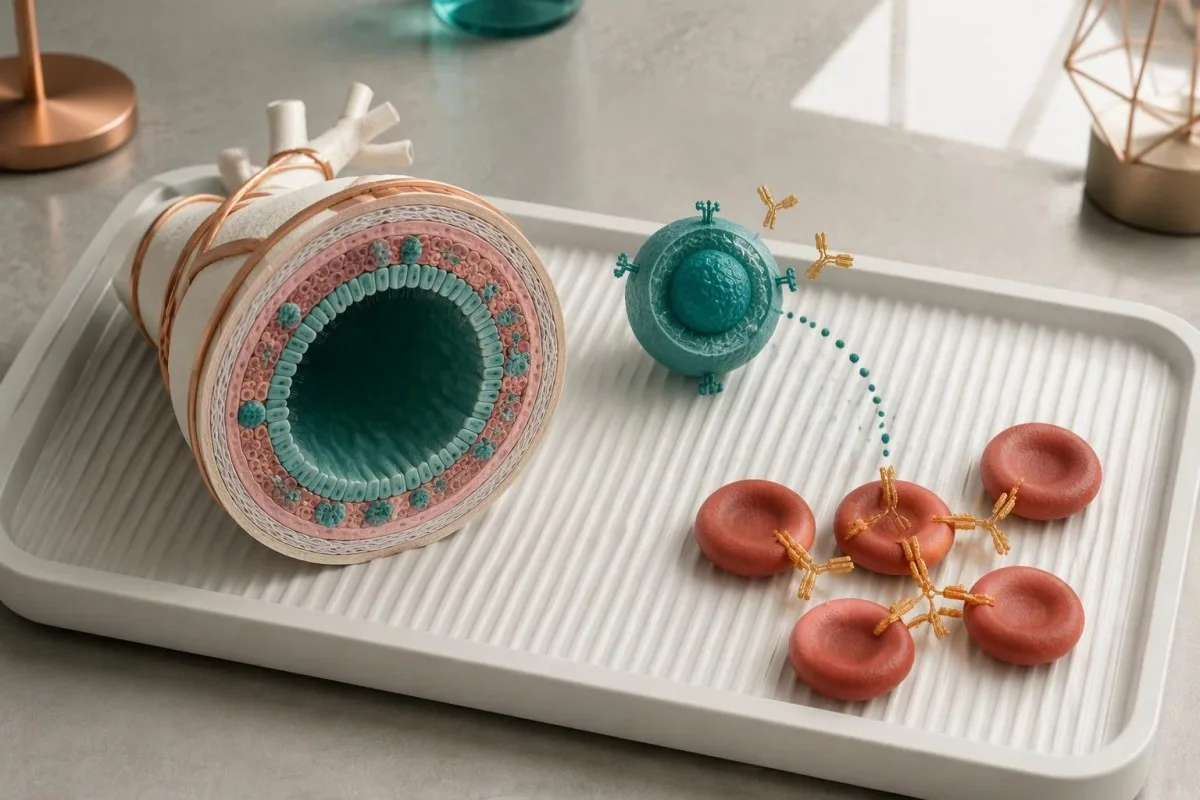
Mycoplasma pneumoniae and Epstein–Barr virus are 2 recognized infection-related associations, but a cold agglutinin test cannot reliably diagnose either infection. Our guide to Mycoplasma antibody interpretation explains why antibody timing and persistence complicate that diagnosis; respiratory symptoms may require pathogen-directed testing rather than inference from the titer.
Recent fever or sore throat changes the questions clinicians ask, not the urgency of genuine hemolysis: a hemoglobin of 8.5 g/dL with new jaundice still requires assessment even if the antibody is expected to be temporary. Our EBV result interpretation explains how VCA and EBNA patterns provide more specific information about exposure timing.
Terminology matters: cold agglutinin syndrome generally describes cold-antibody hemolysis secondary to another condition, while cold agglutinin disease is a distinct, usually persistent disorder. A titer of 1:512 does not identify lymphoma; specialist investigation may find a small marrow clone without overt lymphoma, and incidental antibodies do not automatically justify cancer investigations.
Mengapa sampel anda mungkin perlu dipanaskan sebelum ujian
For cold agglutinin titer testing, many specialist laboratories require the specimen to remain at 37–38°C from collection until serum separation. Cooling before separation can allow antibodies to bind the patient's cells, potentially lowering the antibody activity left in the serum and producing a misleading result.
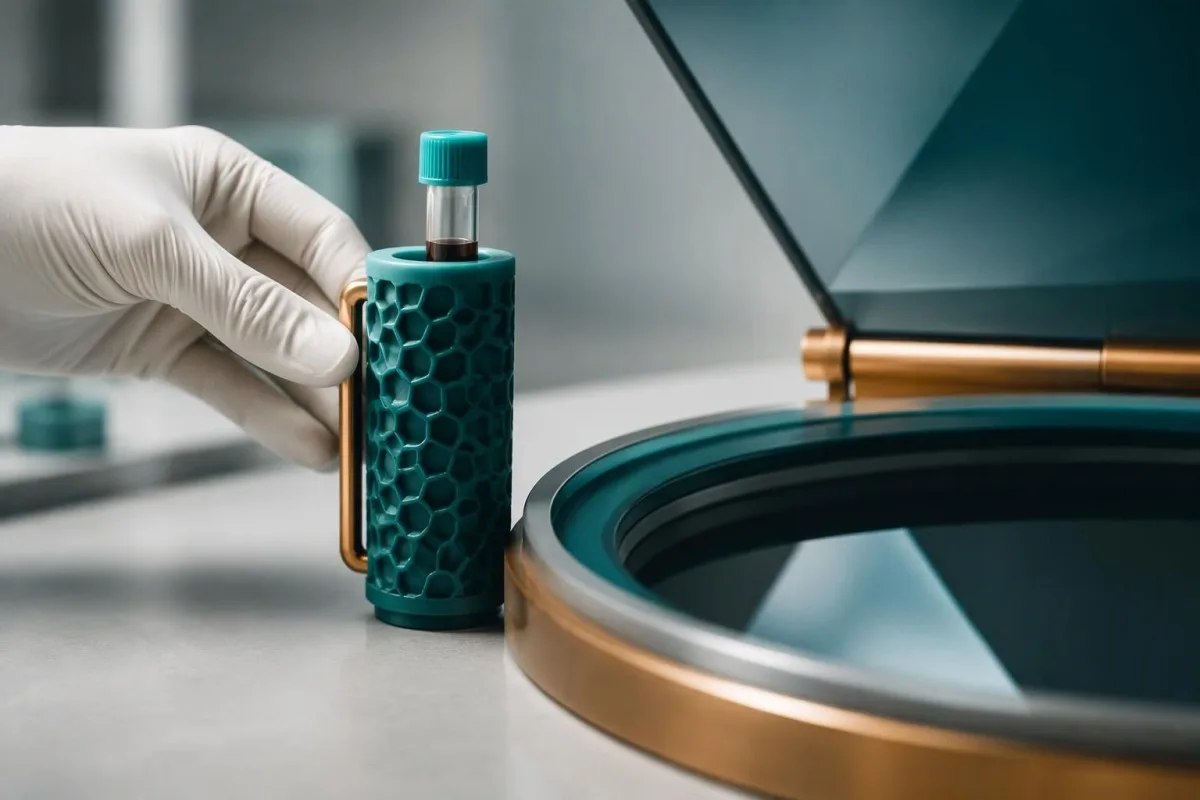
The pre-analytical requirement is different from the assay temperature: serum may be kept near 37°C during preparation and then deliberately tested at 4°C. The Hematology review emphasizes warm collection and separation for cold antibody studies (Berentsen, 2016); the laboratory creates the controlled cooling step only after an appropriate specimen is available.
Warming a specimen after it has already cooled may not fully reverse every earlier problem, so repeating the test can be more useful than interpreting an unexpected low titer. Our repeat specimen guide explains another handling distinction: cells breaking inside a collection tube are not the same as hemolysis occurring inside your body.
Before the appointment, ask 3 soalan praktikal: which tube is required, how warmth will be maintained and where serum separation will occur. Titer testing, an EDTA specimen for the DAT and a warmed CBC may have different instructions; do not heat, transport or store your own specimen unless the collecting service specifically directs you.
Bagaimana aglutinin sejuk boleh mengganggu CBC anda
Cold-related red-cell clumping can falsely lower the RBC count and raise MCV or MCHC on an automated complete blood count. A CBC repeated after laboratory warming near 37°C can help identify this artifact, although correcting the numbers does not by itself establish or exclude cold agglutinin disease.
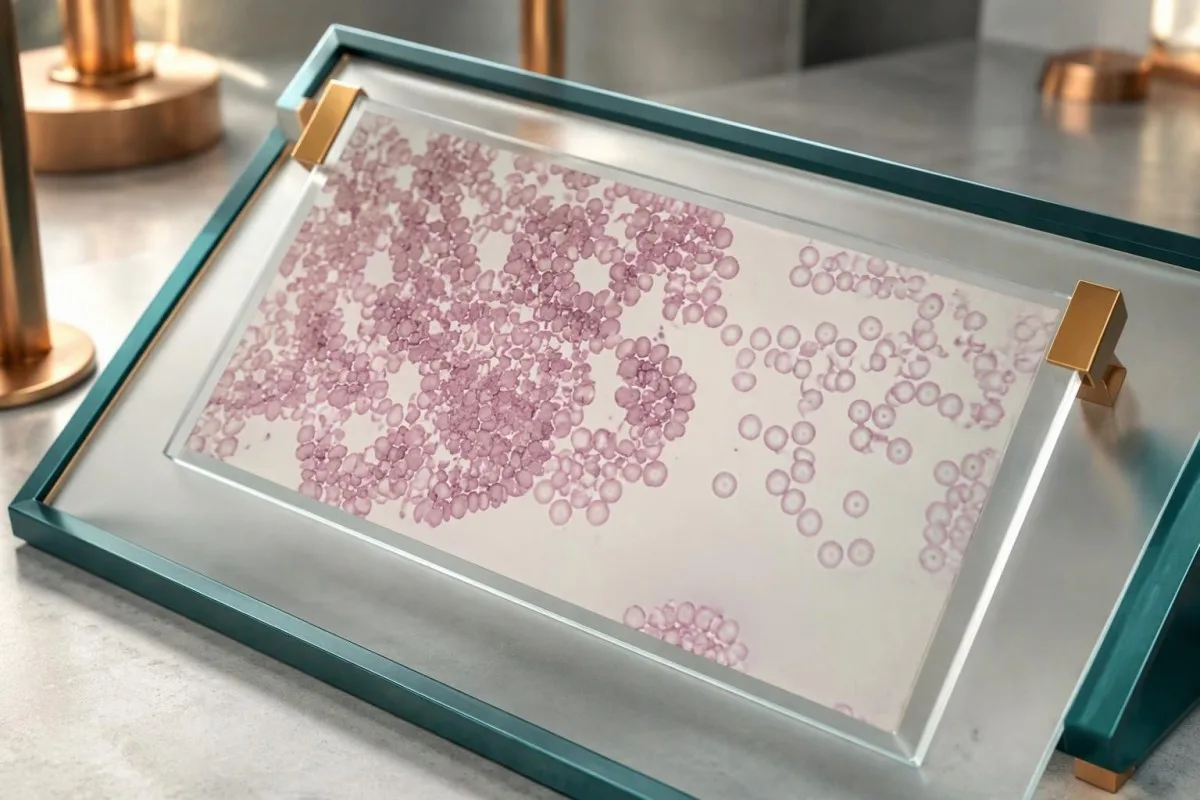
Automated counters may treat a cluster as 1 large particle rather than several separate cells, making the calculated mean cell volume appear high. Hematocrit and derived indices can become internally inconsistent, while photometrically measured hemoglobin is often less affected; the laboratory must still check whether other specimen or instrument issues are present.
Sebagai contoh, seorang lelaki hipotetikal berusia MCHC of 40 g/dL with an analyzer agglutination flag should prompt verification rather than an immediate diagnosis of an unusually concentrated red-cell disorder. Our high MCHC explanation covers this reasoning; genuine anemia can coexist with an artifact, so neither finding should erase the other.
Kantesti ialah seorang platform tafsiran ujian darah AI that helps explain discrepancies between CBC values and a reported cold agglutinin titer, including whether a result was rerun near 37°C. Our panduan teknologi AI describes the interpretation process; only the testing laboratory can confirm that warming corrected a measurement error.
Apakah yang mengesahkan diagnosis penyakit aglutinin sejuk?
A cold agglutinin disease diagnosis usually combines chronic hemolysis, a strongly C3d-positive DAT and a cold agglutinin titer of at least 1:64 at 4°C, with assessment for secondary causes. These are linked diagnostic components, not a checklist that an isolated positive report can complete.
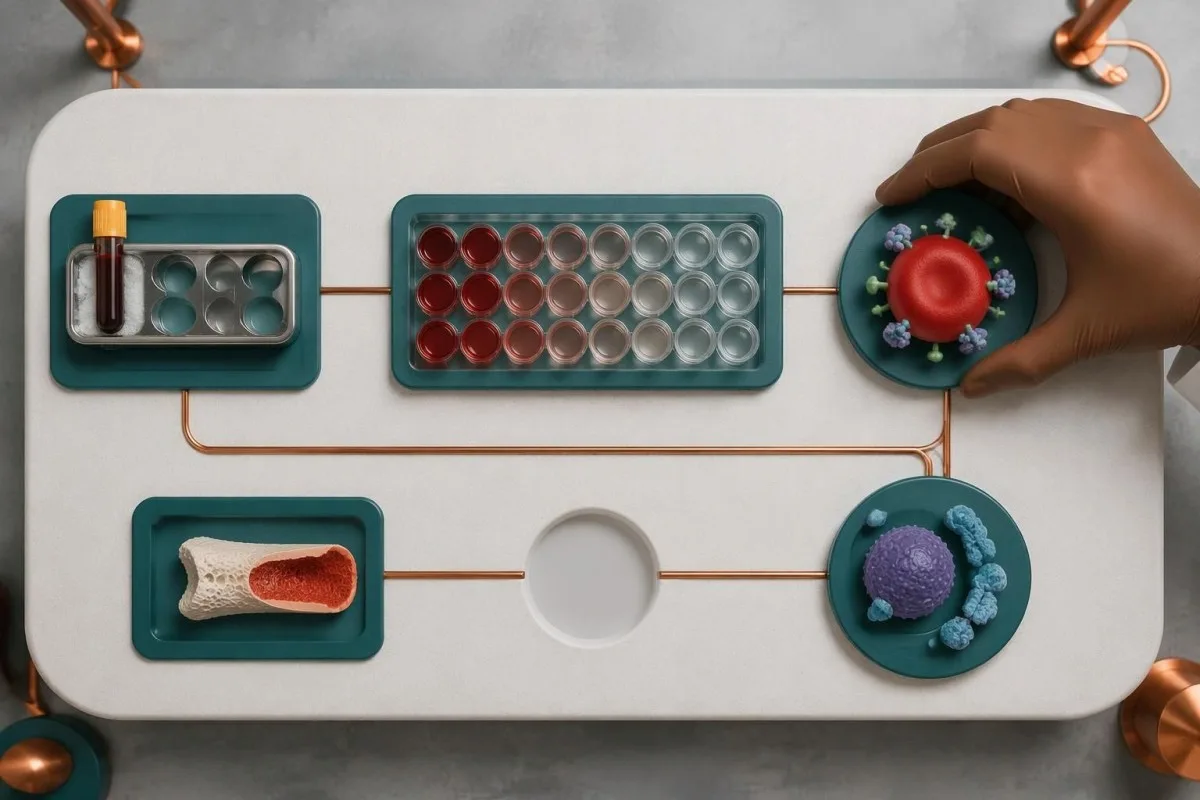
Clinicians first verify the 2 core laboratory patterns—hemolysis and immune attachment to cells—then assess symptoms, duration, medications, recent infections and transfusion history. A broad thermal amplitude can support interpretation when routine results are borderline or discordant; the international consensus treats autoimmune hemolytic anemia as a pattern-based diagnosis (Jäger et al., 2020).
Persistent findings may lead to serum protein electrophoresis, immunofixation and hematology-directed marrow assessment to characterize antibody production. Our guide to immunofixation band results explains why a monoclonal band needs context; even a titer of 1:1024 cannot determine whether a detectable protein represents overt lymphoma or a smaller clonal process.
Kantesti AI can help organize 3 groups of information for the appointment: antibody tests, hemolysis markers and changes over time. It cannot establish whether the specimen followed the warm-handling protocol or replace a specialist's assessment of marrow findings; bring the full report, because an isolated screenshot may omit the method and interpretive comments.
Tiga contoh: titer yang sama, langkah seterusnya yang berbeza
The same cold agglutinin titer can lead to different next steps because clinical significance depends on temperature-dependent activity and red-cell injury. The following 3 examples are hypothetical teaching scenarios, not patient accounts or rules for diagnosing yourself from a single report.
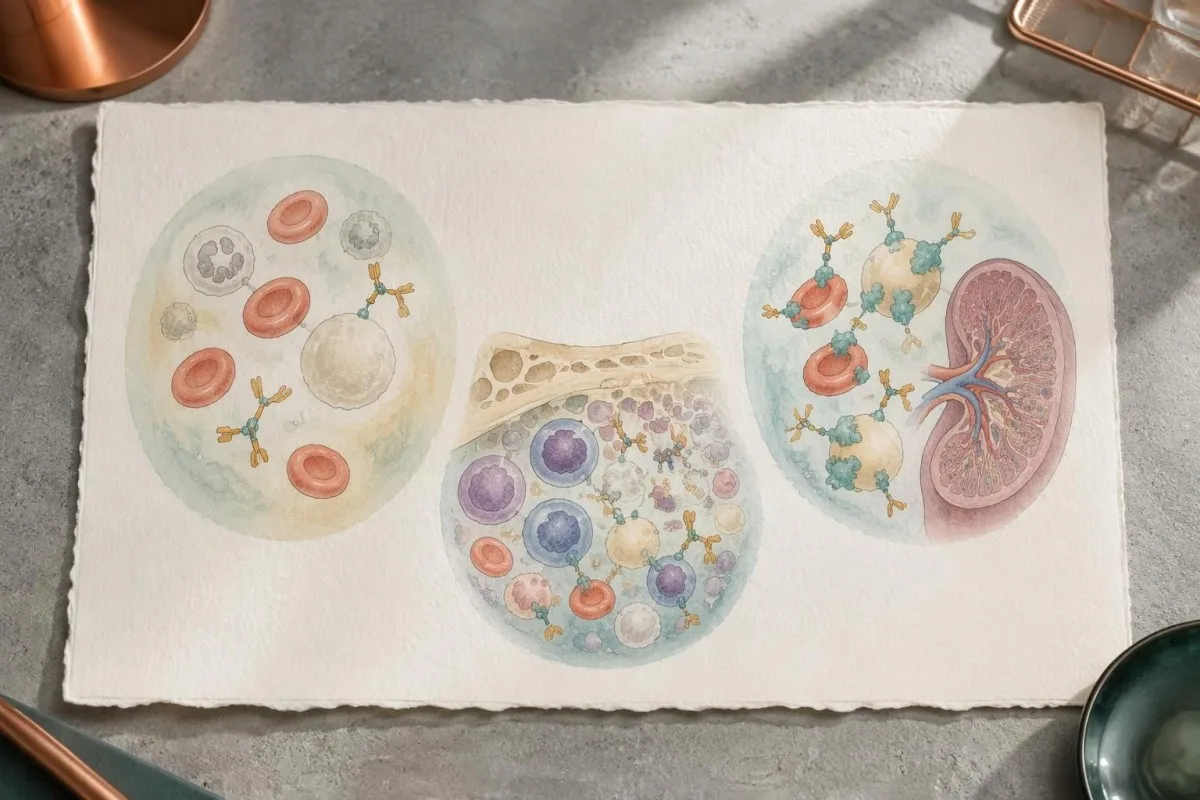
In the first example, an adult has a titer of 1:256 at 4°C, hemoglobin of 14.0 g/dL, normal hemolysis markers and no cold-related symptoms. If specialist testing shows a narrow thermal amplitude, incidental antibodies become more plausible; the useful step is confirming the context and need for follow-up, not assuming that antibody detection requires treatment.
In the second example, a person recovering from a respiratory illness has a titer of 1:256 and hemoglobin that has fallen from 13.5 to 10.2 g/dL, with rising indirect bilirubin. An infection-associated syndrome is possible, but the falling hemoglobin still needs assessment; our polychromasia explanation describes one smear clue to the marrow's replacement response.
In the third example, a person has months of fatigue, a titer of 1:256, strong C3d positivity, low haptoglobin and antibody reactivity at 30°C. Persistent clinically significant cold-antibody hemolysis becomes more likely; hematology assessment addresses diagnosis and treatment need, while the identical titer across all 3 examples shows why the number alone cannot choose the pathway.
Gejala yang manakah memerlukan pemeriksaan perubatan segera?
Chest pain, breathlessness at rest, fainting or confusion require emergency assessment, regardless of the cold agglutinin titer. New jaundice, dark urine or rapidly worsening fatigue warrant prompt, often same-day medical review; a result below 1:64 does not make these symptoms safe to ignore.
A rapid hemoglobin decline can be more dangerous than a stable low value, because your circulation has less time to adapt. A hypothetical fall from 12 to 8 g/dL over several days deserves prompt assessment even if someone with a long-standing, monitored value near 8 g/dL has fewer symptoms; these examples are not universal transfusion thresholds.
Dark urine can reflect hemoglobin released during marked intravascular hemolysis, but dehydration, liver conditions and urinary causes can produce similar appearances. Our dark urine assessment guide explains the alternatives; dark urine together with jaundice or weakness should not be dismissed because only 1 antibody result is abnormal.
Cold-related blue or purple fingers can occur with agglutination, but persistent discoloration, severe pain or failure to improve after gentle warming needs urgent evaluation for impaired circulation. Clinically significant cold agglutinin disease also carries increased clot risk; sudden breathlessness or 1 newly swollen leg requires assessment rather than attribution to cold sensitivity alone.
Cara kekal panas dan membuat persediaan untuk prosedur klinikal
Keeping the whole body warm can reduce cold-triggered symptoms in clinically significant cold-antibody disorders. Tell the care team before transfusion, anesthesia or a procedure, because laboratory compatibility testing and clinical temperature management may need coordination near 37°C rather than routine handling.

Practical protection includes layers, gloves, warm footwear and avoiding abrupt whole-body cooling; do not test your tolerance with an ice bath or deliberate cold challenge. Reactivity around 30°C does not translate into 1 safe outdoor temperature, because wind, wet clothing, exposure duration and individual circulation change how much peripheral tissues cool.
For transfusion, the laboratory may perform antibody investigation and compatibility testing at 37°C to limit cold-antibody interference while still identifying clinically significant additional antibodies. Our transfusion compatibility guide explains that distinction; a clinical warming device may also be used, but emergency treatment should not be delayed unnecessarily while pursuing perfect routine test conditions.
Sebuah 1:128 titer without hemolysis does not automatically mean you need to avoid all travel, exercise or procedures. The useful precaution is sharing the report and any prior laboratory interference with the treating team; clinical staff—not the patient—should decide whether warmed fluids, a transfusion warmer or additional temperature monitoring are necessary.
Bilakah rawatan diperlukan, dan apakah yang dipantau?
Treatment is guided by anemia, symptoms, transfusion need and functional impact—not a titer alone. In clinically significant cold agglutinin disease, specialist options include B-cell-directed therapy and complement inhibition; a titer of 1:512 without attributable symptoms or hemolysis does not itself establish a reason to start medication.
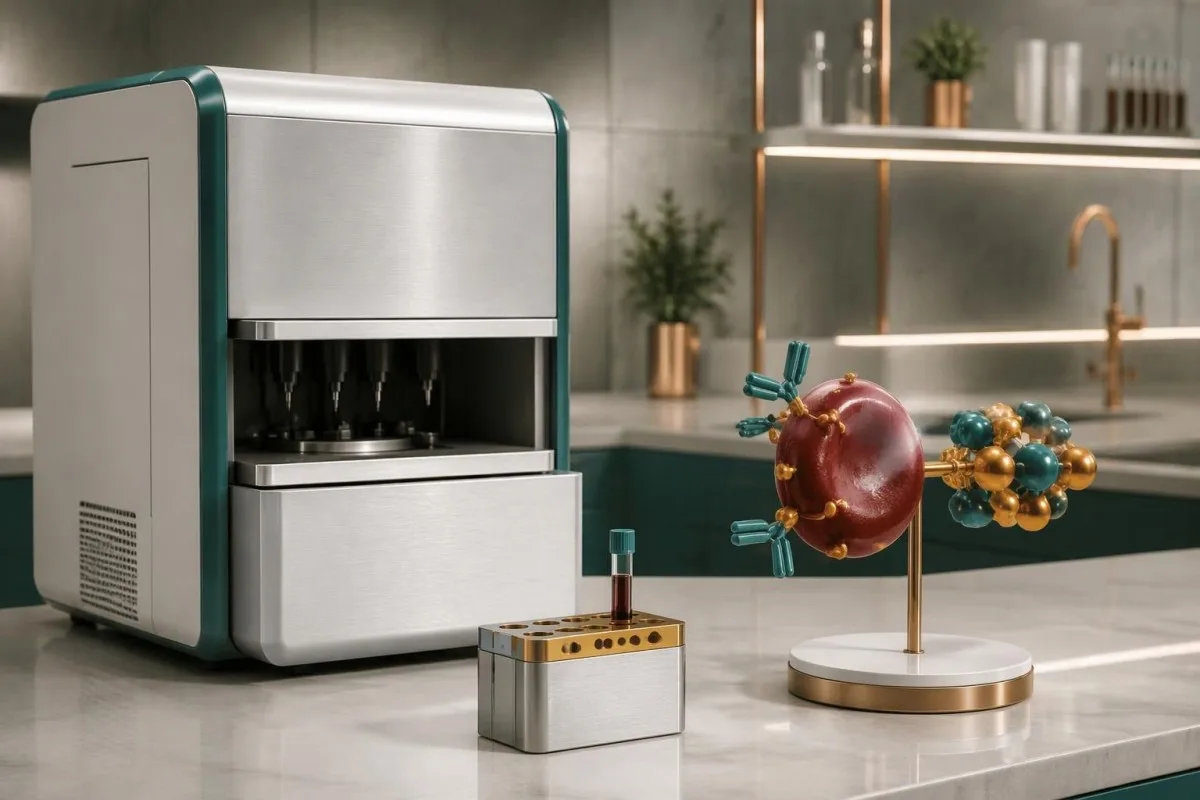
Sutimlimab inhibits C1s, an early classical complement component, and can reduce complement-mediated hemolysis in adults with cold agglutinin disease. It does not remove the IgM antibody, so cold-related agglutination and circulation symptoms may persist even if hemoglobin improves; immunization and infection-risk precautions must follow the product information and the specialist's plan.
B-cell-directed options include rituximab-based treatment, sometimes combined with another agent in selected patients; the appropriate choice depends on goals, comorbidities and treatment tolerance. Corticosteroids, commonly used for warm autoimmune hemolytic anemia, generally perform poorly in cold agglutinin disease; the 2020 international consensus emphasizes distinguishing the subtype before applying a treatment pathway (Jäger et al., 2020).
Kantesti helps explain why a hypothetical hemoglobin improvement from 8.7 to 11.8 g/dL, falling bilirubin and fewer transfusions can matter more than a persistently high titer. Our red-cell monitoring guide explains reticulocytes and related markers; do not change treatment from an AI interpretation, and do not assume anemia means iron deficiency.
Menggunakan laporan anda dengan selamat: bukti dan batasan AI
Kantesti ialah seorang perkhidmatan tafsiran ujian makmal AI that helps organize cold agglutinin results for discussion, but it cannot independently confirm cold agglutinin disease. A useful interpretation needs 3 information groups: the antibody method and handling, the hemolysis pattern and the patient's symptoms and history.

Keep the complete report rather than only the 1:256 result: the test temperature, reference interval, DAT components and laboratory comments can change its meaning. Useful appointment questions include whether hemolysis is present, whether thermal amplitude testing would help and whether specimen handling was adequate; bring earlier hemoglobin values when available.
The Kantesti technical benchmark listed below concerns 100,000 kes ujian sintetik, not 100,000 patients with cold agglutinin disease. The accompanying validation framework describes an assessment approach, not proof that AI can diagnose this rare condition; our validation and oversight page provides the appropriate context for these research publications and their limitations.
Before sharing 1 report or a series of reports, review consent and remove information you do not need to provide, especially when the results belong to someone else. Our panduan privasi dan data explains data-handling considerations; urgent symptoms belong with emergency or clinical services, not in an upload queue awaiting interpretation.
Soalan lazim
Adakah keputusan positif ujian aglutinin sejuk bermaksud saya menghidap penyakit aglutinin sejuk?
Ujian aglutinin sejuk yang positif tidak dapat mendiagnosis penyakit aglutinin sejuk secara bersendirian. Titer sekurang-kurangnya 1:64 pada suhu 4°C merupakan komponen diagnostik yang lazim digunakan, tetapi doktor juga menilai hemolisis kronik dan keputusan ujian antiglobulin langsung yang sepadan, lazimnya sangat positif untuk C3d. Antibodi yang hadir secara kebetulan atau berkaitan dengan jangkitan boleh menghasilkan keputusan positif. Amplitud terma dan pengendalian sampel yang boleh dipercayai membantu menjelaskan dapatan yang tidak pasti.
Adakah titr aglutinin sejuk 1:256 atau 1:512 berbahaya?
Titer aglutinin sejuk sebanyak 1:256 atau 1:512 bukanlah ambang bahaya yang boleh dinilai secara bersendirian. Keputusan ini menunjukkan sejauh mana serum boleh dicairkan sementara aktiviti antibodi masih dapat dikesan dalam keadaan ujian tersebut. Antibodi yang aktif pada suhu sekitar 30°C mungkin lebih signifikan dari segi klinikal berbanding antibodi dengan titer lebih tinggi yang hanya bertindak balas pada suhu 4°C. Gejala, trend hemoglobin dan penanda hemolisis menentukan tahap segera penilaian.
Apakah amplitud terma dalam ujian aglutinin sejuk?
Thermal amplitude is the highest temperature at which a cold antibody reacts under the laboratory's testing conditions. Reactivity around 30°C or above is generally more concerning than activity restricted to 4°C because peripheral circulation can become cool enough for the antibody to act. Thermal amplitude is different from titer, which measures activity after dilution. Specialist laboratories may assess it when routine findings are discordant or the clinical significance is unclear.
Mengapakah spesimen aglutinin sejuk mesti dikekalkan dalam keadaan panas?
Many laboratories require a cold agglutinin specimen to remain at 37–38°C from collection until serum separation. Premature cooling can allow antibody to bind the patient's cells, leaving less detectable activity in the separated serum and potentially producing a falsely low result. This preparation requirement is separate from deliberately testing the serum at 4°C. Confirm the collecting laboratory's instructions rather than attempting to warm or transport the specimen yourself.
Bolehkah jangkitan menyebabkan ujian aglutinin sejuk positif?
Jangkitan, termasuk Mycoplasma pneumoniae dan virus Epstein–Barr, boleh dikaitkan dengan antibodi yang bertindak balas terhadap suhu sejuk buat sementara waktu. Titer seperti 1:256 tidak dapat menentukan jangkitan yang mana sedang berlaku atau sama ada jangkitan itu masih aktif. Antibodi berkaitan jangkitan kadangkala menyebabkan hemolisis yang signifikan secara klinikal, maka penurunan hemoglobin atau jaundis baharu masih perlu dinilai. Ujian khusus untuk patogen dan garis masa klinikal lebih berguna berbanding menggunakan aglutinin sejuk untuk mendiagnosis jangkitan.
Bolehkah aglutinin sejuk menyebabkan MCV atau MCHC kelihatan tinggi secara palsu?
Aglutinin sejuk boleh menyebabkan penggumpalan sel darah merah yang mengganggu ukuran CBC automatik, termasuk bacaan MCV atau MCHC yang tinggi secara palsu dan kiraan RBC yang rendah secara palsu. Contohnya, MCHC sebanyak 40 g/dL dengan tanda amaran pengaglutinan sepatutnya mendorong pengesahan oleh makmal dan bukannya terus ditafsirkan sebagai kelainan sel yang sebenar. Ujian semula selepas pemanasan hampir kepada 37°C mungkin membetulkan gangguan tersebut. CBC yang telah dibetulkan tidak menolak kemungkinan hemolisis serentak.
Gejala manakah yang memerlukan rawatan segera selepas keputusan positif ujian aglutinin sejuk?
Sakit dada, sesak nafas ketika berehat, pengsan atau kekeliruan memerlukan penilaian kecemasan tanpa mengira titer aglutinin sejuk. Jaundis yang baru berlaku, air kencing berwarna gelap atau kelemahan yang semakin teruk dengan cepat memerlukan pemeriksaan perubatan segera, selalunya pada hari yang sama. Penurunan hemoglobin yang cepat, seperti perubahan hipotetikal daripada 12 kepada 8 g/dL, membimbangkan walaupun tiada satu nilai pun yang menentukan tahap kecemasan bagi setiap orang. Perubahan warna jari yang menyakitkan dan berterusan atau gejala mendadak yang mencadangkan pembekuan darah juga memerlukan penilaian segera.
Dapatkan penjelasan tentang keputusan ujian darah anda
Muat naik laporan makmal anda dan AI Kantesti menerangkan setiap biomarker dalam bahasa mudah dalam beberapa saat. Digunakan oleh lebih daripada 2 juta orang di seluruh dunia.
Rujukan
- Klein, T., Mitchell, S., & Weber, H. (2026). Penanda Aras Teknikal Automatik Berasaskan Rubrik yang Didaftarkan Awal bagi Enjin Tafsiran Ujian Darah Kantesti pada 100,000 Kes Ujian Sintetik. Penyelidikan Perubatan AI Kantesti. DOI
- Klein, T., Mitchell, S., & Weber, H. (2026). Rangka Kerja Pengesahan Klinikal v2.0 (Halaman Pengesahan Perubatan). Penyelidikan Perubatan AI Kantesti. DOI
- Berentsen S. (2016). Cold agglutinin disease. Hematology, American Society of Hematology Education Program. DOI
- Jäger U et al. (2020). Diagnosis and treatment of autoimmune hemolytic anemia in adults: Recommendations from the First International Consensus Meeting. Blood Reviews. DOI
- 2J+Ujian dianalisis
- 127+negara
- 100+Bahasa
Mengenai pasukan perubatan


Isyarat Kepercayaan E-E-A-T
Pengalaman
Semakan klinikal yang diketuai oleh doktor terhadap aliran kerja tafsiran makmal.
Kepakaran
Fokus perubatan makmal tentang bagaimana biomarker berkelakuan dalam konteks klinikal.
Kewibawaan
Disemak secara perubatan oleh Dr. Thomas Klein, dengan sumbangan daripada Dr. Sarah Mitchell dan Prof. Dr. Hans Weber.
Kebolehpercayaan
Tafsiran berasaskan bukti dengan laluan susulan yang jelas untuk mengurangkan kebimbangan.






Penafian perubatan
Artikel ini adalah untuk tujuan pendidikan sahaja dan tidak merupakan nasihat perubatan. Sentiasa rujuk pembekal penjagaan kesihatan yang berkelayakan untuk keputusan diagnosis dan rawatan.
Diterbitkan · Hubungi pasukan editorial
Diterbitkan oleh Kantesti Ltd, berdaftar di England & Wales, nombor syarikat. 17090423, London, United Kingdom.
