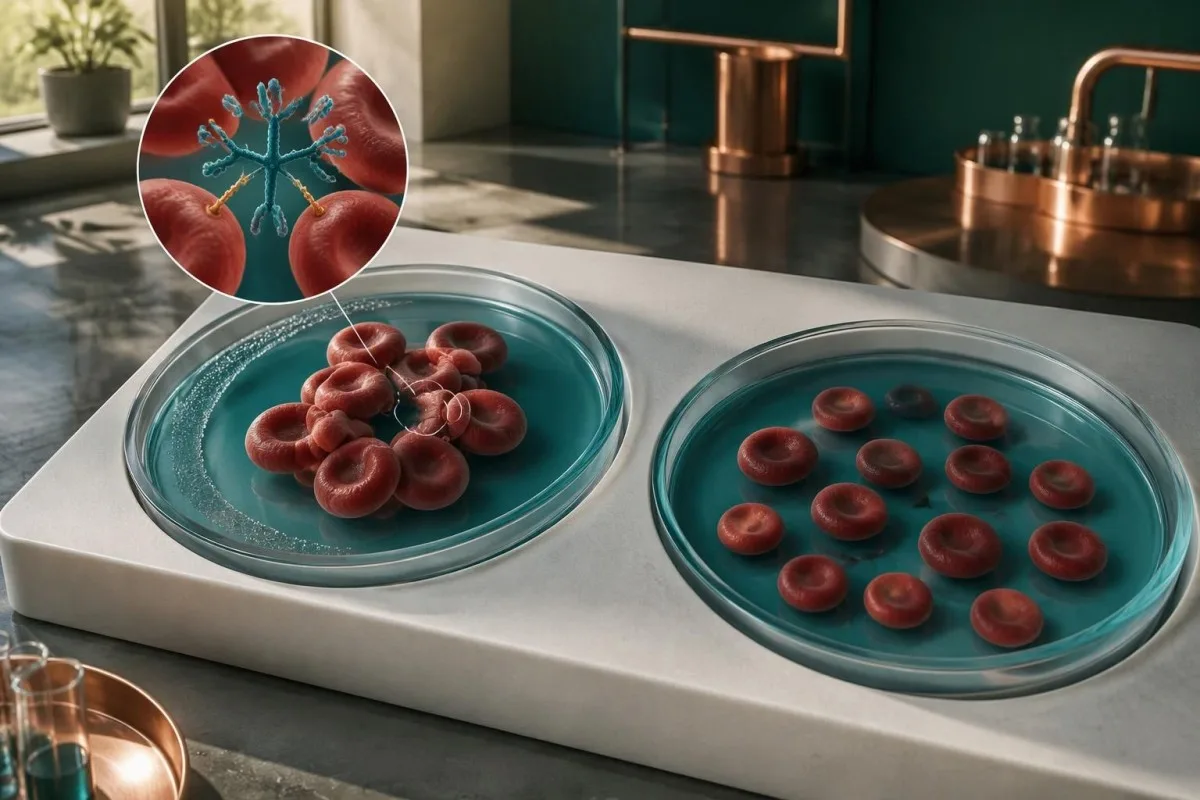
Муздак агглютинин титринин жогору болушу антителолорду олуттуу суюлтуудан кийин да аныктоого болорун билдирет — бул алардын сөзсүз түрдө эритроциттериңизге зыян келтирип жатканын билдирбейт. Айырмачылык алардын таасир этүүчү температура аралыгына, гемолиздин далилдерине, комплементке оң тесттин жыйынтыгына жана үлгүнү туура иштетүүгө жараша болот.

Негизги жыйынтыктар
- Оң нәтиже суукка реакция кылган антителолорду аныктайт; бирок өз алдынча муздак агглютинин оорусун тастыктабайт.
- 4°C температурада кеминде 1:64 титр көп колдонулган диагностикалык компонент, бирок клиницисттерге гемолиздин далилдери жана түз антиглобулин тестинин тиешелүү үлгүсү да керек.
- Жылуулук амплитудасы антитело реакция кыла турган эң жогорку температураны сүрөттөйт; 30°C же андан жогору температурадагы активдүүлүк өтө суук лабораториялык шарттар менен чектелген активдүүлүккө караганда көбүнчө көбүрөөк тынчсыздандырат.
- C3d-оң түз антиглобулин тестинин жыйынтыгы комплемент аркылуу жүргөн процессти колдойт, бирок мындай эле көрүнүш муздак агглютинин оорусунан башка учурларда да болушу мүмкүн.
- Гемолизди баалоо гемоглобиндин өзгөрүшүн, ретикулоциттерди, LDHни, кыйыр билирубинди жана гаптоглобинди бириктирип баалайт, бир эле анормалдуу көрсөткүчкө таянбайт.
- Үлгүнү 37–38°Cде иштетүү суук агглютининдерди аныктоо үчүн сыворотканы бөлүп алууга чейин талап кылынышы мүмкүн; кабыл алууга келерден мурун үлгү алуучу лабораториянын көрсөтмөлөрүн тактаңыз.
- Инфекцияга байланыштуу антителолор убактылуу болушу мүмкүн, бирок инфекция түрткү болгондо да клиникалык жактан маанилүү гемолизге баа берүү талап кылынат.
- Шашылыш белгилер көкүрөк оорусу, тынч абалда демигүү, эс-учун жоготуу же аң-сезимдин чаташуусу кирет; жаңы пайда болгон сарык, кара заара же чарчоонун тез күчөшү дарыгерге тез арада кайрылууну талап кылат.
Муздак агглютининге тесттин оң жыйынтыгы ооруну билдиреби?
A суук агглютининдерге тесттин оң болушу сизде сөзсүз суук агглютинин оорусу бар дегенди билдирбейт. Атүгүл титр жогору болсо да, аны 3 клиникалык көрсөткүч менен бирге чечмелөө керек: антителонун активдүү температуралык диапазону, эритроциттердин бузулушунун далилдери жана комплементке оң түз антиглобулин тести.
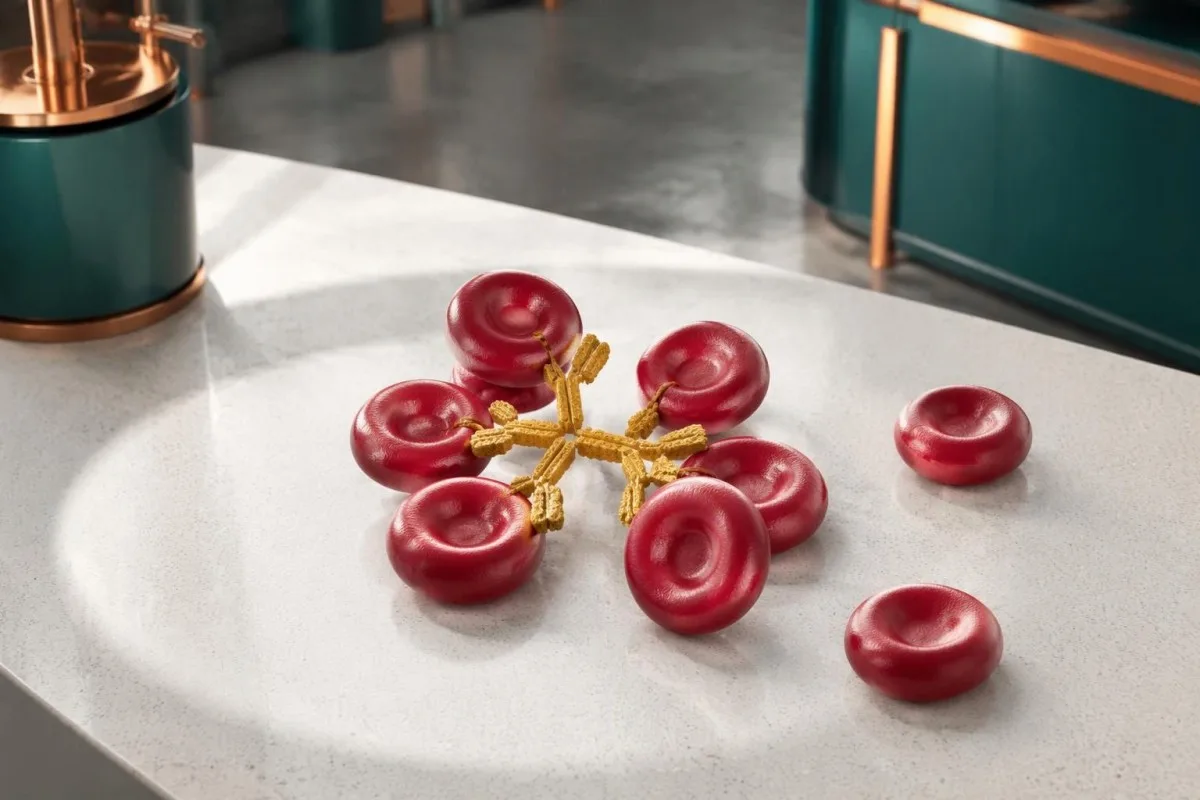
Суук агглютининдер адатта төмөн температурада эритроциттерге оңой байланып, алардын топтолушуна алып келүүчү IgM антителолору. Тестирлөөдө алардын активдүүлүгү адатта 4°Cде өлчөнөт — бул айланган кандын көбүнчө температурасына караганда кыйла төмөн; ошондуктан лабораториядагы күчтүү реакция организмде клиникалык жактан маанилүү активдүүлүк аз же такыр жок болушу менен катар болушу мүмкүн.
Жеке алынган 1:256 сыяктуу натыйжа сизде анемия бар-жогун, антитело дене температурасына жакын шартта реакция берер-бербесин же оорудан кийин убактылуу пайда болгон-болбогонун аныктай албайт. Биздин түшүндүрмөбүз позитивдүү антителонун натыйжалары аныктоону диагноз коюудан ажыратат; кийинки маанилүү суроо — кошумча тесттер эмнени көрсөтүп жатканы.
Кантести - бул AI кан анализи анализатору суук агглютининдердин титрин ага байланыштуу лабораториялык натыйжалар менен катар түшүндүрүүгө жардам берет, анын ичинде тестирлөөнүн көрсөтүлгөн температурасы 4°C болгон-болбогонун. Биздин компаниянын тарыхы бул билим берүү кызматынын артында турган уюмду түшүндүрөт; диагноз коюу үчүн зарыл болгон гематологиялык жана лабораториялык баалоонун ордун баспайбыз.
Муздак агглютинин титринин жогору болушу эмнени өлчөйт?
A суук агглютининдердин титри сывороткаңыздын лабораторияда аныкталган агглютинация реакциясын дагы эле пайда кылган эң жогорку суюлтуу даражасы. 1:512 натыйжасы 1:32 натыйжасына караганда бир кыйла көбүрөөк суюлтулгандан кийин да активдүүлүк аныктала берерин билдирет; бул сандардын бири да анемиянын деңгээлин түз өлчөбөйт.
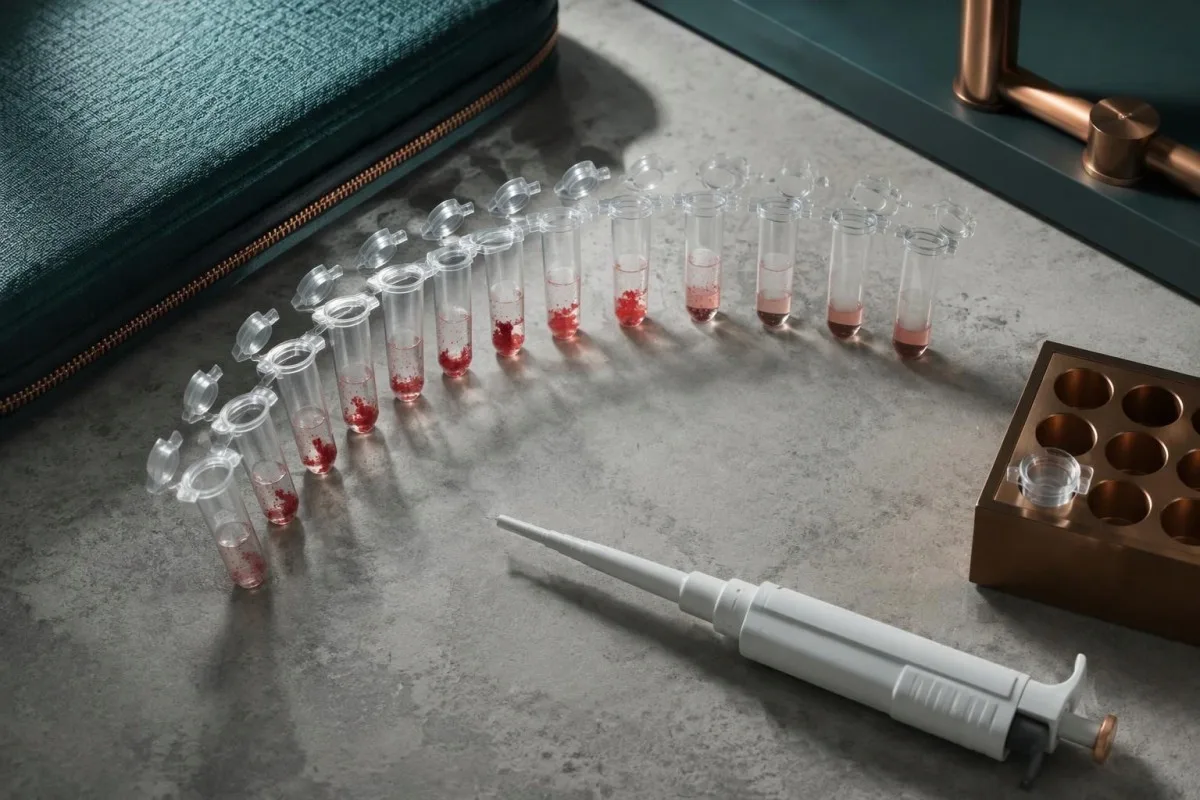
4°Cде кеминде 1:64 титр суук агглютинин оорусун аныктоодо кеңири колдонулган курамдык көрсөткүч болуп саналат, бирок өз алдынча акыркы скринингдик бүтүм эмес. Гематологиялык серепте бул босого өнөкөт гемолиз жана түз антиглобулин тестинде C3dнин күчтүү оң болушу менен катар каралган (Berentsen, 2016); шашылыш дарылоону автоматтык түрдө талап кылган универсалдуу титр жок.
Эки эселик суюлтуу баскычтарында адатта төмөнкүдөй натыйжалар алынат: 1:64, 1:128 жана 1:256. Бир баскычтык айырма биологиялык маанилүү өзгөрүүнү эмес, анализдин өзгөрмөлүүлүгүн, тандалган акыркы чекитти же үлгүнүн иштетилишин чагылдырышы мүмкүн; сандык салыштыруу бир эле лаборатория бир эле ыкманы жана температураны колдонгондо эң ишенимдүү болот.
Айрым лабораториялар оң же терс, деп гана билдиришет, ал эми башкалары 1:256 деп жазуунун ордуна 256 сыяктуу тескери санды көрсөтүшөт. Биздин колдонмоمىز сапаттык жана сандык натыйжалар explains that distinction; ask for the actual dilution, assay temperature and local reference interval before comparing reports.
| Деңгээл | Диапазон | Мааниси |
|---|---|---|
| Low-level activity | Below 1:64 at 4°C | Often incidental when thermal amplitude is narrow and hemolysis is absent; this is not a universal laboratory reference interval. |
| Common diagnostic threshold | At least 1:64 at 4°C | Supports further assessment when hemolysis and a compatible direct antiglobulin test are present; does not confirm disease alone. |
| Higher dilution endpoint | Examples: 1:256 or 1:512 | Shows activity after greater dilution, but does not establish thermal amplitude or predict treatment need. |
| Very high reported endpoint | Example: 1:1024 or higher | Still requires clinical interpretation; no titer-only emergency threshold is established. |
Эмне үчүн жылуулук амплитудасы титрден маанилүүрөөк болушу мүмкүн
Жылуулук амплитудасы is the highest temperature at which a cold antibody reacts under the laboratory's testing conditions. Reactivity around 30°C or above is generally more clinically concerning than reactivity confined to 4°C, because cooler peripheral circulation can reach temperatures at which the antibody becomes active.
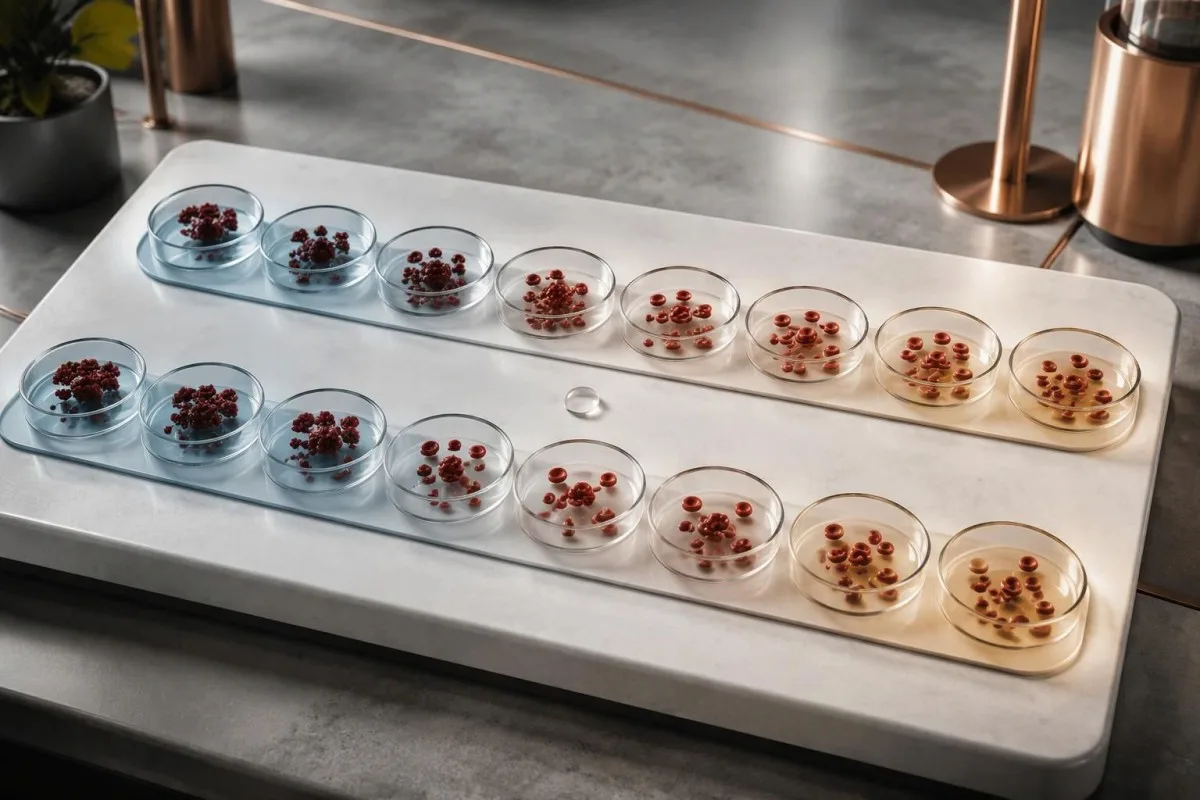
A high-titer antibody active only at 4°C may matter less clinically than a lower-titer antibody that remains active at 30–32°C. The reason is exposure: red cells do not normally circulate at refrigerator temperature, but they can encounter substantially cooler conditions in fingers, toes and other peripheral areas.
Complement can attach while red cells are cool and remain relevant after they return toward 37°C, even when the IgM antibody detaches. This explains why antibody-related injury is not simply a matter of visible clumping; our комплемент тестирлөө боюнча колдонмо also distinguishes circulating complement measurements from complement deposited on cells.
Thermal amplitude testing is not standardized into 1 universal patient-facing cutoff, and many routine reports omit it entirely. Specialist laboratories may test several temperatures, such as 4°C, room temperature, 30°C and 37°C; clinicians usually request that additional work when the titer, symptoms and hemolysis results do not fit together.
Кайсы кан анализинин жыйынтыктары чыныгы гемолизди көрсөтөт?
Hemolysis means red cells are being destroyed faster than expected, and assessment usually combines 5 measurements: hemoglobin, reticulocytes, LDH, indirect bilirubin and haptoglobin. A high cold agglutinin titer without this supporting pattern does not establish a hemolytic disorder.
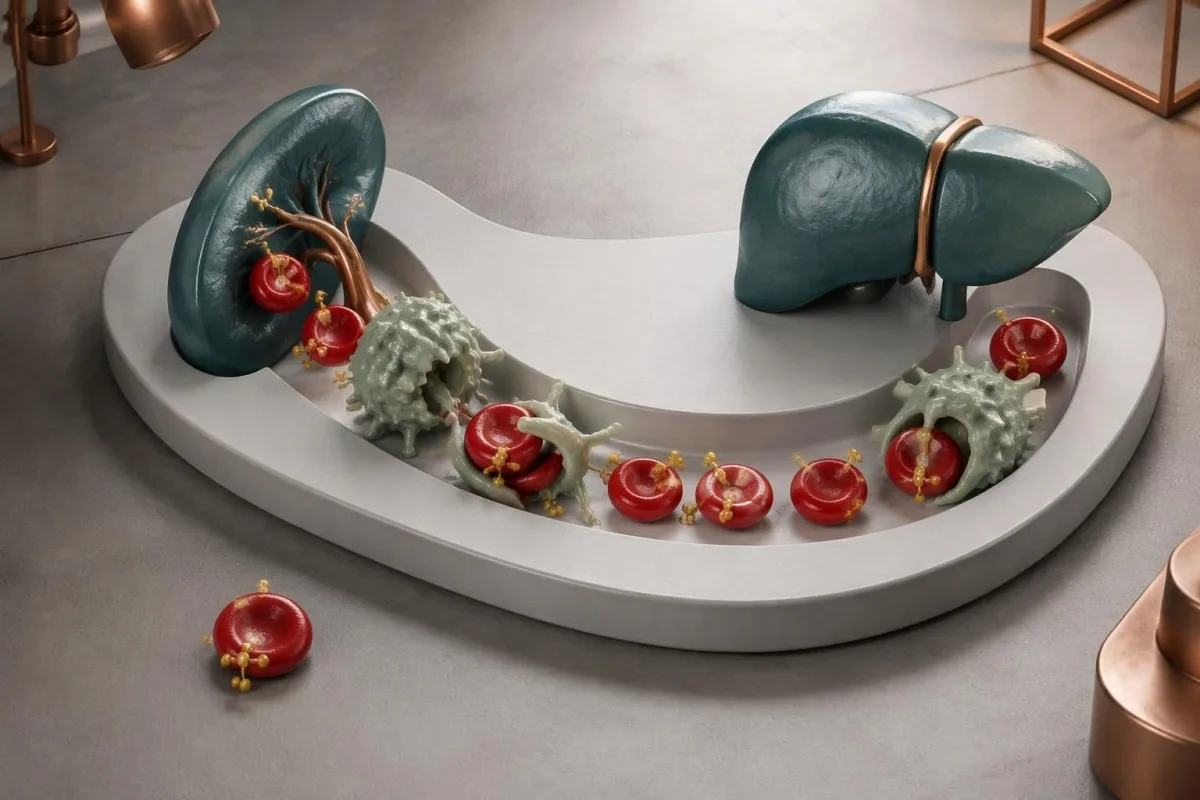
A hypothetical hemoglobin fall from 13.2 to 9.6 g/dL, accompanied by rising indirect bilirubin and LDH, is more concerning than an unchanged hemoglobin with the same titer. Reticulocytes often increase as the marrow replaces lost cells, although an early episode, nutrient deficiency or marrow disorder can blunt that response.
Low haptoglobin supports hemolysis but is not definitive: liver disease can reduce production, while an acute-phase response can raise the concentration despite red-cell destruction. Our explanation of төмөн гаптоглобин себептери covers these exceptions; a result below 1 laboratory's reference limit should be interpreted with the other markers rather than alone.
Kantesti AI helps explain LDH trends, including why a hypothetical rise from 220 to 650 U/L needs the laboratory's reference interval and specimen-quality information. Our LDH interpretation guide describes other sources of elevation; normal hemoglobin also does not exclude compensated hemolysis when the marrow is keeping pace.
C3d-оң түз антиглобулин тестинин жыйынтыгы эмнени билдирет?
A C3d-positive direct antiglobulin test, also called a direct Coombs test, detects complement fragments attached to red cells. Cold agglutinin disease typically produces strong C3d positivity with absent or sometimes weak IgG reactivity, but these 2 antibody-testing results are not sufficient without clinical evidence of hemolysis.

The direct antiglobulin test and the cold agglutinin titer answer 2 башка суроого: what is attached to your red cells, and what cold-reactive activity is present in your serum? The Blood Reviews international consensus recommends a monospecific direct antiglobulin test as part of autoimmune hemolytic anemia assessment (Jäger et al., 2020).
A report stating only DAT positive may not distinguish IgG from C3d; asking for those 2 components can materially change interpretation. Our guide to a оң түз Кумбс тести explains why transfusion-related antibodies, medications and other immune processes can also produce a positive result without proving cold agglutinin disease.
In a child with abrupt post-illness hemolysis, a C3d-positive DAT and a low cold agglutinin titer can raise a different possibility: paroxysmal cold hemoglobinuria. This condition usually involves an IgG antibody assessed by Donath–Landsteiner testing, so a cold agglutinin result below 1:64 should not end the investigation when symptoms suggest significant hemolysis.
Кокустан табылган антителолор, инфекциялар жана туруктуу оору
Incidental cold antibodies may cause no symptoms, while infection-related antibodies can be temporary and occasionally cause substantial hemolysis. Persistent cold agglutinin disease is usually associated with a clonal marrow B-cell process; these 3 situations require different follow-up rather than the same response to a positive test.
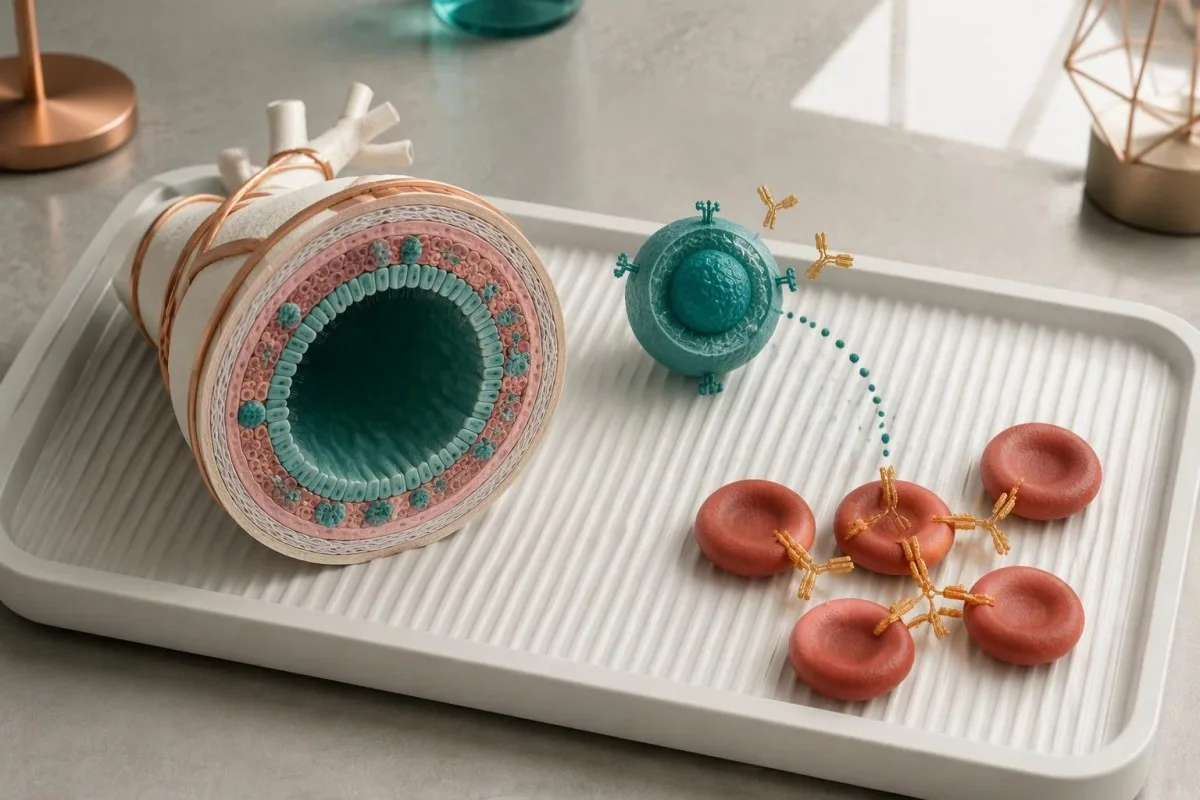
Mycoplasma pneumoniae and Epstein–Barr virus are 2 recognized infection-related associations, but a cold agglutinin test cannot reliably diagnose either infection. Our guide to Mycoplasma antibody interpretation explains why antibody timing and persistence complicate that diagnosis; respiratory symptoms may require pathogen-directed testing rather than inference from the titer.
Recent fever or sore throat changes the questions clinicians ask, not the urgency of genuine hemolysis: a hemoglobin of 8.5 г/дл with new jaundice still requires assessment even if the antibody is expected to be temporary. Our EBV result interpretation explains how VCA and EBNA patterns provide more specific information about exposure timing.
Terminology matters: cold agglutinin syndrome generally describes cold-antibody hemolysis secondary to another condition, while cold agglutinin disease is a distinct, usually persistent disorder. A titer of 1:512 does not identify lymphoma; specialist investigation may find a small marrow clone without overt lymphoma, and incidental antibodies do not automatically justify cancer investigations.
Эмне үчүн анализ жүргүзүүдөн мурун үлгүнү жылытуу керек болушу мүмкүн
For cold agglutinin titer testing, many specialist laboratories require the specimen to remain at 37–38°C from collection until serum separation. Cooling before separation can allow antibodies to bind the patient's cells, potentially lowering the antibody activity left in the serum and producing a misleading result.
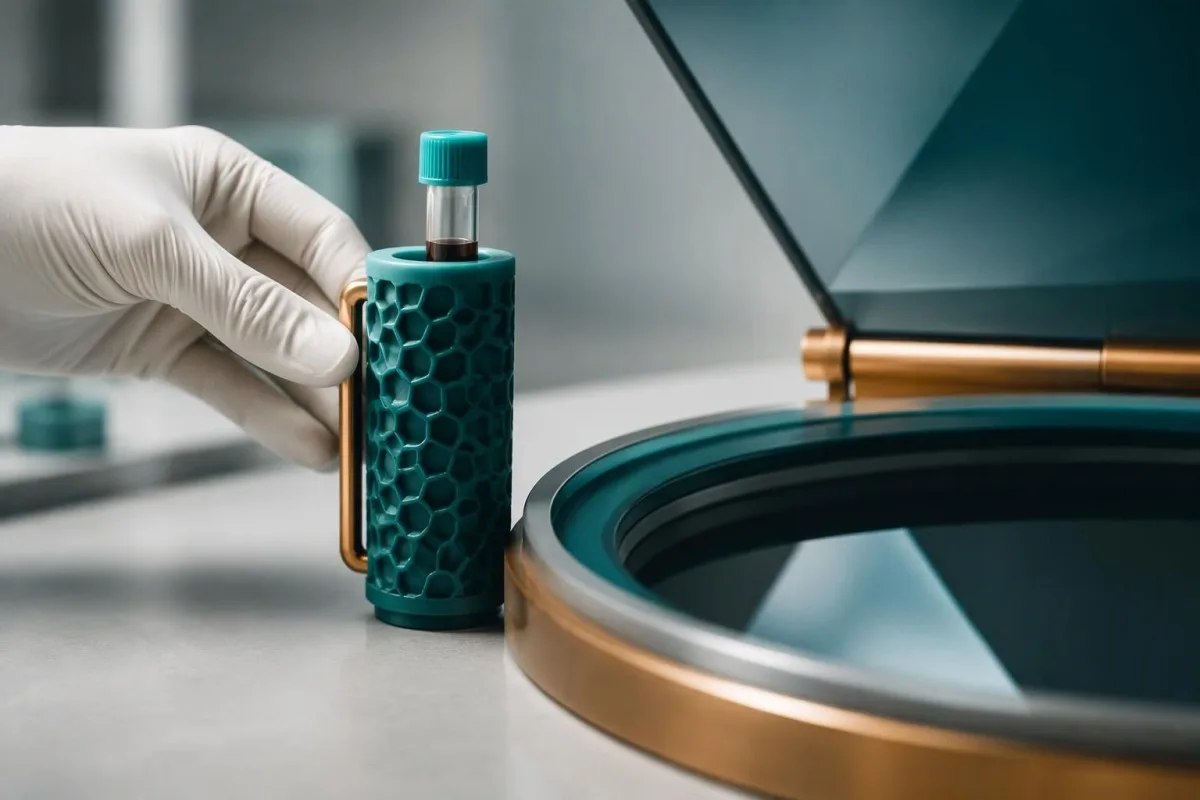
The pre-analytical requirement is different from the assay temperature: serum may be kept near 37°C during preparation and then deliberately tested at 4°C. The Hematology review emphasizes warm collection and separation for cold antibody studies (Berentsen, 2016); the laboratory creates the controlled cooling step only after an appropriate specimen is available.
Warming a specimen after it has already cooled may not fully reverse every earlier problem, so repeating the test can be more useful than interpreting an unexpected low titer. Our repeat specimen guide explains another handling distinction: cells breaking inside a collection tube are not the same as hemolysis occurring inside your body.
Before the appointment, ask 3 практикалык суроо: which tube is required, how warmth will be maintained and where serum separation will occur. Titer testing, an EDTA specimen for the DAT and a warmed CBC may have different instructions; do not heat, transport or store your own specimen unless the collecting service specifically directs you.
Муздак агглютининдер CBC жыйынтыгын кантип бурмалашы мүмкүн
Cold-related red-cell clumping can falsely lower the RBC count and raise MCV or MCHC on an automated complete blood count. A CBC repeated after laboratory warming near 37°C can help identify this artifact, although correcting the numbers does not by itself establish or exclude cold agglutinin disease.
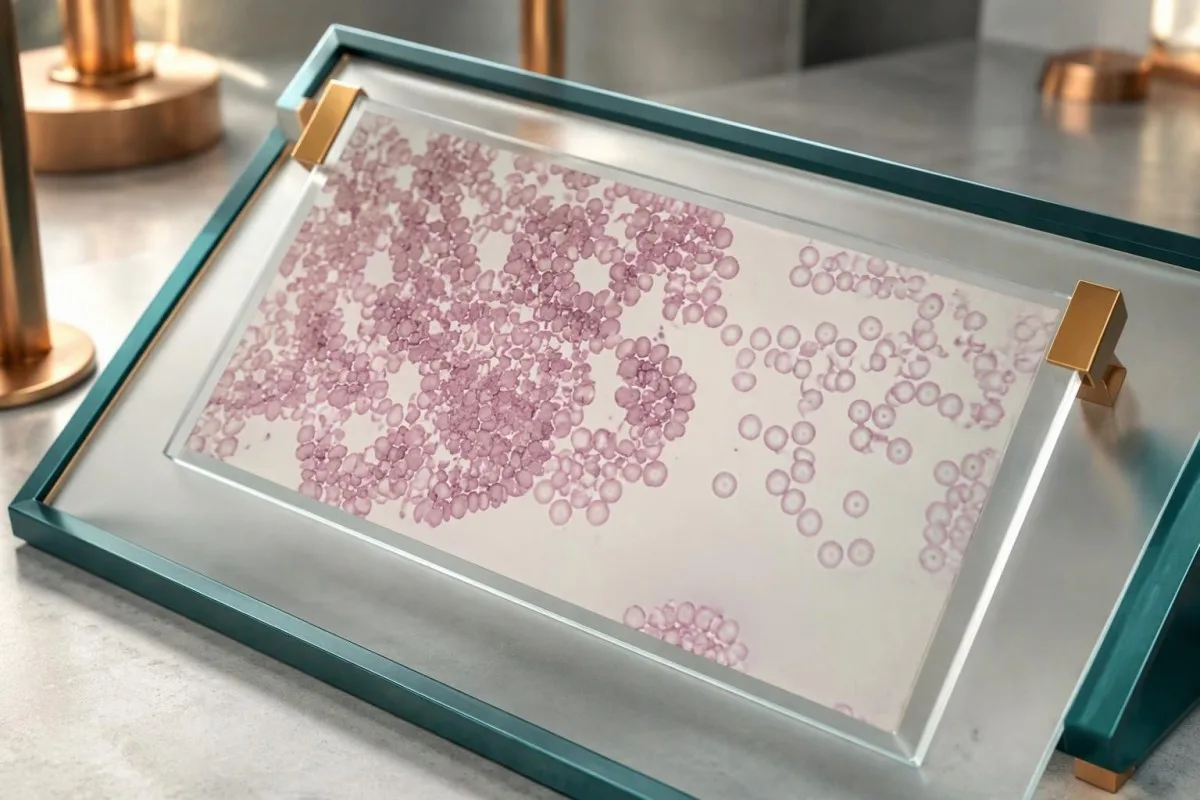
Automated counters may treat a cluster as 1 large particle rather than several separate cells, making the calculated mean cell volume appear high. Hematocrit and derived indices can become internally inconsistent, while photometrically measured hemoglobin is often less affected; the laboratory must still check whether other specimen or instrument issues are present.
Мисалы, болжолдуу түрдө MCHC of 40 g/dL with an analyzer agglutination flag should prompt verification rather than an immediate diagnosis of an unusually concentrated red-cell disorder. Our high MCHC explanation covers this reasoning; genuine anemia can coexist with an artifact, so neither finding should erase the other.
Кантести - бул AI кан анализинин жыйынтыгы платформасы that helps explain discrepancies between CBC values and a reported cold agglutinin titer, including whether a result was rerun near 37°C. Our AI технология боюнча колдонмо describes the interpretation process; only the testing laboratory can confirm that warming corrected a measurement error.
Муздак агглютинин оорусунун диагнозун эмне тастыктайт?
A cold agglutinin disease diagnosis usually combines chronic hemolysis, a strongly C3d-positive DAT and a cold agglutinin titer of at least 1:64 at 4°C, with assessment for secondary causes. These are linked diagnostic components, not a checklist that an isolated positive report can complete.
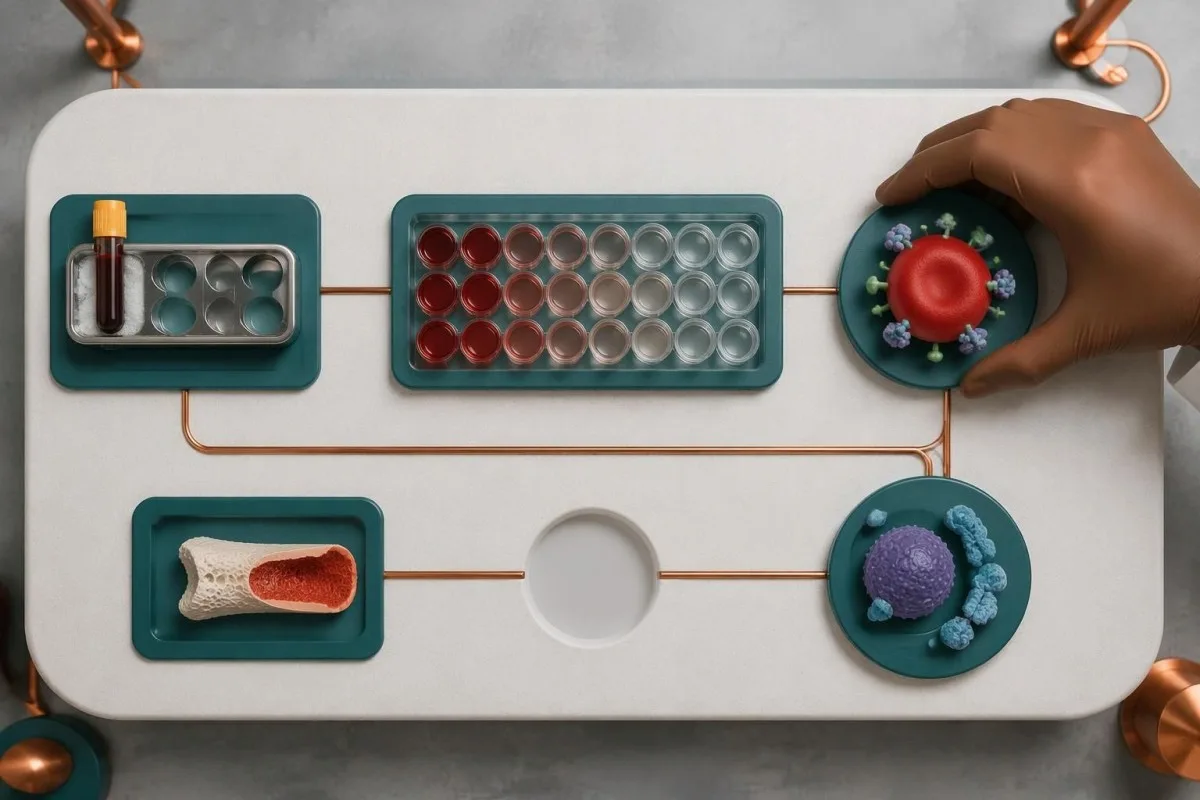
Clinicians first verify the 2 core laboratory patterns—hemolysis and immune attachment to cells—then assess symptoms, duration, medications, recent infections and transfusion history. A broad thermal amplitude can support interpretation when routine results are borderline or discordant; the international consensus treats autoimmune hemolytic anemia as a pattern-based diagnosis (Jäger et al., 2020).
Persistent findings may lead to serum protein electrophoresis, immunofixation and hematology-directed marrow assessment to characterize antibody production. Our guide to immunofixation band results explains why a monoclonal band needs context; even a titer of 1:1024 cannot determine whether a detectable protein represents overt lymphoma or a smaller clonal process.
Kantesti AI can help organize 3 groups of information for the appointment: antibody tests, hemolysis markers and changes over time. It cannot establish whether the specimen followed the warm-handling protocol or replace a specialist's assessment of marrow findings; bring the full report, because an isolated screenshot may omit the method and interpretive comments.
Үч мисал: бирдей титр, кийинки кадамдар ар башка
The same cold agglutinin titer can lead to different next steps because clinical significance depends on temperature-dependent activity and red-cell injury. The following 3 examples are hypothetical teaching scenarios, not patient accounts or rules for diagnosing yourself from a single report.
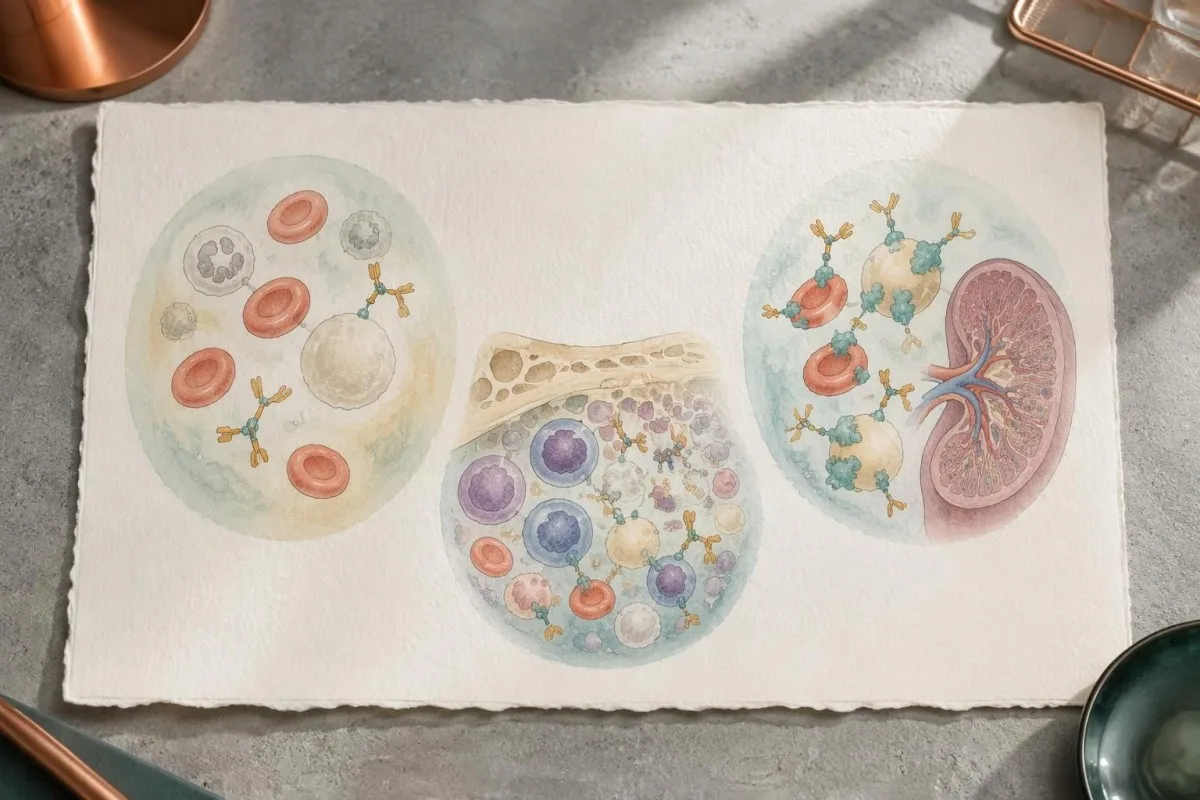
In the first example, an adult has a titer of 1:256 at 4°C, hemoglobin of 14.0 g/dL, normal hemolysis markers and no cold-related symptoms. If specialist testing shows a narrow thermal amplitude, incidental antibodies become more plausible; the useful step is confirming the context and need for follow-up, not assuming that antibody detection requires treatment.
In the second example, a person recovering from a respiratory illness has a titer of 1:256 and hemoglobin that has fallen from 13.5 to 10.2 g/dL, with rising indirect bilirubin. An infection-associated syndrome is possible, but the falling hemoglobin still needs assessment; our polychromasia explanation describes one smear clue to the marrow's replacement response.
In the third example, a person has months of fatigue, a titer of 1:256, strong C3d positivity, low haptoglobin and antibody reactivity at 30°C. Persistent clinically significant cold-antibody hemolysis becomes more likely; hematology assessment addresses diagnosis and treatment need, while the identical titer across all 3 examples shows why the number alone cannot choose the pathway.
Кайсы симптомдор үчүн тез арада дарыгерге кайрылуу керек?
Chest pain, breathlessness at rest, fainting or confusion require emergency assessment, regardless of the cold agglutinin titer. New jaundice, dark urine or rapidly worsening fatigue warrant prompt, often same-day medical review; a result below 1:64 does not make these symptoms safe to ignore.
A rapid hemoglobin decline can be more dangerous than a stable low value, because your circulation has less time to adapt. A hypothetical fall from 12 to 8 g/dL over several days deserves prompt assessment even if someone with a long-standing, monitored value near 8 g/dL has fewer symptoms; these examples are not universal transfusion thresholds.
Dark urine can reflect hemoglobin released during marked intravascular hemolysis, but dehydration, liver conditions and urinary causes can produce similar appearances. Our dark urine assessment guide explains the alternatives; dark urine together with jaundice or weakness should not be dismissed because only 1 antibody result is abnormal.
Cold-related blue or purple fingers can occur with agglutination, but persistent discoloration, severe pain or failure to improve after gentle warming needs urgent evaluation for impaired circulation. Clinically significant cold agglutinin disease also carries increased clot risk; sudden breathlessness or 1 newly swollen leg requires assessment rather than attribution to cold sensitivity alone.
Кантип жылуу жүрүп, клиникалык процедураларга даярдануу керек
Keeping the whole body warm can reduce cold-triggered symptoms in clinically significant cold-antibody disorders. Tell the care team before transfusion, anesthesia or a procedure, because laboratory compatibility testing and clinical temperature management may need coordination near 37°C rather than routine handling.

Practical protection includes layers, gloves, warm footwear and avoiding abrupt whole-body cooling; do not test your tolerance with an ice bath or deliberate cold challenge. Reactivity around 30°C does not translate into 1 safe outdoor temperature, because wind, wet clothing, exposure duration and individual circulation change how much peripheral tissues cool.
For transfusion, the laboratory may perform antibody investigation and compatibility testing at 37°C to limit cold-antibody interference while still identifying clinically significant additional antibodies. Our transfusion compatibility guide explains that distinction; a clinical warming device may also be used, but emergency treatment should not be delayed unnecessarily while pursuing perfect routine test conditions.
Жеке өзүнчө 1:128 titer without hemolysis does not automatically mean you need to avoid all travel, exercise or procedures. The useful precaution is sharing the report and any prior laboratory interference with the treating team; clinical staff—not the patient—should decide whether warmed fluids, a transfusion warmer or additional temperature monitoring are necessary.
Качан дарылоо керек жана эмнелер көзөмөлдөнөт?
Treatment is guided by anemia, symptoms, transfusion need and functional impact—not a titer alone. In clinically significant cold agglutinin disease, specialist options include B-cell-directed therapy and complement inhibition; a titer of 1:512 without attributable symptoms or hemolysis does not itself establish a reason to start medication.
Sutimlimab inhibits C1s, an early classical complement component, and can reduce complement-mediated hemolysis in adults with cold agglutinin disease. It does not remove the IgM antibody, so cold-related agglutination and circulation symptoms may persist even if hemoglobin improves; immunization and infection-risk precautions must follow the product information and the specialist's plan.
B-cell-directed options include rituximab-based treatment, sometimes combined with another agent in selected patients; the appropriate choice depends on goals, comorbidities and treatment tolerance. Corticosteroids, commonly used for warm autoimmune hemolytic anemia, generally perform poorly in cold agglutinin disease; the 2020 international consensus emphasizes distinguishing the subtype before applying a treatment pathway (Jäger et al., 2020).
Kantesti helps explain why a hypothetical hemoglobin improvement from 8.7 to 11.8 g/dL, falling bilirubin and fewer transfusions can matter more than a persistently high titer. Our red-cell monitoring guide explains reticulocytes and related markers; do not change treatment from an AI interpretation, and do not assume anemia means iron deficiency.
Жыйынтыкты коопсуз колдонуу: далилдер жана AI чектөөлөрү
Кантести - бул AI лабораториялык тест чечмелөө кызматы аркылуу жарыяланат that helps organize cold agglutinin results for discussion, but it cannot independently confirm cold agglutinin disease. A useful interpretation needs 3 information groups: the antibody method and handling, the hemolysis pattern and the patient's symptoms and history.

Keep the complete report rather than only the 1:256 result: the test temperature, reference interval, DAT components and laboratory comments can change its meaning. Useful appointment questions include whether hemolysis is present, whether thermal amplitude testing would help and whether specimen handling was adequate; bring earlier hemoglobin values when available.
The Kantesti technical benchmark listed below concerns 100,000 синтетикалык тесттик учурду, not 100,000 patients with cold agglutinin disease. The accompanying validation framework describes an assessment approach, not proof that AI can diagnose this rare condition; our validation and oversight page provides the appropriate context for these research publications and their limitations.
Before sharing 1 report or a series of reports, review consent and remove information you do not need to provide, especially when the results belong to someone else. Our купуялык жана маалыматтар боюнча колдонмо explains data-handling considerations; urgent symptoms belong with emergency or clinical services, not in an upload queue awaiting interpretation.
Көп берилүүчү суроолор
Муздак агглютининге тесттин оң чыгышы менде муздак агглютинин оорусу бар дегенди билдиреби?
Муздак агглютининдерге жасалган тесттин оң натыйжасы өз алдынча муздак агглютинин оорусун аныктабайт. 4°C температурада титрдин кеминде 1:64 болушу диагноз коюуда көп колдонулган көрсөткүчтөрдүн бири, бирок дарыгерлер өнөкөт гемолизди жана туура келген, адатта C3d боюнча күчтүү оң түз антиглобулин тестин да баалашат. Кокустан табылган же инфекцияга байланыштуу антителолор оң натыйжа бериши мүмкүн. Термикалык амплитуда жана үлгүлөрдү ишенимдүү иштетүү так эмес жыйынтыктарды чечмелөөгө жардам берет.
1:256 же 1:512 суук агглютинин титри коркунучтуубу?
Муздак агглютининдердин 1:256 же 1:512 титри өз алдынча коркунучтун чеги болуп эсептелбейт. Бул жыйынтык антителонун активдүүлүгү анализдин шарттарында аныктала тургандай бойдон калып, сыворотканы канчалык суюлтууга болорун көрсөтөт. Болжол менен 30°Cде активдүү антитело 4°Cде гана реакцияга кирген, титри жогору антителого караганда клиникалык жактан маанилүүрөөк болушу мүмкүн. Баалоонун канчалык шашылыш керектигин симптомдор, гемоглобиндин динамикасы жана гемолиз маркерлеринин көрсөткүчтөрү аныктайт.
Муздак агглютинин тестиндеги термиялык амплитуда деген эмне?
Thermal amplitude is the highest temperature at which a cold antibody reacts under the laboratory's testing conditions. Reactivity around 30°C or above is generally more concerning than activity restricted to 4°C because peripheral circulation can become cool enough for the antibody to act. Thermal amplitude is different from titer, which measures activity after dilution. Specialist laboratories may assess it when routine findings are discordant or the clinical significance is unclear.
Эмне үчүн суук агглютининге алынган үлгүнү жылуу кармоо керек?
Many laboratories require a cold agglutinin specimen to remain at 37–38°C from collection until serum separation. Premature cooling can allow antibody to bind the patient's cells, leaving less detectable activity in the separated serum and potentially producing a falsely low result. This preparation requirement is separate from deliberately testing the serum at 4°C. Confirm the collecting laboratory's instructions rather than attempting to warm or transport the specimen yourself.
Инфекция муздак агглютининдерге тесттин оң натыйжасын бере алабы?
Микоплазма пневмониясы жана Эпштейн–Барр вирусу сыяктуу инфекциялар суукка реакция берүүчү антителолордун убактылуу пайда болушу менен байланыштуу болушу мүмкүн. 1:256 сыяктуу титр кайсы инфекция бар экенин же анын активдүү бойдон калганын аныктай албайт. Инфекцияга байланыштуу антителолор кээде клиникалык жактан маанилүү гемолизге алып келет, ошондуктан гемоглобиндин төмөндөшүн же сарыктын жаңы пайда болушун баалоо зарыл. Инфекцияны аныктоодо суук агглютининдерди колдонгондон көрө, козгогучка багытталган тесттер жана оорунун клиникалык жүрүшү көбүрөөк маалымат берет.
Муздак агглютининдер MCV же MCHC көрсөткүчтөрүн жалган жогору көрсөтүшү мүмкүнбү?
Муздак агглютининдер эритроциттердин топтолушуна алып келип, автоматташтырылган CBC өлчөөлөрүн бурмалашы мүмкүн. Мунун натыйжасында MCV же MCHC жалган жогору, ал эми RBC саны жалган төмөн көрсөтүлөт. Мисалы, агглютинация тууралуу белги менен коштолгон 40 g/dL MCHC көрсөткүчү аны чыныгы клеткалык бузулуу деп дароо чечмелөөнүн ордуна, лабораториялык текшерүүнү талап кылышы керек. Үлгүнү 37°C чамасында жылыткандан кийин анализди кайталоо бул тоскоолдукту жоюшу мүмкүн. CBC көрсөткүчтөрүнүн оңдолушу гемолиздин кошо жүрүп жатканын жокко чыгарбайт.
Муздак агглютининдин анализинин жыйынтыгы оң чыккандан кийин кайсы белгилер шашылыш медициналык жардамды талап кылат?
Көкүрөк оорусу, эс алып турганда демигүү, эс-учун жоготуу же аң-сезимдин чаташуусу суук агглютининдердин титрине карабастан, шашылыш баалоону талап кылат. Жаңы пайда болгон сарык, зааранын карарышы же алсыздыктын тез күчөшү дарыгерге тезинен, көбүнчө ошол эле күнү кайрылууну талап кылат. Гемоглобиндин тез төмөндөшү, мисалы, шарттуу түрдө 12ден 8 г/длге чейин өзгөрүшү, тынчсыздандырат, бирок шашылыштыкты ар бир адам үчүн өзүнчө бир көрсөткүч аныктабайт. Манжалардын өңүнүн оорутуп өзгөрүшү узакка созулса же уюган канды билдирген күтүүсүз белгилер пайда болсо, шашылыш текшерүүдөн өтүү зарыл.
Кан анализинин жыйынтыгын түшүндүрүп алыңыз
Лабораториялык отчетуңузду жүктөңүз, ошондо Kantestiтин AI функциясы ар бир биомаркерди жөнөкөй тил менен бир нече секундда түшүндүрөт. Дүйнө жүзү боюнча 2 миллиондон ашык адам колдонгон.
Шилтемелер
- Klein, T., Mitchell, S., & Weber, H. (2026). Kantesti кан анализин чечмелөө кыймылдаткычынын 100,000 синтетикалык тесттик учурлар боюнча алдын ала катталган, рубрика-негизделген автоматташтырылган техникалык көрсөткүчү. Kantesti AI медициналык изилдөөлөр. DOI
- Klein, T., Mitchell, S., & Weber, H. (2026). Клиникалык тастыктоо алкагы v2.0 (Медициналык тастыктоо барагы). Kantesti AI медициналык изилдөөлөр. DOI
- Berentsen S. (2016). Cold agglutinin disease. Hematology, American Society of Hematology Education Program. DOI
- Jäger U et al. (2020). Diagnosis and treatment of autoimmune hemolytic anemia in adults: Recommendations from the First International Consensus Meeting. Blood Reviews. DOI
- 2M+Талданган тесттер
- 127+Өлкөлөр
- 100+Тилдер
Медициналык топ жөнүндө


E-E-A-T ишеним сигналдары
Тажрыйба
Дарыгер жетектеген лабораториялык чечмелөө иш процесстерин клиникалык кароо.
Экспертиза
Биомаркерлер клиникалык контекстте кандай жүрөрүнө лабораториялык медицина багыты.
Авторитеттүүлүк
Доктор Томас Кляйн медициналык жактан карап чыккан, доктор Сара Митчелл жана профессор доктор Ханс Вебердин салымдары менен.
Ишенимдүүлүк
Тынчсызданууну азайтуу үчүн так кийинки кадамдар менен далилге негизделген чечмелөө.






Медициналык эскертүү
Бул макала билим берүү максатында гана жана медициналык кеңеш болуп саналбайт. Диагноз коюу жана дарылоо чечимдери үчүн дайыма квалификациялуу саламаттыкты сактоо адисине кайрылыңыз.
Жарыяланды · Редакциялык топко кайрылыңыз
Kantesti Ltd тарабынан жарыяланган, Англия жана Уэльсте катталган, компаниянын №. 17090423, Лондон, Улуу Британия.
