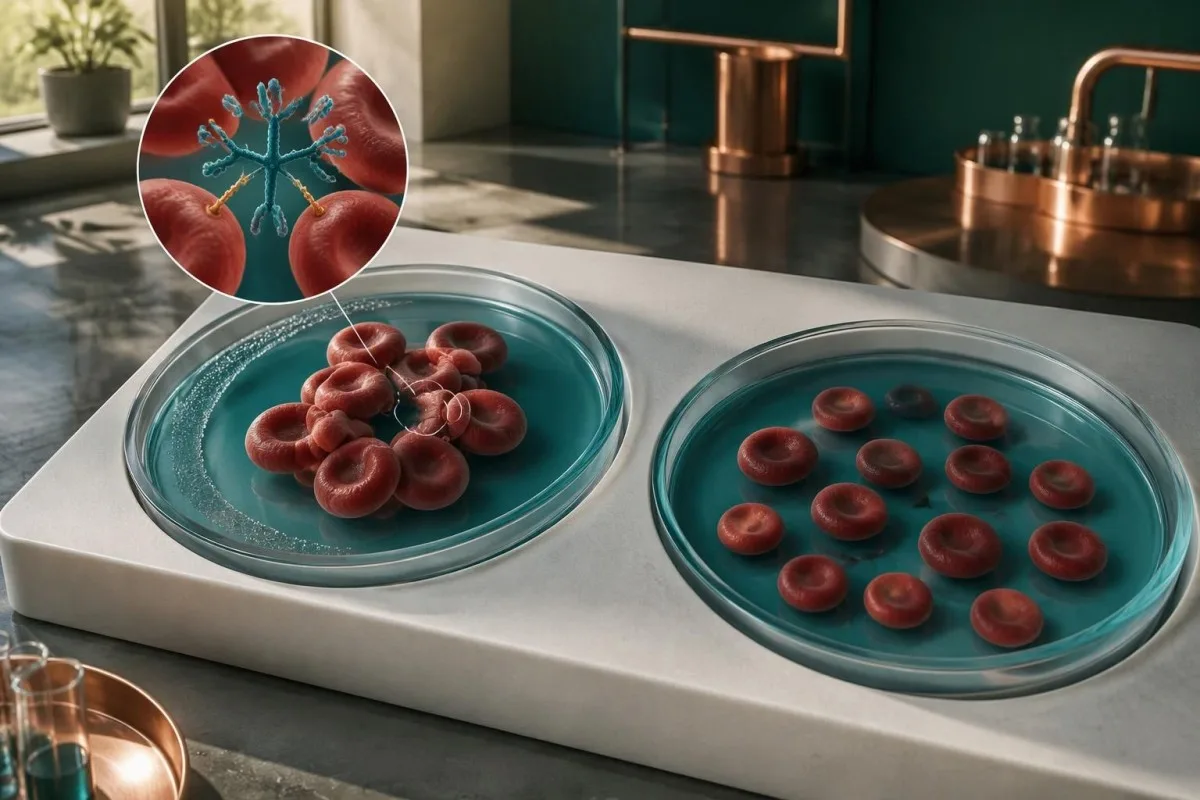
כייל גבוה של אגלוטינינים קרים פירושו שניתן לזהות נוגדנים גם לאחר דילול משמעותי — ולא בהכרח שהם פוגעים בכדוריות הדם האדומות שלך. ההבחנה תלויה בטווח הטמפרטורות שלהם, בראיות להמוליזה, בתוצאות בדיקה חיוביות לקומפלמנט ובטיפול אמין בדגימה.

נקודות עיקריות
- Positive result מזהה נוגדנים המגיבים בקור; היא אינה קובעת באופן עצמאי שיש מחלת אגלוטינינים קרים.
- כייל של 1:64 לפחות ב-4°C הוא רכיב אבחוני נפוץ, אך על הרופאים למצוא גם ראיות להמוליזה ואת דפוס תוצאות בדיקת האנטיגלובולין הישירה המתאים.
- טווח הפעילות התרמית מתאר את הטמפרטורה הגבוהה ביותר שבה נוגדן מגיב; פעילות סביב 30°C ומעלה מדאיגה בדרך כלל יותר מפעילות המוגבלת לתנאי מעבדה קרים מאוד.
- בדיקת אנטיגלובולין ישירה חיובית ל-C3d תומכת בתהליך המתווך על ידי קומפלמנט, אך אותו דפוס יכול להופיע גם שלא במסגרת מחלת אגלוטינינים קרים.
- הערכת המוליזה משלבת מגמות ברמות ההמוגלובין, רטיקולוציטים, LDH, בילירובין בלתי ישיר והפטוגלובין, במקום להסתמך על סמן חריג יחיד.
- טיפול בדגימה ב־37–38°C עד להפרדת הסרום עשוי להידרש לבדיקת אגלוטינינים קרים; יש לוודא את הנחיות המעבדה האוספת לפני התור.
- נוגדנים הקשורים לזיהום עשויים להיות זמניים, אם כי המוליזה בעלת משמעות קלינית עדיין מחייבת הערכה גם כאשר זיהום הוא הגורם המעורר.
- תסמינים דחופים כוללים כאבים בחזה, קוצר נשימה במנוחה, עילפון או בלבול; צהבת חדשה, שתן כהה או עייפות שמחמירה במהירות מצריכים בדיקה רפואית בהקדם.
האם תוצאה חיובית בבדיקת אגלוטינינים קרים פירושה שיש מחלה?
A בדיקת אגלוטינינים קרים חיובית אינה מעידה אוטומטית על מחלת אגלוטינינים קרים. אפילו טיטר גבוה יש לפרש לצד 3 ממצאים קליניים: טווח הטמפרטורות של הנוגדן, עדות להרס תאי דם אדומים ובדיקת אנטיגלובולין ישירה חיובית למשלים.

אגלוטינינים קרים הם בדרך כלל נוגדני IgM שיכולים להיקשר לתאי דם אדומים ביתר קלות בטמפרטורות נמוכות ולגרום להם להיצמד זה לזה. בבדיקה מודדים בדרך כלל את פעילותם ב־4°C—טמפרטורה נמוכה בהרבה מזו של רוב הדם במחזור הדם—ולכן תגובה בולטת במעבדה יכולה להתקיים לצד פעילות קלינית מועטה או ללא פעילות קלינית רלוונטית בגוף.
תוצאה מבודדת כגון 1:256 אינה יכולה לומר לך אם יש לך אנמיה, אם הנוגדן מגיב סמוך לטמפרטורת הגוף או אם הוא זמני לאחר מחלה. ההסבר שלנו על תוצאות נוגדנים חיוביות מבחין בין זיהוי לאבחנה; השאלה המועילה הבאה היא מה מראות הבדיקות הנלוות.
קנטסטי הוא מנתח בדיקות דם בינה מלאכותית שמסייעת להסביר טיטר של אגלוטינינים קרים לצד תוצאות מעבדה קשורות, לרבות האם טמפרטורת הבדיקה המדווחת הייתה 4°C. ה־ רקע החברה מסביר על הארגון שמאחורי השירות החינוכי הזה; איננו מחליפים את ההערכה ההמטולוגית והמעבדתית הנדרשת לביסוס אבחנה.
מה מודד כייל גבוה של אגלוטינינים קרים?
A טיטר אגלוטינינים קרים הוא המיהול המרבי של הסרום שלך שבו עדיין מתקבלת תגובת האגלוטינציה שהמעבדה הגדירה. תוצאה של 1:512 פירושה שהפעילות נותרת ניתנת לזיהוי גם לאחר מיהול ניכר יותר מאשר בתוצאה של 1:32; אף אחד מהמספרים אינו מודד ישירות את מידת האנמיה.
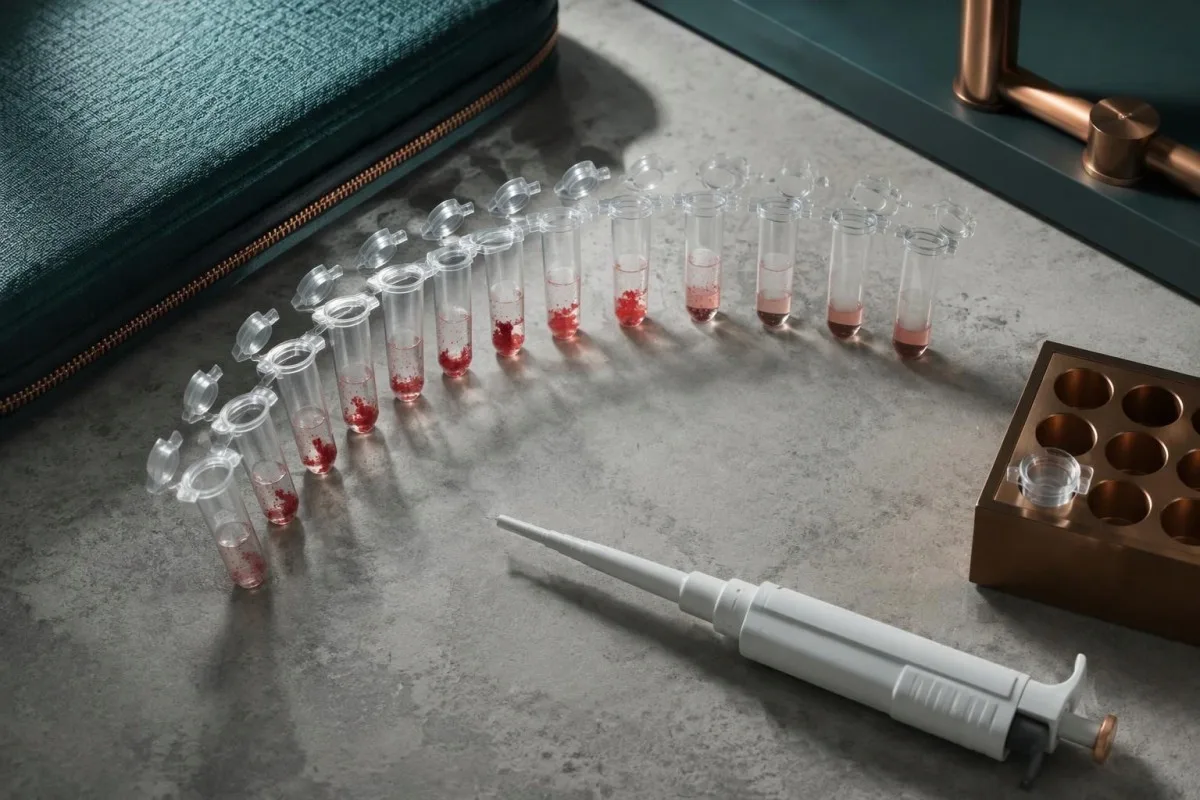
טיטר של לפחות 1:64 ב־4°C הוא מרכיב נפוץ באבחון מחלת אגלוטינינים קרים, ולא הכרעה עצמאית בבדיקת סקר. הסקירה בהמטולוגיה מתארת סף זה לצד המוליזה כרונית וחיוביות חזקה ל־C3d בבדיקת אנטיגלובולין ישירה (Berentsen, 2016); אין טיטר אוניברסלי שמחייב אוטומטית טיפול חירום.
שלבי מיהול פי שניים מניבים בדרך כלל תוצאות כגון 1:64, 1:128 ו־1:256. הפרש של שלב אחד עשוי לשקף שונות בבדיקה, את נקודת הסיום שנבחרה או את אופן הטיפול בדגימה, ולא שינוי ביולוגי משמעותי; ההשוואה המספרית מהימנה ביותר כאשר אותה מעבדה משתמשת באותה שיטה ובאותה טמפרטורה.
מעבדות מסוימות מדווחות רק חיובי או שלילי, ואילו אחרות מספקות מספר הופכי כגון 256 במקום לכתוב 1:256. המדריך שלנו ל־ תוצאות איכותיות וכמותיות explains that distinction; ask for the actual dilution, assay temperature and local reference interval before comparing reports.
| רמה | טווח | מה פירוש הדבר |
|---|---|---|
| Low-level activity | Below 1:64 at 4°C | Often incidental when thermal amplitude is narrow and hemolysis is absent; this is not a universal laboratory reference interval. |
| Common diagnostic threshold | At least 1:64 at 4°C | Supports further assessment when hemolysis and a compatible direct antiglobulin test are present; does not confirm disease alone. |
| Higher dilution endpoint | Examples: 1:256 or 1:512 | Shows activity after greater dilution, but does not establish thermal amplitude or predict treatment need. |
| Very high reported endpoint | Example: 1:1024 or higher | Still requires clinical interpretation; no titer-only emergency threshold is established. |
מדוע טווח הפעילות התרמית עשוי להיות חשוב יותר מהכייל
טווח הפעילות התרמית is the highest temperature at which a cold antibody reacts under the laboratory's testing conditions. Reactivity around 30°C or above is generally more clinically concerning than reactivity confined to 4°C, because cooler peripheral circulation can reach temperatures at which the antibody becomes active.
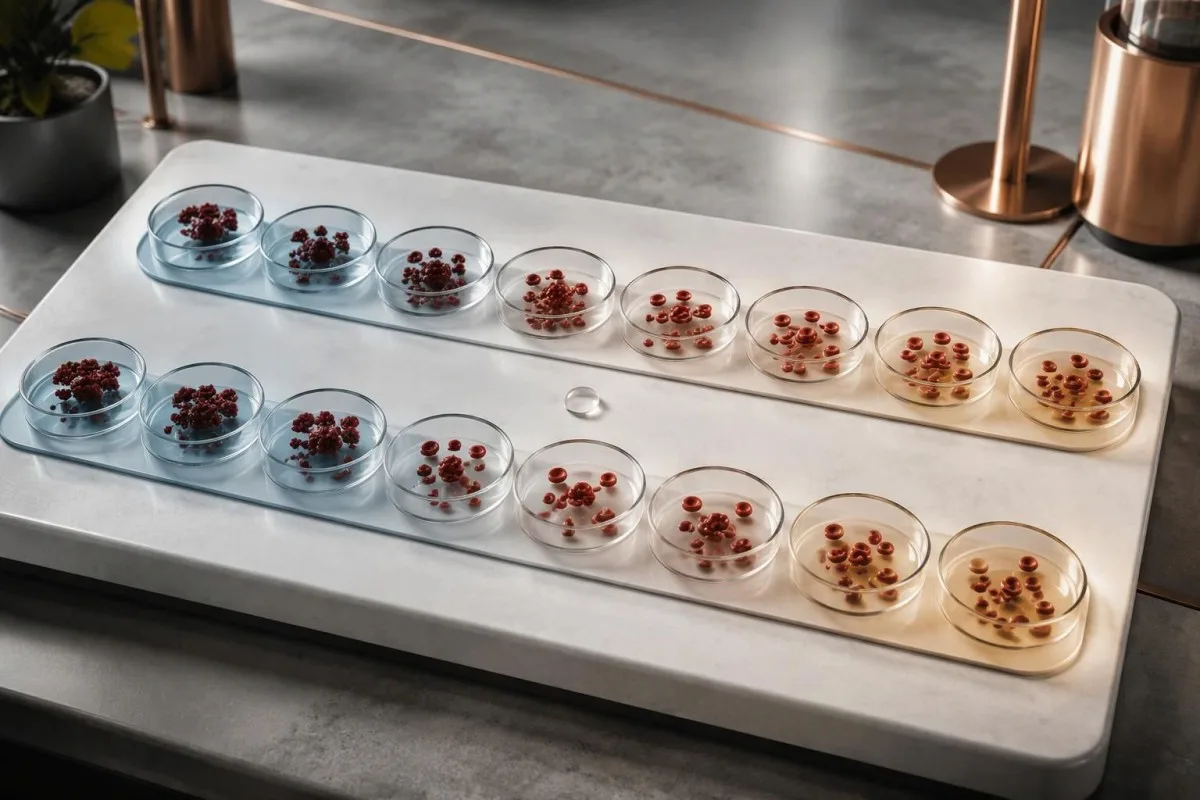
A high-titer antibody active only at 4°C may matter less clinically than a lower-titer antibody that remains active at 30–32°C. The reason is exposure: red cells do not normally circulate at refrigerator temperature, but they can encounter substantially cooler conditions in fingers, toes and other peripheral areas.
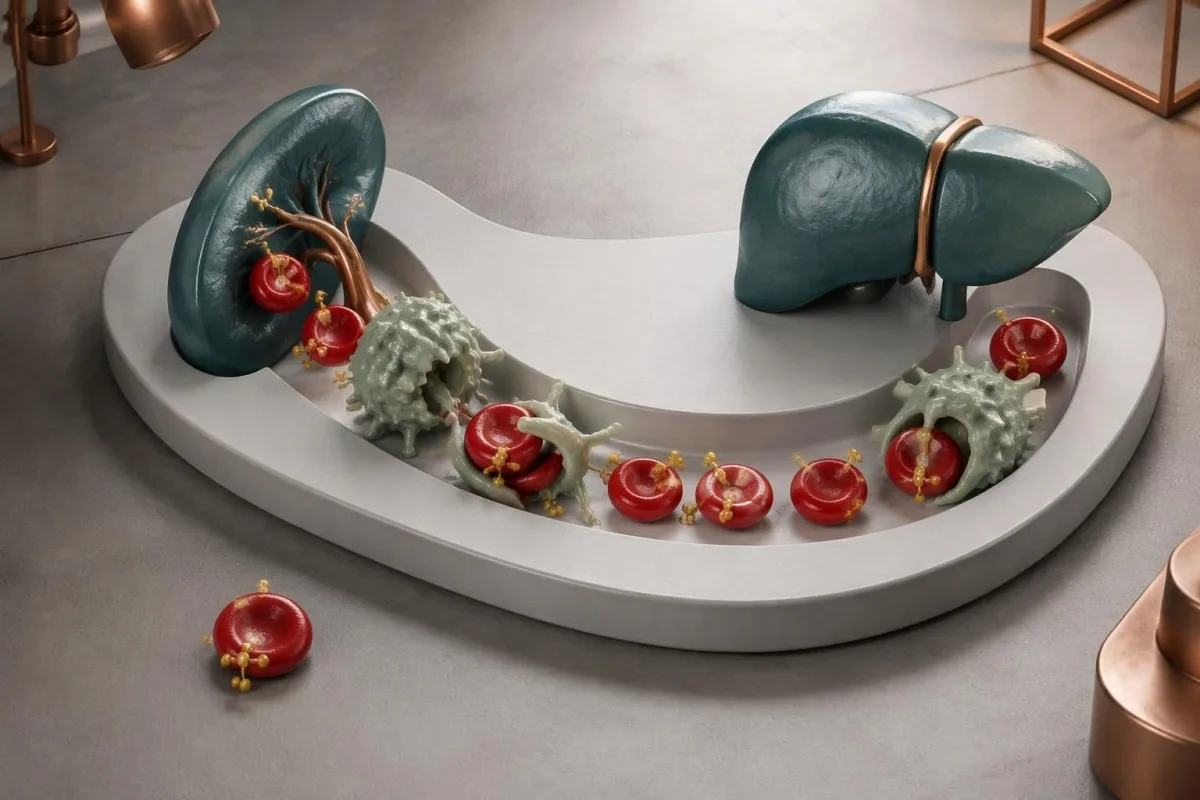
Complement can attach while red cells are cool and remain relevant after they return toward 37°C, even when the IgM antibody detaches. This explains why antibody-related injury is not simply a matter of visible clumping; our מדריך בדיקות משלים also distinguishes circulating complement measurements from complement deposited on cells.
Thermal amplitude testing is not standardized into 1 universal patient-facing cutoff, and many routine reports omit it entirely. Specialist laboratories may test several temperatures, such as 4°C, room temperature, 30°C and 37°C; clinicians usually request that additional work when the titer, symptoms and hemolysis results do not fit together.
אילו תוצאות בדיקות דם מראות המוליזה בפועל?
Hemolysis means red cells are being destroyed faster than expected, and assessment usually combines 5 measurements: hemoglobin, reticulocytes, LDH, indirect bilirubin and haptoglobin. A high cold agglutinin titer without this supporting pattern does not establish a hemolytic disorder.
A hypothetical hemoglobin fall from 13.2 to 9.6 g/dL, accompanied by rising indirect bilirubin and LDH, is more concerning than an unchanged hemoglobin with the same titer. Reticulocytes often increase as the marrow replaces lost cells, although an early episode, nutrient deficiency or marrow disorder can blunt that response.
Low haptoglobin supports hemolysis but is not definitive: liver disease can reduce production, while an acute-phase response can raise the concentration despite red-cell destruction. Our explanation of סיבות להפטוגלובין נמוך covers these exceptions; a result below 1 laboratory's reference limit should be interpreted with the other markers rather than alone.
Kantesti AI helps explain LDH trends, including why a hypothetical rise from 220 to 650 U/L needs the laboratory's reference interval and specimen-quality information. Our LDH interpretation guide describes other sources of elevation; normal hemoglobin also does not exclude compensated hemolysis when the marrow is keeping pace.
מה משמעותה של בדיקת אנטיגלובולין ישירה חיובית ל-C3d?
A C3d-positive direct antiglobulin test, also called a direct Coombs test, detects complement fragments attached to red cells. Cold agglutinin disease typically produces strong C3d positivity with absent or sometimes weak IgG reactivity, but these 2 antibody-testing results are not sufficient without clinical evidence of hemolysis.

The direct antiglobulin test and the cold agglutinin titer answer 2 שאלות שונות: what is attached to your red cells, and what cold-reactive activity is present in your serum? The Blood Reviews international consensus recommends a monospecific direct antiglobulin test as part of autoimmune hemolytic anemia assessment (Jäger et al., 2020).
A report stating only DAT positive may not distinguish IgG from C3d; asking for those 2 components can materially change interpretation. Our guide to a בדיקת קומבס ישירה חיובית explains why transfusion-related antibodies, medications and other immune processes can also produce a positive result without proving cold agglutinin disease.
In a child with abrupt post-illness hemolysis, a C3d-positive DAT and a low cold agglutinin titer can raise a different possibility: paroxysmal cold hemoglobinuria. This condition usually involves an IgG antibody assessed by Donath–Landsteiner testing, so a cold agglutinin result below 1:64 should not end the investigation when symptoms suggest significant hemolysis.
נוגדנים מקריים, זיהומים ומחלה מתמשכת
Incidental cold antibodies may cause no symptoms, while infection-related antibodies can be temporary and occasionally cause substantial hemolysis. Persistent cold agglutinin disease is usually associated with a clonal marrow B-cell process; these 3 situations require different follow-up rather than the same response to a positive test.
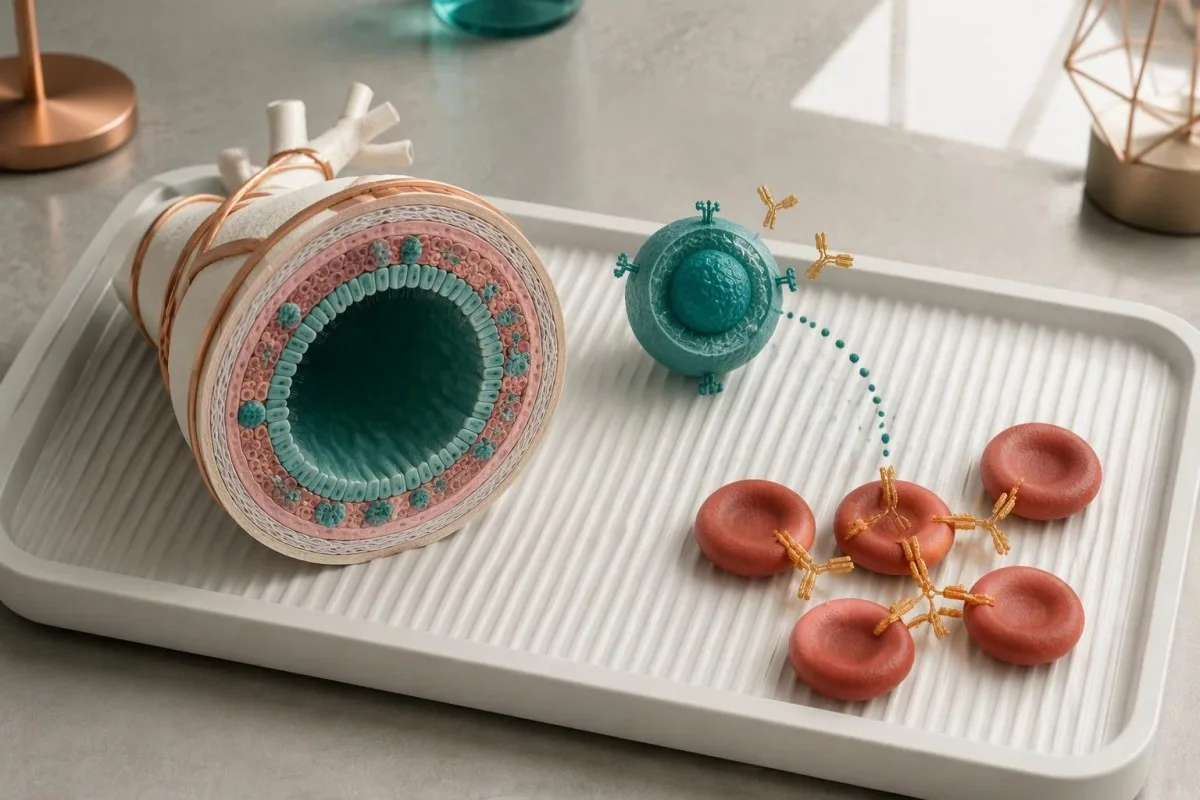
Mycoplasma pneumoniae and Epstein–Barr virus are 2 recognized infection-related associations, but a cold agglutinin test cannot reliably diagnose either infection. Our guide to Mycoplasma antibody interpretation explains why antibody timing and persistence complicate that diagnosis; respiratory symptoms may require pathogen-directed testing rather than inference from the titer.
Recent fever or sore throat changes the questions clinicians ask, not the urgency of genuine hemolysis: a hemoglobin of 8.5 גרם/דציליטר with new jaundice still requires assessment even if the antibody is expected to be temporary. Our EBV result interpretation explains how VCA and EBNA patterns provide more specific information about exposure timing.
Terminology matters: cold agglutinin syndrome generally describes cold-antibody hemolysis secondary to another condition, while cold agglutinin disease is a distinct, usually persistent disorder. A titer of 1:512 does not identify lymphoma; specialist investigation may find a small marrow clone without overt lymphoma, and incidental antibodies do not automatically justify cancer investigations.
מדוע ייתכן שיש לחמם את הדגימה שלך לפני הבדיקה
For cold agglutinin titer testing, many specialist laboratories require the specimen to remain at 37–38°C from collection until serum separation. Cooling before separation can allow antibodies to bind the patient's cells, potentially lowering the antibody activity left in the serum and producing a misleading result.
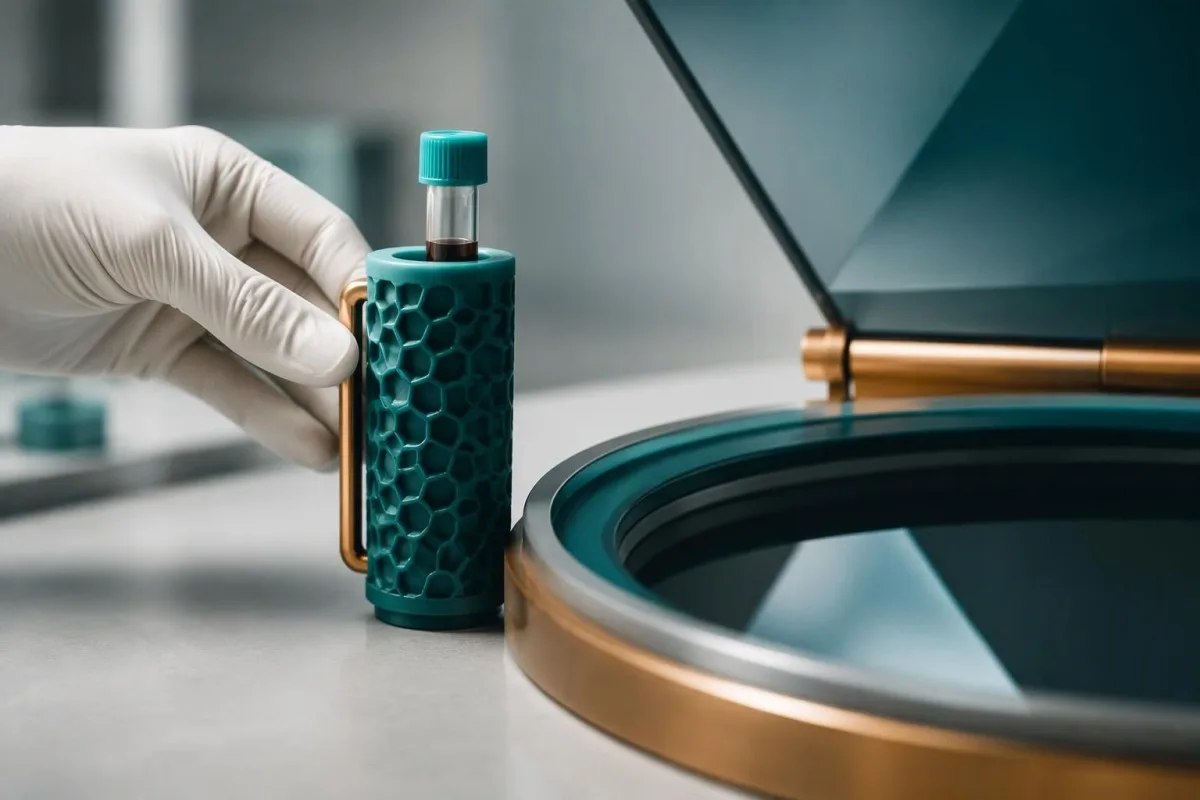
The pre-analytical requirement is different from the assay temperature: serum may be kept near 37°C during preparation and then deliberately tested at 4°C. The Hematology review emphasizes warm collection and separation for cold antibody studies (Berentsen, 2016); the laboratory creates the controlled cooling step only after an appropriate specimen is available.
Warming a specimen after it has already cooled may not fully reverse every earlier problem, so repeating the test can be more useful than interpreting an unexpected low titer. Our repeat specimen guide explains another handling distinction: cells breaking inside a collection tube are not the same as hemolysis occurring inside your body.
Before the appointment, ask 3 שאלות מעשיות: which tube is required, how warmth will be maintained and where serum separation will occur. Titer testing, an EDTA specimen for the DAT and a warmed CBC may have different instructions; do not heat, transport or store your own specimen unless the collecting service specifically directs you.
כיצד אגלוטינינים קרים עלולים לעוות את תוצאות ה-CBC שלך
Cold-related red-cell clumping can falsely lower the RBC count and raise MCV or MCHC on an automated complete blood count. A CBC repeated after laboratory warming near 37°C can help identify this artifact, although correcting the numbers does not by itself establish or exclude cold agglutinin disease.
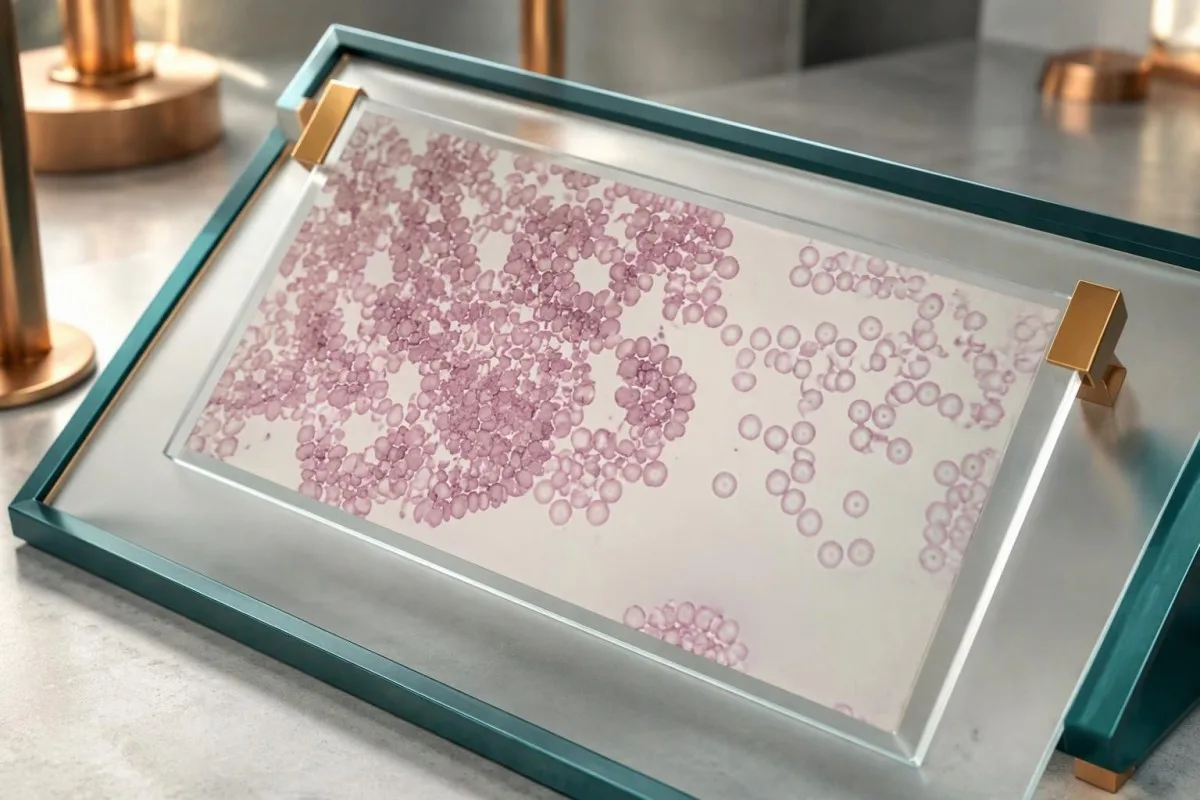
Automated counters may treat a cluster as 1 large particle rather than several separate cells, making the calculated mean cell volume appear high. Hematocrit and derived indices can become internally inconsistent, while photometrically measured hemoglobin is often less affected; the laboratory must still check whether other specimen or instrument issues are present.
לדוגמה, אצל גבר היפותטי בן MCHC of 40 g/dL with an analyzer agglutination flag should prompt verification rather than an immediate diagnosis of an unusually concentrated red-cell disorder. Our high MCHC explanation covers this reasoning; genuine anemia can coexist with an artifact, so neither finding should erase the other.
קנטסטי הוא פלטפורמת פענוח בדיקות דם של AI that helps explain discrepancies between CBC values and a reported cold agglutinin titer, including whether a result was rerun near 37°C. Our מדריך טכנולוגיית בינה מלאכותית describes the interpretation process; only the testing laboratory can confirm that warming corrected a measurement error.
מה מאשש אבחנה של מחלת אגלוטינינים קרים?
A cold agglutinin disease diagnosis usually combines chronic hemolysis, a strongly C3d-positive DAT and a cold agglutinin titer of at least 1:64 at 4°C, with assessment for secondary causes. These are linked diagnostic components, not a checklist that an isolated positive report can complete.
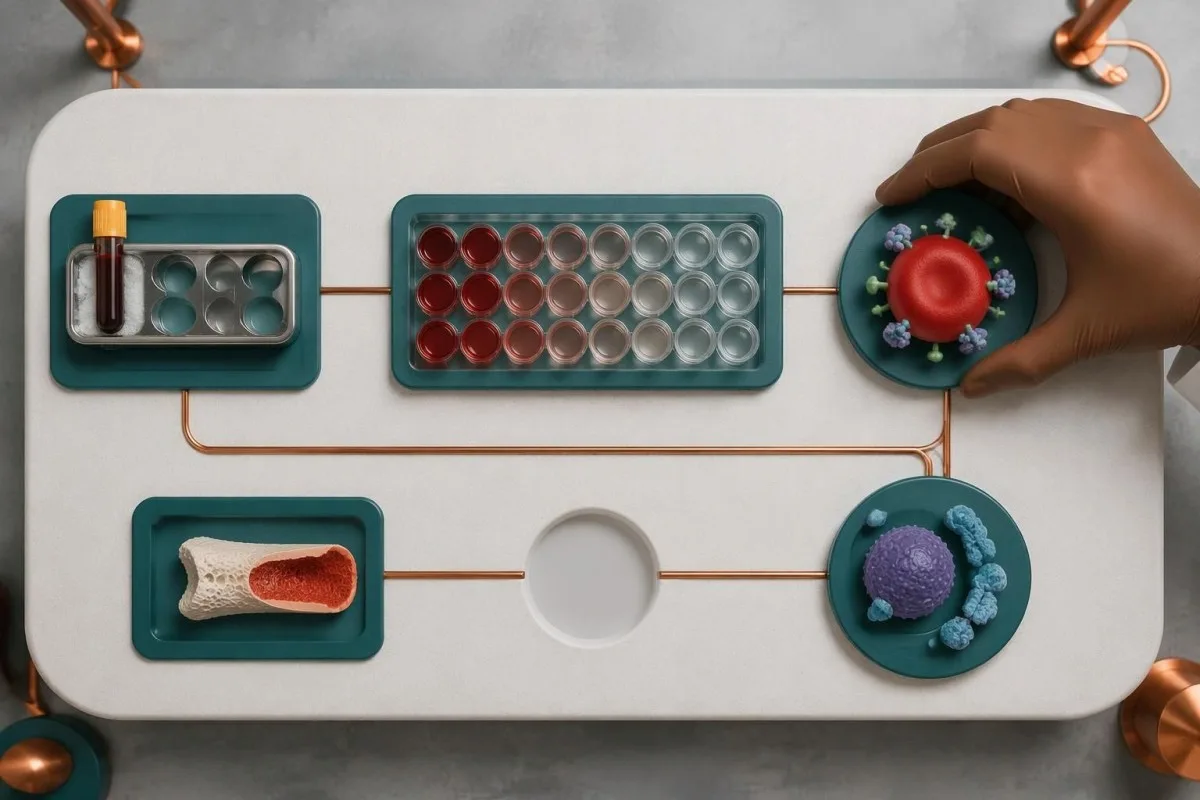
Clinicians first verify the 2 core laboratory patterns—hemolysis and immune attachment to cells—then assess symptoms, duration, medications, recent infections and transfusion history. A broad thermal amplitude can support interpretation when routine results are borderline or discordant; the international consensus treats autoimmune hemolytic anemia as a pattern-based diagnosis (Jäger et al., 2020).
Persistent findings may lead to serum protein electrophoresis, immunofixation and hematology-directed marrow assessment to characterize antibody production. Our guide to immunofixation band results explains why a monoclonal band needs context; even a titer of 1:1024 cannot determine whether a detectable protein represents overt lymphoma or a smaller clonal process.
Kantesti AI can help organize 3 groups of information for the appointment: antibody tests, hemolysis markers and changes over time. It cannot establish whether the specimen followed the warm-handling protocol or replace a specialist's assessment of marrow findings; bring the full report, because an isolated screenshot may omit the method and interpretive comments.
שלוש דוגמאות: אותו כייל, הצעדים הבאים שונים
The same cold agglutinin titer can lead to different next steps because clinical significance depends on temperature-dependent activity and red-cell injury. The following 3 examples are hypothetical teaching scenarios, not patient accounts or rules for diagnosing yourself from a single report.
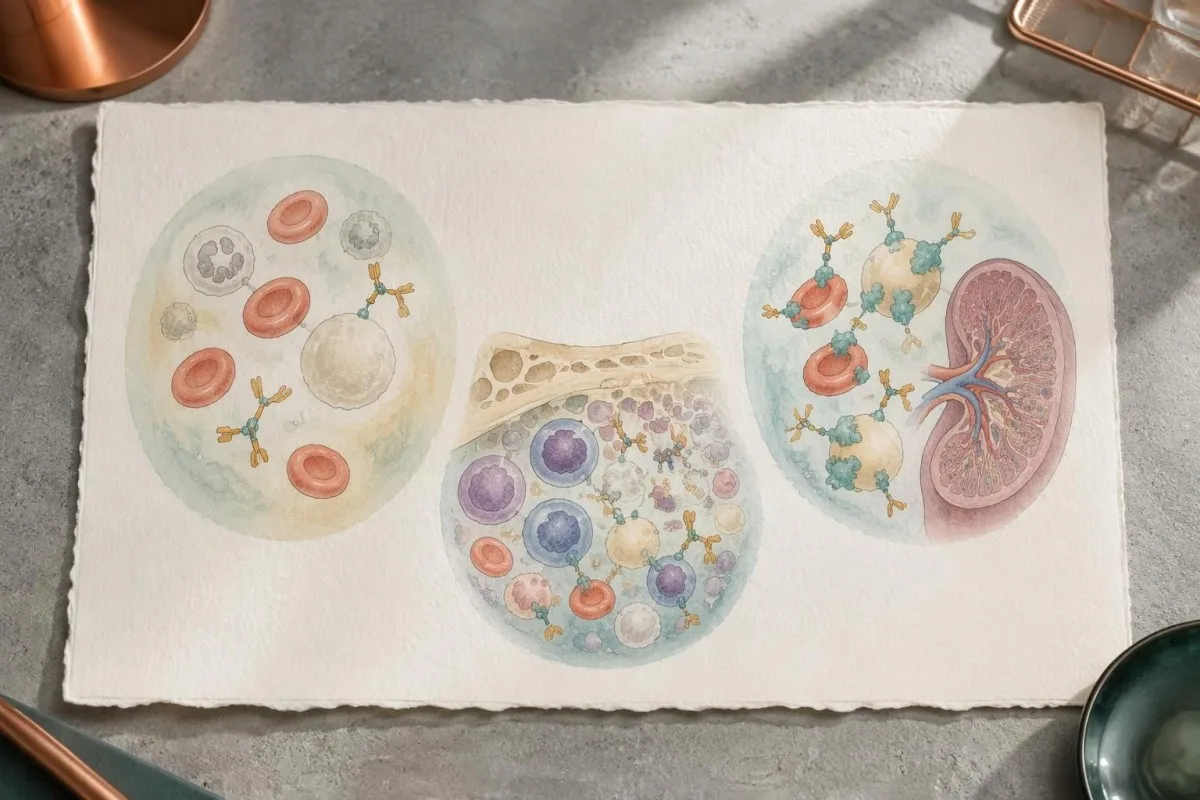
In the first example, an adult has a titer of 1:256 at 4°C, hemoglobin of 14.0 g/dL, normal hemolysis markers and no cold-related symptoms. If specialist testing shows a narrow thermal amplitude, incidental antibodies become more plausible; the useful step is confirming the context and need for follow-up, not assuming that antibody detection requires treatment.
In the second example, a person recovering from a respiratory illness has a titer of 1:256 and hemoglobin that has fallen from 13.5 to 10.2 g/dL, with rising indirect bilirubin. An infection-associated syndrome is possible, but the falling hemoglobin still needs assessment; our polychromasia explanation describes one smear clue to the marrow's replacement response.
In the third example, a person has months of fatigue, a titer of 1:256, strong C3d positivity, low haptoglobin and antibody reactivity at 30°C. Persistent clinically significant cold-antibody hemolysis becomes more likely; hematology assessment addresses diagnosis and treatment need, while the identical titer across all 3 examples shows why the number alone cannot choose the pathway.
אילו תסמינים מצריכים הערכה רפואית בהקדם?
Chest pain, breathlessness at rest, fainting or confusion require emergency assessment, regardless of the cold agglutinin titer. New jaundice, dark urine or rapidly worsening fatigue warrant prompt, often same-day medical review; a result below 1:64 does not make these symptoms safe to ignore.
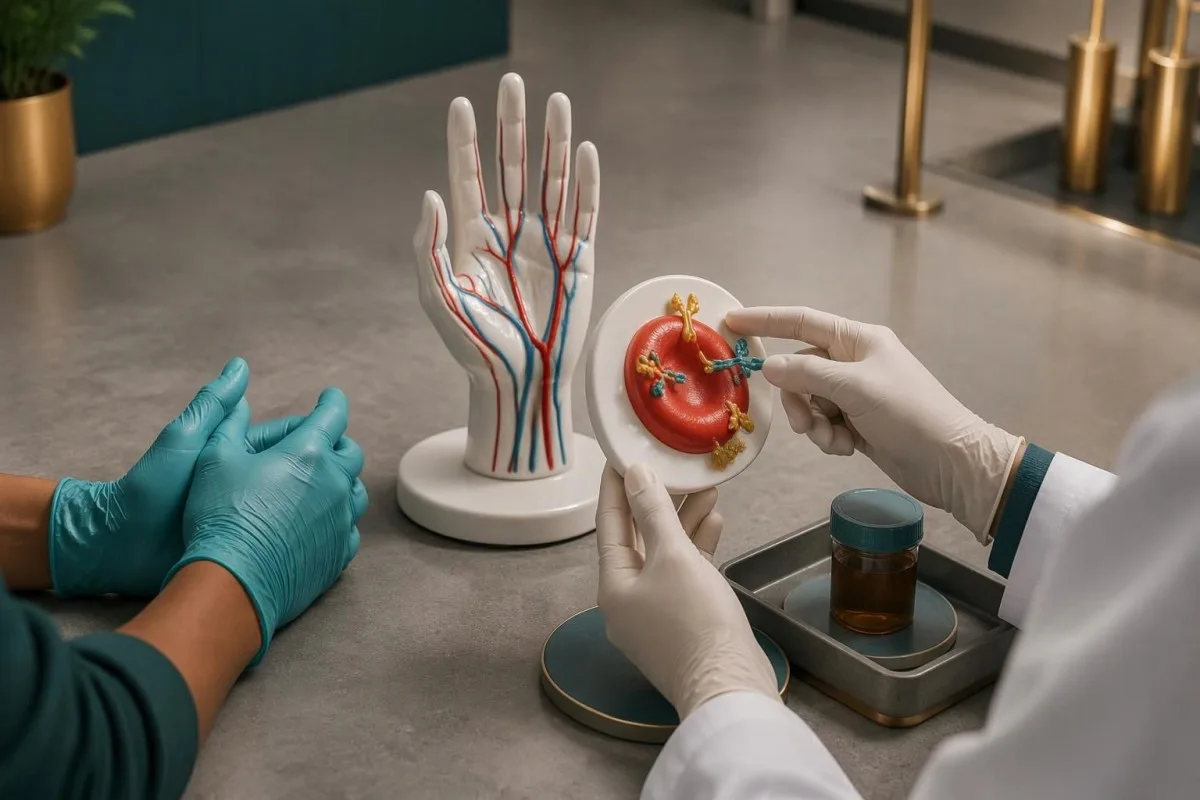
A rapid hemoglobin decline can be more dangerous than a stable low value, because your circulation has less time to adapt. A hypothetical fall from 12 to 8 g/dL over several days deserves prompt assessment even if someone with a long-standing, monitored value near 8 g/dL has fewer symptoms; these examples are not universal transfusion thresholds.
Dark urine can reflect hemoglobin released during marked intravascular hemolysis, but dehydration, liver conditions and urinary causes can produce similar appearances. Our dark urine assessment guide explains the alternatives; dark urine together with jaundice or weakness should not be dismissed because only 1 antibody result is abnormal.
Cold-related blue or purple fingers can occur with agglutination, but persistent discoloration, severe pain or failure to improve after gentle warming needs urgent evaluation for impaired circulation. Clinically significant cold agglutinin disease also carries increased clot risk; sudden breathlessness or 1 newly swollen leg requires assessment rather than attribution to cold sensitivity alone.
כיצד להישאר חמים ולהתכונן להליכים רפואיים
Keeping the whole body warm can reduce cold-triggered symptoms in clinically significant cold-antibody disorders. Tell the care team before transfusion, anesthesia or a procedure, because laboratory compatibility testing and clinical temperature management may need coordination near 37°C rather than routine handling.
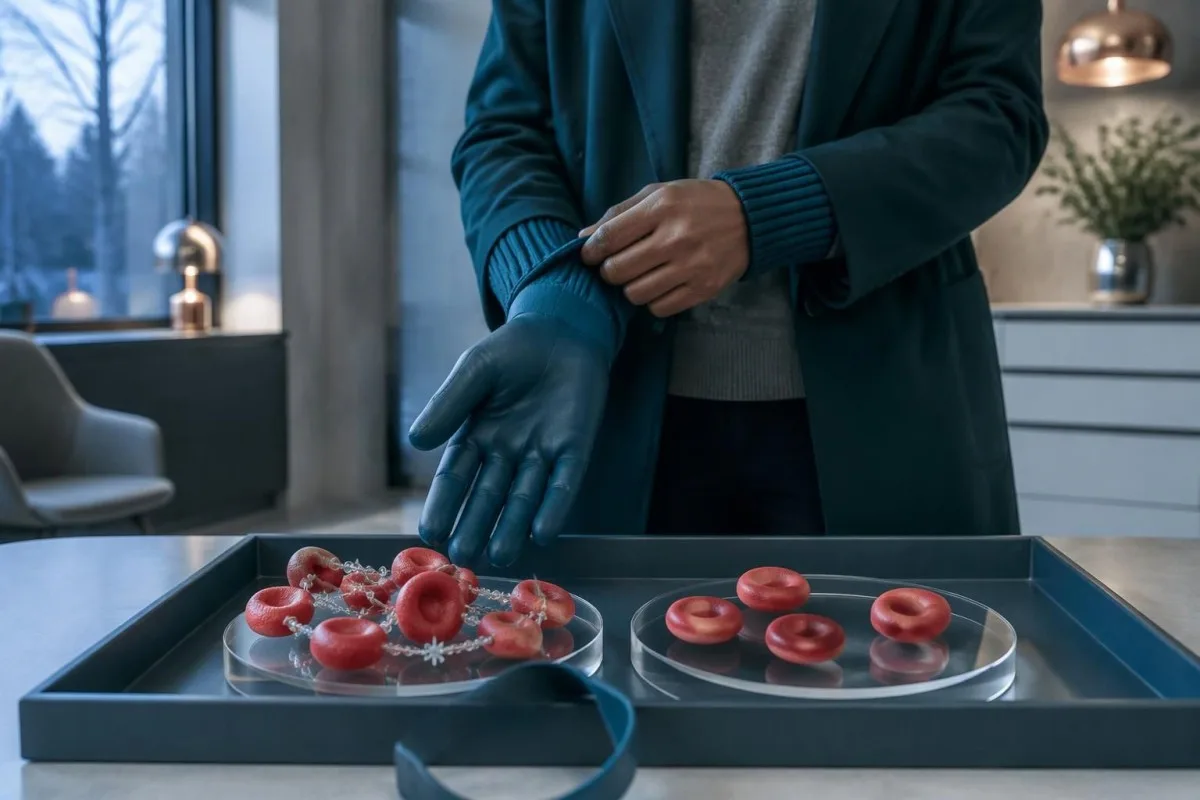
Practical protection includes layers, gloves, warm footwear and avoiding abrupt whole-body cooling; do not test your tolerance with an ice bath or deliberate cold challenge. Reactivity around 30°C does not translate into 1 safe outdoor temperature, because wind, wet clothing, exposure duration and individual circulation change how much peripheral tissues cool.
For transfusion, the laboratory may perform antibody investigation and compatibility testing at 37°C to limit cold-antibody interference while still identifying clinically significant additional antibodies. Our transfusion compatibility guide explains that distinction; a clinical warming device may also be used, but emergency treatment should not be delayed unnecessarily while pursuing perfect routine test conditions.
מבודד 1:128 titer without hemolysis does not automatically mean you need to avoid all travel, exercise or procedures. The useful precaution is sharing the report and any prior laboratory interference with the treating team; clinical staff—not the patient—should decide whether warmed fluids, a transfusion warmer or additional temperature monitoring are necessary.
מתי נדרש טיפול, ועל מה עוקבים?
Treatment is guided by anemia, symptoms, transfusion need and functional impact—not a titer alone. In clinically significant cold agglutinin disease, specialist options include B-cell-directed therapy and complement inhibition; a titer of 1:512 without attributable symptoms or hemolysis does not itself establish a reason to start medication.
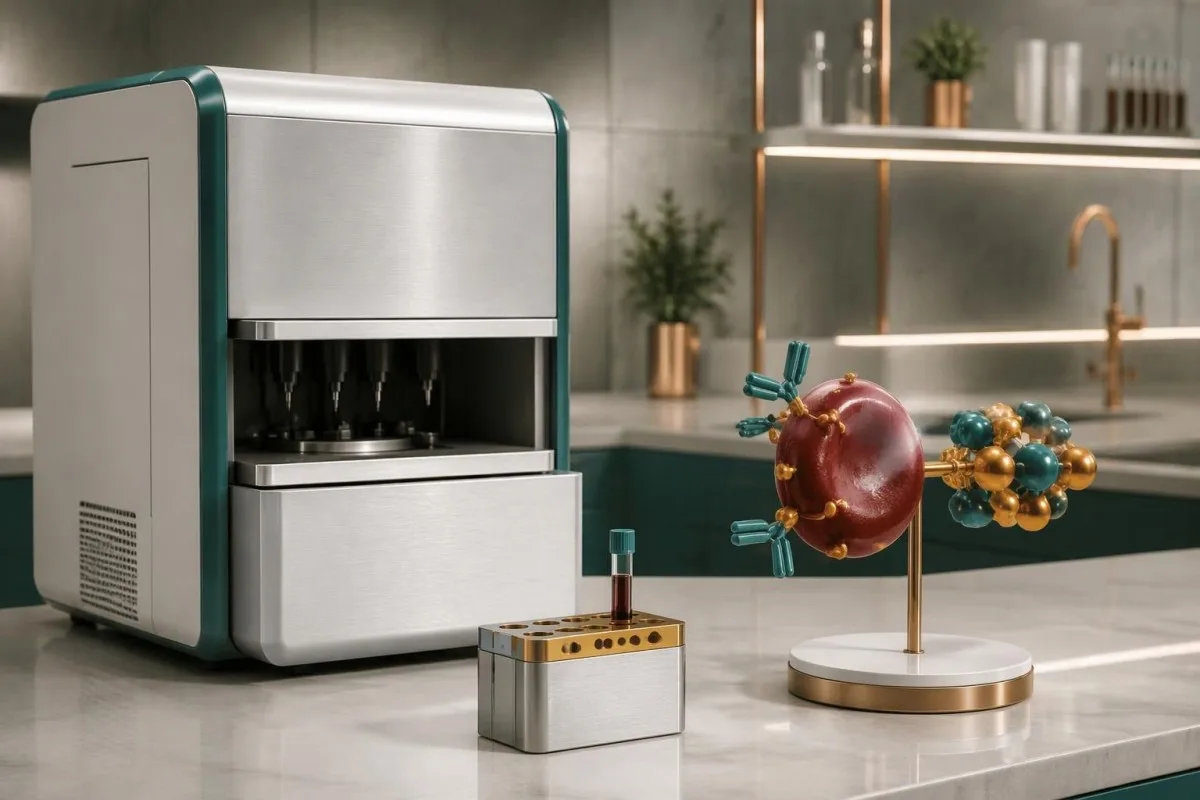
Sutimlimab inhibits C1s, an early classical complement component, and can reduce complement-mediated hemolysis in adults with cold agglutinin disease. It does not remove the IgM antibody, so cold-related agglutination and circulation symptoms may persist even if hemoglobin improves; immunization and infection-risk precautions must follow the product information and the specialist's plan.
B-cell-directed options include rituximab-based treatment, sometimes combined with another agent in selected patients; the appropriate choice depends on goals, comorbidities and treatment tolerance. Corticosteroids, commonly used for warm autoimmune hemolytic anemia, generally perform poorly in cold agglutinin disease; the 2020 international consensus emphasizes distinguishing the subtype before applying a treatment pathway (Jäger et al., 2020).
Kantesti helps explain why a hypothetical hemoglobin improvement from 8.7 to 11.8 g/dL, falling bilirubin and fewer transfusions can matter more than a persistently high titer. Our red-cell monitoring guide explains reticulocytes and related markers; do not change treatment from an AI interpretation, and do not assume anemia means iron deficiency.
שימוש בטוח בדוח שלך: ראיות ומגבלות הבינה המלאכותית
קנטסטי הוא שירות פרשנות בדיקות מעבדת ה-AI that helps organize cold agglutinin results for discussion, but it cannot independently confirm cold agglutinin disease. A useful interpretation needs 3 information groups: the antibody method and handling, the hemolysis pattern and the patient's symptoms and history.

Keep the complete report rather than only the 1:256 result: the test temperature, reference interval, DAT components and laboratory comments can change its meaning. Useful appointment questions include whether hemolysis is present, whether thermal amplitude testing would help and whether specimen handling was adequate; bring earlier hemoglobin values when available.
The Kantesti technical benchmark listed below concerns 100,000 מקרי בדיקה סינתטיים, not 100,000 patients with cold agglutinin disease. The accompanying validation framework describes an assessment approach, not proof that AI can diagnose this rare condition; our validation and oversight page provides the appropriate context for these research publications and their limitations.
Before sharing 1 report or a series of reports, review consent and remove information you do not need to provide, especially when the results belong to someone else. Our הנחיות פרטיות ונתונים explains data-handling considerations; urgent symptoms belong with emergency or clinical services, not in an upload queue awaiting interpretation.
שאלות נפוצות
האם תוצאה חיובית בבדיקת אגלוטינינים קרים פירושה שיש לי מחלת אגלוטינינים קרים?
תוצאה חיובית בבדיקת אגלוטינינים קרים אינה מספיקה כשלעצמה לאבחון מחלת אגלוטינינים קרים. טיטר של 1:64 לפחות בטמפרטורה של 4°C הוא רכיב אבחוני נפוץ, אך הרופאים מעריכים גם המוליזה כרונית ותוצאה תואמת בבדיקת אנטיגלובולין ישירה, שבדרך כלל חיובית מאוד ל־C3d. נוגדנים מקריים או כאלה הקשורים לזיהום עלולים להניב תוצאות חיוביות. טווח הטמפרטורות שבו הנוגדנים פעילים וטיפול אמין בדגימה מסייעים להבהיר ממצאים לא ודאיים.
האם טיטר אגלוטינינים קרים של 1:256 או 1:512 מסוכן?
טיטר של אגלוטינין קר לקור של 1:256 או 1:512 אינו סף מסוכן בפני עצמו. התוצאה מראה עד כמה ניתן לדלל את הסרום ועדיין לזהות פעילות של נוגדנים בתנאי הבדיקה. נוגדן שפעיל בטמפרטורה של כ־30°C עשוי להיות בעל משמעות קלינית רבה יותר מנוגדן בעל טיטר גבוה יותר שמגיב רק ב־4°C. התסמינים, מגמות ההמוגלובין וסמני ההמוליזה הם שקובעים את מידת הדחיפות של ההערכה.
מהי המשרעת התרמית בבדיקת אגלוטינינים קרים?
Thermal amplitude is the highest temperature at which a cold antibody reacts under the laboratory's testing conditions. Reactivity around 30°C or above is generally more concerning than activity restricted to 4°C because peripheral circulation can become cool enough for the antibody to act. Thermal amplitude is different from titer, which measures activity after dilution. Specialist laboratories may assess it when routine findings are discordant or the clinical significance is unclear.
מדוע יש לשמור דגימה לבדיקת אגלוטינינים קרים בחום?
Many laboratories require a cold agglutinin specimen to remain at 37–38°C from collection until serum separation. Premature cooling can allow antibody to bind the patient's cells, leaving less detectable activity in the separated serum and potentially producing a falsely low result. This preparation requirement is separate from deliberately testing the serum at 4°C. Confirm the collecting laboratory's instructions rather than attempting to warm or transport the specimen yourself.
האם זיהום יכול לגרום לתוצאה חיובית בבדיקת אגלוטינינים קרים?
זיהומים, לרבות Mycoplasma pneumoniae ונגיף אפשטיין–בר, עשויים להיות קשורים לנוגדנים זמניים המגיבים לקור. טיטר כגון 1:256 אינו יכול לקבוע איזה זיהום קיים או אם הוא עדיין פעיל. נוגדנים הקשורים לזיהום גורמים לעיתים להמוליזה בעלת משמעות קלינית, ולכן ירידה ברמת ההמוגלובין או הופעת צהבת חדשה עדיין מצריכות הערכה. בדיקות המכוונות לפתוגן וציר הזמן הקליני מועילים יותר משימוש באגלוטינינים קרים כאבחנה של זיהום.
האם אגלוטינינים קרים עלולים לגרום לערכי MCV או MCHC גבוהים באופן שגוי?
אגלוטינינים קרים עלולים לגרום לצברים של כדוריות דם אדומות, המעוותים את המדידות האוטומטיות של CBC, לרבות MCV או MCHC גבוהים באופן כוזב וספירת RBC נמוכה באופן כוזב. לדוגמה, ערך MCHC של 40 g/dL עם דגל המציין אגלוטינציה אמור להוביל לאימות מעבדתי, ולא לפרשנות מיידית של ממצא אמיתי בכדוריות. בדיקה חוזרת לאחר חימום לכ־37°C עשויה לתקן את ההפרעה. CBC מתוקן אינו שולל המוליזה בו־זמנית.
אילו תסמינים מחייבים טיפול דחוף לאחר תוצאה חיובית של בדיקת אגלוטינינים קרים?
כאב בחזה, קוצר נשימה במנוחה, התעלפות או בלבול מחייבים הערכת חירום ללא קשר לטיטר האגלוטינינים הקרים. הופעת צהבת, שתן כהה או החמרה מהירה בחולשה מצריכות פנייה רפואית בהקדם, לעיתים עוד באותו היום. ירידה מהירה ברמת ההמוגלובין, למשל שינוי היפותטי מ־12 ל־8 גרם/ד״ל, מדאיגה, אף שאין ערך יחיד שקובע את מידת הדחיפות אצל כל אדם. שינוי צבע כואב ומתמשך באצבעות או תסמינים פתאומיים המרמזים על קריש דם מחייבים אף הם בדיקה דחופה.
קבלו הסבר על תוצאות בדיקות הדם שלכם
העלו את דוח המעבדה שלכם, וה-AI של Kantesti יסביר כל סמן ביולוגי בשפה פשוטה בתוך שניות. יותר מ-2 מיליון אנשים ברחבי העולם משתמשים בו.
הפניות
- Klein, T., Mitchell, S., & Weber, H. (2026). אמת מידה טכנית אוטומטית רשומה מראש, מבוססת רובריקה, של מנוע פרשנות בדיקות הדם Kantesti על 100,000 מקרי מבחן סינתטיים. מחקר רפואי של Kantesti AI. DOI
- Klein, T., Mitchell, S., & Weber, H. (2026). מסגרת אימות קליני v2.0 (עמוד אימות רפואי). מחקר רפואי של Kantesti AI. DOI
- Berentsen S. (2016). Cold agglutinin disease. Hematology, American Society of Hematology Education Program. DOI
- Jäger U et al. (2020). Diagnosis and treatment of autoimmune hemolytic anemia in adults: Recommendations from the First International Consensus Meeting. Blood Reviews. DOI
- 2 מיליון+בדיקות שנותחו
- 127+מדינות
- 100+שפות
על הצוות הרפואי


אותות אמון E-E-A-T
הִתנַסוּת
סקירה קלינית בהובלת רופא של תהליכי עבודה לפענוח בדיקות מעבדה.
מוּמחִיוּת
רפואה מעבדתית מתמקדת באופן שבו סמנים ביולוגיים מתנהגים בהקשר קליני.
סמכותיות
נבדק רפואית על ידי ד״ר Thomas Klein, בתרומתם של ד״ר Sarah Mitchell ופרופ׳ ד״ר Hans Weber.
אֲמִינוּת
פרשנות מבוססת-ראיות עם מסלולי המשך ברורים כדי להפחית בהלה.






הצהרה רפואית
מאמר זה מיועד למטרות חינוכיות בלבד ואינו מהווה ייעוץ רפואי. תמיד יש להתייעץ עם גורם מוסמך בתחום הבריאות לצורך החלטות אבחון וטיפול.
פורסם · צרו קשר עם צוות העריכה
פורסם על ידי Kantesti Ltd, הרשומה באנגליה ובוויילס, מספר חברה. 17090423, לונדון, בריטניה.
