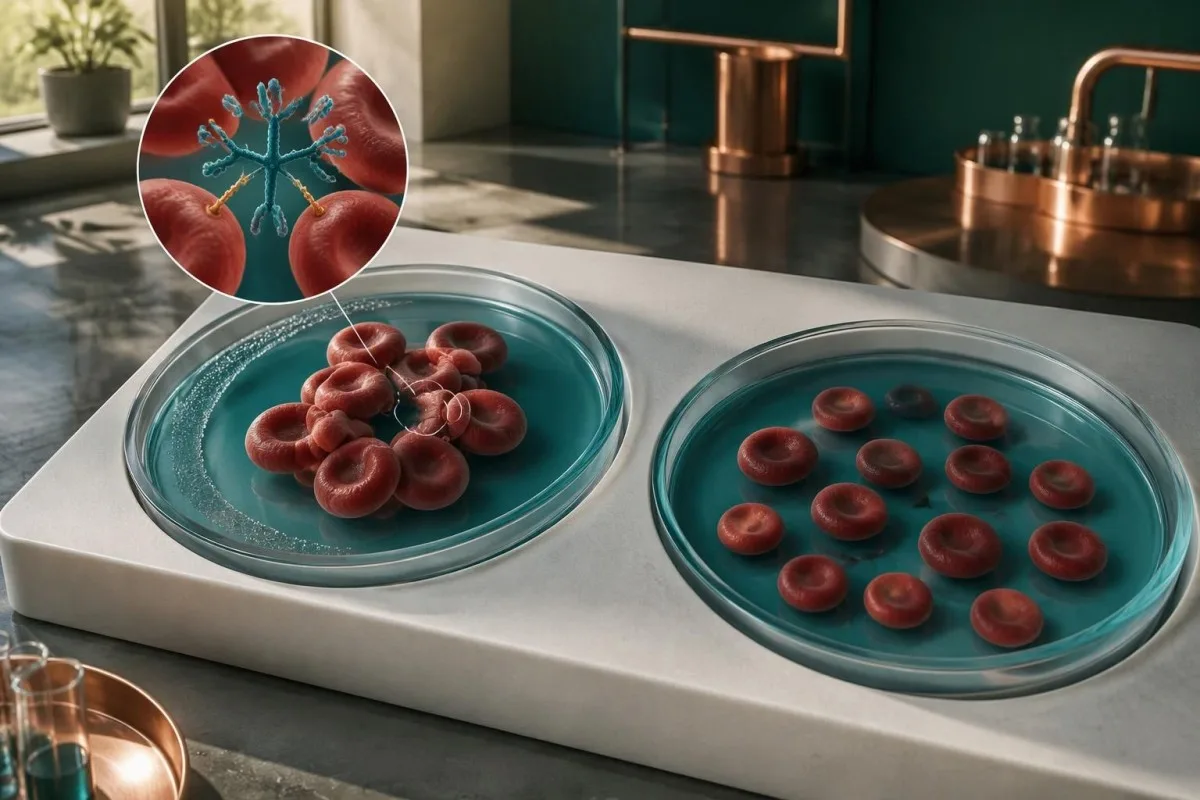
د سړو اګلوټینینونو لوړ ټایټر دا معنا لري چې انټيباډي د پام وړ رقیقولو وروسته هم د کشف وړ پاتې کېږي—دا لازماً په دې معنا نه ده چې ستاسې د وینې سرو حجرو ته زیان رسوي. توپیر د هغوی د تودوخې په لړۍ، د هیمولیز د شواهدو، د کمپلېمنټ-مثبتو ازموینو او د نمونې د باوري سمبالښت له مخې ټاکل کېږي.

مهم ټکي
- مثبتې پایله د سړېغبرګون ښودونکې انټيباډي پېژني؛ خو په یوازې ځان د سړو اګلوټینینونو ناروغي نه ثابتوي.
- په 4°C کې لږ تر لږه 1:64 ټایټر د تشخیصي بهیر یوه عامه کارېدونکې برخه ده، خو ډاکټران د هیمولیز شواهدو او د مستقیم انټيګلوبولین ازمېښت مناسبې بڼې ته هم اړتیا لري.
- حرارتي پراخوالی هغه لوړه تودوخه ښيي چې انټيباډي پکې غبرګون ښيي؛ په شاوخوا 30°C یا تر دې لوړه تودوخه کې فعالیت عموماً تر هغه فعالیت ډېر د اندېښنې وړ وي چې یوازې په لابراتواري شرایطو کې په ډېره یخه تودوخه کې محدود وي.
- د C3d-مثبت مستقیم انټيګلوبولین ازمېښت د کمپلېمنټ په منځګړیتوب د یوې پروسې ملاتړ کوي، خو همدا بڼه د سړو اګلوټینینونو له ناروغۍ پرته هم لیدل کېدای شي.
- د هیمولیز ارزونه د هیموګلوبین بدلونونه، ریټیکولوسایټونه، LDH، غیرمستقیم بیلیروبین او هاپټوګلوبین سره یوځای ارزوي، نه دا چې یوازې پر یوه غیرنورمال شاخص تکیه وکړي.
- د نمونې ساتل په ۳۷–۳۸°C کې تر سیروم جلا کېدو پورې ښايي د سړې اګلوټینین ازموینې لپاره اړین وي؛ د خپلې لیدنې له وخت مخکې د نمونې راټولوونکي لابراتوار لارښوونې تایید کړئ.
- له انتان سره تړلي انټيباډي لنډمهاله کېدای شي، خو د انتان له امله رامنځته کېدو سره سره، له کلینیکي پلوه د پام وړ هیمولیز ارزونې ته اړتیا لري.
- بیړني نښې د سینې درد، په استراحت کې ساه لنډي، بېهوښي یا ګډوډي پکې شامل دي؛ نوی ژېړی، تیاره ادرار یا په چټکۍ زیاتېدونکې ستړیا د ډاکټر له خوا سمدستي ارزونه غواړي.
ایا د سړو اګلوټینینونو مثبت ازمېښت د ناروغۍ معنا لري؟
A د سړې اګلوټینین مثبته ازموینه په خپله د سړې اګلوټینین ناروغي نه ثابتوي. حتی لوړ ټایټر باید له ۳ کلینیکي موندنو سره یوځای تفسیر شي: د انټيباډي د فعالیت د تودوخې لړۍ، د سرو حجرو د تخریب شواهد او د کمپلېمنټ مثبته مستقیمه انټيګلوبولین ازموینه.

ساړه اګلوټینینز معمولاً IgM انټيباډي وي چې په ټیټه تودوخه کې له سرو حجرو سره په اسانۍ نښلي او د هغوی د ټولېدو لامل کېږي. ازموینه عموماً د دوی فعالیت په 4°C کې اندازه کوي—چې د وینې د دوران له ډېری برخو څخه خورا سړه ده—نو په لابراتوار کې څرګند غبرګون په بدن کې له لږ یا هېڅ کلینیکي پلوه د پام وړ فعالیت سره یوځای کېدای شي.
یوه یوازېنۍ پایله لکه 1:256 نه شي درته ویلای چې انیمیا لرئ که نه، انټيباډي د بدن تودوخې ته نږدې غبرګون ښيي که نه، یا له ناروغۍ وروسته لنډمهاله ده که نه. زموږ د مثبت انټي باډي پایلې تشریح، د موندنې او تشخیص ترمنځ توپیر روښانوي؛ بله ګټوره پوښتنه دا ده چې ملګرې ازموینې څه ښيي.
کانټیسټي یو دی د AI د وینې معاینې شنونکی چې د اړوندو لابراتواري پایلو ترڅنګ د سړې اګلوټینین ټایټر په تشریح کې مرسته کوي، په دې کې دا هم شامل دي چې د راپور شوې ازموینې تودوخه 4°C وه که نه. زموږ د شرکت پېژندنه د دې زدهکړیز خدمت تر شا اداره تشریح کوي؛ موږ د تشخیص د تثبیت لپاره اړینه د وینېپوهنې او لابراتواري ارزونه نه بدلوو.
د سړو اګلوټینینونو لوړ ټایټر څه اندازه کوي؟
A د سړې اګلوټینین ټایټر د سیروم تر ټولو لوړه رقیقونه ده چې لا هم د لابراتوار له خوا تعریف شوی د اګلوټینیشن غبرګون رامنځته کوي. د 1:512 پایله دا مانا لري چې فعالیت تر 1:32 پایلې په خورا ډېرې رقیقونې وروسته هم د موندلو وړ پاتې کېږي؛ هېڅ یوه شمېره په مستقیم ډول د انیمیا اندازه نه ښيي.
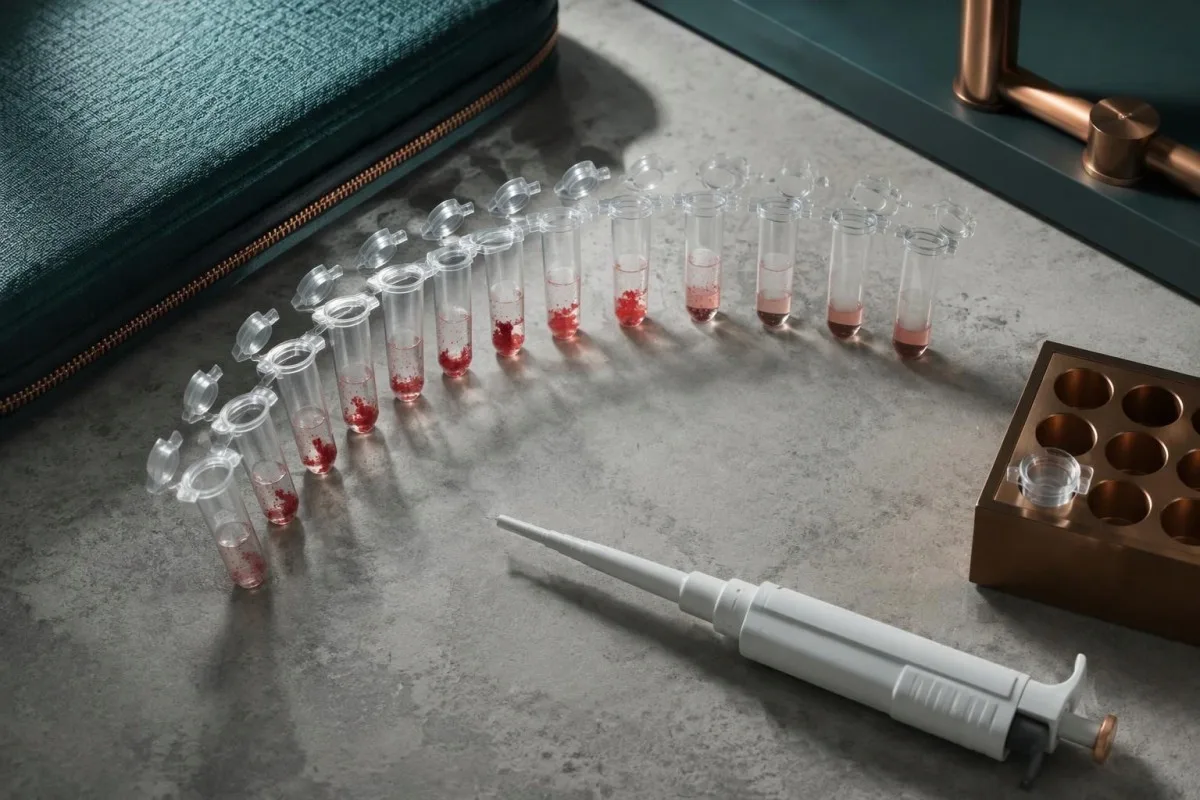
په 4°C کې لږ تر لږه د 1:64 ټایټر د سړې اګلوټینین ناروغۍ د تشخیص یوه عامه کارېدونکې برخه ده، نه خپلواکه د سکریننګ پرېکړه. د Hematology بیاکتنه دا حد له مزمن هیمولیز او د مستقیمې انټيګلوبولین ازموینې پر مهال د C3d له پیاوړي مثبتوالي سره یوځای بیانوي (Berentsen, 2016)؛ داسې نړیوال ټایټر نشته چې په اتومات ډول بیړنۍ درملنه اړینه کړي.
د دوه برابره رقیقونې پړاوونه عموماً داسې پایلې ورکوي لکه 1:64، 1:128 او 1:256. د یوه پړاو توپیر د ازموینې د بدلونپذیرۍ، د ټاکل شوي پایټکي یا د نمونې د سمبالښت له امله کېدای شي، نه د یوه مانادار بیولوژیکي بدلون له امله؛ د شمیرو پرتله هغه وخت تر ټولو باوري وي چې هماغه لابراتوار له هماغې طریقې او تودوخې کار واخلي.
ځینې لابراتوارونه یوازې مثبت یا منفي، راپوروي، حال دا چې نور د 1:256 پر ځای 256 ته ورته متقابل عدد وړاندې کوي. زموږ د لارښود کیفیتي او کمي پایلې explains that distinction; ask for the actual dilution, assay temperature and local reference interval before comparing reports.
| کچه | حد | مانا یې څه ده |
|---|---|---|
| Low-level activity | Below 1:64 at 4°C | Often incidental when thermal amplitude is narrow and hemolysis is absent; this is not a universal laboratory reference interval. |
| Common diagnostic threshold | At least 1:64 at 4°C | Supports further assessment when hemolysis and a compatible direct antiglobulin test are present; does not confirm disease alone. |
| Higher dilution endpoint | Examples: 1:256 or 1:512 | Shows activity after greater dilution, but does not establish thermal amplitude or predict treatment need. |
| Very high reported endpoint | Example: 1:1024 or higher | Still requires clinical interpretation; no titer-only emergency threshold is established. |
ولې حرارتي پراخوالی تر ټایټر ډېر مهم کېدای شي
حرارتي پراخوالی is the highest temperature at which a cold antibody reacts under the laboratory's testing conditions. Reactivity around 30°C or above is generally more clinically concerning than reactivity confined to 4°C, because cooler peripheral circulation can reach temperatures at which the antibody becomes active.
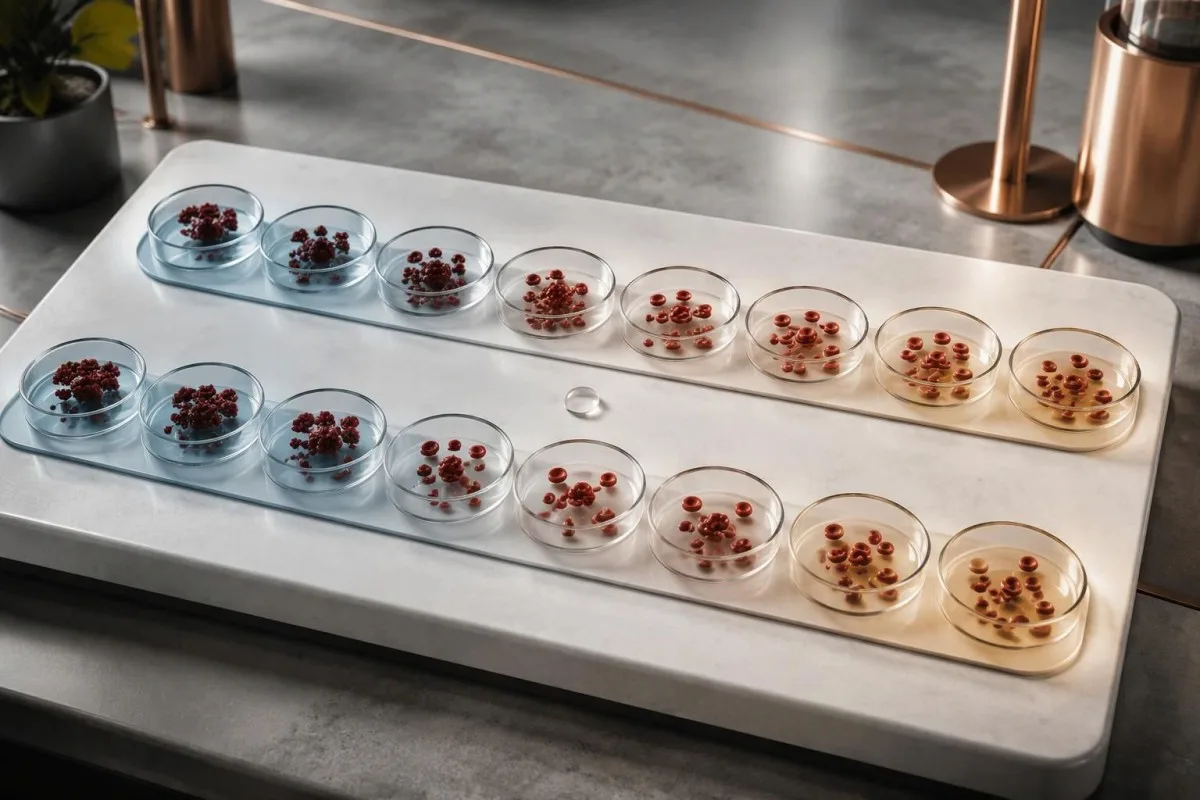
A high-titer antibody active only at 4°C may matter less clinically than a lower-titer antibody that remains active at 30–32°C. The reason is exposure: red cells do not normally circulate at refrigerator temperature, but they can encounter substantially cooler conditions in fingers, toes and other peripheral areas.
Complement can attach while red cells are cool and remain relevant after they return toward 37°C, even when the IgM antibody detaches. This explains why antibody-related injury is not simply a matter of visible clumping; our د تکمیلي معایناتو لارښود (complement testing guide) also distinguishes circulating complement measurements from complement deposited on cells.
Thermal amplitude testing is not standardized into 1 universal patient-facing cutoff, and many routine reports omit it entirely. Specialist laboratories may test several temperatures, such as 4°C, room temperature, 30°C and 37°C; clinicians usually request that additional work when the titer, symptoms and hemolysis results do not fit together.
د وینې کومې پایلې واقعي هیمولیز ښيي؟
Hemolysis means red cells are being destroyed faster than expected, and assessment usually combines 5 measurements: hemoglobin, reticulocytes, LDH, indirect bilirubin and haptoglobin. A high cold agglutinin titer without this supporting pattern does not establish a hemolytic disorder.
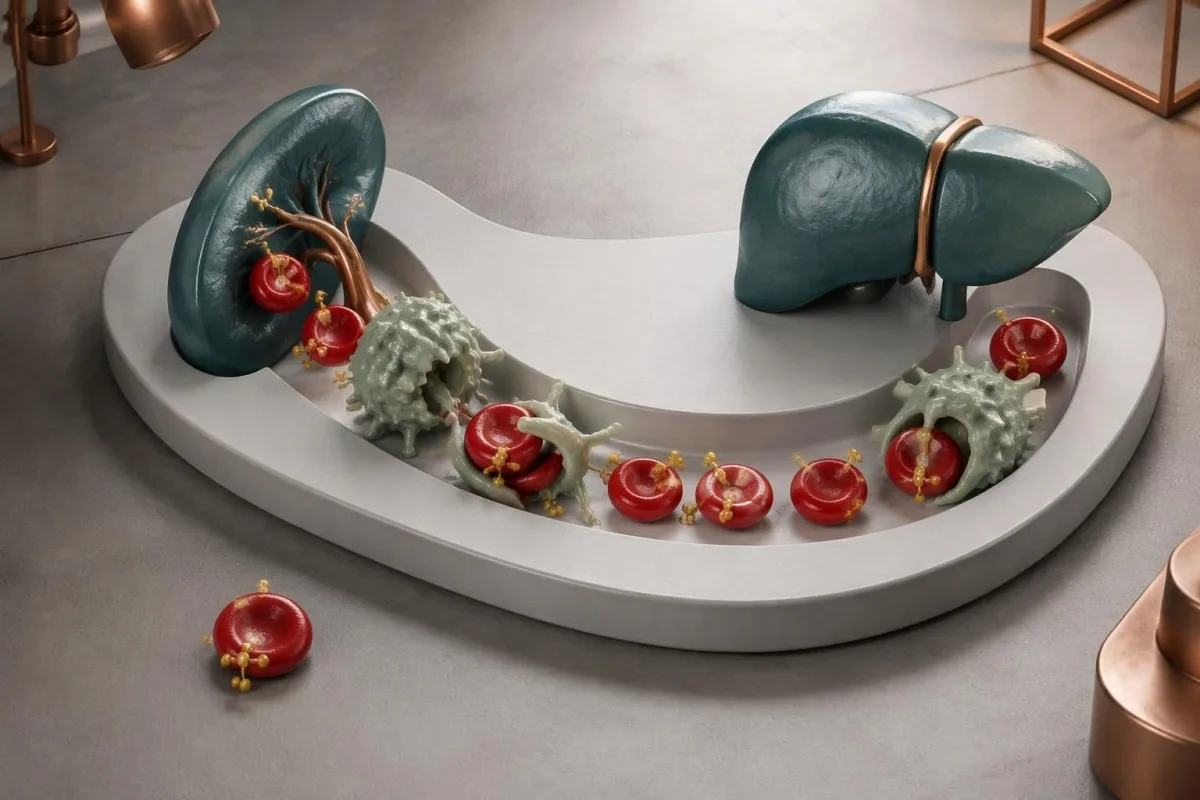
A hypothetical hemoglobin fall from 13.2 to 9.6 g/dL, accompanied by rising indirect bilirubin and LDH, is more concerning than an unchanged hemoglobin with the same titer. Reticulocytes often increase as the marrow replaces lost cells, although an early episode, nutrient deficiency or marrow disorder can blunt that response.
Low haptoglobin supports hemolysis but is not definitive: liver disease can reduce production, while an acute-phase response can raise the concentration despite red-cell destruction. Our explanation of د ټیټ هاپټوګلوبین لاملونه covers these exceptions; a result below 1 laboratory's reference limit should be interpreted with the other markers rather than alone.
Kantesti AI helps explain LDH trends, including why a hypothetical rise from 220 to 650 U/L needs the laboratory's reference interval and specimen-quality information. Our LDH interpretation guide describes other sources of elevation; normal hemoglobin also does not exclude compensated hemolysis when the marrow is keeping pace.
د C3d-مثبت مستقیم انټيګلوبولین ازمېښت څه معنا لري؟
A C3d-positive direct antiglobulin test, also called a direct Coombs test, detects complement fragments attached to red cells. Cold agglutinin disease typically produces strong C3d positivity with absent or sometimes weak IgG reactivity, but these 2 antibody-testing results are not sufficient without clinical evidence of hemolysis.

The direct antiglobulin test and the cold agglutinin titer answer ۲ بېلابېلو پوښتنو ته: what is attached to your red cells, and what cold-reactive activity is present in your serum? The Blood Reviews international consensus recommends a monospecific direct antiglobulin test as part of autoimmune hemolytic anemia assessment (Jäger et al., 2020).
A report stating only DAT positive may not distinguish IgG from C3d; asking for those 2 components can materially change interpretation. Our guide to a مثبت مستقیم Coomb's ازموینه explains why transfusion-related antibodies, medications and other immune processes can also produce a positive result without proving cold agglutinin disease.
In a child with abrupt post-illness hemolysis, a C3d-positive DAT and a low cold agglutinin titer can raise a different possibility: paroxysmal cold hemoglobinuria. This condition usually involves an IgG antibody assessed by Donath–Landsteiner testing, so a cold agglutinin result below 1:64 should not end the investigation when symptoms suggest significant hemolysis.
تصادفي انټيباډي، انتانات او دوامداره ناروغي
Incidental cold antibodies may cause no symptoms, while infection-related antibodies can be temporary and occasionally cause substantial hemolysis. Persistent cold agglutinin disease is usually associated with a clonal marrow B-cell process; these 3 situations require different follow-up rather than the same response to a positive test.
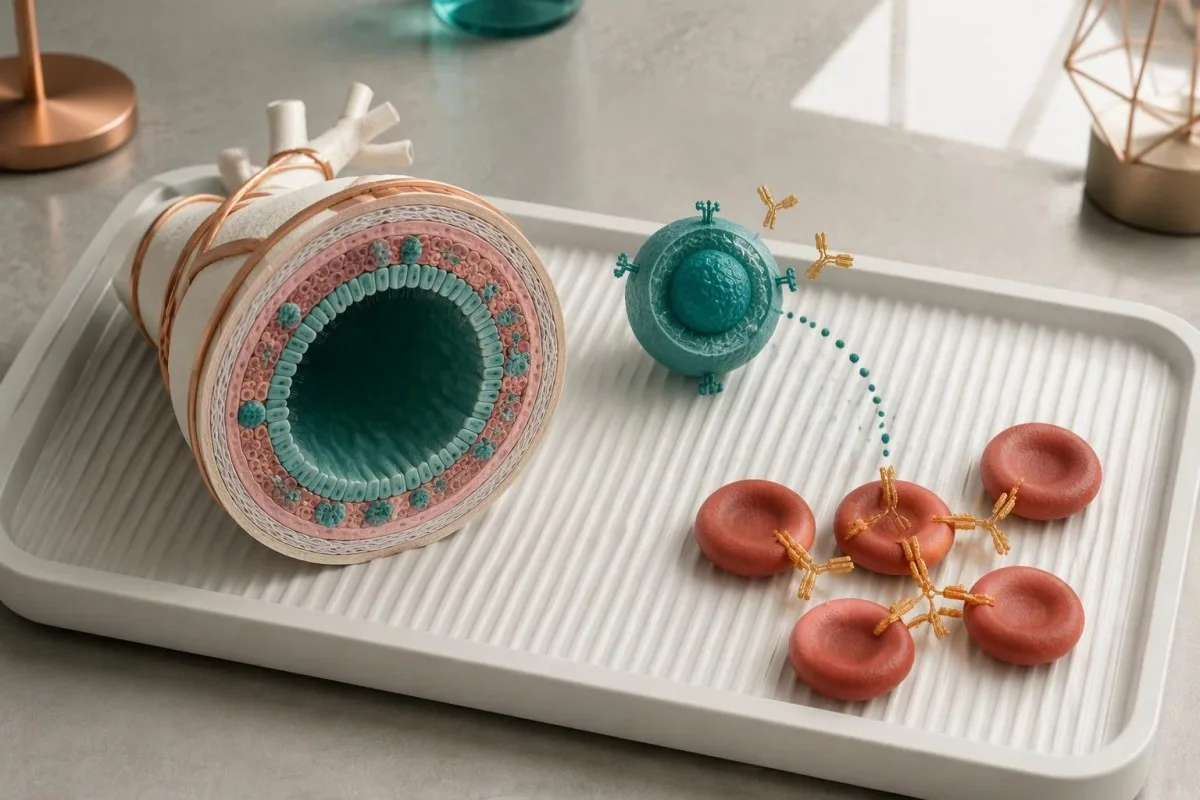
Mycoplasma pneumoniae and Epstein–Barr virus are 2 recognized infection-related associations, but a cold agglutinin test cannot reliably diagnose either infection. Our guide to Mycoplasma antibody interpretation explains why antibody timing and persistence complicate that diagnosis; respiratory symptoms may require pathogen-directed testing rather than inference from the titer.
Recent fever or sore throat changes the questions clinicians ask, not the urgency of genuine hemolysis: a hemoglobin of ۸.۵ g/dL with new jaundice still requires assessment even if the antibody is expected to be temporary. Our EBV result interpretation explains how VCA and EBNA patterns provide more specific information about exposure timing.
Terminology matters: cold agglutinin syndrome generally describes cold-antibody hemolysis secondary to another condition, while cold agglutinin disease is a distinct, usually persistent disorder. A titer of 1:512 does not identify lymphoma; specialist investigation may find a small marrow clone without overt lymphoma, and incidental antibodies do not automatically justify cancer investigations.
ولې کېدای شي ستاسې نمونه تر ازمېښت مخکې تودولو ته اړتیا ولري
For cold agglutinin titer testing, many specialist laboratories require the specimen to remain at 37–38°C from collection until serum separation. Cooling before separation can allow antibodies to bind the patient's cells, potentially lowering the antibody activity left in the serum and producing a misleading result.
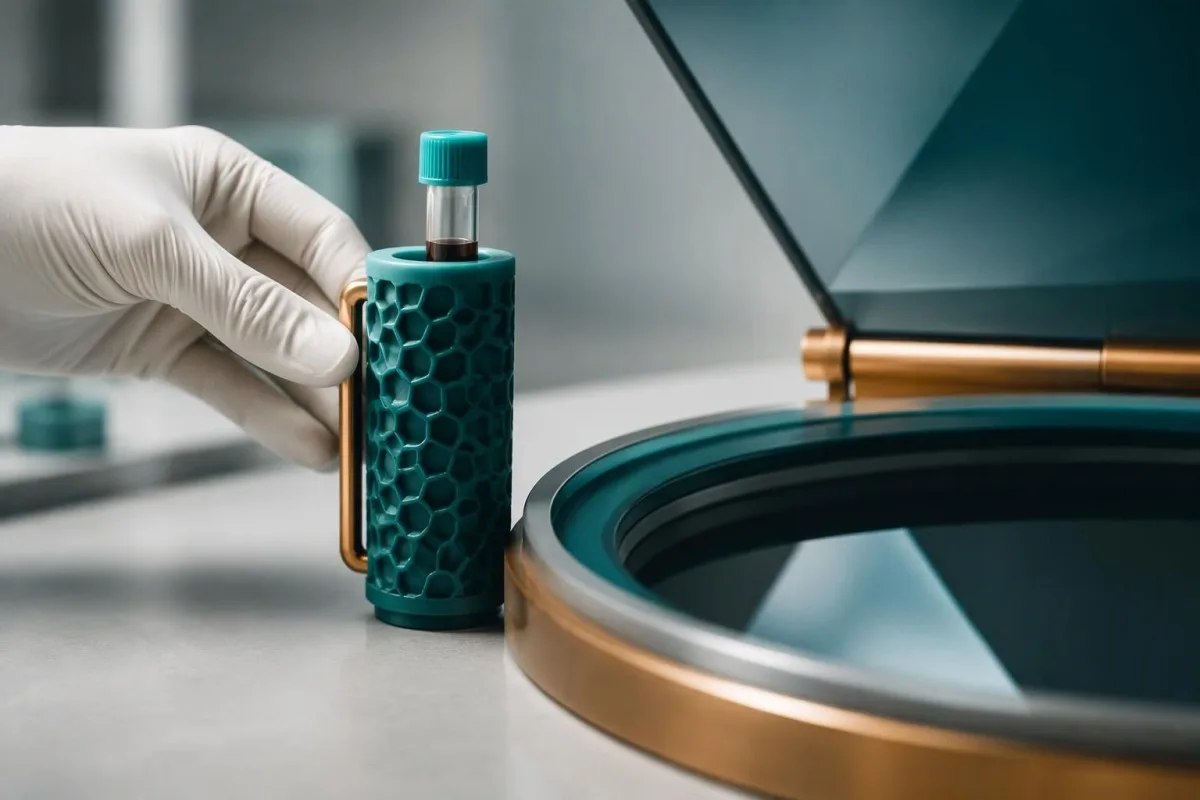
The pre-analytical requirement is different from the assay temperature: serum may be kept near 37°C during preparation and then deliberately tested at 4°C. The Hematology review emphasizes warm collection and separation for cold antibody studies (Berentsen, 2016); the laboratory creates the controlled cooling step only after an appropriate specimen is available.
Warming a specimen after it has already cooled may not fully reverse every earlier problem, so repeating the test can be more useful than interpreting an unexpected low titer. Our repeat specimen guide explains another handling distinction: cells breaking inside a collection tube are not the same as hemolysis occurring inside your body.
Before the appointment, ask 3 عملي پوښتنې: which tube is required, how warmth will be maintained and where serum separation will occur. Titer testing, an EDTA specimen for the DAT and a warmed CBC may have different instructions; do not heat, transport or store your own specimen unless the collecting service specifically directs you.
سړې اګلوټینینونه څنګه ستاسې CBC تحریفولای شي
Cold-related red-cell clumping can falsely lower the RBC count and raise MCV or MCHC on an automated complete blood count. A CBC repeated after laboratory warming near 37°C can help identify this artifact, although correcting the numbers does not by itself establish or exclude cold agglutinin disease.
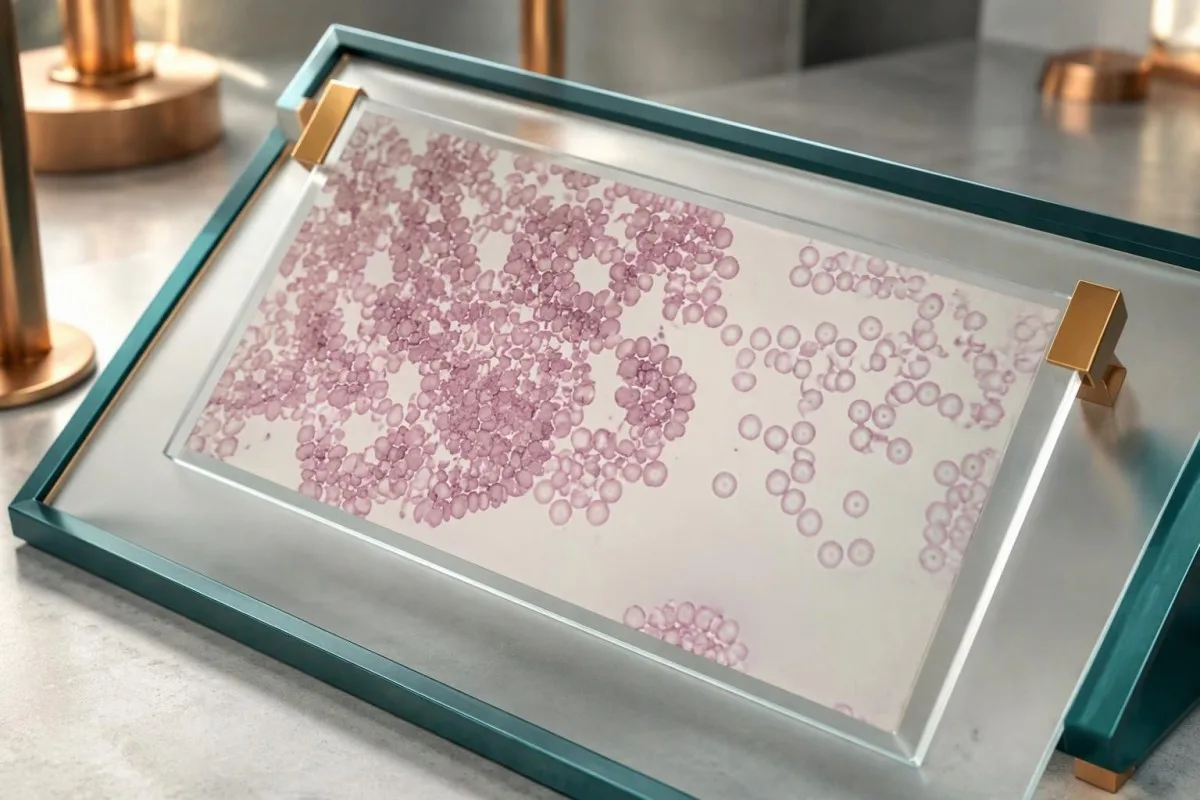
Automated counters may treat a cluster as 1 large particle rather than several separate cells, making the calculated mean cell volume appear high. Hematocrit and derived indices can become internally inconsistent, while photometrically measured hemoglobin is often less affected; the laboratory must still check whether other specimen or instrument issues are present.
د بېلګې په توګه، یو فرضي MCHC of 40 g/dL with an analyzer agglutination flag should prompt verification rather than an immediate diagnosis of an unusually concentrated red-cell disorder. Our high MCHC explanation covers this reasoning; genuine anemia can coexist with an artifact, so neither finding should erase the other.
کانټیسټي یو دی AI د وینې ازموینې تشریح پلیټفارم that helps explain discrepancies between CBC values and a reported cold agglutinin titer, including whether a result was rerun near 37°C. Our د AI ټکنالوژۍ لارښود describes the interpretation process; only the testing laboratory can confirm that warming corrected a measurement error.
د سړو اګلوټینینونو د ناروغۍ تشخیص څه شی تاییدوي؟
A cold agglutinin disease diagnosis usually combines chronic hemolysis, a strongly C3d-positive DAT and a cold agglutinin titer of at least 1:64 at 4°C, with assessment for secondary causes. These are linked diagnostic components, not a checklist that an isolated positive report can complete.
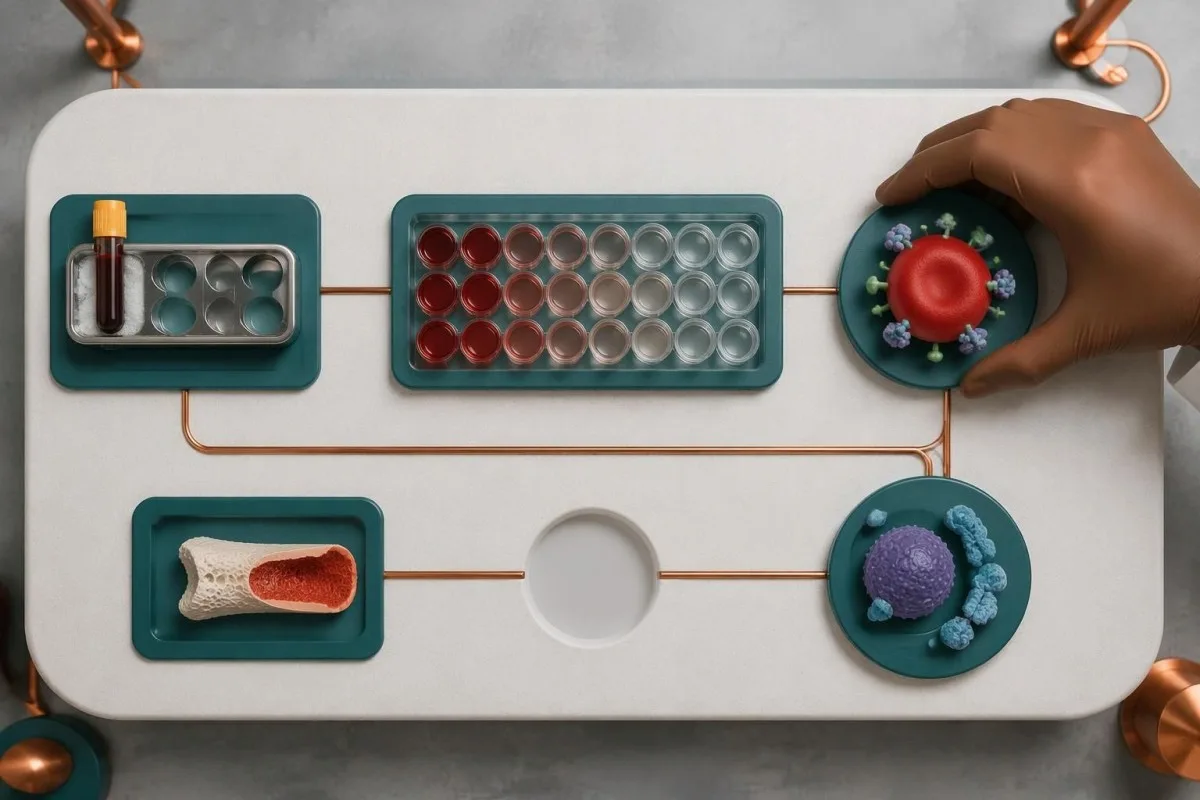
Clinicians first verify the 2 core laboratory patterns—hemolysis and immune attachment to cells—then assess symptoms, duration, medications, recent infections and transfusion history. A broad thermal amplitude can support interpretation when routine results are borderline or discordant; the international consensus treats autoimmune hemolytic anemia as a pattern-based diagnosis (Jäger et al., 2020).
Persistent findings may lead to serum protein electrophoresis, immunofixation and hematology-directed marrow assessment to characterize antibody production. Our guide to immunofixation band results explains why a monoclonal band needs context; even a titer of 1:1024 cannot determine whether a detectable protein represents overt lymphoma or a smaller clonal process.
Kantesti AI can help organize 3 groups of information for the appointment: antibody tests, hemolysis markers and changes over time. It cannot establish whether the specimen followed the warm-handling protocol or replace a specialist's assessment of marrow findings; bring the full report, because an isolated screenshot may omit the method and interpretive comments.
درې بېلګې: یو شان ټایټر، خو بېلابېل راتلونکي ګامونه
The same cold agglutinin titer can lead to different next steps because clinical significance depends on temperature-dependent activity and red-cell injury. The following 3 examples are hypothetical teaching scenarios, not patient accounts or rules for diagnosing yourself from a single report.
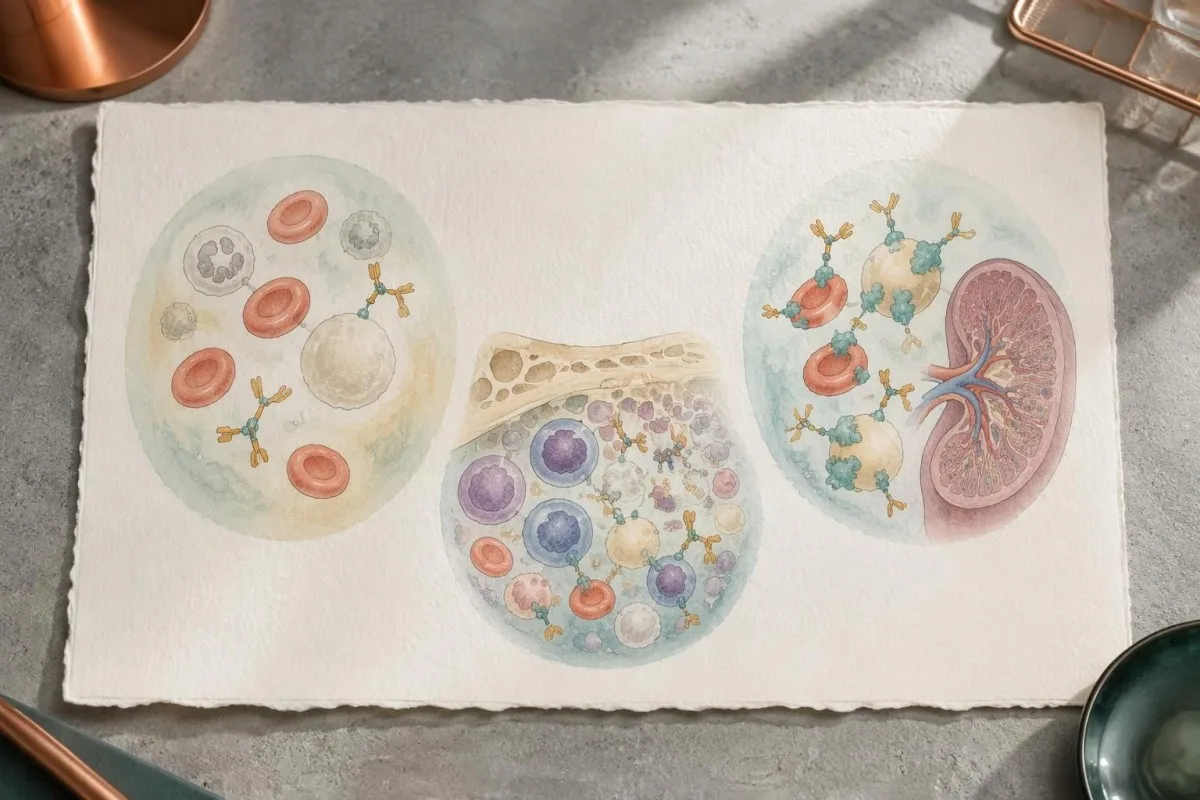
In the first example, an adult has a titer of 1:256 at 4°C, hemoglobin of 14.0 g/dL, normal hemolysis markers and no cold-related symptoms. If specialist testing shows a narrow thermal amplitude, incidental antibodies become more plausible; the useful step is confirming the context and need for follow-up, not assuming that antibody detection requires treatment.
In the second example, a person recovering from a respiratory illness has a titer of 1:256 and hemoglobin that has fallen from 13.5 to 10.2 g/dL, with rising indirect bilirubin. An infection-associated syndrome is possible, but the falling hemoglobin still needs assessment; our polychromasia explanation describes one smear clue to the marrow's replacement response.
In the third example, a person has months of fatigue, a titer of 1:256, strong C3d positivity, low haptoglobin and antibody reactivity at 30°C. Persistent clinically significant cold-antibody hemolysis becomes more likely; hematology assessment addresses diagnosis and treatment need, while the identical titer across all 3 examples shows why the number alone cannot choose the pathway.
کومې نښې ژر طبي ارزونې ته اړتیا لري؟
Chest pain, breathlessness at rest, fainting or confusion require emergency assessment, regardless of the cold agglutinin titer. New jaundice, dark urine or rapidly worsening fatigue warrant prompt, often same-day medical review; a result below 1:64 does not make these symptoms safe to ignore.
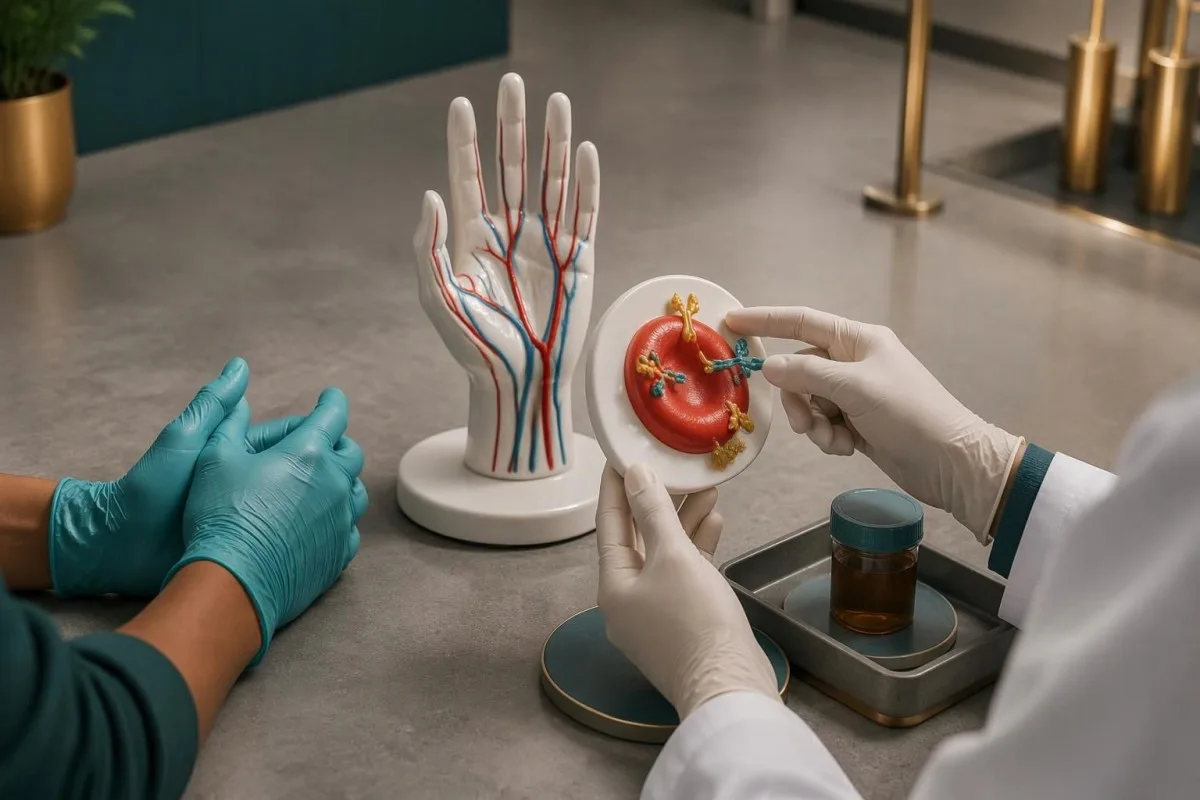
A rapid hemoglobin decline can be more dangerous than a stable low value, because your circulation has less time to adapt. A hypothetical fall from 12 to 8 g/dL over several days deserves prompt assessment even if someone with a long-standing, monitored value near 8 g/dL has fewer symptoms; these examples are not universal transfusion thresholds.
Dark urine can reflect hemoglobin released during marked intravascular hemolysis, but dehydration, liver conditions and urinary causes can produce similar appearances. Our dark urine assessment guide explains the alternatives; dark urine together with jaundice or weakness should not be dismissed because only 1 antibody result is abnormal.
Cold-related blue or purple fingers can occur with agglutination, but persistent discoloration, severe pain or failure to improve after gentle warming needs urgent evaluation for impaired circulation. Clinically significant cold agglutinin disease also carries increased clot risk; sudden breathlessness or 1 newly swollen leg requires assessment rather than attribution to cold sensitivity alone.
څنګه ځان تود وساتئ او کلینیکي کړنلارو ته چمتو شئ
Keeping the whole body warm can reduce cold-triggered symptoms in clinically significant cold-antibody disorders. Tell the care team before transfusion, anesthesia or a procedure, because laboratory compatibility testing and clinical temperature management may need coordination near 37°C rather than routine handling.

Practical protection includes layers, gloves, warm footwear and avoiding abrupt whole-body cooling; do not test your tolerance with an ice bath or deliberate cold challenge. Reactivity around 30°C does not translate into 1 safe outdoor temperature, because wind, wet clothing, exposure duration and individual circulation change how much peripheral tissues cool.
For transfusion, the laboratory may perform antibody investigation and compatibility testing at 37°C to limit cold-antibody interference while still identifying clinically significant additional antibodies. Our transfusion compatibility guide explains that distinction; a clinical warming device may also be used, but emergency treatment should not be delayed unnecessarily while pursuing perfect routine test conditions.
یو جلا 1:128 titer without hemolysis does not automatically mean you need to avoid all travel, exercise or procedures. The useful precaution is sharing the report and any prior laboratory interference with the treating team; clinical staff—not the patient—should decide whether warmed fluids, a transfusion warmer or additional temperature monitoring are necessary.
درملنه کله اړینه ده، او څه شی څارل کېږي؟
Treatment is guided by anemia, symptoms, transfusion need and functional impact—not a titer alone. In clinically significant cold agglutinin disease, specialist options include B-cell-directed therapy and complement inhibition; a titer of 1:512 without attributable symptoms or hemolysis does not itself establish a reason to start medication.
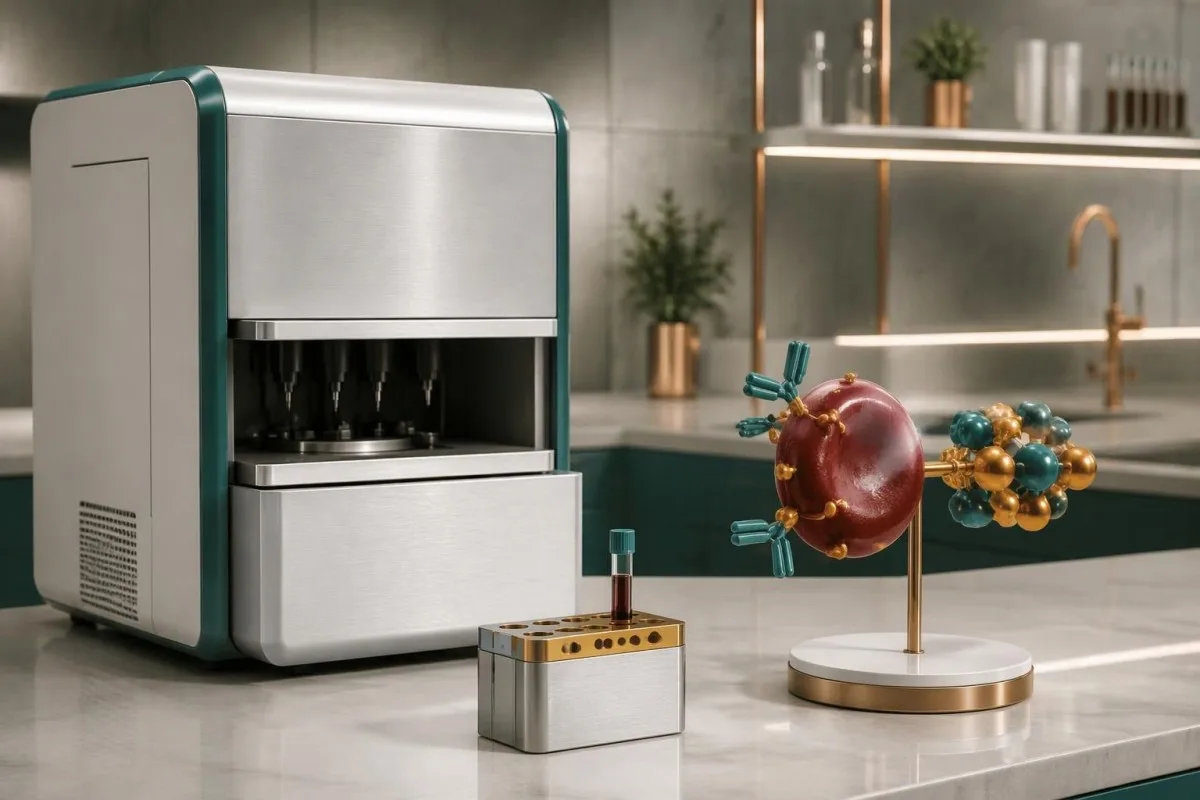
Sutimlimab inhibits C1s, an early classical complement component, and can reduce complement-mediated hemolysis in adults with cold agglutinin disease. It does not remove the IgM antibody, so cold-related agglutination and circulation symptoms may persist even if hemoglobin improves; immunization and infection-risk precautions must follow the product information and the specialist's plan.
B-cell-directed options include rituximab-based treatment, sometimes combined with another agent in selected patients; the appropriate choice depends on goals, comorbidities and treatment tolerance. Corticosteroids, commonly used for warm autoimmune hemolytic anemia, generally perform poorly in cold agglutinin disease; the 2020 international consensus emphasizes distinguishing the subtype before applying a treatment pathway (Jäger et al., 2020).
Kantesti helps explain why a hypothetical hemoglobin improvement from 8.7 to 11.8 g/dL, falling bilirubin and fewer transfusions can matter more than a persistently high titer. Our red-cell monitoring guide explains reticulocytes and related markers; do not change treatment from an AI interpretation, and do not assume anemia means iron deficiency.
د خپل راپور خوندي کارول: شواهد او د AI محدودیتونه
کانټیسټي یو دی د AI لاب ټېسټ د تفسیر خدمت that helps organize cold agglutinin results for discussion, but it cannot independently confirm cold agglutinin disease. A useful interpretation needs 3 information groups: the antibody method and handling, the hemolysis pattern and the patient's symptoms and history.

Keep the complete report rather than only the 1:256 result: the test temperature, reference interval, DAT components and laboratory comments can change its meaning. Useful appointment questions include whether hemolysis is present, whether thermal amplitude testing would help and whether specimen handling was adequate; bring earlier hemoglobin values when available.
The Kantesti technical benchmark listed below concerns 100,000 مصنوعي ازموینې قضیې, not 100,000 patients with cold agglutinin disease. The accompanying validation framework describes an assessment approach, not proof that AI can diagnose this rare condition; our validation and oversight page provides the appropriate context for these research publications and their limitations.
Before sharing 1 report or a series of reports, review consent and remove information you do not need to provide, especially when the results belong to someone else. Our د محرمیت او معلوماتو لارښوونې explains data-handling considerations; urgent symptoms belong with emergency or clinical services, not in an upload queue awaiting interpretation.
پرله پسې پوښتل شوي پوښتنې
ایا د سړې اګلوټینین ازموینې مثبت نتیجه دا معنا لري چې زه د سړې اګلوټینین ناروغي لرم؟
د سړې اګلوټینینونو مثبته ازموینه په خپلواکه توګه د سړې اګلوټینین ناروغي نه تشخیصوي. په ۴°C کې لږ تر لږه 1:64 ټایټر د تشخیص یوه عامه کارېدونکې برخه ده، خو ډاکټران مزمنه هیمولیز او یو مناسب مستقیم انټيګلوبولین ټېسټ هم ارزوي چې معمولاً د C3d لپاره په کلکه مثبت وي. تصادفي یا له انتان سره تړلي انټيباډيګانې د مثبتو پایلو لامل کېدای شي. حرارتي پراخوالی او د نمونې باوري سمبالښت د نامعلومو موندنو په روښانولو کې مرسته کوي.
ایا د یخنۍ اګلوټینین ټایټر ۱:۲۵۶ یا ۱:۵۱۲ خطرناک دی؟
د سړو اګلوټینینونو د انټيباډیو ټایټر 1:256 یا 1:512 په یوازې ځان د خطر حد نه دی. پایله ښيي چې د معاینې د شرایطو لاندې سیروم تر کومې کچې رقیق کېدای شي، په داسې حال کې چې د انټيباډۍ فعالیت لا هم د موندلو وړ وي. هغه انټيباډي چې د 30°C په شاوخوا کې فعاله وي، ښايي له هغې انټيباډۍ څخه چې لوړ ټایټر لري خو یوازې په 4°C کې غبرګون ښيي، له کلینیکي پلوه ډېره مهمه وي. نښې، د هیموګلوبین بدلونونه او د هیمولیز نښې د ارزونې بیړنیوالی ټاکي.
د سړې اګلوټینین ازموینه کې حرارتي حدود څه ته وايي؟
Thermal amplitude is the highest temperature at which a cold antibody reacts under the laboratory's testing conditions. Reactivity around 30°C or above is generally more concerning than activity restricted to 4°C because peripheral circulation can become cool enough for the antibody to act. Thermal amplitude is different from titer, which measures activity after dilution. Specialist laboratories may assess it when routine findings are discordant or the clinical significance is unclear.
د سړې اګلوټینین د ازموینې نمونه ولې باید ګرمه وساتل شي؟
Many laboratories require a cold agglutinin specimen to remain at 37–38°C from collection until serum separation. Premature cooling can allow antibody to bind the patient's cells, leaving less detectable activity in the separated serum and potentially producing a falsely low result. This preparation requirement is separate from deliberately testing the serum at 4°C. Confirm the collecting laboratory's instructions rather than attempting to warm or transport the specimen yourself.
ایا انتان د سړو اګلوټینینونو د ازموینې د مثبتې پایلې لامل کېدای شي؟
انتانات، د مایکوپلازما نیومونیا او د اپسټین–بار ویروس په ګډون، له لنډمهالو ساړهغبرګوني انټيباډیو سره تړاو لرلای شي. د 1:256 په څېر ټایټر نه شي ټاکلای چې کومه انتان موجوده ده یا لا هم فعاله ده که نه. د انتان له امله رامنځته شوې انټيباډۍ کله ناکله د کلینیکي پلوه د پام وړ هیمولیز لامل کېږي؛ نو د هیموګلوبین کمېدل یا نوی ژېړی لا هم ارزونې ته اړتیا لري. د ناروغزېږوونکي پر ضد ازموینې او د نښو کلینیکي مهالوېش د انتان د تشخیص لپاره د ساړه اګلوټینینونو تر کارولو ډېر ګټور دي.
ایا سړې اګلوټینینونه د MCV یا MCHC د کاذب لوړوالي لامل کېدای شي؟
د یخنۍ اګلوټینینونه د سرو وینې حجرو داسې ټولګې رامنځته کولای شي چې د CBC اتومات اندازهګیري ګډوډوي، او د MCV یا MCHC کچه په ناسم ډول لوړه او د RBC شمېر په ناسم ډول ټیټ ښيي. د بېلګې په توګه، د MCHC کچه چې 40 g/dL وي او د اګلوټینیشن نښه ورسره وي، باید د لابراتوار له خوا د تایید غوښتنه وکړي، نه دا چې سمدستي د حجرو د یوې رښتینې غیرعادي ستونزې په توګه تعبیر شي. له 37°C سره نږدې تودوخې ته له تودولو وروسته د ازموینې بیا ترسره کول ښايي دا لاسوهنه سمه کړي. د CBC سمېدل په هممهاله هیمولایزس دلالت نه کوي.
د سړې اګلوټینین ازموینې له مثبتې پایلې وروسته کومې نښې بیړنۍ پاملرنې ته اړتیا لري؟
د سینې درد، په استراحت کې ساه لنډېدل، بېهوښي یا ګډوډي د زکام د اګلوټینین د ټایټر په پام کې نیولو پرته، بېړنۍ ارزونې ته اړتیا لري. نوې ژېړی، تیاره ادرار یا په چټکۍ د کمزورۍ خرابېدل، پر وخت او ډېر ځله په هماغه ورځ، طبي ارزونې ته اړتیا لري. د هیموګلوبین چټک کمښت، لکه فرضي بدلون له ۱۲ څخه ۸ g/dL ته، د اندېښنې وړ دی، که څه هم د هر چا لپاره هېڅ یوه ځانګړې کچه د بیړنۍ اړتیا پرېکړه نه شي کولای. د ګوتو دوامدار دردناک رنګ بدلون یا ناڅاپي نښې چې د وینې د لختې احتمال ښيي، هم بېړنۍ ارزونې ته اړتیا لري.
د وینې ازموینې پایلې څنګه ولولئ
خپل لابراتواري راپور پورته کړئ، او د Kantesti AI به په څو ثانیو کې هر بایومارکر په ساده ژبه تشریح کړي. په ټوله نړۍ کې له 2 میلیونو څخه زیاتو کسانو ترې کار اخیستی.
ماخذونه
- کلاین، ټي.، میچل، ایس.، او وېبر، ایچ. (۲۰۲۶). د Kantesti Blood-Test Interpretation Engine لپاره د 100,000 مصنوعي ازموینې قضیو (synthetic test cases) پر بنسټ یو Pre-Registered، Rubric-Based اتوماتیک تخنیکي بنچمارک. د Kantesti AI طبي څېړنه. د دفاع وزارت
- کلاین، ټي.، میچل، ایس.، او وېبر، ایچ. (۲۰۲۶). د کلینیکي تایید چوکاټ v2.0 (د طبي تایید پاڼه). د Kantesti AI طبي څېړنه. د دفاع وزارت
- Berentsen S. (2016). Cold agglutinin disease. Hematology, American Society of Hematology Education Program. د دفاع وزارت
- Jäger U et al. (2020). Diagnosis and treatment of autoimmune hemolytic anemia in adults: Recommendations from the First International Consensus Meeting. Blood Reviews. د دفاع وزارت
- ۲ میلیونه+تحلیل شوې ازموینې
- 127+هېوادونه
- 100+ژبې
د طبي ټیم په اړه


د E-E-A-T باور نښې
تجربه
د ډاکټر تر مشرۍ لاندې کلینیکي بیاکتنه د لابراتواري تفسیر د کاري بهیرونو لپاره.
تخصص
د لابراتواري طب تمرکز پر دې چې بایومارکرونه په کلینیکي شرایطو کې څنګه چلند کوي.
واک ورکول
د ډاکټر توماس کلاین له خوا طبي بیاکتنه شوې، د ډاکټر سارا میچل او پروفیسور ډاکټر هانس وېبر په مرسته.
اعتبار
د شواهدو پر بنسټ تفسیر د روښانه تعقیبي لارو چارو سره، تر څو اندیښنه کمه شي.






طبي سلبِ مسئولیت
دا مقاله یوازې د زده کړې لپاره ده او طبي مشوره نه جوړوي. د تشخیص او درملنې د پرېکړو لپاره تل د وړ روغتیايي خدمت وړاندې کوونکي سره سلا وکړئ.
خپور شوی · له تحریري ټیم سره اړیکه ونیسئ
خپروونکی یې Kantesti Ltd دی، چې په انګلستان او وېلز کې ثبت شوی، د شرکت شمېره. 17090423, ، لندن، بریتانیا.
