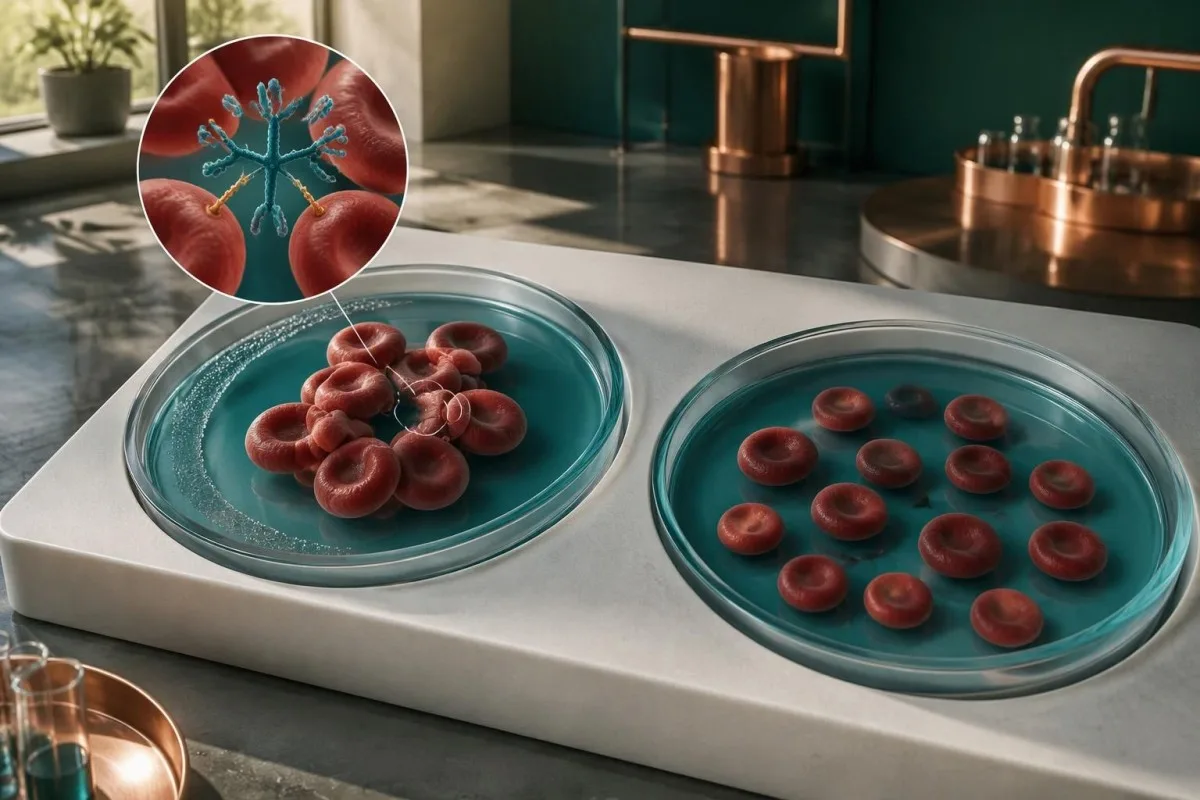
Kiwango cha juu cha tita ya aglutinini baridi kinamaanisha kuwa kingamwili bado zinaweza kugunduliwa baada ya sampuli kupunguzwa sana—si lazima kwamba zinaharibu seli zako nyekundu za damu. Tofauti hutegemea kiwango chake cha joto, ushahidi wa hemolisi, vipimo vinavyoonyesha uwepo wa komplementi na utunzaji sahihi wa sampuli.

Mambo muhimu ya kukumbuka
- Matokeo chanya hutambua kingamwili zinazoguswa na baridi; haithibitishi yenyewe ugonjwa wa aglutinini baridi.
- Tita ya angalau 1:64 katika 4°C ni kipengele cha utambuzi kinachotumiwa kwa kawaida, lakini matabibu pia wanahitaji ushahidi wa hemolisi na mpangilio unaofaa wa matokeo ya kipimo cha moja kwa moja cha antiglobulini.
- Kiwango cha joto cha utendaji hueleza halijoto ya juu zaidi ambayo kingamwili huitikia; utendaji katika takriban 30°C au zaidi kwa jumla huzua wasiwasi zaidi kuliko utendaji unaotokea tu katika hali ya baridi kali sana ya maabara.
- Kipimo chanya cha moja kwa moja cha antiglobulini cha C3d huunga mkono mchakato unaosimamiwa na komplementi, lakini mpangilio huohuo unaweza kutokea pia nje ya ugonjwa wa aglutinini baridi.
- Tathmini ya hemolisi huchanganya mwenendo wa hemoglobini, retikulosaiti, LDH, bilirubini isiyo ya moja kwa moja na haptoglobini badala ya kutegemea kiashirio kimoja kisicho cha kawaida.
- Utunzaji wa sampuli katika 37–38°C hadi utenganishaji wa seramu unaweza kuhitajika kwa kipimo cha aglutinini baridi; thibitisha maelekezo ya maabara ya ukusanyaji kabla ya miadi yako.
- Kingamwili zinazohusiana na maambukizi zinaweza kuwa za muda, ingawa hemolisi yenye umuhimu wa kitabibu bado inahitaji tathmini hata maambukizi yanapokuwa kichocheo.
- Dalili za dharura ni pamoja na maumivu ya kifua, kushindwa kupumua wakati wa kupumzika, kuzirai au kuchanganyikiwa; manjano mapya, mkojo mweusi au uchovu unaozidi haraka vinahitaji tathmini ya haraka ya kitabibu.
Je, kipimo chanya cha aglutinini baridi kinamaanisha ugonjwa?
A kipimo chanya cha aglutinini baridi hakimaanishi moja kwa moja ugonjwa wa aglutinini baridi. Hata kiwango cha juu cha tita lazima kitafsiriwe pamoja na matokeo 3 ya kliniki: kiwango cha joto ambacho kingamwili hutenda, ushahidi wa uharibifu wa seli nyekundu za damu na kipimo chanya cha antiglobulini ya moja kwa moja cha komplementi.
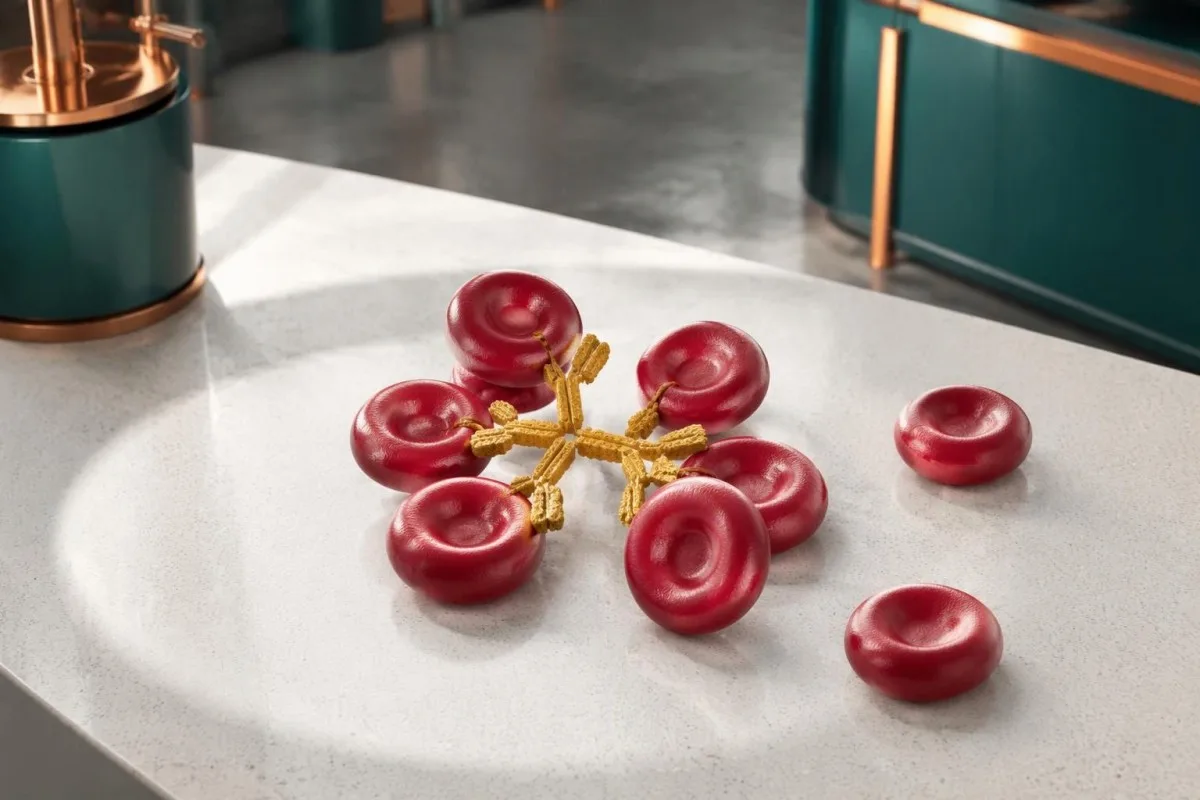
Agglutinins baridi kwa kawaida ni kingamwili za IgM zinazoweza kushikamana na seli nyekundu za damu kwa urahisi zaidi katika halijoto ya chini na kuzifanya zishikamane pamoja. Kwa kawaida kipimo hupima shughuli yake katika 4°C—baridi zaidi sana kuliko damu nyingi inayozunguka—hivyo mwitikio mkubwa wa maabara unaweza kuwepo sambamba na shughuli ndogo au kutokuwepo kabisa kwa shughuli yenye umuhimu wa kliniki ndani ya mwili.
Matokeo yaliyotengwa kama vile 1:256 hayawezi kukuambia kama una anemia, kama kingamwili hutenda karibu na halijoto ya mwili au kama ni ya muda baada ya ugonjwa. Ufafanuzi wetu wa matokeo chanya ya antibody hutofautisha ugunduzi na utambuzi; swali linalofuata lenye manufaa ni vipimo vinavyoambatana nayo vinaonyesha nini.
Kantesti ni Mchambuzi wa mtihani wa damu wa AI unaosaidia kueleza tita ya aglutinini baridi sambamba na matokeo ya vipimo husika vya maabara, ikiwemo kama halijoto ya kipimo iliyoripotiwa ilikuwa 4°C. Yetu historia ya kampuni unaeleza shirika lililo nyuma ya huduma hii ya elimu; hatuchukui nafasi ya tathmini ya hematolojia na maabara inayohitajika ili kuthibitisha utambuzi.
Kiwango cha juu cha tita ya aglutinini baridi hupima nini?
A tita ya aglutinini baridi ni kiwango kikubwa zaidi cha upunguzaji wa mkusanyiko wa seramu yako ambacho bado huzalisha mwitikio wa aglutinishaji uliobainishwa na maabara. Matokeo ya 1:512 humaanisha shughuli bado hugundulika baada ya upunguzaji mkubwa zaidi wa mkusanyiko kuliko matokeo ya 1:32; hakuna mojawapo ya nambari hizi inayopima moja kwa moja kiwango cha anemia.
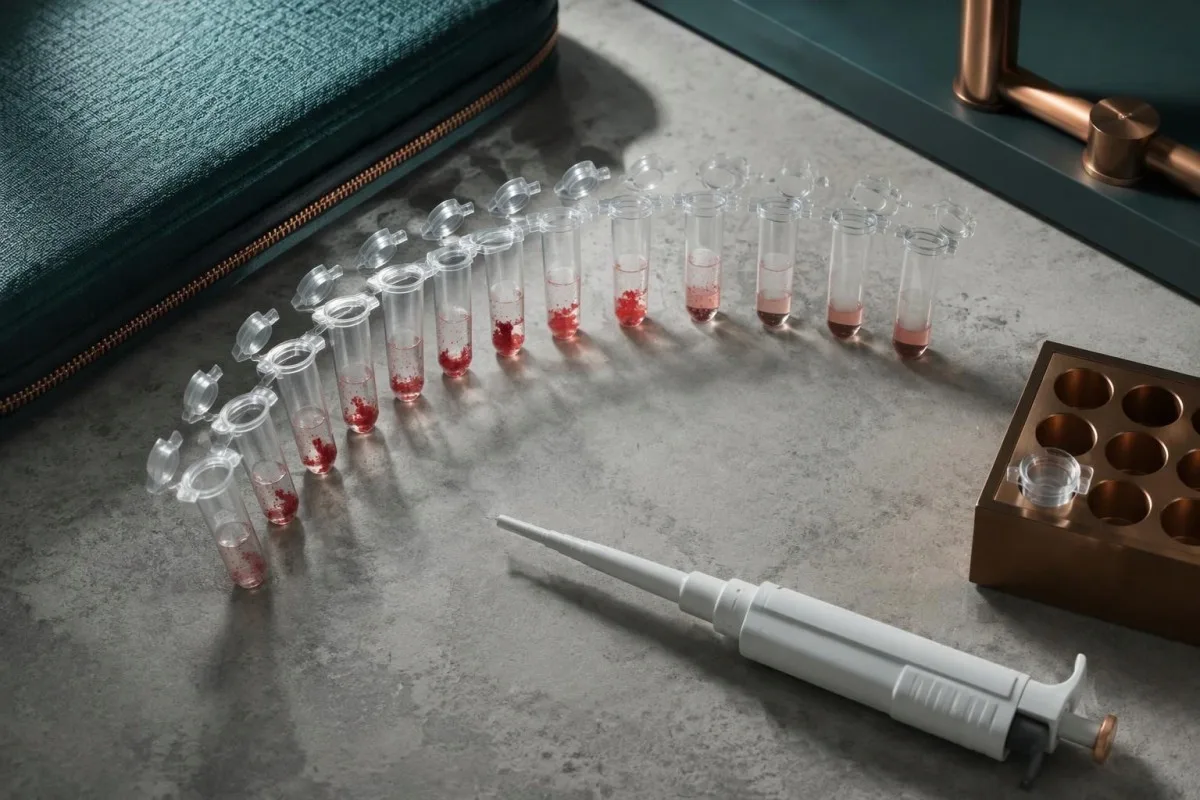
Tita ya angalau 1:64 katika 4°C ni sehemu inayotumiwa kwa kawaida katika utambuzi wa ugonjwa wa aglutinini baridi, si hitimisho la uchunguzi wa awali linalojitosheleza. Mapitio ya Hematology yanaeleza kizingiti hiki pamoja na hemolisi sugu na chanya kali ya C3d katika kipimo cha antiglobulini ya moja kwa moja (Berentsen, 2016); hakuna tita ya jumla inayohitaji moja kwa moja matibabu ya dharura.
Hatua za upunguzaji wa mkusanyiko mara mbili kwa kawaida hutoa matokeo kama vile 1:64, 1:128 na 1:256. Tofauti ya hatua moja inaweza kuakisi utofauti wa kipimo, kiwango cha mwisho kilichochaguliwa au ushughulikiaji wa sampuli badala ya mabadiliko muhimu ya kibayolojia; ulinganisho wa nambari huwa imara zaidi maabara ileile inapotumia mbinu na halijoto ileile.
Baadhi ya maabara huripoti tu chanya au hasi, ilhali nyingine hutoa nambari ya uwiano kama vile 256 badala ya kuandika 1:256. Mwongozo wetu wa matokeo ya ubora na wingi explains that distinction; ask for the actual dilution, assay temperature and local reference interval before comparing reports.
| Kiwango | Wigo | Maana yake |
|---|---|---|
| Low-level activity | Below 1:64 at 4°C | Often incidental when thermal amplitude is narrow and hemolysis is absent; this is not a universal laboratory reference interval. |
| Common diagnostic threshold | At least 1:64 at 4°C | Supports further assessment when hemolysis and a compatible direct antiglobulin test are present; does not confirm disease alone. |
| Higher dilution endpoint | Examples: 1:256 or 1:512 | Shows activity after greater dilution, but does not establish thermal amplitude or predict treatment need. |
| Very high reported endpoint | Example: 1:1024 or higher | Still requires clinical interpretation; no titer-only emergency threshold is established. |
Kwa nini kiwango cha joto cha utendaji kinaweza kuwa muhimu zaidi kuliko tita
Kiwango cha joto cha utendaji is the highest temperature at which a cold antibody reacts under the laboratory's testing conditions. Reactivity around 30°C or above is generally more clinically concerning than reactivity confined to 4°C, because cooler peripheral circulation can reach temperatures at which the antibody becomes active.
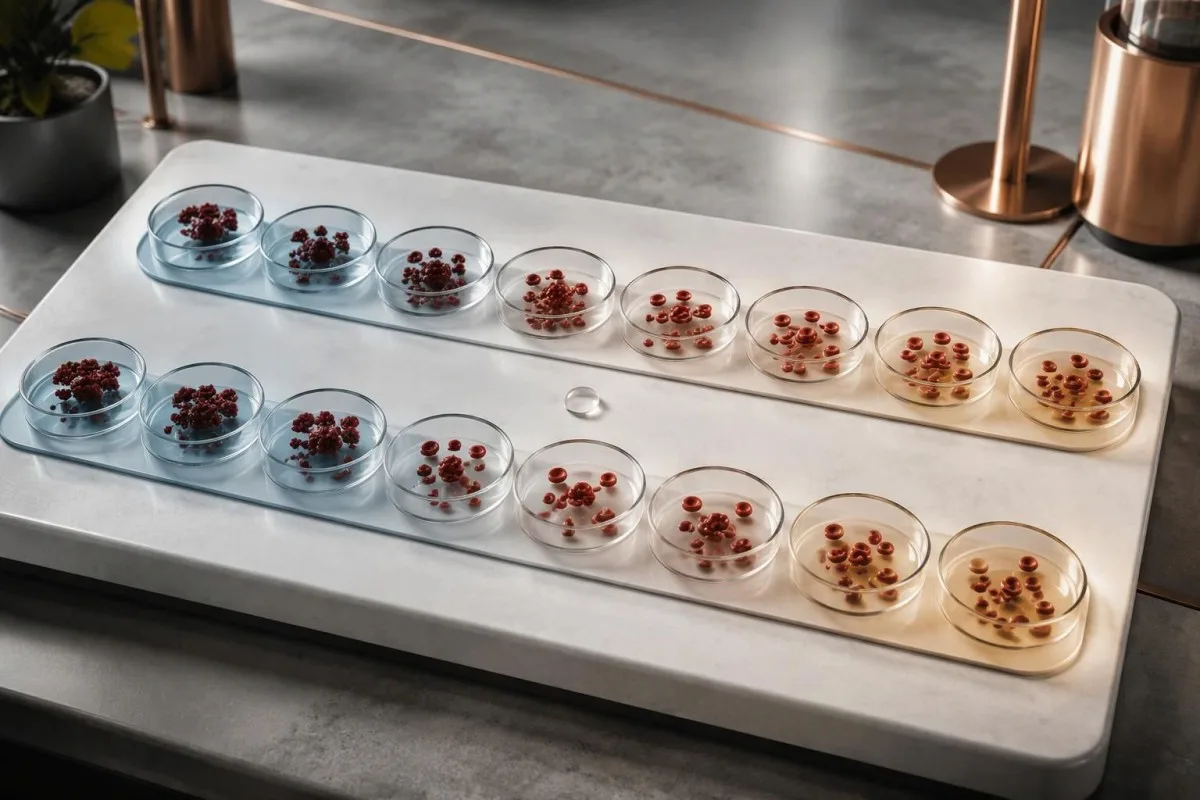
A high-titer antibody active only at 4°C may matter less clinically than a lower-titer antibody that remains active at 30–32°C. The reason is exposure: red cells do not normally circulate at refrigerator temperature, but they can encounter substantially cooler conditions in fingers, toes and other peripheral areas.
Complement can attach while red cells are cool and remain relevant after they return toward 37°C, even when the IgM antibody detaches. This explains why antibody-related injury is not simply a matter of visible clumping; our mwongozo wa upimaji wa ziada also distinguishes circulating complement measurements from complement deposited on cells.
Thermal amplitude testing is not standardized into 1 universal patient-facing cutoff, and many routine reports omit it entirely. Specialist laboratories may test several temperatures, such as 4°C, room temperature, 30°C and 37°C; clinicians usually request that additional work when the titer, symptoms and hemolysis results do not fit together.
Ni matokeo gani ya damu yanayoonyesha hemolisi halisi?
Hemolysis means red cells are being destroyed faster than expected, and assessment usually combines 5 measurements: hemoglobin, reticulocytes, LDH, indirect bilirubin and haptoglobin. A high cold agglutinin titer without this supporting pattern does not establish a hemolytic disorder.
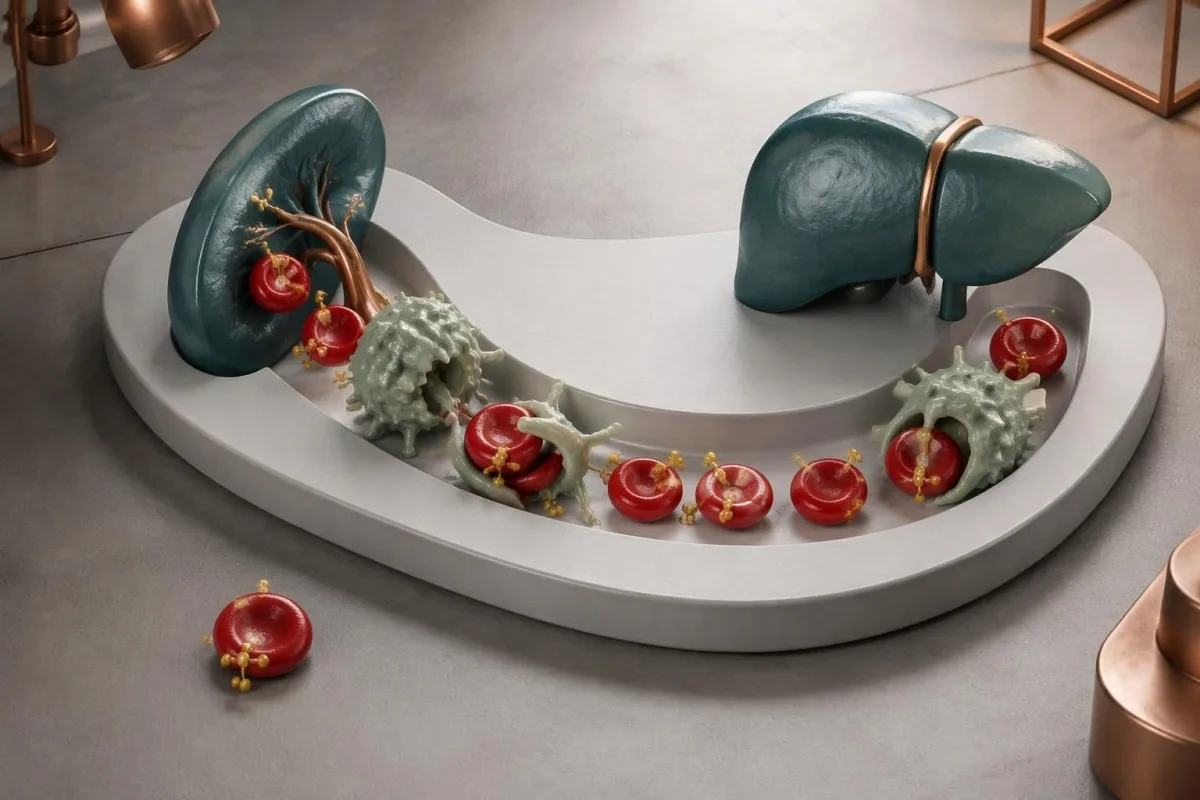
A hypothetical hemoglobin fall from 13.2 to 9.6 g/dL, accompanied by rising indirect bilirubin and LDH, is more concerning than an unchanged hemoglobin with the same titer. Reticulocytes often increase as the marrow replaces lost cells, although an early episode, nutrient deficiency or marrow disorder can blunt that response.
Low haptoglobin supports hemolysis but is not definitive: liver disease can reduce production, while an acute-phase response can raise the concentration despite red-cell destruction. Our explanation of sababu za haptoglobin ya chini covers these exceptions; a result below 1 laboratory's reference limit should be interpreted with the other markers rather than alone.
Kantesti AI helps explain LDH trends, including why a hypothetical rise from 220 to 650 U/L needs the laboratory's reference interval and specimen-quality information. Our LDH interpretation guide describes other sources of elevation; normal hemoglobin also does not exclude compensated hemolysis when the marrow is keeping pace.
Kipimo chanya cha moja kwa moja cha antiglobulini cha C3d kinamaanisha nini?
A C3d-positive direct antiglobulin test, also called a direct Coombs test, detects complement fragments attached to red cells. Cold agglutinin disease typically produces strong C3d positivity with absent or sometimes weak IgG reactivity, but these 2 antibody-testing results are not sufficient without clinical evidence of hemolysis.

The direct antiglobulin test and the cold agglutinin titer answer maswali 2 tofauti: what is attached to your red cells, and what cold-reactive activity is present in your serum? The Blood Reviews international consensus recommends a monospecific direct antiglobulin test as part of autoimmune hemolytic anemia assessment (Jäger et al., 2020).
A report stating only DAT positive may not distinguish IgG from C3d; asking for those 2 components can materially change interpretation. Our guide to a kipimo chanya cha moja kwa moja cha Coombs explains why transfusion-related antibodies, medications and other immune processes can also produce a positive result without proving cold agglutinin disease.
In a child with abrupt post-illness hemolysis, a C3d-positive DAT and a low cold agglutinin titer can raise a different possibility: paroxysmal cold hemoglobinuria. This condition usually involves an IgG antibody assessed by Donath–Landsteiner testing, so a cold agglutinin result below 1:64 should not end the investigation when symptoms suggest significant hemolysis.
Kingamwili zinazojitokeza kwa bahati, maambukizi na ugonjwa unaoendelea
Incidental cold antibodies may cause no symptoms, while infection-related antibodies can be temporary and occasionally cause substantial hemolysis. Persistent cold agglutinin disease is usually associated with a clonal marrow B-cell process; these 3 situations require different follow-up rather than the same response to a positive test.
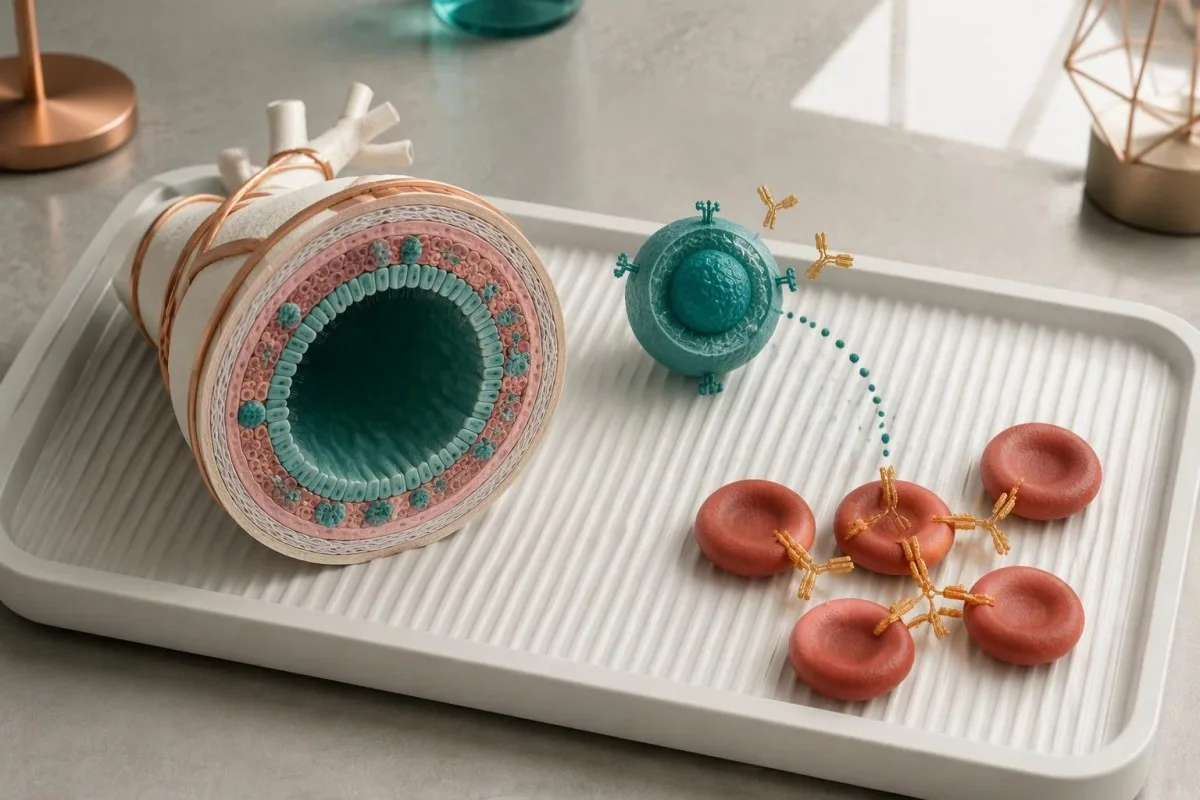
Mycoplasma pneumoniae and Epstein–Barr virus are 2 recognized infection-related associations, but a cold agglutinin test cannot reliably diagnose either infection. Our guide to Mycoplasma antibody interpretation explains why antibody timing and persistence complicate that diagnosis; respiratory symptoms may require pathogen-directed testing rather than inference from the titer.
Recent fever or sore throat changes the questions clinicians ask, not the urgency of genuine hemolysis: a hemoglobin of 8.5 g/dL with new jaundice still requires assessment even if the antibody is expected to be temporary. Our EBV result interpretation explains how VCA and EBNA patterns provide more specific information about exposure timing.
Terminology matters: cold agglutinin syndrome generally describes cold-antibody hemolysis secondary to another condition, while cold agglutinin disease is a distinct, usually persistent disorder. A titer of 1:512 does not identify lymphoma; specialist investigation may find a small marrow clone without overt lymphoma, and incidental antibodies do not automatically justify cancer investigations.
Kwa nini sampuli yako inaweza kuhitaji kupashwa joto kabla ya kupimwa
For cold agglutinin titer testing, many specialist laboratories require the specimen to remain at 37–38°C from collection until serum separation. Cooling before separation can allow antibodies to bind the patient's cells, potentially lowering the antibody activity left in the serum and producing a misleading result.
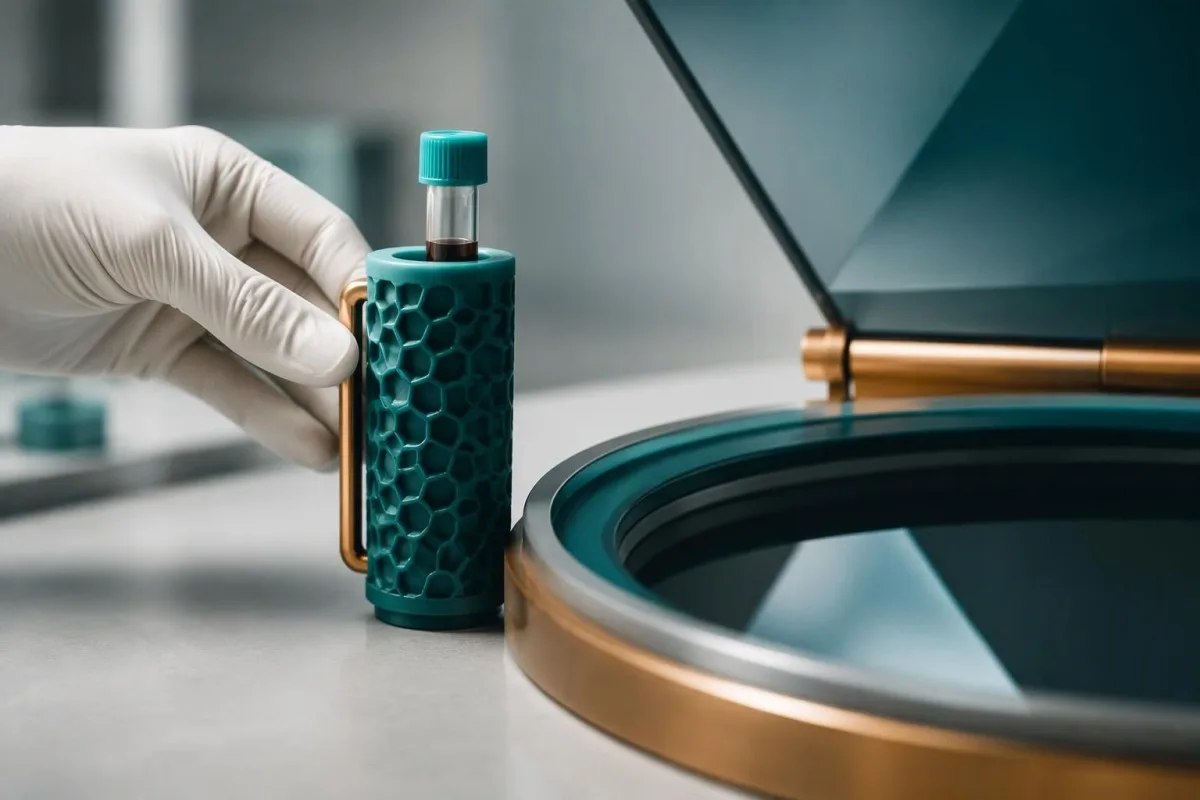
The pre-analytical requirement is different from the assay temperature: serum may be kept near 37°C during preparation and then deliberately tested at 4°C. The Hematology review emphasizes warm collection and separation for cold antibody studies (Berentsen, 2016); the laboratory creates the controlled cooling step only after an appropriate specimen is available.
Warming a specimen after it has already cooled may not fully reverse every earlier problem, so repeating the test can be more useful than interpreting an unexpected low titer. Our repeat specimen guide explains another handling distinction: cells breaking inside a collection tube are not the same as hemolysis occurring inside your body.
Before the appointment, ask maswali 3 ya vitendo: which tube is required, how warmth will be maintained and where serum separation will occur. Titer testing, an EDTA specimen for the DAT and a warmed CBC may have different instructions; do not heat, transport or store your own specimen unless the collecting service specifically directs you.
Jinsi aglutinini baridi zinavyoweza kupotosha CBC yako
Cold-related red-cell clumping can falsely lower the RBC count and raise MCV or MCHC on an automated complete blood count. A CBC repeated after laboratory warming near 37°C can help identify this artifact, although correcting the numbers does not by itself establish or exclude cold agglutinin disease.
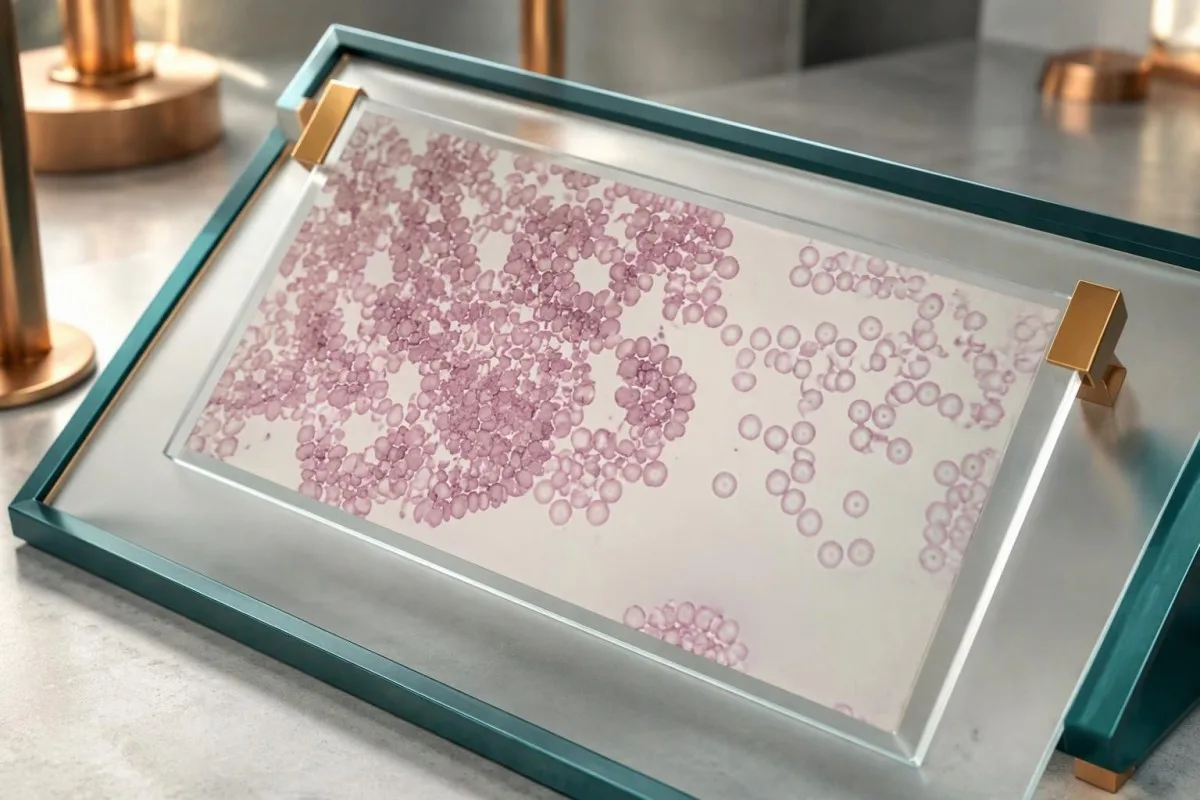
Automated counters may treat a cluster as 1 large particle rather than several separate cells, making the calculated mean cell volume appear high. Hematocrit and derived indices can become internally inconsistent, while photometrically measured hemoglobin is often less affected; the laboratory must still check whether other specimen or instrument issues are present.
Kwa mfano, mwanamume wa kinadharia mwenye umri wa MCHC of 40 g/dL with an analyzer agglutination flag should prompt verification rather than an immediate diagnosis of an unusually concentrated red-cell disorder. Our high MCHC explanation covers this reasoning; genuine anemia can coexist with an artifact, so neither finding should erase the other.
Kantesti ni jukwaa la tafsiri ya vipimo vya damu la AI that helps explain discrepancies between CBC values and a reported cold agglutinin titer, including whether a result was rerun near 37°C. Our mwongozo wa teknolojia ya AI describes the interpretation process; only the testing laboratory can confirm that warming corrected a measurement error.
Ni nini kinachothibitisha utambuzi wa ugonjwa wa aglutinini baridi?
A cold agglutinin disease diagnosis usually combines chronic hemolysis, a strongly C3d-positive DAT and a cold agglutinin titer of at least 1:64 at 4°C, with assessment for secondary causes. These are linked diagnostic components, not a checklist that an isolated positive report can complete.
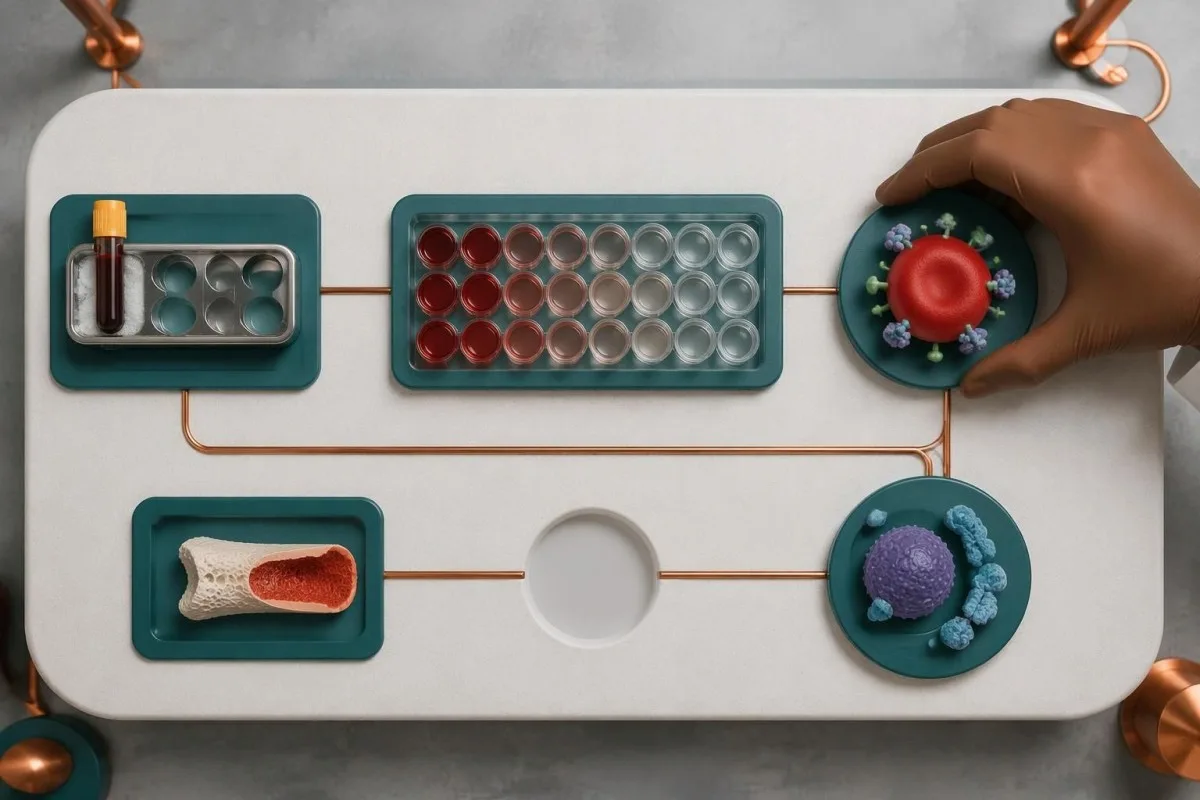
Clinicians first verify the 2 core laboratory patterns—hemolysis and immune attachment to cells—then assess symptoms, duration, medications, recent infections and transfusion history. A broad thermal amplitude can support interpretation when routine results are borderline or discordant; the international consensus treats autoimmune hemolytic anemia as a pattern-based diagnosis (Jäger et al., 2020).
Persistent findings may lead to serum protein electrophoresis, immunofixation and hematology-directed marrow assessment to characterize antibody production. Our guide to immunofixation band results explains why a monoclonal band needs context; even a titer of 1:1024 cannot determine whether a detectable protein represents overt lymphoma or a smaller clonal process.
Kantesti AI can help organize 3 groups of information for the appointment: antibody tests, hemolysis markers and changes over time. It cannot establish whether the specimen followed the warm-handling protocol or replace a specialist's assessment of marrow findings; bring the full report, because an isolated screenshot may omit the method and interpretive comments.
Mifano mitatu: tita ileile, hatua zinazofuata tofauti
The same cold agglutinin titer can lead to different next steps because clinical significance depends on temperature-dependent activity and red-cell injury. The following 3 examples are hypothetical teaching scenarios, not patient accounts or rules for diagnosing yourself from a single report.
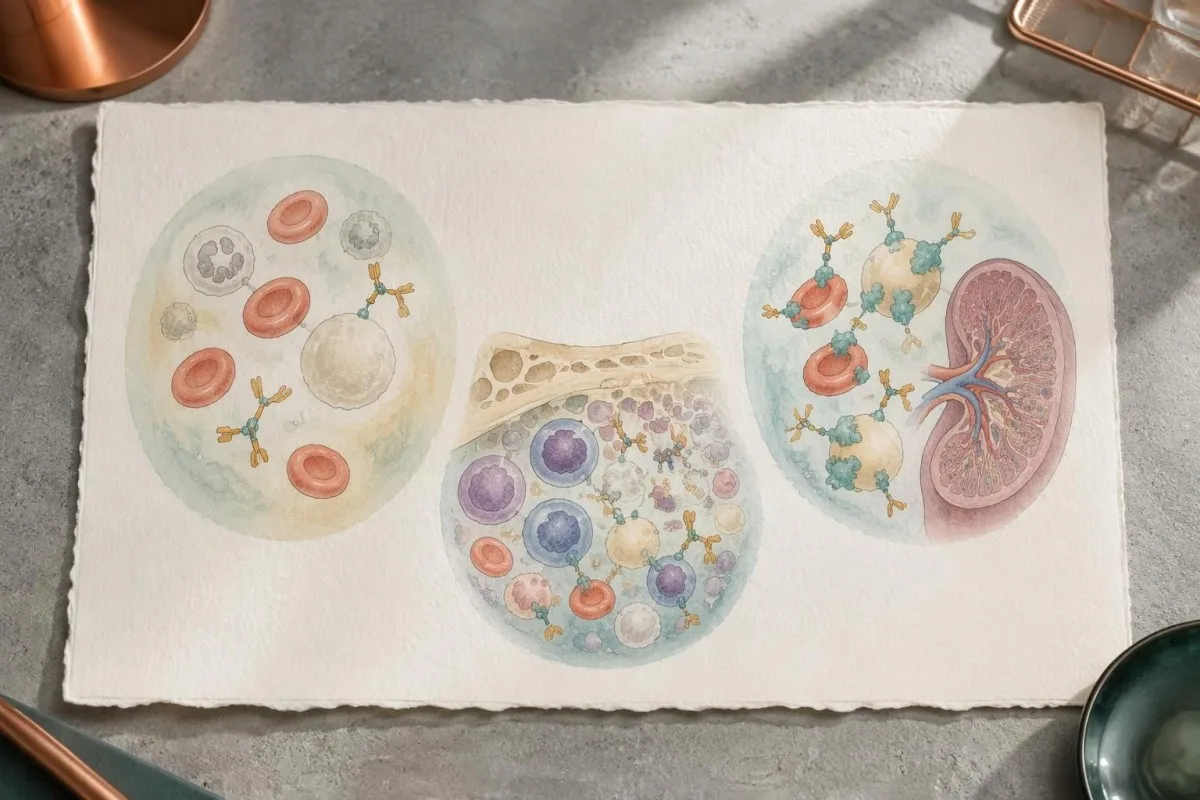
In the first example, an adult has a titer of 1:256 at 4°C, hemoglobin of 14.0 g/dL, normal hemolysis markers and no cold-related symptoms. If specialist testing shows a narrow thermal amplitude, incidental antibodies become more plausible; the useful step is confirming the context and need for follow-up, not assuming that antibody detection requires treatment.
In the second example, a person recovering from a respiratory illness has a titer of 1:256 and hemoglobin that has fallen from 13.5 to 10.2 g/dL, with rising indirect bilirubin. An infection-associated syndrome is possible, but the falling hemoglobin still needs assessment; our polychromasia explanation describes one smear clue to the marrow's replacement response.
In the third example, a person has months of fatigue, a titer of 1:256, strong C3d positivity, low haptoglobin and antibody reactivity at 30°C. Persistent clinically significant cold-antibody hemolysis becomes more likely; hematology assessment addresses diagnosis and treatment need, while the identical titer across all 3 examples shows why the number alone cannot choose the pathway.
Ni dalili zipi zinazohitaji tathmini ya haraka ya kitabibu?
Chest pain, breathlessness at rest, fainting or confusion require emergency assessment, regardless of the cold agglutinin titer. New jaundice, dark urine or rapidly worsening fatigue warrant prompt, often same-day medical review; a result below 1:64 does not make these symptoms safe to ignore.
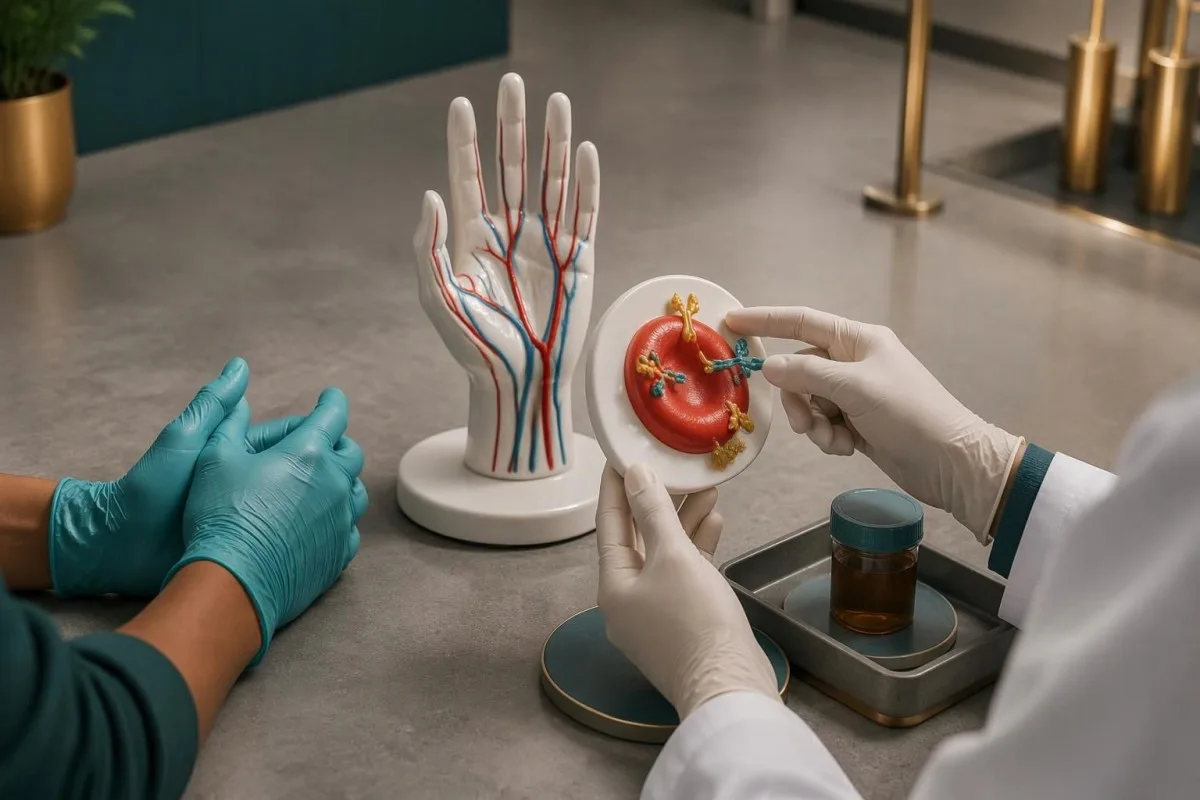
A rapid hemoglobin decline can be more dangerous than a stable low value, because your circulation has less time to adapt. A hypothetical fall from 12 to 8 g/dL over several days deserves prompt assessment even if someone with a long-standing, monitored value near 8 g/dL has fewer symptoms; these examples are not universal transfusion thresholds.
Dark urine can reflect hemoglobin released during marked intravascular hemolysis, but dehydration, liver conditions and urinary causes can produce similar appearances. Our dark urine assessment guide explains the alternatives; dark urine together with jaundice or weakness should not be dismissed because only 1 antibody result is abnormal.
Cold-related blue or purple fingers can occur with agglutination, but persistent discoloration, severe pain or failure to improve after gentle warming needs urgent evaluation for impaired circulation. Clinically significant cold agglutinin disease also carries increased clot risk; sudden breathlessness or 1 newly swollen leg requires assessment rather than attribution to cold sensitivity alone.
Jinsi ya kujikinga na baridi na kujiandaa kwa taratibu za kitabibu
Keeping the whole body warm can reduce cold-triggered symptoms in clinically significant cold-antibody disorders. Tell the care team before transfusion, anesthesia or a procedure, because laboratory compatibility testing and clinical temperature management may need coordination near 37°C rather than routine handling.

Practical protection includes layers, gloves, warm footwear and avoiding abrupt whole-body cooling; do not test your tolerance with an ice bath or deliberate cold challenge. Reactivity around 30°C does not translate into 1 safe outdoor temperature, because wind, wet clothing, exposure duration and individual circulation change how much peripheral tissues cool.
For transfusion, the laboratory may perform antibody investigation and compatibility testing at 37°C to limit cold-antibody interference while still identifying clinically significant additional antibodies. Our transfusion compatibility guide explains that distinction; a clinical warming device may also be used, but emergency treatment should not be delayed unnecessarily while pursuing perfect routine test conditions.
AST iliyotengwa 1:128 titer without hemolysis does not automatically mean you need to avoid all travel, exercise or procedures. The useful precaution is sharing the report and any prior laboratory interference with the treating team; clinical staff—not the patient—should decide whether warmed fluids, a transfusion warmer or additional temperature monitoring are necessary.
Matibabu yanahitajika lini, na ni nini hufuatiliwa?
Treatment is guided by anemia, symptoms, transfusion need and functional impact—not a titer alone. In clinically significant cold agglutinin disease, specialist options include B-cell-directed therapy and complement inhibition; a titer of 1:512 without attributable symptoms or hemolysis does not itself establish a reason to start medication.
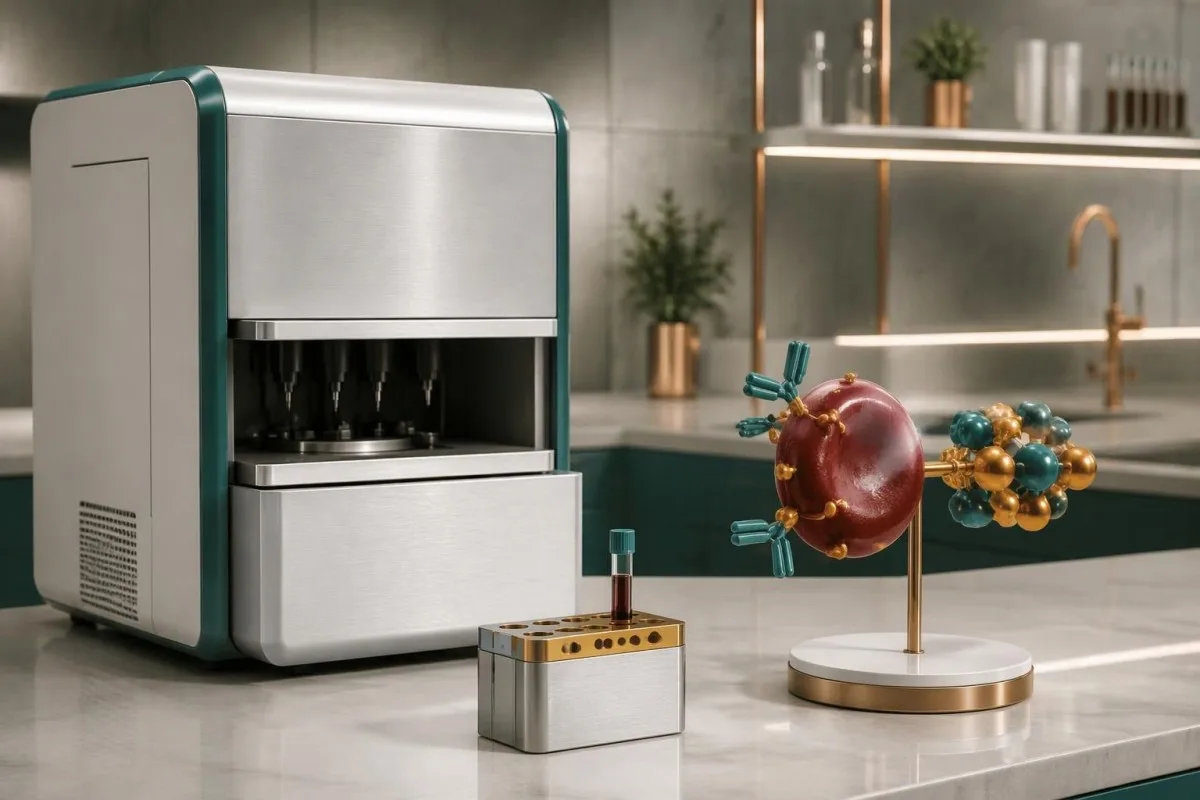
Sutimlimab inhibits C1s, an early classical complement component, and can reduce complement-mediated hemolysis in adults with cold agglutinin disease. It does not remove the IgM antibody, so cold-related agglutination and circulation symptoms may persist even if hemoglobin improves; immunization and infection-risk precautions must follow the product information and the specialist's plan.
B-cell-directed options include rituximab-based treatment, sometimes combined with another agent in selected patients; the appropriate choice depends on goals, comorbidities and treatment tolerance. Corticosteroids, commonly used for warm autoimmune hemolytic anemia, generally perform poorly in cold agglutinin disease; the 2020 international consensus emphasizes distinguishing the subtype before applying a treatment pathway (Jäger et al., 2020).
Kantesti helps explain why a hypothetical hemoglobin improvement from 8.7 to 11.8 g/dL, falling bilirubin and fewer transfusions can matter more than a persistently high titer. Our red-cell monitoring guide explains reticulocytes and related markers; do not change treatment from an AI interpretation, and do not assume anemia means iron deficiency.
Kutumia ripoti yako kwa usalama: ushahidi na mipaka ya AI
Kantesti ni huduma ya kutafsiri vipimo vya maabara ya AI that helps organize cold agglutinin results for discussion, but it cannot independently confirm cold agglutinin disease. A useful interpretation needs 3 information groups: the antibody method and handling, the hemolysis pattern and the patient's symptoms and history.

Keep the complete report rather than only the 1:256 result: the test temperature, reference interval, DAT components and laboratory comments can change its meaning. Useful appointment questions include whether hemolysis is present, whether thermal amplitude testing would help and whether specimen handling was adequate; bring earlier hemoglobin values when available.
The Kantesti technical benchmark listed below concerns visa 100,000 vya majaribio vya kubuni, not 100,000 patients with cold agglutinin disease. The accompanying validation framework describes an assessment approach, not proof that AI can diagnose this rare condition; our validation and oversight page provides the appropriate context for these research publications and their limitations.
Before sharing 1 report or a series of reports, review consent and remove information you do not need to provide, especially when the results belong to someone else. Our mwongozo wa faragha na data explains data-handling considerations; urgent symptoms belong with emergency or clinical services, not in an upload queue awaiting interpretation.
Maswali ya mara kwa mara
Je, kipimo chanya cha aglutinini baridi kinamaanisha nina ugonjwa wa aglutinini baridi?
Kipimo chanya cha aglutinini baridi hakiwezi peke yake kutambua ugonjwa wa aglutinini baridi. Tita ya angalau 1:64 katika 4°C ni kigezo kinachotumiwa kwa kawaida katika utambuzi, lakini madaktari pia hutathmini hemolizisi sugu na kipimo cha moja kwa moja cha antiglobulini kinacholingana na hali hiyo, kwa kawaida kikiwa na matokeo chanya sana ya C3d. Kingamwili zinazopatikana kwa bahati au zinazohusiana na maambukizi zinaweza kutoa matokeo chanya. Kiwango cha joto ambacho kingamwili hufanya kazi na ushughulikiaji wa sampuli unaotegemeka husaidia kufafanua matokeo yasiyo na uhakika.
Je, kiwango cha aglutinini baridi cha 1:256 au 1:512 ni hatari?
Kiwango cha kingamwili za aglutinini baridi cha 1:256 au 1:512 si kizingiti cha hatari kinachojitosheleza. Matokeo huonyesha kiwango ambacho seramu inaweza kupunguzwa kwa maji huku shughuli ya kingamwili ikiendelea kugundulika chini ya masharti ya kipimo. Kingamwili inayofanya kazi karibu na 30°C inaweza kuwa na umuhimu mkubwa zaidi wa kiafya kuliko kingamwili yenye kiwango cha juu zaidi inayoguswa tu kwenye 4°C. Dalili, mwenendo wa hemoglobini na viashiria vya hemolisi ndivyo huamua uharaka wa tathmini.
Kiwango cha joto katika kipimo cha aglutinini baridi ni nini?
Thermal amplitude is the highest temperature at which a cold antibody reacts under the laboratory's testing conditions. Reactivity around 30°C or above is generally more concerning than activity restricted to 4°C because peripheral circulation can become cool enough for the antibody to act. Thermal amplitude is different from titer, which measures activity after dilution. Specialist laboratories may assess it when routine findings are discordant or the clinical significance is unclear.
Kwa nini sampuli ya aglutinini baridi lazima iwekwe kwenye joto?
Many laboratories require a cold agglutinin specimen to remain at 37–38°C from collection until serum separation. Premature cooling can allow antibody to bind the patient's cells, leaving less detectable activity in the separated serum and potentially producing a falsely low result. This preparation requirement is separate from deliberately testing the serum at 4°C. Confirm the collecting laboratory's instructions rather than attempting to warm or transport the specimen yourself.
Je, maambukizi yanaweza kusababisha kipimo cha aglutinini baridi kuwa chanya?
Maambukizi, yakiwemo yale yanayosababishwa na Mycoplasma pneumoniae na virusi vya Epstein–Barr, yanaweza kuhusishwa na kingamwili za muda zinazoitikia baridi. Kiwango kama 1:256 hakiwezi kubainisha maambukizi yaliyopo wala kama bado yanaendelea. Kingamwili zinazohusiana na maambukizi wakati mwingine husababisha hemolisisi yenye umuhimu wa kitabibu, hivyo kupungua kwa hemoglobini au kuanza kwa manjano mapya bado kunahitaji tathmini. Vipimo vinavyolenga vimelea husika na mfuatano wa matukio ya kliniki ni muhimu zaidi kuliko kutumia aglutinini baridi kutambua maambukizi.
Je, aglutinini baridi wanaweza kusababisha MCV au MCHC kuwa juu kwa uongo?
Aglutinini baridi zinaweza kusababisha makundi ya seli nyekundu za damu yanayopotosha vipimo vya kiotomatiki vya CBC, ikiwemo MCV au MCHC kuwa juu kimakosa na hesabu ya RBC kuwa chini kimakosa. Kwa mfano, MCHC ya 40 g/dL pamoja na alama ya agglutination inapaswa kuashiria hitaji la maabara kuthibitisha matokeo badala ya kuyatafsiri mara moja kuwa ni hitilafu halisi ya seli. Kurudia kipimo baada ya kupasha joto hadi karibu 37°C kunaweza kurekebisha mwingiliano huo. CBC iliyorekebishwa haiondoi uwezekano wa hemolysis kutokea wakati huohuo.
Ni dalili zipi zinahitaji huduma ya dharura baada ya majibu ya kipimo cha cold agglutinin kuwa chanya?
Maumivu ya kifua, kushindwa kupumua ukiwa umepumzika, kuzirai au kuchanganyikiwa kunahitaji tathmini ya dharura bila kujali kiwango cha kingamwili baridi za kugandisha chembe nyekundu za damu. Manjano mapya, mkojo mweusi au udhaifu unaozidi haraka huhitaji uchunguzi wa kitabibu wa haraka, mara nyingi siku hiyo hiyo. Kushuka kwa kasi kwa hemoglobini, kama vile mabadiliko ya kubuniwa kutoka 12 hadi 8 g/dL, kunatia wasiwasi ingawa hakuna thamani moja inayobainisha uharaka kwa kila mtu. Kubadilika rangi kwa vidole kwa maumivu kunakoendelea au dalili za ghafla zinazoashiria kuganda kwa damu pia kunahitaji tathmini ya haraka.
Pata maelezo ya jinsi ya kusoma matokeo ya vipimo vya damu
Pakia ripoti yako ya maabara na AI ya Kantesti itaeleza kila kiashiria cha kibayolojia kwa lugha rahisi ndani ya sekunde chache. Inatumiwa na zaidi ya watu milioni 2 duniani kote.
Marejeleo
- Klein, T., Mitchell, S., & Weber, H. (2026). Kielelezo cha Kiufundi cha Kiotomatiki kilichosajiliwa awali, chenye Rubriki, cha injini ya Ufafanuzi wa Vipimo vya Damu ya Kantesti kwenye visa 100,000 vya majaribio vya kubuni. Utafiti wa Kimatibabu wa AI ya Kantesti. DOI
- Klein, T., Mitchell, S., & Weber, H. (2026). Mfumo wa Uthibitisho wa Kitabibu v2.0 (Ukurasa wa Uthibitisho wa Kitabibu). Utafiti wa Kimatibabu wa AI ya Kantesti. DOI
- Berentsen S. (2016). Cold agglutinin disease. Hematology, American Society of Hematology Education Program. DOI
- Jäger U et al. (2020). Diagnosis and treatment of autoimmune hemolytic anemia in adults: Recommendations from the First International Consensus Meeting. Blood Reviews. DOI
- 2M+Vipimo vilivyochanganuliwa
- 127+Nchi
- 100+Lugha
Kuhusu timu ya matibabu


E-E-A-T Trust Signals
Uzoefu
Mapitio ya kimatibabu inayoongozwa na daktari ya mifumo ya tafsiri ya maabara.
Utaalamu
Kuzingatia dawa za maabara kuhusu jinsi viashiria (biomarkers) vinavyobadilika katika muktadha wa kliniki.
Mamlaka
Imekaguliwa kimatibabu na Dkt. Thomas Klein, kwa michango kutoka kwa Dkt. Sarah Mitchell na Prof. Dkt. Hans Weber.
Uaminifu
Tafsiri inayotegemea ushahidi yenye njia zilizo wazi za ufuatiliaji ili kupunguza tahadhari za hofu.






Kanusho la kimatibabu
Makala haya ni kwa madhumuni ya elimu tu na si ushauri wa kimatibabu. Wasiliana na mtoa huduma aliyehitimu kila wakati kwa maamuzi ya utambuzi na matibabu.
Imechapishwa · Wasiliana na timu ya uhariri
Imechapishwa na Kantesti Ltd, imesajiliwa nchini Uingereza na Wales, nambari ya kampuni. 17090423, London, Uingereza.
