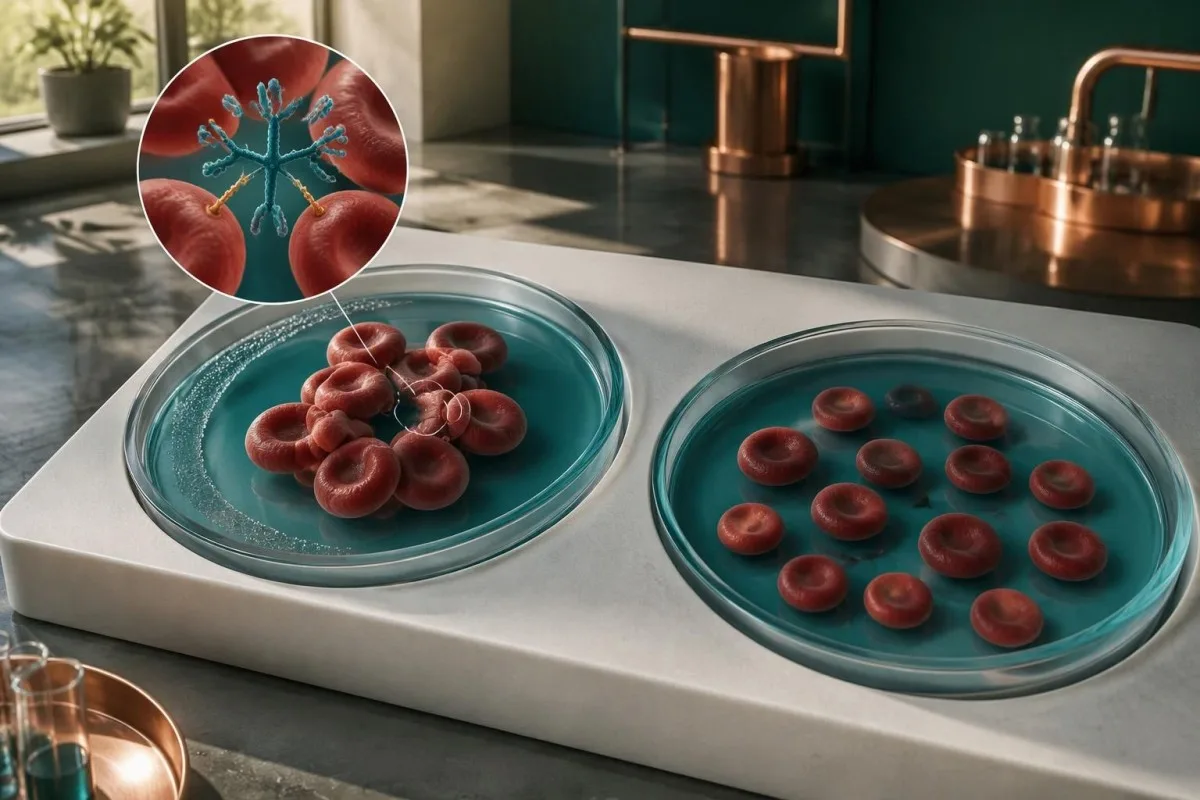
Vysoký titer chladových aglutinínov znamená, že protilátky zostávajú detegovateľné aj po značnom zriedení – nie nevyhnutne to, že poškodzujú vaše červené krvinky. Rozdiel závisí od ich teplotného rozsahu, dôkazov hemolýzy, výsledku testovania na prítomnosť komplementu a spoľahlivého zaobchádzania so vzorkou.

Kľúčové poznatky
- Pozitívny výsledok identifikuje protilátky reagujúce na chlad; samostatne však nepotvrdzuje chorobu chladových aglutinínov.
- Titer aspoň 1:64 pri 4 °C je bežne používanou diagnostickou zložkou, ale lekári potrebujú aj dôkazy hemolýzy a príslušný vzorec výsledkov pri priamom antiglobulínovom teste.
- Teplotná amplitúda označuje najvyššiu teplotu, pri ktorej protilátka reaguje; aktivita pri teplote okolo 30 °C alebo vyššej je všeobecne znepokojivejšia než aktivita obmedzená na veľmi chladné laboratórne podmienky.
- Pozitívny priamy antiglobulínový test na C3d podporuje proces sprostredkovaný komplementom, ale rovnaký vzorec sa môže vyskytovať aj mimo choroby chladových aglutinínov.
- Hodnotenie hemolýzy zahŕňa trendy hemoglobínu, retikulocyty, LDH, nepriamy bilirubín a haptoglobín, namiesto spoliehania sa na jediný abnormálny ukazovateľ.
- Manipulácia so vzorkou pri teplote 37–38 °C až do oddelenia séra môže byť potrebná pri testovaní chladových aglutinínov; pred termínom si overte pokyny odberového laboratória.
- Protilátky súvisiace s infekciou môžu byť dočasné, hoci aj v prípade, že je spúšťačom infekcia, hemolýza s klinickým významom si stále vyžaduje posúdenie.
- Naliehavé príznaky patrí bolesť na hrudi, dýchavičnosť v pokoji, mdloby alebo zmätenosť; novovzniknutá žltačka, tmavý moč alebo rýchlo sa zhoršujúca únava si vyžadujú včasné lekárske vyšetrenie.
Znamená pozitívny test na chladové aglutiníny ochorenie?
A pozitívny test na chladové aglutiníny automaticky neznamená ochorenie chladových aglutinínov. Aj vysoký titer sa musí interpretovať v súvislosti s 3 klinickými nálezmi: teplotným rozsahom pôsobenia protilátky, dôkazmi o deštrukcii červených krviniek a pozitívnym priamym antiglobulínovým testom na komplement.

Studené aglutiníny sú zvyčajne protilátky IgM, ktoré sa môžu ľahšie viazať na červené krvinky pri nižších teplotách a spôsobovať ich zhlukovanie. Pri testovaní sa bežne meria ich aktivita pri 4 °C — čo je oveľa nižšia teplota než teplota väčšiny krvi v obehu — takže výrazná reakcia v laboratóriu môže byť spojená s malou alebo žiadnou klinicky významnou aktivitou v tele.
Samostatný výsledok, ako napríklad 1:256 vám nepovie, či máte anémiu, či protilátka reaguje pri teplote blízkej telesnej teplote ani či je po ochorení dočasná. Naše vysvetlenie pozitívnych výsledkov protilátok odlišuje detekciu od diagnózy; ďalšou užitočnou otázkou je, čo ukazujú sprievodné testy.
Kantesti je Analyzátor krvných testov s umelou inteligenciou ktorý pomáha vysvetliť titer chladových aglutinínov v spojení so súvisiacimi laboratórnymi výsledkami vrátane toho, či bola uvedená teplota testovania 4 °C. Naša firemné pozadie vysvetľuje organizáciu, ktorá stojí za touto vzdelávacou službou; nenahrádzame hematologické a laboratórne vyšetrenia potrebné na stanovenie diagnózy.
Čo meria vysoký titer chladových aglutinínov?
A titer chladových aglutinínov je najvyššie zriedenie vášho séra, pri ktorom sa ešte prejaví aglutinačná reakcia definovaná laboratóriom. Výsledok 1:512 znamená, že aktivita zostáva detegovateľná aj po podstatne väčšom zriedení než pri výsledku 1:32; ani jedno číslo priamo nemeria mieru anémie.
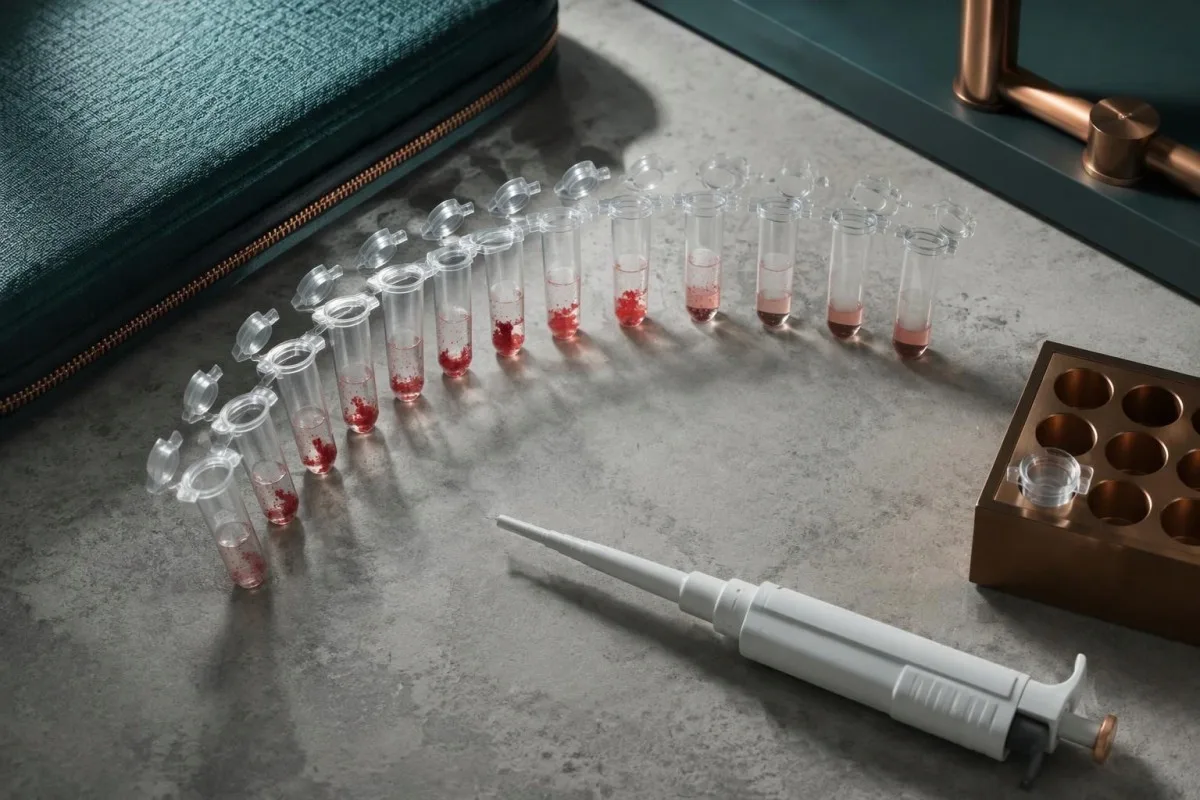
Titer najmenej 1:64 pri 4 °C je bežne používanou súčasťou diagnostiky ochorenia chladových aglutinínov, nie samostatným výsledkom skríningového vyšetrenia. Prehľad v časopise Hematology opisuje túto hranicu spolu s chronickou hemolýzou a výraznou pozitivitou C3d pri priamom antiglobulínovom teste (Berentsen, 2016); neexistuje univerzálny titer, ktorý by automaticky vyžadoval urgentnú liečbu.
Pri dvojnásobnom riedení sa bežne získavajú výsledky, ako napríklad 1:64, 1:128 a 1:256. Rozdiel o jeden stupeň môže odrážať variabilitu testu, zvolený koncový bod alebo manipuláciu so vzorkou, a nie významnú biologickú zmenu; číselné porovnanie je najspoľahlivejšie, keď rovnaké laboratórium použije rovnakú metódu a teplotu.
Niektoré laboratóriá uvádzajú iba pozitívny alebo negatívny, zatiaľ čo iné uvádzajú recipročnú hodnotu, napríklad 256 namiesto zápisu 1:256. Náš sprievodca k kvalitatívne a kvantitatívne výsledky explains that distinction; ask for the actual dilution, assay temperature and local reference interval before comparing reports.
| Úroveň | Rozmedzie | Čo to znamená |
|---|---|---|
| Low-level activity | Below 1:64 at 4°C | Often incidental when thermal amplitude is narrow and hemolysis is absent; this is not a universal laboratory reference interval. |
| Common diagnostic threshold | At least 1:64 at 4°C | Supports further assessment when hemolysis and a compatible direct antiglobulin test are present; does not confirm disease alone. |
| Higher dilution endpoint | Examples: 1:256 or 1:512 | Shows activity after greater dilution, but does not establish thermal amplitude or predict treatment need. |
| Very high reported endpoint | Example: 1:1024 or higher | Still requires clinical interpretation; no titer-only emergency threshold is established. |
Prečo môže byť teplotná amplitúda dôležitejšia ako titer
Teplotná amplitúda is the highest temperature at which a cold antibody reacts under the laboratory's testing conditions. Reactivity around 30°C or above is generally more clinically concerning than reactivity confined to 4°C, because cooler peripheral circulation can reach temperatures at which the antibody becomes active.
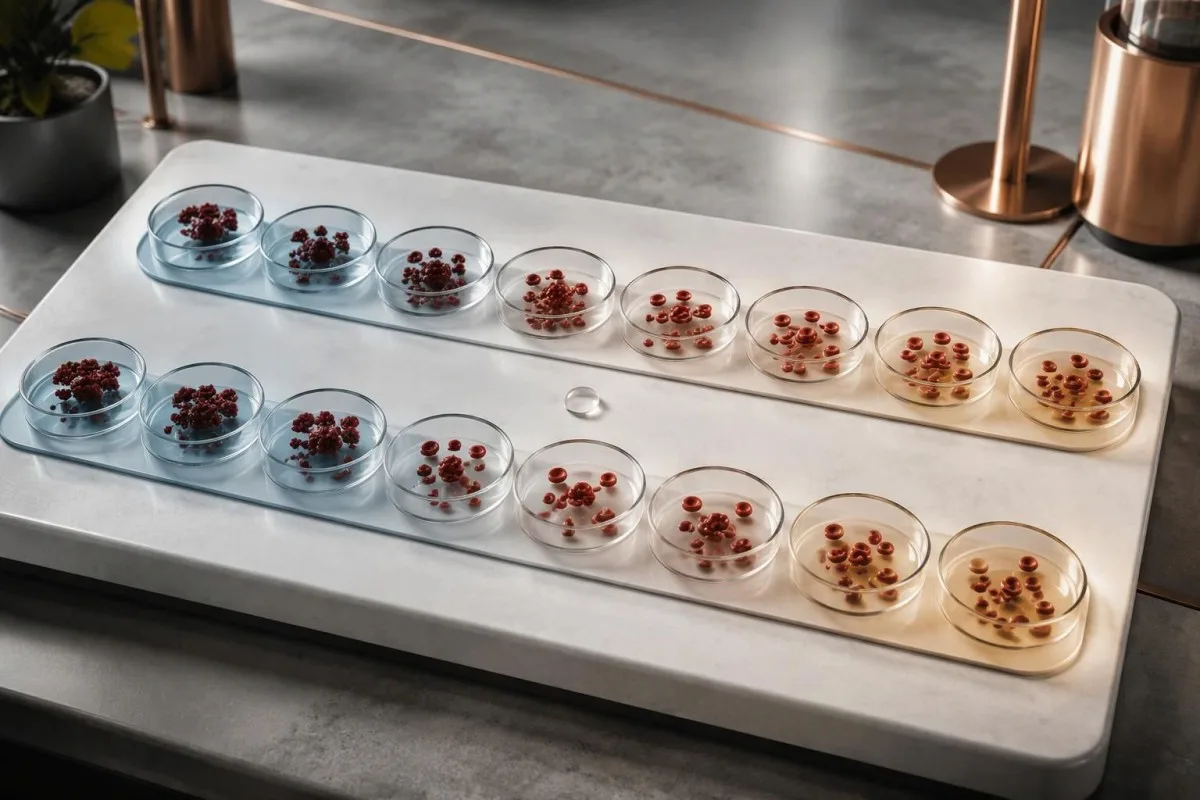
A high-titer antibody active only at 4°C may matter less clinically than a lower-titer antibody that remains active at 30–32°C. The reason is exposure: red cells do not normally circulate at refrigerator temperature, but they can encounter substantially cooler conditions in fingers, toes and other peripheral areas.
Complement can attach while red cells are cool and remain relevant after they return toward 37°C, even when the IgM antibody detaches. This explains why antibody-related injury is not simply a matter of visible clumping; our sprievodca doplnkovým testovaním also distinguishes circulating complement measurements from complement deposited on cells.
Thermal amplitude testing is not standardized into 1 universal patient-facing cutoff, and many routine reports omit it entirely. Specialist laboratories may test several temperatures, such as 4°C, room temperature, 30°C and 37°C; clinicians usually request that additional work when the titer, symptoms and hemolysis results do not fit together.
Ktoré výsledky krvných testov poukazujú na skutočnú hemolýzu?
Hemolysis means red cells are being destroyed faster than expected, and assessment usually combines 5 measurements: hemoglobin, reticulocytes, LDH, indirect bilirubin and haptoglobin. A high cold agglutinin titer without this supporting pattern does not establish a hemolytic disorder.
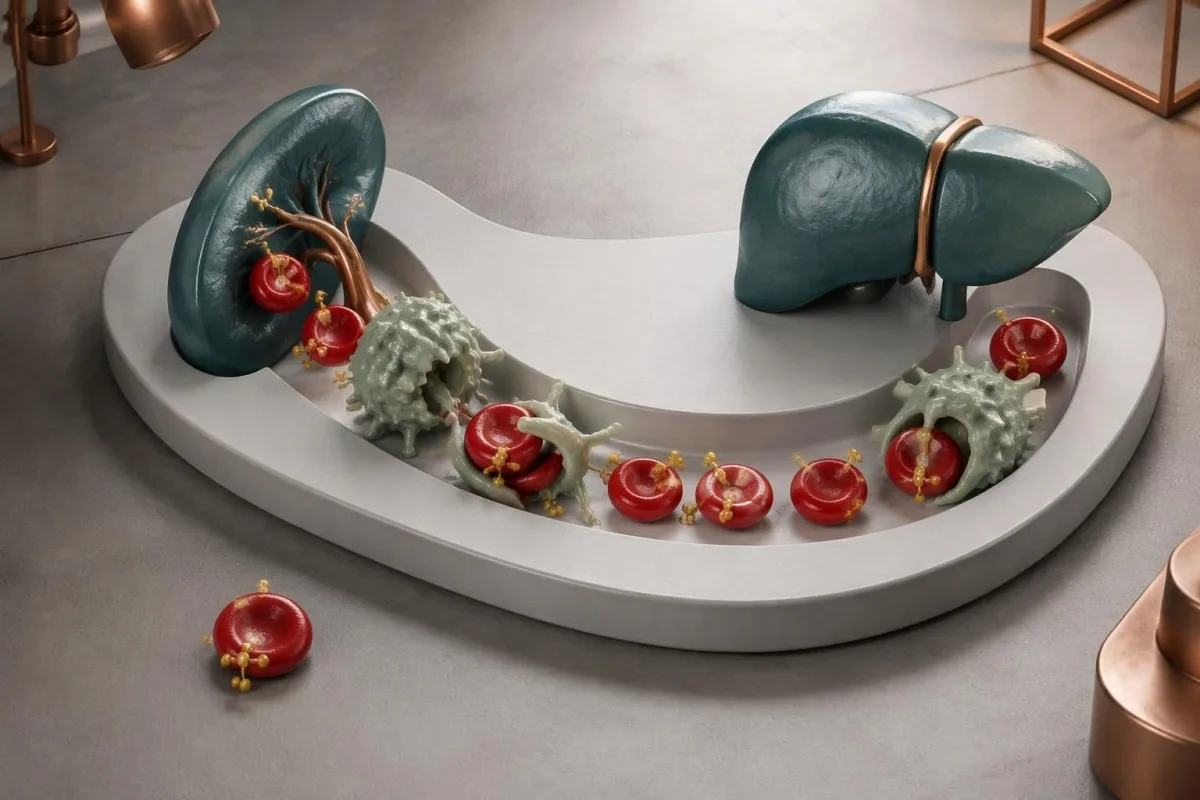
A hypothetical hemoglobin fall from 13.2 to 9.6 g/dL, accompanied by rising indirect bilirubin and LDH, is more concerning than an unchanged hemoglobin with the same titer. Reticulocytes often increase as the marrow replaces lost cells, although an early episode, nutrient deficiency or marrow disorder can blunt that response.
Low haptoglobin supports hemolysis but is not definitive: liver disease can reduce production, while an acute-phase response can raise the concentration despite red-cell destruction. Our explanation of príčinách nízkeho haptoglobínu covers these exceptions; a result below 1 laboratory's reference limit should be interpreted with the other markers rather than alone.
Kantesti AI helps explain LDH trends, including why a hypothetical rise from 220 to 650 U/L needs the laboratory's reference interval and specimen-quality information. Our LDH interpretation guide describes other sources of elevation; normal hemoglobin also does not exclude compensated hemolysis when the marrow is keeping pace.
Čo znamená pozitívny priamy antiglobulínový test na C3d?
A C3d-positive direct antiglobulin test, also called a direct Coombs test, detects complement fragments attached to red cells. Cold agglutinin disease typically produces strong C3d positivity with absent or sometimes weak IgG reactivity, but these 2 antibody-testing results are not sufficient without clinical evidence of hemolysis.

The direct antiglobulin test and the cold agglutinin titer answer 2 odlišné otázky: what is attached to your red cells, and what cold-reactive activity is present in your serum? The Blood Reviews international consensus recommends a monospecific direct antiglobulin test as part of autoimmune hemolytic anemia assessment (Jäger et al., 2020).
A report stating only DAT positive may not distinguish IgG from C3d; asking for those 2 components can materially change interpretation. Our guide to a pozitívny priamy Coombs test explains why transfusion-related antibodies, medications and other immune processes can also produce a positive result without proving cold agglutinin disease.
In a child with abrupt post-illness hemolysis, a C3d-positive DAT and a low cold agglutinin titer can raise a different possibility: paroxysmal cold hemoglobinuria. This condition usually involves an IgG antibody assessed by Donath–Landsteiner testing, so a cold agglutinin result below 1:64 should not end the investigation when symptoms suggest significant hemolysis.
Náhodne zistené protilátky, infekcie a pretrvávajúce ochorenie
Incidental cold antibodies may cause no symptoms, while infection-related antibodies can be temporary and occasionally cause substantial hemolysis. Persistent cold agglutinin disease is usually associated with a clonal marrow B-cell process; these 3 situations require different follow-up rather than the same response to a positive test.
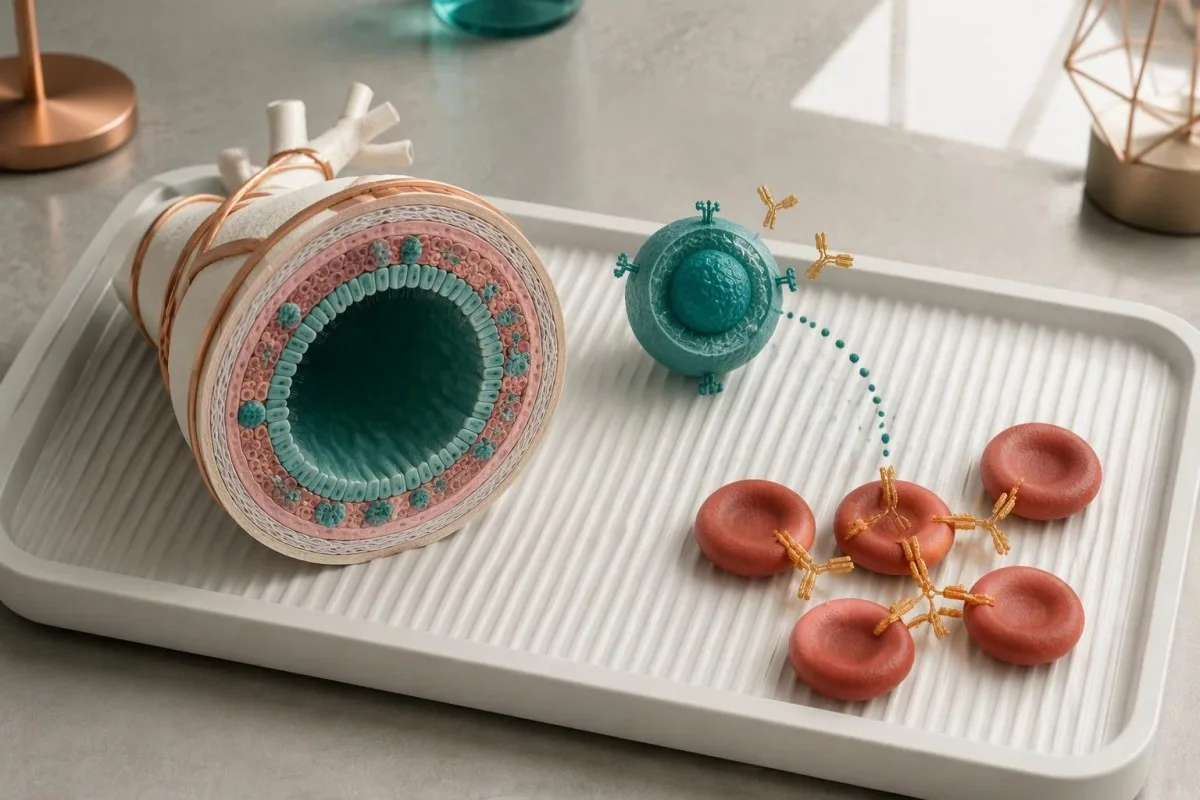
Mycoplasma pneumoniae and Epstein–Barr virus are 2 recognized infection-related associations, but a cold agglutinin test cannot reliably diagnose either infection. Our guide to Mycoplasma antibody interpretation explains why antibody timing and persistence complicate that diagnosis; respiratory symptoms may require pathogen-directed testing rather than inference from the titer.
Recent fever or sore throat changes the questions clinicians ask, not the urgency of genuine hemolysis: a hemoglobin of 8,5 g/dl with new jaundice still requires assessment even if the antibody is expected to be temporary. Our EBV result interpretation explains how VCA and EBNA patterns provide more specific information about exposure timing.
Terminology matters: cold agglutinin syndrome generally describes cold-antibody hemolysis secondary to another condition, while cold agglutinin disease is a distinct, usually persistent disorder. A titer of 1:512 does not identify lymphoma; specialist investigation may find a small marrow clone without overt lymphoma, and incidental antibodies do not automatically justify cancer investigations.
Prečo môže byť potrebné vzorku pred testovaním zohriať
For cold agglutinin titer testing, many specialist laboratories require the specimen to remain at 37–38°C from collection until serum separation. Cooling before separation can allow antibodies to bind the patient's cells, potentially lowering the antibody activity left in the serum and producing a misleading result.
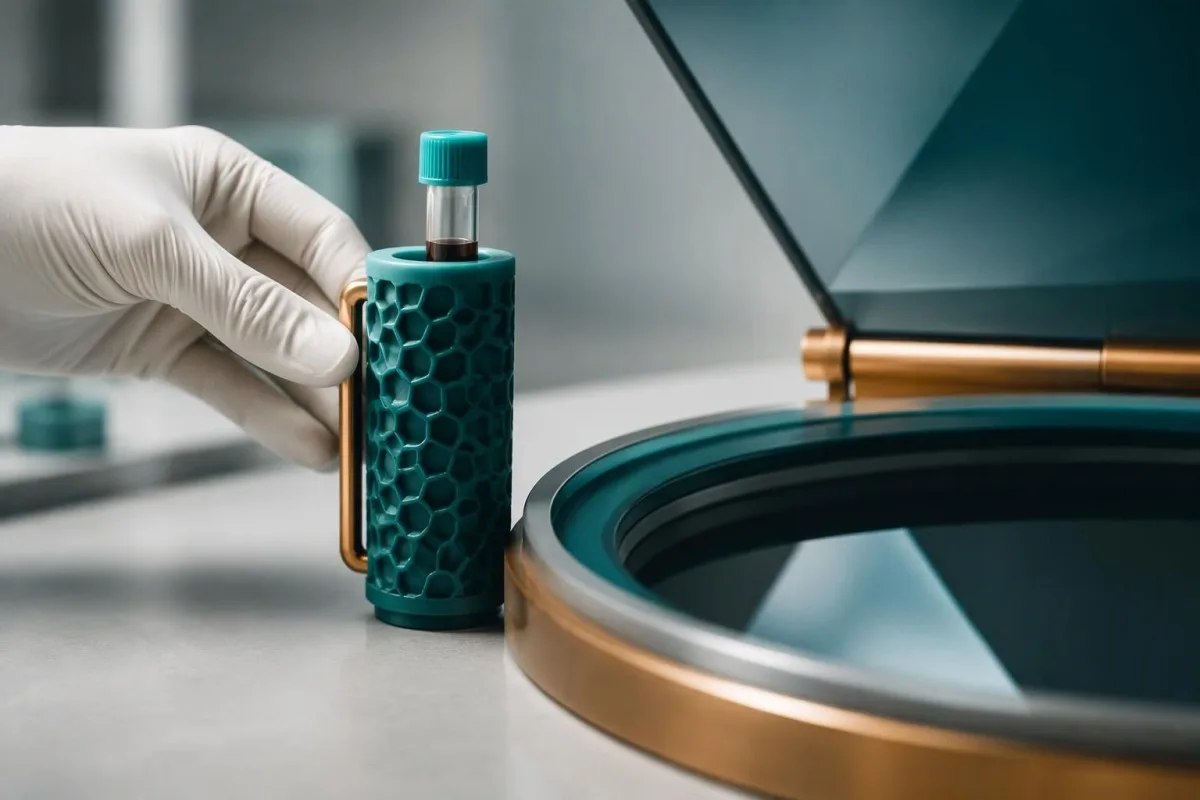
The pre-analytical requirement is different from the assay temperature: serum may be kept near 37°C during preparation and then deliberately tested at 4°C. The Hematology review emphasizes warm collection and separation for cold antibody studies (Berentsen, 2016); the laboratory creates the controlled cooling step only after an appropriate specimen is available.
Warming a specimen after it has already cooled may not fully reverse every earlier problem, so repeating the test can be more useful than interpreting an unexpected low titer. Our repeat specimen guide explains another handling distinction: cells breaking inside a collection tube are not the same as hemolysis occurring inside your body.
Before the appointment, ask 3 praktické otázky: which tube is required, how warmth will be maintained and where serum separation will occur. Titer testing, an EDTA specimen for the DAT and a warmed CBC may have different instructions; do not heat, transport or store your own specimen unless the collecting service specifically directs you.
Ako môžu chladové aglutiníny skresliť váš CBC
Cold-related red-cell clumping can falsely lower the RBC count and raise MCV or MCHC on an automated complete blood count. A CBC repeated after laboratory warming near 37°C can help identify this artifact, although correcting the numbers does not by itself establish or exclude cold agglutinin disease.
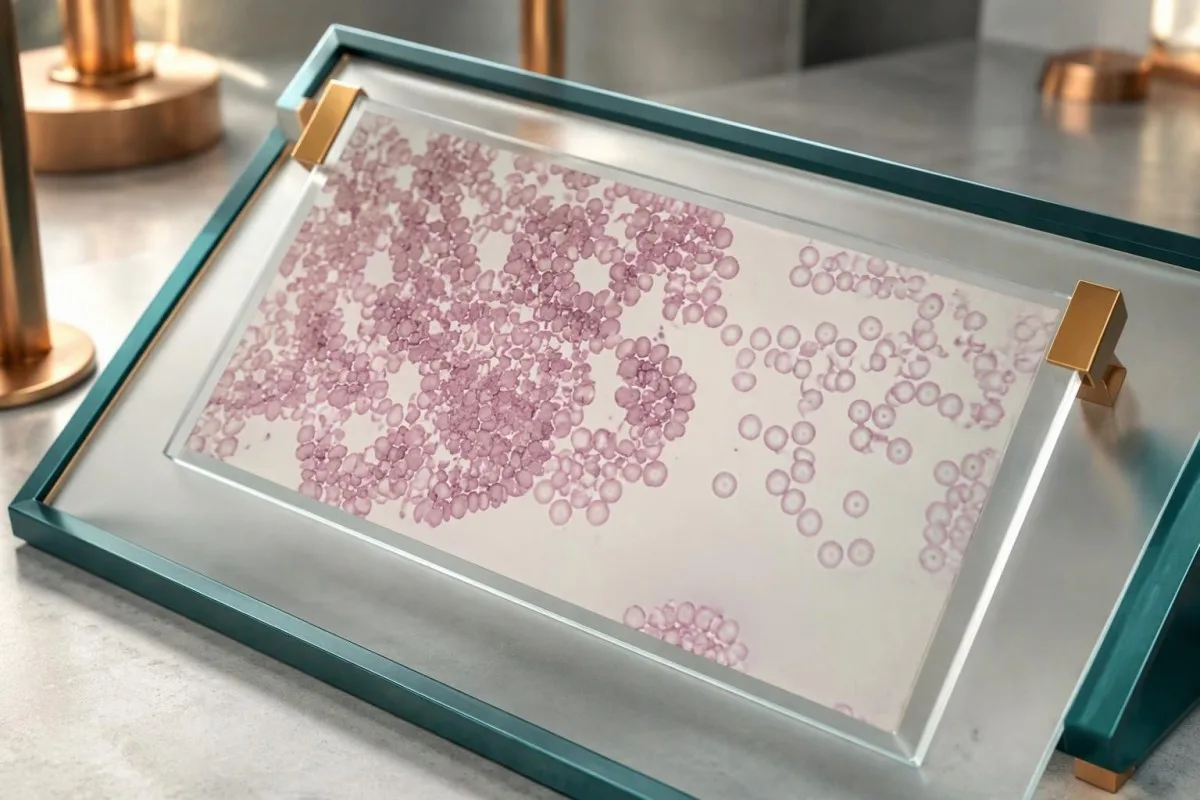
Automated counters may treat a cluster as 1 large particle rather than several separate cells, making the calculated mean cell volume appear high. Hematocrit and derived indices can become internally inconsistent, while photometrically measured hemoglobin is often less affected; the laboratory must still check whether other specimen or instrument issues are present.
Napríklad hypotetický MCHC of 40 g/dL with an analyzer agglutination flag should prompt verification rather than an immediate diagnosis of an unusually concentrated red-cell disorder. Our high MCHC explanation covers this reasoning; genuine anemia can coexist with an artifact, so neither finding should erase the other.
Kantesti je platforma na interpretáciu krvného testu AI that helps explain discrepancies between CBC values and a reported cold agglutinin titer, including whether a result was rerun near 37°C. Our Sprievodca AI technológiou describes the interpretation process; only the testing laboratory can confirm that warming corrected a measurement error.
Čo potvrdzuje diagnózu choroby chladových aglutinínov?
A cold agglutinin disease diagnosis usually combines chronic hemolysis, a strongly C3d-positive DAT and a cold agglutinin titer of at least 1:64 at 4°C, with assessment for secondary causes. These are linked diagnostic components, not a checklist that an isolated positive report can complete.
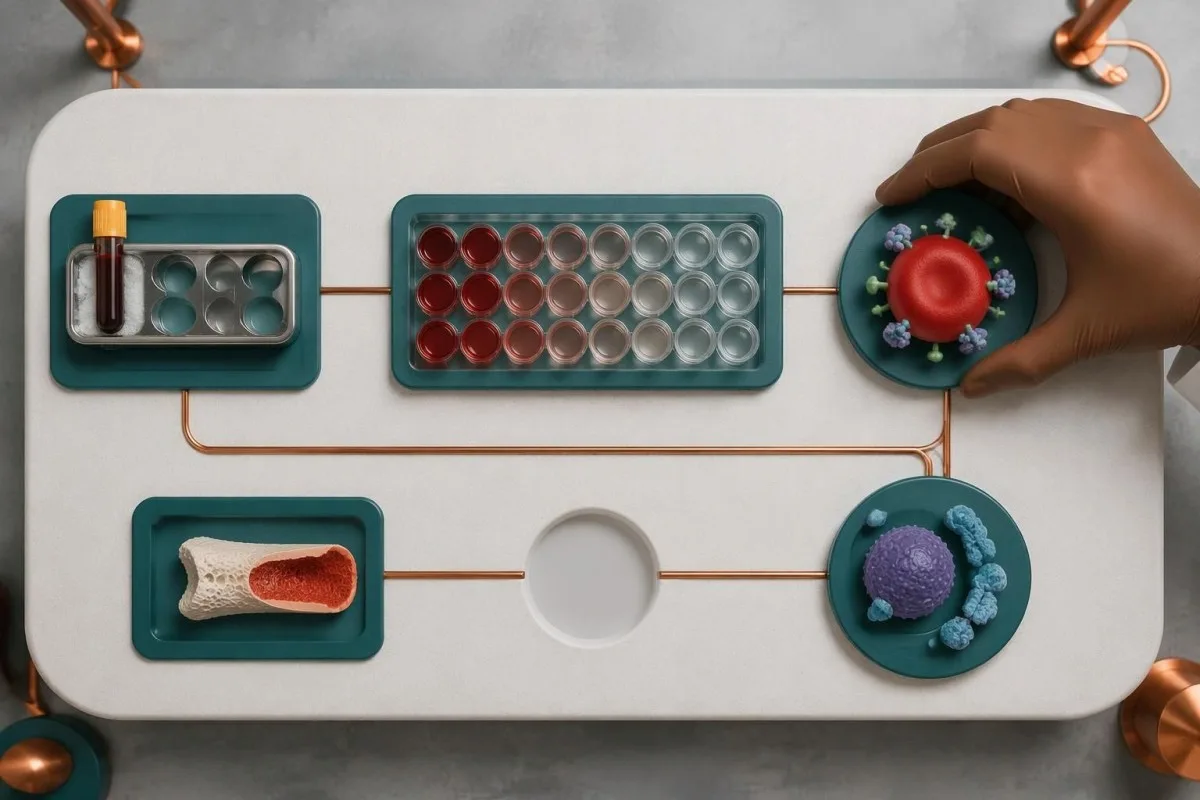
Clinicians first verify the 2 core laboratory patterns—hemolysis and immune attachment to cells—then assess symptoms, duration, medications, recent infections and transfusion history. A broad thermal amplitude can support interpretation when routine results are borderline or discordant; the international consensus treats autoimmune hemolytic anemia as a pattern-based diagnosis (Jäger et al., 2020).
Persistent findings may lead to serum protein electrophoresis, immunofixation and hematology-directed marrow assessment to characterize antibody production. Our guide to immunofixation band results explains why a monoclonal band needs context; even a titer of 1:1024 cannot determine whether a detectable protein represents overt lymphoma or a smaller clonal process.
Kantesti AI can help organize 3 groups of information for the appointment: antibody tests, hemolysis markers and changes over time. It cannot establish whether the specimen followed the warm-handling protocol or replace a specialist's assessment of marrow findings; bring the full report, because an isolated screenshot may omit the method and interpretive comments.
Tri príklady: rovnaký titer, rôzne ďalšie kroky
The same cold agglutinin titer can lead to different next steps because clinical significance depends on temperature-dependent activity and red-cell injury. The following 3 examples are hypothetical teaching scenarios, not patient accounts or rules for diagnosing yourself from a single report.
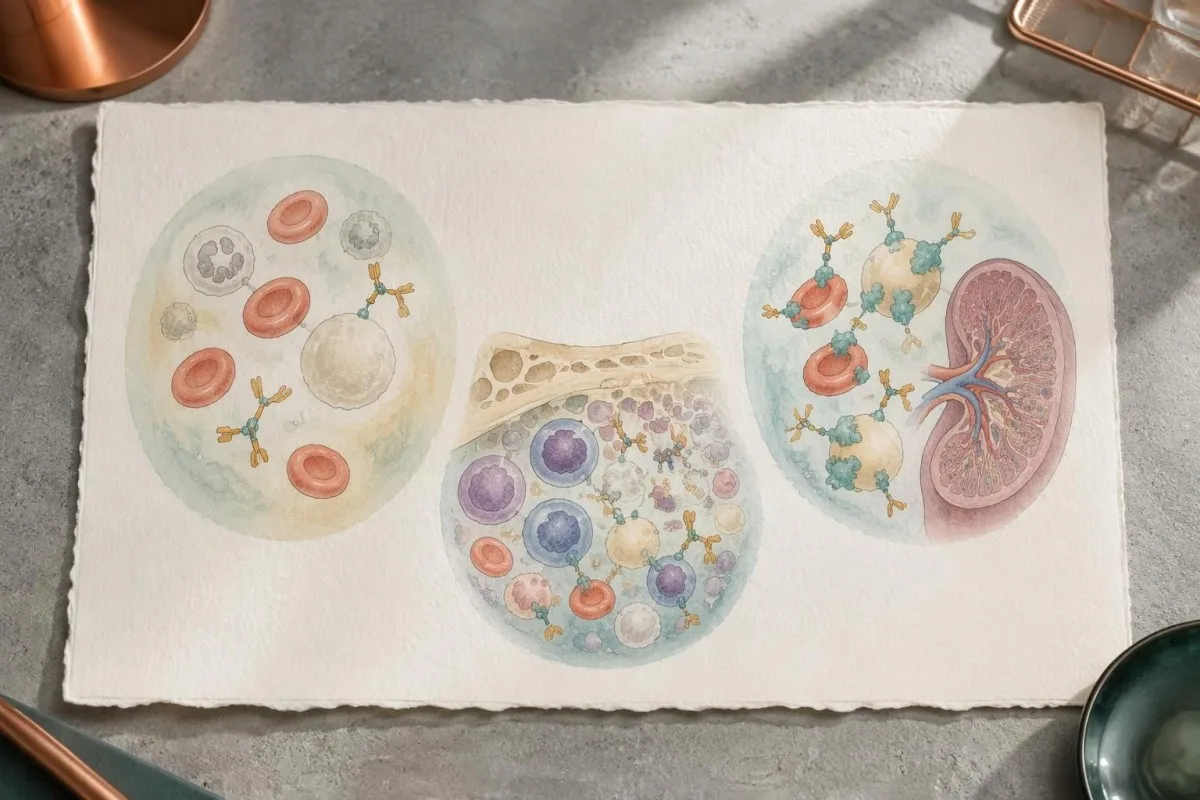
In the first example, an adult has a titer of 1:256 at 4°C, hemoglobin of 14.0 g/dL, normal hemolysis markers and no cold-related symptoms. If specialist testing shows a narrow thermal amplitude, incidental antibodies become more plausible; the useful step is confirming the context and need for follow-up, not assuming that antibody detection requires treatment.
In the second example, a person recovering from a respiratory illness has a titer of 1:256 and hemoglobin that has fallen from 13.5 to 10.2 g/dL, with rising indirect bilirubin. An infection-associated syndrome is possible, but the falling hemoglobin still needs assessment; our polychromasia explanation describes one smear clue to the marrow's replacement response.
In the third example, a person has months of fatigue, a titer of 1:256, strong C3d positivity, low haptoglobin and antibody reactivity at 30°C. Persistent clinically significant cold-antibody hemolysis becomes more likely; hematology assessment addresses diagnosis and treatment need, while the identical titer across all 3 examples shows why the number alone cannot choose the pathway.
Ktoré príznaky si vyžadujú bezodkladné lekárske vyšetrenie?
Chest pain, breathlessness at rest, fainting or confusion require emergency assessment, regardless of the cold agglutinin titer. New jaundice, dark urine or rapidly worsening fatigue warrant prompt, often same-day medical review; a result below 1:64 does not make these symptoms safe to ignore.
A rapid hemoglobin decline can be more dangerous than a stable low value, because your circulation has less time to adapt. A hypothetical fall from 12 to 8 g/dL over several days deserves prompt assessment even if someone with a long-standing, monitored value near 8 g/dL has fewer symptoms; these examples are not universal transfusion thresholds.
Dark urine can reflect hemoglobin released during marked intravascular hemolysis, but dehydration, liver conditions and urinary causes can produce similar appearances. Our dark urine assessment guide explains the alternatives; dark urine together with jaundice or weakness should not be dismissed because only 1 antibody result is abnormal.
Cold-related blue or purple fingers can occur with agglutination, but persistent discoloration, severe pain or failure to improve after gentle warming needs urgent evaluation for impaired circulation. Clinically significant cold agglutinin disease also carries increased clot risk; sudden breathlessness or 1 newly swollen leg requires assessment rather than attribution to cold sensitivity alone.
Ako sa udržať v teple a pripraviť na klinické zákroky
Keeping the whole body warm can reduce cold-triggered symptoms in clinically significant cold-antibody disorders. Tell the care team before transfusion, anesthesia or a procedure, because laboratory compatibility testing and clinical temperature management may need coordination near 37°C rather than routine handling.

Practical protection includes layers, gloves, warm footwear and avoiding abrupt whole-body cooling; do not test your tolerance with an ice bath or deliberate cold challenge. Reactivity around 30°C does not translate into 1 safe outdoor temperature, because wind, wet clothing, exposure duration and individual circulation change how much peripheral tissues cool.
For transfusion, the laboratory may perform antibody investigation and compatibility testing at 37°C to limit cold-antibody interference while still identifying clinically significant additional antibodies. Our transfusion compatibility guide explains that distinction; a clinical warming device may also be used, but emergency treatment should not be delayed unnecessarily while pursuing perfect routine test conditions.
Izolované 1:128 titer without hemolysis does not automatically mean you need to avoid all travel, exercise or procedures. The useful precaution is sharing the report and any prior laboratory interference with the treating team; clinical staff—not the patient—should decide whether warmed fluids, a transfusion warmer or additional temperature monitoring are necessary.
Kedy je potrebná liečba a čo sa sleduje?
Treatment is guided by anemia, symptoms, transfusion need and functional impact—not a titer alone. In clinically significant cold agglutinin disease, specialist options include B-cell-directed therapy and complement inhibition; a titer of 1:512 without attributable symptoms or hemolysis does not itself establish a reason to start medication.
Sutimlimab inhibits C1s, an early classical complement component, and can reduce complement-mediated hemolysis in adults with cold agglutinin disease. It does not remove the IgM antibody, so cold-related agglutination and circulation symptoms may persist even if hemoglobin improves; immunization and infection-risk precautions must follow the product information and the specialist's plan.
B-cell-directed options include rituximab-based treatment, sometimes combined with another agent in selected patients; the appropriate choice depends on goals, comorbidities and treatment tolerance. Corticosteroids, commonly used for warm autoimmune hemolytic anemia, generally perform poorly in cold agglutinin disease; the 2020 international consensus emphasizes distinguishing the subtype before applying a treatment pathway (Jäger et al., 2020).
Kantesti helps explain why a hypothetical hemoglobin improvement from 8.7 to 11.8 g/dL, falling bilirubin and fewer transfusions can matter more than a persistently high titer. Our red-cell monitoring guide explains reticulocytes and related markers; do not change treatment from an AI interpretation, and do not assume anemia means iron deficiency.
Bezpečné používanie vašej správy: dôkazy a obmedzenia AI
Kantesti je službe na interpretáciu výsledkov AI laboratórnych testov that helps organize cold agglutinin results for discussion, but it cannot independently confirm cold agglutinin disease. A useful interpretation needs 3 information groups: the antibody method and handling, the hemolysis pattern and the patient's symptoms and history.

Keep the complete report rather than only the 1:256 result: the test temperature, reference interval, DAT components and laboratory comments can change its meaning. Useful appointment questions include whether hemolysis is present, whether thermal amplitude testing would help and whether specimen handling was adequate; bring earlier hemoglobin values when available.
The Kantesti technical benchmark listed below concerns 100 000 syntetických testovacích prípadov, not 100,000 patients with cold agglutinin disease. The accompanying validation framework describes an assessment approach, not proof that AI can diagnose this rare condition; our validation and oversight page provides the appropriate context for these research publications and their limitations.
Before sharing 1 report or a series of reports, review consent and remove information you do not need to provide, especially when the results belong to someone else. Our pokyny týkajúce sa súkromia a údajov explains data-handling considerations; urgent symptoms belong with emergency or clinical services, not in an upload queue awaiting interpretation.
Často kladené otázky
Znamená pozitívny test na chladové aglutiníny, že mám ochorenie spôsobené chladovými aglutinínmi?
Pozitívny test na chladové aglutiníny sám osebe nepotvrdzuje diagnózu ochorenia spôsobeného chladovými aglutinínmi. Titer najmenej 1 : 64 pri teplote 4 °C je bežne používanou súčasťou diagnostiky, lekári však posudzujú aj chronickú hemolýzu a zodpovedajúci priamy antiglobulínový test, zvyčajne silne pozitívny na C3d. Pozitívne výsledky môžu spôsobovať aj náhodne prítomné protilátky alebo protilátky súvisiace s infekciou. Pri objasňovaní nejednoznačných nálezov pomáha určenie teplotného rozsahu aktivity a spoľahlivá manipulácia so vzorkou.
Je nebezpečný titr chladových aglutinínov 1 : 256 alebo 1 : 512?
Titer chladových aglutinínov 1 : 256 alebo 1 : 512 nepredstavuje samostatnú hranicu nebezpečenstva. Výsledok ukazuje, do akej miery možno sérum zriediť, pričom aktivita protilátok zostáva za podmienok testu detegovateľná. Protilátka aktívna pri teplote približne 30 °C môže mať väčší klinický význam než protilátka s vyšším titrom, ktorá reaguje iba pri 4 °C. O naliehavosti vyšetrenia rozhodujú príznaky, vývoj hladiny hemoglobínu a markery hemolýzy.
Čo je tepelná amplitúda pri teste na chladové aglutiníny?
Thermal amplitude is the highest temperature at which a cold antibody reacts under the laboratory's testing conditions. Reactivity around 30°C or above is generally more concerning than activity restricted to 4°C because peripheral circulation can become cool enough for the antibody to act. Thermal amplitude is different from titer, which measures activity after dilution. Specialist laboratories may assess it when routine findings are discordant or the clinical significance is unclear.
Prečo sa musí vzorka na vyšetrenie chladových aglutinínov uchovávať v teple?
Many laboratories require a cold agglutinin specimen to remain at 37–38°C from collection until serum separation. Premature cooling can allow antibody to bind the patient's cells, leaving less detectable activity in the separated serum and potentially producing a falsely low result. This preparation requirement is separate from deliberately testing the serum at 4°C. Confirm the collecting laboratory's instructions rather than attempting to warm or transport the specimen yourself.
Môže infekcia spôsobiť pozitívny test na chladové aglutiníny?
Infekcie vrátane Mycoplasma pneumoniae a vírusu Epsteinovej-Barrovej môžu súvisieť s dočasnými chladovo reaktívnymi protilátkami. Titer, ako napríklad 1:256, nedokáže určiť, o ktorú infekciu ide ani či je stále aktívna. Protilátky súvisiace s infekciou niekedy spôsobujú klinicky významnú hemolýzu, preto si pokles hemoglobínu alebo novovzniknutý ikterus stále vyžadujú vyšetrenie. Na diagnostiku infekcie sú užitočnejšie testy zamerané na konkrétny patogén a klinický priebeh v čase než chladové aglutiníny.
Môžu studené aglutiníny spôsobiť falošne zvýšené hodnoty MCV alebo MCHC?
Chladové aglutiníny môžu spôsobovať zhluky červených krviniek, ktoré skresľujú automatizované merania CBC vrátane falošne zvýšených hodnôt MCV alebo MCHC a falošne nízkeho počtu RBC. Napríklad hodnota MCHC 40 g/dL spolu s príznakom aglutinácie by mala viesť k laboratórnemu overeniu, nie k okamžitej interpretácii ako skutočnej abnormality buniek. Opakované meranie po zahriatí na približne 37 °C môže túto interferenciu odstrániť. Opravený výsledok CBC nevylučuje súčasnú hemolýzu.
Ktoré príznaky si po pozitívnom výsledku testu na chladové aglutiníny vyžadujú urgentnú lekársku starostlivosť?
Bolesť na hrudníku, dýchavičnosť v pokoji, mdloby alebo zmätenosť si vyžadujú neodkladné vyšetrenie bez ohľadu na titer chladových aglutinínov. Novovzniknutá žltačka, tmavý moč alebo rýchlo sa zhoršujúca slabosť si vyžadujú promptné, často ešte v ten istý deň vykonané lekárske vyšetrenie. Rýchly pokles hemoglobínu, napríklad hypotetická zmena z 12 na 8 g/dl, je znepokojujúci, hoci naliehavosť u každého človeka neurčuje žiadna jednotlivá hodnota. Pretrvávajúce bolestivé sfarbenie prstov alebo náhle príznaky naznačujúce krvnú zrazeninu si tiež vyžadujú urgentné vyšetrenie.
Získajte vysvetlenie výsledkov krvných testov
Nahrajte svoj laboratórny nález a AI nástroja Kantesti vám v priebehu niekoľkých sekúnd vysvetlí každý biomarker jednoduchým jazykom. Používa ho viac než 2 milióny ľudí na celom svete.
Referencie
- Klein, T., Mitchell, S., & Weber, H. (2026). Predregistrovaný, na rubrikách založený automatizovaný technický benchmark interpretačného enginu Kantesti na vyšetrenie krvi na 100 000 syntetických testovacích prípadoch. Kantesti AI lekársky výskum. DOI
- Klein, T., Mitchell, S., & Weber, H. (2026). Klinický validačný rámec v2.0 (stránka lekárskej validácie). Kantesti AI lekársky výskum. DOI
- Berentsen S. (2016). Cold agglutinin disease. Hematology, American Society of Hematology Education Program. DOI
- Jäger U et al. (2020). Diagnosis and treatment of autoimmune hemolytic anemia in adults: Recommendations from the First International Consensus Meeting. Blood Reviews. DOI
- 2 milióny+Analyzované testy
- 127+Krajiny
- 100+Jazyky
O zdravotníckom tíme


Signály dôvery E-E-A-T Trust Signals
Skúsenosti
Klinické hodnotenie vedené lekárom pracovných postupov interpretácie laboratórnych výsledkov.
Odbornosť
Laboratórna medicína so zameraním na to, ako sa biomarkery správajú v klinickom kontexte.
Autoritatívnosť
Lekársky recenzoval Dr. Thomas Klein, s príspevkami Dr. Sarah Mitchell a prof. Dr. Hansa Webera.
Dôveryhodnosť
Interpretácia založená na dôkazoch s jasnými následnými krokmi na zníženie poplachu.






Zdravotnícke upozornenie
Tento článok je určený len na vzdelávacie účely a nepredstavuje lekárske poradenstvo. Pri rozhodnutiach o diagnostike a liečbe sa vždy poraďte s kvalifikovaným poskytovateľom zdravotnej starostlivosti.
Publikované · Kontaktujte redakčný tím
Vydáva Kantesti Ltd, registrovaná v Anglicku a Walese, číslo spoločnosti. 17090423, Londýn, Spojené kráľovstvo.
