
Wysokie miano aglutynin zimnych oznacza, że przeciwciała pozostają wykrywalne po znacznym rozcieńczeniu — niekoniecznie, że uszkadzają krwinki czerwone. Rozróżnienie zależy od zakresu temperatur, dowodów hemolizy, dodatniego wyniku badania w kierunku dopełniacza oraz prawidłowego postępowania z próbką.

Najważniejsze wnioski
- Wynik dodatni wykrywa przeciwciała reagujące na zimno; samodzielnie nie potwierdza choroby z zimnymi aglutyninami.
- Miano co najmniej 1:64 w temperaturze 4°C jest często stosowanym elementem diagnostycznym, ale lekarze potrzebują również dowodów hemolizy i odpowiedniego wzorca wyniku bezpośredniego testu antyglobulinowego.
- Amplituda termiczna określa najwyższą temperaturę, w której reaguje przeciwciało; aktywność w temperaturze około 30°C lub wyższej budzi na ogół większy niepokój niż aktywność ograniczona do bardzo niskich temperatur laboratoryjnych.
- Dodatni wynik bezpośredniego testu antyglobulinowego w kierunku C3d przemawia za procesem zależnym od dopełniacza, ale taki sam wzorzec może występować także poza chorobą z zimnymi aglutyninami.
- Ocena hemolizy obejmuje analizę zmian stężenia hemoglobiny, retikulocytów, LDH, bilirubiny pośredniej i haptoglobiny, a nie polega na jednym nieprawidłowym wskaźniku.
- Postępowanie z próbką w temperaturze 37–38°C może być wymagane do momentu oddzielenia surowicy na potrzeby badania w kierunku zimnych aglutynin; przed wizytą potwierdź zalecenia laboratorium pobierającego próbkę.
- Przeciwciała związane z zakażeniem mogą mieć charakter przejściowy, choć istotna klinicznie hemoliza nadal wymaga oceny, nawet gdy jej czynnikiem wyzwalającym jest zakażenie.
- Objawy pilne obejmują ból w klatce piersiowej, duszność w spoczynku, omdlenie lub dezorientację; nowa żółtaczka, ciemny mocz lub szybko nasilające się zmęczenie wymagają pilnej konsultacji lekarskiej.
Czy dodatni wynik testu na aglutyniny zimne oznacza chorobę?
A dodatni wynik testu na obecność zimnych aglutynin nie oznacza automatycznie choroby zimnych aglutynin. Nawet wysokie miano należy interpretować w zestawieniu z 3 ustaleniami klinicznymi: zakresem temperatur, w którym reagują przeciwciała, dowodami na niszczenie krwinek czerwonych oraz dodatnim wynikiem testu antyglobulinowego bezpośredniego w kierunku dopełniacza.

hiperglikemia to zazwyczaj przeciwciała IgM, które mogą wiązać się z krwinkami czerwonymi łatwiej w niższych temperaturach i powodować ich zlepianie. Badanie zwykle mierzy ich aktywność w temperaturze 4°C — znacznie niższej niż temperatura większości krwi krążącej — dlatego wyraźna reakcja laboratoryjna może współwystępować z niewielką lub żadną klinicznie istotną aktywnością w organizmie.
Pojedynczy wynik, taki jak 1:256 nie pozwala ustalić, czy masz niedokrwistość, czy przeciwciało reaguje w temperaturze zbliżonej do temperatury ciała ani czy ma charakter przejściowy po przebytej chorobie. Nasze wyjaśnienie dotyczące dodatnich wyników przeciwciał oddziela wykrycie od rozpoznania; kolejne przydatne pytanie dotyczy tego, co wykazują towarzyszące badania.
Kantesti jest Analizator do badań krwi AI który pomaga wyjaśnić miano zimnych aglutynin w zestawieniu z powiązanymi wynikami badań laboratoryjnych, w tym informacją, czy podana temperatura badania wynosiła 4°C. Nasza tło firmy wyjaśnia organizację stojącą za tym serwisem edukacyjnym; nie zastępujemy oceny hematologicznej i laboratoryjnej niezbędnej do ustalenia rozpoznania.
Co mierzy wysokie miano aglutynin zimnych?
A miano zimnych aglutynin to największe rozcieńczenie surowicy, przy którym nadal występuje określona przez laboratorium reakcja aglutynacji. Wynik 1:512 oznacza, że aktywność pozostaje wykrywalna po znacznie większym rozcieńczeniu niż wynik 1:32; żadna z tych liczb nie mierzy bezpośrednio stopnia niedokrwistości.
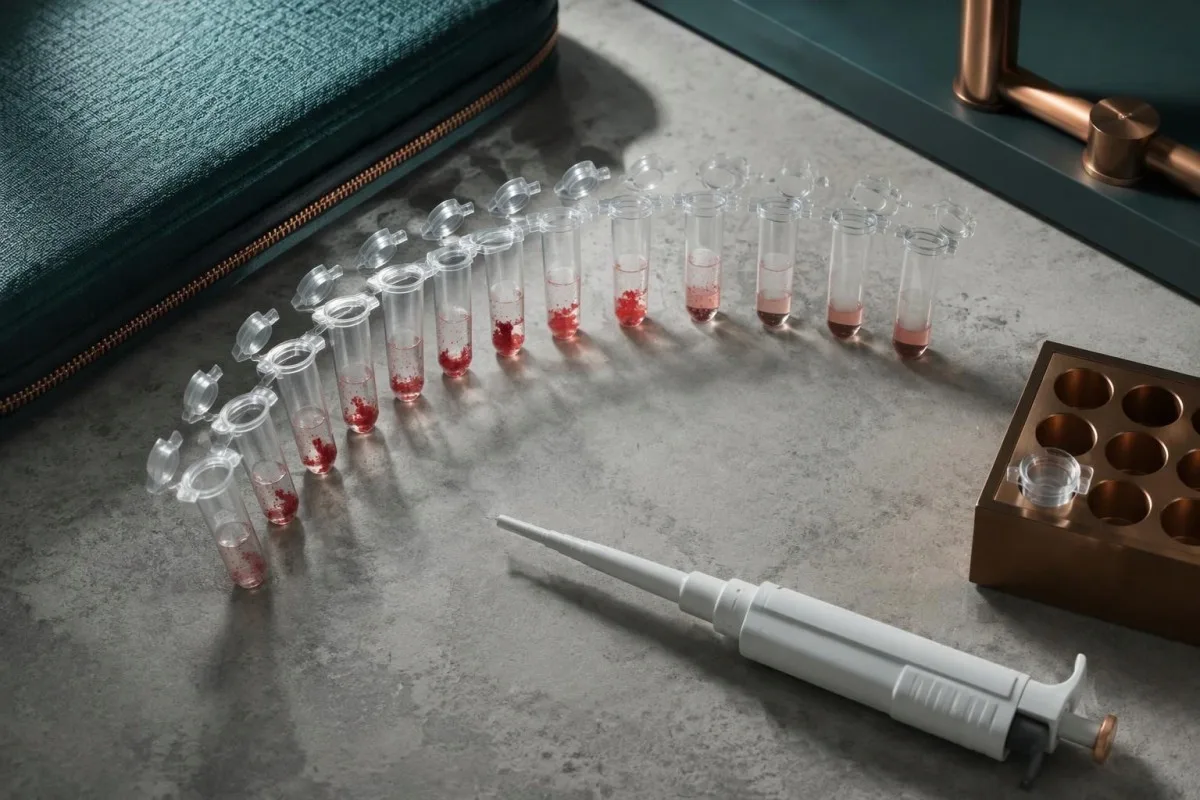
Miano wynoszące co najmniej 1:64 w temperaturze 4°C jest powszechnie stosowanym elementem rozpoznania choroby zimnych aglutynin, a nie samodzielną oceną przesiewową. Przegląd Hematology opisuje ten próg w połączeniu z przewlekłą hemolizą i silną dodatnią reakcją C3d w teście antyglobulinowym bezpośrednim (Berentsen, 2016); nie ma uniwersalnego miana, które automatycznie wymagałoby leczenia w trybie nagłym.
Rozcieńczenia w krokach dwukrotnych często dają wyniki, takie jak 1:64, 1:128 i 1:256. Różnica o jeden krok może wynikać ze zmienności testu, przyjętego punktu końcowego lub sposobu postępowania z próbką, a nie ze znaczącej zmiany biologicznej; porównanie wartości liczbowych jest najbardziej miarodajne, gdy to samo laboratorium stosuje tę samą metodę i temperaturę.
Niektóre laboratoria podają tylko wynik dodatni lub ujemny, podczas gdy inne podają liczbę odwrotną, na przykład 256 zamiast zapisu 1:256. Nasz poradnik dotyczący wyniki jakościowe i ilościowe explains that distinction; ask for the actual dilution, assay temperature and local reference interval before comparing reports.
| Poziom | Zakres | Co to oznacza |
|---|---|---|
| Low-level activity | Below 1:64 at 4°C | Often incidental when thermal amplitude is narrow and hemolysis is absent; this is not a universal laboratory reference interval. |
| Common diagnostic threshold | At least 1:64 at 4°C | Supports further assessment when hemolysis and a compatible direct antiglobulin test are present; does not confirm disease alone. |
| Higher dilution endpoint | Examples: 1:256 or 1:512 | Shows activity after greater dilution, but does not establish thermal amplitude or predict treatment need. |
| Very high reported endpoint | Example: 1:1024 or higher | Still requires clinical interpretation; no titer-only emergency threshold is established. |
Dlaczego amplituda termiczna może mieć większe znaczenie niż miano
Amplituda termiczna is the highest temperature at which a cold antibody reacts under the laboratory's testing conditions. Reactivity around 30°C or above is generally more clinically concerning than reactivity confined to 4°C, because cooler peripheral circulation can reach temperatures at which the antibody becomes active.
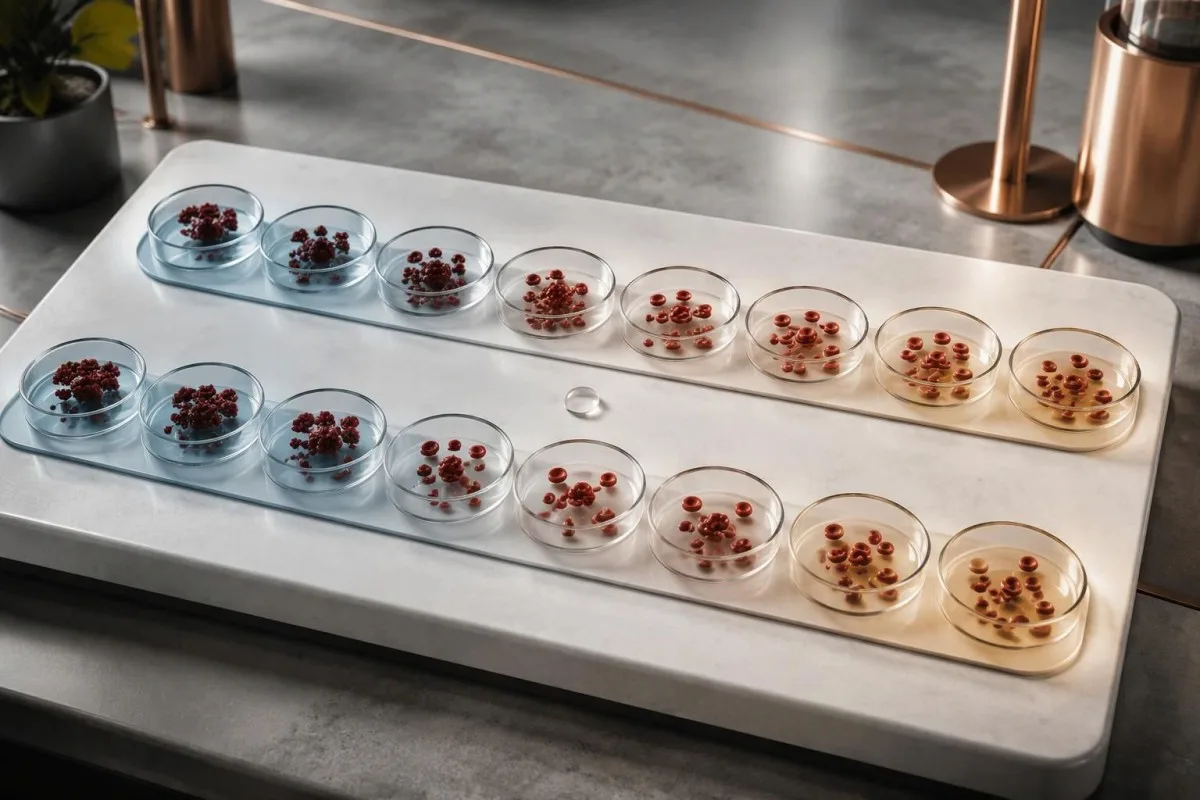
A high-titer antibody active only at 4°C may matter less clinically than a lower-titer antibody that remains active at 30–32°C. The reason is exposure: red cells do not normally circulate at refrigerator temperature, but they can encounter substantially cooler conditions in fingers, toes and other peripheral areas.
Complement can attach while red cells are cool and remain relevant after they return toward 37°C, even when the IgM antibody detaches. This explains why antibody-related injury is not simply a matter of visible clumping; our przewodnik po badaniach uzupełniających also distinguishes circulating complement measurements from complement deposited on cells.
Thermal amplitude testing is not standardized into 1 universal patient-facing cutoff, and many routine reports omit it entirely. Specialist laboratories may test several temperatures, such as 4°C, room temperature, 30°C and 37°C; clinicians usually request that additional work when the titer, symptoms and hemolysis results do not fit together.
Które wyniki badań krwi wskazują na rzeczywistą hemolizę?
Hemolysis means red cells are being destroyed faster than expected, and assessment usually combines 5 measurements: hemoglobin, reticulocytes, LDH, indirect bilirubin and haptoglobin. A high cold agglutinin titer without this supporting pattern does not establish a hemolytic disorder.
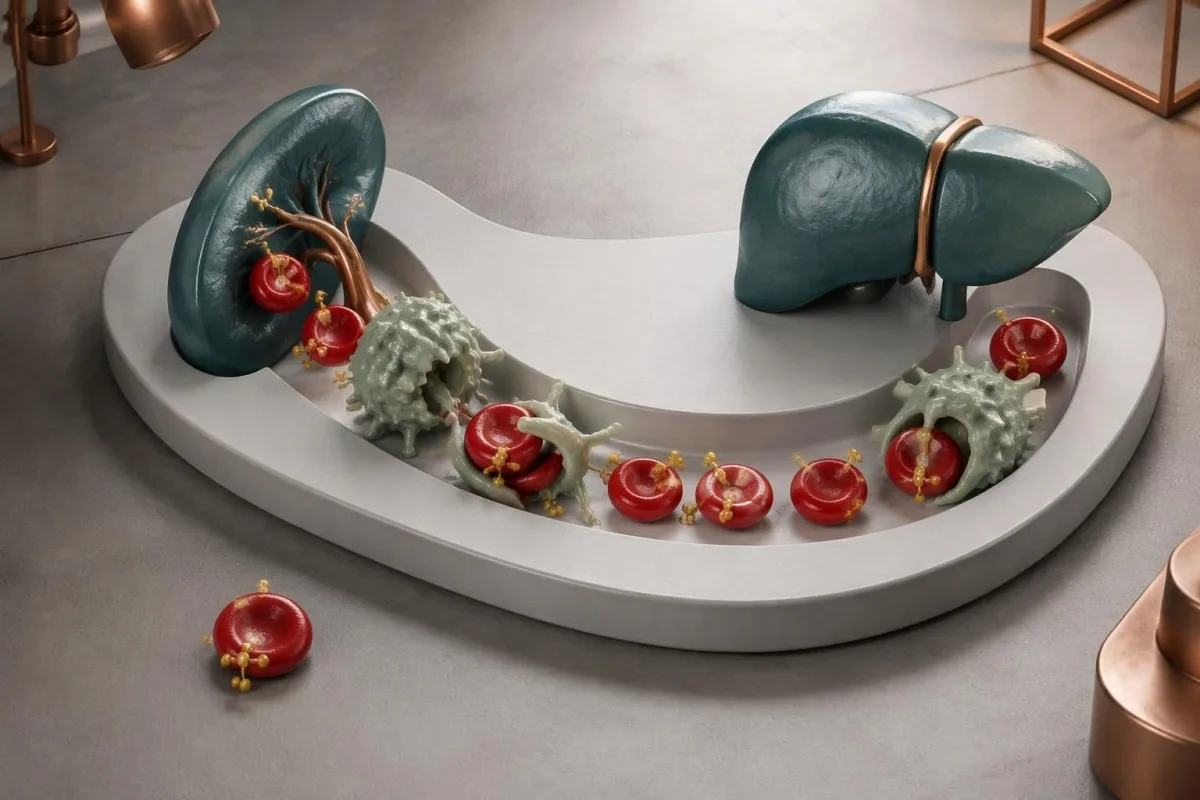
A hypothetical hemoglobin fall from 13.2 to 9.6 g/dL, accompanied by rising indirect bilirubin and LDH, is more concerning than an unchanged hemoglobin with the same titer. Reticulocytes often increase as the marrow replaces lost cells, although an early episode, nutrient deficiency or marrow disorder can blunt that response.
Low haptoglobin supports hemolysis but is not definitive: liver disease can reduce production, while an acute-phase response can raise the concentration despite red-cell destruction. Our explanation of przyczynach niskiej haptoglobiny covers these exceptions; a result below 1 laboratory's reference limit should be interpreted with the other markers rather than alone.
Kantesti AI helps explain LDH trends, including why a hypothetical rise from 220 to 650 U/L needs the laboratory's reference interval and specimen-quality information. Our LDH interpretation guide describes other sources of elevation; normal hemoglobin also does not exclude compensated hemolysis when the marrow is keeping pace.
Co oznacza dodatni wynik bezpośredniego testu antyglobulinowego w kierunku C3d?
A C3d-positive direct antiglobulin test, also called a direct Coombs test, detects complement fragments attached to red cells. Cold agglutinin disease typically produces strong C3d positivity with absent or sometimes weak IgG reactivity, but these 2 antibody-testing results are not sufficient without clinical evidence of hemolysis.

The direct antiglobulin test and the cold agglutinin titer answer 2 różne pytania: what is attached to your red cells, and what cold-reactive activity is present in your serum? The Blood Reviews international consensus recommends a monospecific direct antiglobulin test as part of autoimmune hemolytic anemia assessment (Jäger et al., 2020).
A report stating only DAT positive may not distinguish IgG from C3d; asking for those 2 components can materially change interpretation. Our guide to a dodatni bezpośredni test Coombsa explains why transfusion-related antibodies, medications and other immune processes can also produce a positive result without proving cold agglutinin disease.
In a child with abrupt post-illness hemolysis, a C3d-positive DAT and a low cold agglutinin titer can raise a different possibility: paroxysmal cold hemoglobinuria. This condition usually involves an IgG antibody assessed by Donath–Landsteiner testing, so a cold agglutinin result below 1:64 should not end the investigation when symptoms suggest significant hemolysis.
Przypadkowo wykryte przeciwciała, zakażenia i utrzymująca się choroba
Incidental cold antibodies may cause no symptoms, while infection-related antibodies can be temporary and occasionally cause substantial hemolysis. Persistent cold agglutinin disease is usually associated with a clonal marrow B-cell process; these 3 situations require different follow-up rather than the same response to a positive test.
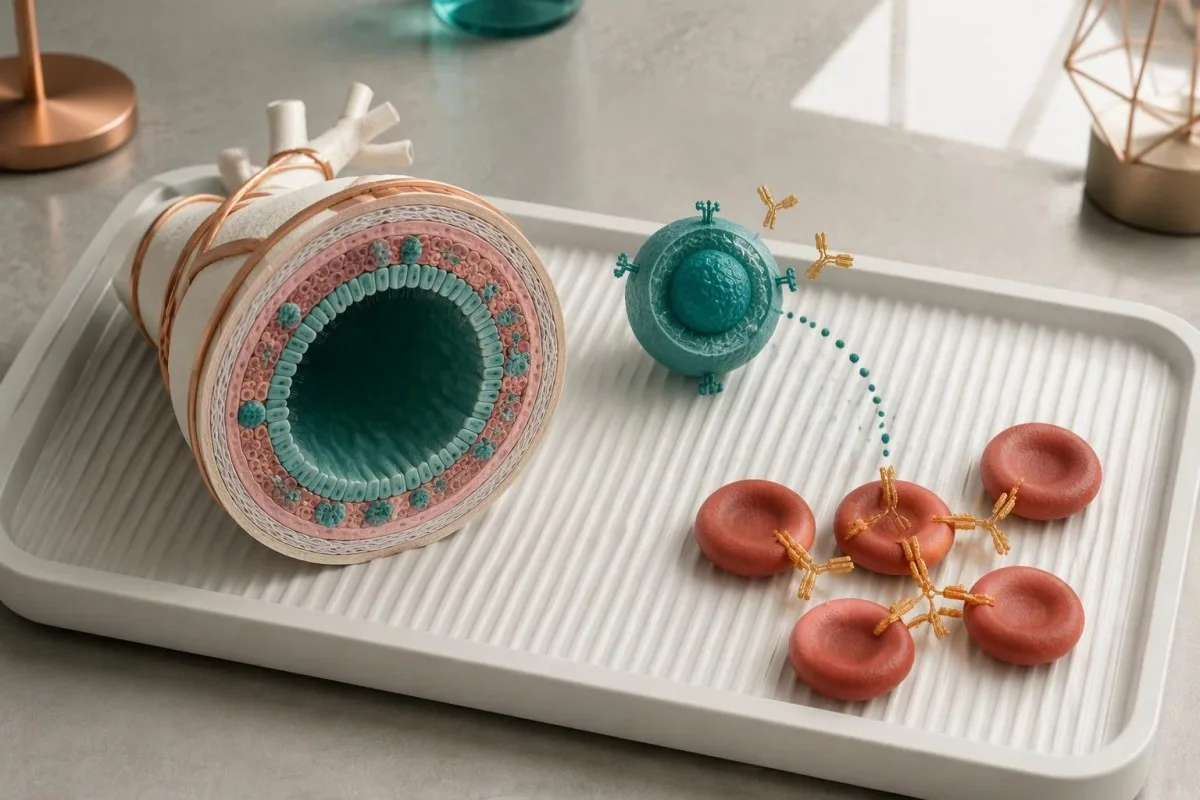
Mycoplasma pneumoniae and Epstein–Barr virus are 2 recognized infection-related associations, but a cold agglutinin test cannot reliably diagnose either infection. Our guide to Mycoplasma antibody interpretation explains why antibody timing and persistence complicate that diagnosis; respiratory symptoms may require pathogen-directed testing rather than inference from the titer.
Recent fever or sore throat changes the questions clinicians ask, not the urgency of genuine hemolysis: a hemoglobin of 8,5 g/dL with new jaundice still requires assessment even if the antibody is expected to be temporary. Our EBV result interpretation explains how VCA and EBNA patterns provide more specific information about exposure timing.
Terminology matters: cold agglutinin syndrome generally describes cold-antibody hemolysis secondary to another condition, while cold agglutinin disease is a distinct, usually persistent disorder. A titer of 1:512 does not identify lymphoma; specialist investigation may find a small marrow clone without overt lymphoma, and incidental antibodies do not automatically justify cancer investigations.
Dlaczego przed badaniem może być konieczne ogrzanie próbki
For cold agglutinin titer testing, many specialist laboratories require the specimen to remain at 37–38°C from collection until serum separation. Cooling before separation can allow antibodies to bind the patient's cells, potentially lowering the antibody activity left in the serum and producing a misleading result.
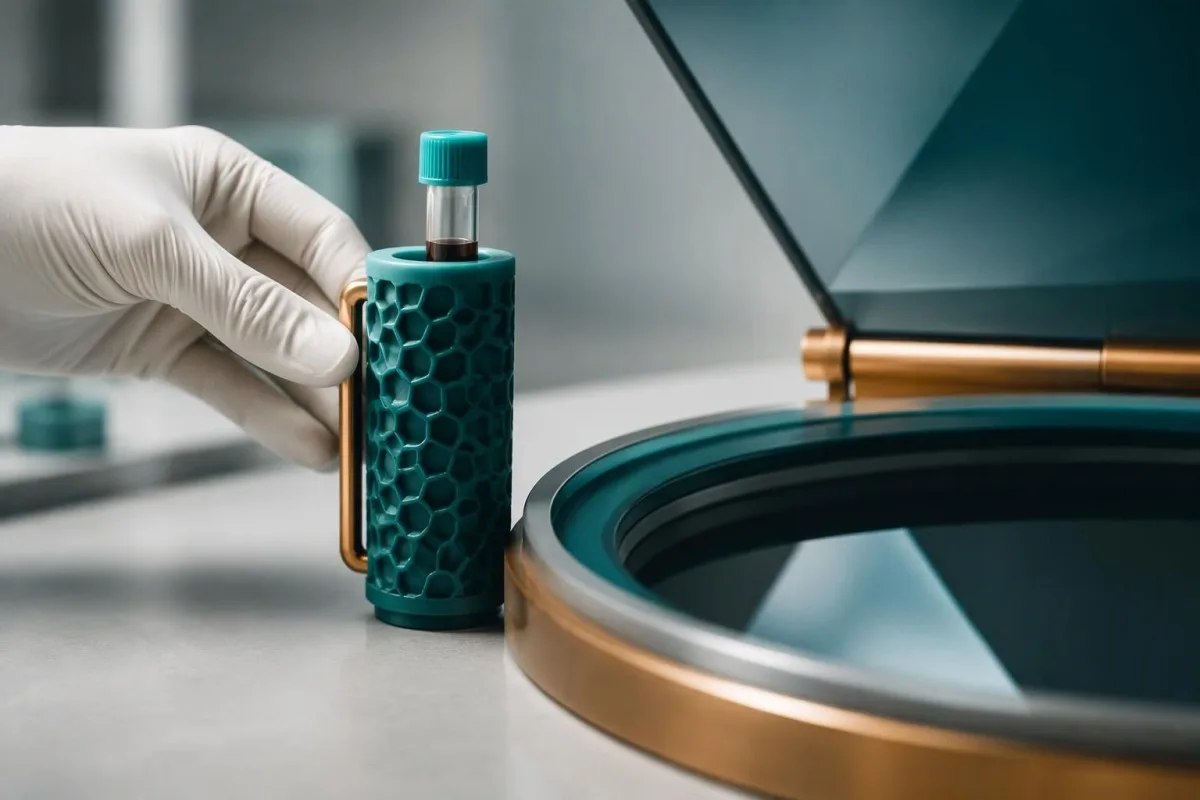
The pre-analytical requirement is different from the assay temperature: serum may be kept near 37°C during preparation and then deliberately tested at 4°C. The Hematology review emphasizes warm collection and separation for cold antibody studies (Berentsen, 2016); the laboratory creates the controlled cooling step only after an appropriate specimen is available.
Warming a specimen after it has already cooled may not fully reverse every earlier problem, so repeating the test can be more useful than interpreting an unexpected low titer. Our repeat specimen guide explains another handling distinction: cells breaking inside a collection tube are not the same as hemolysis occurring inside your body.
Before the appointment, ask 3 praktyczne pytania: which tube is required, how warmth will be maintained and where serum separation will occur. Titer testing, an EDTA specimen for the DAT and a warmed CBC may have different instructions; do not heat, transport or store your own specimen unless the collecting service specifically directs you.
Jak aglutyniny zimne mogą zniekształcać wyniki CBC
Cold-related red-cell clumping can falsely lower the RBC count and raise MCV or MCHC on an automated complete blood count. A CBC repeated after laboratory warming near 37°C can help identify this artifact, although correcting the numbers does not by itself establish or exclude cold agglutinin disease.

Automated counters may treat a cluster as 1 large particle rather than several separate cells, making the calculated mean cell volume appear high. Hematocrit and derived indices can become internally inconsistent, while photometrically measured hemoglobin is often less affected; the laboratory must still check whether other specimen or instrument issues are present.
Na przykład hipotetyczny MCHC of 40 g/dL with an analyzer agglutination flag should prompt verification rather than an immediate diagnosis of an unusually concentrated red-cell disorder. Our high MCHC explanation covers this reasoning; genuine anemia can coexist with an artifact, so neither finding should erase the other.
Kantesti jest platforma do interpretacji wyników badań krwi AI that helps explain discrepancies between CBC values and a reported cold agglutinin titer, including whether a result was rerun near 37°C. Our przewodnik technologii AI describes the interpretation process; only the testing laboratory can confirm that warming corrected a measurement error.
Co potwierdza rozpoznanie choroby z zimnymi aglutyninami?
A cold agglutinin disease diagnosis usually combines chronic hemolysis, a strongly C3d-positive DAT and a cold agglutinin titer of at least 1:64 at 4°C, with assessment for secondary causes. These are linked diagnostic components, not a checklist that an isolated positive report can complete.
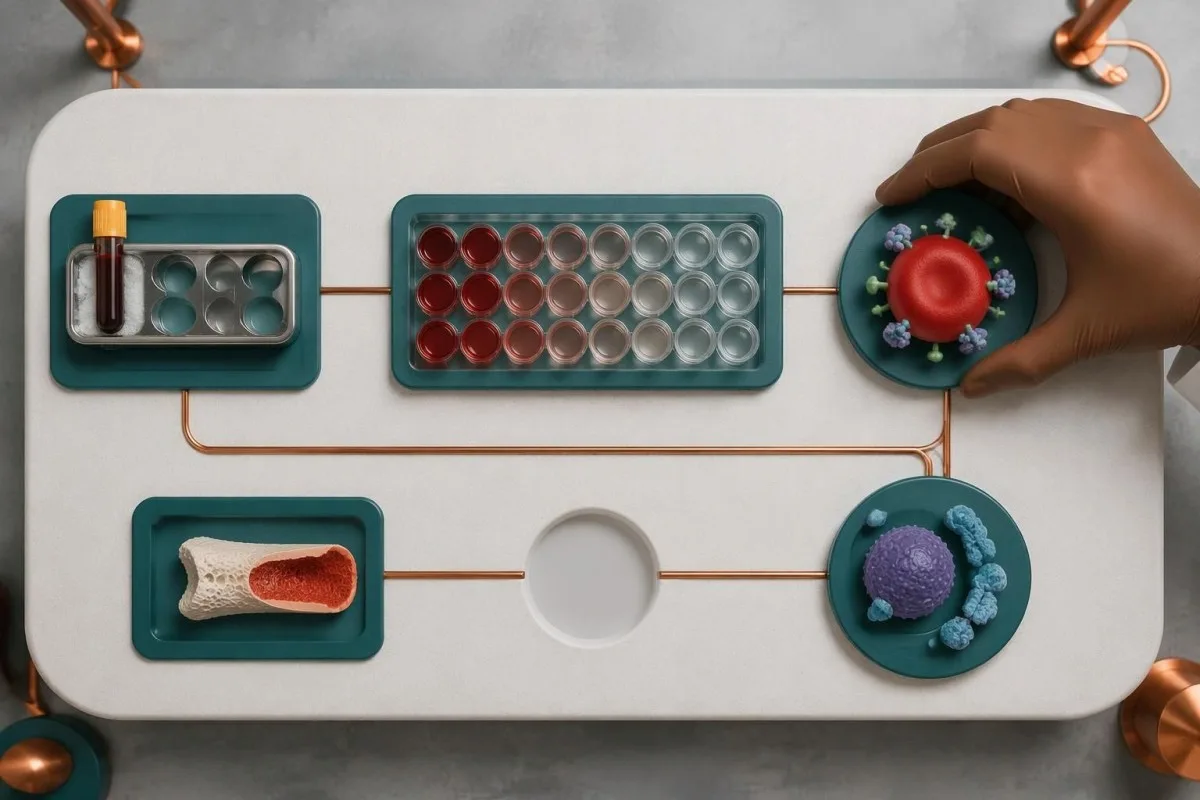
Clinicians first verify the 2 core laboratory patterns—hemolysis and immune attachment to cells—then assess symptoms, duration, medications, recent infections and transfusion history. A broad thermal amplitude can support interpretation when routine results are borderline or discordant; the international consensus treats autoimmune hemolytic anemia as a pattern-based diagnosis (Jäger et al., 2020).
Persistent findings may lead to serum protein electrophoresis, immunofixation and hematology-directed marrow assessment to characterize antibody production. Our guide to immunofixation band results explains why a monoclonal band needs context; even a titer of 1:1024 cannot determine whether a detectable protein represents overt lymphoma or a smaller clonal process.
Kantesti AI can help organize 3 groups of information for the appointment: antibody tests, hemolysis markers and changes over time. It cannot establish whether the specimen followed the warm-handling protocol or replace a specialist's assessment of marrow findings; bring the full report, because an isolated screenshot may omit the method and interpretive comments.
Trzy przykłady: to samo miano, różne dalsze kroki
The same cold agglutinin titer can lead to different next steps because clinical significance depends on temperature-dependent activity and red-cell injury. The following 3 examples are hypothetical teaching scenarios, not patient accounts or rules for diagnosing yourself from a single report.

In the first example, an adult has a titer of 1:256 at 4°C, hemoglobin of 14.0 g/dL, normal hemolysis markers and no cold-related symptoms. If specialist testing shows a narrow thermal amplitude, incidental antibodies become more plausible; the useful step is confirming the context and need for follow-up, not assuming that antibody detection requires treatment.
In the second example, a person recovering from a respiratory illness has a titer of 1:256 and hemoglobin that has fallen from 13.5 to 10.2 g/dL, with rising indirect bilirubin. An infection-associated syndrome is possible, but the falling hemoglobin still needs assessment; our polychromasia explanation describes one smear clue to the marrow's replacement response.
In the third example, a person has months of fatigue, a titer of 1:256, strong C3d positivity, low haptoglobin and antibody reactivity at 30°C. Persistent clinically significant cold-antibody hemolysis becomes more likely; hematology assessment addresses diagnosis and treatment need, while the identical titer across all 3 examples shows why the number alone cannot choose the pathway.
Które objawy wymagają pilnej konsultacji lekarskiej?
Chest pain, breathlessness at rest, fainting or confusion require emergency assessment, regardless of the cold agglutinin titer. New jaundice, dark urine or rapidly worsening fatigue warrant prompt, often same-day medical review; a result below 1:64 does not make these symptoms safe to ignore.
A rapid hemoglobin decline can be more dangerous than a stable low value, because your circulation has less time to adapt. A hypothetical fall from 12 to 8 g/dL over several days deserves prompt assessment even if someone with a long-standing, monitored value near 8 g/dL has fewer symptoms; these examples are not universal transfusion thresholds.
Dark urine can reflect hemoglobin released during marked intravascular hemolysis, but dehydration, liver conditions and urinary causes can produce similar appearances. Our dark urine assessment guide explains the alternatives; dark urine together with jaundice or weakness should not be dismissed because only 1 antibody result is abnormal.
Cold-related blue or purple fingers can occur with agglutination, but persistent discoloration, severe pain or failure to improve after gentle warming needs urgent evaluation for impaired circulation. Clinically significant cold agglutinin disease also carries increased clot risk; sudden breathlessness or 1 newly swollen leg requires assessment rather than attribution to cold sensitivity alone.
Jak zadbać o ciepło i przygotować się do procedur medycznych
Keeping the whole body warm can reduce cold-triggered symptoms in clinically significant cold-antibody disorders. Tell the care team before transfusion, anesthesia or a procedure, because laboratory compatibility testing and clinical temperature management may need coordination near 37°C rather than routine handling.

Practical protection includes layers, gloves, warm footwear and avoiding abrupt whole-body cooling; do not test your tolerance with an ice bath or deliberate cold challenge. Reactivity around 30°C does not translate into 1 safe outdoor temperature, because wind, wet clothing, exposure duration and individual circulation change how much peripheral tissues cool.
For transfusion, the laboratory may perform antibody investigation and compatibility testing at 37°C to limit cold-antibody interference while still identifying clinically significant additional antibodies. Our transfusion compatibility guide explains that distinction; a clinical warming device may also be used, but emergency treatment should not be delayed unnecessarily while pursuing perfect routine test conditions.
Pojedyncze 1:128 titer without hemolysis does not automatically mean you need to avoid all travel, exercise or procedures. The useful precaution is sharing the report and any prior laboratory interference with the treating team; clinical staff—not the patient—should decide whether warmed fluids, a transfusion warmer or additional temperature monitoring are necessary.
Kiedy potrzebne jest leczenie i co podlega monitorowaniu?
Treatment is guided by anemia, symptoms, transfusion need and functional impact—not a titer alone. In clinically significant cold agglutinin disease, specialist options include B-cell-directed therapy and complement inhibition; a titer of 1:512 without attributable symptoms or hemolysis does not itself establish a reason to start medication.
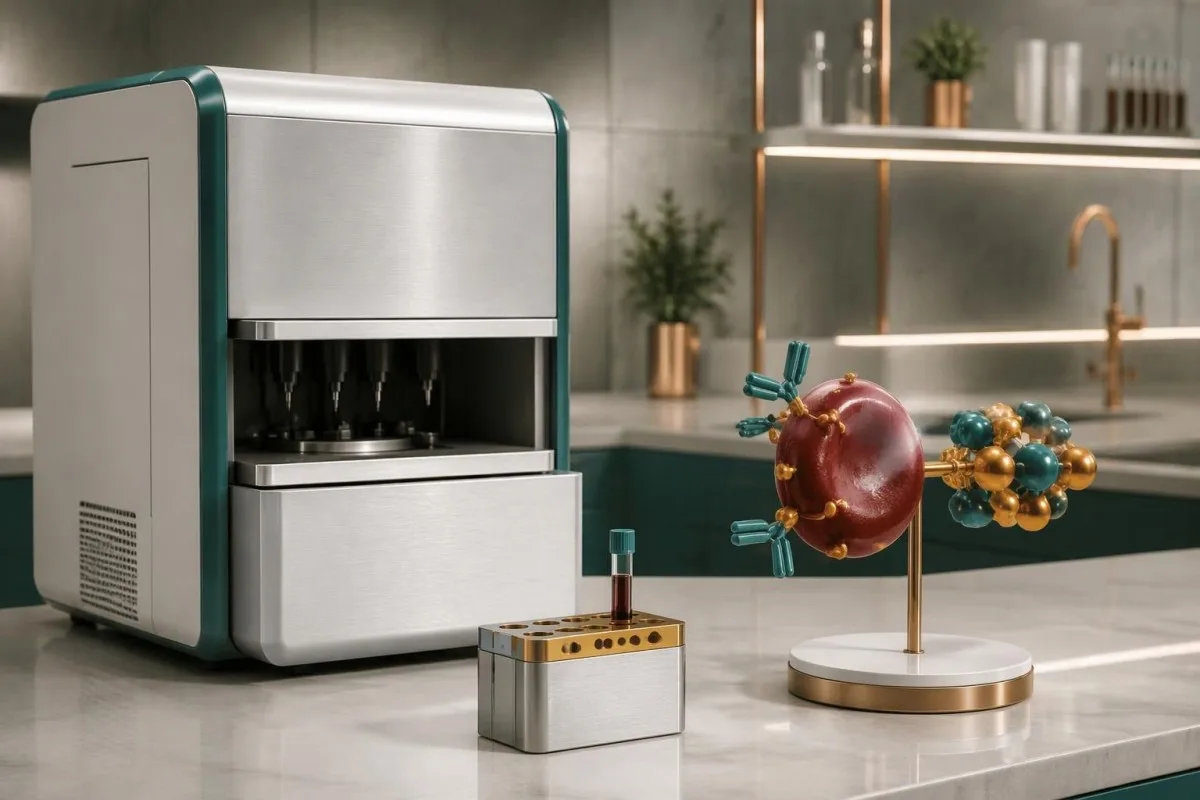
Sutimlimab inhibits C1s, an early classical complement component, and can reduce complement-mediated hemolysis in adults with cold agglutinin disease. It does not remove the IgM antibody, so cold-related agglutination and circulation symptoms may persist even if hemoglobin improves; immunization and infection-risk precautions must follow the product information and the specialist's plan.
B-cell-directed options include rituximab-based treatment, sometimes combined with another agent in selected patients; the appropriate choice depends on goals, comorbidities and treatment tolerance. Corticosteroids, commonly used for warm autoimmune hemolytic anemia, generally perform poorly in cold agglutinin disease; the 2020 international consensus emphasizes distinguishing the subtype before applying a treatment pathway (Jäger et al., 2020).
Kantesti helps explain why a hypothetical hemoglobin improvement from 8.7 to 11.8 g/dL, falling bilirubin and fewer transfusions can matter more than a persistently high titer. Our red-cell monitoring guide explains reticulocytes and related markers; do not change treatment from an AI interpretation, and do not assume anemia means iron deficiency.
Bezpieczne korzystanie z raportu: dowody i ograniczenia AI
Kantesti jest usłudze interpretacji testów laboratoryjnych AI that helps organize cold agglutinin results for discussion, but it cannot independently confirm cold agglutinin disease. A useful interpretation needs 3 information groups: the antibody method and handling, the hemolysis pattern and the patient's symptoms and history.

Keep the complete report rather than only the 1:256 result: the test temperature, reference interval, DAT components and laboratory comments can change its meaning. Useful appointment questions include whether hemolysis is present, whether thermal amplitude testing would help and whether specimen handling was adequate; bring earlier hemoglobin values when available.
The Kantesti technical benchmark listed below concerns 100 000 syntetycznych przypadków testowych, not 100,000 patients with cold agglutinin disease. The accompanying validation framework describes an assessment approach, not proof that AI can diagnose this rare condition; our validation and oversight page provides the appropriate context for these research publications and their limitations.
Before sharing 1 report or a series of reports, review consent and remove information you do not need to provide, especially when the results belong to someone else. Our wytyczne dotyczące prywatności i danych explains data-handling considerations; urgent symptoms belong with emergency or clinical services, not in an upload queue awaiting interpretation.
Często zadawane pytania
Czy dodatni wynik testu na zimne aglutyniny oznacza, że mam chorobę zimnych aglutynin?
Dodatni wynik testu na zimne aglutyniny sam w sobie nie pozwala rozpoznać choroby z zimnymi aglutyninami. Miano wynoszące co najmniej 1:64 w temperaturze 4°C jest powszechnie stosowanym elementem diagnostycznym, jednak klinicyści oceniają również przewlekłą hemolizę oraz zgodny z rozpoznaniem, zwykle silnie dodatni wynik bezpośredniego testu antyglobulinowego w kierunku C3d. Przeciwciała występujące przypadkowo lub związane z zakażeniem mogą dawać wyniki dodatnie. Amplituda cieplna i prawidłowe obchodzenie się z próbką pomagają wyjaśnić niejednoznaczne wyniki.
Czy miano zimnych aglutynin 1:256 lub 1:512 jest niebezpieczne?
Miano przeciwciał zimnych o wartości 1:256 lub 1:512 nie stanowi samo w sobie progu zagrożenia. Wynik pokazuje, w jakim stopniu można rozcieńczyć surowicę, aby aktywność przeciwciał pozostawała wykrywalna w warunkach testu. Przeciwciało aktywne w temperaturze około 30°C może mieć większe znaczenie kliniczne niż przeciwciało o wyższym mianie, reagujące wyłącznie w temperaturze 4°C. O pilności oceny decydują objawy, zmiany stężenia hemoglobiny i markery hemolizy.
Czym jest amplituda termiczna w teście na obecność zimnych aglutynin?
Thermal amplitude is the highest temperature at which a cold antibody reacts under the laboratory's testing conditions. Reactivity around 30°C or above is generally more concerning than activity restricted to 4°C because peripheral circulation can become cool enough for the antibody to act. Thermal amplitude is different from titer, which measures activity after dilution. Specialist laboratories may assess it when routine findings are discordant or the clinical significance is unclear.
Dlaczego próbkę do oznaczenia zimnych aglutynin należy przechowywać w cieple?
Many laboratories require a cold agglutinin specimen to remain at 37–38°C from collection until serum separation. Premature cooling can allow antibody to bind the patient's cells, leaving less detectable activity in the separated serum and potentially producing a falsely low result. This preparation requirement is separate from deliberately testing the serum at 4°C. Confirm the collecting laboratory's instructions rather than attempting to warm or transport the specimen yourself.
Czy infekcja może spowodować dodatni wynik testu na obecność zimnych aglutynin?
Zakażenia, w tym zakażenie Mycoplasma pneumoniae i wirusem Epsteina-Barr, mogą wiązać się z obecnością przejściowych przeciwciał reagujących na zimno. Miano takie jak 1:256 nie pozwala ustalić, które zakażenie występuje ani czy nadal jest aktywne. Przeciwciała związane z zakażeniem mogą czasem powodować hemolizę o istotnym znaczeniu klinicznym, dlatego spadek stężenia hemoglobiny lub pojawienie się nowej żółtaczki nadal wymaga oceny. Badania ukierunkowane na konkretne patogeny oraz przebieg kliniczny są bardziej przydatne niż traktowanie zimnych aglutynin jako rozpoznania zakażenia.
Czy zimne aglutyniny mogą powodować fałszywie zawyżone wartości MCV lub MCHC?
Zimne aglutyniny mogą powodować zlepianie się krwinek czerwonych, co zniekształca wyniki zautomatyzowanych pomiarów CBC, w tym prowadzi do fałszywie wysokiego MCV lub MCHC i fałszywie niskiej liczby RBC. Na przykład wynik MCHC wynoszący 40 g/dL wraz z flagą aglutynacji powinien skłonić do weryfikacji laboratoryjnej, a nie do natychmiastowej interpretacji jako rzeczywistej nieprawidłowości komórek. Ponowne badanie po ogrzaniu próbki do temperatury około 37°C może skorygować interferencję. Skorygowany wynik CBC nie wyklucza jednoczesnej hemolizy.
Które objawy wymagają pilnej pomocy medycznej po uzyskaniu dodatniego wyniku testu na obecność zimnych aglutynin?
Ból w klatce piersiowej, duszność w spoczynku, omdlenie lub splątanie wymagają pilnej pomocy medycznej, niezależnie od miana zimnych aglutynin. Nowa żółtaczka, ciemny mocz lub szybko nasilające się osłabienie wymagają pilnej konsultacji lekarskiej, często jeszcze tego samego dnia. Szybki spadek stężenia hemoglobiny, na przykład hipotetyczna zmiana z 12 do 8 g/dl, budzi niepokój, chociaż żadna pojedyncza wartość nie przesądza o pilności w każdym przypadku. Utrzymujące się bolesne zasinienie palców lub nagłe objawy sugerujące zakrzep również wymagają pilnej oceny.
Dowiedz się, jak czytać wyniki badań krwi
Prześlij wynik badania laboratoryjnego, a sztuczna inteligencja Kantesti w kilka sekund objaśni prostym językiem każdy biomarker. Z narzędzia korzysta ponad 2 miliony osób na całym świecie.
Odniesienia
- Klein, T., Mitchell, S. i Weber, H. (2026). Wstępnie zarejestrowany, oparty na rubrykach zautomatyzowany techniczny benchmark silnika interpretacji wyników badań krwi Kantesti na 100 000 syntetycznych przypadków testowych. Badania medyczne z wykorzystaniem sztucznej inteligencji Kantesti. DOI
- Klein, T., Mitchell, S. i Weber, H. (2026). Clinical Validation Framework v2.0 (strona walidacji medycznej). Badania medyczne z wykorzystaniem sztucznej inteligencji Kantesti. DOI
- Berentsen S. (2016). Cold agglutinin disease. Hematology, American Society of Hematology Education Program. DOI
- Jäger U et al. (2020). Diagnosis and treatment of autoimmune hemolytic anemia in adults: Recommendations from the First International Consensus Meeting. Blood Reviews. DOI
- 2 mln+Analizowane badania
- 127+Kraje
- 100+Języki
O zespole medycznym


Sygnały zaufania E-E-A-T
Doświadczenie
Kliniczna weryfikacja procesów interpretacji przez lekarza.
Ekspertyza
Medycyna laboratoryjna skupiona na tym, jak zachowują się biomarkery w kontekście klinicznym.
Autorytatywność
Recenzja medyczna: dr Thomas Klein, przy współpracy dr Sarah Mitchell i prof. dr. Hansa Webera.
Solidność
Interpretacja oparta na dowodach, z jasnymi ścieżkami dalszego postępowania, aby ograniczyć alarm.






Zastrzeżenie medyczne
Ten artykuł ma wyłącznie charakter edukacyjny i nie stanowi porady medycznej. Zawsze konsultuj decyzje dotyczące diagnozy i leczenia z wykwalifikowanym pracownikiem ochrony zdrowia.
Opublikowano · Skontaktuj się z zespołem redakcyjnym
Opublikowano przez Kantesti Ltd, zarejestrowaną w Anglii i Walii, numer firmy. 17090423, Londyn, Wielka Brytania.
